Blue's Police Chaplain's Message: Keeping The Faith When It's Easier to Give Up

By: Chris Amos

To my law enforcement brothers and sisters, let me assure you while you are not perfect, you are not expected to be by the only one who really matters, Jesus Christ. He was perfect, despite what talking heads in the media might suggest. And He was the sinless, spotless, perfect sin offering clothed in human flesh to suffer the greatest injustice in all of history. Death, death by crucifixion, the most excruciating of deaths to have ever occurred in the history of the world. For you see He died for every sin, every crime, every vile and sickening act that has, or will, ever be committed by mankind. But more importantly than that He died for every sin, in thought, word or deed that you and I have or will ever commit. He took the proverbial bullet of sin and eternal punishment in a literal hell for us. But friends our deliverance from the consequences and punishment of our own sin, which the Bible says is death, physical and spiritual, will not come about because of the uniform we wear. While law enforcement officers are very much called by God, (Romans 13:1-4), we are saved by Jesus Christ, through God’s Grace and our faith in what Jesus did.

No doubt you have seen the signs, “No Justice, No Peace”. If given JUSTICE all of us, LEOs, protesters, rioters, criminals, politicians, media types, ALL of us would be damned to a sinner’s hell for ALL of us have sinned against God and fallen short of His Glory. If justice was given, the only just sentence would be GUILTY! And to hell we would go. NO, I for one would take MERCY over justice. Think of it like this: If JUSTICE is getting what we deserve, MERCY is not getting what we deserve in terms of judgment and punishment. But for those of us who put our trust and faith in the crucifixion, death, and resurrection of Jesus from the grave, God promises something even greater than mercy. He promises GRACE. What’s grace? Getting what we do not deserve and can never earn. Specifically, forgiveness of our sins, reconciliation to God our Father, Adoption into His Heavenly and eternal family, and strength to endure the wrath that is being unleashed on us right now.

The Apostle Paul had been beaten, shipwrecked, nearly stoned to death. He had been betrayed, abandoned, belittled, mocked, falsely accused, etc. and was no doubt ready to just throw in the towel (2 Corinthians 11:23-30). I suspect there is many a LEO who can relate. One night Jesus came to him in a dream. Jesus assured Paul all would be well. Jesus assured Paul that he would cross the finish line because Jesus said, “My grace is sufficient for you. For my strength is made perfect in your weakness.” (2 Corinthians 2:7-10)With newfound courage and a renewed strength in his spirit, Paul did in fact press on until he did finish his race and crossed that finish line, laying claim by grace to his place in a literal paradise called Heaven (2 Timothy 4:7-8).  

Friends, the Bible speaks of an individual that many believe is alive today. He is the Antichrist who will usher in a wave of chaos, injustice, brazen hatred, violence and death like this world has never experienced. His reach will expand the globe. One of his titles is “the man of lawlessness” (2 Thessalonians 2:3-4). I suspect one of his greatest targets will be law enforcement officers. You are on the front line of a battle that is far greater than Marxism versus Capitalism or an election in November. No, it is chaos vs. order. Law vs. lawlessness. It is darkness and the spirit of Antichrist against Light and the Holy Spirit of Almighty God. The great news is, despite what you are experiencing in the flesh – what you see, hear, smell or touch – despite the spineless politicians who are folding like beach chairs and law enforcement heads who are doing likewise, the truth is there are more with you than against you in the Heavenly Realm.

The prophet Elijah was running for his life. One morning his servant went outside and saw that during the night an army of chariots, horses and foot soldiers had surrounded the small village in which they were hiding. The servant, certain of capture and death, ran back inside terrified. He told Elisha what he had seen. Elisha calmly told him to relax. He told him not to worry because “those who are with us are more than those who are with them.” Elisha then prayed that God would open the servant’s eyes. The servant went back outside and saw an angelic army of fiery chariots and horses that had in fact encircled the earthly army. Elisha and his servant were safely delivered from that earthly army and death (2 Kings 6:13-16).

What I want to leave you with is that those who are with us, in The Lord, are far greater and stronger than those who are with the Antichrist and his lawless army. You are not alone, my friends. I pray the Lord will open your eyes that you too might see and sense the amazing power and presence of God in the midst of the battles you now face. And friend, if you have not put your trust in Jesus Christ as your Savior and Lord, Ephesians 2:8-9 tells us, “8 For it is by [God’s] grace you have been saved, through [your] faith—and this is not from yourselves, it is the gift of God—9 not by works, so that no one can boast.it is simply a matter of accepting the free gift of salvation.” Right now He extends to you that gift. May you have the faith to reach out and accept it as your own.

Editor's Point of View

2021 is off to a quick and promising start! At Blue Magazine, we continue to move ahead at breakneck speeds while ensuring we bring you the most current and vital topics every issue. We have many great ideas and initiatives planned for the year ahead. So as we say goodbye to 2020, we welcome 2021 and are glad you are here with us to continue to advocate for our profession.

The devastation from the COVID-19 pandemic and the shutdown has severely limited our ability to gather and continue our Blue suicide events, therefore, we are featuring this crucial topic again on our cover to promote awareness and keep the conversation going. Our profession has lost far too many great officers from Blue suicide. We must all work together to help reduce Blue suicide. Be sure to check out our cover story. And should you be that officer battling despair or contemplating suicide, you can always reach out to us (as many have in the past), and we will do our best to help you. Your life is worth it. We need you here.

Lately, I have received many calls to respond to the collapse of security at the Capitol Building on Jan. 6. Most of those asking for a response are slyly looking for Blue Magazine to condemn the Capitol Police Department’s leadership actions. Although we see many issues that are worth discussing, at this time, we choose to commend and honor the fine officers on the frontline who risked their lives to defend against the mob. They did an excellent job with limited manpower and resources. We know they are grieving the tragic loss of Officers Brian Sicknick and Liebengood. We offer our most profound and deepest condolences. We will hold off on commentary — the Monday morning quarterbacking — to allow the officers to grieve and bury their fallen officers. Not everything needs an immediate response. Those kind of click-bait insensitive motives are for the immoral folks at the ratings- and money-driven corporate media. We exist to support law enforcement. To each Capitol officer on the frontlines, we are with you!

Has anyone noticed how toxic social media has been lately? Unfortunately, the constant stream of meal pictures is now replaced with so-called friendly people acting like complete lunatics over politics. Many people are easily led by the corporate media’s news cycle and seldom think independently and commit to intellectual honesty. This creates a toxic environment where users are attacking each other over issues they have very little control over. If you fall into this distraction trap, take back your time spent on social media and enjoy life with your family and those worthy of your time. Your life is more important than spending hours a day arguing on social media. 

And lastly, remember there are two days of every week you should never worry: yesterday and tomorrow. Enjoy this issue of Blue Magazine.

Until next time!

George Beck, Ph.D.
Editor-in-Chief

DESPAIR AND BLUE SUICIDE


By: Daniel Del Valle and George Beck, Ph.D.

despair.jpeg

Despair — the complete loss or absence of hope — is what you see on our cover. This tragic scene plays continuously every day in our profession — the facts and situations are similar — the main difference, perhaps, is only the jurisdiction where it occurs. Nearly every officer knows this scene and some have seen the fatal aftermath up close. Many have seen signs and indicators of an officer in crisis and chosen to ignore them for whatever reasons. Some may have been the officer in the image holding that pistol to your temple. That's the reality. It's not comfortable to discuss, but to pretend like it's not true is not helping end Blue Suicide. We must have an open conversation. 

There are many causes of despair, some of which we will discuss here. First and foremost, the stigmas involving an officer's mental health are perhaps the most significant contributor to despair because stigmas block officers from getting the necessary help. If getting help was seen as a positive objective and not some 'broken officer mentality' that alone would go a long way toward lessening despair and reducing Blue Suicide. As the years go by, progress is made to eliminate mental health stigmas. However, we would only be fooling ourselves if we believed we have solved this issue.

Despair is also the result of many personal problems that officers can face. Spousal and family issues, financial issues, addictions, and depression are among the top contributing factors leading to suicidal deaths. Although these "secrets" in an officer's life are sometimes cloaked behind a forced smile, changes in behavior patterns are not hidden. For example, if an officer who is routinely punctual starts to come in late and use a lot of sick time, asking the officer if everything is okay can go a long way. Show the officer you genuinely care about their wellbeing and take a positive step to help the officer if needed. Be vigilant for other changes in behavior, and when something is not right, act. Don't wait until it's too late. It is far better to have an officer alive even if he or she is mad at you, than to allow them to make the ultimate mistake.

Despair can also come from job stress. How many times have we heard of an officer facing some form of disciplinary action commit suicide? There are many reasons disciplinary actions result—some of which are the direct result of the officer's actions—other times from the abuse and exploitation of the internal affairs bureau leveraging the guidelines for political expediency. Take, for example, the abhorrent unethical internal affairs officer who mails in that "anonymous" letter making an allegation against a good officer and then investigates it only to make the bogus claim somehow legit. Of course, there are processes to address this, but at that point, the targeted officer can face the reality of despair. Other job stresses that lead to despair involve co-workers or supervisors harassing an officer. Law enforcement is rife with megalomaniacs who get supervisory positions of power and influence and tend to believe that gives them ownership over subordinates' lives. As you are reading this, you probably already have the image of that supervisor in your mind. These lunatics with badges forgot where they came from and don't deserve the leadership responsibility.

So what can officers do when they or another officer is in crisis and feeling that lonely despair? Act. Commit to working toward making a positive change. If that includes going to a supervisor that an officer trusts, make that move. It may seem uncomfortable at first, but your bravery to act at that moment will be worth it. Also, seek a professional mental health expert who is trustworthy and knowledgeable. There are plenty of mental health professionals out there who have the experience and ability to help an officer out of a crisis. Put yourself and your mental health first. Commit to making your health your highest priority. And finally, don't make the ultimate mistake. There is hope.


Don’t Make the Ultimate Mistake: There is Hope
By: George Beck, Ph.D.

“I am sorry. I love you. You’re not going to have to deal with me anymore,” was the last text message a New Jersey detective sent to his wife during Christmas of 2018. 

The detective shut his cellphone off and drove toward a remote place where he would end his life. The area was a picturesque mountainous spot that overlooked the hustle of New Jersey life. Was it the peacefulness of this area that drove him there? The silence would soon be shattered with a gunshot that would echo through the mountains, a final call from a cop who had reached his breaking point. 

But the events that led up to the detective’s intended last day were not sudden. Years of alcohol abuse, compounded with the stress of the job, had caught up with him. He carried around falsehoods, thinking he was a failure, a weak link. He wrongly believed his coworkers hated him for his personal shortcomings — that his bosses despised him, and even the members on his SWAT team abhorred him. It was hard to look them in the eye because he was embarrassed and hated himself.  However, he showed up to work every day, shook hands, and faked the “I am OK” smile that many officers have perfected better than even the best Hollywood actors could. He had the traditional family, the big house, the white picket fence. On the surface, he looked like an American dream success story. Yet, behind the façade of a muscle-bound, stately man, who on the outside looked like a physical symbol of strength, he was in deep, dark despair.

Back home, the New Jersey detective’s wife and children had no idea how the specific frantic final moments of his life were unfolding. But his wife called the police — one of the most challenging things a family member can do because of the potential ramifications that come with it. That phone call for help in many departments can be career-ending. Who would pay the bills if the officer’s gun and badge were taken away while the departmental leadership moved to remove the “broken” officer from the force? To deny that mental health stigmas, coupled with poor departmental leaders, can sometimes cause more problems for the officer is foolish. The reality is these kinds of departmental failures lead officers physically to cliffs where there are no other options but suicide. This is a conversation had by many in law enforcement seeking to combat blue suicide, but it’s moving slowly.

Each year more officers kill themselves by their own hand than from being killed in the line of duty. The most common suicide method is with their handgun.  Researchers agree this is simply because officers have readily access to firearms. Many signs lead up to the suicide that officers routinely speak of after the death occurred. Yet while the officer is alive, depression and mental health issues are often shunned. Also, nobody wants to be that officer who sounds the alarm on his brother or sister.

Sadly, many cops and departmental cultures still believe police officers signed up for a life that would intimately bring them up close to tragedy — the horrific deaths of children, the horrid screams of victims that replay over and over in officer’s minds even years later, and that officers should become emotionally hardened to be effective cops. It’s the old par for the course mindset that hey you chose this profession, now deal with it. This systemic archaic mindset affords very little — if any at all training — on emotional health, hardly any requirements that put an officer in touch with mental health professionals for periodic checkups, and a culture that tends to shun officers who are considered weak. However, after thousands of officer suicides, the reality is our thinking and actions on this subject are wrong.

In the moments that led to the New Jersey detective’s intended final breath, he made one last move. Perhaps it was divine intervention that caused him to turn his cellphone back on. When he spoke to his wife, he realized he was exposed and entered into an alcohol and mental health treatment program that would change the direction of his life. He was saved, but with intense anger at that moment because he believed his life would no longer include law enforcement. However, sometimes as difficult as it is to see in these desperate moments, there is hope

After a 3-day blackout period at a treatment facility, the detective was allowed to again use his cellphone. He turned it on and found over 150 text messages from his coworkers who reached out to let him know they supported him. He was surprised.  Upon returning home from treatment, he went to his chief’s office, expecting to be terminated but found a leader with compassion who was committed to providing the best opportunity for him. The detective was stunned and then emotionally broke down in the chief’s office. The chief did what all chiefs should do in this situation — he led his officer back to become a competent and productive employee living a content life. The detective found his niche. While he’s not working his cases, he helps others who find themselves in similar dark situations.

For this detective, he learned had he pulled the trigger on that mountain during Christmas of 2018, it would have been the ultimate mistake.  This detective’s story is one of hope that all of us in law enforcement need to hear. Too often when we speak of blue suicide we hear of the harsh statistics and the gory details of the final suicidal act that supposedly stunned everyone. We hear of the tragic loss and learn of what drove the officer to make the ultimate mistake. We need more stories of hope. For everyone reading this that is in a dark place, know there is hope and the ability to overcome whatever adversities you are facing are possible. You are worth it.

As we look forward to 2021, let’s prioritize mental health in law enforcement. Let’s work toward success stories like the one featured here. Success is possible if our profession is willing to have honest and open conversations.

Stay tuned for more Blue Suicide events featured through our partnerships with Moment of Silence, Inc., and others. Together we can and will overcome blue suicide.

Who Won in D.C.?

By Lt. Patrick J Ciser (ret.)

The year 2020 was a year of tumult and frustration to be sure, and if anyone thought that 2021 would be better; think again. No event that I’ve witnessed before has convinced me that there truly are two Americas. January 6th was the day we saw protesters in D.C. force their way into our nation’s Capitol building. Deep condolences go out to the family of police officer Brian Sicknick, who served our country both here and abroad.

50811723702_088e381ee7_o.jpg

The “right” and the “left” are now so diametrically opposed to one another, and I don’t see any hope of reconciliation. But after what we saw, the rioting in American cities over the summer, was it really “shocking,” or actually quite predictable? Democrats were never shocked at the burning down of our cities, or the Molotov cocktails being hurled at our police and thrown into their police cars. Nor the assassination of a police officer sitting in his car. CHAZ was OK with them and also the 100-day siege of the Federal Building in Portland. It’s apparently a peaceful protest when citizens are surrounded and dragged from their cars to be beaten while Democrat politicians, and the liberal media, look the other way. Yet they became horrified that “they” could actually become victims of criminal behavior while Congress was in session. On that day, “defund the police” politicians became our cheerleaders. How ironic.

Let us first imagine that it was a couple hundred extremist Trump supporters that stormed the building, which is quite plausible. Others then, seemed to walk in as if to have a massive “sit-in” in the rotunda, as we’ve seen before. After this assumption, however, I will opine on the belief by some, that it may have been Antifa infiltrators that had much to gain, while leading the charge during the original assault.

Estimates are that there were between 20-30,000 protesters in D.C. that Wednesday, so, it is understandable that a small percentage of the crowd had malicious intent when they arrived. As police officers, we know what it’s like when our detractors claim that all cops are Satan; although we know that nothing could be further from the truth. As with most professions, you can always find some bad apples, however. It is reported that there were some 90 arrests made that day, and no matter what political group they belong to, they should all be prosecuted.

Getting back to the part where I said, should we really be surprised? On Jan. 20, 2017, 70 members of Congress refused to attend President-elect Trump’s inauguration. Within a day or two, politicians and the liberal media stated that impeachment of the president starts now! Think of the contrast when Barack Obama was sworn in and given a Noble Peace Prize; before he did ANYTHING! The left, including Barack Obama, was convinced that Hillary would be the next president, especially after Obama’s “boys” in the FBI cleared her of destroying 33,000 emails. As proof, when the FBI told Obama that Russia was trying to influence the 2016 election, Obama, believing that the Russians were supporting Hillary, did nothing about it. He also left hundreds of federal judge positions open, believing Hillary would fill them and uphold his legacy. Everything was set and going perfectly as the polls showed Hillary way, way ahead. However, on election night 2016, everything fell apart, so what to do now? An idea was concocted to use Hillary’s bought and paid for Steele dossier to spy on, and throw mud at the “people’s choice,” Donald J. Trump. But Trump became a “rock star” like never seen before. Hundreds of thousands would wait in line for hours on end, to get into a Trump rally.

You see, Trump supporters were sick of getting screwed over by the progressives, and the professional politicians who placated them. Trump supporters wondered how $150K per year civil servants, many times, became millionaires while in office. The Clinton and Biden families are the left’s “poster boys” of corruption.

Ever since Ross Perot, many wondered, what if we elect a businessman who could run America like a business by a millionaire that didn’t need the “special interest” money? As you’re probably aware, Hillary outspent Trump 4-1. In four years, 96% of Trump news was reported negatively. His astonishing accomplishments would’ve certainly been praised had Obama had done it. Even Joe Biden had to admit that the USMCA was much better than NAFTA for America. ISIS was a “JV” Team according to Obama, and he allowed Syria to cross his imaginary “Red Line” again and again. Trump came in, released our military on ISIS; DONE! Trump’s accomplishments are so massive that I don’t have enough room in this article to list them all. You can, however, do an internet search if interested.

Trump was endorsed by countless police unions coast to coast, while Joe Biden got none. Trump has three, maybe four now, nominations for the Noble Peace Prize. But it’s very frustrating to him, his family, and his millions of supporters I’m sure, that he’ll probably never get even one; his name is Trump after all.

Hopefully, with his hundreds of federal judges, and three Supreme Court justices appointed, they’ll stand up for our Constitution as written. Democrats have been trampling on our First and Second Amendments for years now. We need conservative speakers in our universities to get equal time with progressives! Twitter and Facebook/Instagram have been silencing conservative thought for a while now, and it’s only getting worse.

Now, who were the big winners on January 6th at the Capitol building? Democrats and big tech for sure! Why is it that Trump rallies and parades across the country have always been peaceful, yet rioting took place just this once? Even state capitols were marched on that day with no reports of violence. The exception is of course, when Antifa or BLM starts a confrontation. At those times, it is simply self-defense. We’ve seen countless Trump supporters beaten up, simply for exercising their right to free speech. A Trump hat can get you killed in certain areas of the country.

Trump supporters had nothing to gain by storming the Capitol, but it does seem at this time, that some Trump extremists did. We already had over 100 congressmen/women announce that they were going to object to certain states votes being certified. But as a result of the violence, which 99% of Trump supporters adamantly oppose, many of these politicians changed their minds believing that they should now show solidarity. Trump now gets to be the bad guy, and probably has no shot of a comeback in 2024. But millions still wonder, is it possible that Antifa members infiltrated the Trump crowd? Were, “Agent Provocateurs” placed there?

The riot was bad for America, yet a MAJOR WIN for Democrats. But just like the election, things are not always as they seem. Stay safe!

Santa comes to Paterson

IMG_4119.JPG

This year I had the best Christmas of my entire life. Sharing it with the beautiful children and parents of Paterson, New Jersey, was an amazing feeling I will never forget. Regardless of your age, I hope that everyone at some point in his or her life experiences the wonderment of Christmas as we had at Blue Magazine.

On Dec. 23rd and 24th, we packed truckloads of gifts and drove Santa Claus in a shiny red Corvette around some of the city's most impoverished areas. Our caravan of goodwill was seen for blocks — the pounding speakers of Christmas music informing the residents that although 2020 has been a challenging year — we did not forget them.

This massive undertaking was a success, and we will do this every Christmas going forward. This project was made possible because of the many individuals, sponsors, and organizations who share our same vision. Brothers Before Others (BBO) is one of those unique organizations that share our vision. So many additional organizations and individuals made this possible because of their commitment to helping the community. They are just as important as those who donated toys, organizations that donated time and money, our Blue sponsors, volunteer elves who wrapped all the toys, and volunteers who played Santa and the Grinch.

We can change the world. It doesn't matter who sees it as long as the people involved are pure at heart. After all, God knows, and that's all that matters. A grown man cried in the streets this Christmas, and I'm proud to have been able to express that. Everyone who was there, I'm confident, will never be the same again. We were all reminded that we all love to be happy; we just need others at times to help us get there.

IMG_4161.JPG

A special thank you to Paterson's parents and children, who allowed us to share this moment with them.  Also, thank you to the Paterson Police (our reindeers) for escorting Santa around and leading the way. Much love and respect to all of you. I hope you all had a great Christmas. I wish you all a joyous and prosperous new year.


Click on any of the three photo collages below to view larger image

Domestic Terrorists Prove Resurgent in Their Geriatric Years

By Bernard Kerik with Rick Fuentes

As "systemic racism" remains the rallying cry for urban sieges visited upon Portland and Seattle, as well as the more recent pop-up riots in Chicago and New York City, for those of us serving in law enforcement from the 1960s to the 1980s, it’s Deja’vu.

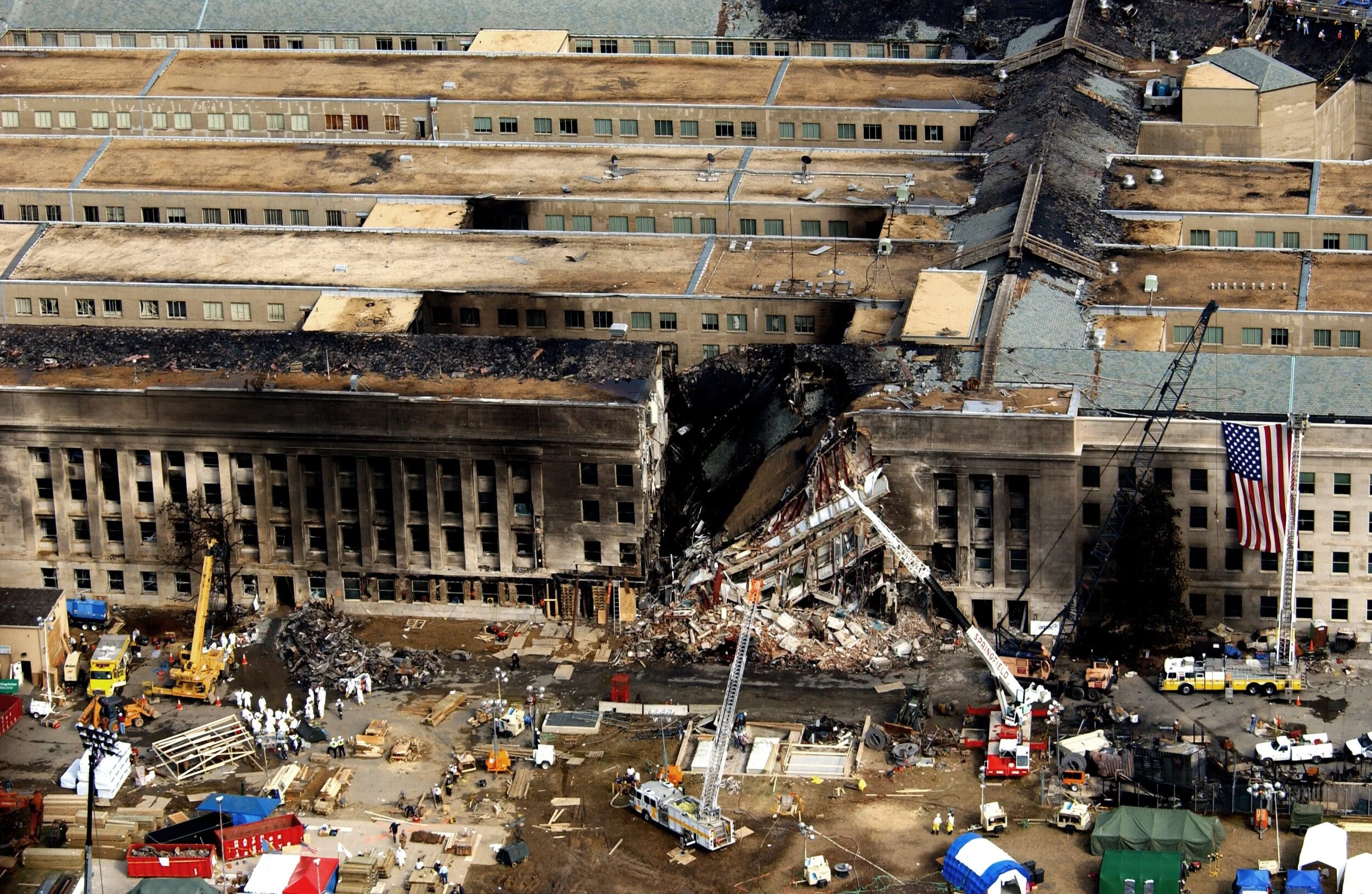
pentagon-60569.jpg

Today’s front line of social justice warriors and street brawlers represent an alliance of mysteriously funded and well-organized anarchists who get their marching orders from their cell phones. By most appearances, mose of them are white, inordinately female, and slowly marinated in a style of Marxist thought permeating the ivory halls of academia.

Black Lives Matter (BLM) and Antifa are originalists, following a dogma reminiscent of the 1960’s era of campus radicalism. To baby boomers, the current outbreak of street riots is nostalgic, less inspiring than inspired. Ringleaders from BLM, Antifa and other fringe groups are still taking the lead of the old-time radicals and their dog-eared manifestos passed down from the age of manual typewriters.

Here are a few examples:

Bill Ayers and Bernandine Dohrn, SDS and Weathermen

As oligarchs of the SDS in the late sixties, Bill Ayers and Bernandine Dohrn turned a sizeable chunk of college kids into hard-charging baby radicals and America’s campuses into a bulwark for the antiwar movement. When the SDS descended into self-critical chaos and fractured during their 1969 national convention, they jumped ship and forged an offshoot insurgency known as the Weather Underground Organization, or Weathermen.

The next decade brought about the deaths of three of its members and a string of 40 bombings that befuddled law enforcement. Ayers, Dohrn and other members escaped responsibility for their terror campaign when a series of FBI illegal wiretaps were exposed, eliminating much of the evidence needed for their prosecution.

Once at liberty, they were welcomed into academia with more than open arms, a profession now run aground by a like-minded and radical professoriate.

They spent the next few decades indoctrinating young minds with Marxist ideology, wrote books that muddled the teaching of grade school, and retired with huzzahs from the faculty lounge.

No longer just a couple of fading apparatchiks from Chicago, their phoenix has risen once again from the ashes. The revolution of 2020 has lured them back to their dorm hall hijinks, using education as sleight-of-hand and social media as a platform to influence mass ideas in support of a violent revolution.

In July of 2020, Ayers inaugurated an online Apple podcast, "Under the Tree: A Seminar on Freedom," pledging to, "organize for a liberating insurgency," adding, "We’re in the midst of the largest social uprising in U.S. history — and what better time to dive headfirst into the wreckage, figuring out as we go how to support the rebellion, name it, and work together to realize its most radical possibilities — and to reach its farthest horizons?"

Eric Mann, SDS and The Weathermen

Patrisse Cullors, self-admitted "trained Marxist" and co-founder of BLM, is hailed by progressives for her skill in turning a hashtag into a global platform for racist grievances, and gaslighting a generation of young lapdogs schooled on Marxism.

Promoting activism seeking to infiltrate local and county governments, Cullors has breathed new life into old-fashioned black liberation dogma, proclaiming that "it’s a plan that revolutionary black leaders have tried before, in the late 1960s."

At an early June 2020 conference in Los Angeles, BLM released a blueprint with plans to create Panther-like armed patrols to guard black communities and go head-to-head against the police. The blueprint bears a likeness to the "Self-Defense Ten Point Platform and Program" put out by the Black Panthers in 1966.

Cullors, who has turned the Trump presidency into a cash cow for BLM, learned the ropes of community organizing from a little old white radical, Eric Mann. Mann, a relic from the SDS and Weathermen days, led the 1969 takeover of the Harvard Center for International Affairs and spent two years in prison for shooting up a Cambridge police station.

In 1989, Mann helped establish the Labor/Community Strategy Center (LCSC) in Los Angeles, California— a madrasah for anyone organizing in the marketplace of social and racial justice issues.

For 10 years, Mann was Rasputin to Cullors, slowly cultivating her Marxist leanings and community organizing skills.

In an early 2018 television interview, Cullors spoke of the LCSC as her first political home and fondly referred to Mann as her mentor.

Susan Lisa Rosenberg, May 19th Communist Organization

Following 14 years in an orange jumpsuit, Rosenberg, one of the architects of the botched 1981 Brinks armored car robbery and police homicides in Rockland County, New York, and a suspect in numerous bombings carried out by the May 19th, had a 58-year prison sentence commuted to time served by President Bill Clinton on his last day in office.

After her release, Rosenberg wandered the halls of academia, teaching for a bit at John Jay College of Criminal Justice in New York City and accepting other speaking invitations that whitewashed her hardcore criminal career. Now an adjunct professor at New York's Hunter College, she teaches and writes to the accolades of the radical literati, victimizing herself as a political prisoner and casting blame for her terrorism in every direction.

In 2016, Rosenberg joined the board of directors of Thousand Currents, a non-profit charity and a pass through for BLM funds, and rose to vice-chair in 2019. BLM enjoys fiscal prosperity through fiscal sponsorship from Thousand Currents, using  their tax-exempt status as an alternate channel for fundraising.

Conservative media outlets revealed Rosenberg’s terrorist background and connections to BLM financing in July 2020. Almost immediately, Thousand Currents removed the homepage link to her name and position.

On July 10, 2020, BLM formally advised the California Charitable Trusts Section that they are transferring fiscal sponsorship from Thousand Currents to the Tides Center.

The Center operates under the auspices of the Tides Foundation, a politburo of American left-wing alliances.

fbi-assata.jpg

Bob Avakian, SDS and Revolutionary Communist Party

Wandering in and amongst the Portland and Seattle mobs are members of the Revolutionary Communist Party (RCP). Since its founding in 1975, the Svengali of the RCP is Bob Avakian, SDS veteran and lifelong Maoist.

As self-appointed leader and spokesman of the RCP, Avakian has been ascending the rostrum, penning droll communiques, and gaslighting crowds, for almost 50 years. His friends count among the who’s who of surviving American Bolsheviks, Bill Ayers, Bernandine Dohrn, Jerry Rubin and the like.

At almost 80 years of age, the sand is briskly draining from the hourglass of Avakian’s revolutionary hopes. Angling into the profitable and politically well-heeled operations of BLM and Antifa has been difficult for Avakian, forcing him overnight to reverse some deep-seated beliefs.

The traditional homophobic views of the RCP suddenly find themselves out of step with BLM, whose three co-founders have openly identified themselves as "queer black women."

In response to the pro-LGBTQ posture of the protests, Avakian recently issued an online statement containing a strong rebuke of "anti-LGBT venom."

Then there’s the matter of the upcoming presidential election.

As an old commie group that has long railed against the absurdity of American elections and the two-party system, the RCP suddenly find themselves in the thick of Democratic voters.

Avakian is now urging his followers to cast their ballots for Joe Biden, justifying it as the only means to get rid of Trump/Pence fascism.

What the RCP becomes in the 2020 revolution remains to be seen.

At present, Avakian supporters are relegated to curbside snake oil speeches and dragging bulky banners along protest routes. Despite some forced shifts in ideology, Avakian and the RCP may still be a half century too late to the party.

Joanne Chesimard, Black Liberation Army

By the mid-1970s, the Black Liberation Army (BLA), descendant of the Black Panthers, had taken the lives of more than a dozen police officers across the country. These brazen attacks, mostly ambushes, caught cops off guard during their patrol routines. Joanne Chesimard, also referred to as Assata Shakur, lays claim to the leadership of the BLA.

Chesimard escaped from a minimum-security prison in New Jersey 40 years ago, where she was serving a life term for the 1973 execution of a state trooper.

Helped by several domestic terror groups, she was spirited out of the country to Cuba, where she now enjoys a comfortable life as a political asylee. From her small villa, Chesimard writes poems and continues to inspire a large fan club on college campuses and radical websites without losing a drop of her mojito.

Although they have never laid eyes on her, all three of BLM’s founders view Chesimard as an inspiration to their cause. Speaking at the 2015 African Descent Leadership Summit in New York City, Opal Tometi singled out Chesimard as the meeting’s "dear exiled sister."

The influence of the Woodstock-era of campus radicalism upon today’s urban unrest is indisputable and well-documented. Today’s riotous outbreaks lack ingenuity and have pilfered a playbook created by their 20th century predecessors.

The battle plan is therefore revealed.

Violent protests follow peaceful ones, bringing about enforcement pressures that turn movements into underground insurgencies. If the past is prologue, law enforcement should gear up now for that eventuality. It will be a far tougher struggle than that previously experienced, given the gutless collusion by the Democratic party that has been willing to turn a blind eye to the public safety of its citizenry, and assuring the failure of the police by ordering them behind fences with their backs up against buildings.

(Article courtesy of Newsmax)

Rick Fuentes, who contributed to this article, is the former superintendent of the New Jersey State Police.

The “S” Word

By Andrew Einstein

Suicide… Say that word out loud. Did you feel like you said a bad word? Now say “shit” out loud. Which was easier for you to say? Why is it so difficult to talk about suicide? Suicide is not new. It didn’t just become an issue. It’s been here for the ages and yet we as a society, and even more so in law enforcement, still see suicide as taboo.

In recent years, the annual number of law enforcement officers who committed suicide almost equaled the annual number of law enforcement officers killed in the line of duty. We as cops, are almost as dangerous to ourselves as the criminals who want to kill us. Think about that.

When we leave our families before each shift, we kiss them goodbye with the thought in the back of our minds that it could possibly be for the last time. Before we go on duty, we put on a bullet proof vest (no matter if you’re working on the worst area of Chicago, or the safest town in America) to protect ourselves in the event someone may try to kill us. We train with weapons, and hand-to-hand combat, and all these other areas to help keep us as safe as possible; but after the shift, what are we doing to prepare us for the battle with ourselves? What happens after the uniform comes off?

When we lock up a criminal, we have all these steps in place to ensure their safety and well-being. Even after they leave our custody for the jail, further they are looked after and cared for; their physical health and mental health being a priority but what about us? What do we do after the shift to care for our mental health? What about when a cop gets in trouble? All too often, I hear the same tale: A cop does something wrong and gets pinched. His or her commanding officer picks them up, give them the, “It’ll be OK, just see me tomorrow” speech, then drops them off at home with a once-more reassuring, “You’ll be fine”. The next day that officer doesn’t show. They’re found dead in their home; cause of death, ruled a suicide.

Why is this? We need to stop being afraid to talk about what happens before someone takes their own life. We need to talk about signs and symptoms. We do somewhat, but it’s not enough. We just need to start talking.

Cops need to know they can ask for help and not be labeled or worse; lose their job. Administrators need to know how to properly address an officer in distress. It’s not an overnight fix, but it’s a fix that needs to be started, immediately. Administrators need to get a plan to help their cops. Front line supervisors need to know how to act on that plan. Fellow cops need to know how to react to a brother or sister in crisis.

WE NEED TO HAVE A CONVERSATION

I was fortunate enough to testify in New York City at the 2019 Police Executive Research Forum. I stood in front of more than 300 of the nation’s police leaders and told my story. I spoke about how, in my previous department, I chose to tell my story, to show other members of service, that it was OK to get help, and how, unfortunately, that administration immediately sent me for a “fit for duty” evaluation. I pleaded to these leaders that, they cannot immediately use a “fit for duty” evaluation when they hear of a member of their department who may be in crisis just to “cover their ass”.

What followed was a two-hour long discussion about how to properly handle a member of service in crisis. I spoke of what I call the “Check Engine Light Theory.” When a member of service brings his or her patrol vehicle back to the station and puts it out of service because the check engine light came on; the administration doesn’t choose to send that vehicle to the scrap yard, replacing it with a brand-new vehicle. That vehicle was an investment and because of that, they send it to the mechanic and say, “Fix the issue and get the vehicle back in service”. Why aren’t we doing that with our cops? A member of service is an investment. From initial academy training and uniform issuance and follow-up training, money is spent to make sure that member of service is ready to tackle anything the job throws at them, just like a patrol vehicle. We need to slow down and stop sending our members of service to the scrap yard when their check engine light comes on.

I don’t have all the answers. No one does. But what I do have is firsthand experience. I tried to kill myself. In 2012, my life got so bad, that in my mind, I was better off dead than alive. Luckily, I wasn’t successful. Soon after, I was forced to get better by way of a dog. Gunner came into my life and saved me from myself. I found that, it was OK to say, “I’m NOT OK!” In the years since, I’ve learned that even when life gets better, you still need to work at your mental health. Times get hard. How are you preparing yourself for those troubling times?

One thing I recommend to people when I talk about dealing with suicide, depression and stress in general is finding a healthy release. I won’t sit here and tell you not to grab a beer or a glass of wine. If you choose to drink a few after a tough shift, so be it. If that’s the solution, then good. Just keep in mind the difference between “a few” to relax and drinking to forget. Maybe you find that release in the gym. (I don’t, I hate the gym.) I found obstacle course racing and skydiving. I know I can’t do those things every day, though I wish I could. But when I have a rough day, I look to my next race or my next jump, and know that it won’t be long until I’m there again.

Maybe for you, your release is playing basketball with your friends on the first Tuesday of every month, for an hour. And in that hour, all your life’s problems cease to exist. You for get about any problems at home, or problems from work. On the court, your only focus is getting that ball into the net. After that hour, when you go back to “life,” sure, maybe all your problems return. But think about this, you know that on the first Tuesday of every month, you’ll be back on that court. Over the next weeks leading up to that next game, don’t let your life’s problems win. Survive Until Tuesday.

Find your release. Don’t be afraid to talk. And I know it’s easier for me to sit here and type this advice, than it is for those of you reading this that are dealing with a struggle right now. I get that. I was there. You need to know this; you have to fight to get better. The fight may be long, and it may hurt. But the fight won’t last forever. Eventually you will get better!

Reach out. Don’t be afraid or ashamed. Be strong and don’t make suicide a permanent solution to a temporary problem.

If you need help but don’t know where to go, call me, text me or email me. I don’t care where you are, I’ll help you. Cell: 856-906-0439 or Email: Einstein2756@gmail.com

The Cancel Culture is Unreasonable

By: Joel E. Gordon

cancel-5355845.jpg

Cancel culture is the practice of withdrawing support for public figures and companies after they have done or said something considered offensive or objectionable. When a person is canceled, they are no longer supported publicly.                     

The goal of the cancel culture is often to try to take away an individual’s, organization’s or a culture’s public platform and power. Here are some examples of how this is being done:

  • Amid the debate over America’s monuments, numerous statues of figures with historical significance have been destroyed or removed to appease the cancel culture crowd. Defacing, vandalizing, relocating or removing public memorials are one of the significant manifestations of the cancel culture that seeks to punish individuals for past actions or views ranging from unjust to merely out of step with certain views of today.

  • New York Attorney General Letitia James filed a lawsuit seeking to dissolve the National Rifle Association (NRA). The lawsuit seeks to do away with the gun rights political advocacy group because of what she alleges were “years of illegal self-dealings” that bankrolled a “lavish lifestyle” for the group’s leadership using the organization’s funds for personal gain. This is used as justification for abolition of the entire organization which supports Second Amendment rights.

  • The Seattle City Council’s Budget Committee passed a series of amendments cutting the budget for the Seattle Police Department. One of the ways they’re saving money is to significantly cut the salary of Police Chief Carmen Best, Seattle’s first black female police chief, signaling their lack of support for her. On efforts to defund the police and reduce personnel, Chief Best has said, “The idea that we’ve worked so hard to make sure our department was diverse, that reflects the community that we serve, to just turn that all on a dime and hack it off, without having a plan in place to move forward, is highly distressful to me.” As a result, Chief Best tendered her resignation.

A mural at George Washington High School in San Francisco depicted scenes of slavery and of violence against Native Americans. The artist, named Victor Arnautoff, wasn't celebrating those things. Quite the opposite: He wanted to expose America's complicity in those crimes. Nonetheless, it offended some progressives who thought high school students might be triggered by the truth, so the school decided to get rid of it.

  • Less than 48 hours after a valuable, multi-purpose vehicle was utilized in rescues during tropical storm flooding, the administration in Upper Darby Delaware decided to remove this asset never to be used by the Upper Darby Police Department again. This short-sighted decision by elected officials is another example of politicians being swept away by the cancel culture in defiance of public safety and common sense.

 The Pushback
Robert Unanue, the CEO of Goya, the largest Hispanic-owned food company in the United States, was targeted by the cancel culture mentality. After Unanue said we were all “truly blessed … to have a leader like President Trump,” social media erupted with negative reactions accompanied by pictures of Goya products in the trash, along with oaths to never buy these products again. In spite of the calls for a boycott, Goya sales have reportedly surged of late.

The popular grocery chain, Trader Joe's, famous for its organic, gourmet and imported foods, came in for some unwelcome criticism recently when The New York Times, followed by other news outlets, focused attention on a petition condemning Trader Joe’s for its “racist branding and packaging.” The petition, launched by a California high school student, declared that the company “perpetuates harmful stereotypes” by labeling some of its international foods with international names. Championing inclusiveness, while defeating the cancel culture, Trader Joe's pushed back against this accusation of racism. Trader Joe's intent was just the opposite in their marketing effort to promote other cultures and present international foods as accessible and appealing. No changes have been made.

If knowledge is power, learning from our past mistakes through an understanding of history, having the right people and equipment in place at critical times and maintaining freedom in support of our rights is important, truthful and just, then the cancel culture surely is senseless and in so many ways detrimental to our future success as a society. The cancel culture now poses a real threat to our intellectual freedom. We, as Americans, must work to retain the right to respectfully disagree while making room for divergent views. Isn't this, in part, a result of the diversity in America that we hold so dear?

As members of the “Great American Melting Pot” we must individually and collectively realize the benefits from our traditions and cultural heritage as we celebrate the American way of life fought for and desired by our ancestors.

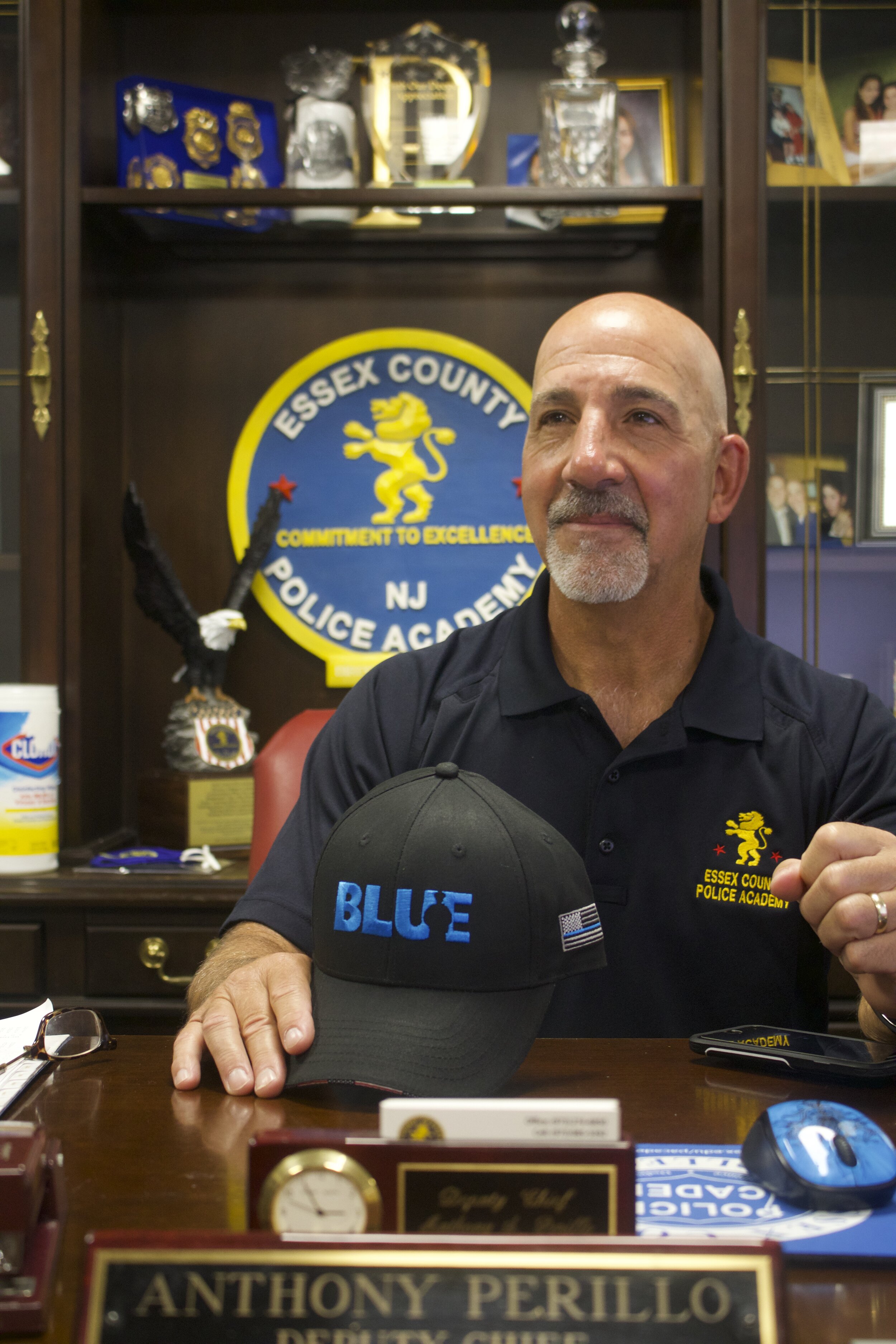
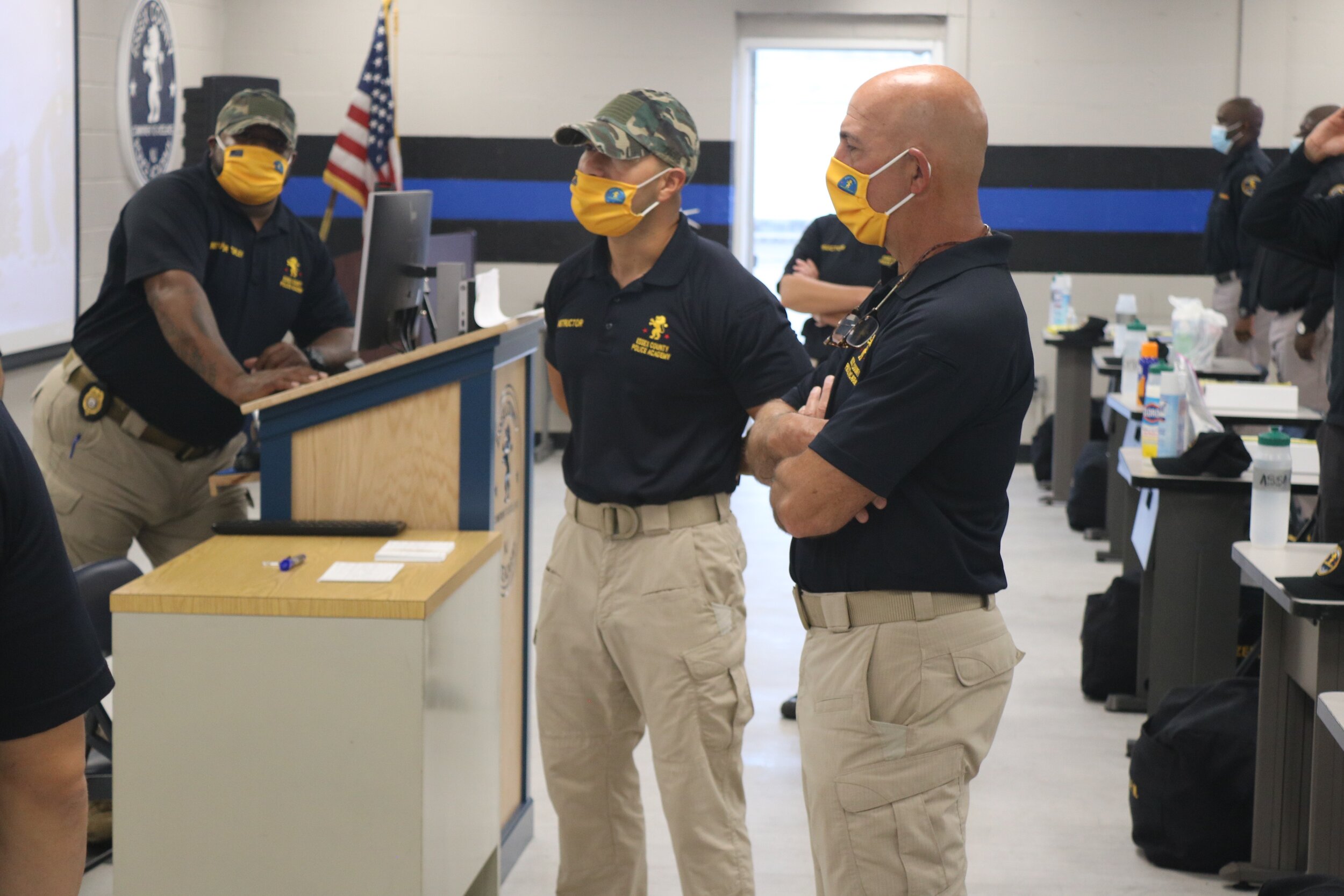
Exclusive Interview with Essex County New Jersey Police Academy Director Anthony Perillo

By The Blue Magazine

IMG_8277.jpg

Blue Magazine recently sat down with Essex County Police Academy Director Anthony Perillo to discuss many important issues regarding the training of recruits during the pandemic, and many other important issues effecting law enforcement. Blue Magazine thanks Director Perillo and wishes the recruits successful and safe careers.

The Blue Magazine: Director Perillo, how long have you been the director of this academy?

Director Anthony Perillo: Since January of 2019.

What were you doing before this position?
I started my law enforcement career in February of 1981 with the Essex County Police Department. I was hired by the Newark Police Department in July of 1985 and spent 27 years, retiring as a deputy chief in 2011. Once returned, I was hired by the County of Essex as an administrator with at the Essex County Department of Corrections, where I served as the Director of the Immigration Detention Program.

What's the experience with the current recruits because of COVID?
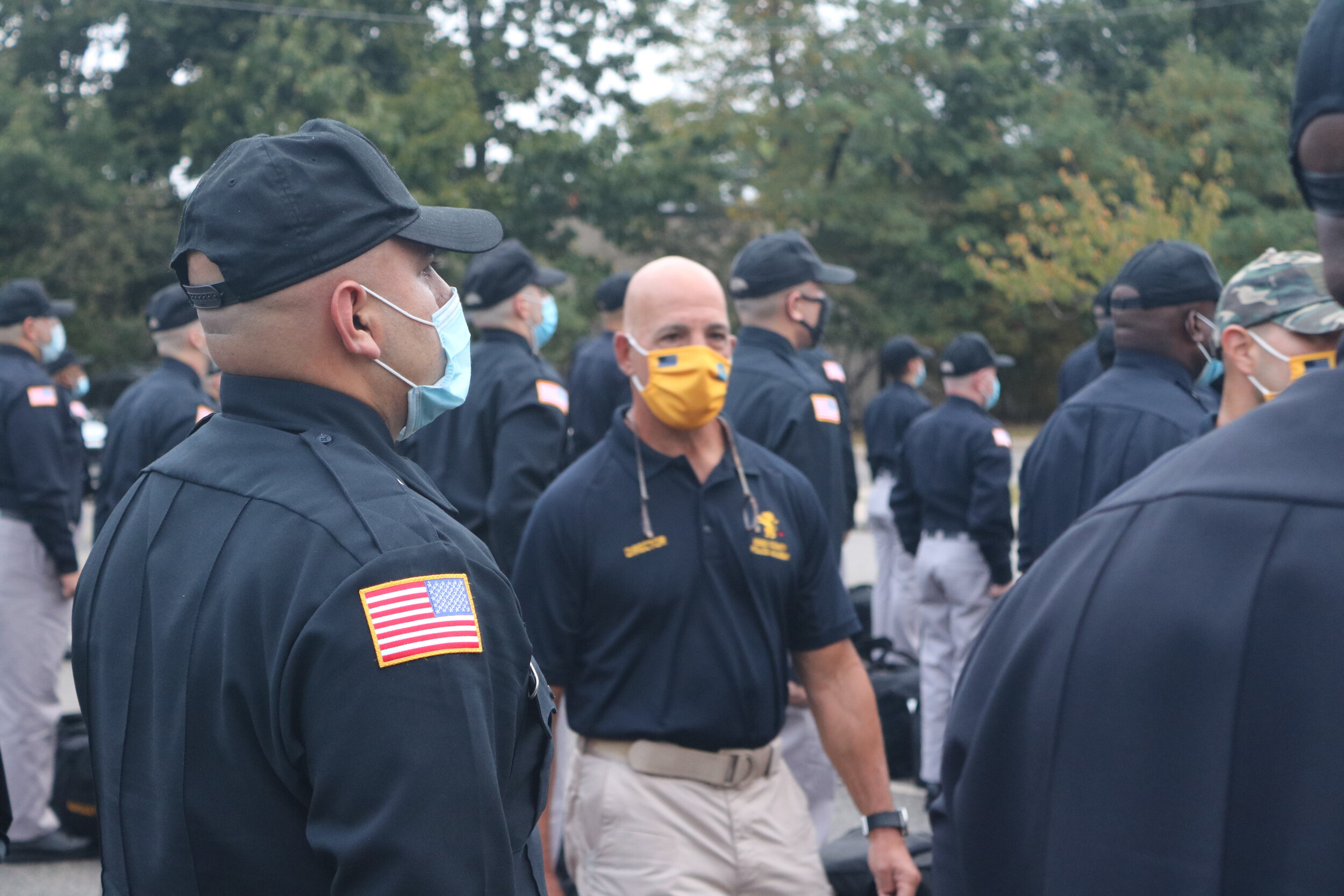
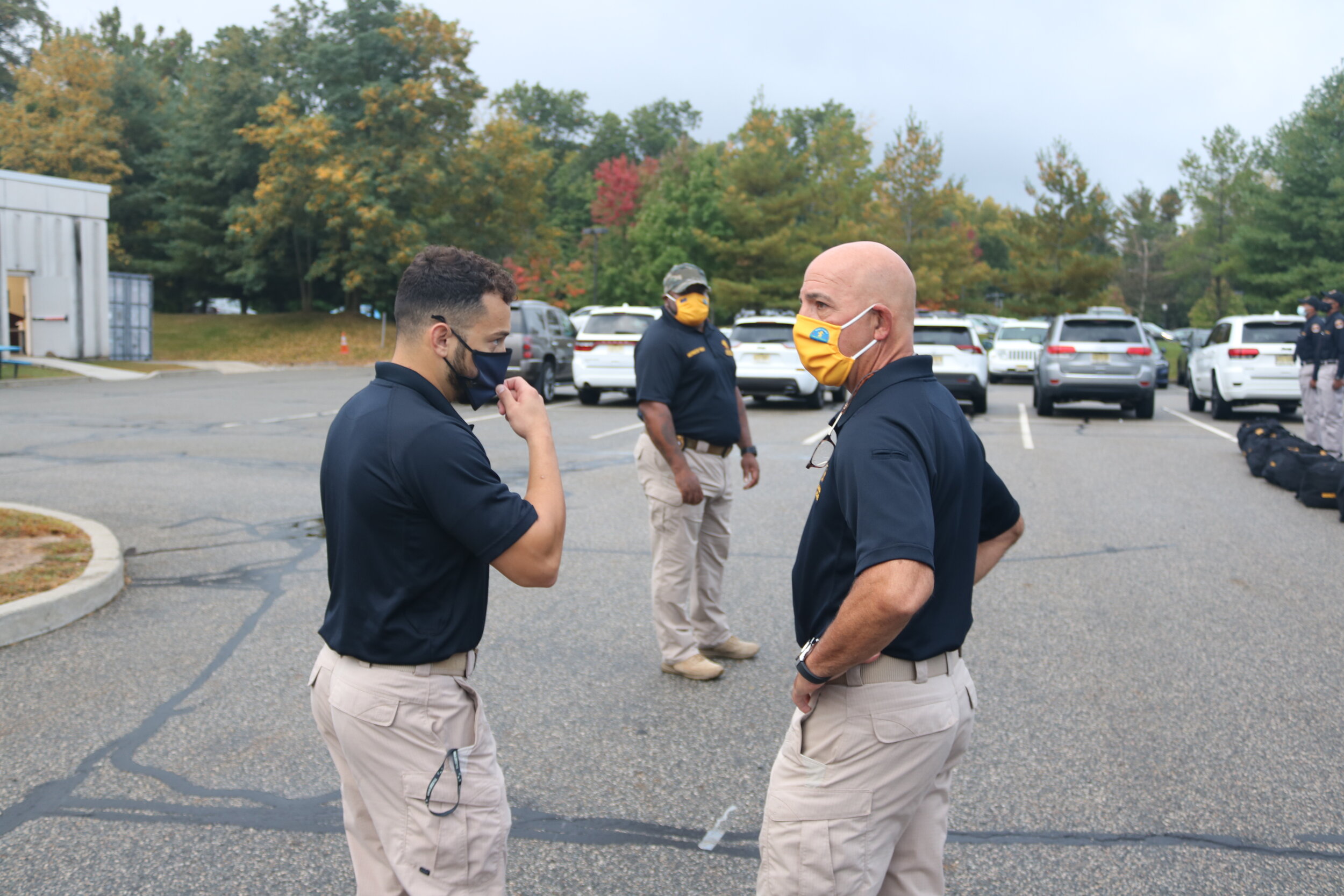
The current recruit class is monitored very closely for COVID, with temperatures and COVID related symptoms checked on a daily basis. Recruits that have COVID symptoms are sent home and are required to be tested prior to their return. In the event of positive testing, recruits are required to quarantine for a 14 day period. All classroom seats are situated 6 feet apart. Which has drastically impacted the number of recruits in the class. The class is told, listen, I don't like recruits not coming to class, but if you feel sick, we don't want to take any chances. We do our best to keep everyone safe.

Prior to this class at the onset of COVID, the NJ police training commission approved our SLEO II class that was in session to be trained virtually for the lecture portion of the instruction. Recruits logged onto our website and were provided instruction virtually. We couldn't successfully do an entire class like that, so we had to eventually get them back in.

Recruits were then brought back, after being tested for COVID,  firearms, defensive tactics, building searches, vehicle pullovers, and hands on training of that nature. We trained outdoors and that was important. Social distancing continues to be very important.

What happens if a recruit or a drill instructor contacts COVID?
Recruits and instructors that have COVID symptoms are sent home and are required to be tested prior to their return. In the event of positive testing, recruits are required to quarantine for a 14 day period. Once determined to be positive, contact tracing takes place and we make a determination of further quarantines or possible temporary shutdown of the Academy.

There's an anti-law enforcement climate out there. Is there anything that this police academy is doing to prepare these officers for what they're about to face?

IMG_6682.JPG

The current climate is extremely upsetting to me because I view the police as the community and the community as the police, and there has to be that trust with the community because we are all the same. There is a lot of negative law enforcement climate out there, and I believe it's unjust. I don't believe that a few negative incidents should have a completely detrimental affect on the entire law enforcement community. So I do talk to my recruits, my instructors, and tell everyone let’s keep everything positive. We have a job to do. You know, we strongly emphasize de-escalation and we attempt to calm situations down and try to curtail the use of force. So we preach de-escalation and talking to people without raising your voice. You try to calm them down. If someone is being aggressive with you, you try to calm them down. The last resort is using force. In order to gain respect you must give respect.

There has been an increase of riots throughout the country. Is there anything that this police academy is doing to prepare officers to handle a riot?
We teach riot and crowd control. As a matter of fact, I've been teaching it for years. It's important that officers work as a team. Riot and crowd control training is based on teamwork and there is safety within that team. Depending on where they are, how aggressive the crowd is and the determinations made at command level will dictate how they operate. Basically, they're there to protect lives, protect property and maintain safety. They shouldn't have any type of verbal communication with the people who are demonstrating. There should always be separation between the police and the demonstrators so they can't be antagonized. But, you know, I preach to my officers, you can't take things personal. Anybody can say anything they want to you and that shouldn't affect how you act. Our officers understand that if we need to move in with formations to guide people, we're there to facilitate movement, not to punish people.

139063800_250722786408498_9091215008100492853_n.jpg

There's officers today who are on the job and see the negative climate and they're confused. They just feel like their departments are not backing them and they obviously feel the tension with the citizens, at least in some areas. What are your thoughts on that?
Law enforcement agencies have to have very close ties with the community. They have to. If you don't have ties with the community, then that will breed miscommunication, rumors and possible civil unrest and disruption. You have to have close ties and be able to depend on our community leaders. I'm from Newark. I grew up in Newark, retired from the Newark Police Department. The Newark Police Department has a very intricate, communication network with the community and community leaders. We have religious-based, faith-based leaders that we can call on if there's any kind of civil unrest and things of that nature. Most of the time unrest is triggered by rumors or communication issues. So if we can bridge that communication barrier, that helps us so much more. So my message to my officers is listen, it's tough out there right now, but to do your job correctly you have to know your community. You have to talk to the community. You have to relate with people in the community. You have to understand the cultures of the community and most importantly you have to show respect to the community that you serve. We want to promote a positive image, not a negative image. And the more positive image that we can promote, the better the department will be. And that's the kind of recruit I want coming out of here. I want a recruit that is going to be a positive image for their Department and the Academy and a person that strives to do the right thing at all times.

What is the vetting process with your drill instructors like? Is there anything you're doing differently now?
I bring in seasoned law enforcement officers that I've worked with, that I know that can do the job. Those that weren’t trained instructors that showed leadership qualities were brought in and taught to instruct. Number two, instructors have the mind set that we are not here to make warriors. We're going to train you to be the safest law enforcement officer that you could possibly be. You're going to be able to protect yourself as well as anyone, but our objective is for you to leave here knowing that respective for others is the number one objective.

USA Today recently published an article. They did the research and found NJ to be 33rd regarding female recruits not passing the police academy. What are your thoughts on that? Do you have this retention issue here in Essex County?
There are physical training standards set by the New Jersey Police Training Commission. Which are as follows: everyone has to be able to jump 15 inches high. Second, you have to do 24 pushups in one minute and it's 24 proper pushups in one minute. Third, you have to do 28 proper sit-ups in a minute, fourth, you have run 300 yards in under 70.1 seconds and lastly, you have to be able to run 1.5 miles in under 15 minutes and 55 seconds. Now, these aren't overwhelming standards. They're not overwhelming standards by any means. But if someone expects to come in here and pass these physical training requirements and they haven't done anything in regard to getting themselves in shape, then it's going to be very difficult for them to pass. With female recruits, from what I've seen so far, is that many do not work on their upper body strength and therefore have a problem with push-ups. The key is if you keep doing them, you'll get better at them. So if prior to coming into the academy they've been training and getting themselves ready, they'll have no problem passing that test. Problem is, if they didn't get themselves ready and they come in the door and they do 3 or 4 at our initial assessment and then they have a lot of work to do in two weeks. You have nine physical training sessions where we're going to prep you in those nine physical training sessions to do the assessment. Again, if you don't pass those areas that you failed the second time I have to dismiss you. And that's the rules of the New Jersey Police Training Commission. So we've had success with the females. As a matter of fact, we had a class of females when we first started here that had failed out of the training academy in Seagirt and they came here and 80% of the females that failed out of Seagirt passed here. We worked very hard with them.

There's more law enforcement officers committing suicide than line of duty deaths.  What are your thoughts on this and what is the police academy doing to combat Blue suicide?
So we have classes sent down by the police training commission regarding suicide awareness and dealing with stress and things of that nature. I also talk to these recruits from day one. I've been on the job a long time and I've seen a lot of friends and colleagues killed in the line of duty. But it's not even close to the amount of officers who take their own lives. And it's so upsetting to me because you would think that we have things in place to prevent that from happening. We would think we'd have early warning signs that we could identify problems before it gets to the point where an officer takes his own life. And it's extremely upsetting to me. And I tell the recruits there's more cops who kill themselves than anything else. I'll bet since I've been on the job, I've seen at least 20 colleagues and friends take their own lives. And you say to yourself, what did we miss here? What red flags did we miss, where maybe we could have prevented it from happening? It’s all about first-line supervision. It's about the supervisor knowing the people who work for them. And if you know the people who work for you and you know they work at a certain level, and now their work performance is dropping — they're not coming into work or they're coming in late — maybe you need to have a conversation with the officer. And I say the same thing for the officers who work together in their squads. You should know the people who work with you and look for the red flags. You look for those red flags, those early warning signs, because maybe, just maybe you might be able to get that person help before it's too late.

What message would you give an officer today who was contemplating suicide?
I would want to get that officer help immediately. I want him or her to talk to people, talk to me, talk to your partner, talk to your boss. Let us get you the help you might not think you need. A lot of people think, well, I don't have a drinking problem. Maybe you do. You need to talk to people. Cop-2-Cop is a great resource. If we can get people to talk, maybe it'll prevent 90 percent of the suicides. Talking is so important. So if you're feeling down, talk to somebody. There's plenty of people you can talk to on the department. It doesn't matter what's going on. Talk to people. Don't put yourself in a position where you're isolated and you're going to do something that's going to cost you your life. So talk.

IMG_6179.JPG

Is there any objective that you want to fulfill here at the academy that you haven't fulfilled yet?
We always strive to get better. I know that we're working on right now putting together training programs in Essex County and also more training programs here in the academy about de-escalation and dealing with mentally disturbed people and once again, calming people down before we have to resort to using force. Respecting others is the number one priority.

So like a verbal judo?
Most definitely verbal judo, calming, talking people down. Yelling is not communication. Talking is communication. Find out what the issues are. Listening, active listening is extremely important. We preach that and we're going to do a lot of scenario-based training here. So that's the direction we're going in. We're always going to get better. There's always going to be things we can learn as a police academy to do our jobs better. Our primary focus is the safety of our officers and the safety of public. Respect is the key to everything.

What is your personal best attribute?
I'm a motivator and I care about my people and it's all about motivating them and preparing them for the job they have coming ahead of them.

What is your worst?
My worst attribute is probably, well, I'm very impatient. My wife tells me that all the time.

IMG_6534.JPG

What bad habits has this profession given you?
I don’t believe I learned bad habits but I remember when I first came on the job, I probably took a lot of things personal. You know, when you were working on the street, you take things personal, someone's disrespecting you, somebody's getting in your face screaming at you. You see atrocities on the street and you take a lot of those things personal. But I've learned that you can't take this job personal. I would have like that reinforced while in the Academy

Do you have any final thoughts for recruits and how do you want to be remembered?
In the academy I tell them that the academy is going to be the best time they ever had on the job. And I would like to be remembered by my recruits as being a person who was a mentor to them, as a motivator to them, as a person who guided them in the right direction and led them. That's how I would like to be remembered as a person who motivated, mentored and respected them.

2020: The Year 'Expert' Credibility Died

By Michelle Malkin

143415988_m.jpg

If there were ever a time to "question authority," as the old counterculture slogan of the 1960s urged, the authoritarian age of COVID-19 is that time. 2020 will go down in American history as the year that public health "experts" got everything wrong.

It's not just that their judgment was faulty. It's that time and again, the professional elites deceived the citizenry, derided other academics and medical professionals who challenged them and de-platformed outspoken dissidents who refused to obey them. These pathological liars are the true public health threat.

Exhibit A: Anthony Fauci.

The incurably smug director of the National Institute of Allergy and Infectious Diseases led the "Great Mask Hoax" in March 2020 when he told CBS News, "There's no reason to be walking around with a mask." He very explicitly characterized mask-wearing as a performative gesture that "might make people feel a little bit better and it might even block a droplet, but it's not providing the perfect protection that people think that it is.”

Months later, fact-doctorer Fauci performed a whiplash-inducing 180-degree turnaround and became the planet's No. 1 mask cheerleader. He rationalized that he needed to mislead the nation about the efficacy of masks in order "to save the masks for the people who really needed them because it was felt that there was a shortage of masks."

I don't know about you, but in my house, we call this sick behavior "covering your behind."

Recently, Fauci was at it again. After repeatedly asserting over the past year that 60-70% of Americans would need to submit to vaccine jabs to reach herd immunity, he cranked up the number to between 70-90% in an interview with The New York Times. Fauci confessed that he manipulated the numbers based on polling data about citizens' vaccine hesitancy:

"When polls said only about half of all Americans would take a vaccine, I was saying herd immunity would take 70 to 75 percent… Then, when newer surveys said 60 percent or more would take it, I thought, 'I can nudge this up a bit,' so I went to 80, 85. We need to have some humility here… We really don't know what the real number is."

"We" need to have some humility? Speak for yourself, Dr. Gasbag!

Fauci further disclosed on CNN that his herd immunity pronouncement was nothing more than a "guesstimate."

            I don't know about you, but in my house, we call this kind of prestidigitation "pulling things out of your behind.

Fauci's colleagues performed similar feats of scientific fraud, deception, misdirection and political propaganda.

The Erroneous Experts shut down playgrounds, ordered us to stop singing and dancing, and canceled Easter, Thanksgiving and Christmas in the name of social distancing — but gave the green light to Black Lives Matter marches, antifa protests and post-election celebrations by Joe Biden supporters.

The Erroneous Experts caused panic shortages of hand sanitizer and antiseptic wipes with unsupported claims that COVID-19 spread through surfaces.

The Erroneous Experts facilitated the suffering of countless patients by recklessly hooking them up to ventilators, turning their lungs to mush and forbidding their loved ones from comforting them as they lay dying unnecessary deaths — while publicity-thirsty doctors and  nurses went viral twerking for TikTok and Twitter.

The Erroneous Experts conducted online purges and witch hunts against naturopaths, chiropractors, independent investigative journalists, informed parents and frontline doctors who advocated vitamin D, zinc, sunshine, exercise, hydroxychloroquine or any other commonsense measures that did not involve lining the pockets of Big Pharma — even as two-faced Fauci admitted he takes vitamins C and D to boost his immunity.

The Erroneous Experts stoked widespread fear of "asymptomatic transmission" of COVID-19, forcing catastrophic lockdowns of healthy people around the globe. But as a new British Medical Journal article acknowledges: "(W)e know very little about the proportions of people with positive results who are truly asymptomatic throughout the course of their infection." About half of people classified as "asymptomatic" go on to develop symptoms. Contrary to the impression Erroneous Experts have left the public with, they have no idea to what extent people with no symptoms transmit the virus to others.

Moreover, the BMJ article makes clear: "No test of infection or infectiousness is currently available for routine use. As things stand, a person who tests positive with any kind of test may or may not have an active infection with live virus, and may or may not be infectious."

So, the COVID-19 tests are unreliable as we hurtle toward mandatory, universal testing, tracking and tracing. And, as I reported in my three-part series on the clinical trials, the COVID vaccines are neither safe nor effective by any honest measure. Indeed, the World Health Organization's chief scientists admitted what I had recently pointed out

"I don't believe we have the evidence on any of the vaccines to be confident that it's going to prevent people from actually getting the infection and therefore being able to pass it on," Dr. Soumya Swaminathan stated.

The "believe science" cult of Erroneous Experts is the epitome of anti-scientific thought. May 2021 be the year of resistance and the death knell for COVID control freakism.

Source: www.creators.com

CAPITOL POLICE OFFICER BRIAN SICKNICK

Article & Artwork by Jonny Castro

Capitol Police Officer Brian Sicknick was one of hundreds of officers who were on the ground actively defending the Capitol Building on January 6, 2021. While in the middle of the chaos, an unknown suspect violently struck him in the head with a fire extinguisher. Though shaken up, Officer Sicknick continued to stay in the fight until things quieted down. Once he returned to the division office, the officer collapsed from the injuries he sustained. He was rushed to hospital where he passed away the following night. The individual who murdered him still has not been apprehended.

Officer Sicknick served as a Capitol police officer for 12 years, and was assigned to the elite First Responder’s Unit; a tight-knit unit who are tasked with safeguarding and protecting the dignitaries inside the Capitol Building on a daily basis. In addition to wearing the badge, Officer Sicknick was a U.S. Air Force combat veteran who served his country proud in support of Operation Enduring Freedom. He was 42 years old.

Attack in Nashville: Were there clues we should have seen?

By Joseph Pangaro CPM, CSO, MOI

On a quiet Christmas morning at 1:20 a.m., an RV packed with explosives drove up Main Street in Nashville Tennessee and parked near the AT&T building. The driver killed his lights and sat there for the next 5 hours.

At about 06:30 a.m., the police received a call about shots fired in the area and responded to see what was going on. Upon arrival, they did not find an active shooter; instead they found the area quiet except for the eerie sound of music playing on a loudspeaker somewhere nearby.

The officers began checking the area when they heard the music playing change to a verbal warning telling anyone in the area to evacuate. The officers immediately recognized the potential for danger and began evacuating local residents. It was shortly thereafter that the RV exploded, decimating a large section of the downtown. Luckily, none of the officers or the local residents were injured in the blast. The fact that no lives were lost is a tribute to the work of the Nashville cops on the scene that morning.

In the hours and days after the blast the investigation continued in an effort to understand the threat. Was there a larger conspiracy at work? Was this a foreign or domestic terror group at work and what else might they have planned?

The answers began to come as the investigators pieced together the available evidence. Hundreds of tips were called in as an attempt to identify a suspect or suspects were pursued. Crime scene investigators identified human remains in the blast and DNA was gleaned from them. Before long, the investigation revealed a name and face - Anthony Quinn Warner, a Tennessee resident living about 10 miles from Nashville’s downtown. A search warrant was served on Warner’s home and evidence was collected. Now the next phase of the investigation began, putting a motive to the crime.

The first reports about Warner were based on anecdotal information from neighbors, police records and friends of the suspect. The initial picture of this man was one of a “nice guy, a quiet man, a friendly person.” People who knew him claimed shock at his involvement in something so horrendous. And, as is often the case, the profile of the man coming to light did not match the terrible act of detonating a bomb in a downtown area.

Over the course of the next few days, it was learned that Warner had acted alone and that he may have held some negative opinions of the police in general. The slow drip of information continued as the investigators began to release more information. Now we saw a very different picture of Anthony Quinn Warner emerging.

Updated reports told us he held not only anti-police sentiments, but he also believed in conspiracy theories about the World Trade Center bombing and the moon landing. These are classic conspiracy theories often considered the thoughts of the mentally unhinged or those on the kook fringe. Cementing that belief was the revelation that Warner believed that reptile aliens from other worlds secretly live among us by concealing their presence by mind control and orchestrating what we do here on earth. Clearly the two pictures of Warner we were given, only days apart, are as disparate and disconnected as to be shocking.

As the days continued we saw official reports that Warner was believed to have died in the blast along with his dog and he was not an unknown subject. In fact, he had been reported to be building bombs in the very RV he used as a rolling bomb and there were indicators that he was suffering bouts of depression. He was giving away property, a classic sign of a depressed person contemplating suicide.

His potential bomb building was investigated, but due to the circumstances the investigation went no further than knocking on his door to ask some questions. The trail then went cold, and Warner was off the radar.

This case, as strange as the facts are, reveal great questions for all of us in law enforcement, the number one question being: did we miss the signs of potential violence that seem so apparent?

In hindsight the answer seems clear. The warning signs were there, but were either not seen, not recognized or not understood by the authorities. In any event, the fact that this act of violence only resulted in the death of Warner and maybe his dog is a small miracle.

This case screams out to us about the need to bridge the gap between events and the ability to see them for what they are in real time so an intervention can take place to prevent a future horror, one that might be much more devastating as it relates to the loss of innocent life.

As an expert in threat assessments, I know the reality of these kinds of events often follow a pattern to one degree or another. We know the initial reports that come out are often wrong. The rush to report the name of a suspect or a motive can cause news reporting that is inaccurate and filled with misinformation, all in the name of being the first to report on the event.

We also know that it is very rare for a person of sound mind to simply wake up one day and build a bomb and detonate it in a place where people can be killed or severely injured. People who commit these kinds of acts, bombers or school/workplace shooters, very often think about what they want to do as they plan for it and then act on it in ways that can be seen.

In the world of threat assessors this behavior, the things that can be seen, is called “leakage.” The perpetrator often says things, or writes things, or posts on social media, creates lists of people they want to target and then acquires the weapons and materials they need to strike out as they advance their plans.

Our problem as a society is that most of us, including our law enforcement agencies, are not properly trained to see these signs for what they are--warnings of things to come.

In the Nashville case there was that report Warner was building bombs in his RV. Getting a search warrant based on the word of an ex-girlfriend may or may not be enough to justify a warrant, but the report of a person building a bomb could trigger more investigation.

Looking in hindsight affords us a crystal-clear view of any signs; seeing things in real time are not always as clear. This tells us we need to find a way to anticipate getting this kind of information and then what will we do with it. The realities of disparate information coming to us are what make connecting the dots so difficult.

With the growing concern over this type of crime, perhaps it’s time to set up a data system similar to VICAP, the violent crime reporting data base intended to link seemingly separate criminal events together with other similar events in other parts of the country. An officer in each agency could be designated to review tips and concerns and try to connect them to local events or reports of suspicious or concerning behavior. This would help to prevent missing possible signs of potential violence from getting lost in the sea of information that comes through every agency.

As we see with Warner, he made negative comments, he harbored strange beliefs and conspiracy theories, he was said to be making bombs, holding grudges against corporate entities, and he was depressed. This is a recipe for attack.

As for how to approach such a situation and what investigative techniques we could use to facilitate the investigation, we need to create an investigative plan that fuses on-the-ground investigations by trained investigators, with the psychological community to offer insight on the profiles of people like Warner to help make the connections the courts need to issue warrants based on solid research-based information. We need to come to an understanding that training for every person in law enforcement and the courts needs to take place on a national level if we are to address these threats moving forward.

The truth is, we can see signs of potential violence, but we must be prepared to investigate these incidents properly, thoroughly, and completely before violence erupts that requires a new paradigm of thought and action. It is only a matter of weeks, days or minutes until the next attack takes place in public, in our schools or in our workplaces. We can wait no longer to act.

THE 44-YEAR PURSUIT OF ONE COP’S DAUGHTER TO FIND HIS SHOOTER

By Lori Cooper

Lori_D Platoon Officer Nick Cooper circa July 1971.jpg

The nation’s most sought-after college football recruit in 1961 went on to become a member of The Columbus, Ohio Division of Police, foregoing a career in the NFL and graduating in November of 1965 from its 33rd Academy Class. Officer Nick Cooper found an instant attachment to third shift as a patrol officer, or what civilians who work those hours like to call the “graveyard shift.” He was an adrenaline junkie who thrived on the criminal element, and a fearless protector. He was my father, an American law enforcement hero.

Before the days of SWAT, an elite tactical unit was formed called “D Company” overlapping second and third shifts from 2000 to 0400 hours. Its officers were required to take all runs where the worst criminal offenses had occurred. My dad was selected to be a member of this prestigious unit in 1966.

On March 15, 1972, he and his partner interrupted a small band of residential career burglars who lived in Dayton, a smaller, urban city 75 miles west of Columbus. Charles Edward Hays, William Raymond Viars and Charles Douglas Cox all carried guns. These men chose to burglarize neighborhoods far from their own. One team member would serve as the getaway driver, while the other two committed the breaking and entering of nice, middle-class homes. If these homes happened to be occupied, they would immobilize their prey by steering their victims to their most prized valuables and cash, all under the threat of death. This was long before the term “home invasion” had ever been created.

At approximately 2200 hours, a young couple arriving home from church pulled into their driveway. They lived on the main thoroughfare that served as the entrance into and exit out of the neighborhood. The couple flagged down my dad and his partner. Their dog wasn’t barking and they knew instantly something was wrong.

Lori_All State Football Running Back  Nick Cooper circa 1960.jpg

My dad’s partner took the rear, while he stayed with the young couple in the front. It was incredibly dark without any streetlights. Suddenly, gunfire erupted, and Officer Cooper’s partner yelled: “Here they come, Coop.” Two men bolted like lightning from the backyard, with my father’s partner chasing after them, tackling Viars to the ground, with Hays flying by Cooper, engaging him in a foot pursuit.

Hays ran across the street and was stuck in a corridor with nowhere to go, surrounded by fences on every side of him. Like a cornered rat, he turned and shot my father at point-blank range with a Browning 9MM. My dad had the inherent knowledge to turn his torso to keep the bullet from penetrating his chest. Vests weren’t worn in 1972. Officers didn’t even have walkie talkies. There was no mode of communication except the radios in the patrol cars and wagons. My father returned fire, striking Hays once in the abdomen.

All three men were indicted by a grand jury on 14 felony charges, including the Intentional Shooting of a Police Officer. Hays was given an O.R. Bond, while Viars and Cox entered into plea bargains and were sentenced to Ohio’s maximum-security prison, The Ohio Penitentiary, located in downtown Columbus, serving 8 and 3-1/2 years, respectively. Hays fled, failing to appear in court, and was later apprehended in Kentucky in 1974 and Connecticut in 1976. Ohio Governor’s Extradition warrants were acquired, with officers assigned to extradite Hays. Both times, each warrant was squashed. Why? I’ve spent these last four years in my own battle to find out, with answers that seemed to lead to coverups from cops to high-ranking public officials.

Lori_Columbus Police Officer Nick Cooper       circa January 1972.jpg

Hays was allegedly “in the wind,” living a life in Warwick, Rhode Island for many years. Eventually, he moved back to Dayton when he inherited a house from a relative within his extended family. Forty-four years would pass before I would find Hays all by myself, locate the arrest warrant and encourage our current prosecutor to reactivate the 1972 indictment under its old case number, eliminating all statute of limitations issues. Columbus officials had ceased looking for Hays by 1980. My dad succumbed to his original gunshot injury and subsequent surgeries.

In February of 2017, a judge ruled the constitutional right to a speedy trial of Charles Edward Hays had been violated when the state of Ohio refused to extradite him twice in the 1970s, legally “prejudicing” him. The case was dismissed, though not without historical significance.

My upcoming book, THE SOUND OF SILENCE, reveals this entire true story about the man who shot a heroic cop, my late dad, who never served a day of time for his shooting, and my entire journey of locating him over four decades later. It is due for worldwide release by Notebook Publishing in June, 2021. 

We Got the Call

By Julia Maki

soldier-996536.jpg

May 30, 2020. We got the call. We packed our bags, laced up our boots and left families in the night to head into the nation’s capital. It is never easy, especially the older I get. Life as I know it instantly stops in its tracks. I notified my job, and coworkers who will have to cover for me. I rattled off the next few days of meal ideas I had planned to my husband. I had an appointment two days later that I had to remember to cancel. There are challenges to being an “on call” mom because you are suddenly plucked from your “normal” life and put into a new one, but it is what we signed up to do.

Jan. 6, 2021. There was talk of activation. We got the call. The cycle begins all over again. Because of my involvement with last summer’s protests in Washington, D.C., I was somewhat prepared this time. I knew the hours were going to be long and the riot gear was going to be painful after carrying it for a length of time. I was prepared for the hatred and disdain that I was faced with last time. I promised myself I would not let it affect me this time. I had extra snacks in my gas mask bag and packed my mole skin for my potential blisters. I was ready to protect and defend against enemies foreign and domestic. But just who was the enemy? Who are we defending our country against?

The citizens? The politicians? The media?

We loaded onto the bus and headed to the Capitol from the Armory to relieve the guys that had been working a 24-hour day. As I stared out the bus window into the streets, I saw houses and parks lined with colorful Christmas lights. Wreaths still decorated the streetlamps. An occasional car would pass, and every few blocks, a couple would be walking down the sidewalk. It looked like… well, what one would imagine Washington, D.C., looked like on any other winter night.

In fact, the only indication that anything was out of the ordinary were the streets that were barricaded, making a police escort for us into the city necessary. There was also a black chain-link fence that had been put up around the Capitol lawn. This matched the fence that was placed around the White House in earlier months. It had since been covered with signs that read Black Lives Matter with additional words that supported peace, and other words that continued to divide.

veteran-1807121.jpg

We were sworn in support of the Capitol Police and sent out to guard the Capitol Building and all the congressional office buildings that surround it. The night was quiet. The protesters had gone home, and only the D.C. residents remained. There was stillness and rest, and yet it had only been a day since the break-in at the Capitol during the protesting event. For now, it appeared to be business as usual. And as people passed us, they expressed their appreciation for us being there. They told us to be safe. It caught me off guard, as I had prepared for the worst. But for the next ten hours, not a single negative word was uttered to us by the public.

Every night for over two weeks last June we worked for the DC Park Police, patrolling the streets and monuments while the protests endured until tensions calmed and destruction eventually eased. Now here we were, seven months later after another politically motivated incident of destruction and all D.C. National Guard has been activated. Although I had heard many comparisons of these two events, in my personal experience, there were very few similarities.

Previously, during the BLM movement, we (the guards and other federal agencies) were called every name in the book. We were verbally assaulted. We were physically assaulted. Bottles of bleach and urine were thrown at us along with bricks, rocks and any other available object. We were threatened every day by our own American citizens. We did our best to stop the fires and destruction across the city. And though I can only speak to what I saw in D.C., I know this happened in multiple cities all over our country. I would have expected something like this in another country, but not in our own. But the media glossed over this- even encouraged it- as, “The only way to be heard was to be destructive and cause turmoil.”
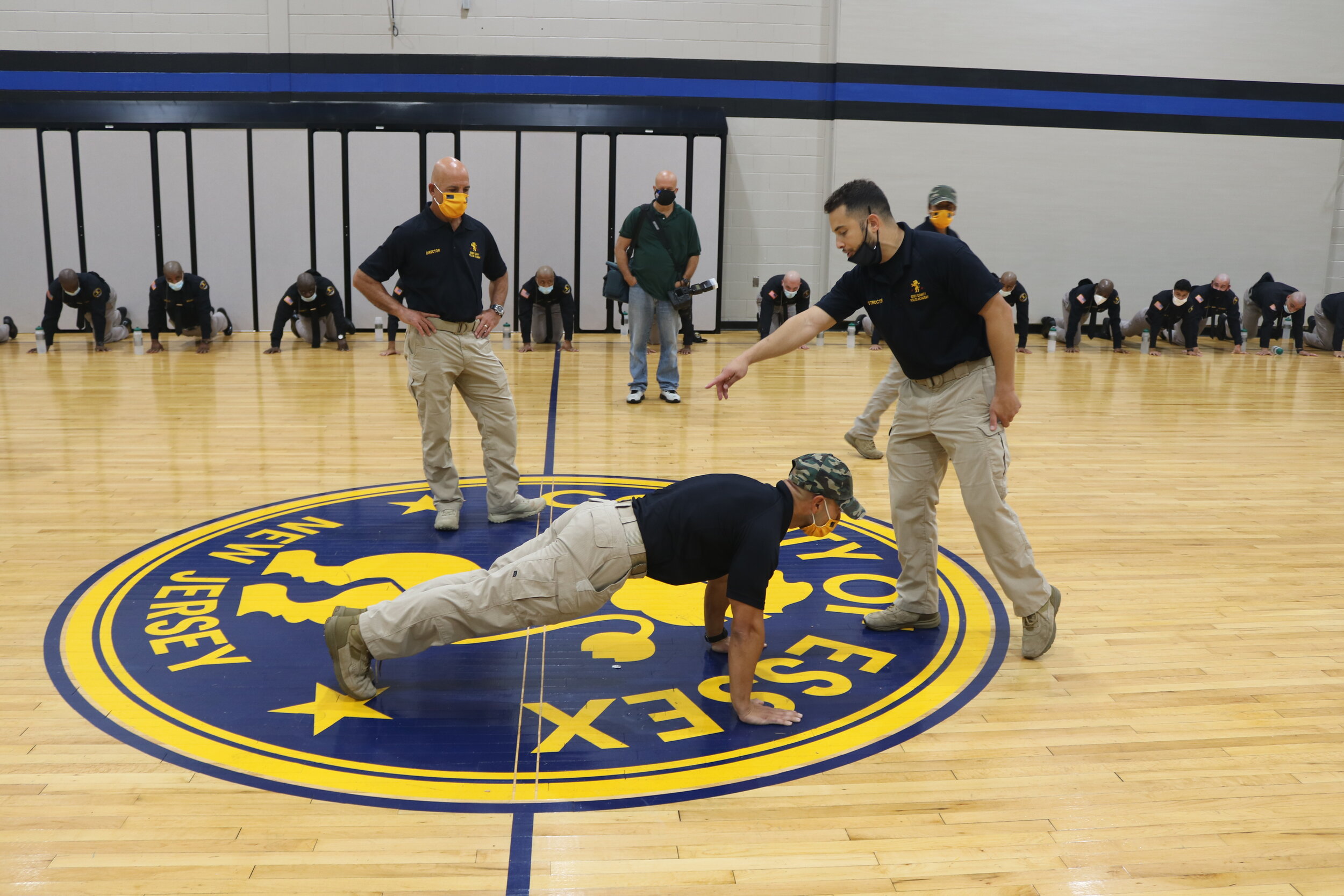
The division on social media grew apparent. The dehumanizing of people had begun months ago. In this current state, we saw masks instead of smiles. We saw uniforms or color instead of people. We saw labeled political parties instead of the personal issues and concerns that were the real reasons behind our votes. If we are for this, then we cannot be for that. If we are focused on what divides us, we will not see the breakdown of our country that’s happening before our eyes.

It took me a quite a few weeks to let go of the animosity that I felt last summer. I was fortunate. I could take off my uniform and go back to my quiet job in southern Maryland- a place that felt like it was on the other side of the world compared to D.C. However, the police forces that worked in that city never got a break.

It is true that the extremists in the crowd are always the loudest. We must remember, though, that they do not represent all voices of the population. In the end, don’t we all want the same things for ourselves and our children? They are the simple promises that this country was founded on: Life, Liberty, and the pursuit of happiness. It has never been more apparent how important it is for us to stand united right now. To spread kindness and understanding instead of judgment. To listen to others. To be kind to others. It could change everything.
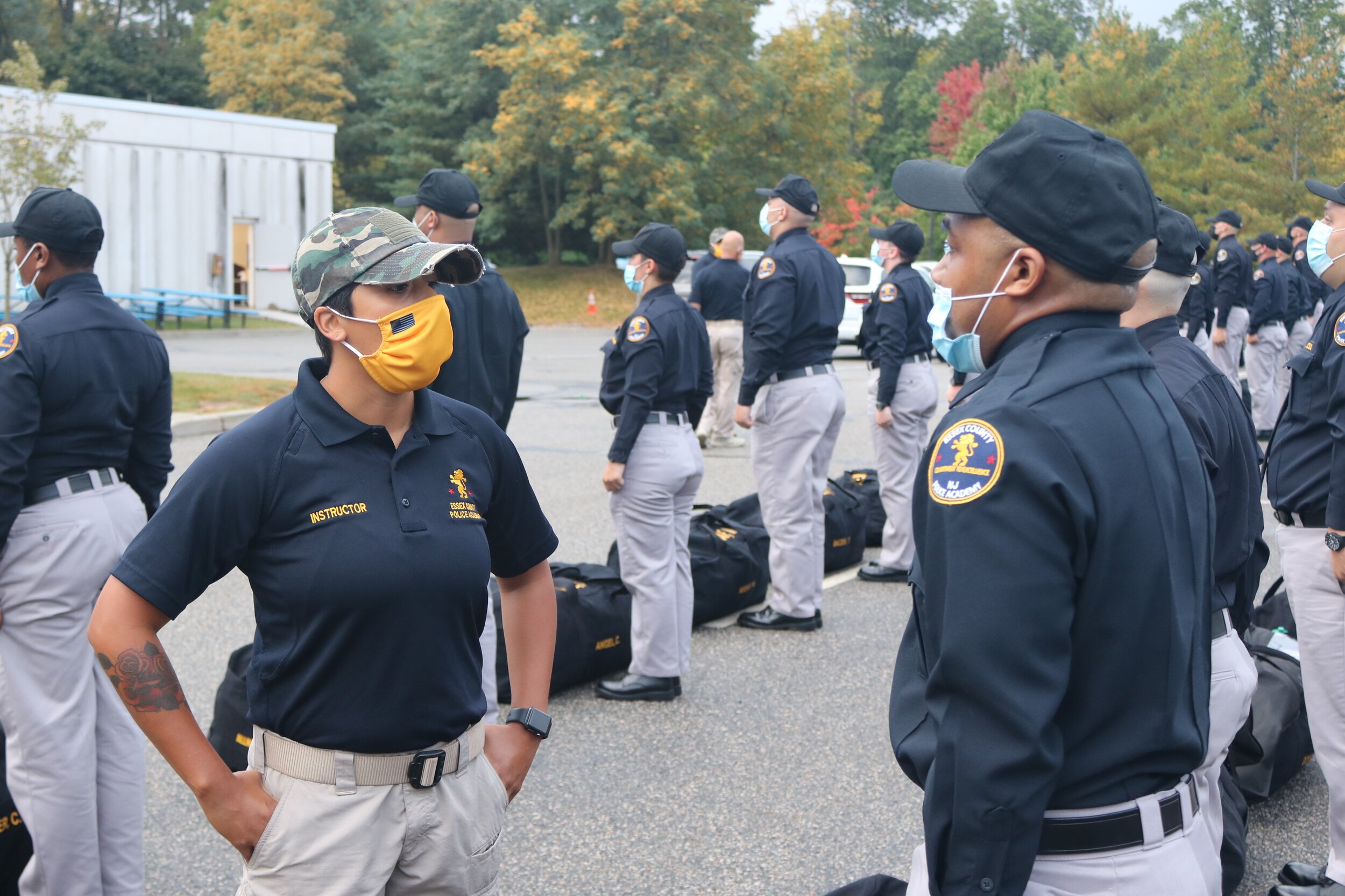
The Next 10 Years for Law Enforcement: Will We Survive?

By: Kirk Lawless

On 9 August 2014, in Ferguson, Missouri, Michael Brown, a criminal engaged in actively assaulting a police officer, met his fate at the end of the officer’s gun.  The event created the near “perfect storm” and has proved to be the catalyst for the anti-police agenda that the radical left had been praying for. 

technology-2500010.jpg

While none are kneeling at the shrine of the one they have elevated to martyr status, he was the best they had to offer and they took advantage of it. In reality, he means nothing to them.  He was just another dead black guy; but he was killed by a cop, a white cop, and that’s what the “Left” and their anti-police agenda needed.  MB could have encountered a black cop and ended up as dead as a beaver hat, just the same, but that’s not what the left wanted.  That would have just been a 10-second spot on the local news. 

I’m from the area, so I am more than familiar with the event and its aftermath, and most importantly what it did to cops across the nation.  It served as the benchmark for the monsoon of shit that cops are still dealing with.  Before Officer Darren Wilson did his job, nobody knew anything about Ferguson, Missouri.  Now it’s an everyday household word.  “The Ferguson Effect” is a bullshit term, based on a lie, but I suppose we’re stuck with it.

After then President Barack Obama weighed in and sent the criminal AG Eric Holder to conduct his Salem Witch Trial on the individual officer, the Ferguson Police Department, and all local cops were in the sights of the Justice Department. From there, it spread like wildfire.  Those actions have continued to spread aggressively and cancerous-like with no sign of letting up, which leads us to the present, here and now. It has changed law enforcement, the way we operate, the intensified scrutiny, second-guessing, armchair-quarterbacking, and continued condemnation of an honorable and necessary profession.

Can we make it another 10 years?  My answer is yes, but things need to change. I’m not so foolish to let it go at that. That’s how politicians talk, but I’m a cop so I’ll put a more personal spin on it.

First, the manipulation of left-wing media by “dark money” has steered the general public toward demonizing and hating the cops.  We have thick skin. We’re used to it.  The events of January 6th proved it at a level that disgusts me.  If the public is so naïve to believe that everybody in the crowd at the United States Capitol were Trump supporters, grab a dictionary and look up “Agent Provocateur” and get back to me. 

The media loved the event, those on the “Left” some on the “Right” were enthusiastic and jumped at both the chance to attack the standing president, while jumping ship, mostly to protect themselves and their positions by switching sides.

Did you notice who was stuck in the middle, in addition to the innocents and the peaceful protesters?  The cops!  We don’t get to run away.  We get to stick around and deal with the shit. As usual, the cops had only seconds to react and by their actions, the events post-Ferguson had some of the boys and girls in blue exhibiting a great deal of self-restraint, hesitation, or a combination of both.  Damned if we do, damned if we don’t. 

Like the poor copper in the Capitol that had his expandable baton at the ready, who retreated up several flights of marble steps, instead of charging the bearded attacker and opening his head like a book.  Pre-Ferguson, that guy would probably still be getting his head stitched up. I don’t blame him for not splitting the bearded guy’s wig (but it should have happened).

I don’t know the particulars yet, as to how the Capitol Police Officer Brian Sicknick died, but he died doing his job. His blood is on someone’s hands, but certainly not on President Donald Trump’s.

The woman who got shot (I wasn’t there, so I’m not going to weigh in on it, other than to say, if she hadn’t been there she wouldn’t have been shot; that is 100% true), I don’t know what her agenda was.

I would like to commend the copper on the front line throwing haymakers at the fence giving as good as he got, taking a quick break to Frisbee toss his uniform hat to someone at the rear so he could get right back at it, putting in work and punching folks who needed to get punched.

So part of us surviving the next 10 years - my second point - is we need more bosses like that guy. I’m certain he was a boss, by his uniform. 

Point three: People will say, “The police need more training.” You probably have zero idea how much training some of your cops have.  I’ve lost track of how many training hours I have under my belt (like most cops), a bachelor’s degree and a graduate degree and 28 years of rock-solid street cop experience.  Where do you “get” street experience and “street creds?”  On the streets, not hiding behind a desk, and point of clarification you really don’t “get” those creds, you earn them.

I spend time in the police academies and run in certain training circles, my opinion. Some of these places are setting up their recruits for failure (or worse).  These academies should be churning out top-notch recruits, but then they’re turned out with field training officers who have only been cops for less than five years (it happens).  It’s a recipe for disaster. If you have dinosaurs at your service, and don’t take advantage of them, shame on you!

Point four:  This is really two parts.  You want to fix the police? The system? You have to start at the top. Yup, politicians. You have just witnessed the work of the most pro-police and pro-law enforcement president the United States has had in the White House.  I don’t need to get political other than to say look at the most problematic cities in the U.S. and follow the trickle, down to the local level. That includes mayors, prosecutors, judges, police chiefs and start there. The police can’t fix it; the voters are the only ones who can correct the ills of society. 

Most taxpayers have zero idea where their tax dollars go.  You get more bang for your buck when you elect folks who have a vested interest in their respective communities.  The elected folks, who do the appointing and hiring, have an obligation to get the best people for the taxpayer’s money.  Hold them accountable. 

Say you work in a community that has a history of “bad politics,” the ones so incestuous everybody has eyes set a little too far apart as though their daddy was a hammerhead shark.  In departments where “who you know” is more important than “what you know,” you might end up with a chief of police with a GED instead of a required college degree and those “rocket boys” or “wonder ponies” who are routinely promoted without the required qualifications and with the speed of a comet are the ones without street creds or street smarts.  You put guys like that in charge and there you go, you’ve been had. Oh, they can fluff up a resume and lie about the education they wish they had, but they haven’t put in the work. 

So, what kind of boss are you getting with a guy or gal like that?  You’ll get a political hump; the kind that will talk about transparency, (even though they probably can’t spell it).  It’s quite easy to figure out and is entirely correctable, but they’ll make you work for it. Show me a guy who made a career of kissing ass and demanding political favors and I’ll show you the boss that will spend his or her time hiding in the bushes when “shit gets real.”  You’ll also end up with a second-rate department that will become a “jumping-off point” for cops to get a couple years under their belts and then leave. The cops in it for the “long haul” will surely suffer.

The politicians who condemn us, some of whom were protected at the Capitol and escorted to safety by wait, who? Oh, yeah, the police officers.  Look, you bastards can’t have it both ways. You want us to be professional and non-violent for the most part, but when the excrement hits the oscillator, you want us to dial that violence shit up to 10. You are no more important than the next guy. We’ll put in the work.  Here’s a clue, just let us do our jobs. The stick doesn’t discriminate; so don’t complain when we use it.

Cops are always going to be on the frontline. We’re also going to be targeted and we’re definitely going be stuck in the middle. We’ll line up to be the sacrificial lambs. But, we’re also going to wade into the middle of it to save your ass!

Can we survive the next 10 years?  I believe we can, but we need to make some changes.  The next four years are going to be tough on us. The cops reading this know it’s true, they just can’t say it. I will continue to do so. Be safe (and deadly if need be)!  

Artificially Driving Down Crime Rates

By David A. Clarke Jr., Sheriff (Ret.) Milwaukee County

33748592_m.jpg

Keeping crime and violence in check has always been a challenge with major urban city law enforcement agencies. Agencies are almost maniacally driven about crime statistics. Staffing and deployment strategies are being determined based on how much crime is occurring and where. Neighborhood residents get nervous when news reports of crime waves set in. Safe city rankings are determined by crime rates. Insurance rates are calculated by how much property crime occurs in a particular city. Crime reduction matters.

You may recall that beginning in the late 1980s and lasting for nearly two decades, a renaissance occurred all across the country when a crime reduction strategy called Fixing Broken Windows emerged. Its authors, George Kelling and James Wilson, put forth a thesis that was based on police putting a higher priority on going after lesser crimes like property crimes and acts of disorder. The theory was that quality-of-life offenses were an indication to criminals that nobody cared about their behavior and that citizens were numb to it and were not likely to call police nor would anything be done about it. This cynicism allowed the criminal element to operate in the open as resident fear increased. It caused people to withdraw from engaging in neighborhood life. Social interaction can reduce crime. Kelling and Wilson’s thesis was that the occurrence of property crimes and other quality-of-life offenses were the precursor to more serious crimes.

When William Bratton became commissioner of the New York Police Department, a top commander named Jack Maple came up with a strategy based on the Broken Windows theory of policing. He called it Comp Stat, short for computer statistics. When crime was mapped using computers, patterns emerged. The thought was to “put the cops on the dots” thus going from reacting to crime to preventing crime. Computer generated statistics allowed neighborhood precinct commanders to get information to front line officers in real time. It allowed officers to identify the criminals on their beat where they could be focused on while targeting specific offenses. Quality of life offenses like subway turnstile jumpers and squeegee men were harassed. It brought that disorder to an end. Policing went from being reactive to being proactive. Citations began to be issued for lesser crimes and disorder. When fully implemented and over time, not only did property crime and disorder go down, violent crime was reduced by record numbers. New York City went from having over 2,200 murders a year to just over 250. Gotham went from being considered unlivable to becoming America’s safest large city based on low crime rates.

Many of you reading here might remember the period of what was called the great crime decline. It is important to have a reference point to compare what was an intolerance toward crime at the end of the 20th century to what some policy makers are proposing today.

As if ideas like defunding police, abolishing and re-imagining police is not crazy enough, now get this out of the cities of Seattle, Portland and Minneapolis. These lunatics are actually talking about reducing crime not through sensible crime reduction strategies like were done in the 1990s. No, they are actually talking about declassifying certain types of lesser crimes and inserting clauses into certain categories of crime that allow the perpetrator an escape from arrest and accountability if they can show a basic need to have committed a crime. In other words, poverty will absolve the perp along with mental health or addiction. That’s right. If you are a drug addict and you commit crime in furtherance of that addiction then you walk. So what if you throw a rock through the plate glass window of a business or damage your car? If you claim the devil made you do it, you are absolved of that being classified as a criminal act. And get this. Selling property that you stole from somebody else is now lawful if you can show a basic need like poverty.

In any other time period, this would be considered unfathomable. Unfortunately, however, we are no longer applying common sense to public policy. We are going from what worked in keeping neighborhoods safe to a model of social engineering using neighborhoods as petri dishes and human subjects as lab rats.

This is not going to end well. It never does when people in position of suggesting public policy and who should know better behave irresponsibly and in what is nothing more than an act of moral preening. As this, let’s make believe it is not crime, is being proposed, both property crime and crimes of violence are escalating in the cities I mentioned. The shame is that these policy-makers will not be held accountable for this insane policy nor are they likely to be the victims of this buffoonery.

PREPARATION: Use of Force and Self-Defense

By Lt. Robert Centkowski

2020 was a crazy year by all accounts. Police officers have had to deal with a national COVID pandemic that put a strain on officer’s health as well as on manpower. If this was a normal year, that in itself would have been a lot to deal with. Well it was 2020 and that was just the beginning.

IMG_3274.JPG

On May 25, The Minneapolis Police Department responded to a counterfeit $20 bill call at a deli. In this incident captured on video, George Floyd is on the pavement with officer Derek Chauvins’ knee on his neck. These nine minutes would set back all the hard work and professionalism 99% of us officers have been doing, igniting nationwide protests and a new call to “defund the police.

NJ Advanced Media conducted a six-month investigation of the use of force incidents involving New Jersey officers from 2012 to 2016 and found a reported 70,405 incidents. The average officer will be involved in approximately four use of force incidents a year. In NJ we receive a block of defensive tactics training in the Police Academy, but for most officers that will be the last time in their career they will receive this form of training.

To Chief Michael Foligno of the Elmwood Park Police Department this just was not enough. He is a 31-year veteran of law enforcement who has been chief for the past seven years. He was an accomplished wrestler and has over 25 years of coaching experience, including coaching for the NCAA Division 3 wrestling team at Delaware Valley University. He continues his own training at Tiger Shulmann’s Martial Arts. While training, he met Jimmie Rivera. Jimmie Rivera is currently ranked within the top 10 of the UFC’s Bantamweight Division; Jimmie holds the record for the best takedown defense accuracy in UFC history and has been practicing martial arts for over 20 years.

IMG_3281.JPG

While training together, the two often discussed police work and the lack of defensive training offers receive. Chief Foligno is very community policing-oriented and understands that a trained confident officer is a benefit to the safety of the community, the safety of the officer involved, and even the safety of the person being detained.

This, along with Jimmie Rivera’s respect for law enforcement and the work we do sparked the beginning of a program that they developed to provide often-neglected training of defensive tactics. Each class is 90 minutes long and is broken down into three parts. After a quick warmup, officers begin the jib jets portion of the training. The officer learns how to escape from chokes and life-threatening holds, learns how to perform and defend from takedowns and learns the art of gaining control from the bottom and top positions on the ground. All the techniques are developed with the presence of the officer’s duty weapon in mind.

The second portion of this class focuses on defending from strikes on your feet. This involves bag strikes and learning defensive and effective counters to a stand-up attack.

The last part of the training involves calisthenics which helps in the officer’s fitness which is also key to his overall safety and health. The main point of this training is to provide officers with the confidence in their ability to defend themselves in a use of force situation.

We all do a lot of training in many aspects of our jobs, from domestic violence to firearms qualifications. Defensive tactics has been often overlooked. We focus on use of force guidelines that point out the things we are not allowed to do but neglect providing an officer with training and practice of useful techniques to keep us safe. This program is designed for that lack of training and strictly adheres to the Attorney General Guidelines surrounding use of force.

Officers of the Elmwood Park Police Department, for example, are expected to attend three of these classes at a minimum monthly. The program began in August 2020. Most officers have experienced positive changes in both physical fitness as well a greater confidence in their own abilities.

The opportunity to work with a professional like Jimmie Rivera is a once-in-a-lifetime experience. He takes his time to go over the moves slowly and takes time with each officer to help adjust their technique. He puts his heart into the curriculum, and his respect for law enforcement and the work we do is apparent in the time he dedicates to our department.  All of this while training for his career and upcoming fights in the UFC. So in an age where the term “defund the police” has grown in popularity, it’s great to see as an officer that there are still people who care about our safety. We are provided many tools on the job from, OC spray, Tasers, to a firearm, so why not provide officers with one of the most important tools we can, the training and confidence in our own skills to protect ourselves and the community.

MY BROTHERS KEEPER

By: Michael D. Boll

Burkert.png

During my police career, I increasingly wanted to do get more involved and really help my brothers and sisters in blue. I saw the great work done by the New Jersey State PBA and decided to run to become the local's PBA delegate. Since being new and not knowing much about my new position, my friend and fellow delegate Ken Burkert took me under his wing and immediately began mentoring me. Still to this day, Ken continues to give me advice and assists with the work we do for our charity.

Ken Burkert grew up in Hillside, New Jersey and attended Hillside High School where he was both an outstanding football player and wrestler. Shortly after graduation, Ken was hired by Union County Corrections. While employed at the jail, Ken became the local’s state delegate and was responsible for helping over 300 members. Ken has always put his members first and has helped so many brothers and sisters in blue get the fair treatment they deserved. Fortunately, Ken’s work did not go unnoticed and, in a very short period of time, he was elected to the New Jersey State PBA’s state board, where he remained for the remainder of his illustrious career.

Ken is a great family man married to his wife Renee for past 27 years and she has been his biggest advocate throughout his career. He has a daughter and twin sons who became extremely successful in their endeavors.  His daughter, Victoria, is completing graduate school at Rutgers for a (MSW) Masters in social work.  His sons Ryan and Connor were both New Jersey state finalist wrestlers, and received scholarships to continue wrestling Division I at Hofstra University in the EWIA conference.  Both sons graduated with marketing and finance degrees from the Zarb School of Business.

Ken has always made himself available, spending countless hours helping our uniformed heroes get through some really difficult times. During his time on the state board, Ken spearheaded numerous anti-suicide programs and events. He was a founding member of the PART (Peer Assistance Response Team) and served on the New Jersey Suicide Task Force. Ken also helped create a law enforcement suicide awareness walk, which brings officers and their families from all over the state together to honor our lost members to this ongoing tragic crisis.

Burkert1.jpg

This incredible work was done mostly on his own personal time and he hasn’t slowed down since his retirement. After Ken retired, he was employed by the Penn Medicine-Princeton House Behavioral Health Team. Currently, he is a liaison to first responder organizations, facilitating the smooth transition of first responders to Princeton House Behavioral Health’s First Responder Treatment Services and outpatient care within the community.

Recently, Ken and his team partnered up with the Union County Sheriff, Peter Corvelli, for employee support and counseling training. Members from the Union County Sheriff’s Office in collaboration with Penn Medicine Princeton House Behavioral Health hosted training on traumatic events in the workplace, offered Peer-to-Peer counseling and provided mental health wellbeing for officers and supervisors.

Recently, Ken has joined our team as the Peer Support Specialist, and he continues to advocate for uniformed heroes.  In the next few months, Ken will be assisting us with its first statewide PTSD awareness and anti-suicide campaign. The initiative is fully backed by the NJSPA, NJ FMBA, American Legion, NJ VFW, and numerous elected officers. Ken will be helping us build a strong mentorship program that aggressively seeks out veterans and first responders in crisis, always focused on the goal to help prevent suicide by taking a proactive approach.

Recently, law enforcement in this country has been experiencing some hard times which has resulted in some necessary changes. Throughout these changes, though, we must always assure the well-being of our brothers and sisters in blue. I know that having my friend Ken Burkert on our team will definitely have a huge impact on helping our first responders live a better life. First responders in New Jersey need to know there are people like Ken Burkert out there making a positive difference and working day and night for them. It is essential that their needs are addressed properly by those who understand their experiences.

If anyone is in need of peer assistance, please call his cell (908)346-1691.

Editors Point of View

Welcome to our final issue of 2020. As you can see on our cover, we confront the critical issue of speech suppression. As officers, we are intimately familiar with speech suppression, having worked under many totalitarian departmental policies that severely infringe upon our constitutional rights. Moreover, nowadays, citizens are getting a taste of this treatment. Social media tech giants are silencing their users, and it’s not going over well. Backlash is unprecedented, and alternative social media platforms have seen a spike in users switching over to avoid censorship. But this doesn’t address the underlying problem.  Freedom of speech is under attack in our country, and little is done to correct this assault. Blue Magazine will continue to lead the law enforcement discussion on this topic as we move ahead into 2021. Be sure to check out our cover story.


During this time of year, we must slow down and reflect on what is important to us. The value of family and real friends in your life must never be underestimated. Make sure you set some time aside this holiday season to spend time with the people who are worthy and deserving of our most precious commodity (time). At Blue Magazine, we are thankful for our writers and sponsors who have been with us for many years and the many new ones who have recently come aboard. After Pres. Trump complimented our magazine at his 2020 campaign rallies, we received a tremendous uptick in article submissions. Thank you, Pres. Trump for helping us continue to grow our influence and voice across our great nation. We are the only independent voice owned and run by active and retired officers. We are proud to be the uncensored voice of the front-line officers. We are looking forward to continued success in 2021.

And lastly, I am glad 2020 will shortly be behind us. The anxiety of 2020 has been massive for many traveling uncomfortable roads. 2020 has taught us many significant lessons, including that happiness is a mindset and attitude you control no matter what the circumstance. Material possessions, relationships and wealth can be taken from you, but only you can surrender your mindset and attitude. In every difficult situation, there is light. Seeing that light is at times our greatest challenge. Therefore, as we welcome 2021, bring a better you along for the journey. Push forward and stay focused.


Congratulations to Leonia Police Chief Tom Rowe, who recently retired after 30 years of service. Chief Rowe established an admirable reputation as an intelligent and skilled law enforcement leader who stood up for his officers and provided excellent policing services to the community. Blue Magazine wishes Chief Rowe much success in retirement!


Merry Christmas and Happy New Year!

 By: George Beck

Speech Suppression: The Erosion of Our Rights Continues

By David A. Clarke Jr., Sheriff (Ret.) Milwaukee County

34100378_s.jpg

We are entering a very precarious and dangerous time in the American history of our experiment in self rule. The Framers of the Constitution knew that if they didn’t codify what a strong central government was limited to in its exercise of power over the people that the abuse they experienced under the Crown of Great Britain would continue. We would simply have new masters. We are seeing that today like no other time in recent history.

There is nothing ambiguous in the words, “Congress shall make no law…abridging the freedom of speech found in the First Amendment to the US Constitution." 

Once upon a time, both sides of our political discourse, certain aspects of freedom and liberty like free speech practice of faith, right to protest, unreasonable search and seizure extremely sacred. Today? Not so much. What is interesting is that a half a century ago, it was the American left, liberals and Democrats who were very distrustful of a strong central government. They recoiled when they felt free speech was being infringed upon. They despised government intrusion into their lives. They were very distrustful of agencies like the CIA and FBI. They guarded their right to speak freely so closely that liberals sometimes even went overboard like protecting flag burning and hate speech. They saw that no right was safe unless taken to the extreme. Civil rights groups like the American Civil Liberties Union did not hesitate to sue in federal court when they suspected an infringement on speech no matter what the political persuasion of the aggrieved. That day is gone.

We are now in a period where speech is being not just limited, but suppressed. Only certain speech is allowable. Now certain words are called “triggers” that will get the person who uttered it fired from their jobs or ordered to attend brainwashing training on becoming woke. It gets you suspended from social media sites. Even constitutionally protected political speech is being squashed.

133819162GS_s.jpg

The difference today is that government isn’t necessarily the oppressor. They have proxies doing it for them. Twitter, Facebook, YouTube are squelching speech on behalf of government. The CEO’s of these sites are unabashed liberals who vote Democrat and hate conservatives. What makes this untenable is that they receive government protection under what is called Section 230 of the Federal Communications Commission code. Without getting into the weeds in understanding this federal bureaucratic maze, this section protects platform providers from Big Tech corporations and says they are not responsible from what others say or do online for instance. In part it says, “No provider or user of an interactive computer service shall be treated as the publisher or speaker of any information provided by another information content provider.” In other words they cannot be held responsible for what somebody else says. So the question is why does Twitter, Facebook or YouTube care what somebody posts, within limits of course, or whether or not it’s true. Section CDA 230 was created to allow free speech online to flourish but it is being abused by totalitarian speech Nazis. Instead, these corporations have turned this on its head by monitoring things said on their platforms and removing it if they find it distasteful whether true or not. They have anointed themselves fact checkers. It’s highly subjective as it appears that people on the left can say anything they want with impunity and only conservative speech is removed. In other words they are deciding who can say what.

What makes this even more oppressive is that the goal post of the media corporation’s terms of service continue to move. Nothing is clear. The rules continue to be interpreted on a sliding scale. Who is making these decisions to remove speech from the public domain, some millennial living in their parent’s basement? Do they have any First Amendment education or training? Do they have names where we can search their social media for biases?

98102562_s.jpg

What Big Tech needs to be reminded is that although they own the platform, they do not own the content. In other words the speech is owned by the person posting it. If it is simply an opinion and the person saying it is way off base, who cares? If something factual is posted with accompanying evidence that hurts Democrats like Joe Biden about what role he played with his son and selling US influence in dealing with government leaders in China and Ukraine, why would Big Tech remove it? The answer is obvious. It is a power political move to suppress information from the public.

I have personal experience in having my speech suppressed by Twitter numerous times. In one post referencing government lockdowns due to the pandemic, I posted for people to resist and take to the streets because there is no health crisis exception for government to violate my freedom of movement by putting me under house arrest without due process. Some courts have shot down some of these onerous restrictions regarding lockdowns. Twitter said that my post violated their terms of service because it promoted and advocated for suicide. I am not kidding.

This is how dictatorships are spawned. It’s straight up totalitarianism. There is only one way to stop this. We the people have to stand up to government and their proxies. One way is to build a critical mass of people to rise up and resist. If this doesn’t work, then we have to up the ante. Just like the Founders had the courage and will to in the Declaration of Independence. Our rights are God given and no man or woman can take them away through some edict.