Turning It All In

Turning It All In
By: Kimberly Stratman

Is my identity really my uniform? The actual uniform? The hat? The badge?

Part of leaving a job, or in my case retiring from the Dallas Police Department, is returning your employer’s property.  Maybe it includes a computer, an ID card, a set of keys or even a vehicle. Some employees might have to give back expensive or high-tech tools. I would imagine many individuals have emotional attachments to the “tools of their trade.” Some items are synonymous with a particular field.

I had to relinquish my pants. (I turned in the exact same size pants I was originally issued 30 years earlier.  Is it awful of me to be pleased about that? After 2 C-sections. They didn’t fit exactly the same, but still). Historically, items in good condition were inventoried and reissued to other officers. I hit the jackpot about 20 years ago when the beautiful Carol Wilson retired.  I was issued all of the pants she turned in!  I know this because her name was written in fancy silver ink script inside each pair. The Quartermaster clerk actually searched the women’s inventory for this identifier. I wore those couple of pairs of pants until they fell apart. It was extremely difficult for women to get pants that actually fit back in the day. And to be honest, they didn’t fit great.  They were somewhat comfortable. I could get in and out of the squadcar and also run while wearing them. Of course, falling down stairs and getting caught on chain-link fences was rough on the pants.

In addition to the pants, I had to turn in everything else, too. This included shirts, jackets, hats, leather wear, ballistic vests, medical kits, radios and weapons. Due to the pandemic, everything except the weapons and radios were thrown into the garbage. Thrown into the garbage while I stood there. That hurt! In a city with major budget shortages, throwing away thousands of dollars of equipment made zero sense. I did retrieve, with permission, some of my leather gear, 2 tourniquet kits and a medical kit, and gave it to some younger officers.

The department made it very simple to turn in my equipment.  All I had to do was gather all my stuff and turn it in. My “check out list” would be signed and I would be done. I would be eligible for my final paycheck.

It took me three trips. I did it in stages. This totally goes against my “get it done” way of living.

My first trip I turned in everything except 1 full uniform and all of my “tools.” I did honestly turn in a bunch of stuff! But I needed my armor in case something big happened.

My second trip, I turned in everything but my pistol and my radio. If you think about it, in a true ****storm, that was all I needed. I had to be prepared.

My last trip to the Quartermaster- I gave back my gun and radio.  That was very difficult. I cried a few tears as I drove away.

At first, I felt weak and foolish for tearing up about handing over an object that I only carried for about three years. (I purchased my original pistol that I carried the first 28 years.) Then I acknowledged that I felt a deep sense of loss. Without any pomp or circumstance, without any celebration, without any select words, I gave up a very important part of my career.(Full disclosure- my SWAT husband was very displeased that I did not purchase my newer pistol.  I think I was more overwhelmed than I realized and did not even think about it.)

I had earned the right to wear and carry each piece of my Dallas Police Department Uniform. 

I had earned the privilege to retire and to turn each piece back to the department.

Kimberly Stratman retired as a Lieutenant from the Dallas Police Department after an exciting and fulfilling 30-year career. She and her husband, an active SWAT officer, have two grown sons and two dogs that get lots of attention. Kimberly is the owner of To the Point Coach, a Certified Retirement Life Coach and Certified Life Coach service that focuses on first responders. Her goal is to ensure our law enforcement community thrives. She can be reached @ tothepointcoach.org

Eagle Scout Project Institution Provides 9-11 Memorial

Eagle Scout Project Institution Provides 9-11 Memorial
By: Cynthia Scott, PIO and Ted Freeman, Executive Undersheriff Monmouth County Sheriff’s Office 

Eagle Scout Yusef Shehat was first exposed to the world of correctional police officers in 2018 as a recruit with the Marlboro Township Police Department’s Youth Academy. The Youth Academy had a tour of the Monmouth County Correctional Institution, a 1,328-bed direct supervision facility in Freehold Township, New Jersey. During that tour, Yusef and the members of the Youth Academy learned of the training required for correctional police officers, the challenges that they face daily and the high standards that correctional police officers are required to maintain. It was during that tour that Yusef began to envision his project to become an Eagle Scout, and that project would be to provide a 9-11 Memorial for the Monmouth County Sheriff’s Office located at its largest division, the Monmouth County Correctional Institution. When asked why he selected that location, Yusef replied, “After learning about corrections from the tour in which I participated with the Marlboro Township Police Department Youth Academy, I recognized that this area of law enforcement lacked the well-deserved professional recognition of other areas of law enforcement and that this project might help change that perception.

Yusef Shehat is a member of Old Bridge Troop 219 of the Monmouth Council of the Boy Scouts of America. His Scoutmaster is Paul Hurley, and his Eagle Committee Chairman is Michael Mahon. After completing all the prerequisite requirements, Yusef’s Eagle Scout Project was approved on Aug. 13, 2021.

To raise funds for the construction of the 9-11 Memorial and surrounding grounds beautification, Yusef sold patriotic socks of which 70% of the funds required were raised. The H.T. Hall Monument Company in Spring Lake Heights, New Jersey, worked with Yusef to create a meaningful monument with an attainable budget. The results were stunning. Yusef is still in the process of fundraising as he still must meet his set fundraising goal.

The biggest obstacles that Yusef faced were the delays caused by COVID–19, which delayed the completion of the project for several months due to transportation and other related issues caused by COVID-19. The 9-11 Monument was delivered in mid-October. 2022.

Yusef’s largest supporters have been Garden State Law Enforcement Officers Association, PBA Local #240, FOP Lodge #30, the H.T. Hall Monument Company, surrounding local town community days and social media.

While actively engaged in fundraising for the Eagle Scout 9-11 Project, Yusef had the opportunity to meet with many people who shared their personal stories of Sept. 11, 2001 with him. Yusef said, “It was an honor to meet them, share in their stories of loss, and of heroism, and to commemorate the legacy of all of our heroes.”

To date, Yusef has logged more than 400 hours and has expended approximately $16,000 for the completion of the Eagle Scout Project.

Yusef Shehat is a graduate of Old Bridge High School and will attend Rutgers University. Yusef remains a police cadet in Marlboro Township, where he attained the rank of cadet captain. He is a graduate of phases 1, 3 and 4 from the New Jersey Law Enforcement Explorer’s Youth Academy, the New Jersey State Police Trooper Youth Week, and has garnered personal achievement awards throughout these experiences. He looks forward to starting his law enforcement career as a Special Law Enforcement Officer (SLEO) with a goal of becoming a New Jersey or New York State Trooper or a Federal Law Enforcement Officer.

During the span of Yusef’s Eagle Scout Project, Warden Victor Iannello, Capt. Shawn Reece, Capt. Jason McCauley, Capt. Thomas Campagnolo,and Lt. Raymond Paul offered invaluable assistance in coordinating county resources and onsite activities. Warden Iannello presented Eagle Scout Shehat with a commemorative award at the Eagle Scout Ceremony on behalf of the men and women who faithfully serve the Monmouth County Sheriff’s Office Corrections Division as professional correctional police officers and supervisors.

Monmouth County Sheriff Shaun Golden said, “We are grateful to Eagle Scout Yusef Shehat, Old Bridge Troop 219, Boy Scouts of America, Michael Mahon of Monmouth Council, Boy Scouts of America, Scoutmaster Paul Hurley and Yusef’s parents, Stefanie and Mazen Shehat, for the selection and approval of the Monmouth County Sheriff’s Office as the beneficiary of this Eagle Scout Project. Thanks to Yusef’s Eagle Scout Project, the Monmouth County Sheriff’s Office has a lasting monument to the memory of those who died on September 11, 2001. Let us never forget.” The monument is in the circle in front of the main entrance to the Monmouth County Correctional Institution, 1 Waterworks Road, Freehold, New Jersey.

The Eagle Scout Ceremony was held at the Old Bridge Civic Center in Old Bridge, New Jersey and attended by local and state dignitaries, Troop 219 of Monmouth Council, Boy Scouts of America, family, friends, and the administrative staff of the Monmouth County Sheriff’s Office - Correction Division.

Blue Life Support

Blue Life Support
By: Chris Amos

I am Pastor Chris Amos, a member of the team of LEOs put together for the sole purpose of encouraging and supporting our brothers and sisters in Blue. I’m a retired police officer. I worked almost 27 years for the Norfolk Virginia Police Department, retiring in 2014. My youngest son, Jesse, is currently on Norfolk’s SWAT or Special Operations Team. My oldest son, Seth, was also a Norfolk police officer before dying in 2018 from complications of an infection he received while training for SWAT School.

I’ll share more about Seth in the future but today I just wanted to say thank you, offer a quick word of encouragement and extend a challenge. 

In 1999, I was ordained as a pastor. In fact, I spent the last 15 years on the NPD as a bi-vocational pastor. That simply means I made a living bouncing between the frying pan of police work and the fire of pastoring.

I’ll never forget the shortest sermon I ever preached. It went something like this: “Good morning folks. Glad to see you. If you have your Bibles turn to …” before I could finish my sentence I was interrupted by a call from work. I was needed at a domestic-related homicide suicide scene not far from the church. After getting the message, I turned to the congregation and said let’s pray. A couple minutes later I was out the door headed to a gruesome crime scene and my folks to the Greasy Spoon café.

Seriously, though I as a pastor I have officiated more LEO funerals both active and retired, than I can count. I was struck by one I conducted just a few days ago. A good man and retired NPD officer named Willie had just passed away at young age of 68. While preparing for his funeral service, his wife told me his favorite Bible was his Archeological Study Bible. It was a Bible filled with study notes, graphs, maps and pictures of archeological sites and important historical excavations and findings.

I couldn’t help but smile. Think about it: Is there an occupation where an individual is lied to more than that of a law enforcement officer? “ain’t my car”, “ain’t my gun”, ain’t my jacket”, or my favorite right after pulling crack out of a suspect’s pockets, “Officer, these ain’t my pants.”

After years of being lied to who can blame you if you don’t believe most of what you hear?

That brings me back to Willie and his love for his Archeological Study Bible. Willie was able to not just read words on a page and choose to base his life on those words. No, he found a way to dig into the archeological and historic record to find supporting evidence on the reliability and truthfulness of The Bible. Even more importantly, on the claims of Jesus Christ as the only begotten Son of God. His final conclusion as a veteran Cop and detective, “Yep, Jesus is the real deal.”

Friends, I just want to encourage you to conduct your own investigation about Jesus and His claims. While much of what He stated MUST be taken and accepted by faith, there is a boatload of evidence that corroborates His life, death, and resurrection from the dead! The very foundation of the Christian faith.

How important is corroboration?  On Jan 3, 1996, at 1931 hrs, I was shot twice before returning fire and killing my attacker. Our homicide investigators spoke to me while still in the hospital. I told them what happened. A year later I looked at the file of my shooting and saw that a 19-year-old young woman was on the street at the time of my shooting. I never saw her. As I read her statement I discovered it corroborated everything I had said. Would the facts have changed had she not been out there that night? Nope, but her first-person eyewitness account that corroborated my statement sure didn’t hurt.

I had the opportunity in 2005 to go to Israel. I can tell you my first-person eyewitness account is simply this: The vast archeological records in Israel, from the Sea of Galilee in the North to Jerusalem in the South, and everywhere in between corroborates what I have been studying in the Bible for 32 years. 

Friends, I challenge you to do a little digging. The Bible can withstand even the greatest of scrutiny. Trust me, if on trial Jesus would be more than able to withstand the most aggressive of cross examinations. In the infamous words of Detective Willie, “Yep, Jesus is the real deal.”

If you want additional information please check out Bluelives.Support. That will take you to The Cornelius Project; a goldmine of resources to support and encourage you, your marriage, and family. The best part, it’s by LEOs for LEOs.

God Bless, be safe, and Lord willing, I will see you at the Finish Line!

Chris Amos is a retired officer and former spokesperson for the Norfolk Virginia Police Department. He is currently the pastor at Chr1st Fellowship Church in Norfolk. He is married for over 30 years and is the proud father of three children, two of whom are police officers. He serves as the volunteer Chaplain for Norfolk Police Dept. and Norfolk Sheriff’s Office.

Remembrance: Police Officer Darrell Cunningham

Remembrance: Police Officer Darrell Cunningham
Article & Artwork by Jonny Castro

On November 4, 2023, off-duty Los Angeles Police Officer II Darrell Cunningham was traveling in Northridge when a drunken driver disregarded the red signal and collided with the passenger side of his vehicle. It’s estimated that the 20-year-old suspect was traveling in excess of 100 mph at the time of the crash. Officer Cunningham and the front seat passenger were killed instantly. An off-duty San Bernardino County Sheriff’s deputy was a rear-seat passenger in Darrell’s car, and also suffered severe injuries. All three of them were described as lifelong friends with each other. The unconscious suspect was taken to the hospital in critical condition. He’ll be charged with gross vehicular manslaughter and related offenses.

Officer Cunningham served the LAPD for just under five years and was assigned to overnight watch at the West L.A. Station. He leaves behind a fiancée, two young sons, his mother and two brothers. Darrell was described by the Chief of Police as hardworking, honest and the person you can count on to get the job done.

Publisher's Point of View

As the publisher of the Blue magazine, I am proud of our accomplishment of interviewing a former president of the United States. This pinnacle of success is a first for our publication. I thank everyone on President Trump's team who made it happen. I also thank our team, who tirelessly work to make our publication the best independent voice in law enforcement.

While I reflect here on our success, at the same time, I am angry because once again, the current climate in law enforcement is horrendous. I am seeing firsthand that many officers, now more than ever, are experiencing anxiety, depression, and instability. What angers me is the cause of their troubles is not because of the routine transactional part of their duties serving and protecting; rather, the culprits are the corporate media, so-called law enforcement administrators, and slimy politicians. Turn on the news and you will see violence en masse in all of our major cities — I am talking old ladies walking with canes being beaten by lunatics, and yet, where are the administrators, chiefs, sheriffs, or whatever leader titles they hold — Where are they? They know what's going on. They have all the intel and resources, yet they are sitting on their hands while victims are stacking up like cordwood. So let me be direct: Stand up, so-called leader, do something! Tell your political cronies and the phonies in the corporate media the truth!

It would be nice to hear a talking head with a white shirt and whatever bedazzle they have on their uniforms, that in many communities, it's the politicians and the corporate media who are behind the curtain, either offering tacit approval of violence or whistling past the graveyard, to knock it off. Tell them their foolish policies that hug criminals and hate cops are destroying our communities. Handing out hugs and kisses for criminal behavior is a slap in the face to crime victims and all law-abiding Americans. But you won't hear that coming from these frauds who call themselves leaders. The system itself is rigged so that politicians control their so-called leader to the point that usually, the one chosen to occupy that big desk is the one who is easily controlled. Tell me I am wrong. We all know it.

This is why when the opportunity arose to interview President Trump, I was excited. Here's a man who dares to speak his truth to the corporate media and the loathsome politicians who've forgotten why they were elected and who they serve. Trump speaks out against his party. Nobody owns his thoughts or words, and we need that courage in our law enforcement leaders.

Also, you would need help finding another president of the United States who supports law enforcement as much as Trump does. This is also why he is on our cover. Trump respects and honors law enforcement, and therefore, he is most deserving of our cover.

Allow me a moment to speak directly to our officer struggling with mental health issues. Listen, I get it. Why wouldn't you be? Not only do you have to do a job that puts you at risk of losing your life, but you are also just moments away from being incarcerated because of a mistake. Many of you risk your lives in communities without respect for what you do, nor do they value your life. We get it. That is why we have many organizations, including our nonprofit Moment of Silence, which is here to help you through any struggles you may have. No matter what you're facing, we are here for you. Your life is worth far more than any “mistake” they say you've made. This is our purpose. So please stay strong. Times will get better. Stay committed to your life. Your mindset is everything. Protect it. And do not let any negativity set you back. Look at what Trump endures daily. He's attacked, slandered, accused, indicted and arrested for bullshit. No person deserves this. Yet, Trump continues to stay positive and inspires us all. I find true inspiration from a president like him. Therefore, our prayers are with him. Our law enforcement community supports and respects him. May God be with President Trump, and may God be with our country and all of you.

MANAGING EDITOR'S POINT OF VIEW

"When the going gets tough, the tough get going” is a popular American English proverb meaning “When the situation becomes difficult, strong people are able to step up and handle it.” Attributed to both John F. Kennedy’s father and the American coach K. Rockne, it was also popularized by a Billy Ocean song.

Those who are lacking in toughness are individuals who give in to fear and their own insecurities. It has been said that God has not given us a spirit of fear or timidity but of power, love, and a sound mind. The definition of a sound mind is “having the capacity to think, reason, and understand for oneself.”

The best in law enforcement among us are the last people to cut and run but instead are known for running (often lights and siren) into danger as protectors of our society for the greater good.

It must be no different in our response to cut and run cancel culture. It is those who choose to indoctrinate rather than seek information leading to educated reasoning that are seemingly disingenuous in cries for change and reform. Growth in neither knowledge nor remedy occurs without the ability to gain insights to facilitate our own individual critical thought abilities in search of best outcomes for our tomorrows.

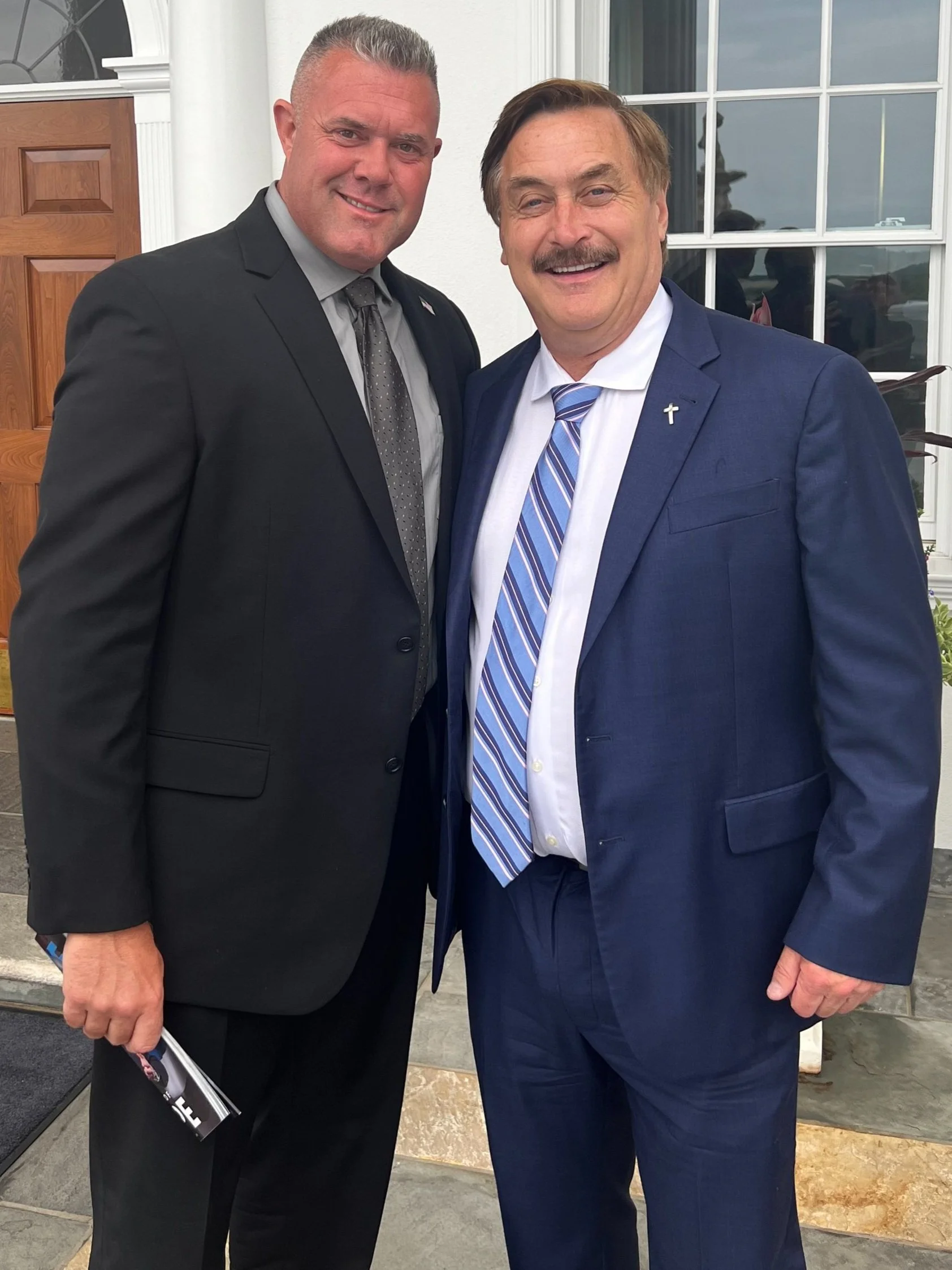
As we have grown to emerge as one of America’s leading recognized magazine publications, BLUE magazine has been afforded many opportunities for interviews with numerous law enforcement leaders and advocates. In this issue you will find fascinating interviews of two people who, among others we know, represent toughness personified to an extreme level… President Donald Trump and also My Pillow CEO Mike Lindell. 

We continue to share the thoughts of some of the best intellects known to us. Check out the list of our all-star team of writers which comprises some of the greatest people we know who take the time to share their knowledge, actions and best practices. In the spirit of the unity we experienced on the heels of the unconscionable terrorist attack on 9/11/2001, let's keep reaching out for one another as we continue to promote, peace, safety and the best possible outcomes both now and ahead of us.

Joel E. Gordon, Managing Editor

BLUE MAGAZINE EXCLUSIVE INTERVIEW: President Donald J. Trump: America’s Foremost Broad-Shouldered Leader

BLUE MAGAZINE EXCLUSIVE INTERVIEW: President Donald J. Trump: America’s Foremost Broad-Shouldered Leader

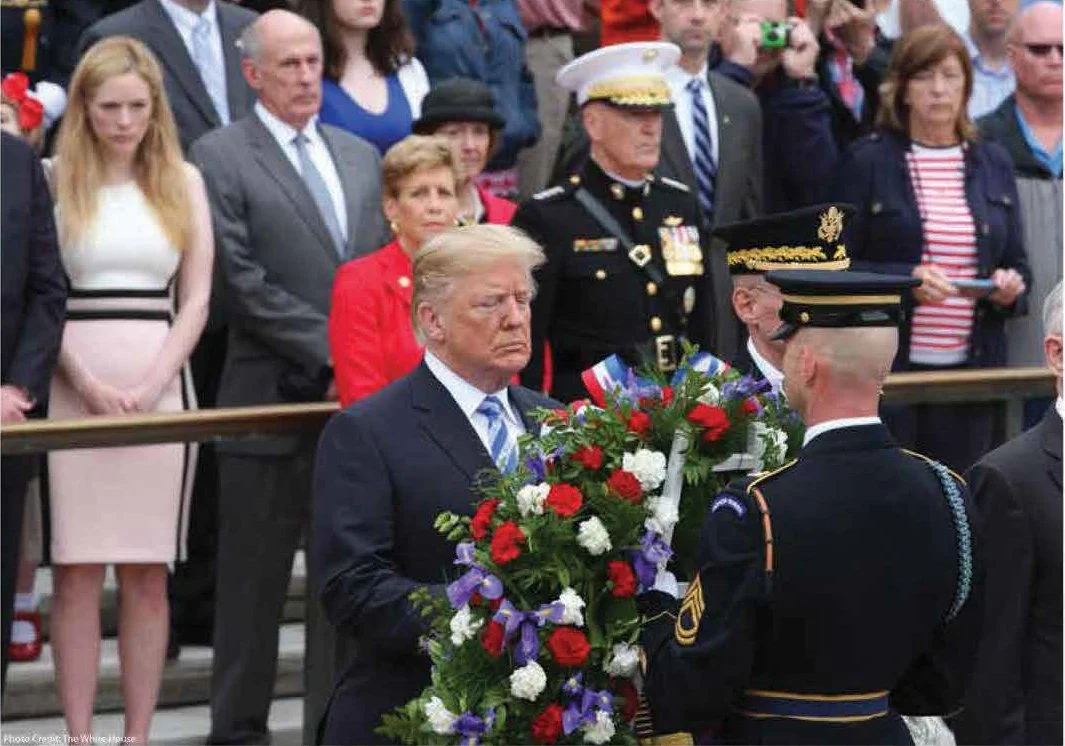
Donald J. Trump was a peacetime president, a skilled negotiator on the world stage with allies and foes alike, who had the American economy running on all cylinders. We unequivocally believe he was the best president in modern memory, partly because he wasn't a politician, and mostly because he always had America's best interests at heart. America's first policies were long overdue in a country that for many decades was taken advantage of on multiple levels and by many actors. Trump championed law enforcement, our military and veterans, and the common folk who often felt cast aside. When hostile foreign adversaries threatened America, he took them to task — avoiding war and the loss of lives.

Why would a law enforcement publication surface this seems counterintuitive and vacuous. However, if you need to ask this, you have not been paying attention to Blue Magazine and why we exist. For well over a decade, Blue Magazine was the loudest (and at times lone) voice speaking out against the abuses of power — the injustices levied against good officers by loathsome, self-serving politicians and their coconspirators in the corporate media who scapegoated law enforcement for political expediency and profit. Consider how many officers over the last decade were wrongfully investigated, indicted, arrested, jailed, or had their livelihood destroyed for doing their job. We are not naive. These same corrupt politicians and corporate media ilk attacking law enforcement did not disappear; they simply turned their artillery on President Trump in an all-out war to destroy him. Sounds familiar to us.

In this exclusive interview, you will see a family man — husband and father of five children - whose incredible toughness, determination, and resolve are unmatched. You will also see how the weaponization of our two-tiered justice system is neither novel nor a fallacious concept, rather continuous, unabated, and seemingly prospering. We as a nation deserve better.

Yet, while Trump endures personal and professional attacks of massive proportions, he continues to push forward and succeed. Let this serve as an example for everyone, including all officers in our great nation, that overcoming great adversity is possible with true grit, determination, commitment and clarity of focus.

Blue Magazine thanks President Donald Trump for having this needed conversation.­­

Blue Magazine: We feel honored and grateful to have you here with us today. We really appreciate all the important things you have done for this great country, and we thank you very much for all your hard work.  We are here to support you, just like you have supported us.

President Trump: Thank you very much. I appreciate it. These are bad times in our country, really bad times. We're allowing so many criminals to come in.

Blue Magazine: Many in our country know of your true admiration and support for law enforcement, no other politician in modern memory comes close to you in this regard. Can you tell us when and how your admiration and support for law enforcement began?

President Trump: I watched how New York was doing when New York was run by America's Mayor, Rudy Giuliani and of course the great Bernie Kerik and all of the different people that did such a great job. The city was plagued by numerous issues and was considered a dangerous place. Under Rudy's administration, New York became the safest big city. Now that's leaving, but it's not because of law enforcement, it's the leadership. They refuse to allow law enforcement to do their job. The police are great in New York, the greatest. They refuse to allow them to do their job. And you see the crime statistics … (Similarly) I'm dealing with it right now. They are going after Trump.  Murderers and drug dealers and everything else they have no problem with, they go after me on something that everybody says is not even a crime. They're spending millions and millions of dollars going after me, and in the meantime, murderers are walking all over the streets. It's just incredible. So, I've always admired law enforcement. I've always understood just from a common-sense standpoint what can be done. The best example that I can think of is what Rudy and his leadership did in taking over New York because New York was really bad. It was really dangerous, and he made it a different place.

Blue Magazine: President Trump, I would appreciate your insights on the factors contributing to the prevailing negative sentiment towards law enforcement and your perspective on potential solutions to address this issue.

President Trump: Well, I can only think it’s people that hate our country. I mean, why would somebody want open borders where prisoners by the thousands, tens of thousands, are being released from other prisons all over the world, into our country? They're being released from mental institutions and insane asylums all over the world. They're being poured in. These are not stupid people, look at the way they cheat in elections. They want to defund the police and they still want to defund! You know, they try and play that down a little bit because it doesn't exactly play well in polls. I watched what happened when they tried to defund the police in Minnesota, they're still trying it. It's incredible. Remember when they took over the police department in Minnesota, they literally took it over the Minneapolis police department. The whole thing is crazy. And we have to be very strong. And, you know, the press plays into it because the press tries to turn everything into a major bad effort. And we can't allow that to happen. We have to bring back our police. We have to bring back law enforcement. You're not going to have any cities. The country itself is going bad because this is now moving into the suburbs. This is spreading. This is like cancer, what is happening. I stopped it and I will stop it again.

Blue Magazine: Mr. President, how do you think President Biden has handled this increasing resentment against law enforcement?

President Trump: - I don't know that he knows what's going on. I really don't. I mean, I hope he does, but I don't know that he knows what's going on. He keeps the border open and then he says to everybody, the border is secure. 

I think we'll have 15 million people come in this year. It's bigger than New York State. I had the safest border in history and now we have the most unsafe border in history and that's in the world. That's not just New York, that's in the world because there's never been a country, third world or not, that allowed people to come in like they're coming in here. We had the safest border in the history of the United States, and now we have, I believe, the most unsafe, the worst border anywhere in the world ever. There's never been anything like this.

Blue Magazine: Regrettably, the politicization of certain law enforcement agencies, particularly at the federal level, is exceedingly remarkable in numerous aspects. As law enforcement officers, what measures can we take to prevent this? Furthermore, if you are re-elected as President, what actions would you undertake to curb this issue?

President Trump: Well, you have to complain. Look, we're losing our country and people are afraid to complain and speak up. You're allowed to, under the Constitution, to object. People are afraid to object. You know, what they've done is they've silenced everybody. They silenced them in fighting for the election. The judges don't want anything to do with it. They're afraid. The judges are afraid. The Supreme Court was afraid they were afraid to do what was right. It's incredible. I see it all the time. The people must object and that includes law enforcement. They're allowed to make their points. When you watch a policeman stan-

ding outside a store where you have hundreds of people, largely young people, and they're running out of these big stores with all the merchandise literally stealing it and the cops are standing there doing nothing and they're there because they don't want to lose their job. They don't want to lose their pension. They know if they did anything at all, their job is gone, their pensions gone, and maybe they end up in jail. We can't have that. We have to protect our law enforcement.  The police could do the job very easily. They know how to do the job. They even know the bad ones from the good ones. I mean, I know the people in Chicago. They're wonderful. They're just not allowed to do their job. New York, I know the best, New York's finest and they're not allowed to do their job. If you look at the crime statistics in New York this year everything's up 40%, 50, 60, 70%. And then you have Alvin Bragg trying to get Trump for non-disclosure agreements and spending tens of millions of dollars.

Bernard Kerik: Mr. President, considering the events that transpired on January 6th, specifically, the targeting of individuals engaged in peaceful protests, as well as the controversies surrounding the 2020 election. No one is more aware of these matters than yourself, yet I personally witnessed the affidavits, the compelling evidence, and the instances of voter and election fraud, along with various improprieties. The question then arises: How can we prevent a recurrence of such incidents in the upcoming 2024 election?

President Trump: You gotta go to paper ballots and we have to have voter id! We have to stop mail-in voting. Mail-in voting is a disaster. Some of these elections never end and mail-in voting goes on for weeks and weeks. Our elections are full of corruption. Bernie, you know that because you were a part of it. We have affidavits from the people, high-quality people swearing with their lives on the line, and nobody wants to even look at it.

Bernard Kerik: People have asked me if Attorney General Barr was going to investigate or if he did investigate or if the GBI in Georgia investigated. It seems nobody investigated. The concern is that it doesn't happen again in 2024.

President Trump: Barr was a disgrace. Barr was a coward. The Democrats wanted to impeach him, which they could have done easily. Many of these people are very dangerous, and they stick together, and they wanted to impeach Barr. As soon as that happened, he became an amoeba. He became totally unable to do his job, in my opinion, and I should have fired him, but it was very much toward the end.  Ultimately, I did say get out, but he really became a very ineffective guy. He didn't want to be impeached, but he was a coward. He looked at the situation in Georgia he looked at all of that evidence with the voting that night, remember the water main leak, Bernie? All of the things that went on with the water main and everybody ran out and then these people came back in. He looked at that and he said there was nothing wrong. I said, really? What about the water main break? He said, oh, I didn't hear anything about that. Well, that's how they got everybody out of the room. How could you not have heard about it? He didn't want anything to do with any of it. He had his U.S. attorneys  not do any work on it. Barr  was a disgrace. He was well; (…) he was a pathetic, weak guy. Now I see him on television sitting back and explaining to people what to do, he had a chance to do it. You know, we had a great administration, the greatest economy ever, the greatest everything.

The same thing happened in Pittsburgh Pennsylvania, the U.S. attorney in Pennsylvania wrote a letter that Bill Barr would not let him do his work. He wouldn't let him do his work and ruined his reputation over that.  Take a look at the letter that was written by the U.S. attorney in Pennsylvania. In Philadelphia. It was mind-boggling. He didn't want to be impeached. And he was a coward.  It's a shame. When I see him on television, I mute him. He was a coward. He had a chance to do something. He should have looked at the Hunter Biden stuff. But they go after me for a non-disclosure agreement? My worst enemies are saying this case is ridiculous!

This is election interference. This is another form of cheating. They cheat in many different ways. They stuffed the ballot boxes. Look at the FBI the FBI cheated when they called Twitter and Facebook and essentially told them not to do anything with the Hunter Biden stuff. If you want, do some bad stuff to Trump, you know, that made a 17-point difference, according to McLaughlin and pollsters.

So, you know, there's so much there; there was so much cheating and in so many different ways. Our elections are third world. And frankly, our country right now is third world, including its airports that don't work. We had the greatest country ever and then COVID came in and we fixed it, we did a great job on that. We didn't get credit for it whatsoever. The stock market was actually higher than it was pre-covid.

­Blue Magazine: The issue of active shooters persistently poses a threat to educational institutions and other designated gun-free areas. What measures should be taken to mitigate these devastating incidents, and how can we effectively address and prevent such tragedies?

President Trump: Well you have to put proper people that know how to handle weapons in the schools. In my opinion, you could take 5% of the teachers, some of whom are veterans and know guns very well and you wouldn't have a problem. I mean, they would do an incredible job. They love the students. They want to protect the students. But you have to, you could do that, and you could put armed guards in. But good ones, you know, we have great vets. We have great people. And there's always a downside to everything, no matter what you do. But I've always liked the idea of a small percentage of teachers having guns. Those that are capable of handling guns.

Blue Magazine: One of the topics we were discussing pertains to the fact that we are unaware of anyone who encounters a greater influx of hostility and criticism than yourself. This occurrence appears to transpire on a substantial scale. Given that you are persistently subjected to attacks, including those presently emerging, how do you personally manage to overcome these challenges?

President Trump: It's very interesting. It's the question I get asked more than any other, they say, sir, how do you do it? First of all, I'm not guilty and I fight. I fight so hard and so much, I don't have enough time to think about it, probably because if you did think about it, you'd go put yourself in a corner, put your thumb in your mouth and say, Mommy, take me home. But I get that question so much "How do you do it?" I have a bunch of thugs coming after me all the time. Dishonest thugs. Look at this Bragg. He campaigned on the fact. He campaigned on the fact I'm going to get Trump. He knew nothing about me. He never saw me. (…) They looked at over a million documents and they say remember the tax returns and they came up with a charge of a non-disclosure agreement that was totally legal, they do them everywhere, non-disclosure agreements, they're the standard. And they will probably spend 100 (million?), by the time this is over. I hear New York is like an armed camp right now. By the time they spend all the money, they'll spend hundreds of millions of dollars on this, and they could have spent it going after the murderers and killers and rapists all over New York who are walking the streets where people don't want to leave their apartments anymore.

Blue Magazine: Mr. President. Blue suicide, Is a major issue in law enforcement. Every 72 hours an officer takes his or her own life. Could you speak directly to that suicidal officer, what message or advice would you give them?

The BLUE Magazine 2020 Man of the Year - President Donald Trump

President Trump: Look, I say this. You're in one of the most noble professions. It's an incredible profession. I saw it in New York, and I've seen it in other places. And I've seen it when they're really down and out where they're not allowed to do their job and they're almost embarrassed at what they're doing in their profession and by their profession.  The problem is it's getting so bad now, the crime is so bad. I don't know if you remember this, but a few years ago when these kids, these wild kids were throwing water on the heads of cops, they were standing there dumping water on their heads. And I thought that might have been the lowest I've ever seen, you know, and it's gotten worse! That was in New York. They were throwing water on New York's finest, and I watched these police, and they weren't allowed to do anything. They just stood there, and these wise guys were coming up with, you know, big bottles of water, dumping it on their heads and screaming at them and laughing at them. And I said, boy, we've gone down a long way. And so, we have to give the respect and we have to give the backing to law enforcement, and we'll solve the crime problem. But we're not there yet because you have people in the White House who have no idea about it, or they want to destroy the country. I mean, it's just not believable that anybody could be so stupid. So, they must really want to destroy the country.

Bernard Kerik: That's what it looks like. Mr. President, we're going to wrap up and I want to tell the listeners two stories, two quick stories. And you may not remember this. I was a young cop. It was a 1987 or 1988, and I was sent up to FAO Schwarz. Michael Jackson was going shopping on a Sunday. It was an early Sunday morning, I think, and we were standing out by Trump Tower and you came out and there were a bunch of us guys standing around in plain clothes. And you walked up to me and you put your hand on my chest. You said "you got your vest on?" I said, yes, sir. (Trump) says, "all right, you guys stay safe." And every one of us, as you walked away thought, this is a hell of a guy like to come over and be concerned about our safety, you know, checking to see if I had a vest on. I thought that was pretty slick, but I don't think there was anything better for me than in the aftermath of 9/11.

A lot of people have no idea that in the aftermath of 9/11, on day one, in the aftermath, you were down at Ground Zero and you were walking around talking to every cop, every fireman, every construction worker, anybody that was down there on the pile. You were down there to support everybody, every first responder there, and you stayed. And then on top of that, I don't know the numbers. You know the numbers. You must have sent 250 or 300 people down to ground zero to help us. On behalf of every cop and every fireman that was working that day, we owe you a debt of gratitude that it's just its unexplainable. Like nobody gets it, nobody understands it. And when I've tried to tell people these stories, you know, the mainstream media, the fake news, they don't want to hear it. But the bottom line is, you've been a supporter of law enforcement for 30, 40 years that I know of that I've been in the city and on behalf of every cop out there and on behalf of the magazine, I just want to say thanks.

President Trump: Well, thank you, Bernie.

Daniel Del Valle: Mr. President, thank you so much for your time on behalf of the Blue Magazine and the law enforcement community and May God bless you through these times and you will overcome.

President Trump: Well, thank you all very much. It's an honor. And say hello to everybody. You have a lot of great people you can say hello to and say hello to everybody and thank you very much.

"This issue has been made possible in part by Caesar DePaço. To read Caesar DePaço's message to the President, click here"

click above banner to view messages of support for president donald J. Trump

Sheriff David Clarke: Re-Imagining Policing Goes Up in Smoke

Re-Imagining Policing Goes Up in Smoke
By: Sheriff David Clarke

Ever since the war on cops began in earnest nearly ten years ago, cop-hating activists masquerading as sociologists have begun deconstructing American policing by turning the profession into something that was bound to fail. Reform panels began popping up in every major urban city across America. Even former President Barack Obama convened a Task Force on 21st Century Policing that produced a work product of recommendations that were supposed to solve all the problems within policing. These panels included people who knew nothing about the science of policing, including what works and why. Notorious anti-police members of local Black Lives Matter chapters sat on the reform panels as they deconstructed decades of proven methods that enable officers to keep the peace and protect law and order. The things they suggested were inane, and I predicted that this would lead to an increase in crime and get officers and civilians killed and injured. Nonetheless, city leaders and elected officials moved forward.

We are now witnessing a byproduct of this reform effort. De-policing is occurring. Cops are not being as assertive as they need to be. Adding to that are state prosecutors who are on their own capitulation jihad to criminals by refusing to charge career violent offenders. A recent study showed that 69% of criminal cases have been tossed out by New York State prosecutors. That’s right, outright dismissed. And to top it off, legislative policies are being enacted like no bail for some serious criminal behavior. New York Mayor Eric Adams has lost all control of the subway system and then blamed the media for paying too much attention to crime. This as his soft on crime Manhattan District Attorney Alvin Adams finally admits that even he is fearful of crime on the New York subway system as rape, aggravated assaults and turnstile jumping have become a part of the experience for the tens of thousands of strap-hangers using the system daily.

The cluelessness from these elected officials just keeps finding new lows. In Chicago, the newly elected Mayor Brandon Johnson is failing miserably in his responsibility to keep his city safe from crime and disorder. In his infinite wisdom in dealing with a spate of mobs of out-of-control youths, instead of ordering Chicago police administrators to crack down on this untenable behavior, he decided to rename what we all know is unacceptable and criminal behavior. At a recent news conference after what is becoming the norm in the Windy City as weekend street violence reaches staggering levels, he scolded a reporter who referred to these roving bands as a mob. He said, and I am not making this up, “it is important to speak of these dynamics in an appropriate way”. He called them “large gatherings”. He then commended the Chicago police for “attempting to engage with our young people and give them as much warning as they possibly could”. Mass looting occurred and store owners said that this was the second such incident in as many weeks. Police reported that they made 40 arrests. What will happen with those cases remains to be seen in light of this decriminalization era we are in. In Washington D.C., over 60 percent of arrests lead to no charge being issued by the prosecutor’s office. Now, let’s dissect some of that.

So now the plan is to just rename criminal behavior so that it is no longer unlawful. The left tried this previously in calling riots “peaceful protests.” Mayor Johnson participated in this re-imagining by calling mobs, “large gatherings”. Heck, why stop there, mayor? Instead of calling the theft of a retail businesses’ property looting, why not just call it a form of reparations for slavery? This is leading business owners and employees to take matters into their own hands. Several videos are going viral where employees move in to stop the thieves with physical force. Law-abiding people are fed up with the lack of police response to crime and disorder and so they feel that they have no recourse but to take matters into their own hands.

Governments at the state and local level have as their most important responsibility to ensure the personal safety of citizens. Today, they are failing at it and failing miserably. You can’t go one day without reading a newspaper story or seeing on television news or an online account of the out-of-control criminal chaos going on in every large city in America. If the government is not willing to live up to its most important responsibility, then they have to allow and provide the means with which the individual can protect themselves. A few suggestions are to pass stand your ground and castle doctrine laws and make it easier for law-abiding citizens to arm themselves for their protection. Instead, these liberal elected officials are making it more difficult for people to protect themselves and their families, and when they do get into a scenario where they confront a threat to their survival, woke prosecutors look for ways to charge the victim instead of the perpetrator. Ask Daniel Penny, the strap-hanger on a New York subway car who felt, and reasonably I might add, that he and fellow passengers were being threatened by a crazed lunatic. The perp died from a chokehold during the encounter. Penny is facing several serious felony charges including manslaughter. This wasn’t reckless, it was an accidental death. He performed in a way that his military training taught him. Prosecutors cannot hold citizens to a standard we do with trained law enforcement officers. An Illinois sheriff issued a stern warning to prosecutors urging them not to be overzealous in targeting victims who use force to defend themselves. I second that motion.

Law-abiding people have had it being murdered, raped, threatened, assaulted, and having their property taken with no recourse. I am with them. Enough of this lawlessness.

Sheriff David A. Clarke Jr. is former Sheriff of Milwaukee Co, Wisconsin, President of Americas Sheriff LLC, President of Rise Up Wisconsin INC, Board member of the Crime Research Center, author of the book Cop Under Fire: Beyond Hashtags of Race Crime and Politics for a Better America. To learn more visit www.americassheriff.com

Moment of Silence: We’re Here For You

Moment of Silence: We’re Here For You
By Daniel Del Valle

For over a decade, Moment of Silence has been saving lives by raising mental health awareness and preventing law enforcement suicide, which we call blue suicide. One thing that we've always believed is that the community has a big influence on our profession and a big attachment to it as well.

For over ten years, during Christmas time we've been giving toys to hard-hit neighborhoods like Paterson, New Jersey. Santa comes to Paterson is an event we've been doing for over 10 years. Each year, we would go to the schools and give out toys from kindergarten through fifth grade. We would bring Santa Claus and his elves alongside many organizations and police unions. It's a beautiful time to bring a smile to the faces of so many children. In the last three years, since COVID-19, when the schools closed down, our organization continued and took it to the next level.  We brought Santa Claus and his elves to share joy directly to the streets of Paterson.

Our brothers and sisters in blue take days to volunteer their time to wrap toys and on the big day, which we normally do before Christmas Eve, we go out to the streets of Paterson and deliver gifts to children and their families. This is what we've been doing as an organization, and we've never publicized ourselves to the news because we've always believed in doing it for the right reasons. This is something that we strongly believe in.

Paterson is one of the roughest cities in New Jersey as far as low income and underprivileged kids. We drive through the city starting at approximately 8:30 a.m. to 6 p.m. with a convoy of officers, trucks and toys, and we give out over 6,000 toys to all the kids right in front of their houses. We tour the city while playing Christmas music announcing to the kids to come out. Santa Claus and the elves hand out gifts and you’d be amazed how it looks and feels like a Christmas in wonderland.

Each year, many officers dedicate their time and their passion to help the kids. These are the same officers who have at some point either set the tempo to help Moment of Silence save lives or at some point Moment of Silence has touched them in such a positive way that now they want to give back to the community and to everyone because of their healthy mindset.

As a charity, we are building a team and alliances that are helping us develop, become stronger, smarter and better prepared to bring mental health awareness and conversation to a different level. We have broken this down by starting “10-13 officer needs assistance” to help officers deal with the threat of blue suicide. In some cases, law enforcement officers have to hide their emotions for so long. Many times they can't even trust their department, their coworkers or their unions. So often they reach out to other organizations.

We have been one, where we have quarterbacked officers to a safer mindset while being able to keep their jobs through their hardest times, their darkest times and at the same time making sure that mentoring means bringing them back to mental stability.

We all know that in our profession, if you have a problem with mental health and ask for help, your gun may be taken away and it spirals into something very bad, that makes things much worse mentally and physically.

Our initiative with “10-13 officer needs assistance” is to be there for the officer when they need us and to help get them right back to where they need to be.

Our charity Moment of Silence comes together with mental health awareness by bringing together people from different places through dinners and events. We take the opportunity to advocate for people to be outspoken about their incidents. We believe that when more officers speak the truth about their mental health challenges, it actually helps many more officers open up about their problems. Because of this, we encourage officers to be there for one another, be sincere and be real.

We always aim to expand our initiative of helping our brothers and sisters in blue who face challenges that can lead to them ending their life. We recently had a beautiful dinner event in Florida where we had over 500 people in attendance. Our plan is to expand the passion of helping our first responders.

On a national level, we are now in the process, for the first time ever building a law enforcement progressive index chart. This index chart is going to be a tool. This chart will help guide officers from the moment they graduate the police academy and the possibilities where their career will take them.  This information will be gathered through data that we collect on a national level from officers all across the nation, which will give us a play-by-play. Through this first-ever index chart, we will be able to give the officers a sneak peek of the future. Therefore, we’ll prepare and guide them by providing them with the proper tools; mental health tools that they would need to offset any future problems. It's just like if you knew that it was going to rain tomorrow, then you would prepare yourself with an umbrella in the morning and therefore would prevent yourself from getting wet. This is how this progressive index chart is going to work for an officer from  one to 30 years in the profession. We will identify what could happen, what has happened, and how to fix it.

Here’s one example of the progressive chart: When you graduate the police academy, you come out in top-notch physical shape. In the first one to three years, you will have the choice after the academy to keep on by eating well and exercising, or you have the option not to. Your weight will not reflect your choice until probably the fourth or fifth year. This is why we believe that we have to tell the officer to be careful. The problem may start by not taking care of your health, and then you will see it four years later in how you will look and feel. We believe by that one example that if you put this together this way, the officer might think twice on weight and so many other situations.

If you have an issue or something that you feel that you cannot handle, please reach out to us. And although we might not have all the answers, we have the passion to really want to do the best for you. So we will mentor you, find whatever we can do and help you in any way within our capacity. We care about you. We're here for you. And if you want to join this coalition and this movement to save law enforcement lives, please reach out to us. We must stop blue suicide. We're here for you.

For more information please visit our websites momentofsilenceinc.org and bluesuicide.org

Exclusive Interview: Cynthia Hughes Founder of the Patriot Freedom Project and her mission to help her nephew Tim, and the J6 families torn apart in the aftermath of January 6th.

Cynthia Hughes Founder of the Patriot Freedom Project and her mission to help her nephew Tim, and the J6 families torn apart in the aftermath of January 6th.
By Daniel Del Valle

The Blue Magazine’s publisher Daniel Del Valle recently sat down with Cynthia Hughes of the Patriot Freedom Project to have an open and honest discussion on the events and myths surrounding the events that took place at US Capitol on January 6th.

Hughes' mission was started after her nephew Tim and a host of other defendants were being held in a 23 hour per day solitary confinement in a DC jail. Cynthia started the Patriot Freedom Project to help the many people who were arrested in the wake of the January 6 protest. On January 6th, these demonstrators gathered at the Capitol to peacefully protest after what they believed was a fraudulent election.

As you read on you will discover Cynthia’s passion for not only her nephew, Tim, but for the many others and their families who have been torn apart in the aftermath that followed the events of January 6th.

Regardless, if you believe January 6 was a protest or a riot there is no denying the human travesty that followed the events of that fateful day.

The BLUE Magazine: Tell our readers a little bit about how you are attached to January 6th.

Cynthia Hughes: I have a loved one, my adopted nephew, more like my son, he went to the capitol on January 6th and was arrested and treated incredibly unfair in the days that followed that painful day.

For someone who doesn’t have a full understanding of what took place on January 6th, can you describe that day from your perspective for our readers?

January 6th is described in many ways, a protest, a riot or some will say an insurrection. In my opinion January 6th was a 4 or 5-hour protest that got out of hand. Some people did some bad things that day but that’s not the majority. Most were entirely peaceful. January 6th was an important day to many Americans who wanted to go to the Capitol to support their commander in chief and show their gratitude for a President so dearly loved by his supporters. Sadly, there were infiltrators, provocateurs and bad actors embedded in the crowd to make the President look bad.

How did your nephew get caught up in this?

Tim was an entirely peaceful protester that day. He was not charged with any violence or assault but because he was there, he is guilty by association. Tim has great love for President Trump and after a long 12-hour shift at work he made his way to DC, to the ellipse to listen to what he felt was a historic speech made by President Trump. Tim describes the events of that day as harmonious at the ellipse. Trump’s supporters were connected in those moments, hugging and singing, praising the President for his leadership while in office.  As people were making their way to the Capitol you could feel something very sinister happening, I have heard that from many people. There was already chaos unfolding as people were arriving at the Capitol. Tim witnessed a lot of what he describes as police brutality. He said there were a lot of people already hurt, senior citizens, elderly people laying on the ground bleeding.

Do you think Tim got a fair trial?

No way did Tim get a fair trial, none of these defendant’s will, neither will President Trump. Look, Tim did in fact go into the building there is no tippy toeing around that fact and because he did this government egregiously overcharged him for going in looking around, and encouraging others to come in. Tim like many believe there were many inconsistencies in the 2020 election. He was charged with a bogus charge called obstruction of an official proceeding. This charge is basically being used as a way to weaponize our DOJ, it is way for these prosecutors to ask for a serious amount of time in prison and give the judges the pathway to sentence these defendants to many years in prison. Nobody will get a fair trial in the city of DC, it is impossible.

What are your thoughts about January 6th? What do you think happened that day?

I believe something very sinister was taking place long before January 6. I believe that when the President asked his supporters to come and peacefully protest and those that oppose him wanted what happened on January 6th, the powers that be knew exactly what they were doing leading up to the events of that day. President Trump offered to send the national guard multiple times and Speaker Pelosi denied his requests so did the Mayor of DC. I truly believe this could have all been avoided if there wasn’t this constant effort to take out President Trump. You know I feel very strongly those that oppose this President have forgotten about the American people. They cannot do their job effectively because they are truly so governed by hate and bias, it is truly so sad that the democratic party and some republicans refuse to let the people choose. We are in dangerous times in this country.

What did your nephew get charged with?

Tim was charged with felony obstruction of an official proceeding. This charge is used when government documents have been mishandled, altered, destroyed etc. This charge has nothing to do with J6, it is being used in a very weaponized way. This DOJ is saying that J6ers obstructed the electoral vote count and therefore they obstructed an official proceeding. This is a way for the DOJ to charge people with a felony and get substantial prison time. This felony carries a prison term of up to 20 years. This charge is currently up on appeal and hopefully SCOTUS will take this petition up.

Is that the only charge that he had?

Tim was also charged with several misdemeanor charges such as entering or remining in a restricted building or parading or picketing on Capitol grounds. Almost every J6 defendant is charged with the same misdemeanor charges.

What was the recommended sentence for Tim?

Tim was originally offered a plea deal and the government was offering 8 years, we quickly turned that down. He has no criminal history and committed no acts of violence that day so to ask for 8 years was beyond outrageous. Then at sentencing the prosecutors were still asking for 8 years, fortunately for us we had a great lawyer and ultimately Tim was sentenced to 48 months in prison. He is currently serving his time here in NJ.

Do you feel that Tim did anything wrong that day?

I always feel like this is a trick question when I am asked this. Of course, I want to say NO, but I guess you could say if he in fact did do something that day, maybe he trespassed but even that is a stretch. He definitely did not obstruct anything; congress was not even in session when Tim was in the building. Tim did not commit any violence, he did not break anything, he assaulted no one. Tim should be home getting on with his life but instead he is being used as a pawn in a very serious game of political theater by a weaponized department of justice.

So to reiterate and for the record Tim did not assault anyone on January 6th?

Nope!

What would you say to our readers that are not following the events surrounding January 6?

I would say EDUCATE yourselves, don’t jump to conclusions without doing your due diligence. There are almost 1200 people caught up in the events surrounding January 6th and most, the majority were entirely peaceful that day. Many did not even enter the building. Yes, there are some that did really bad things and they should face a jury of their peers which won’t happen in DC by the way. Everyone is entitled to Due Process, and we just do not see that in these cases. I wish the American public would do their homework on these cases and not just blindly follow what the media is saying. If you live in close proximity to DC, go sit in on a trial and see the bias that is obliterating Americans, speak to people like me and get educated about January 6th.

How many people are in jail today for January 6 charges?

There are more than 400 people in jail or prison. Some are still sitting in pretrial detention, which is unacceptable. Some are serving their time. Some are still in jail waiting to be transferred to prison and some are waiting to be sentenced.

What do you want our readers to know about Tim? Can you clear up any pre-misconceptions about Tim?

Tim is a good kid. He doesn’t have a criminal history; he didn’t commit any acts of violence on January 6. He did not assault anyone that day. He helped people who were hurt, bloody and lying on the ground. When he was asked to leave the building, he left. He didn’t go in the chamber or the state rooms, he stayed in the crypt and was skipping around for a few min, he didn’t touch or harm anything or anyone. He didn’t wear a costume that day, he wore a suit and tie and his MAGA hat. Tim’s suit and tie and a flag he found on the ground inside the Capitol were used against him during trial. Tim was entrapped by his own roommate. A roommate he lived with for more than 4 years who is African American set Tim up by wearing a wire. This same roommate that Tim spent four years with, going to the gym, eating out with, podcasting with, loaning money to, the list is long. Tim comes home from the Capitol and shows his roommate some video and the roommate goes to NCIS because they were both in the military and over the course of several days the roommate wore a wire.

Tim has been to hell and back in his life. His parents let him down over and over throughout his life. He was abused mentally, physically, and emotionally. Tim has slight Aspergers, he is incredibly bright and smart. He loves history. He loved serving his country. Is he perfect not at all, he is flawed like the rest of us. He is very bombastic, likes to tell offensive jokes and is a shock jock and loves it. Tim has lived a very hard life and I believe when someone lives a hard life they may turn to drugs or alcohol but not Tim, he is an ardent book reader, he loves to read. He is an incredible artist and poetry writer. This is how Tim copes in life. Sometimes Tim writes and draws or tells a joke that’s not funny to some and be that as it may you don’t jail people for this, and I believe this is the real reason Tim got 48 months in prison. I encourage your readers to go buy our book Due Process Denied The Detained The Families The Fallout and learn more about Tim before anyone jumps to a conclusion. Tim is a good kid with a heart of gold. I don’t know what would have become of this kid if I was not in his life. I have always been the constant in his life. I thank God I was able to be here for him these past 3 years..

How is Tim doing today? How is he coping with this?

Tim is holding his own. He has a lot to deal with when he comes home. He is still incarcerated and has been behind bars for 32 months now, almost 3 years. So, heartbreaking. We hope Tim will be home any day now.

Tell us a little more about Patriot Freedom Project and why you started it? What do you hope to achieve with your organization.

I started PFP after Tim landed in the DC jail. When Tim was arrested, he had a few thousand dollars saved, not a lot but some. He would always cal me and say can you help this one or that one and I finally had to say no, you need this money when you get home. I told him I would figure out some ways to help that he could share with the men he was in jail with. Many of these men are husbands and fathers.  I started looking into some things and talking to different journalists and family members and Tim and I came up with an idea to organize support groups on the outside with family members. It grew rapidly and was gaining some attention and I eventually got a phone call from Dinesh and Debbie D’Souza and they sent us an incredible gift and the Patriot Freedom Project was born. We started doing media appearances and raising more funds. We started helping the families immediately. Many men in the different jails around the country couldn’t provide for their wives and children so we stood in the gap for them and started helping with mortgage and rent payment, utility bills, holiday grants and even helping with cobra payments for families who lost health insurance, and so much more. Additionally, we have helped many defendants with their legal fees, we are assisting many of the lawyers too.

I had a rough upbringing myself and struggled a lot. I believe in paying it forward and I had a lot of good people in my life who helped me at some of the hardest points in my life. I was in a bad marriage, and I know what it’s like to have to figure it all out. I saw a need for so many of these families and just acted. I am a helper; I truly love helping people and seeing others succeed. Its God will. I truly love helping these families and many of them have become family to me.

There is a lot of political persecution happening in this country. We have a complacent mainstream media and without people like you and me talking about these things this country wouldn’t have another perspective to ponder. I hope my organization can become a place to help those struggling to get their voice heard, to assert themselves in this negative political climate we are currently living in. I hope we can continue to help where no help is being given. There is so much sadness in this mess and we have had 4 suicides, we must be a voice for those who cannot find theirs. There needs to be a place of hope and I hope that place will be found at PFP.

Proverbs 19:17: “Whoever is kind to the poor lends to the LORD, and he will reward them for what they have done."

President Trump has supported your cause. How did that occur?

In June 2022 I organized a press conference with several members of Congress on Capitol Hill. I also brought in several January 6 families and lawyers. President Trump saw the presser and he had someone reach out to me. I met with him and had a really good and profound meeting with him. I asked him if I could bring some of the families to Bedminster and have a fundraiser and he was very accommodating. President Trump cares very much about the American people. His heart is broken for these families and the defendants, especially the children. He supports our cause because he knows we are doing great work and sees how much we have helped on multiple fronts. President Trump is an extremely charitable man. He cares deeply about what is happening in this country and despite all that he is enduring he still puts that aside and fights for us all, he is that amazing! His heart is so big, he has great love for his supporters and the people of this country. It sickens me what they are doing to this man and his family. I have seen him with his family, and I can tell you the Trump family is full of love and regard for each other they have so much class and elegance, just a profoundly incredible family. They are rock solid despite the nonsense the media wants us to think. And if I may, President Trump is not even slightly responsible for January 6. If anyone went to the Capitol that day and did something bad that is on that person not this President or his family. President Trump does not condone violence against ANYONE ever. He is the President of Law and Order and loves all his first responders. It’s a disgrace what they are doing to this man. May God Bless and Keep President Trump and his family.

What would do you want to achieve with your organization?

Oh, well, I want to raise millions of dollars and I want to have a really successful reentry program. I want to help in the appeals department. I want to make sure we see some of these cases being brought to the Supreme Court. And the biggest thing of all for me is the children. That's the biggest thing of all for me. We can't fail children, right? So we need to make sure that these children know that, OK, your life is hard, this bad thing has happened to you. And these children are suffering and we need to help them.

What do you want to be remembered for and why?

As a good person, a good American, a Patriot. A good wife and mother, a woman of great faith. For my work and good deeds, my efforts. I had a great father to emulate, and I am proud to be his daughter. I learned about this good stewardship from him. My father served this country and was also a police officer in the Garden state. He was a juvenile detective for more than 25 years. He was always bringing kids home who had sad home lives. He was always buying gifts for the kids in our neighborhood, always helping anywhere he could. He was a great organizer and planner. Christmas was a big deal in our home, and he made it a big deal for lots of kids who had nothing. My father was a great man and loved being a police officer. I miss him so much. I know he is always shining a big bright light on me. I know he is proud of me.

Tell our readers how they can help and where they can learn more about your organization.

Please visit either of our websites: PatriotFreedomProject.com or DueProcessDenied.org

You can learn about our work and how you can support us and get involved by visiting the PFP site or you can learn more about our book and docuseries on January 6th and how you can help us crowdsource by visiting dueprocessdenied.org

Mike Lindell The American Dream: From Rock-Bottom Addict to Successful Businessman

Mike Lindell The American Dream: From Rock-Bottom Addict to Successful Businessman.
By Rick Vanderclock

Blue Magazine recently sat down with Mike Lindell, 62, the owner of his successful My Pillow Company. In this interview, you will see a success story of a man who rose from rock bottom to build a tremendously profitable business, overcome serious drug addiction, and stand up for issues and causes he believes in. The title of his book, “What Are the Odds, From Crack Addict to CEO,” speaks volumes.

Lindell’s success, however, is not without complications. As you read on, you will learn how Lindell and his business have become targets of political adversaries of Pres. Donald Trump. He’s been attacked on many levels and, yet, continues to stand firm in what he calls a “never back down” mindset. Lindell’s ability to overcome addiction and face the challenges ahead is testament to his strong Christian faith, which has sustained him throughout his years.

Lindell’s story of upward mobility in pursuit of the American Dream is worthy of focus and admiration. Lindell is living proof that everything is possible with a strong work ethic, commitment, determination, and most importantly, trust in Christ.

The Blue Magazine: How did you start My Pillow? Where did that idea come from?

Mike Lindell: It came from a dream. If you read my book, it's kind of strange because when I was 16, my first job at a grocery store, I remember, I took my first paycheck, the whole paycheck back then I think it was like $60. I'd worked this whole week, $60 and I went out and bought the most expensive pillow you could find. At that time this was a down pillow. And I think I paid about $60 back then. It'd be like paying $500 for a pillow now. But I always had problems with pillows. My whole life I was trying different ones. And, then I had one once that I liked where you could move it. I think it was just so worn out you could move it and set the height and it wouldn't go down. But then I had this dream and it just, it just kept coming. In 2004, 20 years ago this month, it's a 20-year anniversary. It took me almost a year to invent, about ten months. 

Mike Lindell, how is he when he gets home at night?

If you’d ask me before the last couple of years, it probably would have been a different answer. Now, I've got so many different silos. I've got my My Pillow company that I'm always doing, you know, things for being the CEO. I've got my Lindell Recovery network, my online platform to help addicts. I used to be a crack cocaine addict. I've got my biggest silo right now is to fix our elections in our country. I work with tens of thousands of people weekly in all 50 states. By the time I get home at night, it's kind of a, you know, I don't sit and watch TV. It's usually 8 or 9:00 and I'll get on my phone. I'll be about 200 text messages behind and maybe a thousand emails behind. But I do have people that go through them. But the texts I've got to get to. I'll spend 2 to 3 hours answering emails and it starts over the next day.

I'm sure it is very difficult to escape from what's going on a daily basis. So if you enjoy what you're doing, then it isn't work, correct?

That's right. A lot of it came with this election stuff and these machines . You throw in billions of dollars worth of lawsuits and all this battle that we're in; it's challenging. I enjoy the challenge, and I enjoy being on the right side. I get overwhelmed at times… When I do, my faith, my Christian faith, I turn to the Bible and we do that every day. That's usually the first thing I do when I get up.

Did you ever consider running for political office?

I did. When Donald Trump ran for president. I had never met him before and I had never voted before, I didn't think politics affected me. Once I met Donald Trump in the summer of 2016 and I thought, wow, this is such a common sense thing. If he does all these things he says he's going to do, he'd be the greatest president. I started learning what a conservative was, and a liberal was. And then I started to see where politics had affected, especially my home state of Minnesota.

When did you start using crack cocaine? And more importantly, what was it that made you just stop? Was it God? Was it your business?

Remember, drugs mask pain, they give you false courage. They give you those two things that are probably the biggest things. And when I go back I'm not to blame where my addiction came from. My parents divorced when I was seven years old.  I was put into a new school and I didn't know anyone. I became very withdrawn, or I would show off. It was one or the other because it was like I was out of my skin. When I went to college I dropped out. When I got to the five-year high school reunion, all of my classmates had either started families, finished college, or they had the whatever job they had, and they advanced their career. Then I prayed for—I wanted a family. I thought that was the answer.  I got a great girl, raised four kids, but we were functioning addicts. I want everyone out there to know addiction affects everyone, not just what you see on the street, homeless and down and out. Well, I've been there, too. 

I was a very functioning addict. And then with cocaine and alcohol and gambling and you name it, then it switched to crack cocaine in the early 2000s, and it's a different drug. But it was one that it's not a social drug. You're tweaking… 

Well, anyway, I got divorced in 2007. 

By January 16th, 2009, I knew I had lost everything. My Pillow was just a dot. 

We all have callings. I knew it'd be gone forever. So I sat there. Here's the prayer I made to God. I said, God.  I'll do this. You know I'm going to do this. You know this platform. I said, you'll be given a great platform. I know. I always hear that in prayer. We go, I'll do this calling. You know, I'm going to quit. But I said, here's the deal. I said, I want to wake up in the morning and never want the desire ever again for the alcohol, the crack, the cocaine, whatever it was. I want the desire to be gone. That's what I prayed for. I quit that night. I woke up in the morning and I'm going, wow, something's different. The desire was gone. But two months later, I went to our church and I went to an outpatient treatment just to find out why I was an addict in the first place. Then years went by and I went to write this book…

When I wrote the book about one of my biggest miracles, things started happening to me. I'll give you an example. All of a sudden I'm sitting with the president of the United States, Donald Trump. He had called for a manufacturer’s summit.  I get there and I'm going, wow, I can't even believe with my record I could even get in the White House. We go around the table and there's all these people sitting there for these other manufacturers.

How does it feel that the president of the United States trusts you?

I feel we have a trust between us. That is probably even stronger than most of my friends I have. It's really amazing. From the first time I met him, he's so transparent. It was like meeting someone I've known all my life. I think it goes both ways where we encourage each other. 

I think the one thing maybe that he relates a little bit he likes my marketing. He'll say to people, here's the best marketer. I say, no, you are, sir. He's the best marketer in history. I want to tell people this: You know he's never asked me since from the first time we met, he never asked me for any donations or any campaign money. He called a meeting with me. It was one-on-one on August 15th of 2016. By the way, you can all look it up. He was the lowest he was in the polls that day. It was August 15, 2016. They said to me, whatever you do don't tell him you were a crack addict. Well, if you read my book through a series of little mini miracles, I walked into his office just like I had seen in a dream in 2015, before he even ran that I'd get to be in this office. I walked in there and it was just him and I. He says, Mike, you always wear your cross on TV. He said, “Are you a Christian?” I said, “Yes, Mr. Trump,” and this is a divine appointment and then after that, it was just so natural talking back and forth. He asked me about how it was to make my product here in the United States, and he said, he wanted to bring the manufacturing back. 

So we do a press release, and this was my first taste of evil beyond anything I had seen at that time. There are these guys, this media, they were friends of mine. They called me everything under the sun. I was a racist. I was this, I was that. Then they're saying I was a drug dealer. My dealer stuck up and said he was never a drug dealer. He tried to save the state by doing all the drugs. But it was a taste that I felt and then we had PR control and trying to control this, but I went all in. When that happened, I went all in. You know what my reward was? A couple of months later, the Better Business Bureau, The Crooked Better Business Bureau, we had an A-plus rating, their highest rating. We were there. We were up for their highest award for their best company in the country. That was that summer. Now, just a few months after I went all in and went to the debates for Donald Trump, they took me from an A+ to an F and they did a national press release. By the way, everybody, is still in F, you know what I call it? That's fantastic.

Do you regret being part of this questioning of election integrity? If you had to do it again now that you've lost millions of dollars and obviously you have the public scrutiny, do you regret being where you are?

Absolutely not. I, I don't regret one thing. I would be the same way, because it's all going to unfold the way it should be. 

Orange County: Sheriff Paul Arteta: Man on a Mission

Orange County: Sheriff Paul Arteta: Man on a Mission
By Holly Finley, Detective Inv. BXDAO (Ret.)

Orange County New York Sheriff Paul Arteta is on a mission to revolutionize his agency through modernization, morale and team building, leadership and vision. Orange County is in the state's Mid-Hudson Region of the Hudson Valley area. The Sheriff's Office staff of 500 dedicated public servants is responsible for the protection and service to the county's 839-square mile area with a population of just over 400,000. The ambitious 55-year-old sheriff has a lot of ground to cover and has thus far been very productive. In the exclusive interview, you will find out more about Arteta’s professional plans as well as expose the human side of policing. Blue Magazine thanks Sheriff Arteta for speaking with us about many pressing law enforcement issues.

Holly (Blue Magazine): Who is Paul Arteta as a person? What are your values? What's important to you?

Sheriff Arteta: My family, foremost, that means a lot to me. I'm half Spanish, half Italian — the Italian side, you know, we did Sunday dinners with 30 or 40 people in the family. And then the Spanish side, it was the same thing, just a little bit different. And after that, I love this community. I worked here for now going on 30 years, first working 28 years in the sheriff's office. I retired, went to the village of Montgomery Police Department as deputy police chief and was fortunate enough to get elected. And now I'm here as sheriff.

Holly: Tell us more about your career in law enforcement.

Sheriff Arteta: I started out in corrections as a correction officer. I did two years in the old jail that no longer exists. And after the two years, I took the test for deputy sheriff and I was a deputy for a number of years and then worked my way through every rank, I was an investigator, investigative sergeant, sergeant of the patrol and lieutenant. I was a captain before I retired.

Holly: What made you succeed in winning the election to become sheriff?

Sheriff Arteta: I think my demeanor and control. I'm just a regular guy. And it doesn't get to my head that I am the sheriff or that I was running for sheriff. I can relate to people. And I actually talk to people and I go out to different events. Some people say I'm all over the place. I do like to go to a lot of different events and just speak to the people and get ideas from them because they're the ones that are seeing what's missing out there. So I try to be attentive to that, and I think that's what won the election.

Holly: How do you see the relationship you have within the community?

Sheriff Arteta: I believe I have a great relationship with the community. During the campaign, I ventured out to every single community, even some that, you know, they maybe they don't like law enforcement or don't want to see their presence. I want to hear what they have to say, because even though there are folks out there that may not like law enforcement, they need us. And without us, there'd be chaos. But we're not forcing ourselves on the different communities. We just want to help where help is needed.

Holly: How have you created these bonds?

Sheriff Arteta: One of them was throughout my career, I would go out to all different businesses, introduce myself on a personal level. I patronize a lot of the different businesses, love going out to dinner, love going to different new places, and that's what we do. And that's how you help your community get stronger. Other than that, it was just my interactions with each different business that I can get in touch with. I just go around and speak to people and, you know, sometimes they have a little bit of information to give you and other times it's just, how's the weather?

Holly: What is leadership to you?

Sheriff Arteta: Leadership is the ability to see into the future and help those around you achieve in a positive manner. We have a lot of accreditations which tell us how to do things right now, but we always have to predict what's going on in the future. For example, the artificial intelligence, that's to me, it's going to be our biggest nightmare in law enforcement because they can mimic any one of us and make us look like we're saying something. So that's looking into the future, trying to help prevent anything that occurs in that manner. So just keeping ahead of the times as law enforcement, we're expected to know what's going on at all times. And that's what the general public feels that we should know, and we try to stay ahead of the times.

Holly: What would you say your best traits are as a person?

Sheriff Arteta: I'm honest, sincere. When I tell you I'm going to do something, I do it.

Holly: Worst traits, what are your character flaws?

Sheriff Arteta: I don't have enough time to get a lot of things done. So, I don't know if it's necessarily a flaw. It's a flaw that I try to do as many things as possible.

Holly: What, if any, are the challenges that you face as the new sheriff?

Sheriff Arteta: Some of the challenges are the previous administration ran things in their manner, and I'm running things in my vision of the sheriff's office and how it should be run. It's not that far off, but there's a lot of things moving into the 21st century we wanted to do. And bringing the morale up within the agency.

Holly: How prepared is Orange County for a crisis?

Sheriff Arteta: I think Orange County is very well prepared. We work well with our emergency operations center, with the county executive, the district attorney, the county clerk. We're ready for just about anything that that comes to us.

Holly: How do you deal with officers in distress with obvious depression or substance abuse? Do you have infrastructure to help them?

Sheriff Arteta: Yes, we have our first-line supervisors and supervisors above those hopefully identify an issue before it's too out of hand. And then we'll address it with some of our members as from the county unit. Or we may just advise them to contact EAP and they can go to an outside entity, and they have great health insurance in the sheriff's office. They can go to the doctor of their choosing and speak to somebody. And that's what the bottom line is. They have to speak to somebody. They can't hold it inside.

Holly: What's your feeling on how Blue suicide has affected your department, if at all?

Sheriff Arteta: I've lived through quite a few just from my own agency that committed suicide and some from other agencies. And it’s something that we need to pay attention to. It shouldn't happen.

Holly: what would your message be to someone within your department who was contemplating suicide? What would you say to them if you were able to grab them by the shoulders?

Sheriff Arteta: Come talk to us … Don't do it. It's not worth it. You have too much to live for. You have friends and family that love you, that you're not seeing clearly right now. And if you look at all of those different variables in your life that love you and want you; just don't do it.

Blue: Can you tell me how you deal with an issue where there is a disciplinary action to be taken? How do you work that out with your deputy?

Sheriff Arteta: When the disciplinary process starts out, first-line supervisors and then it works its way up the chain and all the disciplines are handled at the chief level and the undersheriff level. In certain circumstances, they may involve me with the discipline where it's a discipline that might include termination, but for the most part, most of the disciplines are handled at the undersheriff level where he is a very levelheaded person. The undersheriff has a lot of insight into a lot of things. He worked a number of years at the state police, and then he worked as the chief investigator for the district attorney.

Holly: What is still on your to-do list?

Sheriff Arteta: We have quite a few things. We're looking at a couple of capital projects, one for this building. This building is almost 25 years old and we're having growing pains. So, we're looking at building up on the building so that we can make nice locker rooms for all of our people. We want to build a state-of-the-art K-9 facility on the grounds. The current facility is over by the Orange County Airport, and we need to expand. We had a number of dogs just graduate from the academy and K-9s coming from as far as Brandon, Vermont, to train at our academy. It's such an asset in the entire community that we need to build a state-of-the-art facility for that. We want to do a lot a lot of training here for our own folks. There's a need on some of the county roads for more traffic patrol, especially for heavy trucks and different problems that are going on, such as speeding violations of the traffic law. So, we're encouraging our folks to go out on these different roads. One of my biggest wish lists is we're looking at starting a motor unit for ceremonial purposes. I think that would be quite an asset to have in the event that there is some parade or possibly a funeral. I'd like to have a well-presented motor unit that can help assist with that.

Holly: What do you want your legacy to be?

Sheriff Arteta: I want to be remembered for making this office better before I finally retire. We want to do a lot of things here, and we're going to keep striving forward to make this the best sheriff's office around. And I just want to be known for the guy that spearheaded that. I want my colleagues and staff to remember me as the sheriff that made the most positive change in the county. We've brought in the local law enforcement agencies, and we're working very well together with them, as well as the state police. And we are accomplishing a lot in a short period of time, and we hope to accomplish a lot more during this period of time that I'm fortunate to be sheriff.

Holly: How do you want your children, wife and family to remember you?

Sheriff Arteta: I want them to remember me as the guy that is not only their dad, but I did a very big job in the county and I did it very well to my best potential. And I want them to do the same thing and everything they do.

The lost art of developing positive work relationships

The lost art of developing positive work relationships
By: Ron Camacho, PhD.

Early in my policing career, the leadership principles and philosophies I followed were taken directly from my time in the Army and by studying the great leaders in military history, i.e., Alexander the Great, Julius Caesar, Napoleon, etc. As I moved into different leadership roles outside traditional policing, I was exposed to many management concepts and ideas from the corporate world. One of the most effective lessons I learned outside my time in policing was the value of developing and building relationships. Unfortunately, maintaining and growing relationships is a skill that many law enforcement leaders do not value, embrace or fully understand.  

All of us need help; those words also apply to leaders. I have yet to meet a leader who is a master of every facet of leadership, training, or management. That is where relationships come into your leadership “equation.” The ability to reach out and obtain guidance or advice from a trusted confidant is invaluable. It surprises and shocks me when a leader or manager cannot access successful, experienced persons to help them solve issues, develop ideas or manage projects. This is a symptom of the lack of time and effort dedicated to relationship building. Always look for opportunities to build meaningful relationships!

Another mistake leaders make is being overly selective in which relationships they choose to develop. Early in my time as a police executive (the lieutenant and captain ranks), I only concentrated on those work relationships that were fully loyal and aligned with my vision. In other words, if you were on “Team Camacho,” I did everything possible to protect and grow that relationship. However, that was only twenty percent of the organization. This is not an effective or efficient method to lead an agency. To make matters worse, I was the king of “burning bridges.” My default status was to destroy a relationship if major conflicts or disagreements occurred. Due to this bad habit, many of my relationships suffered, and my ability to effectively lead the organization suffered greatly. To this day, I am still mending or rebuilding relationships I broke over ten years ago. Do not be selective in your relationships; build as many relationships as you can. Become the person in your agency with many fruitful relationships.

Finally, many people view relationships as transactional, “If you do this for me, I will do this for you.” Do not follow this line of thinking. Treating relationships as transactional does not build confidence or trust in your interactions with that person. Most transactional relationships are shallow or artificial and often lead to frustration or dissatisfaction when you most need assistance or guidance. Additionally, many people in transactional relationships waste energy “keeping score.” For example, “I helped Jim ten times, and he has not done anything for me,” or “All the hours and effort I spent on helping Jim does not equal the five minutes he spent on my issue.”

Helping others with the mindset or expectation that their aid or advice will be reciprocated is a guaranteed recipe for disappointment. You should cultivate an unselfish attitude when developing relationships. It should not matter if a person can assist you in your endeavors. Your ability to provide support or guidance is an asset to the relationship, resulting in stronger bonds and connections. I believe “karma” exists and have found that the more “good” I push into the world, the greater the blessings that return my way. Much of that “good” revolves around helping those with whom I have established relationships and the new ones I am building.

Additionally, I follow a couple of simple rules to build solid and meaningful relationships:

·         Be Honest - False promises and lies will quickly kill a developing relationship.

·         Be Committed - If you say you will do a task, do it.

·         Practice Empathy - Learn and understand others' points of view. Realize they may not be in the same place as you in their journey to discover empathy.

·         Make Time - We are all busy, but you must make time to develop relationships. Setting aside a specific amount of time is sometimes necessary to build and strengthen relationships.

·         Prioritize - In certain instances, time is of the essence, and actions must be taken promptly.

·         Return the Call or Email - Respect the relationship by returning phone calls and emails in a timely fashion.

·         Work on the Relationship - Some relationships must be worked on constantly, but this will be easy if its development is important to you.

·         Stay Connected – Relationships need not be exercised daily, weekly or monthly. However, do not let so much time pass before contact is made; check in.

·         Have Patience - Good, robust and positive relationships take time to develop. Have patience when developing and building the relationship.

If building relationships is not your forte, but you recognize that you need to develop this vital skill set, here are some additional suggestions:

 1) The easiest thing you can do is Google “How to build relationships” and read the articles and other resources you discover in your search.

 2) If you are looking for an excellent example of relationship management from modern history, check out the many books written about President and General Dwight D. Eisenhower. Eisenhower’s time as Supreme Allied Commander during WWII was a master class in building and managing effective relationships under stressful circumstances. In Eisenhower’s numerous biographies, there are countless lessons and examples of his ability to successfully manage his relationships with some of the biggest egos of World War II (Patton, Montgomery and Churchill).

3) Finally, Ed McManus created an online course based on his book, Relationship Leadership: How New Leaders Harness the Power of Leading with Relationships. Ed’s course and additional resources can be found at relationshipleadership.net.

I now make it a point to build, strengthen, expand and cherish my relationships. Following the rules I outlined above, my ability to lead effectively has grown exponentially, and I have grown into a leader known for having numerous positive and productive relationships.

Chief Ron Camacho is an accomplished law enforcement executive who spent time as an advisor in Afghanistan and Mexico. He is a graduate of the FBI National Academy, has a master’s in criminal justice from Liberty University, has earned his doctoral degree from the Penn West University,and is the chief of the Chambersburg Pennsylvania Police Department. He is the owner of Camacho Consulting LLC, a leadership and management training company. Camachoconsulting.net

The History and Evolution of SWAT

The History and Evolution of SWAT
By Tony Ureña

Special Weapons and Tactics,  SWAT as it’s commonly referred to, is an integral part of the law enforcement community. It is a unique unit of trained officers responsible for  specialized and dangerous  assignments.

Born in the 1960’s, SWAT was first implemented by the Philadelphia Police Department in response to riot control and violent confrontations. The next police department to adopt the unit was the Los Angeles Police Department. Most people attribute the birth to the LAPD as they popularized it in the media. Think  SWAT television  shows in the 70’s, as well as recent  shows and movies.

LAPD wanted to use the moniker Special Weapons Attack Teams but decided to go with the more professional term of Special Weapons and Tactics. I guess for politically correctness, even back then? It has now become  a standard term across the nation.

Law enforcement in the 1970’s found themselves outgunned by criminals who had more advanced weaponry than the police. At the time the unit was primarily manned by Vietnam veterans who had experience with armed conflicts. They were also outfitted with M16’s and a variety of more advanced weapons of the times. The name says it all, “Special Weapons,” officers as there was a need for proper use of more advanced weaponry to deal with the myriad of armed suspects. “Tactics,”  is where more advanced training paired with the weapon gave more of an advantage to the officer in an armed conflict. A common tactical concept is “surprise, speed and violence of action.” This allows for an overwhelming, surprising the suspect toward a successful conclusion. What gets lost by the public though, is that this is  about saving lives, not taking them. Proper utilization of the tactics and equipment have a greater chance of success without anyone getting hurt. Unfortunately, we see that this isn’t always the case due to   the poor choices and actions of the suspect(s).

As we progress, more and more police departments have adopted this model or a variation thereof. For example, NYPD calls their specialized unit the Emergency Services Unit. As they do more than just SWAT-like assignments. For example, they also specialize in search and rescue.

Several things have occurred that made SWAT the premier units you see today. One, was experience. As more  SWAT call outs occurred, they adapted and learned from the scenarios and  learned from their mistakes. Unfortunately, sometimes at the expense of officers getting hurt and/or killed. Two, there has been great sharing of knowledge from law enforcement to military and vice versa. Since we’ve been through  wars some of the tactics that the military learned have been brought home, taught, and implemented by SWAT units.One incident dramatically changed policing… Columbine. Up until then if there was an active shooter, responding officers did not engage and waited for the SWAT Team to show up. Tragically we learned that this procedure did not work. Now you are seeing patrol officers learn SWAT like tactics as well to engage in active shooter incidents. Depending on agency staffing, budgets, and even politics a team may be part time or full time members of a SWAT unit.

What does it take to become SWAT? . Every agency is different, but for the most part at least a few years on the department before applying and a desire to want the assignment. Then there’s a selection process which may include, but is not limited to, written test, physical test, demonstrate firearm proficiency, background investigation, and oral interview. From there may be a probationary period before becoming a fully fledged member of the SWAT Team.

SWAT Teams have  become synonymous with some of the “best of the best” in law enforcement. They are a unique and elite group of individuals in law enforcement who go through rigorous training to become able to do what they do. With due respect to all of our law enforcement brethren, here’s a common saying amongst those on the specialized teams “You’re either SWAT or you’re not!”

Tony Urena is a United States Navy Veteran as well as a Veteran Law Enforcement Officer with over 25 years of experience.  He was part of the SWAT Team reaching the level of Assistant Team Leader as well as Sniper Team Leader before retirement.  Also a high level martial artist, with well over 30 years of training experience he was a NJ certified Defensive Tactics Instructor.  Tony is now the Director of Training for Gun For Hire, Woodland Park Range, located in Woodland Park, NJ.


KIRK LAWLESS DIRECT: WHAT ARE YOU PREPARED TO DO?

WHAT ARE YOU PREPARED TO DO?
By: Kirk Lawless

Only God knows the time of our death. It has already been predetermined. We, as police officers, know that every shift could be our last. One hundred and seven years ago a young American poet, Alan Seeger much enamored with adventure, went to France at the beginning of WWI, and enlisted in Légion Étrangère (French Foreign Legion) feeling that a soldiers life would be a good fit for him as well, believing it was a noble cause to join the bloody fray. Like many young soldiers of that era, Seeger took to writing in his downtime. This is his most popular poem.

“I Have a Rendezvous with Death “At some disputed barricade, When Spring comes back with rustling shade, and apple blossoms fill the airI have a rendezvous with death; When Spring brings back blue days and fair. It may be he shall take my hand, and lead me into his dark land and close my eyes and quench my breath- It may be I pass him still. I have a rendezvous with death, on some scarred slope of battered hill, when spring comes round again this year and the first meadow-flowers appear. God knows ‘Twere better to be deep, pillowed in silk and scented down, where love throbs out in blissful sleep, pulse nigh to pulse and breath to breath, where hushed awakenings are dear. But I’ve a rendezvous with death, at midnight in some flaming town, when spring trips north again this year and I pledged word am true, I shall not fail that rendezvous”

The young American soldier, fighting alongside his Legionnaire comrades, died, ironically at The Battle of The Somme on the 4th of July, 1916. Young and full of vigor, he still missed the simple things in life, noticing the change of seasons and flowers blooming, love, maybe he had a girl back home. But, he had sworn an allegiance to France, and knew that death would eventually come for him. He was ready when death came for him on the battlefield. True to his word, he did not fail his rendezvous. He joined the Legion in 1914 and fought the fight, giving up the ghost at the age of 28.

Every police officer swears an oath of allegiance when he pins on the badge, and only God knows when our deaths will happen. That is a blood oath with no expiration date. So, in the course of doing your job, you cannot fret that “Ol’ Man Death” is waiting for you, and at any minute will snatch the life from you and carry you away with his bony hands. If you worry that much about being killed on the job, you should surrender your shield on seek out a more peaceful occupation.

Like young Alan Seeger, he did what was asked of him, and you coppers know what is asked of you. You don’t have to go on a “suicide mission”

Seeger didn’t. He spent two years in the French Foreign Legion before falling on the battlefield at Belloy-en-Santerre, France. He did not fail his rendezvous.

My message to all of you men and women still on the job, whether it be from “day one” or after many years of service, enjoy life, enjoy nature, your family, do not become preoccupied with your own demise, it’s a pointless worry, just do the job the way its supposed to done. Do not be a coward. Do not run away from danger. Never give up your gun! When it’s time to go, you’ll know it. Face it head on. When my time comes, I’ve already pledged my word as true; I shall not fail my rendezvous. Will you?

Kirk Lawless is a 28 year, decorated, veteran police officer from the St Louis area. He’s a former SWAT operator, narcotics agent, homicide investigator, detective and Medal of Valor recipient. Off the job due to an up close and personal gunfight, he now concentrates on writing. He’s a patriotic warrior, artist, poet, actor, musician, and man of peace.

We Tried To Ban Cops as Warriors - Then Came Mass Shootings

We Tried To Ban Cops as Warriors - Then Came Mass Shootings
By: Leonard Adam Sipes, Jr.

There has been an ongoing campaign throughout the recent protests and riots regarding the police use of force to change the mindset of cops as warriors. The call was to make them “guardians.”

Concurrently, advocates tried to ban armored vehicles and cops from having high-powered weapons. Then came a steady stream of school and mass shootings.

Cops as a Paramilitary Unit
When I was a new police officer, I was trained in a paramilitary setting. Why?

When I pulled up to a horrible automobile accident, I was relieved when more experienced officers came to support me. They started barking out orders as to which victim needed immediate attention and who had to wait for additional backup.

Ever participate in the extraction and medical treatment of very badly injured accident victims? There are multiple priorities. You have to deal with the probability that additional accidents were likely to happen unless you staged cones and flares and vehicles to protect those at the scene. You had to take the belligerent and combative drunk driver who created the accident into custody. You have to deal with hysterical friends and relatives who want to crawl into the overturned car to comfort the victims.  It’s a massively confusing scene.

The senior officer will start giving commands. From experience, they know who to treat first. They understand the priorities. There’s no room for discussion, lives depend on you doing the right things in the correct order. He tells me (and others) what to do and my response is, “Yes, sir.”

There are endless times in policing that require military precision and adherence to a command structure. Doing the job by the book protects the rule of law and civil rights. You don’t want to screw up in front of an experienced officer.

Are We Really Warriors?
No. For the vast majority of their time as cops, they are peacekeepers. Except for those rare times when they and others are at significant risk, they are guardians. The vast majority of police officers are comfortable with that distinction.

But beginning with protests regarding the use of force by law enforcement in 2014, it became an issue that “all” cops were prone to overreacting when data tells us that out of 54 million contacts, the use of force “or” the threat of force involved 2 percent of contacts. Regardless of the data, cops were told to tone it down; become guardians, not warriors.

Yet if cops don’t immediately rush in and take out a school shooter, the criticism is endless. To do that, you have to be trained and equipped as a warrior.

Mass Shootings
Back in the day, there were about 30 of us from multiple law enforcement agencies descending on a house to serve a warrant for gun-related murder. Each of us had a task to perform. Each understood the rules of engagement. It was all examined and explained beforehand.

But you are sitting in your patrol vehicle one day when the radio barks that there is an active shooter at a school. All you know is that shots have been fired and there are kids injured. You are dispatched to the location.

Arriving, you find mass confusion. You have a vague description of the shooter. Shots are being fired. There are multiple law enforcement agencies at the scene. Who’s in charge? Do we set up a perimeter? Do we attack the shooter? Do we negotiate? Do we have the right weapons or an armored vehicle? Is there a possibility we could inadvertently shoot a child or a teacher? How do we know the difference between a teacher or custodian or the shooter based on a very vague description? You’re escorting a ton of students away from the scene, but how do you know the shooter isn’t among those escaping?

You’re scared half to death, not out of personal fear, but the challenge of making the right decisions. What solves all of these problems? It is often experienced officers and command staff taking over and issuing orders.

That requires a paramilitary stance. That requires coordination. That requires training as a warrior because, for that moment, you are at war.

Training
To deal with the situation above, you need to know how to shoot multiple weapons during extreme conditions. The special weapons team is being assembled miles away but there’s no time to wait. If you have rifles, good; if you have tactical gear or shields or an armored vehicle, even better.

In short, this is war and you must be supremely prepared and trained or the risk of doing more harm than good becomes an issue. Without military-like training and weapons, you don’t succeed. Kids and innocent civilians die.

Without armored vehicles, you can’t observe what’s happening or draw fire or crash through a wall and take the shooter by surprise.

We Demand Cops as Guardians
From the National Institute of Justice of the U.S. Department of Justice: “In Plato’s vision of a perfect society — in a republic that honors the core of democracy — the greatest amount of power is given to those called the Guardians. Only those with the most impeccable character are chosen to bear the responsibility of protecting the democracy.”

Beginning in the 1960s, and more recently fueled by post-9-11 fear, American policing has slowly drifted away from Plato’s vision of guardians and Socrates’ view of guardian education as expressed in Plato’s Republic. This view of guardian education is humanistic. It takes shape through criminal justice education that is not only vocational but also stresses ethics, theory and the nature of virtue. As a profession, we have veered away from Sir Robert Peel’s ideal, “The police are the people, and the people are the police,” toward a culture and mindset more like warriors at war with the people we are sworn to protect and serve.

As stated, before the controversies regarding police use of force, cops understood the difference between being guardians and warriors. During decades of policing, this issue never came up. Politicians and the public understood that cops need to be both.

Yes, some officers violated their oaths and committed unethical or illegal acts. It was reprehensible. However, through endless media coverage, all cops were painted as engaged in excessive use of force regardless of replicated data saying otherwise and endless polls stating that law enforcement was (and is) one of the most trusted professions in America.

Now, we have thousands of cops leaving, the highest fear of crime on record, and considerable and growing urban violence.

But as to warriors, let cops screw up during a mass shooting at a school or shopping mall or a place of worship and all hell breaks loose. To enter an active shooting with multiple victims based on vague descriptions and hundreds fleeing, you have to have superb training and equipment. You are literally going to war to take out an active shooter.

Cops who are equipped and trained for mass shooters understand that it’s vital to do what’s necessary to save lives and eliminate the threat at 11 a.m., but at 2 in the afternoon, comfort a mother who can’t find her child.

It takes an extraordinary person to be able to balance both roles. It takes a society that understands and supports both roles.

Leonard Adam Sipes, Jr.is a retired federal senior spokesperson. A former Adjunct Associate Professor of Criminology and Public Affairs - University of Maryland. Former advisor to the “McGruff-Take a Bite Out of Crime” national media campaign. Past police officer. Aspiring drummer. Operator of CrimeinAmerica.net. His book based on thirty-five years of criminal justice public relations,” Success with the Media: Everything You Need to Survive Reporters and Your Organization” is available at Amazon and additional booksellers. He can also be found @ leonardsipes.com

Barbara from Harlem—a Blue Magazine devout supporter, American patriot, and Icon dies at 78.

Barbara from Harlem—a Blue Magazine devout supporter, American patriot, and Icon dies at 78.

The Rev. Selina Stinson Reid (also known as Barbara from Harlem) was born in the Bronx and raised in Harlem, NYC. This patriotic woman of God went home to be with the Lord on Sunday, August 6th, 2023. The “Big S” as she was affectionately known by her children, was an extraordinary woman, who singlehandedly raised five children. She was a go-getter who worked hard to ensure that her children lived a comfortable life. As a result, there were times when she worked two or three jobs in order to make ends meet. She also made time to run a business and produce talent shows, featuring young people in Daytona Beach, FL.

In spite of her busy schedule, she made time to protest with Catholics outside an abortion clinic in Central Florida, which is now a church. Her fight for the unborn was one of the defining passions of her life. Furthermore, due to her strong belief in God and her passion for His Word, she became an ordained minister in 1994. In addition, she graduated from The College of New Rochelle in 2006 with a bachelor’s degree in English.

As part of her commitment to God and country, she worked with inner-city youths in Harlem for several years as the founder of “Looking Toward Tomorrow,” which she ran with her sons, David J. Reid (deceased) and Leonard F. Reid. Furthermore, she later became the director for a nonprofit organization in the Bronx, where she provided services to mothers and their children.

Selina (Barbara) wrote her compelling and inspirational memoir “Escaping the Racism of Low Expectations” to chronicle her journey from liberal – by – default to patriotic Christian. Her memoir became a hit within conservative circles and was endorsed by the “Great One” Mark Levin on his Facebook and Twitter accounts. In addition, in February 2022, former NYC Mayor Rudy Giuliani endorsed her book, and interviewed her for his podcast, “Commonsense.”

She was also a speaker at different patriotic rallies and clubs in various parts of the country, including Missouri. In 2003, she was honored to have been asked to speak outside the United Nations in support of Israel and our Jewish brothers and sisters.

In the last few years, Selina (Barbara) continued her work in the inner city by handing out copies of The Declaration of Independence and the U.S. Constitution to students at historically black colleges and to members of the community. She also took time to engage with members of the community, because she was a “people person.” She hosted a weekly live-stream show on Facebook (“Our Urban Story”), and a weekly Zoom call focusing on praying and fighting for America. And, at least two of her videos have received over a million views. Finally, she became a member of the Mordecai Mission, whose purpose is to reclaim America for Christ.

The Blue Magazine is saddened by her passing and is honored to pay tribute to this extraordinary woman of faith. We shall miss our dear friend, who regularly joined us for causes and events aimed to make a difference in others. Her podcast on our network was well-received, and we shall miss sharing time with her weekly in our office. Barbara from Harlem taught us a lot about life and perspectives on the individual. She was a shining light during dark times. Rest in peace, Barbara. And, thank you.

Hook, Line, and Shield: An Officer's Guide to Trout Fishing

Hook, Line, and Shield: An Officer's Guide to Trout Fishing
By: Michael Drago

Police officers are often accustomed to high-pressure situations and stressful work days. When it comes time to unwind and relax, there's nothing quite like a quiet day at your local stream or pond with a pole in hand. With colder weather approaching, trout are becoming increasingly more active, making them a fishing favorite for people of all skill levels. Whether you are a seasoned angler or just starting your fishing journey, this guide is tailored for you to relax and reconnect with nature.

For many states, fall trout stocking is rolling around once again. The most important thing to know is your state's stocking schedule and locations. This information can be found easily on your state's website along with the exact number of trout being stocked in any given location. When it comes time to decide where you want to fish, there are some other factors to take into consideration such as your distance from the location and how you are planning to trout fish. When using a spinning rod, you will find that lakes or slow-moving water are prime fishing grounds for your gear, whereas a fly fisherman will often opt for skinnier, fast-moving streams.

Another essential part of catching trout is understanding their behavior. Trout are cold-water fish, meaning that they thrive in colder water. This knowledge can help us track down where the fish may be. Trout in lakes will often spend their time toward the deeper water where the temperature is colder than by the surface or shorelines. When it comes to rivers and streams, trout will look for breaks in the current. These breaks are generally behind structures such as rocks, stumps or even fallen trees. These obstructions in the water create a “hole” behind them where trout are most likely to sit. Whether you're fishing in a lake or stream, it's important to remember that trout like to feed from noon until the sun sets, making it prime fishing hours.

Trout can be picky eaters, so it's also essential to bring the right lures for your trip. If you are fishing a lake or a wide and slow river, one possible lure is a Rooster Tail. Rooster Tails are a classic trout fishing lure that stocked trout love. These lures simulate bait fish in the water and trout's predatory instincts draw them in for a bite. Other popular lures include trout magnets, which are small soft plastic worms, or PowerBait, which is a scented bait that is put over a hook and does all the work for you. When choosing a color for your lure, choose a more natural color such as brown, gray or even black for clearer waters. If the water is murky, you may want to try a bright and colorful lure such as white or something neon. Fly fishermen may have a harder time choosing their bait as there are many more variables, such as local fly hatches. Although it can be challenging to figure out what fly to use, a good bet is to always bring along some of the most effective flies such as the Pheasant Tail, Hairs Ear or the Wooly Bugger. The color of your flies should stay natural with the most effective being brown, green, gray and black.

Trout fishing is a great way for officers to escape from the demands of their profession. Whether you're a seasoned angler or new to fishing, the key is to check your state's stocking schedule, select the right location and approach and understand the behavior of these cold-water residents. Stock up on the right lures or flies, choose the appropriate bait colors, and relish the moments by the stream or pond. Trout fishing isn't just about catching fish; it's a way to escape and unwind from a stressful workday amid nature's beauty. So, gather your gear, head to your favorite fishing spot and relax and reconnect with Mother Nature. Best of luck on the water!

Michael Drago is a Kutztown University of Pennsylvania alumni with a degree in Public Relations. Drago now works as a Public Relations specialist at The Blue Magazine.

Police Officer Jeffrey Friedlieb

Police Officer Jeffrey Friedlieb
Article & Artwork by Jonny Castro

On Aug. 25, Chicago Police Officer Jeffrey Friedlieb tragically took his own life. He had been on duty disability and was battling the residual pain of being shot in the line of duty at the time of his passing. In July of 2011, he and his partner stopped a gang member during a narcotics investigation. After a struggle ensued, the suspect pulled out a gun and shot both officers at close range. One of those rounds struck Officer Friedlieb in the head directly behind the left ear. Despite his near-fatal gunshot wound, the officer was able to maintain his composure, call for backup over radio, give chase and return fire. The wounded gunman was later arrested and eventually convicted of two counts of attempted first-degree murder.

Officer Friedlieb did his best to overcome the pain and anguish that he was forced to live with each and every day for the last 12 years, but he just wasn't the same after being shot. The shooting also left him struggling with PTSD and severe nightmares. In the end, he just couldn’t live with the pain anymore.

Officer Jeffrey Friedlieb was a lifelong resident of Chicago. He enlisted in the United States Marine Corps in 2003 and proudly served as an Abrams Tank crewman. In 2004, he deployed to Iraq and took part in the Battle of Fallujah. He reached the rank of sergeant before his honorable discharge in 2007. Shortly after that, he began his career with the Chicago Police Department. Officer Jeffrey Friedlieb was 41 years old.