
THE BLUE MAGAZINE LEGACY ISSUE 2026
/THE BLUE MAGAZINE - SEVENTEEN YEARS INSIDE THE PROFESSION
By Daniel Del Valle and The Blue Editorial Team
WHERE IT ALL BEGAN
For seventeen years, The Blue Magazine told the stories of law enforcement. For our final issue, we decided there was one story left that only we could tell: our own.
Rather than close with a traditional farewell, this final issue tells the story of The Blue Magazine from beginning to end. It explains how the publication started, who helped build it, how relationships created access and what Blue learned by reporting from inside the profession. Some of these stories have been told before; the story behind them has not.
There is one question I have been asked more than any other: Why did you start The Blue Magazine?
The answer begins before there was a Blue Magazine. When I launched what was then called NJ Corrections Now, the purpose was clear. Law enforcement and public safety needed a place where officers, departments and organizations could communicate, share knowledge and tell their own stories. Important issues affecting the profession deserved serious attention, and officers doing meaningful work deserved recognition that rarely came from outside law enforcement.
Bringing those voices together through journalism could strengthen the profession without politics or sensational headlines controlling the story.
The publication grew because people throughout law enforcement recognized the value of that mission. Officers contributed articles. Departments became involved. Organizations offered their support. Advertisers provided the financial backing required to publish an independent magazine. Many of those connections lasted far beyond a single article, interview or issue. They became friendships, and some became family. The people who believed in Blue, opened doors and helped carry it forward are the real story of this magazine.
SHERIFF EDWIN ENGLEHARDT
Long before I became a publisher, Sheriff Edwin Englehardt changed the direction of my life. I was young and reporting for jury duty in Passaic County. The room was filled with people waiting to be called. Most were seated and talking among themselves, but I stood near the doorway reading a newspaper. As I read, I occasionally looked around the room and stopped whenever someone began speaking, Sheriff Englehardt noticed me. Years later, he told me he had watched me standing there and wondered whether I was observing someone or monitoring something. Eventually, he walked over and started talking to me.
“Do you want to be a cop?” he asked.
“Yes,” I replied.
“Do you have a criminal record?”
“No.”
“Okay. Come to my office next week.”
That unexpected conversation helped lead me to the Passaic County Sheriff’s Department. Sheriff Englehardt saw something in me and provided an opportunity that changed my life.
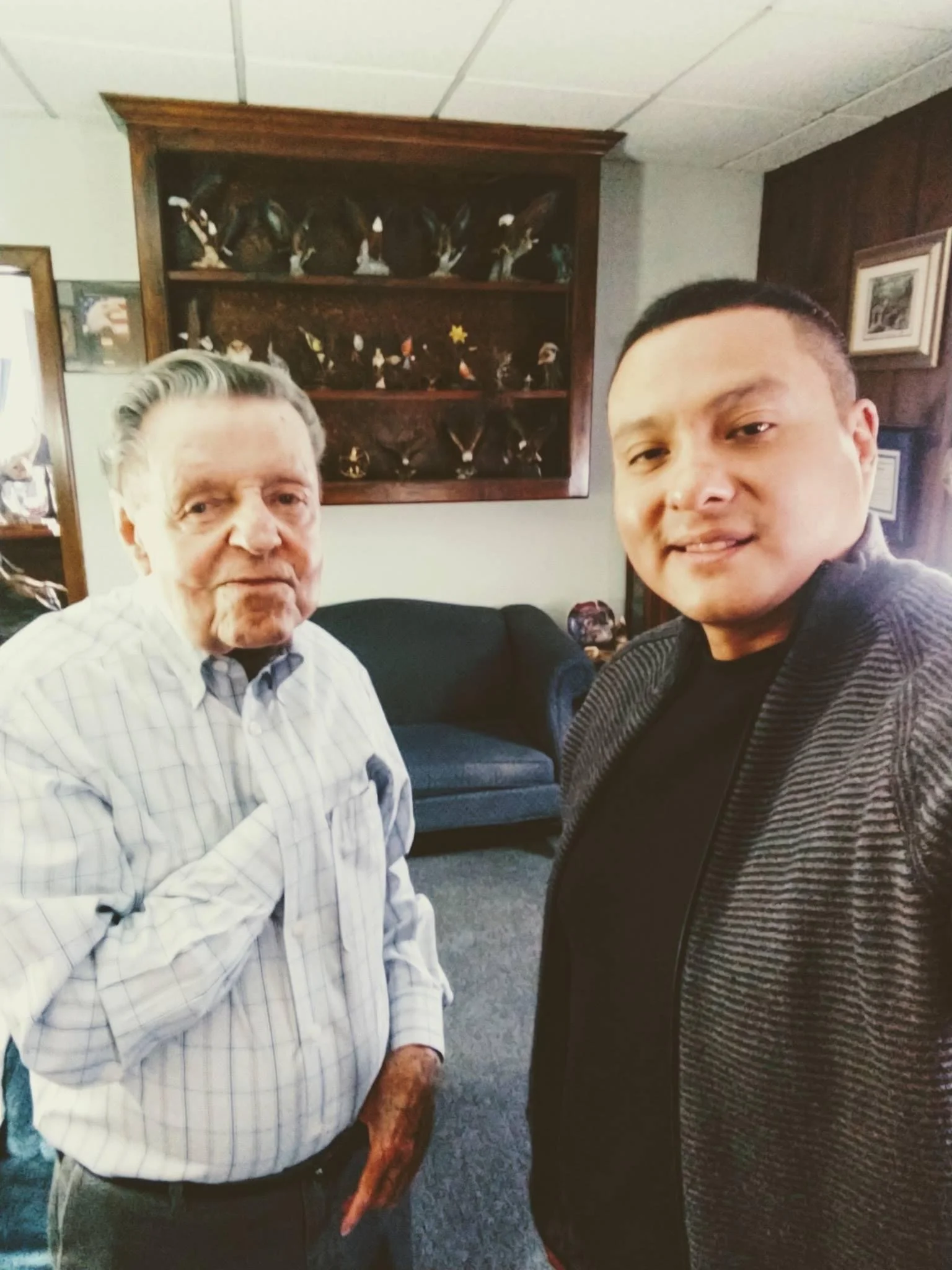
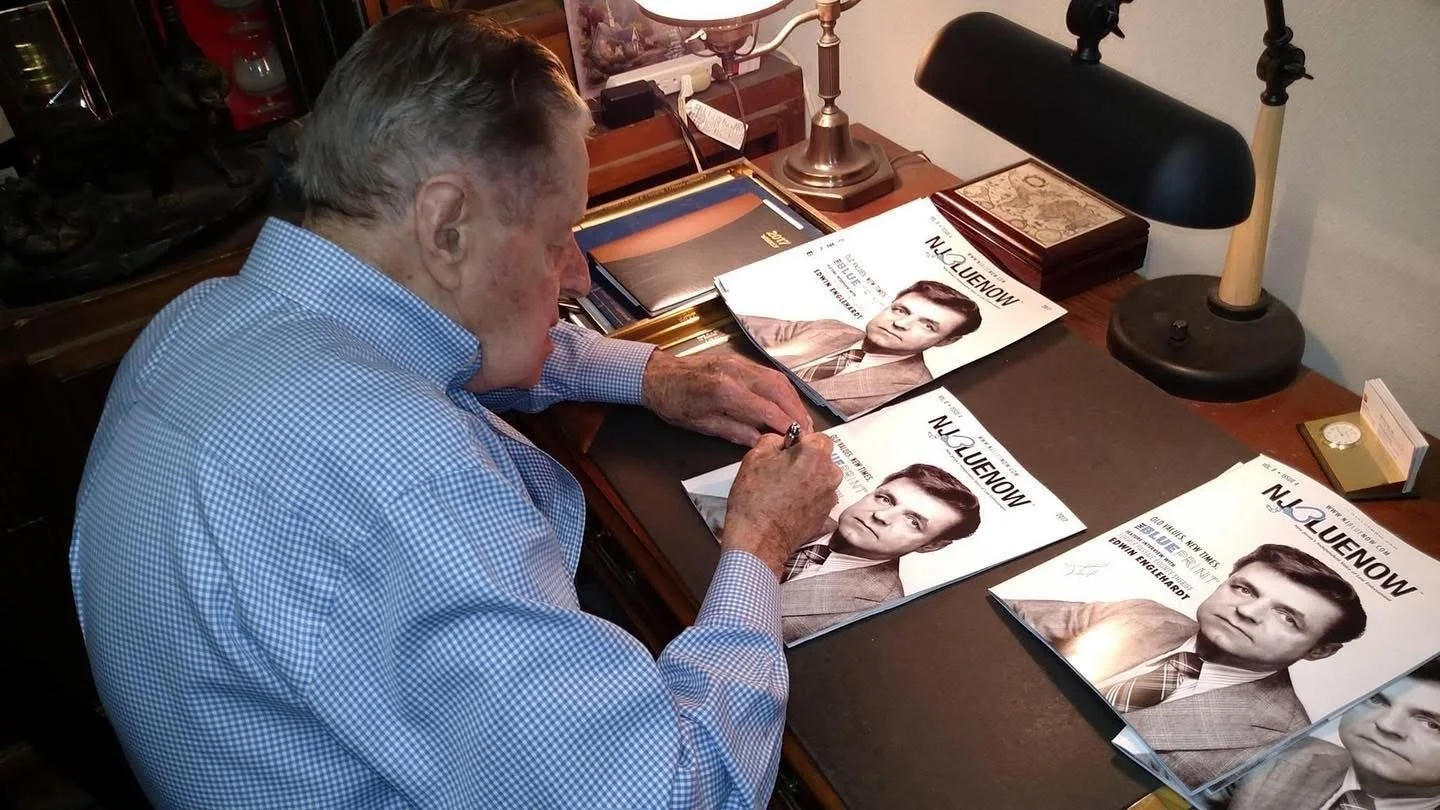
Over the years, Sheriff Englehardt became one of the most important mentors in my life. What I respected most was his willingness to lead. He understood that leadership was not about making everyone happy. A sheriff, chief or supervisor sometimes has to determine what is right, stand behind the people entrusted to that leader and accept responsibility for the decision. He did not require everyone to agree with him before he acted, and he did not retreat simply because a decision was unpopular. Sheriff Englehardt retired in 2001. More than a decade later, as the publisher of The Blue Magazine, I was looking for a sheriff with a spine, and I knew exactly where to find one.
Law enforcement was under increasing public and political scrutiny. In our conversations with officers, we repeatedly heard a concern from inside the profession: some believed their own leaders had become reluctant to publicly support them during controversial incidents because of the political consequences that could follow. Accountability mattered, officers who did something wrong had to answer for it. But officers also wanted to know that when they acted properly, their leaders would stand behind them. I wanted Blue to examine that issue through someone who had actually commanded a law enforcement agency. Sheriff Englehardt understood politics and knew how to work with elected officials, but he did not believe politicians should control his department. He was willing to stand his ground when he believed the interests of his officers or the integrity of the agency required it. That was why I wanted him on the cover.

The interview was not intended to recite his résumé. It examined how he led, worked with political officials, secured resources for his officers, commanded respect and applied lessons from his generation to a changing profession. We placed him on the cover beneath the words, “Old Values. New Times. The Blueprint.” His answers reflected the man I had known for years and his belief that leaders were expected to lead. Sheriff Englehardt’s influence extended far beyond that interview. His knowledge of law enforcement and government exposed me to agencies, institutions and public officials I might not otherwise have encountered. He taught me that access means nothing without trust, and that trust must be earned, protected and respected. That principle became essential as Blue later entered more influential rooms and interviewed increasingly powerful people.

Sheriff englehardt with daniel’s children.
His influence was also personal. He knew my wife, my children knew him and our family was welcomed into his home. We never called him Ed or even Sheriff Englehardt. To us, he was simply “the Boss.” The name reflected both respect and the affection that came from knowing him for so many years. The man who first approached me in a jury duty room had become part of our family’s life.
When the cover issue was complete, I gave the Boss a copy. He became emotional and told me it was one of the greatest gifts he had ever received. That moment meant more to me than he probably realized. Years earlier, he had helped provide me with a path into law enforcement. More than a decade after his retirement, I returned as the publisher of a law enforcement magazine because I believed a new generation needed to hear what he had learned about leadership. Blue now had the opportunity to preserve that knowledge.

Sheriff Edwin Englehardt passed away on April 13, 2023, at the age of 93. He served as Passaic County Sheriff from 1974 until his retirement in 2001 and remained a mentor to members of law enforcement long after leaving office. For my family, he will always be the Boss, the man whose decision to give a young man an opportunity changed the direction of my life.
SHERIFF EDWIN ENGLEHARDT
September 29, 1929 to April 13, 2023
TONY WILLIAMS
When NJ Corrections Now began, one of the first people I knew I needed to meet was Tony Williams, the State Delegate for The New Jersey State PBA (Police Benevolent Association) Local 105. Local 105 represented state correctional officers, whose voices, experiences and knowledge were an important part of the publication’s earliest foundation. Earning the union’s support would give a new magazine credibility, but that support was not automatic.

I attended a union meeting where approximately 400 law enforcement officers were gathered. I was young, the magazine was new and most of the people in that room had no reason to know who I was or believe the publication would succeed. At the microphone, I explained what I was trying to build and why law enforcement needed a place to contribute its knowledge, examine the issues affecting the profession and tell its own stories.
Tony stood before the membership and asked them to support me and the magazine. His endorsement gave NJ Corrections Now important early credibility that was needed since the magazine at that time emphasized in corrections. Local 105 became one of the first major law enforcement organizations to stand behind the publication. Officers began contributing articles, and the union supported the magazine through advertising. Tony’s confidence also gave others a reason to examine what we were building.
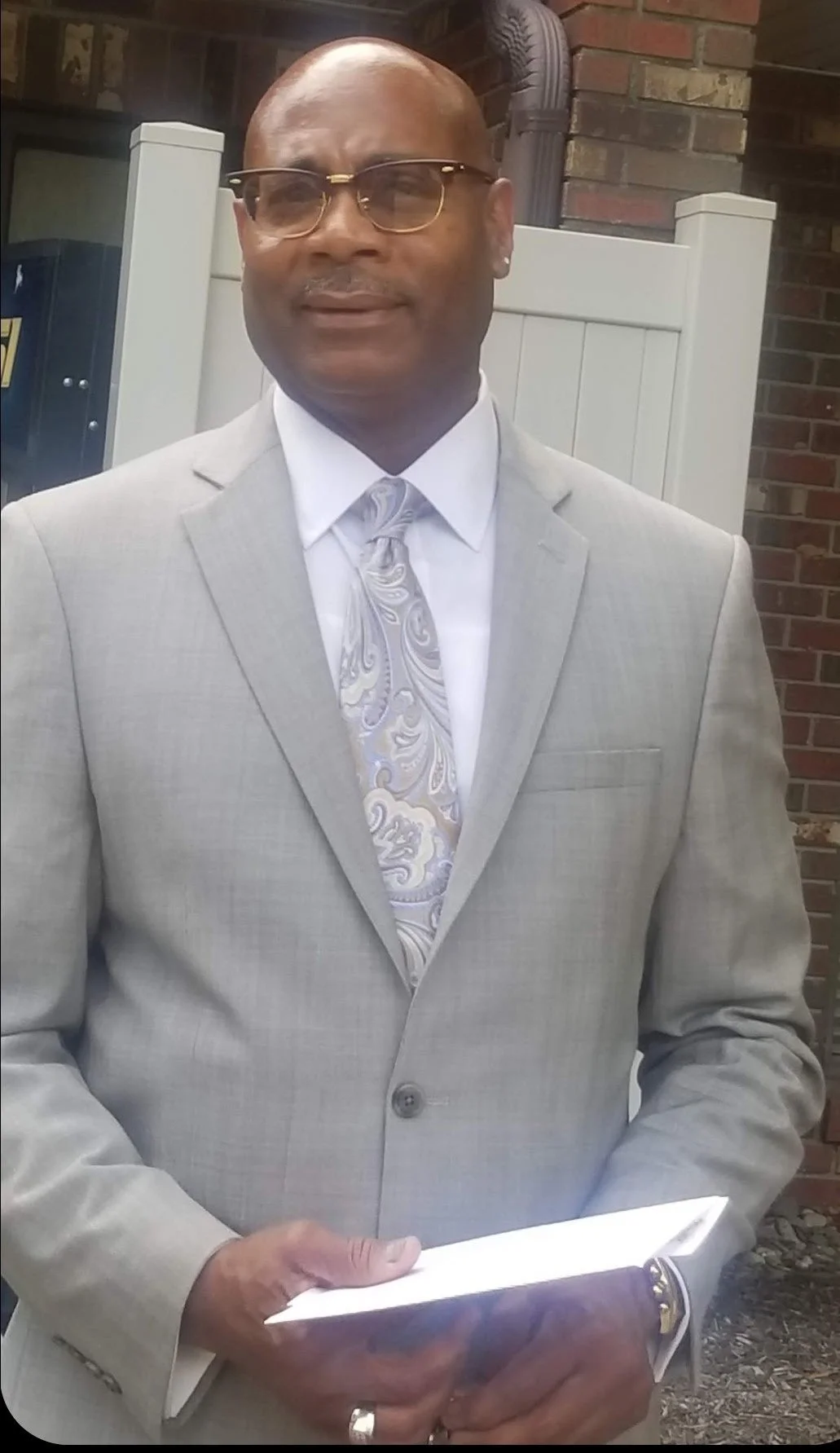
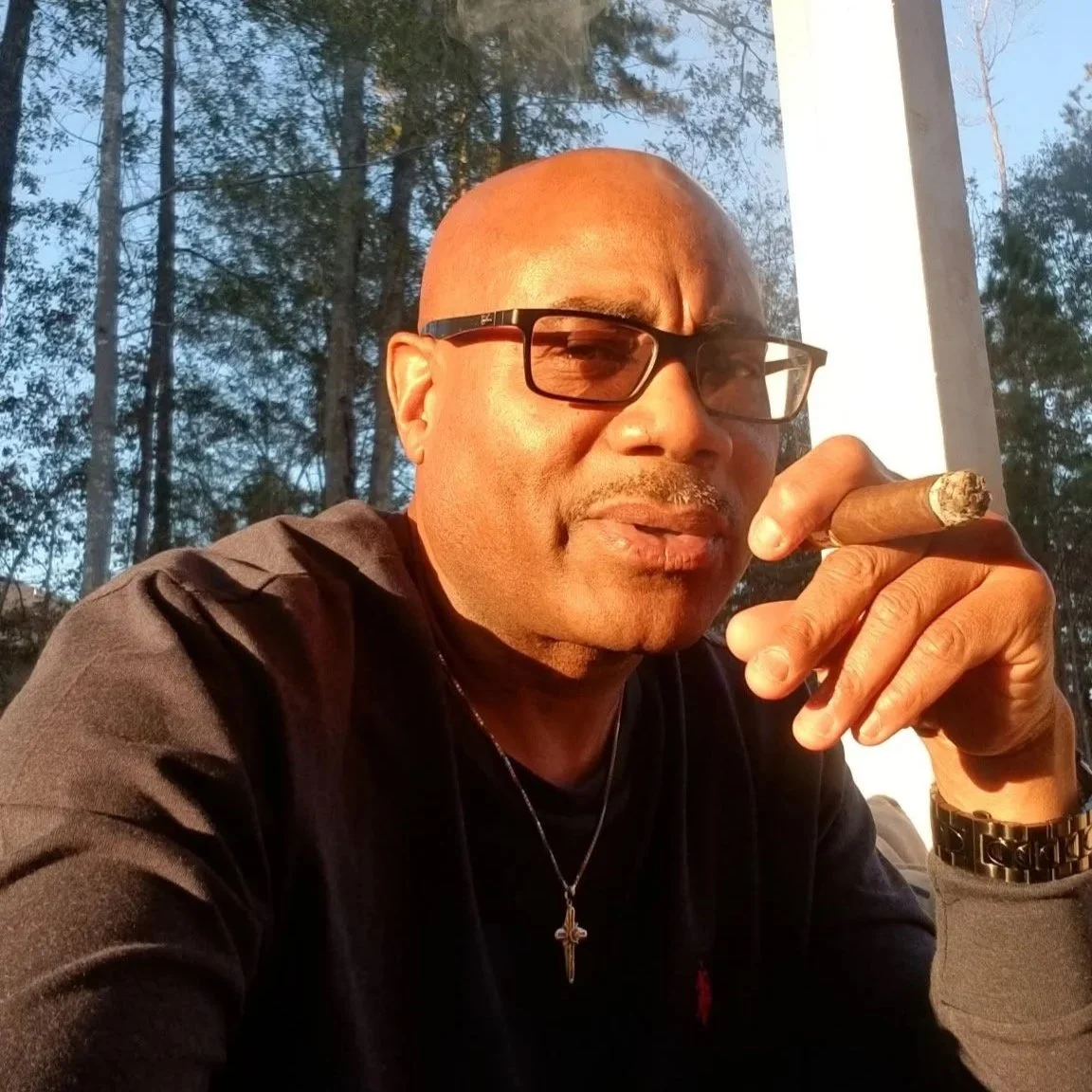
Supporting an established publication is different from placing your credibility behind one that is new and unproven. Tony did the latter. His support, along with the involvement of Local 105 and the New Jersey State PBA, became an important part of the magazine’s professional foundation.
STEVE OLIMPIO: THE MENTOR WHO OPENED DOORS
Someone told me that if I was serious about expanding NJ Corrections Now and involving more of the law enforcement community, I needed to meet Steve Olimpio. At the time, Steve was president of Paterson PBA Local 1, the first PBA local established in New Jersey. I did not have an appointment. I walked into the PBA office, introduced myself and explained what I was trying to build. Steve was direct, down to earth and willing to listen. He recognized that I was serious about the magazine and began helping Paterson officers become involved with the publication through articles, advertising and professional contacts. Steve’s greatest early impact came when he brought me to the New Jersey State PBA Convention in Atlantic City. As we moved through the convention, he introduced me to PBA leaders from across the state. These were not casual introductions.
Steve would tell them, “This is my friend Danny. He's in the job and just started a magazine. I want your department involved. If he calls you, treat it like I’m calling you.”
They gave me their time because they trusted Steve. His name created the introduction, but Blue still had to earn their confidence through its own work. Many of those initial contacts continued for years and led to articles, interviews, events and further expansion.
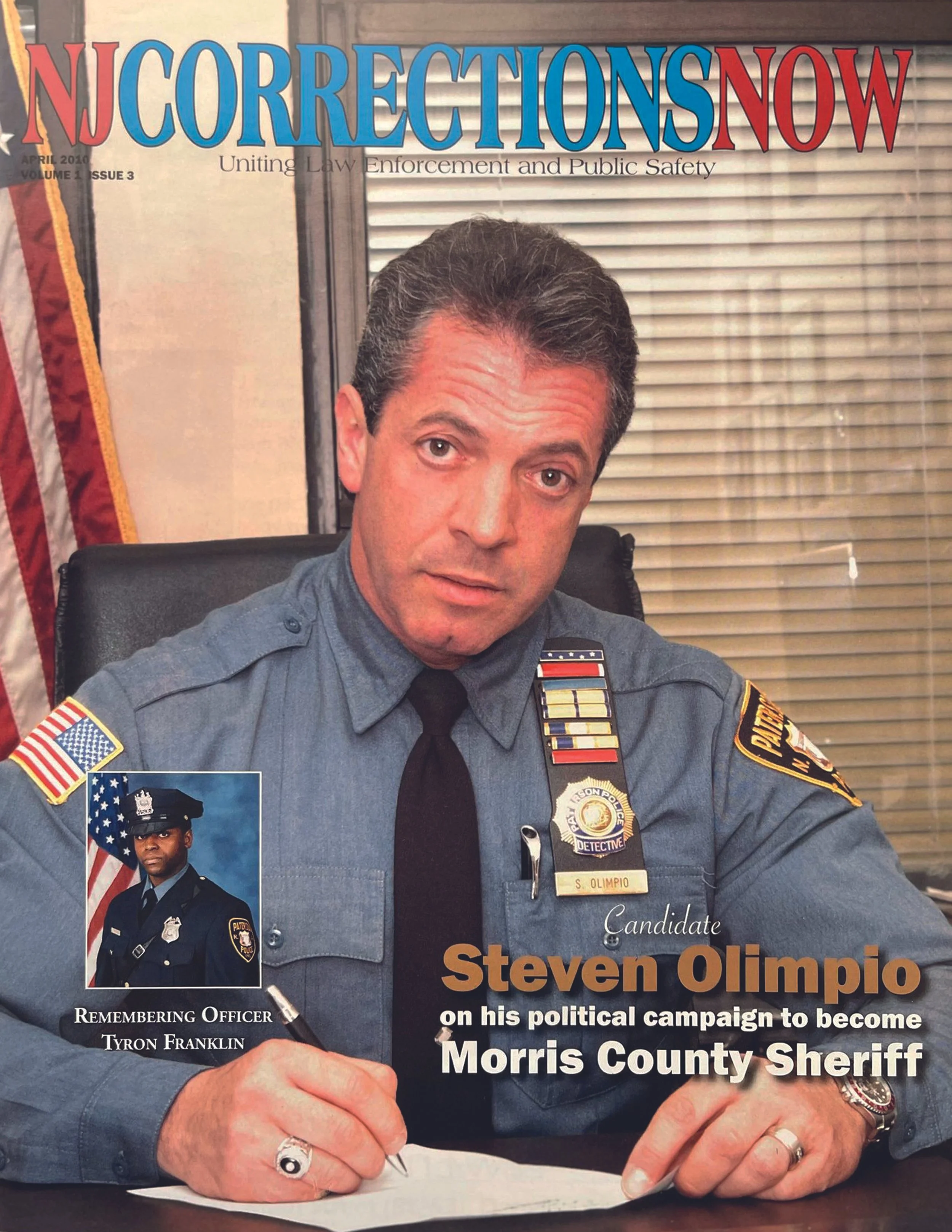
In 2010, Steve ran for Morris County Sheriff, challenging longtime Sheriff Edward Rochford in the Republican primary. Blue followed the campaign and placed Steve on the cover. For a young publication, the coverage represented another important step. We were documenting a law enforcement officer and union leader campaigning for sheriff while the magazine circulated throughout Morris County.
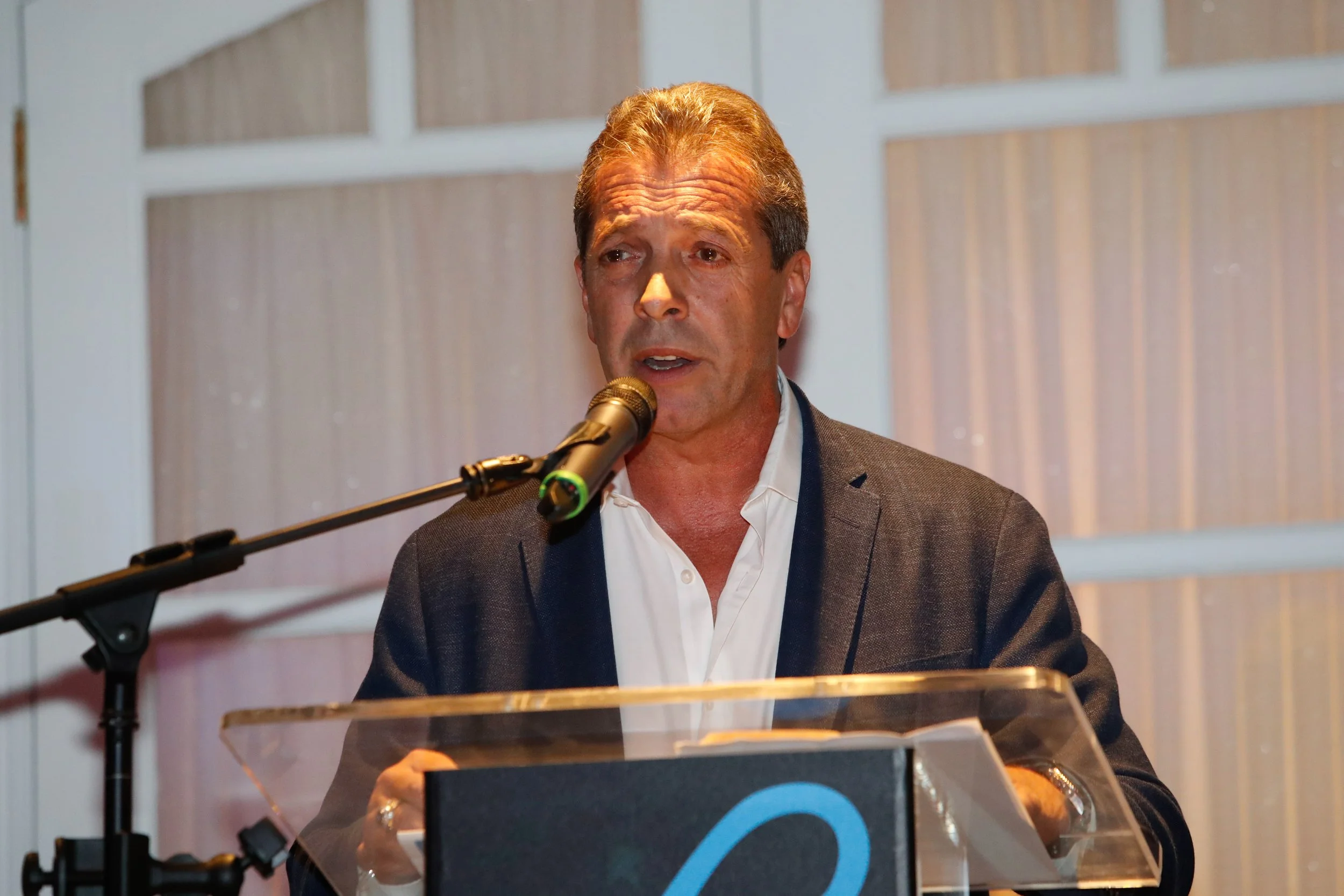
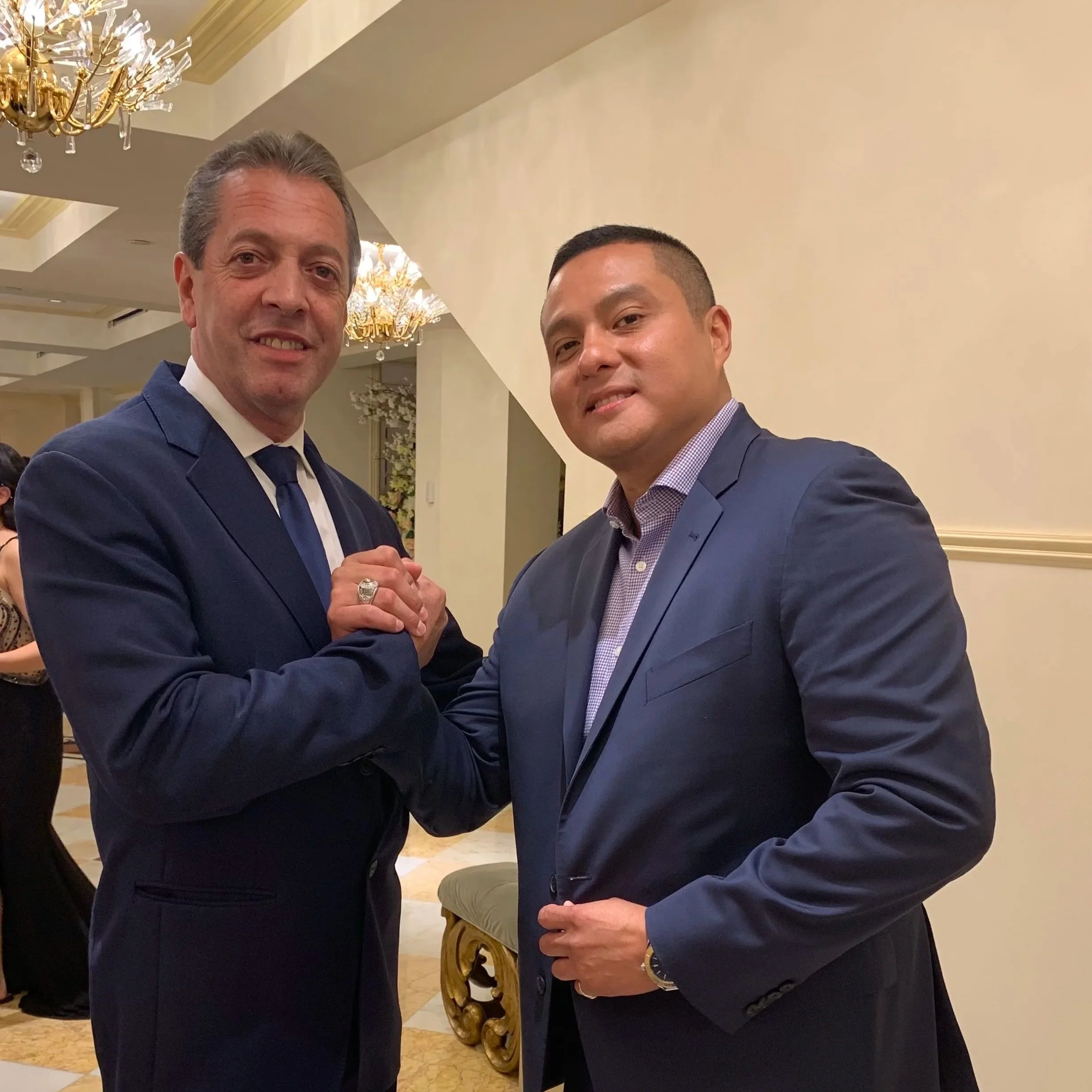
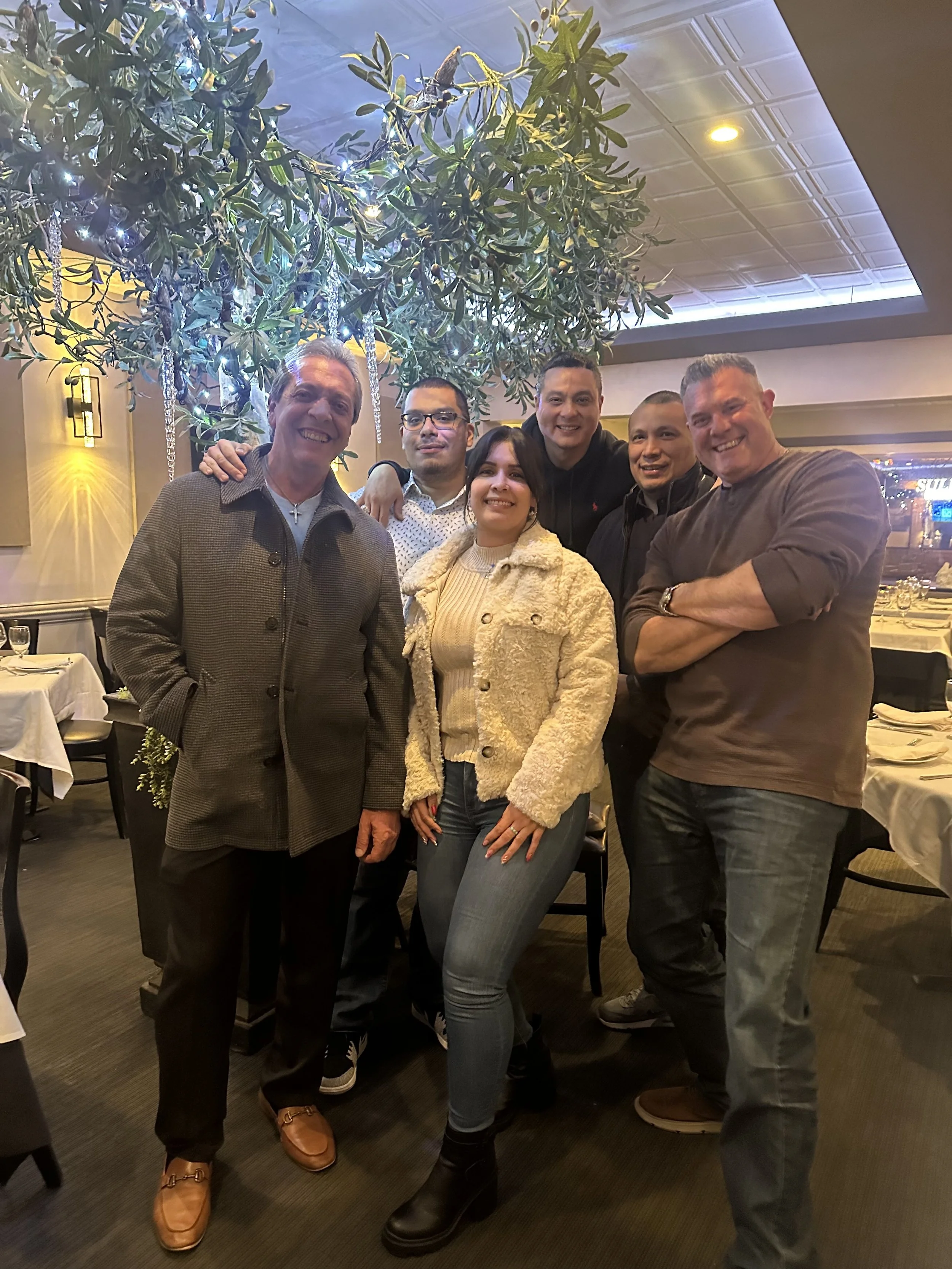
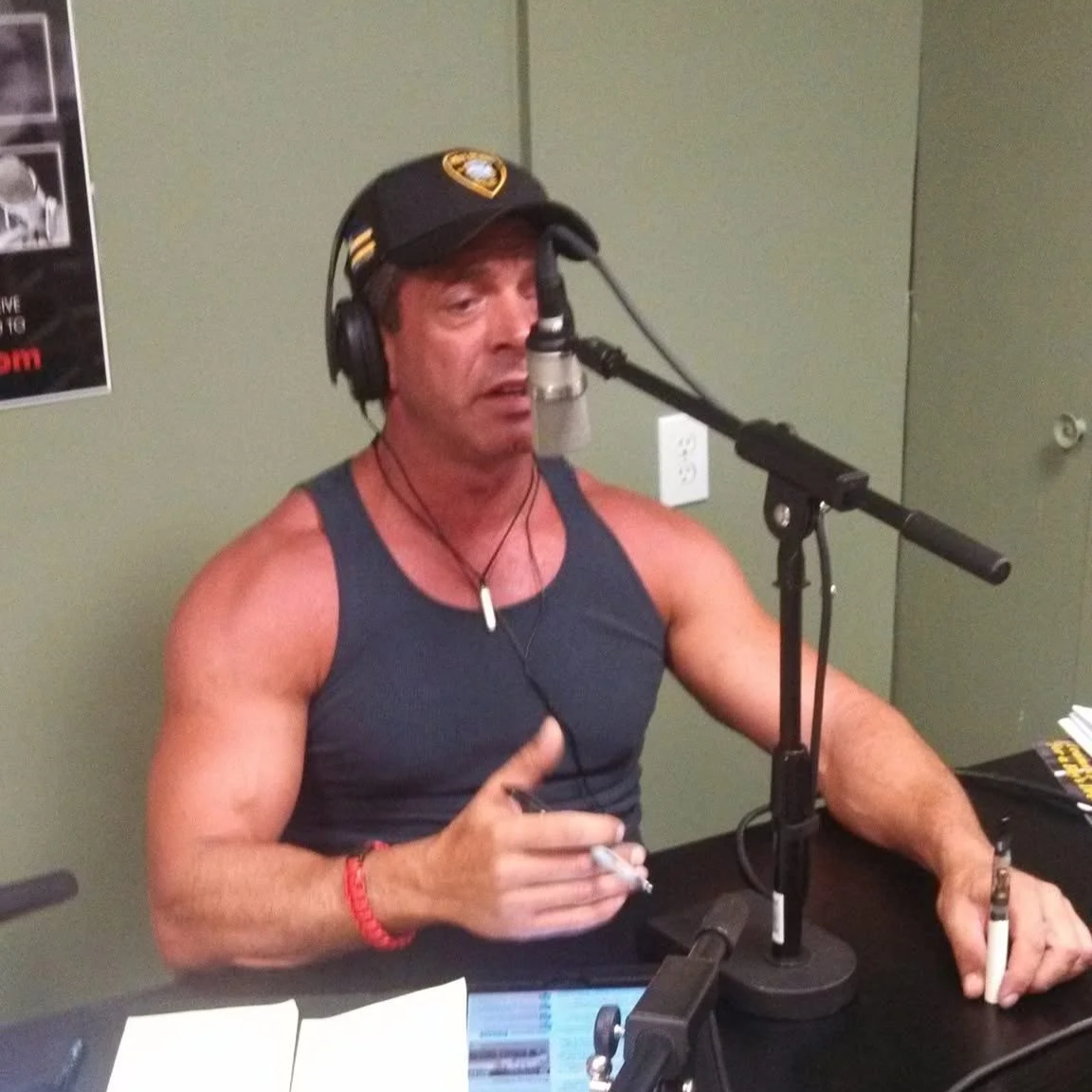
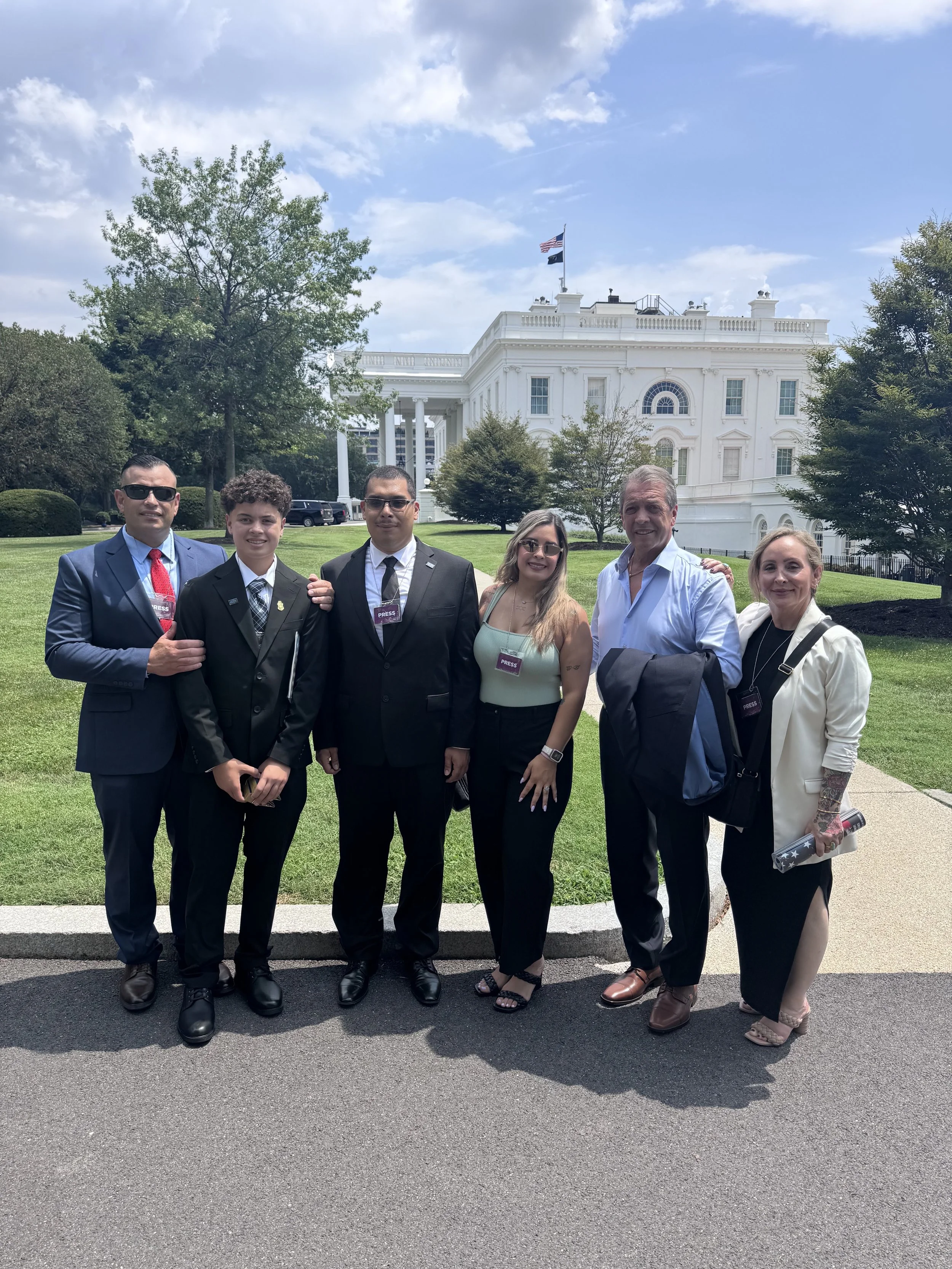
Steve did not win the election, but his influence on Blue continued well beyond the campaign. He became one of my closest friends and most important mentors and remained involved with the magazine for years. Several of the most consequential relationships in Blue’s history began because Steve recognized that two people needed to meet.
TOMMY PANZARINO AND THE NEW JERSEY HONOR LEGION
When I first met Tommy Panzarino, he was serving with the Passaic County Sheriff’s Department and had extensive experience in gang investigations. His knowledge of that work immediately stood out, and he took an interest in what Blue was building.
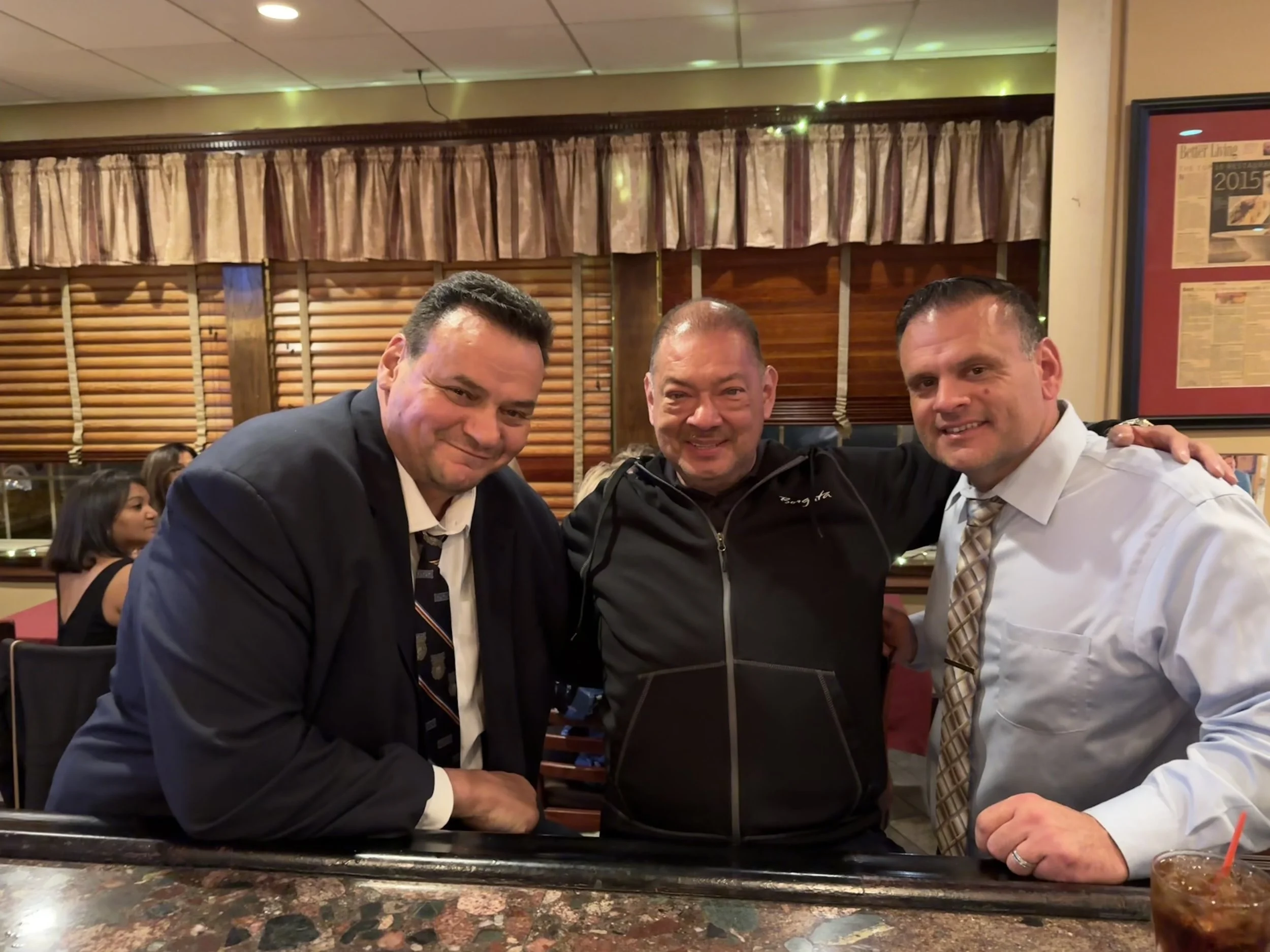
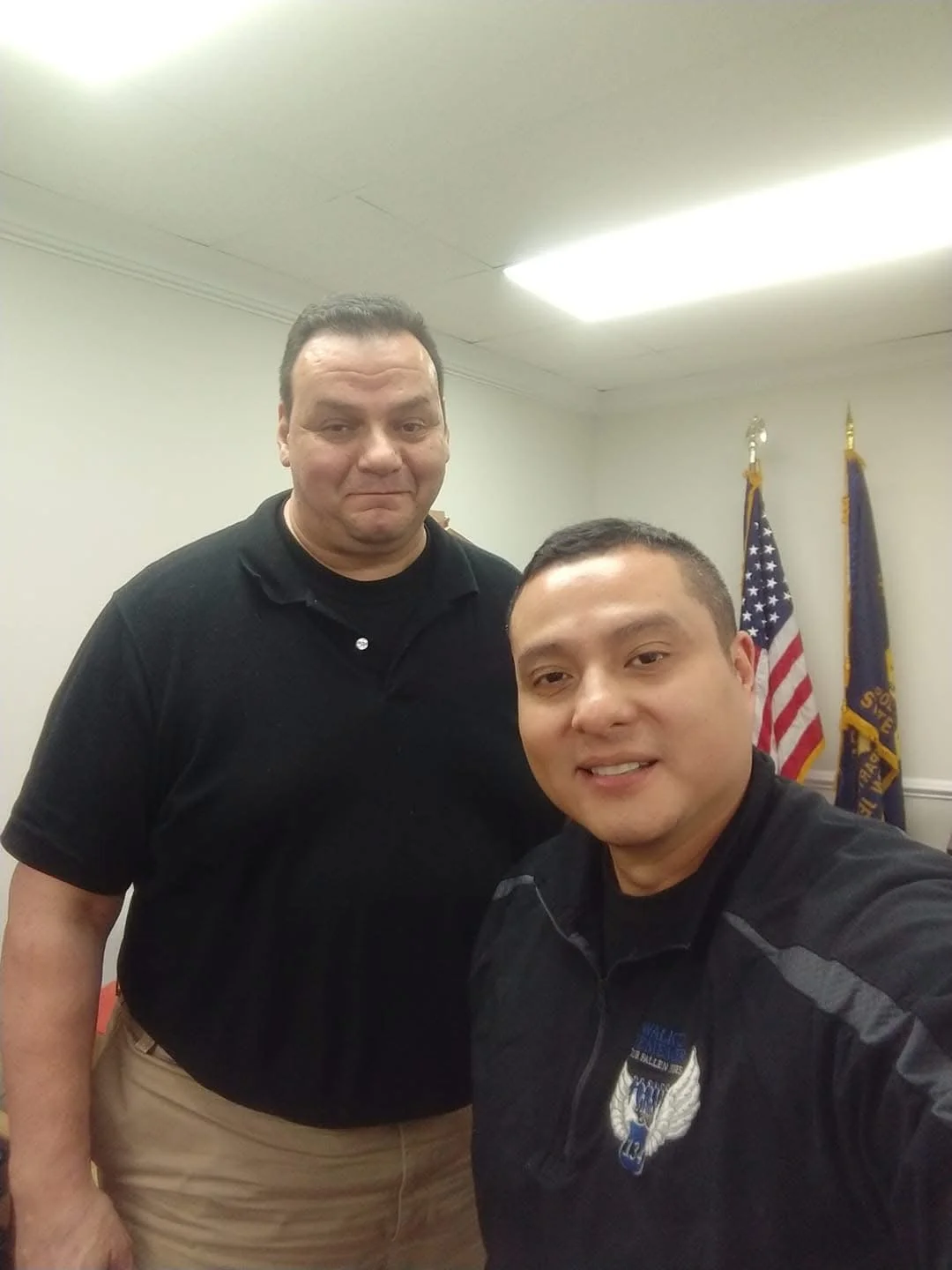
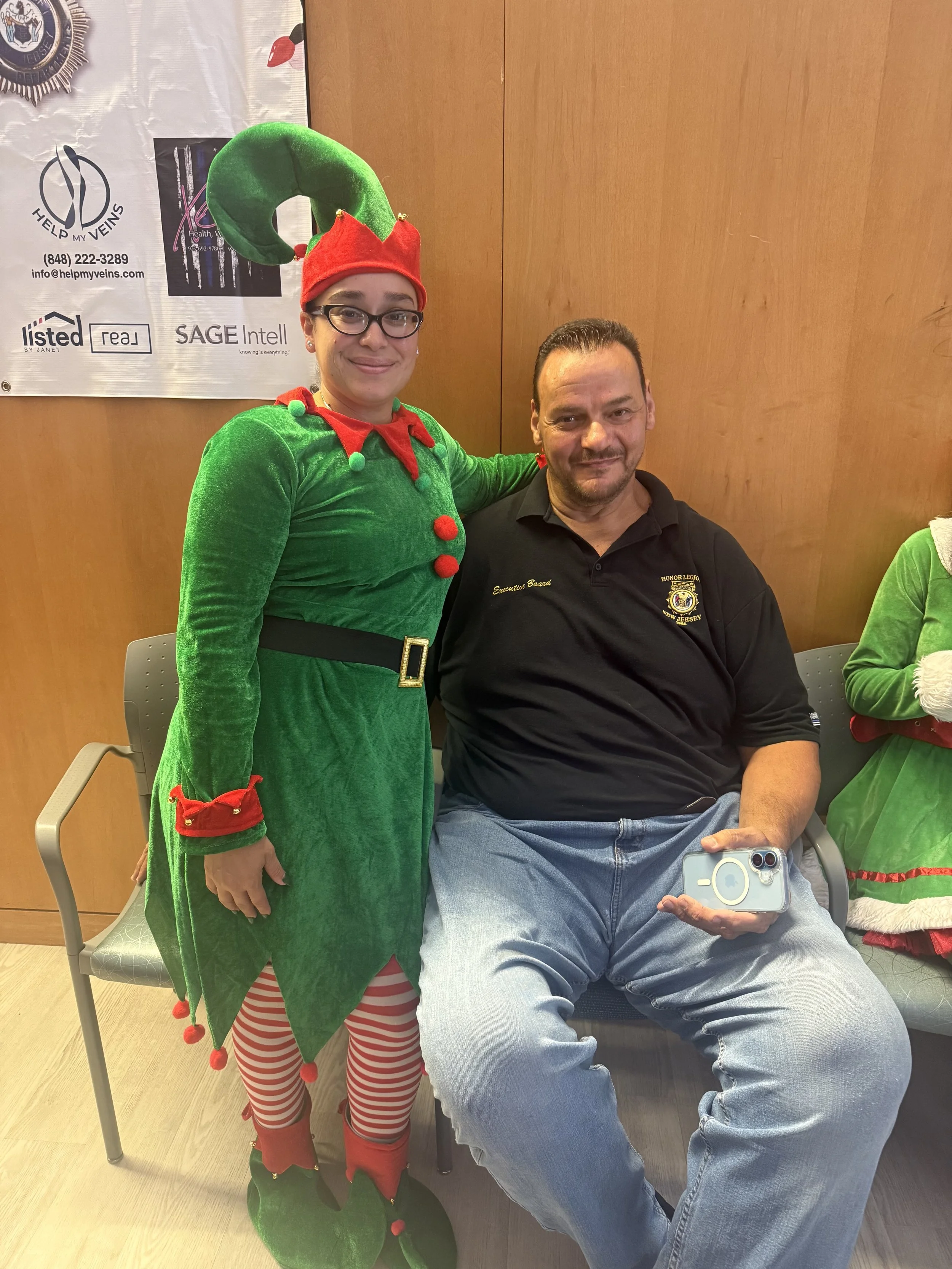
Tommy introduced me to Jim Durkin, who was closely connected to the New Jersey Honor Legion and would later serve as its president. That introduction brought Blue into another respected part of New Jersey’s law enforcement community. Years later, Tommy also became president of the New Jersey Honor Legion. After his law enforcement career ended, he continued supporting the profession through the Honor Legion, Moment of Silence, Santa Comes to Paterson and other charitable projects involving children and families.
Tommy’s place in Blue began with a professional judgment. He saw potential in a young magazine and connected it with someone he believed it needed to know. Over time, that professional connection became a lasting friendship. Tommy became a brother to me, and his continued service became part of both Blue and Moment of Silence.
JIM DURKIN
I remember sitting in a diner with Jim Durkin when he took out his phone and began calling people he knew in New York, Connecticut and other parts of the law enforcement community. Jim was a Paterson police officer who served as president of the New Jersey Honor Legion, and he believed enough in what we were doing to place his own credibility behind us.
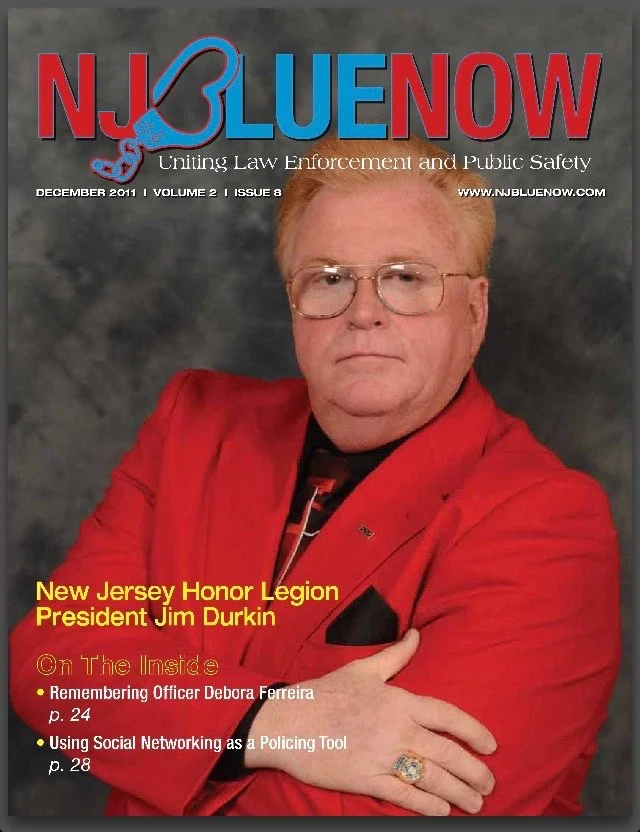
He told the people he called that he was sitting with his friend Danny, that I had started a magazine and that he wanted them to help us. Steve Olimpio had introduced me to law enforcement leaders throughout New Jersey. Jim was now helping the publication reach beyond the state. During that period, Jim suggested adding the word “Blue” to the magazine’s name. The idea was simple: the word gave the publication a broader law enforcement identity and helped position it for continued growth.
A few issues later, NJ Corrections Now became NJ Blue Now. The new name represented the broader law enforcement community while giving the publication an identity that could grow with it. NJ Blue Now became The Independent Voice of Law Enforcement. Not long afterward, Jim appeared on the cover in recognition of his work with the New Jersey Honor Legion.

As the magazine’s reporting and readership continued expanding beyond New Jersey, the name evolved again. NJ Blue Now became The Blue Magazine. Blue had become a national publication, but its purpose remained consistent. It provided a place where members of law enforcement could contribute their knowledge, express their views and identify stories they believed deserved attention.
The publication’s early development established an important standard. Personal introductions could provide access, but Blue’s work determined whether that access became lasting professional trust.
JOHN “JOHNNY” WELSH: A LEADER WHO HELPED BUILD BLUE
Johnny and I were both on the job with the Passaic County Sheriff’s Department when we first came to know one another. We had different personalities. I was more reserved; Johnny was outgoing and comfortable walking into a room, introducing himself and beginning the conversations that other people might avoid. From the beginning, I saw in him an unusual combination of ambition, confidence and willingness to do the work. Over the years, we learned from one another, grew alongside one another and built a friendship that became one of the most important relationships in my life.
When The Blue Magazine was still in its early stages, I was trying to carry nearly every part of the operation at once. We needed stories worth telling, people willing to trust us with interviews, law enforcement agencies prepared to participate and businesses willing to invest in an independent publication. Johnny understood the scale of what had to be built. He began helping with the work, and his role quickly became far larger than any one assignment.
There were nights when I would drive past the office at two or three in the morning and see the lights still on. Johnny would be inside researching businesses, following up on contacts and looking for the next opportunity that could move Blue forward. That was the work most readers never saw: the calls, the introductions, the preparation and the persistence required to turn a small publication into something capable of reaching beyond New Jersey.
Johnny helped bring advertisers and sponsors to Blue, developing the financial support that allowed the magazine to continue publishing. But his contribution was never limited to the business side. He became one of the magazine’s most trusted leaders and served as Executive Editor. He helped build relationships, introduced people who became important to the organization and brought the same instincts that served him well in law enforcement to the work of building Blue. He understood people, recognized potential and knew that a good introduction could become a lasting professional relationship when it was handled with integrity.
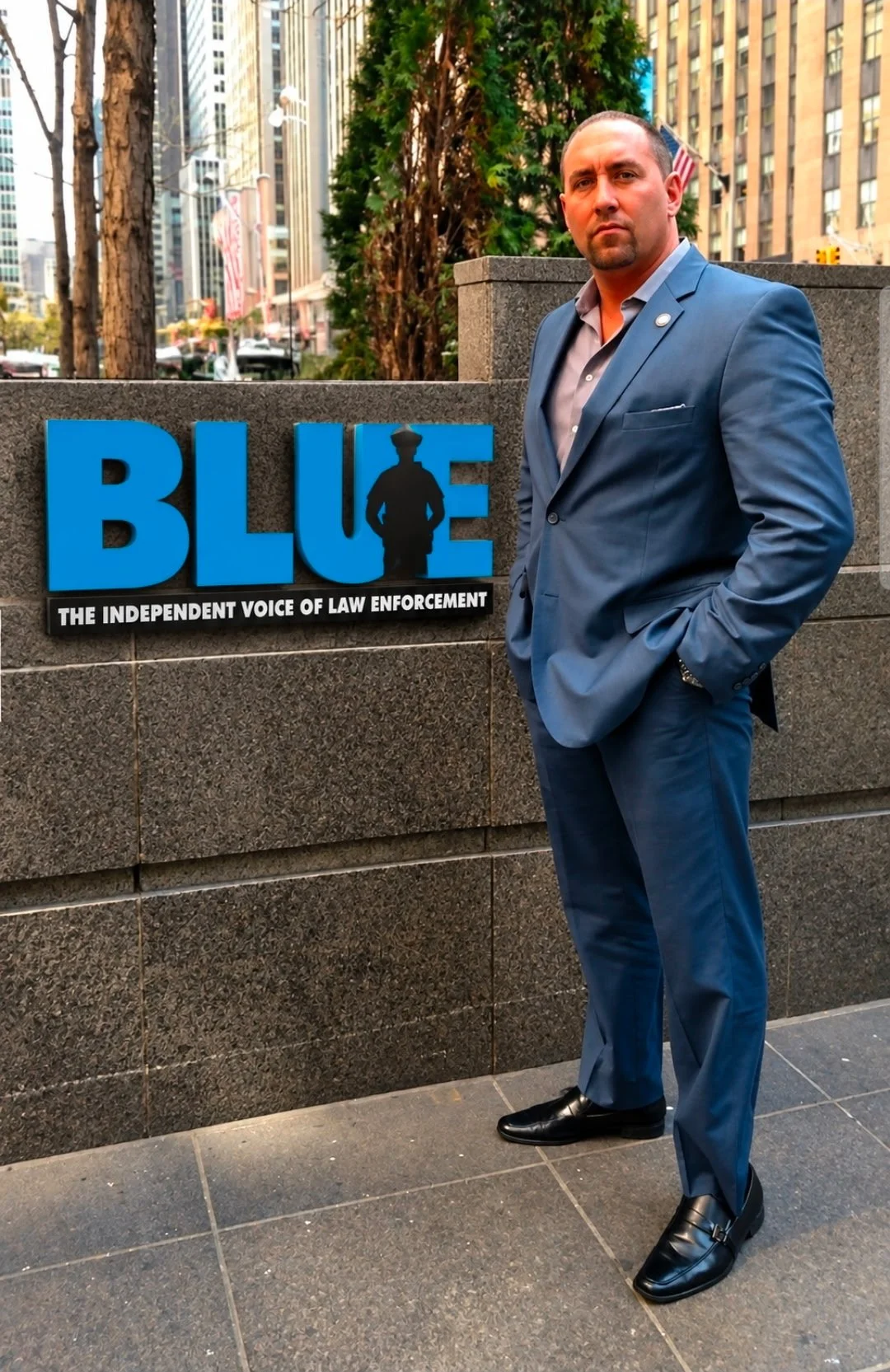
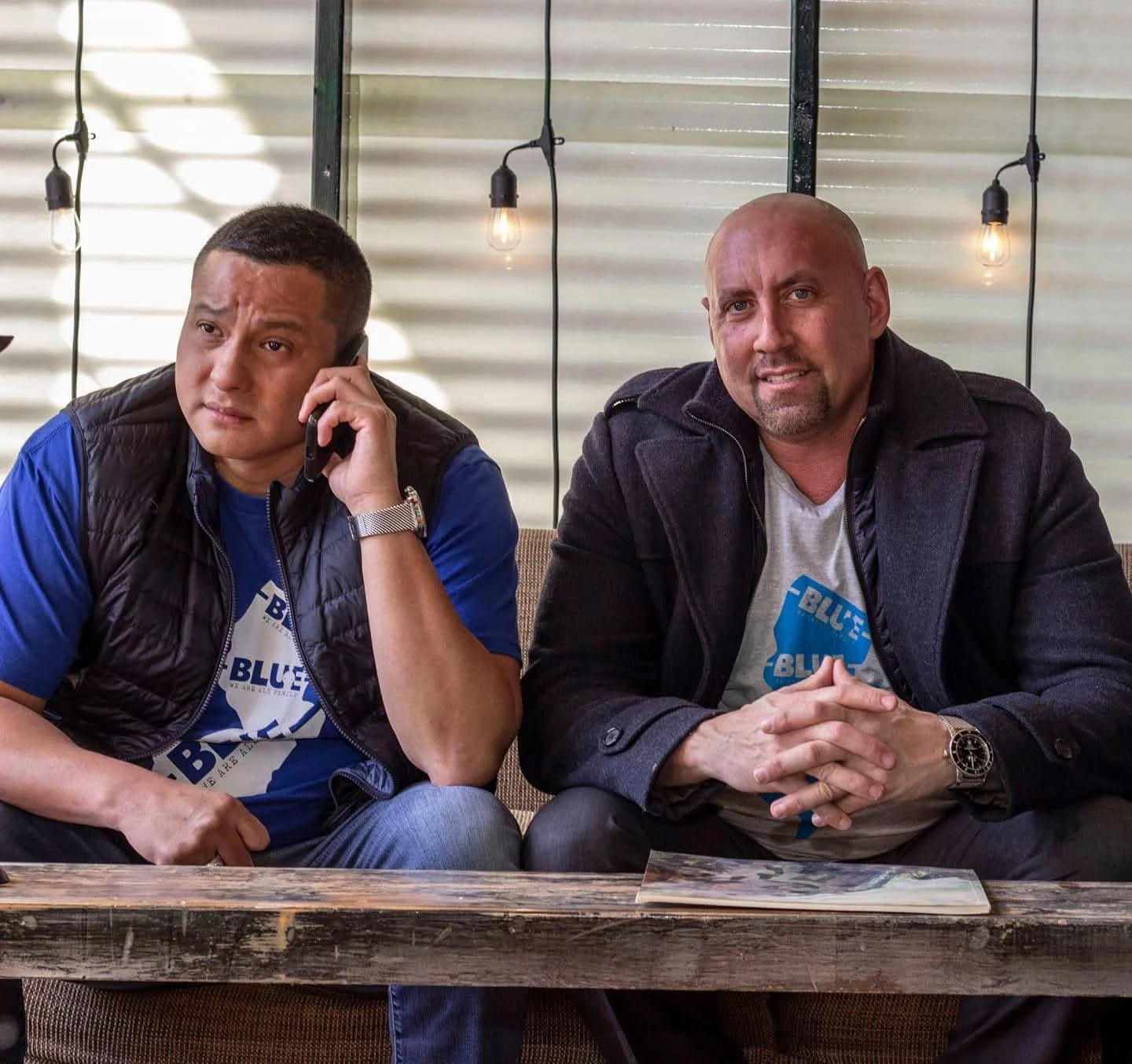
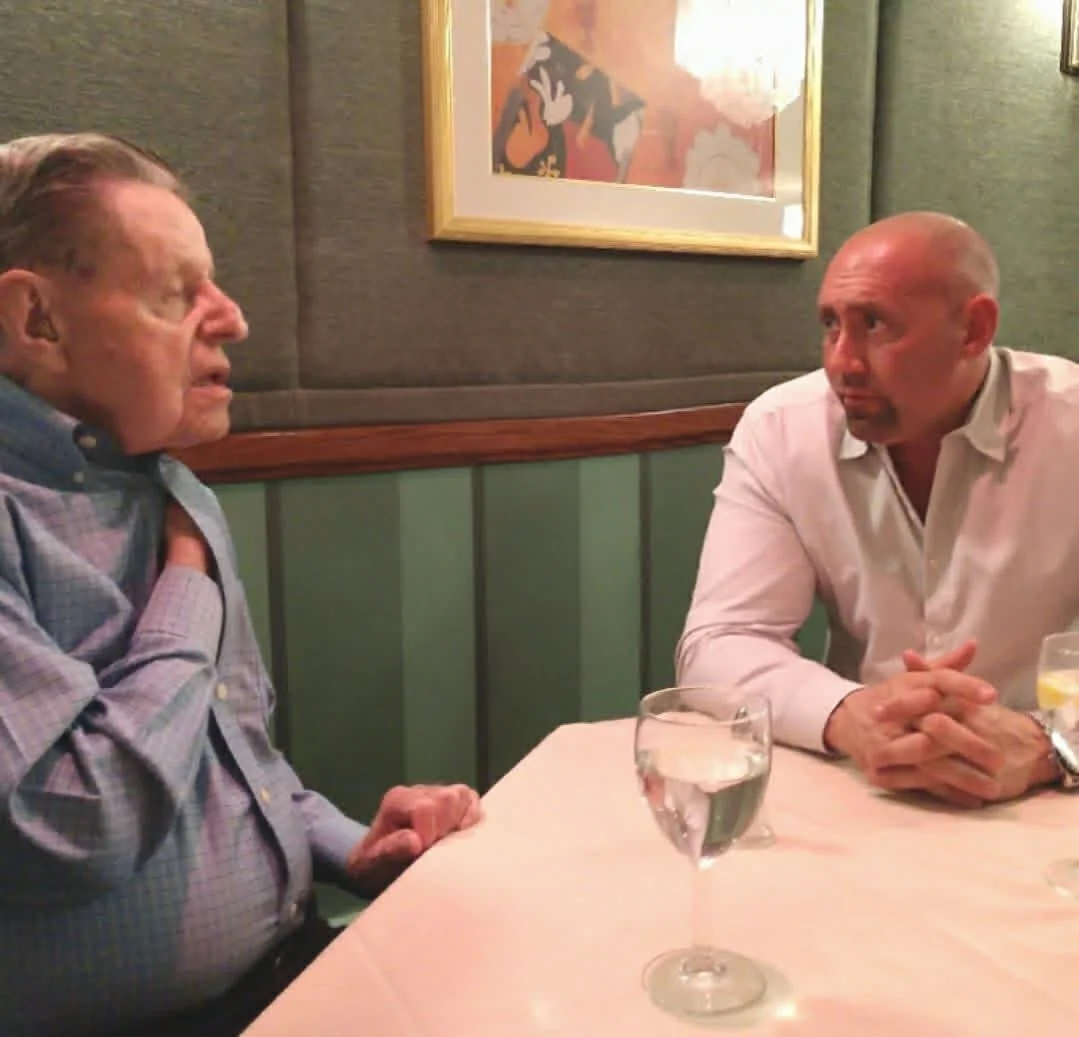
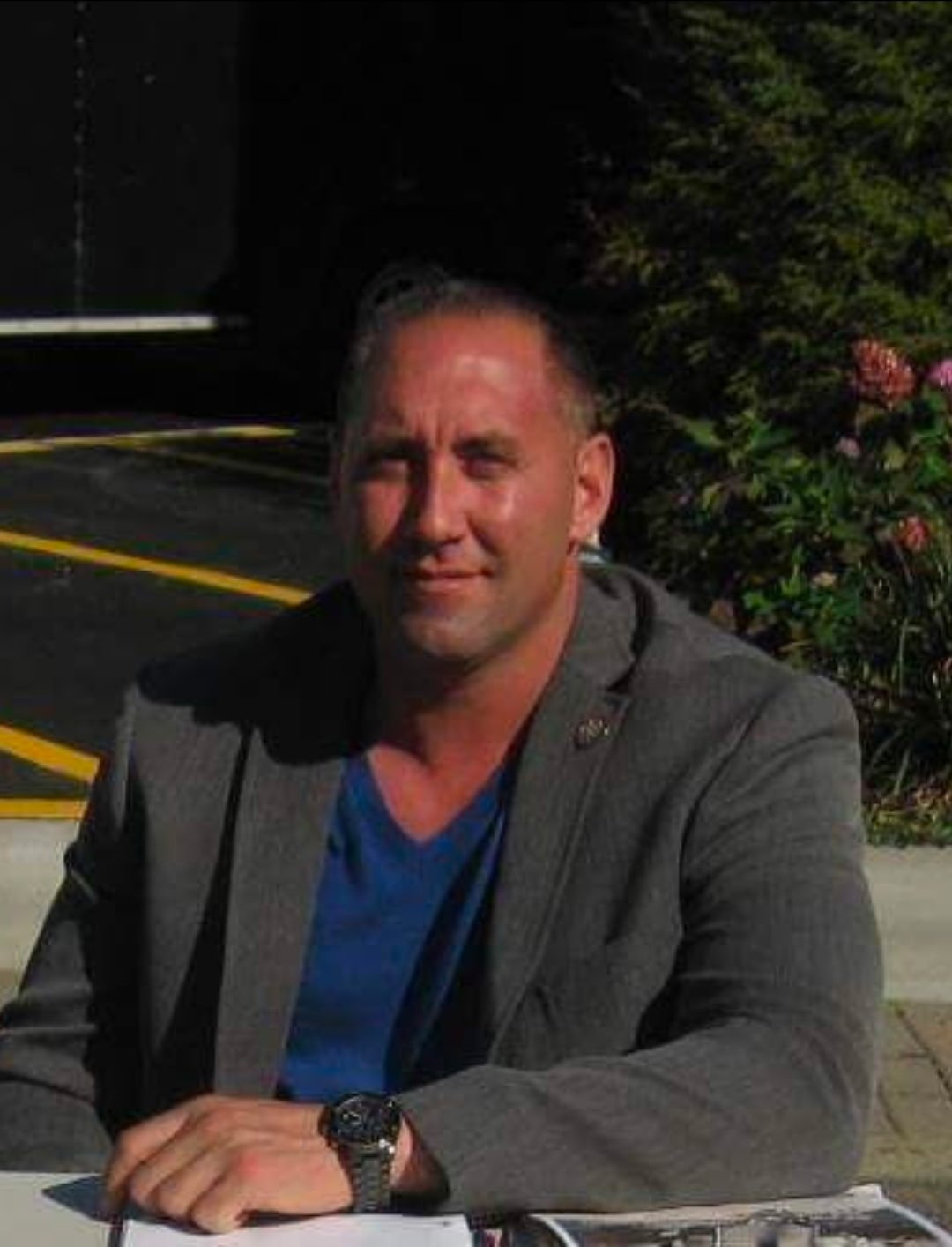
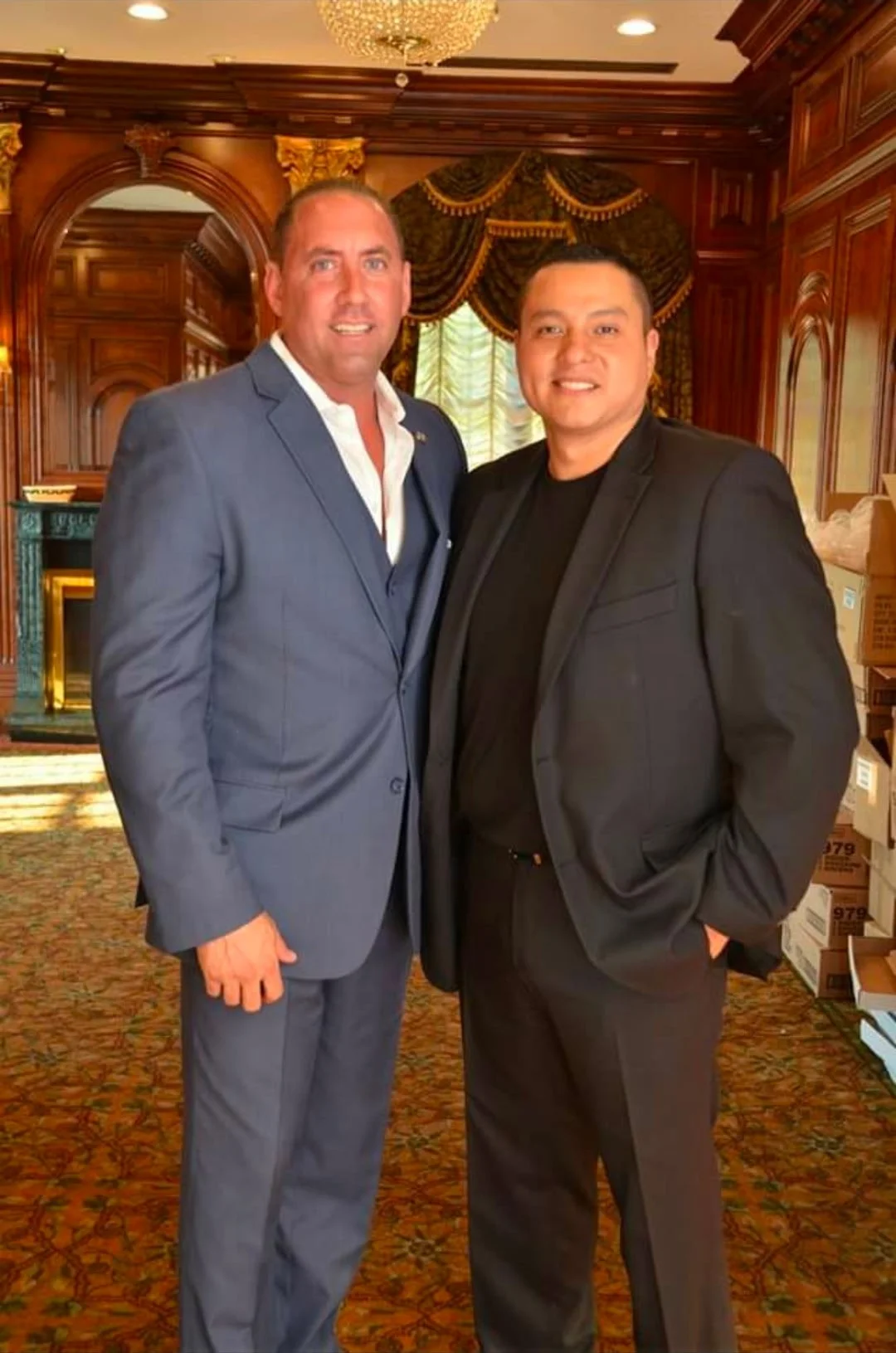
My earliest memories of the magazine include Johnny. He was there for the first dinners, the early meetings and the uncertain years when we were still proving that Blue could become what we believed it could be. He has also been present for many of its most significant later moments. He was able to represent the magazine with credibility, communicate comfortably with people from every level of law enforcement and business, and then return to the work without looking for attention. That consistency gave Blue strength.
I watched Johnny grow into a respected leader in his own department and earn a reputation for standing up for the people he represented. Years after I retired, he ran for union president and won. That moment carried real meaning for me. Earlier in my own career, I had pursued that same position and lost. When Johnny earned the confidence of his fellow officers and took on that responsibility, I felt proud in a way that is difficult to explain. When Johnny won, I felt as though I had won with him. His victory affirmed what I had known for years: his character, loyalty and leadership had made a lasting difference.
As union president, Johnny has fought for the members he represented during difficult issues affecting their benefits and well-being. He has made a real difference in the lives of people on the job. The details of every matter do not need to be printed here; his record and the trust he earned speak for themselves.
Johnny has now retired from the Passaic County Sheriff’s Department, closing an important chapter in a career defined by service and leadership. Retirement, however, does not erase the impact a person has made. His influence remains in the people he helped, the officers he represented and the relationships he built over the years.
For Blue, Johnny has been more than an Executive Editor or a business partner. He has been one of my most trusted advisors. There are private moments, difficult decisions and people we have been able to help that will never become part of a public article. They do not need to. I know what he has meant to me, to this magazine and to the people whose lives were made better because he showed up.
If there is one word that defines Johnny Welsh, it is loyalty. He has been loyal to Blue, to law enforcement, to the people he served and to the friends who have relied on him. The Blue Magazine was fortunate to have him from the beginning, and its history cannot be told honestly without recognizing how much stronger it became because Johnny Welsh was part of it.
CHUCK MEYERS: A LEADER WHO MADE ROOM
Charles “Chuck” Meyers rose through the ranks of the Passaic County Sheriff’s Office to serve as undersheriff and acting sheriff. He understood the department from the ground up: its people, its operations, its administration and the pressures that come with leading a large law enforcement agency.
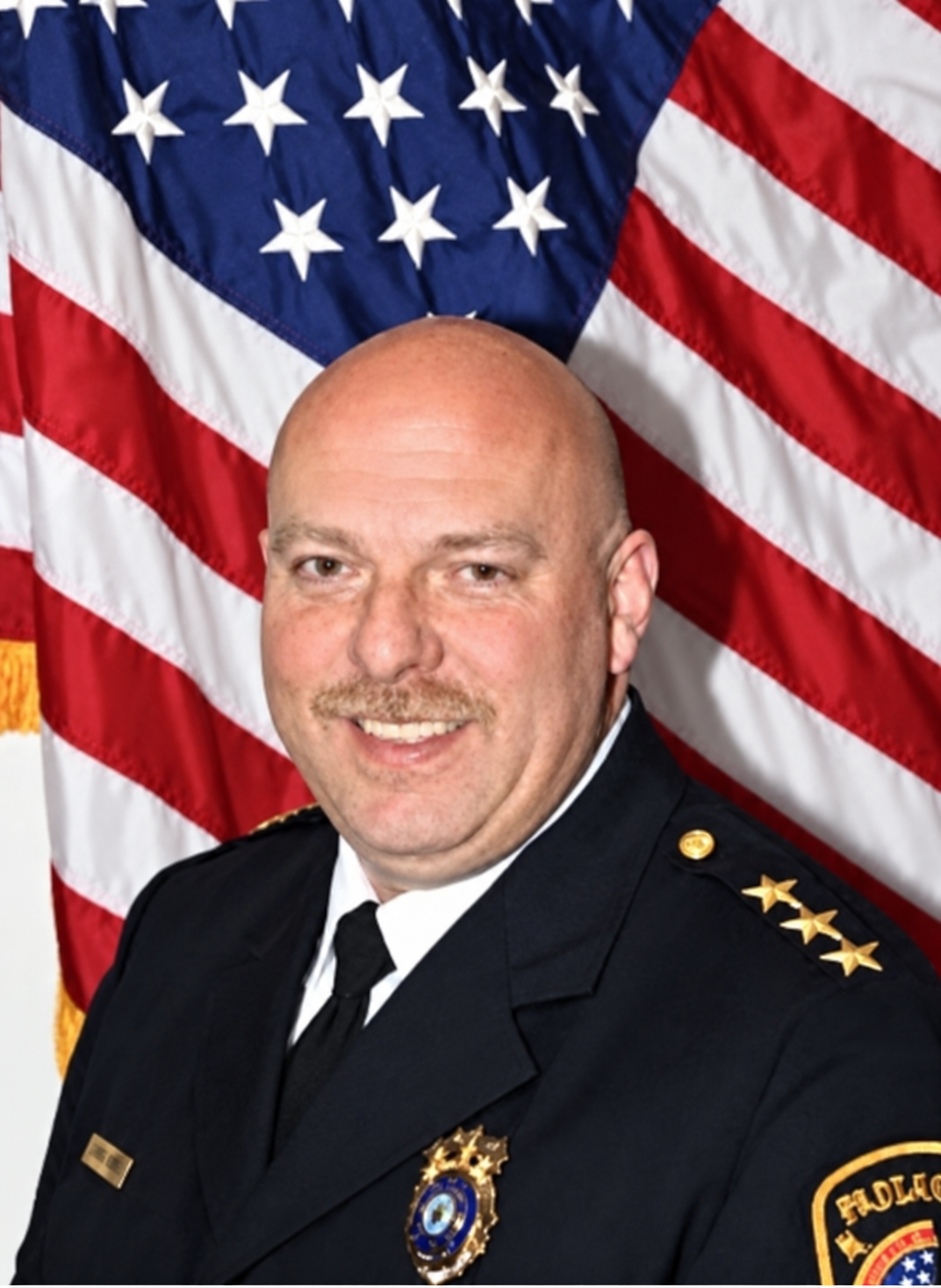
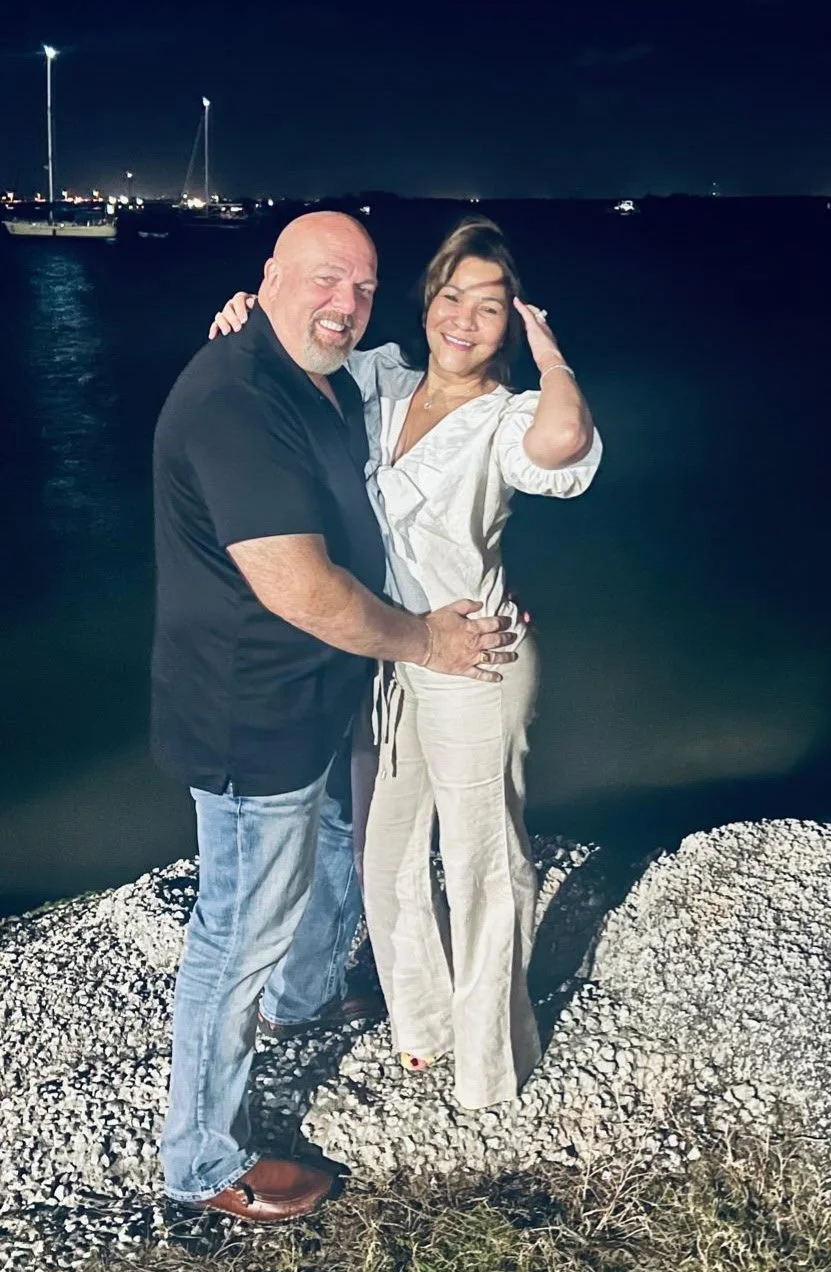
My relationship with Chuck did not begin easily. We had disagreements during a difficult period in my own career with the Sheriff’s Office. But when I returned to the department, Chuck did not carry those disagreements forward. He treated me fairly, respected my role as a union advocate and allowed us to move ahead without bitterness. His decision meant more to me than he may have realized. When I came to him with the idea of starting a law enforcement magazine, he could have made the process difficult. Departments have legitimate concerns when an officer launches an independent publication involving access, reporting and public issues. Chuck chose a different approach.
He told me he believed in the idea. He said the department would support it and help where it could. He even told me that he had once considered starting a magazine himself. His confidence gave me room to build what became Blue Magazine. The department did not censor the work or stand in its way. For an officer trying to create something independent, that trust was essential.

Chuck also helped shape the beginning of Moment of Silence. He offered me the opportunity to take over the charity and connect it with the work Blue Magazine was already doing. From there, Moment of Silence developed into a mission with two clear responsibilities: support law enforcement officers and their families, particularly through suicide prevention and wellness work, and give back to the communities they serve through direct assistance to children and families. Chuck’s leadership carried an important lesson. A strong leader does not need to punish disagreement or hold a grudge when someone speaks up. He can recognize conviction; make room for growth and judge people by what they do next. Chuck did that for me.
Although he is retired, Chuck has remained someone I can call in a crucial moment. He has advised Blue Magazine through the years, and I still value his judgment and experience. Our story began with disagreement, but it became one of trust, respect and lasting friendship.
TOM BROCK
Through the New Jersey Honor Legion, I was introduced to Tom Brock, whose law enforcement career had been permanently changed after he was struck by a vehicle in the line of duty. His injuries forced him into early retirement and continued to affect his health, but Tom remained committed to supporting law enforcement. He became an advisor and a close friend, traveling from Arizona to New York and New Jersey to support Blue despite his physical limitations.
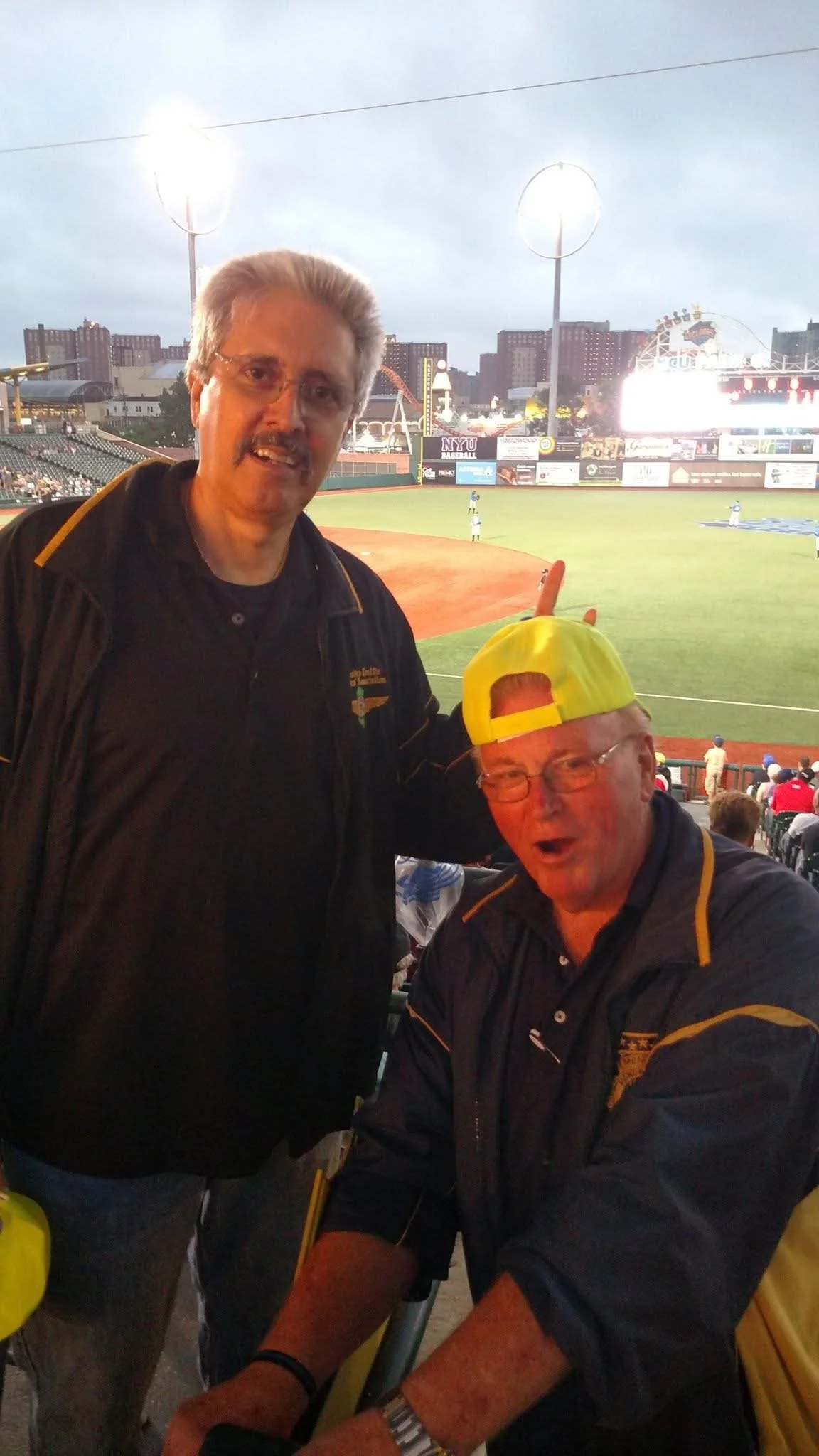
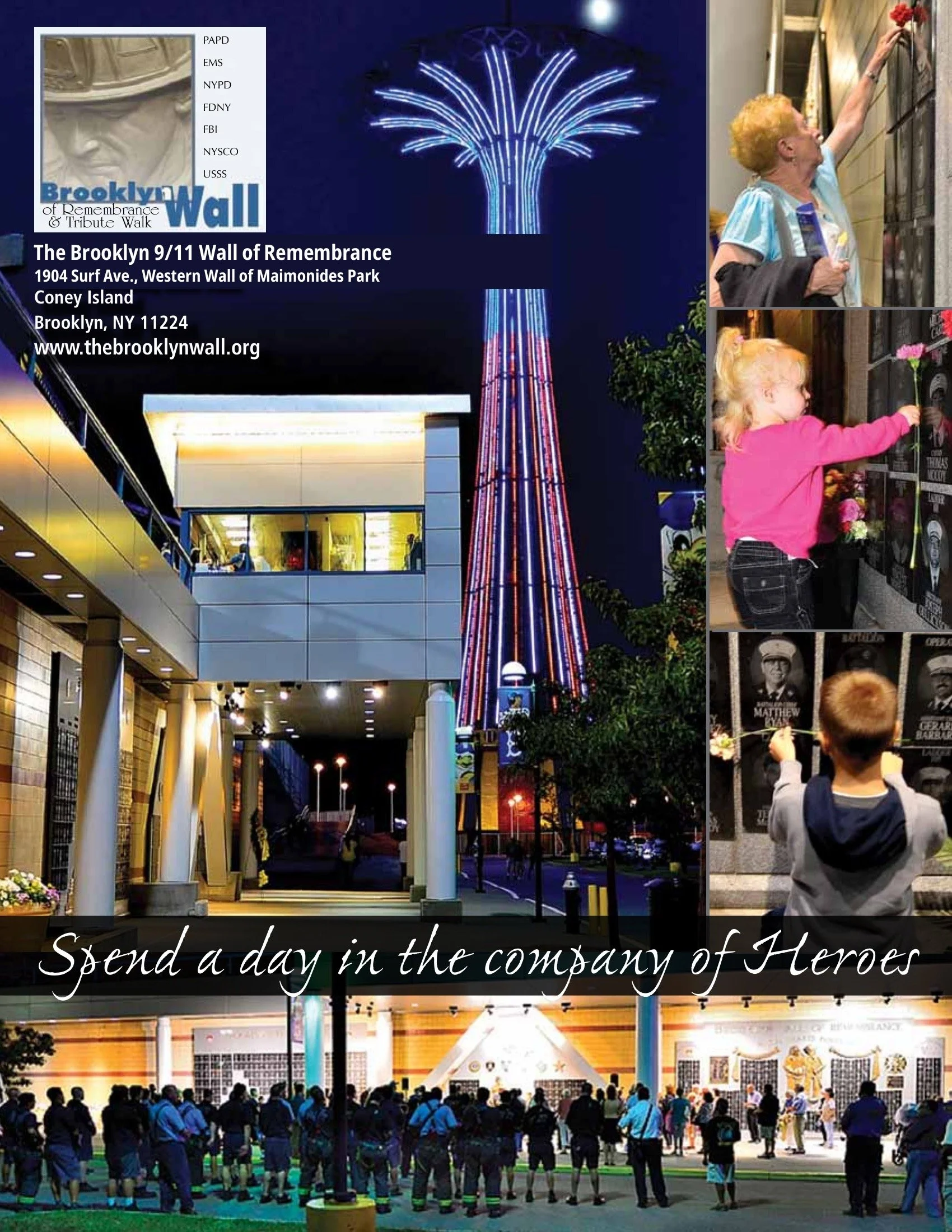
Tom and I walked together in the Father Mychal Judge 9/11 Walk of Remembrance, and through that world I would come to know Detective Steven McDonald. Tom could have spent the rest of his life angry about what happened to him, but he did not. His faith remained strong, along with his commitment to law enforcement.
DETECTIVE STEVEN McDONALD
Detective Steven McDonald was already one of law enforcement’s most respected figures when I began publishing Blue. Tom Brock introduced us during the annual Father Mychal Judge 9/11 Walk of Remembrance in Manhattan. Steven was seated in his wheelchair, and meeting a man whose story was known throughout the profession was an honor.
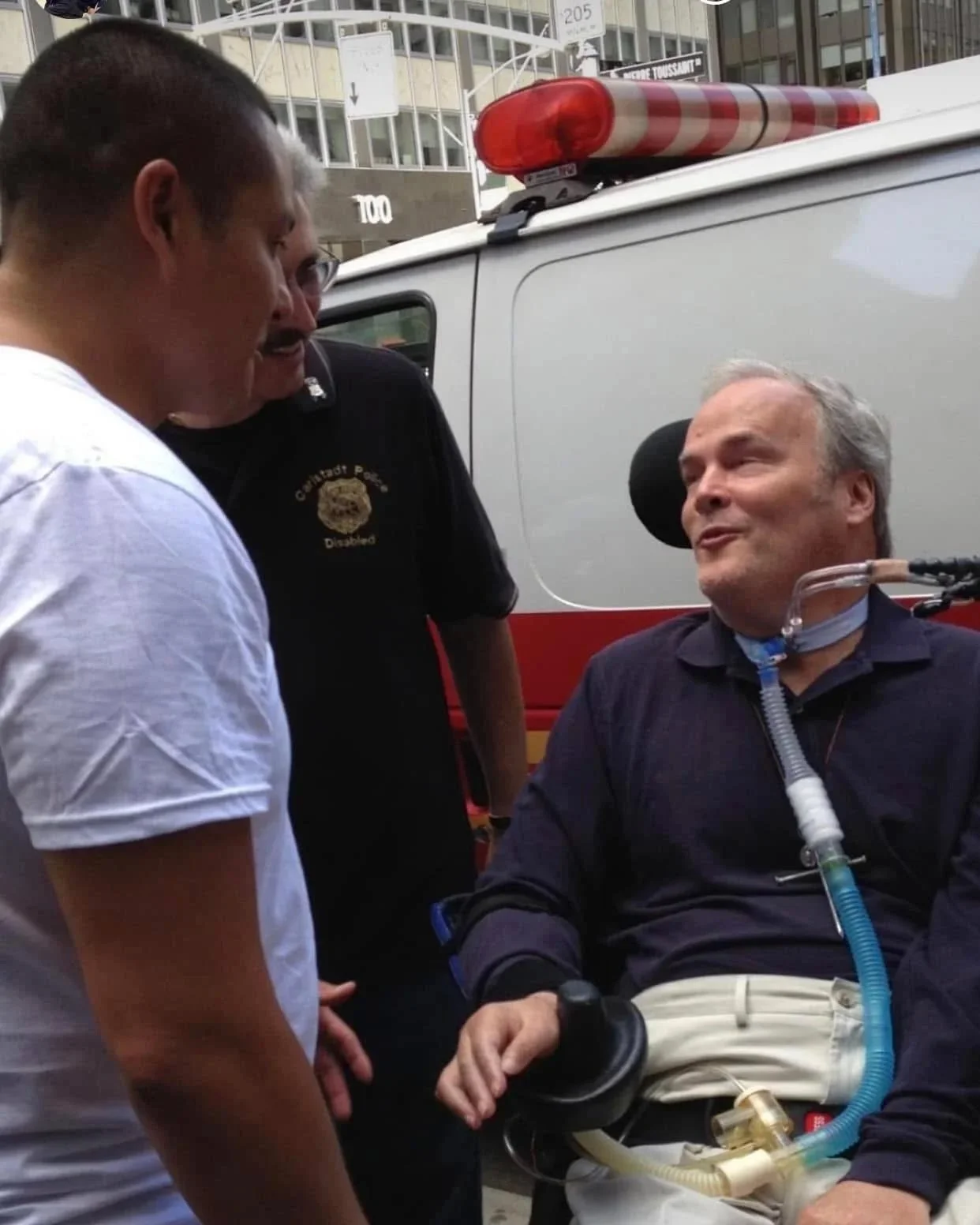
On July 12, 1986, Steven was shot three times while serving as an NYPD officer in Central Park. The attack left him paralyzed and dependent on a wheelchair and ventilator. He nevertheless remained an active member of the NYPD and spent the next three decades speaking about faith, peace and forgiveness. His decision to forgive the young man who shot him became central to his influence within law enforcement and beyond it.
Years after our first meeting, Blue and Moment of Silence became involved with Brothers Before Others. On November 10, 2016, we participated in a New York tribute dinner recognizing Steven. It gave our organizations an opportunity to recognize Steven’s decades of service, faith and advocacy.
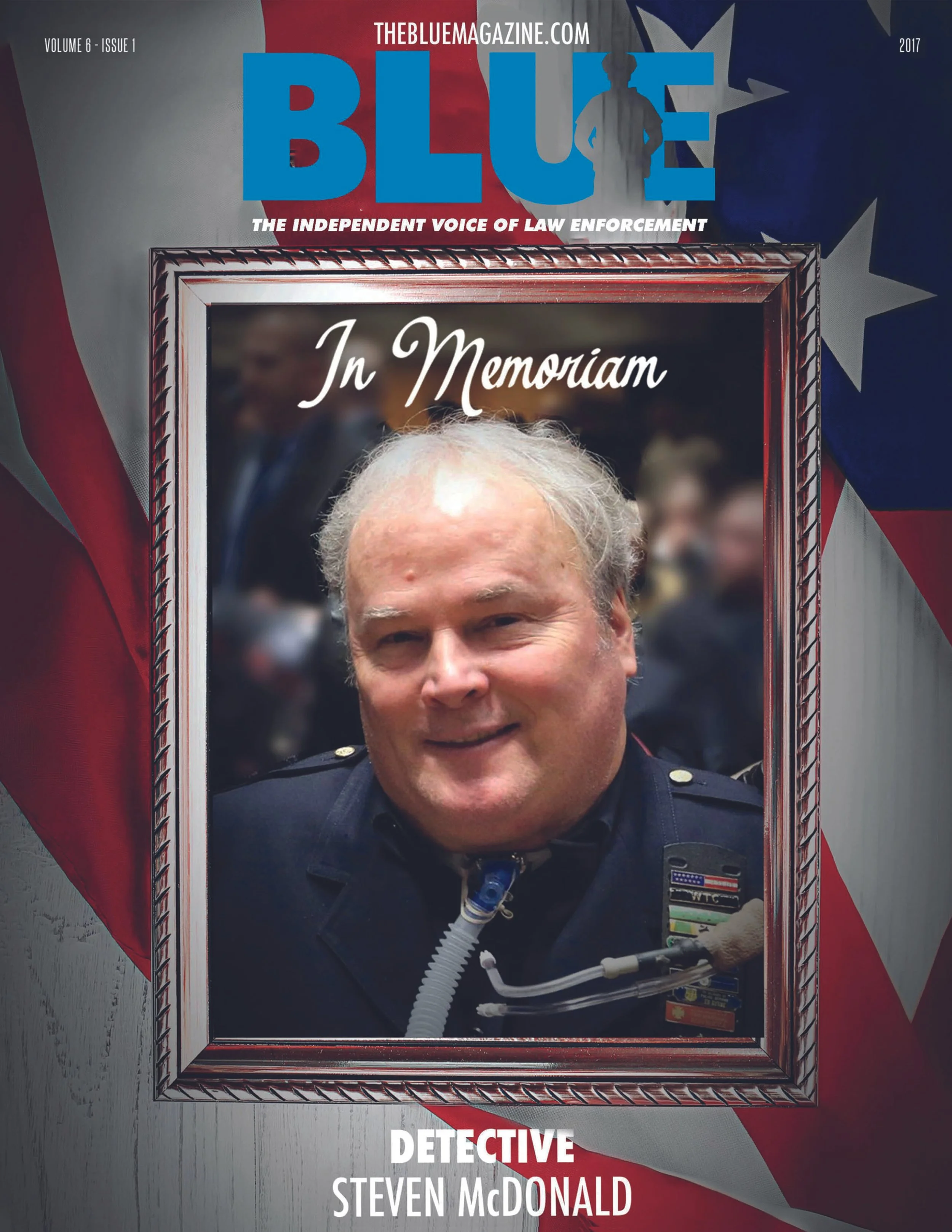
Steven died two months later, on January 10, 2017, from complications related to his wounds. He was 59. NY Blue Now devoted its first issue of 2017 to his life, placing him on the cover so that younger officers and readers unfamiliar with his story would understand why his name deserved to be remembered. The issue examined not only the shooting, but what Steven did with the life that followed it
At Night to Unite in 2019, the Steven McDonald Lifetime Achievement Award was presented in the presence of his widow, Patti Ann, and his son, Conor. By carrying his name into another gathering of the law enforcement community, the award extended the purpose of the cover: ensuring that Steven’s example would reach officers who never had the opportunity to meet him.
Steven never gave me a private quotation or delivered a personal message that I could repeat here. He did not need to. The way he lived demonstrated that service can continue after a career is taken away and that forgiveness can be an enduring form of leadership.
SEPTEMBER 11: NEVER FORGET
On September 11, 2001, I was in the early years of my career I was working as a Security Officer in the courthouse of the Passaic County Sheriff’s Department. Sheriff Edwin Englehardt led the department. Reports began arriving that airplanes had struck the World Trade Center, but the scale of what was happening was still unclear. Members of our department prepared to respond as I tried to reach loved ones. Telephone systems were overwhelmed, calls would not go through and confusion spread as we realized the country was under attack.
I watched friends and colleagues leave to assist at Ground Zero. In the days that followed, we learned who had been killed and what the responders had encountered. The consequences continued long after the fires were extinguished. Some responders I knew later became seriously ill from their exposure. Some are no longer alive.
Blue Magazine was founded eight years after the attacks, but September 11 became part of the magazine’s mission from the beginning. We commemorated the anniversary through covers, interviews, firsthand accounts and information intended to help responders and survivors. The people killed that morning deserved more than an annual slogan, and those who survived deserved continued recognition and support. The most significant example came in 2021, when Blue Magazine prepared an issue marking the twentieth anniversary. During one of our meetings, Commissioner Bernard Kerik proposed an interview with former New York City Mayor Rudy Giuliani. Commish believed that the two men who had led New York through the attack should place their memories on the record together. He would contribute his account and arrange for Blue Magazine to interview the mayor.
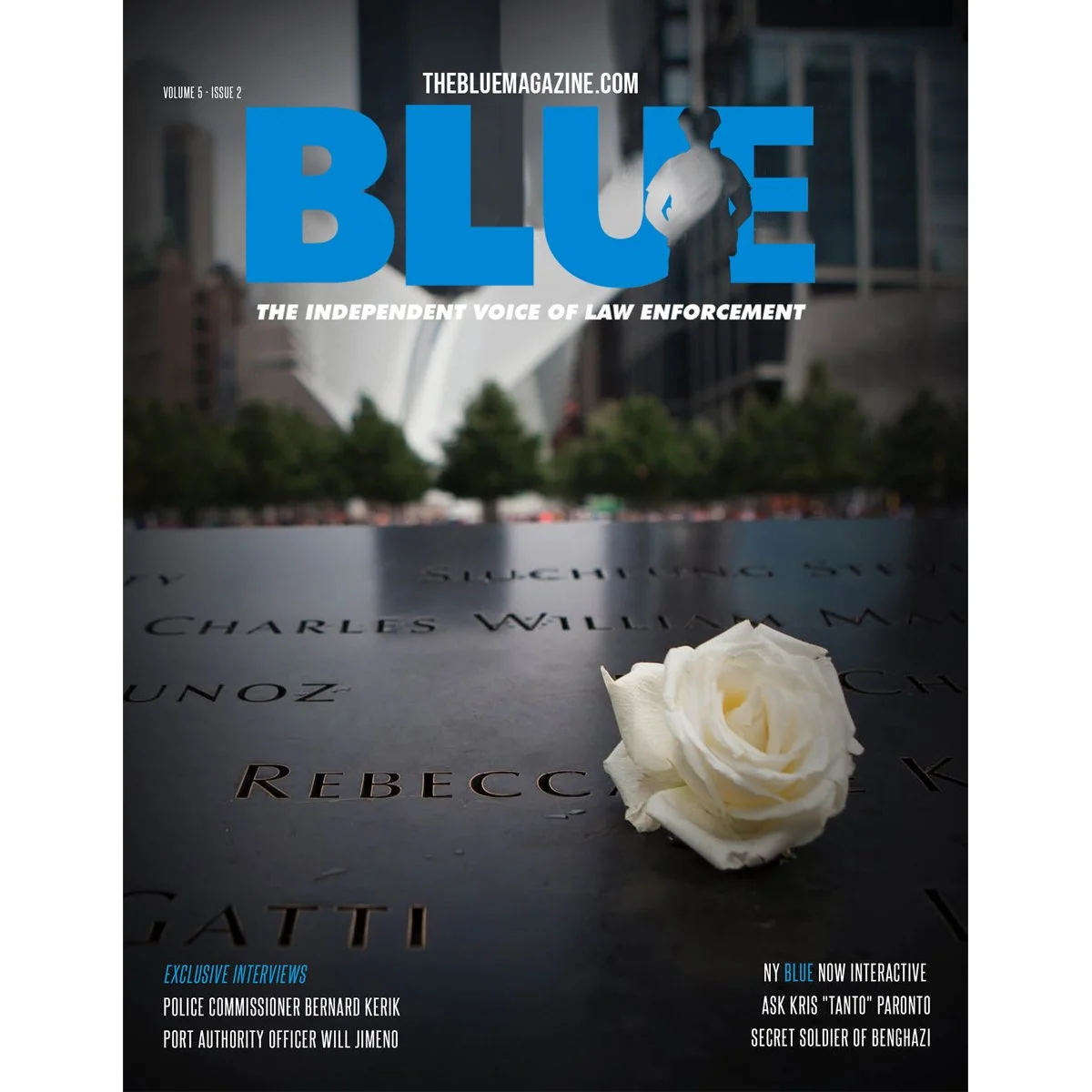
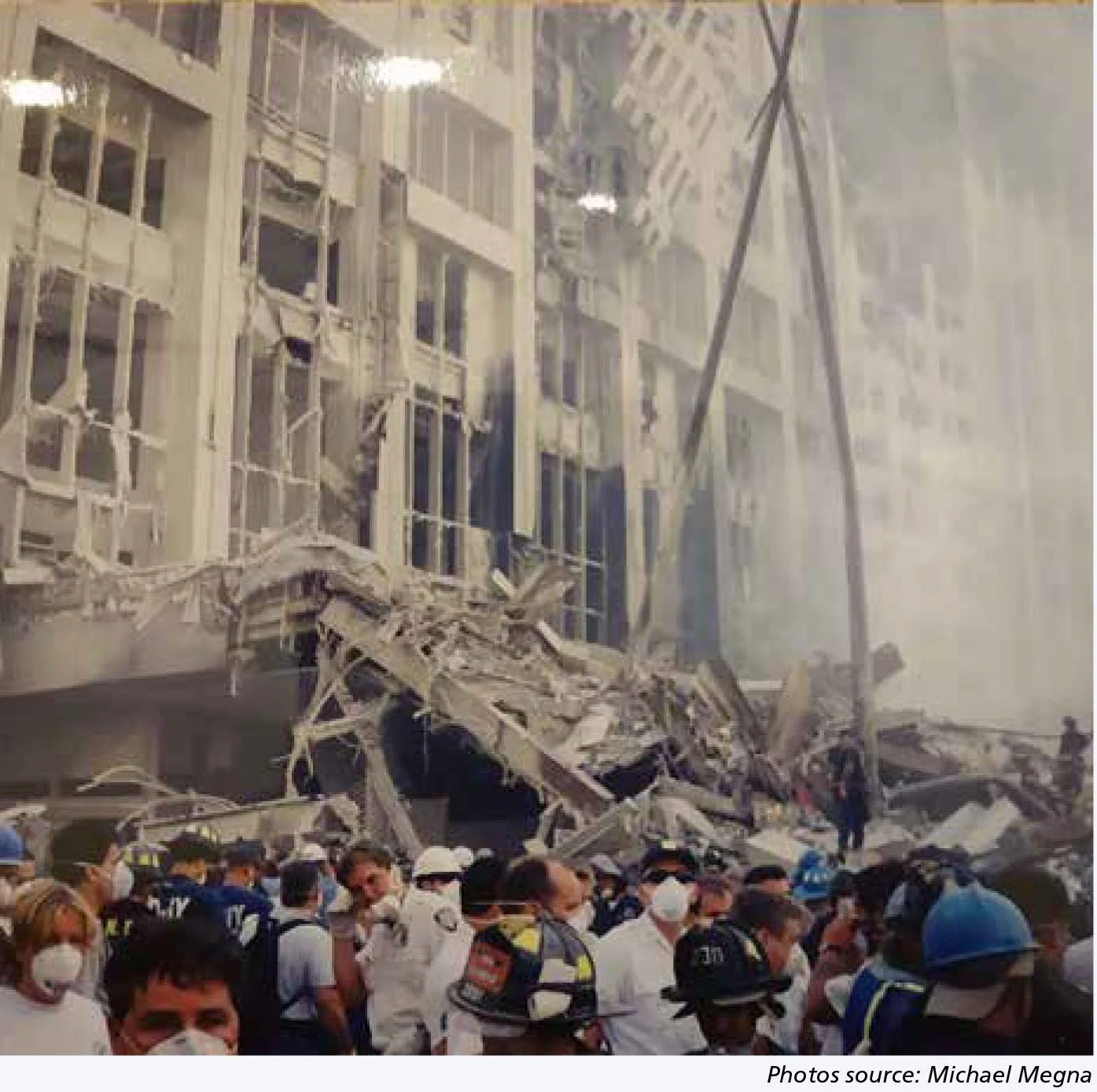
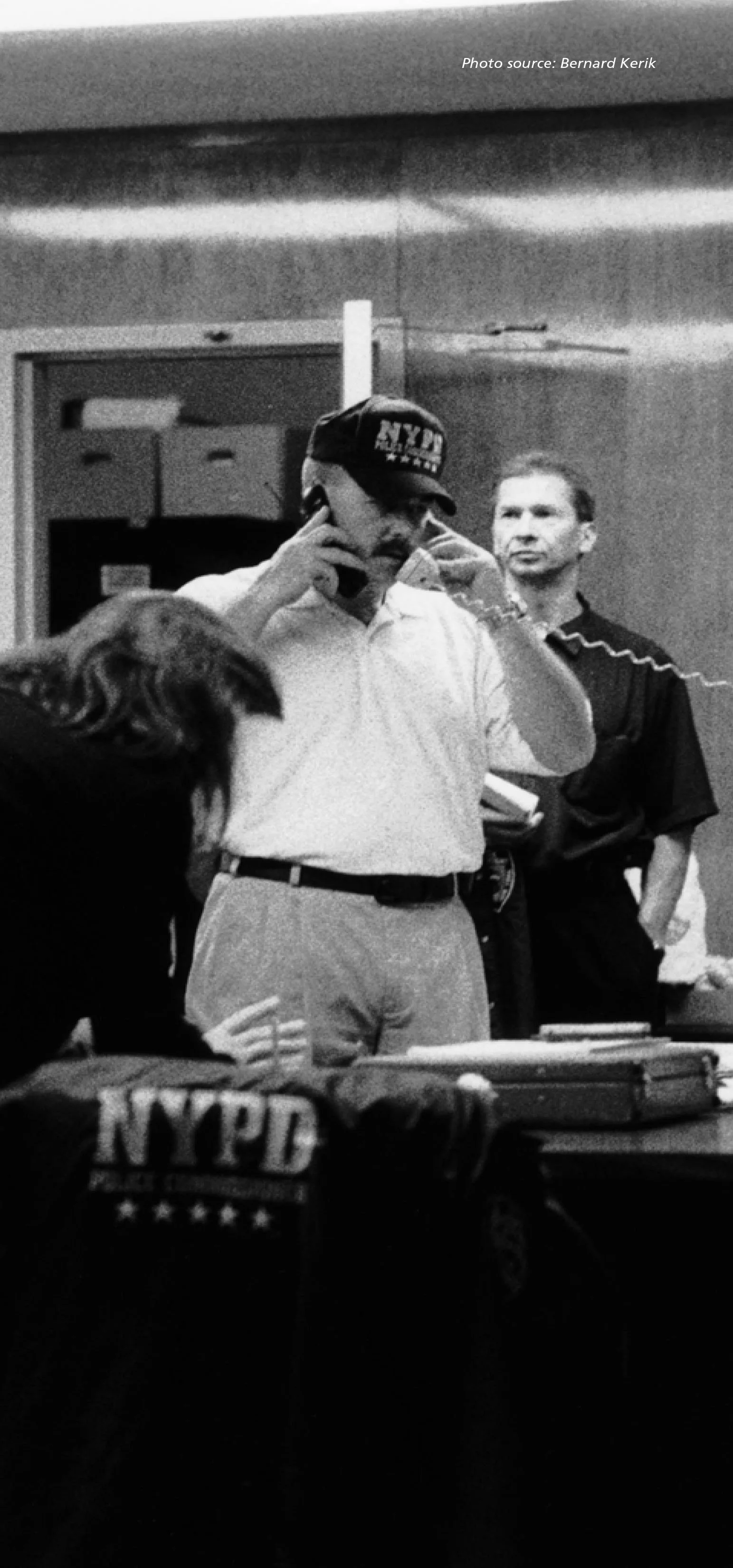
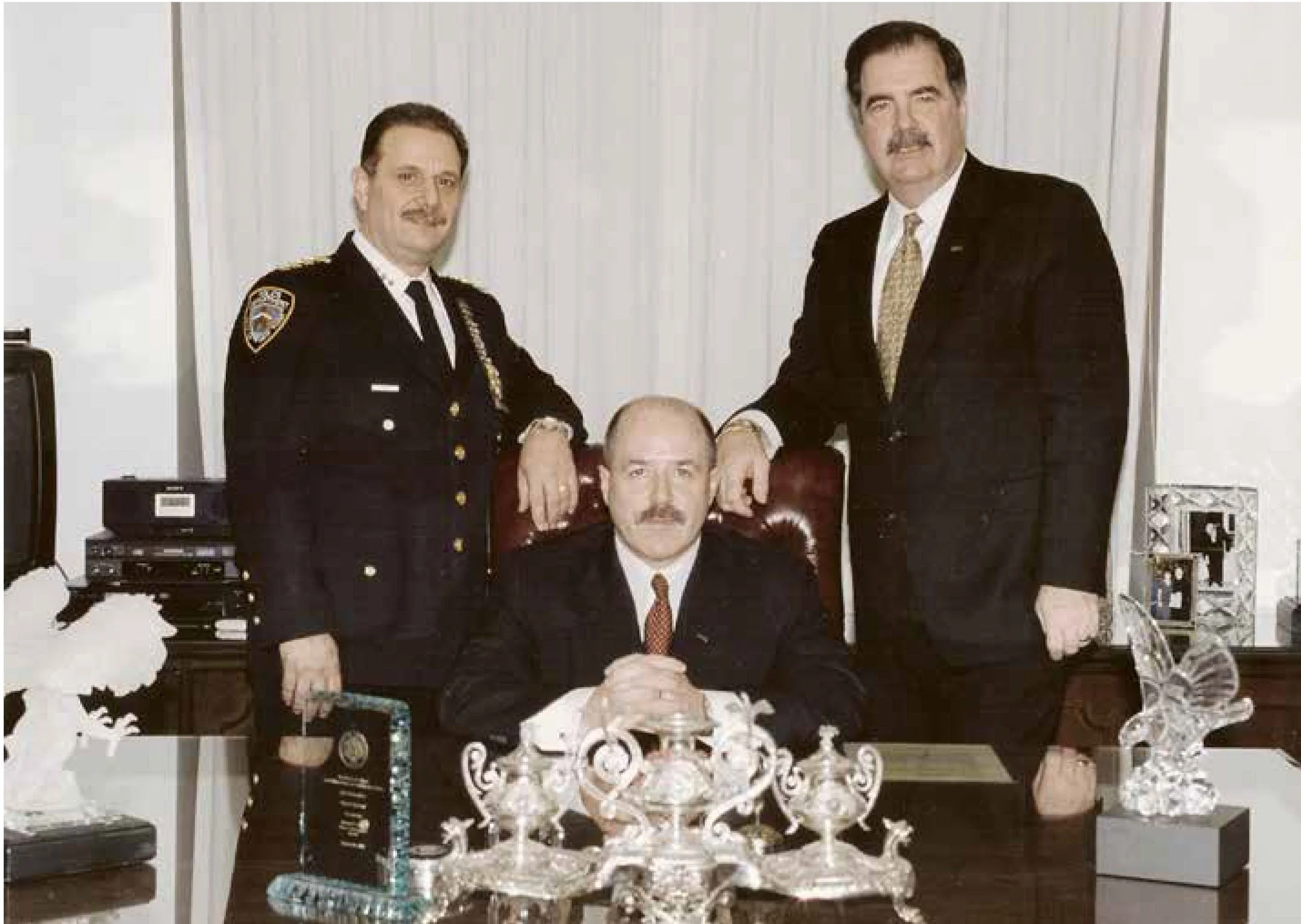
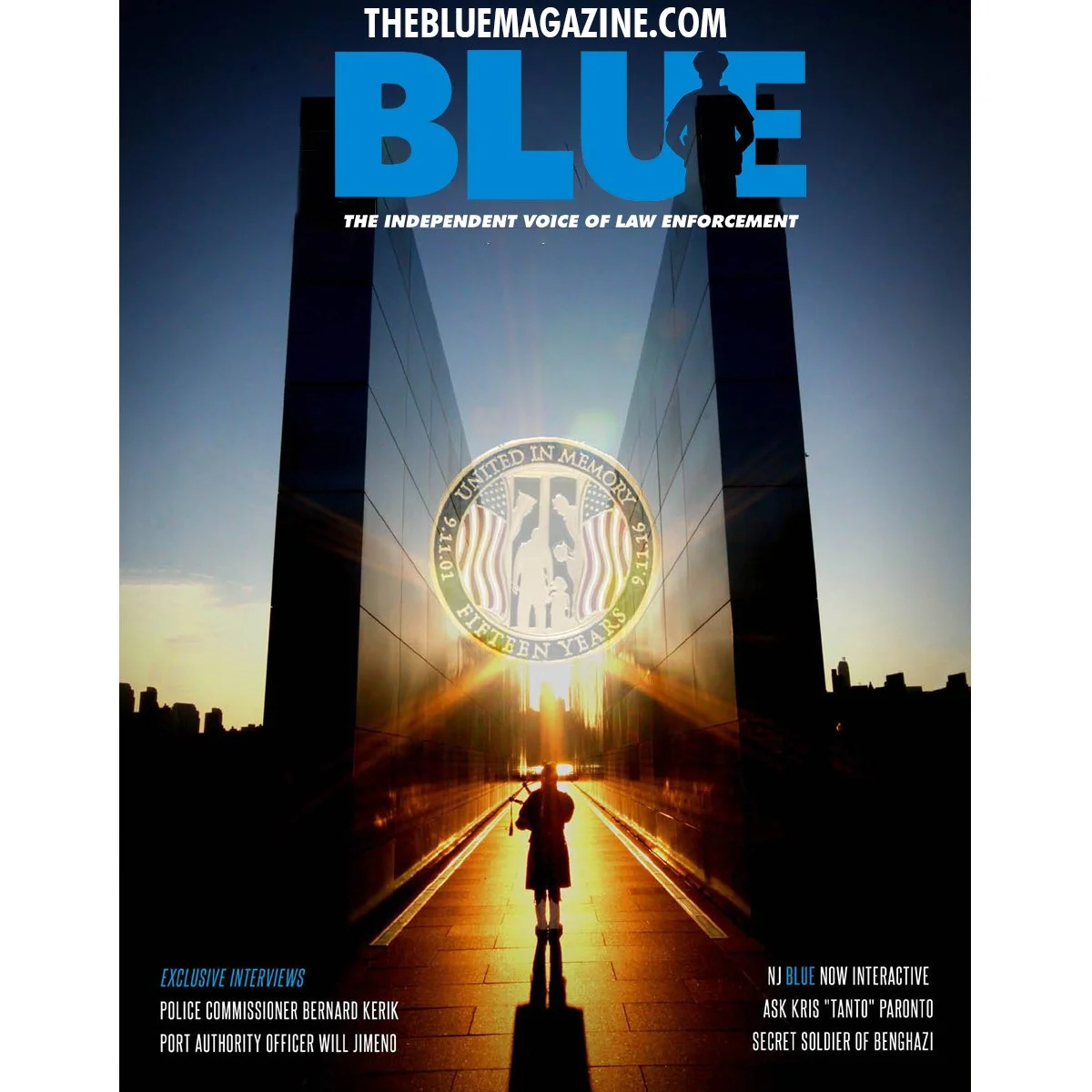

The interview took place inside Giuliani’s Manhattan apartment. George Beck led the questioning, with Johnny Welsh, Commissioner Kerik and me participating while the Blue Magazine production team worked behind the scenes. The resulting cover story, “Hold No Punches: Exclusive Interview 20 Years Later,” became one of Blue Magazine’s most important pieces.
Giuliani remembered learning about the first aircraft while at breakfast and immediately questioning whether it had been an accident. After reaching lower Manhattan, he and Kerik moved through a city confronting something for which no emergency plan was sufficient. Giuliani recalled that New York had prepared for numerous catastrophes, but not passenger aircraft being used as missiles against its buildings. Decisions had to be made through experience, judgment and prayer. Kerik described commanding approximately 55,000 members of the NYPD while assisting Giuliani in coordinating the broader response, rescue, recovery and investigation. He remembered reaching the towers and watching people jump from the upper floors, knowing there was no way to reach them.

Later that afternoon, Kerik met with the families of 23 missing NYPD members. Those officers were among the 23 members of the NYPD, 37 members of the Port Authority Police Department and 343 FDNY firefighters killed that day. Kerik said the responding agencies evacuated between 20,000 and 25,000 people from the World Trade Center and its immediate surroundings, followed by more than one million people from lower Manhattan. Twenty years later, Giuliani and Kerik remembered the people falling, the families waiting and the uncertainty of leading a city through a catastrophe whose scale could not yet be understood. Their testimony allowed Blue Magazine’s readers to hear that history directly from the men responsible for leading New York’s response.
The twentieth-anniversary issue extended beyond Manhattan. Retired Pennsylvania State Trooper Dale Gabriel wrote about responding after Flight 93 crashed near Shanksville and the long hours troopers spent securing the scene, assisting the investigation and supporting recovery operations. Will Sheehan described watching debris from the towers reach Bayonne before later attending the United States Naval Academy and serving as a Navy intelligence officer. Joel Shults wrote about traveling to New York with his daughter to assist relief organizations overwhelmed by donations.
These accounts documented how September 11 affected different agencies, communities and generations. They also demonstrated why firsthand testimony must be preserved while those who experienced the attacks can still tell their stories.
COMMISSIONER BERNARD KERIK: CHIEF ADVISOR TO BLUE MAGAZINE
In 2014, Steve Olimpio told me I needed to meet Bernard Kerik. Steve knew both of us and believed we should sit down together.
At that point, I knew the public story. I knew Commissioner Kerik had served in the Passaic County Sheriff’s Office, the New York City Department of Correction and the NYPD, and that he had been New York City’s Police Commissioner on September 11. I also knew about the convictions and federal prison. What I did not know was the man I would come to know as Commish.
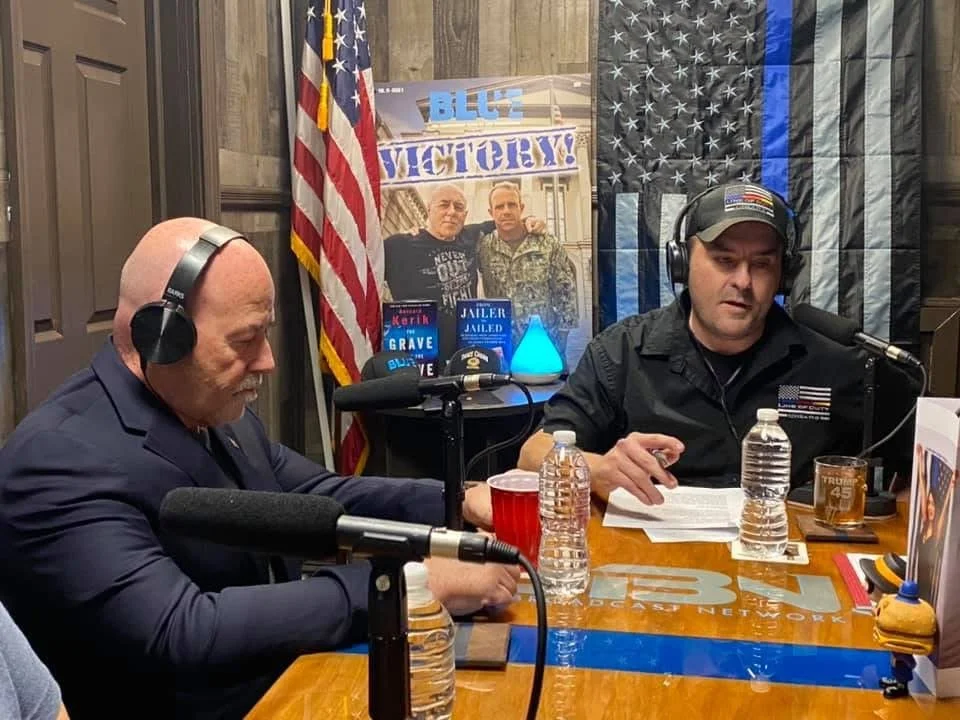
I went to his home in Franklin Lakes expecting a meeting. Instead, we spoke for nearly three hours in his office and continued the conversation over lunch.
The office told part of his story. Photographs and pieces of history surrounded us: Kerik with presidents and national leaders, images from his work overseas and reminders of September 11. But what I remember most is not what was on the walls. I remember the conversation. He did not give me a polished version of his life. He walked me through the good, the bad and the consequences.
He spoke about his career, September 11, the investigations, the charges, his mistakes and federal prison. I respected that. I wanted to understand the whole man, not only his public record.
What stayed with me was his determination to return to the law enforcement world. He knew some doors that had once been open to him were closed. Still, when he spoke about law enforcement and national security, the knowledge and conviction were there. He believed he had more to contribute.
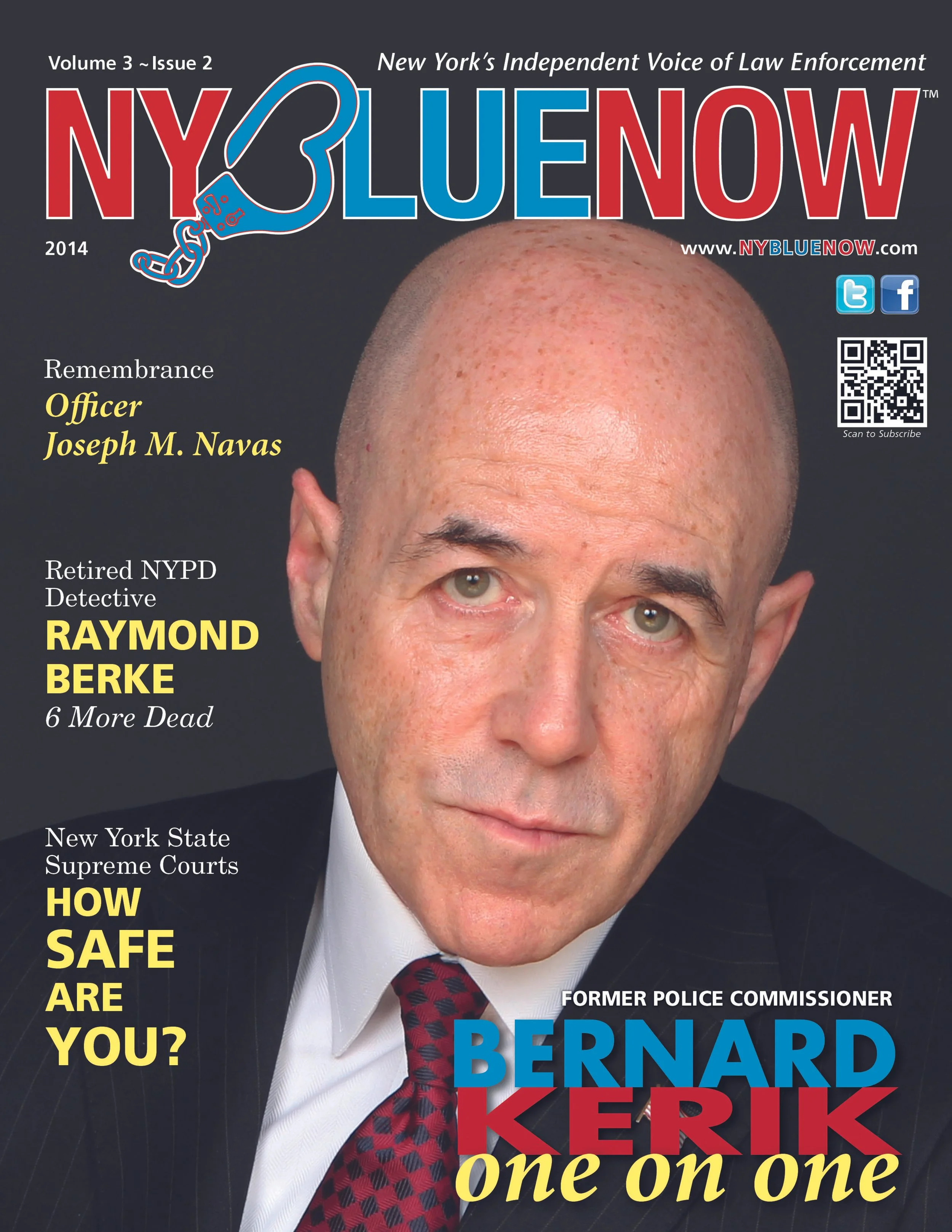
There were people in law enforcement who wanted nothing to do with him. Some saw a former New York City Police Commissioner. Others saw only his convictions and prison sentence. Putting him on the cover carried risk, and some believed Blue Magazine should stay away from him.
We made a different decision. His record did not need to be hidden or rewritten. We were not asking readers to excuse what had happened. We were giving him the opportunity to speak and allowing readers to decide for themselves.
Years later, Commish told me that the cover helped reintroduce him to a law enforcement world that had largely shut him out. After President Donald Trump granted him a full pardon in 2020, he told me Blue Magazine had been included among the material presented in support of his pardon effort. That was his account. What I knew for certain was that he never forgot that Blue had listened when many others would not.
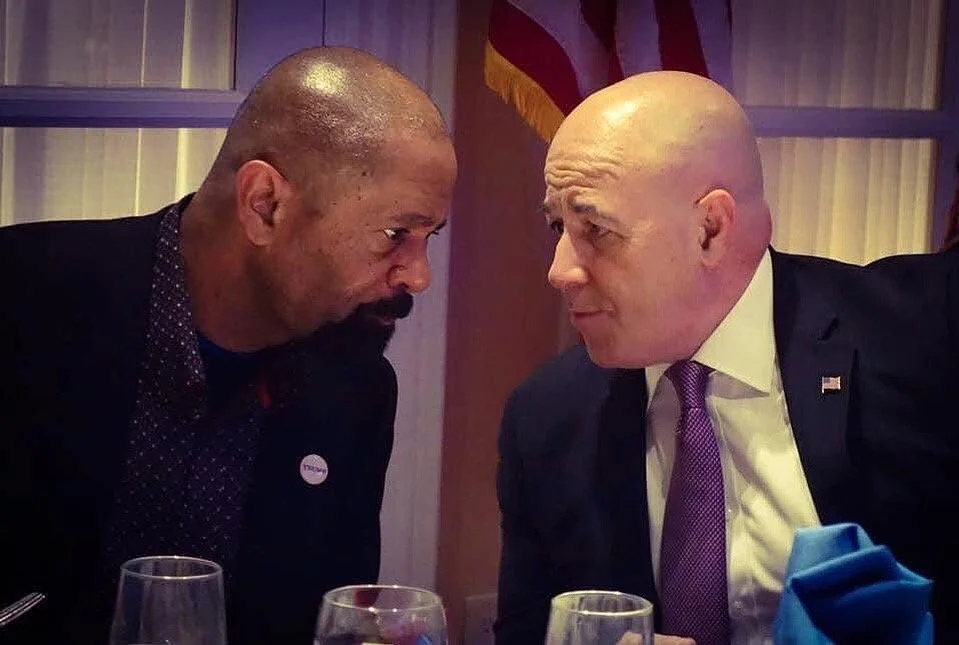
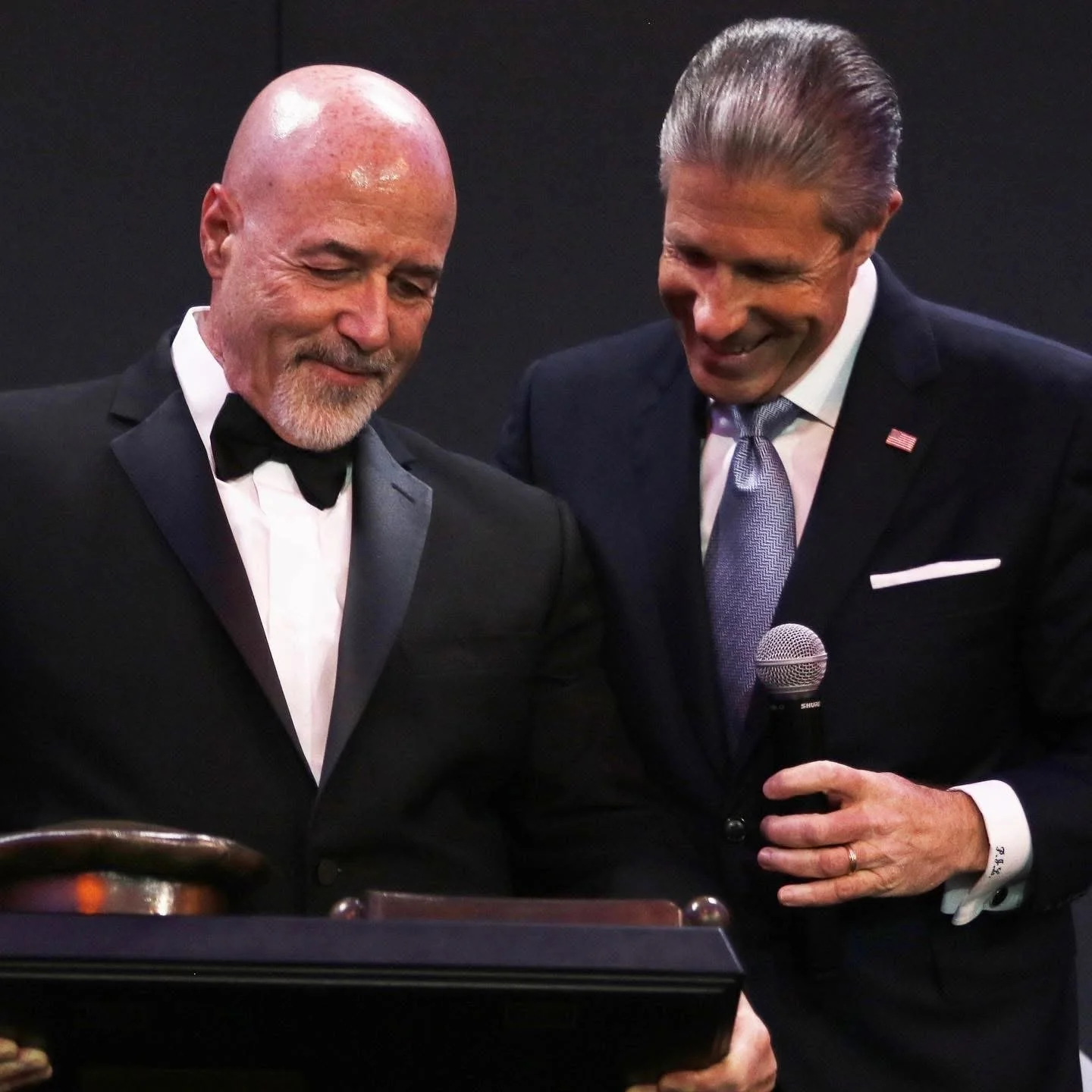
Over time, the relationship became far more than a cover story. The Bernard Kerik I first met in Franklin Lakes became an advisor and eventually Chief Advisor to Blue Magazine. To me, he became Commish.
Chief Advisor was not an honorary title. Commish advised us on stories, covers and the direction of the magazine. His experience helped us look beyond headlines and ask better questions. But his value to me was also personal. I could call him when I needed an honest opinion, and he would give it to me directly. He did not tell me what was convenient. He told me what he believed I needed to know.
The exchange worked both ways. By then, Blue Magazine had built its own network of officers, union leaders, sheriffs, investigators and others who trusted us with information. At times, information moving through that network was useful to Commish as well. We had become a team.
There was one subject that never became history to him: September 11. Year after year, Commish pushed us to remember it. He helped shape covers commemorating the attacks, the lives lost and the law enforcement officers and first responders who answered that day. For him, remembrance was not ceremonial. He never wanted September 11 to become just another date on the calendar.
That responsibility became part of Blue Magazine. Our September 11 covers were one way we honored a defining moment in law enforcement history. Whatever else had happened in his life, Commissioner Kerik was New York City’s Police Commissioner during the September 11 attacks and was part of the response to one of the darkest days in the nation’s history.

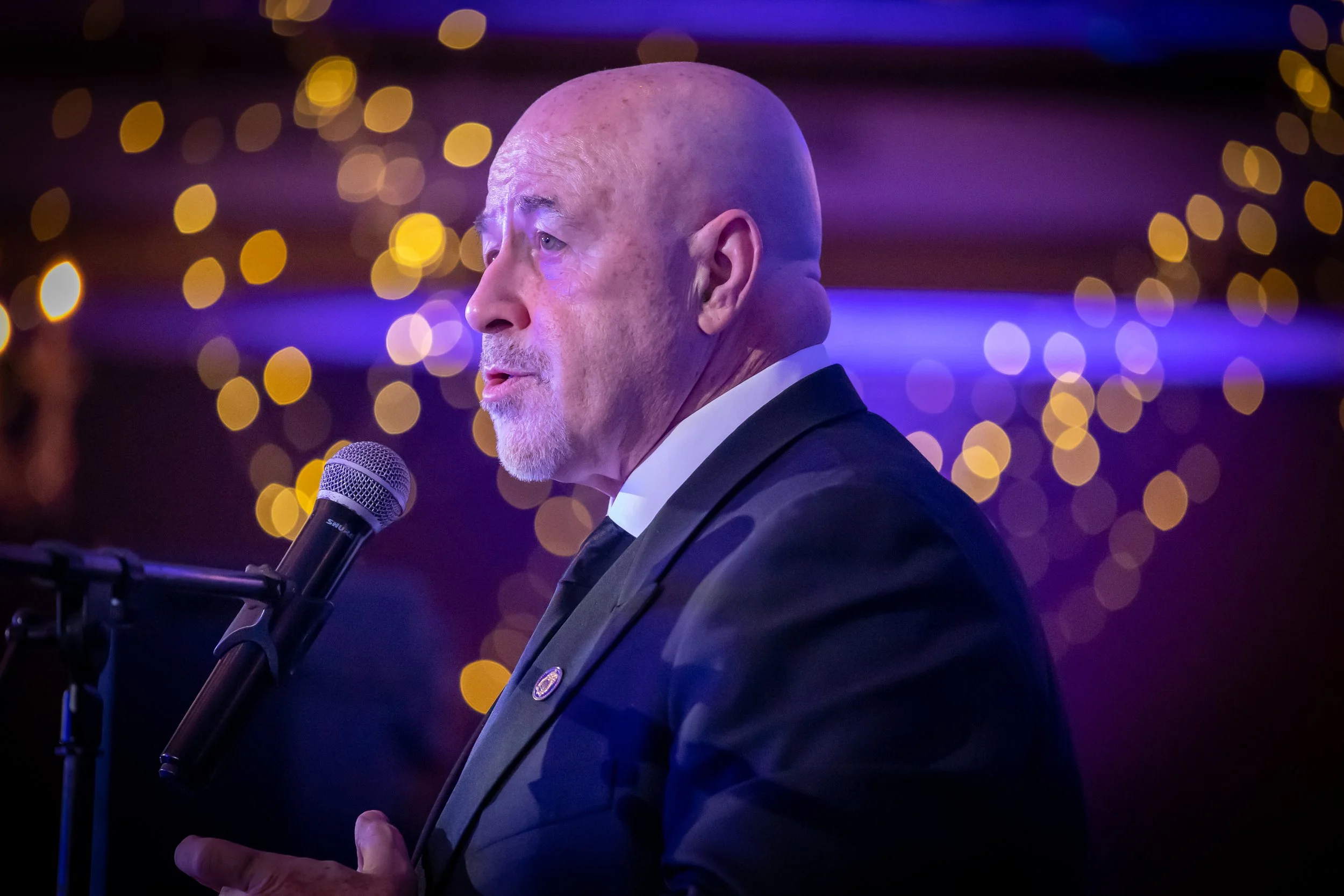
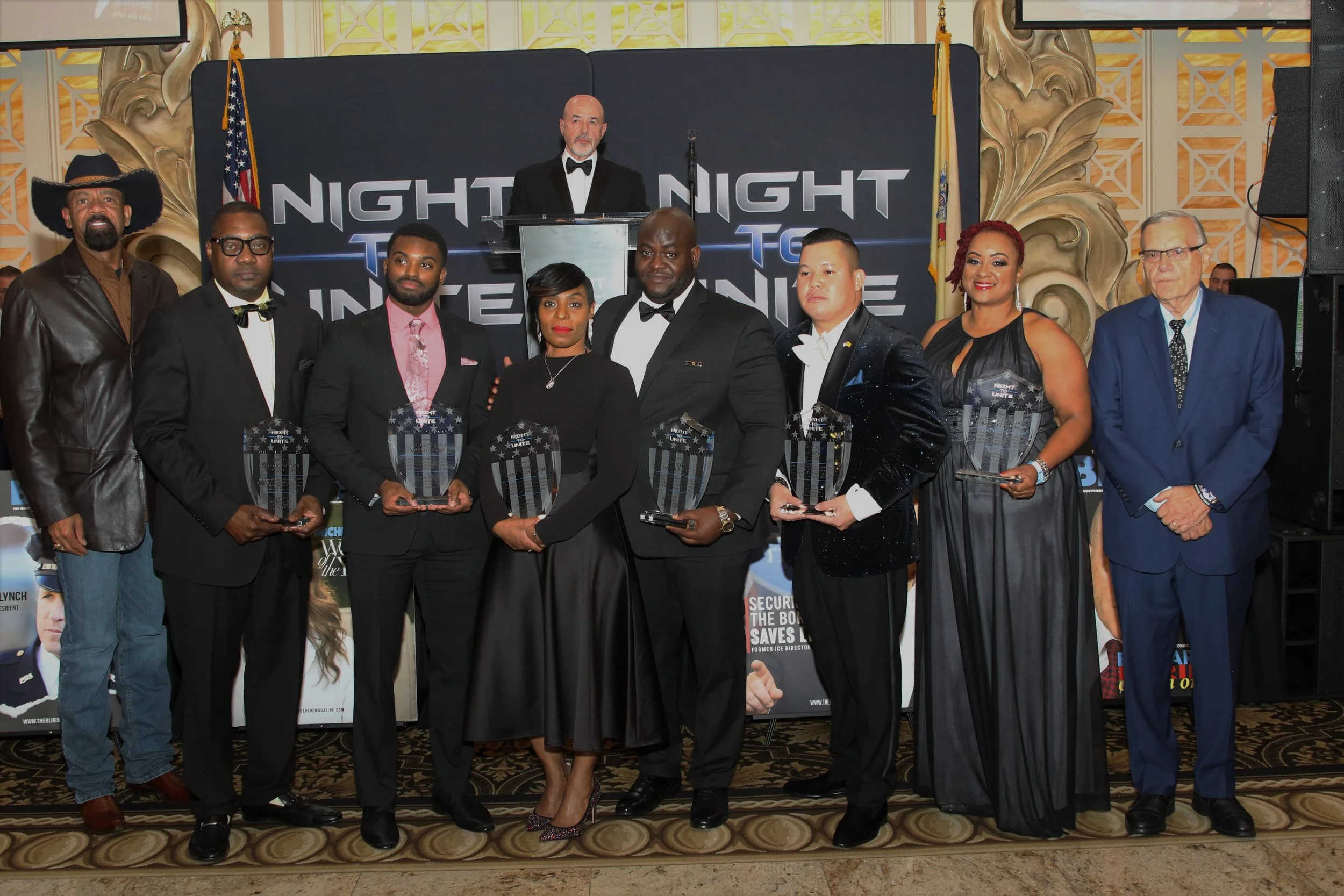
Commish’s role extended beyond the magazine. He served as Master of Ceremonies at major Blue events, including Night to Unite in New Jersey and Blue Unity in Florida. He stood with us as we recognized law enforcement officers wounded in the line of duty, military veterans and others whose service deserved recognition.
Those events showed how far Blue had traveled. A magazine that once struggled to get through the front door was now bringing people from law enforcement, government and the military into the same room. Commish was often at the microphone, guiding the night. To see him there, standing with Blue Magazine, reminded me of how far that first conversation in Franklin Lakes had taken us.
Then came one of the most important interviews in Blue’s history. When I wanted to interview President Donald Trump, I called Commish. He contacted the President’s team, and the interview was arranged within hours. The story of that interview comes later, but the person who made the introduction possible was Bernard Kerik.
When Commish passed away, Blue Magazine lost its Chief Advisor. I lost a mentor and a friend. Yes, he opened doors and helped make major moments in Blue’s history possible. But that is not what I miss most.
I miss knowing I could call him. I miss the directness of his advice. I miss the confidence of having someone in my corner who knew the weight of the job, the pressure of leadership and the cost of making difficult decisions.
I still think back to that first meeting in Franklin Lakes in 2014. I walked into his office expecting a conversation with a former Commissioner. I left having met someone who would become part of the story of Blue Magazine and part of my own life.
BERNARD B. KERIK
September 4, 1955 – May 29, 2025

CHRIS MEGNA
The continuing consequences of September 11 were also embodied by someone who became part of the Blue Magazine family. Chris Megna was 26 years old and serving with the Essex County Sheriff’s Department in Newark when the first aircraft struck the World Trade Center. His father, Michael, was a Port Authority police officer, and Chris did not know whether he was alive. Chris joined his brothers, Mark and Mike Jr., and headed toward New York to find him. Near the Holland Tunnel, their vehicle was struck by a car traveling in the wrong direction. The driver was a woman covered in dust who had escaped Manhattan and was trying to reach New Jersey. The brothers survived the collision and soon learned that their father was alive. After finding him, the family entered the city and joined the response.
Chris later served with the Sussex County Sheriff’s Office until his retirement. The effects of his Ground Zero exposure emerged over time, including serious respiratory problems that remain part of his life today.
I met Chris at one of Blue Magazine’s earliest events. Afterward, he introduced himself, told me how much he believed in what we were building and gave me his telephone number. That moment began a friendship that grew far beyond the magazine.
Chris became part of Blue Magazine’s work. He traveled with us on assignments, developed relationships, introduced us to people whose voices belonged in the magazine and supported our events, calendars, funerals and charitable projects. When Blue Magazine needed someone who understood the profession and could connect with its people, Chris was there.
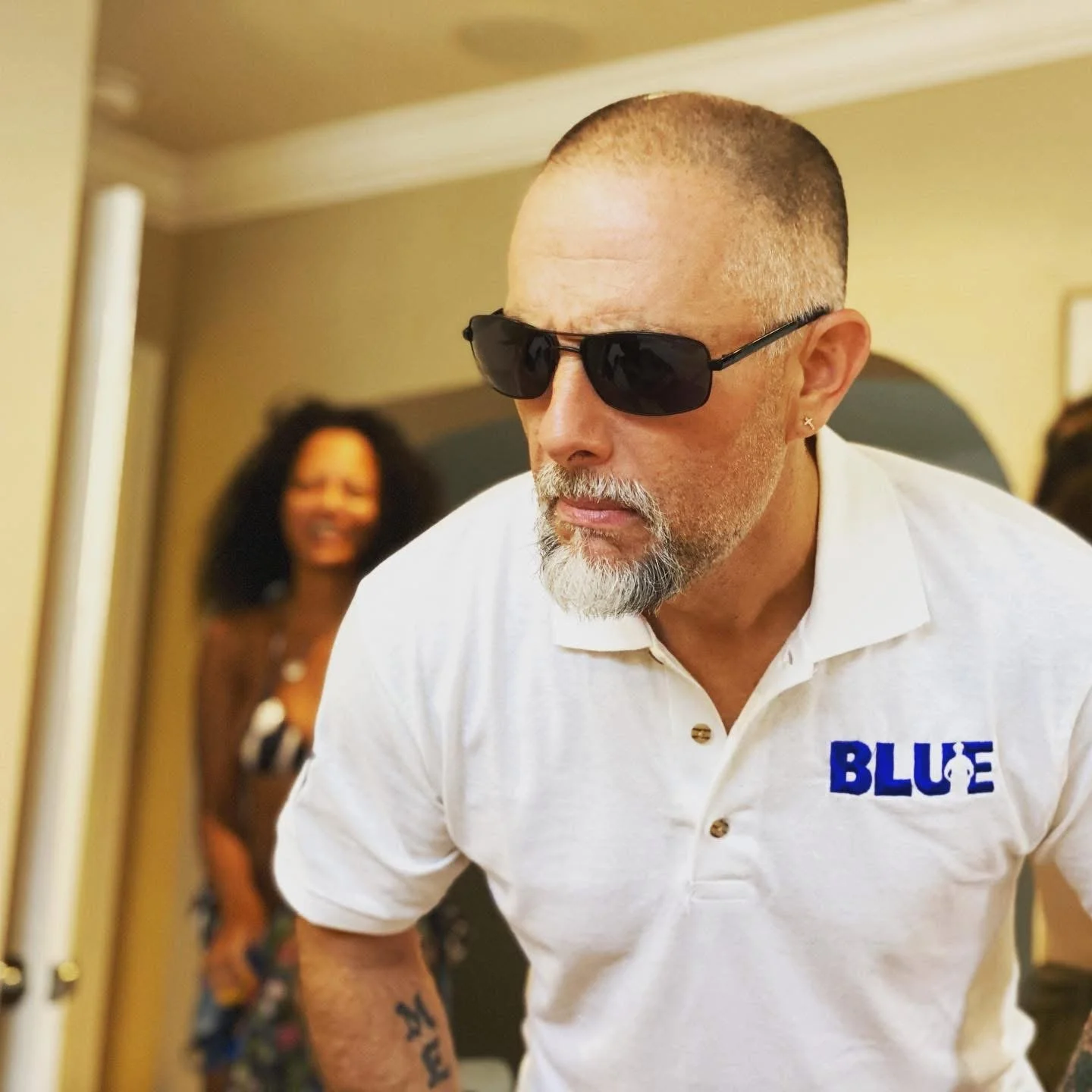
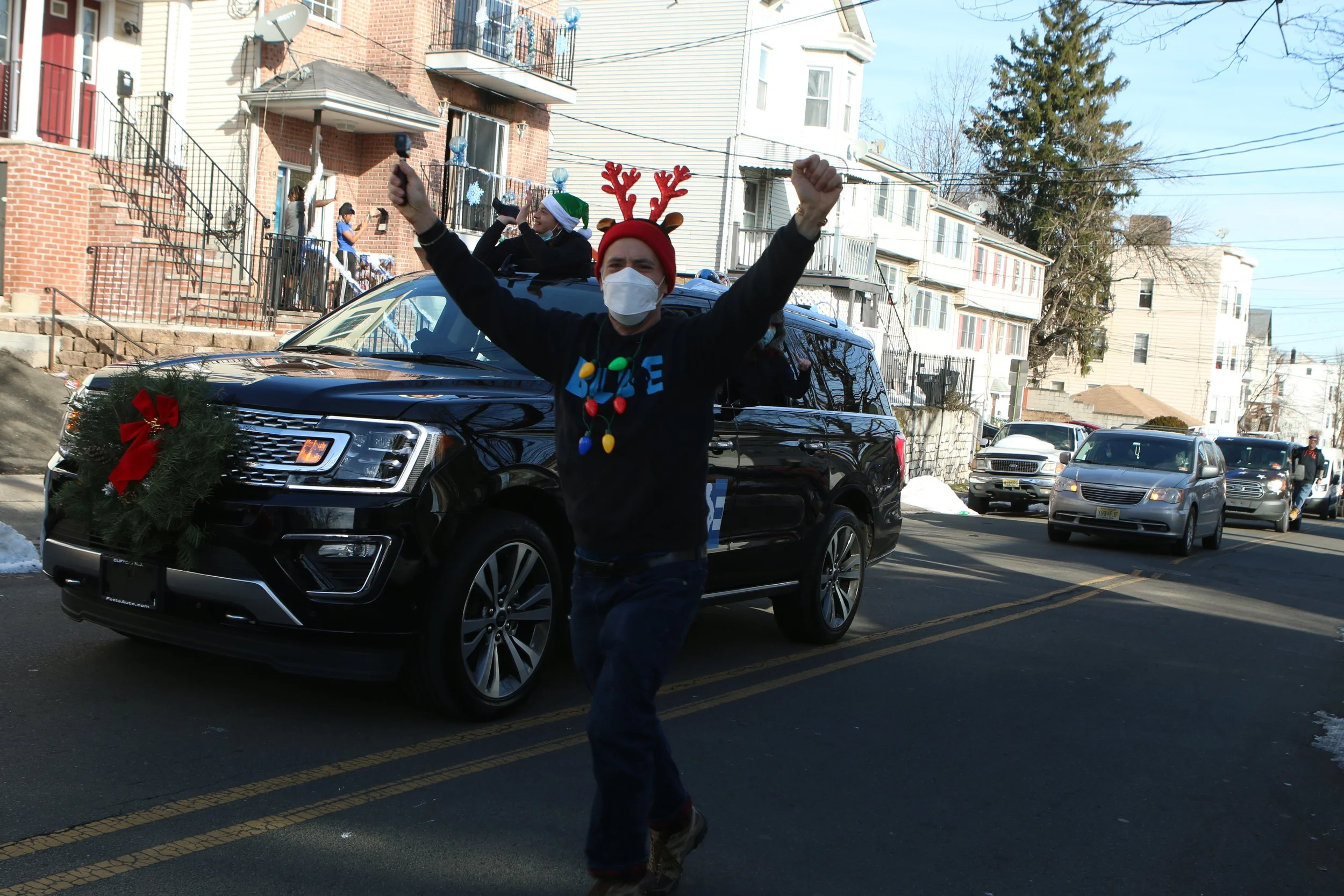
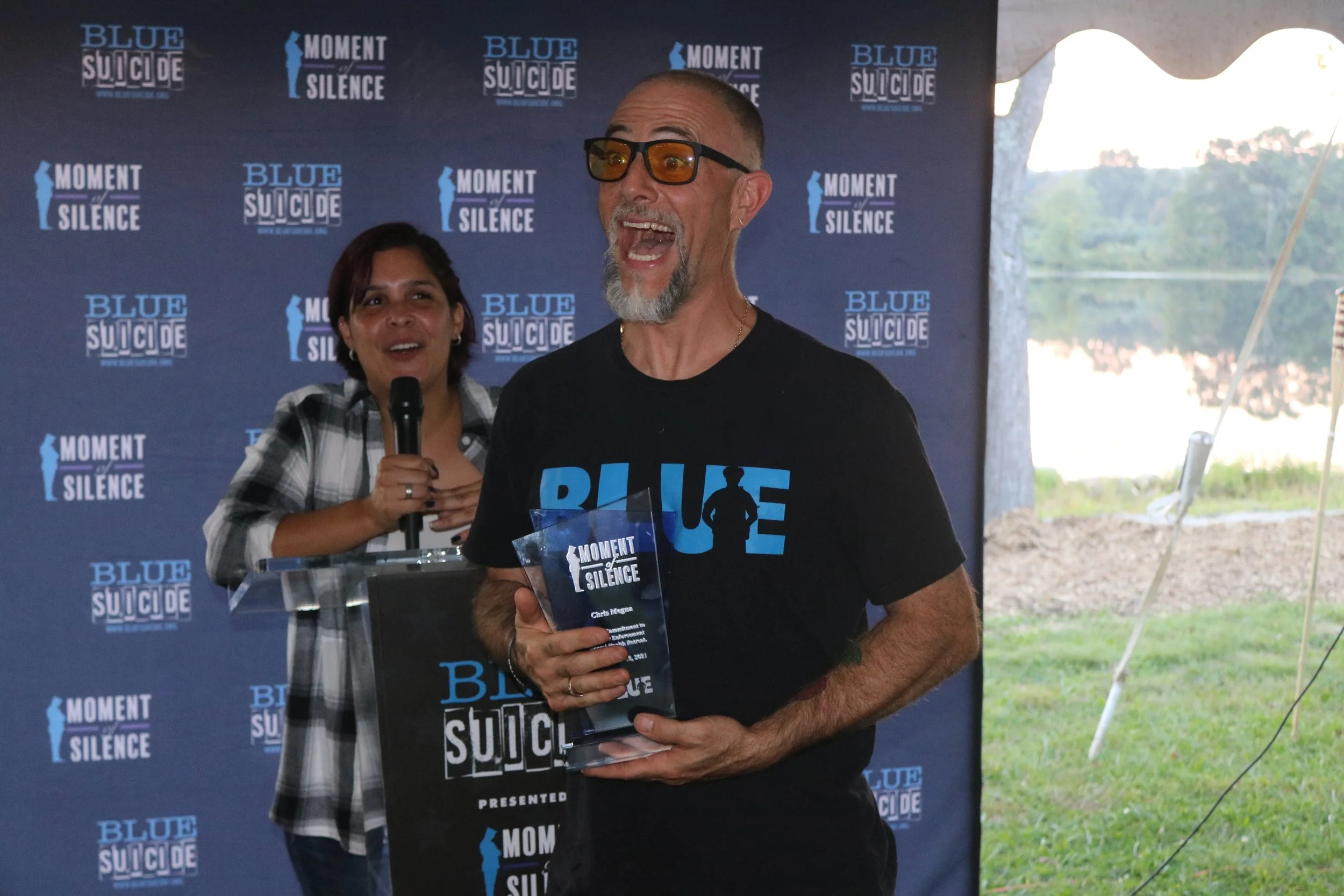
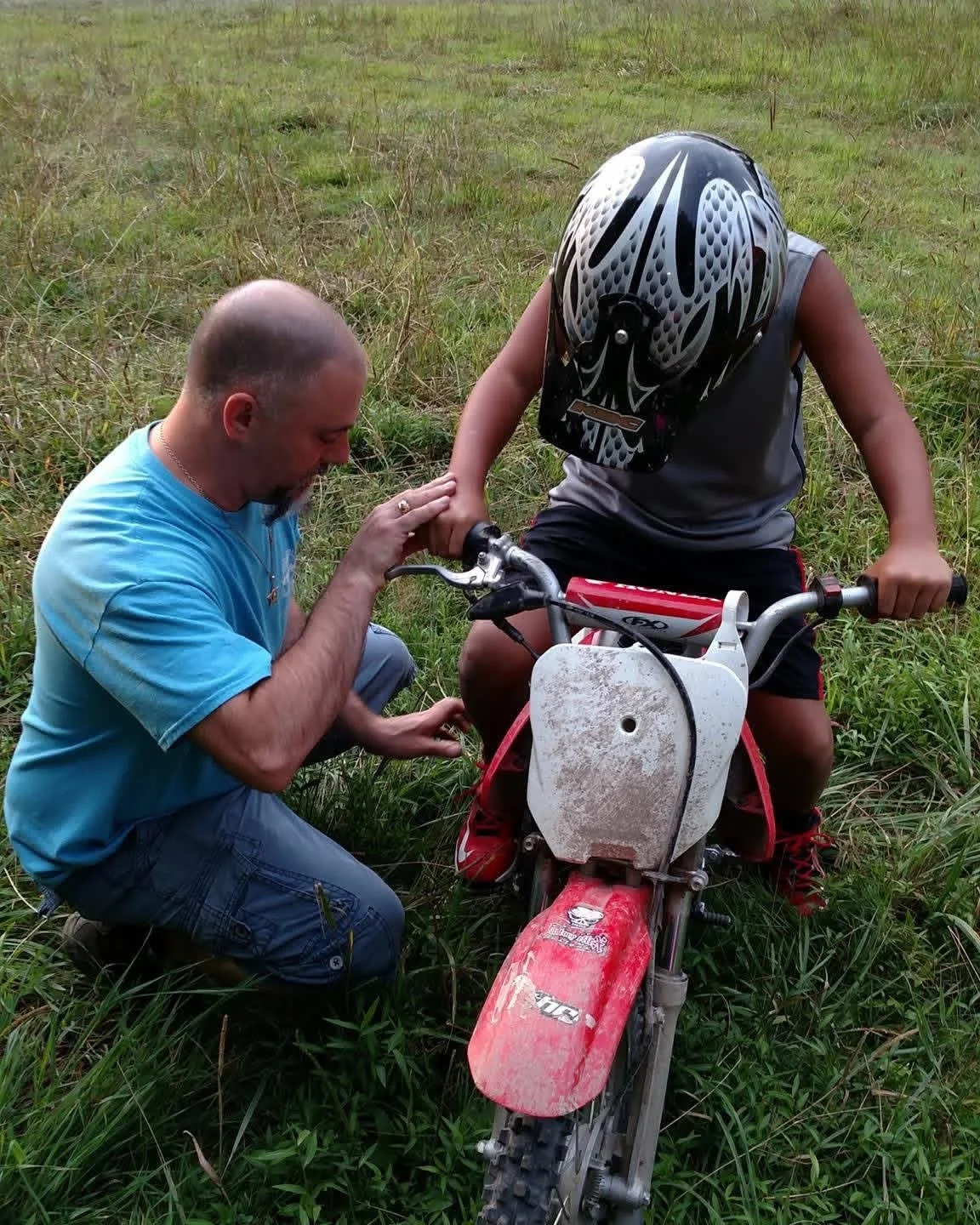
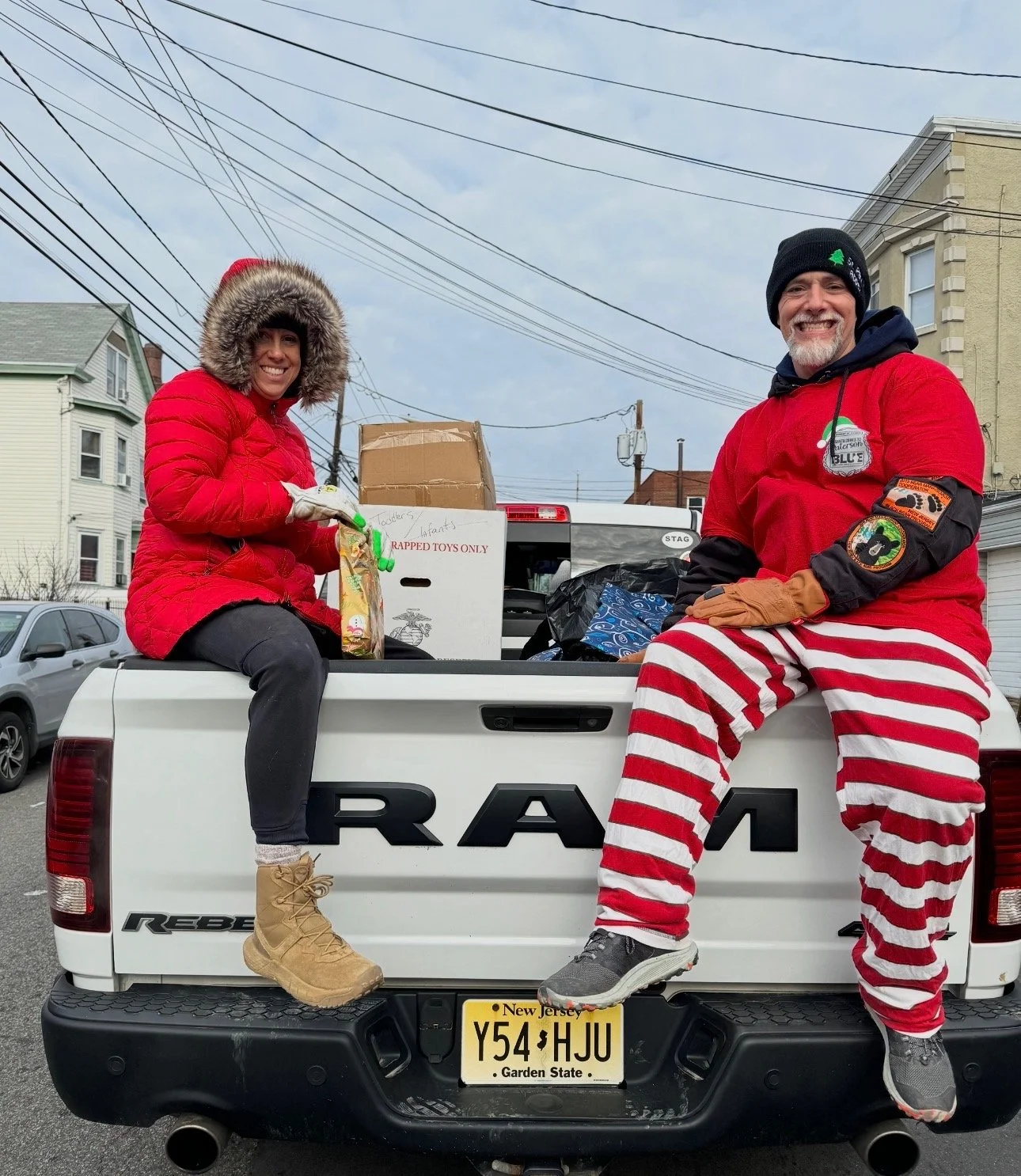
His most important contribution came through Moment of Silence. Chris has spoken publicly about his mental-health struggles because he refuses to treat anxiety, depression or suicidal thoughts as sources of shame. He understands that honest communication builds trust and that a relationship established during an ordinary conversation may become the connection that saves an officer during a crisis.
Through Moment of Silence, many officers have been referred to Chris because they feel comfortable speaking with him. He listens without judgment and helps connect them with support. His relationships have also helped provide officers with opportunities to step away from daily pressures and spend time in peaceful surroundings without cost.
His wife, Connie, and their children have shared that commitment. Connie has consistently supported Chris, Blue Magazine and Moment of Silence while contributing her own time and strength. Her role reflects a reality often overlooked in stories about law enforcement: service-related danger, illness and trauma affect the entire household. Spouses and partners carry those burdens while helping hold their families together.
Beyond the work, our friendship brought our families together. Over the years, our wives became close, our children grew up together, and our families stood beside one another through celebrations, vacations, prayer and some of life’s most difficult seasons. What began as a friendship between two officers grew into a special bond between two families, one that remains strong today.
The Megnas represent the people who made Blue Magazine and Moment of Silence stronger. Chris responded on September 11, lived with its consequences and later used his experience to help officers facing their own struggles. Connie and their children stood beside him while extending that support to other law enforcement families.
DETECTIVE JEFFREY MONTENEGRO: A LIFE OF SERVICE BEYOND SEPTEMBER 11th
Detective Second Grade Jeffrey Montenegro was a 20-year veteran of the New York City Police Department, retiring from Queens Gang North after a career defined by hands-on police work, sound judgment and commitment to the job. He loved being an NYPD officer. To the people who knew him, he was a cop’s cop: respected by his partners, devoted to his family and proud of the badge he wore.
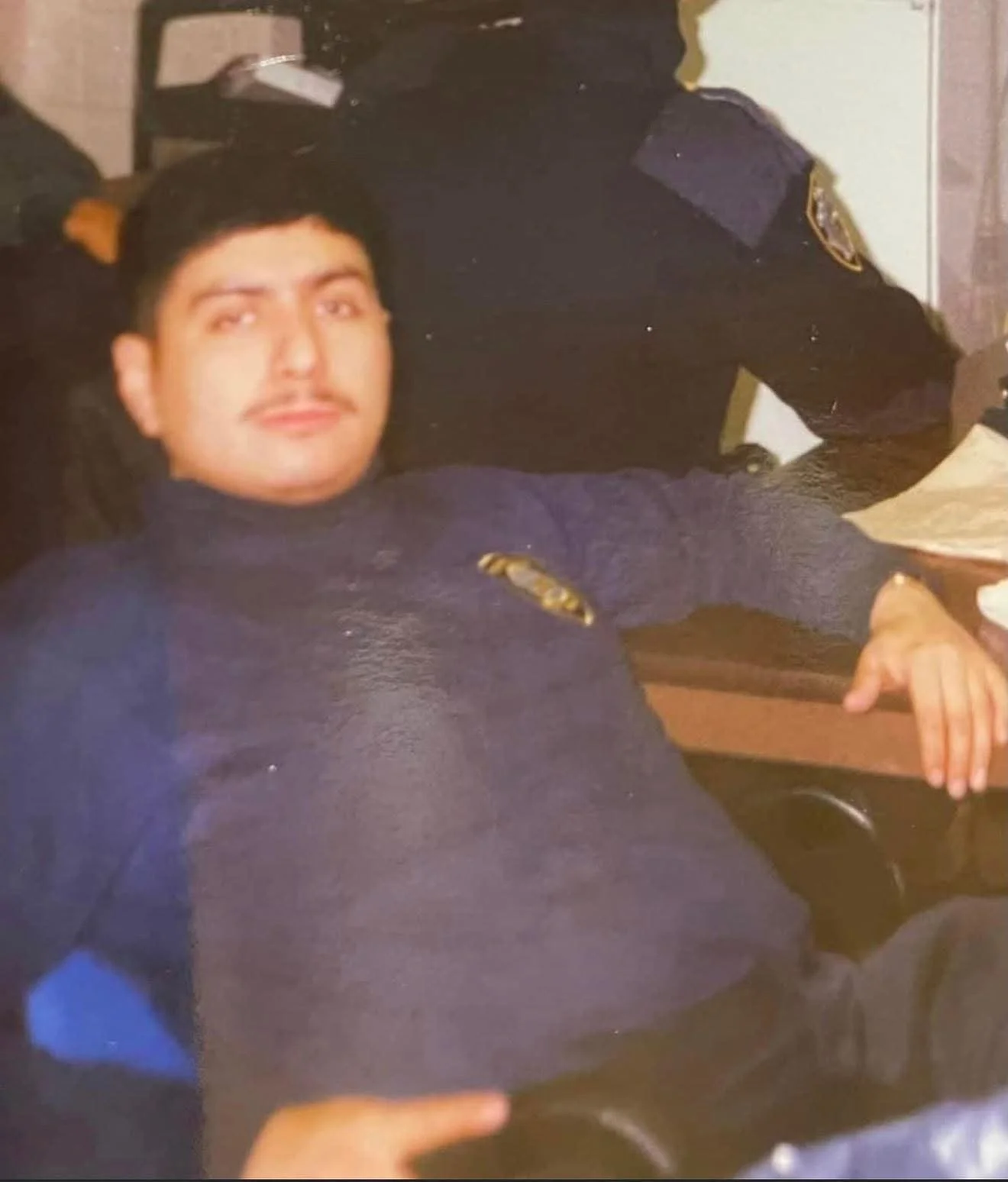
Jeffrey responded to the World Trade Center after the attacks of September 11. Nearly two decades later, he was diagnosed with pancreatic cancer related to his exposure at Ground Zero. He fought the illness, but it took his life on December 3, 2021, at age 53.
Jeffrey was also my cousin, someone I grew up with and looked up to long before Blue Magazine existed. Later, he became one of my advisors. As an NYPD detective, he gave me direct insight into gangs, narcotics, intelligence and the tactics used in a department unlike any other. He could explain the work behind an investigation, from buy and bust operations to the pressures officers faced on the street. I also knew his family life and the person he was away from the job. That combination of professional knowledge and personal trust made him an important advisor and made me a better publisher.
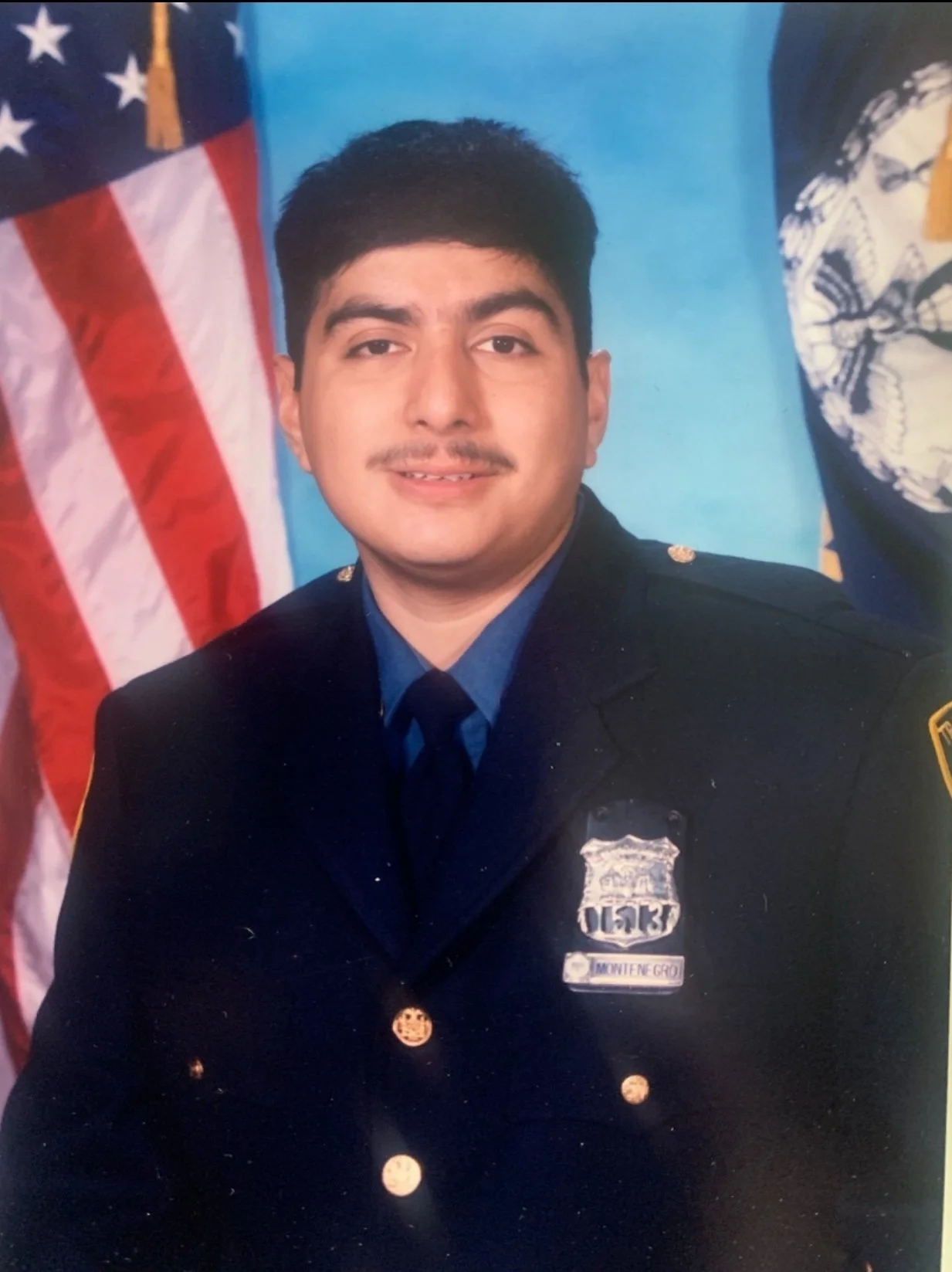
During his final weeks, his mother, Rita Ramirez, remained at his side. I witnessed the family’s strength and the terrible reality of what 9/11-related illness can do. His sister, NYPD Lieutenant Lillian Montenegro, carries the same commitment to service that made her brother proud.
The NYPD gave Jeffrey a final farewell worthy of his service. Seeing his mother receive his flag, surrounded by the respect of his department, was both heartbreaking and meaningful. It showed that the department remembered him, valued his service and recognized the sacrifice his family now carried.
The NYPD honors Detective Jeffrey Montenegro at his funeral.
Jeffrey Montenegro was a devoted father, a beloved son and brother, a trusted advisor and a respected detective. Blue Magazine will remember him not only for the circumstances of his passing, but for how he lived: with service, loyalty and pride in being NYPD.
Jeffrey I. Montenegro
November 29, 1968 to December 3, 2021
FORMER NEW YORK CITY MAYOR RUDY GIULIANI
As the twentieth anniversary of September 11 approached in 2021, Blue Magazine interviewed former New York City Mayor Rudy Giuliani and former New York City Police Commissioner Bernard Kerik at Giuliani’s residence about the attacks, the condition of New York City and the future of the NYPD.
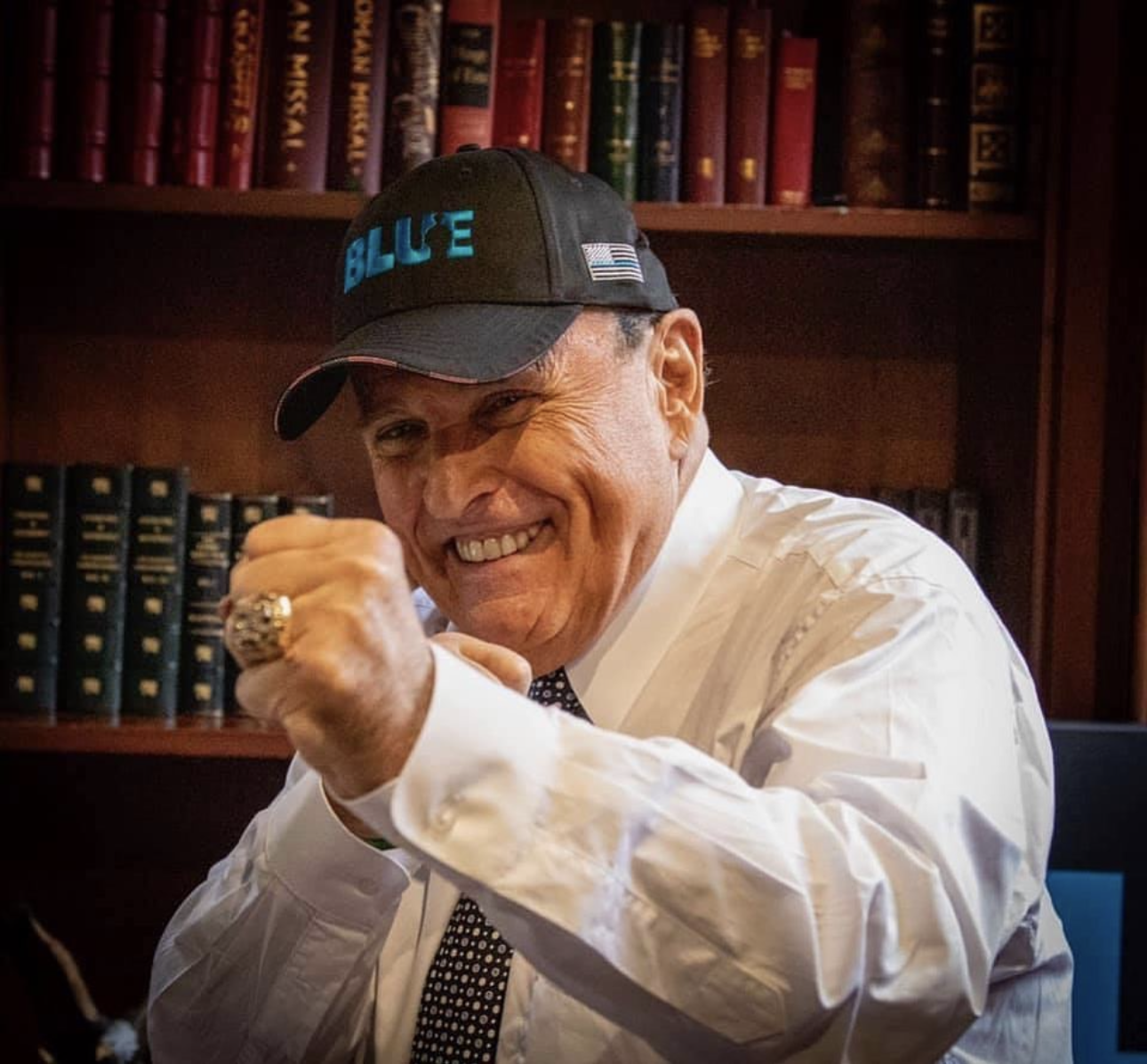
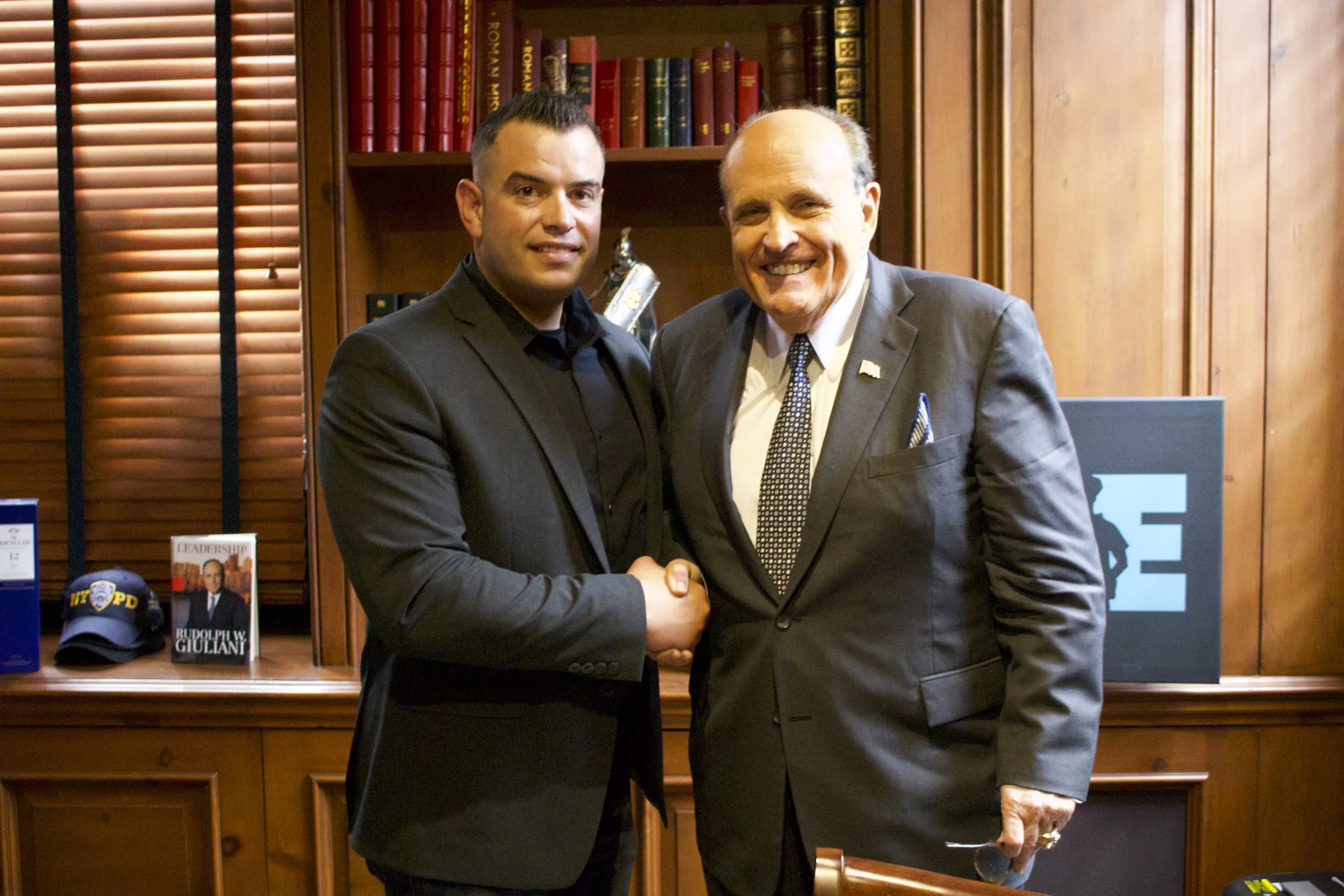
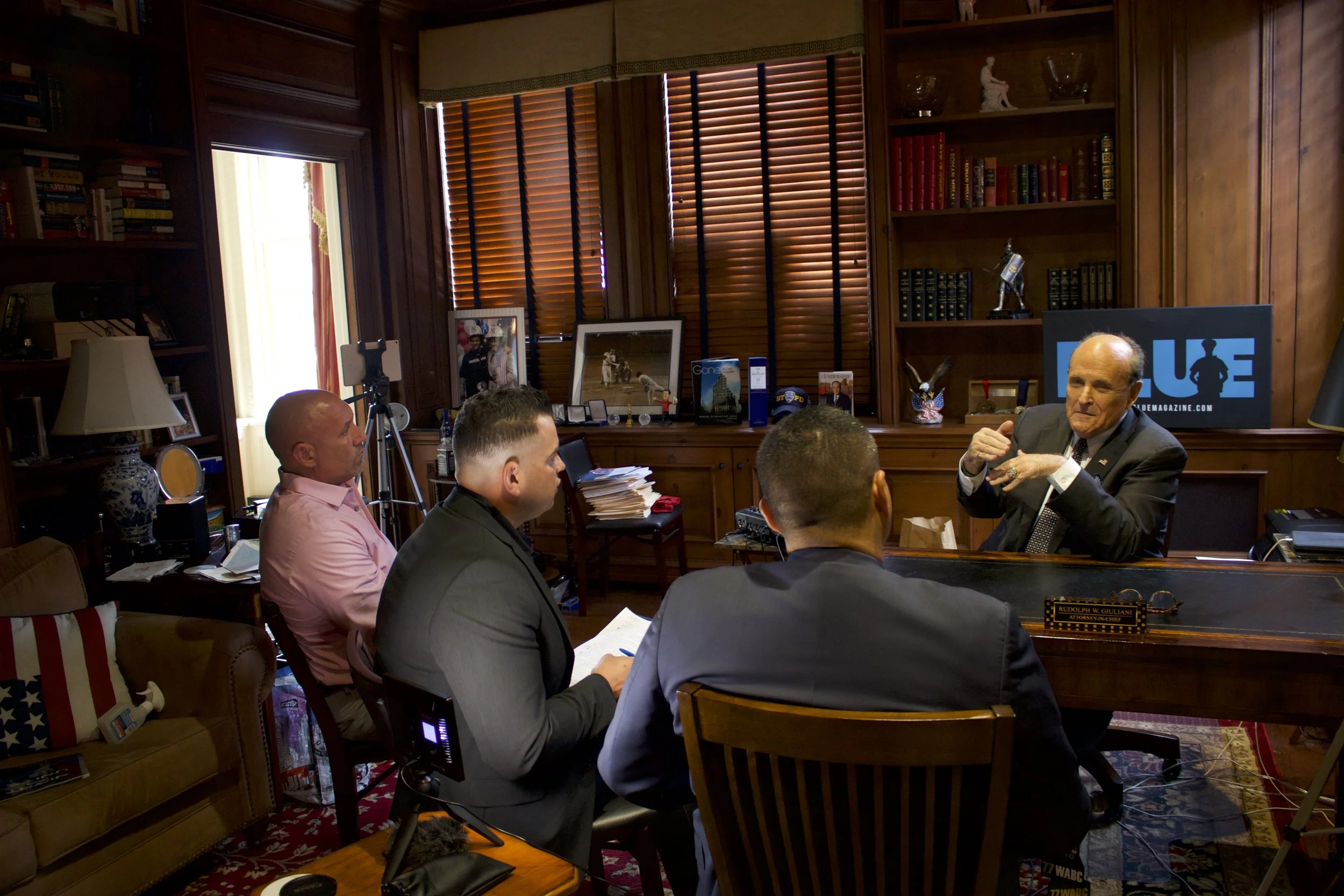
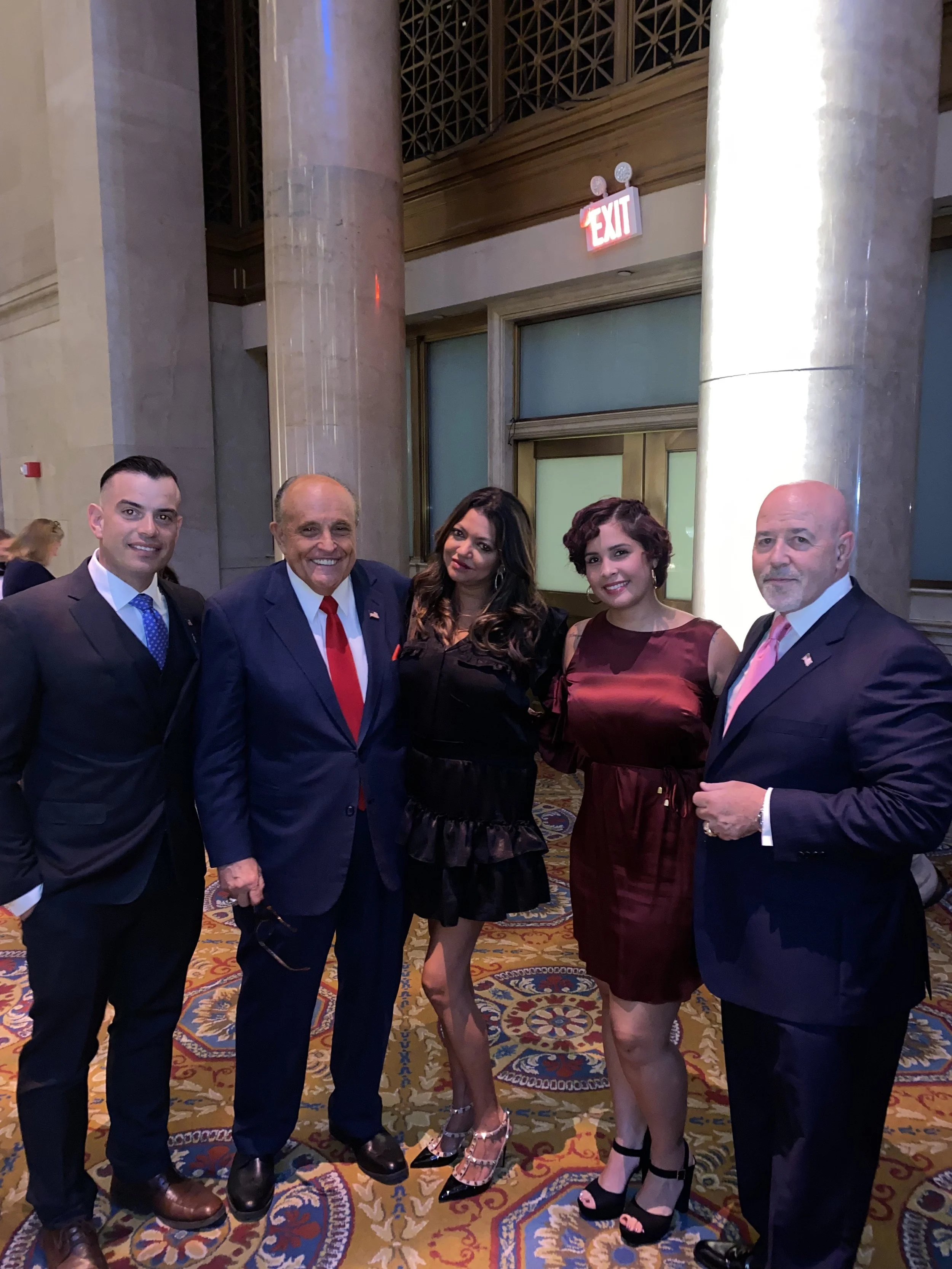
The interview occurred during the final year of Mayor Bill de Blasio’s administration, when City Hall’s relationship with law enforcement had become a source of intense debate. Blue Magazine asked Giuliani why officers were experiencing declining support and what responsibility city leadership carried for those conditions.
Giuliani argued that New York’s leaders were not giving officers the backing necessary to enforce the law effectively. He believed the NYPD had become a political scapegoat and warned that treating officers as adversaries would weaken public safety and place them at greater risk. In his view, mayors were responsible for establishing the conditions under which officers could perform their duties. The conversation also returned to September 11. Giuliani feared that the attacks, the sacrifices of first responders and the lessons that followed were receding from public memory. He believed political division had displaced much of the unity that followed the attacks and that future generations might not fully understand what New York’s first responders endured.
His answers reflected strong political views. Blue Magazine documented them and left readers to judge them.
SHERIFF LEO P. McGUIRE (RET.)
SENIOR ADVISOR, BLUE MAGAZINE
After Leo P. McGuire completed his second term as Bergen County Sheriff, I met him at a local diner for an interview. The publication was still called NJ Blue Now. McGuire remained active in law enforcement and education, and his reputation reached me before he did. People whose judgment I trusted described him as someone worth knowing. I wanted to hear how a former sheriff assessed the profession once he was outside elected office. His years of service explained part of that reputation. He served in the United States Army Military Police, spent approximately 20 years with the Ridgefield Park Police Department and received more than 80 letters recognizing meritorious service. After serving on the Oakland Borough Council, he was elected Bergen County Sheriff in 2004 and reelected in 2007, overseeing an agency with more than 500 members.
The conversation revealed more than experience. Leo could examine law enforcement from the perspective of an officer, administrator, elected official and educator. He understood how decisions made by government and agency leaders reached the people working the street. After meeting thousands of people through the magazine, I still consider him one of the sharpest and most informed people I have encountered in the profession.
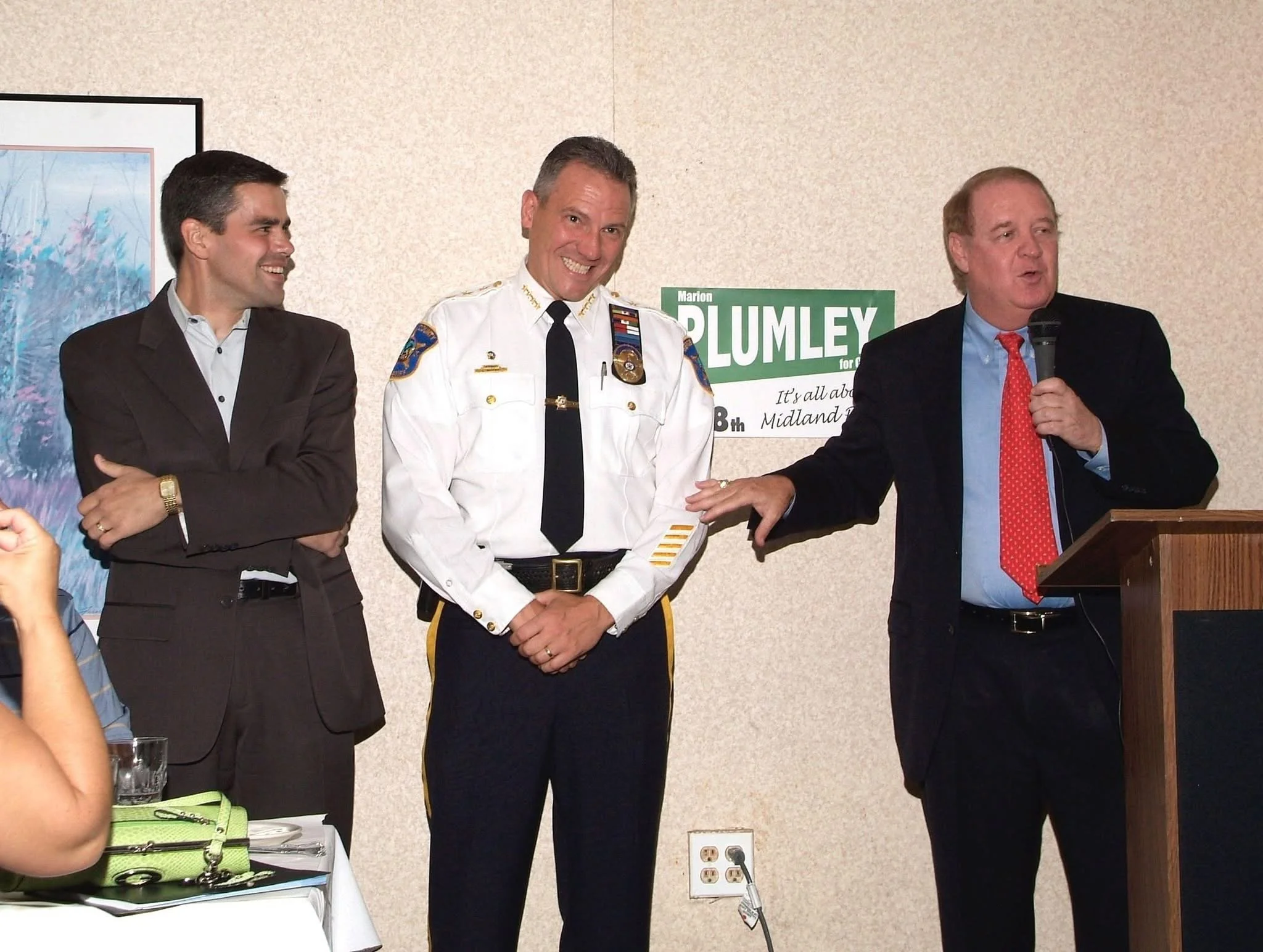
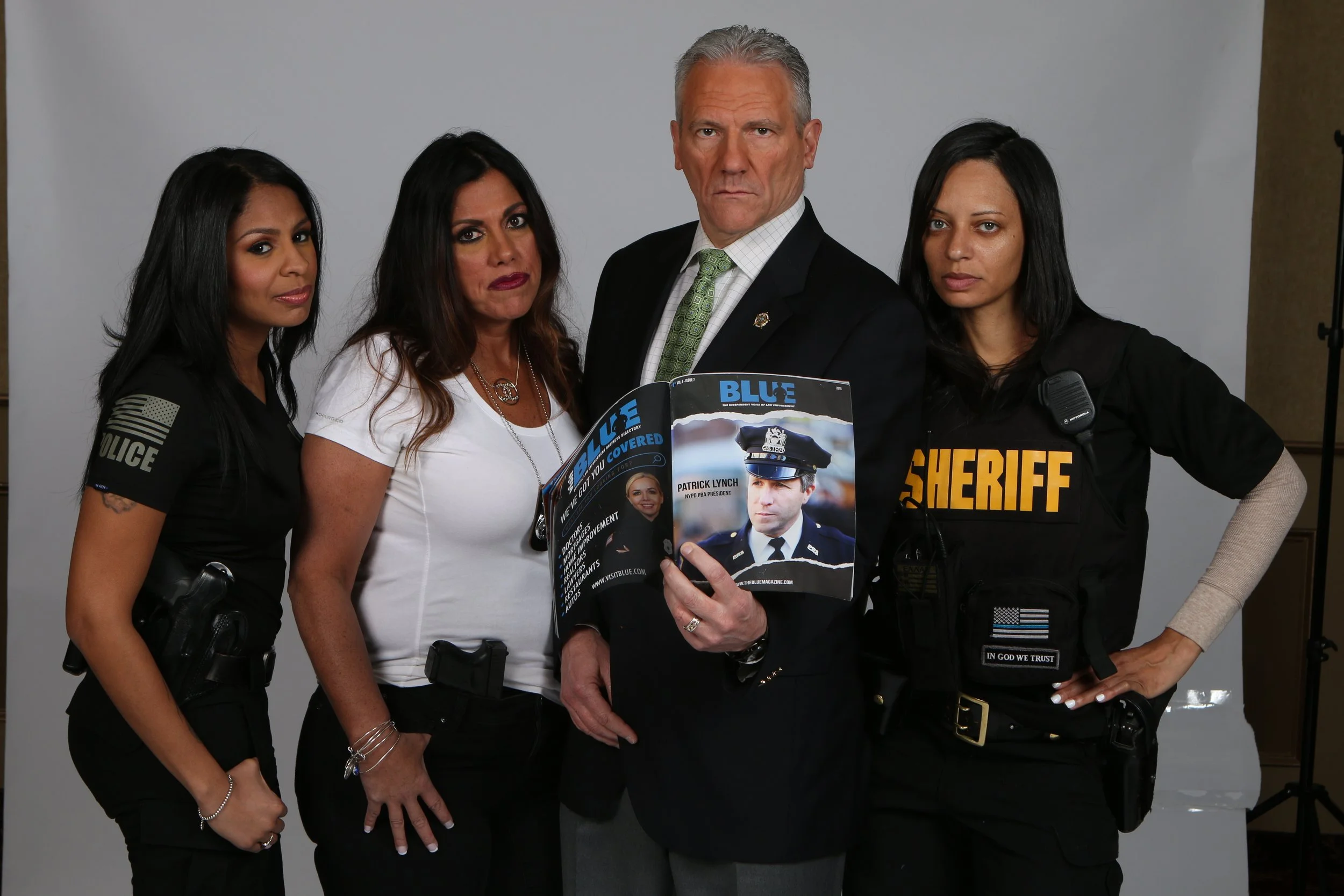
That interview marked the beginning of a friendship, and Leo became a senior advisor to Blue Magazine. When developments at the state level required context, he helped us understand what was happening, whom it affected and what it meant for officers. Much of his contribution occurred behind the scenes, long before an article appeared or a decision became public. One example came when Phil Murphy was running for governor. Leo recommended that we interview him and facilitated the introduction. Murphy came to Blue’s headquarters, beginning a professional relationship that continued after his election. It was one of many occasions when Leo recognized a relevant story and helped the magazine reach the person at its center.
Another conversation demonstrated the value of his judgment. Someone had asked me for help resolving an unusually difficult problem. The solution required access and relationships that few people possessed, so I brought the request to him.
“Danny, I can move this mountain,” Leo told me. “But I cannot move many mountains like this for you. Is this a mountain you want me to move? Does this person deserve it?”
His questions forced me to examine the person rather than the problem. Was this person a good man? Had he helped others? Was the matter important enough to ask Leo to use a favor of that magnitude on someone else’s behalf? Leo did not make the decision for me. He made me responsible for understanding its cost. I learned that influence should not be exercised simply because it exists. Judgment determines when it should be used.

Leo brought the same seriousness to Moment of Silence. He participated in projects and events addressing law enforcement suicide, helped spread the organization’s message and remained involved as the mission expanded. He understood that suicide prevention could not be reduced to a slogan or a single event. It required continued attention, honest conversations and people willing to remain engaged after public interest moved elsewhere.
Retirement never separated Leo from the profession. He continued working in education, risk management, homeland security, leadership and veterans’ advocacy. In 2023, Felician University named its Veterans Success Center in his honor, recognizing his work on behalf of veterans and veteran students. Alongside that work, he has built a fulfilling life with his wife, Wendy. Leo is also part of Santa Comes to Paterson, standing alongside us and distributing toys to children and families. At those events, he works beside everyone else, without ceremony or concern for titles. Over the years, Leo McGuire became more than an advisor. He became a true friend and part of the Blue Magazine family.
SANDY AMIN: DIRECTOR OF MEDIA AND BUSINESS RELATIONS

Sandy Amin came to Blue Magazine through an introduction from Johnny Welsh. At the time, she was a marketing director for a large medical practice and immediately understood what an independent law enforcement publication needed to move beyond its early stage.
Sandy saw value in the magazine’s mission and offered practical help. She introduced Blue to respected businesses, physicians, attorneys and professionals whose services could benefit the law enforcement community. Just as importantly, she helped shape the way Blue approached those relationships: with preparation, professionalism and a standard for who belonged beside the magazine. She became Blue Magazine’s Director of Media and Business Relations. Her role was not part of the journalism, but it was essential to making journalism possible. Independent publishing requires more than strong reporting. It requires advertising, responsible business relationships and people who understand how to build support without compromising the publication’s credibility, Sandy brought that expertise.
For more than a decade, she has advised the magazine, helped guide its marketing and supported the business side that allowed Blue to continue operating. Her work has also extended to Moment of Silence, where she has given her time to events and charitable efforts serving law enforcement officers, their families and the community.
Sandy did not limit her involvement to business relationships. She traveled with the team for interviews and projects across the country, joining law enforcement officers and journalists as Blue covered stories and built relationships beyond New Jersey. From Santa Comes to Paterson to national interviews and Moment of Silence projects, she was willing to be present wherever the work was happening. That hands-on commitment showed that she understood not only the business side of the mission, but also the people it served. Blue Magazine’s history is not only a story of interviews and cover subjects. It is also the story of people who made the work sustainable. Sandy Amin is one of them: a trusted advisor whose business sense, relationships and steady support helped Blue remain independent and continue serving the law enforcement community.
Over that time, Sandy became more than a colleague or advisor to me. She became a close friend and an important part of the Blue family. Advertising, responsible business relationships and people who understand how to build support without compromising the publication’s credibility. Sandy brought that expertise.
For more than a decade, she has advised the magazine, helped guide its marketing and supported the business side that allowed Blue to continue operating. Her work has also extended to Moment of Silence, where she has given her time to events and charitable efforts serving law enforcement officers, their families and the community. Sandy did not limit her involvement to business relationships. She traveled with the team for interviews and projects across the country, joining law enforcement officers and journalists as Blue covered stories and built relationships beyond New Jersey. From Santa Comes to Paterson to national interviews and Moment of Silence projects, she was willing to be present wherever the work was happening. That hands-on commitment showed that she understood not only the business side of the mission, but also the people it served.
Blue Magazine’s history is not only a story of interviews and cover subjects. It is also the story of people who made the work sustainable. Sandy Amin is one of them: a trusted advisor whose business sense, relationships and steady support helped Blue remain independent and continue serving the law enforcement community.
Over that time, Sandy became more than a colleague or advisor to me. She became a close friend and an important part of the Blue family.
CHIEF GEORGE BECK, PH.D.: THE EDITORIAL STANDARD
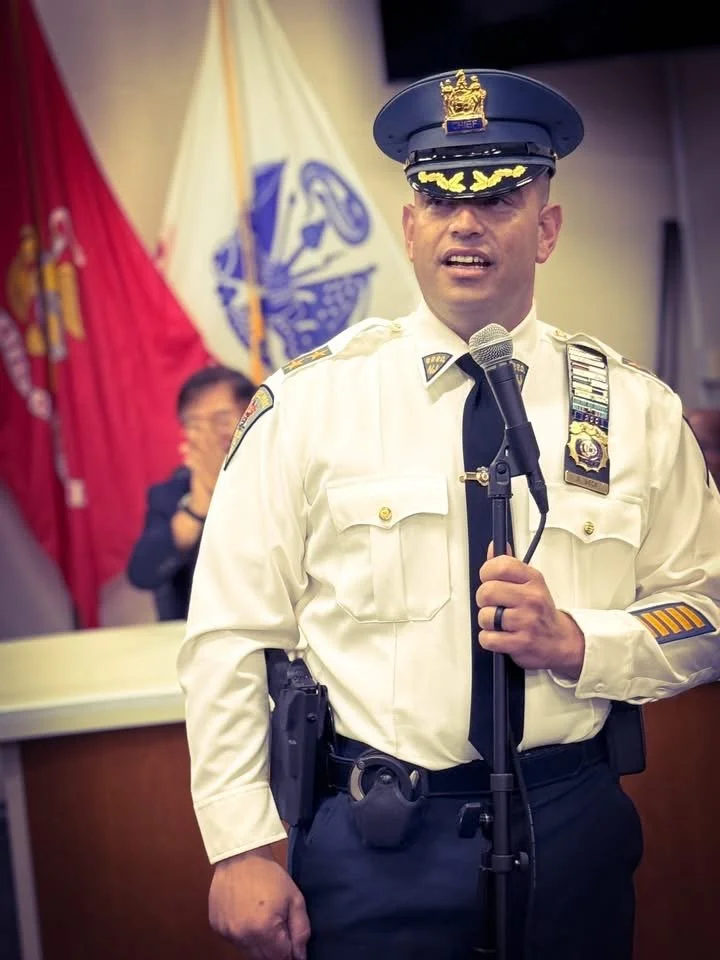
Before George Beck came to Blue Magazine, we had officers with important stories and valuable firsthand experience, but we had not yet developed the editorial structure to present those stories at the level they deserved. We were publishing articles, but there was much we did not know about building a disciplined editorial process. George recognized that when he joined us during the NJ Blue Now years.
At the time, George was serving in the Palisades Park Police Department while developing as a writer and scholar of criminal justice and history. He looked closely at the writing, the questions we asked, the way stories were organized and the standards we were accepting. He was honest with me about what needed to improve, even when that meant criticizing my own ideas. The officers who brought stories to Blue often had the most important part already: they had lived the experience. They had worked the investigations, the calls and the shifts. But firsthand knowledge does not automatically become a strong article. George helped officers shape what they knew into writing that was clearer, more organized and more useful to readers. He edited closely, helped develop contributors and gave the magazine an editorial standard it had not possessed before.
George and I did not always see things the same way. I had ideas about stories, covers, interviews and the direction of the magazine, and he had his own professional judgment about what would best serve Blue and its readers. That was important. I did not need an Editor in Chief who agreed with everything I said. I needed someone who could tell me when something was not good enough and explain why.
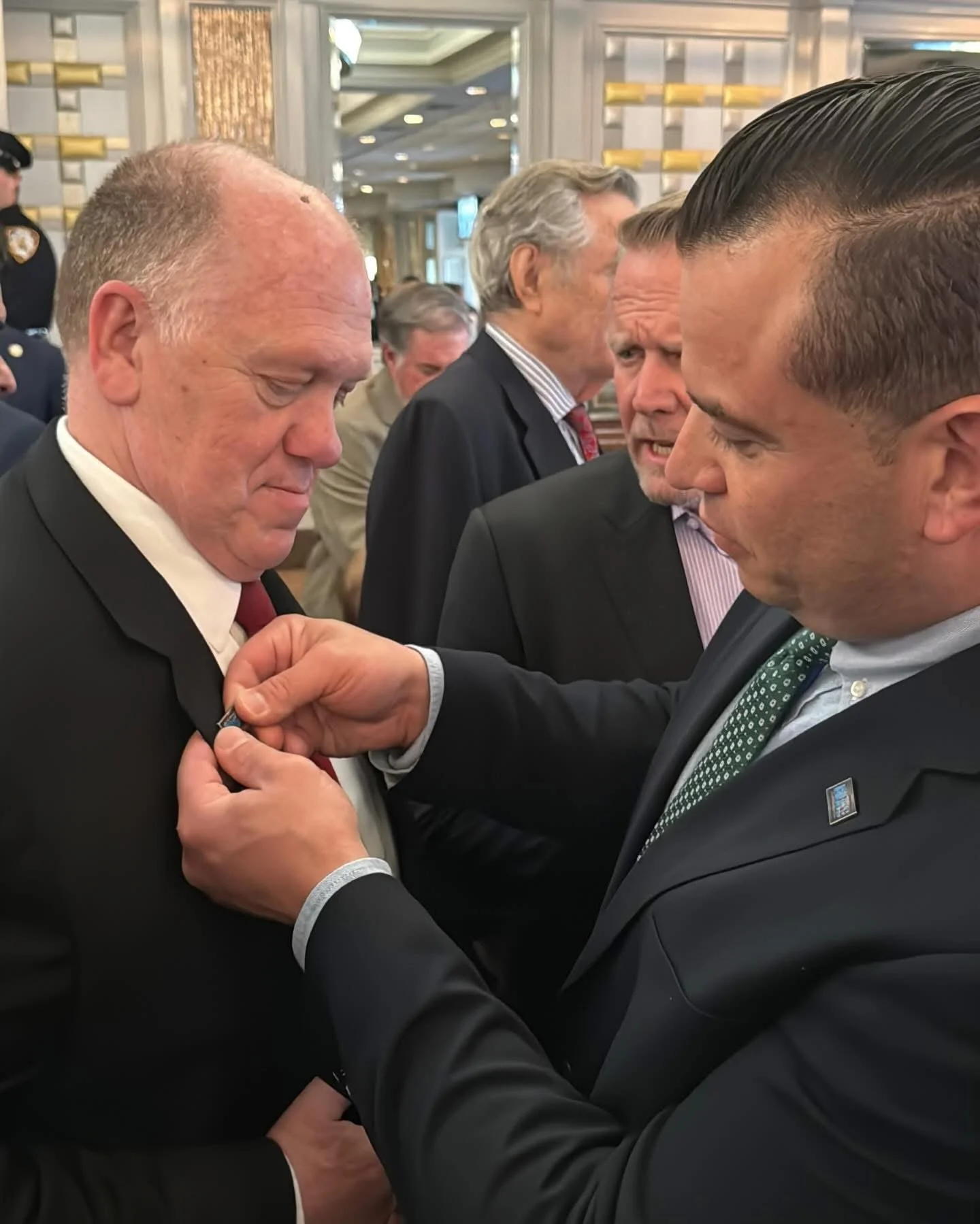
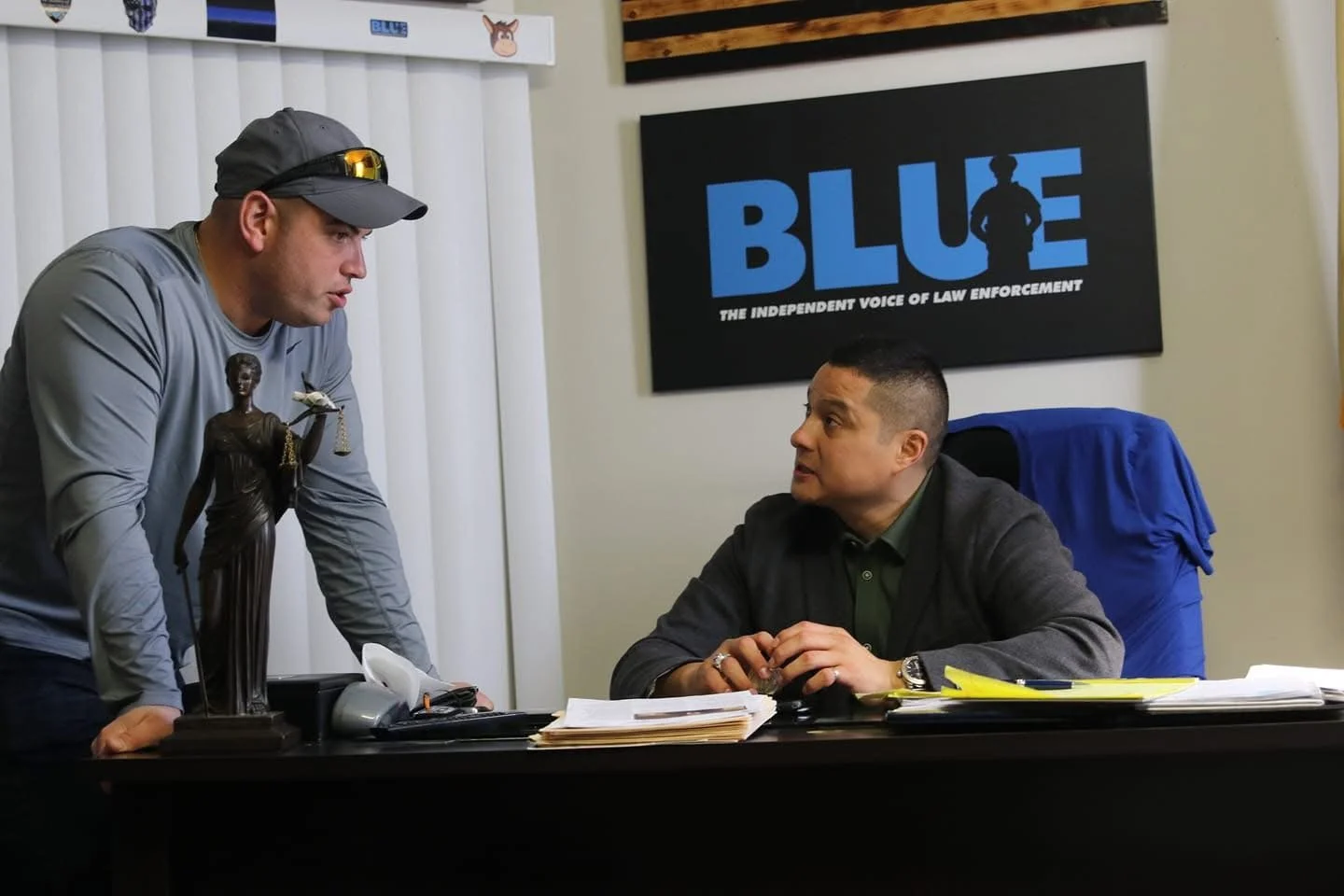
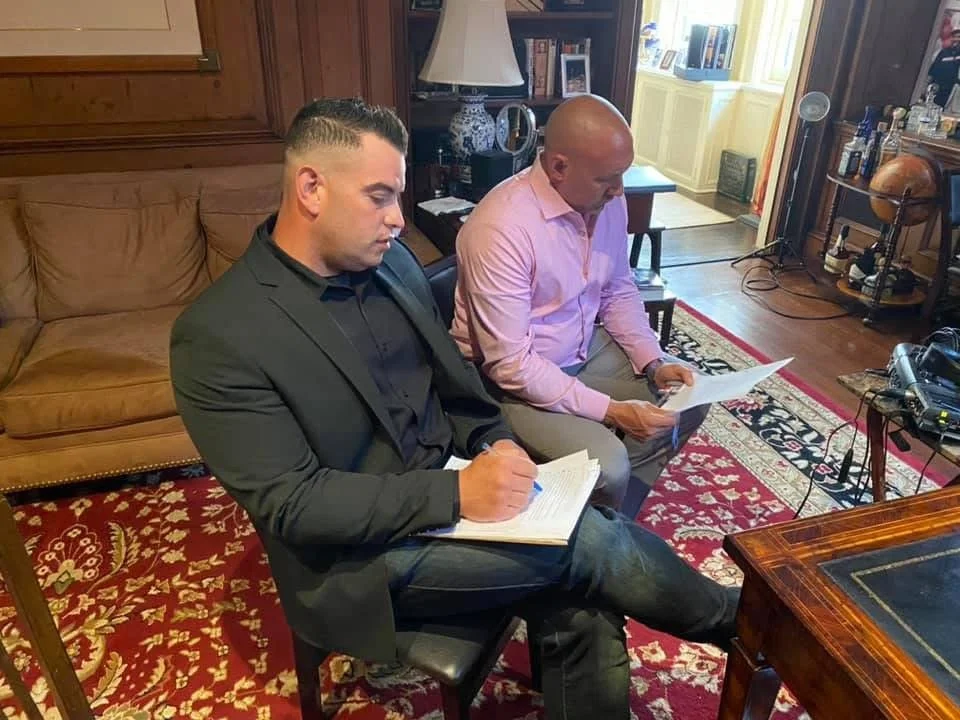
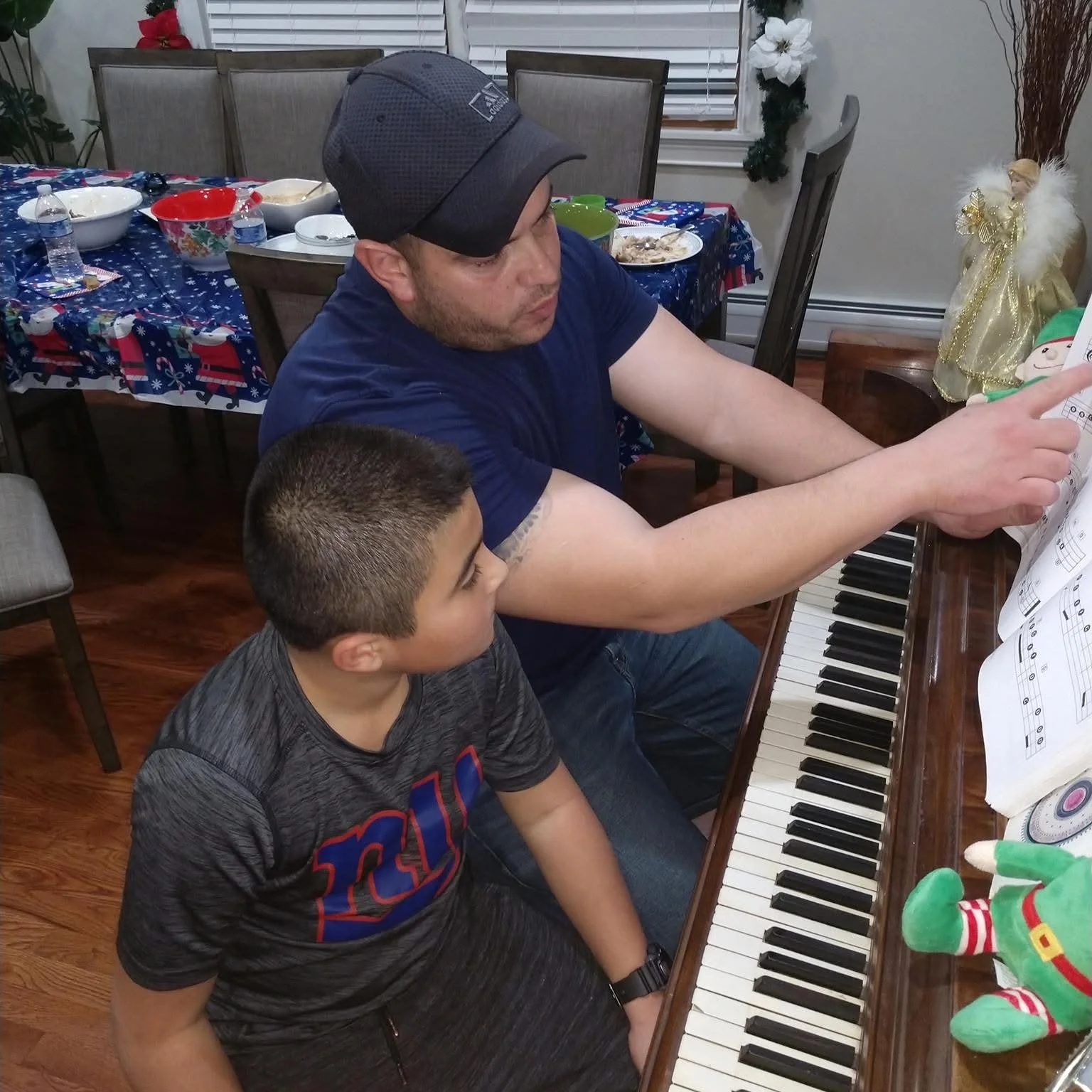
As Blue Magazine grew, that editorial discipline became increasingly important. We were no longer only receiving articles from officers and departments. We were conducting interviews with governors, mayors, sheriffs, commissioners and eventually President Donald J. Trump. Those opportunities required preparation, strong questions and an editorial operation that could handle serious conversations responsibly. George helped build that operation.
I also watched George grow in his own career. He rose through the Palisades Park Police Department, earned his Ph.D., became a published author and ultimately became Chief of Police. He remained connected to Blue throughout those years. Even when other editorial roles changed, he remained my Editor in Chief because he had helped establish the standard by which I measured the work. George became one of the most trusted people in my life. We spent countless hours talking about stories, plans, problems and where Blue Magazine needed to go next. He helped quarterback the editorial side of the magazine, but he also served as a guide to me. When I needed an honest opinion, a better approach or someone willing to challenge me, I knew I could call him.
That trust extended beyond the magazine. Our wives became friends, our families grew close and, over the years, George became part of my family in every way that mattered.
Our faith became part of that relationship as well. Before major Blue events, when hundreds of people were arriving and problems were developing behind the scenes, George and I prayed. His faith was never forced on anyone, but he lived it openly. He was one of the people whose example encouraged me to take my own relationship with God more seriously. George later led Blue Magazine’s White House interview with United States Border Czar Tom Homan. I was not able to enter the White House that day, but watching him lead that assignment felt personal to me. It reflected the trust we had built and the level Blue had reached.
Blue Magazine became a stronger publication because George Beck helped make it one. He improved the writing, developed contributors, challenged me when I needed to be challenged and helped guide the magazine through its most important years. I am grateful for the work he gave Blue, the leadership he brought to it and the friendship that grew from it.
JOEL E. GORDON, EDITOR-IN-CHIEF
Joel E. Gordon came to Blue Magazine through George Beck, who recognized that Joel’s law-enforcement experience and ability as a writer could strengthen the publication. Joel had begun his police career with the Baltimore City Police Department in 1980, served as a field-training officer and later became Chief of Police in Kingwood, West Virginia. He understood the profession from patrol through command, but he also knew how to examine it critically.
Joel began at Blue Magazine as a contributing writer and advanced through the editorial ranks. He became an associate editor, was appointed managing editor in 2021 and was promoted to Editor-in-Chief in 2025. When George prepared to assume the role of Executive Editor and Editor-in-Chief Emeritus, he told me that Joel was ready to lead the magazine. George’s recommendation carried considerable weight. He had established Blue’s editorial standard and understood what the position required. Promoting Joel proved to be one of our best editorial decisions.
Joel did more than review manuscripts. He identified knowledgeable writers from across the country, helped them organize their experience into publishable work and protected the credibility of the magazine. He demanded research, challenged unsupported claims and understood that supporting law enforcement did not mean abandoning honest examination. His work helped guide major editions and coverage involving President Donald J. Trump, United States Border Czar Tom Homan and Blue Magazine’s entry into the White House.
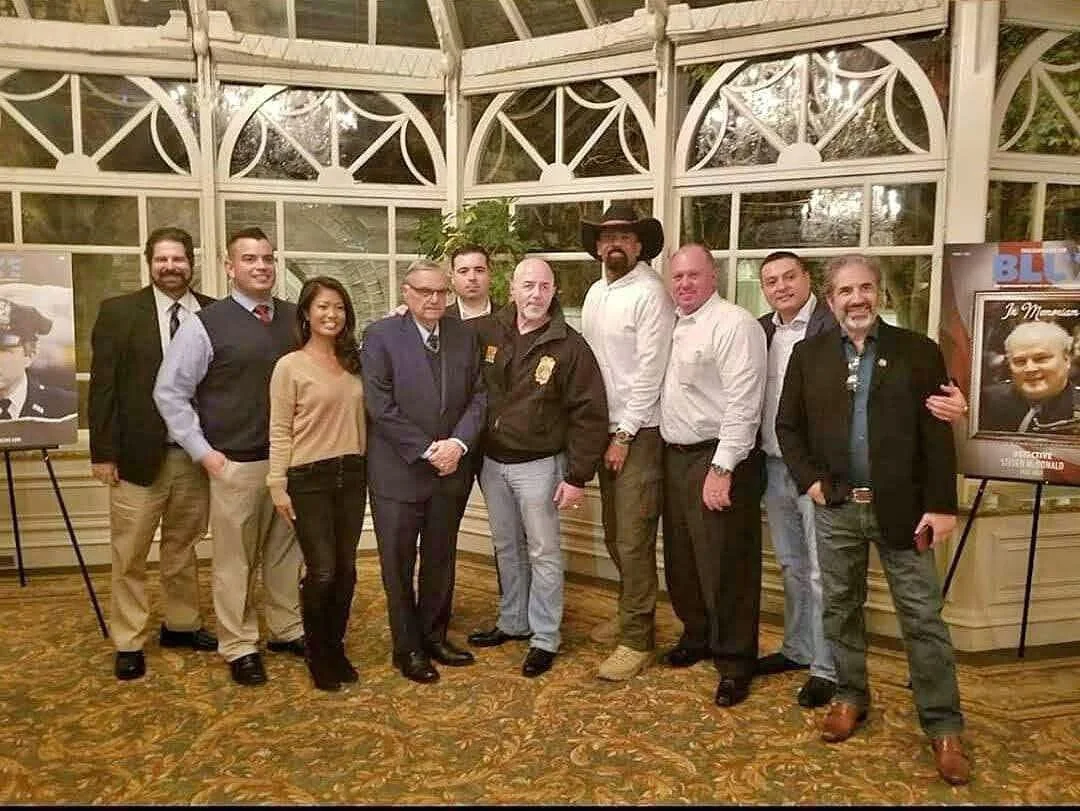
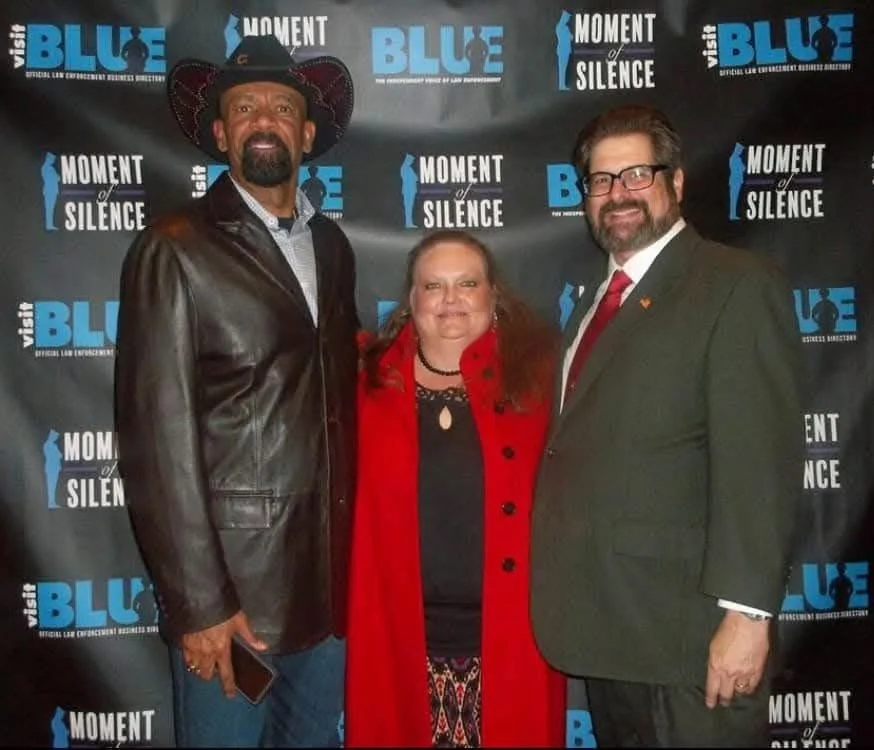
In 2025, serious medical complications resulted in the amputation of Joel’s left leg. A few days after the procedure, I called the hospital and spoke with Joel and his wife. I expected the conversation to be about his recovery. Instead, Joel was already asking about the magazine and the work that remained. I told him to take his time. The publication could not be more important than his health.
“No,” he said. “Let’s do it.”
From his hospital bed, Joel continued editing stories, advising writers and helping move the issue toward publication. The moment was striking, but it was not out of character. The same commitment had defined him as a law-enforcement officer, police chief, writer and editor. He regarded journalism as another form of service, and leading Blue Magazine had become an important part of his life.
Today, Joel is doing better. George Beck set the standard. Joel Gordon carried it forward. Joel’s place in Blue Magazine’s history is not defined by his title or his amputation. It rests in the work he produced, the writers he developed and the integrity he protected. Our team loves him, respects him and remains deeply grateful that he led the magazine through its final chapter.
WHEN THE QUESTIONS GOT HARDER: JEANINE PIRRO
As Blue grew, so did the significance of its interviews. We interviewed Judge Jeanine Pirro at Fox News headquarters in New York. The conversation was going well, but a controversial prosecution from her years as a district attorney remained unaddressed, and some members of law enforcement still had strong feelings about it.

The interview was nearly over, and the question had not been asked, so I asked it. She told me it was a stupid question and said it more than once. I explained why I had asked it. Law enforcement officers cared about the issue. If Blue was going to sit across from Jeanine Pirro and avoid something our readers wanted answered simply because it might make the interview uncomfortable, then what were we doing there?
She answered the question. Afterward, we spoke privately, discussed the matter further and the tension disappeared. She apologized, and I respected that. The experience reinforced what Blue was supposed to be. Access meant little if we were unwilling to ask what officers wanted answered and give readers honest information when the conversation became uncomfortable.
FORMER MILWAUKEE COUNTY SHERIFF DAVID CLARKE
In 2015, members of the Blue Magazine team drove from New Jersey to Milwaukee, Wisconsin, to interview Milwaukee County Sheriff David Clarke. The trip marked an important step in the magazine’s national growth and began a relationship that continued for years.
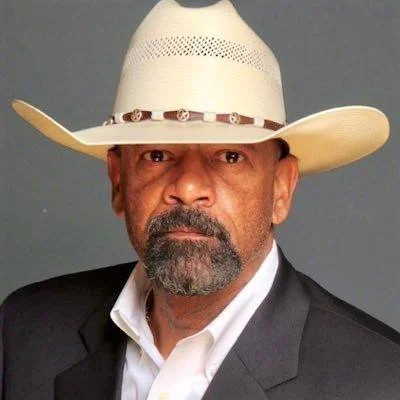
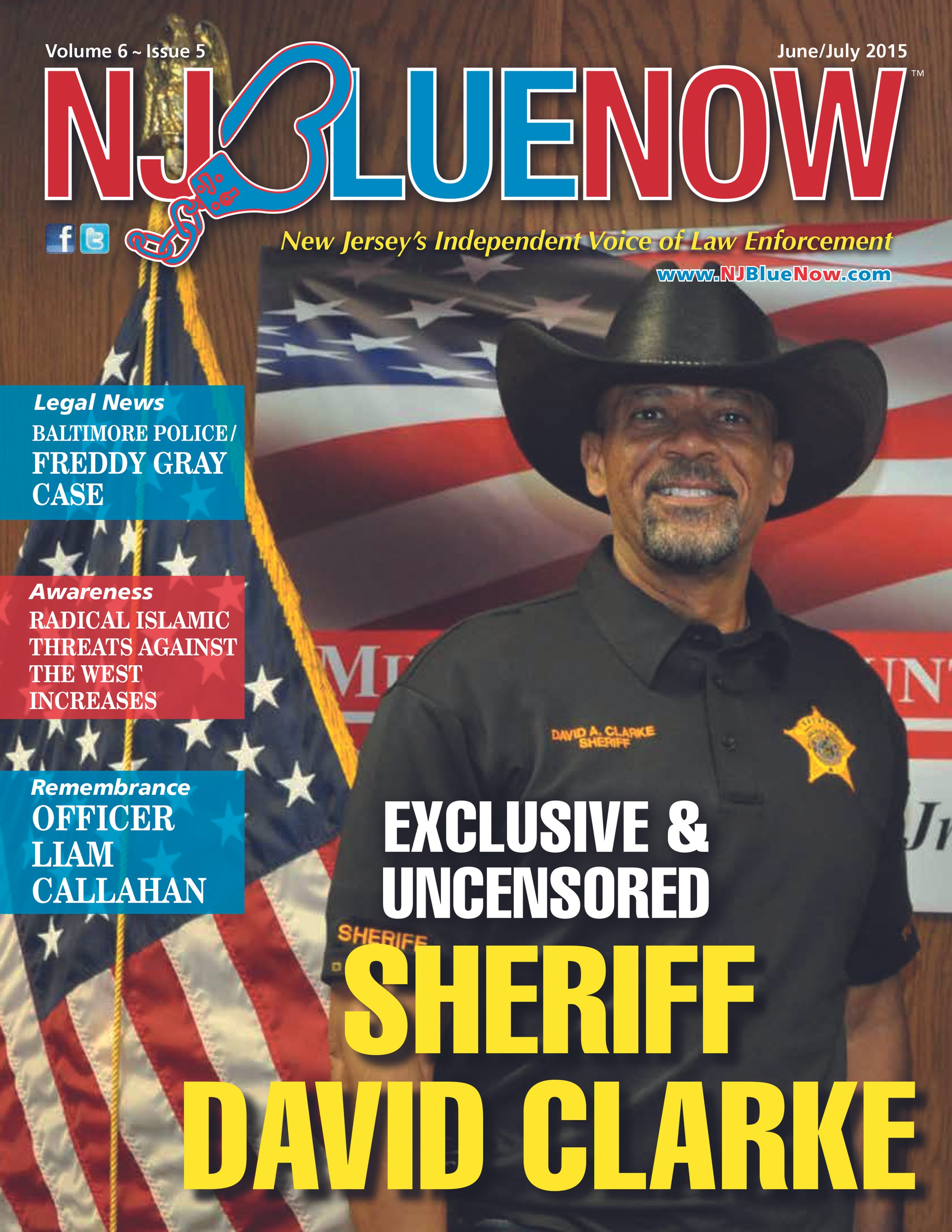
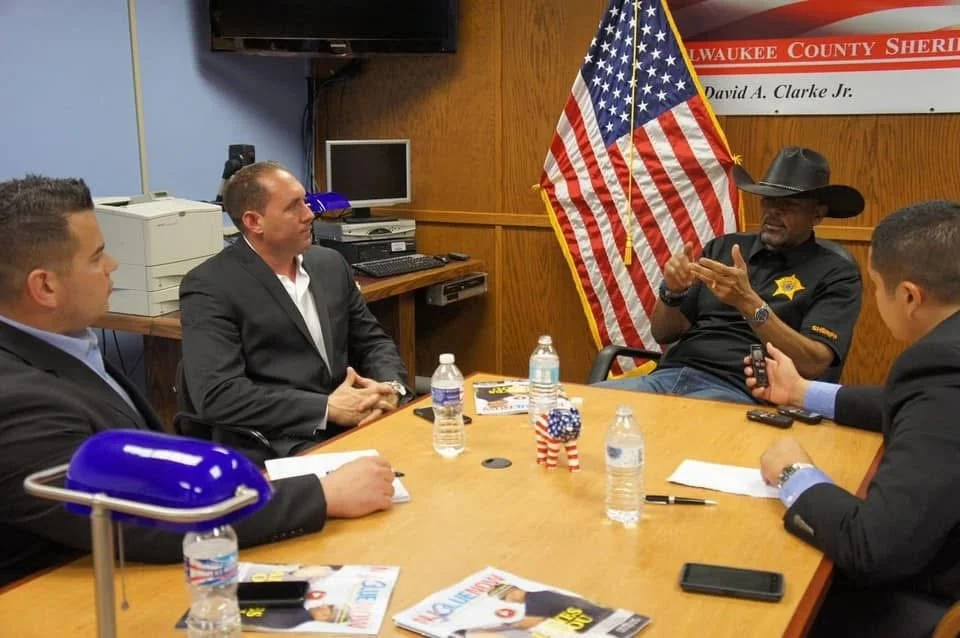
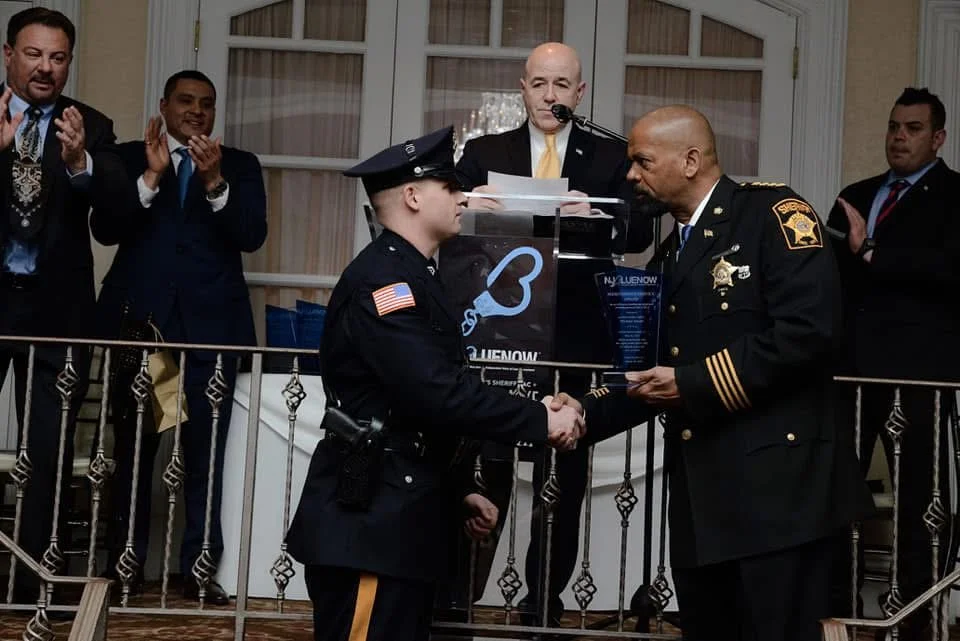
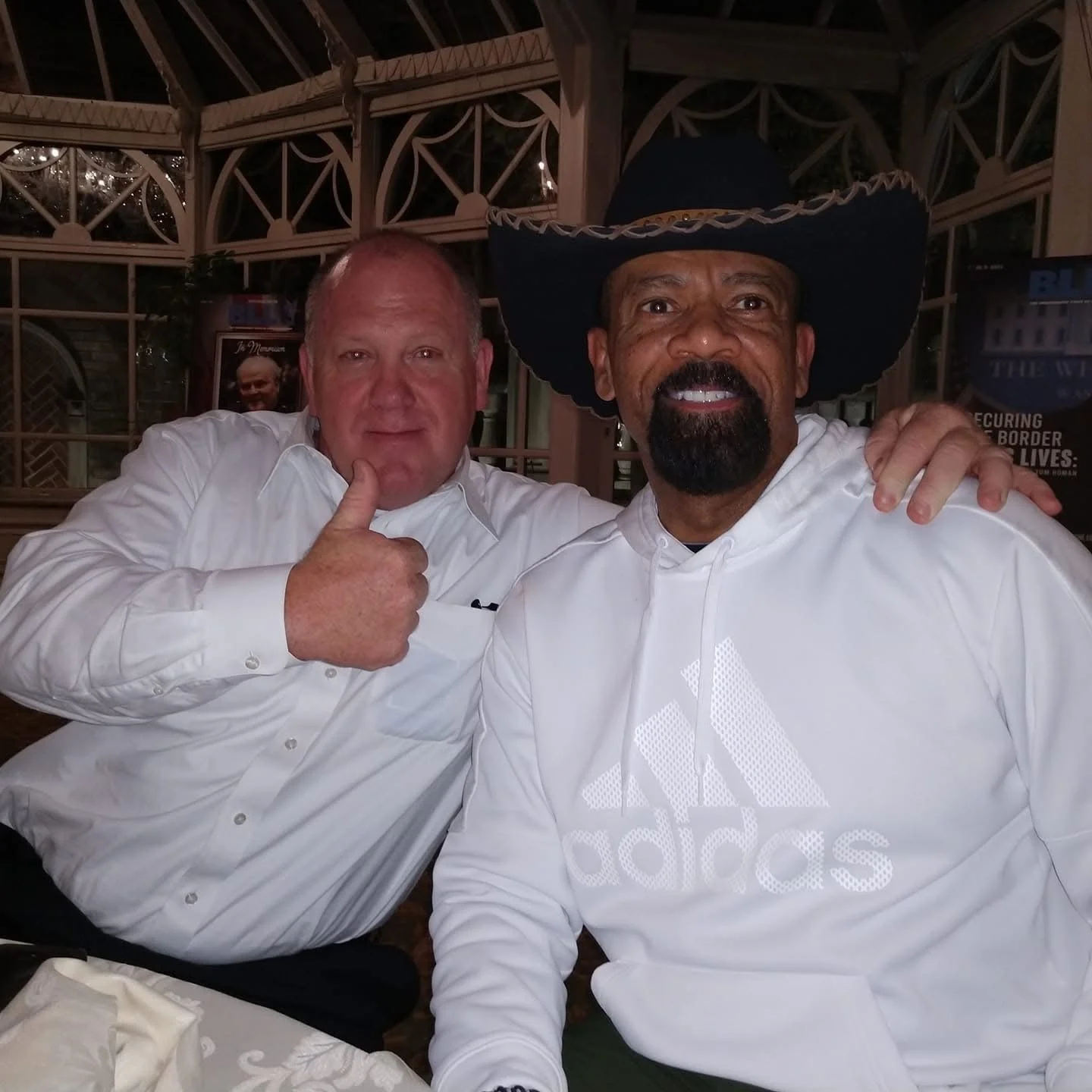
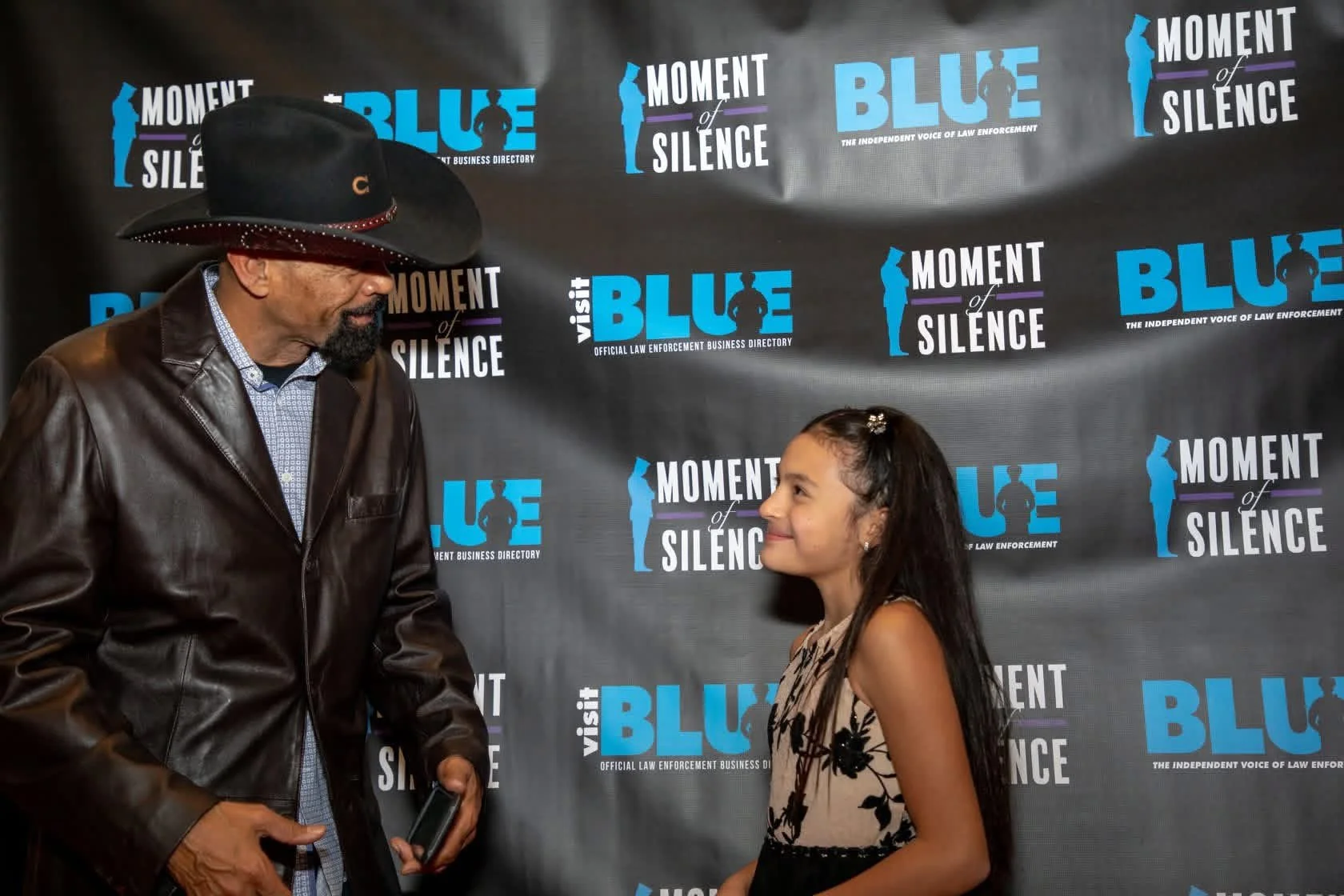
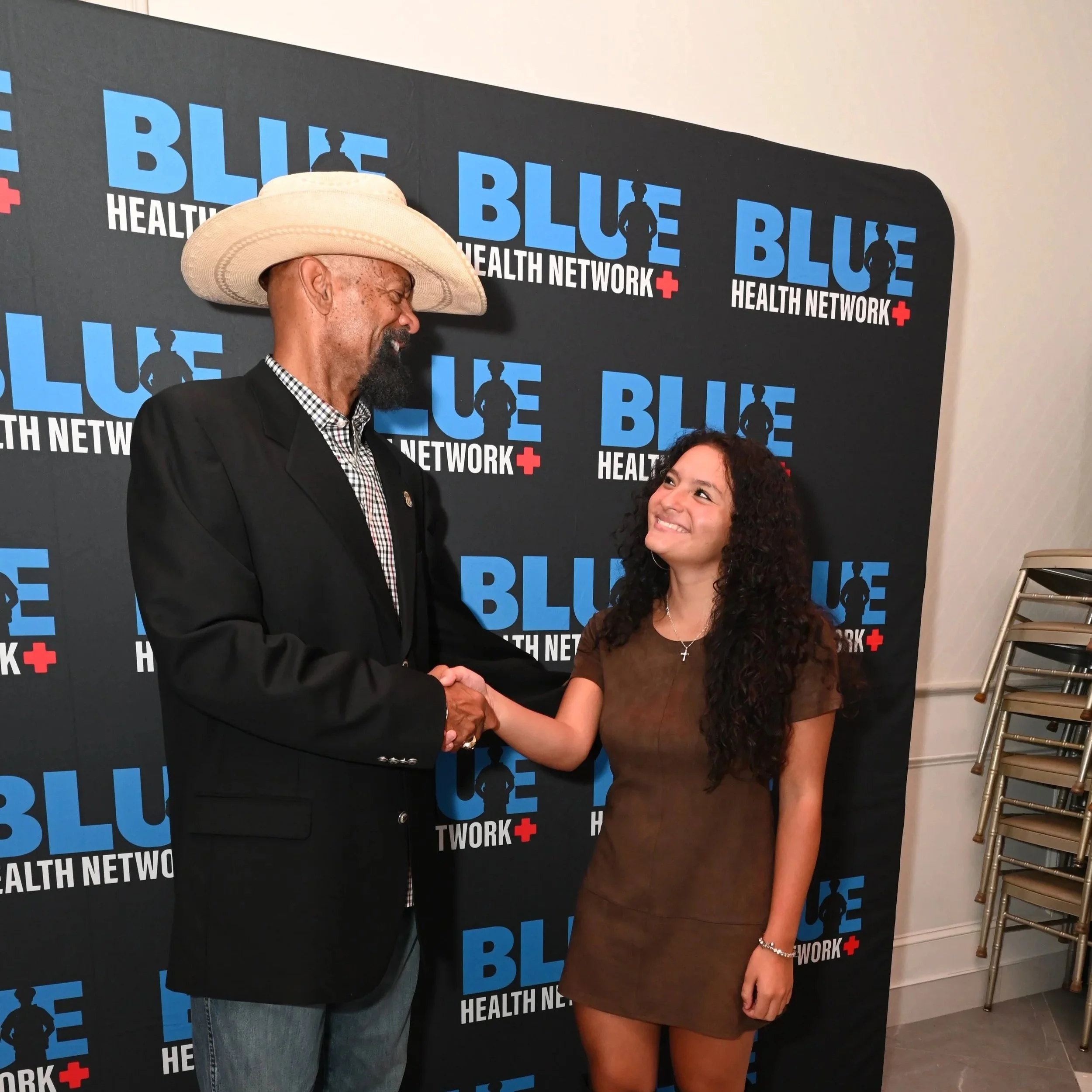
Clarke had become a prominent national commentator on policing and public safety. His willingness to defend his positions during contentious television interviews resonated with officers who believed he was voicing concerns they could not express publicly. Clarke appeared on Blue Magazine’s cover and traveled from Milwaukee to participate in several Blue Magazine events. After retiring as sheriff in 2017, he joined the magazine as a contributing writer and became one of its leading national voices.
For nearly a decade, Clarke addressed issues many active officers could not discuss publicly. He did not retreat from difficult positions because they were unpopular, and Blue Magazine was fortunate to have that experience and conviction in its pages. Sheriff Clarke also made it a point to come to New Jersey, visit local police departments and inspired the men and women in blue.
RETIRED CLIFTON PD LIEUTENANT PAT CISER
Retired Clifton Lieutenant Pat Ciser brought firsthand experience to Blue, including knowledge gained through narcotics investigations. He wrote directly about law enforcement, patriotism and the country, and he was willing to express what he believed even when the subject was controversial.
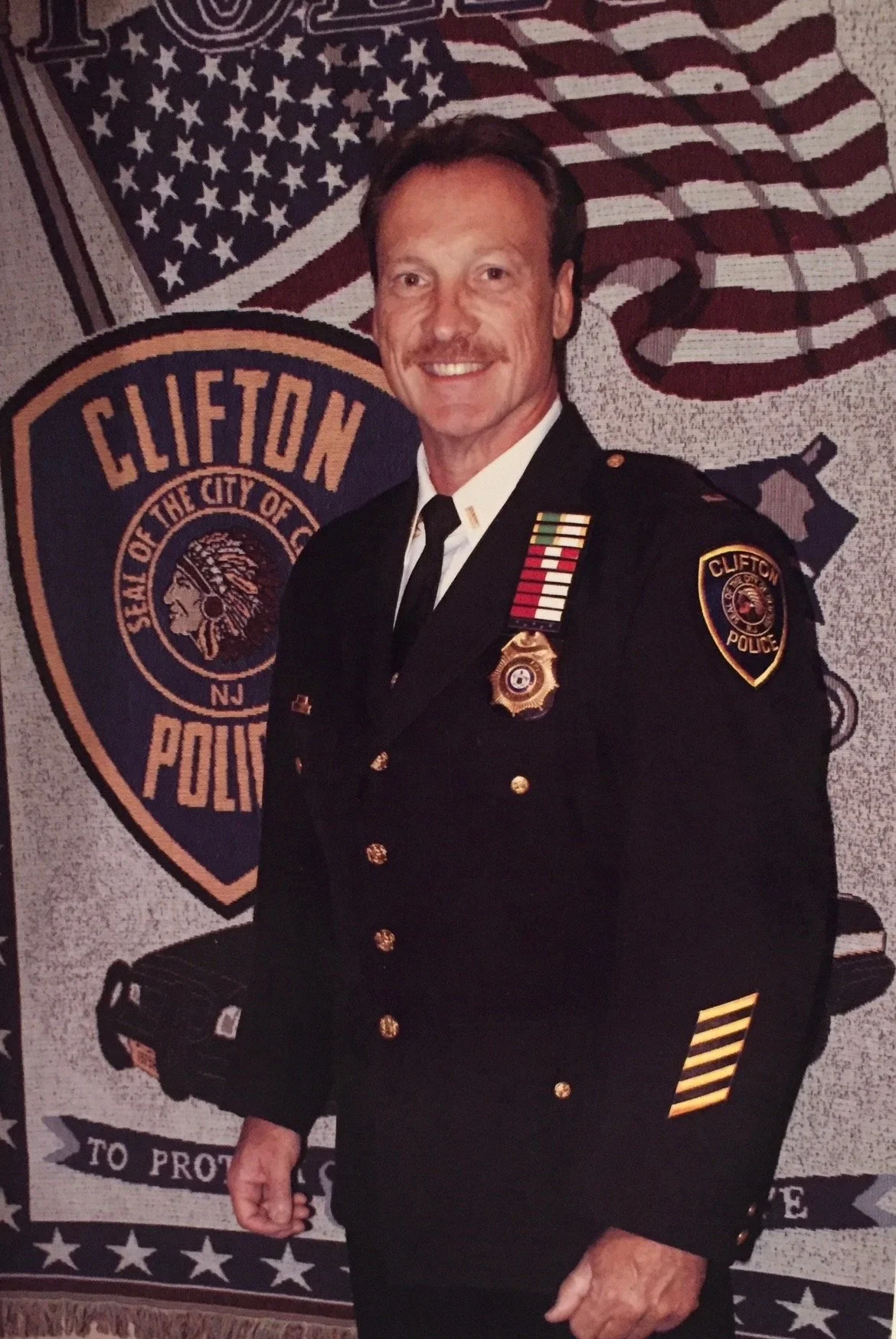
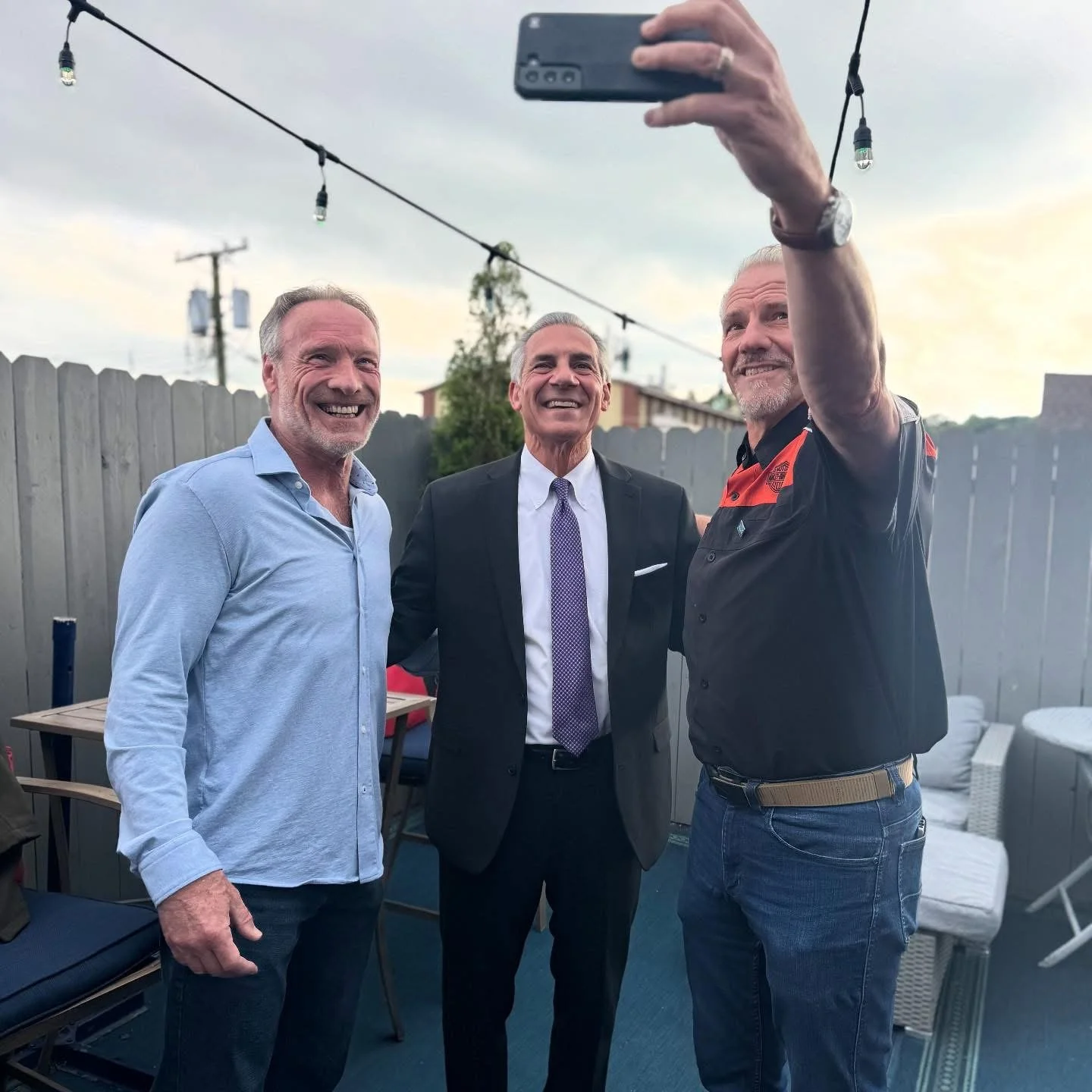
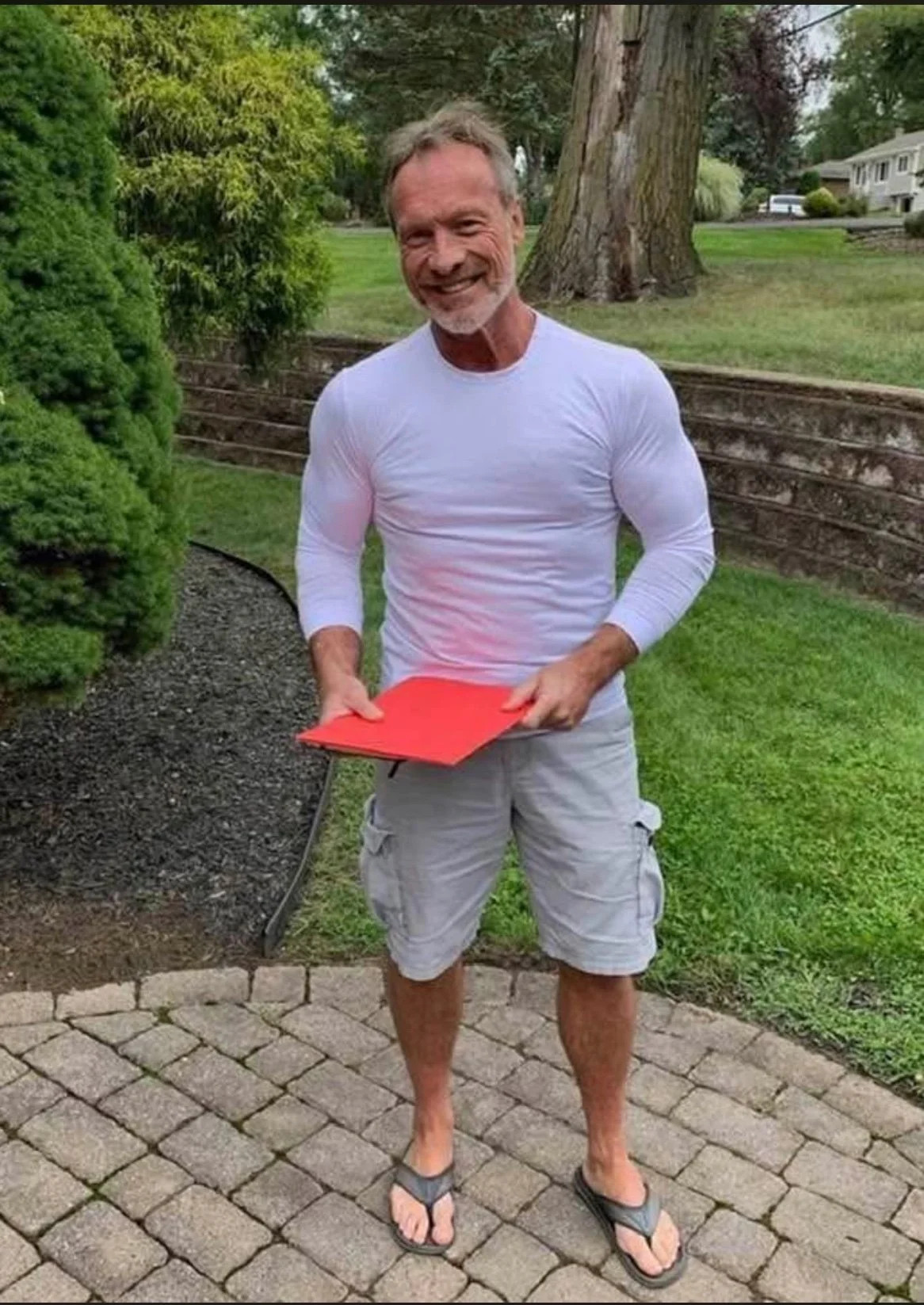
Some readers agreed with Pat and others did not. Blue did not require every contributor to hold the same position. Publishing an independent magazine meant allowing experienced members of law enforcement to present informed views while giving readers the freedom to reach their own conclusions. Pat’s columns reflected that principle.
DR. ALEX MARTIROSOV AND KATRINA CHIPIGA -
THE PARTNERSHIP THAT BECAME FAMILY
I met Dr. Alex Martirosov and Katrina Chipiga through Johnny Welsh roughly two years after Blue Magazine began. At the time, we were building more than a publication. We were trying to create useful connections between law enforcement officers and professionals who could truly serve them.

That need was especially clear in health care. Officers needed good doctors, offices that accepted their insurance, and people who understood that the demands of the job do not end when a shift is over. A healthy officer is better prepared to serve the community and care for family. Blue Magazine wanted to help officers make informed choices about their wellness.
When I first visited Dr. Alex and Katrina at Tri-State Health & Wellness, I saw a practice that could become that kind of resource. The office was professional and welcoming. Dr. Alex had the experience and interest to care for the law enforcement community. Katrina brought warmth, organization, and a personal touch that made people feel comfortable from the moment they arrived.
Blue Magazine introduced their practice to law enforcement. Dr. Alex and Katrina earned the trust that followed.
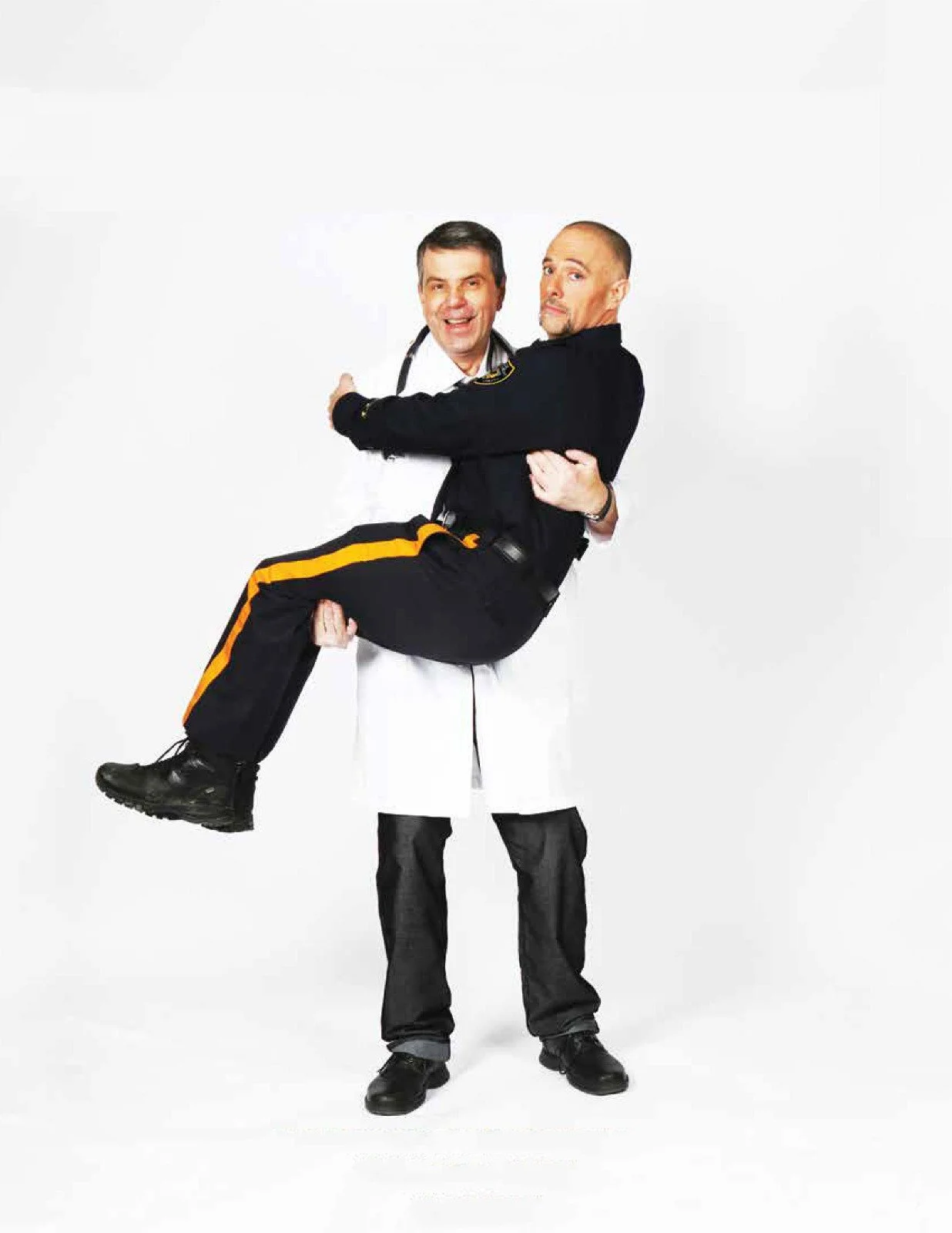
At the beginning, few officers were patients there. Over time, the practice became a familiar place for law enforcement officers and their families. Hundreds began coming through the office, and that number eventually grew to more than a thousand officers and first responders. Officers called, texted, and wrote to Blue Magazine to share their experiences. They thanked us for making the introduction, but the reason they stayed was simple: they felt they were being treated well.
The office took on the feeling of a community. I would walk in and see officers who knew one another, spoke freely, and felt at home. That did not happen because of a marketing plan. It happened because Dr. Alex, Katrina, and their staff treated people with care and respect.
Their support of Blue Magazine was just as important. For years, Dr. Alex and Katrina were among the magazine’s most loyal sponsors. When Blue Magazine faced difficult periods, they were people I could depend on. Their contributions helped keep the magazine moving when it needed help most. They never treated the relationship as a transaction. They believed in the mission, in the officers we served, and in the people behind the work.
That commitment extended to the work Blue Magazine did for the community and to Moment of Silence. They gave financially, but they also showed up. When an event, an officer, a family, or the charity needed help, Dr. Alex and Katrina were part of the team. They understood that service required more than words.
During COVID, when officers, first responders, and families were under extraordinary pressure, their dedication to the community was clear once again. They cared about people, and they showed it.
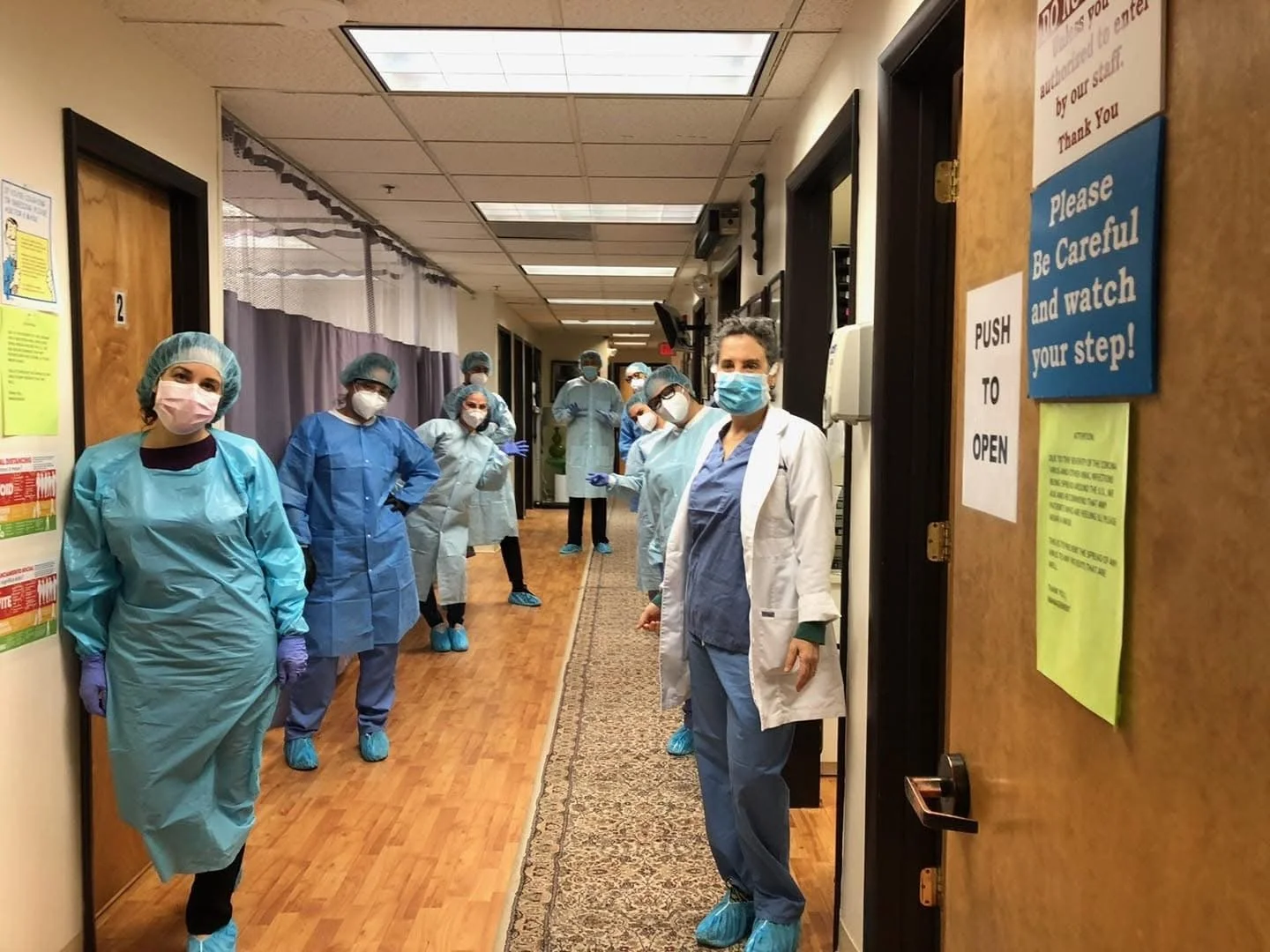
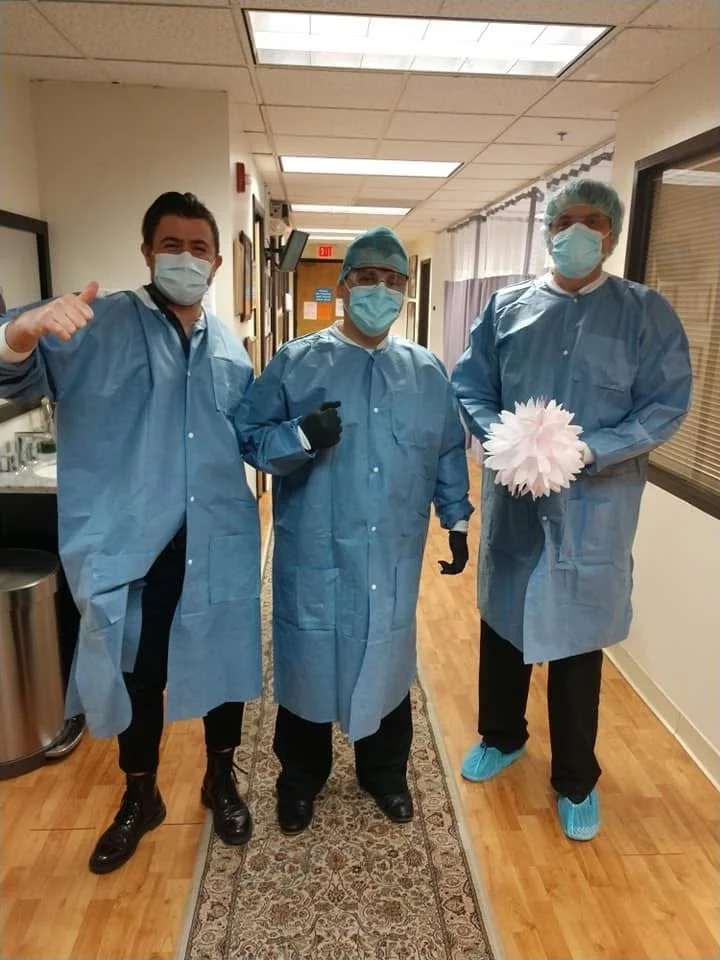
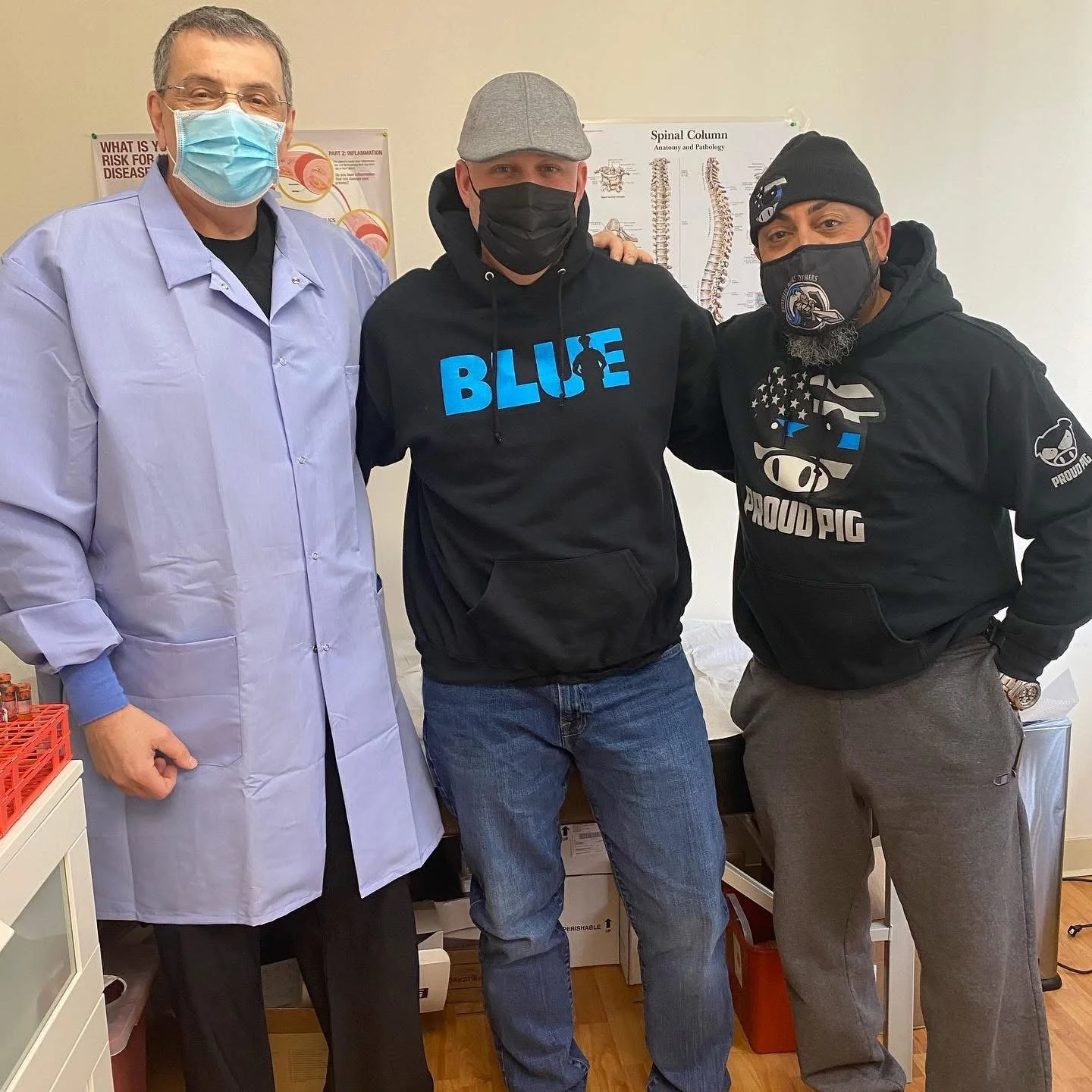
Today, their work continues through EverGreen Medical Group. But their place in Blue Magazine’s story is about much more than a practice or a sponsorship. They became friends. They became family.
Katrina has been someone I could call for honest guidance and support when I needed it most. I call Dr. Alex and Katrina my angels because that is what they have been throughout this journey.
Their story is an example of what Blue Magazine always hoped to build: trusted relationships that serve law enforcement, strengthen the community, and last through the hard times. Dr. Alex Martirosov and Katrina Chipiga did not simply support Blue Magazine. Their loyalty helped it endure.

CHARLIE SALCEDO: A BROTHER BEHIND THE MISSION
Charlie Salcedo has been my friend since we were approximately eight years old, but his place in Blue Magazine was built through the commitment he demonstrated as an adult.
From the magazine’s earliest years, Charlie helped with the demanding work required to keep it operating. He distributed issues to law enforcement departments across New Jersey, New York and Connecticut, sometimes driving through the night and entering one department after another. He packaged and mailed magazines, transported materials, moved equipment, supported events and handled whatever responsibilities were needed.
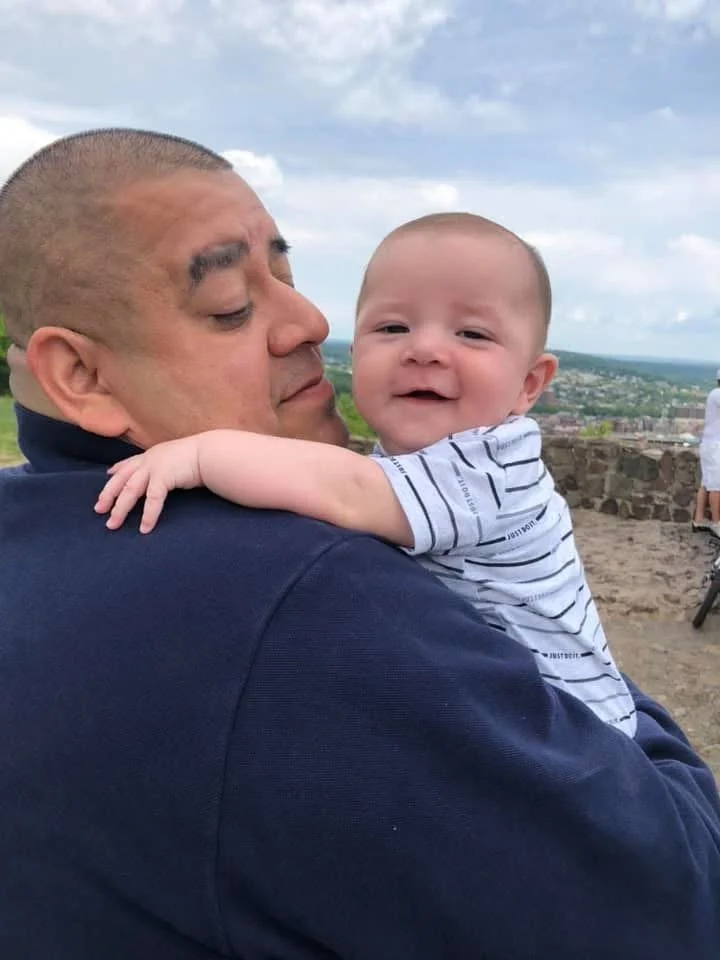
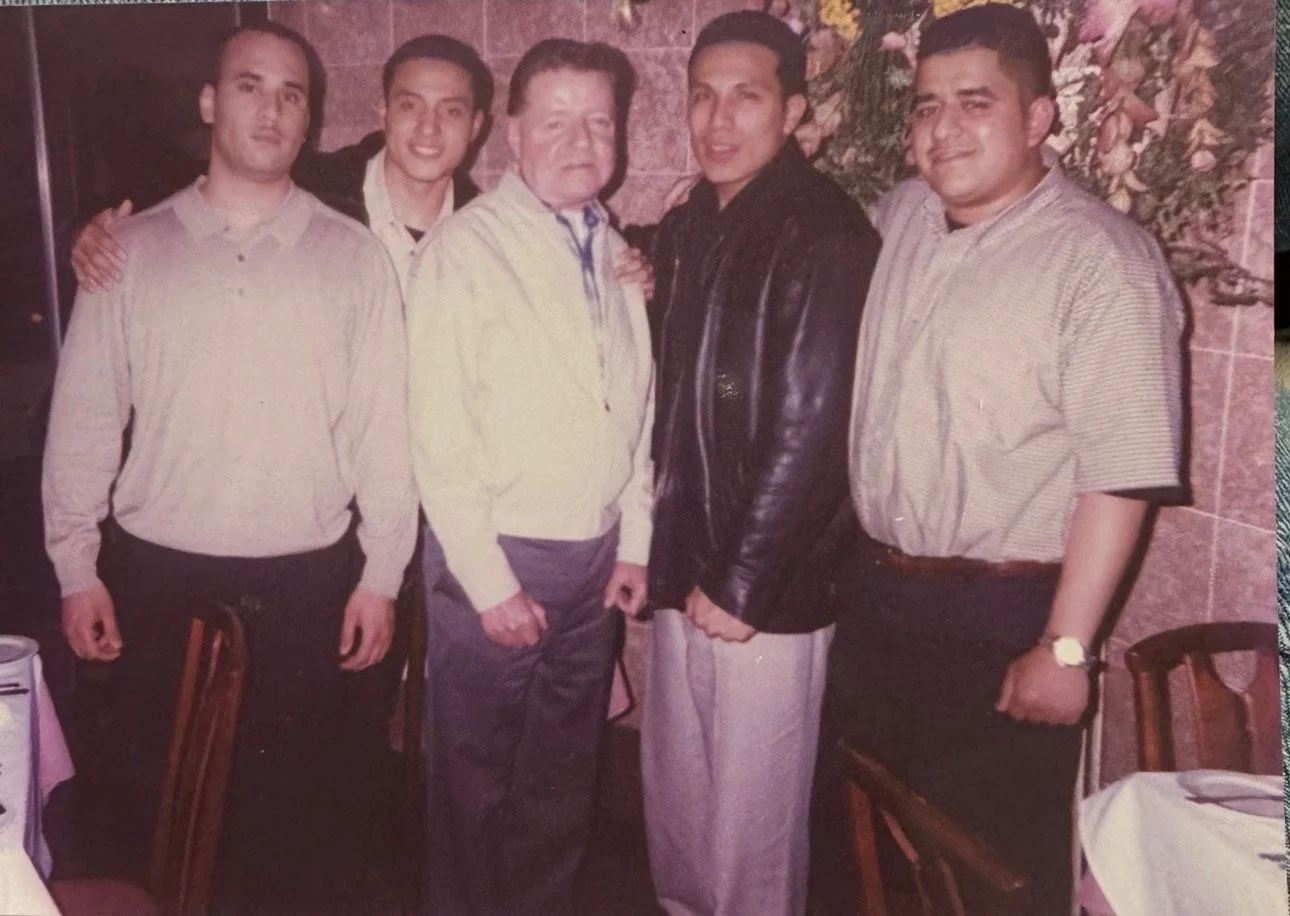
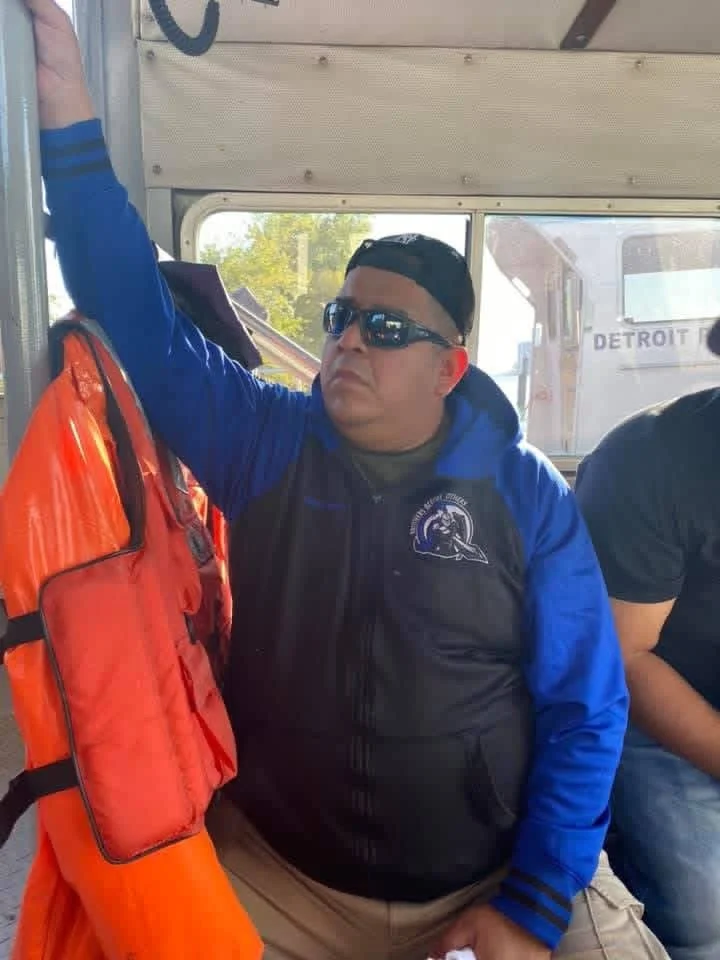
Charlie also traveled with Blue Magazine on assignments across the country. He carried cameras and microphones, loaded equipment and worked behind the scenes in Dallas, Ferguson, Georgia, Florida, Chicago and other locations. He attended officers’ wakes and funerals, assisted with line of duty death coverage and helped deliver water and supplies across state lines following hurricanes.
His role required loyalty, discretion and trust. Charlie was present during private conversations, difficult moments and situations involving officers and their families. He never wore a law enforcement uniform, but he demonstrated his respect for the profession through years of service to the people within it. Charlie remains involved with Blue Magazine and Moment of Silence. He was my friend long before the magazine existed, became part of the team that sustained it and remains my brother as this chapter comes to an end.
ALBERTO “GARY” PALACIOS: A TRUSTED VOICE INSIDE BLUE
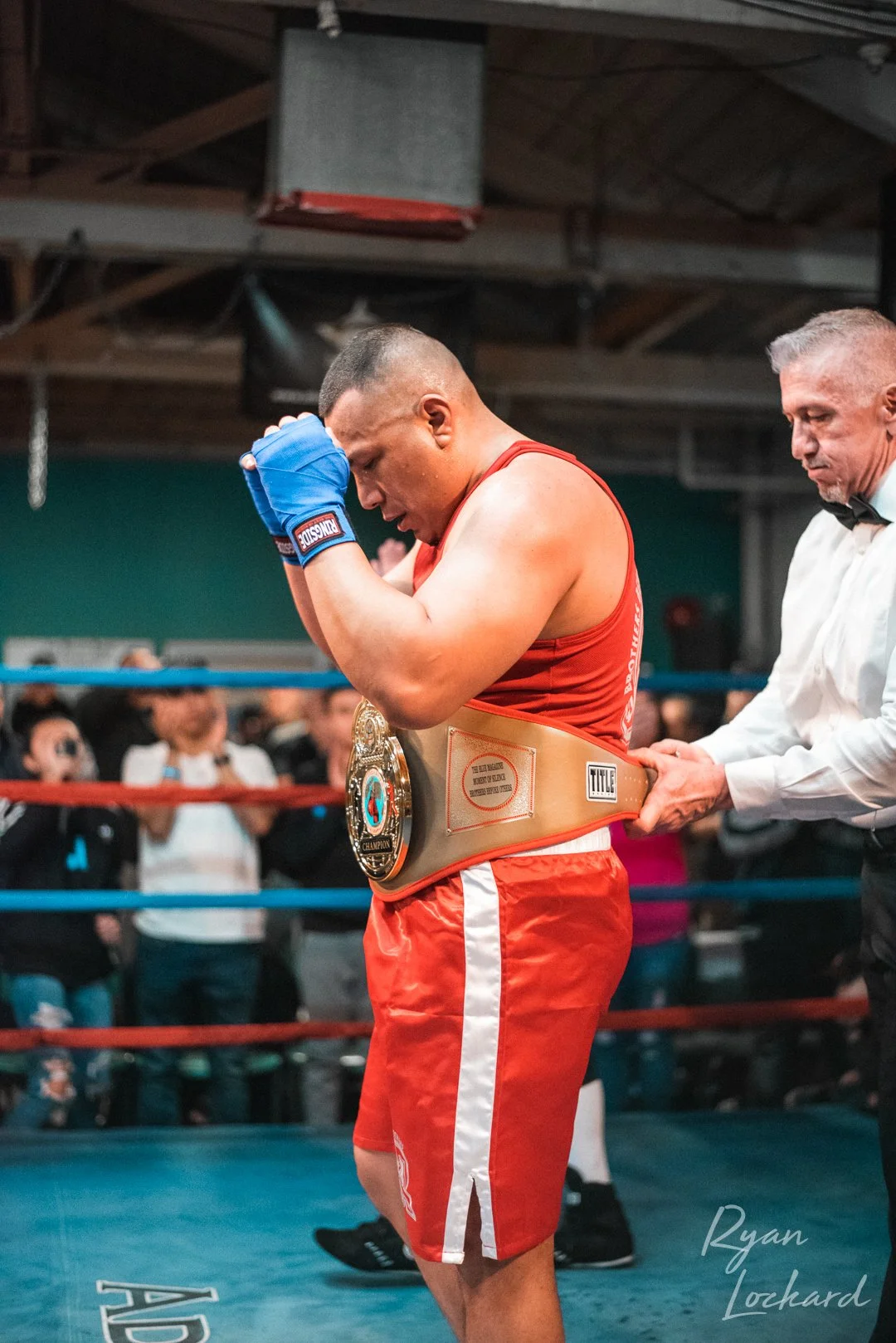
Alberto “Gary” Palacios has been part of my life since we were approximately eight years old. When Blue Magazine began, that lifelong friendship grew into a professional relationship built on trust, loyalty and shared commitment.
Gary’s greatest contribution took place inside the Blue office. He assisted with administrative responsibilities, helped keep daily operations moving and became an advisor to the magazine. I could speak openly with him about the publication, the challenges we faced and the decisions that needed to be made. His familiarity with me and the mission allowed him to offer honest guidance from the perspective of someone who understood both.
Gary also played a leading role in Blue Beefs Boxing. As the featured fighter in the main event, he defeated a Port Authority police officer by knockout. It was one of the event’s most memorable moments and reflected the confidence, discipline and determination Gary brought to everything he accepted.
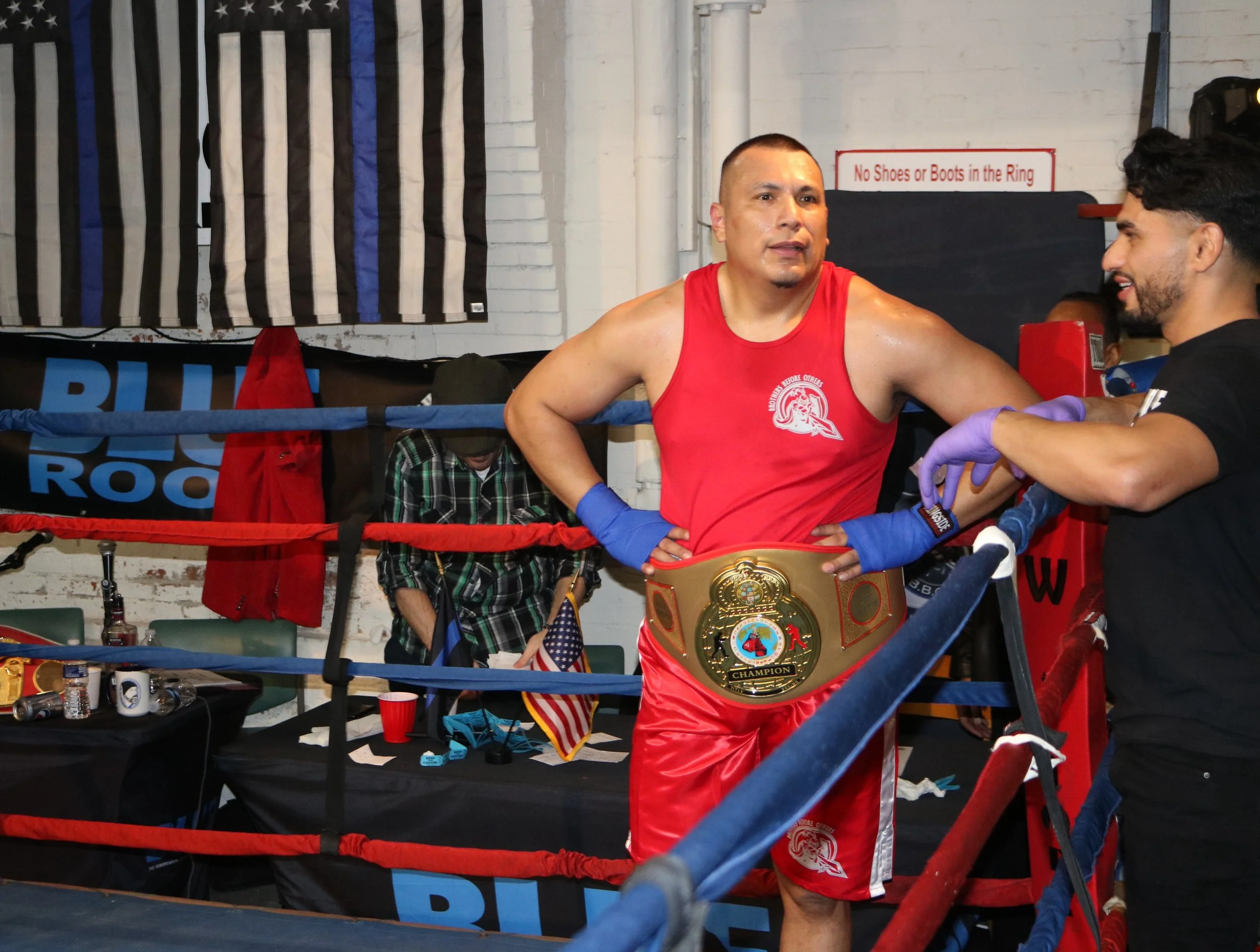
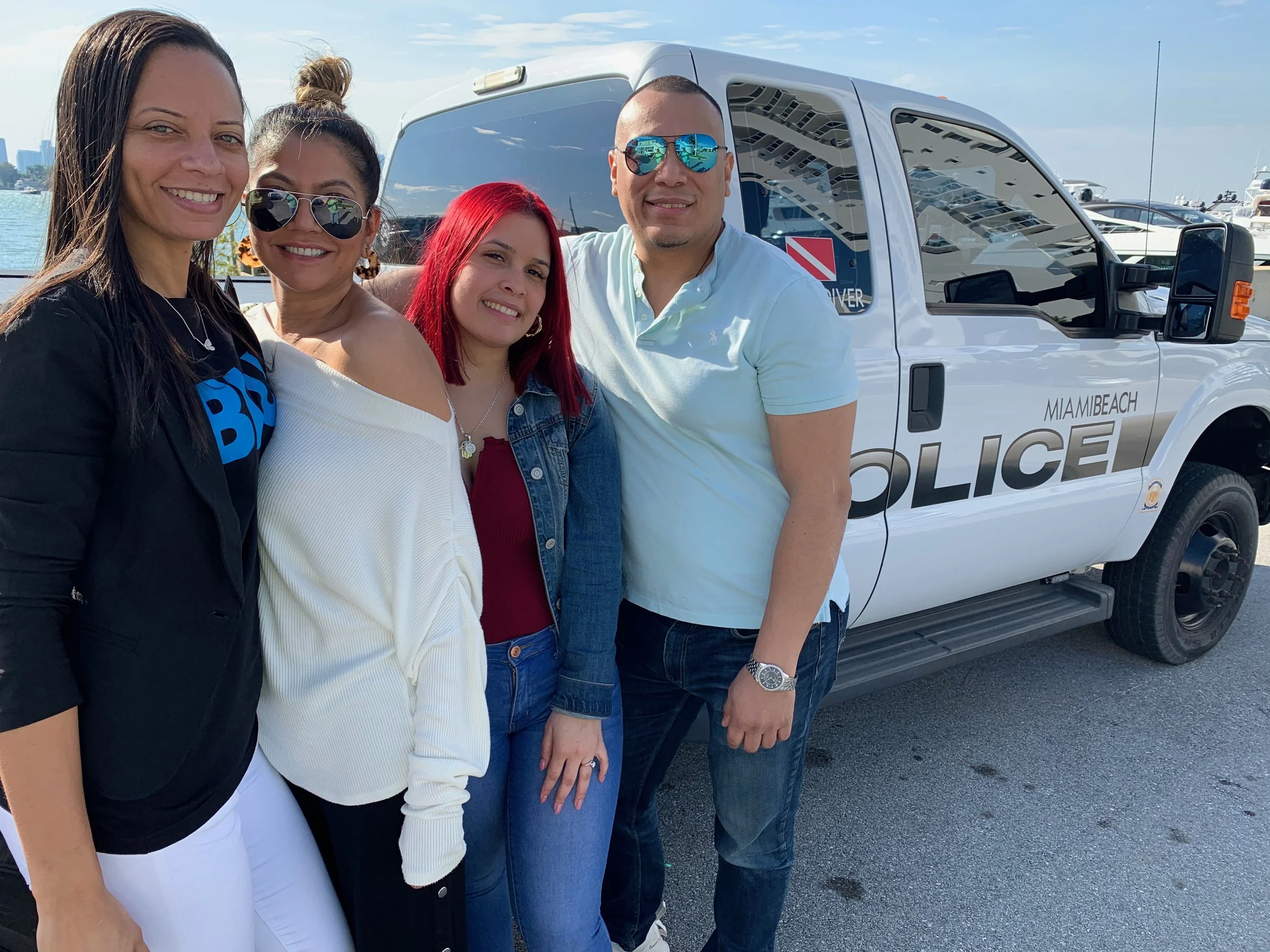

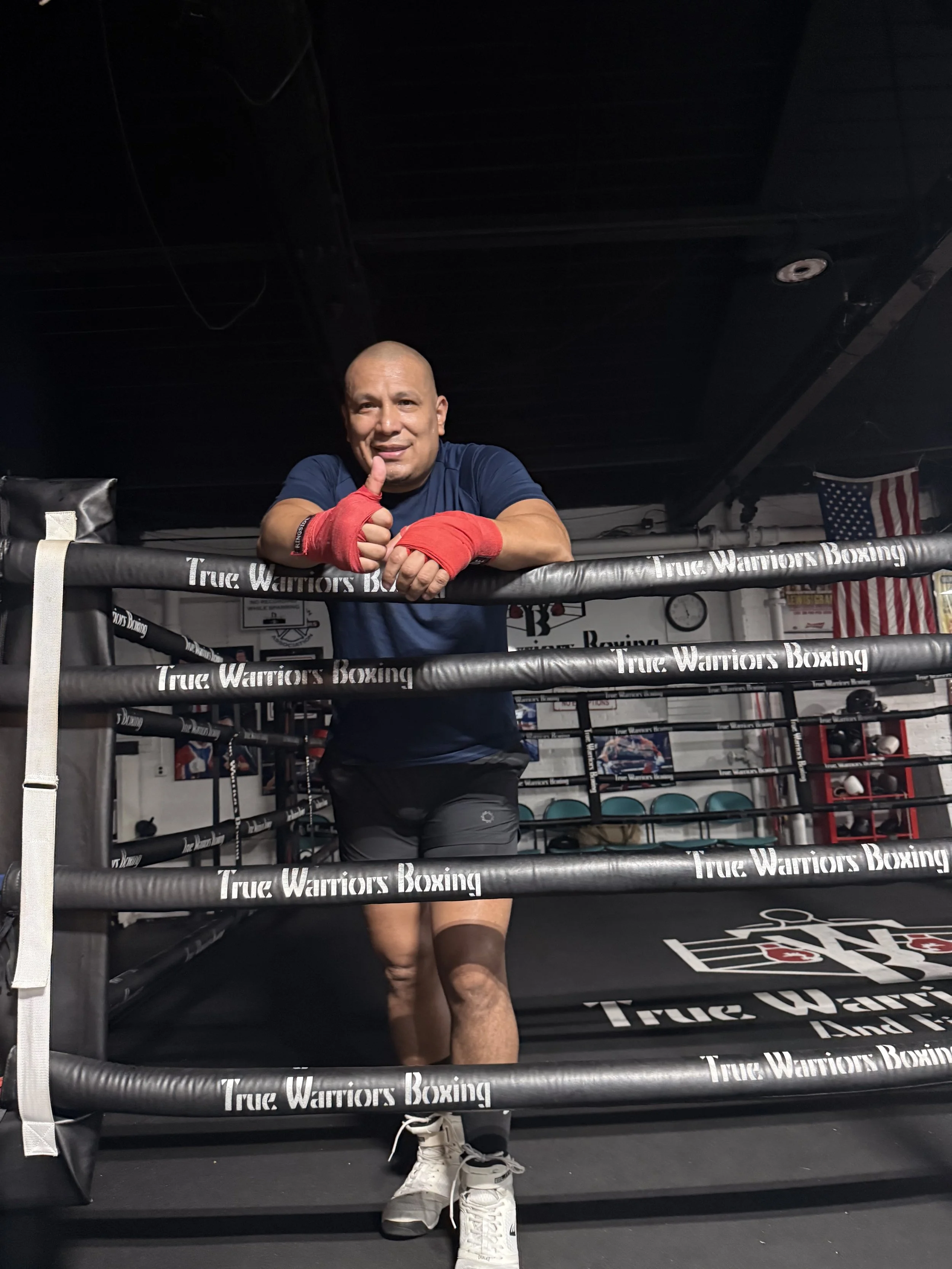
Although much of his work centered on the office, Gary traveled with Blue Magazine on assignments across the country. He was present as the magazine entered new communities, covered important stories and built relationships with law enforcement officers and their families. Whether at home or on the road, he remained someone the team could trust with private conversations, unpublished information and difficult moments.

Gary did not need a formal title to prove his value. He became part of the internal support system that helped Blue continue through changing and demanding seasons. He remains involved with Blue Magazine and Moment of Silence, and he remains what he was long before either organization existed: my lifelong friend and brother.
JOE LEMIRE - THE ENGINEER BEHIND THE BLUE
Some of Blue Magazine’s most important work was never seen by readers.
For years, Joe Lemire handled the digital systems, files, websites, and behind-the-scenes details that allowed Blue Magazine to publish, preserve its work, and stay connected with its audience. His contribution became clear during one of the magazine’s most serious early crises. As Blue transitioned from NJ Blue Now to Blue Magazine, we faced a digital disaster. Years of reporting, photographs, videos, website material, and archived work appeared to be lost. For a publication built on documenting law enforcement, the possibility of losing that record was devastating. We believed we might have to begin again without much of the history we had spent years creating.
Then Joe came into the picture.
He took on the task of recovering the archive when it appeared beyond recovery. He worked through the technical problems, found a way to retrieve the material, and helped save years of Blue Magazine history. What had looked like a permanent loss became a recovery.
That moment defined Joe’s relationship with Blue Magazine.
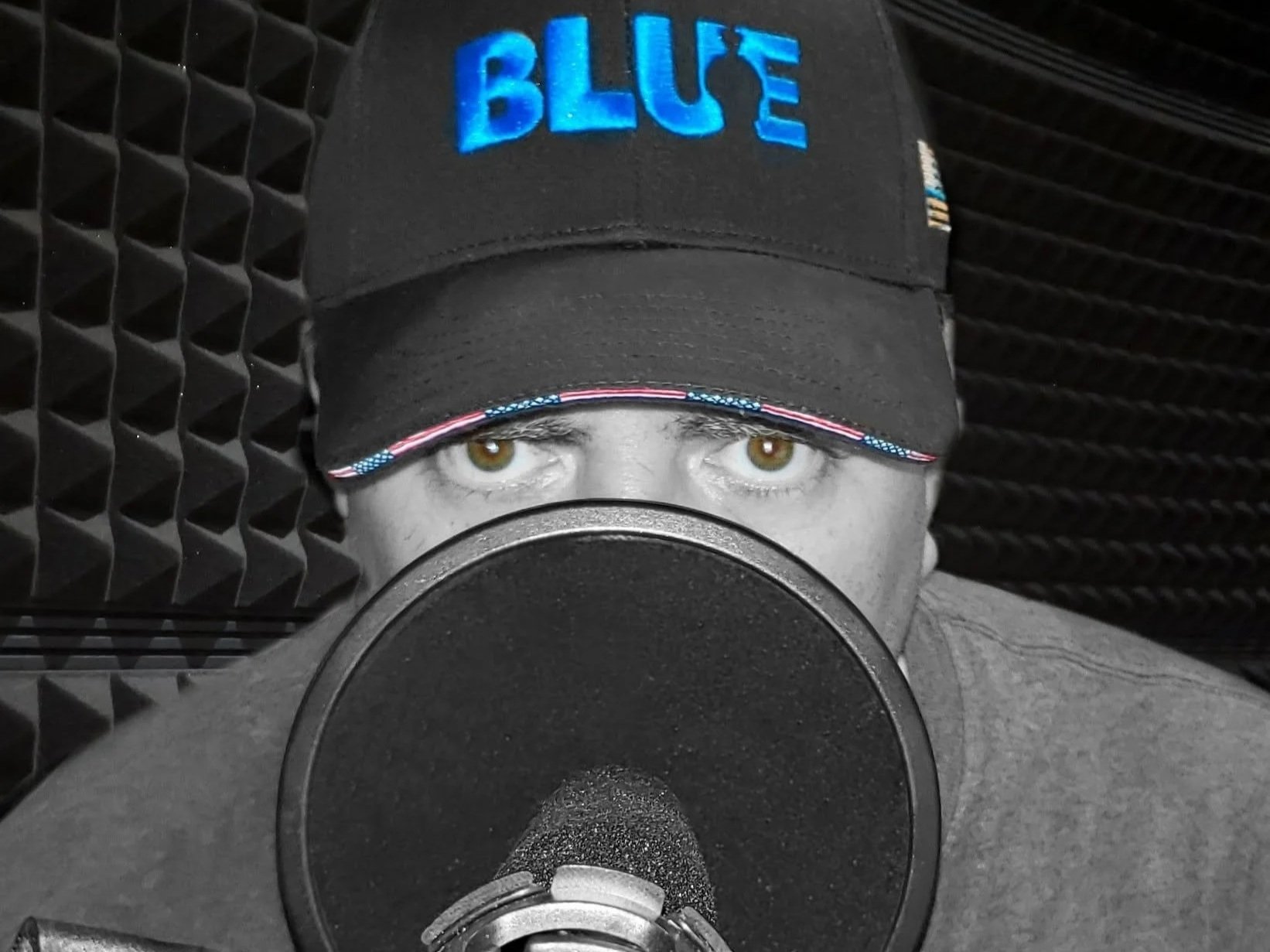
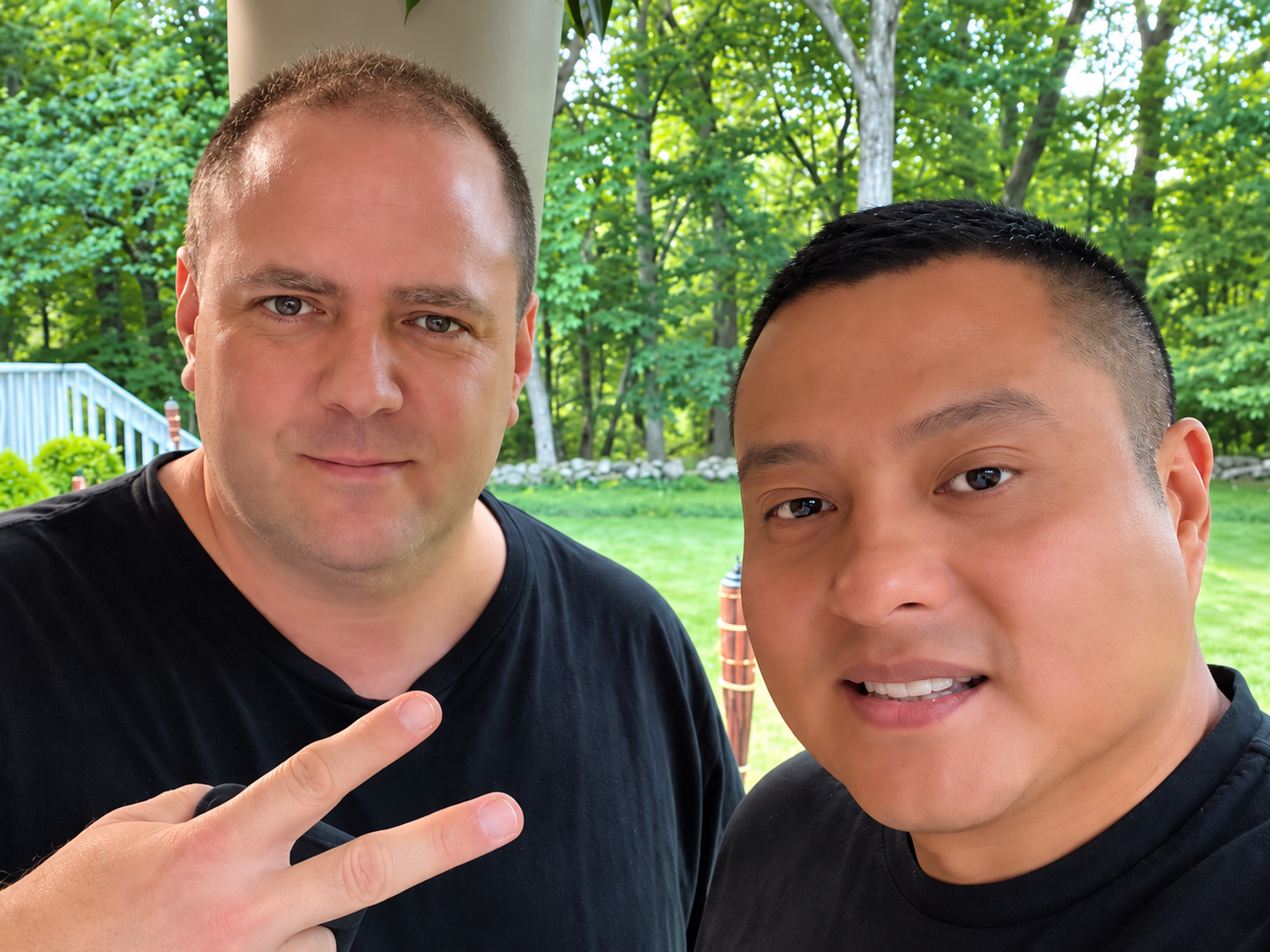

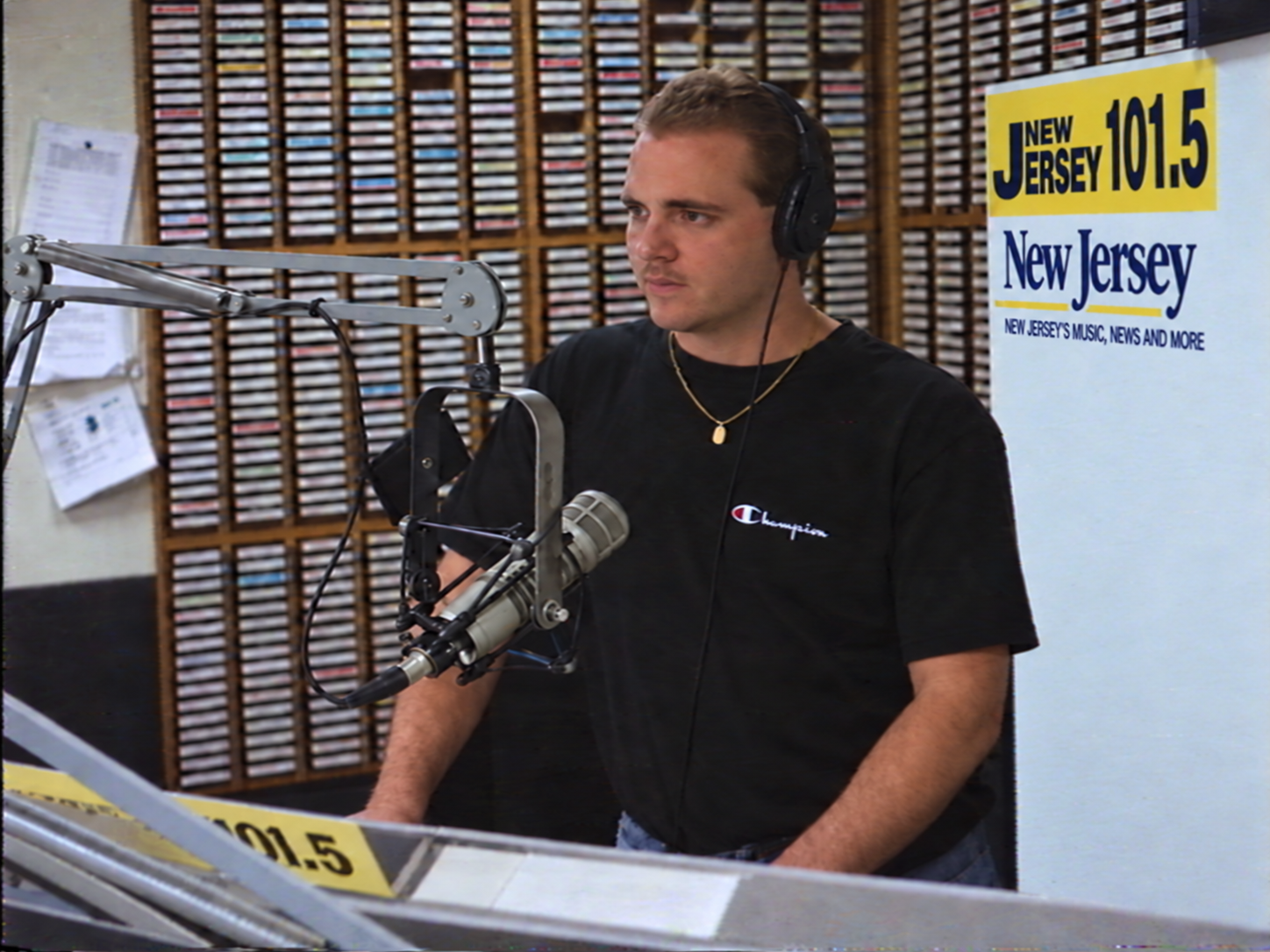
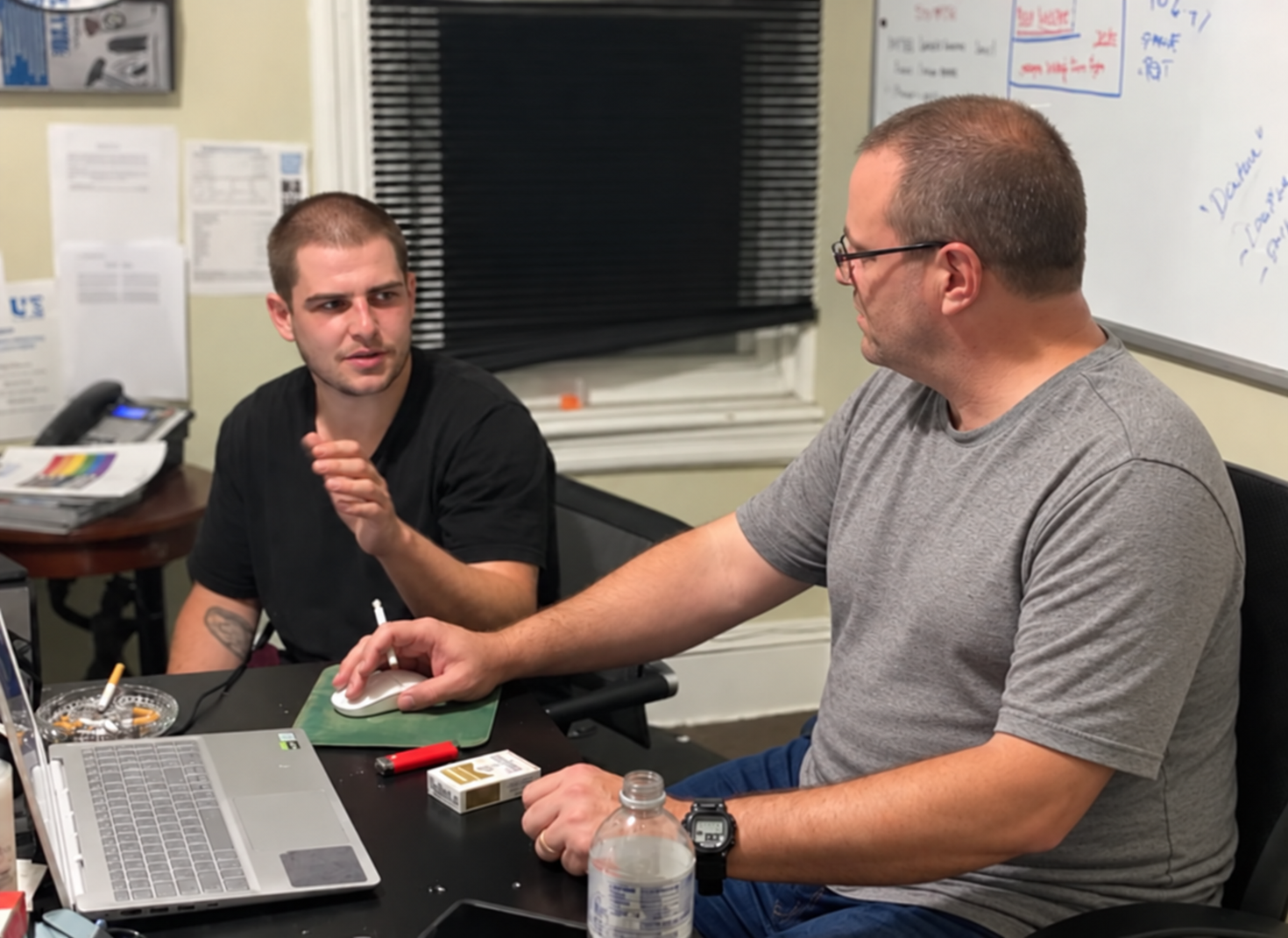
Before joining Blue, Joe had developed experience in radio and voiceover work during the late 1980s. He worked with New York/New Jersey radio stations and within the entertainment world. His voice could be heard in radio production and voiceover work, and he brought that knowledge of media, sound, and production to the Blue Magazine.
He became the person I could bring an idea to when I knew what I wanted to build but did not know how to make it happen. Whether it involved a website, a podcast, a radio project, digital files, or a new way to connect with the audience, Joe could take the idea, explain what was possible, and turn it into something real. His work has helped Blue Magazine move forward through changing technology and unexpected problems. He has kept the systems behind the magazine functioning, protected the work that matters, and responded when something needed to be fixed quickly. It is meticulous work, often invisible to the reader, but essential to the magazine.
Joe has also supported Moment of Silence and the wider work around Blue Magazine. His technical ability, media experience, business sense, and calm approach to difficult problems made him one of the people Blue could depend on. Joe Lemire did more than recover a website. He helped preserve Blue Magazine’s history and gave us the ability to keep building its future.
To Blue Magazine, Joe is not simply the person behind the technology, he is part of its foundation.
JACOB “BUBBA” HAMILTON - THE INSPIRATION BEHIND THE KID
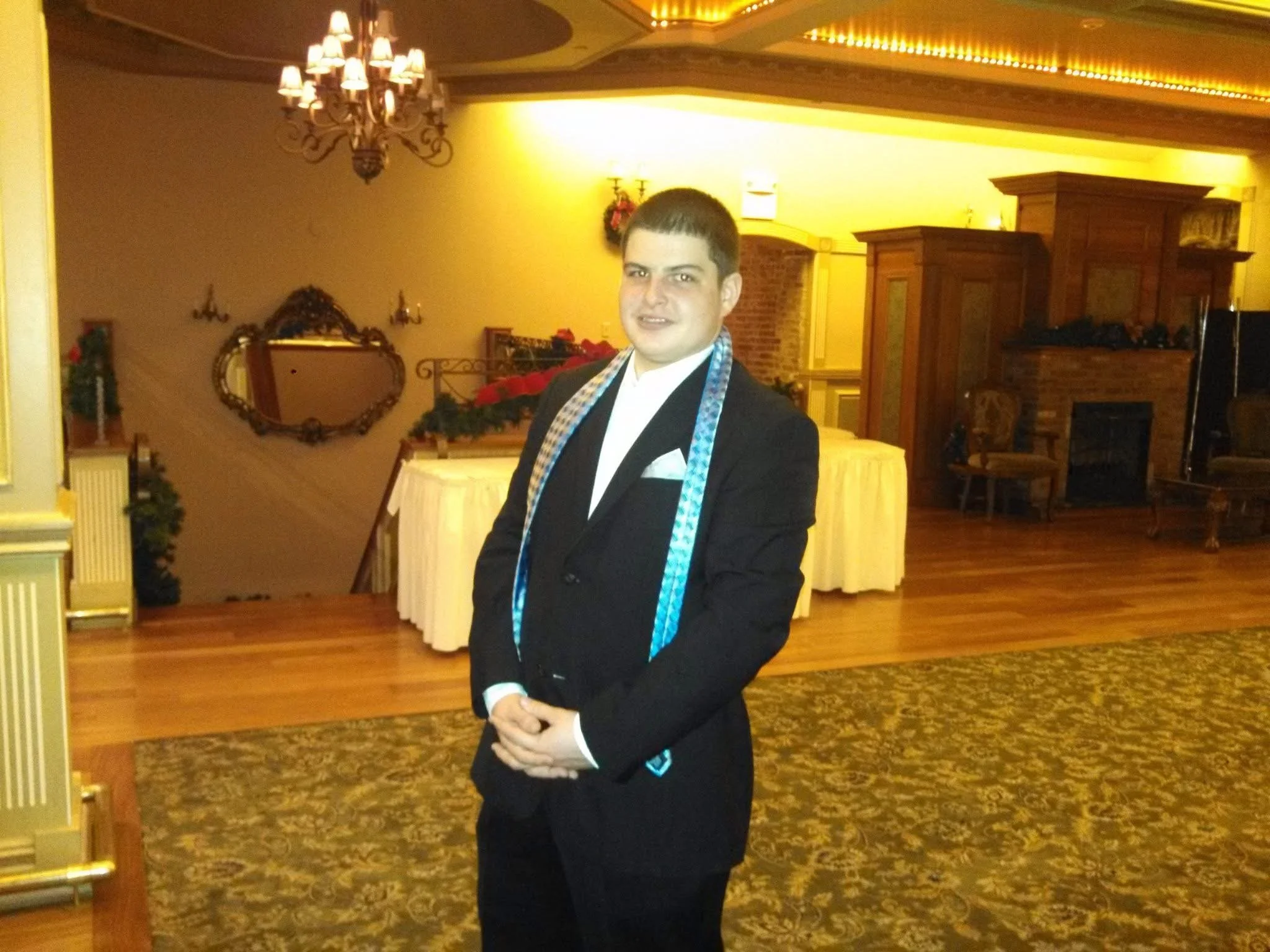
Jacob Hamilton was 15 years old when retired law enforcement officer Steve Olimpio brought him to the Blue Magazine office.
At the time, Steve held a leadership role overseeing school-security operations in Paterson. Through that work, he came to know Jacob at a high school that often served as a final opportunity for students who had experienced disciplinary or behavioral problems elsewhere in the district. Jacob had endured hardship growing up and faced the pressures of a challenging environment. He sometimes struggled to listen and remain focused, but he had always treated Steve with respect. Steve believed there was more to Jacob than the behavior others saw.
One day, he brought him to our office.
“Danny, I have this kid I’m trying to help,” Steve told me. “What can we do with him?”

We sat Jacob behind the microphones and interviewed him. It was less of an interview than a conversation about his life, his decisions and what his future could become. He felt comfortable with us, so we invited him back and continued inviting him back. Jacob began spending time at the office every week. He watched, listened and learned. We gave him responsibilities and expected him to meet them. Before long, he was operating our podcast studio, engineering recordings and handling production work. He helped publish online articles, supported different areas of the magazine and traveled with Blue to Ferguson, Baton Rouge, Dallas and other assignments across the country.
His name remains attached to numerous stories in the magazine’s digital archives. Although he did not necessarily write each one, he helped manage and publish the work. As Jacob matured, so did his responsibilities. He assisted with our work involving former Mayor Rudy Giuliani and was entrusted to drive Giuliani, United States Border Czar Tom Homan and Sheriff David Clarke. Those assignments were not given to him because anyone felt sorry for him. He earned them.
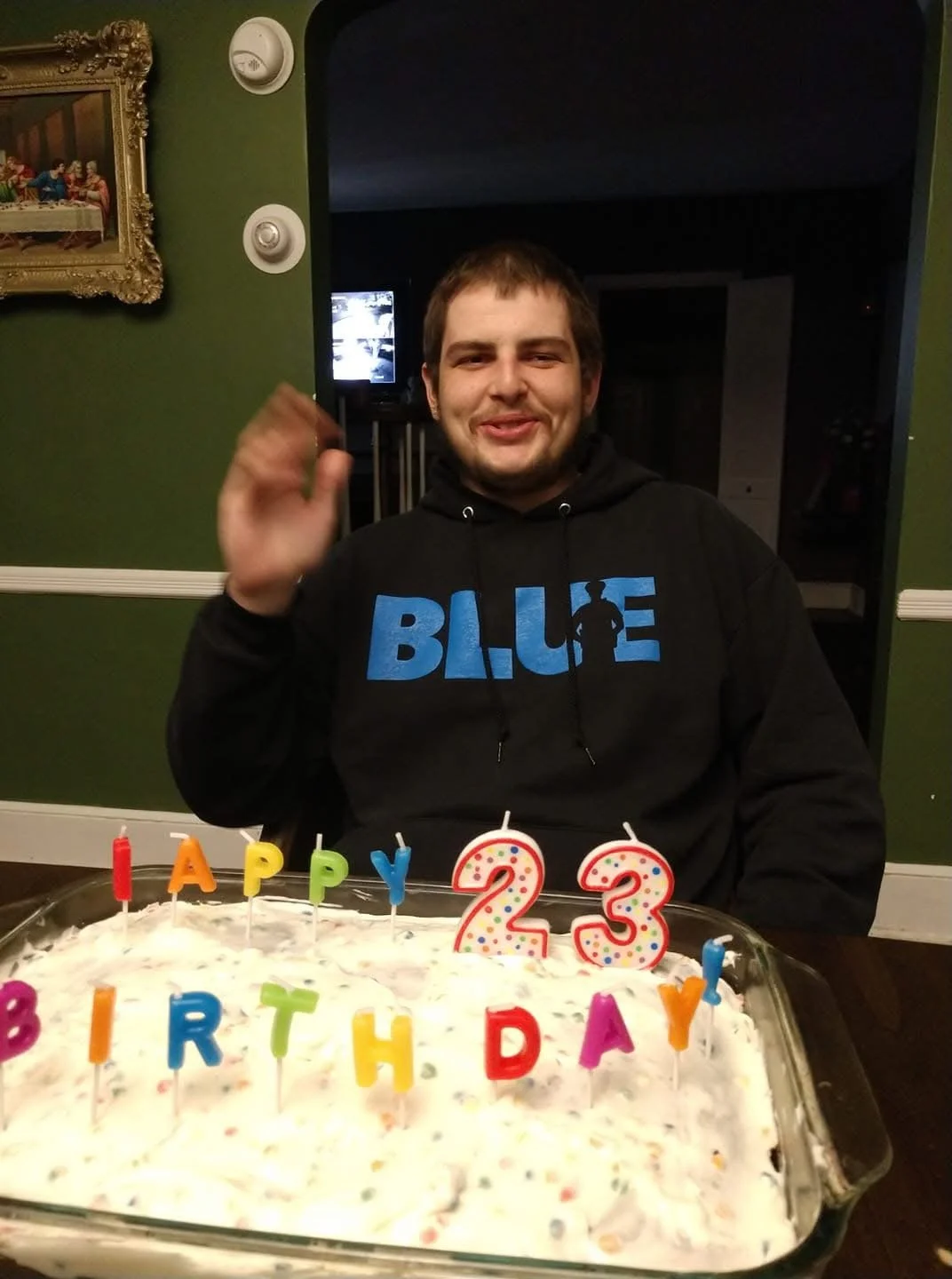
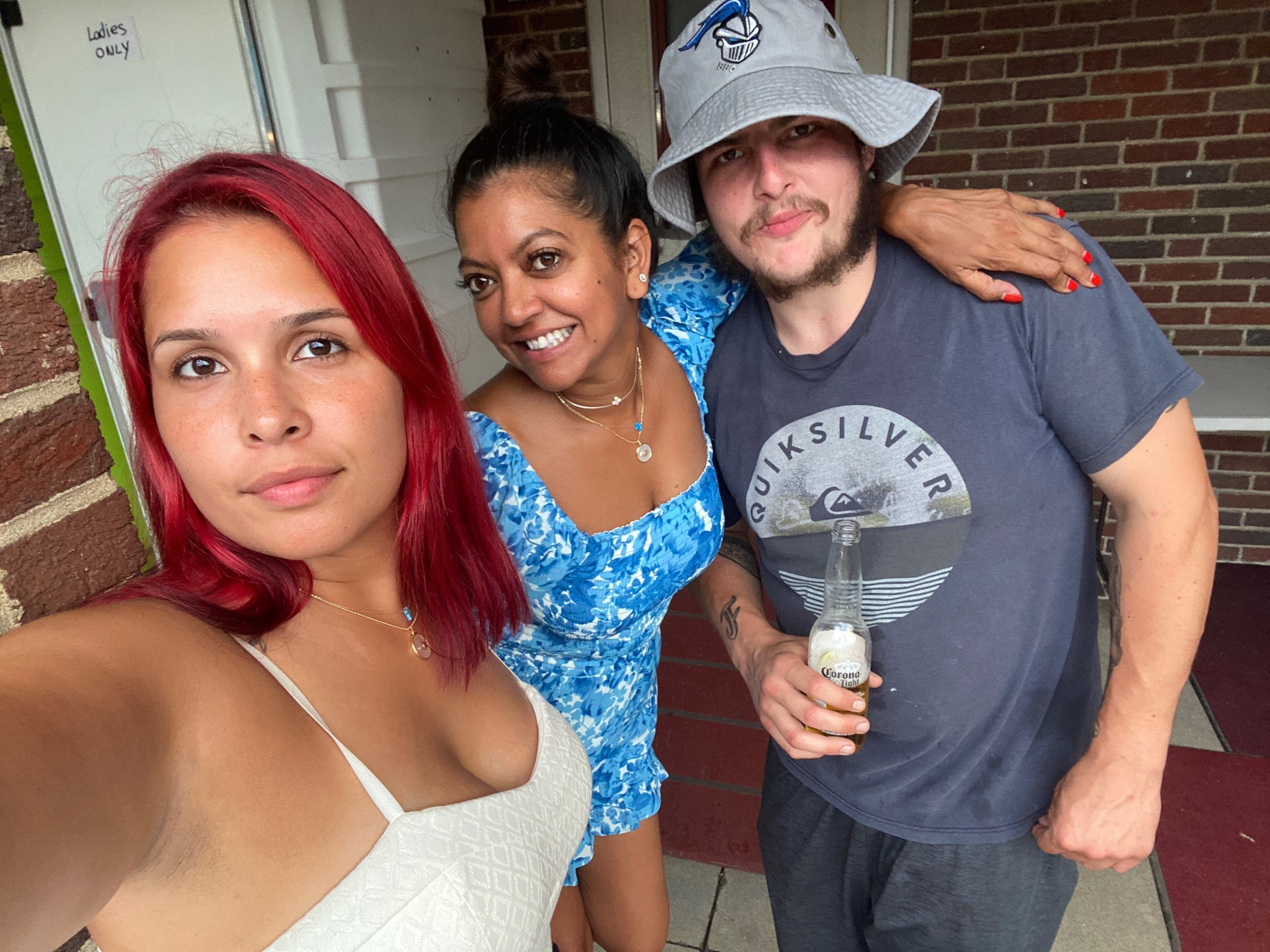
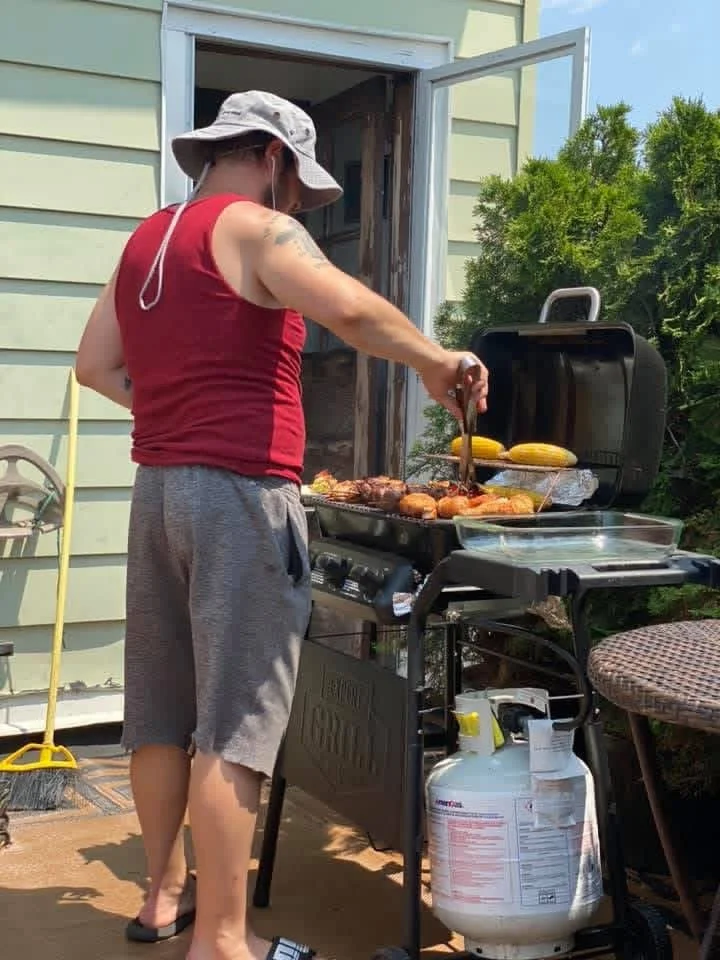
People still joke with me: “Danny, Paterson is predominantly Black and Hispanic, and somehow you and Steve had to save the white kid.”
We laugh, but the joke carries a serious truth. We did not see a white kid, a troubled kid or someone else’s problem. We saw a young person whose circumstances did not have to determine the rest of his life.
Today, Jacob is 30 years old. He studied mechanics and built a professional career as a mechanic with a major company. He also remains deeply involved with Blue Magazine and Moment of Silence, contributing to Santa Comes to Paterson, officer-suicide-prevention initiatives and programs serving young people and the community. Jacob eventually became family. To Steve and me, he is like another son. To the Blue Magazine family, he will always be Bubba, a young man who was given an opportunity, accepted responsibility and became an important part of what we built.
His story represents a side of Blue Magazine that never appeared on a cover. Law enforcement officers did more than attend events, give interviews and contribute articles. They invested their time, discipline and experience in a young man whose future could have taken a different direction. No single conversation changed Jacob Hamilton’s life. His direction changed because people stayed involved, held him accountable and believed in what he could become. Today, Jacob gives that same commitment to others.
CHICAGO: THE ABANDONED CITY
In 2018, the Blue team traveled to Chicago while shootings and homicides were placing the city under intense national scrutiny. The resulting cover, “Welcome to Chicago: The Abandoned City,” reflected what residents told the team: they felt forgotten by the institutions responsible for the safety and stability of their neighborhoods. Blue reported from Chicago’s South and West sides, remaining in the streets for two nights and speaking directly with residents and law enforcement officers. The purpose was to understand the violence through the experiences of those living and working inside it.

Residents described gang rivalries, drug addiction, poverty, untreated mental illness, stolen firearms and the loss of community structures that had once provided children with greater supervision. Gang markings identified contested territory, while street memorials marked where lives had been lost.
Frank Hopkins told Blue that his mother had been murdered inside her home during a robbery. He had also been robbed at gunpoint. Pastor Apostle Larry Tabron Jr. spoke with the team inside a funeral home where a person had been killed outside about one week earlier. Near a victim’s street memorial, Tanika Kirkpatrick described how adults had once shared responsibility for watching over neighborhood children. By 2018, she said, many families were afraid to let their children play outside.
During the overnight reporting, team members heard what appeared to be gunfire and encountered moments when their own safety felt uncertain. These were limited firsthand observations, not a judgment about everyone living in those communities, but they demonstrated how quickly conditions could become dangerous.
The team also spoke privately with several Chicago police officers. Their concerns were consistent. They believed high-violence areas needed more officers, that existing personnel were being asked to cover too much territory and that rank-and-file officers needed stronger support from department leadership and city government.
The officers also believed the political narrative surrounding law enforcement often placed them under suspicion before the facts of an encounter were known. They accepted the need for accountability but said widespread distrust damaged morale, weakened relationships with residents and made an already dangerous assignment more difficult. In neighborhoods confronting persistent gun violence and retaliation, insufficient staffing increased the risks to officers and the people they were responsible for protecting.
Blue found residents who wanted violent offenders and gang leaders held accountable, and officers who wanted the personnel and institutional support necessary to protect those neighborhoods. The reporting also showed why enforcement alone could not resolve a crisis shaped by addiction, poverty, mental illness and weakened family and community structures. “The Abandoned City” documented Chicago beyond the national headlines by listening to the people confronting its violence every day.
CATHERINE “CATHY” ANGEL

Steve Olimpio introduced Catherine “Cathy” Angel to Blue Magazine when she was preparing for a career in law enforcement. She had recently taken a New Jersey Civil Service police examination, but her phone rang during the test and she was disqualified. Because the examination was offered on a two-year cycle, she had to wait for another opportunity.
What initially felt like a damaging setback became an unexpected period of preparation. Cathy joined Blue Magazine approximately two years before entering the profession. Steve mentored her, as did officers throughout the magazine’s network. She listened to their experiences, attended events and learned how officers spoke about the work when they were outside official settings.
Cathy also became a journalist. She prepared for interviews, traveled with the team and learned how to ask difficult questions without losing the trust of the person answering them. One of her most sensitive assignments involved interviewing an officer with terminal cancer as he approached his final day of service. She allowed him to speak about the job, his illness and what leaving the profession meant to him without turning his condition into spectacle.
Her later assignments included an interview with the NYPD Health and Wellness Section about suicide, trauma, peer support, sobriety and resilience. She also led Blue Magazine’s final interview with New Jersey Governor Phil Murphy, questioning him about COVID, crime, healthcare and law-enforcement mental health. Her work extended from deeply personal conversations with officers to direct exchanges with senior government officials.
Cathy entered the police academy during COVID and joined the Paterson Police Department in 2020. By the time she arrived, she had already spent years around officers, stories and issues that recruits rarely encounter before entering the profession. That experience did not replace academy training or street work, but it gave her context for both.
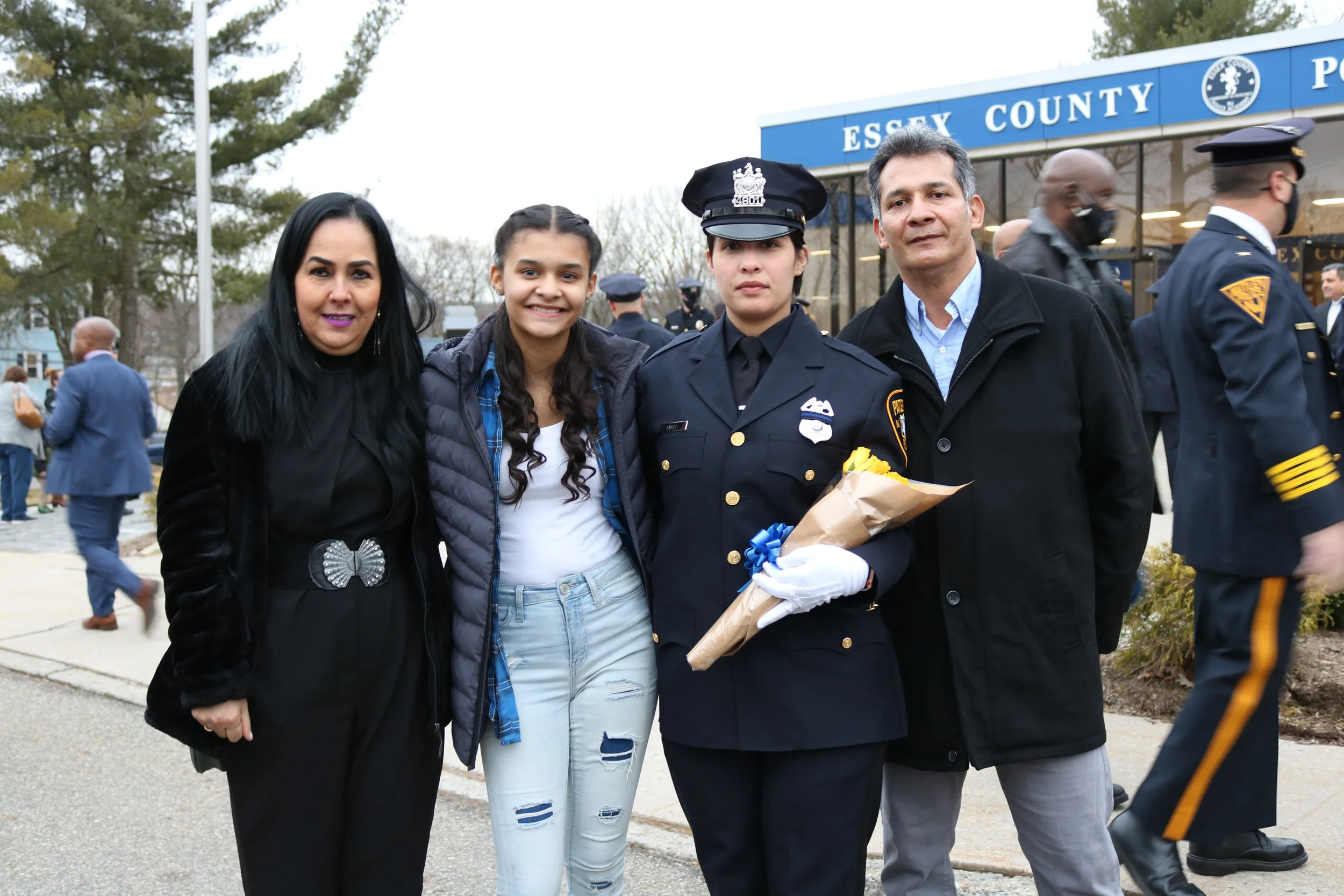
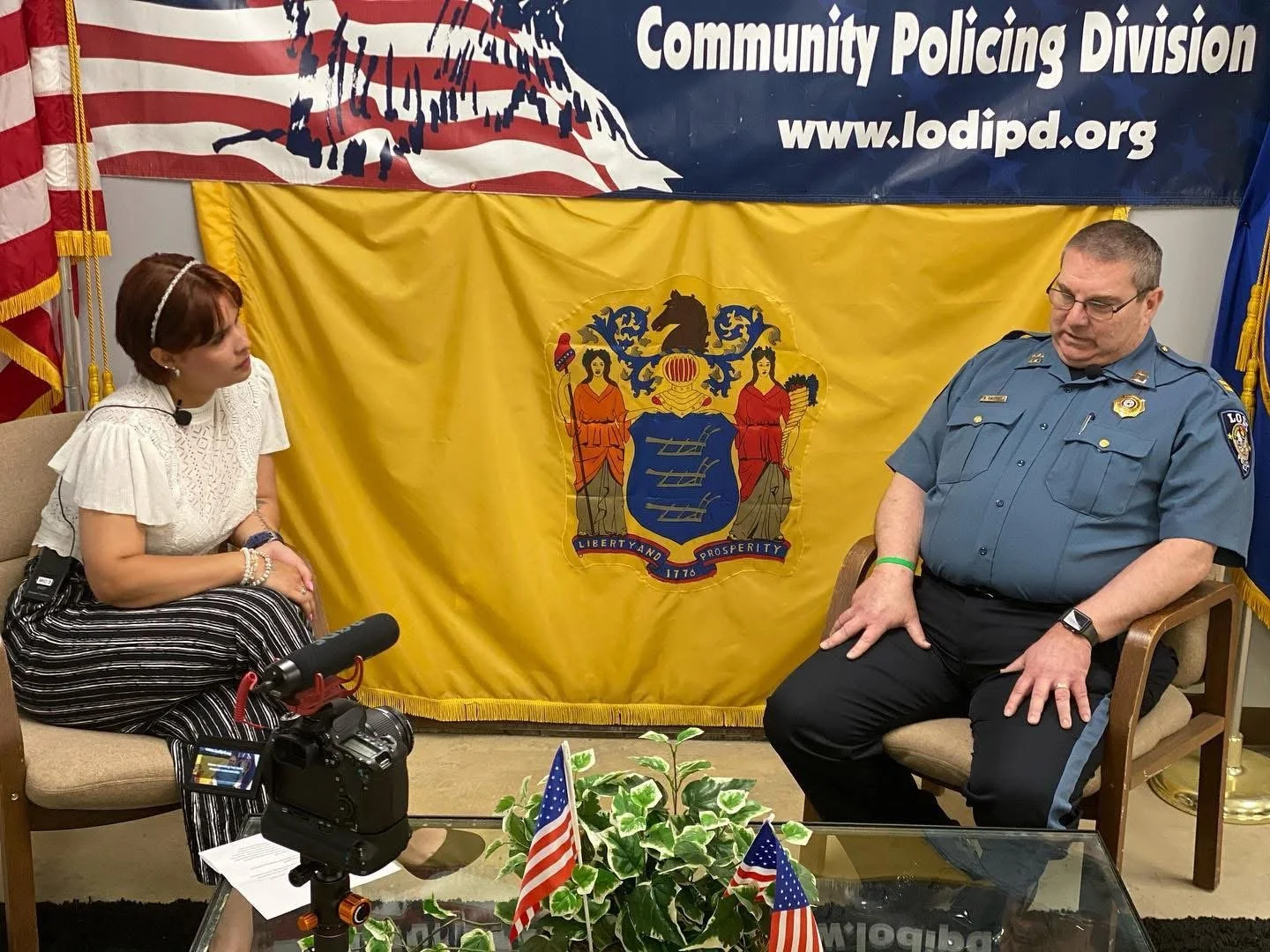
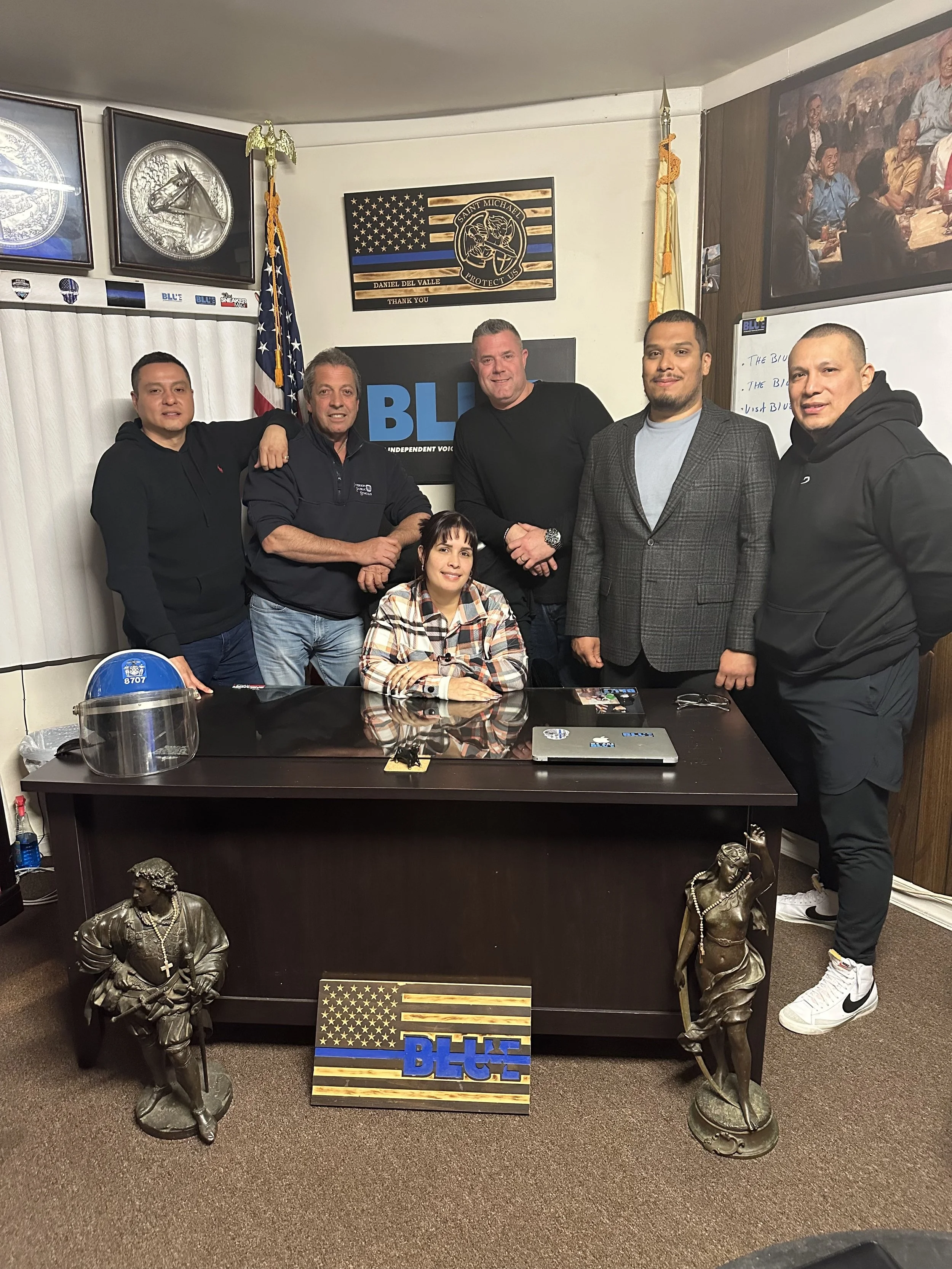
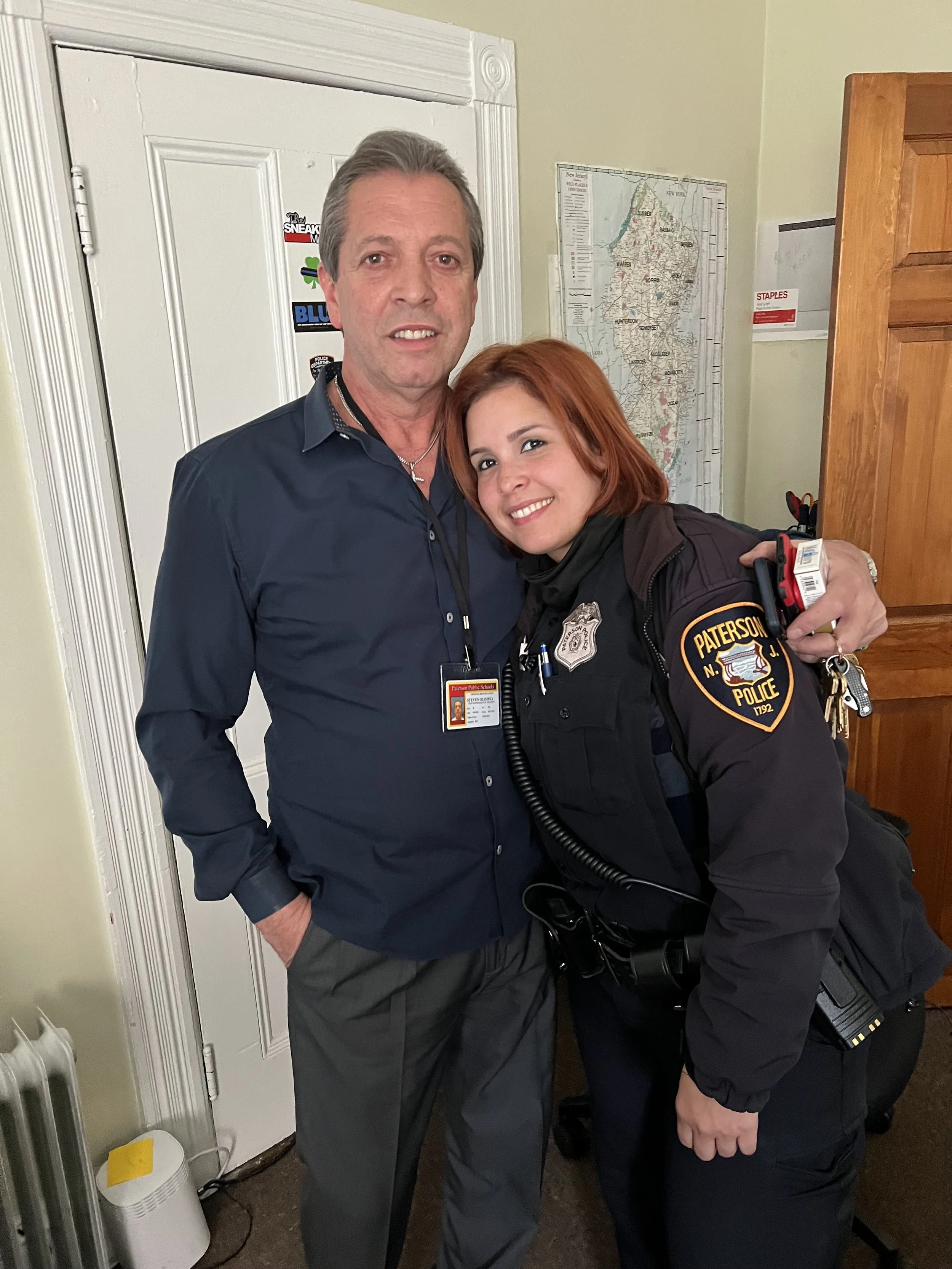
Becoming an officer did not end her responsibilities with Blue Magazine. She continued conducting interviews, assisting Moment of Silence and helping coordinate major assignments. Her behind-the-scenes work also contributed to Blue Magazine’s interview with U.S. Border Czar Tom Homan at the White House. Cathy now serves on the executive board of Paterson Police PBA Local 1 and as a trustee of the New Jersey Honor Legion, which recognizes officers who have faced grave danger and sacrifice in the line of duty. Those responsibilities reflect the confidence others have placed in her beyond her daily assignment.
Cathy became one of the people who held the Blue Magazine office together. I would trust her in any room because she prepares carefully, listens closely and remains steady when the subject becomes difficult.
CHRISTIAN BONILLA, “CHRIS THE INTERN”
Christian Bonilla joined Blue Magazine as an intern. The nickname “Chris the Intern” remained long after it stopped describing the responsibility he carried.
Chris developed into Blue Magazine’s principal behind-the-scenes video producer and an important part of its social-media operation. He transported and assembled equipment, recorded interviews, produced videos and documented events, travel, podcasts, community programs and the work of Moment of Silence. Readers saw the finished interview; Chris handled much of what had to happen before there was anything to watch. For more than five years, he accompanied the team on major assignments in New Jersey, New York, Washington, Chicago, Florida and elsewhere. He entered the White House with Blue Magazine, documented interviews with national figures and captured moments the magazine would never be able to recreate.
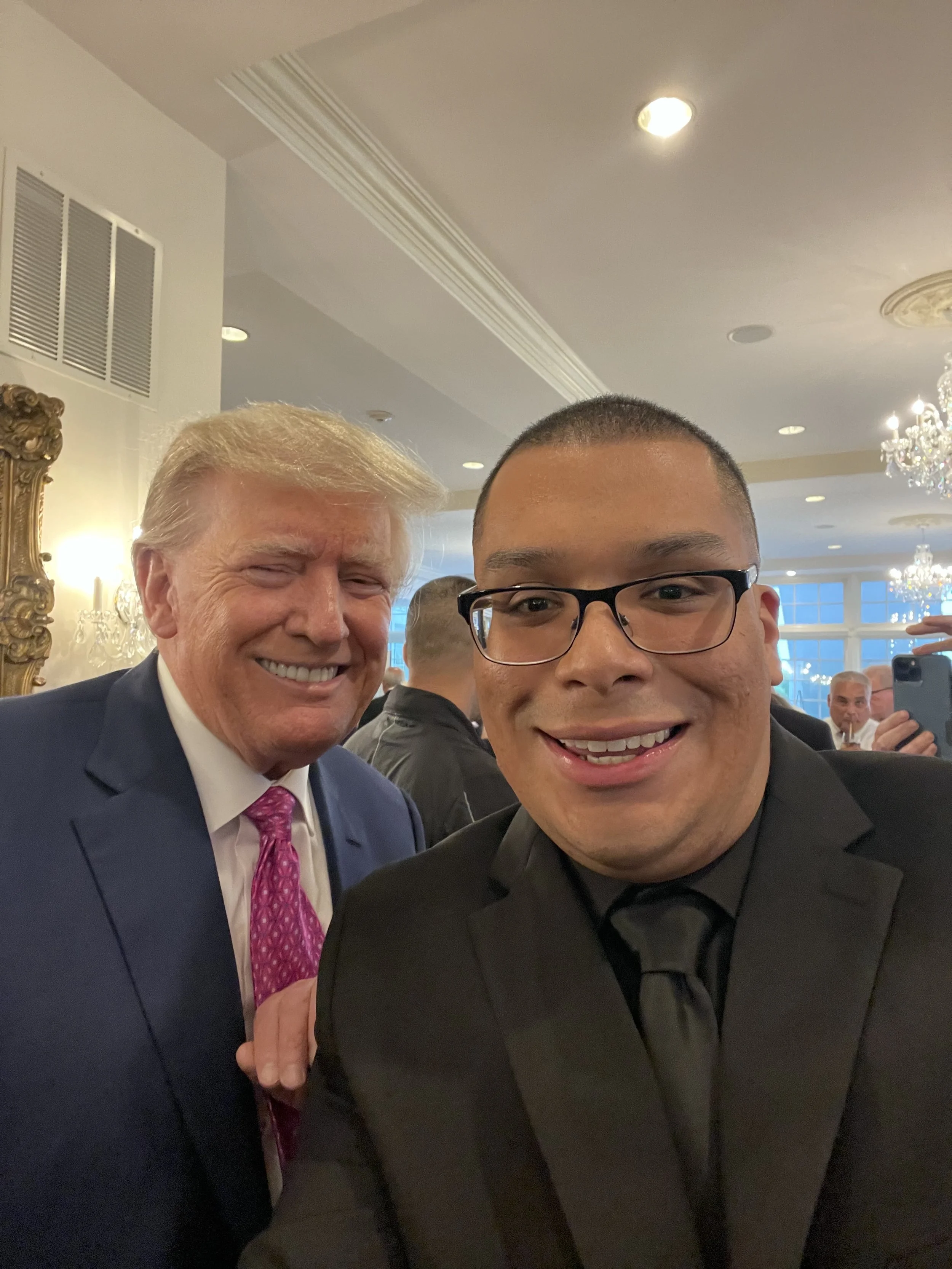
Production work carries a particular kind of pressure. A microphone or camera can fail minutes before an interview begins, leaving everyone waiting for a solution. Chris learned to remain calm, identify the problem and keep the production moving. He was called upon so often because people trusted him to solve whatever went wrong.
His commitment extended beyond journalism. Chris helped with Santa Comes to Paterson, community outreach and disaster-relief work. He carried equipment and supplies, worked irregular hours and went where the assignment required. He was not a law-enforcement officer, but officers came to respect him because he respected their work and consistently showed up for it.
The humor surrounding “Chris the Intern” became part of office life, but his contribution was serious. A substantial part of Blue Magazine’s video archive exists because he was behind the camera. Christian Bonilla did not merely record Blue Magazine’s history. He became part of it.

MENTAL HEALTH AND SUICIDE
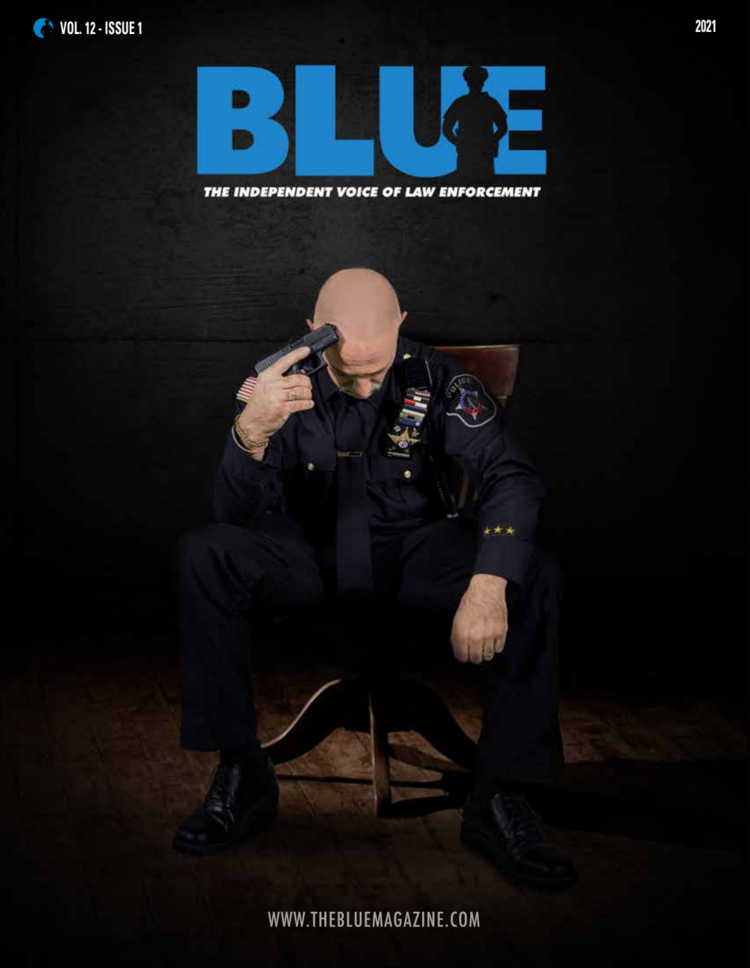
Throughout Blue Magazine’s history, law enforcement officers contacted us almost every week. Some wanted to write, share information, suggest an investigation or introduce us to someone whose story deserved attention. Others simply needed someone outside their department whom they could trust.
Those relationships exposed us to a crisis affecting law enforcement across the country. Officers were struggling with trauma, anxiety, depression, addiction and suicidal thoughts, often without knowing where they could speak freely. Some did not trust their departments, unions or colleagues. Others feared that admitting they were struggling could lead to an investigation, a fitness-for-duty evaluation, the loss of their firearm or the end of their career. Law enforcement officers repeatedly encounter death, violence, abused children, serious accidents and families experiencing the worst moments of their lives. The effects accumulate. Yet the profession often expects officers to absorb everything.
That contradiction can be dangerous. Officers are expected to remain mentally prepared to carry a weapon and make decisions affecting life and death. Some therefore believe that asking for help will cause others to question their fitness for duty. Instead of speaking, they isolate themselves or turn to alcohol and other destructive ways of escaping what they have seen.
Blue Magazine became a place where some officers felt safe enough to talk. What we learned through those conversations helped define the purpose of Moment of Silence. When I was given the opportunity to lead the organization, I wanted it to become a trusted path to support outside the ordinary chain of command—a place where officers could speak honestly, receive guidance and reach professional help without shame.
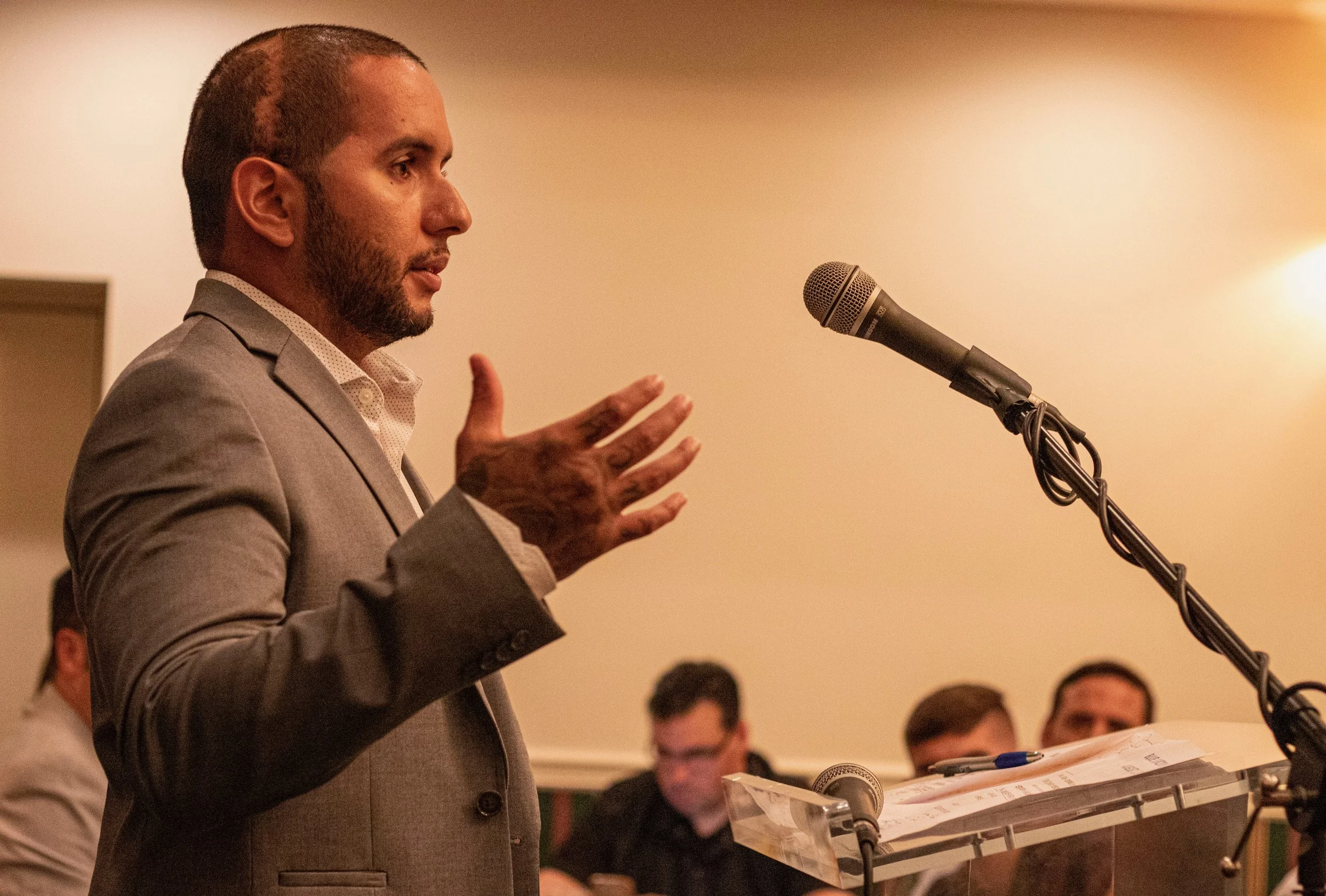
That mission became personal after a lieutenant from my department died by suicide. He was someone we respected, and his death affected me deeply. It forced me to confront how much pain can remain hidden behind a uniform, a rank and a familiar face. Another officer I had known through BLUE once came to my office and told me he was struggling. We spoke for a long time. I urged him to seek immediate help, but he said he was not ready. Concerned about him, I called someone I trusted and asked that person to keep an eye on him.
Approximately one month later, the officer died by suicide.
For years, I replayed that conversation. I questioned whether I should have pushed harder, made another call or taken a different action. I eventually had to accept that I responded based on what I understood at the time, but I have never stopped carrying that loss. It taught me that concern must be followed by continued contact and that no one should try to manage a suicidal crisis alone.
Moment of Silence does not claim to have every answer. Its work begins with something more basic: caring enough to notice, asking the difficult question, listening without judgment and remaining present long enough to connect someone with qualified help. No organization can save everyone, but reaching even one person can change the course of a life. We remember the men and women in law enforcement who died by suicide for the lives they lived and the service they gave—not solely for the circumstances of their deaths. Their families deserve compassion, privacy and continued support long after the ceremonies and condolences have ended.
If someone trusts you enough to call, answer the damn phone. That is the promise behind Moment of Silence: Never give up. Stay in the fight. The officers we lost explain why the mission began, and Erica Vicente’s story shows why it continues.
ERIKA BLUE: THE COURAGE TO COME FORWARD
Erika Vicente, known to many of us as Erika Blue, is part of this final issue because her experience brought the purpose of BLUE and Moment of Silence into clear focus. Law enforcement is larger than any one assignment. It includes officers working the street, protecting courthouses, serving in jails and prisons, investigating cases, and carrying out responsibilities the public rarely sees. Every role can bring pressure, exposure, and emotional weight. Much of that burden is carried quietly, long after a shift ends, and it can leave someone feeling alone when they most need another person to understand.
Working closely with law enforcement showed us how serious that burden could become. When someone came to us scared, overwhelmed and looking for direction, the responsibility was immediate: listen closely, take the situation seriously and help that person find the right next step.
One late night, Erika came to my office and spoke honestly about what she was facing. I could see she needed help, and she knew it too. We had a long conversation built on compassion, patience, and respect. Erika showed courage by being open about how she felt and what she had been carrying. A few days later, just before Christmas, she got on a plane and entered treatment. She remained there for more than 30 days. Blue Magazine also commends the administration of the Paterson Police Department and Paterson PBA Local 1 for the support they gave Erika during this critical period. Their response reflected what police leadership and a union should provide when an officer needs help: appropriate care, respect, and a path back to health. Erika’s recovery was her own achievement, but her story also shows the difference a department and union can make when they recognize that protecting an officer includes helping that officer get well.

Erika committed herself to recovery and returned to work. While she was still serving as an officer, she began speaking openly about her experience to hundreds of law enforcement officers. She helped people understand that acknowledging a struggle and seeking support are not signs of weakness. We recognized her at Night to Unite for the courage and leadership she showed by coming forward. She later retired from law enforcement and is doing well today. Her involvement did not end with her own recovery. Erika became an active part of Moment of Silence, joining BLUE in community work, photo shoots, reporting trips, and outreach. Her voice carried weight because she spoke from experience. Officers who were struggling could see someone who had asked for help, returned to duty, and chosen to use that experience to encourage others.

Erika is one of many officers whose experiences have shaped the mission of BLUE and Moment of Silence. Her story remains especially clear to me because it showed, in real time, what can happen when a person is met with compassion, accepts help and is given the chance to move forward. It gave purpose to the long hours and reminded me that our efforts can reach people in ways we may never fully see.
That is why Erika belongs in the story of BLUE. Her place is not defined only by a difficult chapter. It is defined by what she did afterward: she returned to serve, spoke plainly about recovery, and gave other officers a reason to believe that there is a way forward.
Night to Unite, 2019
Night to Unite was a collaboration among The Blue Magazine, Moment of Silence, and Brothers Before Others. It became one of the largest events we ever organized. Steve Olimpio represented the mission of Moment of Silence. Michael Burke, Joshua Oliveri, and the Brothers Before Others team brought their organization, relationships, and commitment to the law enforcement community. Blue brought the network built over years.

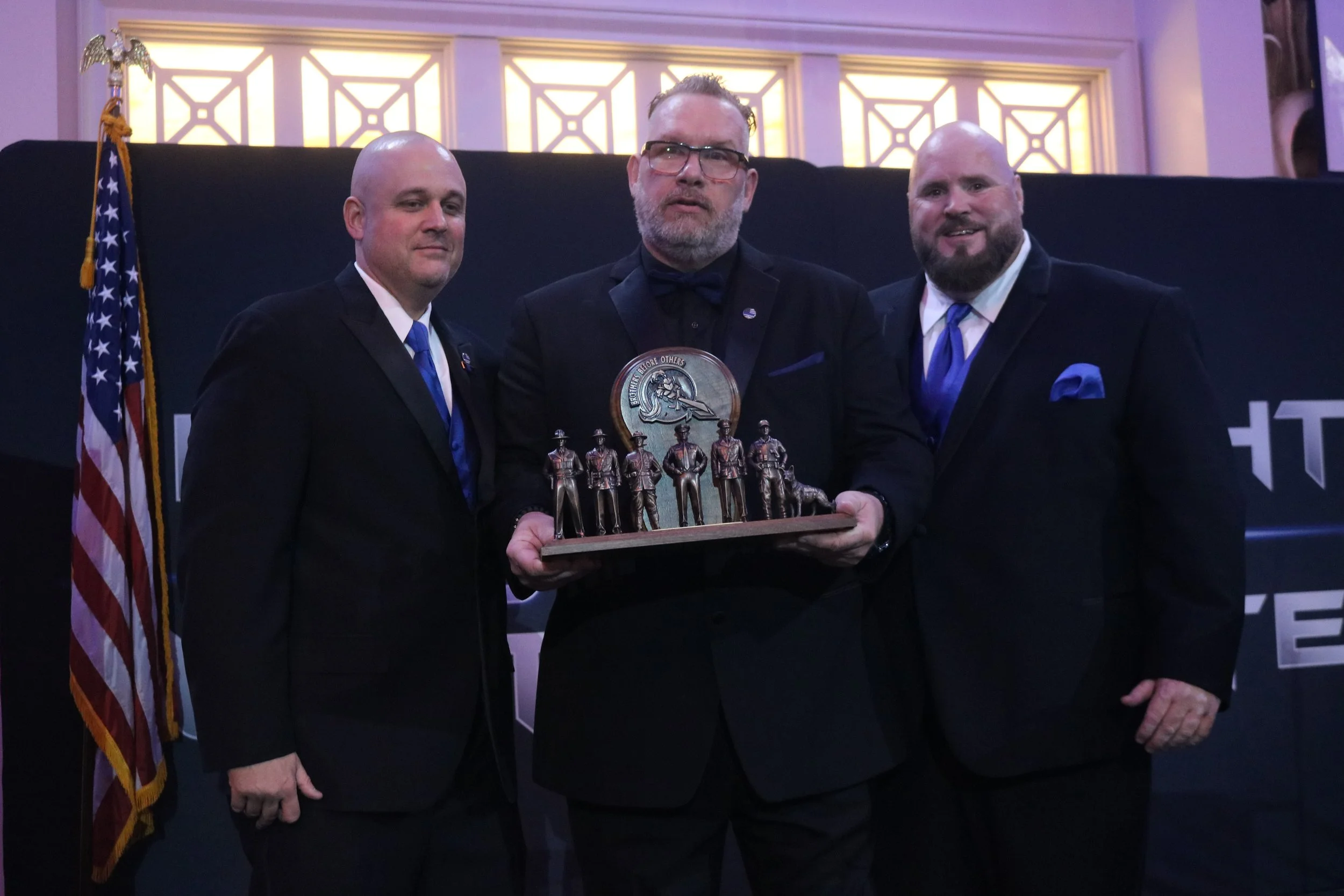

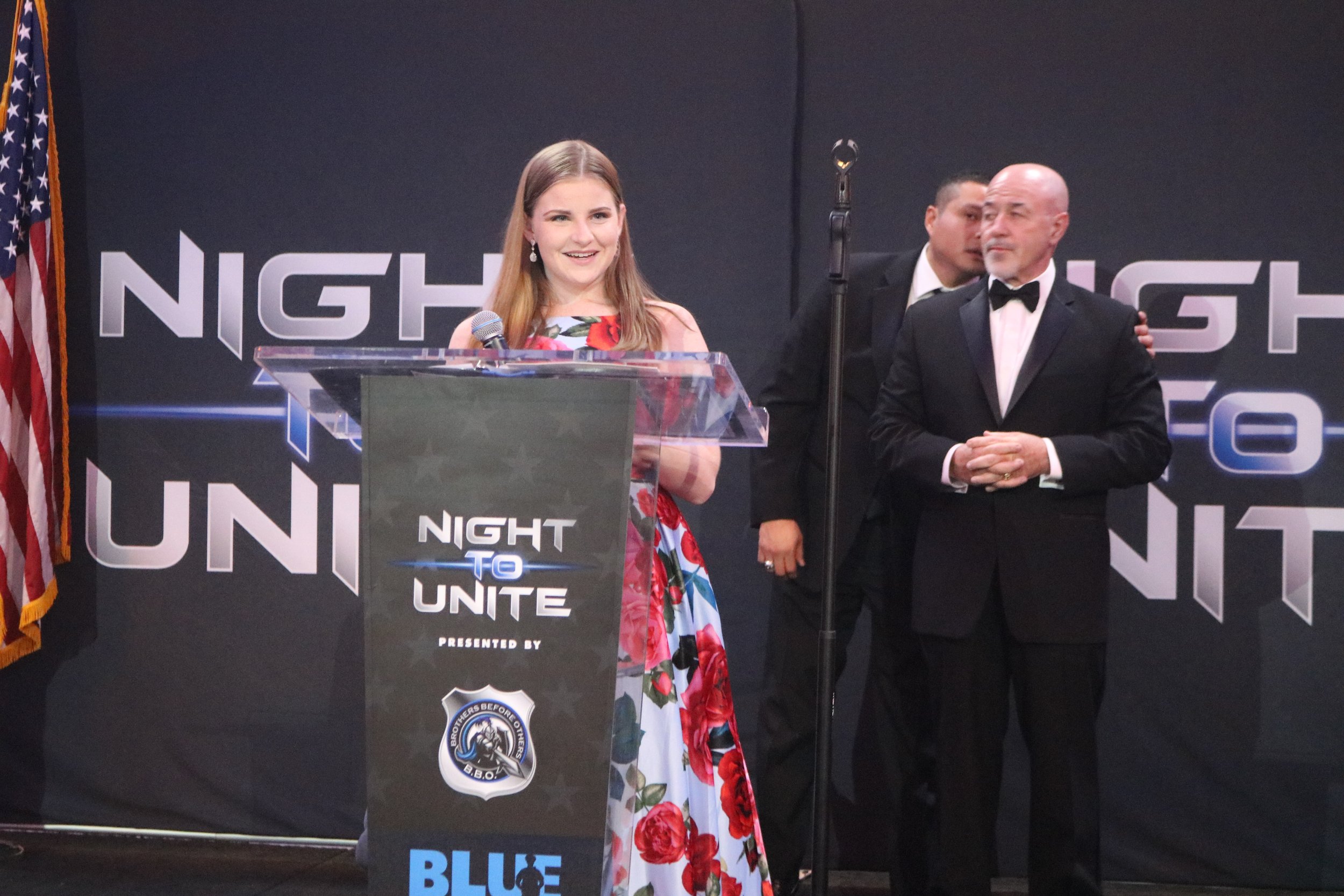
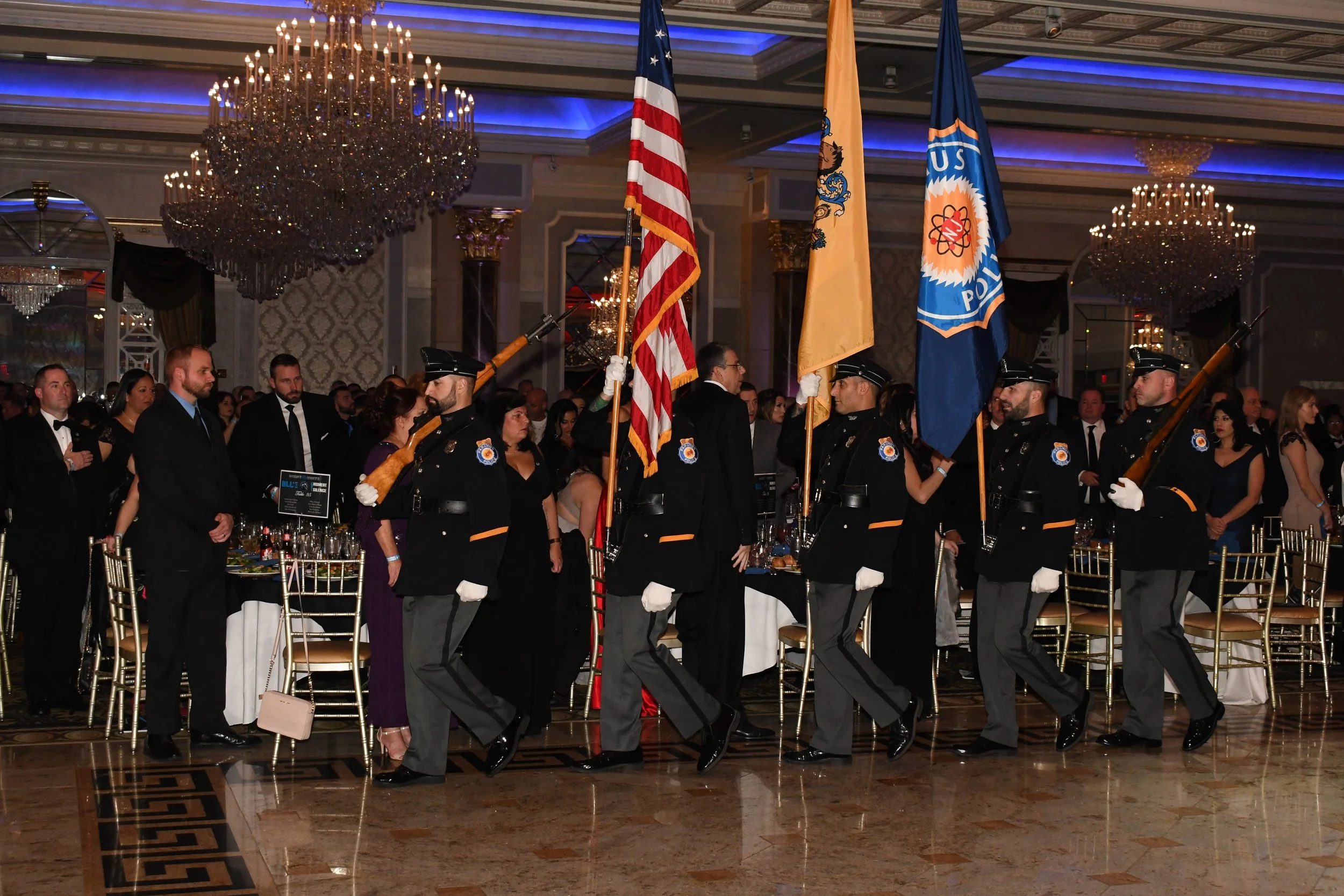



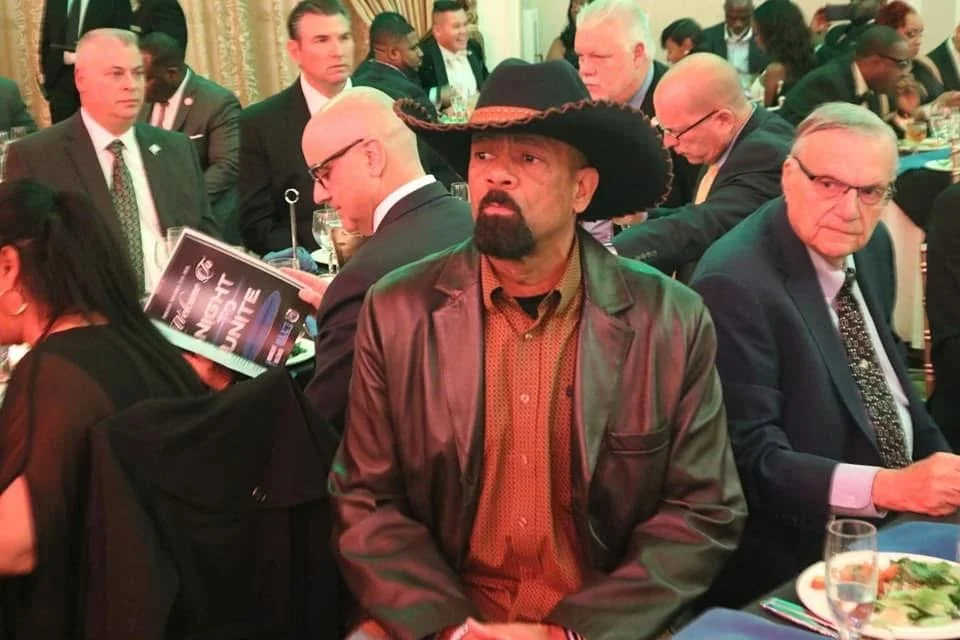
On November 21, 2019, more than 900 people gathered at The Venetian in Garfield, New Jersey. Representatives from Police Benevolent Associations and the Fraternal Order of Police joined officers, families, supporters and organizations that did not ordinarily share the same room came together around a common purpose.
Commissioner Bernard Kerik served as Master of Ceremonies. Tom Homan received the Man of the Year Award. Michelle Malkin was recognized as Woman of the Year. Genevieve “Ginger” Jones received the Brothers Before Others Member of the Year Award, and Megan O’Grady, founder of Blue Line Bears, received the Humanitarian Award.
NYPD PBA President Pat Lynch received the Steven McDonald Lifetime Achievement Award. Steven’s widow, Patti Ann McDonald, and his son, Conor McDonald, were present for that recognition. Sheriff David Clarke, Sheriff Joe Arpaio, John Feal, and Jon Stewart attended. Jonny Castro contributed portraits honoring American heroes and fallen officers, while artist Scott LoBaido contributed his work.
But Night to Unite was not simply an awards program.
Steve Olimpio spoke about Blue Suicide, and Erica Vicente shared her personal experience. Their words reminded everyone in the ballroom why Moment of Silence existed and why the conversation could not end after the event. What happened that night showed what was possible when the law enforcement community stopped operating as separate organizations and stood together.
BLUE BEEFS BOXING
On February 8, 2020, The Blue Magazine, Moment of Silence, Brothers Before Others, and True Warriors Boxing came together in Paterson for Blue Beefs Boxing, a sold-out fundraiser benefiting local youth.
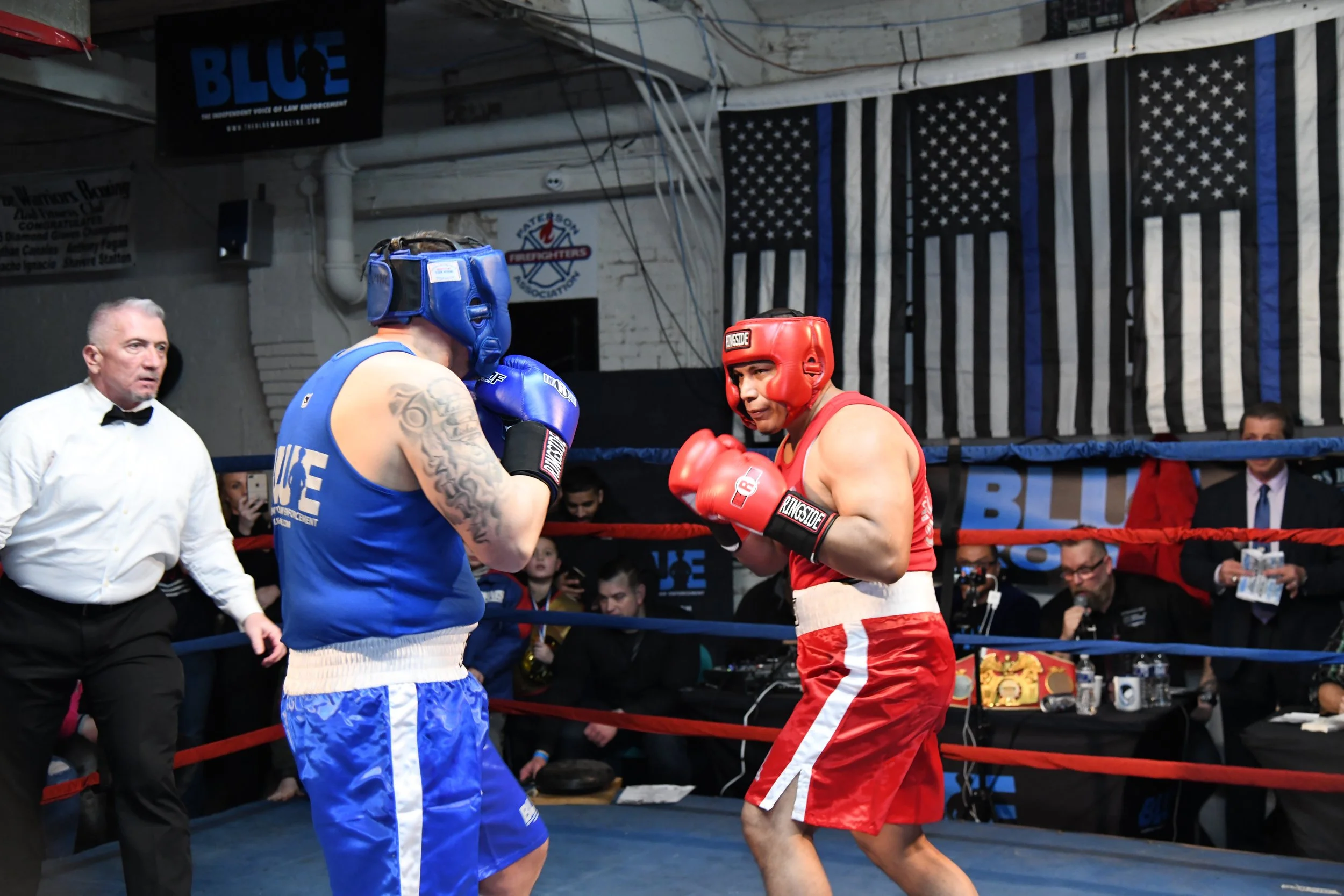
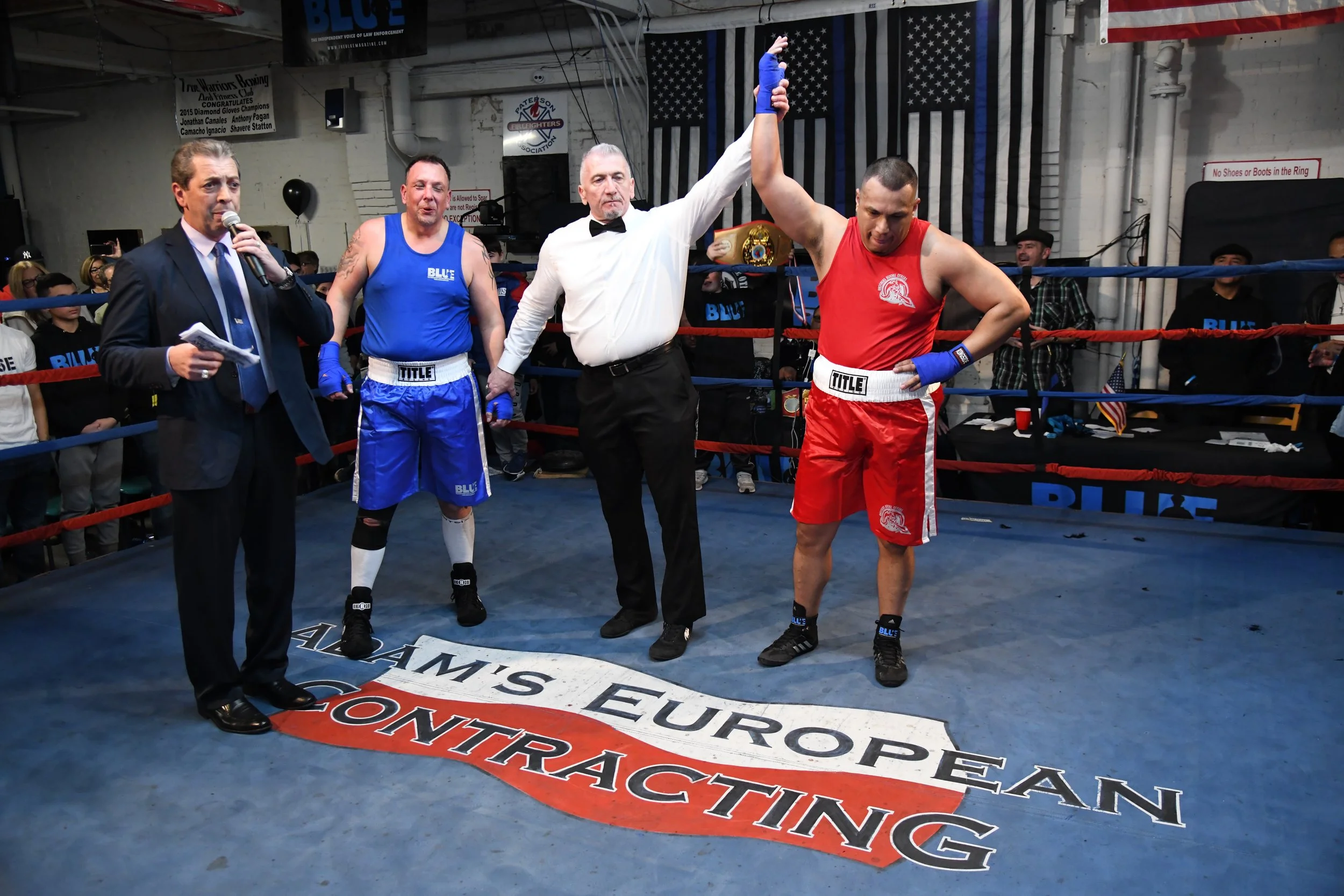

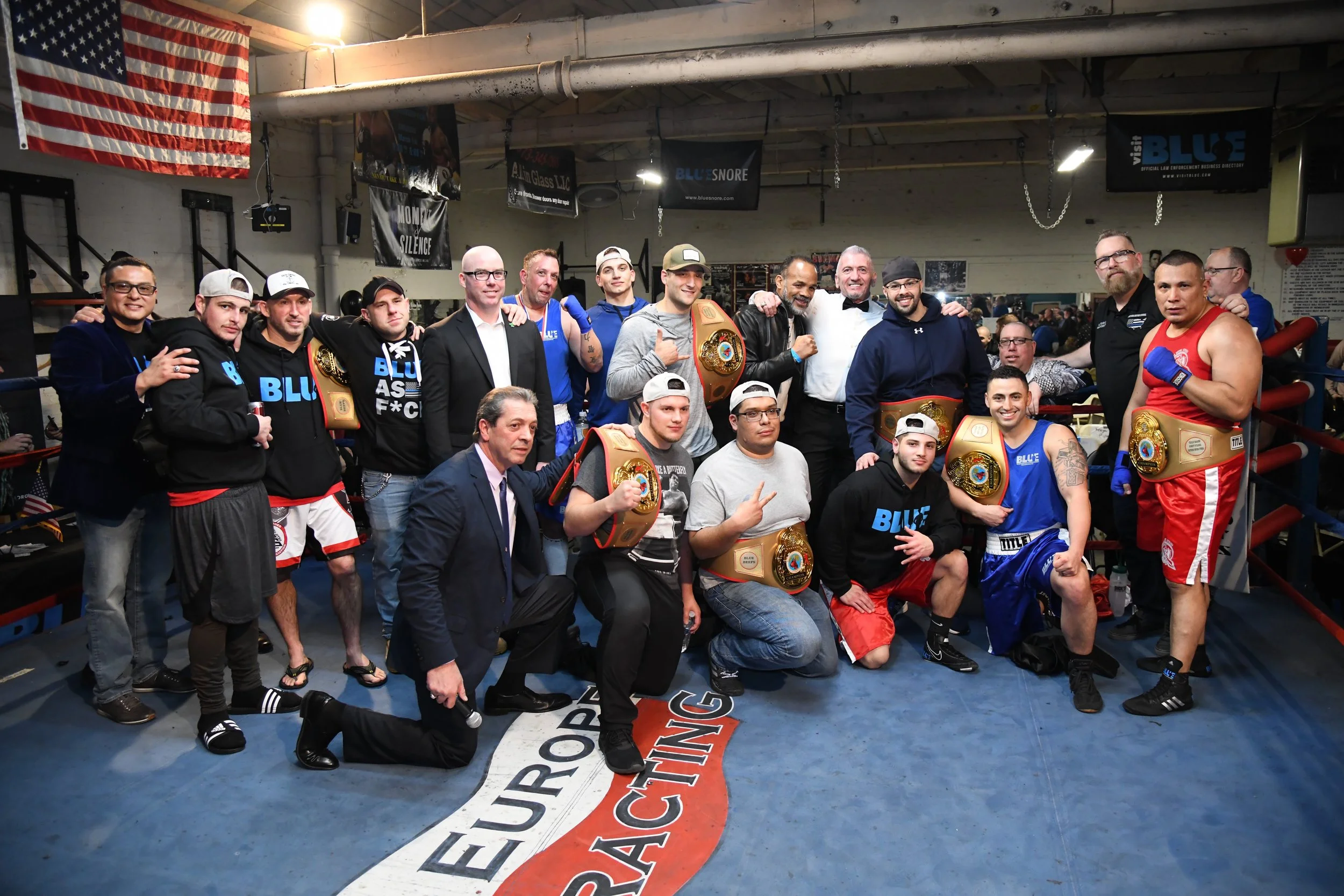
True Warriors, operated by Jose and Ramona Concepcion, is a nonprofit gym that uses boxing to give young people discipline, structure, and opportunity. Blue and Moment of Silence helped secure sponsors, create championship belts, and assemble a fight card featuring people connected to law enforcement and the Blue community. All 320 available tickets were sold, with more than 1,000 additional viewers watching by livestream.
Michael Burke and I provided live commentary. Steve Olimpio served as ring announcer. Officers and civilian volunteers coordinated fighters, welcomed families, and managed the production. The card included Chris Bonilla, then known as Chris the Intern, against High Pitch Erik of The Howard Stern Show in the “Battle of the Bulge.” Jacob “Bubba” Hamilton fought Joe “The Survivor” Sherbo for the BOLO Belt.
In the main event, Alberto “The Peruvian Punisher” Palacios faced Joseph “Brooklyn Joe” Malvino for the Blue Beef Championship. Palacios won by knockout.
Several fights ended in knockouts, and the crowd reacted to every one. Officers, families, and supporters packed the gym around the ring. When the boxing ended, many stayed to talk, laugh, and share cigars. Blue Beefs took place only weeks before COVID restrictions shut down venues and halted large gatherings. It became one of the last major law enforcement events before the country changed.
BROTHERS BEFORE OTHERS
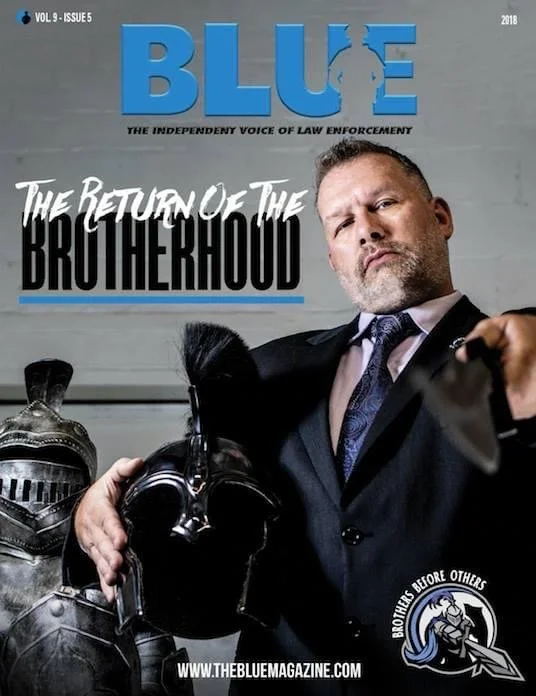
Founded in 2014 by Michael J. Burke, a retired NYPD officer, Brothers Before Others established its National Fallen Law Enforcement Officers Flower Fund as the cornerstone of its work. The fund sent a floral arrangement to every line-of-duty death service, honoring fallen law enforcement officers and supporting the families left behind. Its work also extended into advocacy for the law enforcement community.
The Blue Magazine, Moment of Silence, and Brothers Before Others were independent organizations with overlapping missions. We did not always agree on everything. But when there was an opportunity to do meaningful work, we worked together.
Night to Unite was the clearest example. Held in 2019, it brought more than 900 people together and required months of planning, meetings, calls, travel, and coordination. The Blue Magazine team, Moment of Silence, and Brothers Before Others built it together. Michael Burke, Joshua Oliveri, Steve Olimpio, and many others worked behind the scenes to make it possible.
The guest list reflected the reach of the event, with former Milwaukee County Sheriff David Clarke; former Maricopa County, Arizona, Sheriff Joe Arpaio; Tom Homan, now White House Border Czar; former NYPD Commissioner Bernard Kerik; and New York City PBA President Patrick J. Lynch, along with other leaders from around the country. To this day, Night to Unite remains a benchmark for what a law enforcement event, built by people from within the profession, can be.
That relationship also led to Blue Beefs Boxing on February 8, 2020, in Paterson. The Blue Magazine, Moment of Silence, Brothers Before Others, and True Warriors Boxing produced a sold-out youth fundraiser that drew 320 ticket holders and more than 1,000 livestream viewers. Michael Burke and I provided commentary, and Steve Olimpio served as ring announcer.
Brothers Before Others also became part of Santa Comes to Paterson. They supported the program during its school-based years and joined us when it moved onto the streets for the first time during COVID. At a time when children were isolated at home and families needed something hopeful, we brought Santa, music and Christmas spirit through the neighborhoods of Paterson. Michael Burke and Brothers Before Others helped make that first street event possible and shared in the joy it brought to the city.
We also participated with Brothers Before Others in the Tunnel to Towers walk. The foundation was created by Frank Siller in honor of his brother, FDNY firefighter Stephen Siller, who was killed on September 11 after running through the Brooklyn-Battery Tunnel toward the World Trade Center. The walk was a meaningful way to honor the lives lost on September 11 and the first responders who continue to carry that history with them.
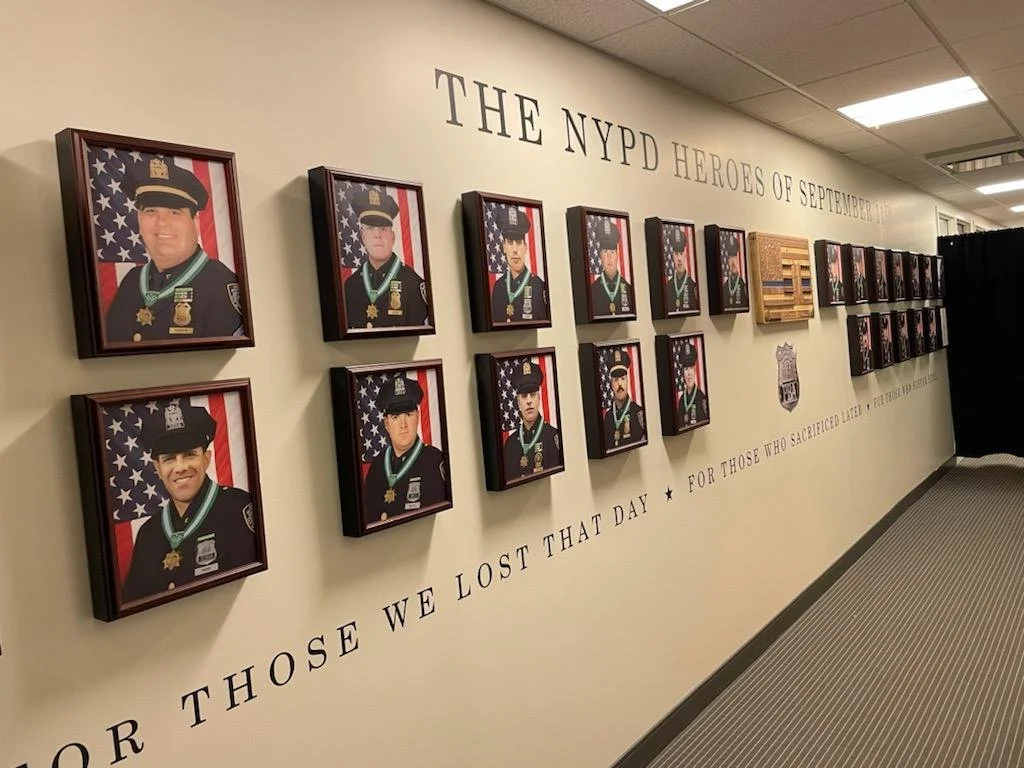
A memorial honoring the NYPD members lost on September 11.
Among the many people I met through The Blue Magazine, Michael Burke stood apart for his creativity, passion, and ability to build. He approached ideas with energy and a willingness to make them real. He challenged me creatively and brought out a side of me that wanted to think bigger, take chances, and build something that had not been done before. Whatever people may think, right, wrong, or indifferent, that contribution deserves to be recognized. It is why he belongs in these pages.
Brothers Before Others was part of an important period in The Blue Magazine’s history. Night to Unite, Blue Beefs Boxing, Santa Comes to Paterson and the Tunnel to Towers walk reflected a partnership built around service, advocacy, and the willingness to work together when the mission called for it.
COVID
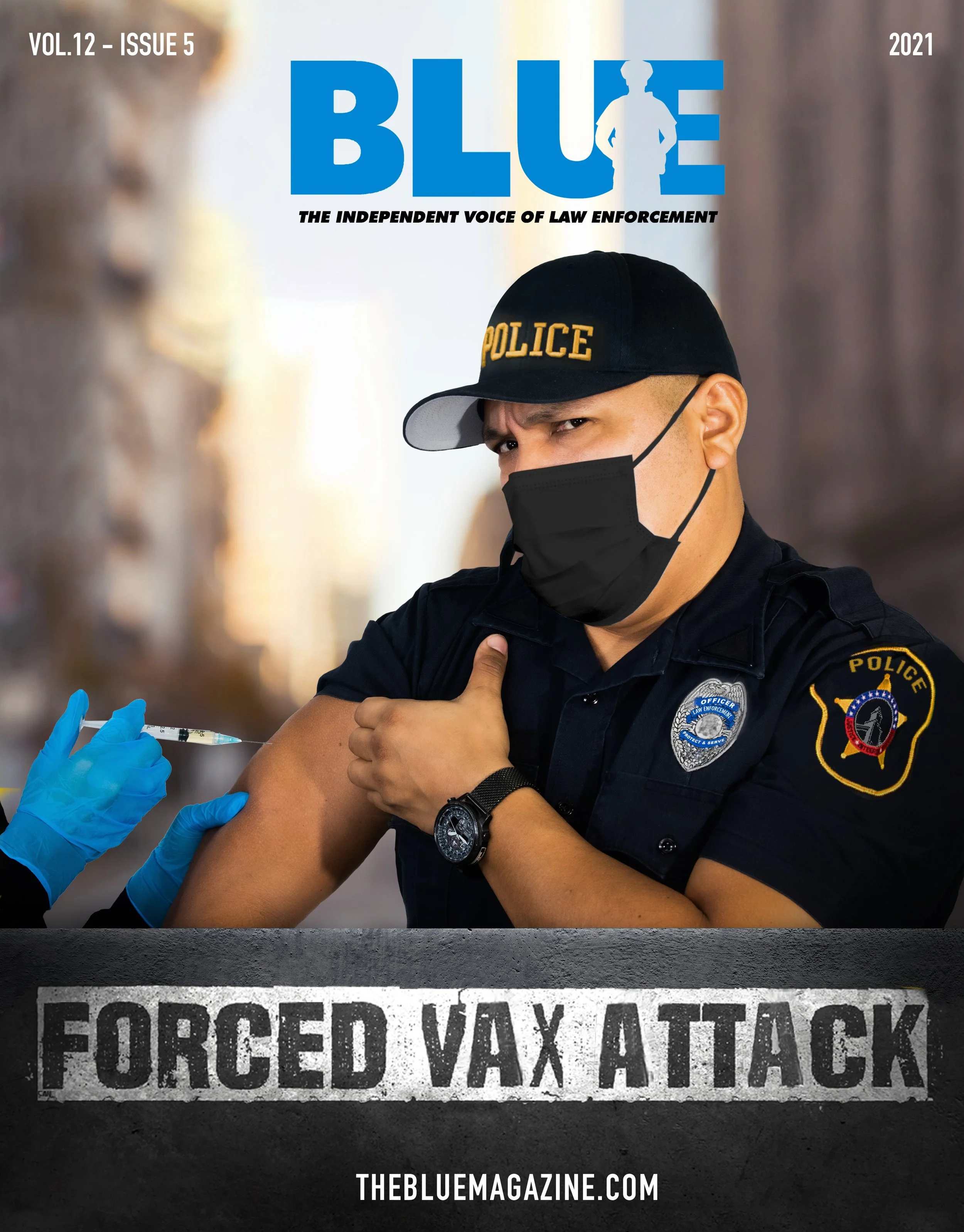
A few months after Night to Unite, the country shut down. Streets emptied, businesses closed and millions of Americans were told to remain inside their homes. Law enforcement officers did not have that option. They continued reporting for duty, entering homes, responding to medical calls, working emergency scenes and helping frightened families through a crisis no one fully understood.
Across every area of law enforcement, officers continued reporting for duty. Whether assigned to patrol, investigations, jails and prisons, court security, marshals services or specialized units, they carried out responsibilities that could not be placed on hold during a crisis no one fully understood. Throughout that period, officers sent Blue photographs, videos and stories from the places they served. Those accounts documented a side of the pandemic that much of the public never saw. Officers experienced the same fear and uncertainty as everyone else, but their responsibilities required them to continue answering calls and assisting people who needed help.
Then came the vaccine mandates. Law enforcement officers and military personnel were forced to make decisions that placed their health, personal convictions and careers against one another. Some took the vaccine because they believed it was the right decision. Others took it because they feared losing the careers they had spent years building. Some refused and challenged the mandates, knowing that their decisions could cost them their livelihoods. I knew officers whose careers were damaged or ended during those disputes. The consequences extended to families that experienced financial hardship and carried the emotional weight of watching a loved one’s career placed in jeopardy. Regardless of where anyone stood on the vaccine, these were real people facing decisions with lasting consequences.
It was never Blue’s place to make another person’s medical decisions. Our responsibility was to defend people’s right to ask questions, consult qualified medical professionals, seek legal guidance when their employment rights were at risk and lawfully challenge government policies they believed were wrong. That period also changed the way I viewed the media. I watched legitimate questions get dismissed because they challenged official policies or widely accepted conclusions. Independent journalism cannot ask questions only when they are convenient. It must be willing to question government, politicians, law enforcement, the media and even its own assumptions. That was one of the reasons an independent voice like Blue mattered.
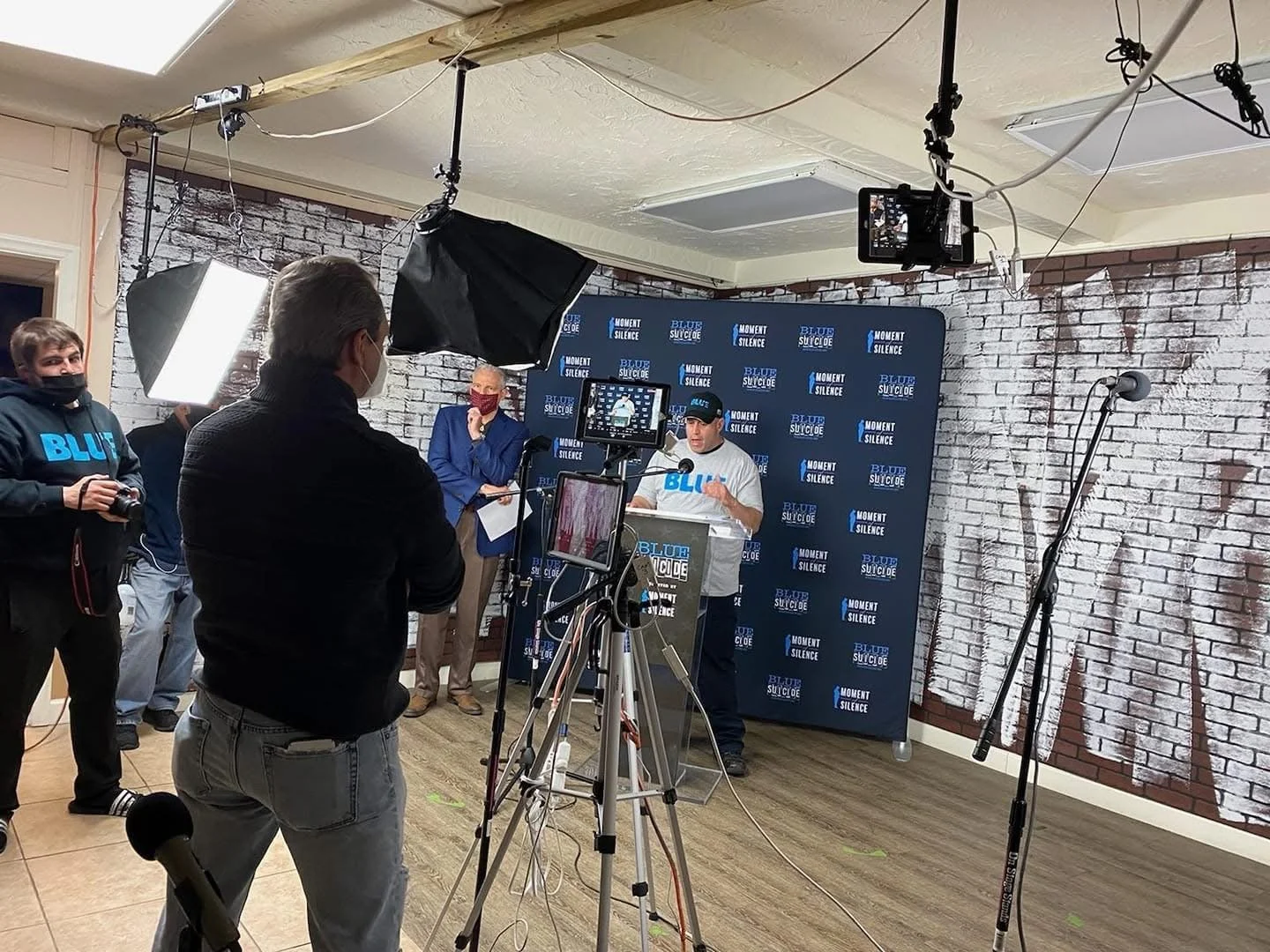


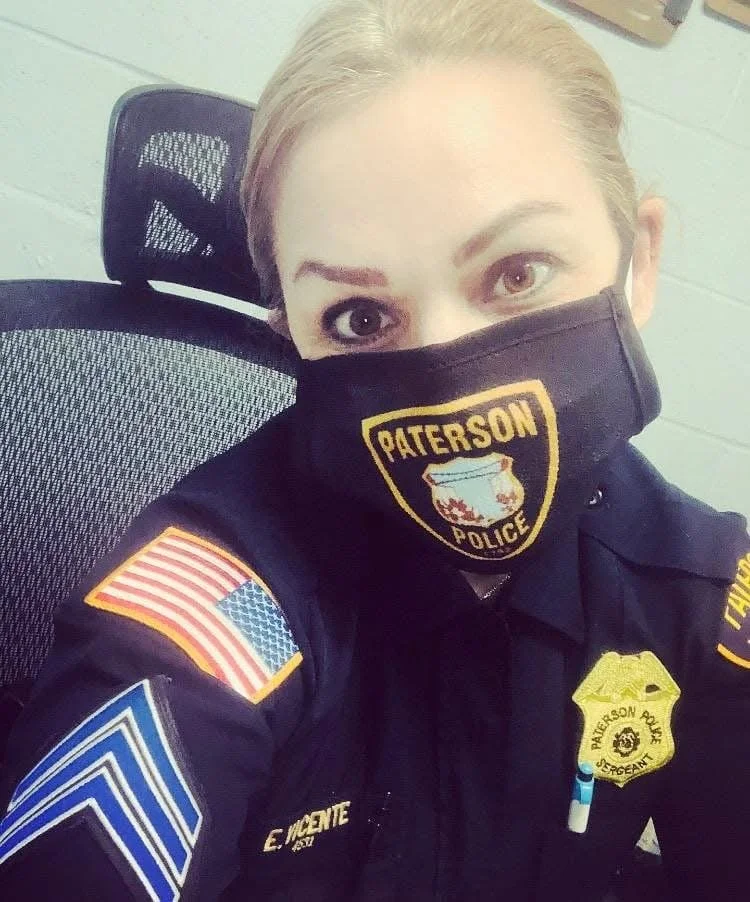
COVID also changed Blue. Advertising declined, events stopped and businesses that had supported the magazine struggled to survive. Publishing became more difficult, and the years following 2020 were unlike anything we had experienced before. Blue survived that period, but it did not come through unchanged. Neither did the country, the law enforcement profession or the families who carried the burden alongside them.
NEW JERSEY GOVERNOR PHIL MURPHY
Former Bergen County Sheriff Leo McGuire introduced BLUE to Phil Murphy shortly before Murphy became governor of New Jersey. Murphy visited the BLUE office for an interview, beginning a relationship that continued throughout his administration. BLUE supported some of Murphy’s actions and challenged others, including policies that drew criticism within law enforcement. The disagreements did not prevent a professional relationship.
As Murphy prepared to leave office after eight years, BLUE requested a final interview. The meeting took place in the governor’s office and was led by Catherine Angel, with Holly Finley also participating. Murphy knew the interview would be direct.
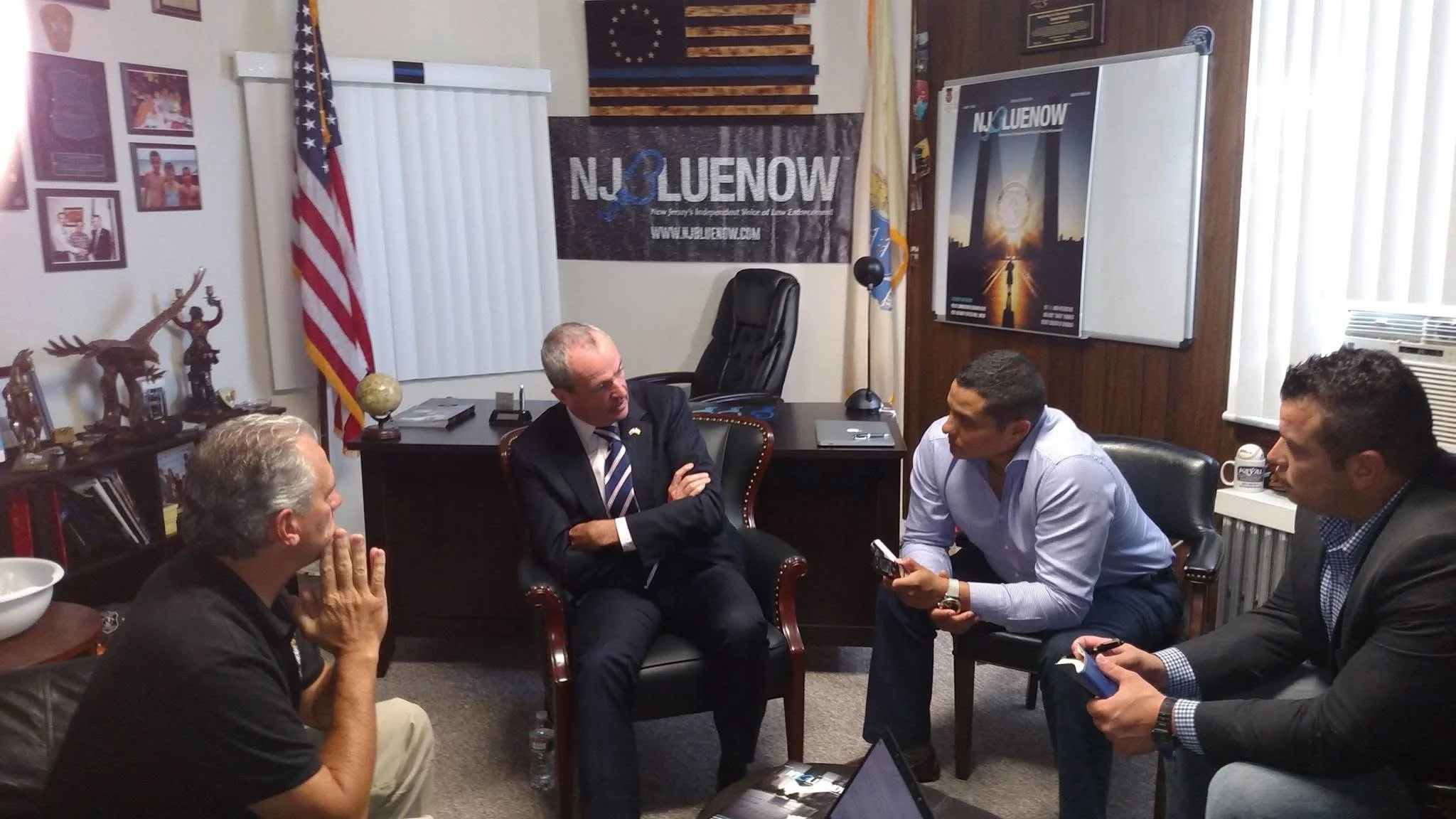
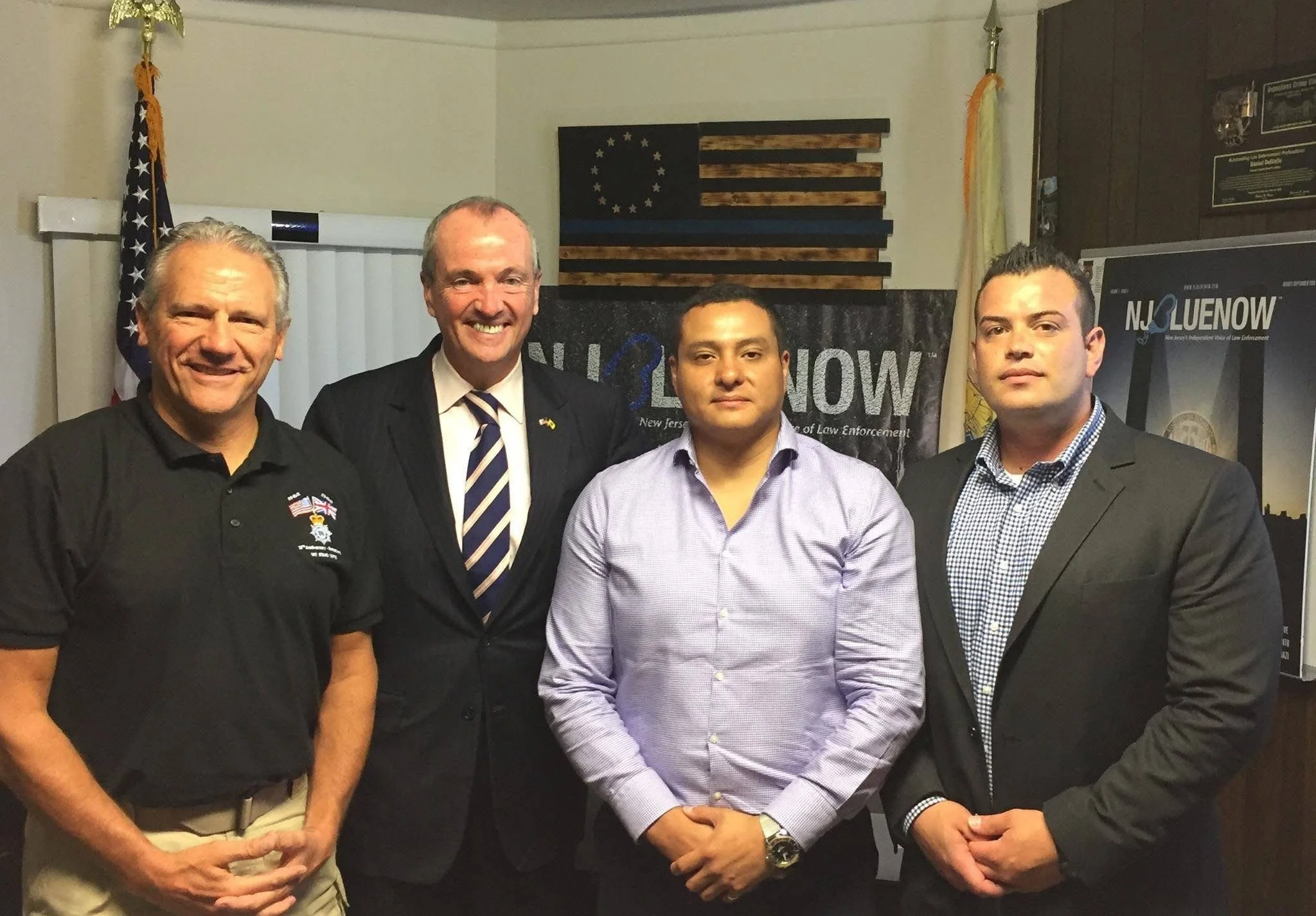
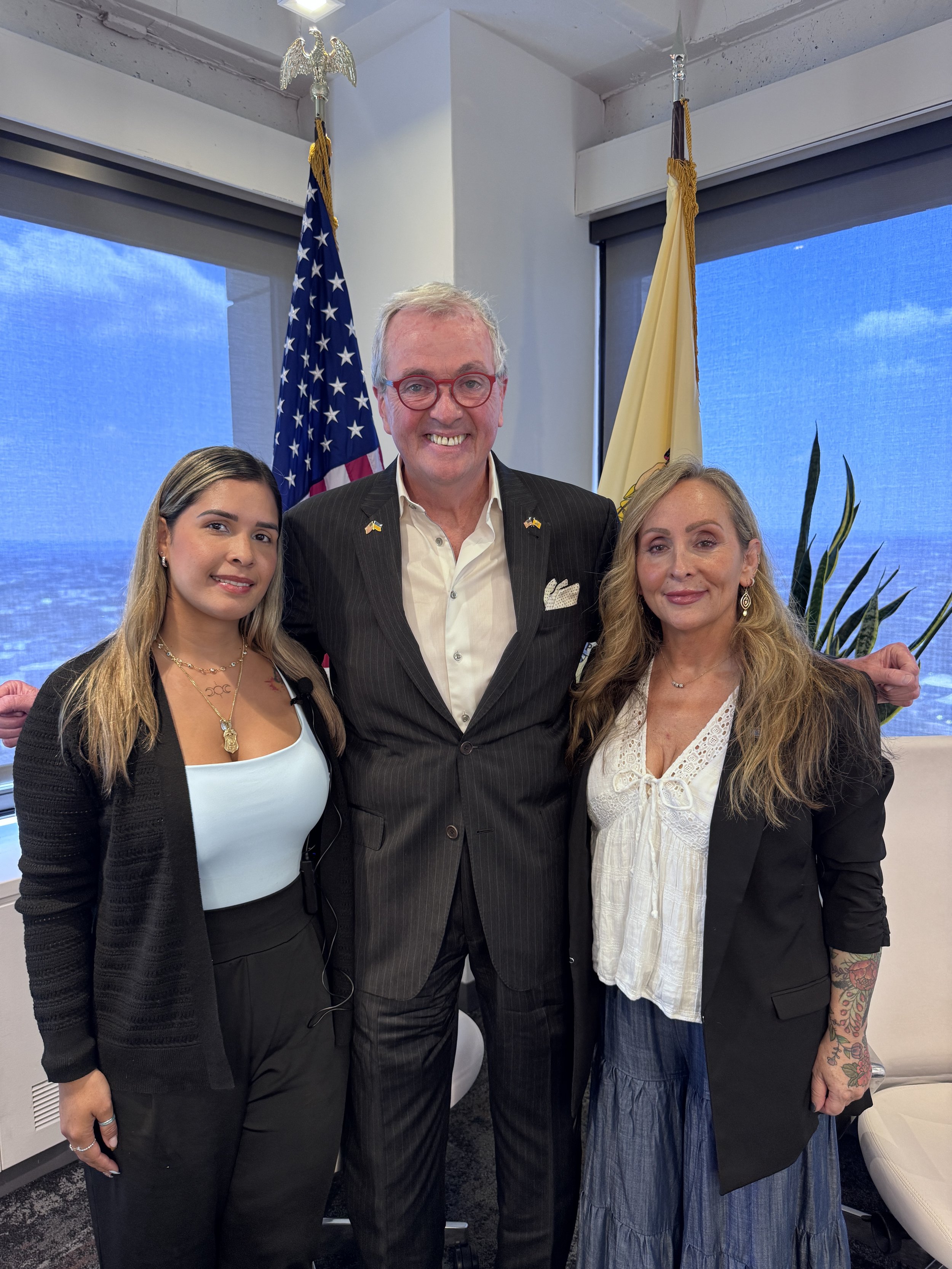

COVID-19 was central to the discussion. More than 35,000 New Jersey residents had died, families wanted answers and law-enforcement officers had experienced the pandemic from the front lines. Angel asked Murphy to address his administration’s decisions and their consequences. Murphy defended the circumstances under which the state had acted but acknowledged that mistakes were made. He argued that officials had confronted an unprecedented crisis without information that became available only later. The exchange did not settle the debate over his response, but it placed his explanation on the record.
The interview also addressed crime, public confidence, healthcare costs, law-enforcement suicide and the need for mental-health care that officers could seek without fearing damage to their careers. Murphy expressed a willingness to assist Moment of Silence and explore ways to strengthen those resources. BLUE respected Murphy’s willingness to face difficult questions. The interview did not attempt to deliver a final verdict on his administration. It documented his answers about decisions that affected officers, their families and the public.
THE POLICE ACADEMY
We watched generations of recruits begin their careers in law enforcement. Blue Magazine’s reporting took us inside more than 50 law enforcement academies, from State Police training to county and municipal programs. We returned often enough to witness the transformation, from nervous recruits on their first day to a markedly different group standing at graduation months later. At many of the academies we observed, recruits were deliberately removed from their comfort zones and placed under sustained physical and mental pressure. Instructors demanded discipline, attention to detail, emotional control and the ability to follow directions while tired, uncomfortable or frustrated.
Part of that pressure served a practical purpose. Officers will eventually encounter people who are angry, intoxicated, frightened, emotionally distressed or determined to provoke a reaction. They may be cursed at, insulted, challenged or humiliated, but being provoked does not, by itself, give an officer legal authority to make an arrest or use force. The uniform does not provide permission to lose control. Academy instructors tested for that control long before recruits were entrusted with authority in the community. They were evaluating more than physical ability: Could a recruit accept correction? Think under pressure? Control emotion? Follow procedure while exhausted? Exercise restraint when provoked? Carry authority without abusing it?
At the same time, recruits had an extraordinary amount to learn. The academy was not simply running, push-ups and discipline. Recruits studied the criminal statutes governing their jurisdiction, constitutional law and procedure, investigations, defensive tactics, firearms, emergency response, communications and the rules governing when and how their authority could be exercised. They learned control techniques and how to communicate with people in crisis, recognize circumstances requiring de-escalation and interact with communities whose cultures and experiences might be different from their own. They were learning not only what officers could do, but when, why and under what legal authority they could do it.
Not everyone made it through. Academies had a limited period in which to determine whether a recruit could meet the physical, academic and disciplinary requirements of the profession. Some could not. For those who remained, the changes could be striking. We watched recruits who arrived struggling with the physical demands lose significant weight, build strength and endurance, and eventually run distances that had challenged them months earlier. Their conditioning changed, as did their bearing and confidence.
The transformation was not only physical. Recruits learned to process information under pressure, communicate deliberately and pay closer attention to behavior, body language and their surroundings. They also learned that possessing authority and knowing when not to use it were inseparable responsibilities. Then we watched them graduate. Graduation did not mean their training was complete. Field training, continuing education and years of experience would provide lessons no academy could replicate. Still, the person standing in formation was often noticeably different from the recruit who had arrived months earlier.
One academy gave Blue an especially unusual view of that process. During COVID, we followed one of our own, Catherine Angel, through her academy training. Masks and social distancing altered training routines. Shared facilities were restricted. Even ordinary parts of academy life, including showering after physical training, had to be reconsidered under pandemic rules. Departments still needed new officers, and those recruits were preparing to enter law enforcement during an extraordinary period. The pandemic had altered daily life while the murder of George Floyd and the national response that followed placed American policing under intense scrutiny.
Covering academies gave Blue more than graduation photographs. We watched recruits struggle, adapt and emerge with a foundation in the physical, legal and human demands of the profession. The public usually encounters officers after their training is complete, their uniforms are on and their badges have been pinned. Blue had the opportunity to see many of them before they reached that moment. Academy training, masks and social distancing altered training routines. Shared facilities were restricted. Even ordinary parts of academy life, including showering after physical training, had to be reconsidered under pandemic rules.

Departments still needed new officers, and those recruits were preparing to enter law enforcement during an extraordinary period. The pandemic had altered daily life while the murder of George Floyd and the national response that followed placed American policing under intense scrutiny. Covering academies gave Blue more than graduation photographs. We watched recruits struggle, adapt and emerge with a foundation in the physical, legal and human demands of the profession. The public usually encounters officers after their training is complete, their uniforms are on and their badges have been pinned. Blue had the opportunity to see many of them before they reached that moment.
BARRY MORGENSTEIN
Barry Morgenstein came to Blue with an established reputation as an award-winning photographer. His work included portraits and headshots of nationally recognized entertainers, politicians, news personalities and other public figures. He brought that experience and professional standard to the magazine.
Barry photographed Blue covers, assignments, events and individual portraits. He also photographed the Blue Calendar, while Dan Larco handled its creative direction and design. The full calendar project will be addressed separately, but Barry’s photography was central to its quality and identity. His involvement extended beyond scheduled photo shoots. Barry attended Blue and Moment of Silence events, photographed Santa Comes to Paterson and documented people and moments that otherwise might not have been preserved. He provided those photographs to Blue, shared them publicly and helped the work reach a wider audience.
Barry also introduced Blue to people who became part of the magazine’s reporting and broader network, including Kris “Tanto” Paronto. Those introductions created opportunities for new stories and relationships.
Over the years, Barry became a consistent supporter of Blue and Moment of Silence. When he was invited to participate, he showed up with his camera and contributed his work. That reliability, combined with his reputation and ability, made him an important part of Blue’s visual history. The professional relationship also became a close friendship with Danny and the Blue team.
THE BLUE CALENDAR
A Different Portrait of Law Enforcement
By the end of 2020, the strain on law enforcement was impossible to ignore. COVID had brought loss, uncertainty, isolation, and enormous pressure to officers and their families. Blue Magazine and Moment of Silence wanted to create something positive for a community carrying a great deal.
The result was the 2021 Blue Calendar.
We wanted to bring officers together from different departments and create images that looked like a national publication, not standard departmental photographs. The calendar would reflect law enforcement in full: patriotism, confidence, tactical skill, faith, September 11 remembrance, suicide-prevention awareness, and the personalities behind the badge.
I asked Shai Carr to lead the project because I knew she could bring it to life. A New Jersey law enforcement officer and longtime member of the Blue team, Shai led the effort with Sandy Amin. They coordinated the concepts, participants, clothing, equipment, and details that turned an idea into a full production. The project involved more than 30 members of the Blue Magazine and law enforcement communities. A Ford dealership opened its showroom to the production. Barry Morgenstein photographed the calendar, bringing a polished and professional eye to every image. Dan Larco handled creative direction and design, working with Barry, Shai, Sandy, and the team to give the calendar its final identity.
Each month carried a different message. The calendar included patriotic images with American flags and aircraft, a Blue Mass tribute, a September 11 remembrance, tactical photographs, and portraits that showed officers with confidence and individuality. Rachel Morgan’s image carried particular meaning. A Paramus police officer, Rachel survived a line-of-duty shooting in 2011 and later returned to duty. Her presence was a reminder that the people in the calendar had lived through real hardship and continued to serve.




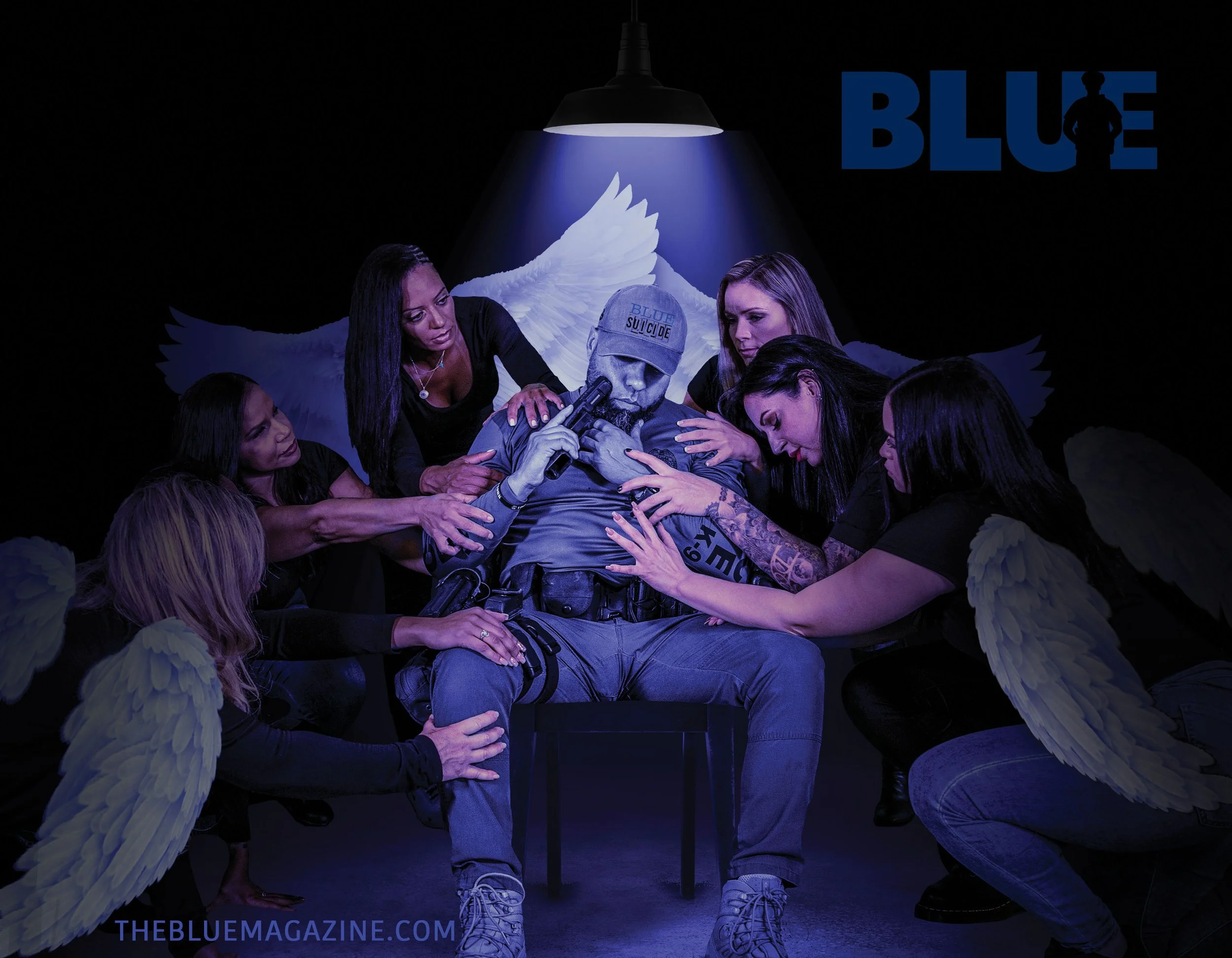
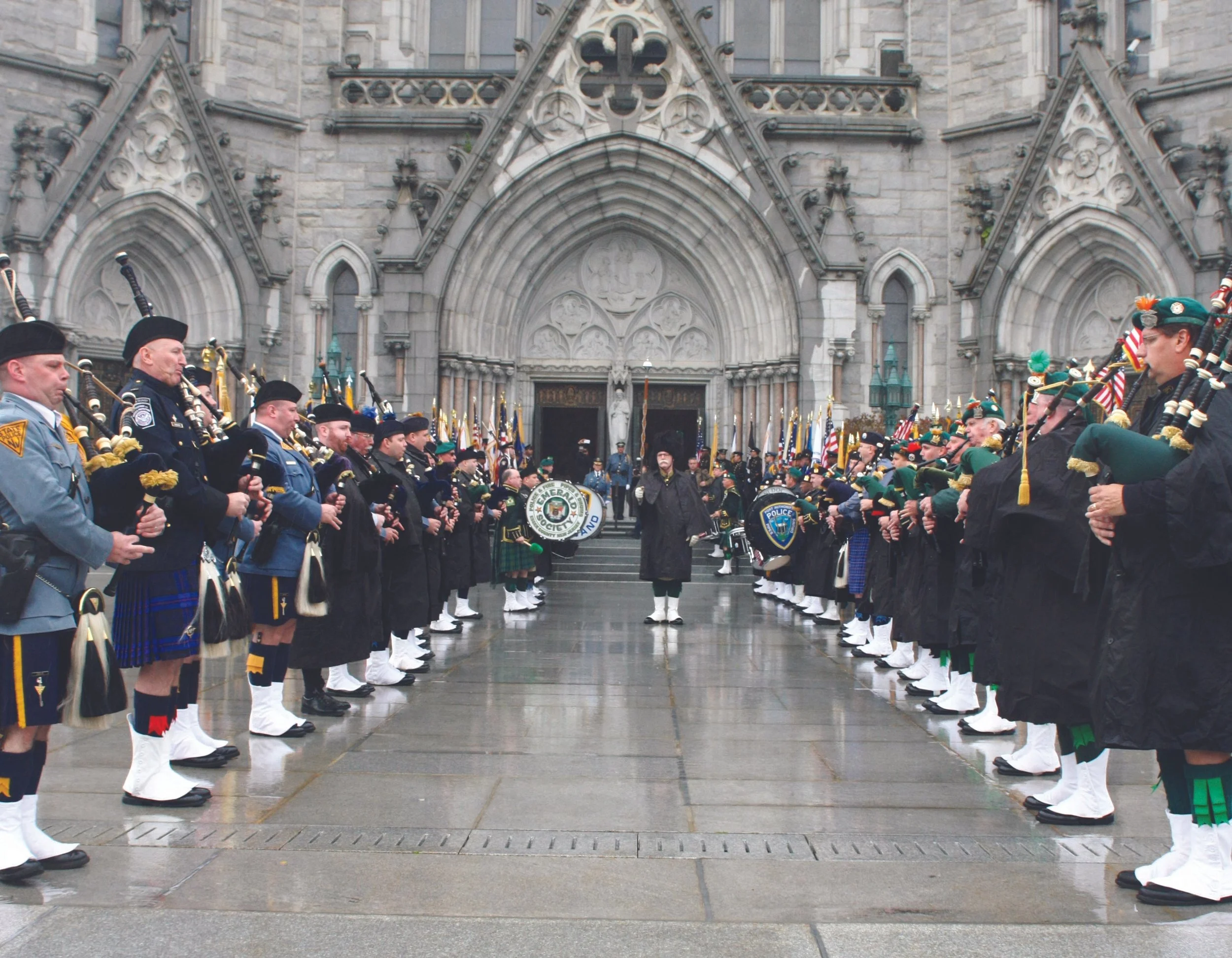


The calendar also included a Moment of Silence message: join the fight, be someone’s angel, stop suicide. Erica Vicente was part of that message, representing the importance of seeking help and choosing to move forward when an officer is struggling. We printed more than 2,000 calendars and distributed them throughout New Jersey, New York, Connecticut, and other parts of the country. The response showed us that officers appreciated something creative and made specifically for their community during a difficult time.
The Blue Calendar was the only calendar Blue Magazine produced. It was an honor to create it with everyone who gave their time, talent, and trust to the project. Without the officers, supporters, and team members who stepped forward, it would not have been possible. Their participation gave it its character and its place in Blue Magazine’s history.
BLUE CALENDAR 2021: THE TEAM BEHIND IT
Project Leadership: Shai Carr
Project Coordination: Sandy Amin
Photography: Barry Morgenstein
Creative Direction and Design: Dan Larco
Production Crew and Participants: Ron Torres, Marco Catania, Nick Levitas, Stephanie Love, Catherine Angel, Lizette Flores, Erica Vicente, Liz Gonzalez, Rachel Morgan, Shai Carr, and members of the Blue Magazine and law enforcement community.


SHAI CARR
New Jersey Law Enforcement Officer and Blue Magazine Advisor
Trusted When It Mattered Most

Shai Carr joined Blue Magazine during its early years and has been part of the team for more than a decade. A New Jersey law enforcement officer, she became one of the people I relied on most: a trusted advisor, a capable interviewer, and someone I could count on when the work required judgment and discretion.
Shai is direct, smart, and fiercely loyal to the profession. She does not back away from difficult questions or difficult situations. When she believes something is wrong, she is prepared to stand up for herself and for what she believes is right. That strength has earned my respect over the years. She has faced professional challenges and refused to be intimidated by them. Shai understands that officers must protect their own rights, hold people accountable, and remain steady when pressure is applied. Her example speaks for itself. She does not simply talk about courage, she lives it.
Her work with Blue Magazine has taken her well beyond New Jersey. She has traveled with the team to Washington, D.C., Florida, Virginia, and other assignments, conducting interviews and representing the magazine with professionalism. In Polk County, Florida, she interviewed Sheriff Grady Judd, one of the country’s most outspoken voices in law enforcement. In Virginia, Shai was part of Blue Magazine’s final reporting, interviewing Deputy Chris Darlington, a law enforcement officer and country singer.
Shai has also helped lead some of Blue Magazine’s most ambitious projects. She led the 2021 Blue Calendar, coordinating the people, concepts, and work required to turn it into a national law enforcement project during the COVID period. Her ability to organize a large group, keep the project moving, and understand the vision was central to its success. Some of Shai’s most important work occurred away from cameras and bylines. Through Moment of Silence, she became someone I trusted when an officer needed to speak with another law enforcement officer. Shai brought compassion to those conversations, but she also brought standards. She could listen without judgment while remaining honest and direct. Supporting someone did not mean telling them what they wanted to hear. It meant being present, keeping confidence, and helping them take the next right step.
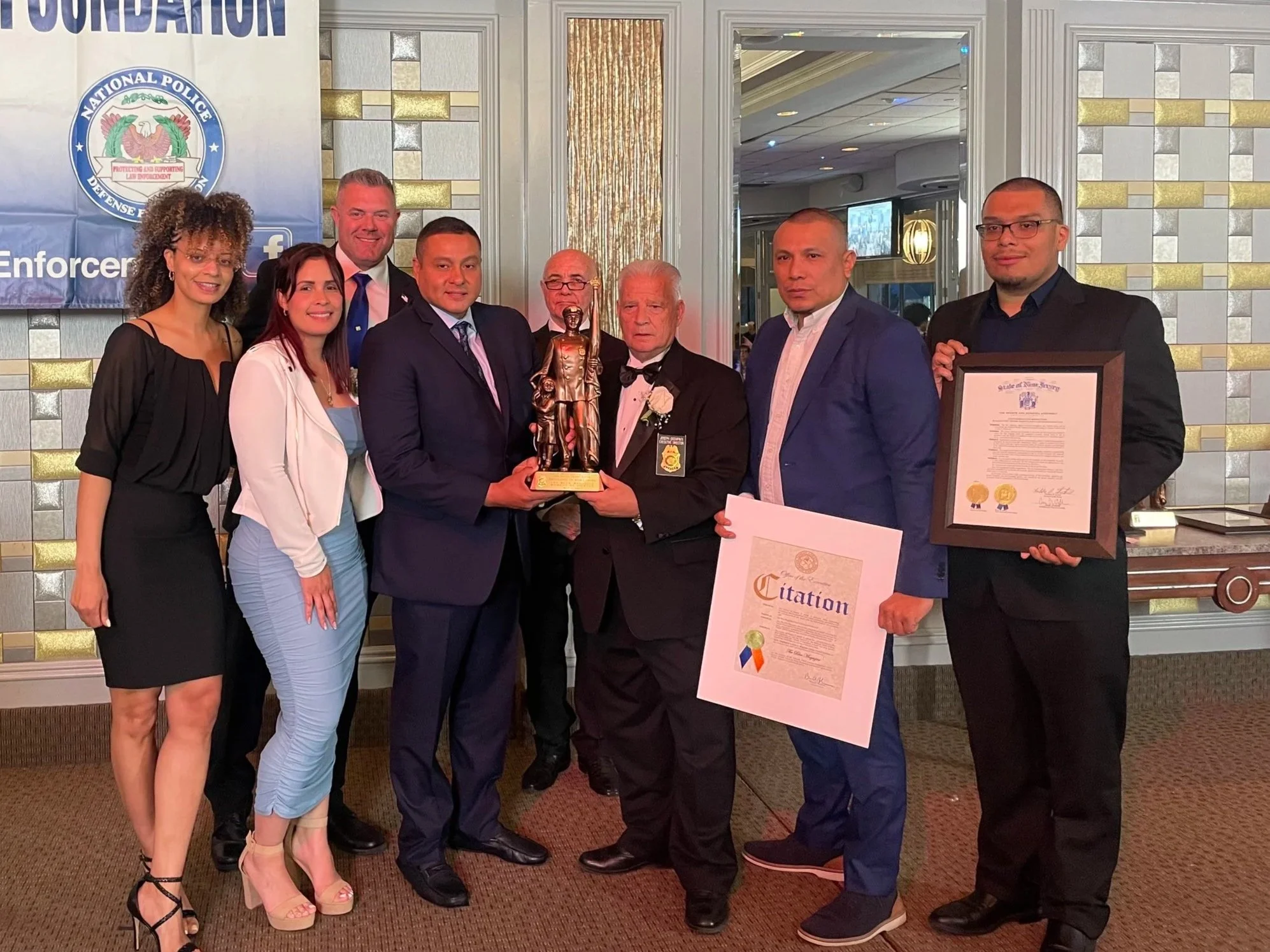


That discretion is one of the reasons Shai has been so important to Blue Magazine. In journalism and in law enforcement, people sometimes share information because they need someone they can trust. Shai understood the responsibility that came with that trust. She never treated sensitive information casually.
To Blue Magazine, Shai is far more than a colleague or contributor. To me, she is my sister.
LIZ GONZALEZ: THE EXAMPLE
Liz Gonzalez is a Paterson police officer whose work ethic, loyalty and commitment to others have defined her relationship with The Blue Magazine and Moment of Silence. She has been with us since the early years and has always been someone we could depend upon.
Police work requires long hours, personal sacrifice and the ability to remain focused through demanding circumstances. Liz carries those responsibilities while raising two children, yet she still finds time to serve beyond her shift. Even with a full schedule, she makes herself available to the community, to fellow officers and to the organizations and causes she believes in.
Throughout the years, Liz worked behind the scenes on the Blue Calendar and participated in Blue Unity, Night to Unite, our dinners, Moment of Silence programs and other projects. Whenever an event required another dependable person willing to contribute, Liz was there. She never approached that involvement as an obligation. She brought energy, passion and the same strong work ethic that she carries into her law enforcement career.

Her dedication was especially visible through Santa Comes to Paterson. Liz gave hours of her time to wrapping toys, preparing for the event and helping create Christmas for thousands of children. She also brought her daughter to volunteer beside her. Those were not work shifts. They were days Liz could have reserved for herself and her family, but she chose to spend them serving others.
As the mother of a daughter and a younger son, Liz has set an example for both of her children. Her daughter experienced that lesson firsthand by working beside her, while her son is growing up with the same example of generosity and service at home. Liz has shown them that helping others is not simply something people talk about. It is something their mother lives.
Liz has never sought attention or recognition. She is simply present when people need her. Whether she is serving the public as a police officer, supporting another officer, helping at a Blue event or giving her time to children and families, she approaches the responsibility with compassion and purpose.
That is why Liz Gonzalez belongs in these pages. She is a respected police officer, a trusted friend of Blue, a committed supporter of Moment of Silence and a mother whose example extends far beyond any one event.
DARI IZHAKY BULRISS: BUILDING BLUE FROM THE INSIDE
Dari Izhaky Bulriss came to Blue during the NJ Blue Now years, introduced to us by Johnny Welsh. At the time, finding a graphic designer who combined strong creative ability with reliability was not easy. We saw the quality of her work, recognized what she could bring to the magazine and invited her to join the team.
Dan Larco helped define what Blue looked like on the cover. Dari shaped what readers saw inside its pages. She handled the interior layout and graphic design, taking articles, photographs, advertisements and corrections and turning them into a finished publication. Every headline, image, font, caption and page had to fit together before an issue could go to print.
That required far more than placing words and pictures on a page. A reader sees the finished article, but not the process behind it: selecting and positioning images, making sure the copy was readable, keeping the design consistent from page to page and preparing every element correctly for the printer. A strong story could lose its impact through poor presentation. Dari understood that the details were part of the story.
She worked closely with Blue Magazine’s editors-in-chief, editors and writers. She had to understand what an editor wanted, what a writer was trying to say and what the photographs needed to convey. Then she had to bring those elements together in a way that served the reader. George Beck, Joel Gordon and the editorial team relied on her because they knew she understood the standard and could be trusted to carry an issue across the finish line.
The work often came with pressure. Articles arrived late, advertisements changed, photographs needed to be selected and corrections came in when the issue was close to deadline. Dari handled those demands with patience and consistency. She also created advertisements and event books, producing the printed materials that became part of Blue’s major events.
Her contribution, alongside Dan Larco and the rest of the creative team, helped establish the professional standard Blue Magazine carried for years. She was not a law enforcement officer, but she cared deeply about the community we represented and used her talent to support it. For many years, Dari was one of the people behind the pages who made sure Blue Magazine was ready when it had to be. The finished issues reflected her talent, and Blue depended on her.
DAN LARCO: CREATING THE LOOK OF BLUE
A magazine can have important reporting, strong interviews and stories worth telling. But before a reader reaches any of that, the magazine has to make an impression. It has to look like it understands its subject and takes its work seriously. Dan Larco helped give Blue Magazine that identity.
Dan and I spent months working through what Blue should look like. Before there was The Blue Magazine, there was NJ Blue Now, and the branding changed as the publication found its direction. We considered different ideas, including an early logo built around handcuffs. But we had not yet found the symbol that felt right.
Dan helped create it.
Working from the ideas I brought to him and his own creative instincts, Dan developed the Blue logo that became central to the magazine’s identity: the word Blue, with a silhouette inside it. It was simple, strong and immediately recognizable to law enforcement officers. Blue is more than a color in this profession. It represents a shared identity. Dan found a way to put that idea into a mark people could recognize.
That logo came from months of conversations, revisions and a shared belief that Blue needed to look as professional as the work we were trying to do. I was passionate about the magazine, and Dan was passionate about the branding. Together, we created an identity Blue carried for years.
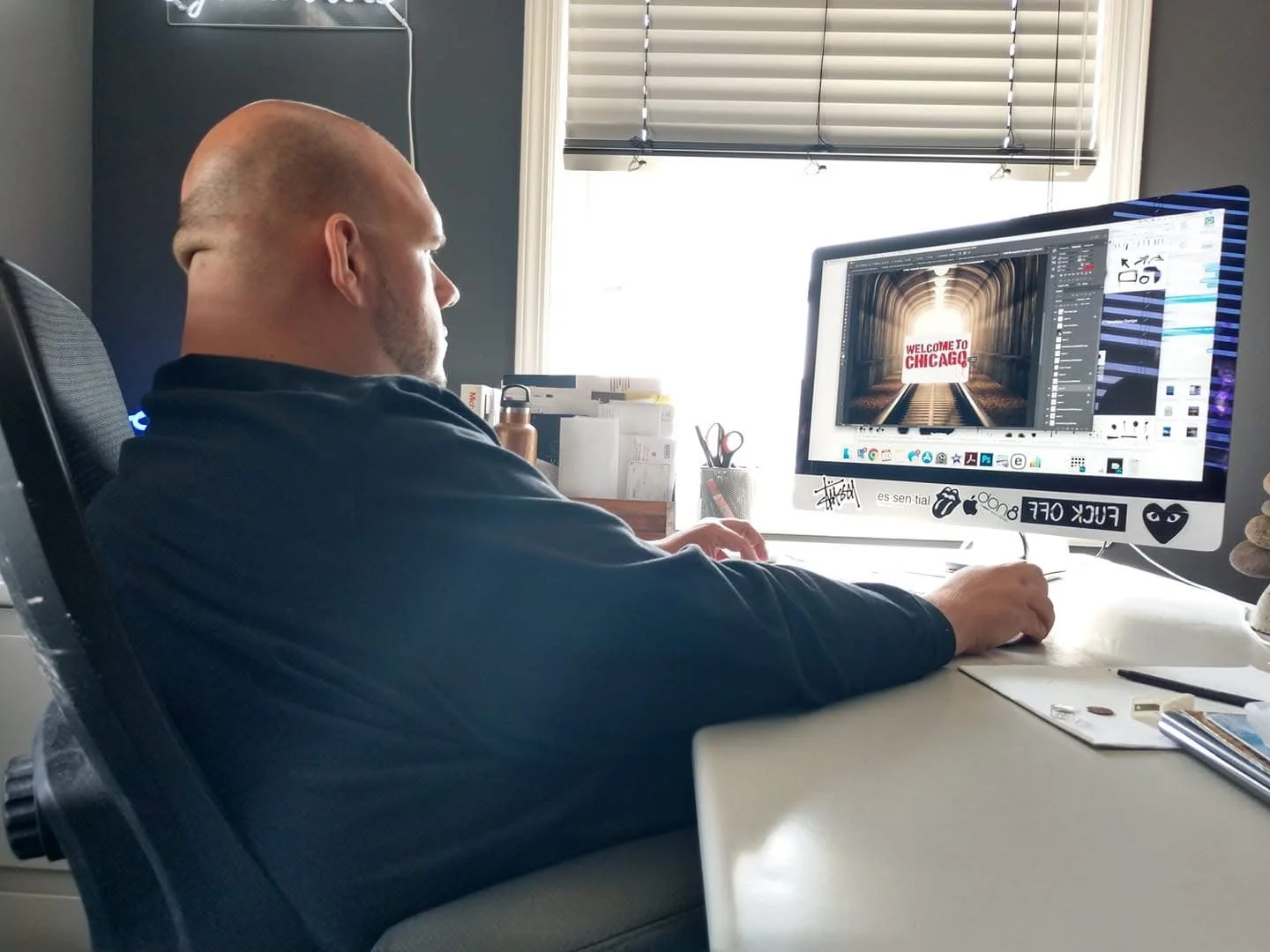
As Creative Design Director, Dan brought that same standard to the covers. He understood that a cover is not decoration. It is the first chance to tell the reader that a story matters. An important interview or a powerful article needed a visual presentation that matched its weight. Dan knew how to take a subject, a photograph, a headline and the tone of an issue and turn them into a cover that made people stop. He worked closely with photographer Barry Morgenstein, helping transform strong photography into finished visual stories. Their work gave Blue Magazine a distinct, polished look. A story about a fallen officer, a major interview, a community project or a national issue could not all be treated the same way. Dan understood the difference.
His work extended beyond the magazine covers. He was part of the Blue Calendar, photo shoots, Santa Comes to Paterson, Moment of Silence and the projects that needed to be documented properly. He helped create the photographs, video and visuals that allowed Blue Magazine to share its work with officers, families and the communities we served.

Dan also saw early that Blue could not depend only on print. As social media changed how people found and shared information, he pushed us to think beyond the page. His insight helped Blue Magazine build its presence on Facebook, Instagram and other digital platforms, reaching people where they were.
Dan was not a law enforcement officer, but he understood the community and cared about the people Blue Magazine represented. His work helped give our stories a face, our projects a visual record and our magazine a standard that readers recognized. He remains a lasting part of the Blue team and the work we built together.
Today, Dan brings that same creative drive to The Quarry Grill, a restaurant he owns and operates in Franklin, New Jersey.
Rick Vanderclock
At that point in Blue’s history, I was managing many parts of the magazine and needed someone with a law enforcement background who understood the profession, could build genuine relationships and had the commitment to help carry the work forward.
Johnny Welsh suggested that Rick Vanderclock and I meet. Rick had recently retired after a long career with the Wayne Police Department. From our first conversation, we shared ideas easily and recognized that we could accomplish something together. Rick brought decades of law enforcement experience and a natural ability to earn people’s trust. He conducted interviews, developed ideas and built relationships that expanded Blue’s reach. Blue gave Rick a place to use abilities he may not have fully recognized in himself, while his ideas, persistence and support allowed me to expand my own vision for what the magazine could accomplish.
We challenged each other to look beyond what we had already accomplished and pursue opportunities that might otherwise have remained only ideas. That exchange expanded what each of us believed Blue could become. Law enforcement was deeply rooted in Rick’s family. His father had served with the New Jersey State Police, and Rick experienced the loss of his father during the COVID period.
Rick became one of my closest friends and strongest partners. Whether it involved interviews, assignments, relationships, New Jersey State Police coverage or the work of Moment of Silence, Rick was there whenever something needed to get done. More importantly, he became someone I knew I could depend on. Rick also asked me one question that would eventually lead to the biggest interview in Blue’s history. I told him that if Donald Trump became president again, I wanted the opportunity to interview him. Rick looked at me and asked, “Why don’t we interview him now?”
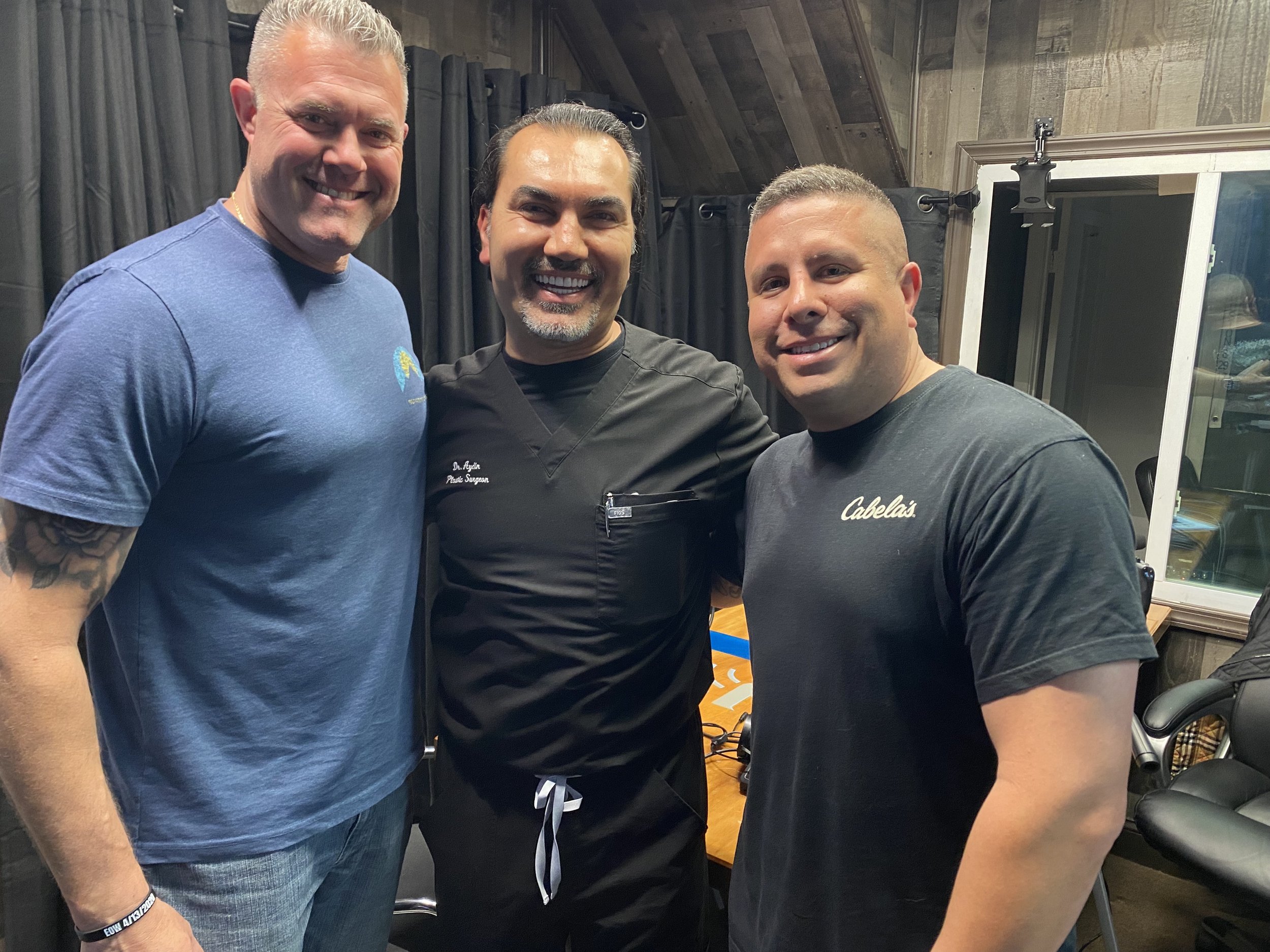
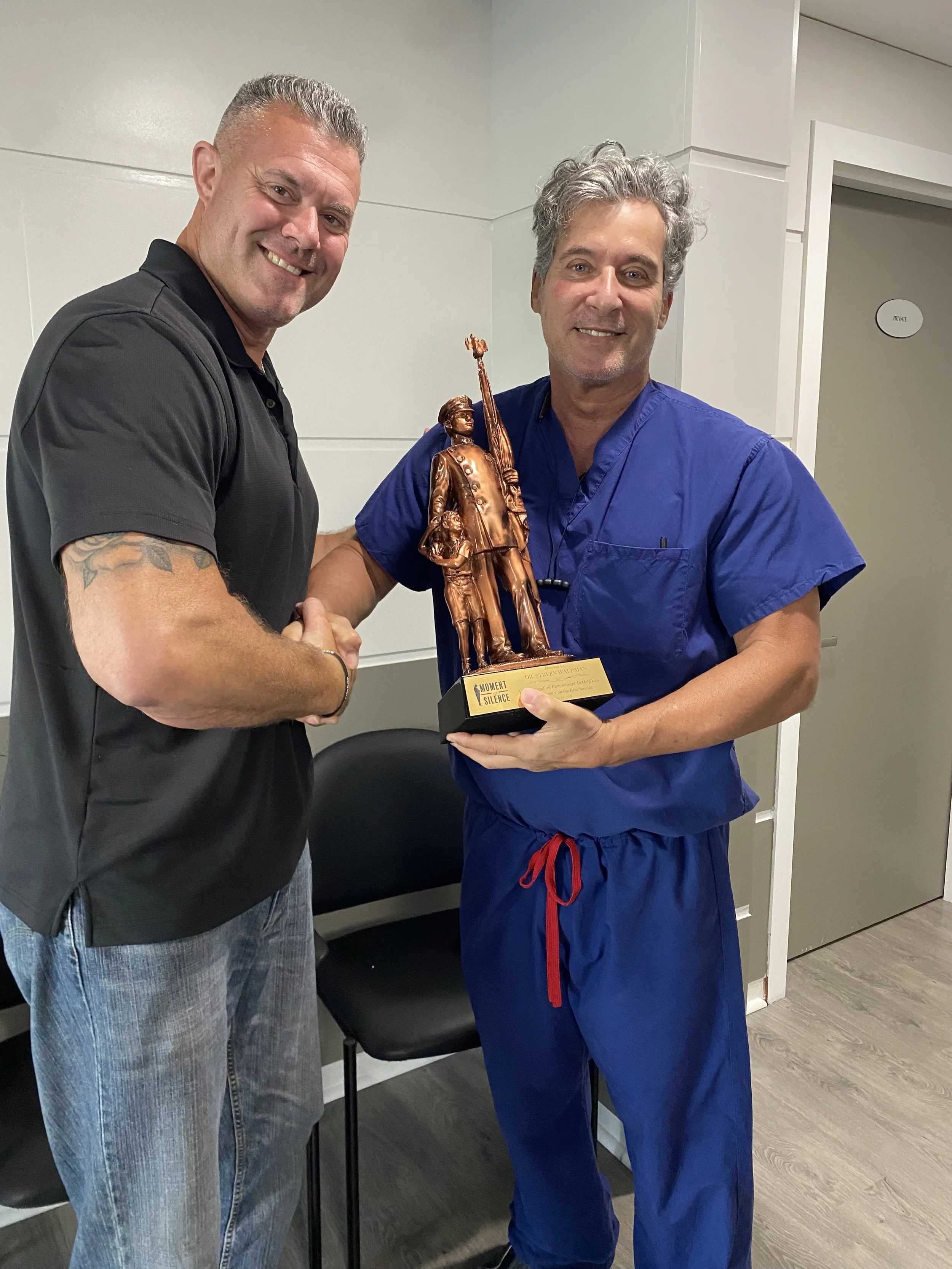
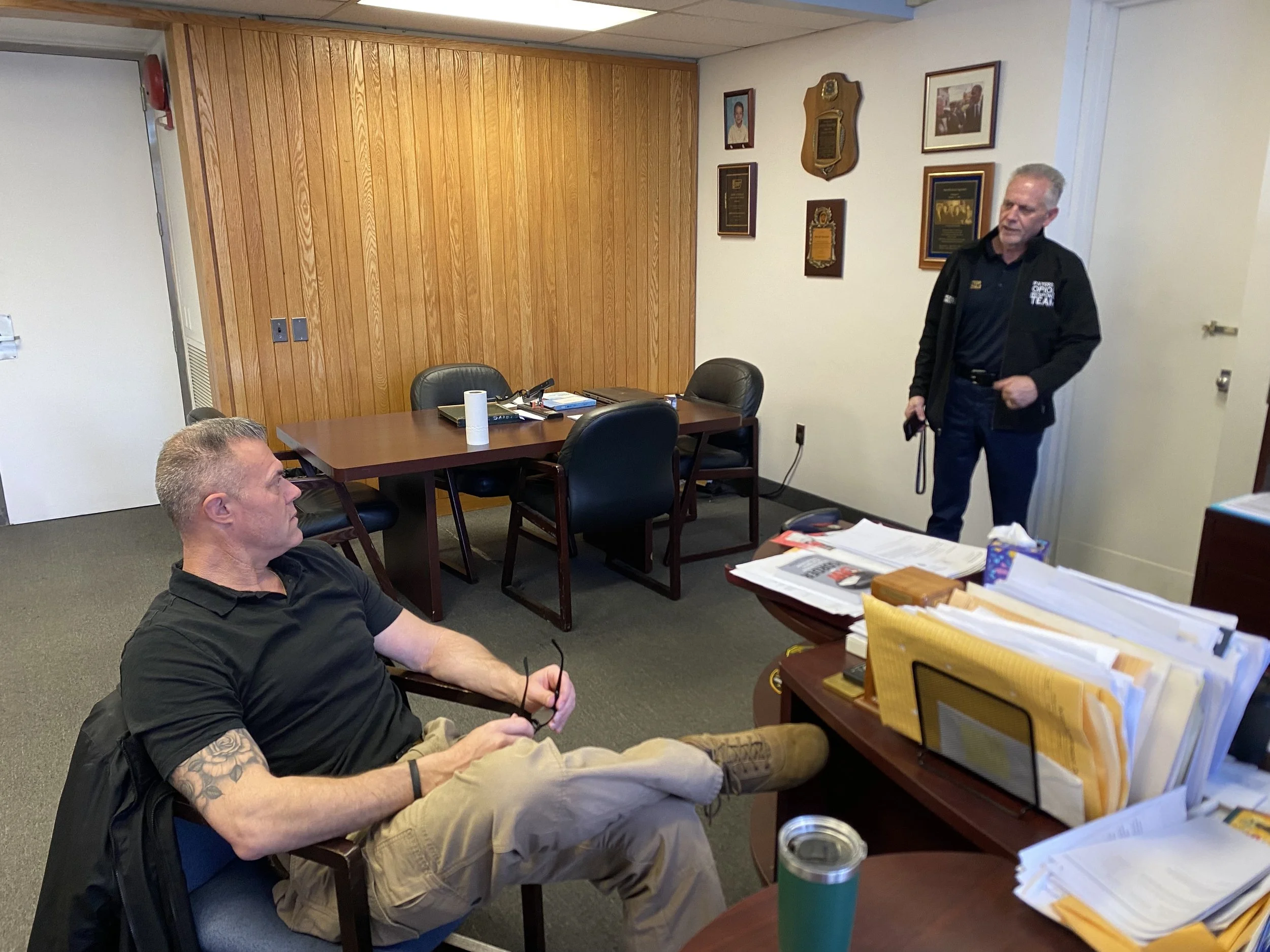
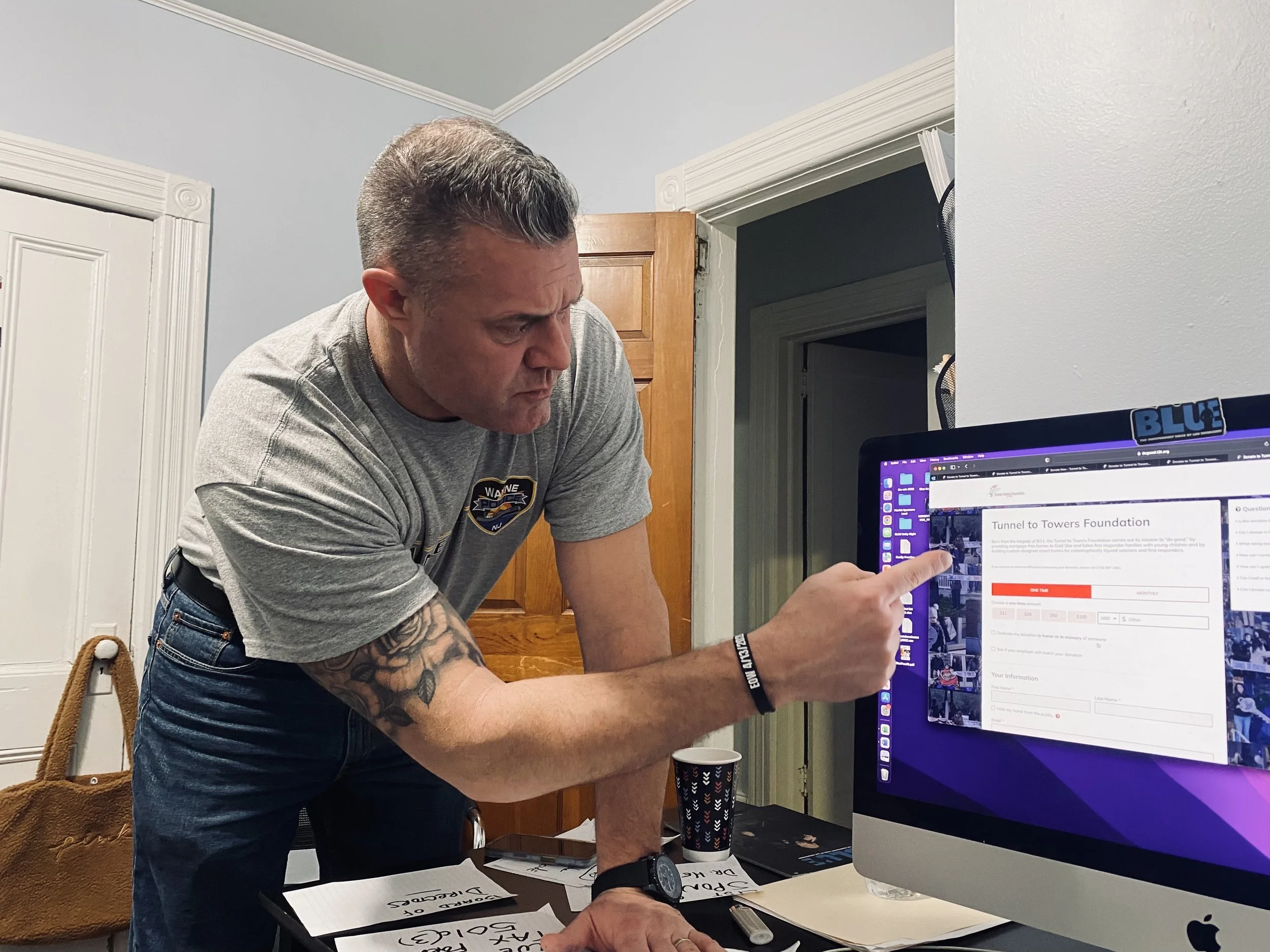
I called Commish, and that conversation began the process that would eventually lead us to Donald Trump. Before that interview took place, however, Rick took on another assignment that was deeply personal to him…
Colonel Patrick J. Callahan
Colonel Patrick J. Callahan led the New Jersey State Police through an extraordinary period that included COVID, civil unrest and a changing political environment. Despite the weight of that responsibility, the Colonel took a genuine interest in Blue and the work we were doing. He treated Blue and the people behind it with respect, and whenever we reached out, he did whatever he could to support Blue and Moment of Silence.
When Blue had the opportunity to interview him, we wanted the conversation to go beyond his title and responsibilities, and Rick Vanderclock was the right person to conduct that interview. Rick’s father had worn the New Jersey State Police uniform, which made sitting across from the Colonel and speaking with him deeply personal.
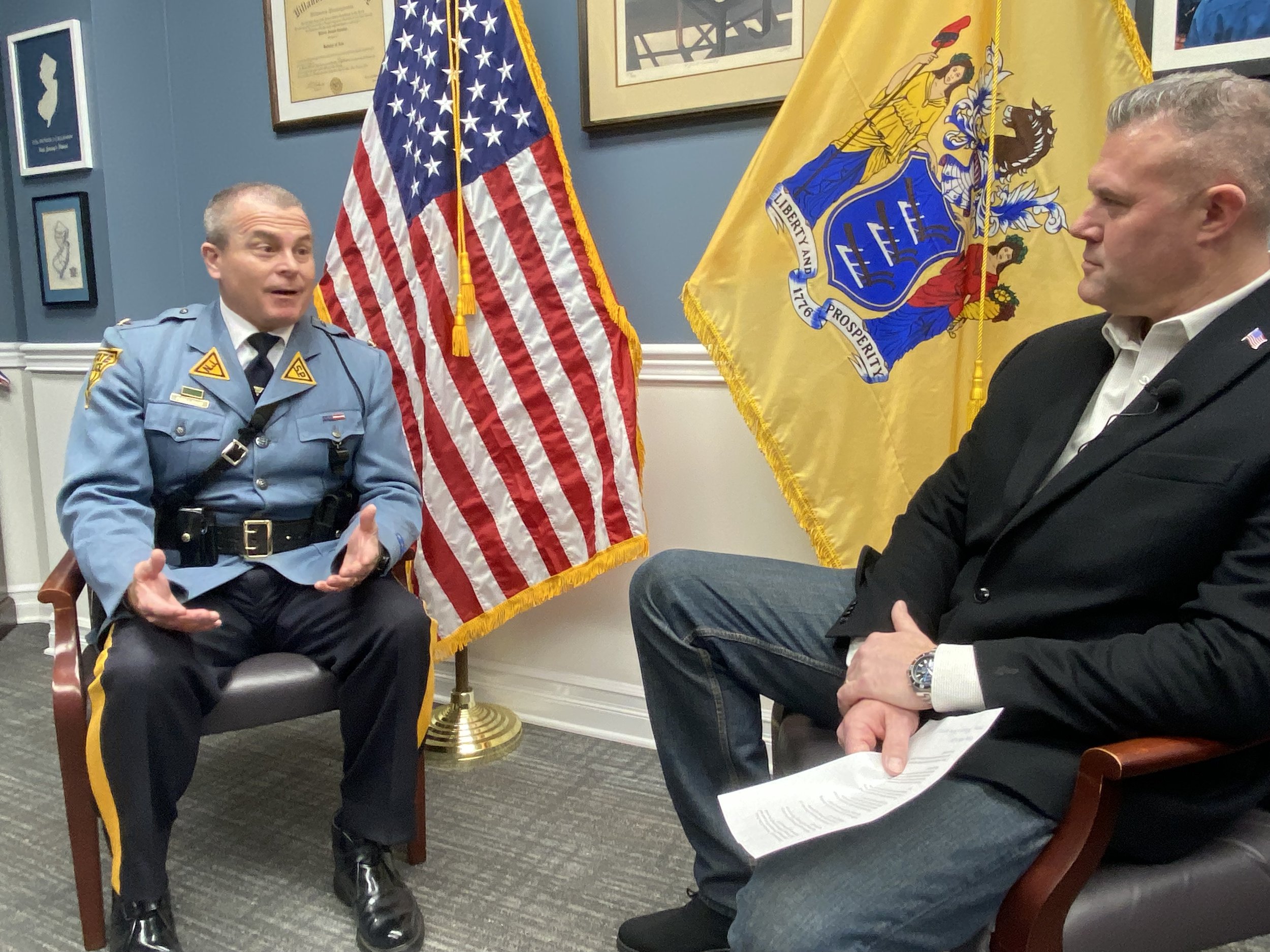
Their conversation covered leadership, family, faith, mental health, peer support, the Colonel’s relationship with his father and what it was like growing up around the State Police. According to Blue’s metrics, a short clip from the interview reached more than 200,000 views. Its response showed that viewers were interested not only in the leader of the New Jersey State Police, but also in the person behind the rank.
The Colonel’s support also extended to the charitable work of Moment of Silence. Over multiple years, he helped arrange for a New Jersey State Police helicopter to fly Santa over Paterson and for members of the State Police to participate in Santa Comes to Paterson and help distribute gifts. It was one of many ways the Colonel supported our organizations and the communities we served.
The interview gave Blue the opportunity to show a side of the Colonel that the public did not always see. For Rick, it also connected his father’s legacy with the work he was now doing for Blue, making it one of the most meaningful interviews he would conduct.
Marco Catania: The People You Trust With the Work
A magazine can publish stories from anywhere. Building a real presence in another state requires more: a person who understands the profession, has earned credibility within it and can be trusted to represent what the magazine stands for. For Blue Magazine in Florida, that person was Marco Catania. Marco came into Blue early on through an introduction from Steve Olimpio. A retired New Jersey law enforcement officer who later relocated to Florida, he became one of my advisors and a person I relied on when a project required judgment, relationships and follow-through.
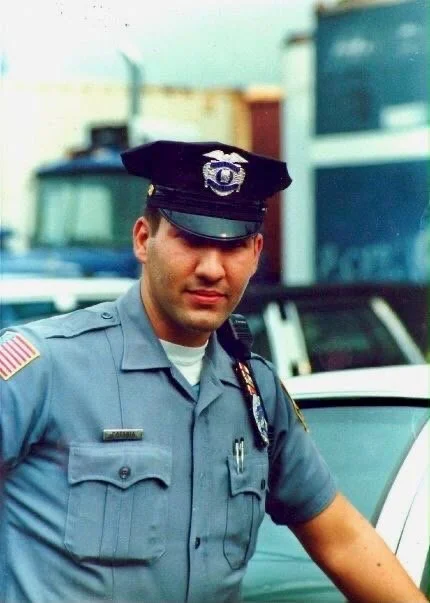
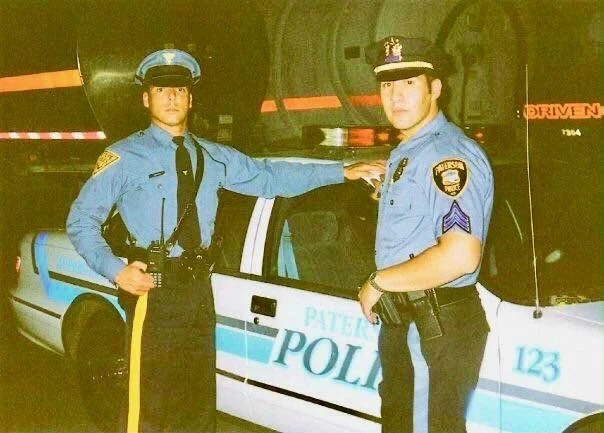
Florida was not simply a market for Blue Magazine. It was one of the nation’s largest law enforcement communities, with major agencies, unions and its own concerns. Marco helped us stay connected to that community. He kept relationships active, made introductions, assisted with interviews and brought information and resources back to our team. His law enforcement experience, including work connected to narcotics investigations, gave him an understanding of the people and institutions we were dealing with.
When I asked Marco to take on something important, he did not make the work harder than it needed to be. He assessed it, brought the right people together and moved it forward. That is why I trusted him with major projects, including the work that brought Blue Unity to Florida. That larger event is covered elsewhere in this issue, but Marco’s role reflects the kind of responsibility he was willing to carry for Blue Magazine and Moment of Silence.
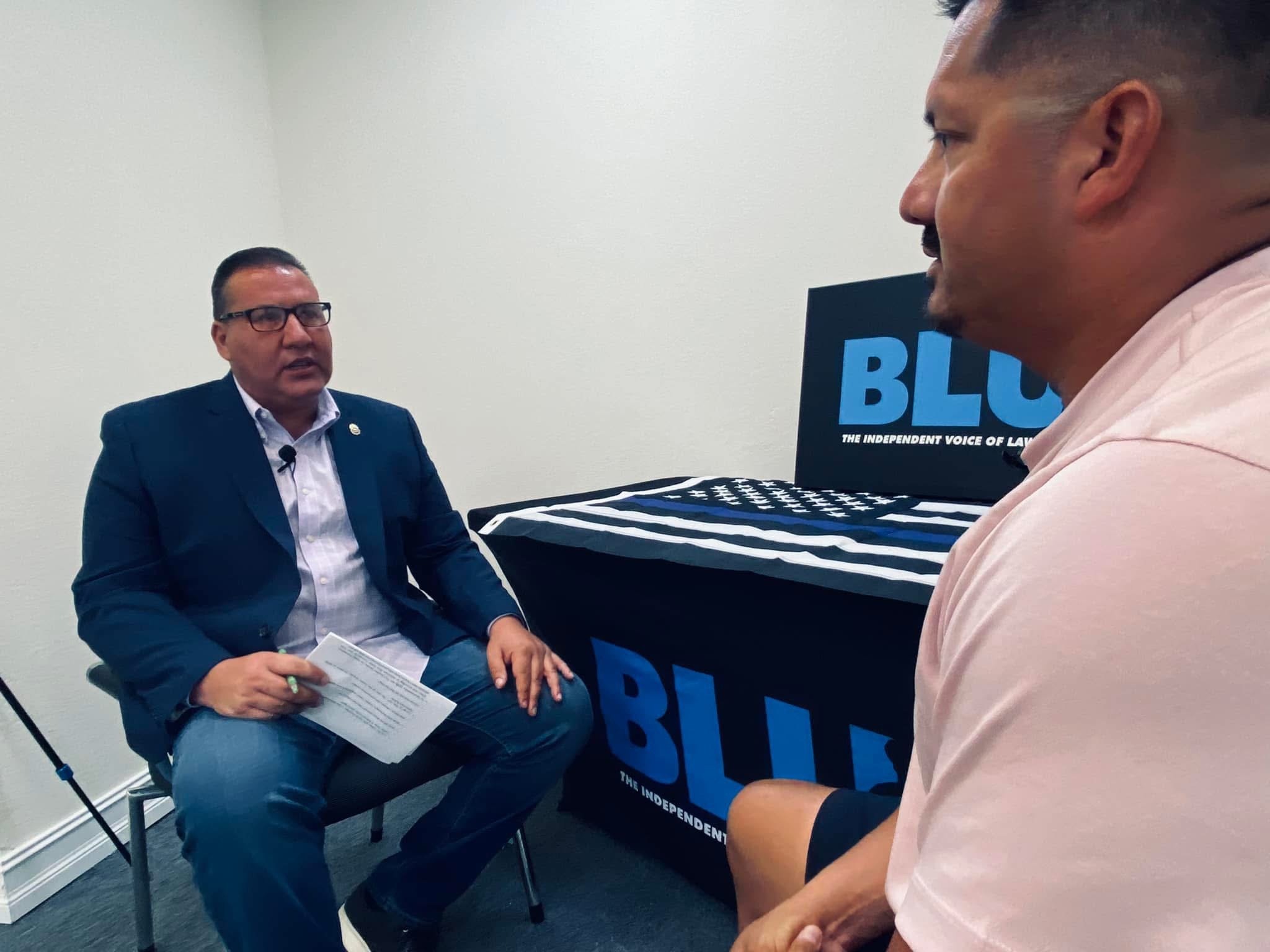
marco catania interviewing u.s border patrol agent jacob albarado.
His work also extended to reporting. In 2022, Marco and I interviewed U.S. Border Patrol Agent Jacob Albarado after the shooting at Robb Elementary School in Uvalde, Texas. Albarado’s wife was a teacher at the school, and his daughter was inside when the shooting began. He responded to the scene and helped evacuate children from the building. The interview examined not only what occurred that day, but the trauma carried afterward by officers, families and the community.
Marco took part in the Blue Calendar, contributed to Moment of Silence and has continued to travel from Florida to New Jersey when we needed him.
Blue Magazine grew because people with real experience were willing to lend their judgment, contacts and time to work they believed in. Marco was never just a name attached to Blue. He was an advisor I trusted, a contributor who could take on different roles when needed and a lasting part of the work we built.
CHIEF GUSTAVO “GUS” MEDINA
Ron Torres introduced us to Chief Gustavo “Gus” Medina with a simple message: this was a chief worth meeting.
Chief Medina had come to Florida after a career in New Jersey law enforcement and was leading the Tequesta Police Department with a clear understanding of what officers need from command staff. When our team visited, we toured the department, spent time with its officers and marine unit, and drove through the community they serve. The department was professional and welcoming, but what stood out most was its morale.
That kind of environment begins at the top. Chief Medina believes in his officers, expects them to meet the standard and holds them accountable. At the same time, he understands that an officer cannot do his or her best work without the backing of leadership, a healthy mindset and confidence that asking for help will not be held against them. His open-door relationship with Pastor Paul Beresford reflected that belief. Officers could speak privately with Pastor Paul and receive support outside the normal chain of command. It was not a program on paper. It was a real part of the department’s culture and an example of how a chief can take officer wellness seriously without weakening accountability.
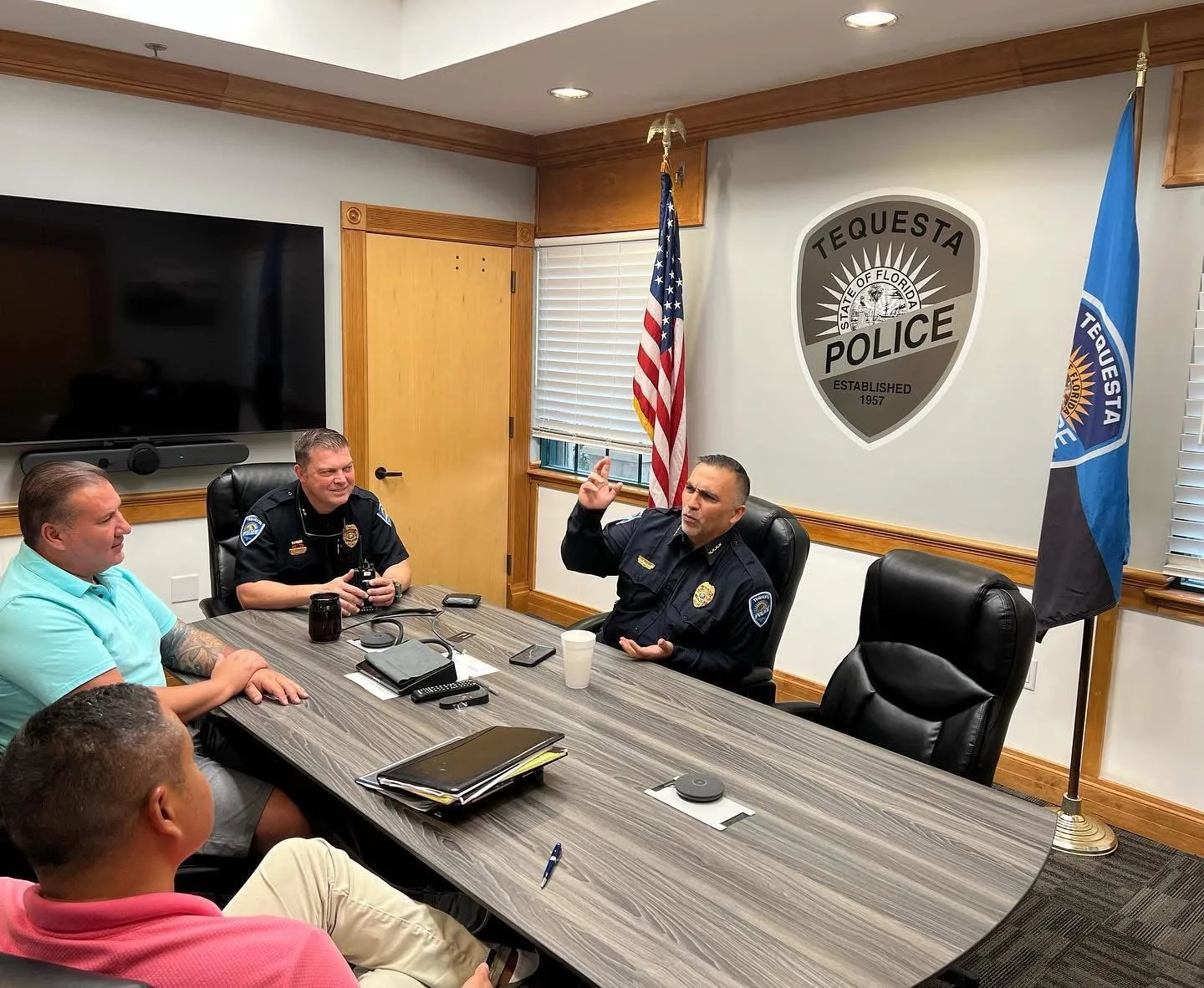
Our visit became the beginning of a lasting relationship. At BLUE Unity Night, Chief Medina, Pastor Paul and the Tequesta Police Department were honored for their service, their commitment to officer mental health and their efforts to create a department where officers knew their leadership stood behind them. BLUE has met chiefs and sheriffs throughout the country. Chief Medina stands out because he understands a simple but important truth: officers perform best when expectations are clear and they know their department has their back. Tequesta is a model worth following.
PASTOR PAUL BERESFORD
Pastor Paul became pastor to Blue Magazine and Moment of Silence, but his role was never ceremonial. He provided spiritual guidance and personal support to officers, their families and members of the Blue Magazine team during difficult periods.
At Blue Unity in Florida, Blue Magazine honored Pastor Paul alongside Chief Medina for their service to the law-enforcement community.
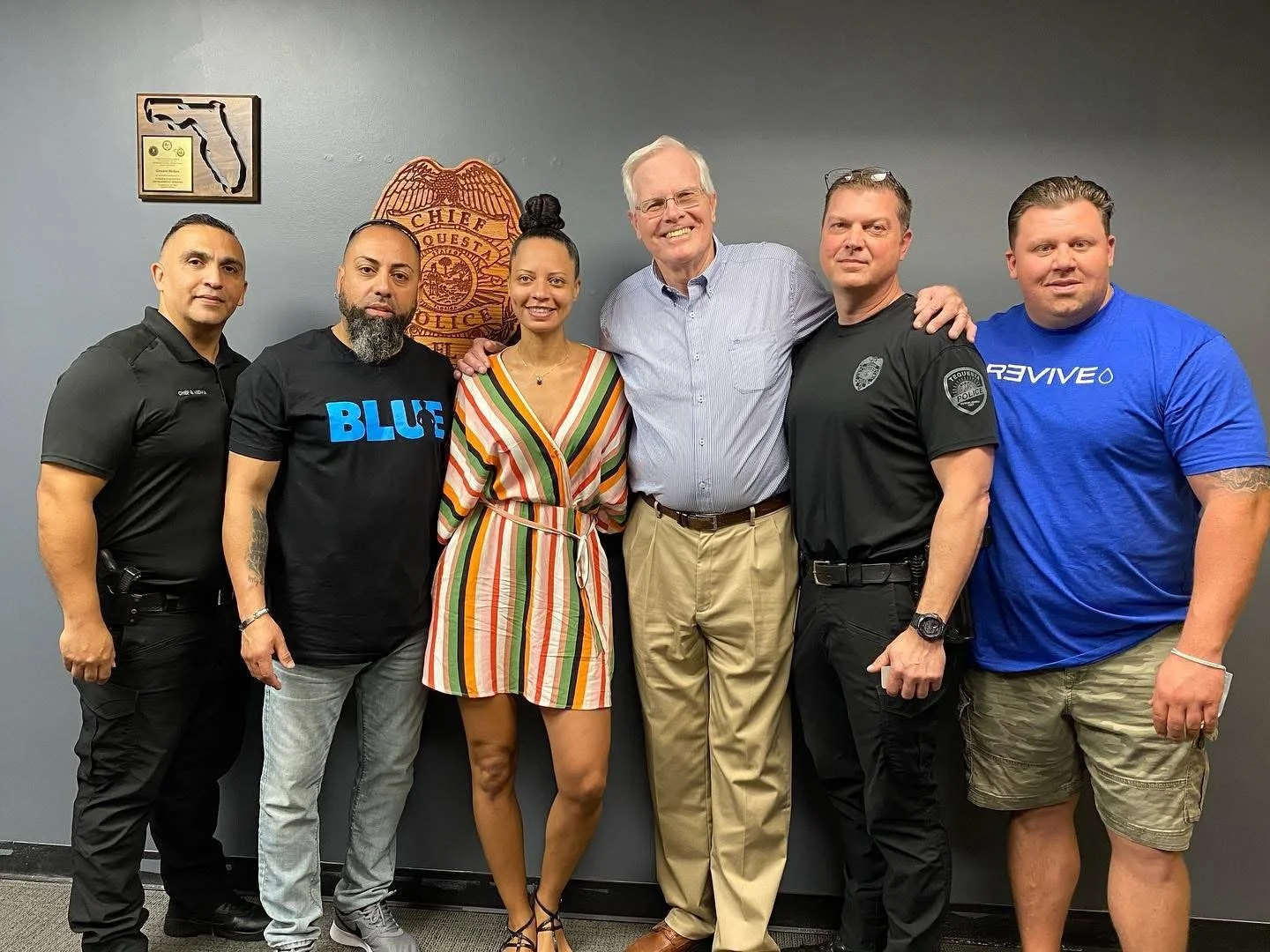
Pastor Paul understood that people who spend their careers helping others sometimes need someone willing to listen. A conversation or prayer could provide comfort without requiring every burden to be explained. He lived his faith through service, and Blue Magazine remains grateful for what he gave the magazine, Moment of Silence and the officers they served.
RON TORRES: THE K-9 VOICE OF BLUE
I met Ron Torres through Brothers Before Others nearly a decade ago, and we clicked immediately. A retired Lauderhill Police Department K-9 officer, Ron brought the kind of knowledge that only comes from doing the job. He understood working dogs, the handlers behind them and the responsibility that comes with both.
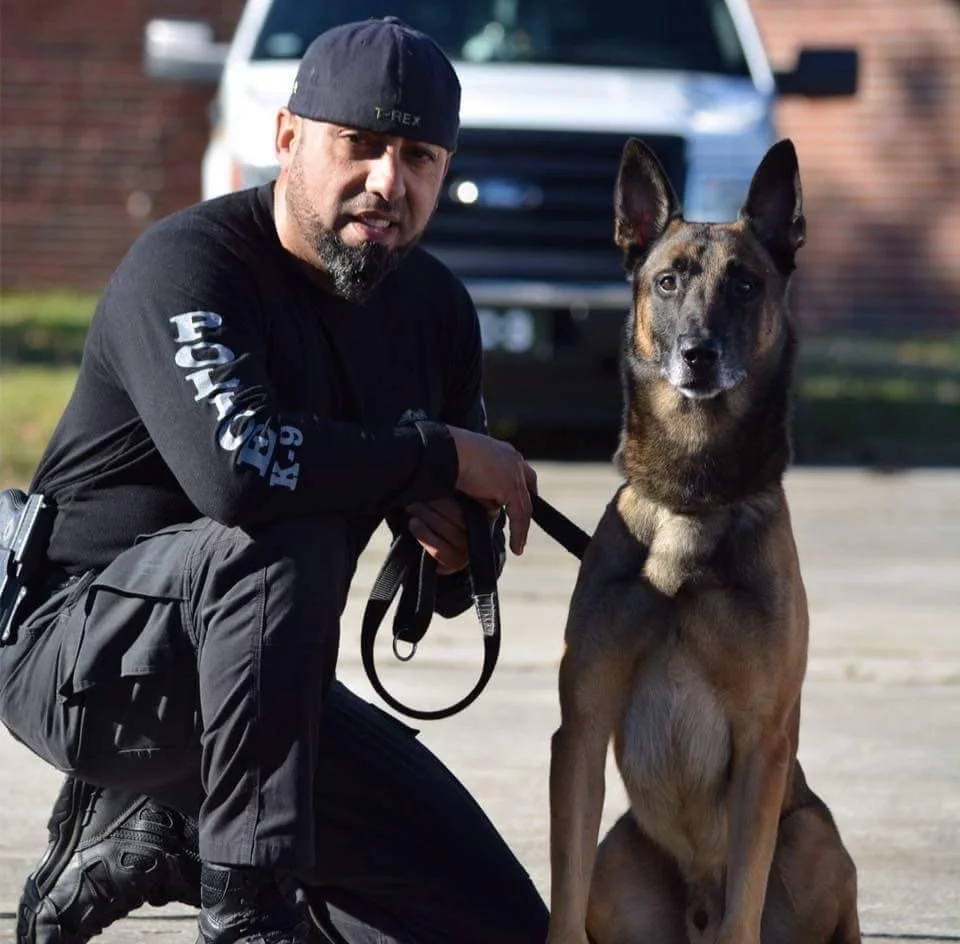
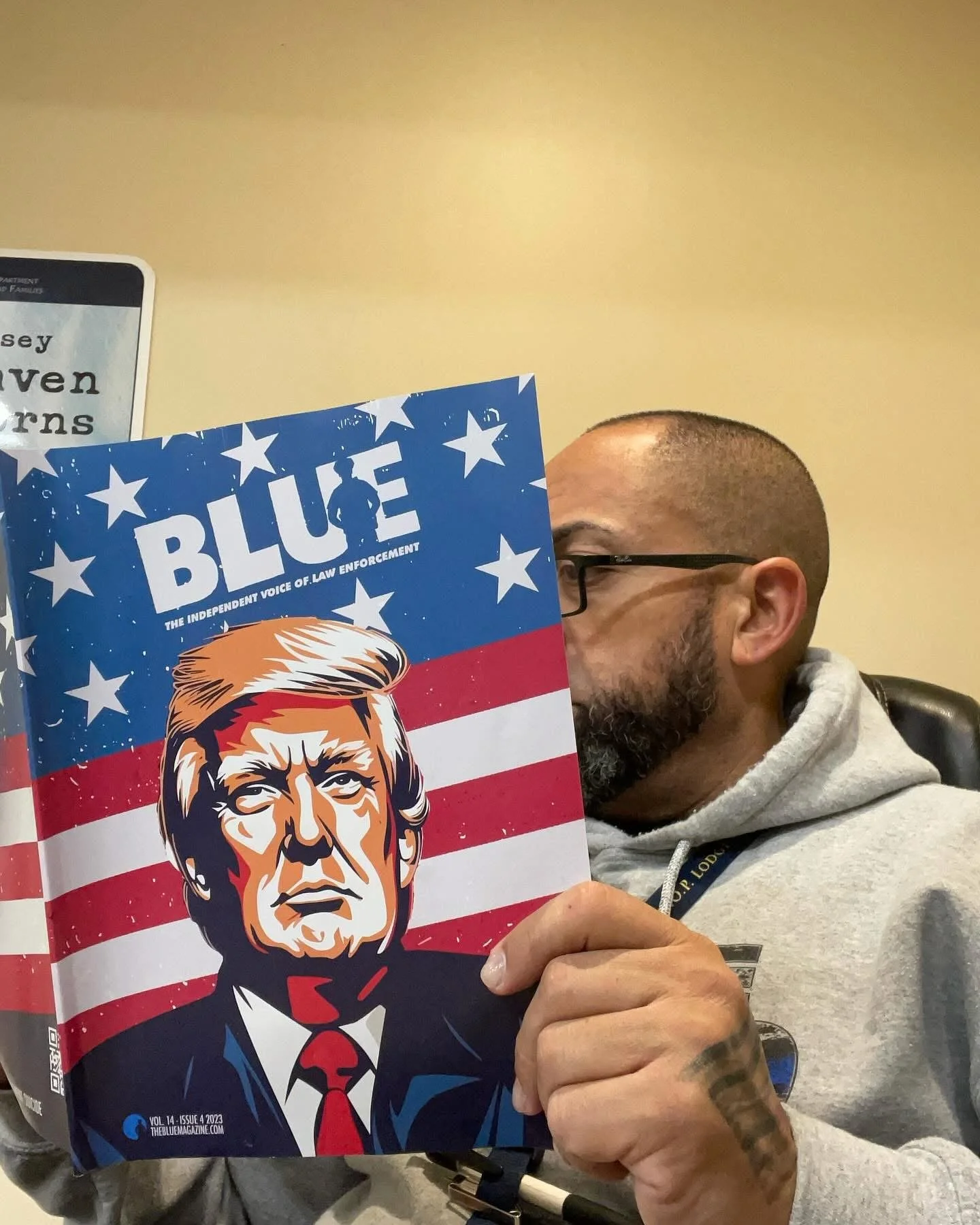
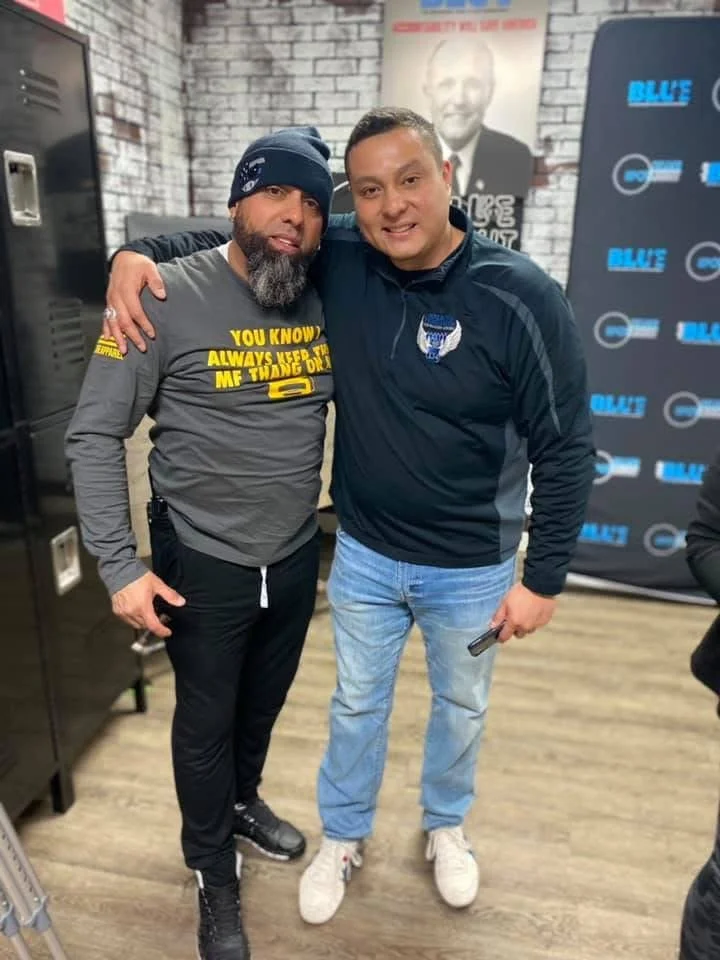
That experience strengthened Blue Magazine. In 2024, Blue produced its first special issue devoted to K-9s, “K-9 Unsung Heroes of Law Enforcement.” The purpose was to recognize working dogs as law enforcement partners and give their handlers a national platform to explain the training, discipline, risk and trust behind the work. Ron helped make that possible, bringing the expertise and relationships needed to connect Blue with K-9 teams from across the country.
Ron’s contribution went well beyond the K-9 issue. As a Blue Magazine advisor, podcast host and trusted partner, he became someone the team could rely on for information, introductions and direct guidance. He brought an investigator’s instincts, a veteran officer’s perspective and the energy to make people want to be part of the work. He also helped Blue build its Florida presence. Ron introduced the magazine to Tequesta Police Chief Gustavo Medina and Pastor Paul Beresford. Those relationships became meaningful to both Blue Magazine and Moment of Silence, and helped establish the foundation for Blue Unity Night in Florida in 2022.
Ron understands that retirement does not have to end a person’s service to law enforcement. He continued giving his time, contacts and experience to projects that recognized officers, supported their families and brought the profession together. He brings humor into a room, but he also brings loyalty and a willingness to work when the assignment matters.
Ron Torres is more than an advisor to Blue Magazine, he is family.
BLUE UNITY: THE FLORIDA EXPANSION
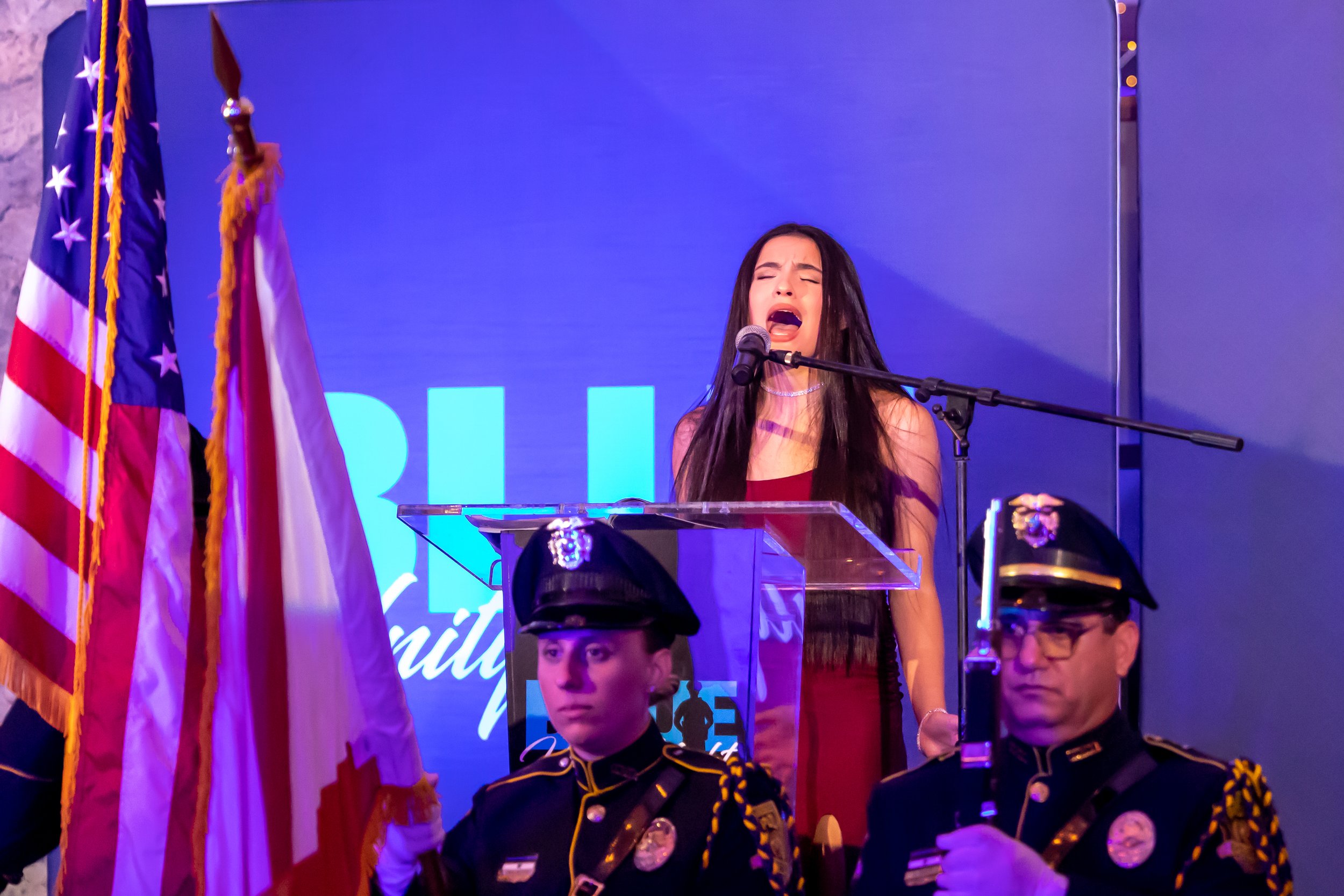
Three years after Night to Unite, Blue Magazine and Moment of Silence brought the law enforcement community together again. On September 30, 2022, nearly 400 people gathered at the Signature Grand in Davie, Florida, for Blue Unity Night.
The event followed a difficult period for law enforcement. Officers had endured COVID, vaccine mandates, civil unrest, political division and the continuing loss of colleagues to suicide. Blue Unity was not planned as another awards ceremony. Its purpose was to restore connection, place mental health and suicide prevention at the center of the conversation, and reinforce the responsibility officers have to look out for one another.
Commissioner Bernard Kerik served as Master of Ceremonies. The Police Pipe and Drum of Florida and the Davie Police Department Honor Guard opened the program, and Alyssa Del Valle sang the National Anthem.
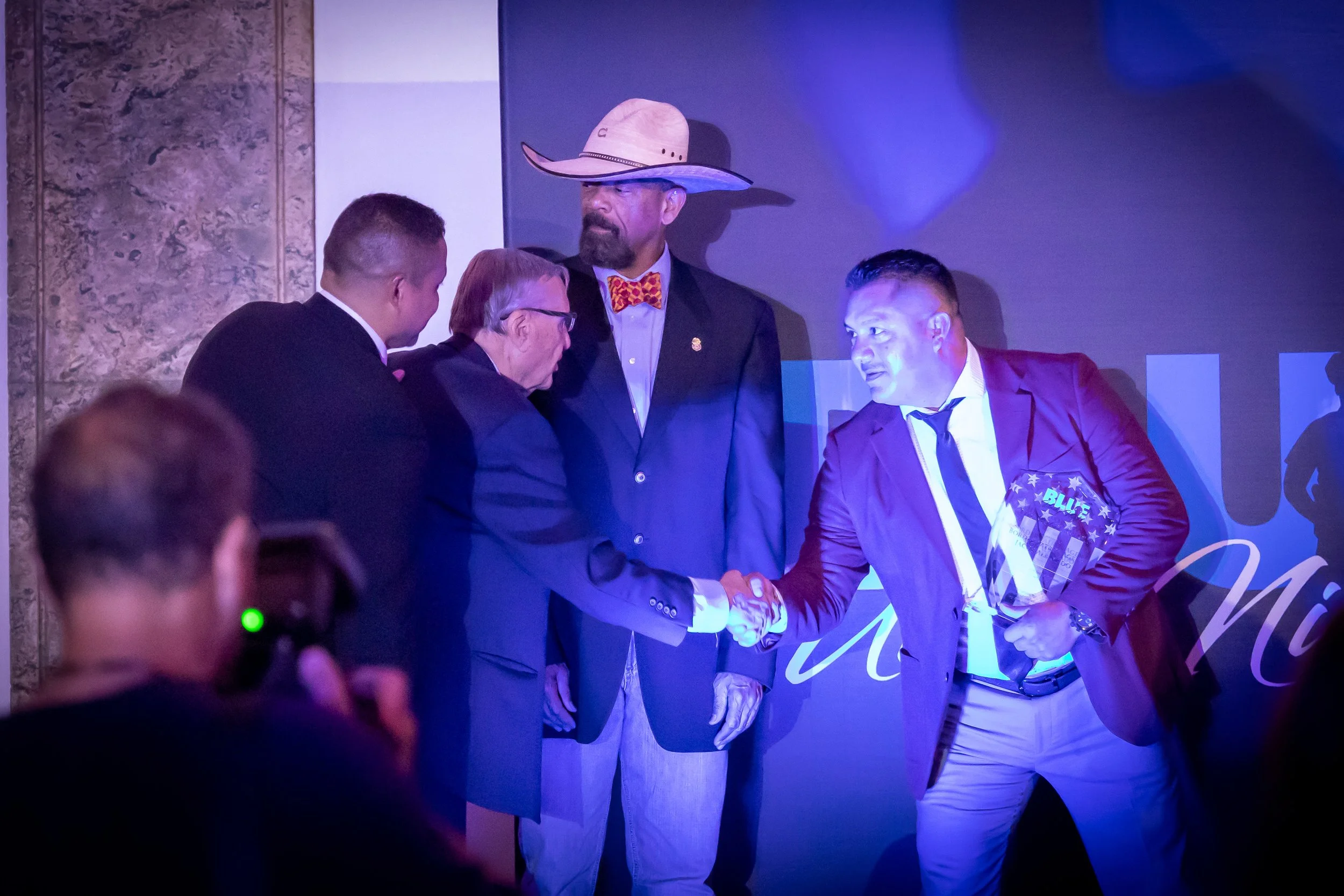
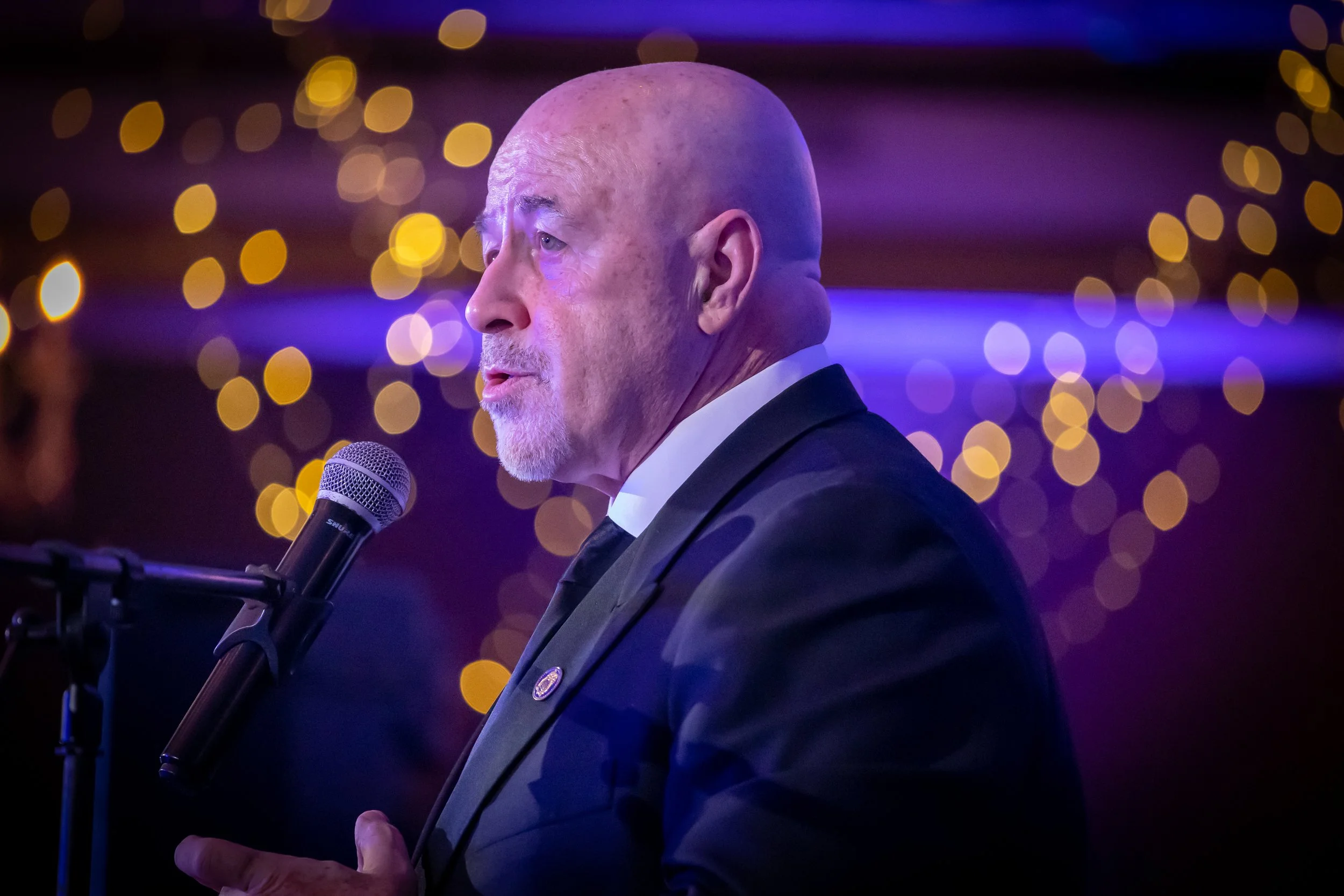
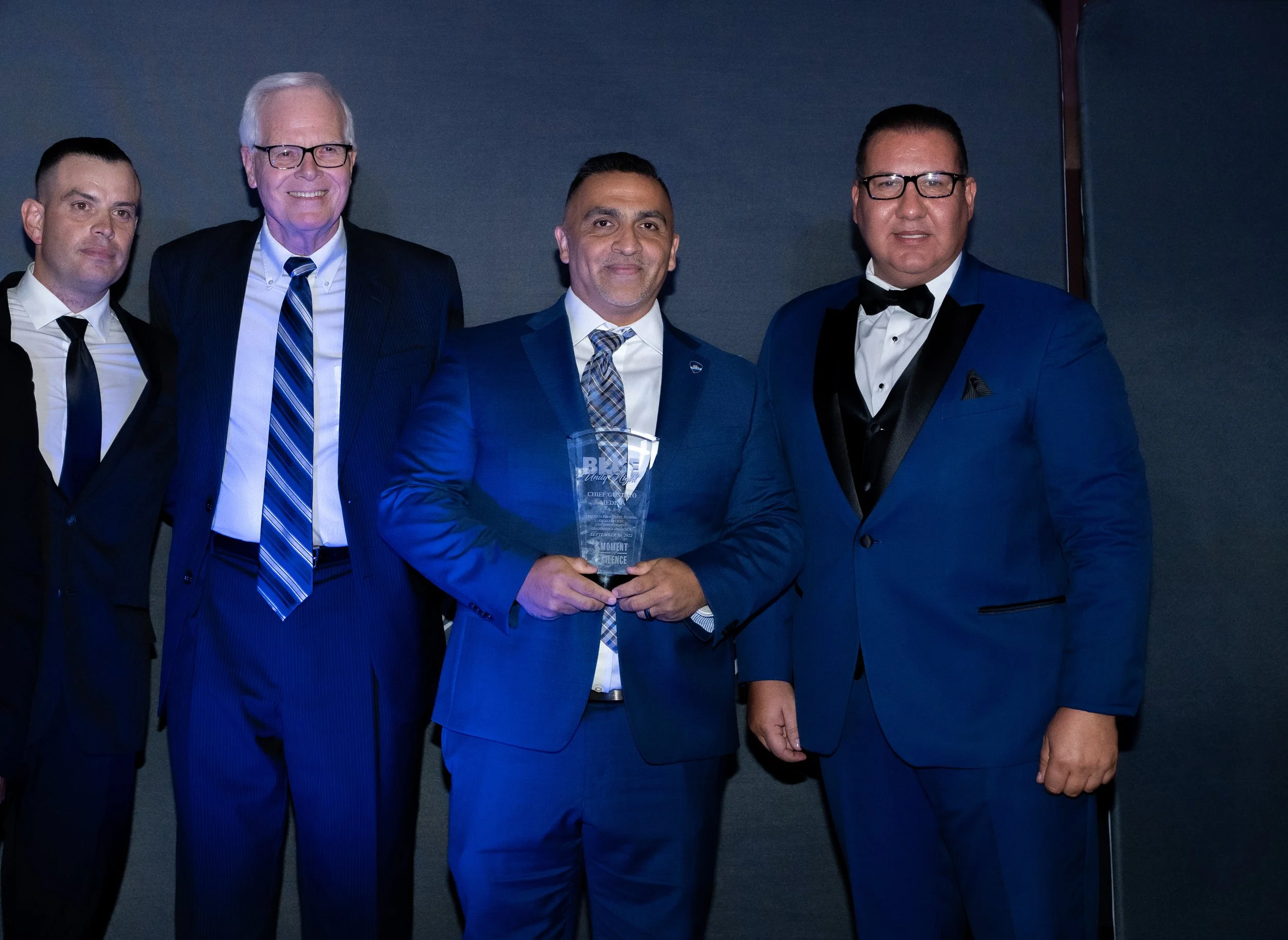
Valor Awards were presented to Claudia Apolinar and Emmanuel Perez Perez of the Los Angeles County Sheriff’s Department, Jacob Albarado of the United States Border Patrol, and Raffaello Cervera, Johnny Beautelus and Daniel Vilarchao of the Doral Police Department.
The program also recognized Chief Gustavo Medina, Pastor Paul Beresford, Joseph Occhipinti, Officer Frank Voce and Chief Joel Gordon. Blue columnist Kirk Lawless received the Senior Journalist Award. Florida Governor Ron DeSantis had been selected for a Lifetime Achievement Award but was unable to attend as Hurricane Ian required him to direct emergency operations across the state. Tom Homan, Sheriff David Clarke and Sheriff Joe Arpaio also addressed those gathered.

marco catania & lynette shaw
Bringing Blue Unity to Florida required months of work. Marco Catania led much of the effort on the ground, building relationships and coordinating the support needed to make it happen. Lynette Shaw worked alongside him in bringing the project together. Steve Olimpio remained central to Moment of Silence and its mission, while the Blue team, Florida relationships and supporters of Moment of Silence made the night possible.
Blue Unity also reflected the support system that had developed around Blue Magazine and Moment of Silence. Dr. N. Bill Aydin became a friend and supporter of both organizations. When we approached him about helping an officer, a child or a law enforcement charitable initiative, he helped. Dr. Steven Waldman became another important supporter. His pain-management work brought him into contact with injured law enforcement officers, and when an officer needed to be seen, he made room.
The message behind Blue Unity was direct. Law enforcement could not wait until an officer was lost to suicide before beginning a conversation about mental health. Asking for help was not weakness. It was a step that could keep someone alive.
The name Blue Unity was more than a theme for a ballroom or a photograph. It meant recognizing when an officer was struggling, starting the difficult conversation and standing beside that person before it was too late. That remains the work of Moment of Silence: Never give up. Stay in the fight.
THE BURDEN THEY CARRY
Certain conversations changed the way we understood the cost of the profession. We spent years talking with homicide detectives, investigators, prosecutors, agents and law enforcement officers about cases they had worked and incidents they had survived. We wanted to understand not only how an investigation unfolded or how a decision was made, but what remained after it was over. Two subjects repeatedly surfaced among the hardest: the death of a child and the sexual abuse of children.
Investigators described entering scenes involving children and working cases in which young victims had endured prolonged abuse. Their assignments could require them to examine photographs and video as evidence, interview children and absorb details that could not simply be forgotten when the workday ended.
Some told us the work changed the way they raised their own children. Knowing what they knew made it difficult to trust people in the same way. They became more cautious about where their children went, who had access to them, what applications they used and what they were exposed to online. Some recognized that the vigilance could become over protectivenes but separating what they knew professionally from how they parented was not always easy. Other memories remained for different reasons. We interviewed officers who could describe traumatic calls from decades earlier with extraordinary precision. They remembered where they were standing, what they saw and what happened next. Time had moved forward. The memory had not necessarily faded with it.
The same could be true after an officer used deadly force. We spoke with officers involved in shootings that were determined to be justified. The legal determination answered one question. It did not necessarily answer what happened afterward. One officer we knew struggled for years after taking a life in the line of duty. He remembered the person and the scene. He experienced serious anxiety, required treatment and medication and eventually retired earlier than he had expected.
The shooting had been justified, living with it was a separate matter.

That distinction is easy to miss from outside the profession. An officer can survive an armed confrontation, act within the law and still be affected by having taken another human life. There were no universal reactions. Some officers processed traumatic experiences and continued their careers without the same difficulties. Others carried particular incidents for years. Some sought professional help. Some spoke only with people they trusted. Some found less healthy ways to cope. The case could close. The investigation could end. The officer could retire.
None of those things guaranteed that the memory went with them.
PENN MEDICINE PRINCETON HOUSE BEHAVIORAL HEALTH: FIRST RESPONDER TREATMENT SERVICES
Penn Medicine Princeton House Behavioral Health’s First Responder Treatment Services has become a trusted resource for law enforcement officers and other first responders facing what too often remains hidden: trauma, mental health struggles, substance use and the weight of a career spent carrying other people’s emergencies.
Asking for help is not easy in this profession. Making the first call, completing an assessment and entering treatment can feel intimidating, especially for someone trained to remain in control and never let others see a struggle. Treatment, however, is not punishment. It offers the time and support needed to stabilize, breathe, think clearly again and begin building a way forward.
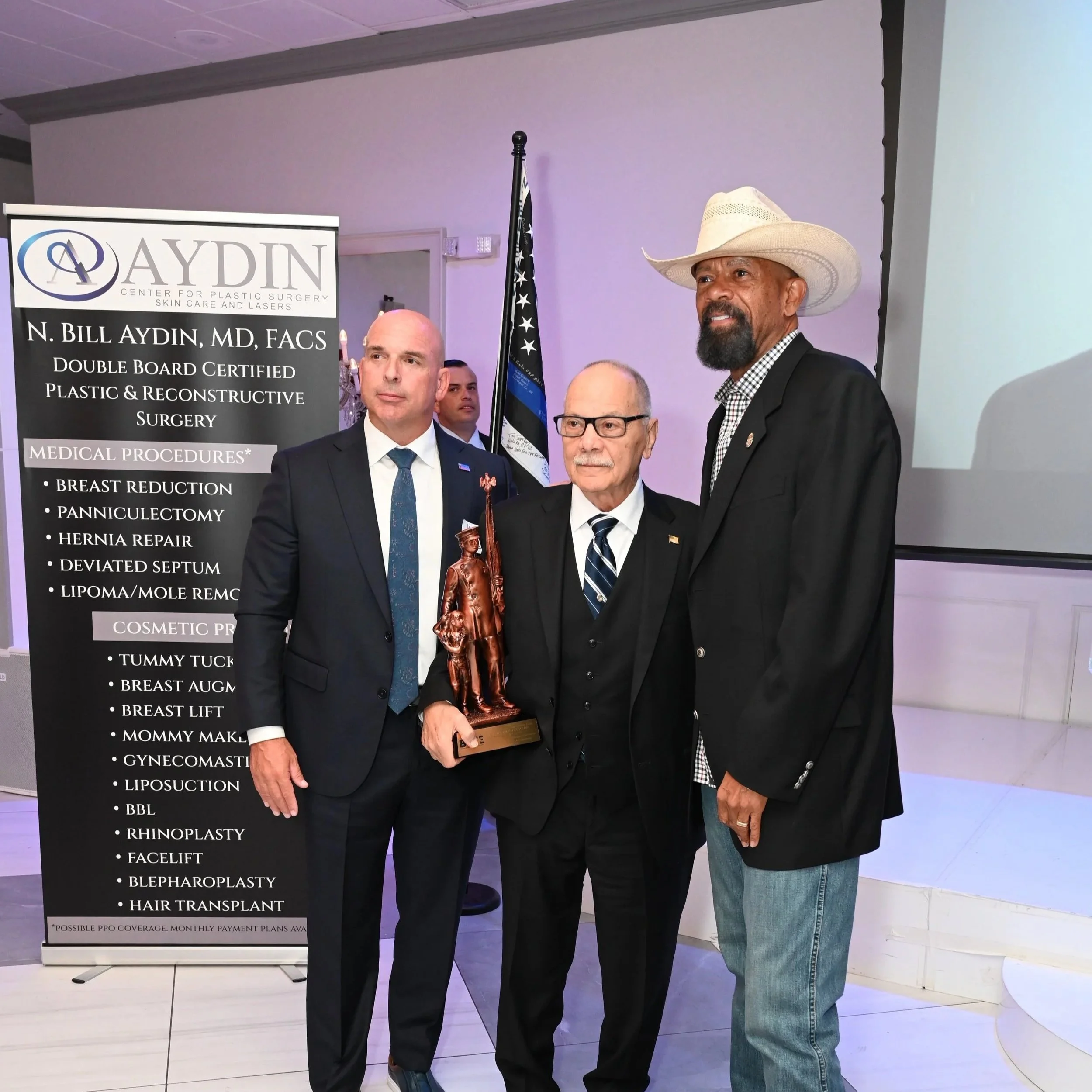
Dr. bizzarro and ken burkert honored by the blue magazine.
For years, Penn Medicine Princeton House has recognized that first responders need care from professionals who understand the culture. First Responder Treatment Services combines clinical care, peer support and firsthand law enforcement experience while providing the privacy and respect officers and their families deserve.
Dr. Michael Bizzarro, PhD, LCSW, has dedicated his career to this mission. Through Penn Medicine, he has helped create a path for first responders to seek care without shame and recognize that a crisis does not have to become the end of their story. The Blue Magazine was proud to honor Dr. Bizzarro with the Cop & Boy statue for his lifetime commitment to the mental health and wellness of law enforcement officers and first responders.
Standing alongside that mission is Ken Burkert, Senior Outreach Coordinator and a retired law enforcement officer. Ken understands the pressures of the job, the culture of silence and the devastation that can follow when someone believes there is nowhere to turn. He has spent years connecting officers and families with support before a difficult moment becomes irreversible.
Penn Medicine Princeton House represents something the profession needs: a confidential and compassionate program where first responders can speak honestly, receive care and take the next right step. No officer should have to face a crisis alone. Reaching out is not weakness. It is the decision to remain here for yourself, for the people who love you and for the life still ahead.
If you are a first responder or the family member of a first responder and need assistance, contact:
Ken Burkert
Senior Outreach Coordinator
Retired Law Enforcement Officer
908-346-1691
HOLLY FINLEY: THE STEADY HAND BEHIND BLUE
Holly Finley, a retired Bronx DAO Detective Investigator, has been part of Blue Magazine and Moment of Silence for many years. She arrived with law enforcement experience, sound judgment and the ability to take responsibility when the work demanded it.
Her contribution extended well beyond a single assignment. Holly helped arrange interviews, coordinate events, manage agreements, investigate issues, prepare people for conversations and step into interviews herself. She led Blue Magazine’s interview with Mayor Eric Adams, participated in the final interview with Governor Phil Murphy and supported the White House assignment with United States Border Czar Tom Homan. She also represented Blue in the BLUE Calendar and at events, often working wherever the need was greatest.
Those responsibilities mattered most during the magazine’s difficult final years. The advertising market contracted after COVID, and sustaining an independent publication became increasingly demanding. Holly’s work was constant. She helped carry the operational weight of the magazine while continuing to serve Moment of Silence and the wider law enforcement community.

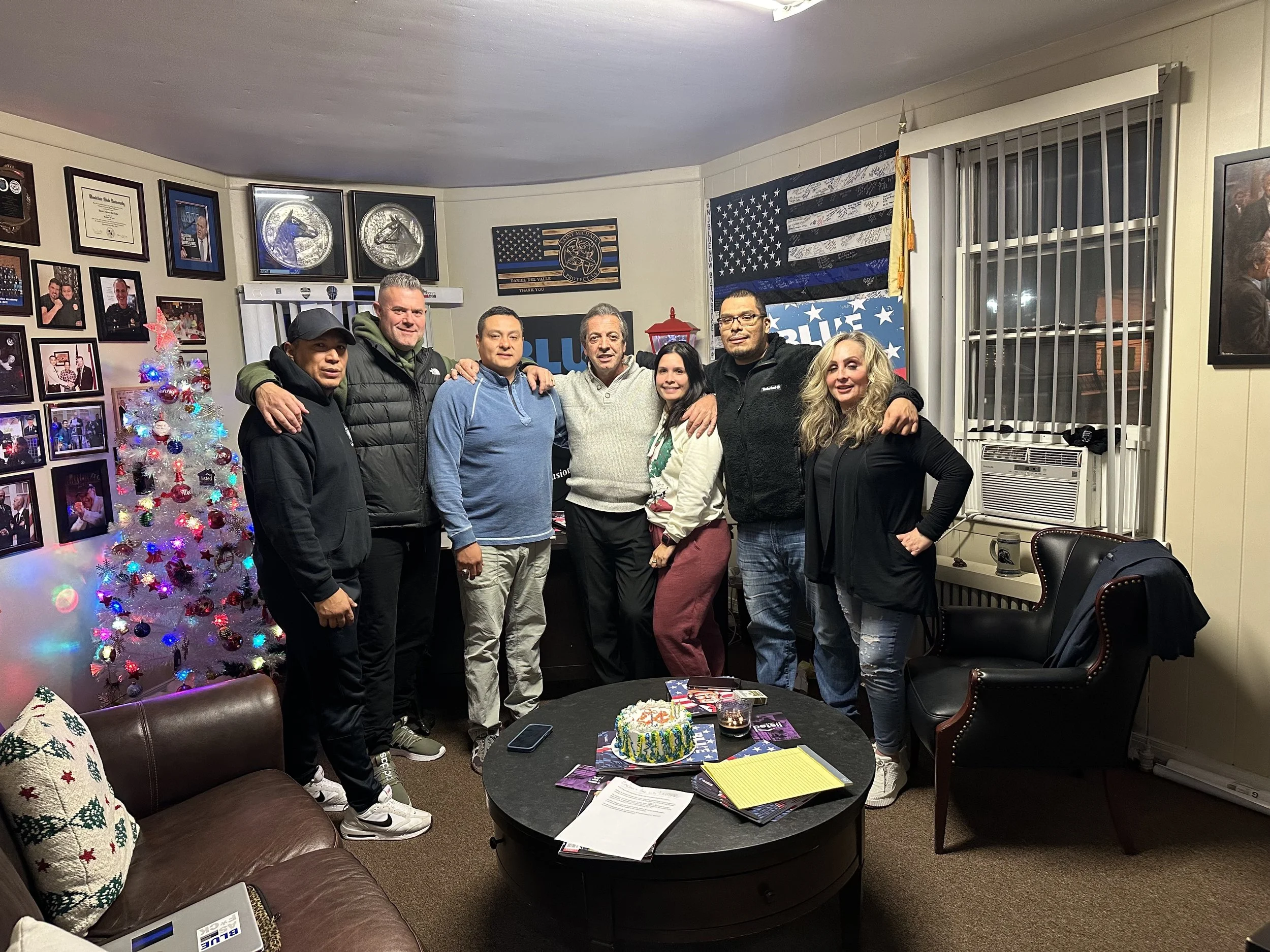

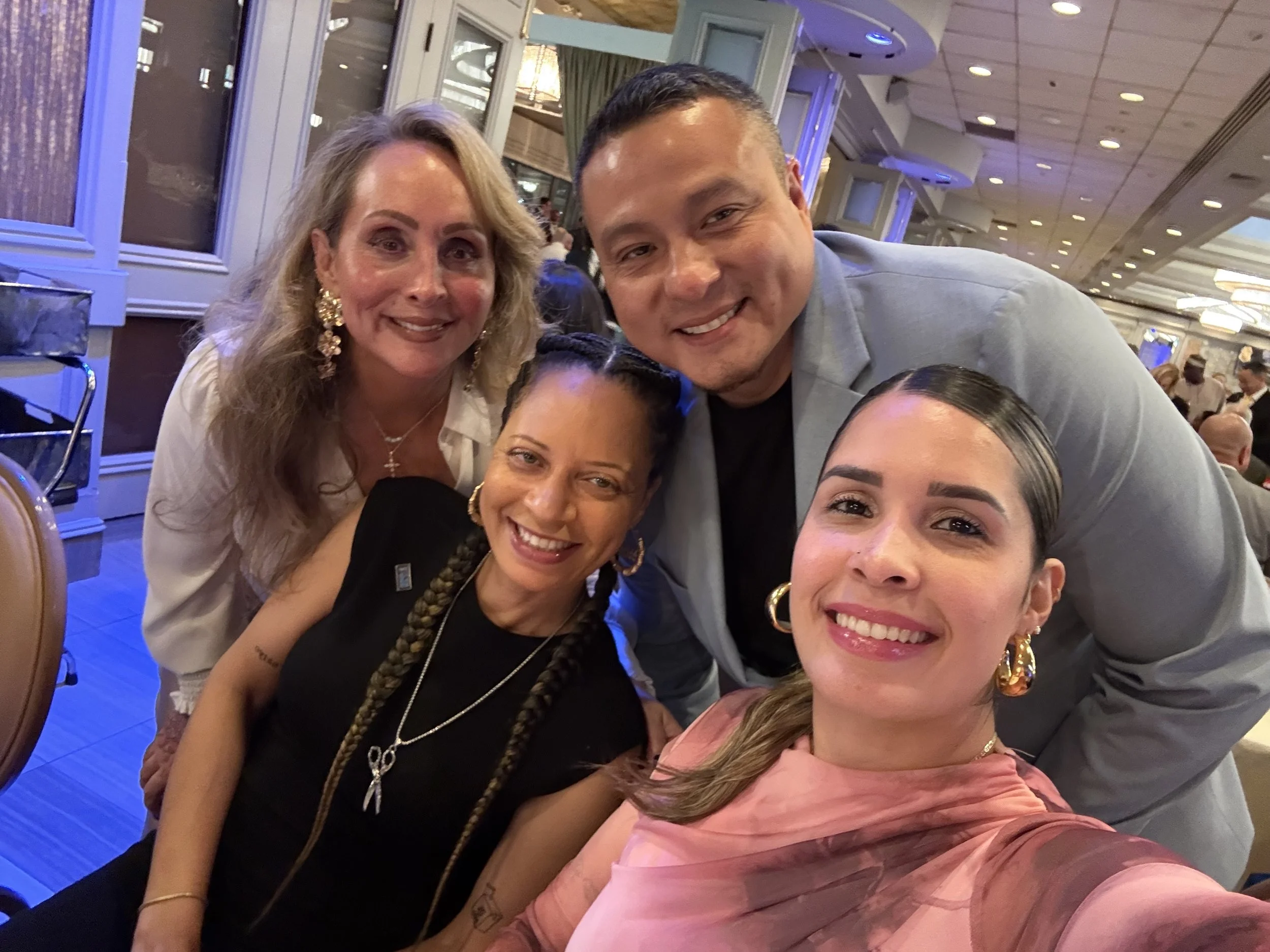
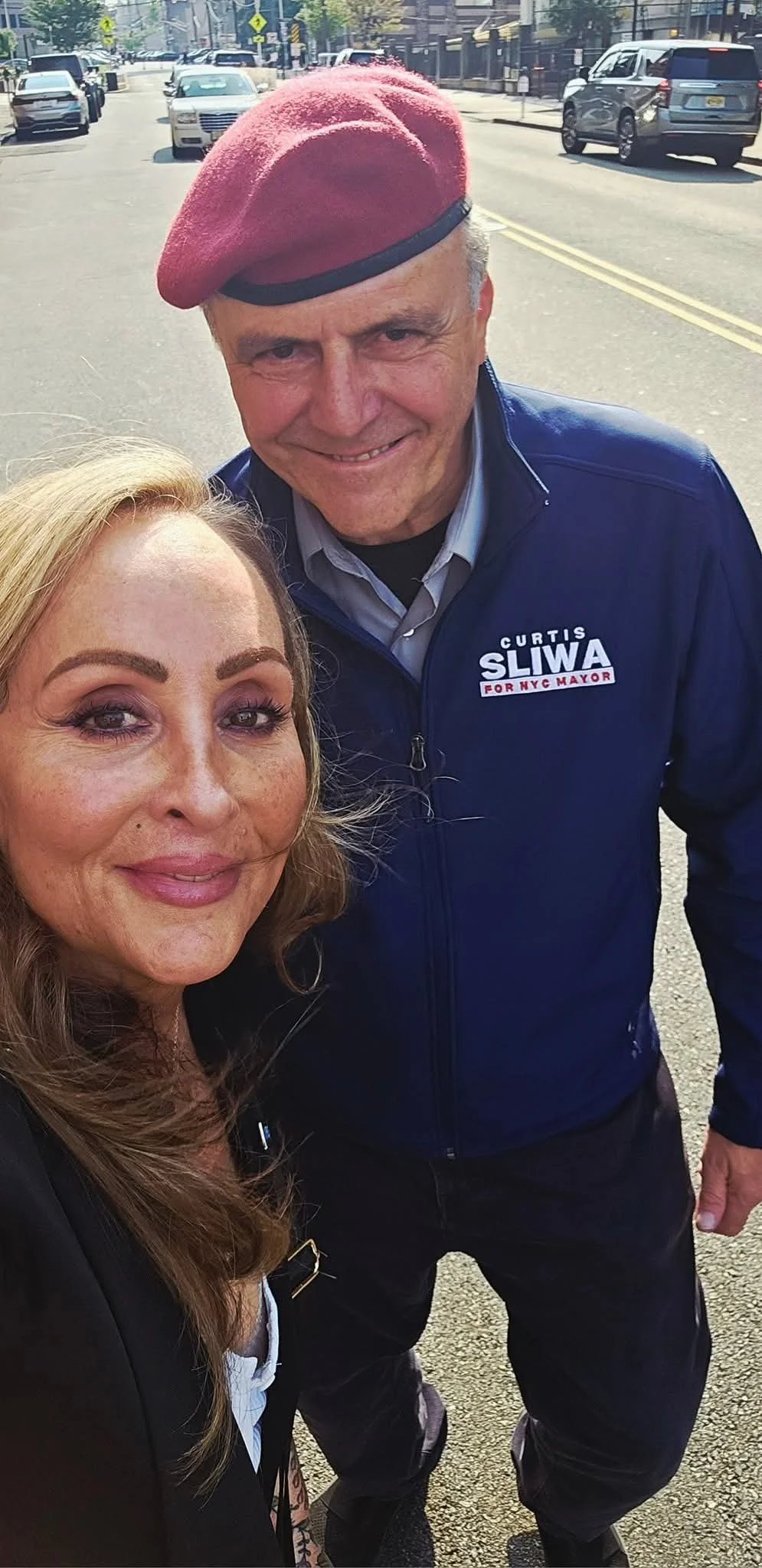
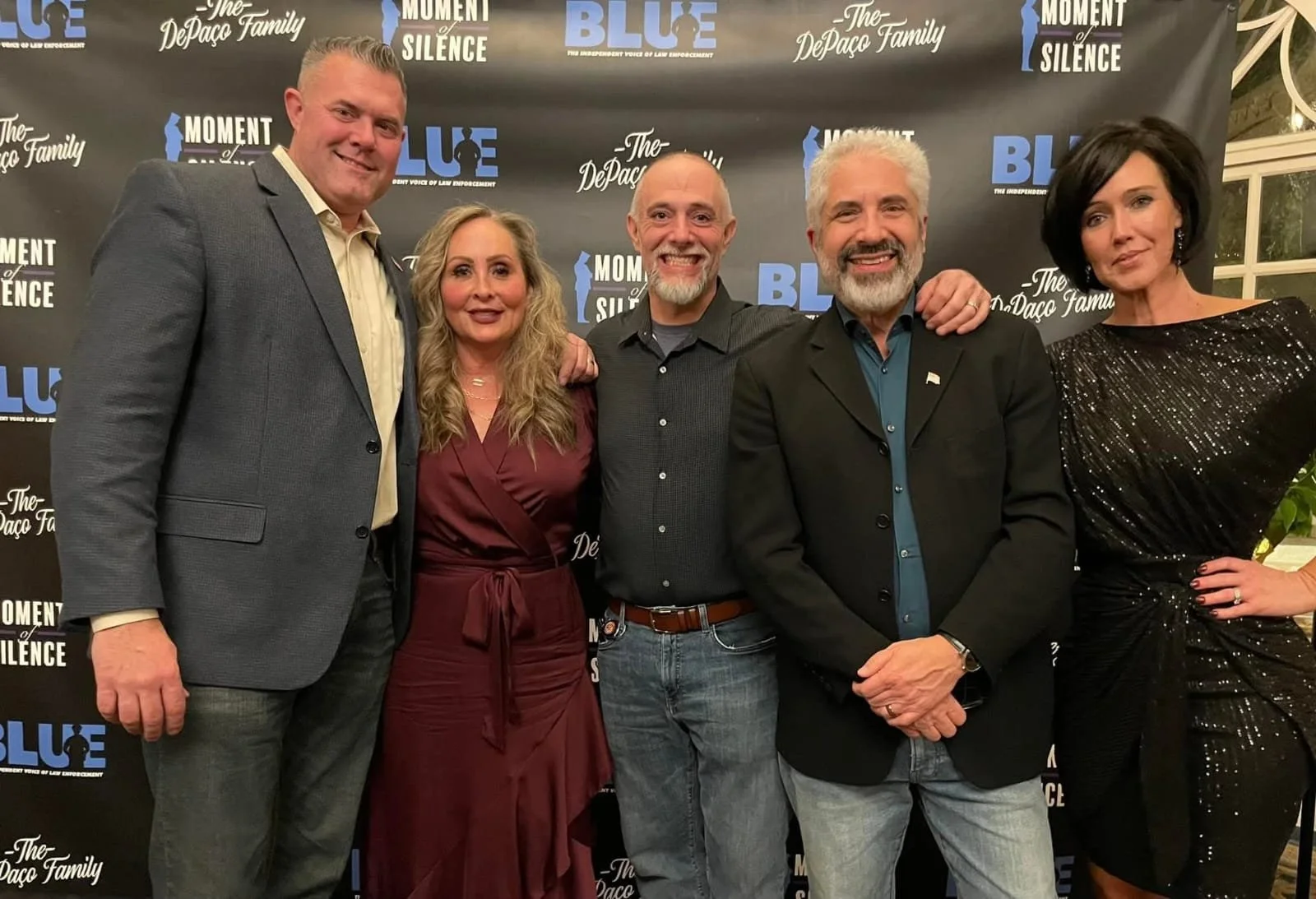
Her loyalty is one of her defining qualities. Holly is someone I can walk into any room with and know she will represent the work, the team and the profession with professionalism. She understands law enforcement, she cares about officers and their families, and she does not disappear when the work becomes difficult. Holly represents the kind of person an independent magazine needs to survive. She can move between roles, handle unexpected responsibilities with grace and punctuality, and bring the same standard to an interview, an event, an agreement or a difficult conversation. That range is not common. It is one reason Blue Magazine was able to meet difficult moments with professionalism.
I believe God brought Holly to this team at the right time. To me, she is more than a member of the team. She is family. Blue Magazine became what it was because of people willing to carry the work with loyalty, skill and heart. Holly Finley is one of those people.
NEW YORK CITY MAYOR ERIC ADAMS
Blue Magazine interviewed New York City Mayor Eric Adams while NYPD officers were confronting declining morale, public hostility and repeated displays of disrespect during routine enforcement. Before entering elected office, Adams served 22 years in the NYPD and retired as a captain. Blue Magazine wanted to know whether that experience shaped his response to what officers were facing.


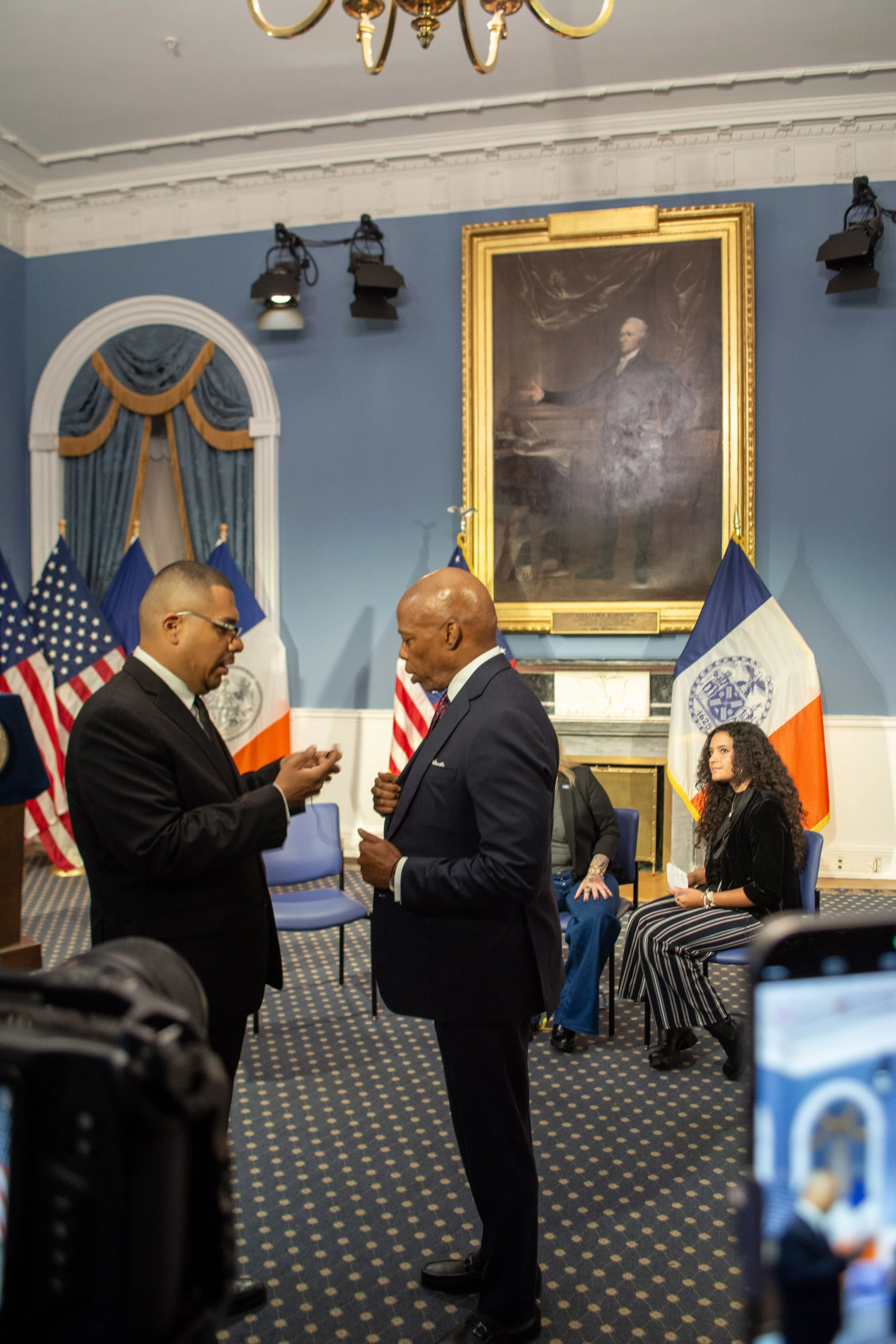
Holly Finley led the interview. As a retired Bronx DAO Detective Investigator, she understood the profession from within. Junior journalist Alyssa Del Valle also participated. Eddie Yaghen and Chris Bonilla handled camera and production responsibilities.
Blue Magazine asked Adams why hostility toward officers had intensified, whether his administration understood its effect on morale and what City Hall was doing to protect officers performing their duties. The questions carried the concerns of officers who would never have the opportunity to question the mayor directly.
Adams said he understood the frustration and maintained that his administration supported the NYPD. He said people who assaulted officers or committed other crimes against them would face arrest. He also addressed the cumulative pressures of the profession and the importance of officers seeking mental health support.
Blue Magazine did not agree with every decision Adams made. Agreement was not a condition of the interview. He answered professionally, and the magazine documented how a former NYPD captain leading City Hall responded to concerns from within the department.
MICHAEL DOWD — THE ROAD TO REDEMPTION
Some covers were easier to explain than others. Michael Dowd was one of the difficult ones.
Someone on the Blue Magazine team recommended that we watch The Seven Five, Tiller Russell’s documentary about corruption inside Brooklyn’s 75th Precinct. We did, and it raised a difficult question: Could law enforcement learn something from one of the NYPD’s most notorious corrupt officers?
Dowd had not simply made a bad decision while wearing a badge. He took bribes from drug traffickers, provided confidential police information and protection to criminals, warned dealers about raids and became involved in narcotics distribution. He eventually pleaded guilty to racketeering and narcotics conspiracy. He had gone from enforcing the law to participating in the criminal world he was supposed to police. There was no defending what he had done, but Blue believed there was value in examining it.
We met with Dowd and talked at length. He did not ask us to pretend he had been a good cop. He acknowledged what he had done and the damage that followed. He had lost his badge, his freedom and his reputation, while his family lived with consequences they did not create. What interested us was his willingness to explain how he had gotten there.
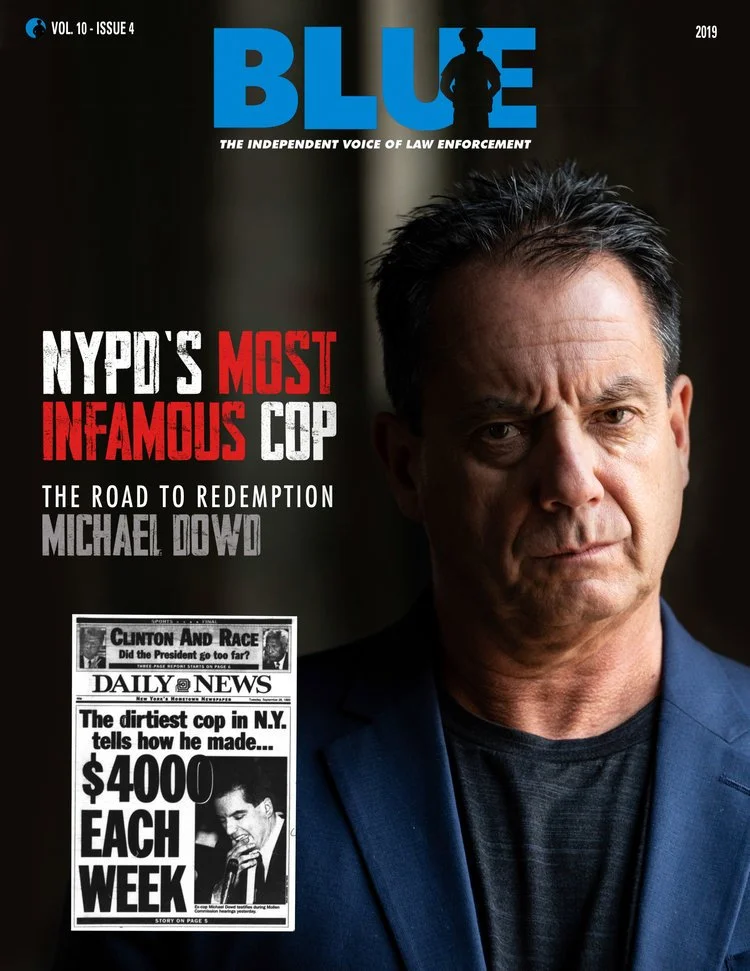
In 2019, we put Michael Dowd on the cover of The Blue Magazine, and the reaction was immediate. Some law enforcement officers were furious. They could not understand how a magazine built for their profession could place a convicted former officer on its cover. Some told us they had lost respect for Blue Magazine. Others believed giving Dowd a platform dishonored those who had spent their careers wearing the badge with integrity. Still others understood the distinction between celebrating corruption and examining its consequences.
I understood the anger. But placing someone on a cover is not an endorsement, and controversy cannot determine whom a journalist is willing to examine. Over the years, people tried to tell us whom we should interview, whom we should associate with and which relationships might cost us access. We listened to the criticism and made our own editorial decisions. Michael Dowd became one of the clearest tests of that independence.
With Dowd, the lesson was where corruption can lead. An officer crosses one line. The next becomes easier to cross. Eventually, there may be little resemblance between the oath he took and the life he is living. Dowd had lived that progression and knew where it ended. That was what we wanted officers to understand: not how to be Michael Dowd, but how not to become Michael Dowd.
His crimes and their consequences were only part of the story we set out to examine. Dowd had served his sentence. Prison could punish him, but it could not rewrite what had happened. His badge was gone, and his past would follow him. The question was what he would do with the rest of his life.
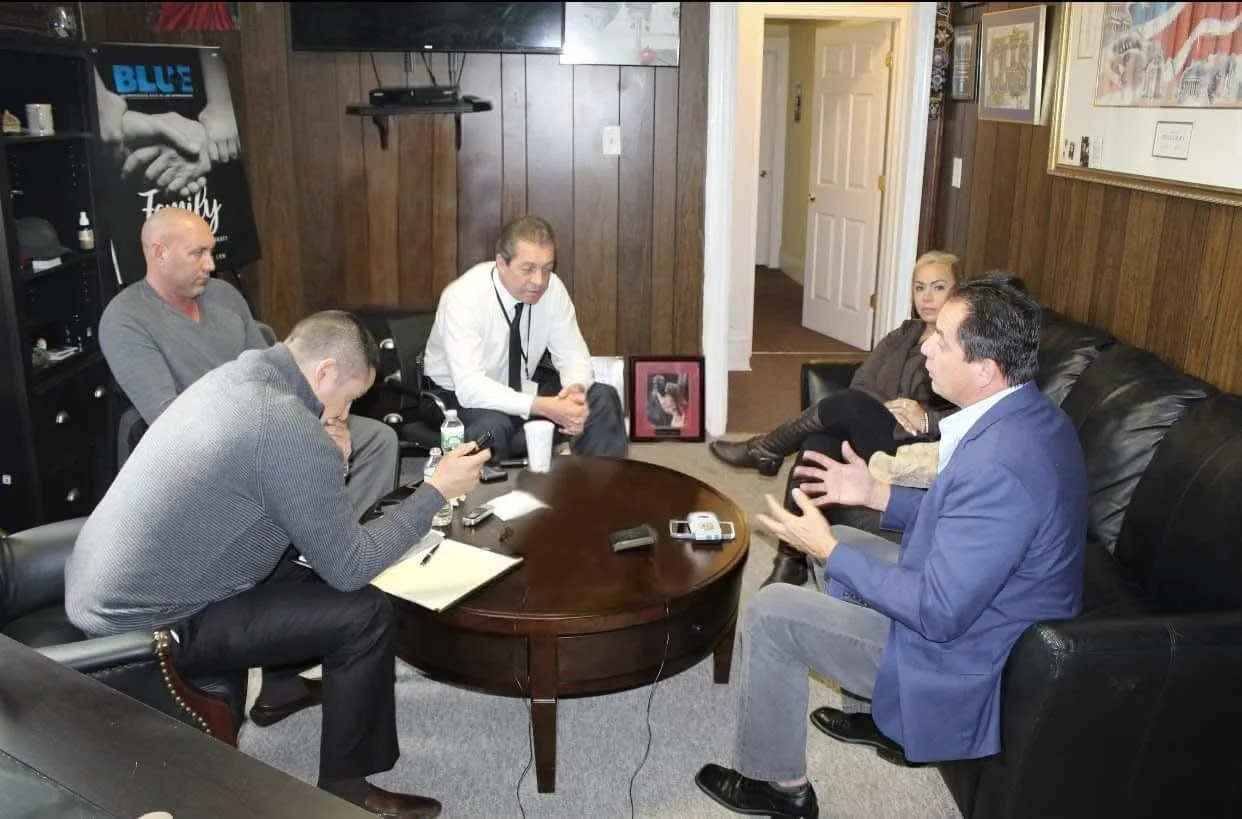
We called the cover “The Road to Redemption.” The use of road was deliberate. Redemption was not a verdict we had the authority to deliver. We were examining what Dowd chose to do after prison and where those choices might lead.
The interview ended, but our relationship with Michael continued. Over time, he became involved with Blue Magazine and Moment of Silence. Some years, Michael has joined us for Santa Comes to Paterson, spending the day as one of our elves, running with the team and helping deliver toys to children throughout the city. His involvement has also extended into the more difficult work we have done around law enforcement mental health.
Through that work, I learned that not every officer in crisis wants to speak with someone who appears perfect. Sometimes an officer wants someone who understands what it feels like to fall. Michael understands that in a way few people can. There have been times when I have called him and said, “Michael, I have an officer who needs someone to talk to.” He answers. When we have needed him to speak to officers or share his story with a department, he has made himself available. Some officers have been comfortable talking to him precisely because he was not approaching them from a position of perfection.

His past did not disappear. In those moments, it became part of the reason they listened.
Michael and I eventually became friends. That friendship did not change my judgment about what he did while wearing a badge. It allowed me to witness what he chose to do afterward. Today, when Moment of Silence encounters an officer in crisis and Michael is the person I believe that officer might listen to, I can still make that call. He still answers.
Maybe that is the meaning of the cover we published years ago. The road to redemption was never a declaration about where Michael Dowd had arrived. It was about the direction he had chosen and whether he would continue moving toward it.
SHERIFF MARK LAMB: A VOICE BEYOND THE BADGE
Former Pinal County Sheriff Mark Lamb became a key figure in Blue Magazine’s national coverage because he offered the magazine more than a public statement. From the first interview, Lamb made himself available, opened doors to his department and helped the magazine document the issues his deputies confronted in Arizona. Lamb served as Pinal County sheriff from 2017 through 2024, following earlier service with the Salt River Pima-Maricopa Indian Community Police Department. His work placed him close to drug trafficking, human smuggling and border-related crime. When Blue Magazine interviewed him about fentanyl, he spoke from the perspective of a sheriff whose county and deputies faced its consequences firsthand.
His relationship with Blue Magazine extended beyond the interview. Lamb traveled to New Jersey, attended Blue events, visited police departments and joined roll calls. At the Paterson Police Department, he met with PBA President Angel Jimenez. The conversation was not a photo opportunity. It gave leaders from different parts of the country time to compare tactics, concerns and the changing realities of the job. That exchange reflected a larger part of Blue Magazine’s work. The magazine did not simply record law enforcement from a distance. It brought officers and leaders together for direct conversations that could not happen through a cover story alone. Lamb spoke with officers as a fellow law enforcement professional, listened to their concerns and participated in practical discussions about the profession.
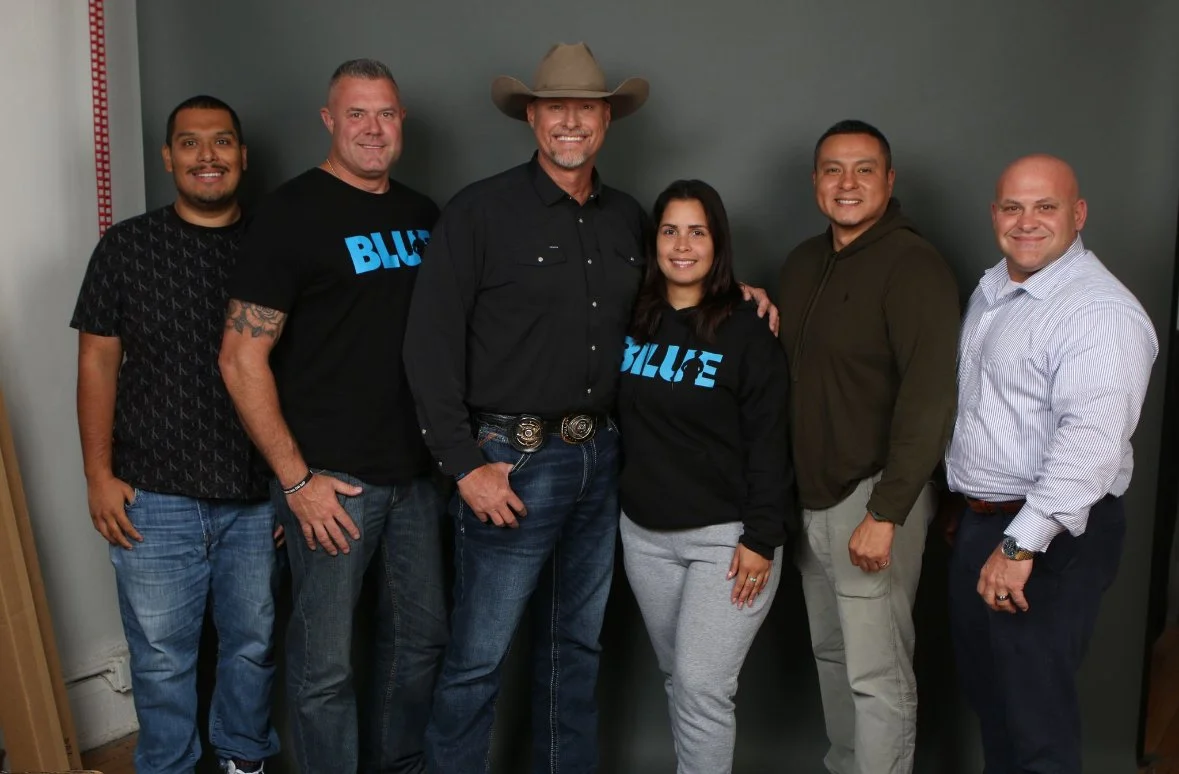
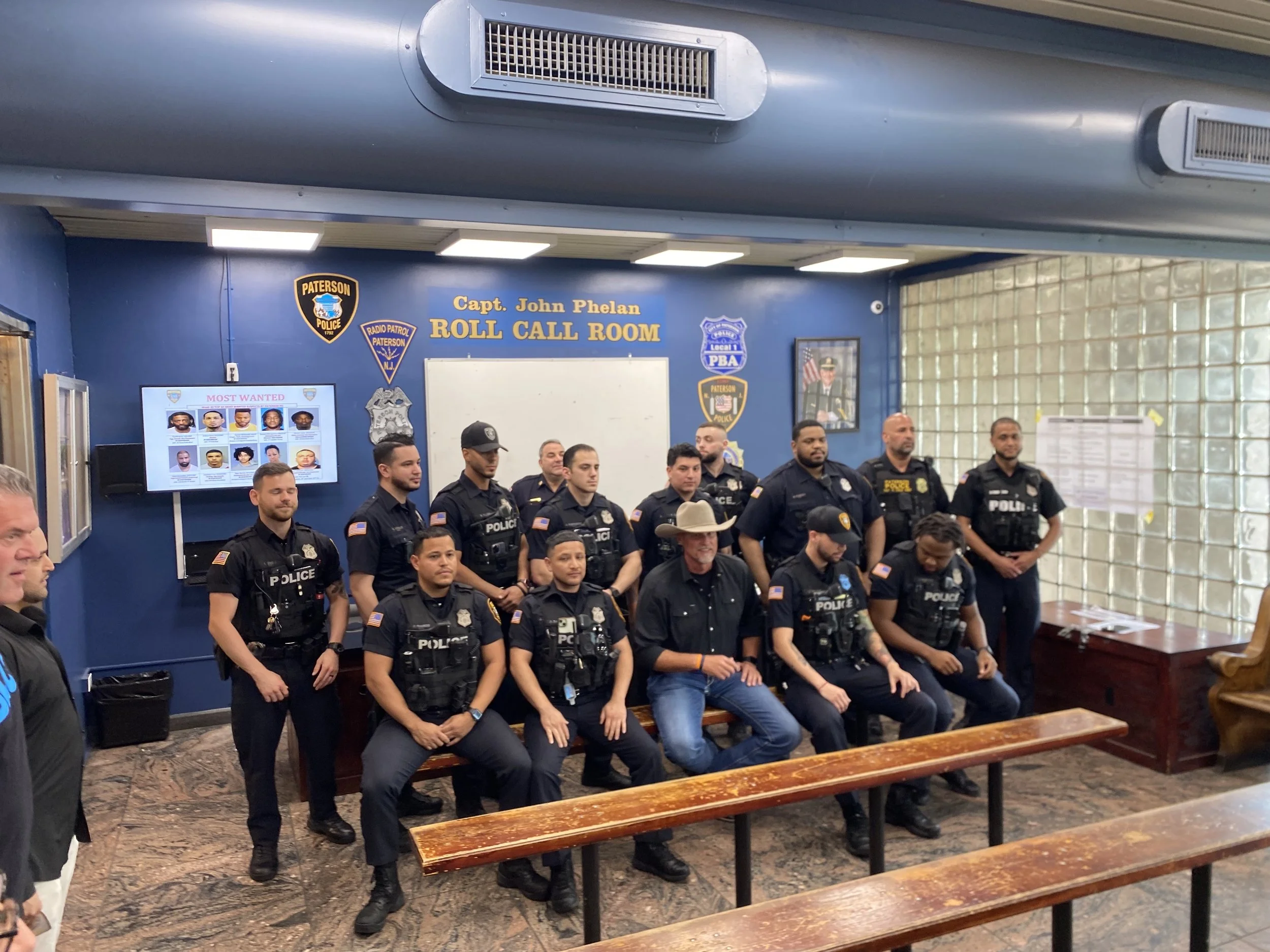
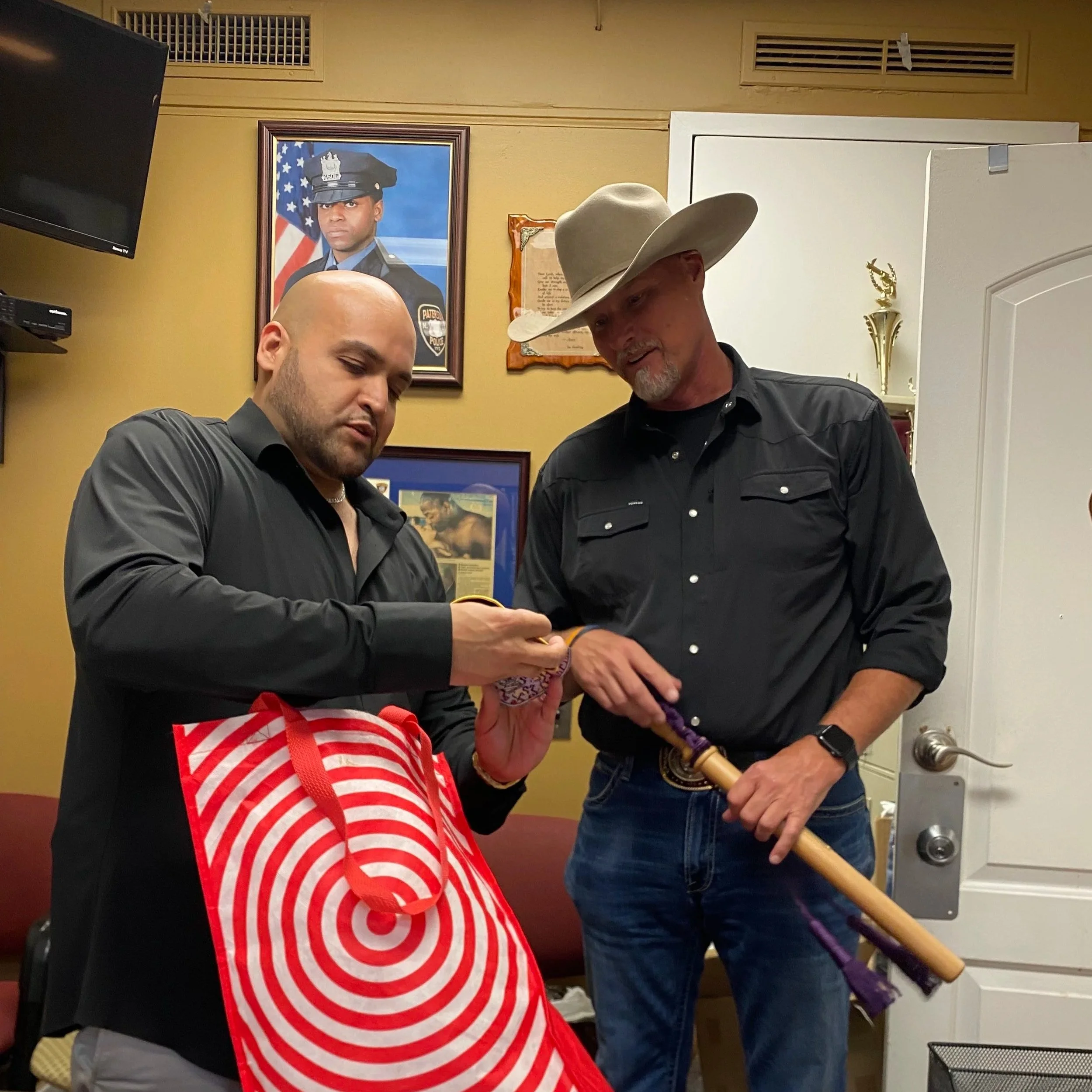
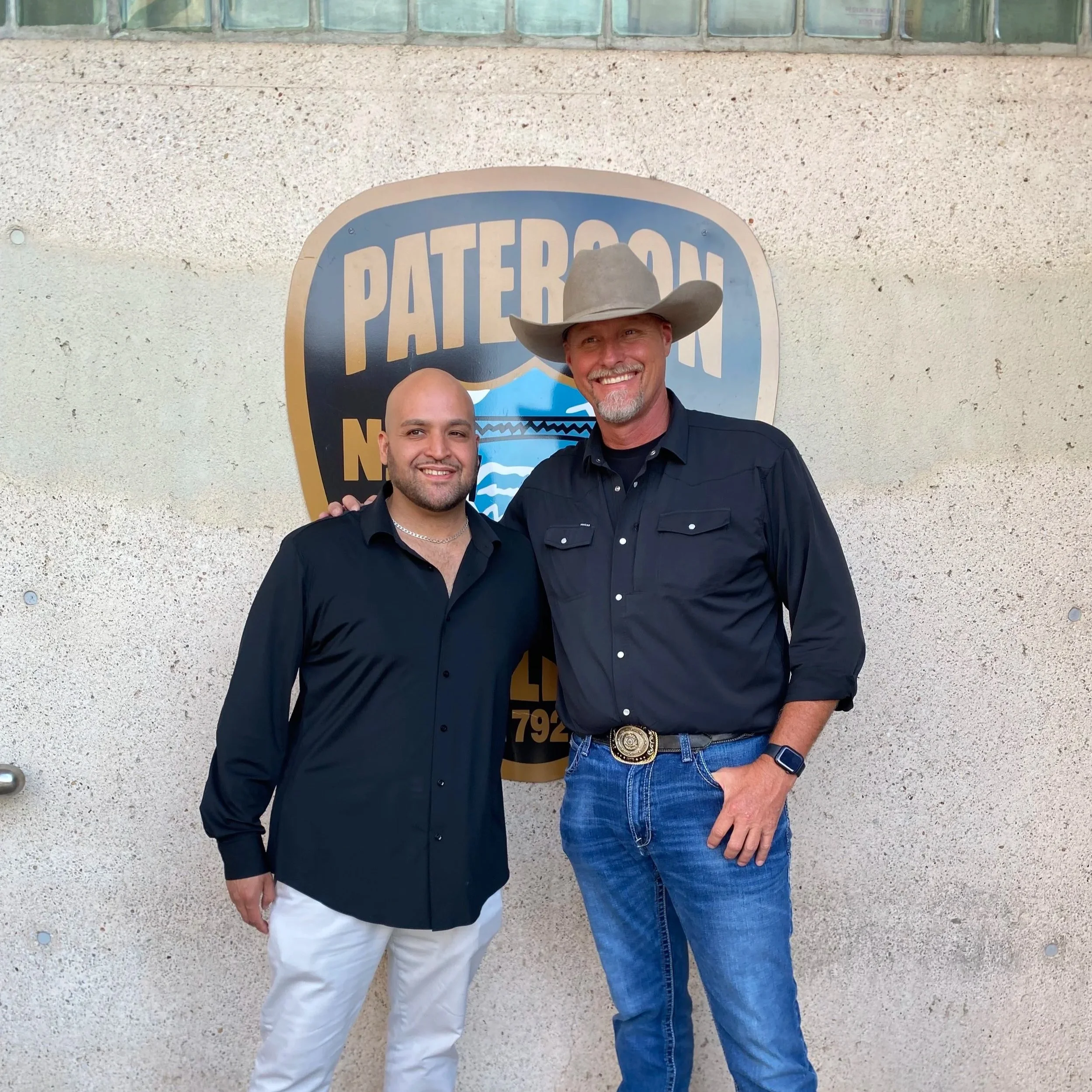
After leaving office, Lamb continued speaking about public safety and issues affecting law enforcement. He is now the Republican nominee for the United States House of Representatives in Arizona’s 5th Congressional District and is running in the November 3, 2026 general election. His continued public service shows younger officers that service to the profession can extend beyond an active law enforcement career and into national leadership.
PRESIDENT DONALD J. TRUMP
Blue Magazine’s public history with President Donald J. Trump began during the 2020 presidential campaign. The country was deeply divided, law-enforcement officers were facing intense political hostility and supporting President Trump carried consequences for organizations that entered the debate.
Commish believed President Trump’s record on law enforcement deserved to be presented directly to readers. With his help, Blue Magazine gathered statements and examined the administration’s record. The magazine then made an editorial decision: it endorsed President Trump for reelection, named him its 2020 Man of the Year and placed him on a cover carrying the message “Trump for President 2020.” The image showed the President walking toward the White House.

The decision was not universally welcomed. Blue Magazine heard from readers and others who believed a law-enforcement publication should remain outside presidential politics. But the magazine concluded that the conditions confronting officers had made silence a position of its own. Blue Magazine believed President Trump was the stronger candidate for law enforcement and public order, and it stated that judgment openly.
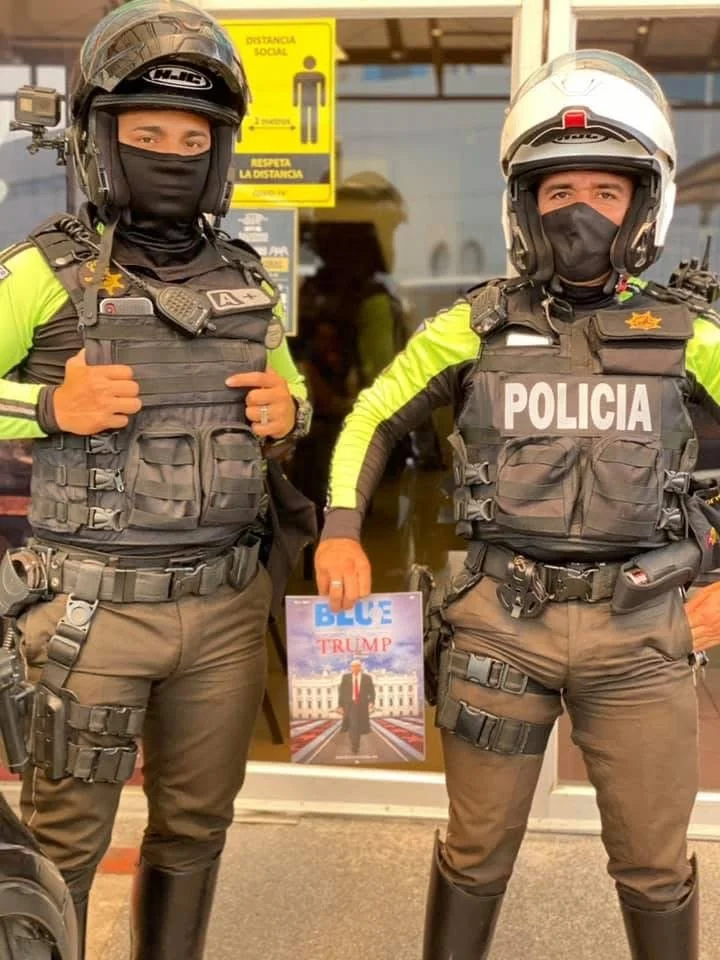
On October 19, 2020, President Trump acknowledged Blue Magazine’s Man of the Year recognition at two campaign rallies in Arizona, one in Prescott and the other in Tucson.
He ultimately lost the election, and Blue Magazine received criticism for having supported him. The magazine did not retreat from the decision after the result.
Years later, Commish made a direct interview with President Trump possible, as detailed in the preceding section. The date was set approximately one month in advance, before President Trump was indicted.
By the time of the interview, April 4, 2023, President Trump was scheduled to be arraigned in Manhattan, becoming the first former President of the United States to face criminal charges. The night before, we expected the interview to be canceled. No cancellation came.
President Trump kept the appointment that morning. George Beck led the interview, Commish participated and I closed it. For approximately one hour, we addressed law enforcement, crime, leadership, the political climate and President Trump’s assessment of the country.
On a morning dominated by an unprecedented court appearance and worldwide scrutiny, President Trump could have postponed his interview with Blue Magazine. He did not. Regardless of the differing opinions surrounding him, President Trump honored his commitment to us on one of the most consequential mornings of his public life.

Blue Magazine was proud to support President Trump when doing so carried consequences, and we were honored when he later gave us the opportunity to speak with him during one of the most closely watched days of his public life. Ironically, it was also the last interview we were able to conduct with the late Commissioner Bernard Kerik. President Trump’s decision to honor that commitment showed respect for Blue Magazine and the law-enforcement community we represented. Together, the 2020 cover and the 2023 interview became defining moments in Blue Magazine’s history. We will always be grateful to President Trump for recognizing our work, honoring his commitment to us and showing such respect for Blue Magazine and the law enforcement community we represent.
WHITE HOUSE BORDER CZAR TOM HOMAN
Commissioner Bernard Kerik introduced me to Tom Homan, who would later serve as White House border czar. Commish described him as a true patriot, a leader and someone the country needed. From our first conversation, I understood what he meant. Tom spoke with the conviction of someone who had spent his career doing the work.
Tom began as a law enforcement officer in upstate New York before joining the United States Border Patrol. He later became a special agent and rose through federal immigration enforcement, eventually serving as executive associate director of ICE Enforcement and Removal Operations and acting director of ICE. He had worked the border, investigated smuggling and trafficking organizations and led the officers responsible for enforcing immigration law inside the United States.
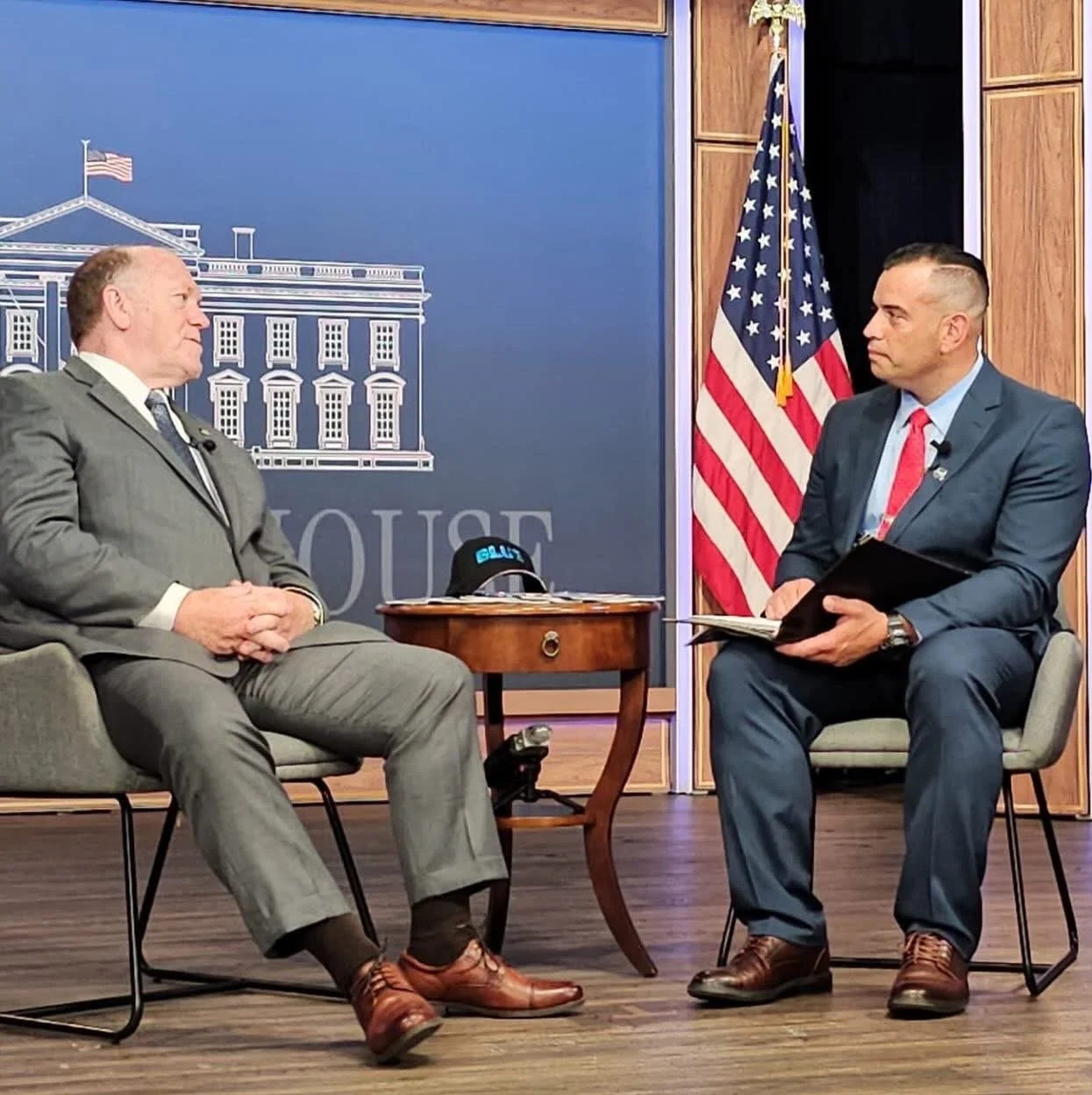
tom homan being interviewed by george beck
In September 2019, Blue Magazine published its first major interview with Tom under the cover headline “Securing the Border Saves Lives.” George Beck, Joseph Uliano and I questioned him about border security, attacks against federal officers, criminal organizations, trafficking and the human consequences of border policy. The interview presented Homan’s law enforcement perspective amid a deeply polarized national debate over border policy. On November 21, 2019, Blue Magazine, Moment of Silence and Brothers Before Others honored Tom as Man of the Year at Night to Unite. He arrived with a copy of his Blue Magazine cover signed by President Donald Trump and presented it to Commissioner Kerik and me. Tom later wrote that when he learned he would receive the award, President Trump was the first person to call and congratulate him.


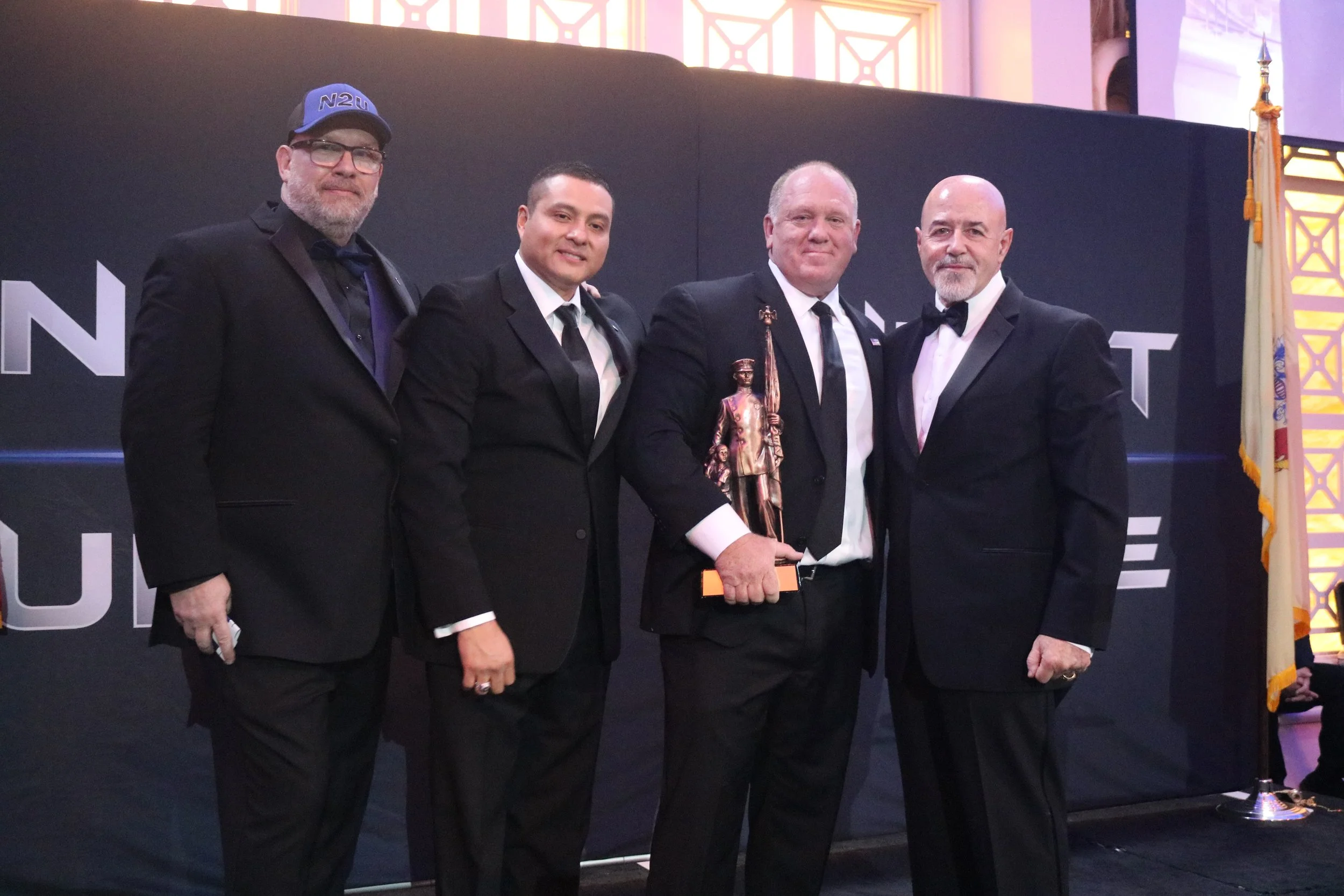
Tom was scheduled to appear on Fox News the next morning. Before he left, I asked him to mention Night to Unite and the organizations responsible for it. When we watched Fox & Friends the following day, he did exactly that. He acknowledged the award, the magazine and the charities. It was an early example of the reliability I would continue to see in him. Tom also told President Trump about Blue Magazine’s recognition of him and helped place the magazine’s name before the President. The public acknowledgment that followed was an extraordinary moment for an independent law enforcement publication.
Tom returned for Blue Unity Night in Florida in 2022. After President Trump returned to office, Tom began serving as White House border czar. His responsibilities and national profile expanded, yet he continued to answer whenever Blue Magazine reached out.
When we approached him about a second interview, Tom asked where I wanted it conducted. I told him the White House, and he answered, “Consider it done.” In 2025, the Blue Magazine team traveled to Washington. George Beck, Steve Olimpio and junior journalist Jordan Beck conducted the interview inside the White House, while Holly Finley and members of our production team supported the assignment. I could not enter because I did not have the identification required for admission. It was disappointing, but I was proud of what the team had accomplished. Blue Magazine was inside the White House, and the people who had helped build it were carrying the mission forward.
During the interview, Holly called me from inside and put Tom on the phone. He invited me to meet him for lunch when the interview was finished. About an hour and a half later, Tom joined us at a Washington restaurant. Alyssa Del Valle, participating as a junior journalist, and Cynthia Hughes were with me, while members of his security detail remained nearby. We discussed national security, law enforcement and the interview, and laughed about the identification problem that had kept me outside.
Tom is often portrayed only through the controversy surrounding immigration policy. That is not the complete man I came to know. Whatever people think of those policies, I never saw evidence that he was motivated by race or hatred. I saw a career law enforcement officer who believed the country had lost control of its border, that dangerous criminals had exploited the system and that enforcing the law protected citizens, migrants and the officers sent to confront those dangers.
The private lunch told me more about Tom than any title or television appearance could. He had no obligation to rearrange his day, but he made room at his table for a friend who had been left outside. That decision, made away from the cameras and ceremony, is why I value his friendship.
That decision, made away from the cameras and ceremony, is why I value his friendship.
Danny Del Valle with tom homan during a private lunch and conversation in washington D.C.
CYNTHIA HUGHES, WEAPONIZATION WATCH AND THE DEPARTMENT OF JUSTICE
Cynthia Hughes contacted Blue Magazine after seeing material connected to one of the magazine’s New Jersey events with Sheriff David Clarke. Her advocacy began after her nephew, Tim, was prosecuted and imprisoned for offenses connected to January 6, 2021.
Cynthia founded the Patriot Freedom Project to assist January 6 defendants and their families. She believed some defendants had received disproportionate treatment and that the government’s response had exceeded what their conduct warranted. Blue Magazine interviewed Cynthia to examine those claims, understand her nephew’s case and document the effects the prosecutions had on families. Those consequences extended beyond defendants. Families lost income, children experienced the absence of parents and relatives faced legal expenses, public condemnation and prolonged uncertainty.
On January 20, 2025, President Trump commuted the sentences of 14 people convicted of January 6-related offenses, pardoned other defendants and directed the dismissal of pending indictments. Cynthia was among the advocates publicly seeking relief for defendants and their families before those actions occurred. Her work later expanded through Weaponization Watch, which examines cases its members believe involve selective enforcement, government overreach or politically influenced legal action. Its scope extends beyond January 6 to other citizens who say public institutions have used their authority unfairly.
Through Cynthia’s work with Ed Martin, Blue Magazine was invited to a panel at the Department of Justice in Washington, D.C., addressing the weaponization of government.
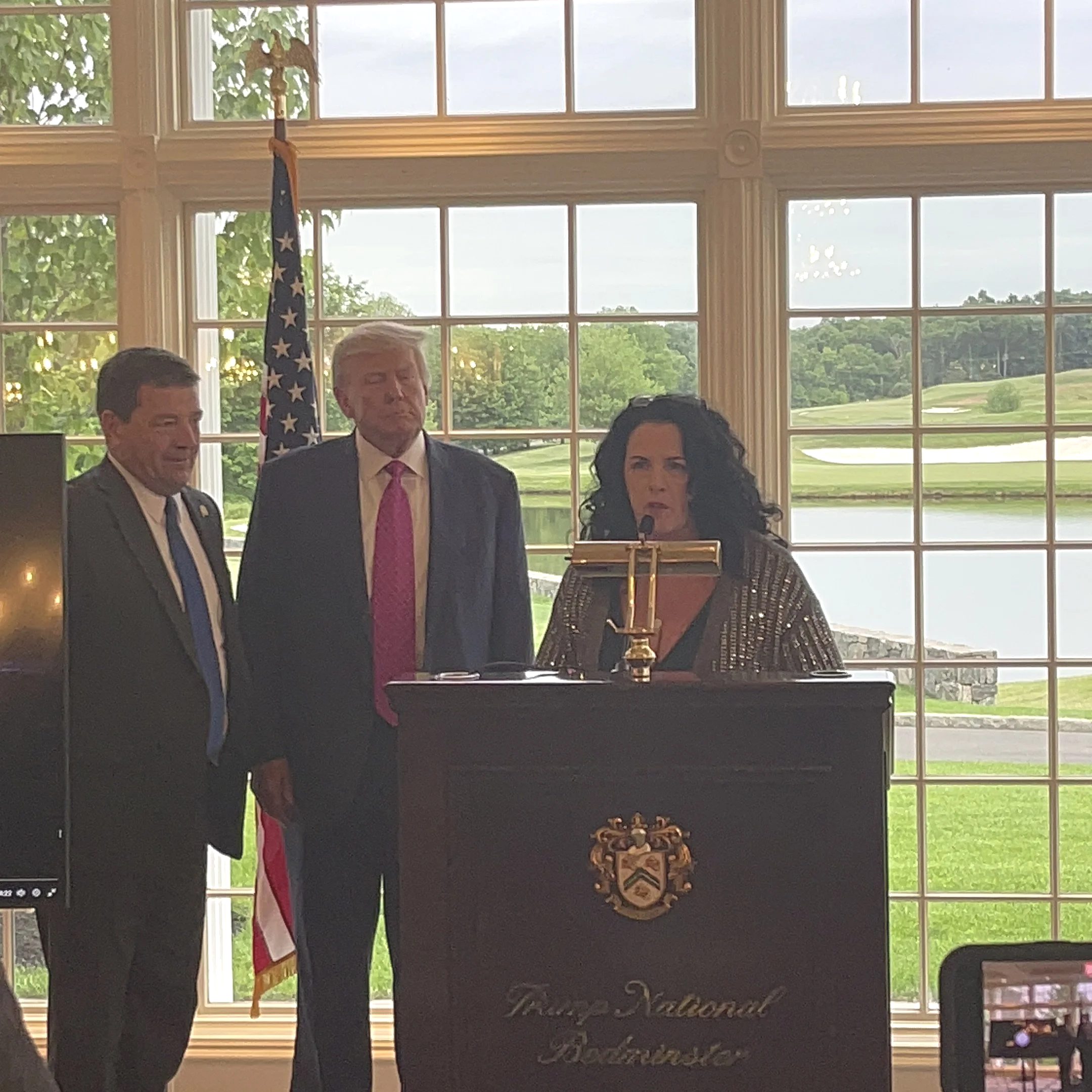
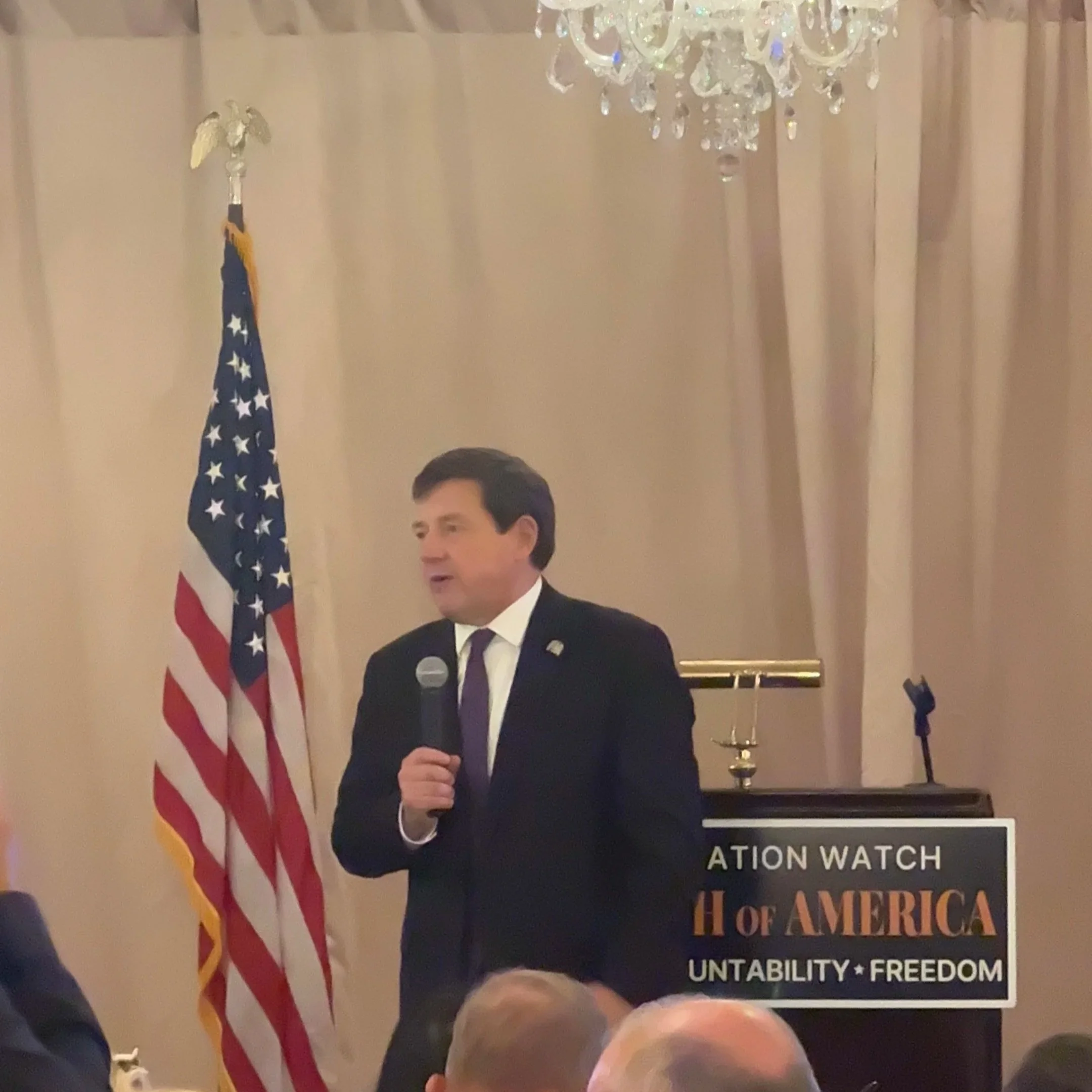
Blue Magazine attended to examine the issue from a law-enforcement perspective. High-profile police incidents can generate immediate public pressure, fixed media narratives and demands for prosecution before every fact has been established. Officers may face administrative action, criminal investigation and public judgment at the same time. Law-enforcement authority must remain subject to review, and misconduct must carry consequences. Accountability, however, also requires evidence, due process and decisions free from improper political influence. The DOJ panel allowed Blue Magazine to examine how those principles were being debated and how the issue could affect officers.
Cynthia also invited Blue Magazine representatives to events attended by President Trump, giving the magazine access to additional national political settings. Those occasions were separate from Blue Magazine’s formal interview with Trump, which Commish arranged.
Whether readers agreed with every conclusion reached by the Patriot Freedom Project or Weaponization Watch, the underlying questions were legitimate subjects for journalism: how government exercises its authority, how that authority is reviewed and what recourse exists when citizens believe it has been abused. Enforcement, preserve its stories, and give officers a place to be heard. But over time, we learned that some of the issues officers brought to us could not be addressed by an article alone. Sometimes an officer did not need another story. He or she needed a phone call, a referral, a conversation, or someone willing to step in before a situation became irreversible.

That is why Moment of Silence became necessary.
Blue Magazine documented the issues affecting law enforcement. Moment of Silence gave us a way to respond through officer wellness, suicide prevention, direct support for families, charitable work, and community outreach. The two organizations had different roles, but they grew from the same belief: the law enforcement community had to take better care of its own.
MOMENT OF SILENCE
Moment of Silence grew out of loss within the law enforcement community. Officers were dying by suicide. Others were carrying trauma, anxiety, depression, addiction, and serious mental health struggles in silence.
Many feared that asking for help could damage the careers they had spent years building. They worried about fitness-for-duty evaluations, losing their firearm, being judged by colleagues, or becoming the subject of department gossip. That fear can keep a person quiet at the exact moment he or she most needs help.
When I assumed responsibility for Moment of Silence, I wanted its work organized around two priorities. The first was law enforcement suicide prevention and wellness. The second was community outreach. Moment of Silence became a bridge between officers in crisis and the help they needed. It produced suicide-prevention videos and educational material, organized events where officers spoke honestly about trauma and recovery, and connected officers and families with appropriate clinical resources, treatment, counseling, and support.
It was never a substitute for professional care. Its role was to connect officers with appropriate support and make sure they did not have to navigate a crisis alone.
If you want to donate to Moment Of Silence, click here.
SANTA COMES TO PATERSON
Community outreach became the other half of Moment of Silence’s mission. Its largest undertaking began inside Paterson schools. Each year, one school was selected and transformed for Christmas. Santa visited, met students, and posed for photographs. Every child from kindergarten through fifth grade received an individually wrapped present. For some, it was the only gift they received that year.
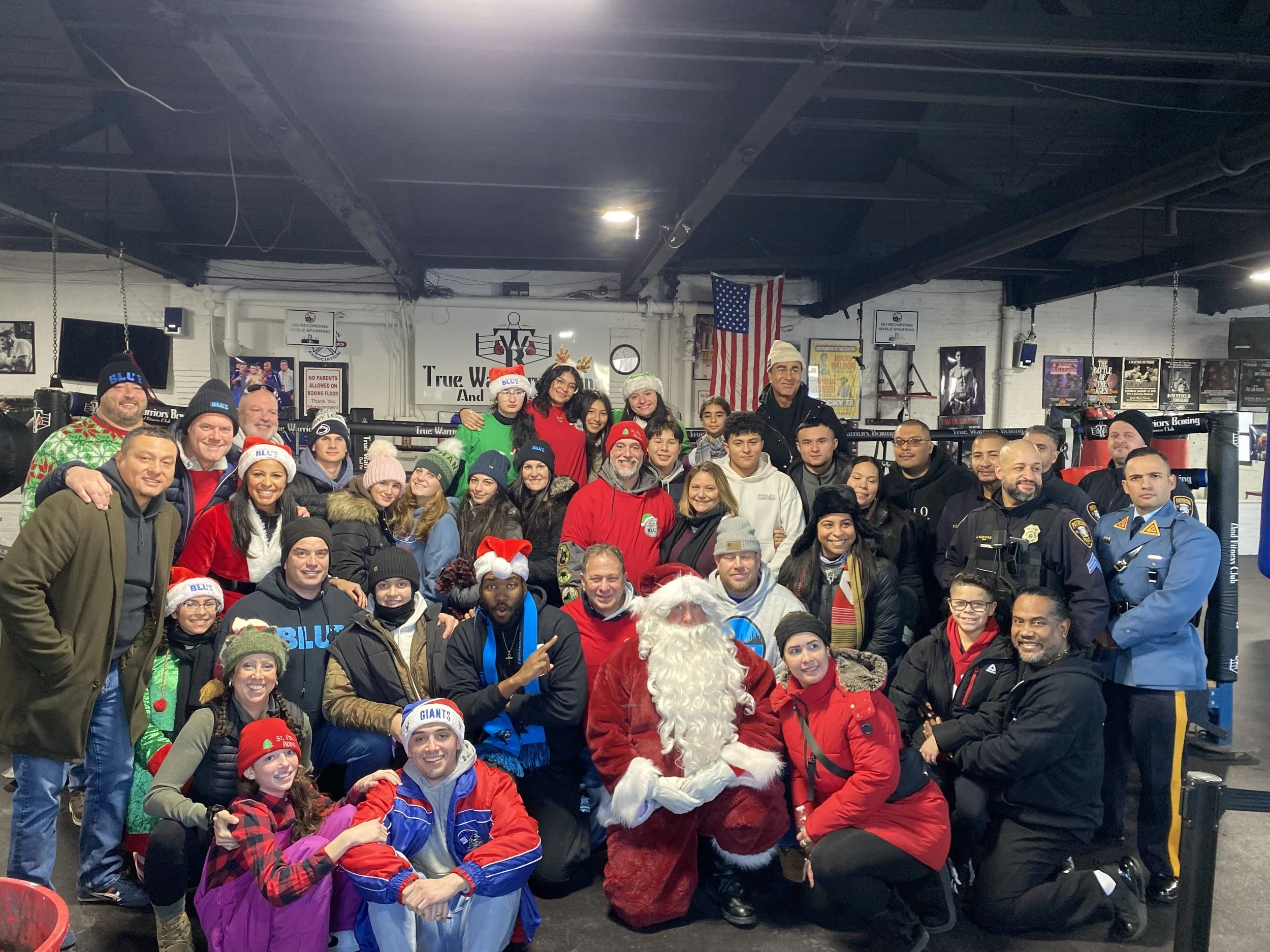
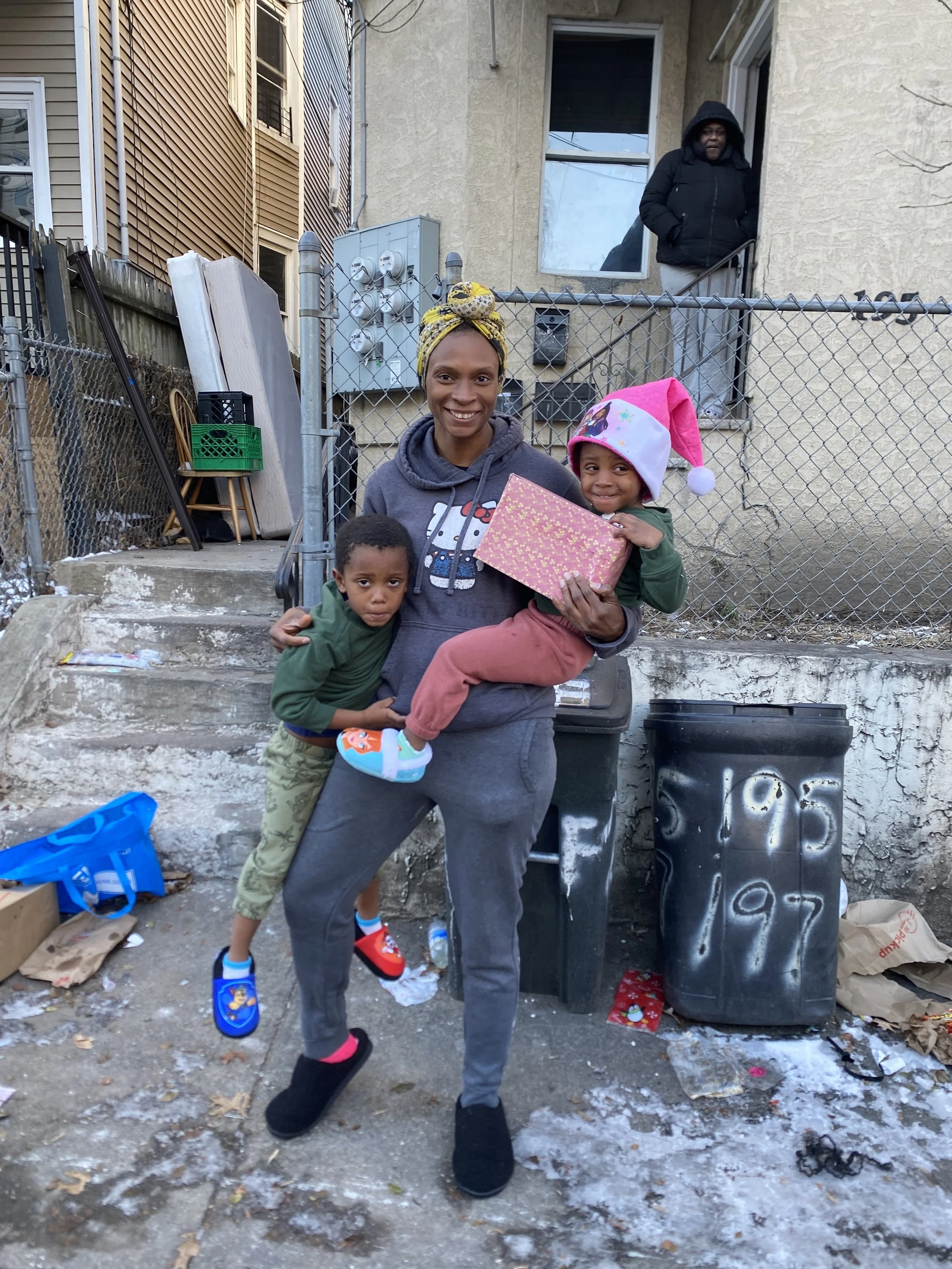


When COVID closed the schools in 2020, the tradition could not continue in its original form. Moment of Silence decided to bring Christmas directly into Paterson’s neighborhoods. Signs were placed along the route announcing that Santa was coming. What had been a celebration inside one school became a convoy moving through the city.
Parents and children emerged from houses, apartment buildings, and housing complexes as Christmas music approached. Santa traveled through the city on fire apparatus, accompanied by law enforcement vehicles, volunteers, and Christmas characters. Earlier in the day, a New Jersey State Police helicopter carried Santa over Paterson, giving children their first indication that the celebration had begun. The operation now distributes more than 9,000 wrapped toys. Preparing them takes weeks. Officers, relatives, and volunteers sort and wrap every gift before returning for a distribution day that can run from 9 a.m. until 6 p.m.
About eighty people may join the convoy, including officers volunteering on their days off and people traveling from other departments and states. The vehicles move, but much of the work is done on foot. Volunteers carry gifts from trucks to sidewalks, homes, and waiting children. Some walk more than eight miles before the route is finished.
The convoy has continued through rain and single-digit temperatures, arriving with trucks filled with toys and returning with them empty. The gifts matter because they are personal. Every toy is wrapped and placed directly into a child’s hands. Parents have cried while explaining that they could not afford a tree or presents. Children hear the music, run outside in the cold, and know what it means: Santa Comes to Paterson has reached their street.
The day also affects the officers. Some participants have survived suicidal crises or endured private struggles of their own. They have said that wrapping gifts and walking the route gives them purpose and something meaningful to anticipate. A child receives a present. An officer is reminded that the uniform can bring joy into a neighborhood as well as protection.
DON NICOLETTI: THE SANTA BEHIND SANTA
Santa Comes to Paterson depends on many donors, agencies, volunteers and families. Retired Closter Police Sergeant Don Nicoletti founded the PBA toy drive known as Santa’s Response Team with the support of the Closter PBA. What began as a local effort became a statewide network involving dozens of agencies and thousands of toys.
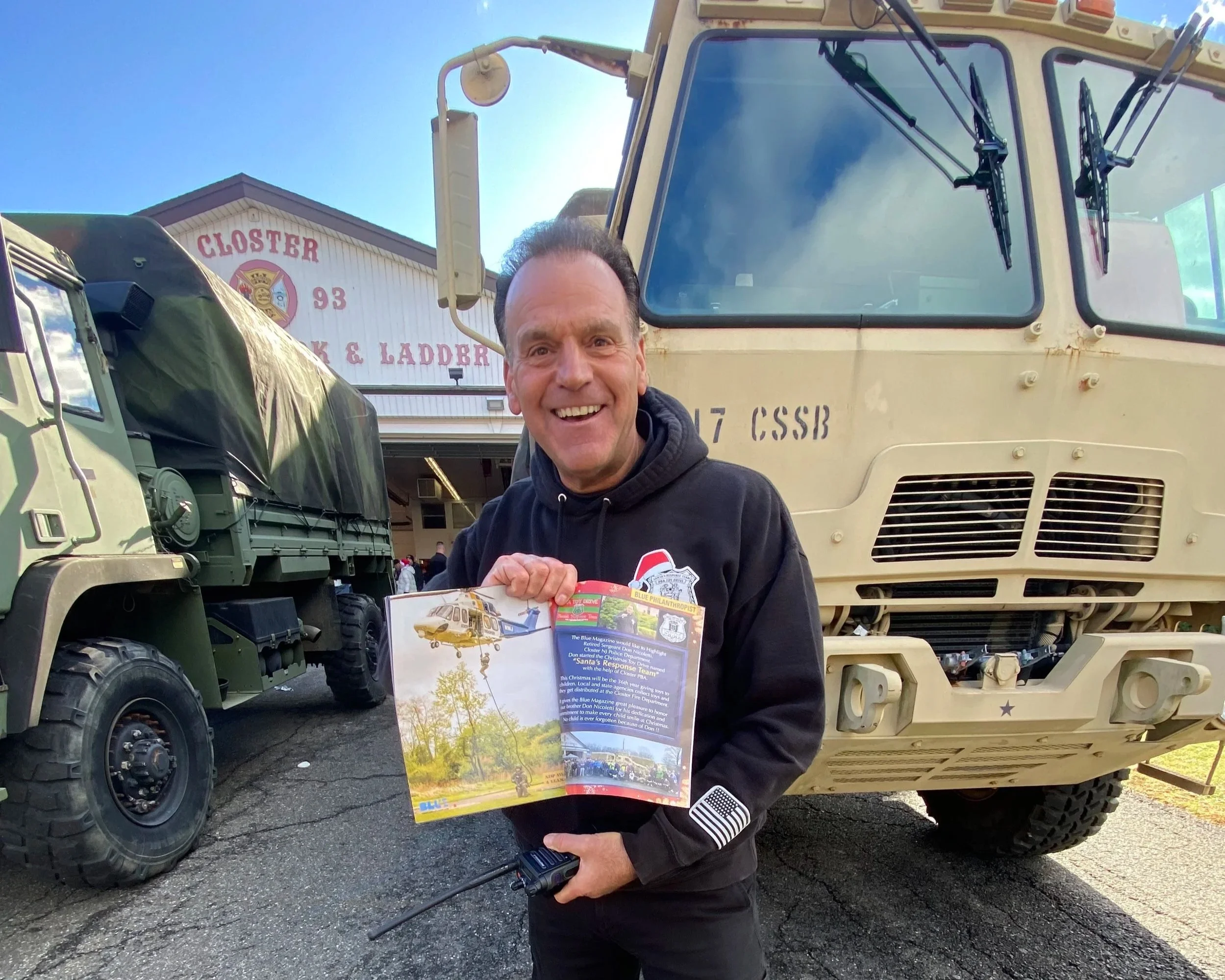
Retired Closter Police Sergeant Don Nicoletti
Santa’s Response Team supplies hospitals, shelters, military families, charities and community organizations throughout New Jersey. It also provides a critical share of the toys Moment of Silence brings into Paterson every year. For Moment of Silence, Don is the Santa behind Santa.
STEPH LOVE
Steph Love has been part of The Blue Magazine from its early years. We first met at one of the magazine’s law-enforcement dinners, where she quickly connected with the officers, supporters and contributors surrounding the publication. An active law enforcement officer, Steph brought intelligence, creativity and a natural ability to make people feel welcome. She became a valued advisor to The Blue Magazine and someone I have trusted for many years.
Over the years, she has given her time wherever it was needed: the Blue Calendar, Night to Unite, Blue Unity, Santa Comes to Paterson and Moment of Silence’s Blue Suicide dinners and wellness engagements. She stood with us as we supported officers and their families through some of their most difficult moments, always bringing patience, compassion and purpose.
Steph’s creativity was also on full display in the Blue Calendar, where her Catwoman feature became one of its most memorable images and drew an extraordinary response. She has a presence that people recognize, but what has distinguished her within Blue is her willingness to contribute and strengthen every project she joins.
Her family has shared that spirit of service. Her daughter and son have joined her in serving children and families during Santa Comes to Paterson, learning firsthand what it means to give their time and care to a community. Steph also introduced us to Captain Jay Davis, who has served as Santa for Santa Comes to Paterson since 2019. She is a respected law enforcement officer and advisor whose service helped carry The Blue Magazine and Moment of Silence forward.
CAPTAIN JAY DAVIS
Captain Jay Davis of the Orange County Sheriff’s Office in New York commands the agency’s Special Operations Group and SWAT team. Since 2019, he has also served as Santa for Santa Comes to Paterson, becoming one of the program’s most dependable contributors.
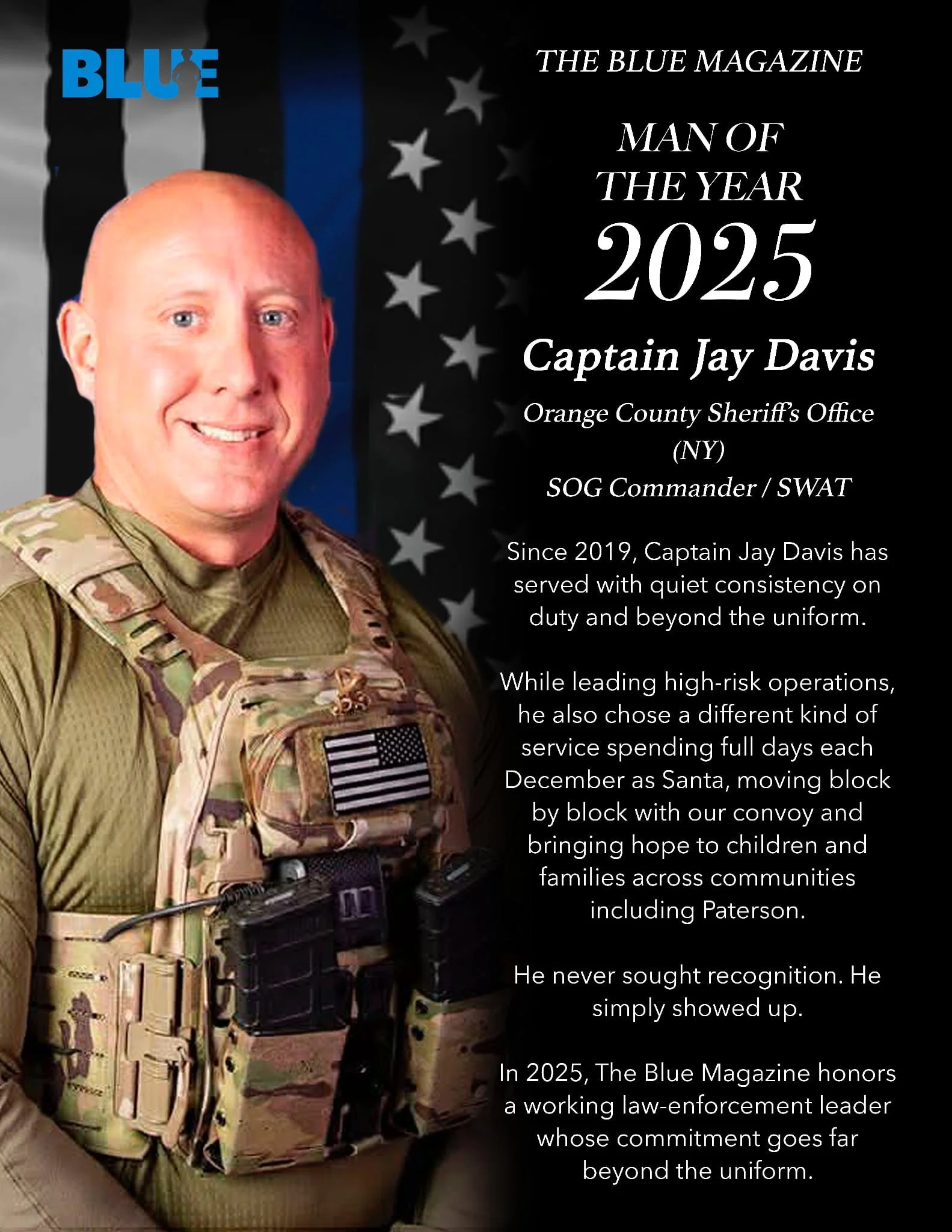
Each December, Captain Davis gives an entire day to Paterson. He begins by flying over the city in a New Jersey State Police helicopter before joining the convoy. For eight to ten hours, often in the cold, he travels block by block, waving to children, stepping down for hugs and bringing a Christmas presence that cannot be created through a brief appearance. He does it quietly, without seeking attention or recognition.
That consistency is why The Blue Magazine named Captain Davis its 2025 Man of the Year. The honor represented more than the Santa suit. It recognized a law enforcement leader who has repeatedly used his own time to bring joy to children and families and whose commitment to Moment of Silence and Santa Comes to Paterson has become part of the program’s identity.
MATT KIBURZ
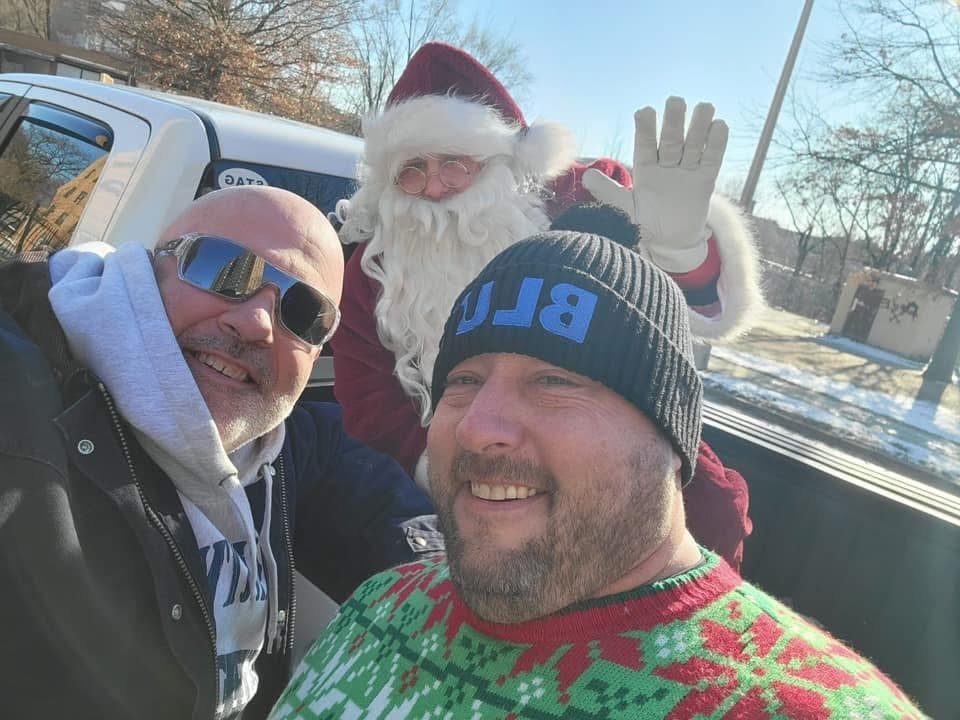
For more than a decade, Matt Kiburz has been a steady presence behind Blue Magazine and Moment of Silence.
His contribution has been felt most clearly through Santa Comes to Paterson, where he has returned every year to make the day possible. He has provided the lead fire truck, equipment, fundraising assistance and the practical resources needed to turn an idea into a real event. From setting up the DJ and music to being present all day as toys are handed out, Matt has been there.
His family has shared that commitment, standing beside him and bringing the same generosity and care that Matt brings to everything he does. Over the years, officers have repeatedly told us the same thing: Matt is a great man. That respect was not earned through publicity or promises. It came from watching him show up, help without being asked twice, and give without looking for an award or recognition.

Matt represents the kind of person a magazine and charity depend on, someone whose character matches his commitment. With people like Matt beside you, ambitious ideas become possible. It has been an honor to work with him, and he belongs in this final story because his service has been real, consistent, and given from the heart.
RICKEY CHANDLER: THE PICTURE MAN

Rickey Chandler has long been known as the Picture Man. Long before he became part of The Blue Magazine, he had already earned that name through his ability to capture the people, events and meaningful moments unfolding around him.
Our relationship with Rickey began almost by chance. He was at a location where Blue was holding an event, and when we unexpectedly needed someone to take photographs, we asked if he could help. Rickey agreed on the spot. That willingness became one of the qualities we could always count on. For years, whenever we called, even at the last minute, Rickey made every effort to be there.
Through his camera, Rickey preserved moments that became part of Blue’s history. He photographed our dinners, events, charitable projects and Santa Comes to Paterson. He captured handshakes, embraces, officers standing with their communities and people who are no longer with us. His photographs became more than a record of where we had been. They preserved the people, relationships and emotions behind the work.
Rickey’s own life gives his work even greater meaning. His road was not always easy, but through faith and decades of recovery, he rebuilt his life with integrity, humility and purpose. He has used what he experienced to encourage young people and anyone searching for a better direction. Rickey does not speak from judgment. He speaks from a life that has known hardship, change and the grace of God.
He is also one of the hardest working and most dependable people we know. Rickey lives simply, gives freely and makes himself available whenever someone needs him. Whether he is photographing an event, helping with Santa Comes to Paterson or quietly encouraging another person, he brings the same genuine heart to everything he does.
Recently, we had the joy of watching Rickey marry the woman he loves. Their wedding was one of the most beautiful and genuine celebrations we have attended. The room was filled with people who loved them individually and were grateful to see them begin their life together. After everything Rickey has overcome and all the goodness he has given to others, seeing him enter this new chapter brought us tremendous happiness.
Rickey is one of our favorite people in this world, not only because of what he has done for Blue, but because of the person he is. He is far more than the man behind the camera. He is a man of faith, a trusted friend and a beautiful human being whose presence has made our lives better. His photographs will remain part of The Blue Magazine’s history, but the heart behind those photographs is what we will remember most. We love Rickey, and this final story would not be complete without him.
CAESAR DEPAÇO
One year, Santa Comes to Paterson was in trouble. The operation had become too large to survive on good intentions alone. It required planning, law enforcement participation, transportation, volunteers, and significant financial support. That year, the resources were not coming together.
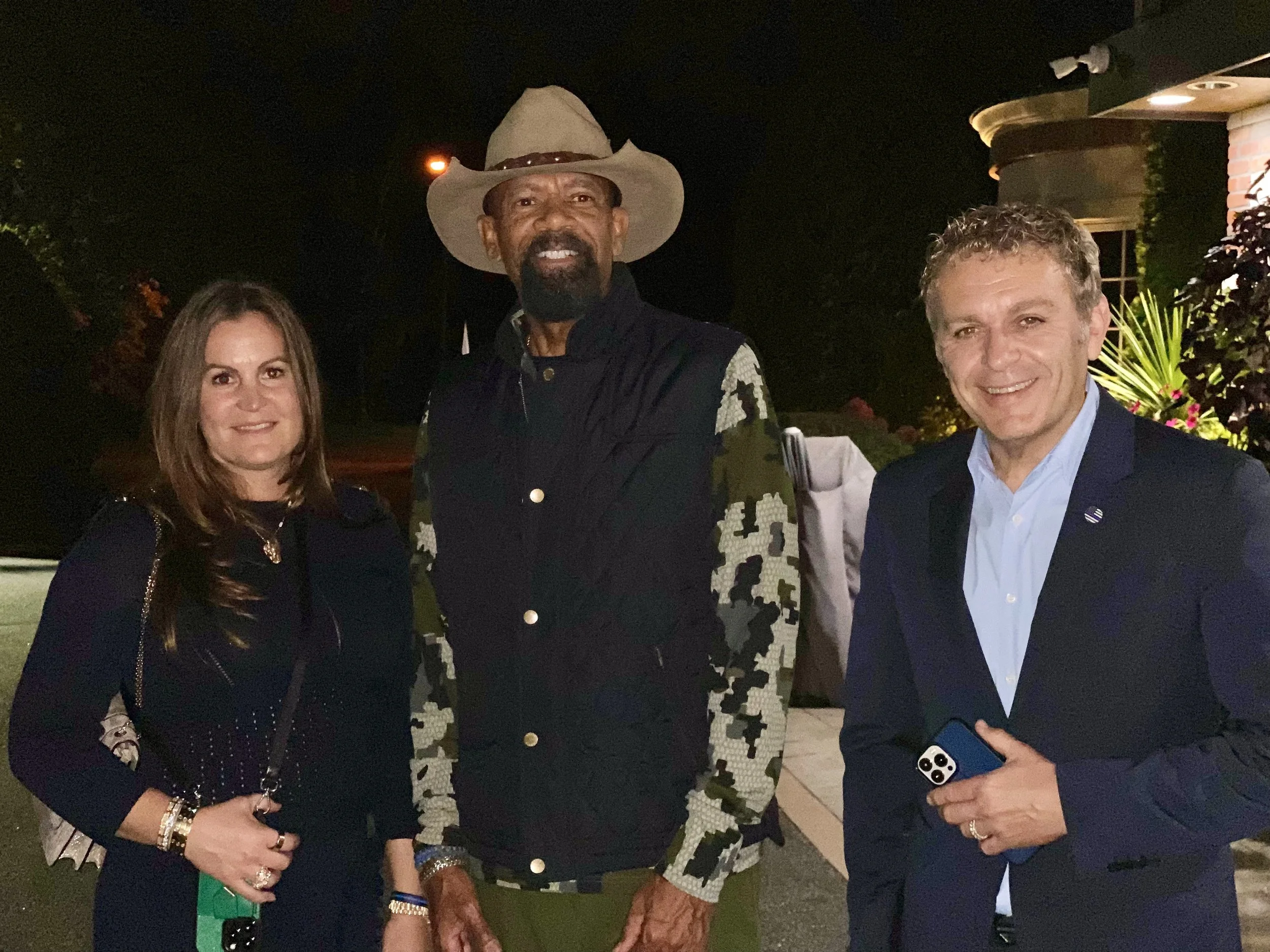
Caesar depaço and Deanna Depaço with sheriff clarke.
Caesar DePaço stepped forward. With the support of his wife, Deanna, he made a contribution that allowed the event to continue and helped officers and volunteers deliver Christmas to thousands of children throughout Paterson. For Moment of Silence, Caesar saved Christmas that year. Blue had watched Caesar’s commitment to law enforcement for years. He does not treat that commitment as a slogan. He asks agencies what they need and helps provide it, whether that means a K-9, vehicle, protective equipment, or another resource beyond a department’s budget.
Caesar is the founder and CEO of Summit Nutritionals International, but his impact in law enforcement extends far beyond business. By February 2024, the DePaços had donated 202 K-9s to police departments and sheriff’s offices in the United States and abroad, representing more than $3.5 million in K-9 contributions alone. That work inspired Blue’s first special issue devoted entirely to K-9s. More than 30 K-9 teams from agencies across the country became part of the edition. Their handlers described tracking, narcotics detection, explosives detection, building searches, officer protection, and the bond between a working dog and handler.
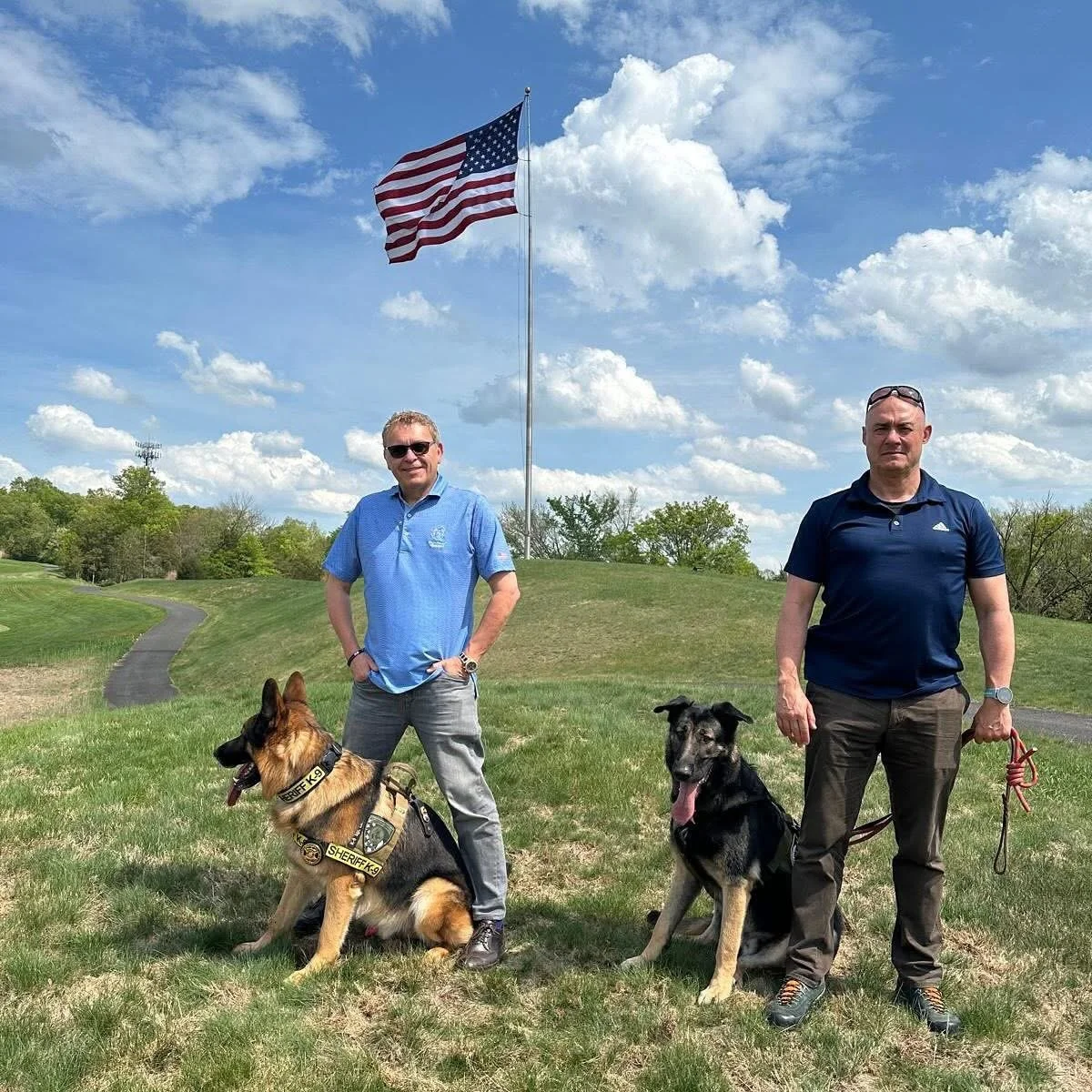
In August 2024, Somerset County Sheriff Darrin Russo appointed Caesar as the Somerset County Sheriff’s Office Law Enforcement Liaison Officer. Although Caesar is not a sworn law enforcement officer, the appointment recognized his years of service to those who are.
TROY MOL: THE TRUST BEHIND THE RECOMMENDATION
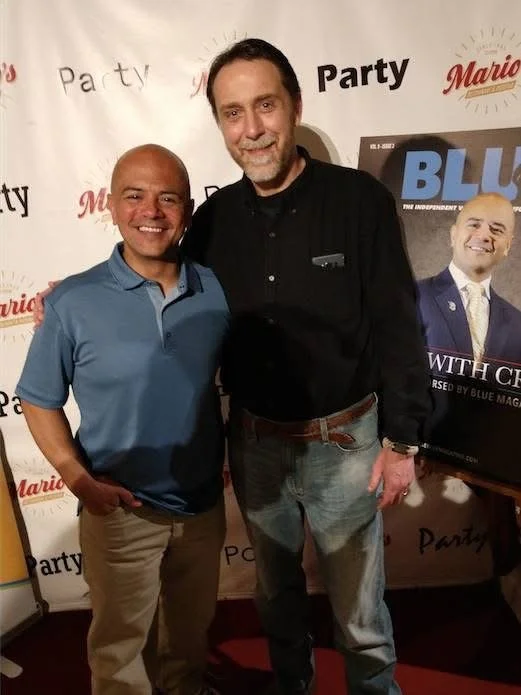
Troy mol with former paterson pba president alex cruz.
I met Troy Mol at one of BLUE’s early events, more than a decade ago. At the time, I was looking for a way to give law enforcement officers something practical that the magazine could stand behind. Buying or leasing a vehicle can be stressful. People want a fair price, but they also want someone who will explain the process, answer the questions, and treat them with respect.
Troy understood that from the beginning. When we met, he was a general manager at a Ford dealership in New Jersey and had already built relationships within law enforcement. Once Troy became part of BLUE, we developed a real partnership. Officers would call the magazine or contact me directly, and we would send them to him. He made himself available, gave out his cell phone number, and took the time to explain the rebates, financing, timing, and vehicles that fit a person’s needs. Over the years, officers and their families repeatedly came back to thank us for connecting them with him.
Today, Troy is with Schultz Ford Lincoln in Nanuet, New York. Our relationship has always been with Troy, not simply with the dealership. We knew that anyone sent to Troy would be treated fairly and given an honest answer. Over time, he also became one of my advisors to BLUE, someone I could call for straightforward counsel and an honest perspective.
He also helped make one of BLUE’s major projects possible. While planning the 2021 Blue Calendar, I told Troy we needed a setting with enough space and presence to make the shoot feel special. He immediately said, “Danny, you can use the showroom.” After speaking with the dealership, he made the Ford showroom available for the day. The project brought together more than 30 contributors and was distributed throughout New Jersey, New York, Connecticut and beyond. Troy’s decision to open the showroom gave the calendar a scale and presence we could not have achieved without him.
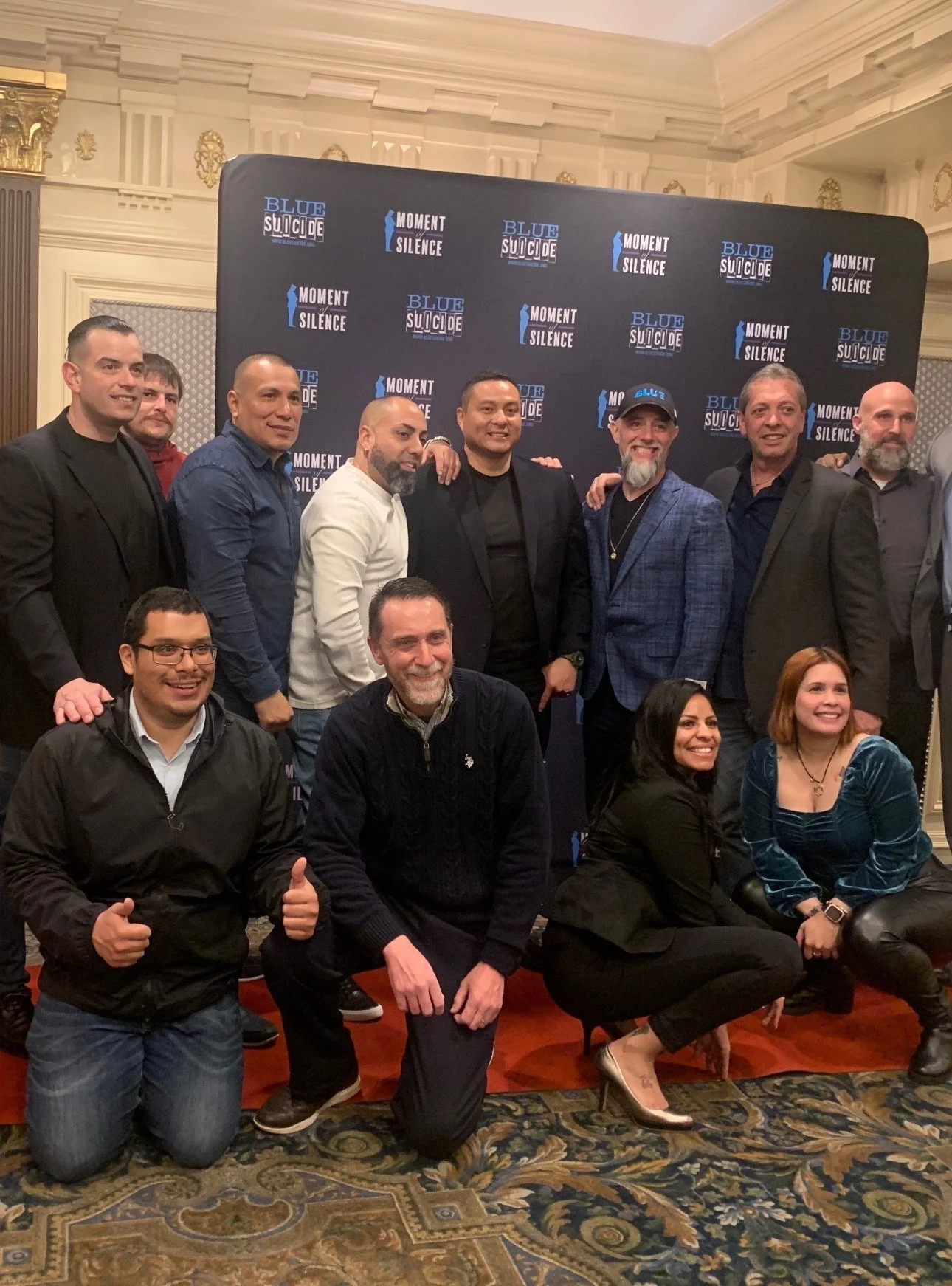
Troy and his family have also supported Moment of Silence, including toy drives for children in Paterson and other efforts in the community. His sons are now law enforcement officers, which reflects the respect he has always had for the profession. He is a man of faith, a devoted father, and a true friend to BLUE. He has been with the magazine through years of growth and success and, when life became more difficult, through some of its hardest moments as well.
Troy came into our lives through business. Over time, he became part of the extended BLUE family because he has always treated our community with the same care and honesty he would give his own family.
JANET LARRAIN: TURNING TRUST INTO A HOME
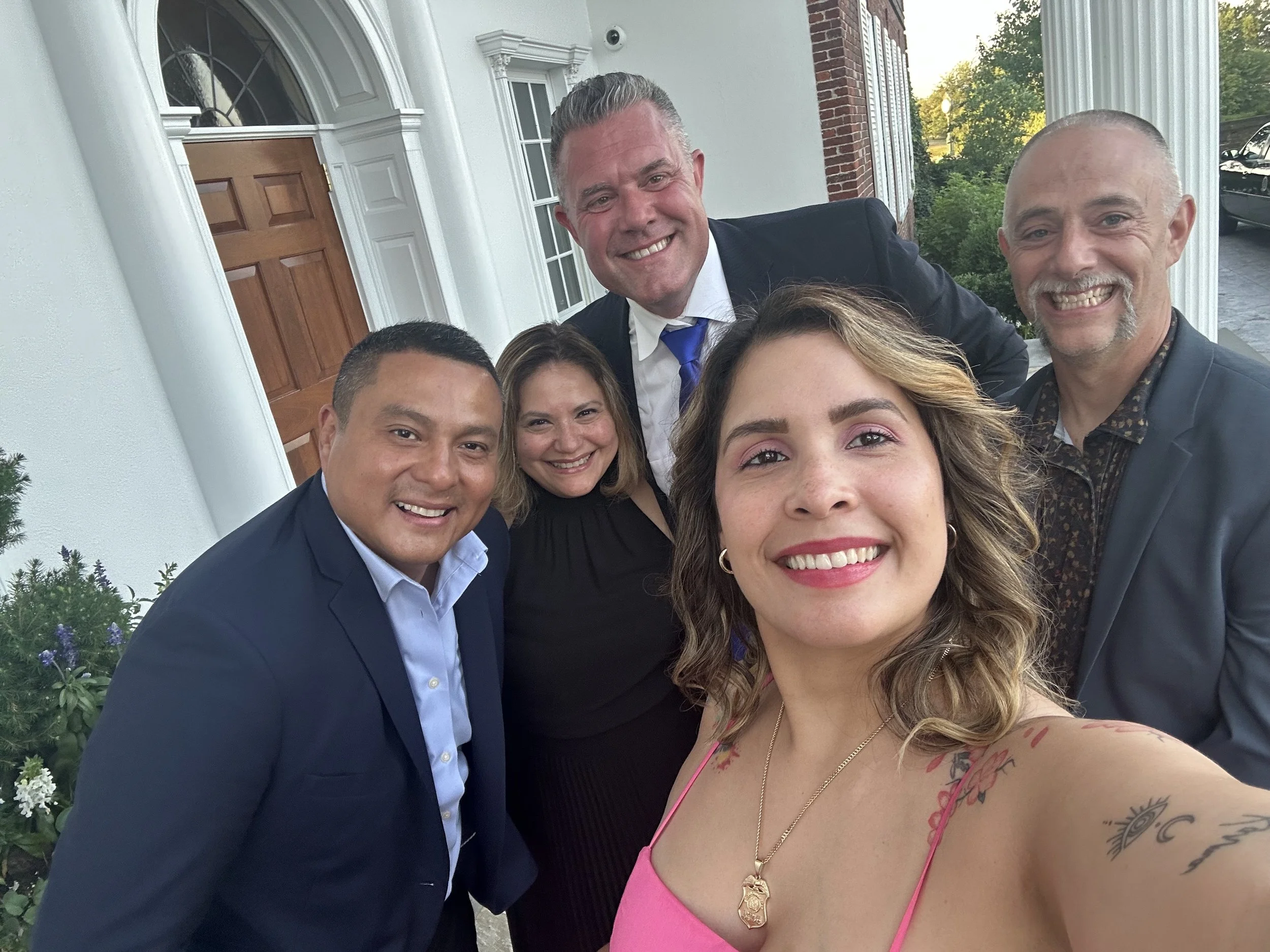
Janet Larrain became part of the Blue Magazine family after I met her at a New York law enforcement event hosted by Joseph Occhipinti and the National Police Defense Foundation. We began talking about real estate, but what stood out first was her interest in serving the law enforcement community.
Janet is a real-estate professional with Listed By Janet | Real Broker. She has served hundreds of law enforcement officers and their families, helping them buy or sell homes, understand interest rates, consider relocation options and decide when to make a move. She answers questions directly, explains the process in plain language and makes decisions that can feel intimidating more manageable.
Her work is rooted in New Jersey, but her value reaches beyond state lines. When an officer needs help relocating or buying elsewhere, including Florida, Janet can connect that family with trusted real-estate professionals in the right market and remain involved through the process.
That is why Blue Magazine introduced Janet to its community. The magazine did not give its platform to every advertiser or make recommendations simply because someone could buy an ad. A Blue recommendation carried the magazine’s name and the trust officers had placed in it. We looked for professionals who supported law enforcement, understood their field and could provide real value to readers. Janet met that standard. Over the years, officers and families repeatedly came back to Blue Magazine to thank us for introducing them to her. They told us she had been responsive, knowledgeable and committed to helping them through the process. It confirmed that Blue Magazine had placed its name behind the right person.

Janet also supported Moment of Silence, participated in events and joined her husband and daughter in helping distribute toys to children in the community. She became a trusted part of the Blue team because she earned that place through her work.
Janet Larrain, Listed By Janet | Real Broker. Direct: 609-902-0478
EDDIE YAGHEN: THE WORK BEHIND THE STORY
High-profile interviews are remembered for the person in front of the camera. They also depend on people the audience never sees. During the White House interview with United States Border Czar Tom Homan, Eddie helped coordinate transportation, equipment and setup under strict time constraints. He performed similar work for Blue’s interview with Mayor Eric Adams, collaborating with Chris Bonilla and the production team to make certain the reporting could proceed as planned.
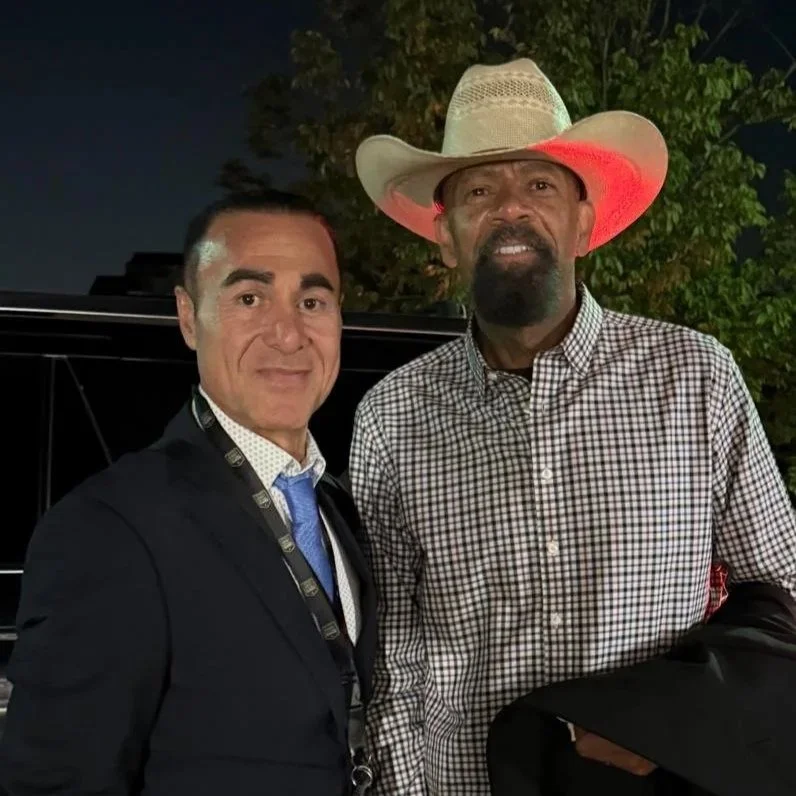
Eddie yaghen with sheriff david clarke
Blue also entrusted Eddie with transporting visiting guests and crew members during sensitive assignments. Those responsibilities required more than driving. They demanded preparation, discretion and the ability to adjust when schedules changed. As a private investigator, Eddie brought situational awareness to work in which timing and trust mattered. His connection with law enforcement extended beyond production. During departmental visits, officers responded to his interest in physical fitness and wellness, often speaking with him about strength, conditioning and the demands the profession places on the body. That perspective supported the broader wellness mission shared by Blue Magazine and Moment of Silence.
Production work is often invisible precisely when it is done well. The audience sees the interview, not the travel, coordination and decisions that made it possible. Access alone does not produce journalism; a team must convert that opportunity into finished work. During Blue Magazine’s later years, which were among its most difficult, Eddie helped the magazine do exactly that. His contribution was measured in assignments completed, guests transported safely and opportunities that were not wasted. That work earned Eddie the trust of the team and his place within the Blue family.
PROJECT 201: SHAWN KELLY
Blue wanted Shawn Kelly and Project 201 included in this final issue because of the work he continues to do directly with young people.
Project 201 is a 501(c)(3) nonprofit focused on youth mentorship, opportunity, and development. It works closely with Moment of Silence, sharing the belief that community outreach requires consistent involvement.
Kelly’s perspective comes from his work with children in the school system and later in corrections, where he saw how strongly a young person’s support system can influence the direction of a life. Project 201 has moved beyond traditional youth activities. Kelly has introduced young people to aviation, placing them in airplanes and exposing them to the possibility of becoming pilots and pursuing careers they may never have considered.

“The programs are the vehicles,” Kelly told Blue. “The relationships are the work.”
Shawn Kelly is not simply talking about community outreach. He continues to show up and do it.
WEITZ & LUXENBERG: WHEN KNOWLEDGE BECOMES SUPPORT
Arthur Luxenberg and his daughter, Elizabeth, became part of The Blue Magazine’s story through a relationship that grew well beyond a professional partnership. From the beginning, what stood out was their willingness to meet people where they were, inside police departments, firehouses and the communities connected to them, and speak plainly about legal questions that many do not consider until a crisis forces them to.
That education is essential. After a car accident, an injury at work or another serious incident, people are often hurt, overwhelmed and unsure of what comes next. They may not know their rights, what information to document, which questions to ask or how quickly decisions can affect their options. Through our relationship with Weitz & Luxenberg, Blue brought those conversations to law enforcement officers, first responders and their families. The goal was never to frighten anyone or turn every hardship into a lawsuit. It was to help them protect themselves and seek informed guidance when life takes an unexpected turn.
Arthur built his career fighting for people and families facing serious harm, including those affected by asbestos-related diseases such as mesothelioma. His commitment to advocacy was not something I only heard about. I saw it in the way he and Elizabeth treated members of our community.
At one point, a key member of the Blue team was facing a delicate, frightening and deeply personal legal situation. When Arthur and Elizabeth learned about it, they stepped forward without hesitation. They did not do it because of a partnership or an obligation. They did it because that is who they are. Their legal knowledge helped Blue better serve its community, but their compassion revealed the character behind their work.
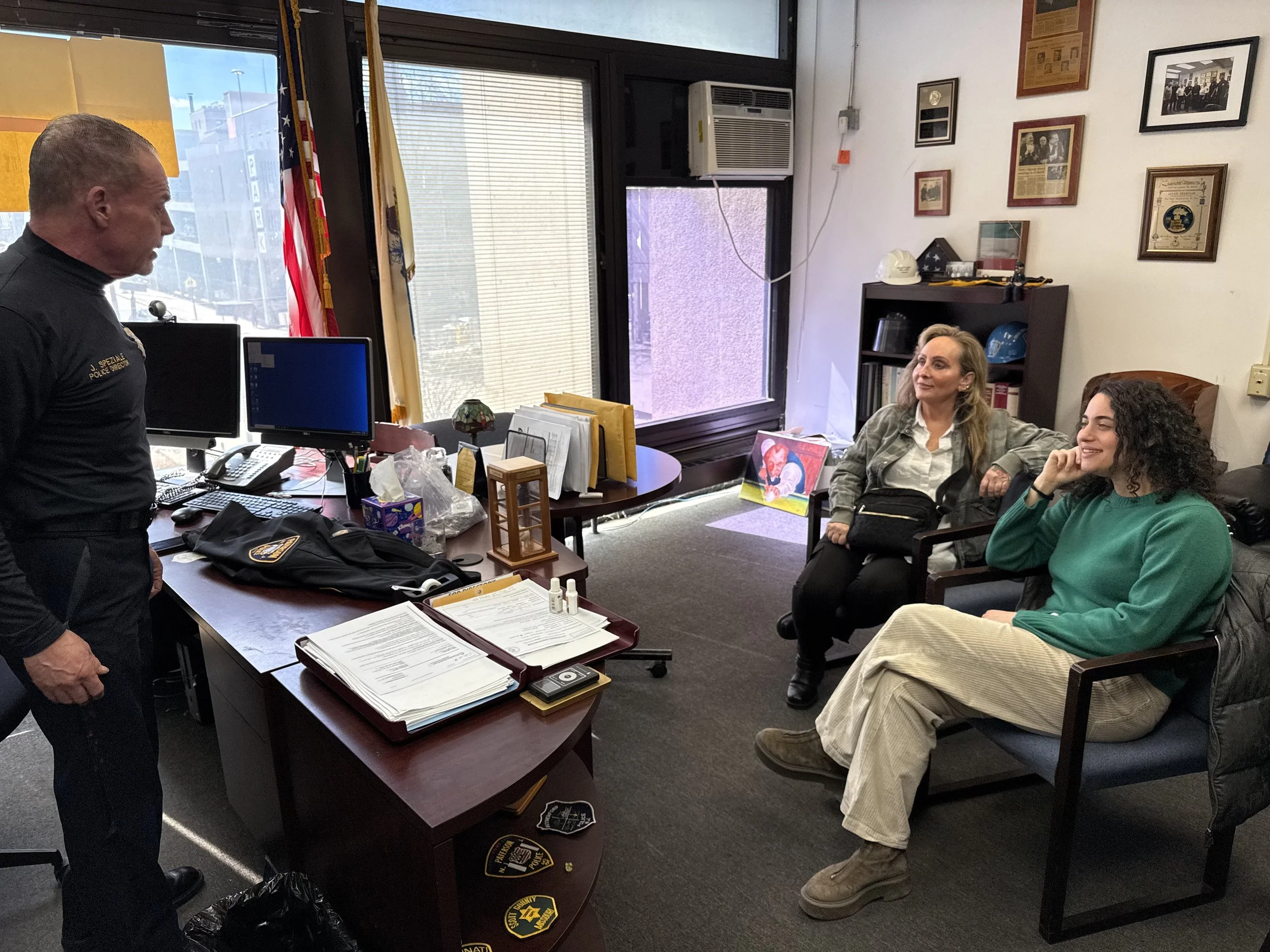
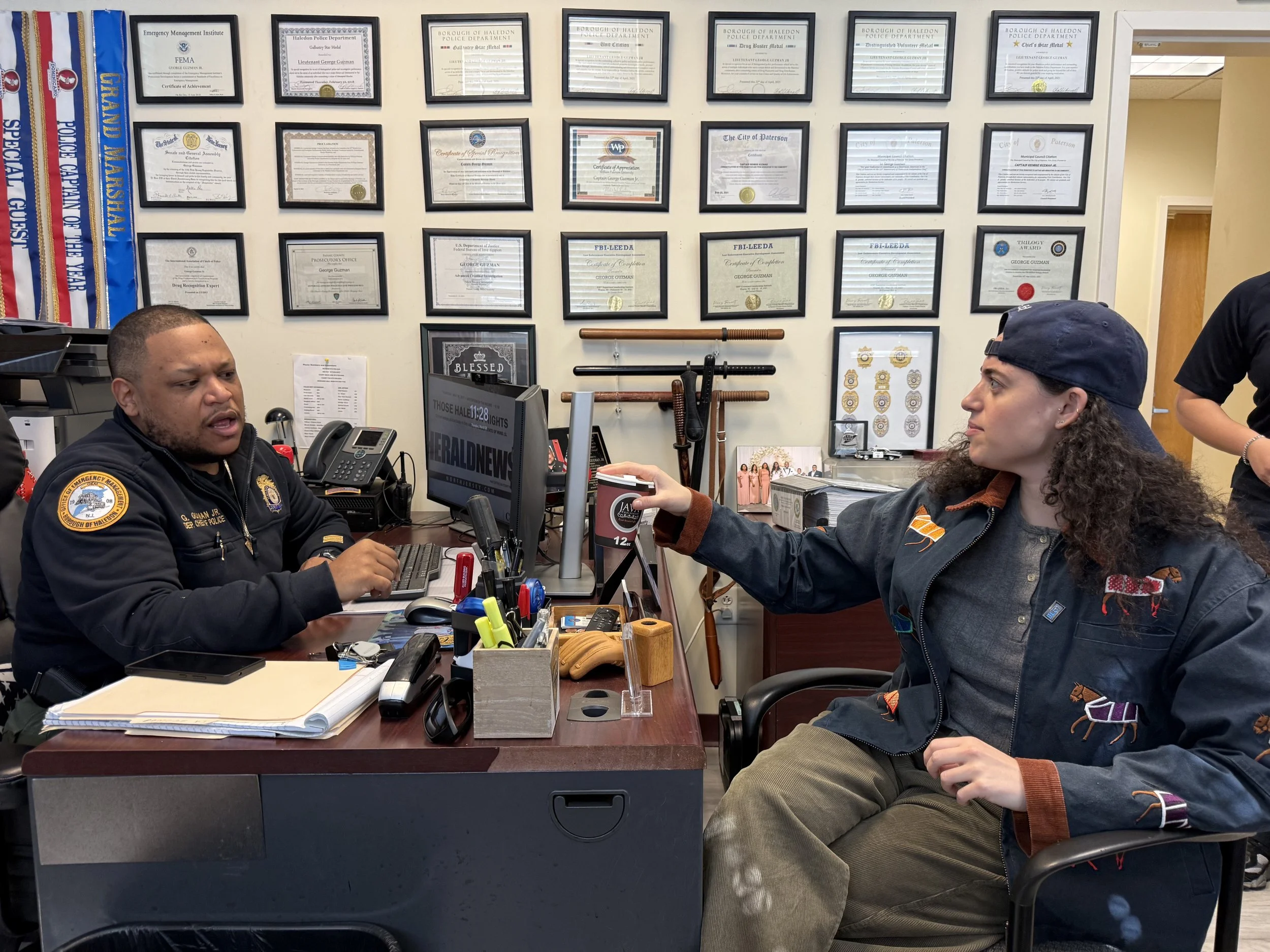

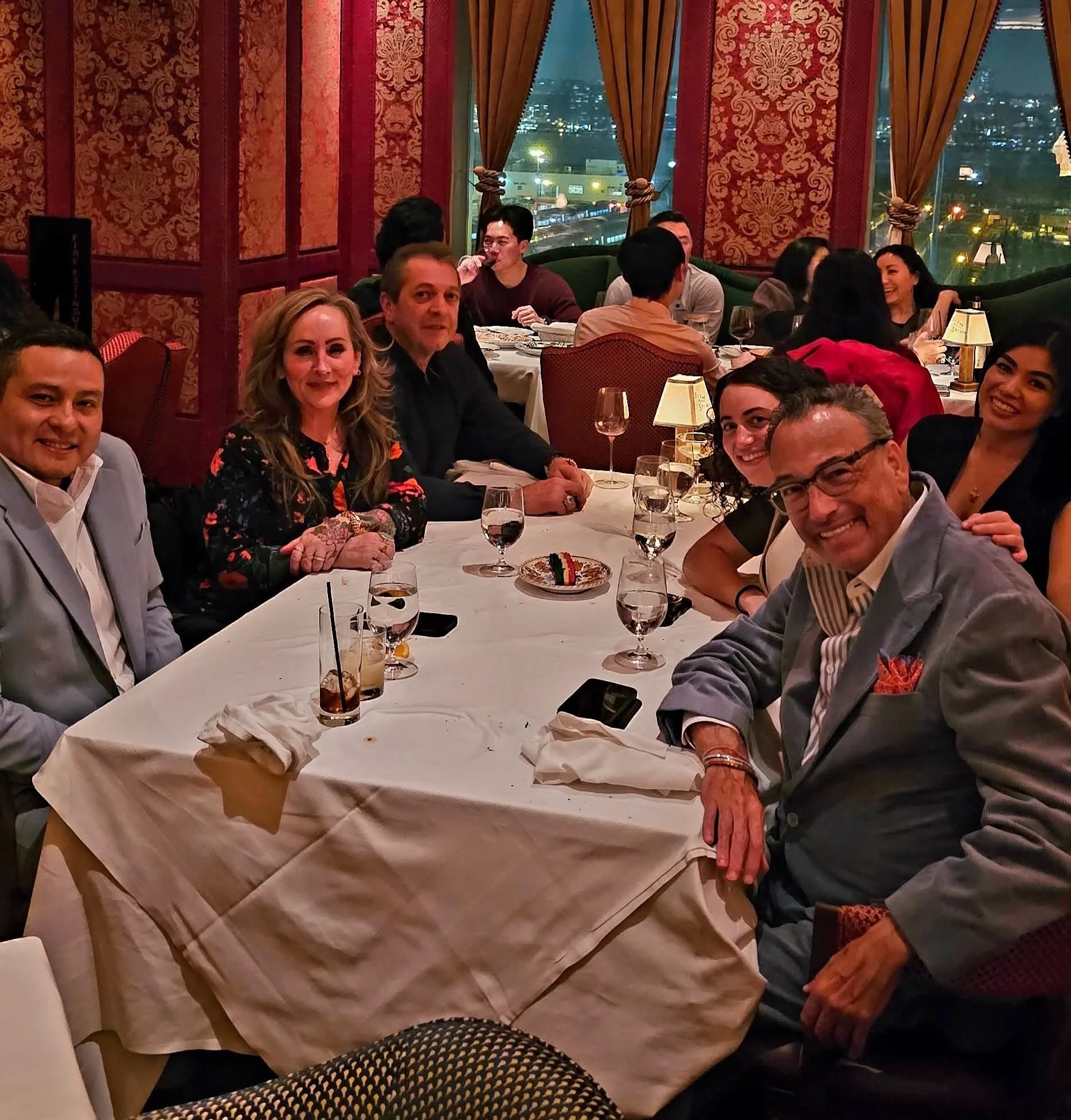
Elizabeth, in particular, has worked directly with those we introduced to her. She values real conversations over distance or formality and is willing to listen, explain and help someone understand the path forward. Her accessibility has made a difference to members of our community who did not know where to begin.
Weitz & Luxenberg belong in these pages because they helped Blue make an important issue more understandable: knowing your rights before you need them. The Blue Magazine has been proud to know Arthur and Elizabeth Luxenberg and learn from the work they do. More importantly, they have shown us that being exceptional attorneys and being exceptional people are not separate things. To us, they will always be more than trusted partners. They are part of the Blue family.
BAD APPLES: WHEN TRUST BREAKS DOWN IN LAW ENFORCEMENT
Blue Magazine stood with law enforcement, but that support was never blind. Supporting the profession meant defending integrity, accountability, fairness and respect, not every person who wore a badge or held rank.
There were officers at every level, who committed crimes, abused their authority or treated others without dignity. Their actions damaged public trust and forced honorable officers to answer for misconduct they did not commit.
Some of the most serious damage occurred behind department walls. Officers described retaliation, selective discipline, unwanted transfers and professional isolation after reporting wrongdoing, challenging decisions or refusing demands they considered improper. When personal loyalty becomes more valuable than competence or integrity, rank can become a weapon.
That pressure follows an officer home, affecting mental health, family relationships, parenting and friendships. An officer being harassed, intimidated or mentally worn down carries that burden before answering the next call for service. Protecting that officer is about more than preserving a career. It is about protecting a person before the damage reaches every part of life.
One New Jersey officer came to our attention after seeking help for his mental health. He received treatment, improved and was cleared by his doctor to return to work. His department required a separate fitness-for-duty evaluation. During that process, he disclosed a suicidal crisis from years earlier. The evaluator did not clear him, and the officer was suspended before eventually regaining his position.
We cannot know every discussion behind that decision, but we know its effect. An officer sought help, recovered and attempted to return to duty, only to face another struggle over his career. That experience can send a dangerous message: disclose a mental-health problem, and the information may later be used against you.
Fitness-for-duty evaluations are necessary to protect officers, colleagues and the public, but they must remain impartial and connected to an officer’s present ability to perform the job. They cannot be used for retaliation or to remove someone who has fallen out of favor.
When officers brought legitimate concerns to Blue Magazine, we listened. When the facts supported a story, we were prepared to report it. We also helped officers understand their options, whether that meant documenting what happened or connecting them with appropriate union, legal or investigative resources. The purpose was not retaliation. It was to help officers protect their careers, families and well-being.
Trust can also be destroyed without formal discipline. Officers described colleagues who spread rumors, betrayed private conversations or presented themselves as supportive while working against someone behind the scenes. In a profession where officers depend on one another during dangerous situations, that betrayal can be devastating. When vulnerability becomes material for ridicule, someone struggling with anxiety, depression or suicidal thoughts may decide that speaking honestly is more dangerous than remaining silent.
Wearing the same uniform does not require officers to agree about everything. It does require maturity, discretion and the ability to address conflict without attempting to destroy another person’s reputation or career. Departments cannot encourage officers to seek help while tolerating a culture that punishes vulnerability.
Respect for rank is part of law enforcement, but rank is not permission to abuse authority. Leadership carries the greater responsibility. Leaders establish what conduct is rewarded, ignored or corrected. When they permit favoritism, retaliation or personal attacks, they teach the department that trust is secondary to politics. When they apply standards fairly, officers know honesty will not become a liability.
Blue Magazine could confront these issues because it remained independent. No department, union or political organization controlled the magazine. We respected those institutions, but our responsibility was to the truth and the officers who trusted us. No title, connection or rank placed anyone beyond scrutiny.
Professionalism is measured not only by how officers serve the public, but also by how they treat their own when no one else is watching.
For all you bullies in law enforcement with high titles that exploit the men and women in blue, on the record or off the record, just know the wolves will always be watching, and you will never be able to sleep at night. All the bad will come back to you. So, as the opposite of Nike says, just don’t do it.
LINE OF DUTY DEATH: THE ULTIMATE SACRIFICE
In 2025, 111 law enforcement officers died in the line of duty. The year before, 148 were lost.
The numbers provide scale, but they cannot show what each death leaves behind. The public can otherwise reduce a death to a headline, a procession, or a name read once at a memorial. But every line-of-duty death leaves a permanent mark. It changes the lives of the people who served beside that officer and the people who loved that officer long before the uniform was put on.
BLUE saw that reality in Washington, D.C., during National Police Week.
At the Police Unity Tour and the Candlelight Vigil, the scale of loss becomes impossible to ignore. Officers, surviving families, and supporters gather at the National Law Enforcement Officers Memorial to honor those who did not survive their service. Thousands ride into Washington carrying names that may not be familiar to the public, but are never forgotten by the people who wear the uniform.
The Memorial brings together many stories, but no two losses are the same. Some families arrive carrying photographs. Others carry the weight of a loss that happened years earlier. Parents stand beside spouses, children, and colleagues. The names on the wall are a record of service; the people standing before them are a reminder of what service can cost.
One of those conversations stayed with me.
I met Debbie Sorrells, the mother of Baltimore County Police Officer Amy Caprio, during the Police Unity Tour. Amy had been killed in 2018 after responding to suspicious activity connected to a burglary in Perry Hall, Maryland. When she confronted the driver of a stolen Jeep, he deliberately drove into her. Amy was 29 years old.
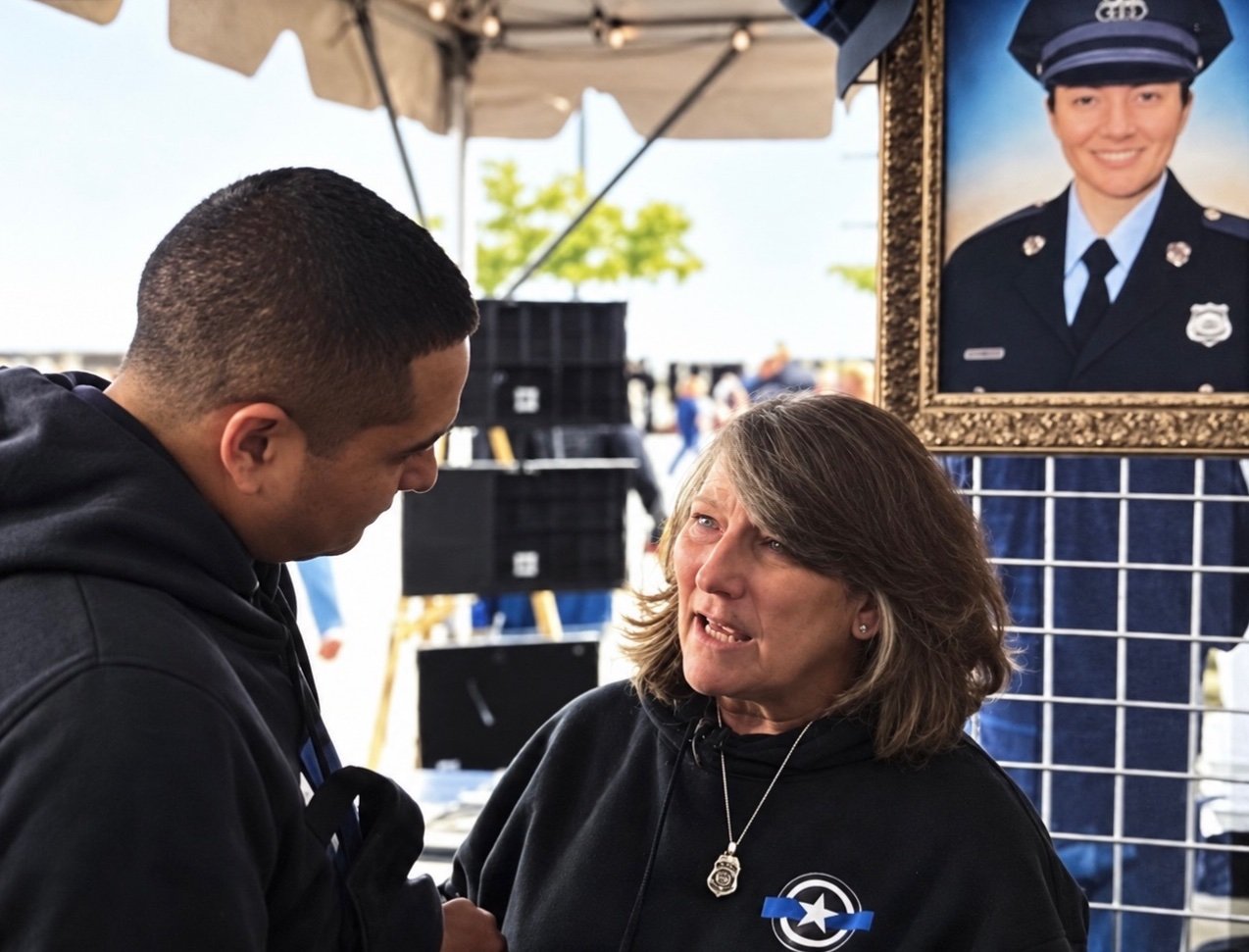
Debbie spoke about her daughter with the pain of a mother who had lost someone she thought about every day, but also with pride. Amy wanted to be a police officer. She had chosen the work and understood what it meant to serve. Her mother came to Washington to make sure Amy’s name was remembered and to stand with other families who understood the same kind of loss. That conversation made the human cost of a line-of-duty death unmistakable. The loss does not end when the department’s ceremony is over. The family lives with it through birthdays, holidays, anniversaries, and ordinary days when the absence is felt without warning.
The ultimate sacrifice also reached my own family. My cousin, retired NYPD Detective Second Grade Jeffrey Montenegro, died in 2021 from pancreatic cancer related to his Ground Zero exposure after September 11. Watching my aunt, Rita Ramirez, receive the folded American flag honoring her son made the cost of service deeply personal. Jeffrey’s death showed that not every sacrifice happens in a single moment. Some emerge years after the assignment ends. The cause may be less visible, but the loss is no less real.
This is what remains after a law enforcement officer dies in the line of duty: an empty place in a family, a department changed by the loss, and a community asked to remember the person behind the badge.
The flag is folded. The name is engraved. The ceremony ends. For the people who loved that officer, the sacrifice does not.
SHERIFF LENNY MILLHOLLAND
Darlington’s story also led Blue Magazine to Frederick County Sheriff Lenny Millholland. The magazine wanted to understand why a sheriff would publicly support a deputy pursuing a career outside the traditional expectations of law enforcement.
Sheriff Millholland did not treat Darlington’s ambition as a distraction from the job. His standard was whether the deputy continued to meet his obligations to the agency and community. Darlington’s respect for his sheriff was equally clear. He valued having a leader who encouraged his development without lowering the expectations attached to the badge.
That approach revealed something important about leadership. Supporting an employee’s ability does not require overlooking professional standards. Sheriff Millholland made room for Darlington to pursue music while holding him accountable as a deputy. His leadership created the conditions that allowed both commitments to coexist.
HOLD THAT LINE: DEPUTY SHERIFF AND COUNTRY SINGER CHRIS DARLINGTON
That evening, the Blue Magazine team watched Darlington perform at West Oaks Farm Market before an estimated crowd of 1,200 people. The concert showed what an interview could not. Darlington had a commanding voice, a disciplined band and an audience that responded to him.
His musical progress was already measurable. “Hold That Line” surpassed 50,000 streams within its first three weeks, and an earlier recording had reached No. 82 on Nashville’s MusicRow chart. Darlington wrote “Hold That Line” specifically for law-enforcement officers after the pressures of 2020, intending it as a message of support.
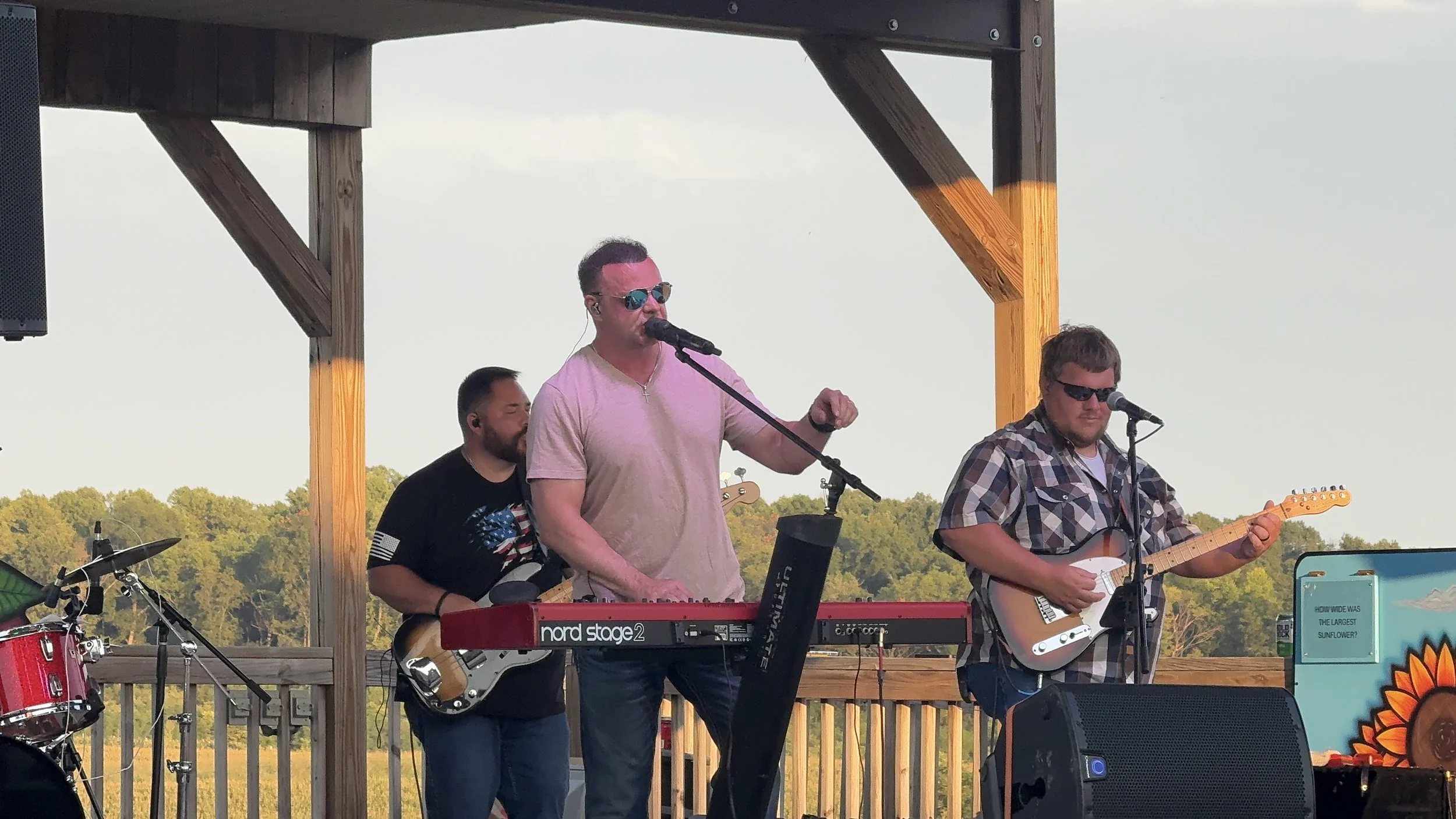
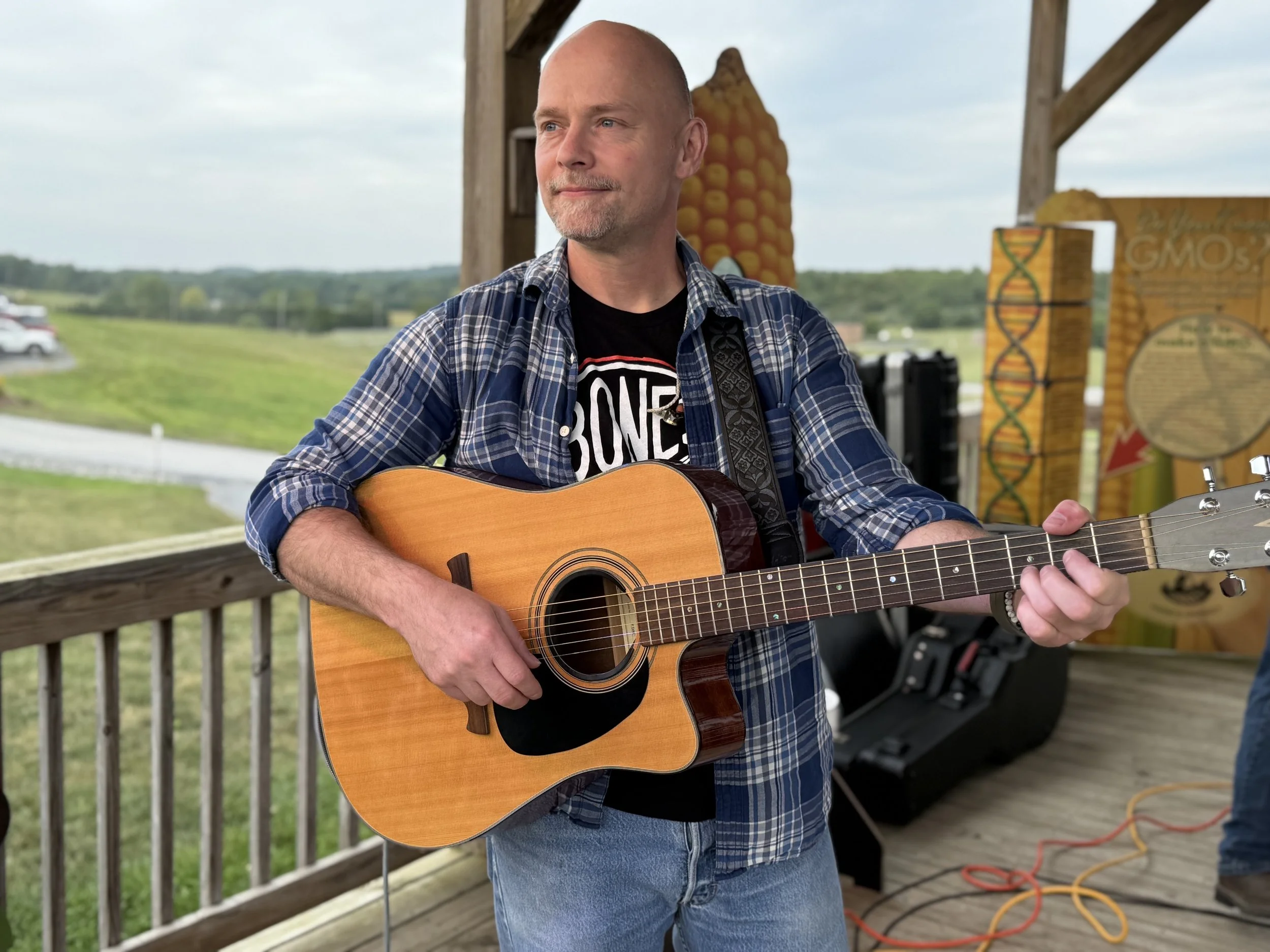
Faith was present throughout the trip without needing to be staged. At one point, Darlington looked at me and said, “Danny, I’ve been praying.” He explained that prayer was part of how he understood the opportunities developing around his music and the people entering his life. The combination of music, service and faith created a natural connection with Moment of Silence. A song cannot replace treatment or direct support, but it can reach an officer, first responder or veteran who may not respond to an organization or formal presentation. Blue Magazine saw in Darlington’s work how music could open the door to a conversation about mental health for people who might otherwise avoid it.
The next morning, the team packed its cameras and returned to New Jersey with one final story intact: a deputy accountable to his sheriff and community, and a musician working to earn a larger audience without walking away from the badge.
This is how Chris Darlington made our cover.

PATERSON POLICE DEPARTMENT AND PBA LOCAL 1
Paterson was one of the first police departments to believe in what The Blue Magazine could become. At a time when we were still building our name and earning the trust required to report on law enforcement, Paterson gave us an opportunity. It became more than a department we covered. It became one of the relationships that helped establish the magazine.
During The Blue Magazine’s seventeen years, Paterson PBA Local 1 was led by three presidents: Steve Olimpio, Alex Cruz and Angel Jimenez. Each served during a different period, but the relationship remained steady because all three understood the responsibility of representing the officers who elected them.
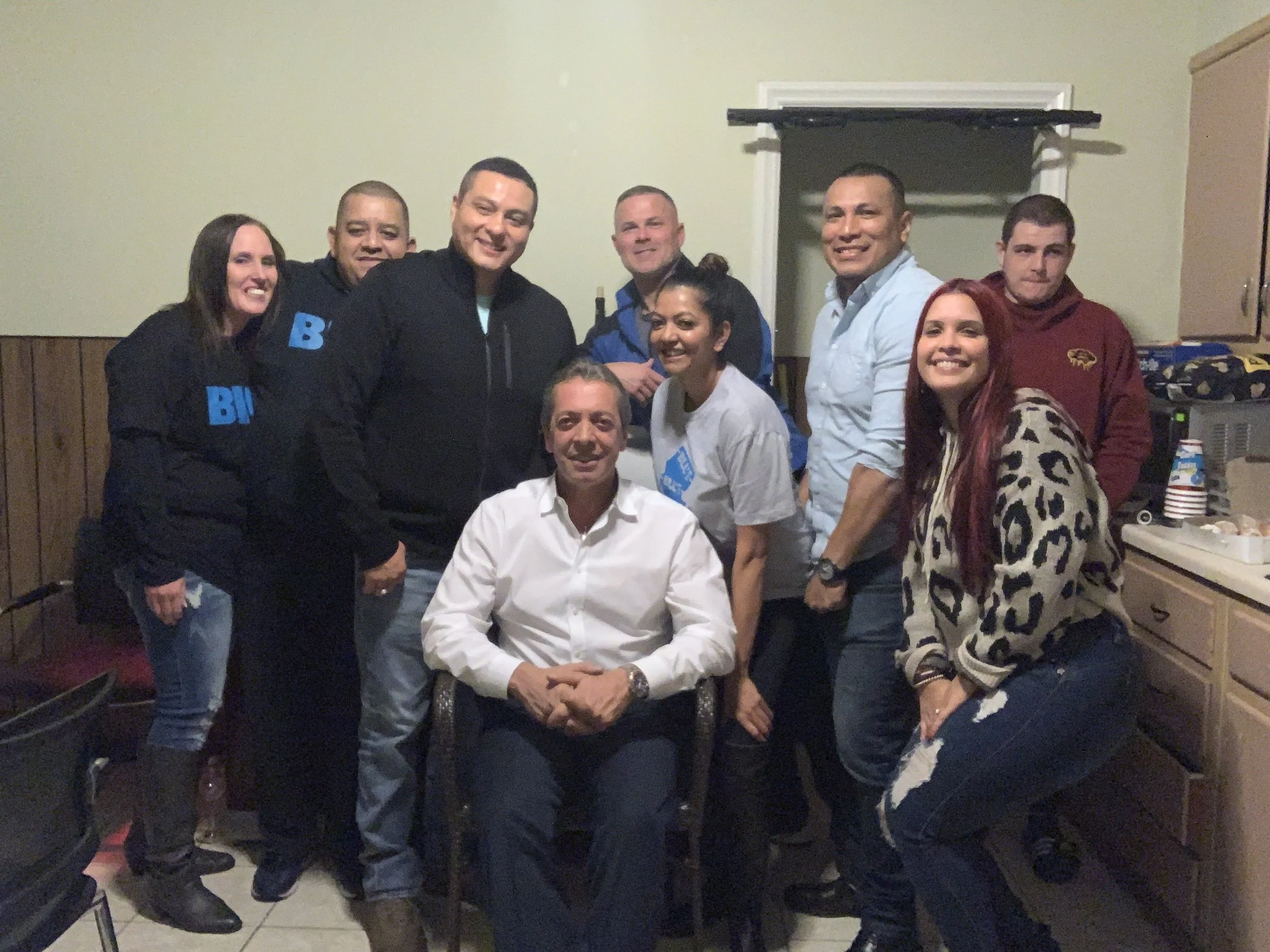
former paterson pba local 1 president steven olimpio with blue magazine team
Police administrations oversee operations, policy, personnel and the daily responsibilities of an agency, while unions represent members, protect contractual rights and advocate for fair treatment and working conditions. Leading a union requires knowledge, tact, involvement and the willingness to confront difficult issues. Among the unions Blue encountered across the country, Paterson PBA Local 1 stood out for remaining connected to its members and the community.
My relationship with Paterson began with Steve Olimpio, a retired police detective who served as president of Paterson PBA Local 1 for many years. His leadership deserves recognition because he helped establish a relationship that endured throughout the life of the magazine. Steve brought people together, supported the community and gave The Blue Magazine an early opportunity to earn the department’s trust.
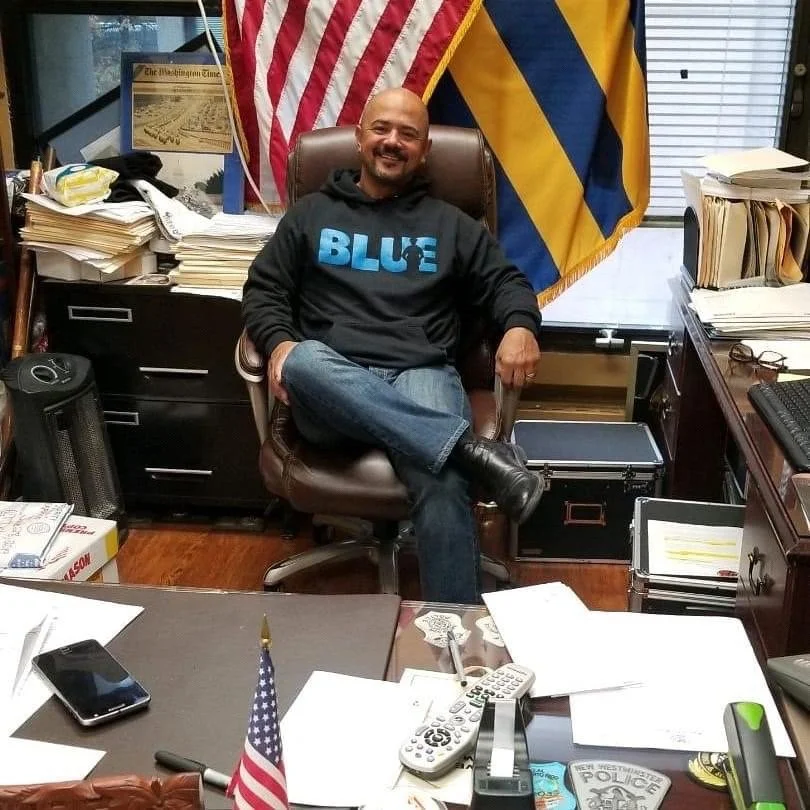
When Alex Cruz succeeded Steve as union president, he continued that standard. Alex was an engaged and respected leader who represented his officers while remaining highly visible in the community. That record led The Blue Magazine to endorse him when he ran for mayor of Paterson and place him on the cover. We followed his campaign and saw the effort he put into bringing his message to residents throughout the city. Although he did not win the election, he continued serving his members with the same commitment that had earned our respect.
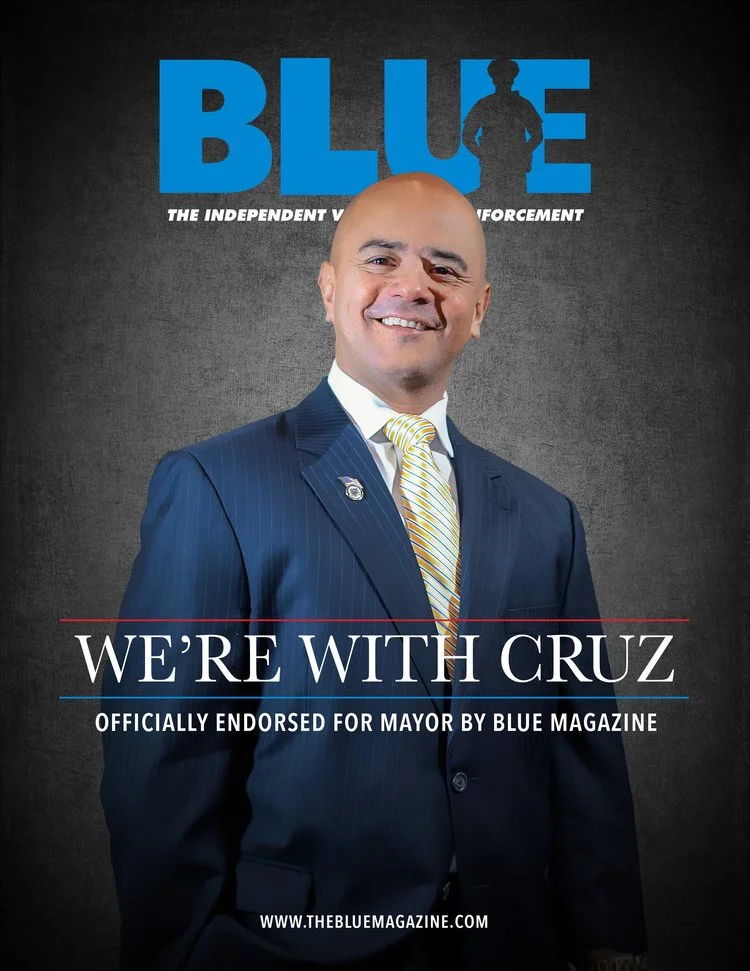
Angel Jimenez now carries that responsibility as president of Paterson PBA Local 1. The Blue Magazine has had a strong relationship with Angel as well. He has supported our work, participated in interviews and meetings and helped keep us informed about issues affecting one of New Jersey’s most significant law enforcement agencies.
That access was never about favors. It was about trust. Responsible journalism requires listening to the officers, union representatives and administrators closest to the work. Paterson’s leadership helped The Blue Magazine better understand the issues affecting law enforcement officers in a major urban department, and that perspective made our reporting stronger.
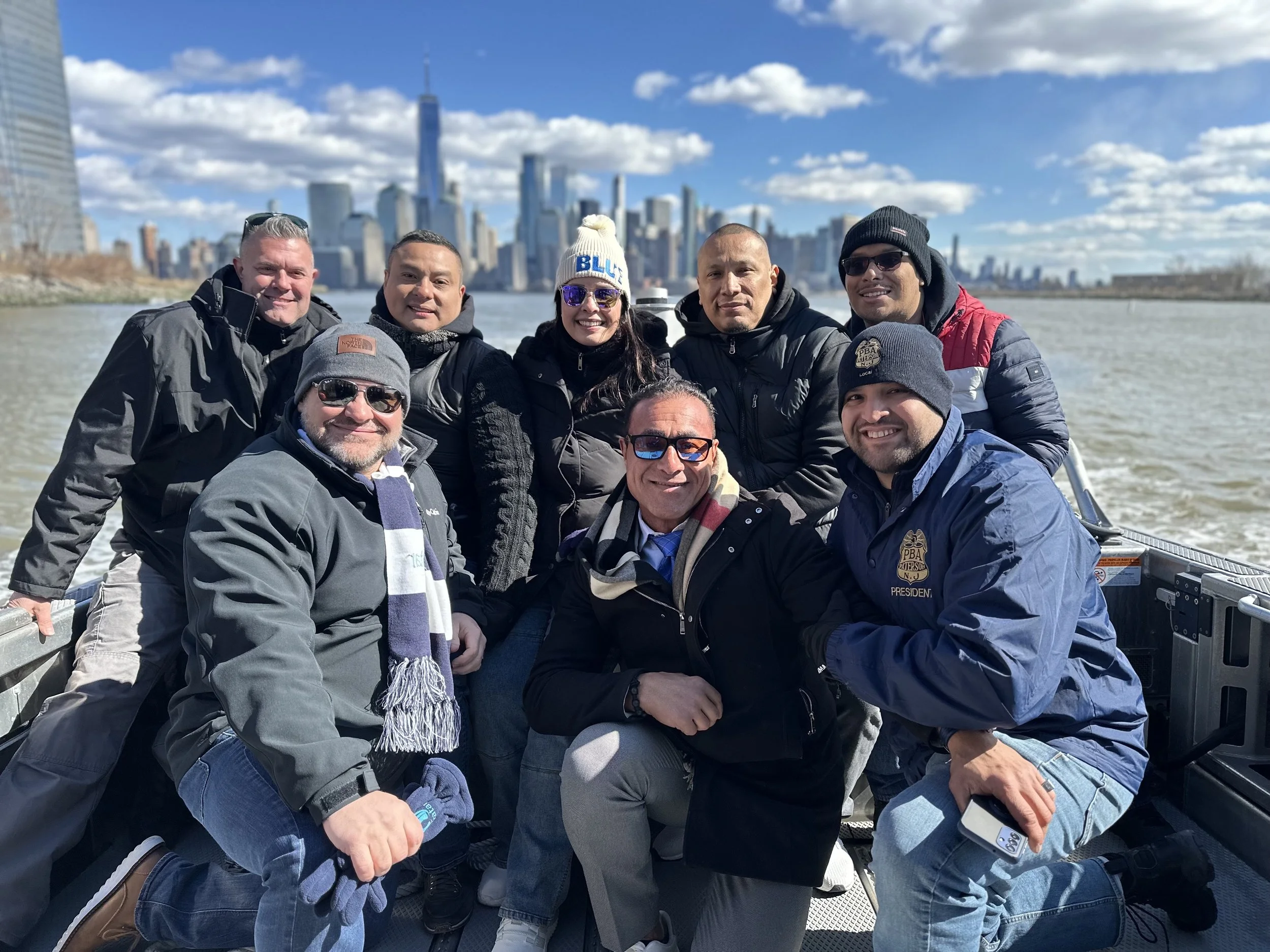
Pba local 1 president angel jimenez with the blue team
The department also welcomed national law enforcement voices. Then Milwaukee County Sheriff David A. Clarke Jr. and Pinal County Sheriff Mark Lamb each visited Paterson and addressed officers during lineup before their shifts. The visits allowed officers to hear directly from leaders facing many of the same issues on a national stage.
The Paterson Police Department and PBA Local 1 are distinct institutions, but both hold an important place in this history. Under the city’s administration, including Public Safety Director Jerry Speziale, and through the sustained work of its union representatives, Paterson remained a department The Blue Magazine respected and valued. Although we worked with agencies throughout the nation, Paterson remained close to home. Its place in Blue’s history was earned through years of trust and a shared belief that law enforcement officers deserve to be heard.
THE BLUE MAGAZINE HEADQUARTERS, HALEDON, NEW JERSEY
The Blue Magazine began in Haledon, New Jersey, and seventeen years later, it remains in the headquarters where it first took shape. From that office, a New Jersey platform grew into a national publication without losing its original purpose: to report honestly, recognize service and give the law enforcement community a voice of its own.
The headquarters was where stories were developed, covers were planned and interviews were arranged. Events, partnerships and projects that reached far beyond North Jersey began with conversations inside that office. As the magazine expanded, Haledon remained its steady base.
Haledon sits beside Paterson and only minutes from Wayne and Prospect Park, at the center of the region where many of our earliest stories and relationships began. Its residents welcomed The Blue Magazine and gave us a community where we could build something lasting.
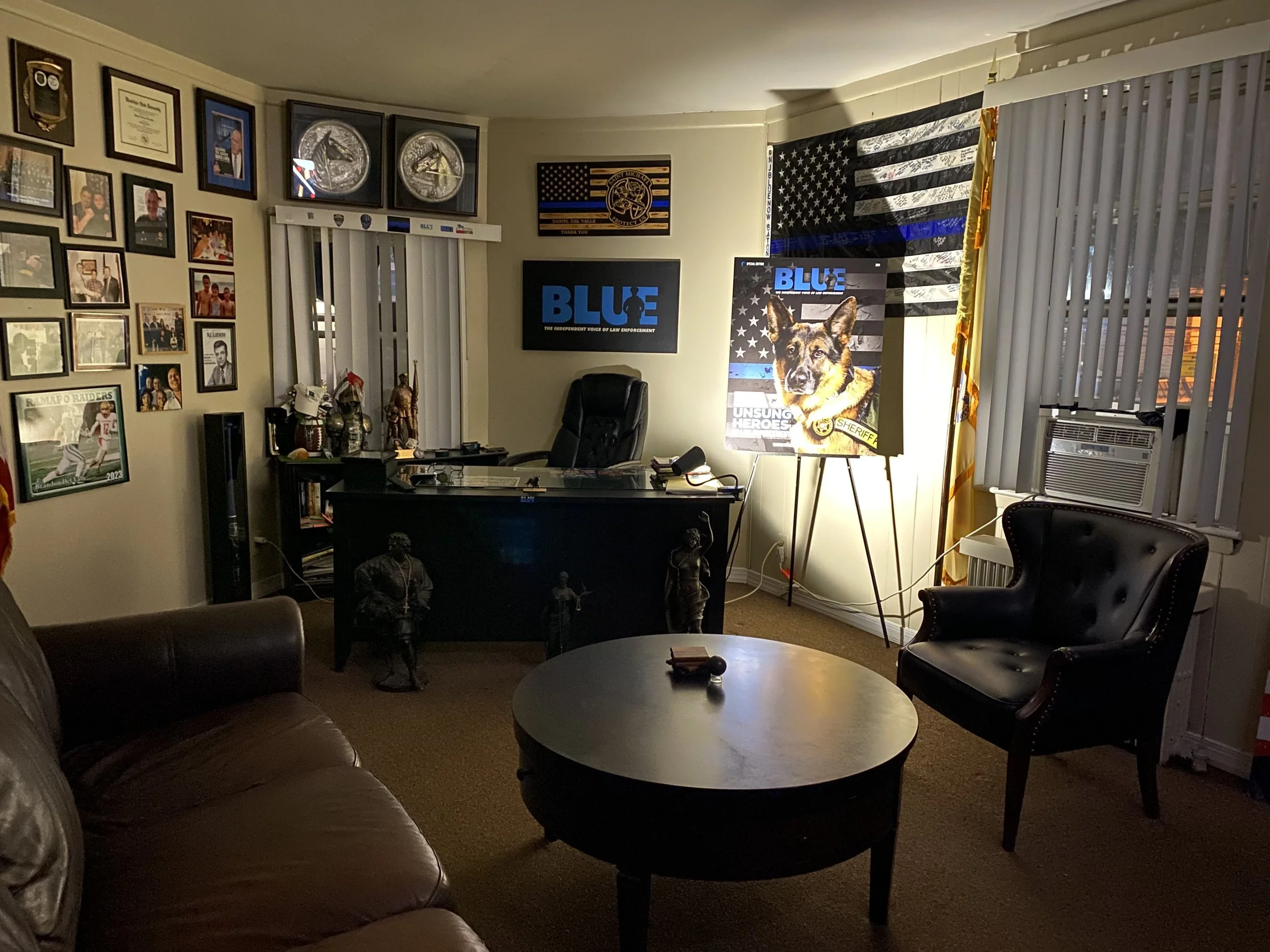
That experience was strengthened by the borough’s leadership. Mayor Michael A. Johnson Sr., a former law enforcement official, understands the responsibility carried by those who serve the public. His leadership demonstrates that a diverse community with differing political views can still respect law enforcement and recognize the value of public safety.
The Haledon Police Department has been an important part of the magazine’s seventeen-year history. Chief Angelo J. Daniele, Deputy Chief George Guzman Jr. and the members of the department treated The Blue Magazine with professionalism, friendship and respect. They were available when we needed help at the office, present when our events required support and consistent in their commitment to the community. During years of intense public scrutiny of law enforcement, their presence reminded us that our headquarters stood in a borough where the profession was respected.
Haledon gave The Blue Magazine more than an address. It gave us a home from which we could report meaningful stories, build relationships across the country and remain connected to the law enforcement community. As this final issue closes a seventeen-year chapter, we are sincerely grateful to the residents of Haledon, Mayor Johnson, Chief Daniele, Deputy Chief Guzman and the Haledon Police Department. The office will continue as the home of Moment of Silence. Blue Magazine became national in reach, but Haledon remained its foundation.
FAITH: WHEN YOU NEED SOMETHING MORE
Over 17 years, The Blue Magazine has covered the pride, sacrifice and pressure that come with a life in law enforcement. We have seen the strength behind the badge, but we have also seen what people do not always say out loud: stress, grief, fear, family problems, financial pressure and moments when someone feels completely alone.
For many in this profession, faith is what carries them through those moments.
I can say that personally. When I started The Blue Magazine, my relationship with God was not where it is today. Over the years, I have gone through some of the hardest storms of my life. At times, I did not know how things would work out, and the pressure felt like it was coming from every direction.
But through it all, I found a peace inside that I did not have before.
That peace did not come because every problem disappeared. It came from knowing that there are things I cannot control, placing them in God’s hands and trusting that God had a plan, even when I could not see it.
Faith does not mean that a person will never struggle. It means that when life becomes heavy, you do not have to carry it by yourself. When you are on your knees and feel that everything is falling apart, talk to God. Ask for help. Be honest about what you are feeling. Do not be ashamed to admit that you are afraid, hurt, overwhelmed or lost.
Whether you are on the job, serving in any department or division, or at home trying to figure out your next move, God can meet you right where you are.
Money, influence, friends, success and good times can all be blessings. But none of those things can give a person real peace when life turns dark. I have learned that firsthand, and I have seen it many times in law enforcement. Counseling, rehabilitation, medical care and crisis support can all be necessary. But one of the most powerful things I have witnessed is someone turning to God and beginning to believe again that life has purpose.
Faith can give you strength when you feel you have none left. It can give you courage when fear has taken over. It can help you understand that your worst moment does not have to define the rest of your life.
That is why I wanted to recognize two men who have made themselves available to law enforcement officers, first responders and their families: Pastor Paul Beresford in Florida and Rabbi Joel Friedman in New Jersey and the surrounding region.
Pastor Paul is a devoted follower of Christ and someone people can call without fear of judgment. He understands that a person sometimes needs to talk before he or she can begin to see a way forward. He offers prayer, encouragement and a place for people to speak honestly about what they are carrying.
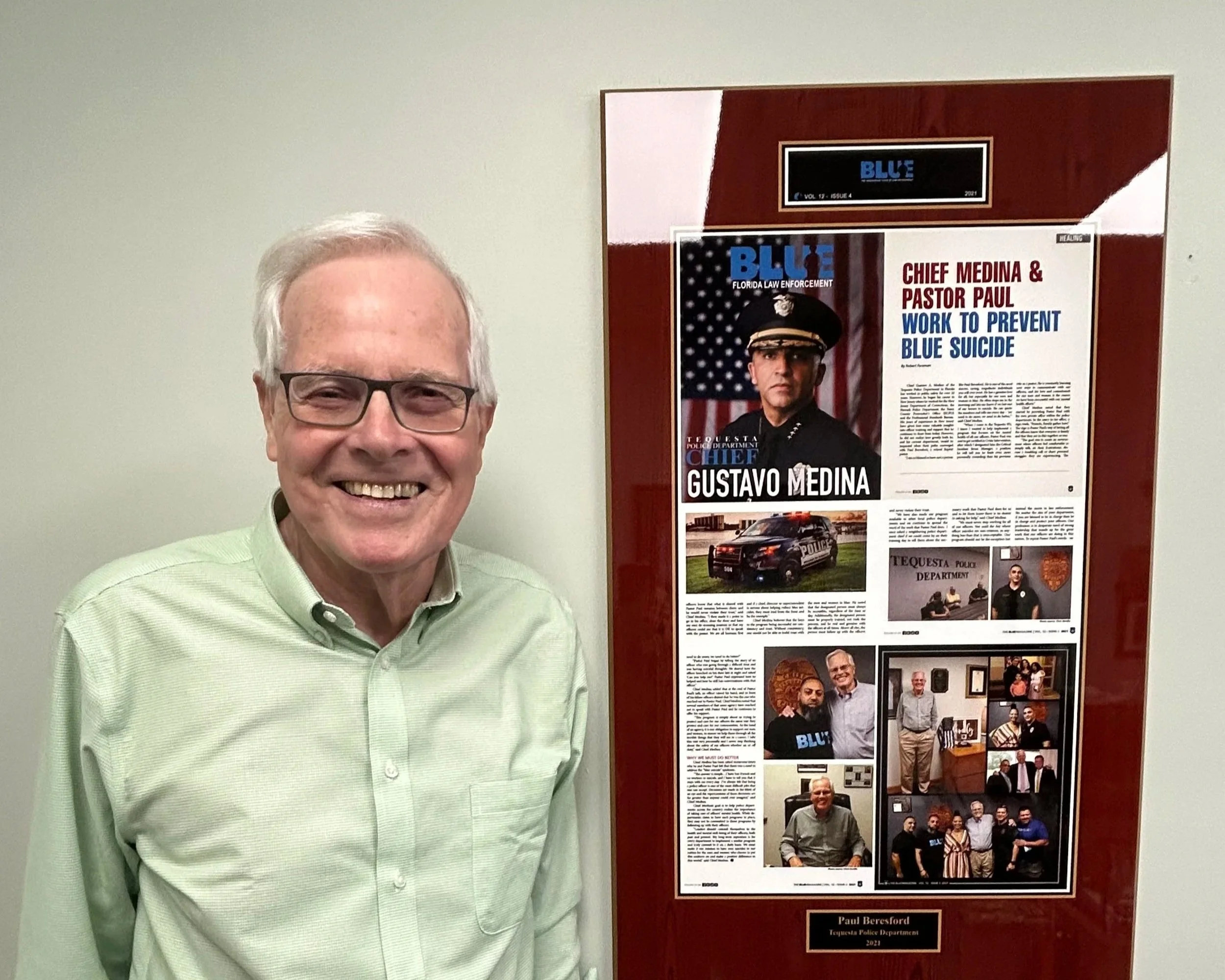
Rabbi Joel Friedman carries that same open heart in his work with law enforcement. Rabbi Joel is Jewish, but he has made clear that an officer, firefighter or first responder does not have to be Jewish to call him. Christian, Catholic, Muslim, Jewish, another faith or no faith at all, his message remains simple: “I’m here for you.”
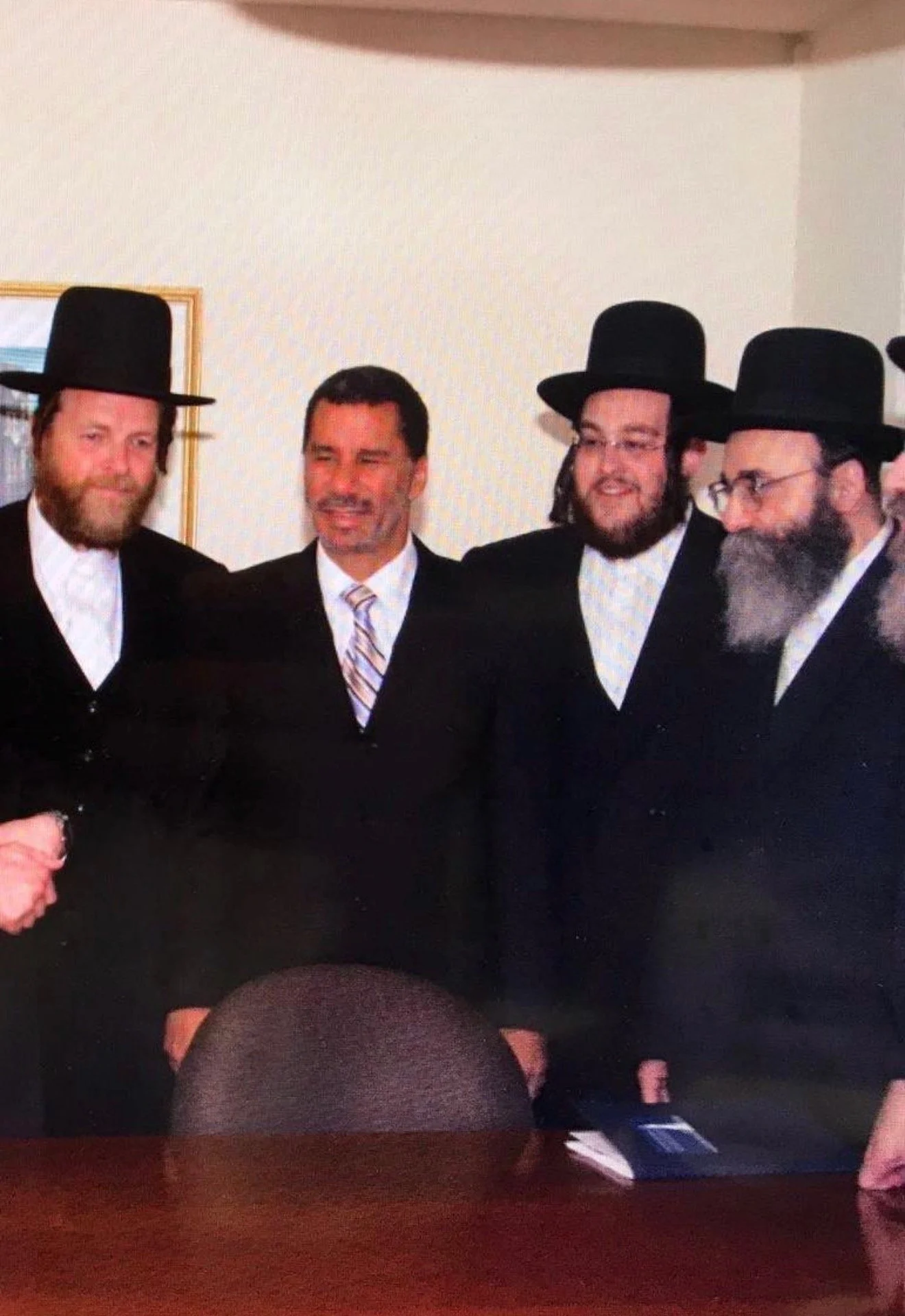
Rabbi joel friedman with his father.
The Blue Magazine placed Rabbi Joel on its cover because of the trust he had built throughout the law enforcement community. He has built trust throughout law enforcement by listening without judgment and offering support to people dealing with grief, marriage and family issues, career pressure, fear or personal crises. He understands that some conversations cannot be had openly at work. He gives people a place to speak.
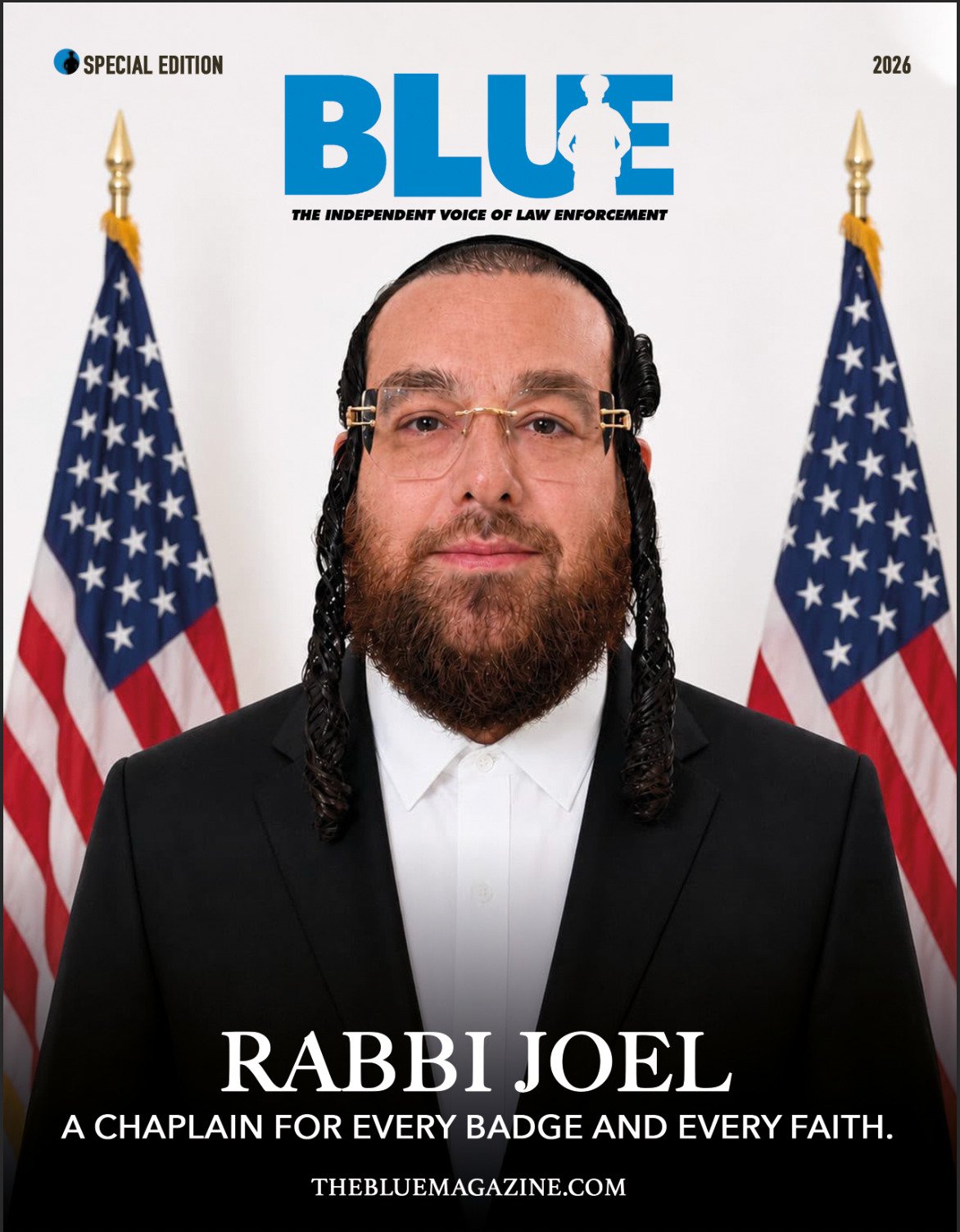
Pastor Paul and Rabbi Joel come from different faith traditions, but both have chosen to serve people who may need hope, guidance or simply someone they can trust. They are available to anyone, regardless of background or beliefs.
The Blue Magazine has always been about the people behind the uniform. This profession needs strong leadership, wellness resources, counseling and accountability. It also needs faith, because for many people, faith is where hope begins again.
If you are struggling, do not wait until it becomes too heavy. Reach out. Call Pastor Paul. Call Rabbi Joel. Speak to someone you trust. And speak to God.
Their information is included below because help should never feel out of reach.
Pastor Paul Beresford: 561-906-9791
Rabbi Joel Friedman: 347-482-5388
ASLAN T. SOOBZOKOV: MY ATTORNEY, MY MENTOR
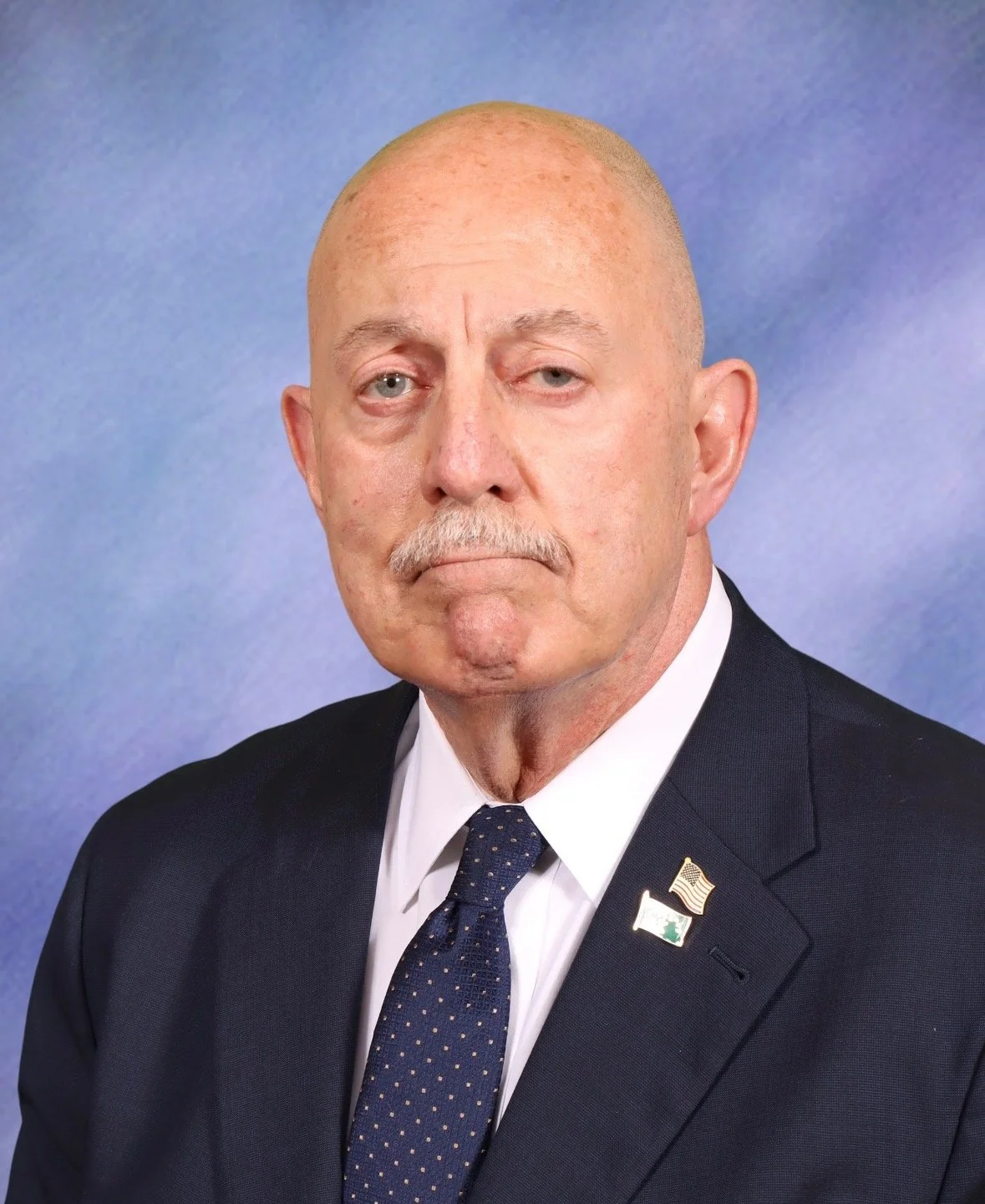
I met Aslan T. Soobzokov as a teenager through a friend. At the time, I did not understand how important he would become in my life. He was a criminal-defense attorney, but from the beginning, he treated me as someone who needed guidance, discipline, and a clear direction.
Aslan was tough on me. He did not tell me what I wanted to hear. He told me what I needed to hear.
Even when I was young, friends who ran into trouble often came to me. Sometimes it was a traffic matter, an accident, or a mistake that could have followed them for years. I would call Aslan. More than once, he helped people I cared about without charging them. At that age, I did not have money or influence, but through him I was able to help people who needed someone in their corner.
Later, Sheriff Edwin Englehardt gave me an opportunity at the Passaic County Sheriff’s Department. He saw a future for me in law enforcement and planned for me to eventually attend the police academy. After Sheriff Englehardt retired and a new administration came in, I learned quickly that a career in law enforcement can be affected by politics, personalities, and retaliation. I was young, prideful, and unwilling to let people disrespect me. Eventually, I was let go from the department.
Sheriff Englehardt was already retired when he learned what happened. He called me to his home and told me, “Don’t worry about it, Danny. We’re going to get your job back. We’re going to take care of it. Aslan is going to take the case.”
It was intimidating. I was going against a large county administration while trying to protect a career that had barely started. At that time, Aslan’s practice was criminal defense, not administrative law. He did not pretend otherwise. He told me he would get the books, learn the law, and become the best attorney for my case because he had my best interests at heart.
He explained that someone can hire the smartest attorney in the world, but that does not mean the attorney will care enough to work the case the way he should. With Aslan, I knew I had an attorney who would put my interests first.

The case took about a year and a half. In the end, all negative administrative charges were withdrawn. I returned to the Passaic County Sheriff’s Department with my name cleared, which was what I wanted from the beginning. My compensation, insurance, and the rest of my employment benefits were restored. I was able to continue the career that had been interrupted early on.
Without Aslan taking that case, I would not have returned to the Sheriff’s Department. I would not have had the opportunity to continue in the profession that became such an important part of my life.
While I was out of the department, Aslan gave me another direction. He told me I was going back to school and that he wanted me to become an attorney. He explained that, as a law enforcement officer, I could always be subject to someone else’s decisions. With a legal education, I would understand the system and have the ability to defend myself and others.
He did not just tell me to go to college. He pointed me toward Montclair State University, helped me understand the application process, and stayed on me to make sure I followed through. He set a condition for helping me: I had to take school seriously. He wanted A’s and B’s. No excuses.
I was barely a C-minus student in high school and barely graduated. School did not come naturally to me. But during those two years, while I was taking as many as 21 credits a semester and working to get my job back, I earned A’s and B’s and graduated cum laude.
I do not say that to make myself sound smarter than I was. I say it because Aslan made me apply myself. He made me read things two or three times until I understood them. He expected more from me because he understood what I could do if I put in the work.
Looking back, I can see how much of life is connected. At the time, I was focused on getting my name cleared, returning to the Sheriff’s Department, and finishing school. I did not know that those years would help shape the person who would later build The Blue Magazine.
The magazine came later, but the foundation was built during those years. My experiences in law enforcement, the people who stood beside me, and the lessons I learned through difficult times became part of the reason I wanted to create something that could serve and speak for law enforcement officers.
Everyone needs a mentor. Everyone needs someone who will not simply tell them what they want to hear, but will tell them what they need to know and push them to become better. I am grateful that I still have Aslan in my life today. He is not only my mentor. He is my brother.
MY PARENTS: THE FIRST MENTORS
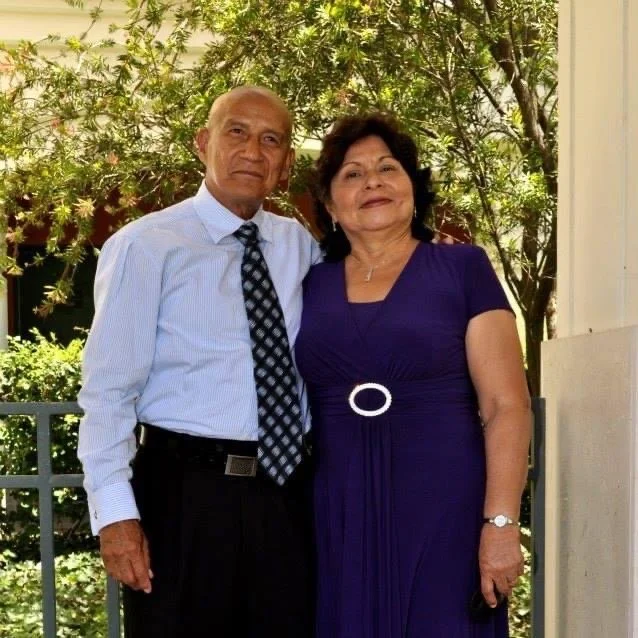
Long before I received guidance from attorneys, sheriffs, commissioners and other law enforcement leaders, my first mentors were my parents.
I came to the United States from Ecuador when I was two years old. Our family lived in the South Bronx before my parents purchased their first home in Paterson, New Jersey. Both communities exposed us to the realities of low-income neighborhoods. Inside our home, however, my parents maintained structure, discipline, stability and faith.
My mother demonstrated empathy through action. She helped relatives, immigrants and others trying to establish themselves in this country, offering her time and whatever resources she could provide. My father worked full time and showed us the importance of consistency, responsibility and remaining committed to his family through difficult periods.
Their example established the foundation for the mentorship I later received from leaders in law enforcement and other professions. It also influenced how Blue Magazine approached its work.
Blue covered policing, leadership, mental health and public safety, but its purpose extended beyond publishing stories. We supported officers in crisis, provided a platform for people whose experiences deserved attention and remained involved in communities frequently discussed only in connection with crime or poverty. That approach came from lessons learned at home: take responsibility, remain present and help where you can.
The clearest example is Paterson, the city where my parents raised me and where I learned what it meant to grow up in a struggling community. Years later, it became the focus of one of Moment of Silence’s most important programs.
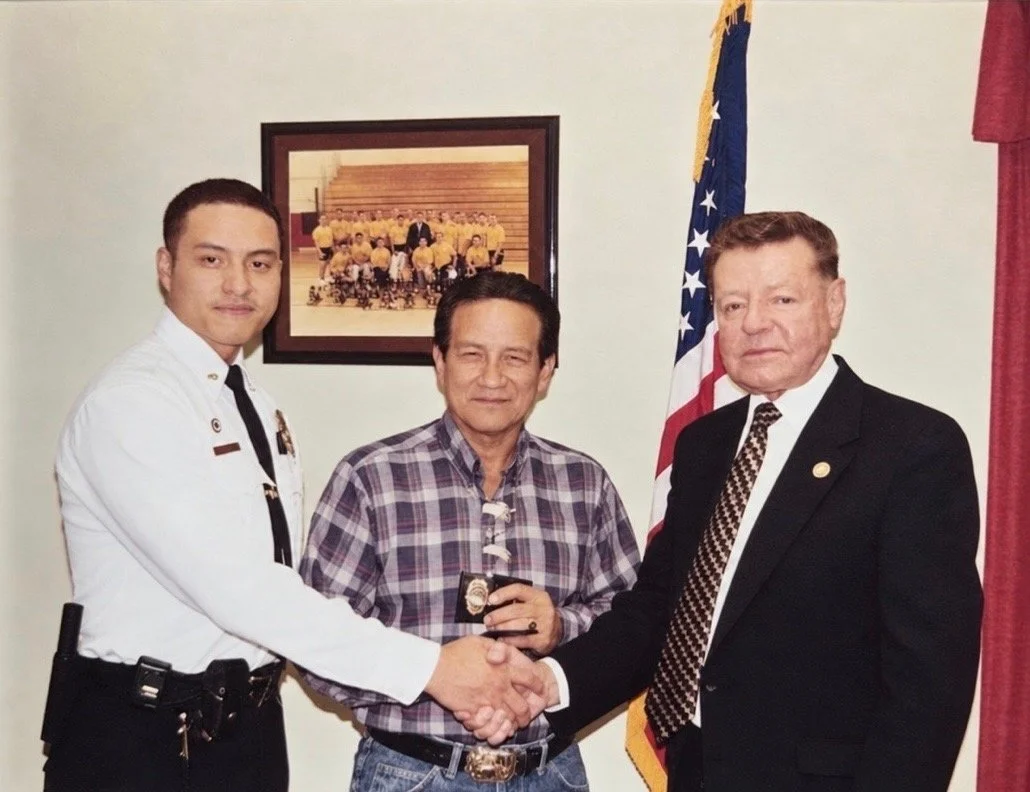
Through Santa Comes to Paterson, we return each year with quality toys, bicycles, basketballs and a full Christmas experience for children and families. The program does not treat the community as an abstraction or a charitable photo opportunity. I know those streets. I understand the effort required to raise a family there while trying to create stability inside the home.
My parents made that effort for us.
Their inclusion in this history is not ceremonial. The values they practiced became part of the way Blue Magazine and Moment of Silence served others. Later mentors strengthened those values, and the magazine gave me a way to apply them.
I have many imperfections, but the qualities that allowed me to build Blue Magazine began with my parents. Through our work in Paterson, I have carried what they gave me back into the community where they raised our family.

THE FAMILY BEHIND THE WORK
There is one part of this story I have always hesitated to put into print: my family.
I have never believed that the public is entitled to a person’s private life. The people you love, the life inside your home and the seasons you survive together are personal. They are not for public consumption simply because someone has a public role.
If someone looked at my social media, they might think my life has been quiet. The truth is that it has been full. We have had great times, difficult times, unbelievable opportunities, strange moments, setbacks, laughter, uncertainty and days that tested every part of us. We have also lived a life of genuine blessings.
My children have seen things behind the scenes that many young people never get the chance to see. Through The Blue Magazine, its events and the people who became part of its story, they have been exposed to remarkable experiences and extraordinary people. They have seen how much work goes into creating something from nothing, along with the responsibility, sacrifice, pressure and human side of public life. They have also learned that accomplishments alone do not define a person.
Those experiences, along with the hard seasons, have helped make them well-rounded and strong. They understand that life does not move in one direction and that good times do not erase difficult ones. They have seen both. That perspective is a blessing in itself.

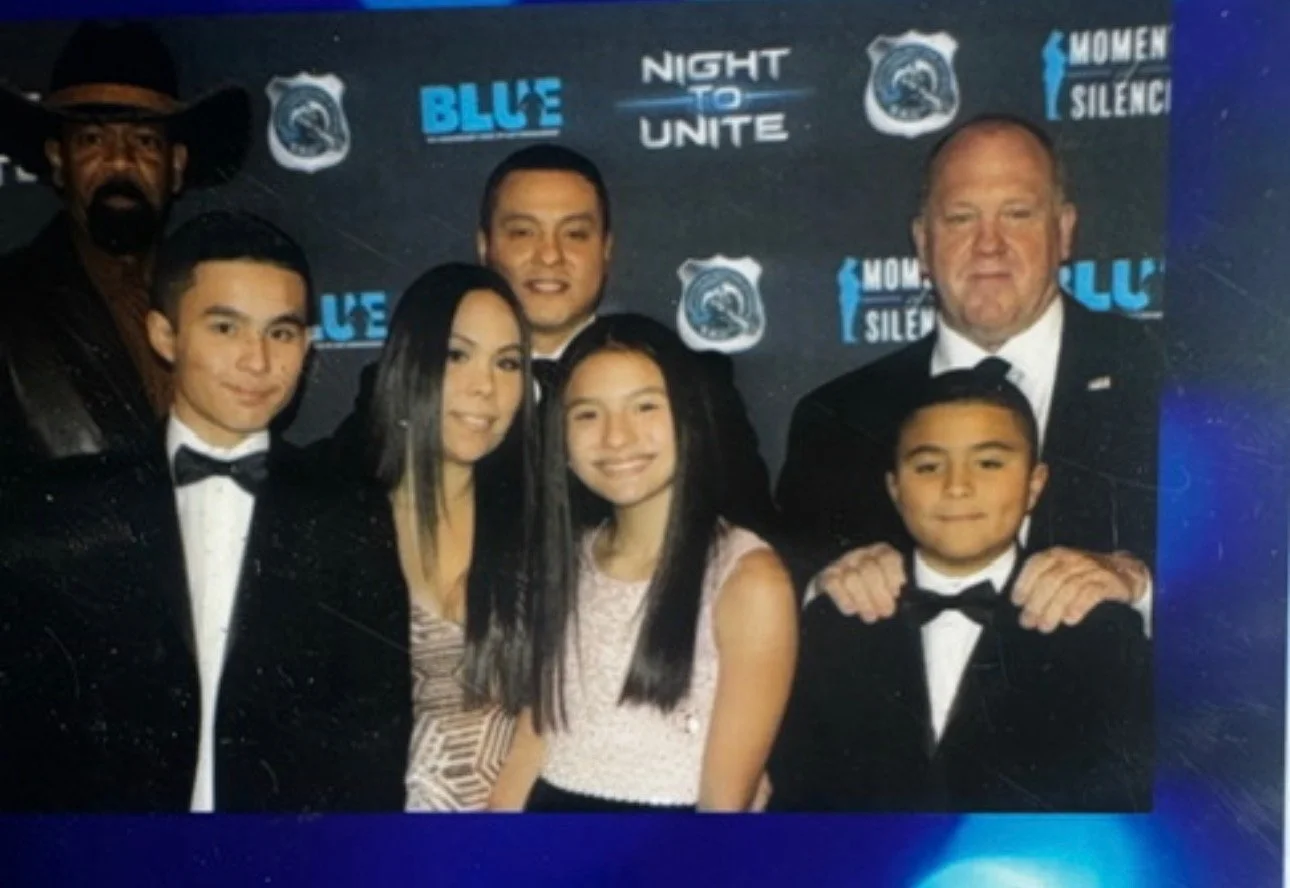
I am sharing this only because leaving it out would make this legacy incomplete. The Blue Magazine was never just a business or a publication. It affected the lives of the people closest to me. My family lived with the long hours, the calls, the events, the pressure, the plans that worked and the plans that did not. They were there through all of it.
At the center of that family is my wife, Maria.
There is a truth that has become clearer to me over time: a man can have ambition, talent and opportunities, but without the right person beside him, he can still lose his way. Whatever I have accomplished through this magazine, Moment of Silence and the work that came from both, I could not have done without Maria.
She has been my wife, the mother of our children, my advisor, my sounding board and the steady presence in our home. She was also part of bringing this Legacy Issue together. Her role cannot be reduced to a title because so much of what she has done has happened quietly, without recognition and without asking for it.
Most importantly, Maria brought faith into our home. For years, she prayed for me before I fully understood the place God would eventually have in my own life. She prayed for our children and made sure that faith was not just something we discussed in the best moments or reached for only in the worst ones. She put God in their hearts.
Today, I see that in all three of them.
Brandon, our oldest, has received the strongest and sternest version of me as a father. I have always believed that loving your children means being involved in their lives every day. It means paying attention to the conversations, the choices, the people around them and the direction they are headed. That is not always easy for a parent, and I am sure it has not always been easy for him.
But Brandon has become a young man who makes me optimistic about the future. He is intelligent, thoughtful and finding his own path, including an interest in the law enforcement profession. He has seen a great deal for someone his age, but he has remained grounded. I am proud not just of what he may become professionally, but of his character and the heart he brings to life.
Alyssa, our daughter, has brought a different kind of joy into our family. There is something about being a father to a daughter that is both beautiful and humbling. It brings pride, protectiveness and a constant awareness that you are watching a young woman become who she is meant to be.
She has been singing the national anthem since she was a young girl, performing at law enforcement, community and patriotic events in New Jersey, New York, Washington, D.C., and beyond. Her voice has taken her into rooms and onto stages most young people never see, and she has handled those opportunities with grace.
This year, she took another step forward with the release of her original song, “Go New York!” A proud New York Knicks fan, Alyssa created the song as a tribute to the excitement and pride surrounding the team and its fans. It is a real accomplishment, but more than that, it is an example of her willingness to put herself out there and pursue the talent God gave her. I am not easily impressed by the usual things parents are expected to praise, but when she sings, I am. She is creative, ambitious and continuing her education while making music. She has her mother’s heart, her mother’s strength and the ability to bring warmth into a room. Watching Maria help raise a powerful young woman has been one of the great blessings of my life.

click here to listen.
Danny Jr., our youngest, brings his own force into the family. He is smart, athletic, driven and completely himself. Football has become an important part of Danny’s life and of our family life as well. Both of my boys have made me proud on the field, but Danny’s ability, discipline and love for the game stand out. He is now playing at a highly competitive level, and it has been incredible to watch him develop.
What impresses me most, however, is his maturity. He absorbs information, understands what is expected of him and knows how to respond when a situation requires more from him. At his age, he already possesses the qualities of a great soldier: he listens, follows direction, works hard and is prepared to step forward when needed. Great soldiers eventually become leaders, and I can already see that leadership developing within him.
At the same time, he enjoys being a kid, but when it is time for him to become a man, he can make that transition in a matter of seconds. He respects his parents, values our guidance and remains deeply connected to his family. His athletic ability makes us proud, but his maturity, work ethic, strong foundation and heart give us even greater reasons to admire the young man he is becoming.
Still, sports, school, talent and accomplishments are not what I value most in my children. Those things are wonderful, but they are not the foundation. What I am proudest of is their hearts. All three of them have compassion. They understand hardship. They work hard. They care about people. They have a maturity that comes from what they have experienced and, I believe, from the faith Maria placed in them from the beginning.
Our family is not perfect. I am not a perfect husband, and I am not a perfect father. I fall short, and I know it. I do not want these words to create a false picture of an easy life or a perfect home. We have gone through storms. We have had times when we had to hold on, pray harder and keep moving even when we did not have all the answers.
But we made it through.
Today, we are in a good season, not because every problem in life has disappeared, but because we know God is with us. We trust that He knows what to do, when to do it and how to carry us through the parts of life we do not understand.
Every family’s circumstances are different. Not everyone has the same opportunities, the same support or the same path. I understand that. But for the men and women in blue who are building careers while raising children and trying to keep their homes together, there is nothing wrong with wanting a strong family life. There is nothing wrong with wanting stability, faith, love, discipline and a home that keeps you centered.
In the end, the people waiting for you at home are not separate from the work. They are often the reason the work has meaning.
So, as this chapter of The Blue Magazine closes, I thank my wife, Maria, and our children, Brandon, Alyssa and Danny Jr. They have stood behind the scenes through every part of this journey. They have given me more patience, more purpose, more perspective and more love than I could ever give back.
They are the greatest blessing of my life.
VOLTRON: A FINAL WORD FROM THE PUBLISHER
For most of Blue Magazine’s history, I preferred to stay behind the scenes. This final issue called for something different. I wanted readers to see how the magazine began, who made it possible and what it meant to the people who gave it their time, trust and support.
My close friend and trusted advisor, Rick Vanderclock, gave me a Voltron figure from his childhood, and we placed it in the Blue office. It remains there as a reminder of what Blue Magazine became: separate people, each bringing a different strength, joining together to create something none of us could have built alone.
In Voltron, five lions come together to form one force. Every part matters. Without one, there is no Voltron. That is how I see Blue Magazine.
I started the magazine while I was still serving in law enforcement. I never expected it to become a national publication or that I would continue leading it long after retirement. Life later placed me in another form of service: journalism, advocacy, charitable work and helping connect officers with people and resources they could trust.
Blue Magazine was never one person. It was a team. Editors, writers, photographers, designers, advertisers, advisors, officers, volunteers and families all brought something different to the work. Every role strengthened the whole. Together, we documented law enforcement, challenged ourselves to improve, built relationships across the country and supported officers and families when they needed help.
The work demanded many things at once. We had to pursue serious journalism, keep raising the standard and remain willing to address issues that mattered to law enforcement. I have always respected rank, leadership and the people entrusted with command. But Blue Magazine was never owned by titles or intimidated by them. Respect had to go both ways. We looked at the person behind the badge, the decisions they made and the way they treated the people they led.
That independence allowed us to stand with law enforcement without becoming a public-relations arm for anyone. It allowed us to enter rooms where officers could not always speak freely, ask questions on their behalf and report what we found.
Over the years, the work changed the way I saw life. On the job, officers can become numb to the difficult things they witness. After retirement, covering law enforcement on a national level brought a different kind of exposure: line-of-duty deaths, officer suicide, painful stories, extraordinary acts of courage, difficult streets in unfamiliar cities and conversations that reached from local departments to the White House.
That perspective shaped what Blue Magazine and Moment of Silence tried to do. If an officer needed help raising money, we tried to help. If someone had a story worth telling, we tried to give that person a platform. If an officer was struggling, we tried to offer friendship, understanding and a path toward help. This magazine was always for the law enforcement community. In return, the community gave all of us purpose.
That purpose is especially important when it comes to mental health. Officers must be able to express what they are carrying before it becomes too heavy to hold alone. Seeing trauma repeatedly can make a person feel numb, but numbness is not strength. It can be a warning that something inside needs attention.
I know that because I have been in a dark place myself and came through it. There is no shame in admitting that life feels heavy. Everyone has moments of weakness, fear or exhaustion. Too many people simply hide them. Speak to someone. Trust someone. Ask for help before the pressure becomes unbearable. And if you are already there, do not give up. You are not alone.
I will continue serving through Moment of Silence, with a focus on officer wellness, suicide prevention and support for law enforcement families. We will also continue giving back to children and communities. The magazine is ending, but the service does not end with it.
The final years of Blue Magazine were both challenging and meaningful. The publishing industry changed after COVID, and sustaining an independent magazine required navigating a more difficult advertising environment. At the same time, those years produced some of Blue’s most powerful interviews, strongest relationships and most important work. After seventeen years, I recognized that it was time to close this chapter. The decision was not easy, but it was made with gratitude for what we accomplished and confidence in what comes next.
Closing Blue Magazine does not erase what it accomplished. We did this our way. We gave the work everything we had. We documented a profession we love and respected the trust that came with access to its people and stories.
My faith has changed the way I understand hardship. I did not have the relationship with God that I have today when this magazine began. Now I understand that difficult seasons can carry purpose. Rain can ruin a day, but it also nourishes what will grow afterward. I believe the storms we faced taught us, refined us and prepared us for what comes next.
I thank every person who was ever part of Blue Magazine. Some are named in this issue, and many are not. You know what you contributed. I wish every one of you peace, health, hope and God’s protection.
I thank my family, especially my wife and children, for standing with me through the good years and the hard ones. A strong family gives a person the foundation to keep moving when everything else becomes uncertain.
I will always carry the moments Blue Magazine gave us: the officers we met, the interviews we conducted, the events we built, the stories we documented and the day our team entered the White House to interview United States Border Czar Tom Homan. I remain humbled by the men and women in blue we were trusted to cover. They are the reason this work mattered.
As Commissioner Bernard Kerik once said to all the men and women who put on a shield and a vest and go out every single day, “You do the job that nobody else has the balls to do.” That is what Commissioner Kerik believed, and it is what I believe.
If that is what you do, this magazine was for you. To every man and woman in blue, stand up and be proud of who you are.
Blue Magazine documented law enforcement for seventeen years. I am grateful for every one of them.
What has been shared in these pages represents only a glimpse of BLUE’s full story, perhaps not even ten percent of all that was accomplished throughout the years. There are countless people, stories, events and defining moments that could not be included, but each one remains an important part of this magazine’s history. This retrospective was never intended to capture everything because no single issue ever could. It is simply a window into the extraordinary journey we were privileged to experience and the lasting impact made by everyone who became part of BLUE along the way.
Stay safe. Stay strong. Never give up. Stay in the fight.