The Empty Chairs, Why America Failed Our Students

The Empty Chairs
Why America Failed Our Students

By: Eric Caron

As 2021 came to an end, parents and their children prepared for a glorious Christmas feast, and joyfully planned for a new academic school year. For some parents, dreams turned into nightmares. This past Christmas day, empty seats were at some tables and parents sadly reminisced and anguished over their children’s funeral services. Christmas present, and the future will be filled with pain that didn’t have to be. Sadly, most if not all school attacks could have been prevented or mitigated, if schools had implemented and focused on a holistic security program called “left of boom”.

According to the National Center for Education Statistics, in 2019 - 2020, within the U.S. there were a total of 75 school shootings with 120 casualties (32 deaths and 88 injuries). There were an additional 37 reported school shootings with no casualties during this same time frame. The majority of these shootings occurred at high schools.

School districts have focused on deterring, and responding to school shootings as exemplified by new security measures in place at most schools. Normally a place of friendships and academic freedom, U.S. schools now appear and feel more like prisons. In addition, hundreds of millions of dollars have been spent on “hardening” our schools by way of metal detectors, bullet-proof glass, doors, cameras and other security devices as well as more armed police and teachers who regularly practice active shooter drills. But why haven’t these measures worked?

America has become a nation obsessed with crime and violence. We no longer share common values. We lack tolerance, social controls, and respect for authority and our criminal justice system. Our Godless and fatherless society has certainly contributed to violence in America. The American family has been dismantled, and those effects have directly been felt throughout our society to include schools.

State and federal resources are badly needed for several “left of boom” programs in all our schools focusing on holistic wellness for each student.

Rather than having to respond to school shootings, we need to prevent them, such as implementing mentoring programs. Mentoring has many benefits, which can have far-reaching implications for students and their overall academic performance. Mentors become someone their mentees can turn to when they are struggling with classes, or when they are unsure about something in life. They are trusted advisors.

In addition, students must be taught necessary life skills such as hygiene, finance, volunteering, wellness, effective communication skills, how to keep safe, basic etiquette, morals and values required for healthy, confident and stable kids.

EVERY child, starting in elementary school through high school, should be evaluated and graded three (3) times per year or as needed for mental health issues and threats of violence to self or others by a behavior assessment team (a sub-component of the school’s threat assessment team) comprised of a multidisciplinary staff to include; school leadership, faculty, law enforcement, an attorney and a mental health professional. The threat assessment team will also establish assessment and mitigation procedures for overall threats to the building, students and staff. The Department of Homeland Security has outlined procedures for developing and implementing a threat assessment team. The proposed behavior assessment team will provide intelligence to the threat assessment team to mitigate direct or indirect threats.

Training for ALL school staff, parents and students must be implemented to build a culture of safety, respect, trust and vigilance. We must break down the “codes of silence” and any stovepipes that prevent the behavior assessment team or threat assessment team from receiving information relating to concerning behavior. Connecting all the dots is essential when evaluating behavior of concern, and appropriate action must be taken once evaluated by the threat assessment team. Funding for these “left of boom” initiatives should come from the president’s Build Back Better bill. What better investment than the safety of our children.

We all must be “Switched On” to identify sudden changes of behavior in ALL children and be prepared to take action at a moment's notice to prevent or thwart school attacks. These new holistic, student wellness safety standards need to be implemented now, and end the current school safety facade throughout America. All too often, the hallmark signs of a planned attack are missed, causing unbelievable heartbreak. As a nation, we have focused on responding to school shootings, but it’s all too little too late. We must focus on student’s mental health and create and promote a safe school climate.

I pray for all parents who found themselves sitting at Christmas tables with empty chairs, whose loved ones should not have died, and the parents of the shooters who should have been identified and stopped. We can… we must do better for the lives of all children.

Eric Caron is a Special Agent (Ret) with 25 years of service. He is the author of "Switched On - The Heart & Mind of a Special Agent." His website is: Switchedonlife.com

THE WOUNDED BLUE: NEVER FORGOTTEN - NEVER ALONE

THE WOUNDED BLUE: NEVER FORGOTTEN - NEVER ALONE
By: Joel E. Gordon

”Together we can make a difference.” - Randy Sutton

It would be hard to believe that anyone reading this would not be familiar with Randy Sutton. Lt. Randy Sutton (Ret.) was born and raised in Princeton, New Jersey. After graduating high school, he joined the Princeton Borough Police Department, becoming one of the youngest police officers in the state.  He served the town for 10 years before joining the Las Vegas Metropolitan Police Department, where he served for almost 24 years, retiring at the rank of lieutenant.  During his service, he distinguished himself as one of the highest decorated officers in department history, having earned multiple Lifesaving awards, Exemplary Service awards, Community Service awards and a Medal for Valor.  He was also awarded a Presidential Point of Light Award by President George Bush for his creation of a reading program for inner-city children.
Randy Sutton is the host on Blue Lives Radio, The Voice of American Law Enforcement on the America Outloud Network. As one of the most featured officers on the popular television series “COPS,” he is well-known, with appearances leading to featured acting roles. A prolific writer and law enforcement advocate, he has authored four books. He has also been a contributor to numerous law enforcement publications including The Blue Magazine.

Recognizing that approximately 50,000 American law enforcement officers are assaulted every year in the United States with even more injured in traffic accidents, training accidents and other assorted misfortunes while on duty, it was clear that help was needed. Additionally, many more are affected by PTSI (Post-Traumatic Stress Injury). The term PTSI as opposed to PTSD (Post-Traumatic Stress Disorder) is used because the condition is often treatable to the point of it NOT becoming a “disorder,” but in many cases it, too, becomes an incapacitating injury. Most Americans seem to assume that in the event of sustaining on-duty injuries, law enforcement agencies and the local, county and state governments which employ them would be responsible for taking care of them, financially, medically and psychologically, as these injuries are incurred while serving the people they swore to protect. Unfortunately, the reality is often quite different. Officers who are hurt often lose a major portion of their salaries during their healing process (if the injuries are only temporarily disabling) and also often lose the ability to earn enough to feed their families.

All of this has led to Randy Sutton’s involvement in The Wounded Blue. The Wounded Blue Mission: To improve the lives of injured and disabled law enforcement officers through support, education, assistance and legislation. The Wounded Blue was founded to help injured law enforcement build and administer an Emergency Financial Aid Fund, create a system of effective and caring peer support, be a resource for competent and effective legal counsel and advocate for stronger laws and protection for the American law enforcement officer, all while remaining an advocate for the positive public perception of law enforcement.

The only thing worse than being traumatically injured in the line of duty is feeling alone and abandoned, helpless and forgotten. That is why The Wounded Blue was created: to stand with those who have sacrificed so much for the communities they serve and to do everything in their power to help negotiate the road ahead. The Wounded Blue believes that most Americans support their law enforcement and want to be a catalyst to channel that support into creating better lives for those who have been injured or disabled. Their motto sums it up best “Never forgotten – Never Alone.”

Getting injured in the line of duty is difficult enough just dealing with the pain of the injury. When you add financial stress, family issues, dealing with the unending bureaucracy of insurance and workers comp, it can be overwhelming. Having someone to talk to who’s “been there” is more than comforting, it’s essential to getting through the ordeal. That’s why The Wounded Blue has a group of professionally trained volunteers who have experienced similar traumas and can provide insight, encouragement and advice or sometimes just be a sounding board, not just for the officers who have been injured but also for their families. Every communication with The Wounded Blue is confidential, and if they can’t help, they will try to find someone who can. Everyone’s situation is unique, but Peer Support Officers have real-world experience, resources and most importantly, the desire to help.

There are approximately 18,000 law enforcement agencies in the United States employing around 900,000 federal, state, county and municipal law enforcement officers. Eighty percent of these agencies employ less than 20 officers. They have different pension systems, employment contracts, some have collective bargaining and unions and some do not. Some are protected by strong Workers Compensation laws and some are not. In short, a police officer who is shot or injured and disabled in New York City will be treated entirely differently than in Bismarck, North Dakota. The harsh reality is that doing the same dangerous job will not afford the same protections should an injury occur. This is what makes the work of The Wounded Blue of such critical importance.

The feature documentary "The Wounded Blue,” a film which tells the powerful stories of six police officers who inspired the creation of Lt. Randy Sutton's The Wounded Blue Foundation, is available for purchase or for rent on Amazon.com.

The Wounded Blue is sponsoring a golf tournament on June 3, 2022 at the Bear Creek Golf Course located in Wentzville, MO. For more information or registration go to https://www.thewoundedblue.org/golf-tournament

Donations to The Wounded Blue can be made @ https://thewoundedblue.org/donations

REMEMBER WHEN: THOSE WERE THE DAYS

My First Day
By: Major Wesley R. Wise (Ret.) 

The Northeast District station house is a “U” shaped red brick, two-story building with a large parking lot behind it. I had trouble finding the station on my first day and was almost late. When I entered the back of the building, I reported to the first person I encountered, a grumpy desk sergeant. I’d been given no instructions, so I saluted the desk sergeant and said, rather lamely, “I’m Officer Wise and I’m reporting for duty.” He looked disinterested and seemed not to know exactly what to do with me, so he sent me in search of the “Roll Call Room.” I had field trained in the Northern District, a building with a totally different floorplan, so I didn’t know where the Roll Call Room was in this district station house, so I asked where it was and he said, with some irritation, “It’s in the back,” pointing with his thumb over his right shoulder and returning to whatever desk work it was that he had been tending to.

There was a door where he pointed, so I went through it and was confronted by a large, fancy, high-ceilinged anteroom void of furniture or occupants, with several doors on my right and two unlabeled hallways on my left. But nothing labeled “Roll Call Room.” There were two sets of double doors on the right with signs that read, “Court Room.” That obviously wasn’t what I was looking for, so I took the first unlabeled hallway to the left and passed a couple of closed doors with no signs and finally came to a closed door blocking further progress. On it was a sign that read, “Police Only,” so I figured I was on the right track. After all, I was officially a “Police” now.

I went through the door and walked past another hallway on my left and finally found a sign on a door to my left which had the magic words on it, so I went in and found another large room, not nearly as fancy as the anteroom had been but much larger. There was a podium and a rostrum on the far end of the huge space and small doorless stalls in the back. I had no idea which, if any of them, was where I belonged. Several uniformed officers were milling about, but no one seemed to notice me and I was too shy to just walk up to any of them and introduce myself and ask where I should go or be. But at least I had found the famed Roll Call Room. One hurdle down.

A few idle and embarrassing minutes later, a stern-looking lieutenant strode in, ascended to the rostrum, and yelled to everyone that it was time for roll call. I noted that it was 3:30 p.m. right on time, I thought.

Facing the rostrum were four rows of seats with little desk-like appendages affixed to them, so I waited for everyone else to sit down and then took an empty seat in the rear. The lieutenant starting reading a synopsis of all the crimes that had occurred in the district overnight and during that day. I took out some paper and furiously began taking notes. After a bit, I observed that I was the only one in the room taking notes. As the lieutenant barked out a few orders after he was finished with the crime reports, he noticed me in the back and asked me who I was and why I was there.

I stood up and told him I was a newly minted police officer just out of the police academy and freshly assigned to the district. He pointed to one of the sergeants, got his attention, and told him that I was all his. He then shouted, “All told, hit the street!” The other officers stood up and began to file out through the door to our left. A few of the officers said “hi” as they walked past me and then out to the parking lot, but most ignored me, and none introduced themselves. Friendly bunch.

I followed the sergeant out to the parking lot and was surprised to find fifteen or so marked police cars that hadn’t been there when I had parked earlier. Each had an impatient-looking officer standing nearby, some with briefcases in hand, and the officers I was behind began migrating toward them. I realized I was witnessing my first shift change. Each officer seemed to know which car he was headed to, but I knew nothing but the face of my sergeant, whom I approached and to whom I introduced myself once outside. He said something vaguely welcoming and pointed me to the oldest, dirtiest car in the bunch and told me that was mine for the night and that I was to be 443 car. I asked where my partner was and got a surprised look.“Who told you that you’d have a partner? We don’t have partners here. We have all one-man cars, and we’re short an officer tonight, so you’re 443 car.”

He asked me if I knew the district well, and I sheepishly told him I didn’t know it at all and that I had gotten lost just trying to find the station. He unsympathetically handed me a piece of paper from the clipboard that he was carrying which had outlines of the various sector four posts on it, including my 443 post, but with only the border streets on it shown and named, without any interior streets shown at all. I wondered aloud what I was supposed to do with that completely unhelpful “map.”

He told me to go to a nearby Esso (now Exxon-Mobile) station and get one of their free street maps, and to then transfer the boundaries from the paper he had given me to the map so I could find my post and understand its boundaries. Gee, now all I had to do was find an Esso station. Apparently out of pity, he told me how to find the closest Esso, told me to listen to the police radio, to answer it whenever I heard 443’s number called, and that I was now on my own for the next eight hours. Here was the autonomy I had once sought – perhaps a little too much autonomy.

By the time this was all done, the other officers in my squad had disappeared and were already on the way to their posts, so I never even had time to introduce myself to the other members of my brand new squad. I doubted I would even recognize any of them when I saw them again, which I sincerely hoped I would soon. It was suddenly very lonely in the parking lot.

The blue and white marked vehicle the sergeant had assigned to me was a four-year-old, 1967 Chevrolet Impala with, I discovered, well over 100,000 miles on it– hard miles. It had no power steering or power brakes or power anything. At least it had an automatic transmission. Although I didn’t know it at the time, 1967 was the first model year Baltimore Police cars were so equipped. The previous models, 1966 Fords, had manual column shifters and were painted black. This 1967 Chevy was also the first year for the new blue and white paint scheme. Still, it was five years old and ragged; I was not impressed.

The car had a single rotating blue light mounted on the roof, and that was it as far as emergency equipment went. No siren, no lights behind the grill, no dash-mounted lights. A nice shiny new Maryland State Police car it was not. With some trepidation, I tried to start the car and was frankly surprised when it started. Then I went off in search of that elusive Esso station.

A thirty-six-year veteran of the Baltimore Police Department, Wes retired in 2006 as the Commander of the city’s 911 System. While recovering from a stroke in 2014, he wrote two books about his experiences as a Baltimore cop. Wes has also self-published fourteen books for other writers. Need publishing help? Contact Wes at weswise78@gmail.com. A father of two and grandfather of ten, he and his wife of 49 years live near Baltimore, Maryland.

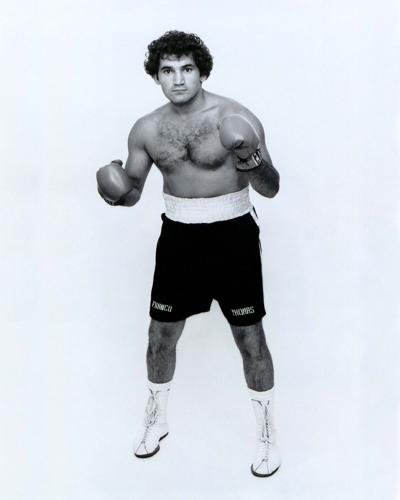
TOMMY THOMAS : A LEGEND REMEMBERED

LEGACY
A LEGEND REMEMBERED
By: Joel E. Gordon

 'He was ahead of the times': Legendary West Virginia boxer Tommy Thomas remembered as advocate of “community policing” before it even had a name.

CLARKSBURG, W.Va. population 16,578 has lost a legend.  Tommy Thomas, who rose to be the No. 6 heavyweight fighter in the world during his boxing days before becoming a much-beloved police officer, has passed away.

Sports fans, especially in West Virginia, will remember Thomas as the local legend who battled some of the sport’s biggest names during his professional career from 1977-86. Thomas fought 42 professional bouts, finishing with a record of 34-8, with 21 knockouts. His career also featured 56 amateur bouts, where he posted a 46-10 record and was a national semifinalist for heavyweight Golden Glove honors.

He famously fought in Alaska for a time and two potential opponents looked at him and declared that he didn’t look that tough. It was decided he would face both opponents in separate matches on the same card. He defeated both in the third round of their respective fights.

While Thomas earned legendary status in West Virginia with his boxing, those in Clarksburg grew to know the man he was through his work in law enforcement.

Thomas had a natural ability to communicate with people of all ages, but especially children. He served as the Drug Abuse Resistance Education (DARE) officer for Clarksburg police, going into schools to help educate children on the dangers of drugs. Thomas served in the position for about 17 years, as well as working as a regular duty officer, until his retirement.

Harrison County Sheriff Robert Matheny said Thomas was a unique individual whose love of boxing was only matched by the love of his community and police work. “He was ahead of the times,” Matheny said. “He knew ‘community policing’ before there was a name for it.

“The way he acted and treated people is the way they teach police officers today,” Matheny said. “Now that we look back on it, those of us who worked with him know what he was doing.”

“Once he got involved with the DARE program, he lived it and loved it,” Matheny said. “Thousands of kids remember the lessons he taught them and are better for it.

“I just came across the other day a national magazine from years ago that had a feature on him and what he was doing (with DARE).

“He loved to teach other officers what he was doing and shared the (DARE resources) with us to pass out to kids we’d encounter. He was a great man, a great friend. A great officer.”

Current Clarksburg Police Chief Mark Kiddy also worked with Thomas before going on to a distinguished career with the West Virginia State Police.

“It’s a huge loss for the community,” Kiddy said. “He was so well known and loved. He was community-oriented, just loved people and loved kids and being around them.

“He was always there to help people,” Kiddy said. “I’ve seen him give his watch to a guy who didn’t have one. I’ve seen him buy food for people that were hungry and helped them any way he could.

“He was very selfless,” Kiddy said. “There aren’t enough words to say all the good things about him. He was just a great guy.

“He never met a stranger,” Kiddy said. “He’d drive through town and would be waving at everyone. He just knew how to treat people, to make them feel special.”

Thomas earned high recognition from the community he loved, being named an Exponent Telegram Citizen of the Year in 2001.

In 1999 he was named Citizen of the Month by the Shinnston News and Harrison County Journal. In 2007, he received the Frank Loria Lifetime Dedication Award by the Clarksburg Columbian Club; Elks Citizen of the Year for the Central District 2008-2009; in 2010 he was named Honorary Irish Legend by the Harrison County Catholic Schools; and he was presented with the FBI Director’s Community Leadership Award, also in 2010.

Thomas’s legacy lives on through the Tommy Thomas Boxing Club at the Clarksburg Recreation Center, which remains open to males and females age 12 and older who want to learn the sport of boxing.

The Most Important Element: Officer Wellness

Are Departments Overlooking The Most Important Element?
By: Ken Dye

Police departments get new and updated equipment all the time. Budget line items for new cars, body cams, light bars… the list continues.

From time to time, these pieces of equipment need to be maintained. They need work on the brakes, tires and other activities to keep the car in service, and the same with the other items cops have been loaded with in the last several years. These are all pieces of equipment necessary to keep the officers as safe as possible and having the ability to respond to 911 calls and other non-emergency incidents.

Now… what does any department do to keep the most important and essential part of the department moving? Most do nothing.

Officers keep getting the brunt of the loudest voices and they all seem to be critical. Why couldn’t they do this? Why couldn’t they do that? How many times have so-called experts and “eggheads” opined on what the officer should have done? After the investigation these so-called experts are often wrong.

Does the constant barrage of negative coverage of an event weigh on the cops who answer the call? How can it not?

America seems to neglect the most vital part of the operation. That’s right: the cops. Do the cops need periodic “maintenance?”

After “shagging” radio calls for an extended period of time, let’s take a look at the impact on the individual officer. You know, the person who pulls together all the equipment provided. The cars, the body cams and all the other “stuff” that makes for a police unit on the street.

Departments must take the time and effort to insure the officers are properly reviewed for their physical and mental well-being.

A sharp first-line supervisor should be able to identify a cop who’s experiencing a mental/physical issue. First-line counseling may accomplish the mission. Perhaps a referral to a professional would be in order.

The conclusion being that the most important and necessary element to make the police unit whole, the officer, may need “maintenance”… It’s up to the command staff to make sure that happens.

Ken Dye is the author of five books about crime, cops and bad guys in the St. Louis area. He blogs under “Cops Perspective” and has over 20,000 followers. Ken served with the St. Louis County Police Department for 13 years and finished his LE career with the Illinois Criminal Justice Authority as the administrator for the statewide MEG’s and Narcotics Task Forces.

2021 Man of the YEAR: Gov. Ron DeSantis

Law Enforcement's Greatest Advocate.  

By Joel E. Gordon and George Beck, Ph.D.

Florida Governor Ron DeSantis regularly crushes the internet with announcements of new initiatives to keep Florida on the cutting edge of real progress. The 43-year-old Harvard Law graduate and former U.S. Navy JAG officer is often seen roughhousing a disingenuous press most eloquently. 

Gov. DeSantis comes from blue-collar stock. As Florida's 46th governor, he fights for the working men and women, who, because of the coronavirus, have suffered greatly in many ways, including governmental overreach by way of loss of employment due to vaccine mandates. "No police officer, firefighter, nurse, or anyone should lose their job because of COVID jabs." We agree. Individual liberty and freedom are hallmarks of America, and they should not be disregarded for political expediency. 

Gov. DeSantis' approach to battle the virus without mandates or lockdowns produced a 90% decrease in cases since August and a reduction in hospitalizations. Gov. DeSantis's success is not correlated with conspiracy theorist-anti-science fantasy. He's accomplished Florida's success with the virus without governmental overreach by taking a practical data-driven path, by making monoclonal antibody treatments and vaccines widely available throughout the state. 

Blue Magazine has been following Gov. DeSantis's support for law enforcement. While many politicians trample on officers' rights, fire them, and continue to malign good cops as the enemy of the people, Gov. DeSantis let the rank and file know this… "NYPD, Minneapolis, Seattle: If you're not being treated well, we'll treat you better here, you can fill important needs for us, and we'll compensate you as a result." And Florida openly welcomes officers who have made the personal choice not to be inoculated against COVID-19.

At the 2021 Biennial National Conference & Expo this past August hosted by the National Fraternal Order of Police, Gov. Ron DeSantis announced three new policy proposals to help recruit new law enforcement officers and support Florida's local and state law enforcement agencies. "As so many cities and states choose to disrespect, degrade and defund the honorable work of law enforcement, we want Florida to continue valuing our men and women of law enforcement today, tomorrow, and for generations to come," DeSantis said. 

These proposals provide state resources to recruit law enforcement officers through three separate programs: new officer signing bonuses, academy scholarship program, and out-of-state relocation support. The new officer signing bonus grants a one-time $5,000 payment to cops who are new to the profession in Florida. The academy scholarship program helps lessen the incurred financial burden of law enforcement training. The recruitment program waives examination fees for officers relocating to Florida.  

Whether it is COVID response, schools, the economy, law and order, or almost any other "progressive" agenda found in many states, Gov. Desantis has bucked the trend with great success and a conservative agenda. Gov. DeSantis's approach has caught the eye of President Donald Trump among others in the Republican Party and thereby places him squarely on the national stage and potentially in consideration to lead our great country as POTUS or vice president.

As tradition has it at Blue Magazine, every year we select a person who has demonstrated a strong support for law enforcement and, through his or her actions, helped make our profession better. Gov. DeSantis has undoubtedly earned the trust and respect of law enforcement through his strong-willed determination and leadership. For this reason and in recognition of his tireless efforts to make Florida an example to follow as its citizenry and business community reap the rewards of safety, health and prosperity, Blue Magazine is honored to name Florida Governor Ron DeSantis as our 2021 Man of the Year. Congratulation Gov. DeSantis!

Forced Vax Attack: Cops Go from Hero to Villain

By David A. Clarke Jr., Sheriff (Ret.) Milwaukee County

In the early days of the Chinese coronavirus pandemic when everybody was running around like chickens with their heads cut off, American law enforcement officers with calmness and courage risked their lives and well-being, and that of their families, when they answered the call to serve and protect. This was at a time when not much was known about the virus or its transmission. This was when Dr. Tony Fauci confidently proclaimed on a top-rated Sunday night news show that he was not worried about COVID and that there was no need for people to run out, buy and start wearing surgical masks. More importantly, it was well before testing was available and keep in mind there was no “vaccine” available. I’ll get to that later.

Nevertheless, our police officers went to work as other government employees including public school teachers and elected officials locked themselves in their homes and got paid to work from home. In the private sector, businesses were ordered closed, putting private sector employees out of work with no pay unlike government workers. That quarantine-like bubble of protection wasn’t available to police officers. They couldn’t strictly socially distance themselves from crime victims or suspects. You can’t handcuff an arrestee from six feet away. If first aid was required of say a gunshot victim, that could not be done from six feet away. At the time there was no concern about the well-being or safety of police officers. In fact, they were heralded as heroes for their bravery and selfless service.

That was then, this is now.

Now a so-called “vaccine” has been developed. Bear with me for a moment as I look inside what is being called settled science on COVID. The people using this term have an agenda. There is no such thing as settled science. A Harvard College professor once reminded me that science doesn’t prove, it only probes. Keep in mind that settled science once believed that the sun rotated around the earth. First of all, it isn’t even a vaccine by medical definition. A vaccine makes you immune from getting a virus or spreading it. It was rushed through clinical trials to market. There is still a lot that is not know about what really is by medical definition a therapeutic. That means you can still catch the virus and spread it and you have to continue to get periodic additional shots to protect you. A recent news report said that several weeks ago, 40% of all COVID-related reported deaths nationally were of people who had been fully “vaccinated”. There is still a lot that is not known about this therapeutic like its long-term side effects. Now something called a delta variant has emerged that is resistant to the therapeutic. In addition to this, reasonable people are asking questions like how long will they have to keep getting jabbed and injected with this therapeutic. The bottom line is that we have not been told the whole story about things and it makes people rightfully suspicious. So-called experts keep moving the goalposts. Ok, enough of that.

Then there is the legal question about government’s authority to force an individual to inject anything into their body as a condition of employment. I don’t care about the efficacy of what is medically best for people. It is still a freedom and liberty issue, and those decisions should be left to the individual to make.

Chicago Mayor Lori Lightfoot continues to threaten Chicago police officers with suspensions without pay and termination unless they take the jab. Her order further reduces the ranks of an already depleted force as violent street crime continues at record rates. She had no concern for their health as they continued to perform their duty in dangerous conditions in the early days of the pandemic. Many saw them as heroes. Now their organizations and political class officials are showing their thanks by seeing them as the bad guys in all of this. That is an odd way of thanking them. Making matters more untenable is that feckless police commanders are willing to enforce these city policies. Lightfoot should attack crime and criminals like she does Chicago police officers. Crime rates would drop exponentially. She should attack her useless state’s attorney Kimberly Fox, who refuses to charge repeat criminal offenders or ask for substantial bail in these cases.

So now law enforcement officers are at a crossroads between freedom to choose or losing their careers as local government officials are threatening them with the loss of their livelihood if they do not give in to forced “vaccination.” Some agencies have already terminated and suspended officers without pay, and some have voluntarily resigned. This makes their families collateral damage as many officers are the primary income source for things like mortgages, putting food on the table and tuition for their children.

Thankfully, police unions are showing resolve in this fight. The Chicago FOP president has told officers to hold the line against these forced injections. In New York, NYPD officers organized a large protest march against forced medical orders. This is a good sign. These labor organizations possess leverage in this fight against these thankless politicians and should start flexing their muscles by using it.

Are we on the verge of WWIII? Peace and Global Security is Jeopardized

By Eric Caron

Recently, I heard a homily from a Catholic priest who highlighted the universal adage, “Money can’t buy love or happiness.” Sadly, we now know, with certainty, money alone could not purchase peace in Afghanistan.

Partnering with an international crime syndicate masquerading as a government engaged in pervasive corruption was a fool’s errand… I would say criminal. Tragically, the biggest source fueling the corruption in Afghanistan was the United States via fraudulent U.S. contract activities such as: bribes and/or cash payments to corrupt Afghan officials, drug lords, bankers and thousands of others by our CIA.

How do I know? I was the lead Homeland Security official in Dubai, where most of the money was laundered. Unfortunately, diplomatic pressure on the UAE government from the U.S. State Department & Treasury to stem the flow of dirty Afghan money failed. The United States government estimates its deconstruction efforts these past 20 years has cost $300 million per day and nearly 2,500 U.S. military lives. According to the General Accounting Office, the United States also supplied various military equipment to Afghan police and military to include but not limited to: 208 aircraft, 2,000 bombs, 1,400 grenade launchers, 20,000 hand grenades & reconnaissance equipment. A DOD spokesman admitted that the department has no idea where this equipment is currently located within Afghanistan.

On January 17, 1961, President Eisenhower warned the American people in his farewell address to the nation, “Be aware of the military industrial complex…” His main concern was that military industries (defense contractors) would exert an undue influence on government policy to widen profits. Trillions of dollars were allocated and spent for Afghanistan Reconstruction with little to no positive results.

In a July 30, 2021, a quarterly report was submitted to the United States Congress by the Special Inspector General for Afghanistan Reconstruction. (SIGAR) This U.S. government agency was/is tasked to be the lead agency to conduct audits and investigations to identify fraud, waste and abuse relating to reconstruction contracts for Afghanistan. Two key findings were reported:

1. “The Risk of Doing the Wrong Thing Perfectly” “That is, programs could be deemed “successful” even if they had not achieved or contributed to broader, more important goals - such as creating an effective Afghan security force and a stable Afghanistan.”

2. “One of the report’s central themes” - “The pervasiveness of over optimism.” The report examines why the Afghan security forces have continued to struggle despite the U.S. assertion of success.

It is worthy to note, during this reporting period, SIGAR’s criminal investigations resulted in only two criminal informations or prosecutions and two guilty pleas of U.S. citizens. SIGAR’s total staff is 174 employees with only five staff members and five Afghan nationals assigned to the U.S. Embassy in Kabul. To date, SIGAR’s prosecution(s) focuses predominantly on U.S. citizens/officials. In December 2009, while still functioning as the Homeland Security attaché in Dubai, UAE, I was asked to lead a group of Special Agents from Homeland Security Investigations into Afghanistan to train Afghan police, customs and other officials in how to prevent dirty money from being laundered or “cleaned.” Within a few years, billions of dollars of cash had been smuggled into Dubai by corrupt Afghan officials, bankers and various organized crime groups involved in smuggling drugs, precious metals/gold and weapons. The expanding cultivation and smuggling of heroin put the entire U.S. and international investment in the reconstruction of Afghanistan at risk, and jeopardized any achievements the U.S. had made related to social issues, including health, education, women’s rights and the rule of law.

As I documented in my book, SWITCHED ON - THE HEART & MIND OF A SPECIAL AGENT, I was asked during this training to provide a lecture on corruption and how necessary it was to remove it, or it would metastasize and destroy their country. When I completed my session, one of the highest-ranking customs officials at Kabul Airport raised his hand not to ask a question, but to lecture me through an interpreter. In front of dozens of colleagues, with a voice of General Patton, he stood and stated, “If the U.S. government wanted to stop corruption, we needed to target senior Afghan government officials, not him or his associates in the room.” I knew he was correct. Ironically, it was widely reported how the CIA was perpetuating corruption with cash payments to the Afghanistan president’s office for over a decade. Then President Hamid Karzai at the time, acknowledged that bags of cash were delivered by the CIA for “various purposes” to his office. Interestingly, Karzai and many other Afghan officials were not just receiving payments from the U.S. but, from Iran and certainly other nations.

Furthermore, after a multi-year money laundering investigation of Mohammed Zia Salehi, a close associate to then-President Karzai, by Afghan and U.S. officials, a decision was made to arrest him in Afghanistan with the knowledge of Karzai. Unfortunately, within hours he was ordered released by President Karzai. It turned out Salehi was the CIA “bag man” receiving cash for Karzai and others. In twenty years, the Afghan government failed to prosecute any senior government officials for money laundering or corruption.

U.S. administrations throughout this twenty-year period have escalated the war in Afghanistan, and Congress approved billions of dollars for government contracts to support the war efforts. All had promised to crack down on corruption in Afghanistan, but it was all political grandstanding for all parties involved.

Essentially, the U.S. government made deals with the devil (corrupt Afghan officials, drug smugglers, arms traffickers, bankers, terrorists, etc.) We believed these criminals would assist us in the war efforts. We were sadly mistaken and allowed the CIA to hand out hundreds of millions of dollars like drunken sailors to “bad guys” with no accountability keeping the country of Afghanistan in turmoil.

The United States failed to understand that fighting corruption, which we were fueling, was not just a humanitarian cause or hyperbole. Fighting corruption was key to winning the war. Inevitably, lost due to greed and incompetence by senior U.S. Government officials within the White House, DOD, State & CIA.

“Are we on the verge of WWIII?” Countries such as Iran, Pakistan, China, and other nations are aligning with the “new” Afghan/Taliban government. Will we now capitulate to the Taliban and other Afghan terror organizations which are now well equipped with sophisticated U.S. military weapons, free to move with impunity with a global terror reach?

I believe that obtaining global peace and security is now jeopardized for generations to come.

Eric Caron is a Special Agent (Ret) with 25 years of service. He is the author of "Switched On - The Heart & Mind of a Special Agent." His website is: Switchedonlife.com

A Miracle K-9: The STAR Project is born

By Charlie Cifarelli

On Aug. 13, 2012 I was sitting at my desk 1,200 miles away from NYC, not knowing what would occur that day would change my life forever. A story that would move even me, a guy who had witnessed some horrible things, to believe in miracles.

I left New York in my twenties for a life in the Midwest, taking my first job at the Nebraska State Penitentiary. I had a great career, though I must admit they kept a close eye on this New Yorker and for good reason; the guys who talked like me and looked like me were the ones in the cells after being picked up for moving drugs across the country or an inmate interstate transfer. Even when I was accepted on the CERT (Corrections Emergency Response Team), they would nominate me as the inmate for the drills. I stayed tough, did my job and the promotions came along. At the end of my career, I was back at the Penitentiary and had the keys to the entire institution. I’ve always been grateful to the NYPD sergeant who bought me a meal by the Jamaica train station back in the late 1980s. As a matter of fact, if it wasn’t for the police, I would’ve never had any role models growing up or help when I was in a jam.

I eventually left the department of corrections to start a trash business and I had tremendous success. I built the business solely and eventually sold the business to a larger company, even taking a position as their Chief Operations Officer. I desperately missed New York, and given the free time at my desk I’d scan the New York newspapers to see what was going on. On this day in August, the headlines would read that the NYPD shot and killed a pit bull that was lunging at people in the East Village. The story saddened me, as I had a dog that was a pit bull. When I was down and out living in my van in my early twenties, my dog was my only constant companion.

Luckily, I don’t believe headlines without reading the entire story. Although it looked like the dog had died, I wasn’t convinced. I called and spoke to the staff at the New York City Animal Care & Control and after some pleasantries, telling them I was calling from Nebraska wanting to learn about their refuse and recycling, I asked if the dog that was shot by the NYPD was actually dead. I was told she was alive but hanging on to life. Her name was Star.

In the days that followed, the media had to reverse course, and as the New York Daily News reported, Star was making a lightning speed recovery. I immediately started a Facebook page to document the story and her recovery. Star’s story, and her Facebook page garnered global attention. Unbeknownst to the public, Star quietly left NYC to begin recovery in Pennsylvania. Although her whereabouts were unknown, I tirelessly tried to find Star. One day, a photo was released of Star with cars in the background. A semi-truck was pictured as well. I put my years of corrections experience and training to good use, as I noticed the cars did not have a front license plate, and the DOT number was visible on the semi-truck. After many calls and due diligence, I learned where Star was. Several more weeks had passed, and I was granted permission to see Star. When it was time for her to be adopted into a permanent home, I asked my fiancée, Jenn, if we should give Star a home in Nebraska and take this once homeless dog and show her a wonderful life here.

Approximately eight months after Star was shot, I picked her up in Pennsylvania and drove back to Nebraska. Star was a natural with people, a real social butterfly. Having lost a family member to Alzheimer’s, we were very much involved in the local Alzheimer’s Association and attended the yearly fundraising walks. Star began attending these walks, and the response to her was incredible. In 2015, we started a nonprofit organization, the STAR Project, to raise awareness of dogs in need. One of our first rescued dogs was adopted by a Lincoln, Nebraska police officer. The good that has come out of rescuing a once-homeless NYC dog who almost lost her life from a shooting has turned out to be one of the biggest blessings to come into my life.

Sadly, earlier this year Star passed away from an aggressive form of cancer. She left this world as she lived life - on her own terms. It’s import that I keep her legacy alive, as so much good came from such a rough start.

Charlie Cifarelli is a businessman from Long Island, New York. After rising through the ranks in several maximum-security prisons in Nebraska, he tapped into his entrepreneurial spirit starting his own successful business. Charlie is also co-founder of a nonprofit organization, speaks at various business and social awareness functions, and has been featured in newspaper, magazine, radio and TV regarding animal advocacy.

Democrat Tyranny; Let the Lawsuits Begin

Lt. Patrick J Ciser (retired)

One definition of tyranny is this; Dominance through threat of punishment. We are now witnessing tyranny from the likes of Joe Biden, OSHA and most Democratic leaders across the country with their draconian vaccination mandates. How the hell did “Stop the spread” turn into an “iron fist” government mandate from one administration to the next? How the hell did our first responders that we called our COVID heroes become zeros in such a short period of time? Last year, NYC had erected “heroes work here” signs at all of their major hospitals. I’d like to say that politicians were appreciative to all “first responders” but cops, unfortunately, never really felt the love. Between the defund the police movement, allowing rioters to pillage at will, and paint BLACK LIVES MATTER (a Marxist group) on 5th Avenue, Democrat politicians never really saw us as heroes. Bill, “Don’t let the door hit you in the ass on the way out” deBlasio had only disdain for the men and women in Blue.

Due to the insanity that we witnessed during the George Floyd riots, including tying our hands, and the politicians making light of someone throwing a Molotov cocktail at a police car, etc. we saw many retirements and even resignations. So, what’s better for the city and its rising crime rate than threatening to fire as many as 30% of the rank and file due to vax mandates? Understand that although I have no desire to get the “jab,” I’m not against it for others. I’m simply a firm believer that we should all be free to decide either way, without any threats from our government. Brave men and women have died protecting our freedoms in America, just for an overbearing government to step in and rip those freedoms away? Could you imagine if Donald Trump tried pulling this shit? The liberal media would be comparing him to Adolf Hitler! And isn’t it the Democrats that keep repeating the mantra, “my body, my choice?” But only when it’s politically expedient.

Why also is it that millions across America had COVID, also known as SARS-CoV2, and are now 7 times more protected than everyone who got the jab, yet they are still being threatened into getting inoculated anyway? With approximately 70% of the population getting at least one dose, and the millions that got over it and carry the antibodies, haven’t we achieved “herd immunity?” Remember when the wise and powerful Dr. Anthony Fauci said over the summer that if we reach that percentage, we’d achieve that goal. Unfortunately, this bullshit got so political that they keep raising the bar. But it’s time to figure in the millions who had it, and beat it as well. Rather than just having “vax” cards, we should issue “antibody” cards, too. We’re constantly told to follow the science, but that’s exactly what Democrat politicians aren’t doing! Don’t these bureaucrats read the same studies that we do?

It’s time to fight back, people, just like the 27 red states and counting, that filed lawsuits against the Biden administration! NO ONE should be losing their jobs over this! Also, studies have shown that inoculated people are carriers just like the rest of us. So, don’t believe the BS that only we, the uninoculated, are spreading the virus!

U.S. Customs and Border Protection agents, which are our largest law enforcement agency, are particularly upset with Joe Biden’s executive order mandating all federal agencies get inoculated, because“no show Joe” does nothing to stop the roughly 200,000 unvaccinated immigrants per month from coming over the Border. But he’s ready, willing, and able to fire these patriotic Americans who serve our country every day. With the administration’s open border policy, that they’ll of course deny, perhaps they don’t mind having a manpower shortage. Turning Texas and Florida into California is the Democrats’ goal, this way you’ll never see another Republican president. As of this writing, 70 flights of illegals have arrived in Florida, to Gov. Ron DeSantis objections.

Truckers last year were some of our unsung heroes as well, as they delivered food and other needed goods across our country. Today, Joe Biden wants to also force truckers into getting vaxed, with no regard for our food chain supply or Christmas gifts. Everyone agrees that we don’t have enough truckers across the country to deliver goods now; imagine if he fires thousands? FIGHT BACK AMERICA, this is OUR country! WE THE PEOPLE!

Nov. 6, The U.S. Court of Appeals for the Fifth Circuit “stayed” Biden’s vaccine mandate for private businesses with over 100 employees.

HERE WE GO AGAIN: The Never Ending War On Cops

By David A. Clarke Jr., Sheriff (Ret.) Milwaukee County

Anybody who thought that the War on Cops was coming to an end because there has not been a constant
anti-police drumbeat should think again. The defund and even abolish police movement started in earnest
after the death of George Floyd. Yeah, he’s the guy who did time in prison previously for an armed home invasion burglary where he held a loaded firearm to the stomach of a pregnant woman threatening to shoot her. The same George Floyd who was geeked up on fatal levels of fentanyl while resisting police orders to take him into custody for passing a counterfeit bill. Now do you remember George Floyd?

Ever since his death in custody, there has been a movement afoot to take money from public safety budgets and divert it to some inane idea of replacing cops with social workers to take on crime. This movement caught fire and began sweeping into the nation’s more populated urban cities with some success. The New York Police Department, Los Angeles and Milwaukee Police Departments all saw millions of dollars slashed from their crime-fighting efforts, leading to staff shortages. Violent street crime exploded exponentially to levels not seen in 30 years. This caused politicians who were championing the defund the police slogan to reverse course in fear for their political careers and they walked back the stupidity because it was hurting them politically, unlike in the earlier calls for defund efforts by the creeps of Black Lives Matter, Antifa and other Progressives. The effort did not go away, it went underground and is now being waged in stealth-like fashion. Here is an example.

In Minneapolis, a ballot initiative is being put up for voters who will get to decide whether to add an amendment to the city charter that would, “limit the size, scope and influence of its police department.” This at a time of rising violence rates in Minneapolis. It’s called the Yes 4 Minneapolis initiative, “where the city’s police department would be replaced with a Department of Public Safety, abolishing the city’s currently required minimum number of officers per capita and replacing some with social workers, mental health experts and crisis managers effectively defunding the local police by reallocating funds to other city services.” One guy running for Minneapolis city council heralded the move and hoped it would pass and impact what other cities do. Let’s hope not. This is moronic. Here is why.

Minneapolis has become a dangerous place to live as have many other large urban centers. Murders, non-fatal gunshot victims, and carjackings have all seen a significant increase in both 2020 and 2021. Crime victimization has residents living in fear. That is a quality-of-life issue. Then there is the issue of unsolved crime. In Minneapolis, the unsolved crime rate has soared to 88% resulting in no arrest. That is a staggering figure. This emboldens the criminal to know that they have a great chance of never being caught and held accountable for committing a crime of violence. This constant barrage of attacks on the policing profession is leading to de-policing. In Minneapolis, traffic stops are down 85%, field interview or Terry Stops are down 76% and business checks are down 76%. It’s called visibility. These are the type of police tactics that keep crime in check. Traffic stops in high-crime areas find vehicles containing guns and illegal drugs and people wanted on serious felony warrants. The same can be said of suspicious behavior stops in high-crime areas. When the public sees that police are not being aggressive, it leaves them with little confidence that the city can keep them, their children and their neighborhoods safe. People then withdraw from civil life. This leaves the streets to be controlled by the criminal. It leads to law-abiding citizens not wanting to fulfill their role of community guardians who cooperate with and help. police control and solve crime.

There is a way forward, however, and it won’t involve re-inventing the wheel. In 1994, Congress passed a crime bill that led to historic lows in violent crime all across America. The bill was co-authored by none other than Sen. Joe Biden and signed into law by President Bill Clinton. It was at a time that even Democrats were not afraid to communicate publicly their support for the police. That doesn’t exist today. It was at a time when these same Democrat politicians trusted police to use their discretion when enforcing the law. Now they are trying to take certain tools and tactics away thereby preventing them from performing their most important function and that is crime prevention and keeping the peace.

It is time to go back to the 1994 crime bill and apply what was done back then such as hiring more police, re-investing in police budgets, getting rid of stupid policies like no bail and locking up career criminals. It is time to stop the revolving door of the criminal justice system. Jails and prisons are an effective crime control tool. They keep repeat offenders from, you guessed it, re-offending. It’s going to take a prosecutor’s office that takes off their political activist hat and puts their concern for the victims of crime hat back on. and begins again to represent law abiding residents instead of acting like de facto defense attorneys. When judges get back to punishing crime instead of sympathizing with career violent offenders, then the criminal justice system will cease being dysfunctional and become the institution that it was designed to be, that being a purveyor of the rule of law, law and order and justice for all.

Effective De-escalation for Corrections Personnel

Tactics for Influencing Uncooperative Inmates into Compliance
By Efren Almodovar and Lou Savelli

Anyone who has worked behind the walls in a jail or correctional facility fully understands the problems and dangers associated with uncooperative inmates as well as the importance of possessing effective de-escalation skills. Being locked in with inmates who have already shown a disdain toward the law, along with gangs and inmates with mental illness, corrections officers though unarmed and outnumbered, must arm themselves with superior communication and de-escalation abilities. However, unlike street police officers, corrections officers may have more information about the inmates and have many opportunities to observe the inmates. With extensive corrections experience, we have dealt with many inmates at their worst and learned to rely more on our communication skills than physical force. Here are our suggestions for de-escalation success when dealing with inmates.

To be a successful resolver of conflict, whether it involves inmate-on-inmate altercations or inmate versus staff, I try to rely on listening skills. Learning from the inmate and identifying what is causing his agitation and combativeness contributes to the creation of a plan of communication and action. Also relying on learning about the inmate’s charges, family, and prior issues in the facility can help greatly. The more insight into the uniqueness of an inmate, the more it will assist with creating a more effective approach to de-escalation.

Along with strong listening skills, it is critical to have effective communication. Inmates, like others, respond better when you speak to them and not at them. Coupled with listening skills, communication becomes more effective and has a better chance of positive responses. A better way of carrying yourself behind the walls, and as I personally prefer, is to be personable. This builds a good reputation among the inmates and causes inmates to be far less resistant when you give them direction and orders. A personable correction officer is more approachable and will often be asked to discuss many topics with the inmates. Since so much time is spent interacting with the inmate population, it is common to be asked advice or legal questions. Other times, corrections officers may have to act like a social worker and help inmates resolve their own inner conflict or deal with issues involving family, depression and the frustration associated with incarceration. This information is valuable for better understanding an inmate and knowing what words and language work best.

The effectiveness of respect can never be overstated. Respect should always be the M.O. (Modus Operandi), of any corrections officer and it will undoubtedly help de-escalate, and as equally important, prevent situations from becoming more intense. To complement respect, it will help for officers to keep their word. When you give your word, you should keep it. Inmates rely on small promises they look forward to and can be disappointed if the promise is not kept, especially from a respected officer. Some inmates may not have strong support or frequent connection from their families.  Therefore, they will be counting on you to follow through. Honesty may seem like a strange word when discussing inmates in a correctional setting, but it can go a long way with furthering respect. When dealing with inmates, even at their worst, I recommend an honest approach and honest answers. When an inmate, or anyone for that matter, learns you have lied to them, you lose their respect and your credibility.

Accordingly, listening, communication and respect are not the only methods which should be used for de-escalating potentially volatile incidents behind the walls. Simple, yet effective, tactics can be used to further de-escalation efforts and success. To name only a few, here are my “go to” methods. First, don’t meet shouting and anger with the same. People, even inmates, tend to tire out from shouting their issues or demands. They also gain fuel from a similar response from an officer. Keep in mind, there is no good reason to try to shout over an irate person. It makes it worse, it escalates the problem, and it makes a professional officer look bad. Second, control your body language. Always be safe, maintain a safe distance, but it is not necessary to get into a fighting stance and exacerbate the situation because the inmate thinks you want to fight. You can easily defend yourself from a non-threatening, tactically sound demeanor and stance. In our training consortium, a group of police officers, corrections officers and other professionals call this tactically non-threatening. The concept, essentially, is defined as looking like you are not threatening or getting excited, but you are immediately ready to defend or go on the offensive effectively. In fact, as mentioned before, getting into a fighting stance can escalate a situation unnecessarily.

More useful tactics, in the furtherance of de-escalating someone or a situation, can include strategically crafted words, phrases or questions. This tactic, taken from our tactical communication techniques, not only works well with inmates in a confrontational mode, but it also fosters a dialogue many inmates want to continue after the incident. For example, asking a highly agitated inmate who refuses to go back to his cell, “Why don’t you tell me what you are thinking right now so you and I can solve this problem?” The inmate expects a confrontational response or a group manpower response to achieve his goal of showing off or proving his courage. By asking the right question and showing your interest in his feelings, you have a better chance of avoiding resistance and gaining cooperation from the inmate. Yes, there are always going to be those times and those inmates who may have to be defused by force, but force should always be a last resort.

While there are many, many more tactics for de-escalation for corrections officers to use, I will only add one more for this article. This tactic is referred to as the “Subconscious Leverage Tactic” (SLT). The SLT is a question asked of the inmate, or other person, to provoke deeper thought when the inmate is in a resistant mode. The SLT is a combination of a subconscious question asked to the inmate to stimulate his cognitive (thought) processes while your (officer’s) body language changes to a relaxed body language position at the time the inmate starts to respond. This tactic works to influence the inmate to think of the ramifications of his uncooperative or volatile ways while your body language is influencing his body language to relax or become submissive. Most inmates will respond to this technique, making them easier to communicate with and less committed to a confrontation. To illustrate this technique, I will refer to an interview with a highly confrontational and hard-core inmate who refused to sit down in a chair during the interview. The inmate was completely closed off, body language and verbally to the conversation. One officer asked the inmate, “How could your time in prison go easier and less uncomfortable?” The other officer, standing closer to the inmate, placed himself into the same body language position and mirrored the inmate’s stance, crossed arms, and facial expression. As the inmate fully absorbed the question and subconsciously visualized how he could spend easier time in prison, he would not answer the question. As the closer officer observed the slight change in the inmate’s behavior, he uncrossed his arms and sat down in the chair. The inmate immediately sat down in his chair and his negative demeanor changed drastically. The interview went successfully from that moment on.

Though not every incident can be de-escalated, nor be a win/win, we should always learn from our mistakes and ensure we don’t repeat them. As corrections officers, we have plenty of tools at our disposal and we need to use all that is available to resolve issues peacefully. Our best tools are, without a doubt, people skills and the tactics, among others, discussed in this article. De-escalation is a strategy as well as a technique which involves multiple available tactics. The more tactics you have, the more effective you can perform. Be safe!

CIVIL UNREST: IS THIS THE PURGE

Joel E. Gordon

“The Purge” is an American media franchise centered on a series of films which present a seemingly normal, crime-free America in the near future. But the truth is that the country portrayed is a dystopia which celebrates an annual national holiday known as a pretty terrifying concept called the Purge: one night a year where all crime is legal, where murder, torture, rape and theft are all allowed as a form of a societal safety valve. It seemed farfetched to me that such a condition could ever exist in the United States of America, but are the radical left seeking anarchy toward an actual, more permanent purge?

Frequent civil unrest with many being allowed to riot, loot and burn structures with government officials backing down and allowing unlawful activity and violence to take place, often with little or no consequence, emboldens the participants. With no bail, bail reform, non-prosecutions and sanctioned prisoner release by an ever-increasing number of George Soros-funded “prosecuting” attorneys, is the Purge coming to a town near you? These realities combined with media manipulation of truth and questioned election oversight and rules violations make law-abiding citizens feel as though there no longer is any rule of law being enforced on any level. Now lawlessness on both sides seems as though it is justifiable in the mindset of an ever-growing portion of our population, seemingly by even those who have “played by the rules” as law-abiding members of society in the past.

Add policing which is largely unrecognizable with stand-downs and poor operational and enforcement choices further fueling the disenfranchisement of many from seeing the need to surrender to authority in their thoughts and actions. And the waters are further muddied with confusion over enforcement of law versus Executive Order “mandates.” Further, serious national security concerns on Chinese influence over our officials and institutions add another layer of doubt and fear.

What are the ramifications? When the late Rush Limbaugh noted that America was “trending toward secession,” he said “I see more and more people asking, what in the world do we have in common with the people who live in, say, New York? There cannot be a peaceful coexistence of two completely different theories of life, theories of government, and theories of how we manage our affairs. We can’t be in this dire a conflict without something giving somewhere along the way. And I know that there’s a sizable and growing sentiment for people who believe that that is where we’re headed, whether we want to or not — whether we want to go there or not. I myself haven’t made up my mind. I still haven’t given up the idea that we are the majority and that all we have to do is find a way to unite and win.”

People from all over the country showed their support, taking part in rallies calling for greater transparency in government and elections moving forward. Many expressed that our election process was being handled improperly, and in some cases fraudulently. Some are optimistic that the tide will turn, however, including some high-profile supporters.

“Courts do not decide who the president of the United States will be,” said former national security adviser Michael Flynn. “We are in a crucible moment in the history of the United States of America,” he added. Flynn called himself a “product of an unjust system” and said the battle for honest elections “is about the fabric of the Constitution of the United States of America.”

Texas GOP Party Chairman Allen West noted that when the Supreme Court tossed out a Texas election lawsuit which was joined by 17 states, 106 U.S. congressmen and the former president himself over election practices and irregularities that in his view the decision establishes a precedent that states can violate the United States Constitution and not be held accountable.

He went on to say “Perhaps law-abiding states should bond together and form a Union of States that will abide by the Constitution.”

So where is this all heading? Have we forsaken the rule of law in favor of choosing sides with “every man for himself?” Who can you trust when social order collapses? Is this the Purge?

It’s essential that real leaders emerge and step up to curtail our journey on this road less traveled. In the alternative, it appears that conflict will continue on our land in crisis resulting in further chaos. We must act intelligently, admit our past mistakes, correct them and move forward.

NOT ON MY WATCH: Deterring Crime & Keeping the Peace

By Joel E. Gordon

“A cop has a calling. It’s not about making money. Being a cop is about making communities safe, caring for children, and doing what it takes to stop someone from hurting another person.” – The Wounded Blue

Peter Moskos, a professor at New York’s John Jay College of Criminal Justice and former Baltimore city police officer, recently noted, “There's an arrogance among academics towards the public I dislike. I guess that's the game, but academics are often wrong. ‘We know police don't prevent crime’ was a doozy.”

A police presence can be a deterrent for criminal behavior. My own goal as a community cop was to eradicate criminal behavior on my watch in my area of responsibility. In fact, I was always proud to belong to a shift or agency where crime prevention, to the extent possible, was a number one goal behind staying safe and returning home unharmed at the end of each tour of duty.

One evening just past dusk back in my inner city policing days, I remember noticing a young teenager standing on a corner near a hardware store. This didn’t look right, as he appeared to be nervous. I did not tip my hand, driving past him and parking out of his sight. He must have either frozen, or maybe I really tricked him into thinking I wasn’t paying attention, because he failed to sound the customary “5-0” signal verbalizing a police presence (as in “Hawaii 5-0”). Upon my walking back toward the store I saw that the kid was a lookout and his accomplice was chiseling out cinder blocks with a hammer in an attempt to break into the store without activating its alarm. Both were arrested before they could gain access to the inside of the store.

In a response to attempt to reduce crime and juvenile mischief later at night, the city had enacted a curfew law for those underage.

Then there was the group of teenagers who were breaking into businesses on my post while I was working midnight shift in the summer of 1982. In Baltimore City, the curfew existed for school age youth past 10 p.m. on weekdays and 11 p.m. on weekends where they were not allowed on the street without adult supervision. Numerous burglaries were occurring on my post in ways not easily detected, such as through rooftop ductwork and the like. Mind you, I was very good at “trying up” or checking to see that my businesses were locked up tight. In the winter, supervisors would occasionally meet you to see if you had been out of the car checking by feeling to see if your badge was cold. I would also leave “tell tales” at areas and doorways already checked. A tree branch or Coke bottle would do. If when I spotlighted past these areas the “tell-tale” would have to have been moved for an intrusion to have occurred at that potential point of entry. In spite of this, just about every day of the week, dayshift was getting a call at one of my businesses for a burglary. I stepped up my patrol efforts and began to discover a group of four or five teenagers in violation of curfew, nightly. I would catch them and transport them to the “Best Western” as we would refer to our station. There they would wait for their parents to sign for their future court appearance and pick them up. They were back out before I completed my paperwork on them. After several nights of charging the same kids for curfew violations, my problems with businesses being broken into ceased. Being the most southwestern post in the Western District, the Southwestern District was at the southern and western boundary to my post. The officers who worked on the other side of the street worked off a different radio frequency than I did and reported to a different station for roll call. It was really not much different than if we worked for different jurisdictions. You see the curfew violators got tired of dealing with me and my burglary problem stopped. But the adjacent post of the Southwestern District, to the south of my Baltimore Street boundary, saw a sudden spike in midnight shift commercial burglaries. The police and the criminals know these artificial boundaries and the juveniles just moved their activity to the south. Although I never caught them at it, they were the burglars.

I learned a valuable lesson from this that would later serve me well as a security consultant for an alarm company years later. That is you can’t always truly prevent crime but you can move it by taking opportunity away through risk of being caught. This is why signage and a well-placed alarm system reduces your chances of being a victim and increases your unprotected neighbor’s chances of a break in.

Do police ever truly prevent crime? Yes, through preventive patrol, arrests, community involvement, treatment and outreach programs, although never eradicated, criminal activity can and will continue to be reduced.

Looking For a Police Job? Decent Pay, Danger, Lots of Hate and Bad Bosses

(Tips to help you enter one of the most toxic professions successfully)
By: Kirk Lawless

I could have “chased the money,” but I answered a higher calling, and that was to be a cop. Mission accomplished, and with a career cut short, I decided to use the talents God gave me to help other cops. I keep my finger on the pulse of all things law enforcement related; I speak with recruits at the local police academies, I field phone calls from brothers and sisters in distress (no matter the hour, nor however long it takes). I listen. I don’t repeat what is told in confidence. I still give advice when cops who know me (or not) reach out with a problem they think I can help straighten out.

I’m not afraid of anything, especially bad bosses.

If you’re a recruit looking for a job, or a newer officer looking to move to another agency, I’ll share some important information with you and I hope it helps you navigate the treacherous waters on which I have already sailed. I know thousands of cops. I’ve been around lots of police agencies (some good, some in dire need of house cleaning).

There’s lots of hate in this job and I’ve been working on my own side of hating things and letting it go, but it’s a process. I have already forgiven the ones who have attacked my family and I and I’ll say it openly. The apologies will never come. I know that but that doesn’t mean I’ll be quiet when the backstabbing and attacks come.

Remember, people hate you for three reasons. They see you as a threat. They hate themselves. Or they want to be you (put that in your back pocket, as it might help you sort some thing out in your career later).

As we say on the job, “fair” is something to take your kids to. You’re going to see shit that will leave you shaking your head.

When you find yourself looking for that police job, you need to do your research of the particular department. Don’t believe everything you hear and only half of what you see. The rumor mills are in full swing at most departments, and the coconut telegraph spreads news like wildfire. I’ll cite some examples of “Red Flags” about departments and bad bosses and you can compare them to your job search. There are lots of good bosses out there (we’re not talking about them), but sadly there are a ton of “shit” bosses. I’ve worked for both kinds and my former department was certainly not suffering a shortage of bossed culled from the turd cart.

If, by chance, the department you are interested in (or they are interested in you) has a seemingly endless record of bad press, whether locally, nationally or internationally, look into them. My former agency has many fine officers, but at the top (the brass) when piled together, probably don’t amount to one good street copper. Remember, most of these guys are politicians and the only thing worse than a bad boss, is a bad boss turned full-blown politician. Example: police chief turned mayor. Find out how they got from point A to point B and follow your gut.

My former department made international news when an HIV positive teacher took a little boy out of a classroom took him into his own office and sexually assaulted him. The boy told his parents, who took him to the hospital, a rape kit was performed and they were successful in their endeavor to obtain the suspect’s DNA.

The police department was notified, a report was taken and that was that. The parents kept after the department and it took three years to investigate the crime. In the interim, the known suspect was not arrested, his DNA was not seized, nothing. Three years! Eventually somebody (after being pestered by the parents) arrested the suspect (his DNA was a match…surprise!). The suspect was offered a “contract” to his cellmate to “erase” the little boy and his parents. No suspect, no crime. A savvy reporter went after the chief of police Tim Lowery, and interviewed him about the crime and the three-year wait for action. The interview is out there. He laughed at the reporter, while saying his office didn’t drop the ball, but someone in the department did. There was not much said after that interview, (coincidentally chief Lowery was running for the mayor’s seat) and it seemed that maybe the reporter was called off the trail to not have bad press for him before the election. He is now the sitting mayor. The story made it into the London Times in the UK. That’s a huge Red Flag!

As mayor he promoted the assistant chief, Tim Fagan, to police chief. The reporter came after the new chief when another sexual and physical abuse of several children that went untouched for several years was uncovered. They didn’t care for that. This is usually when the brass looks for somebody to “throw under the bus,” and ends in a termination, and both cases presumably morphed into lawsuits. The Mayor turned chief and the new chief were the guys who should have been under the bus, so nothing happened. This is where the lack of integrity comes into play. In my opinion (and of many others) both should have just quietly gone away. But, they weren’t going anywhere. They were suckling at the teat of old mother Florissant and they wanted to keep making it until she runs dry. Red Flag!

In Florissant you’d think lots of folks had daddies that were hammerhead sharks, their eyes should be just a bit too far apart, the gene pool at the police department was so incestuous. Favors owed, favors paid, “wonder ponies” were promoted at a hypersonic speed, often without the proper educational credentials to match each promotion and pay grade. My college transcripts were handed over to the office of policing standards after obtaining each degree, but when “guys like me” asked to see the same credentials of the recent promotion recipient, it became a “private personnel issue” and therefore they were never produced. In other states cops and politicians get arrested for this behavior. It’s commonly referred to as “theft of honest services,” RICO violations, wire fraud such. The feds have the info but for now…crickets. Red Flag!

If the department you’re scoping out, buys into an accreditation organization but does not adhere to its own policies that is a huge Red Flag!

If they change the rules and regulations willy-nilly to conveniently suit them and their cronies (and I mean changed from original format to something completely new and then back again within a week, to ensure the “right” person gets promoted. Red Flag!

In my opinion, the standing chief and newly elected mayor threw a young cop under the bus when a doorbell camera captured images of an unmarked car hit a suspect running on foot (I’ve seen way worse). I’m not sure if the “boo boo” bus took the guy to the hospital. The chief said that the video was “disturbing” (apparently not as disturbing as not investigating the previously mentioned child sex abuse cases for three years). The terrorist group BLM protested and the cop was suspended, terminated and charged quick, fast and in a hurry. Red Flag!

I was at some of the protests and while cops from other agencies were taking bricks, frozen water bottles to their heads and cups of piss to their faces, I have video of a high ranking official sneak out the front door of the PD and literally hide in the bushes while watching the shit show, instead of wading into the fray like a real boss! You don’t want to work somewhere that the boss is that fearful! Red Flag!

Most agencies have a memorial wall commemorating the loss of cops killed in the line of duty. My former agency has three: one died in 1963 (way before my time, so I don’t know much about it), in 1979 a sergeant was gunned down after curbing a bank robber, getting shot 8 times (he died of cancer caused by his injuries in 2000, with three bullets still inside him, one in his head). What did the department do for him? According to the older cops and family members, not much. And yet another, died in 2009 during surgery after suffering a crippling OTJ injury in 2003. They terminated him in 2004. What did the department do for him for the five years while he suffered? Not a damn thing! Red Flag!

But they, have the “memorial” roped off in the lobby of the PD I see as a “look at us. We’ve lost three cops in the line of duty holding the line.” It’s shameful and it’s a disgrace. Now they’ve taken to placing commemorative plaques invoking the names of the dead cops that I don’t believe they give two shits about (but hey, it’s a nice photo op). The lobby is reminiscent of a New Guinea headhunter’s trophy wall full of shrunken heads. Perhaps it affords the family some pride and comfort, that’s a good thing, but the only folks who really cared about the dead cops are their brothers and sisters, not the bosses, and certainly not the politicians. Red Flag!

Remember, it’s cheaper to bury us and have a fancy funeral, rather than fix us or help us, especially financially (not everybody gets their turn at the teat). Red Flag!

In October of 2017 a feeble and failed attempt was made to deny me my “retired in good-standing” credentials. Under H.R. 218 “The Law Enforcement Officer’s Safety Act (I’ve earned that with 28 years of time, sweat, physical injury, and blood) and they can’t take it from me. They slandered me after probably consulting with the city attorney and hearing that trying to pull my credential was a bad idea after providing them to me since 2012, by telling certain officers that I should be watched during qualification because I posed a danger; to who, other cops? That’s absurd. Who was responsible? I’m betting it was someone either named Tim or Tim Mayor and Chief. They probably don’t know that I know this, but they do now (names, dates, times). Red Flag!

Here’s an example of delusional, shameful, and disgusting behavior. On August 25, Mayor Tim Lowery was at a local business speaking with an 85-year-old United States Army combat veteran. His name is not important, but I know him. The two were engaged in small talk and a witness, my son (knowing the Mayor by sight, but the mayor not knowing him) heard the old “Combat” Veteran ask the mayor if he, himself had served. The mayor’s reply was, “I did. I served Fives years in Afghanistan.” My son called him out as a liar and as committing “Stolen Valor” by telling such an outlandish and shameful lie to the veteran and purple-heart recipient. The thing is, you never know whom I know or where I am. Sometimes I’m everywhere (but not Afghanistan) Mayor Lowery needs to make an open apology starting with every city employee who served in the armed forces. I’m sure they’ll be happy to hear of his false exploits. He can do the same with every veteran organization he can find. He has access to a cable channel. That would be a good thing to do, face it like a man instead of hiding like a coward. This wasn’t an “Uh, I misspoke” moment or “He misunderstood me.” It was lie, a horrid lie. I think it’s just another reason he should just quit and go away. I got confirmation from my friend, the Combat Veteran, who is missing a prominent digit on one hand, courtesy of a Viet Cong bullet. Mayor Tim Lowery said exactly what he said. My friend said that he occasionally runs across a “forked tongue” and doesn’t understand why they tell vicious lies.

If you’re a veteran and this disgusts you, drop the mayor a note:  Mayor Tim Lowery 955 Rue St. Francois, Florissant Mo 63031, or call him at 314-921-5700 and tell him what you think about any of these Red Flags!

Chief Tim Fagan can be reached at Florissant PD 1700 N Highway 67, Florissant, Mo 63031, or call him at 314-831-7000 and tell him what you think about the child sex abuse. Red Flags!

If, during your search for a PD to begin a career, you see any of these Red Flags, run, don’t walk and find another place.

My friend still misses his finger he left in the Vietnam jungle, but passed on a chance to go back to look for it!

Feel free to contact me. kirklawless@yahoo.com

Kirk Lawless is a 28 year, decorated, veteran police officer from the St Louis area. He’s a former SWAT operator, narcotics agent, homicide investigator, detective and Medal of Valor recipient. Off the job due to an up close and personal gunfight, he now concentrates on writing. He’s a patriotic warrior, artist, poet, actor, musician, and man of peace.

A Call for Human Rights Policing: We Can Make The World Better

By: Peter Marina & Pedro Marina

Interested in finding new ways to make law enforcement even better? Do you want police officers to further excel at their jobs? Do you want to foster improved trust between police officers and the community? Is it time to end the “us” against “them” mentality?

While some people talk of eliminating police, such talk carries more bark than bite. Even so-called progressives, who argued for defunding police, actually voted “present” allowing increased funding for the police when it protected them personally.

On the superstitious fear of the mob, Orwell states:

The educated man pictures a horde of submen, wanting only a day’s liberty to loot his house, burn his books, and set him to work minding a machine or sweeping out a lavatory. ‘Anything,’ he thinks, ‘any injustice, sooner than let that mob loose (Orwell, 1984).’

Despite the virtue signaling, police are here to stay.

To become the world’s best model of policing, we need a standard national human rights police training program that trains law enforcement agents how to apply human rights in their everyday police interactions with community members.

Human rights police training goes beyond virtue-signaling and preaching ideological liberal concepts using vague, poorly defined terms. It goes beyond teaching police officers the culturally correct attitudes and sanctioned forms of thought. It goes against anti-intellectual orthodox views that teach police what to think instead of how to think. It refuses to force police officers to undergo thought correction therapy for ideas questioning the status quo.

Rather, human rights policing teaches police officers the meaning of human rights along with its recent emergence in human history. It requires police to analyze the United Nations Declaration of Human Rights to discuss how it relates to police work. Police officers learn how other officers think about human rights and apply it to everyday policing situations.

Human rights police training teaches police that power derives from institutions, as does trust, and if police want to be trusted, they must restore the legitimacy of law enforcement. It also teaches police officers to use their power, not for use of force, but rather to realize their sense of agency to protect the human rights of the people they serve. Human agency is the ability of human beings to go against the deterministic forces of biology and culture. When police use their agency to protect the human rights of those they serve, they go against the hierarchical logic of power and domination. Rather, they use their agency to save lives and protect people’s ability to enjoy the rights that naturally belong to them. In such a training program, police officers discuss new and creative ways to use their agency for the advancement of human rights in the communities they serve.

Human rights police training teaches police how to use the sociological imagination to understand crime as a structural problem that exists within the institutional arrangements of society. They learn that much of what accounts for street crime is a creative, even if destructive, cultural solution to the collectively experienced structural problems people face. Most importantly, they develop the ability to see the world from the actor’s point of view, through talking with members of the community they serve and learning their story. Police officers discuss their experiences talking with community members only to realize that those they police live colorful, vibrant and nuanced lives very much like our own.

Human rights police training involves police officers interviewing members of a community organization, especially those critical of police, to learn their perspectives on how police officers can apply human rights to their community. Police officers learn how people in their community interpret and understand what human rights policing looks like from the points of view of community members. Police officers discuss their findings with their colleagues and reflect on how this might better inform their ability to apply human rights to policing.

Finally, human rights police training teaches police officers how to apply specific rights from the Declaration of Human Rights to a wide variety of real-life policing situations. It trains police to think about all the human rights that belong to people, and how they can allow community members to enjoy the rights that belong to them, even under tough conditions.

Human rights policing can become the focus of police training and the standard model of policing. Police officers can become the leaders of applying the highest standard of human rights in law enforcement.

Human rights remains a concept, but far from a practice in society. Is it possible that police officers can serve as the harbinger towards making human rights a reality?

We say yes.

We can make the world better.

That’s why we created the Human Rights Policing Certificate Program offered through the University of Wisconsin – La Crosse’s Extended learning Program.

Peter Marina is an Associate Professor of Sociology & Criminal Justice at the University of Wisconsin–La Crosse.

Pedro Marina is a U.N.O. graduate in sociology and a retired police lieutenant from the New Orleans Police Department with thirty years of law enforcement experience in the Big Easy.

Their book Human Rights Policing: Reimagining Law Enforcement in the 21st Century is now under contract with Routledge Press.

A Veterans Day like No Other : We Will Overcome

By: Lt Col Jonathon P. Myers (USMC Retired)

I spent 28 years of my life as an officer of Marines. It was my first job, one that I started at 17 years old as an officer candidate and held until I was 50, working for the chairman of the Joint Chiefs. I transitioned from active duty to the reserves and had other jobs over the years, but being an officer of Marines was and continues to be my life. The War on Terror following the attacks of September 11, 2001, lasted for 20 of those 28 years. My entire career, and the entire careers of countless other service members from every service and every walk of life, was dominated by this war. Some people joined in the days following 9/11 and spent their careers knowing nothing but this war.

Many people believe that with the disastrous withdrawal of US forces from Afghanistan there will be a lot of damage to undo, but ultimately they feel a sense of relief that the war is “finally over.” The problem is that it’s not over at all; it’s only on pause. The enemies of the US will use this time to strategically regroup and take inventory of their newfound power, filling the vacuum left by the diplomatic defeat we suffered at home and abroad. We will see our adversaries, including transnational terror groups as well as nations such as China and Russia, emboldened and bolstered by the disenchanted rhetoric of our longtime allies who have lost confidence in this great nation. Despite its apparent end, this war will go on and new wars will emerge; only now it will be our children who will fight them. Maybe next month, maybe next year, maybe in five years. But they will fight, whether they want to or not.

While nearly all Americans agree that we should have left Afghanistan, there is almost universal agreement that our exit strategy was the most poorly executed of all military withdrawals in the history of our country. As we absorb the impact of this failure, a new generation of veterans is already born, already spending early fall evenings playing until dark on the playgrounds, already engrossed in the new school year, homework and friends. None of them know what awaits them at the dawn of their service. But many of us veterans know full well. It will bring a call to duty, a selflessness that most people never get to experience, and tragedies that most can’t even imagine.

This Veterans Day feels more significant than any Veterans Day of my lifetime. Today’s generation of veterans needs your support now more than ever. In almost an instant, one bad policy decision minimized every successful combat engagement they executed against inferior forces. The political defeat of the United States in Afghanistan has left between two and three million veterans of both Afghanistan and Iraq feeling as though their service and sacrifice may have been in vain. Today you will find them actively reaching out to each other, conducting “buddy checks” to make sure their friends and comrades aren’t contemplating self-harm or engaging in self-destructive behavior.

Although they have each other, this generation of veterans also needs to be recognized and acknowledged by the general public for the significant sacrifices they have made. When service members choose to serve in the military, they sacrifice many of their own freedoms, time with their loved ones, their physical and mental health and sometimes even their lives. On this Veterans Day, look for ways to thank our veterans for all they have given to keep America safe.

Every veteran of the War on Terror has a story to tell. Traditionally, veterans share these stories only among themselves, locking up their emotions and experiences when they encounter friends and family whom they assume “just wouldn’t get it.” Americans owe a debt of gratitude to these veterans, and should seek out, engage, and listen to them whenever possible. It is with the acknowledgment of their service and the listening of the stories that citizens can honor their sacrifices and better understand their struggles, especially during this delicate period. One of the greatest regrets of my life is that I never asked my own grandfather about his experiences in World War II, and he will never know how much I valued his service. It is for this same reason that I wrote my own memoir of service for my children, so that they will never experience that regret.

On this Veterans Day like no other in recent history, I encourage all Americans to go beyond the now-common homage of, “Thank you for your service.” This year, challenge yourself to actually engage with a veteran, learn their story, draw it out, and begin the process of helping that veteran to understand that their service was not in vain. Lift them up, where they belong. As we give voice to their sacrifices, we will recover as veterans, we will recover our national pride, and America will regain its position of power on the world stage.

Jonathan P. Myers was born into a family of CIA operatives and high-level intelligence officials. He served 28 years as an intelligence officer, continuing a grand tradition of military service started by ancestors who helped to establish the Jamestown settlement. Lt. Col. Myers was involved in many high-profile national security events from 1990-2020. He resides on a farm in Virginia with his wife and three children.

INVESTIGATION STRATEGY: Ask the Right Questions to Win

by Lt Joseph Pangaro

Conducting any kind of an investigation requires varying degrees of preparation. A simple shoplifting incident will be covered by the events that led to the on-scene arrest e.g.

• When did you decide to steal the property?

• Was anyone else with you?

• How did you get to the store?

• How many times have your stolen form this store in the past?

• Do you know any employees of this store?

• What were you going to do with the stolen property?

• Do you have an online place to sell items like eBay or Facebook Marketplace?

The idea here is to cover the time before, during, and after the incident and find out if anyone else is involved. Clearly a simple shoplifting as a one-time event can be uncomplicated, but a shoplifting event could also be part of a larger criminal scheme to steal and resell merchandise. Asking the right questions will help you define what you have.

In any investigation, we must always consider the possibility of a larger picture we cannot see, such as an ongoing shoplifting enterprise. We find that out by asking questions.

If you need to investigate a more complex crime such as an economic or what we used to call a white-collar crime, the preparation will be more intense and detailed.

An economic crime can consist of different levels of planning and action by the criminal. I had a case where a woman, aged 63, with a CPA degree was working for multiple companies as their bookkeeper. She also had access to a specific type of accounting program that she used. The program was unique to the bookkeeping industry and only a few people knew how to run it. The program was very efficient, but it also had a way for the operator to manipulate the activities of the software so she could hide things from the business owner.

What she did was list a business expense such as equipment for truck repairs to keep the company vehicles running. This might be a $4,000 expense as a line item in the software. If anyone looked at the books, the expense would seem legitimate and not be noticed.

In reality, she could then change the payee on the check that was issued by the software to something other than a supplier of truck parts. In her case it was for a mortgage payment she made on house she bought in the Bahamas. Because she could manipulate the software, no one except her would know who the payment was made to. She did this to several businesses for hundreds of thousands of dollars.

The theft was only discovered by the business when they had a tax audit and had to show the checks for their expenses. When they expected to see “Joes Truck Parts” for $4K, the actual check was to the Bahamas property management company. Since they had no business in the Bahamas, they called the police thinking an outside source had accessed their accounts. In fact, they defended the accountant when I suggested she may be responsible.

When I got the investigation, I looked over the forensic audit report. I was not formally trained on reading forensic audit reports or any kind of bookkeeping other than my own checking account, so it was confusing.

To help me understand they dynamics so I could investigate it properly, I had to get acquainted with the processes. I created a list of questions and spoke to professional accountants and detectives from the economic crime unit of the county prosecutors.

Then questions I had concerned how accounting works and how a check could be made out to one person yet be cashed by a third party, that is not a common financial transaction. What I found was the only way to do this was to manipulate the software that was doing the accounting, check writing and record keeping.

Once I understood that, I began asking:

• Who had access to the accounting software?

• Who actually used the software?

• Who approved the payments?

• Who credited the payments and cash in?

• Who reconciled the accounts?

• And who was authorized to do this?

It was through these questions that I realized I could have a single thief or a conspiracy of thieves. The owner might be involved, or another employee and the accountant could be in with them to defraud the business.

Long and short of it was the only person with the knowledge of the software was the accountant, she did it all. When she prepared the monthly reports, it was with the manipulated information and the CEO signed off on it not knowing he was being defrauded.

This information prepared me to interview the accountant, because I now had specific information to ask questions about. I knew what was real and what was fraud and how I could decipher between the two when she answered my questions.

Her interview responses led me to contact three other companies she worked as a bookkeeper using the same software. In each case she was doing the same thing, her theft was over $1.5 million from the four companies. During follow up interviews we found her laundering scheme, which was quite inventive,

In this case and in many others, the questions we ask should be unique to the case we are investigating. Generic questions are OK, but do not usually lead you to the truth. There are some specific points we search for when asking questions:

• Motive, as this will help us find other witnesses, accused or victims.

• Actual activities, how an act was committed and planned.

In conducting liquor license background investigations, we understand that the motivations for a criminal to get liquor license is almost always the access to a cash business.

A cash business allows you to hide money, launder money, under-report money and use money for other illicit activities. Therefore, asking questions about why a person wants a liquor license, how long they have thought about it and what they want to do with the license can reveal motivations or planning.

You have to figure that running a bar or restaurant takes a specific set of skills. Most restaurants fail in the first year, therefore it is a big financial risk. Running a bar has its own concerns as well and the costs are very high. This means the people who do this usually have some experience in the food and beverage industry, or they are just foolish and don’t understand how they can lose their investment money.

In our liquor license class, we suggest investigators probe the motives of a buyer by asking questions that go beyond the basic, things such as:

• When did you first decide you wanted to buy a bar or restaurant?

• What is your experience in running a bar or restaurant?

• Who will work in your restaurant?

• What will your food theme be?

• What name have you thought of for your restaurant?

• Who else knows about your desire to run a bar?

These seemingly innocuous questions go right to the heart of motivation. A person planning to use the license for the cash value probably did not consider any of these things, whereas a legitimate buyer almost certainly addressed these concepts and can answer enthusiastically.

In the end, questions, unique questions, outside the norm, without being provocative or offensive can help you see through lies and deception and reveal the real bottom line.

I suggest you get my book- “The Interview” from Loose Leaf Law or on Amazon or Goodreads for more tips on how to enhance your interview skills. Whether you are a patrol officer, corrections officer, detective or supervisor, our interview skills can make the difference in getting confessions and admissions.

Always seek the truth!

Lt. Joseph Pangaro retired after serving 27 years at a police department in Monmouth County, NJ, having served as the Lead Training Officer. Pangaro is a graduate of Fairleigh Dickenson University’s Certified Public Managers Program (CPM). He’s a newspaper columnist who writes about the rigors and joys in law enforcement. Joseph Pangaro is the CEO and President of Pangaro Training and Management, and Pangaro Global Training, an online training company. E-mail at: JPangaro@TrueSecurityDesign.com, www.TrueSecurityDesign.com

YOU ARE NOT ALONE: Overcoming Addiction

By: Nicholas Ricciotti

For three years, I pushed the limits and boundaries of what I could and couldn’t get away with. My actions were fueled by alcohol, which occasionally involved the use of painkillers. Having a valid prescription washed away the worry of ever being subjected to a random urine test from my department. And if I didn’t have anything from my prescription, I was able to get them from someone close to me. For short periods of time, I would binge drink, party, stay out late, go home, sleep, go to work and do it all again. Then I would stop. My girlfriend would get sick of the antics and ask me to stop. Or I’d have an off-duty incident involving alcohol, but I was always able to avoid any charge or arrest.

We all know drinking and driving is number one illegal, and two incredibly irresponsible. Anyone who is a first responder has heard the awful story of a drunken driver crashing into another car. While they walk away unscathed the damage that they caused to other innocent people is sometimes deadly. I knew this could possibly be my fate, but I pushed those thoughts aside. Instead, I got my rush from doing something wrong, knowing there was a good chance I could get away with it. The best way to describe my relationship with alcohol and pills is like a bad ex-girlfriend. You know she’s toxic and bad for you, so you cut her off, but every time she comes around you let her in. Then the cycle of insanity continues. 

The pill use was hidden from almost everyone, except the people I was doing them with. But the excessive drinking was no secret. It became a joke to the people I worked with. So, what did I do? I played into the joke and downplayed the drinking. Every off-duty incident I got myself into was never kept secret, even from those in administrative positions. Instead of asking if I needed help, I was belittled and scolded. At the time I didn’t think anything of it. I have thick skin, so it didn’t really bother me. Looking back, I’m amazed they didn’t mandate I get help.  

For the longest time, I didn’t think my drinking and pill use was an issue. I never became dependent on any substance. I wasn’t addicted to the substance, but I was addicted to the adrenaline rush of doing something wrong.

At the end of 2019 and beginning of 2020, I realized I needed help to break the cycle, but I didn’t know where to turn. The only help I knew was available to me through my department was to go to Florida and check myself into an inpatient rehab. At that time, I was ready for help, but not ready to tell all my loved ones I had a problem. I also didn’t want to be the topic of gossip in my department, so I let the cycle continue. 

In July of 2020 my worst nightmare had come true. Through an investigation done by the Prosecutor’s Office I was caught via text messages negotiating a purchase for pills. My career was soon to be gone, and my life was turned upside down. While I was left in limbo, waiting to see what would happen with my career, I took the initiative and got help on my own. I found a therapist who specializes in addiction and trauma in first responders. Finally, I had found exactly what I needed. As I started seeing her, she was able to direct me to different resources for first responders. Bottles and Badges, and Reps for Responders to name a couple. My eyes were open that I wasn’t alone in my struggles, and there were more resources out there than just Florida.

I had stopped the pill use shortly after I was caught, and had my last drink on Oct. 9, 2020. This was two days after I pled guilty to conspiracy to possess CDS, and agreed to never work in public employment again. 

Asking for help is not easy, especially as a police officer. I used to think that asking for help made you soft and weak. I quickly realized how wrong I was. What I learned through all of this is before you help others, you need to help yourself. You are not alone in your struggles. There are way more people out there, first responders, who are going through similar struggles. Know it’s OK to ask for help, and it’s okay to struggle. In order to be the best cop, firefighter, EMT, husband, wife, son, daughter, you need to be the best you. 

Nicholas Ricciotti is a former Law Enforcement Officer in the state of NJ. Through professional and personal experiences, he is a strong advocate for physical and mental health. Nick is part of the Reps for Responders team, who help first responders live a healthy life through physical fitness and mental health awareness. He holds a bachelor’s degree in Criminal Justice, and is a former Division 2 athlete. Nick is most recently enjoying fatherhood as he and his wife welcomed their first child in February 2021.