La Mesa Police Officer Dages: Fights Politically Motivated Charges

La Mesa Police Officer Dages and Family Still Fighting to Save His Job over Politically Motivated Charges
By: Theodore Tank

Here’s an all-too-common law enforcement scenario: Officer uses reasonable force, the media swarms the story to sell papers, the public demands answers, and politicians buckle under pressure and go after the officer.

What a shame the last few years have become.

What happens next is an atrocity to American values and what this great country was founded on - law and order. Unfortunately, it has taken a back seat to political pressure.

Officers around the country are losing their jobs because they are facing unnecessary, sometimes outright baseless administrative and criminal charges. Too many officers are giving up their careers because they are trapped in a political tug of war, and many more are leaving the once-noble profession to avoid this twilight zone-like dynamic.

The philosophy of “is it worth the aggravation” is prevailing and could lead to a country without the rule of law. Isn’t that a scary thought? But there’s light at the end of this warped tunnel that could set the tone for things to come; fighting back!

Officer Dages’ wife, Christina, has decided to pull out all the stops and do everything in her power to fight back. She’s refusing to stand idly by while her husband, still suspended, awaits criminal charges of filing a false police report.

THE INCIDENT

Two days after the George Floyd incident, Officer Dages was filmed by a bystander as well as department cameras arresting a suspect.

As I watched the entire 18-minute video, (https://www.youtube.com/watch?v=oAtRejCACmQ) I became baffled. I thought to myself this is it? There wasn’t an ounce of controversy. In fact, I was bored with the video.

The civilian who captured the incident on video then released it on social media. The video’s viral path rode the coattails of the Floyd incident and was published as an outcry of yet another excessive use of force and wrongful arrest of an innocent civilian.

Without all the facts available, people resorted to looting and rioting, leaving many parts of the City of La Mesa in ruins.

As the political pressure mounted, DA Summer Stephan released the suspect and sought charges against the officer; a gross display of buckling under public pressure.

Well over a year later, Officer Dages’ freedom hangs in the balance of a politically motivated case. This case is headed to trial.

THE FACTS

✓    The suspect was proven to be trespassing.

✓    The suspect assaulted Officer Dages on camera.

✓    Officer Dages was cleared of Use of Force.

✓    Officer Dages passed a voluntary polygraph showing he does not have underlying racist ideology.

It went as far as the La Mesa Police Department’s insistence that if Officer Dages simply resigns, the charges will disappear, and he walks away. Many officers would’ve taken the deal just to move on from the nightmare, but not the Dages family.

Not only are they fighting these absurd charges, but they are also making as much noise as they can. Christina Dages, who speaks on behalf of her husband who cannot speak for himself yet, has appeared on countless podcasts, news interviews and articles throughout the country.

Her mission is twofold.

1. To help her husband clear his name and get back on duty.

2. Create the blueprint for what future officers need to do to overcome baseless, politically motivated charges.

So far, the Dages campaign has made a profound impact on social media. They even garnered the support of numerous high-profile social media entities including Eddie and Andrea Gallagher and the Pipe Hitter Foundation.

Eddie Gallagher himself was a victim of baseless charges while serving with the elite Navy Seals in a high- profile case. Once Eddie eventually cleared his name, he and Andrea recognized the need to create an organization whose mission is dedicated to supporting these brave men and women, helping them find justice, and reforming a system that too often second guesses our heroes.

The Dages family is still pursuing justice. Officer Dages’ trial is set for December of this year and the Dages are fully committed to fighting this to the end.

They are setting the stage to prove to other law enforcement officers that you don’t have to give in, and you CAN fight back.

(Editor’s Note: On 10 December 2021 Matthew Dages was acquitted of a felony count of falsifying a police report in connection with this arrest).

Follow the Dages’ IG account @clearofficerdages

Journeying From Pain to Purpose

Journeying From Pain to Purpose
By: Julia Torres

“Everybody always says it’s not about getting to the goal, it’s about the journey and the journey is what teaches you, the journey is what you need to appreciate, all the little moments that are going to get us to that victory.” ~ Johnathan Naranjo

I had the opportunity to discuss with Johnathan Naranjo his story of loss evolving to hope; it led to this interview. We at Blue have a special place in our hearts for those who die from suicide; it saddens and angers us; we still miss each individual. There is always a way out. Please reach out.

The Blue Magazine: Tell us how your journey began.

Johnathan Naranjo: In 2014, there were two climactic events in my life where we lost Rosangela Crespo, my son’s mother, somebody special, and on the business side of things, everything went downhill. It was kind of like, what happened? Once Rosie passed, she was so young, it really made me think, we never know when we’re going to go, so this feeling came over me, like I was awakened to choose the path I was meant to be on.

Any regrets that you should’ve known or could’ve stopped it?

Death by suicide was a huge shock to all of us, although we knew she wasn't feeling well, we never thought she had any intentions of taking her own life. Personally, I was in shock, I even had a friend fly in to stay with me. I truly experienced the five stages of grief. We all always have that feeling of what if when we lose someone and that teaches us to be more present with our loved ones. Life gets busy, but in our chaos, don't forget the people who matter most in your life. Call, hug, kiss them, ask if they are okay, if they need anything.

What was that path you mentioned earlier?

It was always a dream of mine to create something from the stories I developed in my formative years, and after Rosie passed, the company I worked for also went under. So I put my adult life on hold, spent time with my kids and started a plan to create my company, Flamewrite Entertainment.

How did the name Flamewrite originate?

In Flamewrite, the fiery hand on my company logo, represents the Creator's hand, creation, the ability to create. As a kid, I always loved those old biblical and swords and sorcery movies, and in “The Ten Commandments”, my favorite part was when God’s fiery hand wrote the Ten Commandments for Moses, it was very impactful for me. Another fiery hand appeared at King Belshazzar's feast and the king called Daniel for an interpretation. Daniel, inspired by God, told him what was going to happen to him for not obeying God (www.flamewrite.com).

What is the premise of the 30-page comic book you are about to complete?

Led by Colonel Chasin, a team of Special Ops soldiers are ordered to seize control of an underground city of ruins from a band of savage terrorists, a city said to hide long-lost powers derived from ancient Sumeria. But when the two forces unleash the long-buried secrets, they discover that divine power has a will of its own and wielding it is not a blessing but an eternal curse. However, to not give too much away, the story is also about brotherhood, love and loyalty. The main character, Colonel Chasin, goes through some PTSD when dealing with what happens in his journey.

Tell us what you learned in this journey.

I learned to not take things for granted and to not let fear get in the way of doing anything you want to, because one day, you won’t be as strong to do them. You don’t want to have regrets.

How did Rosie influence this?

When Rosie passed, our son was twelve, at an age where he understands the severity of what happened. To help his grieving process, we did a lot of traveling and spent time with family, to get his mind off of things. I also took him to comic book conventions and introduced him to that world I loved so much growing up. There, I became very nostalgic and inspired to accomplish my dream. I wanted to use my military action story to shine a light on mental health. So many of our veterans are committing suicide, and it’s so sad to me, I hope the little I'm able to do can make a difference in at least one life.

It sounds as you experienced loss, God was giving you something to hope for.

Yes, definitely. This project is very special to our family, due to what happened to Rosie, who lost her battle against PTSD while serving in the US Army. In my crowdfunding campaign, I plan on raising money and donating a portion of the proceeds for Mental Health Awareness to support our men and women in uniform and their families who are struggling from Mental Health.

What encouragement can you give those who have experienced a loved one’s death caused by PTSD?

There is no problem worth taking your life over. Reach out to someone, anyone, even a stranger, you can call suicide prevention numbers where there are people ready to help you. We all go through things and sometimes we just can't do it alone. We need to really learn how to self-love and not be so hard on ourselves. Whatever the problem or feeling you're having, with time it will pass. Life is a winding road with ups and downs and sometimes we need help to just get through it. The pain doesn’t really ever completely go away, it takes time. What helped me was my kids’ love, my family’s love and support, keeping myself and my kids busy, happy and being physically active. Life is short, hard, but we can still enjoy it.

Julia Torres earned a Master of Science in Homeland Security with a certification in Terrorism Studies from Fairleigh Dickinson University; a Jersey City State College, K-12 Teacher Certification; and a Bachelor of Arts Visual Arts from Rutgers University, where she enlisted in the Army Reserves. Upon graduating Rutgers, she began a career in law enforcement, and later volunteered for the Gulf War. Once home, she worked undercover until retiring in 2001 due to a Gulf War illness. Since then, she has done volunteer work, acted, and written two non-fiction books.

Can Proactive Policing Save American Cities?

Can Proactive Policing Save American Cities?
By: Leonard Adam Sipes, Jr.

There is nothing more important to cities than crime control. Nothing prospers when fear rules. Economic development disappears. Stores close or cut hours. Communities become food deserts. Education suffers. Residents and children are emotionally and physically hurt.

There is endless debate as to what controls violent crime. Suggestions range from violence interrupters to social workers responding to mental health calls to economic investments in high-crime communities. None have a research base indicating that they lower rates of violent or property crime.

The only effort that indicates reductions in crime are proactive police strategies via the US Department of Justice and the National Academies of Sciences. Proactivity means that officers will take their own initiative to approach someone when they have the legal right to question or search. Proactive policing embraces a variety of tactics. But proactivity has major challenges.

Riots and demonstrations costing well over $2 billion in insurance claims set off a chain reaction of dramatically increased violent crime and fear of crime, an explosion in firearm and security sales, and people fleeing cities. Businesses are closing or reducing their hours. Economic development in troubled areas is dead. Most of the protests focused on events germane to proactive police tactics or the use of force.

Police officers in urban areas heard the voices of residents that proactive police efforts were unwelcome. Cops understood the message; how could they not? Officers responded by pulling back, virtually eliminating proactivity.

They gave citizens what they demanded.

I will forever remember a photograph and media account in Baltimore where approximately 30 people surrounded police officers making a felony arrest, taunting cops and recording the event. Every conceivable profanity was employed in the most threatening manner. This was immediately after the riots.

I knew from that event that police proactivity was dead.

Crime in Baltimore and a wide variety of cities became ungovernable, resulting in a big increase in the criminal victimization of urban households in 2021; 30 percent compared to 22 percent in 2020. Local fear of crime is at a 25-year high. A recent article in the Baltimore Sun by a liberal columnist stated that Baltimore needs to control its crime or lose businesses and residents. Similar stories are being published throughout the nation.

Now activists and mayors are condemning cops for inaction leading to exploding violence, fear and business loss.

Per ProPublica, in Atlanta, the police union has responded to the pressure for accountability and reform by blaming its critics. “Officers are fed up. They’ve been treated like crap both by their fellow citizens and their own legislators,” said Vince Champion, the southeast regional director for the International Brotherhood of Police Officers, which represents most Atlanta officers.

The police profession suffered through an onslaught of brutally negative media coverage. While some of it was justified based on illegal acts by a small number of officers, the message was clear: all cops are the problem.

Police officers stopped being proactive. They returned to traditional policing practices of responding to calls and patrolling communities. Violence skyrocketed. Per the Department of Labor Statistics, an increasing number of officers are leaving the job. Response times for 911 calls are increasing, if they are responded to at all.

Police officers traditionally respond to calls from citizens and patrol communities; there is nothing in the history of policing that mandates proactive policing. It’s a relatively new concept.

As a new cop, I was warned both in the academy and by more experienced officers that proactive criminal stops were dangerous for everyone involved. It’s too easy for crap to hit the fan, some said. You had better be able to justify what you did and what brought you to take action.

The lesson? Don’t take chances unless absolutely necessary, and you’d better be on sound legal grounds or the system would grind you into pulp.

Then crime went up considerably in the 1980s and 1990s and cops were urged to proactively respond. Communities condemned cops for not taking harsh action. I attended community meetings where law enforcement was damned for not being aggressive enough. Some suggested racism or said that we simply didn’t care. “I don’t care how you do it,” said one community leader. “Just get them off my block.”

Mothers Against Drunk Driving demanded arrests where in the past, we called cabs for people on the edge of intoxication. Advocates insisted that arrests be made for domestic violence resulting in the apprehension of both parties when they accused each other of violence. In the past, it was mostly males arrested based on physical evidence (i.e., a badly beaten woman). Everyone became arrest-happy. Society decided that arrests solved problems.

New York City implemented the “miracle” of aggressive-proactive policing tactics that dramatically reduced crime. No American city has matched New York’s achievement, with overall crime dropping at over twice the national rate — and sustained over a 20-year period. The so-called New York “miracle” has triggered a cottage industry of criminological research into its roots and reasons. The concept was exported to many additional cities. Media and civic leaders throughout the country applauded the results and asked why it wasn’t happening in their communities.

Cops, on the other hand, were worried. Aggressive proactivity was filled with endless risks and pitfalls. The concerns of police unions and individual officers were dismissed. Cities needed crime control if their residents were to prosper.

 Now, we are going through the proactive policing cycle all over again. Mayors understand that proactivity is necessary. Critics are pushing back. A Black Lives Matter leader has threatened “riots” and “bloodshed” in the streets of New York City if Mayor-elect Eric Adams reinstates the NYPD’s anti-crime units – a vow Adams later doubled down on the following day.

 There isn’t a more important issue for American cities than proactive policing. Violence is destroying communities; it touches every aspect of urban life. It literally destroys the soul of urban residents. A report from the National Academies of Sciences, Engineering and Medicine provides an extensive literature review of research as it pertains to proactive policing. It may be one of the most significant studies of law enforcement tactics in America. It was financed by the U.S. Justice Department’s National Institute of Justice and the Laura and John Arnold Foundation. The bottom line? Proactive policing reduces crime. Now, mayors and critics throughout the country want a return to proactivity. They want cops to “do their job.”

What constitutes proactivity? What are the ground rules? How much proactivity? Is the focus on violence or all crime? Is the community supportive? Should communities have a say or veto power in the kind of policing that occurs in their neighborhoods? These are all questions that the US Department of Justice and the criminological community should have answered decades ago. There isn’t a more important issue for cities. There has to be a consensus.

But no, we are about to throw cops to the wolves once again. They will be told to get out there and be proactive. There won’t be guidance. There won’t be a universal agreement. The crap will hit the fan again when something goes wrong, cops will pull back and we will begin the cycle of violence all over again.

Mayors and council people and community leaders and the media and critics are cowards. No one is willing to state firmly what cops could or should do. They will be the first in line to condemn police actions or mistakes when cops do their bidding.

 Somehow, someone in power (i.e., President Biden) needs to stand up and begin the process of examining police proactivity. Mayors need to have the backbone to work with communities and spell out in detail what citizens want. I would love to witness these discussions. Whatever communities decide, they will have to live with their decisions without complaint.

Don’t want traffic stops? Then don’t complain when a nine-year-old crossing the street is hit by someone speeding. Don’t want drug use prosecuted? Then remain silent when people loudly use it on the corner at 1:00 a.m. We all have to agree on tactics. Cops need to be supported for doing what others won’t.

There is nothing mandating that cops stay on the job. Per the Bureau of Labor Statistics, we are losing a ton of police officers. If they are placed in impossible positions of demanded proactivity once again without consensus and without backing for legal and ethical stops, cities will die.

Per the New York Post, “Then it will be a matter of whether New York has the intelligence, courage and self-respect needed to avoid the abyss.”

You could say the same for many American cities.

Leonard Adam Sipes, Jr.is a retired federal senior spokesperson. A former Adjunct Associate Professor of Criminology and Public Affairs - University of Maryland. Former advisor to the “McGruff-Take a Bite Out of Crime” national media campaign. Past police officer. Aspiring drummer. Operator of CrimeinAmerica.net. His book based on thirty-five years of criminal justice public relations,” Success with the Media: Everything You Need to Survive Reporters and Your Organization” is available at Amazon and additional booksellers. He can also be found @ leonardsipes.com

Remembering : Police Officer Keona Holley

Police Officer Keona Holley
By Jonny Castro

On December 16th, Baltimore City Police Officer Keona Holley was working an overtime shift in the Curtis Bay area of South Baltimore when two suspects approached her patrol vehicle from behind and ambushed her. Keona was shot multiple times in the cowardly attack. The officer was rushed to the hospital in grave condition. One week later, Officer Holley’s family made the difficult decision to remove her from life support just two days before Christmas. Two suspects have since been taken into custody. After shooting Officer Holley, the suspects were alleged to have gone on to murder another individual 90 minutes later.

Police Officer Keona Holley was a 2-year veteran of the Baltimore Police Department and leaves behind four children. She had left her job as a nursing assistant to join the Baltimore Police Department because she wanted to help make a difference in her city. In an interview last year, she was quoted as saying “the community needs Baltimore City police officers that are not just here for a paycheck. They’re here because they care.” That’s exactly the kind of person that she was. Officer Keona Holley was remembered as someone who would sing, dance and engage with young people in the neighborhoods that she protected. They gave her the nickname “The Mom from the West Side”. She was just 39-years old."

Michigan School Shooting…. What Went Wrong?

Michigan School Shooting…. What Went Wrong?
By Lt. Joseph Pangaro

In many cases such as this terrible mass murder event, when we look back in the investigation phase, we see a cascading series of events that led to tragedy. In this case, like the Parkland High School shooting, we see that just about everything that could have gone wrong, did go wrong.

The parents have been charged criminally, the prosecutors have asserted that they had a responsibility in the events that led to the deaths of four students and the serious injuries of many others. And now we see the prosecutor is considering charging some of the school officials for their actions or inactions in the series of events that led to the deaths and injuries in the Oakland High School.

 As a person who teaches police officers and trains school personnel on safety and security issues, I find this lack of proper response on all parts is not uncommon. The difference is simply that these places have not had an active shooter rage through their hallways. If they had they would suffer similar or worse consequences.

My point here is not to point fingers or place blame, my goal is to sound the alarm, again, that we must all plan and prepare seriously to respond to violence because the next horrific school shooting is only weeks, days or moments away.

What I often hear from school official is what I have called the most dangerous thing we can ever say, that being: “It will never happen here.”

While the statistics are clear, most schools will never be victimized by an active shooter. There are between 10 and 20 active shooter events in the United States each year, 2021 has been an exception in that we have had a higher number of these incidents than in previous years. When we see that there are about 100,000 schools in the USA and 10 to 20 shooting events, the chance of being involved in any individual school is extremely low. But….

A question I ask at every event where I teach Active Shooter Response is this, “When and where will the next school shooting take place?”

I have been teaching this topic for 15 years and not one time has anyone raised their hand to tell me when and where the next shooting would erupt.They cannot because no one knows where that will happen. With that caveat, then the real odds of being involved in a school shooter are revealed as such: “It either happens at your school or it doesn’t. It’s really a 50-50 chance.” That changes the equation and should focus our attention on our preparation.        In a recent article, I wrote about the effects of the COVID-19 pandemic on young people and adults as well. I pointed out that we are all experiencing a form of PTSD from the lockdowns and the concerns about getting sick and potentially dying as well as the concerns some people have about the vaccines and their effects. All of this has had a grinding affect on us mentally, our kids included. My concern, and the reason for the article, was to sound an alarm that as we come out of the pandemic there will be a potential for violence from people who might not have been a threat before the pandemic.

The increased number of shootings in schools in 2021, reported to be about 48 incidents so far, clearly points to that reality and backs up my concern. The active shooter event in Michigan has put a fine point on the warning and will hopefully act as an eye opener. The time to prepare is NOW.

So, it is great to sound a warning and call attention to a problem, but what exactly can schools, parents and the police do to prevent the next attack?

The simple answer is - there is a lot we can do. The problem is that too many police agencies, schools and parents fall back on the most dangerous thing we can ever say- “It will never happen here.” Unfortunately, the truth is: “It might happen here, and we have to be ready,” that is a responsibility we all have as a society.

Here are some things we need to do to prevent the next attack.

1. Understand the status of your school’s safety and security and ability to respond to an active shooter attack. You do that by getting a thorough “All Hazard Threat, Vulnerability, and Risk Assessment.” This is the first step in your security process. You can get one of these from a private company or from your local police. A consideration is the quality of the assessment. As a police officer, I conducted these, and I did as good a job as I could based on my training and the time I had allotted to it. I did not always have the amount of time to dedicate to the school as would be best so consider a private company. There is a cost, but it is well worth the money spent.

2. Run drills of value. If all you do is run pre-planned drills and check off boxes that indicate you practiced, you are not prepared. Drills have to be realistic to have value. Planning a drill of value can be difficult the first time, but once you do one the next ones are easy. Use role players to play the part of an assailant, invite the police, first aid teams and other responders to participate. I have a whole prepared list of activities to help you. Reach out to me if you are interested.

3. Get your staff trained to identify potentially dangerous students so they can intervene before violence erupts in your school. This training includes understanding what threats are; they include drawings, writings, kill lists, social media comments or posts and the staff needs to know how to respond to these threats.

4. Learn how to conduct proper in-school investigations. Use a “Uniformity of investigation” process so all of your school investigators conduct their investigations in a similar manner, use the same forms, and are trained equally.

5. Work with your local police and develop a relationship where the school and the police understand how to proceed when threats are identified, or an attack begins.

All of these things are a good start and will help you make your school safer, but the key is the All-Hazards Threat Assessment, this is the place to begin so you understand your strengths and weaknesses so you can create a road map for change which can include, policy, procedures, protocols, as well as budgeting for equipment and training.

Lt. Joseph Pangaro retired after serving 27 years at a police department in Monmouth County, NJ, having served as the Lead Training Officer. Pangaro is a graduate of Fairleigh Dickenson University’s Certified Public Managers Program (CPM). He’s a newspaper columnist who writes about the rigors and joys in law enforcement. Joseph Pangaro is the CEO and President of Pangaro Training and Management, and Pangaro Global Training, an online training company. E-mail at: JPangaro@TrueSecurityDesign.com, www.TrueSecurityDesign.com

The Empty Chairs, Why America Failed Our Students

The Empty Chairs
Why America Failed Our Students

By: Eric Caron

As 2021 came to an end, parents and their children prepared for a glorious Christmas feast, and joyfully planned for a new academic school year. For some parents, dreams turned into nightmares. This past Christmas day, empty seats were at some tables and parents sadly reminisced and anguished over their children’s funeral services. Christmas present, and the future will be filled with pain that didn’t have to be. Sadly, most if not all school attacks could have been prevented or mitigated, if schools had implemented and focused on a holistic security program called “left of boom”.

According to the National Center for Education Statistics, in 2019 - 2020, within the U.S. there were a total of 75 school shootings with 120 casualties (32 deaths and 88 injuries). There were an additional 37 reported school shootings with no casualties during this same time frame. The majority of these shootings occurred at high schools.

School districts have focused on deterring, and responding to school shootings as exemplified by new security measures in place at most schools. Normally a place of friendships and academic freedom, U.S. schools now appear and feel more like prisons. In addition, hundreds of millions of dollars have been spent on “hardening” our schools by way of metal detectors, bullet-proof glass, doors, cameras and other security devices as well as more armed police and teachers who regularly practice active shooter drills. But why haven’t these measures worked?

America has become a nation obsessed with crime and violence. We no longer share common values. We lack tolerance, social controls, and respect for authority and our criminal justice system. Our Godless and fatherless society has certainly contributed to violence in America. The American family has been dismantled, and those effects have directly been felt throughout our society to include schools.

State and federal resources are badly needed for several “left of boom” programs in all our schools focusing on holistic wellness for each student.

Rather than having to respond to school shootings, we need to prevent them, such as implementing mentoring programs. Mentoring has many benefits, which can have far-reaching implications for students and their overall academic performance. Mentors become someone their mentees can turn to when they are struggling with classes, or when they are unsure about something in life. They are trusted advisors.

In addition, students must be taught necessary life skills such as hygiene, finance, volunteering, wellness, effective communication skills, how to keep safe, basic etiquette, morals and values required for healthy, confident and stable kids.

EVERY child, starting in elementary school through high school, should be evaluated and graded three (3) times per year or as needed for mental health issues and threats of violence to self or others by a behavior assessment team (a sub-component of the school’s threat assessment team) comprised of a multidisciplinary staff to include; school leadership, faculty, law enforcement, an attorney and a mental health professional. The threat assessment team will also establish assessment and mitigation procedures for overall threats to the building, students and staff. The Department of Homeland Security has outlined procedures for developing and implementing a threat assessment team. The proposed behavior assessment team will provide intelligence to the threat assessment team to mitigate direct or indirect threats.

Training for ALL school staff, parents and students must be implemented to build a culture of safety, respect, trust and vigilance. We must break down the “codes of silence” and any stovepipes that prevent the behavior assessment team or threat assessment team from receiving information relating to concerning behavior. Connecting all the dots is essential when evaluating behavior of concern, and appropriate action must be taken once evaluated by the threat assessment team. Funding for these “left of boom” initiatives should come from the president’s Build Back Better bill. What better investment than the safety of our children.

We all must be “Switched On” to identify sudden changes of behavior in ALL children and be prepared to take action at a moment's notice to prevent or thwart school attacks. These new holistic, student wellness safety standards need to be implemented now, and end the current school safety facade throughout America. All too often, the hallmark signs of a planned attack are missed, causing unbelievable heartbreak. As a nation, we have focused on responding to school shootings, but it’s all too little too late. We must focus on student’s mental health and create and promote a safe school climate.

I pray for all parents who found themselves sitting at Christmas tables with empty chairs, whose loved ones should not have died, and the parents of the shooters who should have been identified and stopped. We can… we must do better for the lives of all children.

Eric Caron is a Special Agent (Ret) with 25 years of service. He is the author of "Switched On - The Heart & Mind of a Special Agent." His website is: Switchedonlife.com

THE WOUNDED BLUE: NEVER FORGOTTEN - NEVER ALONE

THE WOUNDED BLUE: NEVER FORGOTTEN - NEVER ALONE
By: Joel E. Gordon

”Together we can make a difference.” - Randy Sutton

It would be hard to believe that anyone reading this would not be familiar with Randy Sutton. Lt. Randy Sutton (Ret.) was born and raised in Princeton, New Jersey. After graduating high school, he joined the Princeton Borough Police Department, becoming one of the youngest police officers in the state.  He served the town for 10 years before joining the Las Vegas Metropolitan Police Department, where he served for almost 24 years, retiring at the rank of lieutenant.  During his service, he distinguished himself as one of the highest decorated officers in department history, having earned multiple Lifesaving awards, Exemplary Service awards, Community Service awards and a Medal for Valor.  He was also awarded a Presidential Point of Light Award by President George Bush for his creation of a reading program for inner-city children.
Randy Sutton is the host on Blue Lives Radio, The Voice of American Law Enforcement on the America Outloud Network. As one of the most featured officers on the popular television series “COPS,” he is well-known, with appearances leading to featured acting roles. A prolific writer and law enforcement advocate, he has authored four books. He has also been a contributor to numerous law enforcement publications including The Blue Magazine.

Recognizing that approximately 50,000 American law enforcement officers are assaulted every year in the United States with even more injured in traffic accidents, training accidents and other assorted misfortunes while on duty, it was clear that help was needed. Additionally, many more are affected by PTSI (Post-Traumatic Stress Injury). The term PTSI as opposed to PTSD (Post-Traumatic Stress Disorder) is used because the condition is often treatable to the point of it NOT becoming a “disorder,” but in many cases it, too, becomes an incapacitating injury. Most Americans seem to assume that in the event of sustaining on-duty injuries, law enforcement agencies and the local, county and state governments which employ them would be responsible for taking care of them, financially, medically and psychologically, as these injuries are incurred while serving the people they swore to protect. Unfortunately, the reality is often quite different. Officers who are hurt often lose a major portion of their salaries during their healing process (if the injuries are only temporarily disabling) and also often lose the ability to earn enough to feed their families.

All of this has led to Randy Sutton’s involvement in The Wounded Blue. The Wounded Blue Mission: To improve the lives of injured and disabled law enforcement officers through support, education, assistance and legislation. The Wounded Blue was founded to help injured law enforcement build and administer an Emergency Financial Aid Fund, create a system of effective and caring peer support, be a resource for competent and effective legal counsel and advocate for stronger laws and protection for the American law enforcement officer, all while remaining an advocate for the positive public perception of law enforcement.

The only thing worse than being traumatically injured in the line of duty is feeling alone and abandoned, helpless and forgotten. That is why The Wounded Blue was created: to stand with those who have sacrificed so much for the communities they serve and to do everything in their power to help negotiate the road ahead. The Wounded Blue believes that most Americans support their law enforcement and want to be a catalyst to channel that support into creating better lives for those who have been injured or disabled. Their motto sums it up best “Never forgotten – Never Alone.”

Getting injured in the line of duty is difficult enough just dealing with the pain of the injury. When you add financial stress, family issues, dealing with the unending bureaucracy of insurance and workers comp, it can be overwhelming. Having someone to talk to who’s “been there” is more than comforting, it’s essential to getting through the ordeal. That’s why The Wounded Blue has a group of professionally trained volunteers who have experienced similar traumas and can provide insight, encouragement and advice or sometimes just be a sounding board, not just for the officers who have been injured but also for their families. Every communication with The Wounded Blue is confidential, and if they can’t help, they will try to find someone who can. Everyone’s situation is unique, but Peer Support Officers have real-world experience, resources and most importantly, the desire to help.

There are approximately 18,000 law enforcement agencies in the United States employing around 900,000 federal, state, county and municipal law enforcement officers. Eighty percent of these agencies employ less than 20 officers. They have different pension systems, employment contracts, some have collective bargaining and unions and some do not. Some are protected by strong Workers Compensation laws and some are not. In short, a police officer who is shot or injured and disabled in New York City will be treated entirely differently than in Bismarck, North Dakota. The harsh reality is that doing the same dangerous job will not afford the same protections should an injury occur. This is what makes the work of The Wounded Blue of such critical importance.

The feature documentary "The Wounded Blue,” a film which tells the powerful stories of six police officers who inspired the creation of Lt. Randy Sutton's The Wounded Blue Foundation, is available for purchase or for rent on Amazon.com.

The Wounded Blue is sponsoring a golf tournament on June 3, 2022 at the Bear Creek Golf Course located in Wentzville, MO. For more information or registration go to https://www.thewoundedblue.org/golf-tournament

Donations to The Wounded Blue can be made @ https://thewoundedblue.org/donations

REMEMBER WHEN: THOSE WERE THE DAYS

My First Day
By: Major Wesley R. Wise (Ret.) 

The Northeast District station house is a “U” shaped red brick, two-story building with a large parking lot behind it. I had trouble finding the station on my first day and was almost late. When I entered the back of the building, I reported to the first person I encountered, a grumpy desk sergeant. I’d been given no instructions, so I saluted the desk sergeant and said, rather lamely, “I’m Officer Wise and I’m reporting for duty.” He looked disinterested and seemed not to know exactly what to do with me, so he sent me in search of the “Roll Call Room.” I had field trained in the Northern District, a building with a totally different floorplan, so I didn’t know where the Roll Call Room was in this district station house, so I asked where it was and he said, with some irritation, “It’s in the back,” pointing with his thumb over his right shoulder and returning to whatever desk work it was that he had been tending to.

There was a door where he pointed, so I went through it and was confronted by a large, fancy, high-ceilinged anteroom void of furniture or occupants, with several doors on my right and two unlabeled hallways on my left. But nothing labeled “Roll Call Room.” There were two sets of double doors on the right with signs that read, “Court Room.” That obviously wasn’t what I was looking for, so I took the first unlabeled hallway to the left and passed a couple of closed doors with no signs and finally came to a closed door blocking further progress. On it was a sign that read, “Police Only,” so I figured I was on the right track. After all, I was officially a “Police” now.

I went through the door and walked past another hallway on my left and finally found a sign on a door to my left which had the magic words on it, so I went in and found another large room, not nearly as fancy as the anteroom had been but much larger. There was a podium and a rostrum on the far end of the huge space and small doorless stalls in the back. I had no idea which, if any of them, was where I belonged. Several uniformed officers were milling about, but no one seemed to notice me and I was too shy to just walk up to any of them and introduce myself and ask where I should go or be. But at least I had found the famed Roll Call Room. One hurdle down.

A few idle and embarrassing minutes later, a stern-looking lieutenant strode in, ascended to the rostrum, and yelled to everyone that it was time for roll call. I noted that it was 3:30 p.m. right on time, I thought.

Facing the rostrum were four rows of seats with little desk-like appendages affixed to them, so I waited for everyone else to sit down and then took an empty seat in the rear. The lieutenant starting reading a synopsis of all the crimes that had occurred in the district overnight and during that day. I took out some paper and furiously began taking notes. After a bit, I observed that I was the only one in the room taking notes. As the lieutenant barked out a few orders after he was finished with the crime reports, he noticed me in the back and asked me who I was and why I was there.

I stood up and told him I was a newly minted police officer just out of the police academy and freshly assigned to the district. He pointed to one of the sergeants, got his attention, and told him that I was all his. He then shouted, “All told, hit the street!” The other officers stood up and began to file out through the door to our left. A few of the officers said “hi” as they walked past me and then out to the parking lot, but most ignored me, and none introduced themselves. Friendly bunch.

I followed the sergeant out to the parking lot and was surprised to find fifteen or so marked police cars that hadn’t been there when I had parked earlier. Each had an impatient-looking officer standing nearby, some with briefcases in hand, and the officers I was behind began migrating toward them. I realized I was witnessing my first shift change. Each officer seemed to know which car he was headed to, but I knew nothing but the face of my sergeant, whom I approached and to whom I introduced myself once outside. He said something vaguely welcoming and pointed me to the oldest, dirtiest car in the bunch and told me that was mine for the night and that I was to be 443 car. I asked where my partner was and got a surprised look.“Who told you that you’d have a partner? We don’t have partners here. We have all one-man cars, and we’re short an officer tonight, so you’re 443 car.”

He asked me if I knew the district well, and I sheepishly told him I didn’t know it at all and that I had gotten lost just trying to find the station. He unsympathetically handed me a piece of paper from the clipboard that he was carrying which had outlines of the various sector four posts on it, including my 443 post, but with only the border streets on it shown and named, without any interior streets shown at all. I wondered aloud what I was supposed to do with that completely unhelpful “map.”

He told me to go to a nearby Esso (now Exxon-Mobile) station and get one of their free street maps, and to then transfer the boundaries from the paper he had given me to the map so I could find my post and understand its boundaries. Gee, now all I had to do was find an Esso station. Apparently out of pity, he told me how to find the closest Esso, told me to listen to the police radio, to answer it whenever I heard 443’s number called, and that I was now on my own for the next eight hours. Here was the autonomy I had once sought – perhaps a little too much autonomy.

By the time this was all done, the other officers in my squad had disappeared and were already on the way to their posts, so I never even had time to introduce myself to the other members of my brand new squad. I doubted I would even recognize any of them when I saw them again, which I sincerely hoped I would soon. It was suddenly very lonely in the parking lot.

The blue and white marked vehicle the sergeant had assigned to me was a four-year-old, 1967 Chevrolet Impala with, I discovered, well over 100,000 miles on it– hard miles. It had no power steering or power brakes or power anything. At least it had an automatic transmission. Although I didn’t know it at the time, 1967 was the first model year Baltimore Police cars were so equipped. The previous models, 1966 Fords, had manual column shifters and were painted black. This 1967 Chevy was also the first year for the new blue and white paint scheme. Still, it was five years old and ragged; I was not impressed.

The car had a single rotating blue light mounted on the roof, and that was it as far as emergency equipment went. No siren, no lights behind the grill, no dash-mounted lights. A nice shiny new Maryland State Police car it was not. With some trepidation, I tried to start the car and was frankly surprised when it started. Then I went off in search of that elusive Esso station.

A thirty-six-year veteran of the Baltimore Police Department, Wes retired in 2006 as the Commander of the city’s 911 System. While recovering from a stroke in 2014, he wrote two books about his experiences as a Baltimore cop. Wes has also self-published fourteen books for other writers. Need publishing help? Contact Wes at weswise78@gmail.com. A father of two and grandfather of ten, he and his wife of 49 years live near Baltimore, Maryland.

TOMMY THOMAS : A LEGEND REMEMBERED

LEGACY
A LEGEND REMEMBERED
By: Joel E. Gordon

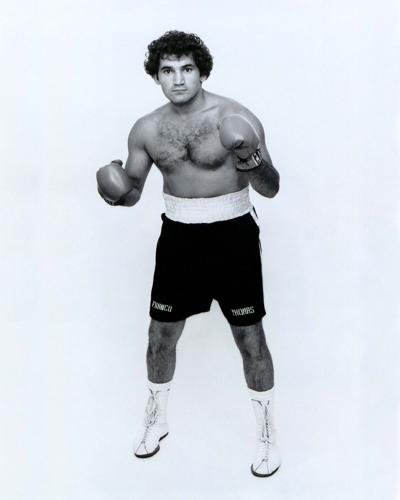
 'He was ahead of the times': Legendary West Virginia boxer Tommy Thomas remembered as advocate of “community policing” before it even had a name.

CLARKSBURG, W.Va. population 16,578 has lost a legend.  Tommy Thomas, who rose to be the No. 6 heavyweight fighter in the world during his boxing days before becoming a much-beloved police officer, has passed away.

Sports fans, especially in West Virginia, will remember Thomas as the local legend who battled some of the sport’s biggest names during his professional career from 1977-86. Thomas fought 42 professional bouts, finishing with a record of 34-8, with 21 knockouts. His career also featured 56 amateur bouts, where he posted a 46-10 record and was a national semifinalist for heavyweight Golden Glove honors.

He famously fought in Alaska for a time and two potential opponents looked at him and declared that he didn’t look that tough. It was decided he would face both opponents in separate matches on the same card. He defeated both in the third round of their respective fights.

While Thomas earned legendary status in West Virginia with his boxing, those in Clarksburg grew to know the man he was through his work in law enforcement.

Thomas had a natural ability to communicate with people of all ages, but especially children. He served as the Drug Abuse Resistance Education (DARE) officer for Clarksburg police, going into schools to help educate children on the dangers of drugs. Thomas served in the position for about 17 years, as well as working as a regular duty officer, until his retirement.

Harrison County Sheriff Robert Matheny said Thomas was a unique individual whose love of boxing was only matched by the love of his community and police work. “He was ahead of the times,” Matheny said. “He knew ‘community policing’ before there was a name for it.

“The way he acted and treated people is the way they teach police officers today,” Matheny said. “Now that we look back on it, those of us who worked with him know what he was doing.”

“Once he got involved with the DARE program, he lived it and loved it,” Matheny said. “Thousands of kids remember the lessons he taught them and are better for it.

“I just came across the other day a national magazine from years ago that had a feature on him and what he was doing (with DARE).

“He loved to teach other officers what he was doing and shared the (DARE resources) with us to pass out to kids we’d encounter. He was a great man, a great friend. A great officer.”

Current Clarksburg Police Chief Mark Kiddy also worked with Thomas before going on to a distinguished career with the West Virginia State Police.

“It’s a huge loss for the community,” Kiddy said. “He was so well known and loved. He was community-oriented, just loved people and loved kids and being around them.

“He was always there to help people,” Kiddy said. “I’ve seen him give his watch to a guy who didn’t have one. I’ve seen him buy food for people that were hungry and helped them any way he could.

“He was very selfless,” Kiddy said. “There aren’t enough words to say all the good things about him. He was just a great guy.

“He never met a stranger,” Kiddy said. “He’d drive through town and would be waving at everyone. He just knew how to treat people, to make them feel special.”

Thomas earned high recognition from the community he loved, being named an Exponent Telegram Citizen of the Year in 2001.

In 1999 he was named Citizen of the Month by the Shinnston News and Harrison County Journal. In 2007, he received the Frank Loria Lifetime Dedication Award by the Clarksburg Columbian Club; Elks Citizen of the Year for the Central District 2008-2009; in 2010 he was named Honorary Irish Legend by the Harrison County Catholic Schools; and he was presented with the FBI Director’s Community Leadership Award, also in 2010.

Thomas’s legacy lives on through the Tommy Thomas Boxing Club at the Clarksburg Recreation Center, which remains open to males and females age 12 and older who want to learn the sport of boxing.

The Most Important Element: Officer Wellness

Are Departments Overlooking The Most Important Element?
By: Ken Dye

Police departments get new and updated equipment all the time. Budget line items for new cars, body cams, light bars… the list continues.

From time to time, these pieces of equipment need to be maintained. They need work on the brakes, tires and other activities to keep the car in service, and the same with the other items cops have been loaded with in the last several years. These are all pieces of equipment necessary to keep the officers as safe as possible and having the ability to respond to 911 calls and other non-emergency incidents.

Now… what does any department do to keep the most important and essential part of the department moving? Most do nothing.

Officers keep getting the brunt of the loudest voices and they all seem to be critical. Why couldn’t they do this? Why couldn’t they do that? How many times have so-called experts and “eggheads” opined on what the officer should have done? After the investigation these so-called experts are often wrong.

Does the constant barrage of negative coverage of an event weigh on the cops who answer the call? How can it not?

America seems to neglect the most vital part of the operation. That’s right: the cops. Do the cops need periodic “maintenance?”

After “shagging” radio calls for an extended period of time, let’s take a look at the impact on the individual officer. You know, the person who pulls together all the equipment provided. The cars, the body cams and all the other “stuff” that makes for a police unit on the street.

Departments must take the time and effort to insure the officers are properly reviewed for their physical and mental well-being.

A sharp first-line supervisor should be able to identify a cop who’s experiencing a mental/physical issue. First-line counseling may accomplish the mission. Perhaps a referral to a professional would be in order.

The conclusion being that the most important and necessary element to make the police unit whole, the officer, may need “maintenance”… It’s up to the command staff to make sure that happens.

Ken Dye is the author of five books about crime, cops and bad guys in the St. Louis area. He blogs under “Cops Perspective” and has over 20,000 followers. Ken served with the St. Louis County Police Department for 13 years and finished his LE career with the Illinois Criminal Justice Authority as the administrator for the statewide MEG’s and Narcotics Task Forces.

2021 Man of the YEAR: Gov. Ron DeSantis

Law Enforcement's Greatest Advocate.  

By Joel E. Gordon and George Beck, Ph.D.

Florida Governor Ron DeSantis regularly crushes the internet with announcements of new initiatives to keep Florida on the cutting edge of real progress. The 43-year-old Harvard Law graduate and former U.S. Navy JAG officer is often seen roughhousing a disingenuous press most eloquently. 

Gov. DeSantis comes from blue-collar stock. As Florida's 46th governor, he fights for the working men and women, who, because of the coronavirus, have suffered greatly in many ways, including governmental overreach by way of loss of employment due to vaccine mandates. "No police officer, firefighter, nurse, or anyone should lose their job because of COVID jabs." We agree. Individual liberty and freedom are hallmarks of America, and they should not be disregarded for political expediency. 

Gov. DeSantis' approach to battle the virus without mandates or lockdowns produced a 90% decrease in cases since August and a reduction in hospitalizations. Gov. DeSantis's success is not correlated with conspiracy theorist-anti-science fantasy. He's accomplished Florida's success with the virus without governmental overreach by taking a practical data-driven path, by making monoclonal antibody treatments and vaccines widely available throughout the state. 

Blue Magazine has been following Gov. DeSantis's support for law enforcement. While many politicians trample on officers' rights, fire them, and continue to malign good cops as the enemy of the people, Gov. DeSantis let the rank and file know this… "NYPD, Minneapolis, Seattle: If you're not being treated well, we'll treat you better here, you can fill important needs for us, and we'll compensate you as a result." And Florida openly welcomes officers who have made the personal choice not to be inoculated against COVID-19.

At the 2021 Biennial National Conference & Expo this past August hosted by the National Fraternal Order of Police, Gov. Ron DeSantis announced three new policy proposals to help recruit new law enforcement officers and support Florida's local and state law enforcement agencies. "As so many cities and states choose to disrespect, degrade and defund the honorable work of law enforcement, we want Florida to continue valuing our men and women of law enforcement today, tomorrow, and for generations to come," DeSantis said. 

These proposals provide state resources to recruit law enforcement officers through three separate programs: new officer signing bonuses, academy scholarship program, and out-of-state relocation support. The new officer signing bonus grants a one-time $5,000 payment to cops who are new to the profession in Florida. The academy scholarship program helps lessen the incurred financial burden of law enforcement training. The recruitment program waives examination fees for officers relocating to Florida.  

Whether it is COVID response, schools, the economy, law and order, or almost any other "progressive" agenda found in many states, Gov. Desantis has bucked the trend with great success and a conservative agenda. Gov. DeSantis's approach has caught the eye of President Donald Trump among others in the Republican Party and thereby places him squarely on the national stage and potentially in consideration to lead our great country as POTUS or vice president.

As tradition has it at Blue Magazine, every year we select a person who has demonstrated a strong support for law enforcement and, through his or her actions, helped make our profession better. Gov. DeSantis has undoubtedly earned the trust and respect of law enforcement through his strong-willed determination and leadership. For this reason and in recognition of his tireless efforts to make Florida an example to follow as its citizenry and business community reap the rewards of safety, health and prosperity, Blue Magazine is honored to name Florida Governor Ron DeSantis as our 2021 Man of the Year. Congratulation Gov. DeSantis!

Forced Vax Attack: Cops Go from Hero to Villain

By David A. Clarke Jr., Sheriff (Ret.) Milwaukee County

In the early days of the Chinese coronavirus pandemic when everybody was running around like chickens with their heads cut off, American law enforcement officers with calmness and courage risked their lives and well-being, and that of their families, when they answered the call to serve and protect. This was at a time when not much was known about the virus or its transmission. This was when Dr. Tony Fauci confidently proclaimed on a top-rated Sunday night news show that he was not worried about COVID and that there was no need for people to run out, buy and start wearing surgical masks. More importantly, it was well before testing was available and keep in mind there was no “vaccine” available. I’ll get to that later.

Nevertheless, our police officers went to work as other government employees including public school teachers and elected officials locked themselves in their homes and got paid to work from home. In the private sector, businesses were ordered closed, putting private sector employees out of work with no pay unlike government workers. That quarantine-like bubble of protection wasn’t available to police officers. They couldn’t strictly socially distance themselves from crime victims or suspects. You can’t handcuff an arrestee from six feet away. If first aid was required of say a gunshot victim, that could not be done from six feet away. At the time there was no concern about the well-being or safety of police officers. In fact, they were heralded as heroes for their bravery and selfless service.

That was then, this is now.

Now a so-called “vaccine” has been developed. Bear with me for a moment as I look inside what is being called settled science on COVID. The people using this term have an agenda. There is no such thing as settled science. A Harvard College professor once reminded me that science doesn’t prove, it only probes. Keep in mind that settled science once believed that the sun rotated around the earth. First of all, it isn’t even a vaccine by medical definition. A vaccine makes you immune from getting a virus or spreading it. It was rushed through clinical trials to market. There is still a lot that is not know about what really is by medical definition a therapeutic. That means you can still catch the virus and spread it and you have to continue to get periodic additional shots to protect you. A recent news report said that several weeks ago, 40% of all COVID-related reported deaths nationally were of people who had been fully “vaccinated”. There is still a lot that is not known about this therapeutic like its long-term side effects. Now something called a delta variant has emerged that is resistant to the therapeutic. In addition to this, reasonable people are asking questions like how long will they have to keep getting jabbed and injected with this therapeutic. The bottom line is that we have not been told the whole story about things and it makes people rightfully suspicious. So-called experts keep moving the goalposts. Ok, enough of that.

Then there is the legal question about government’s authority to force an individual to inject anything into their body as a condition of employment. I don’t care about the efficacy of what is medically best for people. It is still a freedom and liberty issue, and those decisions should be left to the individual to make.

Chicago Mayor Lori Lightfoot continues to threaten Chicago police officers with suspensions without pay and termination unless they take the jab. Her order further reduces the ranks of an already depleted force as violent street crime continues at record rates. She had no concern for their health as they continued to perform their duty in dangerous conditions in the early days of the pandemic. Many saw them as heroes. Now their organizations and political class officials are showing their thanks by seeing them as the bad guys in all of this. That is an odd way of thanking them. Making matters more untenable is that feckless police commanders are willing to enforce these city policies. Lightfoot should attack crime and criminals like she does Chicago police officers. Crime rates would drop exponentially. She should attack her useless state’s attorney Kimberly Fox, who refuses to charge repeat criminal offenders or ask for substantial bail in these cases.

So now law enforcement officers are at a crossroads between freedom to choose or losing their careers as local government officials are threatening them with the loss of their livelihood if they do not give in to forced “vaccination.” Some agencies have already terminated and suspended officers without pay, and some have voluntarily resigned. This makes their families collateral damage as many officers are the primary income source for things like mortgages, putting food on the table and tuition for their children.

Thankfully, police unions are showing resolve in this fight. The Chicago FOP president has told officers to hold the line against these forced injections. In New York, NYPD officers organized a large protest march against forced medical orders. This is a good sign. These labor organizations possess leverage in this fight against these thankless politicians and should start flexing their muscles by using it.

Are we on the verge of WWIII? Peace and Global Security is Jeopardized

By Eric Caron

Recently, I heard a homily from a Catholic priest who highlighted the universal adage, “Money can’t buy love or happiness.” Sadly, we now know, with certainty, money alone could not purchase peace in Afghanistan.

Partnering with an international crime syndicate masquerading as a government engaged in pervasive corruption was a fool’s errand… I would say criminal. Tragically, the biggest source fueling the corruption in Afghanistan was the United States via fraudulent U.S. contract activities such as: bribes and/or cash payments to corrupt Afghan officials, drug lords, bankers and thousands of others by our CIA.

How do I know? I was the lead Homeland Security official in Dubai, where most of the money was laundered. Unfortunately, diplomatic pressure on the UAE government from the U.S. State Department & Treasury to stem the flow of dirty Afghan money failed. The United States government estimates its deconstruction efforts these past 20 years has cost $300 million per day and nearly 2,500 U.S. military lives. According to the General Accounting Office, the United States also supplied various military equipment to Afghan police and military to include but not limited to: 208 aircraft, 2,000 bombs, 1,400 grenade launchers, 20,000 hand grenades & reconnaissance equipment. A DOD spokesman admitted that the department has no idea where this equipment is currently located within Afghanistan.

On January 17, 1961, President Eisenhower warned the American people in his farewell address to the nation, “Be aware of the military industrial complex…” His main concern was that military industries (defense contractors) would exert an undue influence on government policy to widen profits. Trillions of dollars were allocated and spent for Afghanistan Reconstruction with little to no positive results.

In a July 30, 2021, a quarterly report was submitted to the United States Congress by the Special Inspector General for Afghanistan Reconstruction. (SIGAR) This U.S. government agency was/is tasked to be the lead agency to conduct audits and investigations to identify fraud, waste and abuse relating to reconstruction contracts for Afghanistan. Two key findings were reported:

1. “The Risk of Doing the Wrong Thing Perfectly” “That is, programs could be deemed “successful” even if they had not achieved or contributed to broader, more important goals - such as creating an effective Afghan security force and a stable Afghanistan.”

2. “One of the report’s central themes” - “The pervasiveness of over optimism.” The report examines why the Afghan security forces have continued to struggle despite the U.S. assertion of success.

It is worthy to note, during this reporting period, SIGAR’s criminal investigations resulted in only two criminal informations or prosecutions and two guilty pleas of U.S. citizens. SIGAR’s total staff is 174 employees with only five staff members and five Afghan nationals assigned to the U.S. Embassy in Kabul. To date, SIGAR’s prosecution(s) focuses predominantly on U.S. citizens/officials. In December 2009, while still functioning as the Homeland Security attaché in Dubai, UAE, I was asked to lead a group of Special Agents from Homeland Security Investigations into Afghanistan to train Afghan police, customs and other officials in how to prevent dirty money from being laundered or “cleaned.” Within a few years, billions of dollars of cash had been smuggled into Dubai by corrupt Afghan officials, bankers and various organized crime groups involved in smuggling drugs, precious metals/gold and weapons. The expanding cultivation and smuggling of heroin put the entire U.S. and international investment in the reconstruction of Afghanistan at risk, and jeopardized any achievements the U.S. had made related to social issues, including health, education, women’s rights and the rule of law.

As I documented in my book, SWITCHED ON - THE HEART & MIND OF A SPECIAL AGENT, I was asked during this training to provide a lecture on corruption and how necessary it was to remove it, or it would metastasize and destroy their country. When I completed my session, one of the highest-ranking customs officials at Kabul Airport raised his hand not to ask a question, but to lecture me through an interpreter. In front of dozens of colleagues, with a voice of General Patton, he stood and stated, “If the U.S. government wanted to stop corruption, we needed to target senior Afghan government officials, not him or his associates in the room.” I knew he was correct. Ironically, it was widely reported how the CIA was perpetuating corruption with cash payments to the Afghanistan president’s office for over a decade. Then President Hamid Karzai at the time, acknowledged that bags of cash were delivered by the CIA for “various purposes” to his office. Interestingly, Karzai and many other Afghan officials were not just receiving payments from the U.S. but, from Iran and certainly other nations.

Furthermore, after a multi-year money laundering investigation of Mohammed Zia Salehi, a close associate to then-President Karzai, by Afghan and U.S. officials, a decision was made to arrest him in Afghanistan with the knowledge of Karzai. Unfortunately, within hours he was ordered released by President Karzai. It turned out Salehi was the CIA “bag man” receiving cash for Karzai and others. In twenty years, the Afghan government failed to prosecute any senior government officials for money laundering or corruption.

U.S. administrations throughout this twenty-year period have escalated the war in Afghanistan, and Congress approved billions of dollars for government contracts to support the war efforts. All had promised to crack down on corruption in Afghanistan, but it was all political grandstanding for all parties involved.

Essentially, the U.S. government made deals with the devil (corrupt Afghan officials, drug smugglers, arms traffickers, bankers, terrorists, etc.) We believed these criminals would assist us in the war efforts. We were sadly mistaken and allowed the CIA to hand out hundreds of millions of dollars like drunken sailors to “bad guys” with no accountability keeping the country of Afghanistan in turmoil.

The United States failed to understand that fighting corruption, which we were fueling, was not just a humanitarian cause or hyperbole. Fighting corruption was key to winning the war. Inevitably, lost due to greed and incompetence by senior U.S. Government officials within the White House, DOD, State & CIA.

“Are we on the verge of WWIII?” Countries such as Iran, Pakistan, China, and other nations are aligning with the “new” Afghan/Taliban government. Will we now capitulate to the Taliban and other Afghan terror organizations which are now well equipped with sophisticated U.S. military weapons, free to move with impunity with a global terror reach?

I believe that obtaining global peace and security is now jeopardized for generations to come.

Eric Caron is a Special Agent (Ret) with 25 years of service. He is the author of "Switched On - The Heart & Mind of a Special Agent." His website is: Switchedonlife.com

A Miracle K-9: The STAR Project is born

By Charlie Cifarelli

On Aug. 13, 2012 I was sitting at my desk 1,200 miles away from NYC, not knowing what would occur that day would change my life forever. A story that would move even me, a guy who had witnessed some horrible things, to believe in miracles.

I left New York in my twenties for a life in the Midwest, taking my first job at the Nebraska State Penitentiary. I had a great career, though I must admit they kept a close eye on this New Yorker and for good reason; the guys who talked like me and looked like me were the ones in the cells after being picked up for moving drugs across the country or an inmate interstate transfer. Even when I was accepted on the CERT (Corrections Emergency Response Team), they would nominate me as the inmate for the drills. I stayed tough, did my job and the promotions came along. At the end of my career, I was back at the Penitentiary and had the keys to the entire institution. I’ve always been grateful to the NYPD sergeant who bought me a meal by the Jamaica train station back in the late 1980s. As a matter of fact, if it wasn’t for the police, I would’ve never had any role models growing up or help when I was in a jam.

I eventually left the department of corrections to start a trash business and I had tremendous success. I built the business solely and eventually sold the business to a larger company, even taking a position as their Chief Operations Officer. I desperately missed New York, and given the free time at my desk I’d scan the New York newspapers to see what was going on. On this day in August, the headlines would read that the NYPD shot and killed a pit bull that was lunging at people in the East Village. The story saddened me, as I had a dog that was a pit bull. When I was down and out living in my van in my early twenties, my dog was my only constant companion.

Luckily, I don’t believe headlines without reading the entire story. Although it looked like the dog had died, I wasn’t convinced. I called and spoke to the staff at the New York City Animal Care & Control and after some pleasantries, telling them I was calling from Nebraska wanting to learn about their refuse and recycling, I asked if the dog that was shot by the NYPD was actually dead. I was told she was alive but hanging on to life. Her name was Star.

In the days that followed, the media had to reverse course, and as the New York Daily News reported, Star was making a lightning speed recovery. I immediately started a Facebook page to document the story and her recovery. Star’s story, and her Facebook page garnered global attention. Unbeknownst to the public, Star quietly left NYC to begin recovery in Pennsylvania. Although her whereabouts were unknown, I tirelessly tried to find Star. One day, a photo was released of Star with cars in the background. A semi-truck was pictured as well. I put my years of corrections experience and training to good use, as I noticed the cars did not have a front license plate, and the DOT number was visible on the semi-truck. After many calls and due diligence, I learned where Star was. Several more weeks had passed, and I was granted permission to see Star. When it was time for her to be adopted into a permanent home, I asked my fiancée, Jenn, if we should give Star a home in Nebraska and take this once homeless dog and show her a wonderful life here.

Approximately eight months after Star was shot, I picked her up in Pennsylvania and drove back to Nebraska. Star was a natural with people, a real social butterfly. Having lost a family member to Alzheimer’s, we were very much involved in the local Alzheimer’s Association and attended the yearly fundraising walks. Star began attending these walks, and the response to her was incredible. In 2015, we started a nonprofit organization, the STAR Project, to raise awareness of dogs in need. One of our first rescued dogs was adopted by a Lincoln, Nebraska police officer. The good that has come out of rescuing a once-homeless NYC dog who almost lost her life from a shooting has turned out to be one of the biggest blessings to come into my life.

Sadly, earlier this year Star passed away from an aggressive form of cancer. She left this world as she lived life - on her own terms. It’s import that I keep her legacy alive, as so much good came from such a rough start.

Charlie Cifarelli is a businessman from Long Island, New York. After rising through the ranks in several maximum-security prisons in Nebraska, he tapped into his entrepreneurial spirit starting his own successful business. Charlie is also co-founder of a nonprofit organization, speaks at various business and social awareness functions, and has been featured in newspaper, magazine, radio and TV regarding animal advocacy.

Democrat Tyranny; Let the Lawsuits Begin

Lt. Patrick J Ciser (retired)

One definition of tyranny is this; Dominance through threat of punishment. We are now witnessing tyranny from the likes of Joe Biden, OSHA and most Democratic leaders across the country with their draconian vaccination mandates. How the hell did “Stop the spread” turn into an “iron fist” government mandate from one administration to the next? How the hell did our first responders that we called our COVID heroes become zeros in such a short period of time? Last year, NYC had erected “heroes work here” signs at all of their major hospitals. I’d like to say that politicians were appreciative to all “first responders” but cops, unfortunately, never really felt the love. Between the defund the police movement, allowing rioters to pillage at will, and paint BLACK LIVES MATTER (a Marxist group) on 5th Avenue, Democrat politicians never really saw us as heroes. Bill, “Don’t let the door hit you in the ass on the way out” deBlasio had only disdain for the men and women in Blue.

Due to the insanity that we witnessed during the George Floyd riots, including tying our hands, and the politicians making light of someone throwing a Molotov cocktail at a police car, etc. we saw many retirements and even resignations. So, what’s better for the city and its rising crime rate than threatening to fire as many as 30% of the rank and file due to vax mandates? Understand that although I have no desire to get the “jab,” I’m not against it for others. I’m simply a firm believer that we should all be free to decide either way, without any threats from our government. Brave men and women have died protecting our freedoms in America, just for an overbearing government to step in and rip those freedoms away? Could you imagine if Donald Trump tried pulling this shit? The liberal media would be comparing him to Adolf Hitler! And isn’t it the Democrats that keep repeating the mantra, “my body, my choice?” But only when it’s politically expedient.

Why also is it that millions across America had COVID, also known as SARS-CoV2, and are now 7 times more protected than everyone who got the jab, yet they are still being threatened into getting inoculated anyway? With approximately 70% of the population getting at least one dose, and the millions that got over it and carry the antibodies, haven’t we achieved “herd immunity?” Remember when the wise and powerful Dr. Anthony Fauci said over the summer that if we reach that percentage, we’d achieve that goal. Unfortunately, this bullshit got so political that they keep raising the bar. But it’s time to figure in the millions who had it, and beat it as well. Rather than just having “vax” cards, we should issue “antibody” cards, too. We’re constantly told to follow the science, but that’s exactly what Democrat politicians aren’t doing! Don’t these bureaucrats read the same studies that we do?

It’s time to fight back, people, just like the 27 red states and counting, that filed lawsuits against the Biden administration! NO ONE should be losing their jobs over this! Also, studies have shown that inoculated people are carriers just like the rest of us. So, don’t believe the BS that only we, the uninoculated, are spreading the virus!

U.S. Customs and Border Protection agents, which are our largest law enforcement agency, are particularly upset with Joe Biden’s executive order mandating all federal agencies get inoculated, because“no show Joe” does nothing to stop the roughly 200,000 unvaccinated immigrants per month from coming over the Border. But he’s ready, willing, and able to fire these patriotic Americans who serve our country every day. With the administration’s open border policy, that they’ll of course deny, perhaps they don’t mind having a manpower shortage. Turning Texas and Florida into California is the Democrats’ goal, this way you’ll never see another Republican president. As of this writing, 70 flights of illegals have arrived in Florida, to Gov. Ron DeSantis objections.

Truckers last year were some of our unsung heroes as well, as they delivered food and other needed goods across our country. Today, Joe Biden wants to also force truckers into getting vaxed, with no regard for our food chain supply or Christmas gifts. Everyone agrees that we don’t have enough truckers across the country to deliver goods now; imagine if he fires thousands? FIGHT BACK AMERICA, this is OUR country! WE THE PEOPLE!

Nov. 6, The U.S. Court of Appeals for the Fifth Circuit “stayed” Biden’s vaccine mandate for private businesses with over 100 employees.

HERE WE GO AGAIN: The Never Ending War On Cops

By David A. Clarke Jr., Sheriff (Ret.) Milwaukee County

Anybody who thought that the War on Cops was coming to an end because there has not been a constant
anti-police drumbeat should think again. The defund and even abolish police movement started in earnest
after the death of George Floyd. Yeah, he’s the guy who did time in prison previously for an armed home invasion burglary where he held a loaded firearm to the stomach of a pregnant woman threatening to shoot her. The same George Floyd who was geeked up on fatal levels of fentanyl while resisting police orders to take him into custody for passing a counterfeit bill. Now do you remember George Floyd?

Ever since his death in custody, there has been a movement afoot to take money from public safety budgets and divert it to some inane idea of replacing cops with social workers to take on crime. This movement caught fire and began sweeping into the nation’s more populated urban cities with some success. The New York Police Department, Los Angeles and Milwaukee Police Departments all saw millions of dollars slashed from their crime-fighting efforts, leading to staff shortages. Violent street crime exploded exponentially to levels not seen in 30 years. This caused politicians who were championing the defund the police slogan to reverse course in fear for their political careers and they walked back the stupidity because it was hurting them politically, unlike in the earlier calls for defund efforts by the creeps of Black Lives Matter, Antifa and other Progressives. The effort did not go away, it went underground and is now being waged in stealth-like fashion. Here is an example.

In Minneapolis, a ballot initiative is being put up for voters who will get to decide whether to add an amendment to the city charter that would, “limit the size, scope and influence of its police department.” This at a time of rising violence rates in Minneapolis. It’s called the Yes 4 Minneapolis initiative, “where the city’s police department would be replaced with a Department of Public Safety, abolishing the city’s currently required minimum number of officers per capita and replacing some with social workers, mental health experts and crisis managers effectively defunding the local police by reallocating funds to other city services.” One guy running for Minneapolis city council heralded the move and hoped it would pass and impact what other cities do. Let’s hope not. This is moronic. Here is why.

Minneapolis has become a dangerous place to live as have many other large urban centers. Murders, non-fatal gunshot victims, and carjackings have all seen a significant increase in both 2020 and 2021. Crime victimization has residents living in fear. That is a quality-of-life issue. Then there is the issue of unsolved crime. In Minneapolis, the unsolved crime rate has soared to 88% resulting in no arrest. That is a staggering figure. This emboldens the criminal to know that they have a great chance of never being caught and held accountable for committing a crime of violence. This constant barrage of attacks on the policing profession is leading to de-policing. In Minneapolis, traffic stops are down 85%, field interview or Terry Stops are down 76% and business checks are down 76%. It’s called visibility. These are the type of police tactics that keep crime in check. Traffic stops in high-crime areas find vehicles containing guns and illegal drugs and people wanted on serious felony warrants. The same can be said of suspicious behavior stops in high-crime areas. When the public sees that police are not being aggressive, it leaves them with little confidence that the city can keep them, their children and their neighborhoods safe. People then withdraw from civil life. This leaves the streets to be controlled by the criminal. It leads to law-abiding citizens not wanting to fulfill their role of community guardians who cooperate with and help. police control and solve crime.

There is a way forward, however, and it won’t involve re-inventing the wheel. In 1994, Congress passed a crime bill that led to historic lows in violent crime all across America. The bill was co-authored by none other than Sen. Joe Biden and signed into law by President Bill Clinton. It was at a time that even Democrats were not afraid to communicate publicly their support for the police. That doesn’t exist today. It was at a time when these same Democrat politicians trusted police to use their discretion when enforcing the law. Now they are trying to take certain tools and tactics away thereby preventing them from performing their most important function and that is crime prevention and keeping the peace.

It is time to go back to the 1994 crime bill and apply what was done back then such as hiring more police, re-investing in police budgets, getting rid of stupid policies like no bail and locking up career criminals. It is time to stop the revolving door of the criminal justice system. Jails and prisons are an effective crime control tool. They keep repeat offenders from, you guessed it, re-offending. It’s going to take a prosecutor’s office that takes off their political activist hat and puts their concern for the victims of crime hat back on. and begins again to represent law abiding residents instead of acting like de facto defense attorneys. When judges get back to punishing crime instead of sympathizing with career violent offenders, then the criminal justice system will cease being dysfunctional and become the institution that it was designed to be, that being a purveyor of the rule of law, law and order and justice for all.

Effective De-escalation for Corrections Personnel

Tactics for Influencing Uncooperative Inmates into Compliance
By Efren Almodovar and Lou Savelli

Anyone who has worked behind the walls in a jail or correctional facility fully understands the problems and dangers associated with uncooperative inmates as well as the importance of possessing effective de-escalation skills. Being locked in with inmates who have already shown a disdain toward the law, along with gangs and inmates with mental illness, corrections officers though unarmed and outnumbered, must arm themselves with superior communication and de-escalation abilities. However, unlike street police officers, corrections officers may have more information about the inmates and have many opportunities to observe the inmates. With extensive corrections experience, we have dealt with many inmates at their worst and learned to rely more on our communication skills than physical force. Here are our suggestions for de-escalation success when dealing with inmates.

To be a successful resolver of conflict, whether it involves inmate-on-inmate altercations or inmate versus staff, I try to rely on listening skills. Learning from the inmate and identifying what is causing his agitation and combativeness contributes to the creation of a plan of communication and action. Also relying on learning about the inmate’s charges, family, and prior issues in the facility can help greatly. The more insight into the uniqueness of an inmate, the more it will assist with creating a more effective approach to de-escalation.

Along with strong listening skills, it is critical to have effective communication. Inmates, like others, respond better when you speak to them and not at them. Coupled with listening skills, communication becomes more effective and has a better chance of positive responses. A better way of carrying yourself behind the walls, and as I personally prefer, is to be personable. This builds a good reputation among the inmates and causes inmates to be far less resistant when you give them direction and orders. A personable correction officer is more approachable and will often be asked to discuss many topics with the inmates. Since so much time is spent interacting with the inmate population, it is common to be asked advice or legal questions. Other times, corrections officers may have to act like a social worker and help inmates resolve their own inner conflict or deal with issues involving family, depression and the frustration associated with incarceration. This information is valuable for better understanding an inmate and knowing what words and language work best.

The effectiveness of respect can never be overstated. Respect should always be the M.O. (Modus Operandi), of any corrections officer and it will undoubtedly help de-escalate, and as equally important, prevent situations from becoming more intense. To complement respect, it will help for officers to keep their word. When you give your word, you should keep it. Inmates rely on small promises they look forward to and can be disappointed if the promise is not kept, especially from a respected officer. Some inmates may not have strong support or frequent connection from their families.  Therefore, they will be counting on you to follow through. Honesty may seem like a strange word when discussing inmates in a correctional setting, but it can go a long way with furthering respect. When dealing with inmates, even at their worst, I recommend an honest approach and honest answers. When an inmate, or anyone for that matter, learns you have lied to them, you lose their respect and your credibility.

Accordingly, listening, communication and respect are not the only methods which should be used for de-escalating potentially volatile incidents behind the walls. Simple, yet effective, tactics can be used to further de-escalation efforts and success. To name only a few, here are my “go to” methods. First, don’t meet shouting and anger with the same. People, even inmates, tend to tire out from shouting their issues or demands. They also gain fuel from a similar response from an officer. Keep in mind, there is no good reason to try to shout over an irate person. It makes it worse, it escalates the problem, and it makes a professional officer look bad. Second, control your body language. Always be safe, maintain a safe distance, but it is not necessary to get into a fighting stance and exacerbate the situation because the inmate thinks you want to fight. You can easily defend yourself from a non-threatening, tactically sound demeanor and stance. In our training consortium, a group of police officers, corrections officers and other professionals call this tactically non-threatening. The concept, essentially, is defined as looking like you are not threatening or getting excited, but you are immediately ready to defend or go on the offensive effectively. In fact, as mentioned before, getting into a fighting stance can escalate a situation unnecessarily.

More useful tactics, in the furtherance of de-escalating someone or a situation, can include strategically crafted words, phrases or questions. This tactic, taken from our tactical communication techniques, not only works well with inmates in a confrontational mode, but it also fosters a dialogue many inmates want to continue after the incident. For example, asking a highly agitated inmate who refuses to go back to his cell, “Why don’t you tell me what you are thinking right now so you and I can solve this problem?” The inmate expects a confrontational response or a group manpower response to achieve his goal of showing off or proving his courage. By asking the right question and showing your interest in his feelings, you have a better chance of avoiding resistance and gaining cooperation from the inmate. Yes, there are always going to be those times and those inmates who may have to be defused by force, but force should always be a last resort.

While there are many, many more tactics for de-escalation for corrections officers to use, I will only add one more for this article. This tactic is referred to as the “Subconscious Leverage Tactic” (SLT). The SLT is a question asked of the inmate, or other person, to provoke deeper thought when the inmate is in a resistant mode. The SLT is a combination of a subconscious question asked to the inmate to stimulate his cognitive (thought) processes while your (officer’s) body language changes to a relaxed body language position at the time the inmate starts to respond. This tactic works to influence the inmate to think of the ramifications of his uncooperative or volatile ways while your body language is influencing his body language to relax or become submissive. Most inmates will respond to this technique, making them easier to communicate with and less committed to a confrontation. To illustrate this technique, I will refer to an interview with a highly confrontational and hard-core inmate who refused to sit down in a chair during the interview. The inmate was completely closed off, body language and verbally to the conversation. One officer asked the inmate, “How could your time in prison go easier and less uncomfortable?” The other officer, standing closer to the inmate, placed himself into the same body language position and mirrored the inmate’s stance, crossed arms, and facial expression. As the inmate fully absorbed the question and subconsciously visualized how he could spend easier time in prison, he would not answer the question. As the closer officer observed the slight change in the inmate’s behavior, he uncrossed his arms and sat down in the chair. The inmate immediately sat down in his chair and his negative demeanor changed drastically. The interview went successfully from that moment on.

Though not every incident can be de-escalated, nor be a win/win, we should always learn from our mistakes and ensure we don’t repeat them. As corrections officers, we have plenty of tools at our disposal and we need to use all that is available to resolve issues peacefully. Our best tools are, without a doubt, people skills and the tactics, among others, discussed in this article. De-escalation is a strategy as well as a technique which involves multiple available tactics. The more tactics you have, the more effective you can perform. Be safe!

CIVIL UNREST: IS THIS THE PURGE

Joel E. Gordon

“The Purge” is an American media franchise centered on a series of films which present a seemingly normal, crime-free America in the near future. But the truth is that the country portrayed is a dystopia which celebrates an annual national holiday known as a pretty terrifying concept called the Purge: one night a year where all crime is legal, where murder, torture, rape and theft are all allowed as a form of a societal safety valve. It seemed farfetched to me that such a condition could ever exist in the United States of America, but are the radical left seeking anarchy toward an actual, more permanent purge?

Frequent civil unrest with many being allowed to riot, loot and burn structures with government officials backing down and allowing unlawful activity and violence to take place, often with little or no consequence, emboldens the participants. With no bail, bail reform, non-prosecutions and sanctioned prisoner release by an ever-increasing number of George Soros-funded “prosecuting” attorneys, is the Purge coming to a town near you? These realities combined with media manipulation of truth and questioned election oversight and rules violations make law-abiding citizens feel as though there no longer is any rule of law being enforced on any level. Now lawlessness on both sides seems as though it is justifiable in the mindset of an ever-growing portion of our population, seemingly by even those who have “played by the rules” as law-abiding members of society in the past.

Add policing which is largely unrecognizable with stand-downs and poor operational and enforcement choices further fueling the disenfranchisement of many from seeing the need to surrender to authority in their thoughts and actions. And the waters are further muddied with confusion over enforcement of law versus Executive Order “mandates.” Further, serious national security concerns on Chinese influence over our officials and institutions add another layer of doubt and fear.

What are the ramifications? When the late Rush Limbaugh noted that America was “trending toward secession,” he said “I see more and more people asking, what in the world do we have in common with the people who live in, say, New York? There cannot be a peaceful coexistence of two completely different theories of life, theories of government, and theories of how we manage our affairs. We can’t be in this dire a conflict without something giving somewhere along the way. And I know that there’s a sizable and growing sentiment for people who believe that that is where we’re headed, whether we want to or not — whether we want to go there or not. I myself haven’t made up my mind. I still haven’t given up the idea that we are the majority and that all we have to do is find a way to unite and win.”

People from all over the country showed their support, taking part in rallies calling for greater transparency in government and elections moving forward. Many expressed that our election process was being handled improperly, and in some cases fraudulently. Some are optimistic that the tide will turn, however, including some high-profile supporters.

“Courts do not decide who the president of the United States will be,” said former national security adviser Michael Flynn. “We are in a crucible moment in the history of the United States of America,” he added. Flynn called himself a “product of an unjust system” and said the battle for honest elections “is about the fabric of the Constitution of the United States of America.”

Texas GOP Party Chairman Allen West noted that when the Supreme Court tossed out a Texas election lawsuit which was joined by 17 states, 106 U.S. congressmen and the former president himself over election practices and irregularities that in his view the decision establishes a precedent that states can violate the United States Constitution and not be held accountable.

He went on to say “Perhaps law-abiding states should bond together and form a Union of States that will abide by the Constitution.”

So where is this all heading? Have we forsaken the rule of law in favor of choosing sides with “every man for himself?” Who can you trust when social order collapses? Is this the Purge?

It’s essential that real leaders emerge and step up to curtail our journey on this road less traveled. In the alternative, it appears that conflict will continue on our land in crisis resulting in further chaos. We must act intelligently, admit our past mistakes, correct them and move forward.

NOT ON MY WATCH: Deterring Crime & Keeping the Peace

By Joel E. Gordon

“A cop has a calling. It’s not about making money. Being a cop is about making communities safe, caring for children, and doing what it takes to stop someone from hurting another person.” – The Wounded Blue

Peter Moskos, a professor at New York’s John Jay College of Criminal Justice and former Baltimore city police officer, recently noted, “There's an arrogance among academics towards the public I dislike. I guess that's the game, but academics are often wrong. ‘We know police don't prevent crime’ was a doozy.”

A police presence can be a deterrent for criminal behavior. My own goal as a community cop was to eradicate criminal behavior on my watch in my area of responsibility. In fact, I was always proud to belong to a shift or agency where crime prevention, to the extent possible, was a number one goal behind staying safe and returning home unharmed at the end of each tour of duty.

One evening just past dusk back in my inner city policing days, I remember noticing a young teenager standing on a corner near a hardware store. This didn’t look right, as he appeared to be nervous. I did not tip my hand, driving past him and parking out of his sight. He must have either frozen, or maybe I really tricked him into thinking I wasn’t paying attention, because he failed to sound the customary “5-0” signal verbalizing a police presence (as in “Hawaii 5-0”). Upon my walking back toward the store I saw that the kid was a lookout and his accomplice was chiseling out cinder blocks with a hammer in an attempt to break into the store without activating its alarm. Both were arrested before they could gain access to the inside of the store.

In a response to attempt to reduce crime and juvenile mischief later at night, the city had enacted a curfew law for those underage.

Then there was the group of teenagers who were breaking into businesses on my post while I was working midnight shift in the summer of 1982. In Baltimore City, the curfew existed for school age youth past 10 p.m. on weekdays and 11 p.m. on weekends where they were not allowed on the street without adult supervision. Numerous burglaries were occurring on my post in ways not easily detected, such as through rooftop ductwork and the like. Mind you, I was very good at “trying up” or checking to see that my businesses were locked up tight. In the winter, supervisors would occasionally meet you to see if you had been out of the car checking by feeling to see if your badge was cold. I would also leave “tell tales” at areas and doorways already checked. A tree branch or Coke bottle would do. If when I spotlighted past these areas the “tell-tale” would have to have been moved for an intrusion to have occurred at that potential point of entry. In spite of this, just about every day of the week, dayshift was getting a call at one of my businesses for a burglary. I stepped up my patrol efforts and began to discover a group of four or five teenagers in violation of curfew, nightly. I would catch them and transport them to the “Best Western” as we would refer to our station. There they would wait for their parents to sign for their future court appearance and pick them up. They were back out before I completed my paperwork on them. After several nights of charging the same kids for curfew violations, my problems with businesses being broken into ceased. Being the most southwestern post in the Western District, the Southwestern District was at the southern and western boundary to my post. The officers who worked on the other side of the street worked off a different radio frequency than I did and reported to a different station for roll call. It was really not much different than if we worked for different jurisdictions. You see the curfew violators got tired of dealing with me and my burglary problem stopped. But the adjacent post of the Southwestern District, to the south of my Baltimore Street boundary, saw a sudden spike in midnight shift commercial burglaries. The police and the criminals know these artificial boundaries and the juveniles just moved their activity to the south. Although I never caught them at it, they were the burglars.

I learned a valuable lesson from this that would later serve me well as a security consultant for an alarm company years later. That is you can’t always truly prevent crime but you can move it by taking opportunity away through risk of being caught. This is why signage and a well-placed alarm system reduces your chances of being a victim and increases your unprotected neighbor’s chances of a break in.

Do police ever truly prevent crime? Yes, through preventive patrol, arrests, community involvement, treatment and outreach programs, although never eradicated, criminal activity can and will continue to be reduced.