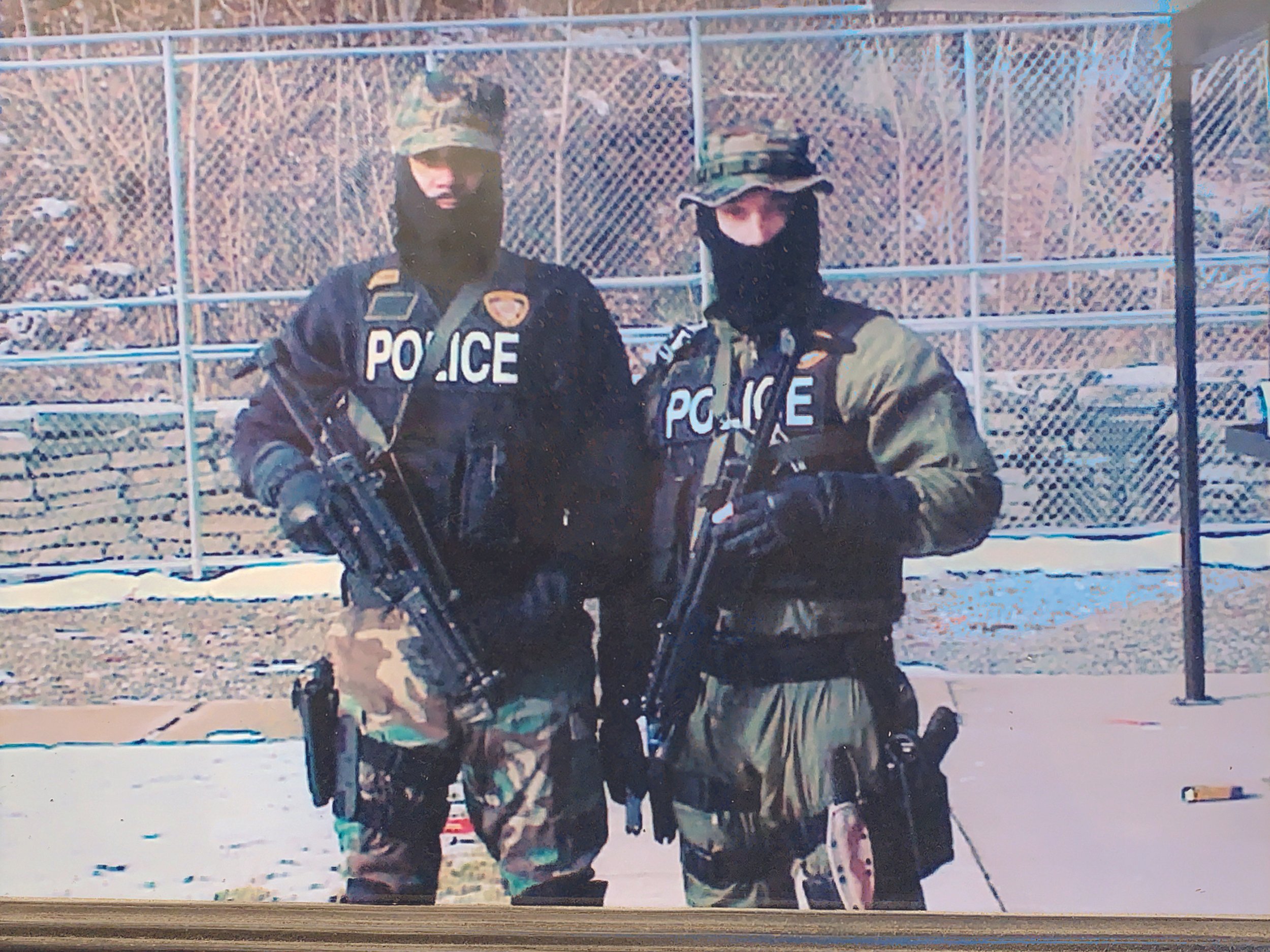
Orange County: Sheriff Paul Arteta: Man on a Mission

Orange County: Sheriff Paul Arteta: Man on a Mission
By Holly Finley, Detective Inv. BXDAO (Ret.)

Orange County New York Sheriff Paul Arteta is on a mission to revolutionize his agency through modernization, morale and team building, leadership and vision. Orange County is in the state's Mid-Hudson Region of the Hudson Valley area. The Sheriff's Office staff of 500 dedicated public servants is responsible for the protection and service to the county's 839-square mile area with a population of just over 400,000. The ambitious 55-year-old sheriff has a lot of ground to cover and has thus far been very productive. In the exclusive interview, you will find out more about Arteta’s professional plans as well as expose the human side of policing. Blue Magazine thanks Sheriff Arteta for speaking with us about many pressing law enforcement issues.

Holly (Blue Magazine): Who is Paul Arteta as a person? What are your values? What's important to you?

Sheriff Arteta: My family, foremost, that means a lot to me. I'm half Spanish, half Italian — the Italian side, you know, we did Sunday dinners with 30 or 40 people in the family. And then the Spanish side, it was the same thing, just a little bit different. And after that, I love this community. I worked here for now going on 30 years, first working 28 years in the sheriff's office. I retired, went to the village of Montgomery Police Department as deputy police chief and was fortunate enough to get elected. And now I'm here as sheriff.

Holly: Tell us more about your career in law enforcement.

Sheriff Arteta: I started out in corrections as a correction officer. I did two years in the old jail that no longer exists. And after the two years, I took the test for deputy sheriff and I was a deputy for a number of years and then worked my way through every rank, I was an investigator, investigative sergeant, sergeant of the patrol and lieutenant. I was a captain before I retired.

Holly: What made you succeed in winning the election to become sheriff?
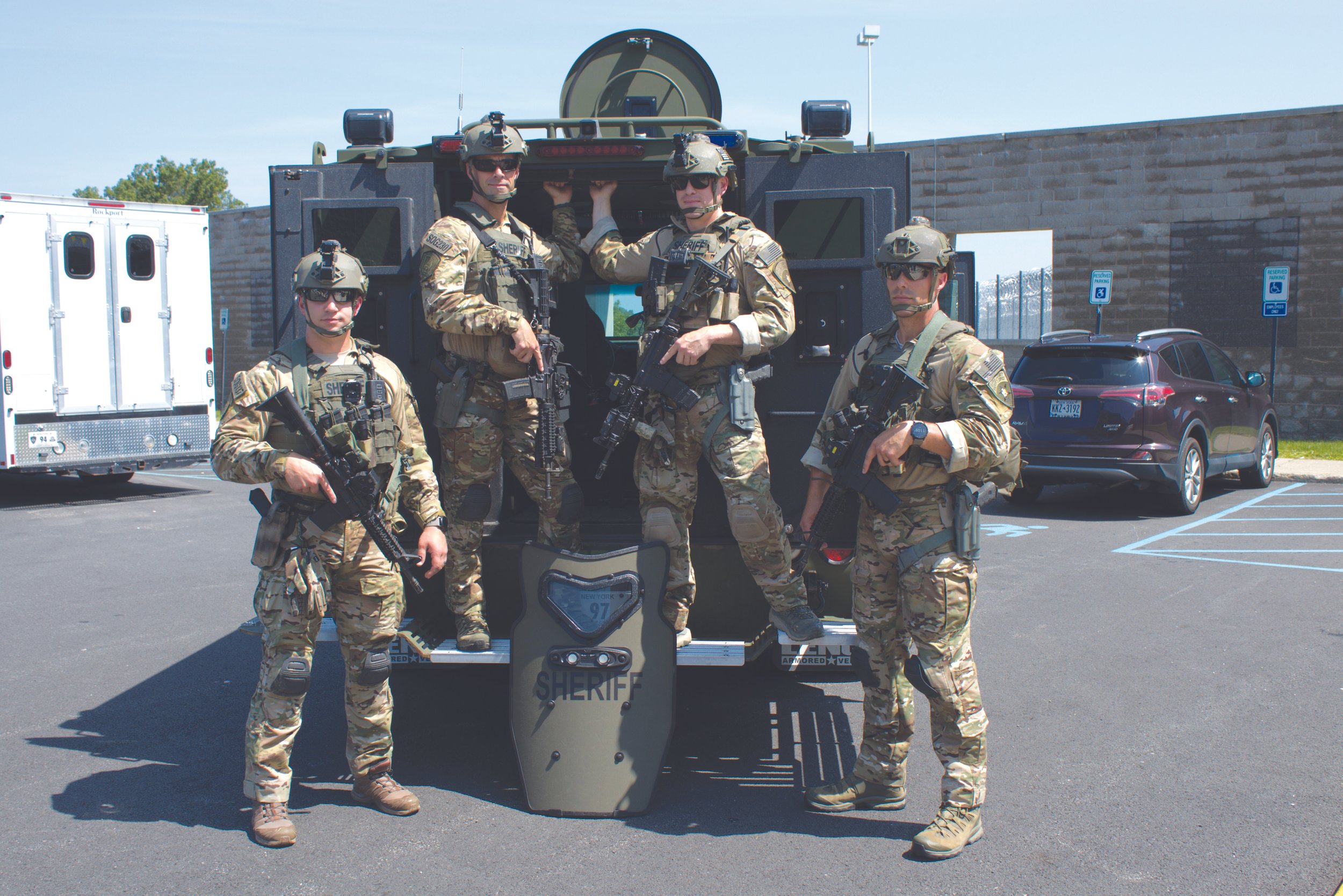
Sheriff Arteta: I think my demeanor and control. I'm just a regular guy. And it doesn't get to my head that I am the sheriff or that I was running for sheriff. I can relate to people. And I actually talk to people and I go out to different events. Some people say I'm all over the place. I do like to go to a lot of different events and just speak to the people and get ideas from them because they're the ones that are seeing what's missing out there. So I try to be attentive to that, and I think that's what won the election.

Holly: How do you see the relationship you have within the community?

Sheriff Arteta: I believe I have a great relationship with the community. During the campaign, I ventured out to every single community, even some that, you know, they maybe they don't like law enforcement or don't want to see their presence. I want to hear what they have to say, because even though there are folks out there that may not like law enforcement, they need us. And without us, there'd be chaos. But we're not forcing ourselves on the different communities. We just want to help where help is needed.

Holly: How have you created these bonds?

Sheriff Arteta: One of them was throughout my career, I would go out to all different businesses, introduce myself on a personal level. I patronize a lot of the different businesses, love going out to dinner, love going to different new places, and that's what we do. And that's how you help your community get stronger. Other than that, it was just my interactions with each different business that I can get in touch with. I just go around and speak to people and, you know, sometimes they have a little bit of information to give you and other times it's just, how's the weather?

Holly: What is leadership to you?
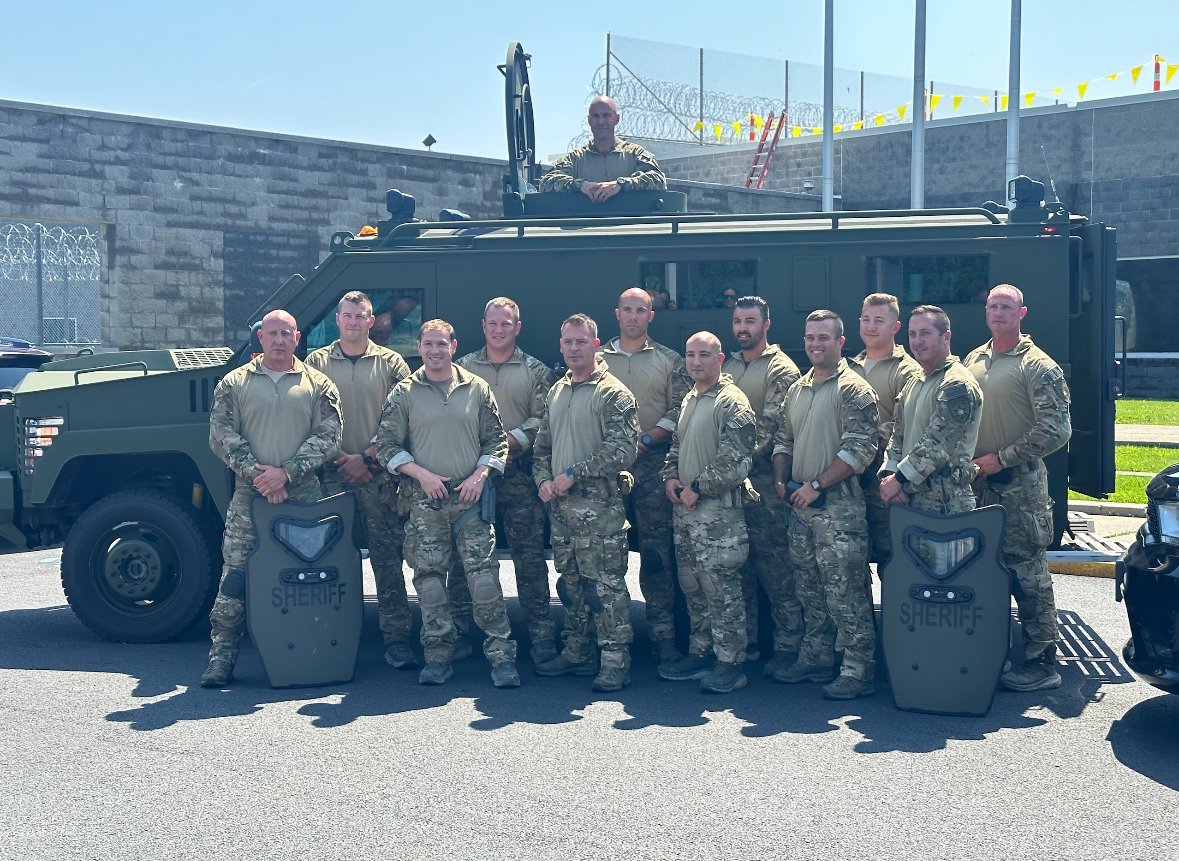
Sheriff Arteta: Leadership is the ability to see into the future and help those around you achieve in a positive manner. We have a lot of accreditations which tell us how to do things right now, but we always have to predict what's going on in the future. For example, the artificial intelligence, that's to me, it's going to be our biggest nightmare in law enforcement because they can mimic any one of us and make us look like we're saying something. So that's looking into the future, trying to help prevent anything that occurs in that manner. So just keeping ahead of the times as law enforcement, we're expected to know what's going on at all times. And that's what the general public feels that we should know, and we try to stay ahead of the times.

Holly: What would you say your best traits are as a person?

Sheriff Arteta: I'm honest, sincere. When I tell you I'm going to do something, I do it.

Holly: Worst traits, what are your character flaws?

Sheriff Arteta: I don't have enough time to get a lot of things done. So, I don't know if it's necessarily a flaw. It's a flaw that I try to do as many things as possible.

Holly: What, if any, are the challenges that you face as the new sheriff?

Sheriff Arteta: Some of the challenges are the previous administration ran things in their manner, and I'm running things in my vision of the sheriff's office and how it should be run. It's not that far off, but there's a lot of things moving into the 21st century we wanted to do. And bringing the morale up within the agency.

Holly: How prepared is Orange County for a crisis?

Sheriff Arteta: I think Orange County is very well prepared. We work well with our emergency operations center, with the county executive, the district attorney, the county clerk. We're ready for just about anything that that comes to us.

Holly: How do you deal with officers in distress with obvious depression or substance abuse? Do you have infrastructure to help them?

Sheriff Arteta: Yes, we have our first-line supervisors and supervisors above those hopefully identify an issue before it's too out of hand. And then we'll address it with some of our members as from the county unit. Or we may just advise them to contact EAP and they can go to an outside entity, and they have great health insurance in the sheriff's office. They can go to the doctor of their choosing and speak to somebody. And that's what the bottom line is. They have to speak to somebody. They can't hold it inside.

Holly: What's your feeling on how Blue suicide has affected your department, if at all?

Sheriff Arteta: I've lived through quite a few just from my own agency that committed suicide and some from other agencies. And it’s something that we need to pay attention to. It shouldn't happen.

Holly: what would your message be to someone within your department who was contemplating suicide? What would you say to them if you were able to grab them by the shoulders?

Sheriff Arteta: Come talk to us … Don't do it. It's not worth it. You have too much to live for. You have friends and family that love you, that you're not seeing clearly right now. And if you look at all of those different variables in your life that love you and want you; just don't do it.

Blue: Can you tell me how you deal with an issue where there is a disciplinary action to be taken? How do you work that out with your deputy?

Sheriff Arteta: When the disciplinary process starts out, first-line supervisors and then it works its way up the chain and all the disciplines are handled at the chief level and the undersheriff level. In certain circumstances, they may involve me with the discipline where it's a discipline that might include termination, but for the most part, most of the disciplines are handled at the undersheriff level where he is a very levelheaded person. The undersheriff has a lot of insight into a lot of things. He worked a number of years at the state police, and then he worked as the chief investigator for the district attorney.

Holly: What is still on your to-do list?

Sheriff Arteta: We have quite a few things. We're looking at a couple of capital projects, one for this building. This building is almost 25 years old and we're having growing pains. So, we're looking at building up on the building so that we can make nice locker rooms for all of our people. We want to build a state-of-the-art K-9 facility on the grounds. The current facility is over by the Orange County Airport, and we need to expand. We had a number of dogs just graduate from the academy and K-9s coming from as far as Brandon, Vermont, to train at our academy. It's such an asset in the entire community that we need to build a state-of-the-art facility for that. We want to do a lot a lot of training here for our own folks. There's a need on some of the county roads for more traffic patrol, especially for heavy trucks and different problems that are going on, such as speeding violations of the traffic law. So, we're encouraging our folks to go out on these different roads. One of my biggest wish lists is we're looking at starting a motor unit for ceremonial purposes. I think that would be quite an asset to have in the event that there is some parade or possibly a funeral. I'd like to have a well-presented motor unit that can help assist with that.

Holly: What do you want your legacy to be?

Sheriff Arteta: I want to be remembered for making this office better before I finally retire. We want to do a lot of things here, and we're going to keep striving forward to make this the best sheriff's office around. And I just want to be known for the guy that spearheaded that. I want my colleagues and staff to remember me as the sheriff that made the most positive change in the county. We've brought in the local law enforcement agencies, and we're working very well together with them, as well as the state police. And we are accomplishing a lot in a short period of time, and we hope to accomplish a lot more during this period of time that I'm fortunate to be sheriff.

Holly: How do you want your children, wife and family to remember you?

Sheriff Arteta: I want them to remember me as the guy that is not only their dad, but I did a very big job in the county and I did it very well to my best potential. And I want them to do the same thing and everything they do.

The lost art of developing positive work relationships

The lost art of developing positive work relationships
By: Ron Camacho, PhD.

Early in my policing career, the leadership principles and philosophies I followed were taken directly from my time in the Army and by studying the great leaders in military history, i.e., Alexander the Great, Julius Caesar, Napoleon, etc. As I moved into different leadership roles outside traditional policing, I was exposed to many management concepts and ideas from the corporate world. One of the most effective lessons I learned outside my time in policing was the value of developing and building relationships. Unfortunately, maintaining and growing relationships is a skill that many law enforcement leaders do not value, embrace or fully understand.  

All of us need help; those words also apply to leaders. I have yet to meet a leader who is a master of every facet of leadership, training, or management. That is where relationships come into your leadership “equation.” The ability to reach out and obtain guidance or advice from a trusted confidant is invaluable. It surprises and shocks me when a leader or manager cannot access successful, experienced persons to help them solve issues, develop ideas or manage projects. This is a symptom of the lack of time and effort dedicated to relationship building. Always look for opportunities to build meaningful relationships!

Another mistake leaders make is being overly selective in which relationships they choose to develop. Early in my time as a police executive (the lieutenant and captain ranks), I only concentrated on those work relationships that were fully loyal and aligned with my vision. In other words, if you were on “Team Camacho,” I did everything possible to protect and grow that relationship. However, that was only twenty percent of the organization. This is not an effective or efficient method to lead an agency. To make matters worse, I was the king of “burning bridges.” My default status was to destroy a relationship if major conflicts or disagreements occurred. Due to this bad habit, many of my relationships suffered, and my ability to effectively lead the organization suffered greatly. To this day, I am still mending or rebuilding relationships I broke over ten years ago. Do not be selective in your relationships; build as many relationships as you can. Become the person in your agency with many fruitful relationships.

Finally, many people view relationships as transactional, “If you do this for me, I will do this for you.” Do not follow this line of thinking. Treating relationships as transactional does not build confidence or trust in your interactions with that person. Most transactional relationships are shallow or artificial and often lead to frustration or dissatisfaction when you most need assistance or guidance. Additionally, many people in transactional relationships waste energy “keeping score.” For example, “I helped Jim ten times, and he has not done anything for me,” or “All the hours and effort I spent on helping Jim does not equal the five minutes he spent on my issue.”

Helping others with the mindset or expectation that their aid or advice will be reciprocated is a guaranteed recipe for disappointment. You should cultivate an unselfish attitude when developing relationships. It should not matter if a person can assist you in your endeavors. Your ability to provide support or guidance is an asset to the relationship, resulting in stronger bonds and connections. I believe “karma” exists and have found that the more “good” I push into the world, the greater the blessings that return my way. Much of that “good” revolves around helping those with whom I have established relationships and the new ones I am building.

Additionally, I follow a couple of simple rules to build solid and meaningful relationships:

·         Be Honest - False promises and lies will quickly kill a developing relationship.

·         Be Committed - If you say you will do a task, do it.

·         Practice Empathy - Learn and understand others' points of view. Realize they may not be in the same place as you in their journey to discover empathy.

·         Make Time - We are all busy, but you must make time to develop relationships. Setting aside a specific amount of time is sometimes necessary to build and strengthen relationships.

·         Prioritize - In certain instances, time is of the essence, and actions must be taken promptly.

·         Return the Call or Email - Respect the relationship by returning phone calls and emails in a timely fashion.

·         Work on the Relationship - Some relationships must be worked on constantly, but this will be easy if its development is important to you.

·         Stay Connected – Relationships need not be exercised daily, weekly or monthly. However, do not let so much time pass before contact is made; check in.

·         Have Patience - Good, robust and positive relationships take time to develop. Have patience when developing and building the relationship.

If building relationships is not your forte, but you recognize that you need to develop this vital skill set, here are some additional suggestions:

 1) The easiest thing you can do is Google “How to build relationships” and read the articles and other resources you discover in your search.

 2) If you are looking for an excellent example of relationship management from modern history, check out the many books written about President and General Dwight D. Eisenhower. Eisenhower’s time as Supreme Allied Commander during WWII was a master class in building and managing effective relationships under stressful circumstances. In Eisenhower’s numerous biographies, there are countless lessons and examples of his ability to successfully manage his relationships with some of the biggest egos of World War II (Patton, Montgomery and Churchill).

3) Finally, Ed McManus created an online course based on his book, Relationship Leadership: How New Leaders Harness the Power of Leading with Relationships. Ed’s course and additional resources can be found at relationshipleadership.net.

I now make it a point to build, strengthen, expand and cherish my relationships. Following the rules I outlined above, my ability to lead effectively has grown exponentially, and I have grown into a leader known for having numerous positive and productive relationships.

Chief Ron Camacho is an accomplished law enforcement executive who spent time as an advisor in Afghanistan and Mexico. He is a graduate of the FBI National Academy, has a master’s in criminal justice from Liberty University, has earned his doctoral degree from the Penn West University,and is the chief of the Chambersburg Pennsylvania Police Department. He is the owner of Camacho Consulting LLC, a leadership and management training company. Camachoconsulting.net

The History and Evolution of SWAT

The History and Evolution of SWAT
By Tony Ureña

Special Weapons and Tactics,  SWAT as it’s commonly referred to, is an integral part of the law enforcement community. It is a unique unit of trained officers responsible for  specialized and dangerous  assignments.

Born in the 1960’s, SWAT was first implemented by the Philadelphia Police Department in response to riot control and violent confrontations. The next police department to adopt the unit was the Los Angeles Police Department. Most people attribute the birth to the LAPD as they popularized it in the media. Think  SWAT television  shows in the 70’s, as well as recent  shows and movies.

LAPD wanted to use the moniker Special Weapons Attack Teams but decided to go with the more professional term of Special Weapons and Tactics. I guess for politically correctness, even back then? It has now become  a standard term across the nation.

Law enforcement in the 1970’s found themselves outgunned by criminals who had more advanced weaponry than the police. At the time the unit was primarily manned by Vietnam veterans who had experience with armed conflicts. They were also outfitted with M16’s and a variety of more advanced weapons of the times. The name says it all, “Special Weapons,” officers as there was a need for proper use of more advanced weaponry to deal with the myriad of armed suspects. “Tactics,”  is where more advanced training paired with the weapon gave more of an advantage to the officer in an armed conflict. A common tactical concept is “surprise, speed and violence of action.” This allows for an overwhelming, surprising the suspect toward a successful conclusion. What gets lost by the public though, is that this is  about saving lives, not taking them. Proper utilization of the tactics and equipment have a greater chance of success without anyone getting hurt. Unfortunately, we see that this isn’t always the case due to   the poor choices and actions of the suspect(s).

As we progress, more and more police departments have adopted this model or a variation thereof. For example, NYPD calls their specialized unit the Emergency Services Unit. As they do more than just SWAT-like assignments. For example, they also specialize in search and rescue.

Several things have occurred that made SWAT the premier units you see today. One, was experience. As more  SWAT call outs occurred, they adapted and learned from the scenarios and  learned from their mistakes. Unfortunately, sometimes at the expense of officers getting hurt and/or killed. Two, there has been great sharing of knowledge from law enforcement to military and vice versa. Since we’ve been through  wars some of the tactics that the military learned have been brought home, taught, and implemented by SWAT units.One incident dramatically changed policing… Columbine. Up until then if there was an active shooter, responding officers did not engage and waited for the SWAT Team to show up. Tragically we learned that this procedure did not work. Now you are seeing patrol officers learn SWAT like tactics as well to engage in active shooter incidents. Depending on agency staffing, budgets, and even politics a team may be part time or full time members of a SWAT unit.

What does it take to become SWAT? . Every agency is different, but for the most part at least a few years on the department before applying and a desire to want the assignment. Then there’s a selection process which may include, but is not limited to, written test, physical test, demonstrate firearm proficiency, background investigation, and oral interview. From there may be a probationary period before becoming a fully fledged member of the SWAT Team.

SWAT Teams have  become synonymous with some of the “best of the best” in law enforcement. They are a unique and elite group of individuals in law enforcement who go through rigorous training to become able to do what they do. With due respect to all of our law enforcement brethren, here’s a common saying amongst those on the specialized teams “You’re either SWAT or you’re not!”

Tony Urena is a United States Navy Veteran as well as a Veteran Law Enforcement Officer with over 25 years of experience.  He was part of the SWAT Team reaching the level of Assistant Team Leader as well as Sniper Team Leader before retirement.  Also a high level martial artist, with well over 30 years of training experience he was a NJ certified Defensive Tactics Instructor.  Tony is now the Director of Training for Gun For Hire, Woodland Park Range, located in Woodland Park, NJ.


KIRK LAWLESS DIRECT: WHAT ARE YOU PREPARED TO DO?

WHAT ARE YOU PREPARED TO DO?
By: Kirk Lawless

Only God knows the time of our death. It has already been predetermined. We, as police officers, know that every shift could be our last. One hundred and seven years ago a young American poet, Alan Seeger much enamored with adventure, went to France at the beginning of WWI, and enlisted in Légion Étrangère (French Foreign Legion) feeling that a soldiers life would be a good fit for him as well, believing it was a noble cause to join the bloody fray. Like many young soldiers of that era, Seeger took to writing in his downtime. This is his most popular poem.

“I Have a Rendezvous with Death “At some disputed barricade, When Spring comes back with rustling shade, and apple blossoms fill the airI have a rendezvous with death; When Spring brings back blue days and fair. It may be he shall take my hand, and lead me into his dark land and close my eyes and quench my breath- It may be I pass him still. I have a rendezvous with death, on some scarred slope of battered hill, when spring comes round again this year and the first meadow-flowers appear. God knows ‘Twere better to be deep, pillowed in silk and scented down, where love throbs out in blissful sleep, pulse nigh to pulse and breath to breath, where hushed awakenings are dear. But I’ve a rendezvous with death, at midnight in some flaming town, when spring trips north again this year and I pledged word am true, I shall not fail that rendezvous”

The young American soldier, fighting alongside his Legionnaire comrades, died, ironically at The Battle of The Somme on the 4th of July, 1916. Young and full of vigor, he still missed the simple things in life, noticing the change of seasons and flowers blooming, love, maybe he had a girl back home. But, he had sworn an allegiance to France, and knew that death would eventually come for him. He was ready when death came for him on the battlefield. True to his word, he did not fail his rendezvous. He joined the Legion in 1914 and fought the fight, giving up the ghost at the age of 28.

Every police officer swears an oath of allegiance when he pins on the badge, and only God knows when our deaths will happen. That is a blood oath with no expiration date. So, in the course of doing your job, you cannot fret that “Ol’ Man Death” is waiting for you, and at any minute will snatch the life from you and carry you away with his bony hands. If you worry that much about being killed on the job, you should surrender your shield on seek out a more peaceful occupation.

Like young Alan Seeger, he did what was asked of him, and you coppers know what is asked of you. You don’t have to go on a “suicide mission”

Seeger didn’t. He spent two years in the French Foreign Legion before falling on the battlefield at Belloy-en-Santerre, France. He did not fail his rendezvous.

My message to all of you men and women still on the job, whether it be from “day one” or after many years of service, enjoy life, enjoy nature, your family, do not become preoccupied with your own demise, it’s a pointless worry, just do the job the way its supposed to done. Do not be a coward. Do not run away from danger. Never give up your gun! When it’s time to go, you’ll know it. Face it head on. When my time comes, I’ve already pledged my word as true; I shall not fail my rendezvous. Will you?

Kirk Lawless is a 28 year, decorated, veteran police officer from the St Louis area. He’s a former SWAT operator, narcotics agent, homicide investigator, detective and Medal of Valor recipient. Off the job due to an up close and personal gunfight, he now concentrates on writing. He’s a patriotic warrior, artist, poet, actor, musician, and man of peace.

We Tried To Ban Cops as Warriors - Then Came Mass Shootings

We Tried To Ban Cops as Warriors - Then Came Mass Shootings
By: Leonard Adam Sipes, Jr.

There has been an ongoing campaign throughout the recent protests and riots regarding the police use of force to change the mindset of cops as warriors. The call was to make them “guardians.”

Concurrently, advocates tried to ban armored vehicles and cops from having high-powered weapons. Then came a steady stream of school and mass shootings.

Cops as a Paramilitary Unit
When I was a new police officer, I was trained in a paramilitary setting. Why?

When I pulled up to a horrible automobile accident, I was relieved when more experienced officers came to support me. They started barking out orders as to which victim needed immediate attention and who had to wait for additional backup.

Ever participate in the extraction and medical treatment of very badly injured accident victims? There are multiple priorities. You have to deal with the probability that additional accidents were likely to happen unless you staged cones and flares and vehicles to protect those at the scene. You had to take the belligerent and combative drunk driver who created the accident into custody. You have to deal with hysterical friends and relatives who want to crawl into the overturned car to comfort the victims.  It’s a massively confusing scene.

The senior officer will start giving commands. From experience, they know who to treat first. They understand the priorities. There’s no room for discussion, lives depend on you doing the right things in the correct order. He tells me (and others) what to do and my response is, “Yes, sir.”

There are endless times in policing that require military precision and adherence to a command structure. Doing the job by the book protects the rule of law and civil rights. You don’t want to screw up in front of an experienced officer.

Are We Really Warriors?
No. For the vast majority of their time as cops, they are peacekeepers. Except for those rare times when they and others are at significant risk, they are guardians. The vast majority of police officers are comfortable with that distinction.

But beginning with protests regarding the use of force by law enforcement in 2014, it became an issue that “all” cops were prone to overreacting when data tells us that out of 54 million contacts, the use of force “or” the threat of force involved 2 percent of contacts. Regardless of the data, cops were told to tone it down; become guardians, not warriors.

Yet if cops don’t immediately rush in and take out a school shooter, the criticism is endless. To do that, you have to be trained and equipped as a warrior.

Mass Shootings
Back in the day, there were about 30 of us from multiple law enforcement agencies descending on a house to serve a warrant for gun-related murder. Each of us had a task to perform. Each understood the rules of engagement. It was all examined and explained beforehand.

But you are sitting in your patrol vehicle one day when the radio barks that there is an active shooter at a school. All you know is that shots have been fired and there are kids injured. You are dispatched to the location.

Arriving, you find mass confusion. You have a vague description of the shooter. Shots are being fired. There are multiple law enforcement agencies at the scene. Who’s in charge? Do we set up a perimeter? Do we attack the shooter? Do we negotiate? Do we have the right weapons or an armored vehicle? Is there a possibility we could inadvertently shoot a child or a teacher? How do we know the difference between a teacher or custodian or the shooter based on a very vague description? You’re escorting a ton of students away from the scene, but how do you know the shooter isn’t among those escaping?

You’re scared half to death, not out of personal fear, but the challenge of making the right decisions. What solves all of these problems? It is often experienced officers and command staff taking over and issuing orders.

That requires a paramilitary stance. That requires coordination. That requires training as a warrior because, for that moment, you are at war.

Training
To deal with the situation above, you need to know how to shoot multiple weapons during extreme conditions. The special weapons team is being assembled miles away but there’s no time to wait. If you have rifles, good; if you have tactical gear or shields or an armored vehicle, even better.

In short, this is war and you must be supremely prepared and trained or the risk of doing more harm than good becomes an issue. Without military-like training and weapons, you don’t succeed. Kids and innocent civilians die.

Without armored vehicles, you can’t observe what’s happening or draw fire or crash through a wall and take the shooter by surprise.

We Demand Cops as Guardians
From the National Institute of Justice of the U.S. Department of Justice: “In Plato’s vision of a perfect society — in a republic that honors the core of democracy — the greatest amount of power is given to those called the Guardians. Only those with the most impeccable character are chosen to bear the responsibility of protecting the democracy.”

Beginning in the 1960s, and more recently fueled by post-9-11 fear, American policing has slowly drifted away from Plato’s vision of guardians and Socrates’ view of guardian education as expressed in Plato’s Republic. This view of guardian education is humanistic. It takes shape through criminal justice education that is not only vocational but also stresses ethics, theory and the nature of virtue. As a profession, we have veered away from Sir Robert Peel’s ideal, “The police are the people, and the people are the police,” toward a culture and mindset more like warriors at war with the people we are sworn to protect and serve.

As stated, before the controversies regarding police use of force, cops understood the difference between being guardians and warriors. During decades of policing, this issue never came up. Politicians and the public understood that cops need to be both.

Yes, some officers violated their oaths and committed unethical or illegal acts. It was reprehensible. However, through endless media coverage, all cops were painted as engaged in excessive use of force regardless of replicated data saying otherwise and endless polls stating that law enforcement was (and is) one of the most trusted professions in America.

Now, we have thousands of cops leaving, the highest fear of crime on record, and considerable and growing urban violence.

But as to warriors, let cops screw up during a mass shooting at a school or shopping mall or a place of worship and all hell breaks loose. To enter an active shooting with multiple victims based on vague descriptions and hundreds fleeing, you have to have superb training and equipment. You are literally going to war to take out an active shooter.

Cops who are equipped and trained for mass shooters understand that it’s vital to do what’s necessary to save lives and eliminate the threat at 11 a.m., but at 2 in the afternoon, comfort a mother who can’t find her child.

It takes an extraordinary person to be able to balance both roles. It takes a society that understands and supports both roles.

Leonard Adam Sipes, Jr.is a retired federal senior spokesperson. A former Adjunct Associate Professor of Criminology and Public Affairs - University of Maryland. Former advisor to the “McGruff-Take a Bite Out of Crime” national media campaign. Past police officer. Aspiring drummer. Operator of CrimeinAmerica.net. His book based on thirty-five years of criminal justice public relations,” Success with the Media: Everything You Need to Survive Reporters and Your Organization” is available at Amazon and additional booksellers. He can also be found @ leonardsipes.com

Barbara from Harlem—a Blue Magazine devout supporter, American patriot, and Icon dies at 78.

Barbara from Harlem—a Blue Magazine devout supporter, American patriot, and Icon dies at 78.

The Rev. Selina Stinson Reid (also known as Barbara from Harlem) was born in the Bronx and raised in Harlem, NYC. This patriotic woman of God went home to be with the Lord on Sunday, August 6th, 2023. The “Big S” as she was affectionately known by her children, was an extraordinary woman, who singlehandedly raised five children. She was a go-getter who worked hard to ensure that her children lived a comfortable life. As a result, there were times when she worked two or three jobs in order to make ends meet. She also made time to run a business and produce talent shows, featuring young people in Daytona Beach, FL.

In spite of her busy schedule, she made time to protest with Catholics outside an abortion clinic in Central Florida, which is now a church. Her fight for the unborn was one of the defining passions of her life. Furthermore, due to her strong belief in God and her passion for His Word, she became an ordained minister in 1994. In addition, she graduated from The College of New Rochelle in 2006 with a bachelor’s degree in English.

As part of her commitment to God and country, she worked with inner-city youths in Harlem for several years as the founder of “Looking Toward Tomorrow,” which she ran with her sons, David J. Reid (deceased) and Leonard F. Reid. Furthermore, she later became the director for a nonprofit organization in the Bronx, where she provided services to mothers and their children.

Selina (Barbara) wrote her compelling and inspirational memoir “Escaping the Racism of Low Expectations” to chronicle her journey from liberal – by – default to patriotic Christian. Her memoir became a hit within conservative circles and was endorsed by the “Great One” Mark Levin on his Facebook and Twitter accounts. In addition, in February 2022, former NYC Mayor Rudy Giuliani endorsed her book, and interviewed her for his podcast, “Commonsense.”

She was also a speaker at different patriotic rallies and clubs in various parts of the country, including Missouri. In 2003, she was honored to have been asked to speak outside the United Nations in support of Israel and our Jewish brothers and sisters.

In the last few years, Selina (Barbara) continued her work in the inner city by handing out copies of The Declaration of Independence and the U.S. Constitution to students at historically black colleges and to members of the community. She also took time to engage with members of the community, because she was a “people person.” She hosted a weekly live-stream show on Facebook (“Our Urban Story”), and a weekly Zoom call focusing on praying and fighting for America. And, at least two of her videos have received over a million views. Finally, she became a member of the Mordecai Mission, whose purpose is to reclaim America for Christ.

The Blue Magazine is saddened by her passing and is honored to pay tribute to this extraordinary woman of faith. We shall miss our dear friend, who regularly joined us for causes and events aimed to make a difference in others. Her podcast on our network was well-received, and we shall miss sharing time with her weekly in our office. Barbara from Harlem taught us a lot about life and perspectives on the individual. She was a shining light during dark times. Rest in peace, Barbara. And, thank you.

Hook, Line, and Shield: An Officer's Guide to Trout Fishing

Hook, Line, and Shield: An Officer's Guide to Trout Fishing
By: Michael Drago

Police officers are often accustomed to high-pressure situations and stressful work days. When it comes time to unwind and relax, there's nothing quite like a quiet day at your local stream or pond with a pole in hand. With colder weather approaching, trout are becoming increasingly more active, making them a fishing favorite for people of all skill levels. Whether you are a seasoned angler or just starting your fishing journey, this guide is tailored for you to relax and reconnect with nature.

For many states, fall trout stocking is rolling around once again. The most important thing to know is your state's stocking schedule and locations. This information can be found easily on your state's website along with the exact number of trout being stocked in any given location. When it comes time to decide where you want to fish, there are some other factors to take into consideration such as your distance from the location and how you are planning to trout fish. When using a spinning rod, you will find that lakes or slow-moving water are prime fishing grounds for your gear, whereas a fly fisherman will often opt for skinnier, fast-moving streams.

Another essential part of catching trout is understanding their behavior. Trout are cold-water fish, meaning that they thrive in colder water. This knowledge can help us track down where the fish may be. Trout in lakes will often spend their time toward the deeper water where the temperature is colder than by the surface or shorelines. When it comes to rivers and streams, trout will look for breaks in the current. These breaks are generally behind structures such as rocks, stumps or even fallen trees. These obstructions in the water create a “hole” behind them where trout are most likely to sit. Whether you're fishing in a lake or stream, it's important to remember that trout like to feed from noon until the sun sets, making it prime fishing hours.

Trout can be picky eaters, so it's also essential to bring the right lures for your trip. If you are fishing a lake or a wide and slow river, one possible lure is a Rooster Tail. Rooster Tails are a classic trout fishing lure that stocked trout love. These lures simulate bait fish in the water and trout's predatory instincts draw them in for a bite. Other popular lures include trout magnets, which are small soft plastic worms, or PowerBait, which is a scented bait that is put over a hook and does all the work for you. When choosing a color for your lure, choose a more natural color such as brown, gray or even black for clearer waters. If the water is murky, you may want to try a bright and colorful lure such as white or something neon. Fly fishermen may have a harder time choosing their bait as there are many more variables, such as local fly hatches. Although it can be challenging to figure out what fly to use, a good bet is to always bring along some of the most effective flies such as the Pheasant Tail, Hairs Ear or the Wooly Bugger. The color of your flies should stay natural with the most effective being brown, green, gray and black.

Trout fishing is a great way for officers to escape from the demands of their profession. Whether you're a seasoned angler or new to fishing, the key is to check your state's stocking schedule, select the right location and approach and understand the behavior of these cold-water residents. Stock up on the right lures or flies, choose the appropriate bait colors, and relish the moments by the stream or pond. Trout fishing isn't just about catching fish; it's a way to escape and unwind from a stressful workday amid nature's beauty. So, gather your gear, head to your favorite fishing spot and relax and reconnect with Mother Nature. Best of luck on the water!

Michael Drago is a Kutztown University of Pennsylvania alumni with a degree in Public Relations. Drago now works as a Public Relations specialist at The Blue Magazine.

Police Officer Jeffrey Friedlieb

Police Officer Jeffrey Friedlieb
Article & Artwork by Jonny Castro

On Aug. 25, Chicago Police Officer Jeffrey Friedlieb tragically took his own life. He had been on duty disability and was battling the residual pain of being shot in the line of duty at the time of his passing. In July of 2011, he and his partner stopped a gang member during a narcotics investigation. After a struggle ensued, the suspect pulled out a gun and shot both officers at close range. One of those rounds struck Officer Friedlieb in the head directly behind the left ear. Despite his near-fatal gunshot wound, the officer was able to maintain his composure, call for backup over radio, give chase and return fire. The wounded gunman was later arrested and eventually convicted of two counts of attempted first-degree murder.

Officer Friedlieb did his best to overcome the pain and anguish that he was forced to live with each and every day for the last 12 years, but he just wasn't the same after being shot. The shooting also left him struggling with PTSD and severe nightmares. In the end, he just couldn’t live with the pain anymore.

Officer Jeffrey Friedlieb was a lifelong resident of Chicago. He enlisted in the United States Marine Corps in 2003 and proudly served as an Abrams Tank crewman. In 2004, he deployed to Iraq and took part in the Battle of Fallujah. He reached the rank of sergeant before his honorable discharge in 2007. Shortly after that, he began his career with the Chicago Police Department. Officer Jeffrey Friedlieb was 41 years old.

DR. PETER MARINA: STAND UP AGAINST WEAPONIZING AUTHORITY

STAND UP AGAINST WEAPONIZING AUTHORITY
By: Peter Marina, Ph.D.

“Be true to the law, obedient, live an upright personal life, do not to come into conflict with the law,” said one of the lead organizers of the Holocaust, Adolf Eichmann.

“You gotta put food on the table, “said one my fellow colleagues on universities selling (out) the promise of careers instead of intellectual pursuits.

“I’m just doing my job,” or “You gotta do what you gotta do,” say many conformists, bureaucrats, administrators, professional–managerial class workers, and mainstream academics and journalists to justify their careerism and personal advancement. It’s the ideology of the elite that the masses internalized as the call to service, something that seems as normal and natural as rain. But what passes for normal is often evil.

Political philosopher Hannah Arendt developed the concept of “the banality of evil” while watching Eichmann’s trial on numerous war crimes and crimes against humanity.

Eichmann didn’t join the Nazi party out of any known hatred for the Jews, Romas, black and mixed-race people, homosexuals, communists, trade unionists, or anarchists, among others. He joined the Nazi party simply to make a good career move. During his trial, Eichmann insisted that he lacked the power to challenge institutional hierarchy and simply followed orders.

Arendt observes, “The trouble with Eichmann was precisely that so many were like him, and that the many were neither perverted nor sadistic, that they were, and still are, terribly and terrifyingly normal.” In other words, “normal” people commit the greatest of evil. They often make no choice to be evil; they simply commit evil in the course of living their social lives and performing their worker duties.

People who commit evil don’t look like the villains in James Bond movies. They look like our friends, mothers, fathers, coworkers, and the plain-faced Dick’s and Jane’s walking down the street.

While many humans engage in the absurd game of one-upmanship hoping (often begging) to climb the career ladder, most lack the ability, will, or opportunity to engage in such large-scale acts of evil. Instead, many people are just like Eichmann: They boss around other people and perform the little acts of evil that keep the status quo intact.

While consciousness shapes action, perhaps action shapes consciousness to a greater degree. When people engage in destructive behaviors that hurt others, they often provide ready-made, manufactured justifications for such behaviors — ideologies that make such actions seem reasonable and ordinary.

Our teachers, employers, politicians, journalists, influencers, and “leaders” tell us what’s normal. They provide endless justifications to make absurd and evil acts look as mundane as grass growing. Normal people learn to think according to society’s dominant discourse — dictated by our ruling class. Those of us who think “normally” become Little Eichmann’s engaging in small but destructive acts of evil that allow the status quo to continue.

Arendt continues her observation, “The longer one listened to him, the more obvious it became that his inability to speak was closely connected with an inability to think, namely, to think from the standpoint of somebody else.” Or as Orwell said, “Political language is designed to make lies sound truthful and murder respectable, and to give an appearance of solidity to pure wind.”

The greatest threat facing our civilization is, perhaps, the inability to think for oneself, to live independently using one’s own intelligence and moral compass, and to use empathy to understand how others view the world. Most of us succumb to society’s pressures, justified using the language of Eichmann.

I’ve talked to countless police officers who want to serve their community and support human rights but have become demoralized and apathetic to human rights abuses out of fear of losing their jobs. Unfortunately, Little Eichmann’s exist in all institutional hierarchies — from the university to law enforcement and from Wall Street to Main Street.

In the end, we must decide if career advancement, upward mobility, and status are worth becoming a Little Eichmann. Or we can decide to point out contradiction and hypocrisy, challenge power and authority, stand up to structural oppression and inequality, and fight the powerful who have taken over our government, culture, education, and economy. As a friend once told me, “You got principles or you don’t.”

To my sisters and brothers in blue, while many of you hold noble principles, hopes and dreams (like many of us); you exist, also like many of us, in a flawed institution. Under such conditions, we must negotiate our principles and participation in institutions that contradict our morality. It’s a challenging task. But, coming from police blood, I know many of you will rise to the occasion to value your principles over personal gain, support human rights over career advancement, and uphold service to the people over following orders.

As public intellectual Chris Hedges points out, Hannah Arendt’s idea on morality holds that “the only morally reliable people are not those who say, ‘this is wrong’ or ‘this should not be done,’ but those who say, ‘I can’t do this.’” Police officers and law enforcement agents, as well as anyone who wants to listen; will you be an independent actor fighting for the people? Or will you bow to the ubiquitous banality of evil?

My advice: Don’t be a Little Eichmann.

MANAGING EDITOR’S POINT OF VIEW

MANAGING EDITOR’S POINT OF VIEW
"Blessed are the peacemakers, for they will be called children of God." (Matthew 5:9, NIV)

Peacemakers are friendly, steady and loyal personalities who tend to be listeners and team players. Law enforcement officers are often cited as being our modern-day keepers of the peace.

One must wonder, how can an officer be expected to keep the peace when not empowered to disperse an unruly crowd participating in activities against the peace and dignity of others we serve? Modern-day policing finds itself frequently at odds with court interpretations of individual liberties verses incitement and disturbing the peace of others. The essence of a breach of the peace is to cause a disruption in tranquility or to promote the threat of violence. A breach of the peace is, in fact, that which disturbs or threatens to disturb the tranquility enjoyed by citizens and is often found within the context of disorderly conduct or unlawful assembly declaration statutes.

No one is more aware of this than many of our BLUE Magazine readers and contributors. Perhaps all members of the judiciary, law enforcers, and those among the political class should keep in mind the powerful thought of President Ronald Reagan "Evil is powerless if the good are unafraid."

In this issue, America’s Sheriff David Clarke chronicles recent changes in the New York City Police Department in NYPD Blues. Leonard Sipes explores deteriorating police response times and their detrimental effect in Will People Stop Calling as Police Response Times Increase Dramatically? Deon Joseph reminds us Self Care is Not Always Selfishness. And don't miss our Cover Story article on the must-see surprise blockbuster movie Sound of Freedom as presented by the BLUE Magazine Editorial Staff along with former Acting Director of the U.S. Immigration and Customs Enforcement Tom Homan.

Our next issue of BLUE Magazine is slated to feature our exclusive interview with President Donald J. Trump. It is an issue of the magazine not to be missed with publication shortly.

As summer heat continues to add to many workloads, we all must keep the faith in our efforts to quell increasing encounters of anger and violence. Keep backing each other up and know that BLUE Magazine and Moment of Silence remain here for you. Reach out to us at any time.

Finally, congratulations to our Editor-in-chief George Beck on his recent promotion to the rank of lieutenant!

Joel E. Gordon Managing Editor

GOD'S CHILDREN ARE NOT FOR SALE - End Human Trafficking

GOD'S CHILDREN ARE NOT FOR SALE - End Human Trafficking
Compiled By: The BLUE Magazine Editorial Staff with Tom Homan

After a 5-year delay, Angel Studios was able to get it in 2,600 theaters and beat out Disney’s “Indiana Jones,” released in around 4,600 theaters, on July 4th: “Indiana Jones” budget $294.7 million, “Sound of Freedom” budget $15 million yet, “Indiana Jones” July 4 collection was $11.5 million while “Sound of Freedom” July 4 gross collection was $14 million and continues growing from there!

Hollywood and their allies are largely aghast that this largely grassroots crowd-funded film is such a raving success. In their attempts to politicize the movie and discredit its accuracy, The Guardian featured the headline “'Sound of Freedom': the QAnon-adjacent thriller seducing America."

The Washington Post claimed that starring actor Jim Caviezel "has openly embraced" QAnon ideas, but conceded that the film "doesn’t depict anything close to QAnon conspiracy fantasies."

At Variety, critic Owen Gleiberman said that Sound of Freedom is “a compelling movie that shines an authentic light on one of the crucial criminal horrors of our time, one that Hollywood has mostly shied away from.”

By and large, audiences nationwide have embraced the movie exposing the horrors of modern-day slavery and child and human trafficking realizing that, in actuality, this is not a political matter but one of human rights and decency.

"At least they broke their silence. It means they can't ignore this issue; they cannot ignore it," Caviezel said, as reported by Breitbart. “They’re scared. Quaking in their boots. And it’s because the public is listening to their hearts, which is what this film tells you to do."

Sound of Freedom is an action-thriller written and directed by Mexican filmmaker Alejandro Gómez Monteverde. Based on the true story of Tim Ballard; a former undercover agent for the Department of Homeland Security. His investigative work revolved around saving children from pedophiles and prostitution rings. Incidentally, Ballard previously advised former President Donald Trump on trafficking issues.

The Sound of Freedom truth-based story, as presented online by Angel Studios as a prequel to the movie, reveals that Tim Ballard, who had initially worked for the CIA for a year prior to joining the then-newly formed Department of Homeland Security, spent several years investigating consumers of child exploitation material without ever being able to rescue the kids being exploited.

“I had spent 12 years as a Special Agent, undercover operator, for the Department of Homeland Security,” Ballard told (source), “working child crimes, child trafficking, and it was kind of an evolution, the first few years it was mostly just end-user, collector, cases of people who are possessing, distributing child exploitation material. And [I was] always wondering, ‘Where are the kids?’ I see these videos, it breaks my heart, I gotta describe them [in the reports]. There’s a scene in the movie that breaks my heart where Jim [Caviezel] is crying as he’s having to describe these horrific sex scenes of children, and when I say children, I mean average age, seven, six, five.”

Tim continued that by 2006 the laws changed for the better. “For the first time, U.S. agents could actually go overseas and prosecute Americans for engaging in sex with children overseas, and prosecute them as if they’d committed the crime on U.S. soil. So that opened up my horizons and I started finding the kids.”

Ballard tells how everything came to a head for him in 2012 when he was working on two different cases, one in Haiti and one in Colombia. “I was told, ‘Come home,’ on both of them. They were both major cases, a significant hit against human traffickers would have taken place. There I am, thinking, they’re asking me to come home once again, and I’m not gonna do it. I’m gonna stay, and that means I have to quit my job.” Bal-lard revealed in an interview with The Daily Signal.

“I called my wife, hop-ing, hoping she’ll say, ‘Get your butt home, are you kidding me? We got six (now nine) kids to feed.’ And I want her to say [that], because I was being a coward. Instead, my wife said in a stern tone of voice, I will not let you jeopardize my salvation by not doing this,” Ballard continued in the Daily Signal interview.

Observed at a showing of the film were audience members displaying both sadness and anger at the travesty they witnessed unfolding on the big screen. In the end, after leaving the packed theater, and a standing ovation, it was time to come home to further reflect on the human exploitation and suffering surrounding us both near and far.

Human trafficking is a worldwide problem. The U.S. Department of State has reported estimates that, at any given time in 2021, approximately 27.6 million people were in forced labor. Of these, “17.3 million are exploited in the private sector, 6.3 million in forced commercial sexual exploitation, and 3.9 million in forced labor imposed by state.”

Human and child trafficking is currently being exacerbated at the United States southern border with mass unlawful migration being largely controlled by human traffickers and their coyotes.

According to Tom Homan, former acting director of the U.S. Immigration and Customs Enforcement Agency, the trafficking of children is a growing issue. It has exploded under the Biden administration for several reasons. One is the open border. With Border Patrol o overwhelmed with migrants, up to 70% of agents were pulled off the line to process and care for aliens, which caused large gaps that traffickers took advantage of to move children undetected across the border. Secondly, the children and family groups coming across the border go through less vetting than under Trump. The Biden administration is concentrating on processing quickly and releasing quickly. They care more about the optics. If there is no overcrowding, then they can claim no crisis. We don’t know how many of the family units are actual families. But worse is the fact that over 350,000 children have crossed the U.S. border since Biden has been in office and because of the lack of appropriate vetting, the government cannot find nearly 100,000. Many of these children are victims of trafficking and will never be found.

If you haven't seen the movie, what are you waiting for? Rated PG-13 for all - with youngster parental supervision. It will open your eyes to the compelling horror of child sex trafficking and slavery. For where there is knowledge by learning from the experts and the storytellers, there is hope.

America’s Heart is Heavy

America’s Heart is Heavy
By: Ken Dye

Young child shot and killed doing her homework. Teenager shot while walking to school. Police officer charged with murder for shooting violently resisting subject. These are all headlines we have seen in recent memory. America is sick and tired of having to wake up to the loss of our greatest asset, our children and youthful boys and girls shot or seriously wounded by random gunfire. 

Since almost everyone on the streets of our major cities have weapons and these municipalities have extremely tough gun laws, the message here is that gun laws are ineffective if they are not enforced … and the carnage continues.

We are all further disheartened by the deaths and wounding of our nation’s police officers often for doing “routine” activities such as a traffic stop. Our country’s officers make over 500,000 citizen contacts per day. The majority are just that … “routine,” or should I say uneventful. 

There is nothing such as a “routine “contact with a citizen.  In Grand Rapids, Michigan, an officer is charged with murder after an altercation with a suspect. This is merely an example of how a simple and “routine” incident can quickly degenerate into a fatality.

Hope is on the horizon. In San Francisco, the former district attorney was recalled and replaced with a law and order candidate.

Overcharged police officers’ cases are being dismissed by judges.  Grand uries fail to indict cops who have been involved in a traumatic incident where a suspect has been killed.

The loudest voices whine about our nation’s officers wearing military-style equipment.  I don’t know if anyone keeps tabs on the number of officers saved by their bullet-resistant vest, but the vest is an important part of an officer’s uniform.

Yes, America’s heart is heavy over the rampant crime and mayhem. This can be stopped. The underpinning of a lawful society is a strong and dedicated criminal justice system. Violators are faced with serious consequences if they break the norms and rules of a free society.

Every American should and must support those candidates who support a strong and viable criminal justice system. America …u nburden your heart to ensure that justice prevails.

Peace

Ken Dye is the author of five books about crime, cops and bad guys in the St. Louis area. He blogs under “Cops Perspective” and has over 20,000 followers. Ken served with the St. Louis County Police Department for 13 years and finished his LE career with the Illinois Criminal Justice Authority as the administrator for the statewide MEG’s and Narcotics Task Forces.

MY WAY

MY WAY
By: Dale Gabriel

I have always lived life on the edge. It's more fun that way. Just the small stuff; nothing major. Despite being a trooper, I was somewhat a bit of a rule-breaker. I am a non-conformist, which really does not go along well with being a trooper. I liked to do things my way on my terms. 

From the time I was a kid with my parents, into college, then even with PSP, I learned it was better for me to do something first, then ask permission (or forgiveness) later. This probably isn't the smartest way to do things. It got me into some trouble over the years. But that's just who I am, right or wrong. And I was always great at talking myself out of trouble.

In the fall of 2004, a high school senior in our tiny little town of Slickville came to me and told me that she wanted to make a police video, such as the show "Cops" for a class project. She asked me if I would help her. I was on board immediately. Being from a small town, everybody knows everybody. Her younger sister was good friends with my oldest daughter. I grew up with her mom.  Her grandparents were church friends.  I loved the idea but was not sure if PSP would approve it. I thought about just doing it, and letting the chips fall where they may, but I decided to take the idea to my boss instead.  I told her to take her idea to my boss, and of course, to tell him that she wanted ME to do it, since she knew me.

She contacted my station supervisor and explained her idea. He told her that PSP would not be able to participate in this, that it would put her in danger and be against our regulations, but he NEVER said a word to me about her request. Not one word.  She came back to me and was very disappointed, as was I. We discussed it. I told her that I would still do it, as long as she would deny that she ever told me that my boss told her no, if we were to get caught. Yeah, I know it was against regulations, but I thought it was a great idea. I felt it was a stupid that he would not permit it, or even consider it. I knew I could do it without putting her in any kind of danger.

Over the next month or so, we sat down at my house several times (off duty--not wasting any "state" money). We talked about her plans and exactly what she wanted to do and how to do it. We discussed questions that she wanted to ask, about laws and the way things are done, as well as how some things work. She was very thorough, and I was excited, maybe more than she was.

We picked a date when I was working daylight shift and met at our church in the parking lot. First, she grabbed a camera and interviewed me while I was sitting in the patrol car. She asked me everything from my background to college, why I became a trooper, and so much more. She asked about the process to become a trooper and training in the academy. These were all things that I LOVED to talk about.  She did a fantastic job, was very well-prepared. I got out and showed her all the parts of the patrol car, how they work, and what they are used for. I demonstrated all the equipment on my duty belt and uniform, and the things in my patrol bag.

We drove around just a bit, with her shooting video from the cage inside the patrol car, as we continued to talk. We stopped along the road, and I ran some radar. I set it up, checked the internal and external calibration, just as I do every time I use it, as I explained the entire process while she recorded. Then, we waited for a speeding car to come by, but I watched for a driver I knew very well. I wanted it to be real, and not some staged traffic stop. I was sure that several friends would be passing by, en route to the post office.

I saw someone I knew, speeding ever so slightly, and made a traffic stop. About the only thing that was not 100% authentic was leaving the girl in the patrol car while I approached the vehicle that I stopped. I wanted to make sure it would be OK with my friend who was driving the car. I told her what we were doing, and asked her permission to be included. I told her exactly what was going on, and asked if she would be willing to participate, which she was.

I then went back to the patrol car and got the girl. She followed me up to the vehicle on the traffic stop, while capturing it all on film. I handled it as I had done on thousands of previous traffic stops. I approached, identified myself, and gave the reason for the traffic stop, obtained license, registration, and insurance. I went back to the patrol car and checked status of the license. I wrote out a written warning, went back to the vehicle, and issued the warning to the driver.

The final thing the girl asked me to do on camera was explain the difference between a written warning vs a citation, the ramifications of each, and the court process, along with how I decide the appropriate action to take. Of course, she also asked if there is a quota for giving tickets (which there is not). A few weeks later, after editing, the girl showed me the video before turning it in for the teacher and class to see.

We made it without our secret being revealed. I ran into the teacher after that, and he told me how impressed he was with the project and my participation. He wanted to call my station and let them know how good it was. I actually had him as a teacher and knew him from some of my volunteerism in the district. My kids had him later on. I told him that I appreciated the kind words, but asked him not to do that, explaining the circumstances. Knowing me, he was not surprised. He laughed and thankfully complied.

Sadly, about a year later, when the girl was just a freshman in college, she was murdered by her boyfriend right here in town. Despite being "just" a patrol guy, I was somewhat involved with the investigation due to my familiarity with everyone. That was a very difficult thing to do. The subject was convicted of murder and will be in prison for a very long time. The girl's mom put on some programs after that about domestic violence, and I was a speaker at some of them.

Dale Gabriel is a retired patrol and community services officer with the Pennsylvania State Police. After 25+ years of service, in retirement, he has been working on a book of his many PSP memories. He also coaches a baseball team in a Miracle League for those with special needs. He holds a communication degree with English minor from Saint Vincent College in Western Pennsylvania.

Prominent Pastor Michael D. McDuffie Leads Officers Locally and Nationally

Prominent Pastor Michael D. McDuffie Leads Officers Locally and Nationally
By: George Beck, Ph.D.

Pastor Michael D. McDuffie, 59, of Paterson, NJ, has spent his entire adult life serving the Lord. At 18, McDuffie accepted Christ as his Lord and Savior, ascending on a spiritual journey of growth that has sustained him for more than 40 years. Formally educated in Biblical scripture and preaching, the charismatic McDuffie has led many city churches and Christians in Paterson and beyond. In addition to being a pastor, he is also an author whose literary ministerial works have and continue to bless those who have had the opportunity and privilege to read them. McDuffie's wife, Jamie, is also a minister. The happily married couple has one daughter, Makiyah, one son TaJuan, and two grandchildren CaJuan and Cherrish.

In the law enforcement community, McDuffie is a godsend, known as the preacher on a quest to save lives by instilling hope, faith and courage in the hearts and minds of our nation's finest. He is actively working with Blue Magazine and their sister organization — the NPO — Moment of Silence, Inc., to combat blue suicide and increase the quality of officers' lives through spirituality. McDuffie appears at many blue suicide events hosted by Blue Magazine and Moment of Silence, offering wisdom and encouragement.

"Law enforcement is a unique profession," McDuffie said. "Officers choose their careers to do their best in our communities by helping those in need. My goal as the Blue Magazine national law enforcement chaplain is to help officers be the best they can be."

McDuffie is always ready to take those tough calls from officers in urgent need. McDuffie frequently joins officers at the Blue Magazine office in Haledon, NJ, to offer spiritual guidance, mentoring and motivation, always providing prayer and inspiring messages for officers to consider.

McDuffie tells how, sometimes, when he meets officers for the first time, he notices a bit of shyness or hesitancy. However, "The Holy Spirit opens that door, allowing me to walk in and build a lasting relationship with the officers. They know I support them and want what's best for them. It’s all about trust."

McDuffie's appointment as Blue Magazine's national law enforcement chaplain came many years ago when a young magazine publisher and Paterson native, Daniel Del Valle, met McDuffie in Paterson.

"I knew he was special from the moment I met him," Del Valle said. "He's truly a prophet from God. He's helped so many officers, including my family and I. We all owe him a debt of gratitude for all his work with officers here in New Jersey and in many states in our nation."

Del Valle encourages officers to reach out to Pastor McDuffie. “They will find that Pastor McDuffie is passionate, brilliant and a charismatic preacher who understands relationships better than anyone and can help increase their spiritual awareness which greatly increases the quality of their lives. I am living proof.” 

For all Blue Magazine readers who want to meet Pastor McDuffie and experience his wisdom and guidance up close, and would like to have access to Pastor McDuffie, reach out, and we will connect you.

Blue Magazine thanks Pastor McDuffie for the many lives he helped save over the years. We appreciate your dedication and hard work in the law enforcement community and the inner city. You are indeed an inspiration!

George Beck is a police lieutenant, award-winning journalist, and editor-in-chief of Blue Magazine. He holds a Ph.D. in History & Culture from Drew University. He is the author of Law Enforcement in American Cinema, 1894-1952 and several other books. His nonfiction and short stories have been featured in magazines and anthologies nationally and internationally.

Mental Health of Women in Corrections

Mental Health of Women in Corrections
By: Lindsey Jane Lombardi

Being a woman is difficult. Add in a badge, boots and a bold personality, you will have men either running for the streets or annoyingly turned on. However you view women in law enforcement, there is still one thing in common across the board: It’s tough. Women in corrections are subject to sexual harassment both by co-workers and inmates. All of this could become very straining on a female officer’s mind.

I myself am a female corrections officer. I care for both the men and women prisoners in a lockup facility. The career can be challenging and at times rewarding. I find myself searching my sound judgment for errors or glitches, sometimes questioning my career choice asking myself, “What made me want to work in this field?” That is when I have to stop and think about why I started.

I hate singling myself out. I am a FEMALE corrections officer. I am pretty sure anyone can tell from the outward appearance. I am in fact a female in this profession. However, this time, I think that it is important for the nature of this article.

Women in this profession are singled out. We have an army against us before we even open the doors to the jail or prison. We have to combat male officers’ opinions, male inmate views and sexual advances, female officers who are territorial and also fear women can’t do the job which could make her appear unable to do so also. We have to combat so much in such a short period of time during probation that it would make anyone’s head spin.

Some women in law enforcement fall prey to dating other officers, being labeled as weak or sexually promiscuous, always being watched just in case we slip up and sleep with an inmate, and if we fail at anything, anything at all, women as a whole are seen as unable to do the job. How is that fair? It's not. It's not at all fair and it will continue to be unfair until we break the barrier of how women are perceived in law enforcement.

Women are not sex symbols in the uniform. We are not the weaker sex; we are simply an officer. We took an oath to guard a prison or jail and society. We accept the responsibility with pride and we take on the responsibility with respect to the department that we swore in with.

Women officers deal with male prisoners exposing themselves, sexual advances, immoral acts being witnessed, and many other sexual harassing or extremely violent situations from the prisoners. We handle this and don’t complain. It’s part of the job. If female officers try to block the events in their mind, it doesn’t go away. Those thoughts will come back, and sometimes they come back when they are at home with their husband or boyfriend and they shut out and ignore their significant others, withdrawing and self-isolating or drinking to numb the emotion of feeling disgusted. Sometimes the single female officer will turn away from dating because men to them become disgusting. The feeling of being sexually harassed is difficult, and at first seems easy to handle because it’s part of your job and you reprimanded the inmate for it. However, just like a civilian, it’s sexual harassment and it is emotionally scarring and it will linger and come back to mind when you least expect it.

Sure, we could go to therapy and try to mend ourselves, but the next shift might be filled with the same things, worse things, unimaginable situations, and we ignore therapy. The stress starts adding up, and soon it starts to take away a lot more than just peace of mind. It takes away the family, the husband or the boyfriend and it takes away the peace of mind being alone. It leaves you restless and unnerved. It leaves you bitter and broken; yet in denial. It may even take your life.

The thing about corrections is it can be fun, eventful, exciting, bold and powerful- yet if you don’t get help for the bad times that you’ve experienced and let the PTSD add up it could turn your career into a life-altering choice that ends your life. Women are not weak for seeking help. Women and men are both equally able to do the job of a corrections officer. Seek help and get help and find mental clarity again.

“The Gilgo Beach Serial Killer- a Want Crime or a Drive Crime?”

“The Gilgo Beach Serial Killer- a Want Crime or a Drive Crime?”
By Joseph Pangaro, CSO, CPM

The recent arrest of a suspect in the “Gilgo Beach” serial murder case in Long Island, N.Y., clearly demonstrates the power of modern police investigative techniques. Combining technology with dogged traditional police work has resulted in the identification and arrest of a suspected dangerous serial killer.

The questions of how and why this person allegedly committed these heinous crimes will be addressed in the course of time. The detectives will attempt to interview the suspect as best as they can depending on many factors to include if he has an attorney who will let him be interviewed, which is unlikely given the gravity of the charges and the potential for more charges looming ahead.

While the opportunity to interview this particular killer might be limited going forward, the reality for every criminal investigator is that you never know when you will have the opportunity to interview the next serial killer and you need to be ready.

We have all seen examples where a suspect is arrested for a very serious crime, and they initially waive their Miranda Rights and talk to investigators; actually, it is quite common. It is only after they are processed and get an attorney that the conversation stops.

In some instances, and the Gilgo case might be one of them, the attorney representing the suspect might see it as advantageous to let the client talk to investigators. They will review the police evidence and strength of the case. If it looks like the suspect is boxed in tight by evidence the tactic might be to exchange information for a more acceptable sentence, or other benefit to the suspect, for talking.

In states that have a death penalty, this might be more likely since the killer can bargain for their life by giving up more victims, the location of victims and other aspects of the crime. Bringing closure to the victim’s families is a powerful bargaining chip in many of these kinds of cases and prosecutors have made these deals in the past.

What I want to address here is this; If you find yourself face to face with a suspect in a very serious crime, such as homicide, serial or otherwise, or a sexual predator who has attacked multiple victims, you want to be prepared for the interview so you can advance the case properly and professionally and get the information you need.

This brings me to the concept of breaking down the suspect into one of two kinds of criminals and their motivations; specifically, the “want” motivated criminal and the “drive” motivated criminal.

These two motivations affect all of us in our daily lives. There are many things that we may want and are willing to do certain things to get them such as working overtime, taking a part-time job, or sacrificing in other areas so we have the resources to get the things we want.

For most people who want something, they have a calculus they employ to see what they are willing to do to get the things they want. If the effort is not worth their trouble, they usually put off the want. It’s the same for some criminals.

If a person wants new electronics, a computer, a game system or iPad, but they don’t have the resources to buy them, they might consider stealing these things by committing a burglary, theft, or robbery. Many criminals also have other needs such as drug, alcohol, or gambling habits that they want to satisfy. Committing crimes might be an option, but if the risk is too high, they can put off that “want” until conditions improve. A “want” crime then can be controlled by the individual as they weigh the pain vs reward aspect of getting the want satisfied.

The other kind of criminal motivation is “drive crime”.

A drive-based crime is one that is much harder for the individual to ignore. We look to human nature here to see what falls under the concept of a drive in a human being.

In general, we humans have several sets of drives built into us, the drive to eat, the drive for sex, the drive for safety and shelter and the drive for connection to other people. These drives keep our species alive; they help us to make community connections and they are built into us for those exact purposes.

For criminal investigators, these drives can also help us understand the motivations and actions of a criminal act such as a serial rapist or serial killer. In these people, the drives to sustain ourselves gets perverted and twisted and often result in the brutalization and victimization of innocent people as they act out to satisfy not just the drive but also the darker side of the drive.

The drive for sex has been at the root of many crimes we see as investigators from the act of rape, which is actually about power more than sex, to child molestation, and ultimately to psychosexual crimes of murder, sadism, and other violations of innocent people to gratify and satiate the drive of the killer.

In recent times we have seen the emergence of the “Incel” criminal, who are groups of people, male and female, who feel they are involuntarily celibate and not happy about it. I wrote about this aspect of a “drive” crime in a previous article. These people afflicted with the Incel ideology have acted out in mass killings in the U.S. and Canada.  

The important takeaway here for the investigator is to recognize these two basic types of motivations and try to identify if the suspect they have to interview fits into either category of a “want” criminal or a “drive“ criminal. The value of making the distinction will be found in the interview phase. Understanding the basic motivation of your suspect will help you ask the right questions and use the right line of questioning, tactics and techniques to elicit information, confessions and admissions.     

As you delve deeper into understanding human motivations, especially in criminal actions, you will find that while I have identified these two basic categories, want and drive, there are many more layers to explore.

Being a great interviewer means understanding the person you are to interview, what makes them tick, what is their perspective of the world and what pushed them to commit their crimes, then connecting with them to get the information you need.

To learn more about this concept look for my books “The Investigation” and “The Interview” from Blue360Media.com where I break these concepts down even further.

We owe it to our victims to be prepared and ready to get the information we need to bring justice to them and hold the guilty to account.  

Joseph Pangaro is a 27-year veteran of law enforcement. He retired in 2013 at the rank of Lieutenant and currently serves as the Director of School Safety and Security for a large school district in NJ. He is also the owner of Pangaro Training and Management, a company that provides training to the public and private sector on a host of topics. Email: JPangaro@Yahoo.com

A “BROKEN HEART”: WHEN HEARTACHE STRIKES

A “BROKEN HEART”: WHEN HEARTACHE STRIKES
By: Jimmy Meeks

Recently I was watching a Netflix Series called “New Amsterdam.” It’s about the daily drama that comes with running a hospital. Patients with all kinds of problems wander into this hospital. The hospital brags that it’s the only one of its kind, fully devoted to healing the sick without a high price tag.

One of the patients had a mysterious disease. The doctors were puzzled, but got a clue when the mother mentioned where she had recently been. She - the patient - had just returned from Haiti, where a terrible mudslide had caused the death of many. The daughter had been there, trying to help with all of the suffering.

When the doctors heard this, they suspected she might have “Takotsubu.” Takotsubu causes the heart’s main blood-pumping chamber (the left ventricle) to change and get larger. This weakens the heart muscle and means it doesn't pump blood as well as it should.

There’s another term that is often used to describe Takotsubu: “Broken Heart Syndrome.” Seeing all the suffering in Haiti had simply broken the heart of this young lady.

Years ago, while cruising along in my patrol car, at about 3 a.m., I drove into a city park. Parks close at 10 p.m., and when I worked the night shift, I always made sure no one was in the park during closed hours.

When I pulled in to this particular park, a car was there. I assumed it was a couple of teenagers engaged in some “hanky panky.” I got out of my car and walked up to theirs, intending to send them on their way.

But it wasn’t teenagers.

Lying in the back seat was a 65-year-old man. He had covered his head and the upper part of his body with plastic. Lying on the floorboard was a large bottle of helium. A hose was attached to the bottle, and the other end was lying on his stomach, under the plastic. The plastic bag was pinned to his belt.

He had taken his life by inhaling the helium.

I stared at him, somewhat stunned. I had been too many suicides, but had never gotten used to them. I hated every one of them. 

Per protocol, l called for an ambulance, though I knew he was dead.

I was eager to know if he had left a note, which was often the case. I always looked for notes, hoping to learn why the person might have taken his or her life. Sure enough, I found one, lying on the front seat … 

I’ll never forget what it said: “Tell everyone that I died of a BROKEN HEART.”

In the last 10 to 15 years of my police career, I noticed something that I had not ever paid much attention to. I observed it in my fellow officers, and I witnessed it often on the streets: repeated cases of “Broken Heart Syndrome.”

I remember my fellow officer, Dean. He had a broken heart. His wife had divorced him and his father had died, both incidents within a short period of time. He was crushed. 

One day when we were both on duty, he in his car, me in mine, we met up for a conversation. With tears in his eyes, he looked at me and said, “Jimmy, I’m scared to love anyone. I’m afraid they will either leave me or die on me.”

A little over a year ago I was staying in a hotel in downtown Minneapolis, attending a church-related convention. Each day when the conference was over, I hit the streets. Minneapolis officers were on every corner. I knew that because of everything going on, many of them were struggling. The residue of the George Floyd tragedy was still in the air…

I came across a veteran officer, a sharp looking guy who also professed faith in Christ. Within one minute it became obvious to me that he suffered from a broken heart. He had been standing there, guarding the corner, trying to figure out what direction he was going to take with his life, and wondering if it was time to call it quits. He broke down in tears. Right there on the street corner.

Broken Heart Syndrome is quite prevalent in the world of law enforcement, and I suspect it contributes too many of the suicides that occur among the police. 

In 2022, Over 160 officers (active and retired) took their own life. Seven Chicago officers committed suicide last year; three of them within one week. And I can’t help but think of the grief, the broken-heartedness which plagues the families of officers who die in the line of duty. Last year (2022), 229 officers lost their lives.

Of course, the police are by no means the only ones to incur broken heart syndrome. It’s a disease that is ransacking millions in our world. The blows that come with life are often hard to bear. Life can be so darn hard, so demanding, so cruel.

I have a son who is very smart. A little over a year ago he earned his doctorate from a very prestigious university. His wisdom is, and always has been, far beyond his years. One day he shot it straight with me

“Dad… I don’t think you know what 35-years of police work did to you.” 

And that may be your story as well. You may not have served as a police officer, but you have known your share of heartache. Heartache strikes the poor and the rich. It never plays favorites.

But there is hope.

In Luke 4, Jesus tells why He came to earth. It is called the “Messianic Declaration.” In this passage, Jesus explains the purpose of His mission. He specifically names the kind of people He came to help. They include:

- The poor

- The captives of sin

- The blind

- The bruised…

If you are familiar with this passage, you will notice that I left one out. Did you catch it? He also said that He came to “heal the broken hearted.” And sadly there are many of God’s people who have “broken heart syndrome,” but most of them will not do what it takes to get healed.

I once spoke with a California cop who had broken heart syndrome - and didn’t know it. “Jimmy,” he told me, “the stuff I’ve seen in my career just hasn’t affected me.” I thought that was odd, especially since I knew he had been married many times, drank like a fish, and was 50 pounds overweight! 

He not only had a case of “Broken Heart Syndrome,” but also a severe case of “denial.” What are you to do if you suffer from a broken heart? The answer is simple; do what you have to do to get healed!

Go to your doctor - tell him what’s going on - and do what he advises. Jesus said, “The sick need a physician.” My prayers are with you.

Jimmy Meeks is a 35-year retired police officer, having served in Oklahoma and Texas. He has over 4,600 hours of training. He is the founder of The Cornelius Project (www.bluelifesupport.com). He is also the founder of Sheepdog Seminars. Jimmy and Lt. Colonel Dave Grossman have hosted over 100 such seminars.

Find Your Balance

Find Your Balance
By: Monica Eaton Crawford

As law enforcement officers, we all go into our career fields ready to save the world. We put our lives on the line daily to help or protect others so much so that we often forget about ourselves and our families and friends.

The first full year of work is immersive. You're throwing balance out the window trying to survive academies, tests, and schoolwork, all while some of you continue to work other jobs, which is just incredible. Because of this, our profession somehow becomes our identity.

So, you know you are capable of juggling many things at once. You tip the scales to one side because this is who you are now. That is a strength that can be used in survival mode, but it's not meant to be used long-term. We aren't meant to be juggling 90 things at once our entire lives while simultaneously running our asses into the ground just trying to get a few hours of sleep, let alone anything else. But we do it anyway, because this is the life of a law enforcement officer.

What if I told you that it is possible to enjoy your 40 hours of work and be able to go home and enjoy life away from work? Most people will roll their eyes or laugh at the seeming impossibility of it. It is possible. You can be a spouse first. You can be a parent first. You can be a friend first. It's never meant to be, "I am a first responder," and I also have family and friends at home.

However, it takes a mindset shift and some intentionality to regain your balance. If you let your employer continue to run you into the ground, you won't ever make the decision to get out of the cycle. It is a choice.

Your time is your time. You get to choose how you spend it. Do you live to work or do you work to live? Sure, law enforcement officers have an intensity built in and a passion to do what we do, but at the end of the day, are you choosing to die a slow death at work, in a profession in which you are 100 percent replaceable, or do you want to be able to achieve your career goals, take care of your health and wellness, enjoy time with family, and thrive into your 80s and 90s?

Shift those scales back from being one-sided to being more balanced. Prioritize your sleep, nutrition and fitness. Schedule time to be with your family and friends and take time for your own self-care. Fill your cup so full it pours over to help everyone else.

Your happiness, health, family, friends, and coworkers will thank you for it.

Monica Eaton Crawford is the owner/CEO of Five-0 Fierce and Fit which creates online nutrition and fitness programs designed to help female first responders lose fat, gain strength and take back their confidence in 90 days because “your family depends on you to be fit for duty.” Using her six-year Oklahoma law enforcement experience along with her 15-year background in fitness and nutrition she helps female first responders reach their full potential in life and career. Look her up on Instagram @five0.fierce.and.fit.

The Last Day

The Last Day
By: Kimberly Stratman

My last day of work, my retirement date, sounds so serious, so final, and so irreversible.  Like a clock stopped ticking. Silence.

Due to the amount of vacation and other earned time I had accumulated over the 30 years I was employed by The Dallas Police Department, I actually stopped going to work about 10 weeks before my official “date of separation.”  I was still an “active, sworn employee” drawing full pay and benefits but I didn’t provide any services.  I stayed home. I worked out. I walked the dog.  I did laundry throughout the week and not just on weekends.  I even folded the laundry instead of just grabbing it out of the dryer when needed. Lunch with girlfriends. Naps! Our dogs were thrilled that I was home with them.  Our essential oil business thrived. It felt like a long vacation because I knew I was still a cop. I still had a “real’ job. I could still change my mind and go back to work. I still had a City cellphone and email address. I still had a spot on an Org Chart.

Then that final day came. I was still a cop until 5 p.m. Central Standard Time. Excited! Scared! Then excited, then scared. It would be the first time since my teens that I was unemployed.

It was getting closer to 5 p.m. I will never forget what I was doing at exactly that time. I was helping lead a Respiratory Wellness & Oils class on Zoom to folks across the country. That is my passion: serving others. I looked down at the time in the lower right corner and realized it was 5 p.m. 

It was done. I was a civilian. If I had tried to use it, I would have found my city email account was closed. I was just me. I was just a mom and wife. I was a child of God. A lover of plants and dogs. The department didn’t govern my behavior. To be brutally honest – my department did not care.

I remember a shaky smile. Then the tears. Many of the people on the Zoom class had no idea of the significance of that moment. My husband had barely made it home early to be there when that moment hit me. He rushed through the door in full uniform and hugged me. I went back to leading my part of the Zoom class. No matter what, my goal was to empower others.

The irony of leaving one segment of my life and entering the next while doing something I loved at the exact moment in time is awesome! It could not have been planned (it was not) any better.

The Last Day.

It was final. It was serious. It was irreversible. The clock did stop clicking. It was silent for a moment- a few heartbeats. But only for that period of my life! I have never looked back. My days, nights, weeks, weekends are full of challenges and opportunities. I went into retirement with a gameplan that has proven to be solid. I have fostered a strong sense of, “yes”.  I say, “yes” to situations that I might have said, “nope!” to in the past. I am open to new things, new people, and even a new career. Recognizing that I winged it transitioning into retirement made me wonder why we don’t give the “living” part of retirement more respect and consideration. A new career was born!

Due to the pandemic lockdown my retirement party was put on hold, cheating me out of that milestone. But, retirement is so much more than a date, an event or a party.

Using my plan, honoring my values, acknowledging my purpose, living in my strengths, and saying “yes” has been exactly the right thing to do to honor that last day.

Kimberly Stratman retired as a Lieutenant from the Dallas Police Department after an exciting and fulfilling 30-year career. She and her husband, an active SWAT officer, have two grown sons and two dogs that get lots of attention. Kimberly is the owner of To the Point Coach, a Certified Retirement Life Coach and Certified Life Coach service that focuses on first responders. Her goal is to ensure our law enforcement community thrives. She can be reached @ tothepointcoach.org