The Journey from Badge to Beyond

The Journey from Badge to Beyond
By: Kimberly Stratman

It’s been four-and-a-half years since I retired from the Dallas Police Department, and the time has flown by. Reflecting on these past few years, I often compare them to my first four-and-a-half years on the force. Both chapters are marked by growth, challenges and unforgettable moments, but each journey has been uniquely transformative.

The First Four and One Half Years
When I began my career, the Academy was my initiation into a new world — one that was both exhilarating and intimidating. Then came field training, where I learned on the streets, confronting the real-world complexities of police work. My first assignments in patrol divisions were a mix of experiences; being drafted to a ritzy, upper-class area I didn’t enjoy, followed by the dream assignment of Oak Cliff. Oak Cliff was fast-paced, demanding, and always in need of service, and it felt like a place where I could make a real difference. Like most rookies, I couldn’t wait to get to work! I did not even want my days off.

Life was a whirlwind. I married a fellow officer, built our first home and faced one of the most harrowing experiences of my career; being involved in an officer-involved shooting alongside my partner. Fortunately, we were both physically unhurt. 13 months after, I had my first baby — a bright spot but one that definitely added to the stress of shift work.  I got promoted, dove deeply into Problem-Oriented Policing and found immense satisfaction in tackling the root causes of crime.

Yet, along with these professional highs came painful losses. The deaths of several co-workers were a stark reminder of the dangers we faced every day. The never-ending violence witnessed on the streets raised many emotions and frustrations. The excitement and danger came with high costs. But these years also shaped me in ways I never expected, molding a resilience that would carry me forward.

The Transition to Retirement
Stepping away from the department, I thought I was prepared. I had well-thought-out plans and was able to accomplish each goal. But retirement brought its own set of challenges, including the lockdown that came shortly after I left the force. Watching the riots unfold as a spouse rather than a lieutenant responsible for troops was surreal and unsettling. Without the responsibilities that once defined my days, I had to redefine what purpose and fulfillment looked like.

I threw myself into new activities—joining Camp Gladiator, spending a couple of hours a week at a fabulous gardening shop, and joining a daytime Bible study. My essential oil business partnership, which I had hoped would flourish, faced unexpected struggles, forcing me to pivot. That pivot led to earning Life Coaching and Retirement Coaching Certifications, creating two businesses specifically aimed at serving first responders, and stepping into the world of public speaking. A different kind of stress and excitement.

Creating a New Path
The first four-and-a-half years of my career were marked by establishing myself in a high-pressure field, but these early years of retirement have been about carving out new identities and passions. I created two YouTube channels, built two Instagram pages and learned how to make videos — skills I never thought I’d master. I began public speaking, sharing my experiences and knowledge at conferences and events, all while continuing to lead Debt Free classes for various departments. In addition, I am on staff at a resiliency company and partnered with Financial Wealth Builder. All of my professional actions serve first responders.

I found my niche in serving female first responders, using my personal experiences to connect with others navigating similar paths. Along the way, I learned to write blogs, authored a chapter in a #1 bestseller and had several articles published. Not everything was smooth; I had another run-in with cancer and was diagnosed with a rare form of diabetes. But these challenges only deepened my resolve.

Embracing New Connections and Opportunities
Retirement opened doors I hadn’t even realized were there. I joined numerous networking groups and experienced the growth of friendships with civilian women — relationships that have become invaluable. I discovered a deep passion for horses and spend hours every week caring for the most handsome horse ever! However, life also came with its share of heartache, including the loss of three family members.

With our future needs in mind, my still-working SWAT officer husband and I took on a massive cabin renovation project in Colorado and completed several home improvement projects in our Texas home. I earned my Yoga Instructor Certification, began my Ayurveda journey, and planned yoga-related trips to Hawaii and Costa Rica.

Lessons Learned Along the Way
Identity beyond the badge: My identity had always been tied to my role as an officer. Retirement forced me to explore who I was beyond that role, and this discovery process, though challenging, has been incredibly fulfilling. The adrenal rushes and the important moments of stillness are available. Some lessons learned:

·         Adaptability and Resilience: From pivoting my business to dealing with health issues, retirement has been a lesson in resilience. Adapting to change, whether expected or not, has been essential in navigating this chapter.

·         The Power of Community: Maintaining connections with fellow officers was vital, but I also found unexpected joy in new communities—gardening, yoga, Bible study and networking groups. Each of these has helped me build a fulfilling post-retirement life.

·         Continuing to Serve: Retirement didn’t mean the end of my service; it just shifted. Whether it’s through coaching, speaking or volunteering, I’ve found new ways to give back and stay connected to the first responder community.

·         Recognizing the shift: Despite all these accomplishments, there are still days when I feel lazy and unaccomplished, questioning if I’m truly making the most of this new chapter. I continue to explore these thoughts and ideas.

Moving Forward
As I reflect on these two distinct but equally transformative periods of my life, I feel immense gratitude. I pull out my phone and look at all the amazing aspects of the last four-and-a-half years. I wish I had pictures of the first four-and-a-half years of my career.

If you’re approaching retirement or are already in it, remember that just like your early years on the force, these first years of retirement are about growth, adjustment and rediscovery.

You’ve dedicated your life to serving others — now it’s time to serve yourself. Embrace new passions, cherish old and new friendships, and lean into this new chapter with the same courage that guided you in your career. The badge may be behind you, but your journey is far from over.

Kimberly Stratman retired as a lieutenant from the Dallas Police Department after an exciting and fulfilling 30-year career. She and her law enforcement husband have two grown sons and two dogs that get lots of attention. Kimberly is the owner of To the Point Coach, a Certified Retirement Life Coach and Certified Life Coach service that focuses on first responders. Her goal is to ensure our law enforcement community thrives. She can be reached @ tothepointcoach.org

Inside the Mind of a Young Shooter: Understanding the Triggers behind Violent Acts

Inside the Mind of a Young Shooter: Understanding the Triggers behind Violent Acts
By: Anthony Gangi

The Colt Gray case has sent shockwaves across the country. Colt Gray, a 14-year-old boy, was arraigned on four counts of felony murder after a tragic shooting at Apalachee High School in Georgia. Four people, including two students and two teachers, lost their lives during this senseless act of violence. As this case unfolds, many are asking the question: What causes a young person to carry out such an act of horror? Understanding the mind of a young active shooter is a crucial step in preventing future tragedies.

In this article, we explore the social, psychological, and environmental factors that contribute to the development of a young shooter. Through the lens of the Colt Gray case, we will delve into the complex interplay of social dynamics, mental health, and fascination with violence. While no one factor can fully explain such horrific actions, the patterns that emerge offer critical insights into the minds of young individuals who turn to violence.

The Social Dynamics behind Violence
At the heart of many youth shootings is the influence of social dynamics. Social rejection, bullying, and peer pressure play significant roles in shaping a young individual’s sense of self. For many young shooters, their violent actions are a form of retaliation against perceived wrongs or injustices inflicted by their peers, teachers, or society at large.

In the case of Colt Gray, reports suggest that he had recently transferred to a new school, where he may have experienced isolation and bullying. The transition to a new environment is challenging for any teenager, but when combined with social rejection, it can create a toxic mix of anger and hopelessness. Young shooters often perceive their world as hostile, and rather than dealing with isolated incidents of bullying, they begin to generalize their negative experiences. This leads to a worldview where everyone becomes a threat, creating an “us versus them” mentality that can fuel violent tendencies.

When social rejection is coupled with a lack of positive experiences or relationships, the individual begins to see violence as the only way to regain control over their life. Revenge becomes the driving force. Youth shooters often cite a desire to retaliate against bullies or authority figures who they feel failed to protect them. Even teachers or authority figures who had no direct involvement in the bullying may be seen as complicit in the shooter’s eyes, as they could have done more to prevent the mistreatment.

This intense social alienation is a critical early warning sign. As young individuals feel more isolated, they may begin to fantasize about violent retaliation as a way to regain power and control over their lives.

The Role of Empathy and Lack Thereof
One of the key factors that set youth shooters apart from their peers is their lack of empathy. Empathy is a fundamental human trait that allows us to understand and share the feelings of others. It is developed in childhood through social interactions, family connections and positive relationships. However, when a young person is socially isolated, bullied or neglected, they may fail to develop this critical emotional skill.

In Colt Gray’s case, the violent act he committed suggests a deep disconnection from the humanity of his victims. When empathy is absent, a person may begin to see others not as individuals with thoughts and feelings, but as objects or obstacles. This dehumanization makes it easier for a shooter to justify violence. In their minds, they are not harming real people, but rather eliminating symbols of their own pain and suffering.

Empathy can also be stunted by prolonged exposure to violence, whether through personal experience, media consumption, or online communities. In these environments, violence becomes normalized, and the consequences of hurting others become less significant. This moral disengagement can lead to horrific acts of violence, as the shooter no longer feels guilt or remorse for their actions.

Mental Health and Isolation
Mental health struggles are another major factor in many cases of youth violence. Depression, anxiety, and other mental health conditions can exacerbate feelings of isolation and hopelessness. For young people who are already struggling to fit in, mental health issues can make it even more difficult to form meaningful connections with others.

In the case of school shooters, untreated mental illness often manifests as anger, resentment, or a desire to lash out. Many shooters exhibit signs of severe depression, which can drive them toward violent fantasies as a way to regain control over their lives. The act of violence itself may be seen as a final attempt to assert power in a world where they feel powerless.

For some shooters, violence is also tied to suicidal ideation. These individuals may plan to end their own lives during or after the attack, either by their own hands or through confrontation with law enforcement. This phenomenon, known as “suicide by cop,” is a tragic example of how deep feelings of hopelessness and despair can push someone to commit unthinkable acts. In their minds, the violent act is a way to take control of their fate, ending their suffering on their own terms rather than allowing others to control their destiny.

The Influence of Violent Media
The role of violent media, including video games, movies, and online content, has been a topic of much debate when it comes to youth violence. While many young people consume violent media without ever acting out, for some individuals this content can serve as a dangerous escape. Rather than using violent games or movies as a form of entertainment, some youth shooters use them as a way to live out their violent fantasies in a virtual world.

For individuals like Colt Gray, who may have been isolated, bullied or neglected, violent media can become a way to channel their anger and frustration. Games like Grand Theft Auto or Call of Duty, which involve violent scenarios and encourage aggressive behavior, may provide a temporary sense of power and control. For some, the line between fantasy and reality becomes blurred, and they begin to see violence as a viable solution to their real-world problems.

However, it’s important to note that violent media alone is rarely the sole cause of violent behavior. The question isn’t necessarily why someone plays violent games, but why they are drawn to those games in the first place? For youth shooters, fascination with violence is often a symptom of deeper issues, such as social alienation, mental health struggles or a lack of empathy.

Grievance-Driven Ideology
Another factor that can contribute to youth violence is the adoption of extremist ideologies. In some cases, young shooters may turn to political, religious or racial ideologies as a way to justify their actions. These ideologies often offer a sense of belonging and purpose to individuals who feel disconnected from society.

For youth shooters, the desire to belong to a group or cause can become overwhelming. In their minds, committing an act of violence in the name of an ideology may be seen as a way to gain acceptance and recognition. Whether it’s a white supremacist group, a religious extremist movement or a political cause, the shooter’s actions are often driven by a desire to prove their loyalty and earn a place within the group.

In some cases, youth shooters may not even fully understand the ideologies they are aligning themselves with. They are simply looking for a sense of belonging and power, and extremist groups offer a way to achieve that. The violence they commit is a means to an end – a way to gain the approval and acceptance they crave.

The Importance of Parental and Peer Involvement
One of the most important factors in preventing youth violence is early intervention from parents and peers. Young people who feel supported and valued by their families and social circles are less likely to turn to violence as a way to cope with their problems. For parents, it’s essential to maintain open lines of communication with their children, especially during challenging times like transitioning to a new school or dealing with bullying.

In Colt Gray’s case, there are still many unanswered questions about his home life and his relationship with his parents. However, one thing is clear: When young people feel isolated and unsupported, they are more likely to lash out in violent ways. Parents play a critical role in recognizing early warning signs and offering the support and guidance their children need to navigate difficult situations.

It’s also important for peers and educators to be vigilant in identifying students who may be at risk of social isolation or bullying. Often, all it takes is one friend or mentor to make a difference in a young person’s life. By reaching out and offering support, peers can help prevent feelings of alienation and hopelessness from spiraling into violence.

Conclusion: Prevention and Understanding
The Colt Gray case is a tragic reminder of the devastating consequences of youth violence. While no single factor can explain why a young person would commit such an act, understanding the complex interplay of social dynamics, mental health, and fascination with violence is crucial in preventing future tragedies.

By addressing issues of social isolation, bullying and mental health early on, we can create environments where young people feel supported and understood, and where they don’t see violence as their only option. Parents, educators and peers all play a vital role in recognizing the warning signs and offering the empathy and support that can change the course of a young person’s life. Ultimately, preventing youth violence requires a comprehensive effort to foster healthy, empathetic and emotionally resilient young people.

Anthony Gangi is a 20-year veteran in corrections with a BA in psychology. He currently works as an Associate Administrator for State Corrections and serves on the executive board of the New Jersey Chapter of the American Correctional Association. He is the host of the YouTube channel Tier Talk, where he shares insights on corrections and law enforcement. Anthony is also a published author, a frequent guest on national news outlets, and speaks on a variety of corrections-related topics.

Remembrance: Police Officer Victoria Louise Bailey

Police Officer Victoria Louise Bailey
Article & Artwork by Jonny Castro

On October 17th, Rowlett (Texas) Police Officer Victoria Louise Bailey tragically took her own life. Officer Bailey devoted over 15 years of service to both her country and her community. Victoria proudly served in the United States Air Force from 2008 to 2011, followed by a nine-year tenure with the Denison (TX) Police Department. She joined Rowlett PD in March of 2022, and quickly became a cherished and respected member of their agency.

As a Field Training Officer (FTO) for six years, she was celebrated for her dedication to mentorship, her ability to cultivate strong team dynamics, and her unwavering sense of duty. There was a remembrance on social media from a citizen who detailed how when Officer Bailey worked for Denison PD, she paid for a motel room out of her own pocket so a battered woman could get away from her abusive boyfriend.

The Rowlett Police Officers Association posted “We never know the demons someone is fighting… please PLEASE reach out if they start to take over. We love you and will forever miss you V.  Rest easy, we take the watch from here. Officer Victoria Bailey #1248… gone too soon.”

YESTERDAY, TODAY & TOMORROW: The New Jersey State Police

YESTERDAY, TODAY & TOMORROW: The New Jersey State Police
By: Joel E. Gordon

"The New Jersey State Police is committed to protect, preserve, and safeguard the constitutional and civil rights of all citizens through impartial and courteous law enforcement with integrity and professionalism. We shall ensure public safety and provide quality service in partnership with our communities.” – New Jersey State Police Mission Statement

Looking back to its roots, the New Jersey State Police (NJSP) was born in 1921, a response to growing crime rates and the need for organized law enforcement. It’s like planting a seed in a garden; over time, with care and dedication, it grew into a robust force. Originally, the NJSP had just a handful of officers tasked with patrolling highways and enforcing laws. Picture a time when officers rode horseback or drove early model cars—far from today’s advanced technology!

Back in the day, NJSP's primary duties were simple: Keep the peace, uphold the law and assist local authorities. Officers were known as "troopers," and their job involved a lot of community interaction. Fast forward to today, and the role of the NJSP has expanded dramatically. They now tackle a wide range of issues, from traffic enforcement to cybercrime. It’s like a Swiss Army knife, with each function designed to meet the needs of a changing society.

H. Norman Schwarzkopf, was the first superintendent of the New Jersey State Police. He established the foundation upon which the NJSP stands by issuing General Order #1. Another point of interest, all badge numbers are issued sequentially and are retired never again to be issued, beginning with Superintendent Schwarzkopf's badge #1. Today, the NJSP are on the verge of issuing the first five digit badge #10,000 in the very near future..

What has evolved into New Jersey's largest law enforcement agency has been led since October 31, 2017 by a true man of God. Colonel Patrick J. Callahan is a public servant who keeps New Jersey in a well-rounded and best-prepared state of readiness for all possible events which could be perpetrated by those working against the peace and dignity of the state.

One of the many special units of the NJSP is the Meadowlands Troop B, who are stationed at the Meadowlands Sports and Entertainment complex in East Rutherford, New Jersey, and are tasked with security and oversight of all special and sporting events at this facility. Looking ahead, preparations are underway to host the 2026 World Cup Soccer tournament, where Troop B will be working with local, federal and international partners to ensure safety and security.

Another Crown Jewel: The T.E.A.M.S. Unit
Another specialized unit is the T.E.A.M.S. Unit (Technical Emergency and Mission Specialists) which was established in 1978 as a full-time emergency response unit prepared to handle extraordinary police emergencies. During the early years of the Unit’s existence, members were chosen from the Division’s Underwater Recovery Unit’s personnel, as they had distinguished themselves as highly disciplined, self motivated troopers. Today, the selection process is the most demanding among any in the Division. Members are selected based on written resume, physical agility test, background investigation, oral interview and the successful completion of the physically and mentally demanding underwater recovery course. The TEAMS Unit is comprised of three 10-member squads, regionally located in the north, central and south.

The TEAMS Unit is a multi-faceted entity which has met the challenges of emergency preparedness in a post-9/11 era. TEAMS maintains an “all threats”-“all-hazards”- “all crimes,” methodology toward prevention, protection, response and recovery. The Unit is adaptive, and is utilized by federal, state and local agencies for an array of missions. The Unit is fully operational, and can respond to any incident due to its full-time, 24-hour call-out status. TEAMS maintains an extreme training regimen which is focused on the many disciplines it possesses.

The NJSP further maintains many other specifically tasked Sections, Bureaus and Units:

  • Office of Professional Standards

  • Office of Executive Protection

  • Office of Quality Assurance

  • Identification & Information Technology Section

  • Employee Relations & Community Outreach Section

  • Intelligence & Criminal Enterprise Section

  • New Jersey Regional Operations & Intelligence Center

  • Office of Forensic Sciences

  • Special Investigations Section

  • Office of Program Support

  • Special Operations Section

  • Emergency Management Section

  • Four Field Operations Section Troops

  • Traffic & Public Safety Office

  • Communications Units

  • Radio/Electronics Maintenance Unit

  • Marine Services Bureau

  • Transportation Safety Bureau

  • Commercial Carrier Safety Inspection Unit

  • Construction Unit

  • Hazardous Material Transportation Enforcement Unit

  • Motor Coach Compliance/Safety Audit Review Unit

  • Mobile Safe Freight Training Unit

  • Incident Management Unit

  • Bomb Unit

  • Canine Unit

  • Special Weapons & Tactics Unit

  • Rescue Operations Unit

  • Underwater Search & Recovery Unit

  • Counter Terrorism Operations

  • Aviation Bureau

  • Office of Target Hardening

  • Internet Crime Against Children Unit


Additionally, Colonel Callahan brought back the NJSP motorcycles in 2018. As can be observed, there is no shortage of professional positions and opportunity within the New Jersey State Police agency!

Technology: A Game-Changer for Policing
Imagine trying to solve a mystery without a magnifying glass or a flashlight. That’s what early troopers faced. Today, technology is like a superhero sidekick. The NJSP uses advanced tools like drones, body cameras and cutting-edge forensic techniques. These innovations not only help in crime-solving but also build trust with the community. When people see officers equipped with modern tech, it enhances their sense of safety and transparency.

Community is All-Important
In its early years, the NJSP wasn't very diverse. Today, you’ll find officers from various backgrounds, bringing different perspectives and experiences to the force. This shift is crucial; it’s like adding different colors to a painting—it makes the picture richer and more relatable to the community they serve.

The NJSP has come a long way in how they interact with the public. In the past, their presence could feel intimidating. Today, they focus on community engagement, participating in events and programs that foster trust. Think of it as a dance; both partners need to move together in harmony. When the community and police understand each other, it creates a safer environment for everyone.

The Lindburgh Investigation
One particularly famous NJSP-involved case of historical significance involved the Charles Lindbergh family.

Charles Lindbergh was an American aviator who became famous for his solo nonstop flight from New York to Paris. With a strong interest in aviation from a young age, Lindbergh's dreams took shape when he became a pilot. In the 1920s, hotel owner Raymond Orteig was offering a prize of $25,000 to the first pilot to make the journey from New York to Paris without any stops. Lindbergh wanted to win this challenge and enlisted the support of some St. Louis businessmen. Several others had tried and failed, but this didn’t deter the 25-year-old.

Lindbergh took off from Roosevelt Field in Long Island, New York, on May 20, 1927. Flying a custom-built monoplane named the Spirit of St. Louis, he crossed the Atlantic Ocean. Lindbergh landed the next day at Le Bourguet Field near Paris after 33.5 hours in the air. During his historic trip, he had traveled more than 3,600 miles. Upon his arrival, more than 100,000 people who came to see groundbreaking history in the making welcomed the pioneering aviator. This achievement didn’t just make him famous; it transformed aviation. People couldn't believe that a single man could navigate such a vast expanse of ocean alone. It sounds like a scene from a movie, but it was real and was as riveting as it gets!

After his historic flight, Lindbergh didn't just sit back and enjoy his fame. He undertook various missions, including promoting aviation safety. But his life wasn’t always smooth sailing. On March 1, 1932, his 20-month-old baby son was kidnapped from the Lindberghs’ Hopewell, New Jersey, home and held for ransom, capturing the nation’s attention. The aftermath of the kidnapping not only led to the tragic death of the child but also changed Lindbergh's life forever. This sad chapter made headlines around the world, forcing him into the public eye in ways he never anticipated.

The Lindberghs eventually paid the $50,000 ransom, but their son’s dead body was sadly found in the nearby woods weeks later. The New Jersey State Police, using old-fashioned investigative prowess and know-how, traced the ransom money to Bruno Hauptmann, a carpenter with a criminal record, and arrested him for the crime. To compound Lindbergh’s grief, the ensuing trial—referred to as the “Trial of the Century”—of his son’s accused killer became a media obsession. Hauptmann was successfully convicted and later executed in 1936.

Unfinished Business
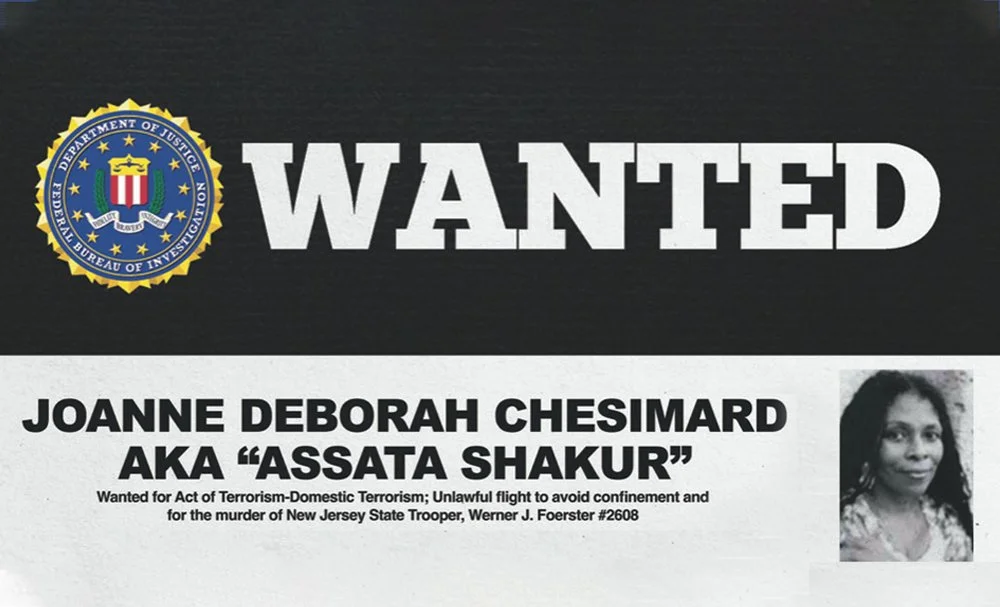
In New Jersey, Joanne Chesimard is notorious for her role in the cold-blooded execution-style killing of New Jersey State Trooper Werner Foerster, Badge #2608, and seriously wounding New Jersey State Trooper James Harper, Badge #2108.

May 2, 1973, Chesimard, Clark Squire and Zayd Shakur were pulled over on the New Jersey Turnpike by Troopers Foerster and Harper for a motor vehicle violation. Chesimard and both men in the car were armed with semi-automatic handguns, and possessed fictitious identification. During the motor vehicle stop, Chesimard initiated a gun battle, wounding Trooper Harper. In the shootout that followed, Chesimard’s weapon was used to shoot Trooper Foerster in the abdomen and then, as he lay incapacitated on the ground, Trooper Foerster’s own weapon was used against him and he was brutally executed.

Chesimard at the time was a member of the revolutionary group, the Black Panther Party. She later aligned herself with another violent group called the Black Liberation Party.

Chesimard was convicted in 1977 of first-degree murder and a number of other charges stemming from this horrific incident and sentenced to life in prison. Chesimard, aided and abetted by several other armed Black Liberation Army members was able to escape a NJ prison in 1979 and has been a fugitive from justice ever since. It is believed that she moved to Cuba in 1984 and has, since that time, lived freely there, attending government functions and being provided with housing, food, transportation and security by the Cuban government. She was granted asylum by Cuban President Fidel Castro where she remains today.

A long history of bipartisan support exists for the need to bring this convicted murderer back to the United States so she can be made to serve the prison time she was sentenced to more than thirty-seven years ago. As a side note, New Jersey abolished the death penalty on December 17, 2007, replacing it with life in prison without parole. 

A few important points to consider:

·         In 1998, the US. House of Representatives passed Concurrent Resolution 254 by a vote of 371-0 requesting that the Cuban government return Chesimard to the United States;

·         In 1998, the US. Senate passed Concurrent Resolution 254 by unanimous consent requesting that the Cuban government return Chesimard to the United States;

·         In 2005, the Department of Justice approved an increase in the reward for Chesimard’s capture to $1 million; and

·         In 2013, the Federal Bureau of Investigation placed Chesimard on its Most Wanted Terrorist List, designated her as a ” domestic terrorist” and increased the reward for her capture to $2 million.

In a letter to the Attorney General of the United States, Christopher J. Burgos, President of the
New Jersey State Troopers Fraternal Association, wrote “Cuba’s provision of safe harbor to Chesimard by providing political asylum to a convicted cop killer, and her ability to elude justice, is an affront to every resident of our state, our country, and in particular, the men and women of the New Jersey State Police, who have tirelessly tried to bring this killer back to justice.” 

Challenges Ahead: What Lies in the Future?
Despite continued progress, other challenges remain. Issues like drug addiction, human trafficking, and social unrest test the resolve of the NJSP. But with every challenge comes an opportunity for growth. The NJSP is continually adapting, learning new strategies to tackle these problems head-on. It’s like navigating a river; sometimes, the current is strong, but with the right skills, the NJSP can steer through the rapids.

A legacy of service continues as the New Jersey State Police has transformed from its humble beginnings to a force equipped to handle modern-day challenges living up to its motto of Honor, Duty, Fidelity. The journey shows us that while the past shapes the present, it’s the commitment to service, community, and adaptation that will define the future. In a world that’s constantly changing with new and often unanticipated challenges, the NJSP stands ready, proving that they’re not just a badge and a car—they’re a vital part of New Jersey’s community fabric.

Joel E. Gordon, Managing Editor of BLUE Magazine, is a former Field Training Officer with the Baltimore City Police Department and is a past Chief of Police for the city of Kingwood, West Virginia. He has also served as vice-chair of a multi-jurisdictional regional narcotics task force. An award winning journalist, he is author of the book Still Seeking Justice: One Officer's Story and founded the Facebook group Police Authors Seeking Justice. Look him up at stillseekingjustice.com

Managing Editor’s Message

Managing Editor’s Message
By Joel E. Gordon, Managing Editor

When you think of New Jersey, what comes to mind? Maybe it’s the bustling boardwalks, the vibrant cities, or the lush pine forests. But lurking behind the scenes is a dedicated group— the New Jersey State Police (NJSP). They’re the unsung heroes keeping streets safe and communities secure.

This special issue of BLUE Magazine is dedicated to the vital role of the NJSP in quality of life for all of New Jersey and beyond.

Founded in 1921, the New Jersey State Police was created to address the need for law enforcement on the state's highways. Picture this: the roaring 20s, when automobiles became more popular, and with them, an increase in crime. The state recognized the need for a specialized force to tackle these challenges. Fast forward to today, and the NJSP has evolved into a modern, highly trained police organization serving diverse needs across New Jersey.

The impact of the New Jersey State Police is immense. They don’t just enforce laws; they shape communities. By tackling issues like drug abuse, domestic violence, and human trafficking, they’re fighting for the welfare of every citizen in New Jersey. Think of them as both protectors and advocates, working tirelessly to ensure a safer tomorrow.

As always, BLUE Magazine and Moment of Silence are here for you. Reach out to us…

Joel E. Gordon, Managing Editor

Guest Editor's Message

Guest Editor's Message
By Rick Vanderclock, Guest Editor

In this special edition of Blue Magazine, we are honored to spotlight the New Jersey State Police, an institution renowned for its unwavering dedication to public safety and its rich history of service. The NJSP has evolved over the years, adapting to the changing needs of society while maintaining its core values of honor, duty, and fidelity. 

We were fortunate to have exceptional access to the New Jersey State Police, thanks to Colonel Patrick Callahan. We were treated with open arms and met so many dedicated troopers. We had the honor of visiting several of the NJSP's specialized units and locations, each playing a crucial role in maintaining public safety.

This opportunity was especially meaningful to me, as my late father, retired trooper DSFC. Richard Vanderclock was the driving force behind my commitment to this work. As we reflect on the history and achievements of the New Jersey State Police, we are reminded of the profound legacy built by its troopers. Their sacrifices and dedication continue to inspire future generations, ensuring that the NJSP remains a pillar of strength and integrity.

We at the Blue Magazine want to wish continued success and safety to all the Troopers and the New Jersey State Police.

EXCLUSIVE INTERVIEW: NJ STATE POLICE SUPERINTENDENT PATRICK J. CALLAHAN

EXCLUSIVE INTERVIEW: NJ STATE POLICE SUPERINTENDENT PATRICK J. CALLAHAN
By Daniel Del Valle and Rick Vanderclock

In April 1995, Colonel Callahan enlisted in the State Police as a member of the 115th Class.  He served as Recovery Bureau Chief in the aftermath of Superstorm Sandy and worked with state and federal partners to develop and implement long-term recovery effort strategies.  Colonel Callahan also served as the Commanding Officer of the Emergency Management Section and Assistant State Director of the Office of Emergency Management.  He was the chairman of the Command and Control Subcommittee of the Emergency Management Section when New Jersey hosted Super Bowl XLVIII, working to develop and implement all operations undertaken by the Public Safety Compound.

Colonel Callahan then served as the Deputy Superintendent of Operations, supervising and directing the operational activities of the 1,800 enlisted members assigned to Field Operations as well as the operational duties and responsibilities of the Traffic and Public Safety Office, Victims Services Unit, Fatal Accident Investigation Unit, Highway Traffic Safety Unit, and the Criminal Investigations Offices within Field Operations.

On October 31, 2017, Colonel Patrick J. Callahan was sworn in by Gov. Chris Christie as the 14th Colonel of the New Jersey State Police.

Colonel Callahan earned his Bachelor of Arts Degree from Villanova University and a Master of Administrative Science from Fairleigh Dickinson University.

Colonel Callahan is the son of retired State Police Major Mick Callahan, who served as Division Staff Section Commanding Officer under Colonel Clinton Pagano, the 9th Superintendent of the State Police. 

Colonel Callahan resides in Warren County with his wife Linda, two sons and two daughters.

Rick Vanderclock of the Blue Magazine was honored to have the opportunity for an exclusive interview with the colonel.

THE BLUE MAGAZINE: Colonel, could you tell us about what led you to become a state trooper? I know your father was a trooper. Can you tell me a little bit about that?

Patrick J. Callahan: I had never wanted to do anything else since I could talk and walk. I think that's because I was around my father, I was around troopers my whole life. He was a trooper for 29 years and retired as a major. Going to graduations and events and troop B picnics, helping him shine his leather for inspections or, sadly, sometimes before trooper funerals. That smell of Kiwi and Brass always takes me back to the kitchen table.  I have a great one I gave him for Christmas one year was a picture of him in uniform and me in uniform and the simple phrase underneath that said, my father didn't tell me how to live, He lived and let me watch him do it. And that's the truth to this day, that he took so much pride in this organization, wanting to be part of something bigger and better than himself. That was just contagious. My grandfather was a Linden police officer for 32 years, so I saw that in him, as a young boy, too. And I saw this incredible desire to simply give and to put others before yourself, which is really what this, this profession is about. My dad’s role was that was an easy one for me. To be blessed enough to come through that gate at Seagirt and have my father hand me my badge, you know, almost 30 years ago, and then to be in this spot is just a surreal and humbling experience to be the 14th colonel of the state police.

THE BLUE MAGAZINE: Is the agency exactly where you would have liked it to be when you took charge seven years ago? I know you've implemented mental health. You have a mental health unit, what do you call it exactly?

photo credit: njsp

Patrick J. Callahan: Peer advocacy, peer advocate.

THE BLUE MAGAZINE: I know that you were instrumental in starting that. Can you tell me about that?

Patrick J. Callahan: I think the division as a whole is in a good place again. We need law enforcement as a whole to continue to evolve as technology and artificial intelligence evolve. We started with horses and Harley-Davidsons 103 years ago although technology helps us, it's still the women and men of the agency that are our greatest asset from a mental health perspective.

THE BLUE MAGAZINE: I want to talk to you about the migrant crisis at the border wall. These migrants are being shipped across the entire country and New Jersey is no different. How do the state police prepare potentially for a terror attack, maybe pre 9-11? The news is saying that right now is a heightened threat level and things are not looking good. My question is, are the state police prepared for any type of terrorist attack?

Patrick J. Callahan: That knocking on wood. And I'll separate the migrant crisis from a terrorist attack. I went down to Arizona in November to meet with the sheriff of Cochise County and their efforts to try and protect the border from a human trafficking standpoint, as well as from the influx of fentanyl from the Mexican cartel. It is a huge undertaking that they've taken on down there. We went down there to kind of create that link and that bond, knowing that things that happen on the border of California, Texas, and Arizona do impact us here. I know that the mayor of New York City at the end of December put in his executive order to kind of limit and try and control when buses arrived. That would have an impact here in New Jersey. And it has had a minimal one. What we're doing to circumvent that, what has happened is those migrants have been bused to train stations in New Jersey and then get on trains to New York City. Our primary function right now is to let New York City know that they're becoming more common. We haven't had really a lot in the last few months, a total of 78 buses have arrived at New Jersey transit train centers.

Over 90% of them have boarded trains. The other ones have been picked up by family or friends, whether they have stayed in New Jersey or not. We don't know. We are seeing a little bit of an impact on food pantries and churches, enrollment in schools, but not really. It's been a very minimal impact as far as the influx. But from a planning standpoint, we do have to be prepared. We have to be prepared. If five of those buses decide we're not going to New York City, we're going to drop them. You pick a place on a rest area on the turnpike, and for over the past 18 months, we've had a migrant arrival working group planning to identify reception centers. How do we process these migrants? What are their immediate needs? What are the wraparound services, and how do we look and plan in order to get them situated? Not really an impact in New Jersey so far, but we're planning for that. And from a terrorist standpoint our troopers are embedded in the Joint Terrorism Task Force with the FBI. We have troopers in New York City, in the Lower Manhattan Security Initiative. We have troopers embedded in Philadelphia's Joint Terrorism Task Force, because here we are stuck between two major cities.

COL. CALLAHAN WITH HIS FATHER RET. MAJOR F.M "MICK" CALLAHAN 
PHOTO CREDIT: COL. CALLAHAN

The most densely populated state in the nation is New Jersey. So that is a daily seven-day-a-week effort to make sure that we are not only communicating but what measures are we taking? I think our homegrown violent extremists are probably our greatest concern, those lone wolves that people will call them because they're not in a network. Sometimes networks are easy to identify. This is a disgruntled person may be inspired online for whatever purpose. That's the deal with the Internet now you don't have to go out to a meeting. That meeting comes right to you and like-minded, hateful people connect. That's why we have to be very mindful of what's happening on social media, and what's happening online. The last thing I want to see happen is a tragedy occur, and then somebody goes, oh, we saw that coming because he posted this last month, or he was known for this, or he was identified a few years ago. And I think that's where we need to make sure that we're on top of our game to make sure that we keep everybody safe.

THE BLUE MAGAZINE: It must have been extremely challenging for you to be the colonel during COVID-19. I don't know what that must have been every single day. You used to have meetings with the governor.  You guys gave a TV interview daily briefing every day. Did you find that extremely hard, or was it? How did you get through those days?

Patrick J. Callahan: I was set up here because I couldn't go home as I was trying to protect my family. Of course, I didn't go home that much anyway, but it was a block that was never in the state police academy. There was no playbook. The last Spanish flu was in 1918. The state police was started in 1921. What I've said since and then reflecting upon it, was that it was exhausting and energizing at the same time because I watched, beyond the state police. I mean, we were, an emergency management embedded here. It was phenomenal to watch when the challenge came up, what we did, and that was hospital bed capacity expansion to work with the Army Corps of Engineers and to go out and identify mothballed hospitals and say, we need to turn this into a hospital and to watch that in short order. 2000 hospital beds were created almost overnight, field medical stations popping up to care for people and mortuary affairs. We had decedents and corpses. We didn’t know what to do with the hospitals and funeral homes. They couldn’t handle it. Ordering body bags, ordering refrigerated trailers to hold. Each one of them held 82 corpses.

To watch? Yeah. Renting a warehouse in central Jersey at 10,000 square feet. Refrigerated warehouse. Nobody wanted decedents who had had COVID right around food and what was kept refrigerated. But we found a nursery that facilitated winter from bulbs from Holland. So, these bulbs, you know, tulips and daffodils, we said, rather than, you know, keep bulbs in there. Can we keep corpses in there? And we partnered with this nursery that was a bizarre thing to go see. Working with the National Guard and troopers, building shelves, and having people because we wanted to and needed to care for them because they had passed away and we needed to treat them with respect, uh, our missing persons, if we didn't know the identification of that person, our missing persons would fingerprint them and try to assist us. Some nuances testing vaccine sites. Some things just kept coming and coming. During that time, we also had 17,000 Afghanistan refugees come during a pandemic. That same week they came, we got hit with Ida, a tornado in the south, flooding that killed 30 people in the north.

THE BLUE MAGAZINE: That's not easy to manage all that at once.

Patrick J. Callahan: Because we had troopers that were again, not leading it, but helping coordinate the planning, the logistics, the operations, understand that our decisions were life-saving decisions and that we were trying to literally build that airplane in flight while it was on fire.

THE BLUE MAGAZINE: Crazy, history is going to look back and say, you did a great job, Colonel, because that was a very trying time for this whole country.

Patrick J. Callahan: I was proud of them. I was proud of all of us across all the departments. The Commissioner of Health, Judy Persichilli, even now is one of my closest colleagues. My first call to her was when we had a pastor coming into Newark airport that we think had this thing called COVID. I called her, and I think we both hung up. She hung up thinking, what the hell does Pat know about public health? And I hung up, going, what does she know about emergency management? Then we soon came to know a lot about both.

THE BLUE MAGAZINE: Would you give me an example on how you rely on faith on a daily basis? Could you explain some of that?

Patrick J. Callahan: Good question. I'll start with how it's evolved over time. My faith, especially in the workplace. I think back to during COVID. March 13th, 2020, I was asked by a reverend to come on a prayer call. That call goes every single day of the week, seven days a week, at 8:00 in the morning, Christmas, Father's Day, Wednesday and August. I have been on that call every single day since March 13th of 2020. I am the only law enforcement officer on the call. I am the only Caucasian on the call. It has opened lines of communication. We call it the Interfaith Action movement; I consider those people my brothers and sisters. Um, but it has guided me in my faith through some pretty hard times through family struggles, through health issues. Uh, I think of George Floyd. I had been on that call for three months when he was murdered. And I think, what if I had tried to get on the day after he was murdered and tried to explain law enforcement's perspective.

That's my faith, because I know sitting here today, that each spring that those trees out front are going to bud, that those clouds will part and the sun is there, and that daffodils will pop out of that ground and surround a wall of honor. That's what makes me put my feet on the floor and put one step in front of the other in what is the noblest profession on the face of the earth.

ARE YOUR KIDS SAFE?

SNEAK PEEK OF AN EXCLUSIVE INTERVIEW WITH LT. SCIORTINO FROM THE NEW JERSEY STATE POLICE

Blue: What happens if a kid receives an image on their phone that's explicit and it's involving a child, what law is in violation? For example, if that child forwards that photograph to his friends or other people?

LT. Sciortino: It has happened. CSAM (child sexual abuse material), formerly known as child pornography. But that's the acronym we go with now. If somebody receives SAM and they don't know what to do, we've had it where they panic. They want to send it to their parents or to a teacher, or to law enforcement. Don't do that. That's distribution. Technically it would be the distribution of child sexual abuse material. We tell everybody to memorialize that. Keep it on your phone and then report it to the police. Police have to see it and make a determination. Does that meet the requirements of child sexual abuse material? The age requirements. Police have to look at it. It now all depends on what platform you're on.

Blue: The internet crimes that are being committed against children, are they usually repetitive offenders?

LT. Sciortino: So you have a lot of repetitive offenders that you know they get out and maybe they're waiting for trial or sentencing. But with the way technology is, people can go on anonymously and they can still commit the crime. One of the worst cases that I did when I was a junior detective, the suspect was locked up years ago using AOL to send child abuse material and then we fast forward about 10 years later and he was hands-on abusing infants and toddlers.

Blue: For example, with Facebook, how fast do they discover these type of crimes and report it?

LT. Sciortino: They're getting a lot too, they got a lot going on. There could be stuff that's right away and then there could be stuff they didn't get to it. They have to prioritize the amount they have to do. We have these tips I mentioned, we have what we call different priorities. If we get a high priority one, it looks like it's imminent danger where Kids going to be hands on. They will get that to us immediately.

" I made a comment where I said, I don't get this, and he said, it's good because if you did, we'd probably be investigating you if you understood it... I can tell you this much that sometimes if you've been abused, that cycle continues and some people will think like, oh, I would want to make sure that doesn't happen. And there are people who say, hey, I was abused. I'm going to be an advocate to make sure this stops. But then there's others that continue that cycle and that's what gets in their head. They were trained, groomed and just the cycle continues. So if I had to point to one little thing, l'd say that because we have seen that, we've seen suspects say, this happened. It happened to me. "

NJ GOVERNOR PHIL MURPHY LEAVES A MESSAGE TO THE NEW JERSEY STATE POLICE

As public officials, our most important obligation is protecting the safety and well-being of all our residents. Today, the Garden State ranks among the safest states in the nation — and that is in no small part because of the leadership and vision of the Superintendent of the New Jersey State Police, Colonel Patrick J. Callahan, along with all of the hardworking NJSP Troopers that serve under his command.

Colonel Callahan has diligently served as a member of the New Jersey State Police for nearly three decades. At every stage of his career, he has demonstrated what it means to be a true leader to the men and women that serve by his side. I’m proud to not only count Superintendent Callahan as a member of my Cabinet, but as a dear personal friend as well. It has been one of the great honors of my career in public service to work alongside him over the past seven years.

Our New Jersey State Troopers put their lives on the line every day to protect communities and families across the Garden State. As always, I am incredibly grateful for their service and commitment to upholding the principles of Honor, Duty, and Fidelity. Their commitment to protecting and serving our families also extends far beyond traditional law enforcement responsibilities. Since 2018, I have had the privilege of partnering with the New Jersey State Police to develop innovative ways to combat auto thefts, save lives from gun violence, respond to severe weather threats, and build new bonds of trust between members of law enforcement and the communities they serve. 

I couldn’t be prouder of the New Jersey State Police’s well-earned reputation as our nation’s preeminent statewide law enforcement division.

Thank you to Blue Magazine for its recognition of Colonel Callahan and the New Jersey State Police.

Remembering our great friend Michael Failace

IN MEMORIAM

People come into your life at just the right time when you need them the most.  A connection and bond are formed to fill in the gaps and bring you back to the light.  Once their mission is accomplished, they are free to move on. 

The pain and loss will forever be felt, and the courage to proceed has been facilitated by your grace. I miss you brother and I miss my best friend, God speed Michael Failace.
3/23/66-5/9/24

-Kevin P. Donaldson

TUNNEL TO TOWERS UPGRADES TROOPER'S HOME

PHOTO CREDIT: NJSP

Sergeant First Class Sean Acker enlisted in the Air Force in 1998 and reached the rank of Staff Sergeant before retiring from the military.

He joined the New Jersey State Police in 2006 and spent seven years on the road before becoming an instructor at the academy.

In February 2022, SFC Acker suffered a severe medical injury, he spent three weeks fighting for his life in the critical care unit before moving to a long-term rehabilitation facility. Trooper Acker had been blessed by Tunnels to Towers Foundation which has been providing him with a smart home, specialized for heroes like him.

The Blue Magazine and Moment of Silence would like to thank Tunnels to Towers Foundation for all the charitable work they do for Law Enforcement and First Responders.

NEW JERSEY STATE POLICE NARCOTICS

Detective Anthony Pompei #7917 and | were lucky enough to be selected to represent the Crime Suppression Central Unit and State Police as co-troopers of the year for 2022. This recognition wasn't the result of just one job or just the work by myself and Det. Pompei. It was the result of a collective team effort between us and the other detectives within the Crime Suppression Central Unit. The hard work, determination, and ability to work in sync as a team all with a common goal of disrupting the flow of drugs, weapons, and violent crime into the state is what that recognition was the result of.

One of the biggest narcotics seizures I have investigated occurred last year (2023). We were able to identify a large scale narcotics trafficker within the NJ/ NY area from information provided by a confidential informant. As a result of many surveillance hours by Crime Suppression Detectives and various advanced electronic surveillance techniques. We were able to identify a tractor-trailer and "trapped out" vehicle the target was utilizing to facilitate his distribution network. Ultimately we executed a Search Warrant on that vehicle and seized 18kilos from an advanced electronically operated hidden compartment concealed within the vehicle and over 700k in cash from illegal narcotics distribution activities.

What I would tell other narcotic detectives is, to be smart, learn from your senior detectives and remember, a drug dealer has to be right every single time they engage in their distribution activities. We in law enforcement only have to be right once to disrupt their distribution activities.

A MESSAGE FROM ONE OF LAW ENFORCEMENTS BIGGEST SUPPORTERS

The resounding echoes of valor that resonate within the hallowed halls of justice paint a vivid picture of unwavering dedication and steadfast commitment embodied by the esteemed members of the New Jersey State Police. United in purpose with law enforcement agencies across the nation, these courageous individuals stand as vigilant guardians of community safety and well-being, confronting challenges that threaten the very fabric of society with unyielding resolve.

With a foundation built upon professionalism, integrity, and an indomitable sense of duty, the New Jersey State Police exemplify excellence in every aspect of their service. Whether traversing the highways or delving into the intricacies of criminal investigations, their commitment to upholding the rule of law within the Garden State shines brightly. From their swift responses to emergencies to their proactive crime prevention measures and unwavering support for those in need, their passion stems from a deep-rooted dedication to their noble cause.

It is incumbent upon us to acknowledge and pay tribute to the invaluable contributions made by these selfless guardians, who sacrifice tirelessly to ensure the safety and security of our society. Let us pause to extend our heartfelt gratitude for their sacrifices and infinite commitment to public safety. To all those brave souls who proudly bear the badge - your tireless efforts do not go unnoticed.

Blue Lives Matter!

Caesar DePaço & Deanna Padovani-DePaço

BLUE MAGAZINE RECOGNIZES DON NICOLETTI - BLUE PHILANTTHROPIST

The Blue Magazine would like to highlight retired Sergeant Don Nicoletti, Closter NJ Police Department. Don started the Christmas Toy Drive named "Santa's Response Team" with the help of Closter PBA.

This Christmas will be the 36th year giving toys to children. Local and state agencies collect toys and they get distributed at the Closter Fire Department. It gives the Blue Magazine great pleasure to honor our brother Don Nicoletti for his dedication and commitment to make every child smile at Christmas. No child is ever forgotten because of Don !!

Remembrance: New Jersey State Trooper Marcellus Bethea

Remembrance: New Jersey State Trooper Marcellus Bethea

On Sunday May 5 2024, New Jersey State Trooper Marcellus Bethea tragically passed away while conducting training at the New Jersey State Police headquarters in Ewing, NJ. At the time of his death, Trooper Bethea was training to join the elite TEAMS (Technical Emergency and Mission Specialists) Unit; who handle the most serious police emergencies, including hostage situations and counter-terrorism operations.

Trooper II Marcellus Bethea was an 8-year veteran of the New Jersey State Police and was assigned to Troop D at the Moorestown Station on the New Jersey Turnpike. He was a senior member of his squad and was highly respected by his peers. They remember him as a man of action who always led by example. Though he stood at roughly 6’4” tall and weighed 200 pounds, Marcellus was a soft-spoken, gentle giant with an even bigger heart.

Trooper Bethea was 33-years old. He leaves behind a wife and daughter.

Sheriff Lamb Comes to New Jersey

Sheriff Lamb Comes to New Jersey
By: BLUE Magazine’s Editorial Team

Recently, Pinal County, Arizona, Sheriff Mark Lamb was in New Jersey as an honored guest of the Blue Magazine while enjoying camaraderie among the law enforcement brethren.

The visit was multi-faceted with a busy full-day itinerary. Sheriff Lamb was honored to become more familiar with some of the local officers while attending a Paterson police roll call. The police officers in Paterson were enthusiastic to meet him.

Sheriff Lamb then went on to take in some of the sights in New Jersey accompanied by BLUE magazine staff. A notable waterway river tour by the New Jersey State Police Marine Unit was a special event that was most appreciated by all.

Another highlight of his day in New Jersey was as a special guest at the BLUE Magazine podcast where topics such as politics, illegal immigration, fentanyl and child trafficking were explored.

Sheriff Lamb was also taken on a facilities tour to learn of the good work of the Avatar Alcohol and Drug Recovery Center in Ringwood which makes itself available to a wide variety of individuals including first responders. The sheriff met with the staff there.

The busy day in New Jersey concluded with a special celebratory dinner at The Brownstone in Paterson. Sheriff Lamb has been a staunch supporter of the BLUE Magazine and law enforcement and we were honored to be in his presence. Thank you to all participants who made this great day possible.

Do We Still Remember?

SHERIFF CLARKE REMEMBERS TROOPER WERNER FOERSTER WHO WAS MURDERED BY ONE OF THE FBI’S MOST WANTED

By: Sheriff David A. Clarke, Jr. (Ret.)

There is a saying that is uttered and repeated during National Police Week every May and after a law enforcement officer is killed in the line of duty. It simply states, we will never forget. Every law enforcement officers' death in the line of duty leaves all of us who serve, past and present, with an empty feeling as the somber and solemn process begins to lay the officer to rest. Flags are lowered to half staff. The community where the officer served turns out to line the street where the funeral procession drives by. A line of police cruisers from agencies all over America flashing red and blue take down lights follow the hearse that transports the slain officer to the church and then to the cemetery where taps and a twenty-one gun salute ring out before the casket is lowered into the ground. I always say to myself, there but for the grace of God go I. I made it nearly 40 years in law enforcement. I have attended funerals for officers killed in the line of duty from other agencies and those from my own agency, some of whom were colleagues and partners.

As I write this piece, the New York Police Department just honored one of their officer’s killed in the line of duty. I watched the funeral procession into the church and couldn’t help but notice a woman holding a small child following the coffin into the church. It was the officer’s wife holding the one-year old child of the slain officer; a child too young to know what was going on and who will never know his father as he grows up. That was numbing to me. I have worked with the group that assists the survivors of officers killed in the line of duty. It’s called COPS -Concerns of Police survivors. I have talked to surviving spouses and children long after the event. I walk away numb. I have attended numerous Law Enforcement Officers Memorial Day observances both local and the national one held in Washington DC. There is a memorial wall that contains the names of over 20,000 cops killed in the line of duty. Every officer should make the journey to the nation’s Capital and visit the wall. It will be a sobering experience especially when you see names inscribed who you know personally.

There is one name inscribed on the wall that I made particular effort to look for on a visit to Washington D.C. It may be an obscure name to many and may have been to me as well except that in my journey across America in support of the service, courage and sacrifice of officers past and present as the war on cops was in full bloom, I ran into a Trooper from the New Jersey State Police in 2017. He told me the story of one of their Troopers, Werner Foerster, who was viciously killed during a traffic stop. He told me that the killer was a fugitive from justice and asked if I could use the platform I had gained with my profile as sheriff having reached national attention, to bring light to the fact that the killer remains at large.

I did some research about this officer and learned that in 1973, Trooper Werner Foerster responded to back up another Trooper on a traffic stop on the Jersey Turnpike. A shootout quickly ensued. An occupant inside the vehicle fired shots striking one Trooper. Foerster was wounded in the gunfire exchange and as he lay on the ground, the female assailant exited the car, took his weapon which was laying next to him and fatally shot him in the head. That female was

Joanne Chesimard. She uses the alias Assata Shakur. Chesimard at the time was a member of the revolutionary group, the Black Panther Party. She later aligned herself with another violent group called the Black Liberation Party. Her life of crime included participation in murder, robbery and kidnapping. She was charged in several instances but not convicted. Chesimard was convicted in the assassination of Trooper Foerster in 1979 and sentenced to life in prison. Foerster was survived by a wife and a 3-year-old son. But the story doesn’t end there.

In 1979 Joanne Chesimard with the assistance of several other armed Black Liberation Army members was able to escape prison. She remained at large until she was located in Cuba. She was granted asylum by Cuban President Fidel Castro where she remains today. The U.S. government does not have diplomatic relations with Cuba so having her extradited back to serve out her sentence is not likely to happen. She is in her mid seventies today. One of her accomplices has been recently paroled by the New Jersey Supreme Court who ruled he was no longer a threat to society at 85 years old. It is why I have advocated for it to be a federal capital crime to murder a police officer, punishable by death upon conviction. Few states allow the death penalty even for murder. This would make for consistent prosecution.

Another sickening twist to this is that Chesimard is talked about and viewed in the black community like she is some sort of folk hero. In stories about her today she is described as a political activist and even as a cultural icon. No she isn’t. She is a scumbag, stone-cold cop-killer. She is currently listed on the FBI wanted top terrorist list to this day, the first female ever listed on an FBI terrorist wanted list. She was recently depicted in an array of black civil rights people including Frederic Douglas, Rosa Parks and Martin Luther King Jr. This is part of the cultural rot that exists in the black community today when they list her among the truly admirable black civil rights greats as if she is some modern-day Harriet Tubman or Sojourner Truth. No black parent with daughters should use Chesimard as a role model or someone to look up to. She has authored several books and given several interviews with U.S. journalists. Protests should have been held at any bookstore with her filth on their shelves. I find this repulsive and so should everybody.

When Joanne Chesimard aka Assata Shakur dies, the US State Department should request that her body be returned to the U.S. In a symbolic gesture, her body should be transported to the state prison she escaped from and her next of kin notified that they could claim her body there. If no one steps forward, then she should be buried in a pauper's cemetery in an unmarked plot used for unclaimed bodies to die in obscurity.

That would be justice for Trooper Warner Foerster. I would never forget that.

Sheriff David A. Clarke Jr. is former Sheriff of Milwaukee Co, Wisconsin, President of America’s Sheriff LLC, President of Rise Up Wisconsin INC, Board member of the Crime Research Center, author of the book Cop Under Fire: Beyond Hashtags of Race Crime and Politics for a Better America. To learn more visit www.americassheriff.com

Cover Story - Empowering Sisterhood: How We Band Together for Support and Growth

Empowering Sisterhood: How We Band Together for Support and Growth
By Lt. Kimberly Stratman (Ret.)

In the high-stakes world of emergency response, we, as female first responders, stand as testaments to courage and resilience. Our tendencies have often been labeled as “bitchy, controlling, angry, dramatic” and worse instead of the more accurate “strong, stubborn, flexible, confident.” We know better. Despite our critical roles in saving lives and maintaining safety, we often encounter unique challenges within our professions. Let’s explore the powerful impact we make by joining forces with other women to support each other and strengthen our presence in the field.

Breaking Barriers Together
I joined the Dallas Police Department in 1989. At that time, not everyone in the profession or the community was welcoming, which is putting it mildly. Being smaller in stature, I encountered a range of reactions. Some people were curious and supportive, while others were downright insulting. This treatment and my calm, professional reaction was practice for harsher statements that would occur over the years.

Traditionally, fields such as firefighting, law enforcement and emergency medical services have been male-dominated. As female first responders, we not only handle the physical and mental demands of our jobs but also navigate the complexities of a work environment where we are often in the minority. By forming supportive networks, we create safe spaces to share experiences, offer advice and provide mentorship. These connections are vital, helping each of us feel less isolated and more empowered in our roles.

Enhancing Skills and Confidence
Group trainings and workshops are a core part of how we support one another. We participate in specialized training sessions that cater specifically to our needs and challenges in the field. These gatherings are opportunities for skill enhancement, where we share strategies for handling physical demands and managing stress. The collaborative atmosphere fosters confidence, as we learn and grow together, strengthening our capabilities and readiness for the challenges of the job.

Have you considered attending or even creating a training event for other women? Range Days and promotional workshops are more common now than years past. What other topics or areas of interest could you or a group of your cohorts bring to other female first responders?

Advocacy and Visibility
Advocacy is another significant aspect of our women’s groups. We are uniquely positioned to understand the specific barriers women face in our careers. By uniting, we amplify our voices to advocate for necessary changes in our industries, such as improved protective gear tailored for women, equitable career advancement opportunities, and better support for work-life balance. These efforts not only improve conditions for current first responders but also pave the way for future generations of women entering these fields.

Women of the Dallas Police Department came together, with the support of community members and even male coworkers, to establish Lactation Rooms at police substations. Previously, new mothers discontinued nursing prior to returning to work or did so in bathroom stalls. This is important for the health of our babies, but is also a retention tool to keep female officers on the job after the birth of their children.

Building a Supportive Community
The quote, “Together we are stronger, together we are unbroken, together we can do anything.” - of unknown origin, is clear in its meaning. Social support is crucial in managing the emotional and psychological toll of first response work. Networking events, regular meetings and online forums are some of the ways we stay connected. Beyond professional support, these groups often evolve into close-knit communities offering personal support, which can be particularly beneficial for those dealing with job-related trauma or needing advice on personal challenges.

While I enthusiastically encourage fellowship with women outside our profession, we can deeply benefit from connection with other first responders. There are times when we do not want to explain ourselves. We just want to feel, laugh, cry and complain with sisters who are doing the same.

A Call to Action
The movement of female first responders banding together is growing, but there is always more that can be done. For those of us in the field, joining an existing network or even starting a new group can be incredibly rewarding. For the wider community and policymakers, supporting these initiatives is crucial for building a more inclusive and supportive emergency response environment.

We are not just saving lives—we are pioneers in our fields, challenging norms and setting new standards. As we join with other women to support and uplift each other, we reinforce the foundation of an essential profession, ensuring it is stronger and more inclusive for everyone who follows.

Kimberly Stratman retired as a lieutenant from the Dallas Police Department after an exciting and fulfilling 30-year career. She and her law enforcement husband have two grown sons and two dogs that get lots of attention. Kimberly is the owner of To the Point Coach, a Certified Retirement Life Coach and Certified Life Coach service that focuses on first responders. Her goal is to ensure our law enforcement community thrives. She can be reached @ tothepointcoach.org

Managing Editor's Message

Welcome to another online edition of BLUE Magazine. Our summer is flying by as we continue to navigate what seems to be an increasingly complex and dangerous world.

This edition features Women in Law Enforcement and the 30x30 Initiative. The 30x30 Initiative’s Website says it best:

Currently, women make up only 12% of sworn officers and 3% of police leadership in the U.S.    

This under-representation of women in policing undermines public safety. Research shows women officers use less force and less excessive force; are named in fewer complaints and lawsuits; are perceived by communities as being more honest and compassionate; see better outcomes for crime victims, especially in sexual assault cases; and make fewer discretionary arrests.

The 30×30 Initiative is a coalition of police leaders, researchers, and professional organizations who have joined together to advance the representation and experiences of women in policing agencies across the United States.

The ultimate goal is to increase the representation of women in police recruit classes to 30% by 2030, and to ensure police policies and culture intentionally support the success of qualified women officers throughout their careers.

Our valued contributors have helped make this edition possible and provide honest assessment of being a female in a historically male dominated profession. Captain Heather Glogolich, a true inspiration to her colleagues, writes about 30x30 and leadership in her article LIVE THE LIFE YOU DESERVE. Monica Crawford encourages us all to be Thriving Inside the Thin Blue Line. Darci Werner provides us insight into family support with her essay BIG T small t TRAUMA. And don’t miss our Cover Story by Lieutenant Kimberly Stratman (Ret.) Empowering Sisterhood: How We Band Together for Support and Growth

BLUE Magazine continues to lead the charge against Blue Suicide through our sister organization Moment of Silence. Remember that permanent solutions to temporary problems are always unwise. Continue to back up your fellow officers and reach out to us as we remain dedicated to your well-being and career success.


Joel E. Gordon, Managing Editor

Live The Life You Deserve

Live The Life You Deserve
By Captain Heather Glogolich, Ed.D.

The power to make a change is within you. Most people would have never guessed I was 230 lbs back in 2021. I had Lyme disease and went undiagnosed for 6 years. I felt OK but I was always tired and figured it was because of four kids and shift work.I could not take the weight off no matter what I did. I was finally diagnosed with Lyme after some neurological issues presented themselves. Medication and a strict meal plan helped me combat the Lyme and I was able to lose some weight. I ended up having a hip replacement and then was able to focus on health and wellness.

I do not like boring workouts, and I need to be pushed. Jiu jitsu has been a huge motivator for that and 3 years later I have lost 75 lbs. I do think not working shift work really helped with my last 25 lbs but I also started to choose me no matter what. I scheduled time to work on me. Not just physically but mentally and emotionally. I’ve made life changes and let go of toxic people and the effects have been amazing. I love my life. I love how I feel. As my very good friend Tom Rizzo always says, “If you do not surround yourself with people that help you be the best version of yourself, you do not have a circle – you have a cage.”

I still deal with Lyme and now Type 1 Diabetes but it’s just one thing to work through. I will not allow it to hold me back. I work out 5-7 days a week with a group of people who show up for each other in all the ways. We come together at 5 a.m. in Lyndhurst at Subforce Jiu Jitsu to be the best versions of ourselves on and off the mats. Any of my fellow brothers and sisters are welcome to join us any day of the week. Let go of excuses. Find your passion. Self-care is not selfish – it's selfless.

Now, transition my personal success into professional success. Dreams do come true. NJIT Police Department hired me in September of 2023 and with this change, I was promoted to captain. Chief Kevin Kesselman brought me into NJIT PD to help enhance the culture. In addition, he wanted me to not only help our administrative team to recruit qualified women but to ensure we retain them. In August, there were only two women officers at NJIT PD. Now there are nine. And we are about to hire more. What an honor it was to lead a squad of all women for a full patrol shift.

It could not have been done without the support and alliance of some incredible men. These women are not just placeholders to meet some initiative for diversity and inclusion. They are quality officers who are rounding out our incredible agency. They are sisters, daughters, moms, and friends. They are soft and they are strong. I hope that I’ve allowed them to feel comfortable in who they are as women in a very male-dominated profession. I hope I continue to lead by example in a way that positively impacts them professionally and personally. I hope they realize that they don’t have to sacrifice who they are as individuals in order to be great law enforcement officers.

The 30x30 initiative is phenomenal as long as we do not let go of the minimum mandatory requirement for women to qualify for this job. Some will argue with me that the physical requirements make it harder for women to get hired. If you want to be a part of this career then you need to work for it. You need a certain GPA to get accepted into college and so yes you should meet a certain physical requirement to be a cop. And I will go as far to say that you should continue to meet those requirements throughout your entire career. This is coming from someone who was absolutely not fit for the job for a long time. No, push-ups won’t save my life. But the self-discipline to make sure I rise above and beyond those minimal requirements will prove more valuable than anyone could imagine.

I hope that I am just the small ripple that starts a huge tidal wave of what the future of policing will look like. To my ladies at NJIT - it is an honor to work alongside you and a blessing to watch your journeys. Life is too short to not live your life to the fullest; so go live your life. Everyone is born but not everyone lives. I can only hope that this personal vulnerability helps anyone who needs to hear it. At 44 years old, I’ve made the life I deserve to have. And you deserve the same.

Heather Glogolich is a 20-year NJ law enforcement professional. She recently transferred from the Morris Township Police Department at the rank of Lieutenant. Heather is currently a Captain with the New Jersey Institute of Technology Department of Public Safety and holds a Doctorate of Higher Education from Saint Elizabeth University. She is an instructor for the NJ Chiefs of Police Command & Leadership Training Course, and is a PTC Certified Police Academy Instructor.