
Making The Same Mistakes
/We are just coming out of the anti police era where the cop haters were advancing and the law enforcement community was in stand-down mode and where police executives were willing to have the profession reformed by people looking to not just defund it but to defang it. Law enforcement officers were being replaced by social workers as first responders with the social engineering model that sought to defuse situations instead of arresting dangerous individuals many of whom were suffering from mental illness and capable of violent reactions. Cops were also being replaced on public transportation systems and in schools.
Most of the so-called reform was being pushed from the outside by groups that did not have the best interests of police or public safety in mind. That finally dissipated when communities realized that police are necessary to a functioning society. There is a balance that needs to be struck between people having a say in how they want to be policed and law enforcement deciding the best way to accomplish that. Government after all derives its authority from the consent of the governed. We can agree that keeping the peace is the goal.

But now the reform efforts are coming from within. And again, the reform is not necessarily in the best interest of the community or the officers tasked with carrying enforcement out. About ten years ago the now former police chief in Milwaukee, Wisconsin enacted a policy in response to a growing number of police vehicle pursuits that resulted in uninvolved motorists being struck and seriously injured and killed by the fleeing vehicle. Politicians on the city council wanted police to be prohibited from pursuits saying it was not worth engaging in this dangerous activity. What was needed was a serious discussion and then finding something in the middle, not going all the way, and outlawing them entirely. The chief yielded to political pressure and enacted a policy on vehicle pursuits that for all intents and purposes disallowed vehicle pursuits unless the officer can determine that a serious crime has been committed.
Most pursuits start with a simple traffic violation. The suspect driver flees. The officer does not know at that point why the driver is fleeing. There is more unknown than known initially until an investigation can be commenced. An officer will not know why flight from police is occurring until they apprehend the driver. That means they have to continue the pursuit taking into account time of day, weather conditions and surrounding traffic in order to find out. The new pursuit policy stated the reason for flight has to be known first. These type of policies in my view come from police executives who either forgot what life is like on the street as they moved up or they were not very good street officers to begin with. Officer discretion is watered down and even eliminated with policies such as this.
The result of the new policy was predictable as the law of unintended circumstances struck. The number of drivers fleeing police increased when drivers knew the officers could not pursue them in most cases. Most drivers who flee do so because they are wanted on warrants, some of them serious felony warrants, or are driving without a valid drivers' license. A simple traffic stop can yield a treasure trove in criminal activity such as guns, illegal drugs and people wanted n serious felony warrants.
After several years of making things worse, the same chief rescinded the policy and returned to allowing officers to pursue fleeing vehicles leaving the officer to use their discretion and experience on whether to continue or terminate the chase.
These are difficult decisions that an officer has to make in real time based on many circumstances. Officers are already constrained by the legal theory of due regard for the safety of others where they have to weigh whether to continue the pursuit or terminate it because it is too dangerous and unreasonable. They have to decide if the identity of the fleeing driver allows for apprehension to be done at a later time. The nature of the crime must be considered, and that termination of the pursuit allows the suspect to go putting the community at risk by not apprehending a criminal who may later commit added serious crimes.
Now fast forward to a different chief of police in Milwaukee. He recently enacted a policy that for all intents and purposes prohibits officers from engaging in foot pursuits. Yes, foot pursuits. In an eleven-page policy, it says that foot pursuits are are inherently dangerous. No kidding. It further states that the officer must have articulable reasonable suspicion to believe that the suspect has committed, is committing or is about to commit a crime to pursue a suspect on foot. Not once does the chief remind the public of their obligation to comply with an officer’s lawful commands to take them into custody. That means pulling over for a traffic stop or not fleeing on foot. Instead, he wants to tie the hands of the officer.

Just as with vehicle pursuits, the reason for fleeing is not always known up front and only after the suspect is apprehended does an officer know why the suspect took off on foot. The reason for the policy according to the chief is to strike a balance between protecting the safety of the public and the officer. It says that the policy incorporates national best practices. Really? What best practices and determined to be best by whom? Usually, these so-called best practices are designed as some social engineering project. Were front-line street officers consulted? Officers know how to protect themselves and where is there danger to the public in a foot pursuit?
In a Supreme Court case, Illionois v. Wardlaw the Court determined that flight upon seeing an officer in a high crime area is the height of suspiciousness. This in and of itself forms reasonable suspicion for an officer to lawfully pursue the fleeing suspect to find out why he is fleeing. That is not good enough for the Milwaukee police chief. He apparently does not trust his officers to use their experience and discretion on whether to pursue fleeing subjects.
Just like with the decision years-ago to prohibit most vehicle pursuits, it is not difficult to predict that disallowing most foot pursuits will result in more perps fleeing on foot from police and leaving dangerous criminals to roam the city committing more crime.
There is an old saying attributed to Winston Churchill, Edmund Burke and George Santayana that I find appropriate to say on this foot pursuit policy change by the Milwaukee Police Department. It says that those who cannot remember the past are condemned to repeat it.
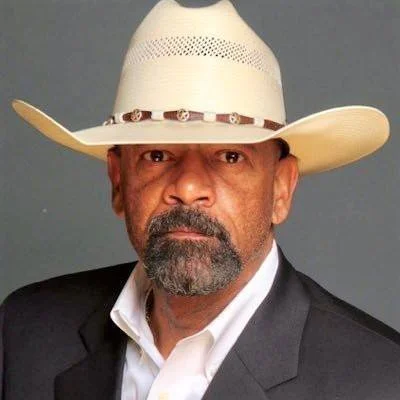
Sheriff David A. Clarke Jr. is former Sheriff of Milwaukee Co, Wisconsin, President of America’s Sheriff LLC, President of Rise Up Wisconsin INC, Board member of the Crime Research Center, author of the book Cop Under Fire: Beyond Hashtags of Race Crime and Politics for a Better America. To learn more visit www.americassheriff.com