
A CHAPLAIN FOR EVERY BADGE AND EVERY FAITH
/Interviewed by Holly Finley and The BLUE Magazine Editorial Team
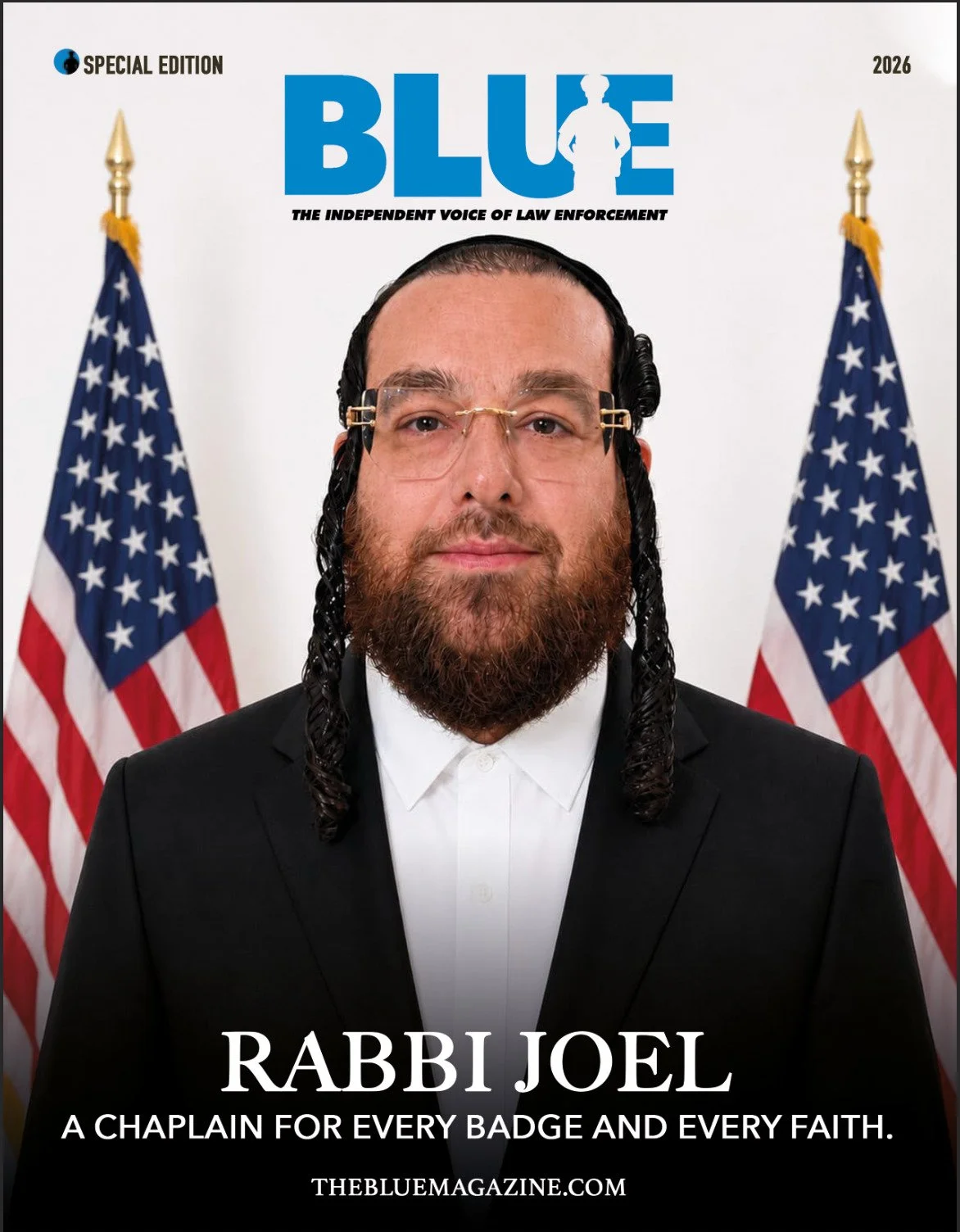
Rabbi Joel Friedman believes a first responder should never have to share his religion to ask for his help.
At first glance, there is no mistaking who Rabbi Joel Friedman is. He is a Hasidic Jew, and his faith is visible before he ever says a word. But Rabbi Joel wants every law-enforcement officer, firefighter and first responder who meets him to understand something just as quickly: You do not have to be Jewish to call him.
Catholic, Christian, Muslim, Jewish, another faith or no faith at all if you need someone, his door is open.
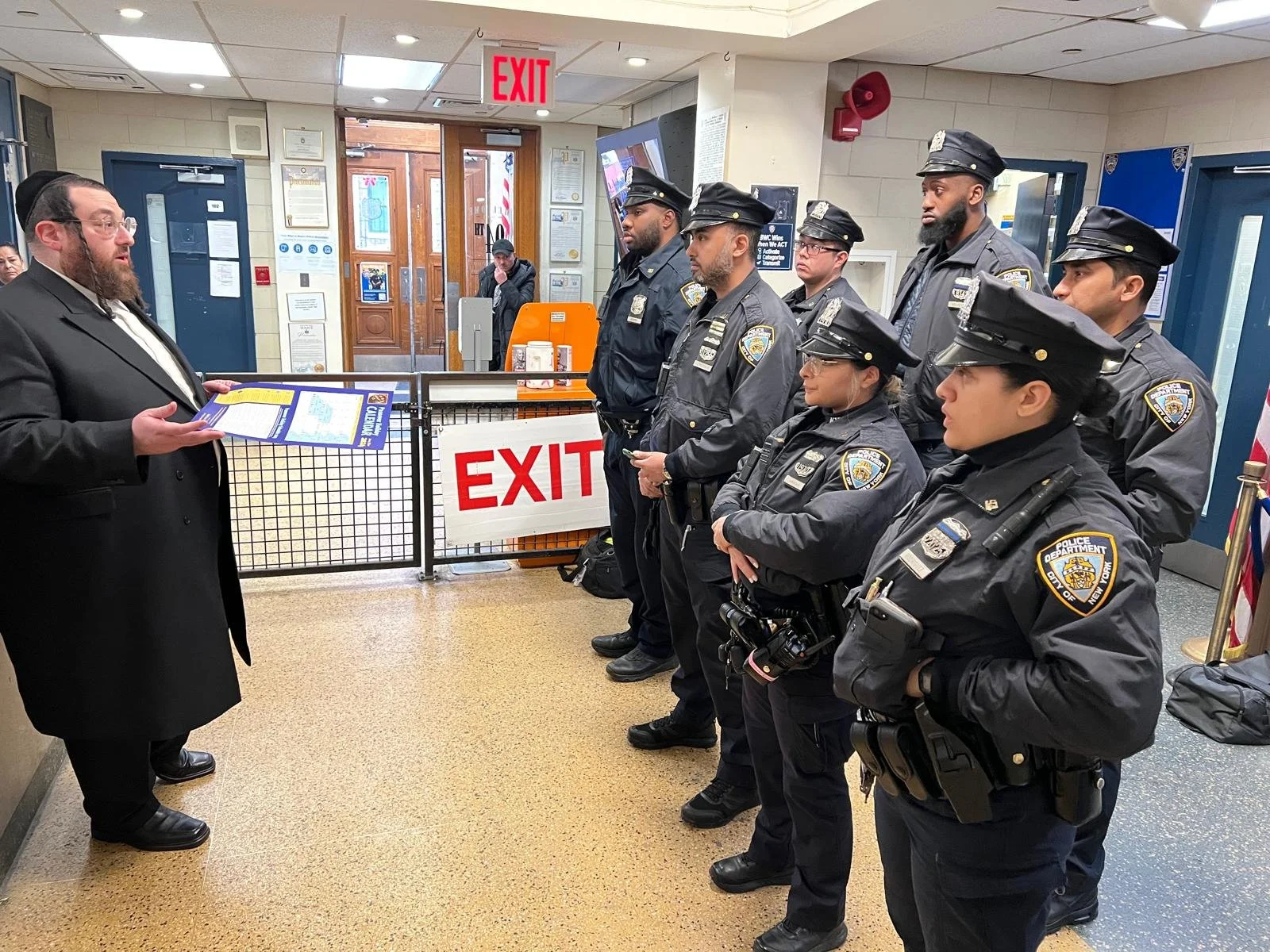
Rabbi Joel Friedman speaks directly with NYPD officers as part of his continuing service to the law-enforcement community.
That approach, and the reputation Rabbi Joel has built among officers who know him, is what first caught the attention of The Blue Magazine. As BLUE began speaking with people familiar with his work, a consistent picture emerged: a rabbi who has made himself available to first responders without asking what faith they practiced or whether they practiced one at all.
His work with law enforcement has reached the state and federal levels, building relationships across agencies, communities and religious traditions.
Kurt Labuda, president of the New York State Police Investigators Association, has seen that commitment firsthand. For more than a decade, Rabbi Joel has worked closely with the union as clergy and assistant to its president, developing relationships throughout law enforcement, supporting first responders and making himself available when officers need assistance. That service also extends to his efforts giving back through the New York State Police Investigators Foundation.
“His willingness to always provide support and assistance is a testament to who he is,” Labuda said.
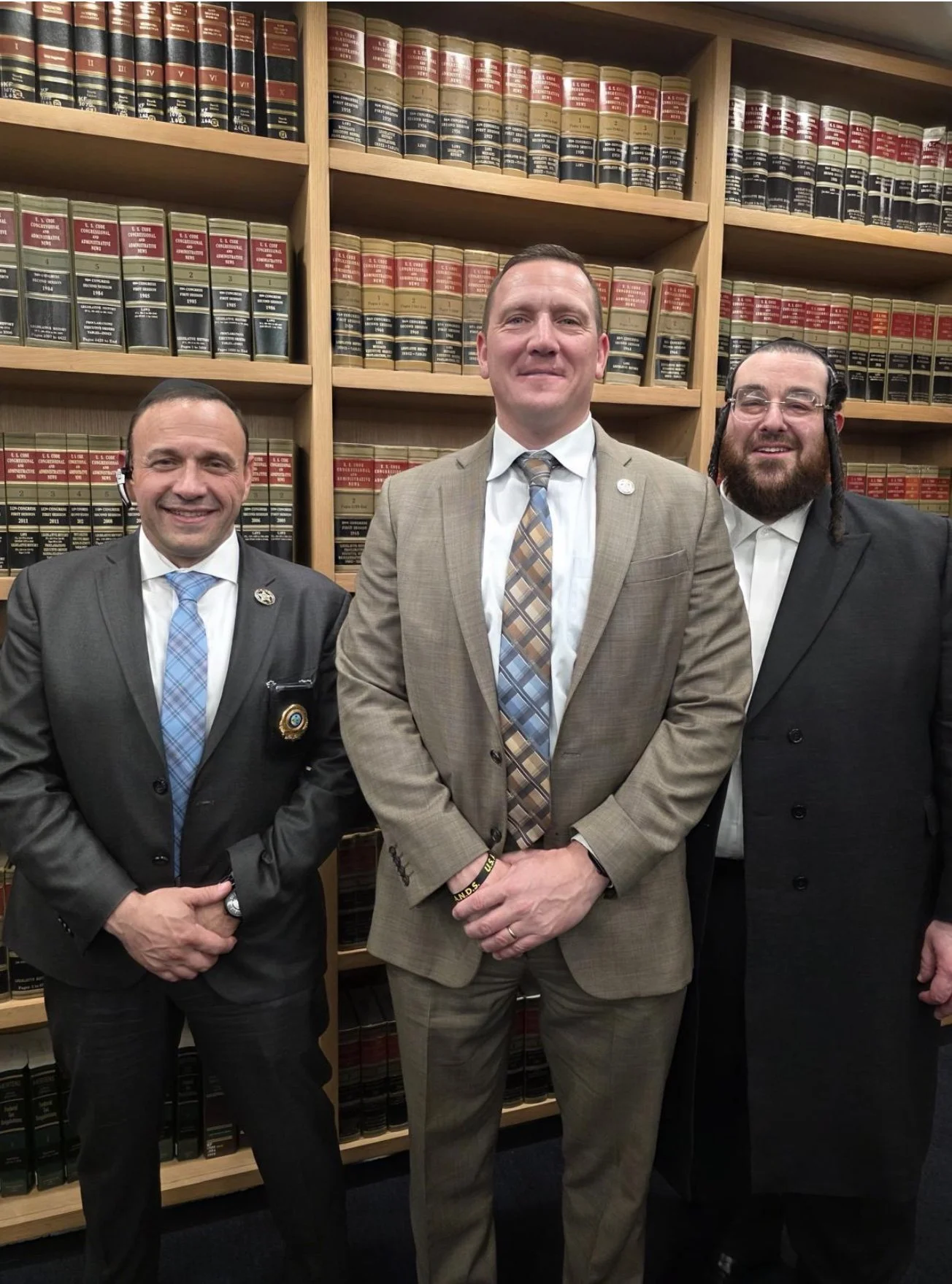
Rabbi Joel Friedman, right, with Kurt J. Labuda, president of the New York State Police Investigators Association and Rabbi Mark Rosenberg chief Chaplain to the Miami Dade County Sheriff’s Department.
That same commitment has been recognized in Bergen County, where Rabbi Joel has served the law-enforcement community for well over a decade and works closely with the Bergen County Prosecutor’s Office as a chaplain. Jeff Angermeyer, Chief of Detectives with the Bergen County Prosecutor’s Office, described the impact of that service across the agency and the county.
“For well over a decade, Rabbi Joel Friedman’s dedicated service as Police Chaplain has enriched our agency with compassionate leadership and counsel. His commitment to the well-being of our law enforcement family and the residents of Bergen County has made an indelible, positive impact across our entire county,” Angermeyer said.
What BLUE found was a chaplain whose work extended well beyond one religious community. For more than 20 years, Rabbi Joel has built relationships across law enforcement, working across religious and cultural lines and giving first responders a place to speak without wondering what is expected in return.
“My belief is that although I’m Jewish and I belong to the Jewish faith, I can help others,” Rabbi Joel says. “I can help other religions. I can help other community members who have different beliefs.”
His view is straightforward: “There is one God. Doesn’t matter what faith, race, color, religion.”
Rabbi Joel isn’t trying to convert anyone or asking anyone to worship the way he worships. His message to law enforcement and first responders is simpler than that.
“I’m here for you,” he says. “This is what I’m here for to serve you.”
THE LESSON FROM HIS FATHER
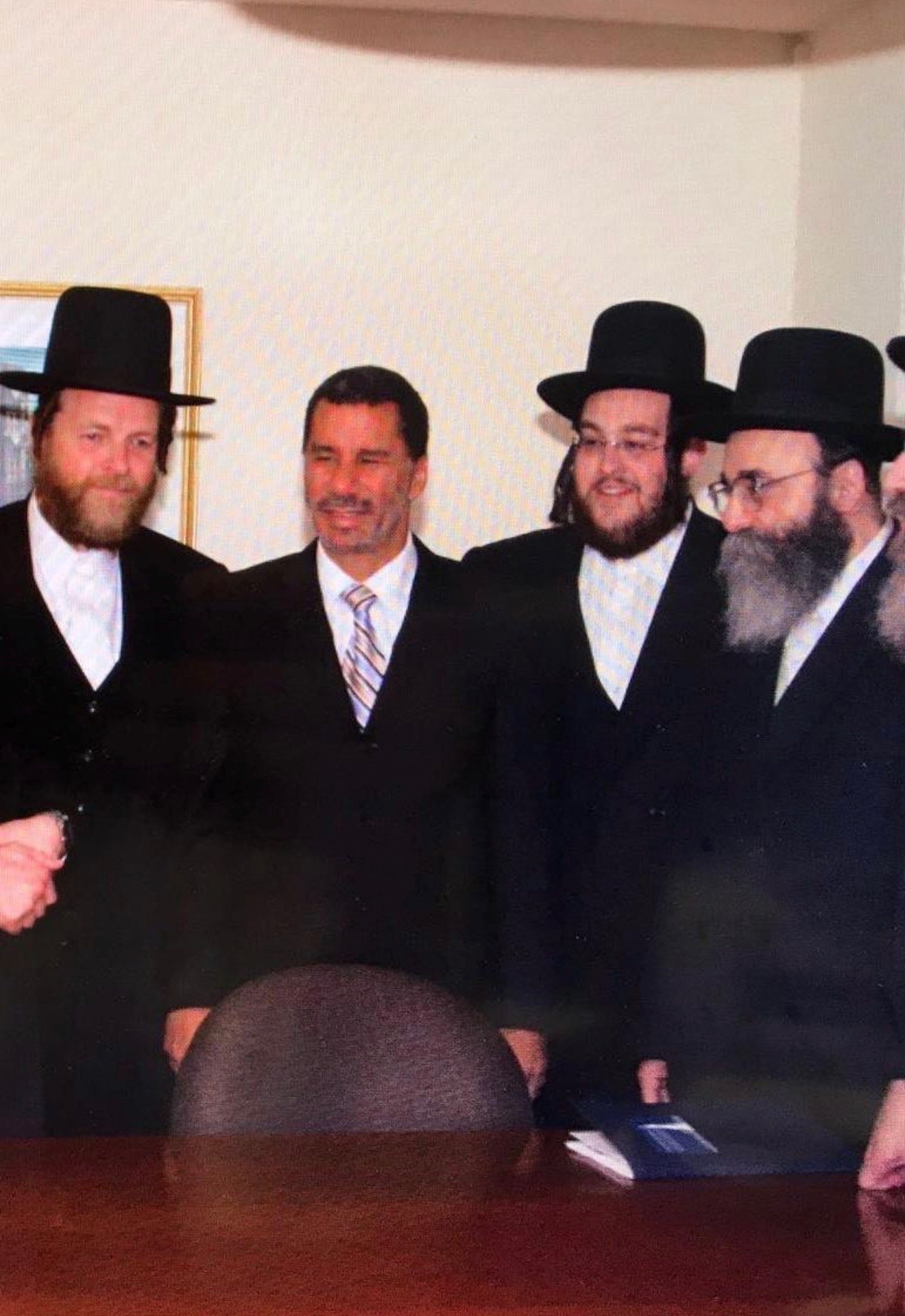
Rabbi Joel Friedman and his father, Rabbi Morton Friedman, with David A. Paterson, who served as New York’s 55th governor.
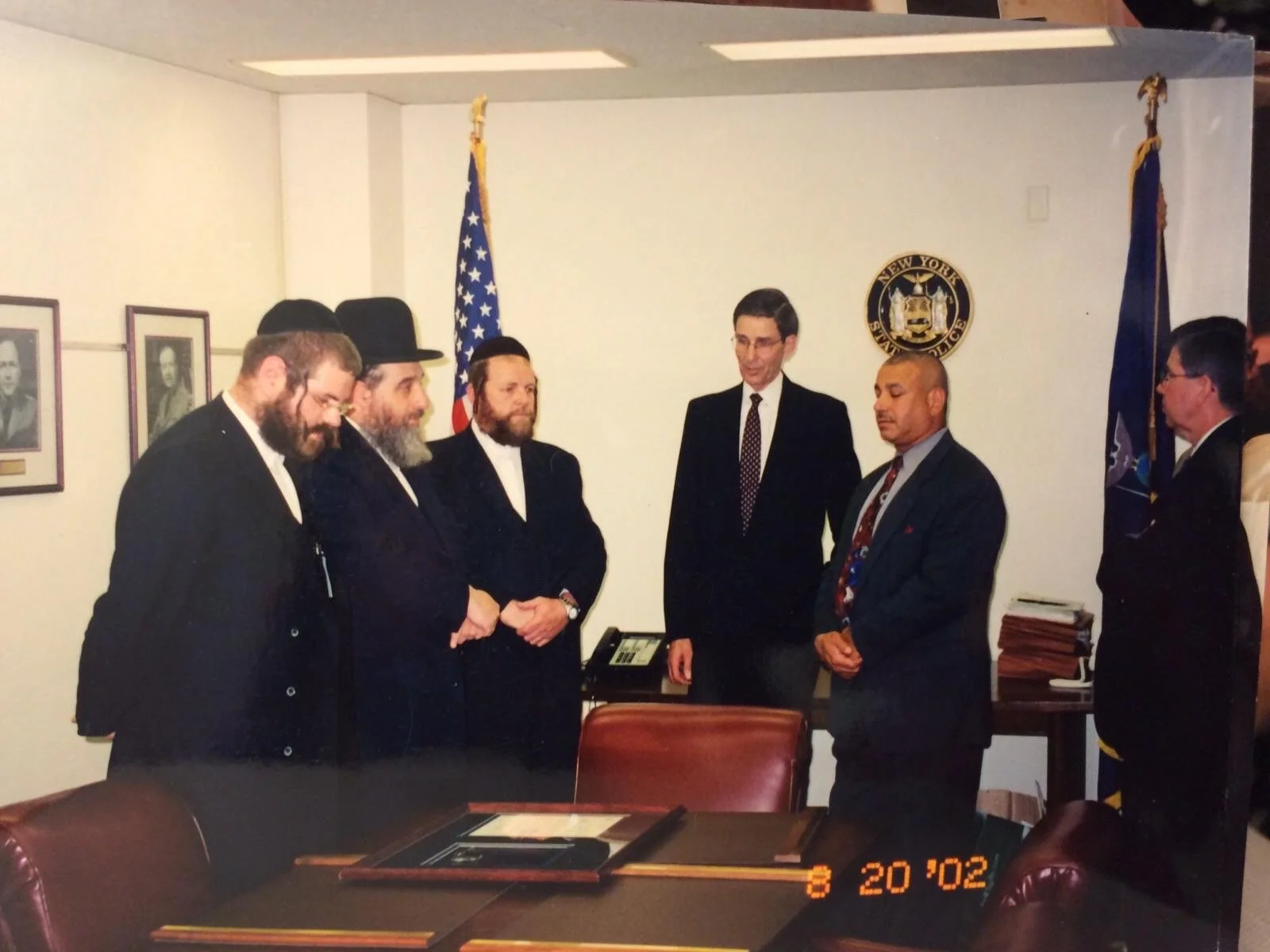
Rabbi Morton Friedman during a meeting with New York officials in 2002.
Rabbi Joel is 42 and has served as a rabbi since 2005, but the foundation of his work was established much earlier.
Growing up in Monroe, New York, he watched his father, Rabbi Morton Friedman, serve as a rabbi and liaison between faith, community and law enforcement. Rabbi Joel describes his father as a “bridge gapper” someone who could bring different people and institutions together.
As a child, Rabbi Joel accompanied him to the local hospital, where his father visited seriously ill patients and families facing difficult circumstances.
“He was the one who gave them courage,” Rabbi Joel remembers. “He was the one who gave them a second chance, that there’s always hope.”
The lesson stayed with him: there is always a second chance to be a better person if that person sincerely wants to change.
“Give them support and give them hope,” Rabbi Joel says. “That’s what a person really needs—that tomorrow can be a better day.”
Rabbi Morton Friedman was also an important influence and mentor as Rabbi Joel began his own career. That mentorship helped shape the approach he would bring to chaplaincy: be available, listen and give people an opportunity to move forward.
LISTEN. DON’T JUDGE. HELP.
Rabbi Joel understands that his appearance can initially create uncertainty. A law-enforcement officer or firefighter who has never interacted closely with a Hasidic rabbi may wonder what the rabbi wants or whether he can understand a person from a different religious background.
Rabbi Joel has encountered that hesitation.
“I’m a very deep listener,” he says.
And there is another rule he follows: “No matter what that individual would tell me, I never judge.”
Those principles matter because conversations with a chaplain are rarely limited to religion. They can involve marriage, family, careers, mistakes, grief, fear or personal problems that an officer may not be comfortable discussing elsewhere.
Most of Rabbi Joel’s interactions with law enforcement are positive, but he acknowledges that some begin differently. He has called officers and sensed that they were busy, guarded or even slightly bothered to hear from him. He understands why police officers spend much of their careers dealing with people who need or want something from them.
He doesn’t take that initial reaction personally. Instead, he gives the relationship time.
Once officers understand that there is no hidden agenda that he is not asking them for anything and genuinely wants to help the dynamic often changes. Rabbi Joel says his goal is simply to help officers live better lives and, where he can, make their work a little easier.
After more than two decades, he has learned that a title does not create trust. Patience, consistency and sincerity do.
CONFIDENTIALITY
Confidentiality is central to that relationship. A first responder is unlikely to discuss a marriage, career or personal crisis if there is concern that the conversation will leave the room.
“They are opening up,” Rabbi Joel says. “Therefore, you must be confidential.”
He believes that protection is what allows a relationship to develop. “That gives you the trust for that individual to continue to speak with them and continue to take your advice seriously.”
Confidentiality remains fundamental to the work.
BUILDING THE BRIDGE
Rabbi Joel’s role extends beyond individual counseling. He also works to help law-enforcement leaders understand the communities they serve.
Jewish religious practices can intersect with police and emergency work in unfamiliar ways. A death may involve religious requirements surrounding burial and remains. A synagogue fire can involve sacred Torah scrolls requiring special attention. Religious holidays may involve restrictions affecting phones, electronics, business and other ordinary activities.
Rabbi Joel works to explain those traditions before misunderstandings occur during a crisis. The objective is practical: help first responders understand the community and help the community understand its first responders.
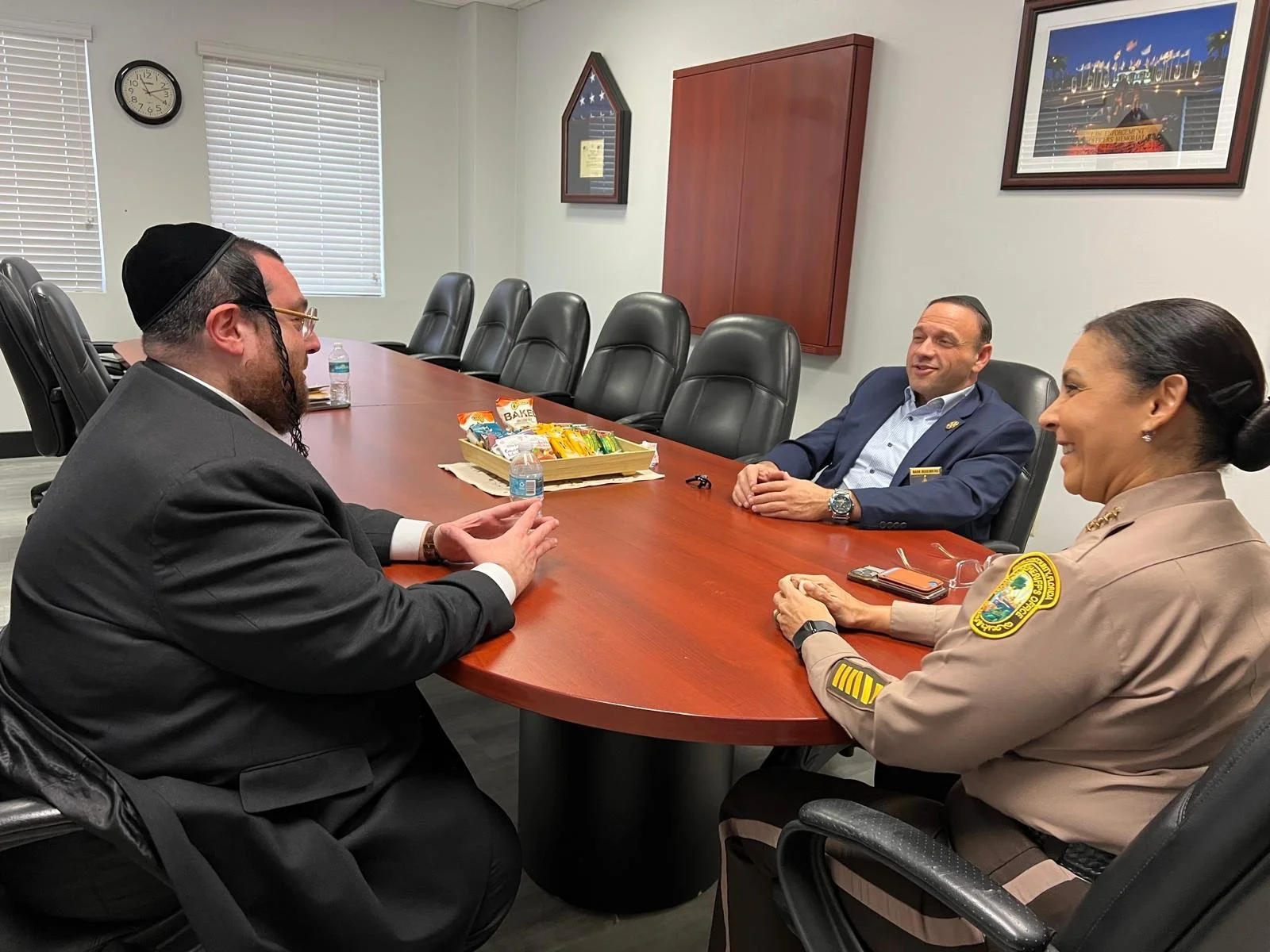
Rabbi Joel Friedman meets with law-enforcement leaders as part of his continuing bridge-building work.
His bridge-building also extends to relationships with government and law-enforcement leadership. Rabbi Joel speaks positively about relationships developed under New Jersey’s previous administration and says he is encouraged by Gov. Mikie Sherrill’s selection of highly experienced law-enforcement professionals for key positions in her administration.
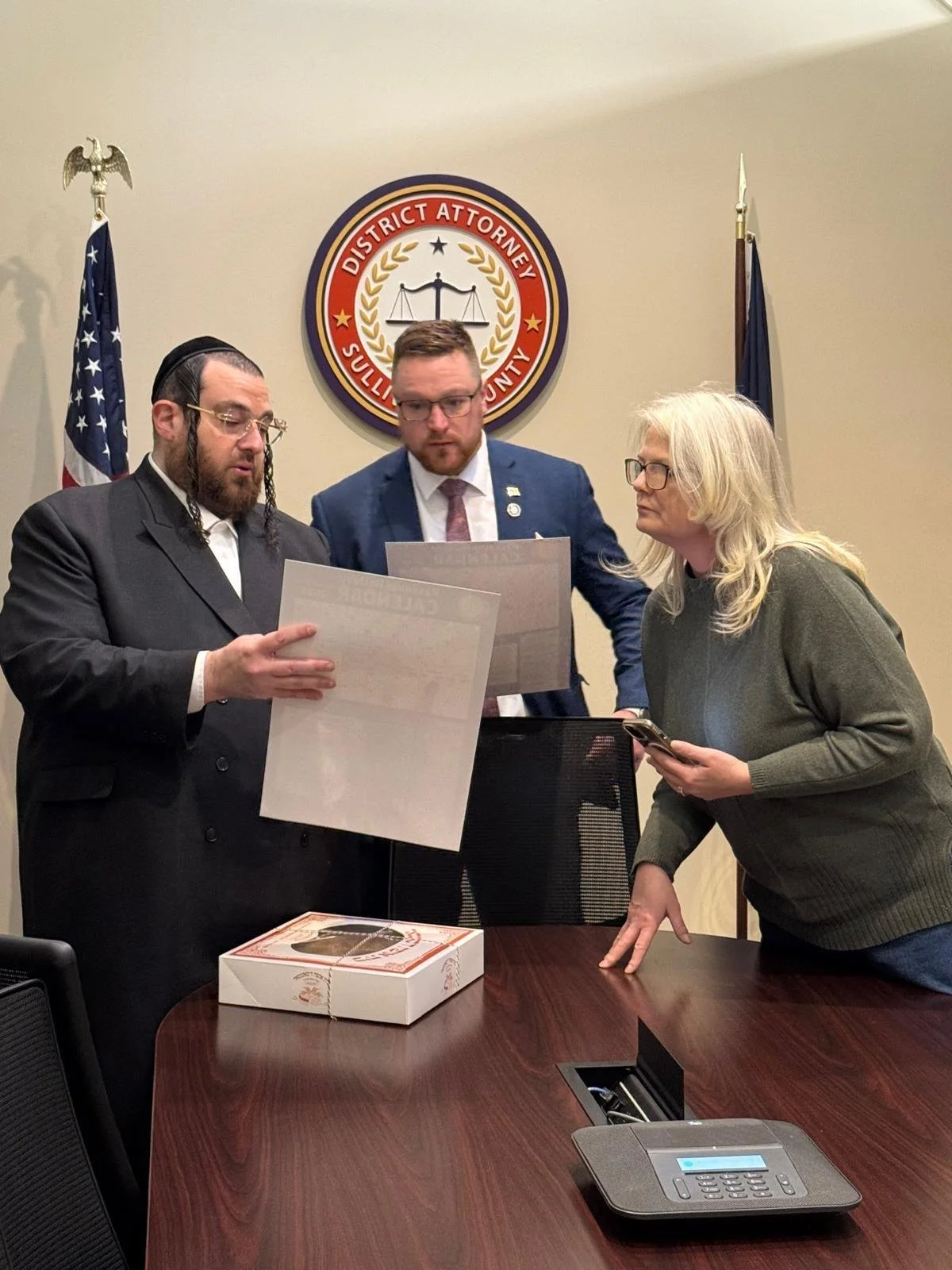
Rabbi Joel Friedman during a meeting at the Sullivan County District Attorney’s Office.
He says those appointments have been warmly received within the Jewish community, where strong communication and experienced leadership in law enforcement carry particular importance. Rabbi Joel says he is grateful to see seasoned law-enforcement professionals entrusted with those responsibilities and believes their experience can strengthen the relationship between government, law enforcement and the diverse communities they serve.
For Rabbi Joel, that appreciation is not about political affiliation. It is about experienced leadership, public safety and communication between government, law enforcement and the communities they serve.
It is, in many ways, the same bridge-building philosophy he watched his father practice.
BEYOND HIS OWN FAITH
Rabbi Joel belongs to the Satmar Jewish community, but his service does not stop at its boundaries.
He works with people from other faiths, including Muslim leaders, even when they disagree.
“I never try to change someone’s beliefs,” he says.
He has seen people from other faiths help Jewish communities and believes Jewish leaders should be equally willing to help others. When someone once questioned whether he would truly step forward for another community, his response was immediate: “Not only yes. Just watch me.”
Someone later told him something he remembers clearly: “Rabbi Joel, you are actually a rabbi for everyone, for every different denomination.”
That is the role he wants.
NO STIPEND. NO CAR. NO UNIFORM.
Rabbi Joel says his chaplaincy work is volunteer service.
“I don’t ask for anything,” he says. “Not for stipend, not to be paid, no car, no uniform.”
Why continue?
“It’s my passion.”
He believes the pressures facing public servants have grown, particularly since COVID. “People are more stressed,” he says. “People had more obstacles in their lives. The job to be a public servant had changed dramatically.”
His advice to a first responder struggling personally is to speak with someone he or she trusts.
“Always have the courage to speak to a trusted individual,” Rabbi Joel says.
He often returns to the Jewish teaching that saving one life is like saving an entire world. To him, saving someone does not necessarily mean a physical rescue.
“It can be by just listening to them, guiding them,” he says.
25 YEARS LATER
This September marks 25 years since the attacks of September 11, 2001, a day Rabbi Joel speaks about with particular reverence. For his family, the connection is personal. His father, Rabbi Morton Friedman, was among the first responders who were there following the attacks.
Rabbi Joel remembers the law-enforcement officers, firefighters, first responders and civilians whose lives were lost, along with the families who have carried that loss for a quarter century.
For him, remembrance also carries a lesson.
“Hate obviously has no place anywhere,” he says. “It should be a reflection of us how to be united and not divided.”
Twenty-five years later, that belief remains closely connected to his work: bringing people together across faiths and supporting those who serve.
A NEW ROLE WITH MOMENT OF SILENCE
Rabbi Joel has also been named the rabbi for Moment of Silence, Inc., a law-enforcement charity whose work includes first-responder mental-health awareness and efforts to prevent officer suicide.
The role is consistent with the principles he describes throughout his chaplaincy work: confidentiality, hope, second chances and availability to first responders regardless of faith.
For Rabbi Joel, the objective remains the same: be available when someone needs him.
ON THE JOB. AFTER THE JOB.
At the end of the interview, Rabbi Joel was asked how he wants to be remembered.
“A person who changed many lives from all different denominations.”
He explained the philosophy behind that answer: “It’s not about myself. It’s not about you. It’s about the community we both serve each and every day.”
“Title is important, but I believe in someone’s heart.”
For Rabbi Joel, the relationship with an officer does not end when the shift ends or the uniform comes off.
“On the job, after the job,” he says.
Holly Finley, executive director of The Blue Magazine, said Rabbi Joel’s impact ultimately comes down to something more important than titles or recognition.
“We respect Rabbi Joel for his commitment to law enforcement and the communities he serves, but ultimately, it comes down to the lives he touches,” Finley said. “He helps people through difficult moments. He helps people live healthier, better lives. And sometimes, simply by being there and listening, he can help save a life. That is the work that matters.”
That is ultimately why The Blue Magazine put Rabbi Joel on this cover.
His reputation within law enforcement caught our attention. What BLUE found was a chaplain who has spent more than two decades working across lines that can separate people—between different faiths, between communities and law enforcement, and sometimes between a struggling first responder and someone willing to listen.
Rabbi Joel’s faith is central to who he is. He simply does not require anyone else to share it before he is willing to help.
Christian, Catholic, Muslim, Jewish, another faith or no faith at all, his message is the same: Reach out, I’m here.
And behind that message is the lesson that has followed him from the beginning:
There is always a second chance to be a better person if that person sincerely wants to change.