MANAGING EDITOR’S POINT OF VIEW

Who doesn't remember the iconic line, "You can't handle the truth," from the movie A Few Good Men (1992)? The line in the original script was, "You already have the truth." But actor Jack Nicholson improvised a little and in the process made movie history.

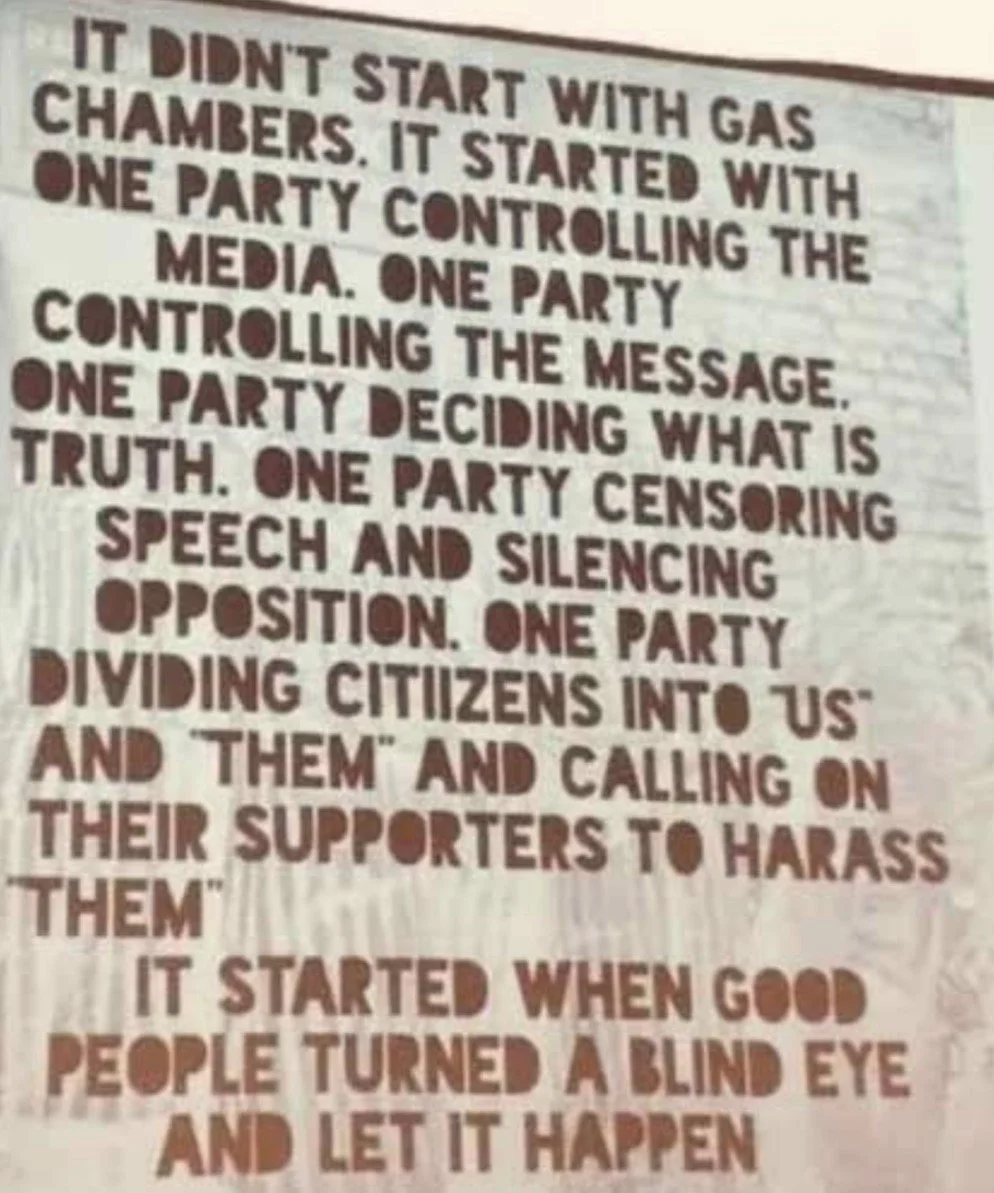
Even for those who are not conspiracy minded, on the heels of National Police Week tributes, feelings deep within must tell you that something isn't right with much of our current situation.

While others may attempt to defend their indefensible lies and false narratives, the journalistic prowess of our BLUE Magazine writers, who have their fingers on the pulse of the front lines, consistently hit the mark in advance of legacy media.

WE TRIED TO TELL YOU…

With honest, fair and uncannily prophetic articles we've published about topics in advance of many current events such as ahead of the verdict in the Michigan governor “kidnapping” case FBI: Pot Calling The Kettle Black (Sheriff David Clarke – first published online March 2022), before the Russian Ukraine invasion we ran Are we on the verge of WWIII? Peace and Global Security is Jeopardized (Special Agent Eric Caron – November 2021), and as far back as May of 2020 we published Uncertainty The Road Ahead (Daniel Del Valle, George Beck Ph.D., and Joel E. Gordon) questioning how long the goodwill toward policing would last during the COVID pandemic before we were once again vilified, to name a few… and the list goes on!

While some seek to control every aspect of our lives; what we read, write, say, what you're allowed to publish, or post on social media, the independent voice of law enforcement remains strong, decisive and on point with honest commentary based upon real world experience. How can we see into the future? By understanding and learning from the lessons of our past.

There’s no room for neutrality. We will stand up for what's right and tell policy makers what's what. That's the idea behind speaking truth to power, as we courageously confront authority; calling out injustices on our collective watch, and demanding change where necessary for the common good. Our voices remain powerful and our experience, professionalism and expertise will continue to withstand the test of time.

Not to be outdone, in this issue…

Don’t miss the article on the legendary Joseph Wambaugh by Lori Cooper. Human Nature and Basic Drives are explored by Lt. Joseph Pangaro, and our Cover Story interview of Florida Sheriff Grady Judd conducted by Blue Magazine’s Catherine Angel, is a must read as is this entire edition of Blue Magazine!

Stay safe and strong. Reach out and join us as we work together in our belief in truth and for justice for all.

Joel E. Gordon
Managing Editor

A True Legend: Joseph Wambaugh Interview

JOSEPH WAMBAUGH: A COP, CREATIVE WRITING GENIUS, AND AWARD-WINNING BOOK, TELEVISION, AND MOVIE SCREENPLAY WRITER AND CONSULTANT, ON HIS CAREER AND POLICING IN AMERICA TODAY
By Lori Cooper

A few years ago, I had the audacity to write to Joseph Wambaugh, who now casually signs his name in every response as just "Joe," or "Joe W.," a representation of how many times we've corresponded. The need for formality in his full name had now been reduced to what friends do: to simply call each other by the shortened version of their first names.

A complicated man whose tough interior shifts with topics about his days from earning an MA degree in literature, to his 21 works of bestselling nonfiction and fictional tales about the lives of the American police officer, to his titles that were adapted into major motion pictures and made-for-TV movies, Joe Wambaugh has almost come to peace with a life where he feels his work, and his name, have all but been forgotten.

After graduating from high school in Ontario, California, he entered the United States Marine Corp, serving a three-year tour-of-duty. At the age of 18, he married his high school sweetheart, Dee Allsup. When he entered the Los Angeles Police Department in May of 1960, he'd already earned his Bachelor's degree in English, taking advantage of the G.I. Bill subsidy offered to members of the service, along with classes he could take on his off-duty hours. Wambaugh added, about his longstanding marriage to his high school sweetheart, "We were married when I was a Marine and she was a telephone operator.  We are both hard workers who don’t back off when things are difficult. We just had our 66th anniversary on November 26th, so the marriage will probably endure the rest of the way."

During his first eight years on the LAPD, he worked various assignments and returned to his alma mater, California State, Los Angeles, where, again, on his off-duty hours as a cop, he majored in English and earned an MA in literature by 1968. He also worked his way up the ranks to becoming a detective sergeant for the Los Angeles Police Department. He was likely the only cop to have ever earned a master's degree in literature in 1968, with his first three books he'd also write while serving for the LAPD. Joe Wambaugh's undeniable career successes read like an A-to-Z collection of the Encyclopedia Britannica.

My late dad had been a police officer in Columbus, Ohio during a time when Wambaugh, himself, was serving for the Los Angeles Police Department. Shot in the line of duty in 1972 by a career criminal who had eluded authorities for more than four decades, I explained in my first piece of correspondence that it was my own search that had resulted in the apprehension of my late dad's shooter exactly 44 years later, a man who Wambaugh would undoubtedly call a sociopath. It was a term I had read that he used frequently through the years in relation to criminals without a conscience. In fact, I'd also read where he believed it was safe to suggest that about 95% of those who committed heinous crimes were nothing but sociopaths.

I knew I needed to write our family's true crime story, one that was so outrageous and inconceivable it defied almost every piece of fiction I had ever read, but never having written anything more than business  prose, I dreamed of having the ability to ask the 'father of the modern police novel' for any wisdom he might be up to sharing with this daughter of a late 'copper,' another Wambaugh-ism for those he admired and respected who wore blue and carried a badge: the American cop. He was kind enough to share some of his thoughts, too.

I explained to Wambaugh, in that same piece of correspondence, that my late father had been a member of the Book-of-the-Month Club in the late 1960s and early 1970s, receiving all of his books that were always best sellers. Wambaugh went for the gusto when he wrote "The New Centurions" in 1970, his novel he described as the "first really true story about modern-day policing in an urban environment." He knew that it would never be approved by the department or its then-chief, Ed Davis, so he sent it out without the department's approval.

As the story goes, Wambaugh's first novel became a Book-of-the-Month Club selection, and so my dad had received a copy of it, along with so many more. During a time when I was 8 years old and supposed to be reading the novels that were a part of the classics in "The Nancy Drew Mystery Stories," I was instead reading my dad's cop books written by Wambaugh about the reality of how 'the job' affected a cop's life. Many of his subjects dealt with the escape into alcohol use, marriages that failed, and all of the fortitude that went along with those who were Wambaugh's main characters in his first novel,"The New Centurions," about three academy graduates from the same class, and how their personal and professional lives as cops evolved and changed over a five-year period.

I learned about the character of William "Bumper" Morgan in Wambaugh's second book, "The Blue Knight," and the hardest 'beat' of his life in a gritty and witty beat cop who was on the verge of retirement after 20 years as a patrol officer. Cynical and idealistic at the same time, there's a little bit of "Bumper" Morgan in Joe Wambaugh, in my opinion.

But the third book of Wambaugh's career, "The Onion Field," revered as the best true-crime story ever written alongside Truman Capote's, "In Cold Blood,"earned him a jacket review by Capote, something Wambaugh believed to be a real honor. When asked how he had met Truman Capote, Wambaugh explained, "I met Truman on The Tonight Show with Johnny Carson. He and my wife became acquainted in the Green Room, and he invited us to his Palm Springs home for lunch."

All of Wambaugh's first three books were adapted into films, with "The Onion Field" the first work of nonfiction he had written by 1973. Despite his belief that even young cops aren't aware of his name or his award-winning books and films, I have challenged him about his notion of that thought, having spoken with so many cops, retired and active-duty, who believe this title to be the one that changed the trajectory of policing forever. In my own cynical ways, I feel anyone who is or has been a cop, a reader of true crime books, or an avid viewer of true crime movies, would have to have lived under a rock to not have read, have viewed, or at least have heard about "The Onion Field." When I asked Joe about this topic, he capitulated in a response that still gives me cold shivers: "If policing became more sensitive to the psychological wounds suffered by cops, and not just the physical wounds, then yes, I am proud of that," he replied.

Just in case there's one person or cop who hasn't heard of this book or film, it's based on the lives of LAPD Officers Ian Campbell and Karl Hettinger, who made a traffic stop in 1963. Officer Campbell's gun was stripped from him by one of two sociopaths in the vehicle, and both officers were kidnapped and driven to an onion field, where Campbell was executed, and Hettinger ran, escaping his own death. Hettinger would suffer from incredible amounts of 'survivor's guilt' and what we now know to be post-traumatic stress syndrome, otherwise called PTSD. He was forced to resign in 1966 and died at the age of 59. When I asked Joe Wambaugh out of all of his books who his favorite character was, he proclaimed, "possibly Karl Hettinger because of how much he suffered and endured."

Along the same subject matter, I asked Wambaugh, in his opinion, which film adapted from all of his books he would suggest was the best, and, while I was not surprised, he responded with "The Onion Field.” When I asked why he felt it was the best, his answer was, "because it was faithful to the book. That is because I wrote the screenplay and self-financed [the film] and raised more money to maintain control [of the film].”

Wambaugh retired from the LAPD in 1974, after serving 14 years. With his first three books making the best seller lists, the first two were adapted into films rather quickly. "The New Centurions" was on The New York Times best seller list for 32 straight weeks and opened to worldwide film audiences in August of 1972, while "The Blue Knight" aired to television audiences in 1973. Joe Wambaugh had become famous, and with that fame and notoriety came a myriad of problems he deemed too disruptive to the business of police work, forcing him to leave his beloved job for the LAPD and become a full-time writer. There were pranks at his station house, some officers with whom he served who treated him differently, and guest invitations on the talk show circuit, to name a few. When I asked how many appearances he'd made on "The Tonight Show" with Johnny Carson, alone, he answered with a humble reply of, "I don't know how many [for sure] but several."

Though he would go on to write 18 more books and create the popular television anthology, "Police Story" in 1974, Wambaugh has decidedly elected to put down his pen and paper to simply reminisce on all the work of his past, leaving future stories to those who may continue to attempt to succeed his award-winning work in true crime books and cop dramas.

Suggesting "The Sopranos" was the only television show beyond his own he ever watched with any consistency, he also has added,"I have not been approached on the street or in any public place for at least 30 years. I am not a movie star, just a writer. I am not sure that people read books the way they used to do, so my guess is that no writers are frequently recognized and approached for autographs. Not only has the general public forgotten me, but even young cops have no idea who I am these days. And not all of the older cops remember my name, either. It’s a different world, Lori."

Just like there can only be one Fred Astaire, regarded as the greatest popular-music dancer of all time, there can only be one Michael Jackson, referred to as the "King of Pop" and one of the most significant cultural figures and the greatest entertainer in the history of music. As for the greatest true crime writer of books, films, and television, particularly in the subsegment genre of cop dramas, there can only be one famed, icon, regarded as the most significant game changer in the portrayal of the life and times of the American police officer, and that individual will always be, hands-down, Joseph Aloysius Wambaugh.

Finally, when asked what recommendations he would make to anyone who wants to become a law enforcement officer, Wambaugh responded with the good humor and great candor that nobody like him possesses. He said, "In my book, Hollywood Station, ‘the Oracle,’ a senior sergeant, tells young cops that doing good police work is the most fun that they will ever have in their lives. I do not know if that is still true." He also noted, “If you want love, join the fire department. People needy of approval should not become cops."

Lori Cooper is the daughter of a late Columbus, Ohio police officer shot in the line of duty and whose perpetrator eluded authorities for 44 years until her own search resulted in his apprehension. Her story, featured by hundreds of news organizations, catapulted her to success as an expert law enforcement advocate, where she now writes for law enforcement media groups and is a highly acclaimed guest on national radio and television. An Ohio University Social Studies Major, she has written a book about her story, titled THE SOUND OF SILENCE. She can be reached at www.WriterLoriCooper.com

FBI: Pot Calling The Kettle Black

FBI: Pot Calling The Kettle Black
By David A. Clarke Jr., Sheriff (Ret.) Milwaukee County

This headline refers to a proverb that I remember my parents saying to me when I was little boy. It means, “someone guilty of something they accuse another of.” This is very appropriate in the case of behavior by the United States Department of Justice and their investigative arm, the Federal Bureau of Investigation.

Like every other law enforcement agency, they carry a sense of trust given by the public. It is a sacred trust that must be closely guarded because once law enforcement loses that trust, it is very hard to regain. Nobody needs a corrupt law enforcement agency. I stressed that every day in my time as sheriff of Milwaukee County. The reason is that law enforcement agencies have awesome government power and authority. They can make arrests summarily. Due process doesn’t kick in until afterward. In addition to that, the word of a law enforcement officer carries more weight in report writing and testimony under oath in a court of law. Think about that.

So, when I read accounts about the FBI violating not only its own internal policies but violating people’s rights under the U.S. Constitution, suffice it to say I was not surprised, and I should have been. The reason I wasn’t surprised is because this agency has exhibited a pattern of this behavior for a while now. Just like with state and local law enforcement agencies, they are dealing with the human element in their personnel. Every so often an officer goes outside their documented policies and goes over to the dark side to commit egregious violations of the public trust. There is a difference, however, between a one-off that occurs in local law enforcement agencies and the pattern being exhibited by the FBI.

This goes back to the 2016 presidential election where FBI agents ran with a fake dossier from a previously discredited source by the British intel agency MI5 about then-candidate Donald Trump as the basis to secure a search warrant to wiretap Trump’s campaign. This dossier reached the highest levels of the Bureau. It is not too much to ask the FBI to do its due diligence in getting secondhand information before running to a magistrate seeking a warrant especially involving a wiretap on a presidential campaign. Any local law enforcement officer would know that they have to look at the source and vet him or her for trustworthiness before using the information. They have to tell the judge that they have relied on this source in the past and he is considered reliable. But it doesn’t stop there.

A former FBI lawyer involved in the Trump investigation pleaded guilty to altering an email that the showed source was not a source with the CIA, when the original email indicated that the source was a source used by the CIA. Follow that?

Now, there is this. In 2019, a Judge ruled that the FBI had gone too far in a search warrant raid and delivered a blistering account of those raids in a case involving a Wall Street financier. The FBI said in a statement that a typographical error in the warrant was to blame. The judge called it recklessness. That’s not all.

Now the U.S. Senate Judiciary Committee is asking the U.S. Department of Justice Inspector General to review FBI agents’ failure to follow rules in sensitive domestic investigations that came to light in an internal audit. Senate Judiciary officials said that, “The violations are widespread and systemic. The sheer number of investigations that fail to comply with Domestic Investigation and Operations Guide rules suggest a pattern and practice of evading rules which opens the door for political and other improper considerations to affect the decision-making process.” That is a scathing indictment. The same audit found that FBI agents violated their own rules 747 times in 18 months while conducting sensitive investigations involving individuals engaged in politics, government, the news media and religious groups. This, ladies and gentlemen, is cultural in nature. To call this department rule violations is putting it kindly. These are violations of people’s constitutional rights. These are civil rights violations. It has become standard operating procedure within the FBI. Worse yet, nobody will be held accountable. The Bureau gave the perfunctory statement about taking this seriously. Sure, now that they have been caught. FBI Director Christopher Wray’s credibility in now under question by the House Judiciary Committee for past discrepancies about these violations in previous testimony before the House Committee.

Here is why I bring this up. I have said over and over again that when law enforcement is right, I will defend them to the wall, but when law enforcement officers and agencies are wrong, I will call them out. The FBI and USDOJ never hesitate with breakneck speed to parachute into a local community when a police use of force occurs, especially when the officer is white and the suspect is black. They turn over every rock looking for the slightest thing that might suggest wrongdoing. They do this without being asked and before the local investigation is completed. They misread statistical data on traffic stops and declare a local agency guilty of a pattern and practice of racial discrimination and then arm-twist them into a consent decree basically taking the agency over, thus federalizing local law enforcement. During the Obama administration, they conducted 22 pattern and practice investigations. They found local agencies guilty of it in 21 cases. That doesn’t pass the smell test folks. They know that weak-kneed mayors will fall on the sword and not fight the ruling. This places the city’s officers under a cloud of suspicion and has them spending time away from the street and filling out onerous federal reports on traffic stops, field interview incidents and even minor uses of force. Then some cop-hating activists exploit the collected data to hammer the officers as engaging in targeting black residents. It is a basic truth that high-crime areas in urban centers have high percentages of black residents. It is also true that a high percentage of crime and violence involves black perpetrators. It stands to reason, then, that most traffic violators, field interview stops and arrests will involve black people. That isn’t targeting. It is a statistical reality.

I would suggest that the FBI focus on a culture change within their own agency. Their credibility and public trust are in the toilet. It reminds me of a Bible passage in Matthew 7:3-5 in thinking about the behavior of the FBI. It says, “Why do you look at the speck in your brother’s eye (local law enforcement)and pay no attention to the plank in your own eye? How can you say to your brother, ‘Let me take the speck out of your eye when all the time there is a plank in your own eye? You hypocrite, first take the plank out of your own eye and then you will see clearly to remove the speck from your brother’s eye.”

It is a classic example of the meaning of the pot calling the kettle black.

Sheriff David A. Clarke Jr. is former Sheriff of Milwaukee Co, Wisconsin, President of Americas Sheriff LLC, President of Rise Up Wisconsin INC, Board member of the Crime Research Center, author of the book Cop Under Fire: Beyond Hashtags of Race Crime and Politics for a Better America. To learn more visit www.americassheriff.com

Police Officer Andrew Barr

Police Officer Andrew Barr
Article & Artwork by Jonny Castro

On April 24 2022, Cayce South Carolina Police Officers responded to a residence for a report of a domestic disturbance; as officers were speaking with another individual outdoors the suspect opened fire from inside. Officer Andrew Barr was struck and killed. After a seven hour barricaded standoff with police, the gunman took his own life.

Officer Barr was no stranger to life as a first responder. As a teenager, he began working as a volunteer firefighter obtaining the rank of Captain and was also a skilled EMT. Andrew Barr was hired by the Cayce Police Department in 2016 and served in the K9 unit with his Black Lab Retriever partner “Molly”. It was the job that he always dreamed of having. Back when he was still a trainee, he was shot and wounded in the line of duty by a gunman following a stolen car pursuit. That shooting never slowed him down or discouraged him from his career in law enforcement. He lived to serve and help people, and he did that until the very end. Officer Barr was 27-years old.

BIDEN'S DISINFORMATION CZAR (Just what we needed; not)

By: Lt. Patrick J. Ciser (Ret.)

How ironic is it that the Biden Administration is now going to regulate free speech along political lines? With the numerous gaffes and blatant lies that have come out of our current president’s mouth over the last 40- plus years, he might need to assign someone to constantly fact check him alone.

Our younger generation, I would imagine, has no clue as to what I’m referring to, so per- haps I should give a few examples. Biden was quite adept at plagiarizing other politicians’ speeches back in the day. One such example being when he ran for the Democratic presidential nomination in 1988. While campaigning, he plagiarized British Labour Party leader, Neil Kinnoc; and as a result, he later withdrew from the race.

He also frequently boasted that he graduated in the top half of his law school class at Syracuse University, when he actually was 76, out of a class of 85. Mr. Biden at that time also claimed that he had three degrees, when in fact he only had one; a B.A. in history and political science.

According to Alana Goodman, of the Washington Examiner, he made the following claims, which were all found to be figments of his imagination. He was shot at in Iraq, he was a coal miner, and his helicopter was forced down and he discovered where Osama bin Laden’s safe house was in the mountains of Afghanistan. Remember in 2020 when Biden told a 20-something Black female that cops don’t pull over white girls?

So now, Biden is creating a “Disinformation Governance Board” under the Department of Homeland Security, which kind of reminds us all of the Facebook and Twitter fact checkers. How is it, even with tons of circumstantial evidence, and also some real evidence (see Dinesh D’Souza’s 2000 Mules documentary) that no one is “allowed” to say that Donald Trump actually won the 2020 election? However, it’s fine when Democrats make similar claims.

Hillary Clinton said on multiple occasions that Trump didn’t win the election in 2016 with zero repercussions from the liberal left. What’s worse is that she spouted lies about Trump “colluding” with Russia, which we now know was a plot to bring Trump’s presidency down. The John Durham investigation is finally heating up, and the truth will come out soon enough. It appears at this stage that Clapper, Brennen, and certain members within the FBI, among others, were “all-in” with the Steele dossier hoax in order to stop Donald Trump.

The BS Mueller report cost taxpayers millions, and hampered Trump’s ability to govern his entire term; not to mention destroying the man’s reputation and keeping him from a second term. Hey! Who’s going to vote for a “Russian Agent?” Stacey Abrams never conceded the governor’s race to Brian Kemp and constantly claims Republican fraud, but of course that’s also fine, because she has a “D” after her last name.

How many times have “fact checkers’’ stifled actual facts? Conservatives said early on that COVID-19 probably came from the Wuhan Lab, but according to the left, that was practically sacrilege! Then the liberals, thinking everyone  is as stupid as they are, insisted that it came from a bat at    a Wuhan wet market, and properly excoriated us on social media.

Remember when Hydroxychloroquine was demonized by the left? Not because it didn’t help you recover from COVID, but because Donald Trump said that it showed some promise. Countless doctors came under fire on YouTube and other media platforms because they agreed with Trump. Ivermectin was another drug showing promise in fighting the pandemic with reliable studies coming out of Israel. But whenever someone would tout its effectiveness, fact checkers came out of the woodwork, only to find out later that it was indeed, effective.

A Disinformation Board is only good for one thing; controlling the information that gets out and that supports the Democrats’ progressive agenda. Look who Biden picked to head the board? Nina Jankowicz, who, crazy enough, has a history of spreading disinformation. In October 2020 when the New York Post broke the Hunter Biden laptop story,   she was screaming from the rooftops that it was “Russian disinformation!” Twitter, Facebook/Instagram, and others banned any talk of the laptop, and probably with that act alone, kept Donald Trump from winning a second term.

A poll taken after the fact and the November election, said that 1 in 7 Biden voters would not have supported Sleepy Joe had they known about the Hunter Biden laptop and the incriminating evidence within. Today, even the ultra liberal Washington Post admits that the laptop story was legit, and Hunter is now under investigation by the FBI.

So in the end, if the Biden Administration succeeds in getting its wish, it’ll be like the wolves watching the henhouse; stay tuned.

(UPDATE: The Department of Homeland Security, ac- cording to various news sources, announced that it has “paused” the creation of the “Government Disinformation Board.” In addition to this, Nina Jankowicz, has resigned.)

 Pat Ciser is a retired lieutenant from the Clifton Police Department, and a 7th Degree Black Belt. He was a member of 5 U.S. Karate Teams, win- ning gold medals in South America and Europe. He is the Author of BUDO and the BADGE; Ex- ploits of a Jersey Cop (BN.com/Amazon), and is a guest writer for Official Karate Magazine

Chief Thomas Walsh: R2R Training is a Must-Attend for All Officers

Feature Interview: Chief Thomas Walsh’s R2R Training is a must-attend for all officers
By George Beck, Ph.D.

Chief Thomas Walsh’s course “Rookie to Retirement” (R2R) is a must-attend for all officers. Attendees of R2R will experience an in-depth look at what they should be doing in order to avoid the pitfalls associated with losing the job and steps they should be taking to not just reach the finish line of retirement, but achieve a fulfilling life after your career.

We recently spoke with Chief Walsh about his R2R course, as well as his law enforcement career and tips for officer success on the job and in retirement. Chief Walsh is an energetic, motivated and very talented instructor who helps many officers understand the importance of planning for retirement, avoiding professional issues, and living their best life. Chief Walsh’s class, hosted by the wildly popular Street Cop Training, is scheduled for June 13, 2022 in Deptford, New Jersey. For more information head over to Streetcoptraining.com or you can email Chief Walsh directly at tomwalsh@streetcoptraining.

What was the impetus for developing the Rookie to Retirement class?

I started my full-time law enforcement career on Christmas Eve in 1996.  As I was waiting for briefing to start for my very first shift, a salty old sergeant looked at me and snapped a Polaroid picture of me sitting in a chair in the squad room.  He shook the photo to expedite the processing, then looked at it and threw it at me.  He said to me, “Hold onto that photo, sport, and look back on it when you are about to retire, you’re going to be surprised how quick 25 years goes by.”  That sergeant was correct.

Twenty-five years went by really fast.   I spent the next three or four years with that sergeant and other than that advice, he didn’t give me much more advice or wisdom that could have helped me navigate this career.  As I was cleaning out my desk during my last few days at the agency, I came across that photograph.   I looked at the picture of myself and though to myself, “What would I say to the me in that picture now?   If I had eight hours to talk with that 23-year-old kid on his first day, what wisdom would I impart to him to help ensure that he would make it to the end, not get jammed up, keep his marriage intact, not burn professional bridges, live a longer life, retire on his terms when the time comes, set himself up financially and so much more.”  That is really the impetus for the course.  A culmination of personal life lessons coupled with advice provided to me along the way by some great mentors.

The class covers getting to the finish line of this career and getting to retirement. Does the class cover on-duty and off-duty behavior that gets officers jammed up?

Absolutely. And, why wouldn’t it? When I start to go over the importance of proper on duty and off duty behavior, I sometimes see the occasional eye roll from a student.  But, it is so critically important to go over the behaviors that I have repeatedly seen end officers’ careers.  All too often, these were so preventable. I use funny stories and real-life scenarios that hit home for the students as a wake up call to get their behavior in check.

Do you go over state specific retirement figures?

Yes, 100%. During a certain segment of the course, I cover the state-specific retirement system for the state where I am teaching.  Since I am from Jersey, I am well-versed in the PFRS system.  I lay out the numbers and figures line by line when contemplating retirement and I show the students exactly what a take-home retirement check looks like as opposed to being employed.  It’s really a powerful and mind-blowing portion of the class.  The rumble in the audience when I layout that if I remained working, I would be essentially going to work for $2.78/hr is always very satisfying for me.

- The age of retirement for a chief in NJ may be changed to 67. This suggests that many chiefs stick around a long time and want to be around longer. How difficult was it for you decide to retire? 

It wasn't a very difficult decision for me. When I ran the numbers, financially it was a "no-brainer."  I lay the financial piece all out in the class, line-by-line.  When you see the pension payment laid out in black and white, it is hard to justify staying. So, from a financial aspect, the decision was very easy. The pension system, coupled with two outside investment vehicles for a majority of my career, made that the easiest part of the decision-making process. The hardest part was just coming to terms with the change itself.  I discuss this in the class as well. Adjusting to change in general, leaving behind a 25-year career doing something you love, walking away from working day-in and day-out with some of the greatest friends and colleagues a guy could ask for; this was the most difficult part of leaving the job.

- Officers who stay beyond 25 years are potentially risking getting jammed up, why do they take this risk?

There are a multitude of reasons why so many officers take this risk and do not retire when eligible.  And, it is a huge risk.  As you say, they are potentially risking their pension or more if they get jammed up or if someone under their command gets jammed up.  While some of the reasons are valid (an impending promotion) many of the reasons are excuses, invalid and completely avoidable. If the officer took the time to prepare for retirement at a very early point in their career and continually evaluated those plans, retirement would have probably been a much easier decision and transition. That's why it is so important for me to get all the course content from R2R to younger officers.

- What is the best advice to avoid what I call the “police identity crisis” where an officer’s identity is defined by their profession?

We see this all too often, and it is one of the biggest contributors to officers having a hard time adjusting in retirement, or having a hard time to even make the decision to "pull the plug." I use a short movie clip in my class from An Officer and a Gentleman where Richard Gere breaks down when the USMC Drill Instructor tells him that he is going to kick him out of US Navy Flight School Boot Camp, and he screams "I got nowhere else to go." So many officers feel like that at the end of a career. They have let the job consume them and they literally have nothing else.  My advice is to maintain your friendships outside law enforcement, do not only socialize with police officers outside work, cultivate hobbies, and realize as soon as you can that one day, this job will come to an end and a new chapter will begin.

- What’s your take on officers using retirement countdown clocks to track the months, days, hours, minutes until they are eligible to retire? I often tell officers to be careful with these apps because they are counting down the days of their lives and now’s the time to live and enjoy. Waiting for retirement to come to start enjoying life is a sad mindset in my humble opinion.

Wow! I feel like you have already taken the course. This is another topic discussed in the class. I installed one of those apps on my phone about two months out from my retirement date. I solely did it as a joke so that when someone asked me how long I had left, I could look at it and respond, "Five days, two hours and fifty some-odd minutes.” While I did this for entertainment purposes more than anything else, I know officers who have those countdown apps on their phones two weeks out of the academy. I just find that terribly sad. If a career is so bad that you need to count down the days like a prison sentence, then that is exactly how it will feel ... like a prison sentence.  Time is the most valuable commodity that we have.  Life is short; it shouldn't be spent wishing it away. This career has provided me some of the best experiences in my life, officers should embrace the opportunity to live life in the moment and enjoy the ride.

-You mentioned keeping your marriage intact while surviving a 25-year career in policing, what are some tips for this?

I'm not a marriage counselor or relationship expert, so I don't feel qualified to give out too much advice on this topic.  This career really has the propensity to take a toll on relationships.  This includes all relationships including; personal, professional and marital. I don't think there is any easy fix or simple words of advice that would ensure anyone makes a whole career with their marriage intact. I think it really says something about the spouse of a police officer, if the marriage is still together. I guess that would be my one piece of advice; make sure that your potential spouse has a very clear understanding of what they are getting into. Your partner needs to fully understand all that comes with this job such as the added stress, the tolls associated with shift work, the late-night callouts, the overtime and working weekends and holidays. All of that takes a toll on a relationship and a family. My advice would be to have that discussion with a potential life partner before marriage, or to discuss it at length before taking on this career if you are already in a committed relationship.

- How marketable are officers in the private sector post-retirement from law enforcement?

This is a critical component of the course. It is so important that officers realize that they are extremely marketable in the private sector after retirement. Whether you want to work part-time or full-time in retirement, a retired police officer is seen as a desirable candidate to employers. Being groomed in a quasi-military organization where showing up on time, handling tasks, following directions and adhering to uniform policies, make police officers great employees in any field. Whether it is a part-time job stocking shelves in a hardware store, to being the head of a private security division of a Fortune 500 company, these qualities that are ingrained in us as police officers put us ahead of the competition when it comes to other candidates.

A lot of times, officers don't think they have a lot to offer in retirement because they didn't achieve a high enough rank, worked in a smaller agency or didn't get any specialized training.  I am here to tell you that just fulfilling a career in law enforcement is a huge resume builder that puts you on an employer's radar. Additionally, the younger you are, the more marketable you are to an employer.   The ability to retire in your late 40s or 50s is a blessing for those that want to retire from the law enforcement field, but transition into the private sector.

- Can you offer some advice for success in retirement so officers can ease concerns about only being underemployed or in a job they may consider menial?

Start thinking about something you can do in retirement that you will enjoy. For some people, working as a tow truck driver, or security guard may be exactly what they are looking for. Start thinking about what is most important to you; flexibility, time off, working for yourself, working outdoors, etc. Start thinking about what you really like to do and think about crafting a new chapter around that. I know officers that are working in the private sector making a good living off of their hobbies. Training dogs, maintaining fish tanks, interior decoration, selling homes, handyman services, there are a lot of retired people making great money which is supplementing or surpassing their pension payments.  No matter how far away you are from retirement, start thinking about it.

- As a chief of police, what was your greatest responsibility to the men and women who worked for you? 

I think a lot of chiefs get a bad rap. I have been a patrolman. I have been a supervisor. I have been an administrator. I have been a union delegate. I have seen this profession from many perspectives. While it is easy for others in the agency to criticize the administrative leader of an organization, the position comes with a great deal of responsibility. I felt an overwhelming amount of responsibility to care for all my fellow officers. This included a vested interest in their professional development as an individual, as well as their personal development both in and outside the workplace. Of course, keeping your officers safe is of paramount importance with proper training and equipment, but for real, empathetic leaders, it doesn't just stop there. Looking out for their mental well being, helping them through tough times and getting them the help and giving them the support they needed was always on my mind.    

- What’s your greatest regret during your police career?

One of my biggest regrets as chief of police, and I discuss this in the class, was my decision to wear a white uniform shirt for my official agency photograph. While that seems like such a small and insignificant issue, it is a big regret of mine. I joke about it in the class and say that I regretted ever wearing a white uniform shirt because a white shirt adds 15 pounds, and because whenever I wore it I inevitably would spill Italian food or Chinese food all over it.  But, the truth of the matter is that I felt like a white uniform shirt separated me too much from my fellow officers. I enjoyed working the road. While the administrative positions provided new challenges for me, I truly missed the real police work in the trenches. I hardly ever wore a white shirt, and most of my officers wouldn't even recognize me in one. For that reason, I regret that I am immortalized in a photograph that still hangs in my agency with me wearing a white uniform shirt.  If I could do it all over again, I would have bucked the trend and worn a blue uniform shirt in that photo.  

Introspection: Sharpen Your Leadership Tools

Introspection - The Overlooked Leadership Tool
By Ron Camacho

I am often asked what the best way to become a good leader is or to identify the methods a person can use to improve their leadership abilities. Of course, there are many answers to those questions, such as finding a mentor, increasing your education, attending leadership training or listening to podcasts on the subject. These are a few recognized approaches used to increase your leadership IQ. However, based on personal experience and my research on the most proven leaders in history, my answer is often the most challenging path to take - introspection.

I first learned what introspection was by attending intense counseling sessions some years ago. The therapist taught me to point my “judgmental telescope” inward, examine my issues first and fully understand them. The introspection exercise was emotionally draining but satisfying. I wanted to improve as a person, and that honest, inward look was the first step in a long and continuous journey toward reaching that goal. For me and others, genuine introspection is a life-changing endeavor.

Introspection can be described as analyzing one’s feelings, thoughts and ideas, both negative and positive. It is an inward look at what makes you “tick.” It is also a critical and valuable tool in a leader’s toolbox. Yet, many modern leaders do not understand why introspection is essential in their development. Even worse, they are afraid to employ it. As a result, when a leader fails to evolve, a lack of introspection is almost always the reason.

Why is introspection so hard? How comfortable is it to honestly examine past mistakes, failures and weaknesses? It sounds like a good time, right? I teach my officers, clients and students to embrace being uncomfortable while self-reflecting. It is vital to look deep inside oneself. Allow yourself to feel the pain of emotions, i.e., failure, guilt, shame and anger. There are valuable lessons to be learned in conducting a truthful self-assessment.

So, what is the “upside?” When we are honest with identifying our flaws, accepting and working on them, it helps us better connect with our coworkers, friends and the public. Introspection is a great way to suppress one’s ego, build trust and develop mental toughness. If you are your own worst critic, how can another’s words upset you? Winston Churchill once said, “When there is no enemy within, the enemies outside cannot hurt you.” Introspection is not a harmful endeavor; it is about self-improvement, taking responsibility for one’s actions, and changing for the better.

What does introspection look like in practice? From patrol officer to captain, my promotions came relatively easily. But, once I started competing for police chief positions, the competition grew stiffer, and I was unsuccessful in getting selected. So, I analyzed and critiqued my past performance during the oral boards or assessment centers by using introspection. I began by asking myself poignant yet straightforward questions:

Was I truly prepared for the selection process?

Did I represent myself accurately?

What could I have done better?

When possible, I reached out to the oral board or assessment center members, searching for any positive or negative criticisms of my interviews. This information was invaluable and, combined with my self-reflection, allowed me to adjust and improve, ensuring future successes and selection for a chief position.

The police and military use the After-Action Review (AAR) to evaluate and critique tactical and non-tactical operations. Introspection is your personal AAR and should be used after making critical leadership or management decisions. Experience, knowledge, and confidence allow many decisions, even significant ones, to be made without much deliberation. Nevertheless, it is vital to examine these critical decisions to validate that you are on the proper path. Introspection provides an honest, inward look at your decision-making process. To help jump-start the journey toward introspection, here are some of the questions you can ask yourself:

Were you fair when making your decisions?

Did you remove your emotion or biases during the decision-making process?

Was the decision made in your self-interest or for the betterment of others?

Did you take the advice or counsel of others?

Was the advice and counsel of others helpful or hurtful?

Are you comfortable with the decision you made? 

Introspection is a gift that helps remove the barriers to success in our personal and professional lives. Self-reflection can defeat the chaos that constantly invades our lives in these chaotic, crazy and busy times. In addition, time spent studying ourselves will lead to a profound understanding of those around us. Understanding is one of the foundations of respect, and without respect you are not a leader. So, give introspection a try; the worst that can happen is that you learn something about yourself. The best thing is that you take that knowledge, truly connect with others and start reaching your full leadership potential.

Chief Ron Camacho is an accomplished law enforcement executive who spent time as an advisor in Afghanistan and Mexico. He is a graduate of the FBI National Academy, has a master’s in criminal justice from Liberty University, and is the chief of the Chambersburg Pennsylvania Police Department. He is the owner of Camacho Consulting LLC, a leadership and management training company

Solving America's Crisis. Start With Yourself

America in Crisis
By: Eric Caron

In 2021, life expectancy in the United States dropped again to age 76.6, caused primarily by the epidemic of mental illness and substance abuse.

May was Mental Health Awareness Month, and quite frankly, America needs a rebirth. I was taught the “Secret” of living a long and healthy life that serves as my core principles which ultimately saved my life. It’s time for Americans to get “Switched On.”

Given the last two years of pandemic living, many people are realizing stress, isolation, and uncertainty have taken a drastic toll on their overall well-being. Many have turned to drugs and alcohol as a coping mechanism, only to exacerbate their depression and leading them on a dark-lonely path to suicide. According to the National Institute of Health, suicide is among the leading causes of death in the United States including in our military, law enforcement and our youth.

In 2020, the Centers for Disease Control and Prevention, (CDC) reported suicide as the second leading cause of death among youth aged 10-14, and adults aged 24-35 with nearly 46,000 total deaths.  Yes, you read that correctly … 46,000 total suicide deaths in just one year.

Furthermore, the nationwide crisis of opioid misuse and addiction is fueling suicides, and has evolved into an urgent public health emergency. The CDC estimated that 106,854 people died of drug overdose in the 12-month period ending November 2021. Shockingly, since 1999 over one million Americans have died due to drug overdoses.

Each death from suicide and overdose has a rippling effect …a heavy toll both emotionally and financially on families, caregivers and our communities.

I believe it’s time for America to get back to basics and start living a “Switched on Life.” (SOL)  living switched on is a daily decision, a moment by moment choice, and a constant awareness and mindset. It is a coat of armor that protects you from ALL types of threats, both in your physical and emotional world.    

How we “nourish” the Mind, Body, and Soul is the foundation of living a SOL.  They are equally important and interconnect and influence each sphere in a positive or negative way. We simply need to feed, train and practice each of them daily.  

The Mind - If you train the mind, the most important “muscle,” the body will follow. To maximize brain training we need to engage in challenging, creative activities that must be practiced such as: painting, learning a language, instrument and sewing. Physical activities (swimming, jogging, cycling, yoga and meditation) have not only a positive effect on the body, but the mind, too.    

The Body - Sleep, Eat and Exercise (SEE) - The 3 most important things we do daily. 

Sleep allows both the body and brain to recover daily from life’s events. Sleep deficiency is not only feeling tired but increases obesity, heart disease, diabetes, strokes, etc. … you get it! Lack of sleep literally can kill you. Recent studies have shown that getting a good night’s sleep (8 hours) can actually heal/strengthen your body and mind. What we are eating throughout the day and evening along with physical activities or lack thereof will have a direct effect on our sleep hygiene. 

Eating - The consumption of healthy food is required for energy and development, and plays an important role in the promotion of good physical and mental health. It may be a cliché, but you really are what you eat! The food you put into your body becomes your daily fuel and promotes a healthy mind-body-soul.

Exercise - Everyone knows daily exercise is essential, often affecting your mind or “mood,” to improving your sleep and sex life. Exercise also adds years to your life, and controls your weight, and I’m not talking about Ironman training.  Medical experts recommend regular exercise to maintain good health and to prevent many diseases such as diabetes, cardiovascular diseases, strokes, Alzheimer’s and depression.

The Soul - Strengthen the soul through faith which is like the wind … you can’t see it, but you feel it. We must find meaning and purpose in our daily lives. It’s our responses to life’s moments filled with good and bad, love and loss which shape our souls. Our response to life’s events is our choice. We must strengthen the soul to believe that through it all Life Is Good! If you’re secular, you might find it outside of religions in actions such as spending time in nature, yoga, meditating or volunteering.

The mind-body-soul is interconnected and must be fed, and cared for if we are to respond in a healthy way overcoming adversities and hardships.

American’s more than ever need to be alert, be ready, be able. Are you ready to change your life … implement these core principles wherever you play or pray and get “Switched On!”

Eric Caron is a Special Agent (Ret) with 25 years of service. He is the author of "Switched On - The Heart & Mind of a Special Agent." His website is: Switchedonlife.com

Saving Lives Requires Honest Threat Assessments

HONESTY IN THREAT ASSESSMENTS…Stop the Violence
By: Joel E. Gordon

The FBI's Chris Wray finally noticed that law enforcement is under attack.

Wray recently sat for an interview with CBS’s “60 Minutes.”  During the interview, the FBI director pointed to the 59% increase in the number of police officers murdered last year as one of the under-covered stories of the year.

“Some of it is tied to the violent crime problem as a whole. But one of the phenomena that we saw in the last year is that an alarming percentage of the 73 law enforcement officers killed in the line of duty last year were killed through things like being ambushed – or shot while out on patrol,” Wray said. “They were killed because they were police officers,” he added. “Wearing the badge shouldn’t make you a target.”

Perhaps the racial blame game in the blanket demonization of groups of individuals, including the law enforcement community, has been a substantial contributor to the violence against police?

President Joe Biden said during a CNN town hall that former police officers and military personnel were fueling the “growth of white supremacy.”

Republican Sen. John Kennedy (La.) asked Attorney General Merrick Garland "What percentage of cops in America do you think are bad cops?" apparently hoping to find out why the attorney general has used his position of power to target law enforcement agencies and not criminals.

"A very small percentage," Garland responded, though failing to give a number.

The Department of Justice continues to allocate resources to probe local police departments for patterns of alleged systemic racism and investigate law enforcement officers for use-of-force incidents against rioters placing police tactics, methods and intent into question front and center, rather than focus on a more comprehensive view of the root causes of police encounters involving violence.

This was not always the case when it came to earlier concerns over the “Ferguson Effect.” In August 2017, in the month prior to Christopher Wray being appointed FBI director, the FBI released a specific threat assessment via a detailed report entitled Black Identity Extremists Likely Motivated to Attack Law Enforcement Officers.

An excerpt from the report: The FBI assesses it is very likely Black Identity Extremist (BIE) perceptions of Police brutality against African Americans spurred an increase in premeditated, retaliatory lethal violence against law enforcement and will very likely serve as justification for such violence. The FBI assess it is very likely this increase began following the 9 August 2014 shooting of Michael Brown in Ferguson, Missouri, and the subsequent Grand Jury November 2014 declination to indict the police officers involved. The FBI assesses it is very likely incidents of alleged police abuse against African Americans since then have continued to feed the resurgence in ideologically motivated, violent criminal activity within the BIE movement. The FBI assesses it is very likely some BIEs are influenced by a mix of anti-authoritarian, Moorish sovereign citizen ideology, and BIE ideology. The FBI has high confidence in these assessments, based on a history of violent incidents attributed to individuals who acted on behalf of their ideological beliefs, documented in FBI investigations and other law enforcement and open source reporting. The FBI makes this judgment with the key assumption the recent incidents are ideologically motivated.

The BIE report was challenged by many including the ACLU, the Brennan Center for Justice and others leading to hearings held by members of the Black Congressional Caucus. By 2019, the term “Black Identity Extremists” was discontinued as an apparent result of political pressure when the FBI merged several classifications under the umbrella term of “racially motivated violent extremism.”

Christopher Wray is awfully late in making his assessment that law enforcement is indeed under attack.  Is there blood on the hands of those who continually fuel the fire of racial division? How many individuals now feel they are justified in non-compliance with lawful police requests?

Has politicization of our justice system and federal law enforcement agencies contributed to the death and injury of many of our law enforcement officers and others? There are way too many examples of unnecessary confrontations with law enforcement that are the result of certain individuals being mistakenly emboldened leading to failure to follow the lawful requests of law enforcement officers leading to unnecessary tragedy. If we cannot honestly identify issues, then the likelihood of solutions and deterrents is nil.

Let’s stop the political expedient charade of the societal blame game while still assessing motivating factors in criminal behavior and actions devoid of political correctness concerns or accusations of profiling in an honest and studied manner. Is race a factor in homicides as can be a shooter’s ideology? It clearly can be a motivating factor to certain individual criminals. Any murder, mass shooting, or criminal act motivated by anyone’s racial animosity toward others is horrific and unacceptable and must be stopped whenever possible. Ultimately, it is each and every individual criminal who must be held accountable. As Ronald Reagan said, “We must reject the idea that every time a law's broken, society is guilty rather than the lawbreaker. It is time to restore the American precept that each individual is accountable for his actions.”

In the end it is complete across the board honesty in criminal threat assessments as a deterrent along with law and order in our daily lives which must be upheld in any civil and just society.

MANAGING EDITOR’S POINT OF VIEW

MANAGING EDITOR’S POINT OF VIEW

Another issue of great importance is here!

As America fights back the progressive movement, along with all of its detrimental effect, it is finally waning! The real pandemic has been those not being able to admit they have largely been wrong. Implementation of bail reforms, not prosecuting “low-level” crimes which have historically allowed police to debrief offenders leading to higher clearance rates of major offenses, believing in an artificial level of the effectiveness of lockdowns, social distancing, masks and vaccinations all while ignoring real the real “science” on these and other topics.

The “science” and wrongheaded thinking appears to be beginning to be replaced by the “political science” as progressives’ poll numbers tank and our America is awakened to reality.

Our cover story by America’s Sheriff David Clarke (Ret.) Memo to the Political Class: Do Something, Dammit is a call to action and a blueprint to correct course, restore respect for law enforcement, and make our streets safe again.

Leonard Sipes asks the question Can Proactive Policing Save American Cities? Noting that the only effort that indicates reductions in crime are proactive police strategies. While recognizing that police proactivity faces major challenges in the current political climate, he makes the case for the importance of a return to greater assertiveness in policing.

Blue magazine continues to be the fiercest national law enforcement publication with cutting-edge commentary on the daily issues and challenges we face. Each and every article in this issue is worthy of your time as our writers continue to lead from the front.

Stay tuned as we continue to speak out against the unacceptable violence and murders of our colleagues and friends. May our many wounded warriors, deceased heroes and their families find the peace and justice they deserve. Don’t miss the article on Randy Sutton and his organization The Wounded Blue. Our prayers for all who are ill or injured. And may our active duty first responders remain safe and continue to watch each others’ six at all times.

Blue magazine continues to grow in both leadership and readership. I am very impressed with how much growth we have seen, especially most recently in the State of Florida. To our readers and supporters in Florida and everywhere, we are truly thankful, humble and amazed by the level of support.

As the independent voice of law enforcement, Blue magazine is honored to continue to join forces with you in our pursuit of truth, justice and the American way. Encourage others to make a stand and not tolerate harassment, bullying and violations of liberty which must cease and desist now. We are here for you… reach out when you need us the most.

Together we are strongest!

Joel E. Gordon
Managing Editor

COVER STORY - Memo To The Political Class: Do Something, Dammit

Memo To The Political Class: Do Something, Dammit
By David A. Clarke Jr., Sheriff (Ret.) Milwaukee County

Calendar year 2022 begins much like it ended in 2020 and 2021. Police officers continue to be ambushed and gunned down in areas all across the nation and violent crime continues to surge not only in large urban cities but in suburban areas as well, and still elected officials continue to wring their hands as to what is causing it and how to mitigate it.

In New York City in one week, two officers were killed in the line of duty while another two were shot and are expected to survive. In Houston, Texas, three officers were wounded in a shootout, with one dying. In Milwaukee, Wisconsin, my hometown, a sheriff’s deputy and a city of Milwaukee police officer were shot and are expected to survive. According to the National Gun Violence Archive, in the first 24 days of 2022, gunmen opened fire on cops 22 times, killing three. Another four officers have been ambushed in vehicle attacks. Even two police K-9s have died in the line of duty. According to the National Law Enforcement Officers Memorial Fund, 2021 was the deadliest year on record for law enforcement officer deaths.

There is no doubt that there is a correlation between the animus coming from Democrat elected officials, Black Lives Matter and Antifa and the assaults against police. These groups have turned police into villains. That steady drum beat of hate with little counter narrative from people other than myself on a national level has eroded the respect and trust for police. This vilification has manifested itself in the violence against police that we are seeing.

I have two remedies that could go a long way in restoring respect for police. Keep in mind that this hate for police didn’t start overnight and it won’t turn back in the other direction overnight, but if we enact public policies today, we can start the arduous path back toward a return on a focus toward officer safety. The first is for Joe Biden to stop with his inane idea of police reform and call for making it a capital federal offense for murdering a police officer with the death sentence handed out upon conviction. Also, there should be no more than a two-year window for the defendant to exercise appeals. This would ensure consistency nationwide, since some states currently do not have the death penalty.

The second remedy is for people in Congress and every state legislature to pass a resolution condemning any more hateful rhetoric toward police. Then we would have all of these two-bit politicians on record as to their position of support or non-support of police.

Next, I want to turn toward the continued escalation of violent crime across America. It is predicted that the upward trend in street violence that we have seen in both 2020 and 2021 will continue. For a snapshot, five people were shot, killing one, in Washington D.C.; three people were gunned down in Chicago including an 8-year-old girl, and six people were found shot execution-style in a Milwaukee residence known for drug activity. In Philadelphia so far this year, there have been 90 carjackings after 750 carjackings in 2021. Milwaukee saw a record year in car thefts with over 10,000 incidents. In New York, subway crimes of homicides and rapes doubled in 2021. Just because the calendar year turned from 2021 to 2022 does not mean that cities get to start at zero in reporting as if all the crime that happened the previous year and all of the victims it claimed didn’t happen. As I said earlier here, these are trends that will continue if not abated.

The most startling thing to me is that there has not been one law enforcement executive who has put forth a comprehensive plan or strategy to combat this street violence. All I hear from the feckless city officials and police executives are platitudes. They express concern, condolence and calls for the violence to stop as if on that command alone the perpetrators will change their behavior and turn over a new leaf. They talk about looking for root causes and reinvesting in cities, which is code language for spending million more in taxpayer dollars that will lead to nothing. Police executives continue to embark on the fool’s errand of community policing. They erroneously believe that regaining and rebuilding trust with minority communities will lead to lower rates of crime. This whole community policing craze was first spawned in early 1980. We have spent billions trying to rebuild trust to no avail. This is foolhardy. Besides, the law-abiding people already trust and respect you. Get a clue.

Nothing will build trust in minority communities faster than showing them that you can keep them safe from the criminal element. Nothing will build community trust faster than to show business owners that you will protect their property from thefts and burglaries. That means suppressing crime. Business owners watching their businesses looted and then set on fire during a riot doesn’t instill community trust especially after front-line cops were given stand down orders. Neither does a mother finding out that her child was killed after being struck by an errant bullet in a drive-by shooting.

Restoring trust starts with going after and harassing known criminals. Leave everybody else alone. If an officer does not know who the perpetrators of disorder are, and who the career criminals are on his or her beat, then they aren’t worth a damn as a cop. Notice that earlier here I mentioned that 6 people were found shot execution-style in a “known” drug house. My first thought was, if the people living in that neighborhood knew it was a drug house, then why didn’t police? And if police did know, what were they doing to shut it down? It has always been an important element of successful policing to know your beat, up and down, inside and out. In fairness to front-line officers today, they do not have the resources nor the time since the defund police movement to effectively dedicate themselves to routine patrols and surveillance ops, and even if they do make an arrest, George Soros-funded prosecutors are not prosecuting criminals.

Here the plan for any police executive who wants to become the next Bill Bratton of law enforcement executives. Here is the plan for any city mayor who wants to become known as America’s Mayor a la Rudy Giuliani.

Reinstate broken windows policing. All police activities will have one objective: crime reduction. Focus on order maintenance activities. If you do not know what that is then get a copy of Bratton’s book titled, TURNAROUND: How Americas Top Cop Reversed the Crime Epidemic. Read it, study it. Copy what he did. Come up with a written comprehensive crime reduction strategy. Come up with a plan to succeed. The plan has to have measurables so you can track how well you are doing or not doing. The stuff that is yielding results, do more of. The stuff that isn’t, do less of. Have a solid information-sharing process. Information needs to move up, down and across the entire agency. Your resources are finite. Let the mayor know what you are doing. If he doesn’t approve, then go rogue and do it anyway. Dare him to fire you for trying to restore law and order in all the chaos. Let the local media know what you are doing ahead of time. Notify community stakeholders. You’ll need their support. Let the city council know and tell them you’ll need more resources. Tell them to reverse no-bail policies so you can keep repeat offenders locked away. Team up with state probation and parole offices for a full-court press against the scumbag criminals with home and vehicle searches. Notify the local United States Attorney that you’ll need grant money to lighten the load on property and business taxpayers and that you are sending career violent offenders to be prosecuted at the federal level for more certainty in prosecutions and longer sentences.

Now that you have informed everybody of what is coming down, execute the plan. Hold commanders accountable for results. Check on their progress frequently. Forget that community policing initiative BS. Am I clear?

Eddie Gallagher and the Pipe Hitter Foundation : Blue Interview

Exclusive Interview: Eddie Gallagher and the Pipe Hitter Foundation
By Eddie Molina

Eddie Gallagher talks to Blue Magazine about his career with the Navy SEALs, eliminating ISIS and fighting for his freedom; which led to the Pipe Hitter Foundation

Eddie Gallagher, retired Navy SEAL, spent years on the battlefield fighting for American freedom. His journey began with a desire to serve his country- but his decision to pursue a career as an elite warfighter was fueled by 9/11.

“9/11 was the reason we all stayed in. We kept fighting for the past 20 years.” Eddie tells the Blue Magazine in an exclusive interview.

Gallagher's Navy SEAL career, full of accolades and heroism, nearly ended abruptly but not by an enemy sniper rifle or a roadside bomb.

It nearly ended with him behind bars for the rest of his life.

Fighting ISIS

In 2017, Eddie and his platoon were tasked with eliminating the ISIS stronghold in Mosul, Iraq. It was a role best suited for a world-class fighting unit -- Navy SEALs. What made this particular unit so effective was their Master Chief, Eddie Gallagher.

Eddie brought with him the years of direct combat experience that was needed to overcome the ruthless, barbaric enemy known to the world as ISIS. Eddie’s unit retook the city and helped set the stage for bringing back peace to the volatile region.

But his biggest fight came while he was home in San Diego. Bitter members of his unit who still held a grudge against Eddie because he was “too tough on them” accused him of illegally killing an ISIS fighter. He was subsequently arrested and imprisoned until his trial. The case was so nationally recognized and highly publicized that Donald Trump stepped in and released him from custody until the conclusion of the case.

After all was done, Eddie was found not guilty on all but one minor charge of taking a picture with an enemy corpse.

“Obviously, looking back, I wouldn't have taken that picture with a dead body. Even though that's been done a million times before like that's business as usual over there.” Eddie tells Blue.

The Pipe Hitter Foundation

Eddie Gallagher’s case was embroiled in a media firestorm that nearly cost him everything. When a case is as highly publicized as his was, prosecutors with political aspirations start watering at the mouth hoping to get a conviction. In fact, the lead prosecutor was repeatedly relieved of duty during the case over email spying.

Having lived through this ordeal has lit a fire in Eddie and his wife Andrea’s spirit to help keep others from becoming unfairly victimized by prosecutors with agendas but not for military personnel. Instead, the group is for first responders, especially law enforcement officers, called the Pipe Hitter Foundation.

“We support active-duty law enforcement and first responders if they are put in a situation where they're being unjustly accused, or unjustly treated by whatever system they're going through. We will advocate for them. Through our process [and] what we went through, we made a lot of good connections with some of the media out there, and some really good congressmen.” Eddie tells Blue.

The last two years have put the profession of law enforcement on the ropes and the mainstream media keeps throwing punches. Eddie and Andrea are on a mission to change that.

“We also put out the facts. As you know, the media distorts the truth. They take out context, as in the Dages case.(The Dages story is covered in a separate article in this issue). I mean, they smeared the officer within 48 hours, taking out of context what was really in the video. So we will use our social media platform and also the media to actually put out the facts of the case like, Hey, this is what's really going on.” Eddie continued, “That way people can get the facts and then critically think for themselves instead of being told what to think by certain media outlets.”

Although Eddie was in the military and not in law enforcement, he understands the current plight LEOs are dealing with.

“I think officers have it 1000 times worse than we do. Because you guys are operating within the United States that are doing the job on a daily basis. Especially in today's environment, you can see they are turning the villains into heroes, and the heroes into villains. And you watch it on the media all the time. It's absurd.” Eddie said.

After all he has gone through, he still has a delicate level of optimism when it comes to the future of law enforcement.

“They (the general public) need to go and get back to respecting that (law enforcement) job. Respecting what these men and women do for us on the streets every day.” Eddie continued, “But I'm hoping. It doesn't seem like it's getting any better. Right now, it seems like it's at this plateau. People don't know whether or not to hate the cops or love the cops. And I'll tell you what, we've seen it in cities across the country, the ones that are like defund the police, those cities turn to shit. It's because they don't have law enforcement. They're patrolling the streets protecting the people. You need that. So I'm hoping we do a shift here at some point in the future.”

Helping Out

Eddie tells Blue Magazine about how you can contribute to the Pipe Hitter Foundation and help any LEOs who are scapegoats of political agendas.

“If you go to www.PipeHitterFoundation.org, we have a portal set up for donations, but we also have portals set up for each of the individuals that we're helping. You can donate to a specific individual, or you can just donate to the organization itself.”

There’s also a portal to apply for assistance if you believe you are caught up in unfounded charges related to an incident.

“I definitely don't think the injustices are going to stop anytime soon. So, I know, there are a lot of people that are going to need our help. And for the people out there, the money that's donated is going right to somebody [LEO]that needs it.” Eddie told Blue.

You can read about his incredible story and even purchase a signed copy of his best-selling book, “Man in the Arena” by going to www.EddieGallagherbook.com

For more information on the Pipe Hitter Foundation, visit www.pipehitterfoundation.org

Eddie Molina is the author of A Beginner’s Guide to Leadership available on Amazon. He covers all things related to military, first responder and the LEO community.

The Keys to Navigating the Current Turbulent Waters of Policing: Training, Culture, and Discipline

Training, Culture, and Discipline: The Keys to Navigating the Current Turbulent Waters of Policing
By Ron Camacho, BS, MS

A couple of months ago, I was meeting with two prominent community leaders in my office. One of them said,"Chief, how do you keep your department out of the newspapers?" The answer came to me rather quickly as I replied, “Training, Culture, and Discipline." Three simple, powerful words whose meaning helped me develop a successful philosophy that guided my organization through the most turbulent times of my policing career. For experienced law enforcement leaders who need to course-correct their departments, or the new ones looking for a successful path to follow, the three concepts of training, culture, and discipline served as my North Star as I led my current department over the last five years.  These are the stable, reliable and fixed points upon which I fix my sextant as I navigate my department through all of the usual, and increasingly the unprecedented, challenges to law enforcement command in America today.

Training - Never in the history of policing have the demands for service and knowledge been as great as they are today. In one shift, a typical police officer could respond to a vehicle accident, de-escalate a neighborhood dispute, revive an overdose victim using Narcan, assist a person in a mental health crisis, break up a brawl between “vaxxers” and “anti- vaxxers,” mediate a school board meeting dispute and investigate a computer scam. All of these incidents require specific types of training. There is a saying that police training adds "tools to the officer's toolbox." The more tools in the toolbox, the better prepared an officer is to handle the variety of calls and incidents. Training costs money, but what is the cost to your agency when an officer mishandles a call he or she should have been trained on? A well-trained department is confident, full of genuine self-esteem, ready to handle every call thrown at it. Those agencies that lack training are easily recognizable; false bravado, ego, oppressive behavior and ignorance guide their decisions. If unchecked, under-trained departments will follow a recipe for disaster that can be mitigated by implementing a vetted and regularly evaluated training program.

To those law enforcement executives who must justify your department's training requirements, I offer this piece of advice: cajole, finesse, or beg your local politicians and stakeholders (those who control or influence your budgets) to attend your trainings. Make every effort possible to include them in situational-based exercises and put them in the officers' shoes so they can experience a little bit of the stress your people feel every day they hit the streets. Explain, in the most passionate manner, why training is so necessary. Describe to them the long-term liability implications associated with failure to adequately train your officers. Many of my municipality's council members ride along with my officers, and we have found great value in that program. I have no fear of my officers doing or saying anything"wrong"during those ride alongs; the professional culture of the organization allays all concerns.

Culture - To some, police culture connotates the "us vs. them" mentality, which reflects an overwhelmingly dark view of the profession. While some of that does exist, those departments with professional and service-based cultures are not only weathering the current anti-police storm - they are thriving in it. Law enforcement agencies need to develop internal philosophies that promote critical thinking, positivity and teamwork. Creating successful environments where officers hold each other accountable for their productivity, service and behavior should be the rule, not the exception. All commanders should want a department full of runners, not one filled with those who want to jog in place. Through mentorship, coaching and leadership, the runners will help those officers who are stagnant or falling behind. Positive peer pressure is a powerful force that will produce constructive changes within the department. The setting, enforcing and eventual raising of standards are essential factors in building a culture of excellence. Although law enforcement officers do a great job with "protect,” building an appropriate departmental culture with the right emphasis will get them to the same level with the "serve" aspect.You cannot create a positive, professional culture of service without accountability and discipline instilled in your agency.

Discipline - Discipline, the "art" of self-control or orderly conduct, is a vital and necessary element to effective policing. Leading by example, meeting the standards and equal enforcement of an organization's rules and regulations are proven, well-used methods to build a disciplined department. When enforcing the agency's rules, empathy and fairness should be at the heart of the process. Draconian and unequal enforcement will harm the organization's morale and internal trust. When we mess up, we must all accept responsibility for the mistake and learn from it, including me. Officers should not fear reporting their missteps if they know the punishment fits the crime and that honest mistakes are recognized for being just that.

Accountability is another effective tool used to create self-discipline within an organization. Assigning tasks with the appropriate complexity and time for completion is another excellent way to instill discipline. A technique I have used with great success is to assign an officer the task of preparing a twenty-minute lecture to present in front of peers, command staff, or civilians (depending on the topic). They are given a month to create the lecture, often including a PowerPoint, and a supervisor reviews the project before it is presented. The officers are only assigned subjects they have prior knowledge of or have been trained in. For example, recruiters lecture on recruitment, firearms instructors on marksmanship, the Community Policing coordinators on community policing. None of the officers have ever failed to make the due date, and all the presentations were well received. A positive side effect of these lectures is the officers' increased confidence after successfully building and presenting their projects. The rousing applause accompanying the end of the lectures, especially from civilian audiences, gives the officers a tremendous sense of accomplishment and support. They are then ready for the next assignment, usually more extensive and complex.

Policing was, is, and will continue to be an autonomous profession. When not answering calls, conducting directed foot patrols, or assigned to traffic enforcement details, patrol officers have an incredible amount of freedom to protect and serve as they see fit. Unfortunately, it is in this freedom, or latitude, that officers often get into trouble. Micro-management is not the answer, however, building trust is. Developing trained, disciplined officers will shield them and the department from the many "landmines" they will encounter every time they hit the streets. A departmental culture of excellence will reinforce the values, training, and discipline your officers need to successfully police in these troubling times. Sun Tzu said,"In the midst of chaos, there is also opportunity." Look at the current chaos permeating our profession as an opportunity to demonstrate that good law enforcement organizations still exist, and by following the tenets of training, culture, and discipline, they can become more valuable to the communities they serve.

It’s Okay to be YOU as a Cop

It’s Okay to be YOU as a Cop
By: Officer Deon Joseph

Sometimes when you are on vacation, you stop feeling like a servant and start feeling like yourself.

What I have learned how to do over the years is infuse the two. The private and professional me are not much different. I have to be me in uniform and out.

I feel it helps me relate to people better. People have to know there is a heart beating behind the badge and not a robot quoting penal codes.

I believe in the end, the people we serve in marginalized communities do not want a perfectly polished supersoldier devoid of emotion with shiny boots.

I think they want to know we have faith, love sports, like a good joke from time to time and that we love our families. I think they want a heart-to-heart connection with the one protecting them. They want to know that we feel.

I think as law enforcement officers we shoot ourselves in the foot often when we present ourselves as perfect or flawless.

I am flawed, I get emotional, I have fears, and I care and have opinions.

In the past; those things were considered weaknesses in my profession. Yet this is how each of them work for me.

In recognizing I am flawed, I am more careful not to fall victim to my flaws. I am constantly aware of my humanity. As well as the consequences for those I care about, for officers and citizens if I succumb to it. I’m in year 26 … So far so good.

In being emotional, the people who I help see that I am real, and am truly concerned about them. They are not just numbers to me.

Having fears keeps me and the people I serve alive. I am a powerful man of incredible physical strength. But I also know that even the strongest of men can fall when they believe they are invincible. I fear for the safety of others, which causes me and countless others to push beyond our fears to help save others.

Caring does not make you weak. Yes, many will take it as weakness, especially the criminal element, but at the same time that is what many criminals fear about me. They know if they hurt what society calls “the least of these.” 280 pounds of care is coming for them no matter how broken our system is right now. I truly care about the people I serve no matter their faults or flaws.

Having opinions can be risky as a cop. But if your heart is in the right place, then your opinions can be the catalyst for change in the lives of many. People have to know how the front line feels sometimes so they don’t make up their own narratives about our feelings.

Being ME works for ME, on duty and off. I’m not changing anytime soon.

MONMOUTH COUNTY SHERIFF’S OFFICE INTRODUCES HIGH-TECH VIRTUAL REALITY TRAINING FOR RECRUIT AND VETERAN OFFICERS

MONMOUTH COUNTY SHERIFF’S OFFICE INTRODUCES HIGH-TECH VIRTUAL REALITY TRAINING FOR RECRUIT AND VETERAN OFFICERS
By: Cynthia Scott, Public Information Officer and Ted Freeman, Executive Undersheriff
Monmouth County (NJ) Sheriff’s Office

On Nov. 10, 2021, Monmouth County Sheriff  Shaun Golden made the following announcement during a news conference at the Situational Training And Response Simulator facility (STARS) in Freehold, New Jersey: “The Monmouth County Sheriff’s Office is in the forefront when it comes to cutting edge technology, and, it is our priority that members of law enforcement receive the highest level of training  possible, which is why we are implementing this new virtual reality training equipment that enables recruits and veteran officers to develop skills and de-escalation techniques, in a controlled environment, when split second decisions need to be made.”

The virtual reality training system that has been installed at the STARS facility is known as Apex Officer, a 360-degree fully immersive virtual reality simulator that enables both basic recruits and veteran officers to train for difficult real-world scenarios including active shooters, use of force situations, terrorist attacks, de-escalation techniques, crisis intervention and other critical law enforcement responsibilities.

Through the Apex Officer training platform, officers are fully immersed in a virtual reality situation with headgear, backpack and other accessories.  As soon as officers don the Apex Officer equipment, they forget that they are in a training room.  Instead, they are virtually placed inside the crisis situation to which they are responding. Another officer creates the scenarios, with characters, and can change the narrative at any moment. The variety of scenarios are endless, ranging from traffic stops to domestic violence calls to active shooter situations.  A debriefing is held at the end of each scenario.

Beginning in 2022, all Monmouth County Police Academy recruits will be trained with the Apex Officer virtual reality equipment at the Situational Training and Response Simulator Facility, along with veteran officers throughout Monmouth County and beyond. The Monmouth County Sheriff’s Office is the only agency in New Jersey to have a dedicated building for virtual reality and hands-on training. The two complete Apex Officer training units were purchased through the law enforcement officer trust fund, a grant provided by the State of New Jersey.

The need for virtual reality training was brought home on Nov. 5, 2021, just five days before the unveiling of the Apex Officer at the STARS Building, when a detective from the Monmouth County Prosecutor’s Office was shot in the leg while attempting to serve a search warrant in a Monmouth County community.  The detective was transported to a local hospital where he was treated and released.  Meanwhile, the suspect of the shooting created a stand-off by barricading himself in his residence, requiring the MOCERT (Monmouth and Ocean County Emergency Response Team) to be deployed.  The suspect was eventually taken into custody without the use of firearms by law enforcement.

Other virtual reality training available at the STARS Building include the L-3 Driving Simulator and the Virtra Simulator – both offering virtual interaction and positive learning experiences.

The Virtra Simulator offers interactive training involving active shooter scenarios, domestic violence situations, dealing with suicidal subjects, suspect interaction, traffic stops and hostage situations.  In these situations, de-escalation skills to use of force levels are discussed and simulated during the scenarios.

The L-3 Driving Simulator provides basic driving skills and identification of surroundings, various law enforcement and EMS vehicle operation and driving, routine patrol awareness driving and emergency response vehicle driving.

In addition, the STARS Facility has rooms in which domestic violence situations can be simulated, a mock courtroom, actual classrooms and hallways for active shooter training, a cell extraction area for correctional police officer training, a section for breaching and force entry of doors, a defensive tactics gymnasium and a K-9 training yard and obstacle trails.The STARS Facility is available to all Monmouth County law enforcement agencies for in-service training needs as well as the Monmouth County Police Academy for Basic Recruit Training.

The Situational Training And Response Simulator Facility of the Monmouth County Sheriff’s Office offers a plethora of possibilities for simulated training, both with role playing and virtual reality training.  Acting Monmouth County Prosecutor said, “The more accurately we can simulate scenarios officers may actually encounter in the line of duty, the better they’ll be able to face them.”  Monmouth County Sheriff Shaun Golden said, “We are proud to be the first to deploy this new virtual reality innovative training in New Jersey which is now added to the existing framework of our STARS Facility to ensure officers are performing at their very best.

For information about the STARS Facility or Apex Officer, please contact Training Officer Wesley Mayo, Jr. at 732-431-6400 extension 1715.

Cynthia Scott is a former Emmy Award Winning journalist and the Public Information Officer for the Monmouth County Sheriff’s Office

Ted Freeman is the Executive Undersheriff of the Monmouth County Sheriff’s Office

OFFICER WELLNESS: PROTECTING THE GUARDIAN

PROTECTING THE GUARDIAN
By: Jimmy Meeks

Retired Police Sergeant Mark DiBona couldn't get over the way his department had not stood with him. He had thought the "Thin Blue Line was universal," but he soon learned otherwise.

He loved being a cop, and it had been a dream since childhood. In his youth, he watched all the old police shows, such as “ADAM-12” and others.

"The cop who walked the beat in my neighborhood was an amazing person," DiBona remembers.

His day finally came when the badge was pinned on him. In 1985, Mark began his law enforcement career with the Braintree Police Department and later transferred to the Amtrak Police Department, Boston District. In 1993, Mark moved to Florida and continued his career with the Seminole County Sheriff’s Office.

As the years wore on, he began to see that his fellow officers and admin might not stand with him. This heartache brought him unprecedented stress. He soon learned what many other officers had told him: "The number one cause of stress is the job itself - the administration."

He developed PTSD, anxiety, and even depression. "I was the poster child for it," DiBona said. "But I was in denial."

DiBona was eventually overcome by his anger, and "going off the handle," often toward his wife and fellow officers. Certain scenes he had witnessed also took a toll on him: childhood issues, a baby dying in his arms, and being at Ground Zero three days after the buildings collapsed.

That, and a whole lot more, led him to contemplate suicide.

"I wrote the note, taped it to my rearview mirror, and put some music on. I was a sergeant, but I couldn’t tell you what was going on," he stated. "I was zoned in to take my life."

Sitting in his patrol car at about 10:00 one night, DiBona took his gun and placed it in his mouth. As he was about to pull the trigger, a fellow officer drove up beside him and struck up a conversation. As they talked, DiBona kept his gun in his lap, intending to finish the task when they were done talking.

Finally, DiBona told the officer that he was there to end his life. The other officer, whom DiBona described as an "amazing person," talked him out of it.

But the delay was only temporary.

When DiBona got home, he grabbed a bottle of booze and sat out beside his pool, determined to finish the job. But the thought that his wife would find his lifeless body, and then experience the trauma associated with such a tragedy, was more than he could take. There and then, he committed to finding help.

"I decided to get help, to accept therapy."

DiBona was angry that his department had not stood with him in a certain matter, and was even on suspension, but is quick to add that he accepts "full responsibility" for his actions.

DiBona also visited a priest, hoping to find some answers, but came away frustrated. At home one night, he Googled phrases like "Christian" and "Born-Again."

"I saw John 3:16, which I thought was absolutely amazing."

A short time later, his wife came home from work and he told her: "I want to be born-again." She wholeheartedly agreed.

"We were born-again that night," DiBona said, with a huge smile on his face.

DiBona credits his faith with helping him through his suspension, as well as all the other trials that came with police work.

"The three biggest things in my life are God, Jesus, my wife. Whatever comes down my path, I know they have my back."

DiBona now serves with Protecting the Guardian, an organization committed to the "health and wellness of law enforcement officers" after retiring as a patrol sergeant, after 33 years of law enforcement experience.

Watch the video of DiBona sharing his story with The Cornelius Project. https://vimeo.com/638886439

Jimmy Meeks is a 35-year retired police officer, having served in Oklahoma and Texas. He has over 4,600 hours of training. He is the founder of The Cornelius Project (www.bluelifesupport.com). He is also the founder of Sheepdog Seminars. Jimmy and Lt. Colonel Dave Grossman have hosted over 100 such seminars.

PTSD-Putting The Serpent Down © What has worked for me… (so far)

PTSD-Putting The Serpent Down ©
What has worked for me… (so far)
By: Kirk Lawless

PTSD, PTSI, or simply PTS, no matter the acronym you use to label it, is brutal. It’s a bitch. It’s a heavy burden to carry, but by no means has to be a death sentence. It’s real. It’s an injury and it does something unique to everyone afflicted with it. Sometimes it manifests itself in physical pain. Nothing to be taken lightly or bantered about in casual settings. If I had a dollar for every time I’ve heard someone say, (usually during a casual conversation) “Oh, I have PTSD!” as though it was something to be proud and excited about. There is nothing exciting or glorious about something that haunts most like a fucking ghost!

Most folks suffering/dealing with it, generally don’t talk about it or show recognizable signs that they have it.

I’ll give you my limited take on it.

Personally, I rarely open up about it, but my mission in life it to help save a life or two by sharing my experiences, but I’ll share some things I’ve learned along the way. It has been a long mind-wearying road. I was officially diagnosed in 2011, following an up-close and personal gunfight that happened on 19 July 2009. The killing of a gunman was the catalyst for the downward spiral and end of my 28-year career as a cop. The killing was they say, “Is what it is.”

Search my name (if you care to) and you’ll find the story. What my department did to me, did to my family, and did “not” do for us after the shooting was the real driving force behind things that plague me to this day.

Prior to the shooting, I had accumulated plenty of baggage from doing “The Job.” Intimacy with death and violence and close calls that brought me precariously close to my own physical death, intensified my symptoms, already in abundance and piling up at break neck speed. I won’t rehash the symptoms (both mental and physical), but I can rattle them off with a great level of monotony.

Rule number one: Keep your mouth shut! After you do a little research and you find yourself ticking the boxes on the PTSD symptom checklist and you think you’re dealing with some “heavy shit” that you can’t handle on your own, do not tell your department (unless they have a proven track record of helping cops who need it and are brave enough to ask for it) Yes, it takes courage to ask for help, but sadly (as in my world) help was offered, the rug was pulled from beneath me and my department went on the attack (with zero help, and lies in abundance) to usher me out the door. So again, tell no one!

If you do tell and the department sends you to see the “shrink,” remember that once they send you, you are no longer the client. You are the patient. The department/city is the client, and they are privy to whatever goes on between you and the shrink. My advice in this scenario is a matter of self-preservation. Lie to them. Tell them what they want to hear.  If you don’t, you’ll probably find yourself unemployed.

Of the PTSD checklist, I ticked nearly every box except for one. That box was about suicidal thoughts and tendencies.

Those who know me well will tell you that I will race you to a “gun job,” armed robbery, home invasions, burglaries. I am, admittedly an “adrenaline junkie,” The more danger I potentially faced, the more I reveled in it! You can’t operate like that if you’re afraid of the dark (and there are some cops who are).

I will caution you that if something is eatin’ at you and you seek out help, there are many folks chomping at the bit to help you and give you advice, but they come with strings attached (money and lots of it) and lots of them have zero idea about helping someone dealing with PTSD.

Personally, if they haven’t “seen the elephant” or “walked through the fire” I don’t trust them.

I’m not a therapist, psychiatrist, psychologist, or health care professional. I’m an old school cop, so from me you’ll get what you get straight from the horse’s mouth, with zero bullshit.

Fleeting thoughts about suicide or merely just wanting to die, I imagine are fairly common occurrences when depressed or feeling ultra-backed into a corner. If you start to spend quality time practicing your knot tying or formulating a plan as to how, when, where you’d do it … that is serious business and you should call one of the numerous hotlines out there and talk to somebody. I recommend Safe Call Now 206-459-3020 (They specialize in helping cops and first responders at zero cost. They have vast resources and can get you help in your area, and they are staffed by lots of first responders)

You can call me if you have nobody else to talk to (314-302-0511) and I’ll help you in any way I can. On that I cannot be more serious. Who publishes their number like that? I do!

How serious can it get? I spent nearly six hours on the phone with a cop in distress. He was driving to his “secret” spot where he was going to shoot himself. He had a body bag with him and knew that he’d in all probability, fall into it after he shot himself. He had postponed it by a week because the body bag he ordered was too small and he had to send it back and wait for a replacement that fit him (this time he had crawled inside and zipped it up to make sure it was a good fit) he knew that whichever cop found him would be someone he knew and he wanted to make it as easy as he could for whichever poor bastard found him. So yeah, this is serious. A caveat: I kept talking to him, offered to drive 200 miles to pick him up and drive him to a hospital where we could admit him as a “John Doe” so his department wouldn’t find out. He refused my offer, ran the gauntlet of cops and troopers I had looking for him (since he was determined to do it or make another cop kill him) and made it home. After a brief standoff, he agreed to go to the hospital and is still alive. We are still friends, but oh how he spat curses at me after forcing my hand. I told him he could hate me all he wanted, but he was still alive to hate me and I was good with my decision.

Suicide just transfers your pain and grief onto someone that you’ve left behind.

When I, like Ernest Hemingway, am suffering from a case of the “Black ass” my son, who knows me all too well, simply asks me, “Dad, are you thinking about hurting yourself, or killing yourself?” He rarely leaves me alone. I think he lives with that fear, as does my wife, and I know it wears on them. Were I to kill myself, I can only imagine the devastation it would cause my family, our kids, my father, our grandchildren. I’m blessed with lots of solid friends. I’ve shed the baggage of fake friends and surround myself with positive people. If I refer to you as “brother” or “sister,” you’ve become family whether you want in or not.

Things to do (or try), to keep the ‘Black Ass” at bay that have helped me so far: Remember, “Fear is a liar!” Like Satan “The Great Deceiver,” any inner voice telling you things like “The world, your family, everyone will be better off without you,” turn your back on it, it’s a lie. It’s the grandest deception. I’m still standing, and if you’re reading this, so are you, and that’s a good start (and I’m not asking for $19.95).

Remember; don’t tell anyone that you’re dealing with something so heavy that you cannot bear the weight of it by yourself, unless you trust him or her with your life. I’ve learned a lot about trust during my journey. Do not give the department a reason to “Baker Act” or “Red Flag” you (or whatever law they use to take away your gun and credentials). It makes zero sense. They take your duty gun, your badge; that does nothing to protect you. You might have a hundred guns in your house, knives, rope, shoestrings, pills and booze. Those actions aren’t about protecting you; they’re about giving those in power tools to get rid of you. Remember, it’s cheaper to host a fancy police funeral than to spend money on fixing us.

1. If you’re a person of faith, embrace it! I’m a Christian, but admittedly I cuss a lot and trust me, I know all the words. I carried a Bible in my patrol bag or briefcase while I was a detective and it wasn’t a good luck talisman. It’s not a coincidence that “Be not afraid” or “Do not fear” is mentioned in the Bible 365 times. Let that soak in for a minute, and remember what I said about fear being a liar.

2. Get lost in something. I’m a voracious reader, writer (if I’m not reading, I’m writing) I’m an artist, poet, and painter. I’m a half-assed guitar player, so I can get lost in that. Try it. Try anything.

3. As far as PTSD and loss of senses. I love music. The louder the better, noise-cancelling headphones are my favorite, but to enjoy them I have to be in a position that I can see my surroundings, especially if I can’t hear something sneaking up on me. I have discovered a device that allows me to listen to music without blocking outside sound, even while cutting grass on my lawn tractor. If the sound thing bothers you, may I suggest a product Z-Bones ™ the brainchild of a friend, Andy Limbaugh. They use bone conduction technology, and instead of burying a device inside your ear, they wrap around your ear on the outside and the speakers and microphone allow the sound to flow through the bone just forward of your ear (reminiscent of the old SWAT days, when we used ear and throat microphones for hands-free communications). I’ve been using them for a few months, and they work. They’re lightweight, rechargeable and are wireless compatible with most cellphone platforms. (These things are the real deal and really have helped me dial down my “hyper-vigilance) when I’m out and about.

4. Weighted blanket (self-explanatory) the weight of the blanket helps allow my body to sleep (although my mind never does) I don’t seem to toss and turn as much as prior to using one.

5. Medications. Use them as directed. Do not over medicate. I take lots of meds, but they don’t make me high, or numb. My body is dependent on them, as is my mind, and there’s nothing I cannot do because I take them. Most are ingredients for the so-called “suicide cocktail,” but don’t believe that is what it is. But, don’t be a dumbass and booze it up hard while on them. You’re just borrowing trouble and that can be lethal. A caveat, you can be weaned off most of them, but it takes a long time. I tried to do it myself and with disastrous result.s. Remember the only two drug withdrawals that can kill you is alcohol and barbiturates

6. I reiterate, “Don’t mix booze and medications!”

7. Street drugs. You’re “the cops” for crying out loud. Don’t add that baggage to your résumé!

8. Nature. Get out in it. It’s everywhere. Find what you like: mountains, the beach, and the woods. Personally, I get lost by stalking trout in the middle of a stream (mostly catch and release now). I was an avid hunter before my OIS. I still go, but usually pass on shooting (except for birds… and hogs. I hate those hogs. A lot)

9. Try to avoid “triggers.” That’s a hard one. I don’t care for fireworks, backfires, or New Year’s Eve celebratory shooting (in St. Louis that tradition is strong). Surprise parties are out! Peek-a-boo with a baby is OK. An adult would get punched in the neck for it. A toilet lid slamming is near the top of my list. For me there are too many triggers to list.

10. I suggest avoiding certain movies that I refer to as “spirit” damaging. I’m good with classics: Frankenstein, Dracula, Wolfman, I’m not down with movies about demonic possession, supernatural themes. I still enjoy westerns, police movies, high-energy military movies, violence and bloodshed movies don’t bother me one bit, because of “the job” I suppose (everybody is different).

11. Animals are a great help. I’ve had dogs. I lost my Irish wolfhound, Maddie and our golden retriever, Stella Blue last year. They always knew when I was having a particularly tough time. I miss them. I had a horse, Corrina, a magnificent animal, but I gave her away to a little boy who needed his own horse. His three sisters each had their own. I actually casually interviewed him and knew he was the one. That moment was bittersweet. My doctors were afraid I’d damage some of my onboard electronics should I get thrown (I did a few times) but eventually conceded and gifted her, which was a healing moment for me. If there is an equine program near you for PTSD folks, take advantage of it. Caveat: service dogs are a tremendous tools and great healers, but they take a lot of time and commitment, but after being off the job nine years, I’m going to take leap of faith and send in the paperwork because I think I’m ready. If you’re considering it, don’t jump in too quickly.

12. Hate. Try to let go of it. I’ve been working on it, but there is so much of it and for good reason (I don’t hate the man who tried his best to kill me) there are way too many wicked folks deserving of my hate. Some are dead, and the ones living are dead to me.

I hope this helps somebody out there, even if just one. My mission is to save lives and I’d like to think there are some people around because of me and what I do and what I write and how I write it. I’m living in my third act, so that gives me about 31 years to “get busy” (If God allows it).

You have my contact info. Please use it if you need it!

*PTSD-Putting The Serpent Down is an upcoming soon-to-be-released book.

Kirk Lawless is a 28 year, decorated, veteran police officer from the St Louis area. He’s a former SWAT operator, narcotics agent, homicide investigator, detective and Medal of Valor recipient. Off the job due to an up close and personal gunfight, he now concentrates on writing. He’s a patriotic warrior, artist, poet, actor, musician, and man of peace.

WE ARE AT WAR : PASTOR CHRIS AMOS

WE ARE at WAR
By: Chris Amos

Ladies and gentlemen, we are at war. Let me say that again, “We are at war!” I am not talking about the kind of war presidents and Congress can courageously lead us into… from the rear. I’m not talking about the ongoing war on opioids. I’m not even talking about the war on cops that is, in large part the direct result of activist, soft-on-crime, get rid of bail politicians, district and commonwealth attorneys. I’m not saying the above “wars” are not happening; they are. In parts of the country, the battles are far more heated than in other parts. By way of encouragement, I travel the country occasionally, speaking at law enforcement conferences. Friends, let me remind you, there are significant portions of this country who love, support and defend the Thin Blue Line.

If not the wars mentioned above, then what war are you talking about, Amos? I’m glad you asked. The war of which I speak that every law enforcement officer in the country is engaged in, regardless of the level of support received on the home front, is the spiritual war for your very soul. The enemy in this war seeks to destroy you, your marriage, your family, your department, your city… well you get the idea. This war is the most insidious of any war you will ever face because the enemy is the most insidious of enemies. He can lie, deceive, cheat, steal, betray. Nothing, absolutely nothing is off the table when it comes to this foe. He is liberal, conservative, white, black, rich, poor, young, old…. He is Satan! You have many, many times come face to face with the men and women he so easily manipulates to do his bidding. In fact, many of his accomplices, knowingly or not, even wear a badge and a gun.

This enemy answers to no one… yet. Like the notorious Trojan horse of old, he seeks to gain entry into our lives and then attacks from within. He uses fear, rage, hatred, false assumptions and motives, lies and whatever else works to fan the flames, inciting a wildfire that decimates everything and everyone in its path. He gains entry through the eye gate, the ear gate and most effectively by means of the thousands of thoughts we entertain on any given day. He will not rest until he has seen us turn on one another, to include our very own family, both blood and blue. And even after watching with glee as another  police officer is murdered or takes his own life, he craves even more. Like a shark sensing blood in the water, this enemy is never satisfied, nor can he be. Satan is involved in a spiritual war for your very soul, and this is a war that recognizes no treaties, truces or even gentlemen’s agreements. His greatest enemy is our greatest ally, Jesus Christ. And Jesus does not bargain with Satan and his minions. No, Jesus crushes the enemy, in fact immediately after that first sin committed by Adam and Eve in the Garden of Eden, thousands of years ago, God spoke of one who would crush the serpent Satan’s head under His foot [Genesis 3:15].

Friends, we are at war but we must understand, in Jesus Christ we have a Commander in Chief who will not disappoint, lie, betray, or perhaps most importantly, turn a blind eye during our greatest hour of need. It is important that we realize that the Jesus Christ, often portrayed as the meek, mild-mannered, compassionate shepherd cradling a baby lamb in His arms in children’s story books, no longer exists. He does not exist in the sense that Jesus, upon His resurrection from the dead and ascension into Heaven, reclaimed His throne and His role as the King of kings, Lord of lords, and dare I say Warrior of warriors. Do yourself a favor and read Revelation 19:11-16. This is the Warrior King to whom we will one day answer. The world does not realize this, for Satan has deceived the world, a critical part of the war he wages on you, me and everyone around us.

I am reminded of the song I learned as a kid in Vacation Bible School, “I may never march in the infantry, ride in the cavalry, shoot the artillery. I may never zoom over the enemy, but I’m in the Lord’s Army. Yes Sir!” Friends, the spiritual war is being waged for your soul, as well as the soul of America and the world is one we are all in. There are no exceptions. The sooner we believe that, the sooner we can better equip ourselves in, by, and through Jesus Christ to be “more than conquerors” [Romans 8:37] and “overcomers” [1 John 5:5]. While we watch the news and see the levels of corruption and hypocrisy ascending to heights unimaginable even a few short years ago, let me assure you, Jesus wins! Oh battles may and will be lost, but even those are all according to God’s divine chronological timeline.

In ’96 I was shot twice while attempting to make an arrest. I returned fire, killing my attacker. If nothing else during those eight seconds that would forever change my life, I learned God is in control and our enemy, Satan is on a leash… that God holds. The day will come, perhaps sooner than we think, when every believer in and follower of Jesus Christ will be raptured or called home to be with The Lord. God will let go of the leash and Satan, through the anti-Christ [2 Thessalonians 2:1-12], will have seven years to wreak havoc, with little to no resistance, upon this world before the King of kings, Lord of lords, and Warrior of warriors returns and this enemy of the world is crushed under Jesus’ foot.

Friends, the takeaway is twofold. First, we are at war spiritually whether we realize it or not. Secondly, if you haven’t joined The Lord’s Army, now is the time to do it. How? Read the Gospel of John to learn more about Jesus, the ultimate Commander in Chief. Read Ephesians 6 to see the weapons of the warfare supplied to us by God to be effectively used in this war with devastating consequences. Read Psalm 91 to see just how powerful, mighty, and in control God is even in, especially in, the midst of the war that is raging. I pray God will continue to protect, keep, bless and provide for you today, and in all the days to come.

Be safe.

Chris Amos is a retired officer and former spokesperson for the Norfolk Virginia Police Department. He is currently the pastor at Chr1st Fellowship Church in Norfolk. He is married for over 30 years and is the proud father of three children, two of whom are police officers. He serves as the volunteer Chaplain for Norfolk Police Dept. and Norfolk Sheriff’s Office.

One Thing in Common: Standing in the Gap

One Thing in Common: Standing in the Gap
By: Donna V. Stone

Several years ago, I took the NaNoWriMo challenge. November is National Novel Writing Month. Thirty days, 50,000 words. Long story short, I accomplished the task only because of writing what I knew. What did I know?

For 40 years, I’ve been surrounded by blue uniforms, OK, sometimes black. Some with stripes, some without. Some have helmets, some don’t. But all have one thing in common. They willingly give of themselves 24 hours a day, 365 days a year. Leave the family gatherings on holidays. Snow, ice, temperatures either too hot or too cold. They protect, rescue, and often pick up the pieces of someone’s life. 

It was early in the 1980s when I began my First Responder life as a professional and volunteer Emergency Medical Technician. One of my strongest memories is responding to a call in my coverage area. My partner and I were the only all-female crew at the time. The tones went off, and so did we. A short while later, a simple unconscious male became a potentially violent situation. The man woke, and people from all the housing around us came out and egged him on in striking out at us. My partner got rolled by him, but I was able to radio for help. Let me tell you, I was never so happy to see red lights and blue uniforms.

First responders from EMTs to firefighters and law enforcement have a special bond. When things go south, as they often do, we count on each other to protect, minister to each other, and save each other from tricky situations.

One of my long-term positions was as an EMT in an NJ State Prison. In 1994, I married a correction officer and volunteer firefighter. Now we’re both retired.

My first book, “Rock House Grill,” was the 50,000-word novel I alluded to above. It’s considered romantic suspense and has, you guessed it, EMTs, paramedics and police. The second book, now under contract, is titled “Jazz House.” Police Officer Michael Machau is the main character.

Michael is a composite of so many officers in my life. He’s honorable, compassionate and kind. He loves friends and family. He goes above and beyond to help his community. In today’s climate, so many believe the opposite. One evening, in a chat with other authors, another writer stated she was researching in a county jail. She said she was more afraid of the cops than the inmates. I called her out on it. But if we don’t as a society hold people accountable for their reckless vernacular, they can influence others.

You know, not every cop is great. Neither is any EMT, firefighter, or citizen. The fractions of a percent who aren’t, unfortunately, are the ones we hear about. That’s what makes the news, news. Because the other ninety-nine percent are a Michael Machau. Honorable, compassionate, and kind.

Shh, I’m going to tell a secret. I know you. Most of you anyway. You love, care, and run to danger every day despite the ugliness of the world. You make a difference even when others don’t or refuse to see it. Through my writing, sorry but I’m going to out you, tell the world you all are big teddy bears. Many are grizzlies on the outside, but inside, where it counts? Koala bears.

Though I no longer respond to calls (I gave it up quite a few years ago), the blue uniform continues to be a constant in my life. My son is now a correction officer as well. Many of our friends still suit up every day. Hubby is a Life Member of the fire department and, until last year, still taught fire prevention in the local schools. Me? I tell stories about superheroes. Ones who don’t wear capes but uniforms. Who don’t leap tall buildings but rush into those buildings. Who when others are running from danger, run to it.

Thank you for standing in the gap. Protecting, serving, consoling, and keeping the rest of us from harm.

This book is dedicated to First Responder in all forms. The people who give up their time and often their well-being to protect and serve. And especially to Lieutenant M. Monaco of the Newton NJ Police Department.   I hope I did justice to you all with my character Officer Michael Machau of the fictional Slate Quarry Police Department. To my friend Getty. Each day when leaving work, we would all get a Getty hug and be admonished to “make good choices.” You are an inspiration. To El Felder, my editor, breathing coach, and cheerleader. To my beta readers, Paula L., Noemi D., and Amber Daulton, I couldn’t have done this without you. To Pete, my dearly beloved and biggest supporter, TWF. And finally, to my Lord and Savior, whose blessings are new every morning.

Democrat Tyranny; Let the Lawsuits Begin

Democrat Tyranny; Let the Lawsuits Begin
By: Lt. Patrick J Ciser (Ret.)


One definition of tyranny is this; dominance through threat of punishment. We are now witnessing tyranny from the likes of Joe Biden, OSHA and most Democratic leaders across the country with their draconian vaccination mandates. How the hell did, “stop the spread” turn into an “Iron Fist” government mandate, from just one administration to the next? How the hell did first responders we called our COVID heroes become zeros in such a short period of time? Last year, NYC had erected “heroes work here” signs at all of their major hospitals. I’d like to say that politicians were appreciative to all “First Responders” but cops, unfortunately, never really felt the love. Between the defund the police movement, allowing rioters to pillage at will, and painting BLACK LIVES MATTER (a Marxist group) on 5Th Avenue in NYC, Democrat politicians never really saw us as heroes. Bill, “don’t let the door hit you in the ass on the way out” deBlasio, had only disdain for the men and women in Blue. Hasta la vista, baby.

Due to the insanity that we witnessed during the George Floyd riots, including tying our hands, and the politicians making light of someone throwing a Molotov cocktail at a police car, etc. we saw many retirements, and even resignations. So, what’s better for the city and its rising crime rate than threatening to fire as many as 30% of the rank and file due to vax mandates?  Understand that although I have no desire to get the “jab,” I’m not against it for others, I’m simply a firm believer that we should all be free to decide either way, without any threats from our government.

Throughout history, did brave men and women die protecting our freedoms here in America, just to have an overbearing government step in and rip those freedoms away? Could you imagine if Donald Trump tried pulling this shit? The liberal media would be comparing him to Adolf Hitler!

Why also is it that millions across America who had COVID-19, also known as SARS-CoV2, and are now 7 times more protected with natural antibodies than anyone who got the jab, still being threatened into getting inoculated?  The Democrats practically yelled “FIRE” in a movie theater over omicron, while most experts, including Dr. Ben Carson, repeated that it was a mild variant similar to a common cold and that there was no need to panic. Yet Biden continues to follow the great and powerful, Dr. Anthony Fauci. Yes, the same Dr. Fauci who supported “gain of function” research and covered up for the Wuhan Lab. We’re constantly told to follow the science, but that’s exactly what Democrat politicians aren’t doing! Don’t these bureaucrats read the same studies that we do? Just read the recent John Hopkins study and you’ll realize that the government went about this all wrong. Sweden didn’t shut down schools or make the kids wear masks, and faired about the same as the lockdown countries. MASKS DON’T WORK!

It’s time to fight back, people, just like the 27 red states and counting, that filed lawsuits against the Biden Administration over mandates! NO ONE should be losing their jobs over this! Not health care workers, cops, military, or even truckers. Also, studies have shown that inoculated people are carriers just like the rest of us, so don’t believe the BS that only we, the uninoculated, are spreading the virus!

Agents with U.S. Customs and Border Protection, our largest law enforcement agency, are particularly upset with Joe Biden’s executive order mandating all federal agencies get inoculated, because“no show Joe” does nothing to stop the roughly 200,000 unvaccinated immigrants per month from coming over the border. But he’s ready, willing, and able to fire these patriotic Americans who serve our country every day. With the administration’s open border policy, that they’ll of course deny, perhaps they don’t mind having a manpower shortage, and even want illegal immigration. Turning Texas and Florida into California is the Democrats’ goal; this way you’ll never see another Republican president. As of this writing, over 70 flights of illegals have arrived in Florida, over Gov. Ron DeSantis’ objections.

Truckers last year were some of our unsung heroes as well as they delivered food and other needed goods across our country. Today, Joe Biden wants to force truckers into getting vaxxed or lose their jobs, like up in Canada. Everyone agrees that we don’t have enough truckers across the country to deliver goods now, imagine if he fires thousands? FIGHT BACK AMERICA, this is OUR country! WE THE PEOPLE! And thanks to The U.S. Court of Appeals for the Fifth Circuit; America!

Pat Ciser is a retired lieutenant from the Clifton Police Department, and a 7th Degree Black Belt. He was a member of 5 U.S. Karate Teams, winning gold medals in South America and Europe. He is the Author of BUDO and the BADGE; Exploits of a Jersey Cop (BN.com/Amazon), and is a guest writer for Official Karate Magazine.