Embrace the Ride: Navigating the Unpredictability of a Law Enforcement Career

Embrace the Ride: Navigating the Unpredictability of a Law Enforcement Career
By DLT. Joe Bucco Jr.

Whether you’re fresh out of the academy or deep into your second decade of service, one reality remains; a law enforcement career rarely unfolds exactly as planned.

Most officers enter the profession with a vision; an image of what success might look like. For some, it’s earning a spot on a specialized unit or being promoted into a supervision role. For others, it's simply making it through the early years, earning credibility and one day retiring with dignity, health and your integrity intact. But if there’s one truth seasoned officers will all agree on, it’s this: The road from aspiration to achievement is rarely if ever a straight line.

The journey is marked by detours, setbacks and unplanned changes. That is not a flaw in the process. That is the process.

From day one, this profession demands adaptability. Officers encounter organizational restructuring, leadership shifts, unanticipated personal challenges and opportunities that appear or disappear without warning. Some challenges are systemic, including internal politics, injuries, resource constraints or the emotional toll of critical incidents. Others are more personal, such as burnout, missteps or the slow erosion of motivation. But in many cases, what first appears to be a professional setback eventually proves to be a pivotal moment of growth.

If you’re just beginning your career, you’ll quickly learn that no training academy can fully prepare you for the complexity of this work. Real-world policing tests your judgment, empathy and endurance in ways that defy simulation. If you’re in the middle of your career, you already understand how difficult it can be to stay engaged once the initial excitement fades and the daily grind takes over.

But here is a critical truth: Longevity and success in law enforcement do not depend on everything going right. They depend on your ability to adapt and maintain a positive attitude when things go wrong.

This job is not always glamorous. Behind the scenes are long nights, thankless tasks and emotionally draining calls that leave a lasting impression. But growth often happens in these less visible moments. True development occurs not only when you earn a promotion or receive recognition, but also during those difficult shifts that force you to reexamine your values, strengthen your resolve and recalibrate your focus.

Instead of asking, “Why is this happening to me?” Consider asking, “What can I learn from this?” That shift in mindset can be a powerful tool for navigating the unpredictable.

Perspective, more than any tactic or tool, may be the most valuable resource you possess. It is easy to become narrowly focused on department politics, public opinion or organizational frustrations. But with a broader perspective, it becomes clear that every chapter of your career carries value, even the ones that do not feel that way in the moment.

If you are in that middle stage of your career, no longer new but not yet nearing retirement, you may be wondering what comes next. Perhaps your original goals have not materialized. Or maybe they have, but the experience feels underwhelming. This is common, and it is no reason to panic. The midpoint of your career is not a dead end. It is a proving ground. Use this time to mentor others, refine your leadership style and prepare yourself for what lies ahead.

It is also important to remember that law enforcement may be your profession, but it does not have to be your sole identity. The skills you’ve developed such as crisis management, emotional intelligence and ethical decision-making are not only essential within this profession. They are highly valued in a wide range of fields. Whether you move into corporate security, education, consulting or explore an entirely new career path, your experience in law enforcement provides a meaningful foundation.

This career will challenge you in ways few others can. You will witness humanity at its best and at its worst, often within the same day. You will encounter moments that inspire you and others that test your resilience. But through it all, the profession will shape your character, your worldview, and your leadership.

So, wherever you are on your journey, whether you are lacing up your boots for your first shift or approaching the final years of your service, keep this in mind: The path will not always be clear. It may not make sense in the moment. But if you remain open to growth, resilient in the face of adversity and committed to learning through every season, you will ultimately find your way.

And when you look back, you will recognize that even the setbacks had meaning. They helped shape you into the officer and the person you were always meant to become.

Joseph Bucco Jr. is a Municipal Police Lieutenant in northern New Jersey.  He is currently in his 22nd year of service and is assigned to the Detective Division as the Division Commander. Some of his past assignments include the departments Patrol Division, Street Crimes Unit as well as an on-loan assignment with a Multi-Jurisdictional Fugitive Task Force. He received a B.A from Ramapo College of New Jersey and an M.A from Seton Hall University. In the fall of 2018, in addition to his police and consulting careers, Joe accepted a position as a Business Development Manager with a national communications and media company that is solely focused on serving our nation’s law enforcement officers. 

REMEMBRANCE: Deputy Sheriff William May

REMEMBRANCE: Deputy Sheriff William May
Artwork by Jonny Castro

Walton County, Florida, Deputy Sheriff William May wasn’t supposed to be working on Wednesday afternoon April 2, 2025. He decided to volunteer for an overtime shift to help provide staffing assistance. During that shift, a Dollar General store in Mossy Head, Florida, called 911 regarding an individual inside causing a disturbance, and needed him to be trespassed from the scene. Deputy May responded to that call. It was his last stop before heading home for the day.

Upon arriving at the location, Deputy May made contact with the suspect and the two had a brief conversation. Within 10 seconds of escorting the male out of the store, the suspect pulled out a gun and fired multiple rounds at the deputy. Although body armor was credited with stopping several rounds, one of the rounds struck him just outside the protective area of his vest. Despite being mortally wounded, he was able to return fire and kill the gunman. At least 18 rounds were fired in the short but violent gun battle. Deputy May was rushed to the hospital where medical staff fought for four hours to try and save his life, but he succumbed to his injuries later that evening.

Deputy William May had been a member of the Walton County Sheriff’s Office since 2014. He started as a communication officer, and was eventually promoted to deputy sheriff in 2019. Deputy May leaves behind a wife and four children.


Carrying the Weight That Wasn’t Ours

Carrying the Weight That Wasn’t Ours
By: Adam Boyd

A young warrior once set off on a long journey across the mountains. Before he left, the village elders handed him a heavy pack filled with gear—flint, rope, dried food, even a cast-iron pot. It was tradition, and no one questioned it.

As he walked, he collected more tools. A friend gave him extra rope, another insisted he carry stones “for strength.” He never questioned what he was carrying. He just kept moving.

The higher he climbed, the more the weight began to hurt, first his shoulders, then his back, then his spirit. But he pushed on. That’s what warriors do.

When he finally reached the summit, he collapsed. Exhausted, aching, and broken. Curious, he opened the pack to see what had worn him down. That’s when he saw the truth: he hadn’t needed most of it. He had been carrying weight that wasn’t his to carry.

This story may feel familiar to a lot of us — especially in law enforcement, fire service and the military.

We’re trained to carry stress, trauma, pressure and responsibility like it’s just part of the job. And while some of it is ...  much of what we carry, we’ve never been shown how to process or release. We just pack it in and keep going. Until we break down.

But resilience isn’t about enduring. It’s about being able to recover faster from those hardships. To help us do that, we need to learn when to carry, when to set down, and how to recover for the next climb.

True resilience is a skill. A system. A choice.

After over a decade in law enforcement and years of working with first responders and tactical athletes, I’ve seen firsthand what makes someone thrive and what slowly takes them out of the fight.

Resilience comes down to three key pillars:

1. Control the Physiology
 Your breath, heart rate and nervous system dictate how you show up. If your body is constantly in fight-or-flight, performance drops, relationships suffer, and decisions falter.
 Tools like breath work, ice exposure and movement retrain the body to respond, not just react.

2. Master the Mind
 We’re never taught how to manage our thoughts. Mental toughness isn’t born, it’s built. Techniques like visualization, stress inoculation and internal dialogue help keep clarity when the chaos hits.

3. Optimize Recovery
 You don’t grow in the stress, you grow in the recovery. Prioritizing quality sleep, deliberate rest and mindful habits restores your capacity. Otherwise, you’re pouring from an empty cup.

These pillars aren’t theories, they're part of a system we’ve developed and delivered in departments, training rooms and retreats across the country.

At Soleful Training, we’ve built a 3-step system specifically for those who serve. The Soleful Warrior Program helps first responders develop practical, sustainable resilience through workshops and a 12-week immersive experience. We don’t preach. We train. We guide warriors through tools that strengthen the body, focus the mind and rebuild recovery without adding extra weight to their lives.

This isn’t just another wellness talk. It's strength. It’s breath. It’s mindset. It’s action.

Departments need more than an outside voice, they need internal leaders who carry the torch. That’s why we offer a Train-the-Trainer track, equipping select staff to bring the Soleful Warrior principles in-house.

With it, the program becomes part of the culture — not just another training. And when wellness lives in the culture, it impacts the team, the family, and the community.

Set It Down

So here’s the question, what are you carrying right now that you no longer need?

Old expectations? Past trauma? Shame for struggling? The pressure to be everything to everyone?

You don’t have to carry it all. You’re allowed to set some of it down.

Resilience is not about being tougher. It’s about being smarter, lighter and more prepared for the journey ahead.

If you or your department is ready to take that step, we’re here to walk it with you.

Let’s build warriors who know the strength of letting go.

Adam Boyd is a former SWAT operator, detective, and ultra runner with over a decade in law enforcement. After losing his father to cancer at 33 and two fellow officers to early heart attacks, he dedicated his life to building first responder resilience. Adam holds multiple wellness certifications, including Wim Hof Method and T-SAC, and has trained SWAT and first responders around the nation. He now leads holistic programs focused on performance, recovery, and mental toughness. He is the founder of Soleful Training www.solefultraining.com

Preparing Your Finances before Applying for a Mortgage

Preparing Your Finances before Applying for a Mortgage
By: Geoffrey J. Rejent

A home purchase is one of the most significant financial commitments you can make, and obtaining a mortgage is a very important step in the process.  It is important to have your finances in order before completing mortgage applications.  Proper financial preparation will help you ensure a relatively easy application process, avoid stress and potentially save thousands of dollars in interest costs over the life of your loan. The following steps can serve as a guide on how to prepare your finances before applying for a mortgage.

1. Evaluate Your Credit Score and Credit Report

Your credit score is a major factor that lenders consider when reviewing your mortgage application.A higher credit score will usually translate into a lower interest rate, thus saving you money over the life of the loan.  Before applying for a mortgage, you should obtain a copy of your credit report from the three major credit bureaus (Equifax, Experian and TransUnion).  It is important to take time to review the information for accuracy.  If you determine that there are inaccuracies, you can contact the credit bureaus and the creditors and notify them of the discrepancies. You can improve your credit score by doing the following:

·         Pay off outstanding debts.

·         Ensure that you are current on all installment loans.

·         Avoid opening new credit accounts or taking out new loans prior to applying for a mortgage.

·         Reduce the amount of overall debt you owe by keeping balances low on credit cards and avoiding any large-scale purchases.

2. Establish a Stable Employment History

Most lenders prefer applicants with a stable employment history. A stable employment history usually translates into less risk for the lender. Most lenders require at least two years of consistent employment in the same field and at least one year with the same employer.  Self-employed individuals may need to provide additional documentation to prove their income.  Some additional documents that prove stable income include tax returns and profit-and-loss statements.

3. Build an Emergency Fund

Homeownership comes with expenses (both expected and unexpected).  These include repairs and maintenance.  Establishing an emergency fund can provide financial security and prevent you from defaulting on mortgage payments if an emergency arises.The following are tips for building an emergency fund:

·         Focus on saving at least three to six months’ worth of living expenses.

·         Keep your emergency fund in an easily accessible account such as a high-yield savings account.

·         Contribute to your emergency fund regularly (automate the deposits if possible).

4.  Reduce Debt-to-Income Ratio (DTI)

Your debt-to-income (DTI) ratio is another important number lenders use to evaluate your ability to manage monthly mortgage payments. A lower DTI indicates that you have adequate income to cover your debts and other financial obligations.  Certain mortgages have DTI thresholds in order to conform with the lending guidelines.  You may not qualify for certain types of loans if your DTI is higher than the maximum limit.

Ways Lower Your DTI:

·         Pay off or consolidate high-interest debt to reduce monthly obligations.

·         Increase your income through additional income sources such as overtime, side jobs or career advancements.

·         Avoid making any large purchases that require installment payments prior to applying for a mortgage.

5.  Save for a Down Payment and Closing Costs

A large down payment can improve your loan eligibility and reduce your monthly mortgage payments.  Conventional loans typically require a 20% down payment to avoid private mortgage insurance (known as PMI).  PMI protects the lender in the event that the borrower defaults on the mortgage.  There are loan options available with down payments as low as 3% for qualified buyers for residential properties.

Ways to Save for a Down Payment:

·         Create a separate savings account dedicated to your down payment and closing costs.  It is best to automate the process so that a certain amount is deposited into the account each pay period. 

·         Reduce discretionary spending and deposit those funds into your savings.

·         Explore special mortgage programs and grants that may offer down payment assistance.

·         Look for properties where the seller is offering closing cost credits.

·         You can consider using gifts from family members; however, you must be aware that lenders may require a letter from the gifting family member disclosing that the money was a gift. 

You need to budget for closing costs, which typically range from 2% to 5% of the home's purchase price. These costs include appraisal fees, title insurance, surveys and other administrative expenses.

6. Get Pre-Approved for a Mortgage

Obtaining a mortgage pre-approval is a preliminary evaluation conducted by a lender that determines how much a borrower can borrow based on your specific financial situation.  A pre-approval gives you a budget to operate within when shopping for a home and strengthens your position in the eyes of the seller when making an offer.  The following are required for a pre-approval:

·         Proof of income (pay stubs, tax returns, W-2 forms)

·         Bank statements and investment account summaries

·         Current debts or revolving credit

·         Credit reports and scores

·         An employment verification letter

A pre-approval doesn’t necessarily guarantee a loan, but it is generally beneficial to have one when negotiating with sellers and real estate agents.

Conclusion

Preparing your finances prior to applying for a mortgage can improve your chances of obtaining the best mortgage with the most favorable terms for you. Following the advice in this article will improve your chances of obtaining a mortgage approval.  The goal is to have financial success as a homeowner while having an equity stake in the nation we serve as first responders. 

Geoffrey J. Rejent is a Municipal Police Sergeant in New Jersey.  He is currently in his 22nd year of service and is assigned to Special Operations.  Prior to Special Operations, he was assigned to the Detective Bureau, Traffic Bureau and Patrol Division.  He also currently serves as a Drug Recognition Expert and is a former Crash Reconstructionist.  He holds a Bachelor’s Degree from Marist College and a Master’s Degree in Administrative Science from Fairleigh Dickinson University.  He is also a Mortgage Loan Originator (NMLS 2624041) with One Real Mortgage (198414).  You can reach Geoffrey J. Rejent by email at Geoffrey.Rejent@onerealmortgage.com or by Facebook at Geoffrey J. Rejent – For All of Your Mortgage Needs.

THE CALLING: Exploring First Responder Career Paths

THE CALLING: Exploring First Responder Career Paths
By: Joel E. Gordon

First responders are the backbone of emergency services. They rush into chaos to save lives, protect property, and keep communities safe. As demand for these vital roles grows, so do chances for careers in emergency response.

First responders are trained professionals like police officers, firefighters, paramedics, and EMTs. They are the first on the scene during accidents, disasters, or crimes. Their main job is to provide immediate help, secure the area, and start the rescue process. Each role has different tasks, but all share the goal of quick, effective action.

Every year, millions of emergency incidents happen across the country. Response time can make a big difference—sometimes saving lives or preventing injuries. For example, a firefighter extinguishing a house fire or an EMT stabilizing a patient can change everything. Their work is often unseen but absolutely essential.

First responders need a mix of physical, mental, and technical skills. Sharp communication, quick thinking, and teamwork are a must. These skills readily transfer into further career growth as in the case of a trained paramedic becoming an RN as field work becomes more prohibitive as the individuals aging process takes hold. Educational requirements vary: most roles need high school diplomas or GEDs, plus specialized certifications. Strong problem-solving abilities and emotional resilience are just as important as physical fitness.

Camaraderie among first responders can be second to none. During times of trials and tribulations the support, care, and understanding of fellow first responders can make a huge difference when undergoing difficulties when dealing with critical medical conditions or other issues in our own personal lives.

Career Paths in First Response

AI Generated Image

●Police Officer

Police officers are tasked with law enforcement, community safety, and crime prevention. Many police departments offer specialized units like K-9, cybercrime, or SWAT teams. Career growth often involves promotions to sergeant, lieutenant, or even higher roles like chief. Continuous training helps officers handle evolving challenges.

●Firefighter

Firefighters fight fires, perform rescues, and provide emergency medical aid. They often work in shifts to ensure 24/7 coverage. Advancement might include roles in fire inspection, training, or hazardous materials teams. Becoming a fire captain or fire chief is a common next step.

●Emergency Medical Services (EMS) Personnel

EMTs and paramedics respond to medical emergencies outside hospitals. Starting as an EMT is typical, then moving up to advanced paramedic roles or EMS supervisor positions. Many EMS professionals also choose to specialize in areas like EMS education or management.

●Specializations and Support Roles

Beyond core responder jobs, there are support roles like dispatchers who coordinate responses or communication specialists who operate emergency radios. Search and rescue teams, disaster response units, tactical law enforcement, and bomb squads are specialized fields requiring additional skills and training.

Most jobs in emergency services demand certain basics: age limits (usually 18+), background checks, and physical fitness tests. Candidates must also pass written exams and drug tests. Certifications like CPR and first aid are often mandatory from the start.

Attending police or fire academies is common for initial training. On-the-job training helps new hires adapt quickly. Continuing education keeps skills fresh and up-to-date. Many agencies endorse courses on advanced medical procedures or crisis management.

Local governments often fund training programs for first responders. Scholarships and grants are available, especially for those committed to long-term careers. Some employers even cover training costs after hiring, so researching available resources can reduce financial barriers.

Starting as an entry-level responder is just the beginning. Many move into supervisory roles, specialized units, or become trainers themselves. Careers in emergency management or public safety administration are also options for those ready to lead.

Keeping skills current is key. Certifications like Advanced EMT, Hazardous Materials Technician, or Incident Command System boost employability. Attending workshops and courses improves expertise and prepares responders for bigger responsibilities and future endeavors.

Experts say that career growth in this field often depends on dedication and lifelong learning. Stories of first responders who started at the bottom and now lead teams or manage entire departments are common. These roles bring a deep sense of pride and community impact.

The job is physically demanding, and responders face danger during every call. Emotional stress from traumatic scenes can take a toll. Odd hours, night shifts, and unpredictable schedules add to the challenge, making mental health and self-care vital.

Despite hardships, many find their career deeply rewarding. Saving lives, helping communities, and making a difference bring unmatched satisfaction. Personal growth, new skills, and camaraderie often result from this line of work.

First responder careers come with a wide range of options—from police and fire to EMS and beyond. Proper training and continuous education are keys to success and advancement. If you’re drawn to helping others and thrive under pressure, this field offers a fulfilling path. Exploring these opportunities might just lead you to your life's most meaningful work and a chance to make a real difference in the world out in the field and even later in a career path of service.

Joel E. Gordon, BLUE Magazine’s Editor-in-Chief, is a former Field Training Officer with the Baltimore City Police Department and is a past Chief of Police for the city of Kingwood, West Virginia. He has also served as vice-chair of a multi-jurisdictional regional narcotics task force. An award winning journalist, he is author of the book Still Seeking Justice: One Officer's Story and founded the Facebook group Police Authors Seeking Justice. Look him up at stillseekingjustice.com

Internal versus External “Customers”

Internal versus External “Customers”
By: Heather Glogolich, Ed.D.

I’m tired of women and men in this profession feeling as though they don’t have a voice. I’m tired of our cops feeling as though they have to change who they are to fit in when it’s who they are as individuals that brings so much positive impact. And maybe, fundamentally, that’s the problem with policing. As paramilitary organizations, the culture has remained traditional. But there is a way to keep traditions while not remaining stagnant.

The world changes at such a fast pace, yet “leaders” of law enforcement organizations fear change. They choose to hold onto the facets of policing that are antiquated. Change happens as a response, not as a proactive forethought. Traditionally, problems are handled as they come in and yet outside of law enforcement, companies continually look toward proactive progress; progress within the team as a whole in order to positively attract and affect the customer.

If you read your mission statement and it puts the “customer” first - then you’re doing it wrong. And by customer, I mean the stakeholders within the communities you serve. It should be team first. There cannot be an expectation of excellent customer service when there is lackluster leadership for those who are tasked with supplying said services.

Chiefs, mayors, police directors, business administrators and other heads of organizations - they tend to have to focus on the bottom line. Budgets and contracts. Responses to incidents and deterrence of crime. Availability to the community and all their needs. They put those things first because they have to answer for it. Imagine if they took care of those out of necessity instead of priority and made the priority the people on their teams. Imagine if these leaders actually led their teams by example and then the team was able to turn around and be tasked with the excellent customer service out of internalization for the real mission.

As a leader, when you put your team first, your team will in turn put the people they sacrifice for first. Crazy concept, right? Treat your people how you want them to treat others? And with that - I challenge you all to change your agency mission statements. Instead of saying that the priority is excellence for the community through crime deterrence and proactive policing based or however you agency minces those words, say this:

Our mission is to build a team comprised of women and men that understand they are the priority through inclusion and wellness initiatives. Through our dedication to each and every one of them and their personal and professional growth, we will be able to provide exceptional services for all throughout our community based on this standard of excellence.

Imagine how retention would be. Imagine how recruitment would be. Imagine officers wanting to come to work because they feel valued, appreciated and supported. If they feel that way, they will pay it forward. Imagine having your team feel like their voice matters - in every room and at every table. That’s progressive policing. That’s the change this profession deserves.

Heather Glogolich is a 20+ year NJ Law Enforcement Professional. Heather is currently a Captain with the New Jersey Institute of Technology Department of Public Safety and holds a Doctorate of Higher Education from Saint Elizabeth University. She is an instructor for the NJ Chiefs of Police Command & Leadership Training Course, and is a PTC Certified Police Academy Instructor.

A Recipe for a Career

A Recipe for a Career
By: Marty Katz

Often, when I teach around the country, students ask me about my career and how that worked out for me. I always start with any success I have; and it can be the same for you if you apply a certain positive attitude. My career was divided into three parts. All the parts directly result from following what I consider my simple rules. More on the rules later.

The first part was the initial learning phase. These were the years from 1973 to 1980, during which my academy and field training took place. I was a new officer and followed the lead and words of the senior officers of the agency. Back then, officers were not specialists; they could and would handle anything. They excelled in people skills and had a great work ethic. During these years, the foundation of my career was built. It was a rocky road and a time of trial and error.

The second and third parts were ones of excitement and adventure. From 1981 until the end of my career (2007), I worked in South Florida. Americans woke up to the infestation of drugs, arriving into the country via South Florida. Crime was increasing. The years 1984 until 1991, I worked in street crime units, undercover narcotics, and SWAT. It was a time of putting into practice everything I was taught. Being at the forefront of policing that was being developed in South Florida was awesome. Life was fast-paced and groundbreaking. This second phase was critical as it led to the third phase.

I was in the supervisor phase from 1991 until I retired in 2007. It was about mentoring other officers using the skills learned and the survived experiences. During these years, I supervised patrol shifts, the recruitment division, the police academy, detective bureaus, and street crimes units. It was the time I could pay back those who trained me by training the next generation.

Now, on to my rules for law enforcement success.

The philosophy I had was critical to obtaining these assignments. I viewed myself as just another police officer doing a job and always trying to be the best I could be. I was never the best; I was doing the best I could. I never said no to any assignment or request. No matter how difficult, it was important to me to say yes and to make it appear to be an easy task. No one knows the behind-the-scenes work it took to present an always-positive front and complete everything before the due dates. By being available for any assignment, I also convinced the command that my real love was to increase my ability via advanced training.

As I took classes, I returned to the agency to train others. Soon, the number of classes increased, and over time, the number of courses and academies attended approached just the other side of 150. It was essential to provide excellent police service, as I enjoyed the profession.

A victim should never be victimized a second time due to poor police response. This attitude allowed me some freedom to pursue the full range of opportunities. Most people are employed at a job that seems never to change. In law enforcement, I could move about and try different assignments regularly. It was like a new job every five years while keeping all the benefits. I never wanted to be a chief. Budgets are someone else's headache. The excitement and rewards lie with being a shift or squad supervisor.

I love working daily through all of society's problems, calling out for help and being first on the scene. Never knowing what the next call would be — racing from scene to scene to scene. This is what makes a great and exciting career.

Produce excellent results, be positive, join the team and just smile. Those are my rules for success.

Marty Katz is a retired sergeant with the Broward Sheriff’s Office in Fort Lauderdale, Florida. During his 34-year career, his assignments included field training officer, SWAT team member, undercover narcotics detective, academy instructor, street crime suppression unit, and supervisor of Recruitment, Criminal investigations, and Patrol. Marty is a Florida Department of Law Enforcement certified instructor (Firearms, Defensive Tactics, Driving, First Responder, Ethics, and Human Diversity), Expert Witness for Use of Force issues, a member of ILEETA, and past Florida Chapter Director for the International Association of Ethics Trainers In addition, Marty has trained in Japan with the Tokyo Metropolitan Riot Police and is a martial arts instructor. Marty is the owner and chief instructor of Crimewave Solutions, a training company for officer survival and common sense self-defense. Past the Uniform, Hot Potato, and From Another Dimension are three books authored by Marty and available on Amazon.

War, Inequality, and Policing: The Hidden Costs of America’s Military Empire

War, Inequality, and Policing: The Hidden Costs of America’s Military Empire
By: Peter Marina, PhD

Across the political spectrum, many Americans are grappling with the consequences of a new and escalating military conflict in the Middle East, this time involving direct strikes on Iran. The echoes of past disastrous wars, particularly the 2003 invasion of Iraq based on false claims of weapons of mass destruction, resonate loudly as the U.S. renews its interventionist posture. Yet Iran, with its population of over 90 million and significant regional influence, is not Iraq. This renewed conflict deepens regional instability, carries vast humanitarian costs, and reflects a troubling pattern of militarized foreign policy disconnected from nuanced understanding or public accountability.

Despite this, U.S. policymakers continue to prioritize military aggression and defense spending over urgent domestic needs. Billions flow into the military-industrial complex, including unprecedented aid to allies such as Israel, while critical social services at home, such as housing, healthcare and education, face chronic underfunding and cuts. This misallocation reinforces systemic inequality, fuels social discontent and indirectly exacerbates conditions that drive crime and insecurity within American communities.

The connection between America’s war-making abroad and policing at home is intimate and profound. With a sprawling military budget exceeding $1.2 trillion annually, factoring in overseas bases, veterans’ care and homeland security, this immense expenditure supports a punitive approach to domestic social problems. Policing increasingly resembles a domestic extension of militarized state power, where enforcement and control often overshadow care and justice. Understanding this linkage is essential: resources dedicated to maintaining global military dominance come at the expense of addressing the root causes of social instability, deepening cycles of deprivation, violence and distrust on American streets.

This endless military spending deepens economic inequality, drains resources from essential social services and reinforces a punitive criminal justice system rooted in deprivation and state violence.

Redirecting War Funds to Heal America
The connection is clearer than many realize. The United States spends over a trillion dollars annually on its military-industrial complex waging forever wars, maintaining roughly 750 to 1,000 overseas military bases across more than 80 countries, and providing billions in military aid to allies like Israel. This massive spending diverts resources from critical social investments at home, investments that could drastically reduce crime by addressing its root causes.

In just Ukraine alone, since 2014, the U.S. has disbursed between $83.4 billion and $119.7 billion in aid, with over $175 billion allocated by Congress, most of it since 2022. Roughly $69.7 billion of this total is military aid, with the rest going toward financial and humanitarian assistance.

That $175 billion could have made public university education tuition-free, canceled all student debt and ended homelessness several times over. The issue isn’t scarcity, it’s political will.

Israel, Gaza and the High Cost of War
According to Brown University's Costs of War Project, the United States disbursed approximately $17.9 billion in direct military aid to Israel from Oct. 7, 2023, to Sept. 30, 2024, the largest amount in a single year in U.S.-Israel relations. In addition, the U.S. spent another $4.86 billion on related regional operations, including naval and air deployments aimed at protecting shipping lanes and countering regional threats.

The $20 billion spent aiding Israel in one year could have housed every unhoused person in the U.S., with billions left to spare.

This vast allocation of public funds, while domestic crises like housing insecurity and healthcare remain underfunded, has intensified scrutiny over the moral and material costs of U.S. foreign policy, particularly given the scale of civilian deaths in Gaza and growing allegations of war crimes and apartheid.

The Price of War or the Cost of Care?
Ending homelessness in the U.S. would cost an estimated $11–30 billion annually, with $20 billion widely cited as sufficient to provide stable housing and wraparound services for all 650,000 unhoused people.

Permanent supportive housing costs roughly $12,800 per person per year, far less than the $35,000+ spent per person on emergency responses like jails, ER visits and shelters. We can afford it. The only thing missing is the moral and political resolve.

Instead of nurturing critical thinkers, public universities now treat students as customers, charging market rates for what should be a public good. A fraction of what we spend on war could make university education affordable and liberating.

If we truly wanted to “make America great,” we’d start by ending our endless wars and realigning national priorities toward investing in the people who live here, e.g., students, workers, families and communities, not corporations and foreign militaries.

Here’s the Reality in Numbers

·         The U.S. defense budget in 2024 is approximately $886 billion.

·         Overseas military bases cost between $55 billion and $100 billion annually.

·         Military aid to Israel is $3.8 billion annually.

·         The total military-industrial complex, when factoring in veterans’ affairs, nuclear weapons, homeland security and interest on past wars, costs $1.2 to $1.4 trillion per year, according to Brown University.

Now compare that to domestic needs:

·         Medicare for All would cost $1.5 to $2.5 trillion annually in government spending, replacing over $4 trillion in current private healthcare costs.

·         Making public colleges tuition-free would cost just $70–100 billion per year.

·         Forgiving existing student debt would be a one-time cost of $1.7 trillion.

·         Even modest cuts, say $400 billion annually from military spending, could fund tuition-free college, universal healthcare, and still leave the U.S. with the largest defense budget in the world.

Why This Matters for Crime and Policing

Crime doesn’t exist in a vacuum. Sociological and criminological research shows that relative deprivation, the feeling of being unfairly disadvantaged, fuels social discontent and leads directly to criminal behavior. When basic needs go unmet, when economic insecurity deepens and when opportunity vanishes, desperation breeds disorder.

Investing in healthcare, education, housing and mental health services isn’t just moral, it’s practical. It’s crime prevention at the root.

As sociologists like Loïc Wacquant have shown, policing often functions not to ensure justice, but to manage the social consequences of neoliberal austerity, warehousing the poor and racialized populations in place of real economic investment.

When inequality declines, the role of police can shift. No longer simply agents of control, they can instead serve as defenders of human rights, protecting communities from exploitation and abuse—not managing their despair.

While Congress finds hundreds of billions for war, with little debate, it refuses to adequately fund basic human needs. This is not accidental. It is the logic of empire: punish the poor at home, dominate others abroad and call it peace.

Why hasn’t this transformation occurred?

Because the military-industrial complex is deeply embedded in American capitalism and imperialism. It is profitable, politically untouchable, and aggressively defended by both parties. Corporate lobbying, media spin and anti-“socialism” propaganda ensure that even modest reforms are blocked.

Foreign policy doesn’t serve ordinary Americans, rather, it serves defense contractors like Lockheed Martin, Raytheon and Boeing, and the maintenance of American empire.

Final Call
Cutting military spending and redirecting those funds to social programs isn’t utopian—it’s entirely doable. If the people demand it, it can happen.

Let’s stop following leaders who profit from war, and instead become leaders in our own communities building peace through justice, not bombs.

Dr. Peter Marina is a sociologist and criminologist at the University of Wisconsin – La Crosse. Along with his father, (retired) Lieutenant Pedro Marina, he teaches human rights policing to law enforcement professionals throughout the United States. He is author of the Human Rights Policing: Reimagining Law Enforcement in the 21st Century with Routledge Press (2022).

Staying Safe in the Storm: A Tactical Guide for Officers Facing Violent Protests

Staying Safe in the Storm: A Tactical Guide for Officers Facing Violent Protests
By Lt. Joseph Pangaro CPM, MOI

Across America, the growing intensity and unpredictability of public demonstrations have placed law enforcement in an increasingly dangerous spotlight. While the First Amendment protects peaceful assembly, many recent protests have crossed the line into violent riots — resulting in officers being assaulted with rocks, bricks, bottles, fireworks, and improvised weapons.

In cities like Los Angeles, Portland, and Seattle, officers have faced not only hostile crowds but also coordinated attacks from agitator groups using military-style tactics. The danger is real — and growing. For law enforcement supervisors and officers, preparation is no longer optional. It is a matter of survival and mission success.

In an attempt to offer some considerations for supervisors and officers, I have created this article. I have also created a 10-point checklist of the topics discussed herein for easy reference and briefing training.

Based on recent incidents and professional best practices, here is a tactical approach designed to help agencies increase operational safety and effectiveness during civil unrest:

1. Thorough Threat Assessment & Pre-Event Planning
Supervisors must begin with actionable intelligence. Before deployment, collect data from social media, open-source intelligence platforms, local informants and news reports. Identify the presence of known agitator groups, prior protest locations and hot zones like federal buildings or courthouses. This proactive approach allows command staff to anticipate flashpoints, allocate resources efficiently and avoid reactive tactics.

2. Personal Protective Equipment (PPE) & Gear Checks
Every officer deployed to a protest — especially one with the potential for violence — must be equipped with the proper PPE. Helmets with face shields, reinforced gloves, gas masks, body armor and riot shields should be standard. Supervisors should inspect gear before deployment and ensure spares are available. When rocks and fireworks start flying, your PPE is your lifeline.

3. Dynamic Unit Organization & Role Assignment
Chaos can be controlled with structure. Assigning officers to specific teams — crowd control, arrest units, medics and QRF (Quick Reaction Forces) — gives clarity and prevents confusion in high-stress scenarios. Each officer should know their assignment and supervisor, and there should be a chain of communication to adapt on the fly.

4. Layered Defensive Positioning & Use of Barriers
Using natural and man-made barriers gives officers time and space to respond. Line formations should include layered defense zones and fallback positions. Well-placed patrol cars, fencing or portable barricades can shield against thrown objects and help redirect aggressive groups away from vulnerable areas.

5. Escalated Warning Procedures & Communication Protocols
Officers must deliver clear, legally sound dispersal orders before using force. These warnings should be amplified and repeated. Visual cues, such as raised colored flags or visible less-lethal weapon deployment, provide transparency and may encourage compliance. Supervisors should closely monitor the escalation of force to prevent overreaction or under-response.

6. Situational Awareness & Targeted Surveillance
Deploy trained observers or drones to scan the crowd and identify agitators early. Look for behaviors like masked individuals dropping backpacks, stacking bricks or forming tight formations. Spotters can alert line units to emerging threats, improving response time and officer safety.

7. Tactical De-Escalation & Force Discipline
The goal is to restore order without unnecessarily escalating tensions. Officers should be trained in tactical communication and recognize when to use presence, time and distance to defuse aggression. Flash-bangs or pepper balls fired into open spaces — not at individuals — can disperse threats while minimizing injuries. Discipline in the use of force maintains public trust and protects officers legally and professionally.

8. Injury Prevention & Immediate Medical Response
Designated medics or officers trained in basic trauma care should be embedded within teams. Rapid extraction protocols for injured officers must be rehearsed. Providing on-site care can save lives and prevent a minor injury from becoming catastrophic.

9. After-Action Review & Intelligence Sharing
Once the protest is over, the work isn’t done. Conduct detailed debriefs. What worked? What didn’t? Were agitators identified? Share findings with neighboring jurisdictions and internal units. This intelligence loop is vital for improving responses in future events.

10. Mental Health Support & Ethical Oversight
Exposure to violence, chaos and abuse takes a toll. Supervisors should encourage officers to seek peer support or professional mental health services. At the same time, internal affairs and command staff must review conduct to ensure integrity. Ethical behavior under pressure strengthens public trust and department morale.

Conclusion: Preparation is Protection
Protests can go from peaceful to perilous in moments. For today’s law enforcement professionals, safety is found in preparation, structure and training. The checklist above is not just a tactical guide — it’s a call to leadership.

Supervisors must lead by example: ensuring readiness, supporting discipline and emphasizing de-escalation. Officers must stay alert, stay united and stay committed to lawful conduct, even in the face of provocation.

As the landscape of civil unrest evolves, so must our approach. Our safety — and the public’s trust — depends on it.

Joseph Pangaro is a 27-year veteran of law enforcement. He retired in 2013 at the rank of Lieutenant and currently serves as the Director of School Safety and Security for a large school district in NJ. He is also the owner of Pangaro Training and Management, a company that provides training to the public and private sector on a host of topics. Email: Joe@PangaroTraining.com, www.PangaroTraining.com. “The Blue Heart Webcast” www.YouTube.Com/@BlueHeartWebcast

My Story of Career Transition

My Story of Career Transition
By: Monica Crawford

Three years ago, I sat on the couch as my husband (then fiance) kissed me goodbye before going into work. It was the day after I resigned from my former police department and the first time in over a year that we wouldn't be getting in the same car to drive into work together.

In fact, we wouldn't be working the same job or same shift with each other ever again. A sobering thought at the time considering law enforcement was how we met and something we enjoyed being able to do together.

After he left for work, I wrote a post titled, Saving the Brotherhood, and shared it to Facebook. My thoughts at the time were so pure, even in my current state of hurt. I had no idea what I would be facing in my own healing journey in the coming months or even inside of my business and my career after that moment.

This caught the eye of Joel E. Gordon, of BLUE Magazine, and thus became my very first published work as an article for BLUE Magazine. With support and enthusiasm, BLUE Magazine has chosen to publish many more pieces of my work over the last three years in The Blue Magazine.

I never imagined I would be a writer let alone a published author. It's easy to see the connection of one leading to the other when writing my book, "Thriving Inside the Thin Blue Line." At the time, I never would have believed it.

Closing the door to an employer who blocked my opportunities, and did not value, support or respect me, gave me the push to leave, which is the very thing I needed to do.

A few months before I resigned from the police department, I saw an ad on Facebook for a business coach. Realizing I had enough education and experience in the nutrition and fitness space from years of being a NCAA Division I gymnast, CrossFit Trainer and Nutrition Coach, I knew I had the ability to help other women in male-driven fields through my same experiences and coach them to achieving things they never dreamed they could.

I created Five-0 Fierce and Fit and never looked back.

Closing that first door opened the first of many doors into entrepreneurship, traveling across the U.S. to network, present keynote speeches and teach, create a podcast, and write a book about my experiences, in hopes of highlighting what needs changed, and validating many others who have experienced the same and who also want positive change inside law enforcement.

Law enforcement has a great way of putting rose colored glasses on us. We feel afraid others can ruin our own careers with one unsubstantiated IA. We fear the chatter and the rumor mill. We fear pissing off the wrong person. We intentionally stay small or quiet to keep the peace.

The beauty is that YOU have the power to take off those rose colored lenses and see clearly again. We live in a world of abundant opportunities. However, we won't ever see it if we're not actively looking for it.

Here's your encouragement to take off the rose-colored glasses, lean into who you are, your authentic self, and the vision you see for your own life, and go get it.

Perhaps that means owning your story, controlling the controllable, and stepping up as a leader in your current position. Maybe that means removing yourself from a table that no longer serves you to FIERCEly pave your way forward into something else.

Five-0 Fierce and Fit is about helping you to break your own barriers. Through one-on-one online nutrition, fitness and leadership coaching programs, I work with you through these three pillars.

Defining what it means to THRIVE inside the ‘thin blue line.’ Speaking your dreams into life while creating a plan to get there and removing barriers along the way.

We rise by lifting others, but first we must lift ourselves. Your attention must be on prioritizing yourself and becoming the best version of you before you can best serve others.

You’re only one decision away from a totally different life. The decision you make today to stop settling for your circumstances now and instead paving your way toward your biggest, scariest and most successful vision of your life will be the best decision you ever make.

Fearless. Impactful. Empowered. Resilient. Confident. Elevating.

FIERCELY,

Coach Monica

Monica Crawford is a former law enforcement officer, the author of, “Thriving Inside the Thin Blue Line,” a public speaker, nutrition and fitness coach, and owner of Five-0 Fierce and Fit. Through Five-0 Fierce and Fit, Monica creates online nutrition, fitness and mindset programs to help female first responders lose fat, gain strength, take back their confidence and get Fit For Duty. Monica aspires to validate the challenges commonly faced in the first responder fields and provide education, motivation and inspiration to chase what truly matters to you in your life and career. You’re one decision away from a totally different life. Follow Monica on Instagram: @five0.fierce.and.fit

The Send Off

The Send Off
By: Dale Gabriel
PSP Flashback, December 1992.

I am still in my 20s. I have about five years on the job and less than a year at my home station, Kiski Valley. I am working a midnight stretch with a long-time veteran trooper, a guy on the job about as long as I have been on Earth. I had actually known Frank since I was 14, when he would come down to a small-town garage where I worked for many years. He was actually one of the guys who talked me into taking the PSP test. (So, it was HIS fault!) I had the "honor" of being Frank's very last partner, as he was working his final shift with PSP, or so it seemed!

Our dispatcher asked us to find a phone or return to station, that he needed to talk to us about something. Long before the days of cellphones, your choices were to stop at a pay phone, stop at a business you knew or return to station, which is what we did, since we were close. We got there, and he asked us if we should respond to a skunk in someone's house.

Frank immediately responded. "ABSOLUTELY NOT!" Now, I was still at the stage of my career where I thought we could actually make a difference and help people ALL the time. I asked him what if it were his wife or my mother? I said we should go and try to help her. Asking about HIS wife may not have been the best idea! He said, "YOU can go and help HER." Bad divorce!

We go to the lady's place, and Frank stayed in the car. I went inside and met the 30-something lady, who pointed and said the skunk was under her couch. For some reason, I just assumed she was older before we got there. After talking to her and NOT smelling a skunk, I told her that she must be mistaken, that it must be something else and not a skunk. So, I got down on my hands and knees in front of the couch. I shined my light but could only see a couple of beady eyes looking at me. I thought it was probably a rat or baby opossum. I put on gloves, got down on my knees again and lifted the couch up, planning to grab it. It was INDEED a skunk, and I dropped the couch. But it did not spray.

I took a step back to assess the situation. As we all know, a good "statie" can handle ANYTHING after assessing the situation! As a country boy who was sprayed before, I knew that skunks are very slow, and kind of "meander" wherever they go. I proceeded to get every pillow in the woman's house and make a pathway from the couch to the door. I figured the skunk would follow the trail all the way out the door. Simple, right

With the pathway made, I lifted the couch, but he would not budge initially. I picked up one of the pillows and threw it at him, which prompted him to proceed exactly as I had planned. This statie thing is easy.... but his path was painstakingly slow. Then, he got to where the pillow was missing, and made his own path, which is what I have always told my kids to do for years since then, but is NOT what I wanted Mr. Peppy Le Pew to do.

He then went back a long hallway until he was trapped at the end. I repositioned the pillows from the hallway to the door. I figured if it worked once, it would work again, right? My little black and white friend, however, had a different idea entirely. He refused to budge. I started throwing stuff at him in an attempt to get him to take the path to the door. At this point, I am shocked that he has not sprayed yet.

I step back for a moment, obviously deep in thought. Time to reassess my reassessment. I told the lady that surely this was NOT a wild skunk and must been somebody's pet! He must have gotten loose from somewhere. He must have been "de-stinked," or whatever they call it, so that he no longer has an odor and cannot spray. I don't really think that made her feel any better.

I put my gloves back on and slowly and stealthily approached him. I planned to grab him and run him to the door. Looking back now, this whole adventure would be ideal for one of today's cable TV shows. I was about two feet away when he lifted his tail, but he DID NOT SPRAY. Surely, I was correct that this was someone's pet and was "fixed."

I quickly jumped into an adjacent room using my best Ninja skills. I cracked the door a bit and was peeking out trying to locate him, but I could not see him. Suddenly, I felt him at my feet. I may or may not have let out a little scream, but if a trooper screams at a skunk in a bathroom in a house in the middle of the woods, with nobody there to hear it, did it REALLY happen? I jumped out of the room and closed him in.

End of story, right? It COULD have been. It SHOULD have been. I told the lady at that point that she was safe and would have to call the game commission or an exterminator or something, and she started crying. CRYINIG???? Geez!

By this time, curiosity had gotten the best of Frank. He had wondered what was going on and had come to the door. I did not realize he was watching. He was standing at the door laughing hysterically. I asked him what I should do. His reply was "Entertain me." So much for "having my back." So much for the veteran trooper doing all he could to educate the kid, the kid he has known for years, the kid trooper who THINKS he knows better. Sadly, this is a theme that played out throughout my career!

At this point though, I was absolutely positively 100% SURE that his sprayer had been removed. I opened the door and was just going to grab him, run to the door and toss him out, but he then did exactly what I had originally wanted. He slowly walked the pathway to the door. Frank jumped out of the way.

Yes! I knew what I was doing ALL along. This was going to work!! Score one for the kid over the savvy veteran! After all of that, I did not get sprayed. My plan worked to perfection. Until the skunk went behind the door jamb, instead of out the door. What a damn stupid skunk!!

At this point, I am pissed at that damn stupid skunk, who obviously could no longer spray. So, I reached down to grab him. You can probably guess what happened next. Am I the ONLY one who did not see that coming?? The foggy mist seemed to go on forever. I also realized they have pretty good aim. I grabbed him and threw him out.

NOW, end of story, right? You would think so, but again NOT! After all of that, I learned that the lady's husband was home and was sleeping. I "went off" on her a bit. Between that, and the fact that she blamed me for the skunk spraying in her house, the lady called in a complaint on me. Fortunately, a good supervisor fielded the call, and it did not go anywhere else. That really seemed to be another theme throughout my career!

How is that for giving a guy an unbelievable send-off into retirement?

Dale Gabriel is a retired patrol and community services officer with the Pennsylvania State Police. After 25+ years of service, in retirement, he has been working on a book of his many PSP memories. He also coaches a baseball team in a Miracle League for those with special needs. He holds a communication degree with English minor from Saint Vincent College in Western Pennsylvania.

When Everything Changes at Once: Navigating Retirement, Family and the First Responder Mindset

When Everything Changes at Once: Navigating Retirement, Family and the First Responder Mindset
By: Kimberly Stratman

I knew retirement would bring change — but I didn’t realize just how many changes would happen at the same time.

My boys are grown now. They have their own lives, schedules, families and dreams. This is a little painful. My parents are aging, and with that comes a new kind of caretaking — one I didn’t expect to take on so soon or even ever. And then there's me — retired from a career that shaped every part of who I am. Suddenly, I'm no longer the officer, the responder, the one holding the line. And yet, somehow, I’m still trying to hold it all together.

This isn’t just my story. It’s our story — especially for those of us who’ve lived years, maybe decades, with the first responder mindset. Have you considered how and why you make your decisions? Have you considered the cost of your actions?

We were trained to jump in, take charge, fix things and keep people safe. That mindset served us in the field — but it can also trip us up in retirement. When our children are carving out their own lives, we might step in too much, trying to "help" when they just need space. When our parents’ health starts shifting, we can go into control mode, unintentionally making them feel incapable. The conversations get difficult or do not even happen. And when we finally have time for ourselves? We often don’t even know what we want anymore. Maybe we think, “I just wish it was like before.”

We get in our own way.

We get in the way of our children.

We even get in the way of our parents.

But here’s the good news: The same skills that made us excellent first responders can also help us build a strong, grounded future — for ourselves and the people we love.

The Skills That Help Us in This New Chapter:

· Decision-making under pressure: We know how to assess situations quickly. This helps when navigating tough choices about aging parents, finances or where we want to live.

· Resilience and grit: We’ve been through hard things. That strength can carry us through the emotional terrain of family transitions and our own identity shifts.

· Situational awareness: We’re observant. That allows us to see when someone needs support — and when it’s time to step back.

· Dedication to service: Our instinct to care for others can be a gift — when we channel it with love, not control.

The Mindsets That Can Hurt Us If We’re Not Careful:

· "I have to handle everything myself."

This leads to burnout, isolation and resentment. In retirement, collaboration is key — not command.

· "If I’m not helping, I’m not valuable."

Our worth doesn’t come from being needed. It comes from being — authentically and fully ourselves.

· "I know what’s best."

Maybe you do — but people need to make their own choices. Even if it’s hard to watch.

· "I’ll take care of me later."

Sister, now is your time. You’ve earned this next chapter. Don’t put yourself at the bottom of the list anymore.

· Resilience and grit: We’ve been through hard things. That strength can carry us through the emotional terrain of family transitions and our own identity shifts. Oh? On both lists? Absolutely. You might have too much “stuff” to handle anything else.

So, What Do We Do?

We pause. We write it down. What matters to you now? What does a good day look like? What does your body need? What lights you up? What do you want your relationships to feel like?

This isn’t about planning every step — it’s about intention. Living on purpose. Not reacting. Not rescuing. But responding — to your life, to your season, with wisdom and grace. I am definitely benefiting from “not planning” everything. When my youngest son and his wife need an extra set of hands with their creative install business, I jump in. The casual, relaxed conversation that occurs while we are working side by side is priceless. No way I could plan that!

All of the changes are a lot to process, and while you might be used to handling things on your own, retirement is a season that calls for connection. There are resources out there — some on a national level that you can find online, and others closer to home, like small local groups or even one-on-one conversations with women who are just a little farther down the road. But here’s the thing: Many of us don’t have a lot of close female friendships, especially if we spent our careers in a male-dominated field like first response.

That’s why this moment — when everything feels up in the air — can actually be the perfect reason to start building those connections. Use this time to reach out, to talk with other women your age or a bit older and to share your experiences. You might be surprised how comforting it is to realize you’re not the only one feeling this way. And the friendships you build now? They won’t just help you get through this transition — they’ll be there the next time life shifts. Because it will. And you shouldn’t have to face it alone.

You’ve spent your life serving others. And you probably will continue to serve others. Now it’s time to build a life that serves you — while still showing up in healthy, loving ways for those around you. I invite you to acknowledge your struggles. Recognize that life is happening all around us and we are really “in charge” and we have some useful traits and strengths.

You don’t have to figure it out alone.

If this speaks to where you are right now, I see you. Let’s rethink what life looks like after the job — together. Please share your story and experience. Other first responders, need it.

If you're a first responder who is even beginning to think about retirement, I invite you to explore my self-paced coaching course designed just for you. This eight-session, video-based program includes downloadable worksheets to help you reflect, plan and move forward with clarity and confidence. You can also grab my free resource: a curated list of must-read books for first responders preparing for life beyond the job. Visit tothepointcoach.org to get started.

Kimberly Stratman retired as a Lieutenant from the Dallas Police Department after an exciting and fulfilling 30-year career. She and her husband, an active SWAT officer, have two grown sons and two dogs that get lots of attention. Kimberly is the owner of To the Point Coach, a Certified Retirement Life Coach and Certified Life Coach service that focuses on first responders. Her goal is to ensure our law enforcement community thrives. She can be reached @ tothepointcoach.org

Is it Time to Reconsider Our Approach?

Is it Time to Reconsider Our Approach?
By: Deon Joseph

Considering strategies to counter professional violent rioters, a chapter in one of my favorite books, "Mirror your enemies," suggests that to defeat adversaries, one must adopt their tactics, albeit to a limited and lawful extent.

Today's rioters employ guerrilla tactics, whereas we rely on traditional, predictable methods. A historical example that illustrates this concept is a battle during the Revolutionary War, where American forces initially struggled against the British in a conventional field engagement.

However, by abandoning traditional tactics and adopting a more unorthodox approach, they were able to gain the upper hand. This concept is relevant to our current situation, as rioters are using similar tactics against us.

The chapter also notes that adversaries often struggle to respond effectively when their own tactics are turned against them, as they are accustomed to dominating through their preferred methods. Occasionally, I find myself wishing that we could dispense with conventional tactics and employ a more unorthodox approach to apprehend as many rioters as possible.

Our reluctance to do so allows them to escape and continue causing damage. To effectively counter these rioters, it is necessary to take calculated risks and issue appropriate equipment to officers. By surrounding and apprehending these individuals within the bounds of the law, we can effect a significant number of felony arrests, unmask them to facilitate identification and subsequent apprehension if they escape. 

Our greatest weakness in this context is our adherence to order. Conversely, the rioters' greatest vulnerability is their desire to maintain anonymity. If we can muster sufficient numbers, it is time to take decisive action. Recent events have prompted me to reconsider our approach.

Deon Joseph is a 28 year veteran of law enforcement in Southern California - 24 of those years working in the homeless community to create an environment conducive to change for those in recovery, as a Lead Officer. He’s been recognized for his work locally and nationally, and news stories and documentaries surrounding his work in crime fighting and community relations, featured him. www.deonjoseph.org

Six Reasons Why A Police Officer Should Get Help For Their Mental Health

Six Reasons Why A Police Officer Should Get Help For Their Mental Health
By: Stan Popovich

Many police officers underestimate the impact that mental illness can have on their health. It can be difficult to admit that you have a mental health problem in your life. Also, it can be just as difficult in getting the people you know to understand your situation without making any kinds of judgments.

As a result, here are six reasons why you should make your mental health an important priority in your life.

1. Your situation will improve if you get help: Your anxieties and fears can be challenging to manage, and more than likely you will need some help. Just as you talk to your doctor about your regular health, you should not be hesitant in seeking help for your mental health. If left untreated, your anxieties and fears may not go away.

2. Drugs and alcohol are not the answer: Drugs and alcohol can make your problems more complicated. Many people have said that drugs and alcohol will only add more problems to your situation. Be smart and learn how to cope with your mental health issues by talking to a qualified professional. There are many health professionals in your area who can give you some ideas on where you can go for assistance 

3. You will save time and money:  Eventually, you will have to confront your fears and mental health issues. Save yourself the time and heartache and confront your problems now rather than later. You will save months of struggling by getting help right away. The sooner you get assistance, the faster you will start getting some relief.

4. You are not alone: Everyone deals with fear, stress and anxiety in one’s life whether your friends and others care to admit it. In addition, do not be embarrassed that you are getting help. We all learn new things from others on a daily basis, and learning how to manage your anxieties is no different. In addition, your goal is to get your life back on track and not to get everyone’s approval. If people start asking you questions, just say you’re dealing with stress. Most people can relate to dealing with stress and anxiety!

5. Do not make the mistake of doing nothing: There are many people who struggled with anxiety and other mental health related issues and tried to ignore their problems. As a result, some of these people struggled on a daily basis and eventually things became more difficult. It can be scary asking for assistance, but the key is to take things one day at a time.

6. You have a variety of options: There are many mental health support groups, organizations and counselors in your area who can help get your life back on track. Talk to your doctor to get more details on where you can go for some assistance. Help is available but you must be willing to make the choice of getting better.

Remember that every problem has a solution. You just have to make the effort to find the answers.

Stan is the author of "A Layman's Guide to Managing Fear" which covers a variety of techniques that can drastically improve your mental health. For more information, please visit Stan's website at http://www.managingfear.com

THERE IS HOPE

THERE IS HOPE
By: Chris Amos

I sat on the edge of my bed. My, wife Anne Marie, had just taken our first child up to the store. We had been married at this point for about three years, Seth, our first child, was about one year old. I was living the proverbial dream. At 24, I was happily married, had a couple of cars in the driveway, had just bought our first house, I was active in a church, and to top everything off, I had fulfilled a lifelong dream of becoming a police officer just three years earlier.  By every reasonable metric, life was good and I had found my personal road to purpose and success.  Which is why, as I stared at my reflection in a bedroom mirror, while placing my city-issued Smith & Wesson revolver first in my mouth and then pressing it against my head, my actions made absolutely no sense.

Just recently I was heartbroken as I learned of the four law enforcement officers from the same department who committed suicide just days apart. I was reminded of just how fragile life can be and how susceptible cops can be to choosing suicide as the proverbial permanent solution to a temporary problem. I was reminded of just how quickly we can become desensitized to life… and death.

Cops are a tough nut to crack. The job, now more than ever, has a way of totally warping one’s view of life, trauma, tragedy and death. We see this often in our morbid sense of humor. Cops are infamous for offending the sensibilities of those not in our line of work. Case in point: I remember responding to a call involving a drunk guy and a train. Having seen one John Wayne western too many “Joe” decided it was a good idea to try to jump on a moving train. Had Joe been sober, his idea would have been horrible. Being obnoxiously drunk made his idea infinitely worse. The train seemed to be slow enough as Joe made his move. Immediately stumbling, Joe fell face-first toward the moving train while reaching out for one of the boxcars. Joe quickly regretted his knuckle-headed plan as he saw his hand instantly ripped off at the forearm.  A shock-stricken Joe was rushed to the hospital. I was dispatched to the scene with a handful, pun intended, of other officers and a K-9 unit in search of Joe’s hand. The hope was, if found in time, it could be reattached. Well, we eventually found it,or what was left of it, and radioed to the E.R. that we would bring it in but in our collective opinion it was mangled beyond recognition.

As the three of us walked back to our cars one asked, “Hey can you give me a hand?” and the hand was given to him. “Do you need a hand?” a second officer said while passing the hand to me. The K-9 Officer took it back while demonstrating the proper “golf clap,” and the morbid humor continued.

Now this sounds terrible to someone who has never had such an experience, but I assure you, while seemingly morbid, crass, even unprofessional, it in a strange way is kind of a healthy way to process the traumatic event at the time. You know as well as I do the Police Academy doesn’t teach us how to carry a hand that had been ripped off, or how to cut down a man who had hung himself with an industrial strength orange extension cord, or how to gently remove the body of a 3-year-old toddler who had drowned in a local pond as his mother, oblivious to her son’s whereabouts, got high and partied.

Long before GPS and Google maps, law enforcement officers were learning the streets and locations in their respective areas of patrol, not by street names or block numbers, but by an auto fatality they responded to or a SIDS death they handled, by a triple homicide or police-involved shooting. To this day I can’t drive through an intersection or neighborhood in my town without thinking of something traumatic that happened in that area.

Unlike service members in the military who see and experience some horrific things, they can at least physically, if not mentally, leave the desert, the village, the mountain top, or dirt road on which their traumatic incident occurred. Cops have no such luxury, and if they LIVE in the same city where they work, the hits just keep on coming.

Admittedly, I know nothing about the four deputy sheriffs who took their lives, and so I dare not make any assumptions or draw any conclusions as to the reasons for these tragic deaths. Having said that, I do know a little bit about police suicides through my own experiences.

My grandfather Cyril, a retired police chief, left a suicide note, “Can never get well, can’t stand pain …”

Steve, a robbery detective, was going through relationship issues, outside of work. He turned to alcohol to help cope. Alcohol and guns are a really, really bad combination.

Dave, an Internal Affairs supervisor, was the happiest guy you would ever meet. His smile and positive attitude, masked the depression he was dealing with.

And perhaps the most tragic was Lt. Bill. Like Dave, Bill was quick with a smile, he was the nicest guy you would ever meet. His troops loved to work for him. Bill was an easy-going, laid-back supervisor that hadn’t forgotten what it was like to be a patrol officer. One night, Bill shot and killed his wife before killing himself. We would later learn he was being treated for insomnia. Doctors were trying to find a “safe” cocktail of medications to help him sleep. To a man, we believe he was awakened by a night tremor, shot his wife, and then realizing what he had done shot himself. I officiated a dual funeral service for Bill and his wife, standing by two open gravesites trying to comprehend the loss. PLEASE KEEP YOUR GUN FAR ENOUGH AWAY FROM YOU AT NIGHT, THAT IF CALLED UPON TO NEED IT, YOU WILL HAVE TO FULLY WAKE UP TO RETRIEVE IT.

And though not a law enforcement officer, my father took his life in 2024, just days before his 83rd birthday. Dad’s hearing was shot, but otherwise his mind was sharp and he was in great health, shooting well under his age as an avid golfer two or three times a week. We would learn from the note he left, he was afraid he was going to outlive his life insurance policy.

Friends, the reasons law enforcement officers commit suicide are as varied as the officer. Sure, there can be clues, subtle hints, and warning signs. Unfortunately, especially with cops, such signs can be easily concealed. A cop who has been on the job for any amount of time has probably responded to dozens of suicides, making him or her a kind of subject matter expert. If an officer wants to drop a hint he will. If the officer does not, she will not.

As I began to squeeze the trigger, watching my reflection in the mirror and seeing the empty hollow eyes of one who had lost all hope, I heard a voice. A voice, as audible to me as that of my own wife, spoke three words that pierced the darkness that had consumed my life. “THERE IS HOPE.” There is hope. Three simple words that hit me like a ton of bricks. I immediately pulled the gun away from my head and literally began to look under the bed and in the bathroom for the source of those three words. About 4 months later I discovered the source, the author and in fact the very essence of that hope, Jesus Christ.

Friend my “why?” was a 14-year addiction to pornography; an addiction that, like cancer, had decimated my will to live and self-worth as a husband, a father, a police officer. Like an unrelenting boa constrictor, it squeezed the life, the purpose, the hope out of me. You see I knew all ABOUT Jesus but I did not truly KNOW Jesus. But then, on November 30, 1989, about four months after hearing those most powerful, life transforming words “There is Hope”, I surrendered my life to Jesus inviting Him, by grace through faith, to do as He saw fit to the living hell my life had become, in spite of the plastic smile.I felt as if Jesus, with key in hand, unlocked and began to unwrap 14 years of this unrelenting, suffocating, life destroying demonic stronghold. I was set free, and he or she who The Lord sets free is free indeed!

Friends, life can be challenging, even overwhelming. As law enforcement officers we are paid, we are trained, we are expected to fix things; to bring order to chaos and a sense of security to a dangerous situation. Of all people, we cannot let on that we are the ones in danger, we are the ones living a secret life of chaos, despair and depression. We are the ones in need of fixing from suicidal ideations. Jesus knows all of this and so much more about each one of us. Friend, can I shout from the very depths of my heart, soul, and spirit, “THERE IS HOPE!”

How do I know? Because I looked into eyes filled with hope just this morning.

Chris Amos is a retired officer and former spokesperson for the Norfolk Virginia Police Department. He is currently the pastor at Chr1st Fellowship Church in Norfolk. He is married for over 30 years and is the proud father of three children, two of whom are police officers. He serves as the volunteer Chaplain for Norfolk Police Dept. and Norfolk Sheriff’s Office.

THE BLUE MAGAZINE FINAL ISSUE 2027

THE BLUE MAGAZINE

SEVENTEEN YEARS INSIDE THE PROFESSION

By Daniel Del Valle

WHERE IT ALL BEGAN

For seventeen years, The Blue Magazine told the stories of law enforcement. For our final issue, we decided there was one story left that only we could tell: our own.

Rather than close with a traditional farewell, this final issue tells the story of The Blue Magazine from beginning to end. It explains how the publication started, who helped build it, how relationships created access and what Blue learned by reporting from inside the profession. Some of these stories have been told before, the story behind them has not.

There is one question I have been asked more than any other: Why did you start The Blue Magazine?

The answer begins before there was a Blue Magazine. When I launched what was then called NJ Corrections Now, the purpose was clear. Law enforcement and public safety needed a place where officers, departments and organizations could communicate, share knowledge and tell their own stories. Important issues affecting the profession deserved serious attention, and officers doing meaningful work deserved recognition that rarely came from outside law enforcement.

Bringing those voices together through journalism could strengthen the profession without politics or sensational headlines controlling the story.

The publication grew because people throughout law enforcement recognized the value of that mission. Officers contributed articles. Departments became involved. Organizations offered their support. Advertisers provided the financial backing required to publish an independent magazine. Many of those connections lasted far beyond a single article, interview or issue. They became friendships, and some became family. The people who believed in Blue, opened doors and helped carry it forward are the real story of this magazine.

SHERIFF EDWIN ENGLEHARDT

Long before I became a publisher, Sheriff Edwin Englehardt changed the direction of my life. I was young and reporting for jury duty in Passaic County. The room was filled with people waiting to be called. Most were seated and talking among themselves, but I stood near the doorway reading a newspaper. As I read, I occasionally looked around the room and stopped whenever someone began speaking, Sheriff Englehardt noticed me. Years later, he told me he had watched me standing there and wondered whether I was observing someone or monitoring something. Eventually, he walked over and started talking to me.

“Do you want to be a cop?” he asked. I told him yes.

“Do you have a criminal record?”

I told him no.

“Okay. Come to my office next week.”

That unexpected conversation helped lead me to the Passaic County Sheriff’s Department. Sheriff Englehardt saw something in me and provided an opportunity that changed my life.

Over the years, Sheriff Englehardt became one of the most important mentors in my life. What I respected most was his willingness to lead. He understood that leadership was not about making everyone happy. A sheriff, chief or supervisor sometimes has to determine what is right, stand behind the people entrusted to that leader and accept responsibility for the decision. He did not require everyone to agree with him before he acted, and he did not retreat simply because a decision was unpopular. Sheriff Englehardt retired in 2001. More than a decade later, as the publisher of The Blue Magazine, I was looking for a sheriff with a spine, and I knew exactly where to find one.

Law enforcement was under increasing public and political scrutiny. In our conversations with officers, we repeatedly heard a concern from inside the profession: some believed their own leaders had become reluctant to publicly support them during controversial incidents because of the political consequences that could follow. Accountability mattered, officers who did something wrong had to answer for it. But officers also wanted to know that when they acted properly, their leaders would stand behind them. I wanted Blue to examine that issue through someone who had actually commanded a law enforcement agency. Sheriff Englehardt understood politics and knew how to work with elected officials, but he did not believe politicians should control his department. He was willing to stand his ground when he believed the interests of his officers or the integrity of the agency required it. That was why I wanted him on the cover.

The interview was not intended to recite his résumé. It examined how he led, worked with political officials, secured resources for his officers, commanded respect and applied lessons from his generation to a changing profession. We placed him on the cover beneath the words, “Old Values. New Times. The Blueprint.” His answers reflected the man I had known for years and his belief that leaders were expected to lead. Sheriff Englehardt’s influence extended far beyond that interview. His knowledge of law enforcement and government exposed me to agencies, institutions and public officials I might not otherwise have encountered. He taught me that access means nothing without trust, and that trust must be earned, protected and respected. That principle became essential as Blue later entered more influential rooms and interviewed increasingly powerful people.

His influence was also personal. He knew my wife, my children knew him and our family was welcomed into his home. We never called him Ed or even Sheriff Englehardt. To us, he was simply “the Boss.” The name reflected both respect and the affection that came from knowing him for so many years. The man who first approached me in a jury duty room had become part of our family’s life.

Sheriff englehardt with daniel’s children.

When the cover issue was complete, I gave the Boss a copy. He became emotional and told me it was one of the greatest gifts he had ever received. That moment meant more to me than he probably realized. Years earlier, he had helped provide me with a path into law enforcement. More than a decade after his retirement, I returned as the publisher of a law enforcement magazine because I believed a new generation needed to hear what he had learned about leadership. Blue now had the opportunity to preserve that knowledge. Sheriff Edwin Englehardt passed away on April 13, 2023, at the age of 93. He served as Passaic County Sheriff from 1974 until his retirement in 2001 and remained a mentor to members of law enforcement long after leaving office. For my family, he will always be the Boss, the man whose decision to give a young man an opportunity changed the direction of my life.

Sheriff Edwin Englehardt

September 29, 1929 to April 13, 2023

TONY WILLIAMS

When NJ Corrections Now began, one of the first people I knew I needed to meet was Tony Williams, the State Delegate for New Jersey State PBA Local 105. Local 105 represented state correctional officers, whose voices, experiences and knowledge were an important part of the publication’s earliest foundation. Earning the union’s support would give a new magazine credibility, but that support was not automatic.

I attended a union meeting where approximately 400 law enforcement officers were gathered. I was young, the magazine was new and most of the people in that room had no reason to know who I was or believe the publication would succeed. At the microphone, I explained what I was trying to build and why law enforcement needed a place to contribute its knowledge, examine the issues affecting the profession and tell its own stories.

Tony stood before the membership and asked them to support me and the magazine. His endorsement gave NJ Corrections Now important early credibility that was needed since the magazine at that time emphasized in corrections. Local 105 became one of the first major law enforcement organizations to stand behind the publication. Officers began contributing articles, and the union supported the magazine through advertising. Tony’s confidence also gave others a reason to examine what we were building.

Supporting an established publication is different from placing your credibility behind one that is new and unproven. Tony did the latter. His support, along with the involvement of Local 105 and the New Jersey State PBA, became an important part of the magazine’s professional foundation.

STEVE OLIMPIO

Someone told me that if I was serious about expanding NJ Corrections Now and involving more of the law enforcement community, I needed to meet Steve Olimpio. At the time, Steve was president of Paterson PBA Local 1, the first PBA local established in New Jersey. I did not have an appointment. I walked into the PBA office, introduced myself and explained what I was trying to build. Steve was direct, down to earth and willing to listen. He recognized that I was serious about the magazine and began helping Paterson officers become involved with the publication through articles, advertising and professional contacts. Steve’s greatest early impact came when he brought me to the New Jersey State PBA Convention in Atlantic City. As we moved through the convention, he introduced me to PBA leaders from across the state. These were not casual introductions.

Steve would tell them, “This is my friend Danny. He's in the job and just started a magazine. I want your department involved. If he calls you, treat it like I’m calling you.”

They gave me their time because they trusted Steve. His name created the introduction, but Blue still had to earn their confidence through its own work. Many of those initial contacts continued for years and led to articles, interviews, events and further expansion.

In 2010, Steve ran for Morris County Sheriff, challenging longtime Sheriff Edward Rochford in the Republican primary. Blue followed the campaign and placed Steve on the cover. For a young publication, the coverage represented another important step. We were documenting a law enforcement officer and union leader campaigning for sheriff while the magazine circulated throughout Morris County.

Steve did not win the election, but his influence on Blue continued well beyond the campaign. He became one of my closest friends and most important mentors and remained involved with the magazine for years. Several of the most consequential relationships in Blue’s history began because Steve recognized that two people needed to meet.

TOMMY PANZARINO AND THE NEW JERSEY HONOR LEGION

When I first met Tommy Panzarino, he was serving with the Passaic County Sheriff’s Department and had extensive experience in gang investigations. His knowledge of that work immediately stood out, and he took an interest in what Blue was building.

Tommy introduced me to Jim Durkin, who was closely connected to the New Jersey Honor Legion and would later serve as its president. That introduction brought Blue into another respected part of New Jersey’s law enforcement community. Years later, Tommy also became president of the New Jersey Honor Legion. After his law enforcement career ended, he continued supporting the profession through the Honor Legion, Moment of Silence, Santa Comes to Paterson and other charitable projects involving children and families.

Tommy’s place in Blue began with a professional judgment. He saw potential in a young magazine and connected it with someone he believed it needed to know. Over time, that professional connection became a lasting friendship. Tommy became a brother to me, and his continued service became part of both Blue and Moment of Silence.

JIM DURKIN

I remember sitting in a diner with Jim Durkin when he took out his phone and began calling people he knew in New York, Connecticut and other parts of the law enforcement community. Jim was a Paterson police officer who served as president of the New Jersey Honor Legion, and he believed enough in what we were doing to place his own credibility behind us.

He told the people he called that he was sitting with his friend Danny, that I had started a magazine and that he wanted them to help us. Steve Olimpio had introduced me to law enforcement leaders throughout New Jersey. Jim was now helping the publication reach beyond the state. During that period, Jim suggested adding the word “Blue” to the magazine’s name. The idea was simple: the word gave the publication a broader law enforcement identity and helped position it for continued growth.

A few issues later, NJ Corrections Now became NJ Blue Now. The new name represented the broader law enforcement community while giving the publication an identity that could grow with it. NJ Blue Now became The Independent Voice of Law Enforcement. Not long afterward, Jim appeared on the cover in recognition of his work with the New Jersey Honor Legion.

As the magazine’s reporting and readership continued expanding beyond New Jersey, the name evolved again. NJ Blue Now became The Blue Magazine. Blue had become a national publication, but its purpose remained consistent. It provided a place where members of law enforcement could contribute their knowledge, express their views and identify stories they believed deserved attention.

The publication’s early development established an important standard. Personal introductions could provide access, but Blue’s work determined whether that access became lasting professional trust.

JOHN “JOHNNY” WELSH

During the magazine’s early years, there were nights when I drove past the office at two or three in the morning and saw the lights still on. John “Johnny” Welsh would be inside, working at a computer, researching businesses and identifying people Blue could approach. I had met Johnny while he was serving with the Passaic County Sheriff’s Department. We had different personalities. I was more introverted. Johnny was outgoing, sharp and comfortable entering a room and introducing himself. He was also ambitious and willing to work.

At that stage, I was trying to handle almost every part of the operation. Blue needed articles, interviews and departments willing to participate. It also needed businesses prepared to advertise and sponsor the magazine. Without that financial support, there could be no publication, regardless of the strength of its editorial purpose.

I asked Johnny to help, he did far more than that.

He brought advertisers and sponsors into Blue, developed lasting professional contacts and helped create the financial support that allowed the magazine to continue publishing. Readers did not always see that work, but it was essential to the publication’s survival. Looking back, I can say honestly that I do not know whether The Blue Magazine would have survived without Johnny Welsh. He remains one of my closest friends. I consider him family and a brother, and his contribution belongs permanently in the history of this magazine.

CHUCK MEYERS: A LEADER WHO MADE ROOM

Charles “Chuck” Meyers rose through the ranks of the Passaic County Sheriff’s Office to serve as undersheriff and acting sheriff. He understood the department from the ground up: its people, its operations, its administration and the pressures that come with leading a large law enforcement agency.

My relationship with Chuck did not begin easily. We had disagreements during a difficult period in my own career with the Sheriff’s Office. But when I returned to the department, Chuck did not carry those disagreements forward. He treated me fairly, respected my role as a union advocate and allowed us to move ahead without bitterness. His decision meant more to me than he may have realized. When I came to him with the idea of starting a law enforcement magazine, he could have made the process difficult. Departments have legitimate concerns when an officer launches an independent publication involving access, reporting and public issues. Chuck chose a different approach.

He told me he believed in the idea. He said the department would support it and help where it could. He even told me that he had once considered starting a magazine himself. His confidence gave me room to build what became Blue Magazine. The department did not censor the work or stand in its way. For an officer trying to create something independent, that trust was essential.

Chuck also helped shape the beginning of Moment of Silence. He offered me the opportunity to take over the charity and connect it with the work Blue Magazine was already doing. From there, Moment of Silence developed into a mission with two clear responsibilities: support law enforcement officers and their families, particularly through suicide prevention and wellness work, and give back to the communities they serve through direct assistance to children and families. Chuck’s leadership carried an important lesson. A strong leader does not need to punish disagreement or hold a grudge when someone speaks up. He can recognize conviction, make room for growth and judge people by what they do next. Chuck did that for me.

Although he is retired, Chuck has remained someone I can call in a crucial moment. He has advised Blue Magazine through the years, and I still value his judgment and experience. Our story began with disagreement, but it became one of trust, respect and lasting friendship.

Tom Brock

Through the New Jersey Honor Legion, I was introduced to Tom Brock, whose law enforcement career had been permanently changed after he was struck by a vehicle in the line of duty. His injuries forced him into early retirement and continued to affect his health, but Tom remained committed to supporting law enforcement. He became an advisor and a close friend, traveling from Arizona to New York and New Jersey to support Blue despite his physical limitations.

Tom and I walked together in the Father Mychal Judge 9/11 Walk of Remembrance, and through that world I would come to know Detective Steven McDonald. Tom could have spent the rest of his life angry about what happened to him, but he did not. His faith remained strong, along with his commitment to law enforcement.

Tom brock with jum durkin


DETECTIVE STEVEN McDONALD

Detective Steven McDonald was already one of law enforcement’s most respected figures when I began publishing Blue. Tom Brock introduced us during the annual Father Mychal Judge 9/11 Walk of Remembrance in Manhattan. Steven was seated in his wheelchair, and meeting a man whose story was known throughout the profession was an honor.

On July 12, 1986, Steven was shot three times while serving as an NYPD officer in Central Park. The attack left him paralyzed and dependent on a wheelchair and ventilator. He nevertheless remained an active member of the NYPD and spent the next three decades speaking about faith, peace and forgiveness. His decision to forgive the young man who shot him became central to his influence within law enforcement and beyond it.

Years after our first meeting, Blue and Moment of Silence became involved with Brothers Before Others. On November 10, 2016, we participated in a New York tribute dinner recognizing Steven. It gave our organizations an opportunity to recognize Steven’s decades of service, faith and advocacy.

Steven died two months later, on January 10, 2017, from complications related to his wounds. He was 59. NY Blue Now devoted its first issue of 2017 to his life, placing him on the cover so that younger officers and readers unfamiliar with his story would understand why his name deserved to be remembered. The issue examined not only the shooting, but what Steven did with the life that followed it

At Night to Unite in 2019, the Steven McDonald Lifetime Achievement Award was presented in the presence of his widow, Patti Ann, and his son, Conor. By carrying his name into another gathering of the law enforcement community, the award extended the purpose of the cover: ensuring that Steven’s example would reach officers who never had the opportunity to meet him.

Steven never gave me a private quotation or delivered a personal message that I could repeat here. He did not need to. The way he lived demonstrated that service can continue after a career is taken away and that forgiveness can be an enduring form of leadership.

SEPTEMBER 11: NEVER FORGET

On September 11, 2001, I was in the early years of my career I was working as a Security Officer in the courthouse of the Passaic County Sheriff’s Department. Sheriff Edwin Englehardt led the department. Reports began arriving that airplanes had struck the World Trade Center, but the scale of what was happening was still unclear. Members of our department prepared to respond as I tried to reach loved ones. Telephone systems were overwhelmed, calls would not go through and confusion spread as we realized the country was under attack.

I watched friends and colleagues leave to assist at Ground Zero. In the days that followed, we learned who had been killed and what the responders had encountered. The consequences continued long after the fires were extinguished. Some responders I knew later became seriously ill from their exposure. Some are no longer alive.

Blue Magazine was founded eight years after the attacks, but September 11 became part of the magazine’s mission from the beginning. We commemorated the anniversary through covers, interviews, firsthand accounts and information intended to help responders and survivors. The people killed that morning deserved more than an annual slogan, and those who survived deserved continued recognition and support. The most significant example came in 2021, when Blue Magazine prepared an issue marking the twentieth anniversary. During one of our meetings, Commissioner Bernard Kerik proposed an interview with former New York City Mayor Rudy Giuliani. Commish believed that the two men who had led New York through the attack should place their memories on the record together. He would contribute his account and arrange for Blue Magazine to interview the mayor.

The interview took place inside Giuliani’s Manhattan apartment. George Beck led the questioning, with Johnny Welsh, Commissioner Kerik and me participating while the Blue Magazine production team worked behind the scenes. The resulting cover story, “Hold No Punches: Exclusive Interview 20 Years Later,” became one of Blue Magazine’s most important pieces.

Giuliani remembered learning about the first aircraft while at breakfast and immediately questioning whether it had been an accident. After reaching lower Manhattan, he and Kerik moved through a city confronting something for which no emergency plan was sufficient. Giuliani recalled that New York had prepared for numerous catastrophes, but not passenger aircraft being used as missiles against its buildings. Decisions had to be made through experience, judgment and prayer. Kerik described commanding approximately 55,000 members of the NYPD while assisting Giuliani in coordinating the broader response, rescue, recovery and investigation. He remembered reaching the towers and watching people jump from the upper floors, knowing there was no way to reach them.

Later that afternoon, Kerik met with the families of 23 missing NYPD members. Those officers were among the 23 members of the NYPD, 37 members of the Port Authority Police Department and 343 FDNY firefighters killed that day. Kerik said the responding agencies evacuated between 20,000 and 25,000 people from the World Trade Center and its immediate surroundings, followed by more than one million people from lower Manhattan. Twenty years later, Giuliani and Kerik remembered the people falling, the families waiting and the uncertainty of leading a city through a catastrophe whose scale could not yet be understood. Their testimony allowed Blue Magazine’s readers to hear that history directly from the men responsible for leading New York’s response.

The twentieth-anniversary issue extended beyond Manhattan. Retired Pennsylvania State Trooper Dale Gabriel wrote about responding after Flight 93 crashed near Shanksville and the long hours troopers spent securing the scene, assisting the investigation and supporting recovery operations. Will Sheehan described watching debris from the towers reach Bayonne before later attending the United States Naval Academy and serving as a Navy intelligence officer. Joel Shults wrote about traveling to New York with his daughter to assist relief organizations overwhelmed by donations.

These accounts documented how September 11 affected different agencies, communities and generations. They also demonstrated why firsthand testimony must be preserved while those who experienced the attacks can still tell their stories.

Commissioner Bernard Kerik: Chief Advisor to Blue Magazine

In 2014, Steve Olimpio told me I needed to meet Bernard Kerik. Steve knew both of us and believed we should sit down together.

At that point, I knew the public story. I knew Commissioner Kerik had served in the Passaic County Sheriff’s Office, the New York City Department of Correction and the NYPD, and that he had been New York City’s Police Commissioner on September 11. I also knew about the convictions and federal prison. What I did not know was the man I would come to know as Commish.

I went to his home in Franklin Lakes expecting a meeting. Instead, we spoke for nearly three hours in his office and continued the conversation over lunch.

The office told part of his story. Photographs and pieces of history surrounded us: Kerik with presidents and national leaders, images from his work overseas and reminders of September 11. But what I remember most is not what was on the walls. I remember the conversation. He did not give me a polished version of his life. He walked me through the good, the bad and the consequences.

He spoke about his career, September 11, the investigations, the charges, his mistakes and federal prison. I respected that. I wanted to understand the whole man, not only his public record.

What stayed with me was his determination to return to the law enforcement world. He knew some doors that had once been open to him were closed. Still, when he spoke about law enforcement and national security, the knowledge and conviction were there. He believed he had more to contribute.

There were people in law enforcement who wanted nothing to do with him. Some saw a former New York City Police Commissioner. Others saw only his convictions and prison sentence. Putting him on the cover carried risk, and some believed Blue Magazine should stay away from him.

We made a different decision. His record did not need to be hidden or rewritten. We were not asking readers to excuse what had happened. We were giving him the opportunity to speak and allowing readers to decide for themselves.

Years later, Commish told me that the cover helped reintroduce him to a law enforcement world that had largely shut him out. After President Donald Trump granted him a full pardon in 2020, he told me Blue Magazine had been included among the material presented in support of his pardon effort. That was his account. What I knew for certain was that he never forgot that Blue had listened when many others would not.

Over time, the relationship became far more than a cover story. The Bernard Kerik I first met in Franklin Lakes became an advisor and eventually Chief Advisor to Blue Magazine. To me, he became Commish.

Chief Advisor was not an honorary title. Commish advised us on stories, covers and the direction of the magazine. His experience helped us look beyond headlines and ask better questions. But his value to me was also personal. I could call him when I needed an honest opinion, and he would give it to me directly. He did not tell me what was convenient. He told me what he believed I needed to know.

The exchange worked both ways. By then, Blue Magazine had built its own network of officers, union leaders, sheriffs, investigators and others who trusted us with information. At times, information moving through that network was useful to Commish as well. We had become a team.

There was one subject that never became history to him: September 11. Year after year, Commish pushed us to remember it. He helped shape covers commemorating the attacks, the lives lost and the law enforcement officers and first responders who answered that day. For him, remembrance was not ceremonial. He never wanted September 11 to become just another date on the calendar.

That responsibility became part of Blue Magazine. Our September 11 covers were one way we honored a defining moment in law enforcement history. Whatever else had happened in his life, Commissioner Kerik was New York City’s Police Commissioner during the September 11 attacks and was part of the response to one of the darkest days in the nation’s history.

Commish’s role extended beyond the magazine. He served as Master of Ceremonies at major Blue events, including Night to Unite in New Jersey and Blue Unity in Florida. He stood with us as we recognized law enforcement officers wounded in the line of duty, military veterans and others whose service deserved recognition.

Those events showed how far Blue had traveled. A magazine that once struggled to get through the front door was now bringing people from law enforcement, government and the military into the same room. Commish was often at the microphone, guiding the night. To see him there, standing with Blue Magazine, reminded me of how far that first conversation in Franklin Lakes had taken us.

Then came one of the most important interviews in Blue’s history. When I wanted to interview President Donald Trump, I called Commish. He contacted the President’s team, and the interview was arranged within hours. The story of that interview comes later, but the person who made the introduction possible was Bernard Kerik.

When Commish passed away, Blue Magazine lost its Chief Advisor. I lost a mentor and a friend. Yes, he opened doors and helped make major moments in Blue’s history possible. But that is not what I miss most.

I miss knowing I could call him. I miss the directness of his advice. I miss the confidence of having someone in my corner who knew the weight of the job, the pressure of leadership and the cost of making difficult decisions.

I still think back to that first meeting in Franklin Lakes in 2014. I walked into his office expecting a conversation with a former Commissioner. I left having met someone who would become part of the story of Blue Magazine and part of my own life.

BERNARD B. KERIK

September 4, 1955 – May 29, 2025

CHRIS MEGNA

The continuing consequences of September 11 were also embodied by someone who became part of the Blue Magazine family. Chris Megna was 26 years old and serving with the Essex County Sheriff’s Department in Newark when the first aircraft struck the World Trade Center. His father, Michael, was a Port Authority police officer, and Chris did not know whether he was alive. Chris joined his brothers, Mark and Mike Jr., and headed toward New York to find him. Near the Holland Tunnel, their vehicle was struck by a car traveling in the wrong direction. The driver was a woman covered in dust who had escaped Manhattan and was trying to reach New Jersey. The brothers survived the collision and soon learned that their father was alive. After finding him, the family entered the city and joined the response.

Chris later served with the Sussex County Sheriff’s Office until his retirement. The effects of his Ground Zero exposure emerged over time, including serious respiratory problems that remain part of his life today.

I met Chris at one of Blue Magazine’s earliest events. Afterward, he introduced himself, told me how much he believed in what we were building and gave me his telephone number. That moment began a friendship that grew far beyond the magazine.

Chris became part of Blue Magazine’s work. He traveled with us on assignments, developed relationships, introduced us to people whose voices belonged in the magazine and supported our events, calendars, funerals and charitable projects. When Blue Magazine needed someone who understood the profession and could connect with its people, Chris was there.

His most important contribution came through Moment of Silence. Chris has spoken publicly about his mental-health struggles because he refuses to treat anxiety, depression or suicidal thoughts as sources of shame. He understands that honest communication builds trust and that a relationship established during an ordinary conversation may become the connection that saves an officer during a crisis.

Through Moment of Silence, many officers have been referred to Chris because they feel comfortable speaking with him. He listens without judgment and helps connect them with support. His relationships have also helped provide officers with opportunities to step away from daily pressures and spend time in peaceful surroundings without cost.

His wife, Connie, and their children have shared that commitment. Connie has consistently supported Chris, Blue Magazine and Moment of Silence while contributing her own time and strength. Her role reflects a reality often overlooked in stories about law enforcement: service-related danger, illness and trauma affect the entire household. Spouses and partners carry those burdens while helping hold their families together.

Beyond the work, our friendship brought our families together. Over the years, our wives became close, our children grew up together, and our families stood beside one another through celebrations, vacations, prayer and some of life’s most difficult seasons. What began as a friendship between two officers grew into a special bond between two families, one that remains strong today.

The Megnas represent the people who made Blue Magazine and Moment of Silence stronger. Chris responded on September 11, lived with its consequences and later used his experience to help officers facing their own struggles. Connie and their children stood beside him while extending that support to other law enforcement families.

DETECTIVE JEFFREY MONTENEGRO: A LIFE OF SERVICE BEYOND SEPTEMBER 11th

November 29, 1968 to December 3, 2021

Detective Second Grade Jeffrey Montenegro was a 20-year veteran of the New York City Police Department, retiring from Queens Gang North after a career defined by hands-on police work, sound judgment and commitment to the job. He loved being an NYPD officer. To the people who knew him, he was a cop’s cop: respected by his partners, devoted to his family and proud of the badge he wore.

Jeffrey responded to the World Trade Center after the attacks of September 11. Nearly two decades later, he was diagnosed with pancreatic cancer related to his exposure at Ground Zero. He fought the illness, but it took his life on December 3, 2021, at age 53.

Jeffrey was also my cousin, someone I grew up with and looked up to long before Blue Magazine existed. Later, he became one of my advisors. As an NYPD detective, he gave me direct insight into gangs, narcotics, intelligence and the tactics used in a department unlike any other. He could explain the work behind an investigation, from buy and bust operations to the pressures officers faced on the street. I also knew his family life and the person he was away from the job. That combination of professional knowledge and personal trust made him an important advisor and made me a better publisher.

During his final weeks, his mother, Rita Ramirez, remained at his side. I witnessed the family’s strength and the terrible reality of what 9/11-related illness can do. His sister, NYPD Lieutenant Lillian Montenegro, carries the same commitment to service that made her brother proud.

The NYPD gave Jeffrey a final farewell worthy of his service. Seeing his mother receive his flag, surrounded by the respect of his department, was both heartbreaking and meaningful. It showed that the department remembered him, valued his service and recognized the sacrifice his family now carried.

Jeffrey Montenegro was a devoted father, a beloved son and brother, a trusted advisor and a respected detective. Blue Magazine will remember him not only for how he died, but for how he lived: with service, loyalty and pride in being NYPD.

FORMER NEW YORK CITY MAYOR RUDY GIULIANI

As the twentieth anniversary of September 11 approached in 2021, Blue Magazine interviewed former New York City Mayor Rudy Giuliani and former New York City Police Commissioner Bernard Kerik at Giuliani’s residence about the attacks, the condition of New York City and the future of the NYPD.

The interview occurred during the final year of Mayor Bill de Blasio’s administration, when City Hall’s relationship with law enforcement had become a source of intense debate. Blue Magazine asked Giuliani why officers were experiencing declining support and what responsibility city leadership carried for those conditions.

Giuliani argued that New York’s leaders were not giving officers the backing necessary to enforce the law effectively. He believed the NYPD had become a political scapegoat and warned that treating officers as adversaries would weaken public safety and place them at greater risk. In his view, mayors were responsible for establishing the conditions under which officers could perform their duties. The conversation also returned to September 11. Giuliani feared that the attacks, the sacrifices of first responders and the lessons that followed were receding from public memory. He believed political division had displaced much of the unity that followed the attacks and that future generations might not fully understand what New York’s first responders endured.

His answers reflected strong political views. Blue Magazine documented them and left readers to judge them.

SHERIFF LEO P. McGUIRE (RET.)

Senior Advisor, Blue Magazine

After Leo P. McGuire completed his second term as Bergen County Sheriff, I met him at a local diner for an interview. The publication was still called NJ Blue Now. McGuire remained active in law enforcement and education, and his reputation reached me before he did. People whose judgment I trusted described him as someone worth knowing. I wanted to hear how a former sheriff assessed the profession once he was outside elected office. His years of service explained part of that reputation. He served in the United States Army Military Police, spent approximately 20 years with the Ridgefield Park Police Department and received more than 80 letters recognizing meritorious service. After serving on the Oakland Borough Council, he was elected Bergen County Sheriff in 2004 and reelected in 2007, overseeing an agency with more than 500 members.

The conversation revealed more than experience. Leo could examine law enforcement from the perspective of an officer, administrator, elected official and educator. He understood how decisions made by government and agency leaders reached the people working the street. After meeting thousands of people through the magazine, I still consider him one of the sharpest and most informed people I have encountered in the profession.

That interview marked the beginning of a friendship, and Leo became a senior advisor to Blue Magazine. When developments at the state level required context, he helped us understand what was happening, whom it affected and what it meant for officers. Much of his contribution occurred behind the scenes, long before an article appeared or a decision became public. One example came when Phil Murphy was running for governor. Leo recommended that we interview him and facilitated the introduction. Murphy came to Blue’s headquarters, beginning a professional relationship that continued after his election. It was one of many occasions when Leo recognized a relevant story and helped the magazine reach the person at its center.

Another conversation demonstrated the value of his judgment. Someone had asked me for help resolving an unusually difficult problem. The solution required access and relationships that few people possessed, so I brought the request to him.

“Danny, I can move this mountain,” Leo told me. “But I cannot move many mountains like this for you. Is this a mountain you want me to move? Does this person deserve it?”

His questions forced me to examine the person rather than the problem. Was this person a good man? Had he helped others? Was the matter important enough to ask Leo to use a favor of that magnitude on someone else’s behalf? Leo did not make the decision for me. He made me responsible for understanding its cost. I learned that influence should not be exercised simply because it exists. Judgment determines when it should be used.

Leo brought the same seriousness to Moment of Silence. He participated in projects and events addressing law enforcement suicide, helped spread the organization’s message and remained involved as the mission expanded. He understood that suicide prevention could not be reduced to a slogan or a single event. It required continued attention, honest conversations and people willing to remain engaged after public interest moved elsewhere.

Retirement never separated Leo from the profession. He continued working in education, risk management, homeland security, leadership and veterans’ advocacy. In 2023, Felician University named its Veterans Success Center in his honor, recognizing his work on behalf of veterans and veteran students. Alongside that work, he has built a fulfilling life with his wife, Wendy. Leo is also part of Santa Comes to Paterson, standing alongside us and distributing toys to children and families. At those events, he works beside everyone else, without ceremony or concern for titles. Over the years, Leo McGuire became more than an advisor. He became a true friend and part of the Blue Magazine family.

SANDY AMIN: DIRECTOR OF MEDIA AND BUSINESS RELATIONS

Sandy Amin came to Blue Magazine through an introduction from Johnny Welsh. At the time, she was a marketing director for a large medical practice and immediately understood what an independent law enforcement publication needed to move beyond its early stage.

Sandy saw value in the magazine’s mission and offered practical help. She introduced Blue to respected businesses, physicians, attorneys and professionals whose services could benefit the law enforcement community. Just as importantly, she helped shape the way Blue approached those relationships: with preparation, professionalism and a standard for who belonged beside the magazine. She became Blue Magazine’s Director of Media and Business Relations. Her role was not part of the journalism, but it was essential to making journalism possible. Independent publishing requires more than strong reporting. It requires advertising, responsible business relationships and people who understand how to build support without compromising the publication’s credibility, Sandy brought that expertise.

For more than a decade, she has advised the magazine, helped guide its marketing and supported the business side that allowed Blue to continue operating. Her work has also extended to Moment of Silence, where she has given her time to events and charitable efforts serving law enforcement officers, their families and the community.

Sandy did not limit her involvement to business relationships. She traveled with the team for interviews and projects across the country, joining law enforcement officers and journalists as Blue covered stories and built relationships beyond New Jersey. From Santa Comes to Paterson to national interviews and Moment of Silence projects, she was willing to be present wherever the work was happening. That hands-on commitment showed that she understood not only the business side of the mission, but also the people it served. Blue Magazine’s history is not only a story of interviews and cover subjects. It is also the story of people who made the work sustainable. Sandy Amin is one of them: a trusted advisor whose business sense, relationships and steady support helped Blue remain independent and continue serving the law enforcement community.

Over that time, Sandy became more than a colleague or advisor to me. She became a close friend and an important part of the Blue family. Advertising, responsible business relationships and people who understand how to build support without compromising the publication’s credibility. Sandy brought that expertise.

For more than a decade, she has advised the magazine, helped guide its marketing and supported the business side that allowed Blue to continue operating. Her work has also extended to Moment of Silence, where she has given her time to events and charitable efforts serving law enforcement officers, their families and the community. Sandy did not limit her involvement to business relationships. She traveled with the team for interviews and projects across the country, joining law enforcement officers and journalists as Blue covered stories and built relationships beyond New Jersey. From Santa Comes to Paterson to national interviews and Moment of Silence projects, she was willing to be present wherever the work was happening. That hands-on commitment showed that she understood not only the business side of the mission, but also the people it served.

Blue Magazine’s history is not only a story of interviews and cover subjects. It is also the story of people who made the work sustainable. Sandy Amin is one of them: a trusted advisor whose business sense, relationships and steady support helped Blue remain independent and continue serving the law enforcement community.

Over that time, Sandy became more than a colleague or advisor to me. She became a close friend and an important part of the Blue family.

CHIEF GEORGE BECK, PH.D.: THE EDITORIAL STANDARD

Before George Beck came to Blue Magazine, we had officers with important stories and valuable firsthand experience, but we had not yet developed the editorial structure to present those stories at the level they deserved. We were publishing articles, but there was much we did not know about building a disciplined editorial process. George recognized that when he joined us during the NJ Blue Now years.

At the time, George was serving in the Palisades Park Police Department while developing as a writer and scholar of criminal justice and history. He looked closely at the writing, the questions we asked, the way stories were organized and the standards we were accepting. He was honest with me about what needed to improve, even when that meant criticizing my own ideas. The officers who brought stories to Blue often had the most important part already: they had lived the experience. They had worked the investigations, the calls and the shifts. But firsthand knowledge does not automatically become a strong article. George helped officers shape what they knew into writing that was clearer, more organized and more useful to readers. He edited closely, helped develop contributors and gave the magazine an editorial standard it had not possessed before.

George and I did not always see things the same way. I had ideas about stories, covers, interviews and the direction of the magazine, and he had his own professional judgment about what would best serve Blue and its readers. That was important. I did not need an Editor in Chief who agreed with everything I said. I needed someone who could tell me when something was not good enough and explain why.

As Blue Magazine grew, that editorial discipline became increasingly important. We were no longer only receiving articles from officers and departments. We were conducting interviews with governors, mayors, sheriffs, commissioners and eventually President Donald J. Trump. Those opportunities required preparation, strong questions and an editorial operation that could handle serious conversations responsibly. George helped build that operation.

I also watched George grow in his own career. He rose through the Palisades Park Police Department, earned his Ph.D., became a published author and ultimately became Chief of Police. He remained connected to Blue throughout those years. Even when other editorial roles changed, he remained my Editor in Chief because he had helped establish the standard by which I measured the work. George became one of the most trusted people in my life. We spent countless hours talking about stories, plans, problems and where Blue Magazine needed to go next. He helped quarterback the editorial side of the magazine, but he also served as a guide to me. When I needed an honest opinion, a better approach or someone willing to challenge me, I knew I could call him.

That trust extended beyond the magazine. Our wives became friends, our families grew close and, over the years, George became part of my family in every way that mattered.

Our faith became part of that relationship as well. Before major Blue events, when hundreds of people were arriving and problems were developing behind the scenes, George and I prayed. His faith was never forced on anyone, but he lived it openly. He was one of the people whose example encouraged me to take my own relationship with God more seriously. George later led Blue Magazine’s White House interview with United States Border Czar Tom Homan. I was not able to enter the White House that day, but watching him lead that assignment felt personal to me. It reflected the trust we had built and the level Blue had reached.

Blue Magazine became a stronger publication because George Beck helped make it one. He improved the writing, developed contributors, challenged me when I needed to be challenged and helped guide the magazine through its most important years. I am grateful for the work he gave Blue, the leadership he brought to it and the friendship that grew from it.

JOEL E. GORDON, EDITOR-IN-CHIEF

Joel E. “Joe” Gordon came to Blue Magazine through George Beck, who recognized that Joel’s law-enforcement experience and ability as a writer could strengthen the publication. Joel had begun his police career with the Baltimore City Police Department in 1980, served as a field-training officer and later became Chief of Police in Kingwood, West Virginia. He understood the profession from patrol through command, but he also knew how to examine it critically.

Joel began at Blue Magazine as a contributing writer and advanced through the editorial ranks. He became an associate editor, was appointed managing editor in 2021 and was promoted to Editor-in-Chief in 2025. When George prepared to assume the role of Executive Editor and Editor-in-Chief Emeritus, he told me that Joel was ready to lead the magazine. George’s recommendation carried considerable weight. He had established Blue’s editorial standard and understood what the position required. Promoting Joe proved to be one of our best editorial decisions.

Joel did more than review manuscripts. He identified knowledgeable writers from across the country, helped them organize their experience into publishable work and protected the credibility of the magazine. He demanded research, challenged unsupported claims and understood that supporting law enforcement did not mean abandoning honest examination. His work helped guide major editions and coverage involving President Donald J. Trump, United States Border Czar Tom Homan and Blue Magazine’s entry into the White House.

In 2025, serious medical complications resulted in the amputation of Joel’s left leg. A few days after the procedure, I called the hospital and spoke with Joel and his wife. I expected the conversation to be about his recovery. Instead, Joel was already asking about the magazine and the work that remained. I told him to take his time. The publication could not be more important than his health.

“No,” he said. “Let’s do it.”

From his hospital bed, Joel continued editing stories, advising writers and helping move the issue toward publication. The moment was striking, but it was not out of character. The same commitment had defined him as a law-enforcement officer, police chief, writer and editor. He regarded journalism as another form of service, and leading Blue Magazine had become an important part of his life.

Today, Joel is doing better. George Beck set the standard. Joel Gordon carried it forward. Joel’s place in Blue Magazine’s history is not defined by his title or his amputation. It rests in the work he produced, the writers he developed and the integrity he protected. Our team loves him, respects him and remains deeply grateful that he led the magazine through its final chapter.

When the Questions Got Harder: JEANINE PIRRO

As Blue grew, so did the significance of its interviews. We interviewed Judge Jeanine Pirro at Fox News headquarters in New York. The conversation was going well, but a controversial prosecution from her years as a district attorney remained unaddressed, and some members of law enforcement still had strong feelings about it.

The interview was nearly over, and the question had not been asked, so I asked it. She told me it was a stupid question and said it more than once. I explained why I had asked it. Law enforcement officers cared about the issue. If Blue was going to sit across from Jeanine Pirro and avoid something our readers wanted answered simply because it might make the interview uncomfortable, then what were we doing there?

She answered the question. Afterward, we spoke privately, discussed the matter further and the tension disappeared. She apologized, and I respected that. The experience reinforced what Blue was supposed to be. Access meant little if we were unwilling to ask what officers wanted answered and give readers honest information when the conversation became uncomfortable.

FORMER MILWAUKEE COUNTY SHERIFF DAVID CLARKE

In 2015, members of the Blue Magazine team drove from New Jersey to Milwaukee, Wisconsin, to interview Milwaukee County Sheriff David Clarke. The trip marked an important step in the magazine’s national growth and began a relationship that continued for years.

Clarke had become a prominent national commentator on policing and public safety. His willingness to defend his positions during contentious television interviews resonated with officers who believed he was voicing concerns they could not express publicly. Clarke appeared on Blue Magazine’s cover and traveled from Milwaukee to participate in several Blue Magazine events. After retiring as sheriff in 2017, he joined the magazine as a contributing writer and became one of its leading national voices.

For nearly a decade, Clarke addressed issues many active officers could not discuss publicly. He did not retreat from difficult positions because they were unpopular, and Blue Magazine was fortunate to have that experience and conviction in its pages. Even when there was no assignment or appearance involved, he remained in contact with the team. The professional relationship became a friendship.

PAT CISER

Retired Clifton law enforcement officer Pat Ciser brought firsthand experience to Blue, including knowledge gained through narcotics investigations. He wrote directly about law enforcement, patriotism and the country, and he was willing to express what he believed even when the subject was controversial.

Some readers agreed with Pat and others did not. Blue did not require every contributor to hold the same position. Publishing an independent magazine meant allowing experienced members of law enforcement to present informed views while giving readers the freedom to reach their own conclusions. Pat’s columns reflected that principle.

DR. ALEX MARTIROSOV AND KATRINA CHIPIGA

The Partnership That Became Family

I met Dr. Alex Martirosov and Katrina Chipiga through Johnny Welsh roughly two years after Blue Magazine began. At the time, we were building more than a publication. We were trying to create useful connections between law enforcement officers and professionals who could truly serve them.

Health care was one of the areas where that mattered most. Officers needed good doctors, offices that accepted their insurance, and people who understood that the demands of the job do not end when a shift is over. A healthy officer is better prepared to serve the community and care for family. Blue Magazine wanted to help officers make informed choices about their wellness. When I first visited Dr. Alex and Katrina at Tri-State Health & Wellness, I saw a practice that could become that kind of resource. The office was professional and welcoming. Dr. Alex had the experience and interest to care for the law enforcement community. Katrina brought warmth, organization, and a personal touch that made people feel comfortable from the moment they arrived.

Blue Magazine introduced their practice to law enforcement. Dr. Alex and Katrina earned the trust that followed.

At the beginning, few officers were patients there. Over time, the practice became a familiar place for law enforcement officers and their families. Hundreds began coming through the office, and that number eventually grew to more than a thousand officers and first responders. Officers called, texted, and wrote to Blue Magazine to share their experiences. They thanked us for making the introduction, but the reason they stayed was simple: they felt they were being treated well.

The office took on the feeling of a community. I would walk in and see officers who knew one another, spoke freely, and felt at home. That did not happen because of a marketing plan. It happened because Dr. Alex, Katrina, and their staff treated people with care and respect.

Their support of Blue Magazine was just as important.

For years, Dr. Alex and Katrina were among the magazine’s most loyal sponsors. When Blue Magazine faced difficult periods, they were people I could depend on. Their support helped keep the magazine moving when it needed help most. They never treated the relationship as a transaction. They believed in the mission, in the officers we served, and in the people behind the work. Their support extended to the work Blue Magazine did for the community and to Moment of Silence. They gave financially, but they also showed up. When an event, an officer, a family, or the charity needed support, Dr. Alex and Katrina were part of the team. They understood that service required more than words.

During COVID, when officers, first responders, and families were under extraordinary pressure, their commitment to the community was clear once again. They cared about people, and they showed it. Today, their work continues through EverGreen Medical Group. But their place in Blue Magazine’s story is about much more than a practice or a sponsorship. They became friends. They became family.

Katrina has been someone I could call for honest guidance and support when I needed it most. I call Dr. Alex and Katrina my angels because that is what they have been throughout this journey. Their story is an example of what Blue Magazine always hoped to build: trusted relationships that serve law enforcement, strengthen the community, and last through the hard times. Dr. Alex Martirosov and Katrina Chipiga did not simply support Blue Magazine their loyalty helped it endure.

CHARLIE SALCEDO AND ALBERTO “GARY” PALACIOS

Charlie Salcedo and Alberto “Gary” Palacios were part of Blue Magazine from its earliest years. Our friendship began when we were approximately eight years old, but their place in the magazine was built through the work they performed as adults.

They helped distribute issues to hundreds of law-enforcement departments across New Jersey, New York and Connecticut. That required loading vehicles, driving through the night, entering one department after another and then returning to the office to prepare for the next issue. They packaged and mailed magazines, moved equipment, supported events and handled administrative responsibilities that allowed the publication to keep operating.

When Blue Magazine traveled, Charlie and Gary often traveled with it. They carried cameras and microphones, loaded materials and worked behind the scenes during assignments in Dallas, Ferguson, Georgia, Florida, Chicago and other locations. They attended officers’ wakes and funerals, supported line-of-duty-death coverage and helped deliver water and supplies across state lines following hurricanes. The work required trust. They were present for private conversations, unpublished information and difficult moments involving officers and their families. Neither man wore a law-enforcement uniform, but both demonstrated their respect for the profession through decades of service to the people inside it.

Charlie and Gary remain involved with Blue Magazine and Moment of Silence. Their contribution cannot be separated into neat job descriptions because both did whatever the circumstances required. They were friends before the magazine existed, became part of the operation that sustained it and remain brothers after its final issue.

JOE LEMIRE

The Engineer Behind Blue

Some of Blue Magazine’s most important work was never seen by readers.

For years, Joe Lemire handled the digital systems, files, websites, and behind-the-scenes details that allowed Blue Magazine to publish, preserve its work, and stay connected with its audience. His contribution became clear during one of the magazine’s most serious early crises. As Blue transitioned from NJ Blue Now to Blue Magazine, we faced a digital disaster. Years of reporting, photographs, videos, website material, and archived work appeared to be lost. For a publication built on documenting law enforcement, the possibility of losing that record was devastating. We believed we might have to begin again without much of the history we had spent years creating.

Then Joe came into the picture.

He took on the task of recovering the archive when it appeared beyond recovery. He worked through the technical problems, found a way to retrieve the material, and helped save years of Blue Magazine history. What had looked like a permanent loss became a recovery.

That moment defined Joe’s relationship with Blue Magazine.

Before joining Blue, Joe had developed experience in radio and voiceover work during the 1990s. He worked with radio stations and around the entertainment world, including the Howard Stern Show. His voice could be heard in radio production and voiceover work, and he brought that knowledge of media, sound, and production to Blue Magazine.

He became the person I could bring an idea to when I knew what I wanted to build but did not know how to make it happen. Whether it involved a website, a podcast, a radio project, digital files, or a new way to connect with the audience, Joe could take the idea, explain what was possible, and turn it into something real. His work has helped Blue Magazine move forward through changing technology and unexpected problems. He has kept the systems behind the magazine functioning, protected the work that matters, and responded when something needed to be fixed quickly. It is meticulous work, often invisible to the reader, but essential to the magazine.

Joe has also supported Moment of Silence and the wider work around Blue Magazine. His technical ability, media experience, business sense, and calm approach to difficult problems made him one of the people Blue could depend on. Joe Lemire did more than recover a website. He helped preserve Blue Magazine’s history and gave us the ability to keep building its future.

To Blue Magazine, Joe is not simply the person behind the technology, he is part of its foundation.

JACOB “BUBBA” HAMILTON

THE KID WHO NEVER LEFT

Jacob Hamilton was 15 years old when retired law enforcement officer Steve Olimpio brought him to the Blue Magazine office.

At the time, Steve held a leadership role overseeing school-security operations in Paterson. Through that work, he came to know Jacob at a high school that often served as a final opportunity for students who had experienced disciplinary or behavioral problems elsewhere in the district. Jacob had endured hardship growing up and faced the pressures of a challenging environment. He sometimes struggled to listen and remain focused, but he had always treated Steve with respect. Steve believed there was more to Jacob than the behavior others saw.

One day, he brought him to our office.

“Danny, I have this kid I’m trying to help,” Steve told me. “What can we do with him?”

We sat Jacob behind the microphones and interviewed him. It was less of an interview than a conversation about his life, his decisions and what his future could become. He felt comfortable with us, so we invited him back and continued inviting him back. Jacob began spending time at the office every week. He watched, listened and learned. We gave him responsibilities and expected him to meet them. Before long, he was operating our podcast studio, engineering recordings and handling production work. He helped publish online articles, supported different areas of the magazine and traveled with Blue to Ferguson, Baton Rouge, Dallas and other assignments across the country.

His name remains attached to numerous stories in the magazine’s digital archives. Although he did not necessarily write each one, he helped manage and publish the work. As Jacob matured, so did his responsibilities. He assisted with our work involving former Mayor Rudy Giuliani and was entrusted to drive Giuliani, United States Border Czar Tom Homan and Sheriff David Clarke. Those assignments were not given to him because anyone felt sorry for him. He earned them.

People still joke with me: “Danny, Paterson is predominantly Black and Hispanic, and somehow you and Steve had to save the white kid.”

We laugh, but the joke carries a serious truth. We did not see a white kid, a troubled kid or someone else’s problem. We saw a young person whose circumstances did not have to determine the rest of his life.

Today, Jacob is 30 years old. He studied mechanics and built a professional career as a mechanic with a major company. He also remains deeply involved with Blue Magazine and Moment of Silence, contributing to Santa Comes to Paterson, officer-suicide-prevention initiatives and programs serving young people and the community. Jacob eventually became family. To Steve and me, he is like another son. To the Blue Magazine family, he will always be Bubba, a young man who was given an opportunity, accepted responsibility and became an important part of what we built.

His story represents a side of Blue Magazine that never appeared on a cover. Law enforcement officers did more than attend events, give interviews and contribute articles. They invested their time, discipline and experience in a young man whose future could have taken a different direction. No single conversation changed Jacob Hamilton’s life. His direction changed because people stayed involved, held him accountable and believed in what he could become. Today, Jacob gives that same commitment to others.

CHICAGO: THE ABANDONED CITY

In 2018, the Blue team traveled to Chicago while shootings and homicides were placing the city under intense national scrutiny. The resulting cover, “Welcome to Chicago: The Abandoned City,” reflected what residents told the team: they felt forgotten by the institutions responsible for the safety and stability of their neighborhoods. Blue reported from Chicago’s South and West sides, remaining in the streets for two nights and speaking directly with residents and law enforcement officers. The purpose was to understand the violence through the experiences of those living and working inside it.

Residents described gang rivalries, drug addiction, poverty, untreated mental illness, stolen firearms and the loss of community structures that had once provided children with greater supervision. Gang markings identified contested territory, while street memorials marked where lives had been lost.

Frank Hopkins told Blue that his mother had been murdered inside her home during a robbery. He had also been robbed at gunpoint. Pastor Apostle Larry Tabron Jr. spoke with the team inside a funeral home where a person had been killed outside about one week earlier. Near a victim’s street memorial, Tanika Kirkpatrick described how adults had once shared responsibility for watching over neighborhood children. By 2018, she said, many families were afraid to let their children play outside.

During the overnight reporting, team members heard what appeared to be gunfire and encountered moments when their own safety felt uncertain. These were limited firsthand observations, not a judgment about everyone living in those communities, but they demonstrated how quickly conditions could become dangerous.

The team also spoke privately with several Chicago police officers. Their concerns were consistent. They believed high-violence areas needed more officers, that existing personnel were being asked to cover too much territory and that rank-and-file officers needed stronger support from department leadership and city government.

The officers also believed the political narrative surrounding law enforcement often placed them under suspicion before the facts of an encounter were known. They accepted the need for accountability but said widespread distrust damaged morale, weakened relationships with residents and made an already dangerous assignment more difficult. In neighborhoods confronting persistent gun violence and retaliation, insufficient staffing increased the risks to officers and the people they were responsible for protecting.

Blue found residents who wanted violent offenders and gang leaders held accountable, and officers who wanted the personnel and institutional support necessary to protect those neighborhoods. The reporting also showed why enforcement alone could not resolve a crisis shaped by addiction, poverty, mental illness and weakened family and community structures. “The Abandoned City” documented Chicago beyond the national headlines by listening to the people confronting its violence every day.

CATHERINE “CATHY” ANGEL

Steve Olimpio introduced Catherine “Cathy” Angel to Blue Magazine when she was preparing for a career in law enforcement. She had recently taken a New Jersey Civil Service police examination, but her phone rang during the test and she was disqualified. Because the examination was offered on a two-year cycle, she had to wait for another opportunity.

What initially felt like a damaging setback became an unexpected period of preparation. Cathy joined Blue Magazine approximately two years before entering the profession. Steve mentored her, as did officers throughout the magazine’s network. She listened to their experiences, attended events and learned how officers spoke about the work when they were outside official settings.

Cathy also became a journalist. She prepared for interviews, traveled with the team and learned how to ask difficult questions without losing the trust of the person answering them. One of her most sensitive assignments involved interviewing an officer with terminal cancer as he approached his final day of service. She allowed him to speak about the job, his illness and what leaving the profession meant to him without turning his condition into spectacle.

Her later assignments included an interview with the NYPD Health and Wellness Section about suicide, trauma, peer support, sobriety and resilience. She also led Blue Magazine’s final interview with New Jersey Governor Phil Murphy, questioning him about COVID, crime, healthcare and law-enforcement mental health. Her work extended from deeply personal conversations with officers to direct exchanges with senior government officials.

Cathy entered the police academy during COVID and joined the Paterson Police Department in 2020. By the time she arrived, she had already spent years around officers, stories and issues that recruits rarely encounter before entering the profession. That experience did not replace academy training or street work, but it gave her context for both.

Becoming an officer did not end her responsibilities with Blue Magazine. She continued conducting interviews, assisting Moment of Silence and helping coordinate major assignments. Her behind-the-scenes work also contributed to Blue Magazine’s interview with U.S. Border Czar Tom Homan at the White House. Cathy now serves on the executive board of Paterson Police PBA Local 1 and as a trustee of the New Jersey Honor Legion, which recognizes officers who have faced grave danger and sacrifice in the line of duty. Those responsibilities reflect the confidence others have placed in her beyond her daily assignment.

Cathy became one of the people who held the Blue Magazine office together. I would trust her in any room because she prepares carefully, listens closely and remains steady when the subject becomes difficult.

CHRISTIAN BONILLA, “CHRIS THE INTERN”

Christian Bonilla joined Blue Magazine as an intern. The nickname “Chris the Intern” remained long after it stopped describing the responsibility he carried.

Chris developed into Blue Magazine’s principal behind-the-scenes video producer and an important part of its social-media operation. He transported and assembled equipment, recorded interviews, produced videos and documented events, travel, podcasts, community programs and the work of Moment of Silence. Readers saw the finished interview; Chris handled much of what had to happen before there was anything to watch. For more than five years, he accompanied the team on major assignments in New Jersey, New York, Washington, Chicago, Florida and elsewhere. He entered the White House with Blue Magazine, documented interviews with national figures and captured moments the magazine would never be able to recreate.

Production work carries a particular kind of pressure. A microphone or camera can fail minutes before an interview begins. Chris learned to work through those moments while everyone around him waited for an answer. He was called so often because people trusted him to find one. His commitment extended beyond journalism. Chris helped with Santa Comes to Paterson, community outreach and disaster-relief work. He carried equipment and supplies, worked irregular hours and went where the assignment required. He was not a law-enforcement officer, but officers came to respect him because he respected their work and consistently showed up for it.

The humor surrounding “Chris the Intern” became part of office life, but his contribution was serious. A substantial part of Blue Magazine’s video archive exists because he was behind the camera. Christian Bonilla did not merely record Blue Magazine’s history. He became part of it.

MENTAL HEALTH AND SUICIDE

Throughout Blue Magazine’s history, law enforcement officers contacted us almost every week. Some wanted to write, share information, suggest an investigation or introduce us to someone whose story deserved attention. Others simply needed someone outside their department whom they could trust.

Those relationships exposed us to a crisis affecting law enforcement across the country. Officers were struggling with trauma, anxiety, depression, addiction and suicidal thoughts, often without knowing where they could speak freely. Some did not trust their departments, unions or colleagues. Others feared that admitting they were struggling could lead to an investigation, a fitness-for-duty evaluation, the loss of their firearm or the end of their career. Law enforcement officers repeatedly encounter death, violence, abused children, serious accidents and families experiencing the worst moments of their lives. The effects accumulate. Yet the profession often expects officers to absorb everything, complete the report and answer the next call without acknowledging what the last one did to them.

That contradiction can be dangerous. Officers are expected to remain mentally prepared to carry a weapon and make decisions affecting life and death. Some therefore believe that asking for help will cause others to question their fitness for duty. Instead of speaking, they isolate themselves or turn to alcohol and other destructive ways of escaping what they have seen.

Blue Magazine became a place where some officers felt safe enough to talk. What we learned through those conversations helped define the purpose of Moment of Silence. When I was given the opportunity to lead the organization, I wanted it to become a trusted path to support outside the ordinary chain of command—a place where officers could speak honestly, receive guidance and reach professional help without shame.

That mission became personal after a lieutenant from my department died by suicide. He was someone we respected, and his death affected me deeply. It forced me to confront how much pain can remain hidden behind a uniform, a rank and a familiar face. Another officer I had known through BLUE once came to my office and told me he was struggling. We spoke for a long time. I urged him to seek immediate help, but he said he was not ready. Concerned about him, I called someone I trusted and asked that person to keep an eye on him.

Approximately one month later, the officer died by suicide.

For years, I replayed that conversation. I questioned whether I should have pushed harder, made another call or taken a different action. I eventually had to accept that I responded based on what I understood at the time, but I have never stopped carrying that loss. It taught me that concern must be followed by continued contact and that no one should try to manage a suicidal crisis alone.

Moment of Silence does not claim to have every answer. Its work begins with something more basic: caring enough to notice, asking the difficult question, listening without judgment and remaining present long enough to connect someone with qualified help. No organization can save everyone, but reaching even one person can change the course of a life. We remember the men and women in law enforcement who died by suicide for the lives they lived and the service they gave—not solely for the circumstances of their deaths. Their families deserve compassion, privacy and continued support long after the ceremonies and condolences have ended.

If someone trusts you enough to call, answer the damn phone. That is the promise behind Moment of Silence: Never give up. Stay in the fight. The officers we lost explain why the mission began, and Erica Vicente’s story shows why it continues.

CALL OR TEXT 988 FOR THE SUICIDE & CRISIS LIFELINE. CURRENT AND FORMER LAW ENFORCEMENT OFFICERS AND THEIR FAMILIES MAY ALSO CALL COPLINE AT 1-800-267-5463. IF SOMEONE IS IN IMMEDIATE PHYSICAL DANGER, CALL 911

ERICA BLUE: THE COURAGE TO COME FORWARD

Erica Vicente, known to many of us as Erica Blue, is part of this final issue because her experience brought the purpose of BLUE and Moment of Silence into clear focus. Law enforcement is larger than any one assignment. It includes officers working the street, protecting courthouses, serving in jails and prisons, investigating cases, and carrying out responsibilities the public rarely sees. Every role can bring pressure, exposure, and emotional weight. Much of that burden is carried quietly, long after a shift ends, and it can leave someone feeling alone when they most need another person to understand.

Working closely with law enforcement showed us how serious that burden could become. When someone came to us scared, overwhelmed and looking for direction, the responsibility was immediate: listen closely, take the situation seriously and help that person find the right next step.

One late night, Erica came to my office and spoke honestly about what she was facing. I could see she needed help, and she knew it too. We had a long conversation built on compassion, patience, and respect. Erica showed courage by being open about how she felt and what she had been carrying. A few days later, just before Christmas, she got on a plane and entered treatment. She remained there for more than 30 days. Blue Magazine also commends the administration of the Paterson Police Department and Paterson PBA Local 1 for the support they gave Erica during this critical period. Their response reflected what police leadership and a union should provide when an officer needs help: appropriate care, respect, and a path back to health. Erica’s recovery was her own achievement, but her story also shows the difference a department and union can make when they recognize that protecting an officer includes helping that officer get well.

Erica committed herself to recovery and returned to work. While she was still serving as an officer, she began speaking openly about her experience to hundreds of law enforcement officers. She helped people understand that acknowledging a struggle and seeking support are not signs of weakness. We recognized her at Night to Unite for the courage and leadership she showed by coming forward. She later retired from law enforcement and is doing well today. Her involvement did not end with her own recovery. Erica became an active part of Moment of Silence, joining BLUE in community work, photo shoots, reporting trips, and outreach. Her voice carried weight because she spoke from experience. Officers who were struggling could see someone who had asked for help, returned to duty, and chosen to use that experience to encourage others.

Erica is one of many officers whose experiences have shaped the mission of BLUE and Moment of Silence. Her story remains especially clear to me because it showed, in real time, what can happen when a person is met with compassion, accepts help and is given the chance to move forward. It gave purpose to the long hours and reminded me that our efforts can reach people in ways we may never fully see.

That is why Erica belongs in the story of BLUE. Her place is not defined only by a difficult chapter. It is defined by what she did afterward: she returned to serve, spoke plainly about recovery, and gave other officers a reason to believe that there is a way forward.

Night to Unite, 2019

Night to Unite was a collaboration among The Blue Magazine, Moment of Silence, and Brothers Before Others. It became one of the largest events we ever organized. Steve Olimpio represented the mission of Moment of Silence. Michael Burke, Joshua Oliveri, and the Brothers Before Others team brought their organization, relationships, and commitment to the law enforcement community. Blue brought the network built over years.

On November 21, 2019, more than 900 people gathered at The Venetian in Garfield, New Jersey. Representatives from Police Benevolent Associations and the Fraternal Order of Police joined officers, families, supporters and organizations that did not ordinarily share the same room came together around a common purpose.

Commissioner Bernard Kerik served as Master of Ceremonies. Tom Homan received the Man of the Year Award. Michelle Malkin was recognized as Woman of the Year. Genevieve “Ginger” Jones received the Brothers Before Others Member of the Year Award, and Megan O’Grady, founder of Blue Line Bears, received the Humanitarian Award.

NYPD PBA President Pat Lynch received the Steven McDonald Lifetime Achievement Award. Steven’s widow, Patti Ann McDonald, and his son, Conor McDonald, were present for that recognition. Sheriff David Clarke, Sheriff Joe Arpaio, John Feal, and Jon Stewart attended. Jonny Castro contributed portraits honoring American heroes and fallen officers, while artist Scott LoBaido contributed his work.

But Night to Unite was not simply an awards program.

Steve Olimpio spoke about Blue Suicide, and Erica Vicente shared her personal experience. Their words reminded everyone in the ballroom why Moment of Silence existed and why the conversation could not end after the event. What happened that night showed what was possible when the law enforcement community stopped operating as separate organizations and stood together.

BLUE BEEFS BOXING

On February 8, 2020, The Blue Magazine, Moment of Silence, Brothers Before Others, and True Warriors Boxing came together in Paterson for Blue Beefs Boxing, a sold-out fundraiser benefiting local youth.

True Warriors, operated by Jose and Ramona Concepcion, is a nonprofit gym that uses boxing to give young people discipline, structure, and opportunity. Blue and Moment of Silence helped secure sponsors, create championship belts, and assemble a fight card featuring people connected to law enforcement and the Blue community. All 320 available tickets were sold, with more than 1,000 additional viewers watching by livestream.

Michael Burke and I provided live commentary. Steve Olimpio served as ring announcer. Officers and civilian volunteers coordinated fighters, welcomed families, and managed the production. The card included Chris Bonilla, then known as Chris the Intern, against High Pitch Erik of The Howard Stern Show in the “Battle of the Bulge.” Jacob “Bubba” Hamilton fought Joe “The Survivor” Sherbo for the BOLO Belt.

In the main event, Alberto “The Peruvian Punisher” Palacios faced Joseph “Brooklyn Joe” Malvino for the Blue Beef Championship. Palacios won by knockout.

Several fights ended in knockouts, and the crowd reacted to every one. Officers, families, and supporters packed the gym around the ring. When the boxing ended, many stayed to talk, laugh, and share cigars. Blue Beefs took place only weeks before COVID restrictions shut down venues and halted large gatherings. It became one of the last major law enforcement events before the country changed.

COVID

A few months after Night to Unite, the country shut down. Streets emptied, businesses closed and millions of Americans were told to remain inside their homes. Law enforcement officers did not have that option. They continued reporting for duty, entering homes, responding to medical calls, working emergency scenes and helping frightened families through a crisis no one fully understood.

The danger did not end when their shifts were over. Officers returned home wondering whether they had been exposed and whether they might carry the virus through their own front doors. They worried about their spouses, their children and their parents, but they continued showing up for the communities they had sworn to protect. Throughout that period, officers sent Blue photographs, videos and stories from the places they served. Those accounts documented a side of the pandemic that much of the public never saw. Officers experienced the same fear and uncertainty as everyone else, but their responsibilities required them to continue answering calls and assisting people who needed help.

Then came the vaccine mandates. Law enforcement officers and military personnel were forced to make decisions that placed their health, personal convictions and careers against one another. Some took the vaccine because they believed it was the right decision. Others took it because they feared losing the careers they had spent years building. Some refused and challenged the mandates, knowing that their decisions could cost them their livelihoods. I knew officers whose careers were damaged or ended during those disputes. The consequences extended to families that experienced financial hardship and carried the emotional weight of watching a loved one’s career placed in jeopardy. Regardless of where anyone stood on the vaccine, these were real people facing decisions with lasting consequences.

It was never Blue’s place to make another person’s medical decisions. Our responsibility was to defend people’s right to ask questions, consult qualified medical professionals, seek legal guidance when their employment rights were at risk and lawfully challenge government policies they believed were wrong. That period also changed the way I viewed the media. I watched legitimate questions get dismissed because they challenged official policies or widely accepted conclusions. Independent journalism cannot ask questions only when they are convenient. It must be willing to question government, politicians, law enforcement, the media and even its own assumptions. That was one of the reasons an independent voice like Blue mattered.

COVID also changed Blue. Advertising declined, events stopped and businesses that had supported the magazine struggled to survive. Publishing became more difficult, and the years following 2020 were unlike anything we had experienced before. Blue survived that period, but it did not come through unchanged. Neither did the country, the law enforcement profession or the families who carried the burden alongside them.

NEW JERSEY GOVERNOR PHIL MURPHY

Former Bergen County Sheriff Leo McGuire introduced BLUE to Phil Murphy shortly before Murphy became governor of New Jersey. Murphy visited the BLUE office for an interview, beginning a relationship that continued throughout his administration. BLUE supported some of Murphy’s actions and challenged others, including policies that drew criticism within law enforcement. The disagreements did not prevent a professional relationship.

As Murphy prepared to leave office after eight years, BLUE requested a final interview. The meeting took place in the governor’s office and was led by Catherine Angel, with Holly Finley also participating. Murphy knew the interview would be direct.

COVID-19 was central to the discussion. More than 35,000 New Jersey residents had died, families wanted answers and law-enforcement officers had experienced the pandemic from the front lines. Angel asked Murphy to address his administration’s decisions and their consequences. Murphy defended the circumstances under which the state had acted but acknowledged that mistakes were made. He argued that officials had confronted an unprecedented crisis without information that became available only later. The exchange did not settle the debate over his response, but it placed his explanation on the record.

The interview also addressed crime, public confidence, healthcare costs, law-enforcement suicide and the need for mental-health care that officers could seek without fearing damage to their careers. Murphy expressed a willingness to assist Moment of Silence and explore ways to strengthen those resources. BLUE respected Murphy’s willingness to face difficult questions. The interview did not attempt to deliver a final verdict on his administration. It documented his answers about decisions that affected officers, their families and the public.

THE POLICE ACADEMY

We watched generations of recruits begin their careers in law enforcement. Blue Magazine’s reporting took us inside more than 50 law enforcement academies, from State Police training to county and municipal programs. We returned often enough to witness the transformation, from nervous recruits on their first day to a markedly different group standing at graduation months later. At many of the academies we observed, recruits were deliberately removed from their comfort zones and placed under sustained physical and mental pressure. Instructors demanded discipline, attention to detail, emotional control and the ability to follow directions while tired, uncomfortable or frustrated.

Part of that pressure served a practical purpose. Officers will eventually encounter people who are angry, intoxicated, frightened, emotionally distressed or determined to provoke a reaction. They may be cursed at, insulted, challenged or humiliated, but being provoked does not, by itself, give an officer legal authority to make an arrest or use force. The uniform does not provide permission to lose control. Academy instructors tested for that control long before recruits were entrusted with authority in the community. They were evaluating more than physical ability: Could a recruit accept correction? Think under pressure? Control emotion? Follow procedure while exhausted? Exercise restraint when provoked? Carry authority without abusing it?

At the same time, recruits had an extraordinary amount to learn. The academy was not simply running, push-ups and discipline. Recruits studied the criminal statutes governing their jurisdiction, constitutional law and procedure, investigations, defensive tactics, firearms, emergency response, communications and the rules governing when and how their authority could be exercised. They learned control techniques and how to communicate with people in crisis, recognize circumstances requiring de-escalation and interact with communities whose cultures and experiences might be different from their own. They were learning not only what officers could do, but when, why and under what legal authority they could do it.

Not everyone made it through. Academies had a limited period in which to determine whether a recruit could meet the physical, academic and disciplinary requirements of the profession. Some could not. For those who remained, the changes could be striking. We watched recruits who arrived struggling with the physical demands lose significant weight, build strength and endurance, and eventually run distances that had challenged them months earlier. Their conditioning changed, as did their bearing and confidence.

The transformation was not only physical. Recruits learned to process information under pressure, communicate deliberately and pay closer attention to behavior, body language and their surroundings. They also learned that possessing authority and knowing when not to use it were inseparable responsibilities. Then we watched them graduate. Graduation did not mean their training was complete. Field training, continuing education and years of experience would provide lessons no academy could replicate. Still, the person standing in formation was often noticeably different from the recruit who had arrived months earlier.

One academy gave Blue an especially unusual view of that process. During COVID, we followed one of our own, Catherine Angel, through her academy training. Masks and social distancing altered training routines. Shared facilities were restricted. Even ordinary parts of academy life, including showering after physical training, had to be reconsidered under pandemic rules. Departments still needed new officers, and those recruits were preparing to enter law enforcement during an extraordinary period. The pandemic had altered daily life while the murder of George Floyd and the national response that followed placed American policing under intense scrutiny.

Covering academies gave Blue more than graduation photographs. We watched recruits struggle, adapt and emerge with a foundation in the physical, legal and human demands of the profession. The public usually encounters officers after their training is complete, their uniforms are on and their badges have been pinned. Blue had the opportunity to see many of them before they reached that moment. Academy training, masks and social distancing altered training routines. Shared facilities were restricted. Even ordinary parts of academy life, including showering after physical training, had to be reconsidered under pandemic rules.

Departments still needed new officers, and those recruits were preparing to enter law enforcement during an extraordinary period. The pandemic had altered daily life while the murder of George Floyd and the national response that followed placed American policing under intense scrutiny. Covering academies gave Blue more than graduation photographs. We watched recruits struggle, adapt and emerge with a foundation in the physical, legal and human demands of the profession. The public usually encounters officers after their training is complete, their uniforms are on and their badges have been pinned. Blue had the opportunity to see many of them before they reached that moment.

BARRY MORGENSTEIN

Barry Morgenstein came to Blue with an established reputation as an award-winning photographer. His work included portraits and headshots of nationally recognized entertainers, politicians, news personalities and other public figures. He brought that experience and professional standard to the magazine.

Barry photographed Blue covers, assignments, events and individual portraits. He also photographed the Blue Calendar, while Dan Larco handled its creative direction and design. The full calendar project will be addressed separately, but Barry’s photography was central to its quality and identity. His involvement extended beyond scheduled photo shoots. Barry attended Blue and Moment of Silence events, photographed Santa Comes to Paterson and documented people and moments that otherwise might not have been preserved. He provided those photographs to Blue, shared them publicly and helped the work reach a wider audience.

Barry also introduced Blue to people who became part of the magazine’s reporting and broader network, including Chris “Tonto” Paronto. Those introductions created opportunities for new stories and relationships.

Over the years, Barry became a consistent supporter of Blue and Moment of Silence. When he was invited to participate, he showed up with his camera and contributed his work. That reliability, combined with his reputation and ability, made him an important part of Blue’s visual history. The professional relationship also became a close friendship with Danny and the Blue team.

Barry also introduced Blue to people who became part of the magazine’s reporting and broader network, including Chris “Tonto” Paronto. Those introductions created opportunities for new stories and relationships. Over the years, Barry became a consistent supporter of Blue and Moment of Silence. When he was invited to participate, he showed up with his camera and contributed his work. That reliability, combined with his reputation and ability, made him an important part of Blue’s visual history. The professional relationship also became a close friendship with Danny and the Blue team.

THE BLUE CALENDAR

A Different Portrait of Law Enforcement

By the end of 2020, the strain on law enforcement was impossible to ignore. COVID had brought loss, uncertainty, isolation, and enormous pressure to officers and their families. Blue Magazine and Moment of Silence wanted to create something positive for a community carrying a great deal.

The result was the 2021 Blue Calendar.

We wanted to bring officers together from different departments and create images that looked like a national publication, not standard departmental photographs. The calendar would reflect law enforcement in full: patriotism, confidence, tactical skill, faith, September 11 remembrance, suicide-prevention awareness, and the personalities behind the badge.

I asked Shai Carr to lead the project because I knew she could bring it to life. A New Jersey law enforcement officer and longtime member of the Blue team, Shai led the effort with Sandy Amin. They coordinated the concepts, participants, clothing, equipment, and details that turned an idea into a full production. The project involved more than 30 members of the Blue Magazine and law enforcement communities. A Ford dealership opened its showroom to the production. Barry Morgenstein photographed the calendar, bringing a polished and professional eye to every image. Dan Larco handled creative direction and design, working with Barry, Shai, Sandy, and the team to give the calendar its final identity.

Each month carried a different message. The calendar included patriotic images with American flags and aircraft, a Blue Mass tribute, a September 11 remembrance, tactical photographs, and portraits that showed officers with confidence and individuality. Rachel Morgan’s image carried particular meaning. A Paramus police officer, Rachel survived a line-of-duty shooting in 2011 and later returned to duty. Her presence was a reminder that the people in the calendar had lived through real hardship and continued to serve.

The calendar also included a Moment of Silence message: join the fight, be someone’s angel, stop suicide. Erica Vicente was part of that message, representing the importance of seeking help and choosing to move forward when an officer is struggling. We printed more than 2,000 calendars and distributed them throughout New Jersey, New York, Connecticut, and other parts of the country. The response showed us that officers appreciated something creative and made specifically for their community during a difficult time.

The Blue Calendar was the only calendar Blue Magazine produced. It was an honor to create it with everyone who gave their time, talent, and trust to the project. Without the officers, supporters, and team members who stepped forward, it would not have been possible. Their participation gave it its character and its place in Blue Magazine’s history.

BLUE CALENDAR 2021: THE TEAM BEHIND IT

Project Leadership: Shai Carr

Project Coordination: Sandy Amin

Photography: Barry Morgenstein

Creative Direction and Design: Dan Larco

Production Crew and Participants: Ron Torres, Marco Catania, Nick Levitas, Stephanie Love, Catherine Angel, Lizette Flores, Erica Vicente, Liz Gonzalez, Rachel Morgan, Shai Carr, and members of the Blue Magazine and law enforcement community.

[CHRIS: PLACE THE PHOTO SPREAD AFTER THIS ARTICLE. CAPTION EACH PHOTO WITH THE NAME OF THE OFFICER OR TEAM MEMBER SHOWN. INCLUDE THE COVER, SHAI’S JULY FLAG IMAGE, SEPTEMBER 11, BLUE MASS, MOMENT OF SILENCE, RACHEL MORGAN, AND THE GROUP PORTRAIT.]

SHAI CARR

New Jersey Law Enforcement Officer and Blue Magazine Advisor

Trusted When It Mattered Most

Shai Carr joined Blue Magazine during its early years and has been part of the team for more than a decade. A New Jersey law enforcement officer, she became one of the people I relied on most: a trusted advisor, a capable interviewer, and someone I could count on when the work required judgment and discretion.

Shai is direct, smart, and fiercely loyal to the profession. She does not back away from difficult questions or difficult situations. When she believes something is wrong, she is prepared to stand up for herself and for what she believes is right. That strength has earned my respect over the years. She has faced professional challenges and refused to be intimidated by them. Shai understands that officers must protect their own rights, hold people accountable, and remain steady when pressure is applied. Her example speaks for itself. She does not simply talk about courage, she lives it.

Her work with Blue Magazine has taken her well beyond New Jersey. She has traveled with the team to Washington, D.C., Florida, Virginia, and other assignments, conducting interviews and representing the magazine with professionalism. In Polk County, Florida, she interviewed Sheriff Grady Judd, one of the country’s most outspoken voices in law enforcement. In Virginia, Shai was part of Blue Magazine’s final reporting, interviewing Deputy Chris Darlington, a law enforcement officer and country singer.

Shai has also helped lead some of Blue Magazine’s most ambitious projects. She led the 2021 Blue Calendar, coordinating the people, concepts, and work required to turn it into a national law enforcement project during the COVID period. Her ability to organize a large group, keep the project moving, and understand the vision was central to its success. Some of Shai’s most important work occurred away from cameras and bylines. Through Moment of Silence, she became someone I trusted when an officer needed to speak with another law enforcement officer. Shai brought compassion to those conversations, but she also brought standards. She could listen without judgment while remaining honest and direct. Supporting someone did not mean telling them what they wanted to hear. It meant being present, keeping confidence, and helping them take the next right step.

That discretion is one of the reasons Shai has been so important to Blue Magazine. In journalism and in law enforcement, people sometimes share information because they need someone they can trust. Shai understood the responsibility that came with that trust. She never treated sensitive information casually.

To Blue Magazine, Shai is far more than a colleague or contributor. To me, she is my sister.

DARI IZHAKY BULRISS

DARI IZHAKY BULRISS: BUILDING BLUE FROM THE INSIDE

Dari Izhaky Bulriss came to Blue during the NJ Blue Now years, introduced to us by Johnny Welsh. At the time, finding a graphic designer who combined strong creative ability with reliability was not easy. We saw the quality of her work, recognized what she could bring to the magazine and invited her to join the team.

Dan Larco helped define what Blue looked like on the cover. Dari shaped what readers saw inside its pages. She handled the interior layout and graphic design, taking articles, photographs, advertisements and corrections and turning them into a finished publication. Every headline, image, font, caption and page had to fit together before an issue could go to print.

That required far more than placing words and pictures on a page. A reader sees the finished article, but not the process behind it: selecting and positioning images, making sure the copy was readable, keeping the design consistent from page to page and preparing every element correctly for the printer. A strong story could lose its impact through poor presentation. Dari understood that the details were part of the story.

She worked closely with Blue Magazine’s editors-in-chief, editors and writers. She had to understand what an editor wanted, what a writer was trying to say and what the photographs needed to convey. Then she had to bring those elements together in a way that served the reader. George Beck, Joel Gordon and the editorial team relied on her because they knew she understood the standard and could be trusted to carry an issue across the finish line. The work often came with pressure. Articles arrived late, advertisements changed, photographs needed to be selected and corrections came in when the issue was close to deadline. Dari handled those demands with patience and consistency. She also created advertisements and event books, producing the printed materials that became part of Blue’s major events.

Her contribution, alongside Dan Larco and the rest of the creative team, helped establish the professional standard Blue Magazine carried for years. She was not a law enforcement officer, but she cared deeply about the community we represented and used her talent to support it. For many years, Dari was one of the people behind the pages who made sure Blue Magazine was ready when it had to be. The finished issues reflected her talent, and Blue depended on her.

Dan Larco: Creating the Look of Blue

A magazine can have important reporting, strong interviews and stories worth telling. But before a reader reaches any of that, the magazine has to make an impression. It has to look like it understands its subject and takes its work seriously. Dan Larco helped give Blue Magazine that identity.

Dan and I spent months working through what Blue should look like. Before there was The Blue Magazine, there was NJ Blue Now, and the branding changed as the publication found its direction. We considered different ideas, including an early logo built around handcuffs. But we had not yet found the symbol that felt right.

Dan helped create it.

Working from the ideas I brought to him and his own creative instincts, Dan developed the Blue logo that became central to the magazine’s identity: the word Blue, with a silhouette inside it. It was simple, strong and immediately recognizable to law enforcement officers. Blue is more than a color in this profession. It represents a shared identity. Dan found a way to put that idea into a mark people could recognize.

That logo came from months of conversations, revisions and a shared belief that Blue needed to look as professional as the work we were trying to do. I was passionate about the magazine. Dan was passionate about the branding. Together, we created something Blue carried for years.

As Creative Design Director, Dan brought that same standard to the covers. He understood that a cover is not decoration. It is the first chance to tell the reader that a story matters. An important interview or a powerful article needed a visual presentation that matched its weight. Dan knew how to take a subject, a photograph, a headline and the tone of an issue and turn them into a cover that made people stop. He worked closely with photographer Barry Morgenstein, helping transform strong photography into finished visual stories. Their work gave Blue Magazine a distinct, polished look. A story about a fallen officer, a major interview, a community project or a national issue could not all be treated the same way. Dan understood the difference.

His work extended beyond the magazine covers. He was part of the Blue Calendar, photo shoots, Santa Comes to Paterson, Moment of Silence and the projects that needed to be documented properly. He helped create the photographs, video and visuals that allowed Blue Magazine to share its work with officers, families and the communities we served.

Dan also saw early that Blue could not depend only on print. As social media changed how people found and shared information, he pushed us to think beyond the page. His insight helped Blue Magazine build its presence on Facebook, Instagram and other digital platforms, reaching people where they were. Dan was not a law enforcement officer, but he understood the community and cared about the people Blue Magazine represented. His work helped give our stories a face, our projects a visual record and our magazine a standard that readers recognized. He remains a lasting part of the Blue team and the work we built together.

Today, Dan brings that same creative drive to The Quarry Grill in Franklin, New Jersey restaurant he owns and operates.

Rick Vanderclock

At that point in Blue’s history, I was managing many parts of the magazine and needed someone with a law enforcement background who understood the profession, could build genuine relationships and had the commitment to help carry the work forward.

Johnny Welsh suggested that Rick Vanderclock and I meet. Rick had recently retired after a long career with the Wayne Police Department. From our first conversation, we shared ideas easily and recognized that we could accomplish something together. Rick brought decades of law enforcement experience and a natural ability to earn people’s trust. He conducted interviews, developed ideas and built relationships that expanded Blue’s reach. Blue gave Rick a place to use abilities he may not have fully recognized in himself, while his ideas, persistence and support allowed me to expand my own vision for what the magazine could accomplish.

We challenged each other to look beyond what we had already accomplished and pursue opportunities that might otherwise have remained only ideas. That exchange expanded what each of us believed Blue could become. Law enforcement was deeply rooted in Rick’s family. His father had served with the New Jersey State Police, and Rick experienced the loss of his father during the COVID period.

Rick became one of my closest friends and strongest partners. Whether it involved interviews, assignments, relationships, New Jersey State Police coverage or the work of Moment of Silence, Rick was there whenever something needed to get done. More importantly, he became someone I knew I could depend on. Rick also asked me one question that would eventually lead to the biggest interview in Blue’s history. I told him that if Donald Trump became president again, I wanted the opportunity to interview him. Rick looked at me and asked, “Why don’t we interview him now?”

I called Commish, and that conversation began the process that would eventually lead us to Donald Trump. Before that interview took place, however, Rick took on another assignment that was deeply personal to him…

Colonel Patrick J. Callahan

Colonel Patrick J. Callahan led the New Jersey State Police through an extraordinary period that included COVID, civil unrest and a changing political environment. Despite the weight of that responsibility, the Colonel took a genuine interest in Blue and the work we were doing. He treated Blue and the people behind it with respect, and whenever we reached out, he did whatever he could to support Blue and Moment of Silence.

When Blue had the opportunity to interview him, we wanted the conversation to go beyond his title and responsibilities, and Rick Vanderclock was the right person to conduct that interview. Rick’s father had worn the New Jersey State Police uniform, which made sitting across from the Colonel and speaking with him deeply personal.

Their conversation covered leadership, family, faith, mental health, peer support, the Colonel’s relationship with his father and what it was like growing up around the State Police. According to Blue’s metrics, a short clip from the interview reached more than 200,000 views. Its response showed that viewers were interested not only in the leader of the New Jersey State Police, but also in the person behind the rank.

The Colonel’s support also extended to the charitable work of Moment of Silence. Over multiple years, he helped arrange for a New Jersey State Police helicopter to fly Santa over Paterson and for members of the State Police to participate in Santa Comes to Paterson and help distribute gifts. It was one of many ways the Colonel supported our organizations and the communities we served.

The interview gave Blue the opportunity to show a side of the Colonel that the public did not always see. For Rick, it also connected his father’s legacy with the work he was now doing for Blue, making it one of the most meaningful interviews he would conduct.

Marco Catania: The People You Trust With the Work

A magazine can publish stories from anywhere. Building a real presence in another state requires more: a person who understands the profession, has earned credibility within it and can be trusted to represent what the magazine stands for. For Blue Magazine in Florida, that person was Marco Catania. Marco came into Blue early on through an introduction from Steve Olimpio. A retired New Jersey law enforcement officer who later relocated to Florida, he became one of my advisors and a person I relied on when a project required judgment, relationships and follow-through.

Florida was not simply a market for Blue Magazine. It was one of the nation’s largest law enforcement communities, with major agencies, unions and its own concerns. Marco helped us stay connected to that community. He kept relationships active, made introductions, assisted with interviews and brought information and resources back to our team. His law enforcement experience, including work connected to narcotics investigations, gave him an understanding of the people and institutions we were dealing with.

When I asked Marco to take on something important, he did not make the work harder than it needed to be. He assessed it, brought the right people together and moved it forward. That is why I trusted him with major projects, including the work that brought Blue Unity to Florida. That larger event is covered elsewhere in this issue, but Marco’s role reflects the kind of responsibility he was willing to carry for Blue Magazine and Moment of Silence.

marco catania interviewing u.s border patrol agent jacob albarado.

His work also extended to reporting. In 2022, Marco and I interviewed U.S. Border Patrol Agent Jacob Albarado after the shooting at Robb Elementary School in Uvalde, Texas. Albarado’s wife was a teacher at the school, and his daughter was inside when the shooting began. He responded to the scene and helped evacuate children from the building. The interview examined not only what occurred that day, but the trauma carried afterward by officers, families and the community.

Marco took part in the Blue Calendar, contributed to Moment of Silence and has continued to travel from Florida to New Jersey when we needed him.

Blue Magazine grew because people with real experience were willing to lend their judgment, contacts and time to work they believed in. Marco was never just a name attached to Blue. He was an advisor I trusted, a contributor who could take on different roles when needed and a lasting part of the work we built.

CHIEF GUSTAVO “GUS” MEDINA

Ron Torres introduced us to Chief Gustavo “Gus” Medina with a simple message: this was a chief worth meeting.

Chief Medina had come to Florida after a career in New Jersey law enforcement and was leading the Tequesta Police Department with a clear understanding of what officers need from command staff. When our team visited, we toured the department, spent time with its officers and marine unit, and drove through the community they serve. The department was professional and welcoming, but what stood out most was its morale.

That kind of environment begins at the top. Chief Medina believes in his officers, expects them to meet the standard and holds them accountable. At the same time, he understands that an officer cannot do his or her best work without the backing of leadership, a healthy mindset and confidence that asking for help will not be held against them. His open-door relationship with Pastor Paul Beresford reflected that belief. Officers could speak privately with Pastor Paul and receive support outside the normal chain of command. It was not a program on paper. It was a real part of the department’s culture and an example of how a chief can take officer wellness seriously without weakening accountability.

Our visit became the beginning of a lasting relationship. At BLUE Unity Night, Chief Medina, Pastor Paul and the Tequesta Police Department were honored for their service, their commitment to officer mental health and their efforts to create a department where officers knew their leadership stood behind them. BLUE has met chiefs and sheriffs throughout the country. Chief Medina stands out because he understands a simple but important truth: officers perform best when expectations are clear and they know their department has their back. Tequesta is a model worth following.

support outside the normal chain of command. It was not a program on paper. It was a real part of the department’s culture and an example of how a chief can take officer wellness seriously without weakening accountability. Our visit became the beginning of a lasting relationship. At BLUE Unity Night, Chief Medina, Pastor Paul and the Tequesta Police Department were honored for their service, their commitment to officer mental health and their efforts to create a department where officers knew their leadership stood behind them.

BLUE has met chiefs and sheriffs throughout the country. Chief Medina stands out because he understands a simple but important truth: officers perform best when expectations are clear and they know their department has their back. Tequesta is a model worth following.

PASTOR PAUL BERESFORD

Pastor Paul became pastor to Blue Magazine and Moment of Silence, but his role was never ceremonial. He provided spiritual guidance and personal support to officers, their families and members of the Blue Magazine team during difficult periods.

At Blue Unity in Florida, Blue Magazine honored Pastor Paul alongside Chief Medina for their service to the law-enforcement community.

pastor paul beresford with chief medina at blue unity night.

Pastor Paul understood that people who spend their careers helping others sometimes need someone willing to listen. A conversation or prayer could provide comfort without requiring every burden to be explained. He lived his faith through service, and Blue Magazine remains grateful for what he gave the magazine, Moment of Silence and the officers they served.

RON TORRES: THE K-9 VOICE OF BLUE

I met Ron Torres through Brothers Before Others nearly a decade ago, and we clicked immediately. A retired Lauderhill Police Department K-9 officer, Ron brought the kind of knowledge that only comes from doing the job. He understood working dogs, the handlers behind them and the responsibility that comes with both.

That experience strengthened Blue Magazine. In 2024, Blue produced its first special issue devoted to K-9s, “K-9 Unsung Heroes of Law Enforcement.” The purpose was to recognize working dogs as law enforcement partners and give their handlers a national platform to explain the training, discipline, risk and trust behind the work. Ron helped make that possible, bringing the expertise and relationships needed to connect Blue with K-9 teams from across the country.

Ron’s contribution went well beyond the K-9 issue. As a Blue Magazine advisor, podcast host and trusted partner, he became someone the team could rely on for information, introductions and direct guidance. He brought an investigator’s instincts, a veteran officer’s perspective and the energy to make people want to be part of the work. He also helped Blue build its Florida presence. Ron introduced the magazine to Tequesta Police Chief Gustavo Medina and Pastor Paul Beresford. Those relationships became meaningful to both Blue Magazine and Moment of Silence, and helped establish the foundation for Blue Unity Night in Florida in 2022.

Ron understands that retirement does not have to end a person’s service to law enforcement. He continued giving his time, contacts and experience to projects that recognized officers, supported their families and brought the profession together. He brings humor into a room, but he also brings loyalty and a willingness to work when the assignment matters.

Ron Torres is more than an advisor to Blue Magazine, he is family.

THE BURDEN THEY CARRY

Certain conversations changed the way we understood the cost of the profession. We spent years talking with homicide detectives, investigators, prosecutors, agents and law enforcement officers about cases they had worked and incidents they had survived. We wanted to understand not only how an investigation unfolded or how a decision was made, but what remained after it was over. Two subjects repeatedly surfaced among the hardest: the death of a child and the sexual abuse of children.

Investigators described entering scenes involving children and working cases in which young victims had endured prolonged abuse. Their assignments could require them to examine photographs and video as evidence, interview children and absorb details that could not simply be forgotten when the workday ended.

Some told us the work changed the way they raised their own children. Knowing what they knew made it difficult to trust people in the same way. They became more cautious about where their children went, who had access to them, what applications they used and what they were exposed to online. Some recognized that the vigilance could become overprotectiveness, but separating what they knew professionally from how they parented was not always easy. Other memories remained for different reasons. We interviewed officers who could describe traumatic calls from decades earlier with extraordinary precision. They remembered where they were standing, what they saw and what happened next. Time had moved forward. The memory had not necessarily faded with it.

The same could be true after an officer used deadly force. We spoke with officers involved in shootings that were determined to be justified. The legal determination answered one question. It did not necessarily answer what happened afterward. One officer we knew struggled for years after taking a life in the line of duty. He remembered the person and the scene. He experienced serious anxiety, required treatment and medication and eventually retired earlier than he had expected.

The shooting had been justified, living with it was a separate matter.

That distinction is easy to miss from outside the profession. An officer can survive an armed confrontation, act within the law and still be affected by having taken another human life. There were no universal reactions. Some officers processed traumatic experiences and continued their careers without the same difficulties. Others carried particular incidents for years. Some sought professional help. Some spoke only with people they trusted. Some found less healthy ways to cope. The case could close. The investigation could end. The officer could retire.

None of those things guaranteed that the memory went with them.

HOLLY FINLEY: THE STEADY HAND BEHIND BLUE

Holly Finley, a retired New York City police officer, has been part of Blue Magazine and Moment of Silence for many years. She arrived with law enforcement experience, sound judgment and the ability to take responsibility when the work demanded it.

Her contribution extended well beyond a single assignment. Holly helped arrange interviews, coordinate events, manage agreements, investigate issues, prepare people for conversations and step into interviews herself. She led Blue Magazine’s interview with Mayor Eric Adams, participated in the final interview with Governor Phil Murphy and supported the White House assignment with United States Border Czar Tom Homan. She also represented Blue in the BLUE Calendar and at events, often working wherever the need was greatest.

Those responsibilities mattered most during the magazine’s difficult final years. The advertising market contracted after COVID, and sustaining an independent publication became increasingly demanding. Holly’s work was constant. She helped carry the operational weight of the magazine while continuing to serve Moment of Silence and the wider law enforcement community.

Her loyalty is one of her defining qualities. Holly is someone I can walk into any room with and know she will represent the work, the team and the profession with professionalism. She understands law enforcement, she cares about officers and their families, and she does not disappear when the work becomes difficult. Holly represents the kind of person an independent magazine needs to survive. She can move between roles, handle unexpected responsibilities with grace and punctuality, and bring the same standard to an interview, an event, an agreement or a difficult conversation. That range is not common. It is one reason Blue Magazine was able to meet difficult moments with professionalism.

I believe God brought Holly to this team at the right time. To me, she is more than a member of the team. She is family. Blue Magazine became what it was because of people willing to carry the work with loyalty, skill and heart. Holly Finley is one of those people.

NEW YORK CITY MAYOR ERIC ADAMS

Blue Magazine interviewed New York City Mayor Eric Adams while NYPD officers were confronting declining morale, public hostility and repeated displays of disrespect during routine enforcement. Before entering elected office, Adams served 22 years in the NYPD and retired as a captain. Blue Magazine wanted to know whether that experience shaped his response to what officers were facing.

Holly Finley led the interview. As a retired NYPD officer, she understood the profession from within. Junior journalist Alyssa Del Valle also participated. Eddie Yaghen and Chris Bonilla handled camera and production responsibilities.

Blue Magazine asked Adams why hostility toward officers had intensified, whether his administration understood its effect on morale and what City Hall was doing to protect officers performing their duties. The questions carried the concerns of officers who would never have the opportunity to question the mayor directly.

Adams said he understood the frustration and maintained that his administration supported the NYPD. He said people who assaulted officers or committed other crimes against them would face arrest. He also addressed the cumulative pressures of the profession and the importance of officers seeking mental health support.

Blue Magazine did not agree with every decision Adams made. Agreement was not a condition of the interview. He answered professionally, and the magazine documented how a former NYPD captain leading City Hall responded to concerns from within the department.

MICHAEL DOWD — THE ROAD TO REDEMPTION

Some covers were easier to explain than others. Michael Dowd was one of the difficult ones.

Someone on the Blue Magazine team recommended that we watch The Seven Five, Tiller Russell’s documentary about corruption inside Brooklyn’s 75th Precinct. We did, and it raised a difficult question: Could law enforcement learn something from one of the NYPD’s most notorious corrupt officers?

Dowd had not simply made a bad decision while wearing a badge. He took bribes from drug traffickers, provided confidential police information and protection to criminals, warned dealers about raids and became involved in narcotics distribution. He eventually pleaded guilty to racketeering and narcotics conspiracy. He had gone from enforcing the law to participating in the criminal world he was supposed to police. There was no defending what he had done, but Blue believed there was value in examining it.

We met with Dowd and talked at length. He did not ask us to pretend he had been a good cop. He acknowledged what he had done and the damage that followed. He had lost his badge, his freedom and his reputation, while his family lived with consequences they did not create. What interested us was his willingness to explain how he had gotten there.

In 2019, we put Michael Dowd on the cover of The Blue Magazine, and the reaction was immediate. Some law enforcement officers were furious. They could not understand how a magazine built for their profession could place a convicted former officer on its cover. Some told us they had lost respect for Blue Magazine. Others believed giving Dowd a platform dishonored those who had spent their careers wearing the badge with integrity. Still others understood the distinction between celebrating corruption and examining its consequences.

I understood the anger. But placing someone on a cover is not an endorsement, and controversy cannot determine whom a journalist is willing to examine. Over the years, people tried to tell us whom we should interview, whom we should associate with and which relationships might cost us access. We listened to the criticism and made our own editorial decisions. Michael Dowd became one of the clearest tests of that independence.

With Dowd, the lesson was where corruption can lead. An officer crosses one line. The next becomes easier to cross. Eventually, there may be little resemblance between the oath he took and the life he is living. Dowd had lived that progression and knew where it ended. That was what we wanted officers to understand: not how to be Michael Dowd, but how not to become Michael Dowd.

His crimes and their consequences were only part of the story we set out to examine. Dowd had served his sentence. Prison could punish him, but it could not rewrite what had happened. His badge was gone, and his past would follow him. The question was what he would do with the rest of his life.

We called the cover “The Road to Redemption.” The use of road was deliberate. Redemption was not a verdict we had the authority to deliver. We were examining what Dowd chose to do after prison and where those choices might lead.

The interview ended, but our relationship with Michael continued. Over time, he became involved with Blue Magazine and Moment of Silence. Some years, Michael has joined us for Santa Comes to Paterson, spending the day as one of our elves, running with the team and helping deliver toys to children throughout the city. His involvement has also extended into the more difficult work we have done around law enforcement mental health.

Through that work, I learned that not every officer in crisis wants to speak with someone who appears perfect. Sometimes an officer wants someone who understands what it feels like to fall. Michael understands that in a way few people can. There have been times when I have called him and said, “Michael, I have an officer who needs someone to talk to.” He answers. When we have needed him to speak to officers or share his story with a department, he has made himself available. Some officers have been comfortable talking to him precisely because he was not approaching them from a position of perfection.

His past did not disappear. In those moments, it became part of the reason they listened.

Michael and I eventually became friends. That friendship did not change my judgment about what he did while wearing a badge. It allowed me to witness what he chose to do afterward. Today, when Moment of Silence encounters an officer in crisis and Michael is the person I believe that officer might listen to, I can still make that call. He still answers.

Maybe that is the meaning of the cover we published years ago. The road to redemption was never a declaration about where Michael Dowd had arrived. It was about the direction he had chosen and whether he would continue moving toward it.

SHERIFF MARK LAMB: A VOICE BEYOND THE BADGE

Former Pinal County Sheriff Mark Lamb became a key figure in Blue Magazine’s national coverage because he offered the magazine more than a public statement. From the first interview, Lamb made himself available, opened doors to his department and helped the magazine document the issues his deputies confronted in Arizona. Lamb served as Pinal County sheriff from 2017 through 2024, following earlier service with the Salt River Pima-Maricopa Indian Community Police Department. His work placed him close to drug trafficking, human smuggling and border-related crime. When Blue Magazine interviewed him about fentanyl, he spoke from the perspective of a sheriff whose county and deputies faced its consequences firsthand.

His relationship with Blue Magazine extended beyond the interview. Lamb traveled to New Jersey, attended Blue events, visited police departments and joined roll calls. At the Paterson Police Department, he met with PBA President Angel Jimenez. The conversation was not a photo opportunity. It gave leaders from different parts of the country time to compare tactics, concerns and the changing realities of the job. That exchange reflected a larger part of Blue Magazine’s work. The magazine did not simply record law enforcement from a distance. It brought officers and leaders together for direct conversations that could not happen through a cover story alone. Lamb spoke with officers as a fellow law enforcement professional, listened to their concerns and participated in practical discussions about the profession.

After leaving office, Lamb continued speaking about public safety and issues affecting law enforcement. His example shows younger officers that service to the profession can continue beyond an active career through experience, public engagement and a willingness to speak directly. He is now running for Congress (find out)

PRESIDENT DONALD J. TRUMP

Blue Magazine’s public history with President Donald J. Trump began during the 2020 presidential campaign. The country was deeply divided, law-enforcement officers were facing intense political hostility and supporting Trump carried consequences for organizations that entered the debate.

Commish believed Trump’s record on law enforcement deserved to be presented directly to readers. With his help, Blue Magazine gathered statements and examined the administration’s record. The magazine then made an editorial decision: it endorsed Trump for reelection, named him its 2020 Man of the Year and placed him on a cover carrying the message “Trump for President 2020.” The image showed the President walking toward the White House. The decision was not universally welcomed. Blue Magazine heard from readers and others who believed a law-enforcement publication should remain outside presidential politics. But the magazine concluded that the conditions confronting officers had made silence a position of its own. Blue Magazine believed Trump was the stronger candidate for law enforcement and public order, and it stated that judgment openly.

On October 19, 2020, Trump acknowledged Blue Magazine’s Man of the Year recognition at two campaign rallies in Arizona, one in Prescott and the other in Tucson. He ultimately lost the election, and Blue Magazine received criticism for having supported him. The magazine did not retreat from the decision after the result. Years later, Commish made a direct interview with Trump possible, as detailed in the preceding section. The date was set approximately one month in advance, before Trump was indicted. By the time of the interview, April 4, 2023, Trump was scheduled to be arraigned in Manhattan, becoming the first former President of the United States to face criminal charges. The night before, we expected the interview to be canceled. No cancellation came.

Trump kept the appointment that morning. George Beck led the interview, Commish participated and I closed it. For approximately one hour, we addressed law enforcement, crime, leadership, the political climate and Trump’s assessment of the country. His decision to keep the appointment mattered to us. On a morning dominated by an unprecedented court appearance and worldwide scrutiny, Trump could have postponed an interview with a law-enforcement magazine. He did not. Whatever a reader’s politics, he kept his word to Blue Magazine.

Together, the 2020 cover and the 2023 interview became defining moments in Blue Magazine’s history. The magazine had publicly supported Trump when doing so carried consequences, then questioned him directly three years later during one of the most closely watched days of his public life.

WHITE HOUSE BORDER CZAR TOM HOMAN

Commissioner Bernard Kerik introduced me to Tom Homan, who would later serve as White House border czar. Commish described him as a true patriot, a leader and someone the country needed. From our first conversation, I understood what he meant. Tom spoke with the conviction of someone who had spent his career doing the work.

Tom began as a law enforcement officer in upstate New York before joining the United States Border Patrol. He later became a special agent and rose through federal immigration enforcement, eventually serving as executive associate director of ICE Enforcement and Removal Operations and acting director of ICE. He had worked the border, investigated smuggling and trafficking organizations and led the officers responsible for enforcing immigration law inside the United States.

In September 2019, Blue Magazine published its first major interview with Tom under the cover headline “Securing the Border Saves Lives.” George Beck, Joseph Uliano and I questioned him about border security, attacks against federal officers, criminal organizations, trafficking and the human consequences of border policy. The interview presented Homan’s law enforcement perspective amid a deeply polarized national debate over border policy. On November 21, 2019, Blue Magazine, Moment of Silence and Brothers Before Others honored Tom as Man of the Year at Night to Unite. He arrived with a copy of his Blue Magazine cover signed by President Donald Trump and presented it to Commissioner Kerik and me. Tom later wrote that when he learned he would receive the award, President Trump was the first person to call and congratulate him.

Tom was scheduled to appear on Fox News the next morning. Before he left, I asked him to mention Night to Unite and the organizations responsible for it. When we watched Fox & Friends the following day, he did exactly that. He acknowledged the award, the magazine and the charities. It was an early example of the reliability I would continue to see in him. Tom also told President Trump about Blue Magazine’s recognition of him and helped place the magazine’s name before the President. The public acknowledgment that followed was an extraordinary moment for an independent law enforcement publication.

Tom returned for Blue Unity Night in Florida in 2022. After President Trump returned to office, Tom began serving as White House border czar. His responsibilities and national profile expanded, yet he continued to answer whenever Blue Magazine reached out.

When we approached him about a second interview, Tom asked where I wanted it conducted. I told him the White House, and he answered, “Consider it done.” In 2025, the Blue Magazine team traveled to Washington. George Beck, Steve Olimpio and junior journalist Jordan Beck conducted the interview inside the White House, while Holly Finley and members of our production team supported the assignment. I could not enter because I did not have the identification required for admission. It was disappointing, but I was proud of what the team had accomplished. Blue Magazine was inside the White House, and the people who had helped build it were carrying the mission forward.

During the interview, Holly called me from inside and put Tom on the phone. He invited me to meet him for lunch when the interview was finished. About an hour and a half later, Tom joined us at a Washington restaurant. Alyssa Del Valle, participating as a junior journalist, and Cynthia Hughes were with me, while members of his security detail remained nearby. We discussed national security, law enforcement and the interview, and laughed about the identification problem that had kept me outside.

Tom is often portrayed only through the controversy surrounding immigration policy. That is not the complete man I came to know. Whatever people think of those policies, I never saw evidence that he was motivated by race or hatred. I saw a career law enforcement officer who believed the country had lost control of its border, that dangerous criminals had exploited the system and that enforcing the law protected citizens, migrants and the officers sent to confront those dangers.

The private lunch told me more about Tom than any title or television appearance could. He had no obligation to rearrange his day, but he made room at his table for a friend who had been left outside. That decision, made away from the cameras and ceremony, is why I value his friendship.

That decision, made away from the cameras and ceremony, is why I value his friendship.

CYNTHIA HUGHES, WEAPONIZATION WATCH AND THE DEPARTMENT OF JUSTICE

Cynthia Hughes contacted Blue Magazine after seeing material connected to one of the magazine’s New Jersey events with Sheriff David Clarke. Her advocacy began after her nephew, Tim, was prosecuted and imprisoned for offenses connected to January 6, 2021.

Cynthia founded the Patriot Freedom Project to assist January 6 defendants and their families. She believed some defendants had received disproportionate treatment and that the government’s response had exceeded what their conduct warranted. Blue Magazine interviewed Cynthia to examine those claims, understand her nephew’s case and document the effects the prosecutions had on families. Those consequences extended beyond defendants. Families lost income, children experienced the absence of parents and relatives faced legal expenses, public condemnation and prolonged uncertainty.

On January 20, 2025, President Trump commuted the sentences of 14 people convicted of January 6-related offenses, pardoned other defendants and directed the dismissal of pending indictments. Cynthia was among the advocates publicly seeking relief for defendants and their families before those actions occurred. Her work later expanded through Weaponization Watch, which examines cases its members believe involve selective enforcement, government overreach or politically influenced legal action. Its scope extends beyond January 6 to other citizens who say public institutions have used their authority unfairly.

Through Cynthia’s work with Ed Martin, Blue Magazine was invited to a panel at the Department of Justice in Washington, D.C., addressing the weaponization of government.

ed martin speaking at the weaponization watch event at trump national golf club in bedminster, nj

Blue Magazine attended to examine the issue from a law-enforcement perspective. High-profile police incidents can generate immediate public pressure, fixed media narratives and demands for prosecution before every fact has been established. Officers may face administrative action, criminal investigation and public judgment at the same time. Law-enforcement authority must remain subject to review, and misconduct must carry consequences. Accountability, however, also requires evidence, due process and decisions free from improper political influence. The DOJ panel allowed Blue Magazine to examine how those principles were being debated and how the issue could affect officers.

Cynthia also invited Blue Magazine representatives to events attended by President Trump, giving the magazine access to additional national political settings. Those occasions were separate from Blue Magazine’s formal interview with Trump, which Commish arranged.

Whether readers agreed with every conclusion reached by the Patriot Freedom Project or Weaponization Watch, the underlying questions were legitimate subjects for journalism: how government exercises its authority, how that authority is reviewed and what recourse exists when citizens believe it has been abused. Enforcement, preserve its stories, and give officers a place to be heard. But over time, we learned that some of the issues officers brought to us could not be addressed by an article alone. Sometimes an officer did not need another story. He or she needed a phone call, a referral, a conversation, or someone willing to step in before a situation became irreversible.

That is why Moment of Silence became necessary.

Blue Magazine documented the issues affecting law enforcement. Moment of Silence gave us a way to respond through officer wellness, suicide prevention, direct support for families, charitable work, and community outreach. The two organizations had different roles, but they grew from the same belief: the law enforcement community had to take better care of its own.

MOMENT OF SILENCE

Moment of Silence grew out of loss within the law enforcement community. Officers were dying by suicide. Others were carrying trauma, anxiety, depression, addiction, and serious mental health struggles in silence.

Many feared that asking for help could damage the careers they had spent years building. They worried about fitness-for-duty evaluations, losing their firearm, being judged by colleagues, or becoming the subject of department gossip. That fear can keep a person quiet at the exact moment he or she most needs help.

When I assumed responsibility for Moment of Silence, I wanted its work organized around two priorities. The first was law enforcement suicide prevention and wellness. The second was community outreach. Moment of Silence became a bridge between officers in crisis and the help they needed. It produced suicide-prevention videos and educational material, organized events where officers spoke honestly about trauma and recovery, and connected officers and families with appropriate clinical resources, treatment, counseling, and support.

It was never a substitute for professional care. Its role was to connect officers with appropriate support and make sure they did not have to navigate a crisis alone.

SANTA COMES TO PATERSON

Community outreach became the other half of Moment of Silence’s mission. Its largest undertaking began inside Paterson schools. Each year, one school was selected and transformed for Christmas. Santa visited, met students, and posed for photographs. Every child from kindergarten through fifth grade received an individually wrapped present. For some, it was the only gift they received that year.

When COVID closed the schools in 2020, the tradition could not continue in its original form. Moment of Silence decided to bring Christmas directly into Paterson’s neighborhoods. Signs were placed along the route announcing that Santa was coming. What had been a celebration inside one school became a convoy moving through the city.

Parents and children emerged from houses, apartment buildings, and housing complexes as Christmas music approached. Santa traveled through the city on fire apparatus, accompanied by law enforcement vehicles, volunteers, and Christmas characters. Earlier in the day, a New Jersey State Police helicopter carried Santa over Paterson, giving children their first indication that the celebration had begun. The operation now distributes more than 9,000 wrapped toys. Preparing them takes weeks. Officers, relatives, and volunteers sort and wrap every gift before returning for a distribution day that can run from 9 a.m. until 6 p.m.

About eighty people may join the convoy, including officers volunteering on their days off and people traveling from other departments and states. The vehicles move, but much of the work is done on foot. Volunteers carry gifts from trucks to sidewalks, homes, and waiting children. Some walk more than eight miles before the route is finished.

The convoy has continued through rain and single-digit temperatures, arriving with trucks filled with toys and returning with them empty. The gifts matter because they are personal. Every toy is wrapped and placed directly into a child’s hands. Parents have cried while explaining that they could not afford a tree or presents. Children hear the music, run outside in the cold, and know what it means: Santa Comes to Paterson has reached their street.

The day also affects the officers. Some participants have survived suicidal crises or endured private struggles of their own. They have said that wrapping gifts and walking the route gives them purpose and something meaningful to anticipate. A child receives a present. An officer is reminded that the uniform can bring joy into a neighborhood as well as protection.
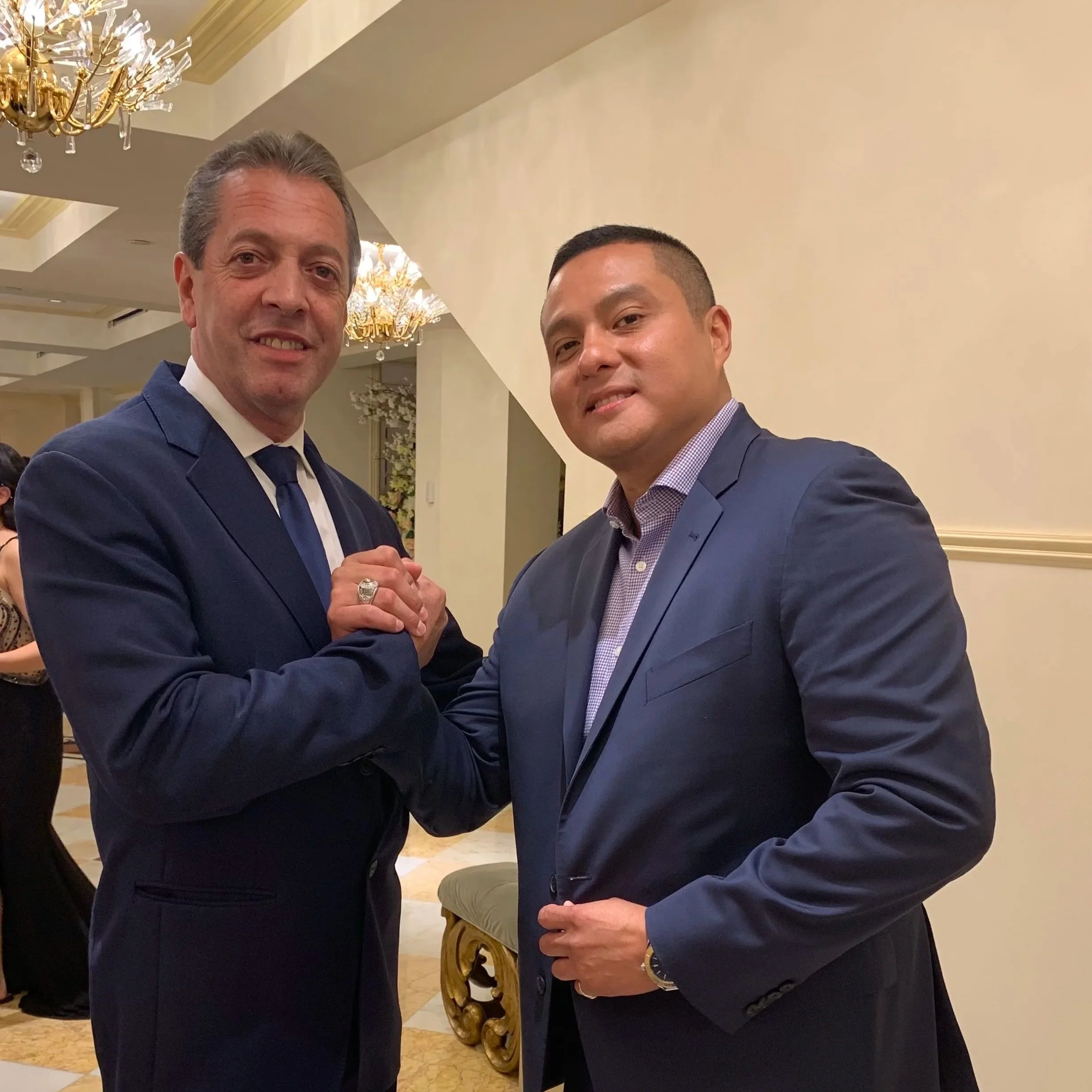
DON NICOLETTI: THE SANTA BEHIND SANTA

Santa Comes to Paterson depends on many donors, agencies, volunteers and families. Retired Closter Police Sergeant Don Nicoletti founded the PBA toy drive known as Santa’s Response Team with the support of the Closter PBA. What began as a local effort became a statewide network involving dozens of agencies and thousands of toys.

Retired Closter Police Sergeant Don Nicoletti

Santa’s Response Team supplies hospitals, shelters, military families, charities and community organizations throughout New Jersey. It also provides a critical share of the toys Moment of Silence brings into Paterson every year. For Moment of Silence, Don is the Santa behind Santa.

CAPTAIN JAY DAVIS AND STEPH LOVE

Captain Jay Davis of the Orange County Sheriff’s Office has returned each December since 2019 to serve as Santa. Jay commands the agency’s Special Operations Group and SWAT team, but his contribution to this program is measured by consistency. He flies over Paterson in the New Jersey State Police helicopter, joins the convoy and meets children across the city.

Steph Love has become another familiar face in the Christmas operation. A law enforcement officer herself, she works directly with children and families throughout the route, bringing patience, energy and warmth to a demanding day.

Blue named Captain Davis its 2025 Man of the Year in recognition of his continued service to the program.

MATT KIBURZ

For more than a decade, Matt Kiburz has been a steady presence behind Blue Magazine and Moment of Silence.

His contribution has been felt most clearly through Santa Comes to Paterson, where he has returned every year to make the day possible. He has provided the lead fire truck, equipment, fundraising assistance and the practical resources needed to turn an idea into a real event. From setting up the DJ and music to being present all day as toys are handed out, Matt has been there.

His family has shared that commitment, standing beside him and bringing the same generosity and care that Matt brings to everything he does. Over the years, officers have repeatedly told us the same thing: Matt is a great man. That respect was not earned through publicity or promises. It came from watching him show up, help without being asked twice, and give without looking for an award or recognition.

Matt represents the kind of person a magazine and charity depend on, someone whose character matches his commitment. With people like Matt beside you, ambitious ideas become possible. It has been an honor to work with him, and he belongs in this final story because his service has been real, consistent, and given from the heart.

CAESAR DEPAÇO

One year, Santa Comes to Paterson was in trouble. The operation had become too large to survive on good intentions alone. It required planning, law enforcement participation, transportation, volunteers, and significant financial support. That year, the resources were not coming together.

Caesar DePaço stepped forward. With the support of his wife, Deanna, he made a contribution that allowed the event to continue and helped officers and volunteers deliver Christmas to thousands of children throughout Paterson. For Moment of Silence, Caesar saved Christmas that year. Blue had watched Caesar’s commitment to law enforcement for years. He does not treat that commitment as a slogan. He asks agencies what they need and helps provide it, whether that means a K-9, vehicle, protective equipment, or another resource beyond a department’s budget.

Caesar is the founder and CEO of Summit Nutritionals International, but his impact in law enforcement extends far beyond business. By February 2024, the DePaços had donated 202 K-9s to police departments and sheriff’s offices in the United States and abroad, representing more than $3.5 million in K-9 contributions alone. That work inspired Blue’s first special issue devoted entirely to K-9s. More than 30 K-9 teams from agencies across the country became part of the edition. Their handlers described tracking, narcotics detection, explosives detection, building searches, officer protection, and the bond between a working dog and handler.

In August 2024, Somerset County Sheriff Darrin Russo appointed Caesar as the Somerset County Sheriff’s Office Law Enforcement Liaison Officer. Although Caesar is not a sworn law enforcement officer, the appointment recognized his years of service to those who are.

TROY MOL: THE TRUST BEHIND THE RECOMMENDATION

I met Troy Mol at one of BLUE’s early events, more than a decade ago. At the time, I was looking for a way to give law enforcement officers something practical that the magazine could stand behind. Buying or leasing a vehicle can be stressful. People want a fair price, but they also want someone who will explain the process, answer the questions, and treat them with respect.

Troy understood that from the beginning. When we met, he was a general manager at a Ford dealership in New Jersey and had already built relationships within law enforcement. Once Troy became part of BLUE, we developed a real partnership. Officers would call the magazine or contact me directly, and we would send them to him. He made himself available, gave out his cell phone number, and took the time to explain the rebates, financing, timing, and vehicles that fit a person’s needs. Over the years, officers and their families repeatedly came back to thank us for connecting them with him.

Today, Troy is with Schultz Ford Lincoln in Nanuet, New York. Our relationship has always been with Troy, not simply with the dealership. We knew that anyone sent to Troy would be treated fairly and given an honest answer. Over time, he also became one of my advisors to BLUE, someone I could call for straightforward counsel and an honest perspective.

Troy mol with former paterson pba president alex cruz.

He also helped make one of BLUE’s major projects possible. While planning the 2021 Blue Calendar, I told Troy we needed a setting with enough space and presence to make the shoot feel special. He immediately said, “Danny, you can use the showroom.” After speaking with the dealership, he made the Ford showroom available for the day. The project brought together more than 30 contributors and was distributed throughout New Jersey, New York, Connecticut and beyond. Troy’s decision to open the showroom gave the calendar a scale and presence we could not have achieved without him.

Troy and his family have also supported Moment of Silence, including toy drives for children in Paterson and other efforts in the community. His sons are now law enforcement officers, which reflects the respect he has always had for the profession. He is a man of faith, a devoted father, and a true friend to BLUE. He has been with the magazine through years of growth and success and, when life became more difficult, through some of its hardest moments as well.

Troy came into our lives through business. Over time, he became part of the extended BLUE family because he has always treated our community with the same care and honesty he would give his own family.

JANET LARRAIN: TURNING TRUST INTO A HOME

Janet Larrain became part of the Blue Magazine family after I met her at a New York law enforcement event hosted by Joseph Occhipinti and the National Police Defense Foundation. We began talking about real estate, but what stood out first was her interest in serving the law enforcement community.

Janet is a real-estate professional with Listed By Janet | Real Broker. She has served hundreds of law enforcement officers and their families, helping them buy or sell homes, understand interest rates, consider relocation options and decide when to make a move. She answers questions directly, explains the process in plain language and makes decisions that can feel intimidating more manageable.

Her work is rooted in New Jersey, but her value reaches beyond state lines. When an officer needs help relocating or buying elsewhere, including Florida, Janet can connect that family with trusted real-estate professionals in the right market and remain involved through the process.

That is why Blue Magazine introduced Janet to its community. The magazine did not give its platform to every advertiser or make recommendations simply because someone could buy an ad. A Blue recommendation carried the magazine’s name and the trust officers had placed in it. We looked for professionals who supported law enforcement, understood their field and could provide real value to readers. Janet met that standard. Over the years, officers and families repeatedly came back to Blue Magazine to thank us for introducing them to her. They told us she had been responsive, knowledgeable and committed to helping them through the process. It confirmed that Blue Magazine had placed its name behind the right person.

Janet also supported Moment of Silence, participated in events and joined her husband and daughter in helping distribute toys to children in the community. She became a trusted part of the Blue team because she earned that place through her work.

Janet Larrain, Listed By Janet | Real Broker. Direct: 609-902-0478

EDDIE YAGHEN: THE WORK BEHIND THE STORY

High-profile interviews are remembered for the person in front of the camera. They also depend on people the audience never sees. During the White House interview with United States Border Czar Tom Homan, Eddie helped coordinate transportation, equipment and setup under strict time constraints. He performed similar work for Blue’s interview with Mayor Eric Adams, collaborating with Chris Bonilla and the production team to make certain the reporting could proceed as planned.

Blue also entrusted Eddie with transporting visiting guests and crew members during sensitive assignments. Those responsibilities required more than driving. They demanded preparation, discretion and the ability to adjust when schedules changed. As a private investigator, Eddie brought situational awareness to work in which timing and trust mattered. His connection with law enforcement extended beyond production. During departmental visits, officers responded to his interest in physical fitness and wellness, often speaking with him about strength, conditioning and the demands the profession places on the body. That perspective supported the broader wellness mission shared by Blue Magazine and Moment of Silence.

Production work is often invisible precisely when it is done well. The audience sees the interview, not the travel, coordination and decisions that made it possible. Access alone does not produce journalism; a team must convert that opportunity into finished work. During Blue Magazine’s later years, which were among its most difficult, Eddie helped the magazine do exactly that. His contribution was measured in assignments completed, guests transported safely and opportunities that were not wasted. That work earned Eddie the trust of the team and his place within the Blue family.

PROJECT 201: SHAWN KELLY

Blue wanted Shawn Kelly and Project 201 included in this final issue because of the work he continues to do directly with young people.

Project 201 is a 501(c)(3) nonprofit focused on youth mentorship, opportunity, and development. It works closely with Moment of Silence, sharing the belief that community outreach requires consistent involvement.

Kelly’s perspective comes from his work with children in the school system and later in corrections, where he saw how strongly a young person’s support system can influence the direction of a life. Project 201 has moved beyond traditional youth activities. Kelly has introduced young people to aviation, placing them in airplanes and exposing them to the possibility of becoming pilots and pursuing careers they may never have considered.

“The programs are the vehicles,” Kelly told Blue. “The relationships are the work.”

Shawn Kelly is not simply talking about community outreach. He continues to show up and do it.

BAD APPLES: WHEN TRUST BREAKS DOWN IN LAW ENFORCEMENT

Blue Magazine stood with law enforcement, but that support was never blind. Supporting the profession meant defending integrity, accountability, fairness and respect, not every person who wore a badge or held rank.

There were officers at every level, from patrol to senior administration, who committed crimes, abused their authority or treated others without dignity. Their actions damaged public trust and forced honorable officers to answer for misconduct they did not commit.

Some of the most serious damage occurred behind department walls. Officers described retaliation, selective discipline, unwanted transfers and professional isolation after reporting wrongdoing, challenging decisions or refusing demands they considered improper. When personal loyalty becomes more valuable than competence or integrity, rank can become a weapon.

That pressure follows an officer home, affecting mental health, family relationships, parenting and friendships. An officer being harassed, intimidated or mentally worn down carries that burden before answering the next call for service. Protecting that officer is about more than preserving a career. It is about protecting a person before the damage reaches every part of life.

One New Jersey officer came to our attention after seeking help for his mental health. He received treatment, improved and was cleared by his doctor to return to work. His department required a separate fitness-for-duty evaluation. During that process, he disclosed a suicidal crisis from years earlier. The evaluator did not clear him, and the officer was suspended before eventually regaining his position.

We cannot know every discussion behind that decision, but we know its effect. An officer sought help, recovered and attempted to return to duty, only to face another struggle over his career. That experience can send a dangerous message: disclose a mental-health problem, and the information may later be used against you.

Fitness-for-duty evaluations are necessary to protect officers, colleagues and the public, but they must remain impartial and connected to an officer’s present ability to perform the job. They cannot be used for retaliation or to remove someone who has fallen out of favor.

When officers brought legitimate concerns to Blue Magazine, we listened. When the facts supported a story, we were prepared to report it. We also helped officers understand their options, whether that meant documenting what happened or connecting them with appropriate union, legal or investigative resources. The purpose was not retaliation. It was to help officers protect their careers, families and well-being.

Trust can also be destroyed without formal discipline. Officers described colleagues who spread rumors, betrayed private conversations or presented themselves as supportive while working against someone behind the scenes. In a profession where officers depend on one another during dangerous situations, that betrayal can be devastating. When vulnerability becomes material for ridicule, someone struggling with anxiety, depression or suicidal thoughts may decide that speaking honestly is more dangerous than remaining silent.

Wearing the same uniform does not require officers to agree about everything. It does require maturity, discretion and the ability to address conflict without attempting to destroy another person’s reputation or career. Departments cannot encourage officers to seek help while tolerating a culture that punishes vulnerability.

Respect for rank is part of law enforcement, but rank is not permission to abuse authority. Leadership carries the greater responsibility. Leaders establish what conduct is rewarded, ignored or corrected. When they permit favoritism, retaliation or personal attacks, they teach the department that trust is secondary to politics. When they apply standards fairly, officers know honesty will not become a liability.

Blue Magazine could confront these issues because it remained independent. No department, union or political organization controlled the magazine. We respected those institutions, but our responsibility was to the truth and the officers who trusted us. No title, connection or rank placed anyone beyond scrutiny.

Professionalism is measured not only by how officers serve the public, but also by how they treat their own when no one else is watching.

LINE OF DUTY DEATH: THE ULTIMATE SACRIFICE

In 2025, 111 law enforcement officers died in the line of duty. The year before, 148 were lost.

The numbers provide scale, but they cannot show what each death leaves behind. The public can otherwise reduce a death to a headline, a procession, or a name read once at a memorial. But every line-of-duty death leaves a permanent mark. It changes the lives of the people who served beside that officer and the people who loved that officer long before the uniform was put on.

BLUE saw that reality in Washington, D.C., during National Police Week.

At the Police Unity Tour and the Candlelight Vigil, the scale of loss becomes impossible to ignore. Officers, surviving families, and supporters gather at the National Law Enforcement Officers Memorial to honor those who did not survive their service. Thousands ride into Washington carrying names that may not be familiar to the public, but are never forgotten by the people who wear the uniform.

The Memorial brings together many stories, but no two losses are the same. Some families arrive carrying photographs. Others carry the weight of a loss that happened years earlier. Parents stand beside spouses, children, and colleagues. The names on the wall are a record of service; the people standing before them are a reminder of what service can cost.

One of those conversations stayed with me.

I met Debbie Sorrells, the mother of Baltimore County Police Officer Amy Caprio, during the Police Unity Tour. Amy had been killed in 2018 after responding to suspicious activity connected to a burglary in Perry Hall, Maryland. When she confronted the driver of a stolen Jeep, he deliberately drove into her. Amy was 29 years old.

Debbie spoke about her daughter with the pain of a mother who had lost someone she thought about every day, but also with pride. Amy wanted to be a police officer. She had chosen the work and understood what it meant to serve. Her mother came to Washington to make sure Amy’s name was remembered and to stand with other families who understood the same kind of loss. That conversation made the human cost of a line-of-duty death unmistakable. The loss does not end when the department’s ceremony is over. The family lives with it through birthdays, holidays, anniversaries, and ordinary days when the absence is felt without warning.

The ultimate sacrifice also reached my own family. My cousin, retired NYPD Detective Second Grade Jeffrey Montenegro, died in 2021 from pancreatic cancer related to his Ground Zero exposure after September 11. Watching my aunt, Rita Ramirez, receive the folded American flag honoring her son made the cost of service deeply personal. Jeffrey’s death showed that not every sacrifice happens in a single moment. Some emerge years after the assignment ends. The cause may be less visible, but the loss is no less real.

This is what remains after a law enforcement officer dies in the line of duty: an empty place in a family, a department changed by the loss, and a community asked to remember the person behind the badge.

The flag is folded. The name is engraved. The ceremony ends. For the people who loved that officer, the sacrifice does not.

SHERIFF LENNY MILLHOLLAND

Darlington’s story also led Blue Magazine to Frederick County Sheriff Lenny Millholland. The magazine wanted to understand why a sheriff would publicly support a deputy pursuing a career outside the traditional expectations of law enforcement.

Sheriff Millholland did not treat Darlington’s ambition as a distraction from the job. His standard was whether the deputy continued to meet his obligations to the agency and community. Darlington’s respect for his sheriff was equally clear. He valued having a leader who encouraged his development without lowering the expectations attached to the badge.

That approach revealed something important about leadership. Supporting an employee’s ability does not require overlooking professional standards. Sheriff Millholland made room for Darlington to pursue music while holding him accountable as a deputy. His leadership created the conditions that allowed both commitments to coexist.

HOLD THAT LINE: DEPUTY SHERIFF AND COUNTRY SINGER CHRIS DARLINGTON

That evening, the Blue Magazine team watched Darlington perform at West Oaks Farm Market before an estimated crowd of 1,200 people. The concert showed what an interview could not. Darlington had a commanding voice, a disciplined band and an audience that responded to him.

His musical progress was already measurable. “Hold That Line” surpassed 50,000 streams within its first three weeks, and an earlier recording had reached No. 82 on Nashville’s MusicRow chart. Darlington wrote “Hold That Line” specifically for law-enforcement officers after the pressures of 2020, intending it as a message of support.

Faith was present throughout the trip without needing to be staged. At one point, Darlington looked at me and said, “Danny, I’ve been praying.” He explained that prayer was part of how he understood the opportunities developing around his music and the people entering his life. The combination of music, service and faith created a natural connection with Moment of Silence. A song cannot replace treatment or direct support, but it can reach an officer, first responder or veteran who may not respond to an organization or formal presentation. Blue Magazine saw in Darlington’s work how music could open the door to a conversation about mental health for people who might otherwise avoid it.

The next morning, the team packed its cameras and returned to New Jersey with one final story intact: a deputy accountable to his sheriff and community, and a musician working to earn a larger audience without walking away from the badge.

MY PARENTS: THE FIRST MENTORS

Long before I received guidance from attorneys, sheriffs, commissioners and other law enforcement leaders, my first mentors were my parents.

I came to the United States from Ecuador when I was two years old. Our family lived in the South Bronx before my parents purchased their first home in Paterson, New Jersey. Both communities exposed us to the realities of low-income neighborhoods. Inside our home, however, my parents maintained structure, discipline, stability and faith.

My mother demonstrated empathy through action. She helped relatives, immigrants and others trying to establish themselves in this country, offering her time and whatever resources she could provide. My father worked full time and showed us the importance of consistency, responsibility and remaining committed to his family through difficult periods.

Their example established the foundation for the mentorship I later received from leaders in law enforcement and other professions. It also influenced how Blue Magazine approached its work.

Blue covered policing, leadership, mental health and public safety, but its purpose extended beyond publishing stories. We supported officers in crisis, provided a platform for people whose experiences deserved attention and remained involved in communities frequently discussed only in connection with crime or poverty. That approach came from lessons learned at home: take responsibility, remain present and help where you can.

The clearest example is Paterson, the city where my parents raised me and where I learned what it meant to grow up in a struggling community. Years later, it became the focus of one of Moment of Silence’s most important programs.

Through Santa Comes to Paterson, we return each year with quality toys, bicycles, basketballs and a full Christmas experience for children and families. The program does not treat the community as an abstraction or a charitable photo opportunity. I know those streets. I understand the effort required to raise a family there while trying to create stability inside the home.

My parents made that effort for us.

Their inclusion in this history is not ceremonial. The values they practiced became part of the way Blue Magazine and Moment of Silence served others. Later mentors strengthened those values, and the magazine gave me a way to apply them.
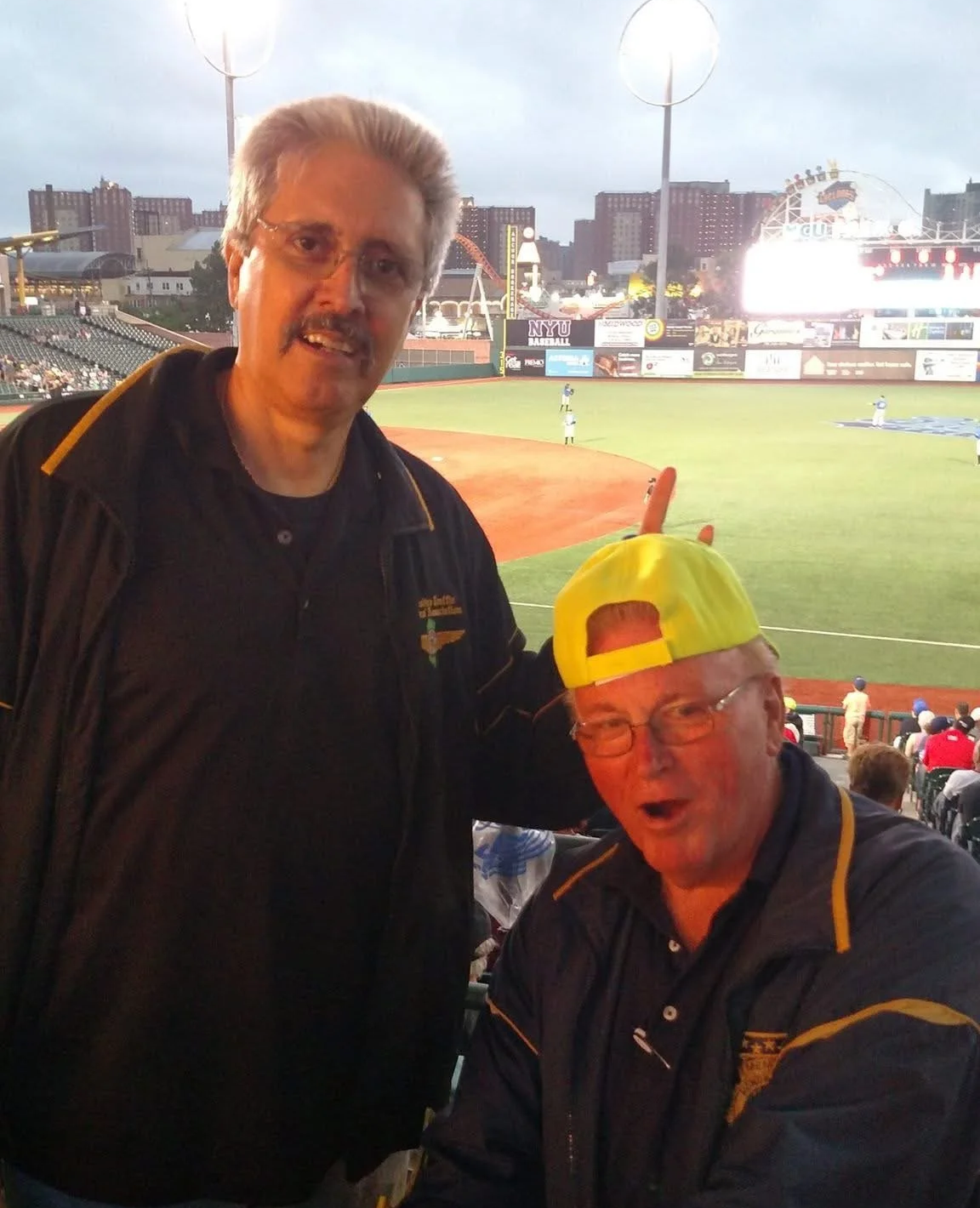
I have many imperfections, but the qualities that allowed me to build Blue Magazine began with my parents. Through our work in Paterson, I have carried what they gave me back into the community where they raised our family.
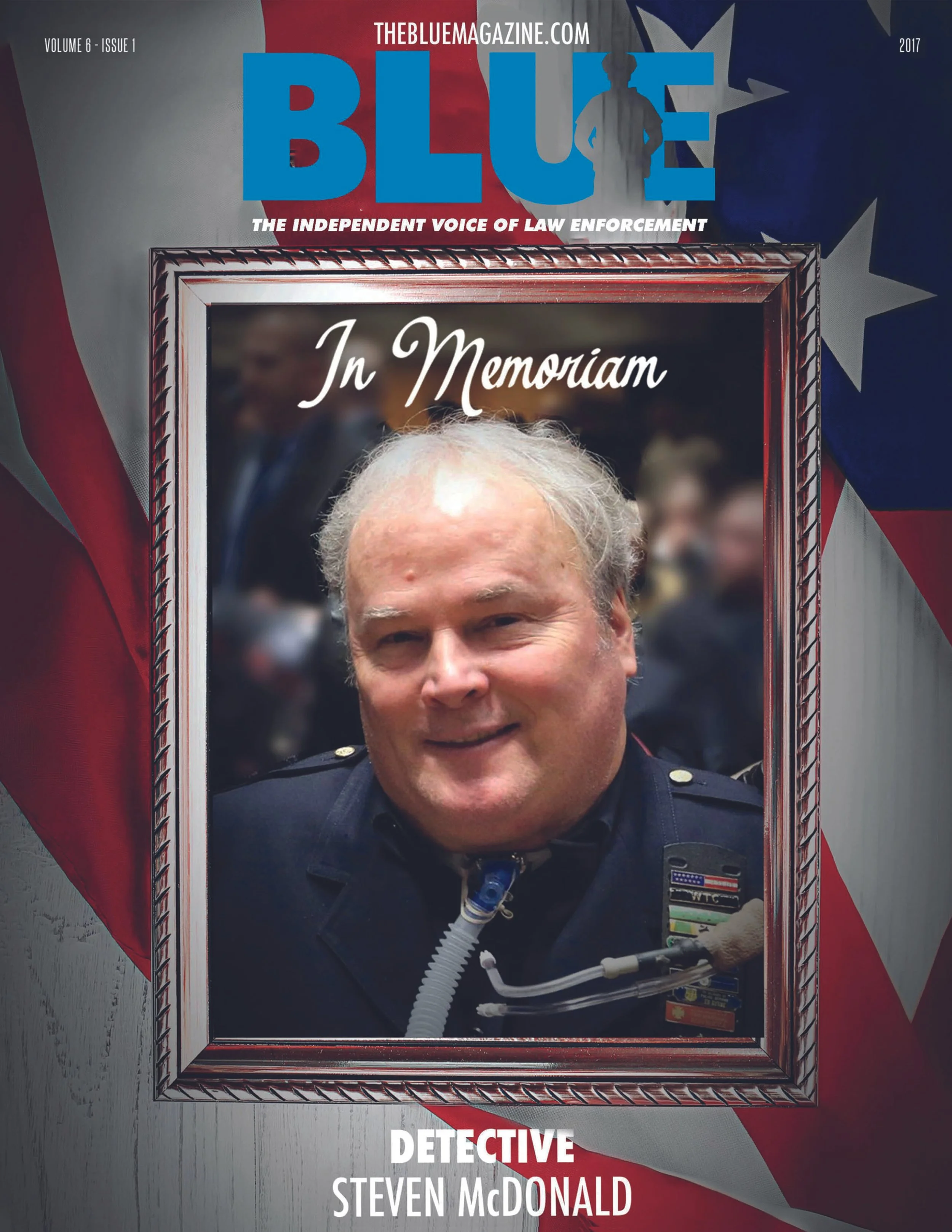
VOLTRON: A FINAL WORD FROM THE PUBLISHER

For most of Blue Magazine’s history, I preferred to stay behind the scenes. This final issue called for something different. I wanted readers to see how the magazine began, who made it possible and what it meant to the people who gave it their time, trust and support.

My close friend and trusted advisor, Rick Vanderclock, gave me a Voltron figure from his childhood, and we placed it in the Blue office. It remains there as a reminder of what Blue Magazine became: separate people, each bringing a different strength, joining together to create something none of us could have built alone.

In Voltron, five lions come together to form one force. Every part matters. Without one, there is no Voltron. That is how I see Blue Magazine.
I started the magazine while I was still serving in law enforcement. I never expected it to become a national publication or that I would continue leading it long after retirement. Life later placed me in another form of service: journalism, advocacy, charitable work and helping connect officers with people and resources they could trust.

Blue Magazine was never one person. It was a team. Editors, writers, photographers, designers, advertisers, advisors, officers, volunteers and families all brought something different to the work. Every role strengthened the whole. Together, we documented law enforcement, challenged ourselves to improve, built relationships across the country and supported officers and families when they needed help.

The work demanded many things at once. We had to pursue serious journalism, keep raising the standard and remain willing to address issues that mattered to law enforcement. I have always respected rank, leadership and the people entrusted with command. But Blue Magazine was never owned by titles or intimidated by them. Respect had to go both ways. We looked at the person behind the badge, the decisions they made and the way they treated the people they led.

That independence allowed us to stand with law enforcement without becoming a public-relations arm for anyone. It allowed us to enter rooms where officers could not always speak freely, ask questions on their behalf and report what we found.

Over the years, the work changed the way I saw life. On the job, officers can become numb to the difficult things they witness. After retirement, covering law enforcement on a national level brought a different kind of exposure: line-of-duty deaths, officer suicide, painful stories, extraordinary acts of courage, difficult streets in unfamiliar cities and conversations that reached from local departments to the White House.

That perspective shaped what Blue Magazine and Moment of Silence tried to do. If an officer needed help raising money, we tried to help. If someone had a story worth telling, we tried to give that person a platform. If an officer was struggling, we tried to offer friendship, understanding and a path toward help. This magazine was always for the law enforcement community. In return, the community gave all of us purpose.

That purpose is especially important when it comes to mental health. Officers must be able to express what they are carrying before it becomes too heavy to hold alone. Seeing trauma repeatedly can make a person feel numb, but numbness is not strength. It can be a warning that something inside needs attention.

I know that because I have been in a dark place myself and came through it. There is no shame in admitting that life feels heavy. Everyone has moments of weakness, fear or exhaustion. Too many people simply hide them. Speak to someone. Trust someone. Ask for help before the pressure becomes unbearable. And if you are already there, do not give up. You are not alone.

I will continue serving through Moment of Silence, with a focus on officer wellness, suicide prevention and support for law enforcement families. We will also continue giving back to children and communities. The magazine is ending, but the service does not end with it.

The final years of Blue Magazine were difficult. The publishing business changed dramatically after COVID, advertising support became harder to secure and the financial obligations of independent publishing grew heavier. After seventeen years, I made the decision to close the magazine. It was one of the hardest decisions I have made, but I believe it was the right one.

Closing Blue Magazine does not erase what it accomplished. We did this our way. We gave the work everything we had. We documented a profession we love and respected the trust that came with access to its people and stories.

My faith has changed the way I understand hardship. I did not have the relationship with God that I have today when this magazine began. Now I understand that difficult seasons can carry purpose. Rain can ruin a day, but it also nourishes what will grow afterward. I believe the storms we faced taught us, refined us and prepared us for what comes next.

I thank every person who was ever part of Blue Magazine. Some are named in this issue, and many are not. You know what you contributed. I wish every one of you peace, health, hope and God’s protection.

I thank my family, especially my wife and children, for standing with me through the good years and the hard ones. A strong family gives a person the foundation to keep moving when everything else becomes uncertain.

I will always carry the moments Blue Magazine gave us: the officers we met, the interviews we conducted, the events we built, the stories we documented and the day our team entered the White House to interview United States Border Czar Tom Homan. I remain humbled by the men and women in blue we were trusted to cover. They are the reason this work mattered.

Finally, we will never forget September 11. We remember the officers, first responders and civilians who died that day, and the many responders who continue to be lost to illnesses connected to their service. Their sacrifice must remain part of our national memory.

Blue Magazine documented law enforcement for seventeen years. I am grateful for every one of them.
Stay safe. Stay strong. Never give up. Stay in the fight.

“OLD SCHOOL COPS” Honoring Leadership and Mentorship

“OLD SCHOOL COPS” Honoring Leadership and Mentorship
By: The BLUE Magazine Editorial Staff

To many it’s like deja vu all over again (a famous quote attributed to New York Yankees Hall of Famer Yogi Berra). With the attempted cultural shift occurring in the restoration of law, order and a respect for best practice policing methods along with appreciation to those who do the work, here is a small sampling of some of our modern-day mentors and leaders in law enforcement with proven past track records of success that are making a positive impact today.

·Bernard Kerik first joined the New York City Police Department in 1986. A former NYPD Police Commissioner, he remains a strong voice and advocate for modern-day policing. Based upon successful tenures as both Commissioner of New York City Department of Corrections and NYPD Commissioner, his experiences and expertise in crime reduction, enforcement, and disaster management remain of great value to our profession and the BLUE Magazine.

·David A. Clarke, Jr. is the retired Sheriff of Milwaukee County Wisconsin and advocates for law enforcement nationwide. He is a frequent guest on cable news channels such as NewsMax and speaks as a law enforcement expert in great demand on numerous in-person speaking engagements throughout the United States. His written columns and articles appear on a regular basis in the BLUE Magazine and on our website thebluemagazine.com.
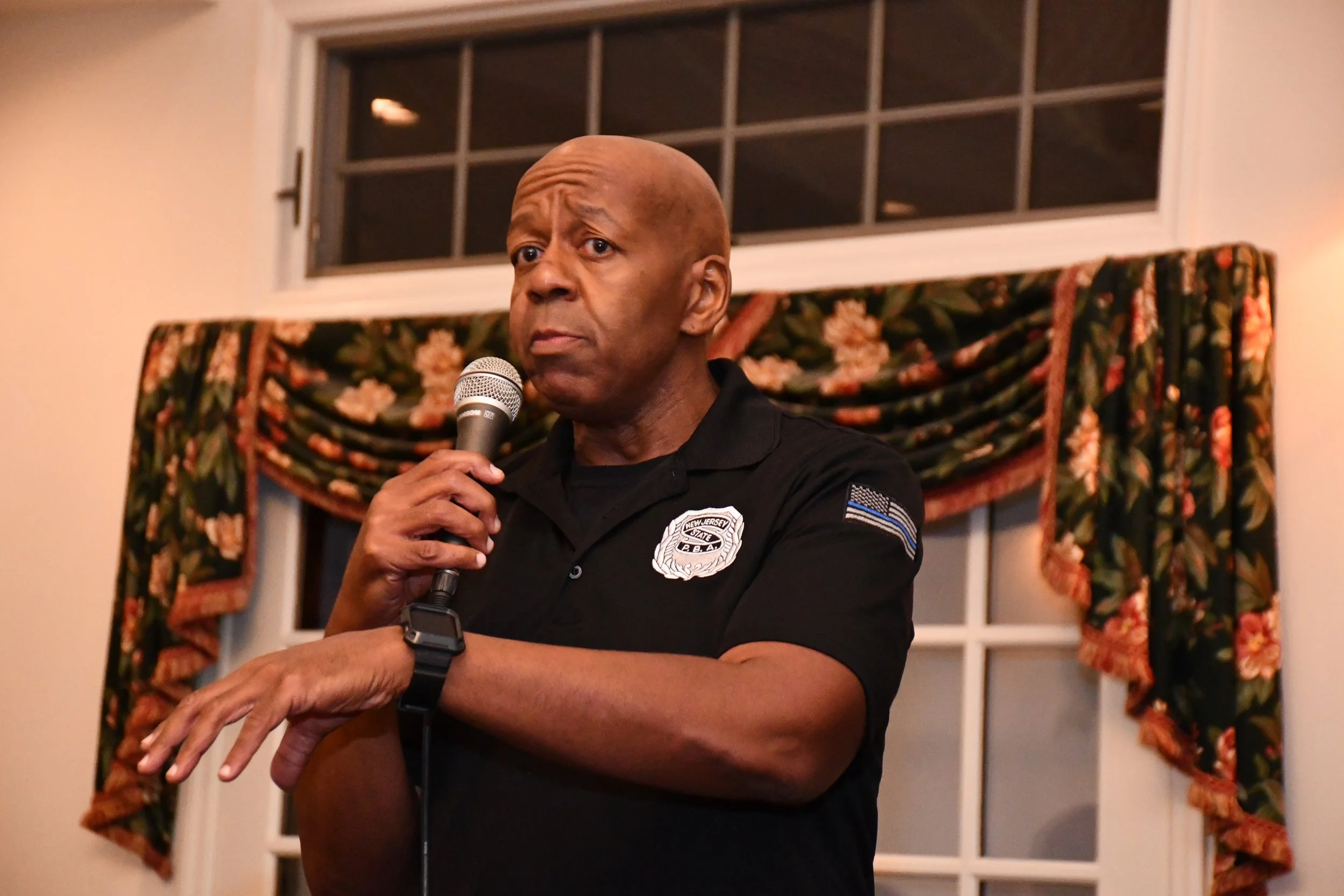
·Tom Homan, the current Trump administration Border Czar, has relied on his decades of experience as a police officer, manager, and administrator in spearheading the Trump administration’s programs to remove unlawfully entered violent criminals and gang members currently here in the United States. A good friend to law enforcement and the BLUE Magazine, we honor his service both past and present.

·Kash Patel, our current FBI Director, has a long record of government service. Having served as a public defender and later as a prosecutor, he has also served in many other critical federal government roles. His proclamation that we must allow good cops to be cops is exactly the message needed during these transitional times.

·Joel E. Gordon, the BLUE Magazine Editor-in-Chief, began his law enforcement career with the Baltimore City Police Department in 1980. Going on to work for the Crofton Maryland Police Department, and later as Chief of Police for the Kingwood, West Virginia, Police Department, he has been awarded by BLUE Magazine for Excellence in National Law Enforcement Leadership and recognized by Marquis Who’s Who in America 2025 for his continued contributions to the profession.

These and many other “old school cops,” many of whom can be found writing for the BLUE Magazine, remain of great value to law enforcement as it continues to evolve, grow, and ultimately once again flourish

Editor's Message

"Let good cops be cops" – Kash Patel

FBI Director Kash Patel was perfectly on point when he said during Senate confirmation hearing testimony that we must allow cops to be cops. In the sixteen years of our publication’s existence, we have always promoted best practices through shared knowledge and experience as our law enforcement profession continually evolves. One principle we have never wavered on has been our core mission of safety through promotion of the need to let cops be cops in keeping the peace through enforcement of law.

We at Blue Magazine are excited to deliver our 16th Year commemorative issue to our loyal readers and supporters. It’s an honor to look back on the road it took to get here, the initiatives we pursued, and the numerous accomplishments and successes individually and collectively we’ve made along the way.  The Blue Magazine began in 2009 as a very small local publication that circulated the magazine in the greater New York/New Jersey areas, mostly through the trunk of our founder Daniel Del Valle’s car. As each issue was built and hand-delivered, it became more and more evident that our independent voice was not only needed but that it was vital. We knew that if we were brave enough to speak truth to power—to challenge the status quo—and to fiercely defend and advocate for the men and women of law enforcement, the advancements we could promote for our profession were endless.

We are here now. The Blue Magazine is the leading national law enforcement publication, and our reach continues to grow.   However, our success didn’t happen overnight. Hard work and a commitment to excellence are what opened the many doors and brought the magazine to tremendous success. Year after year, the Blue Magazine has stayed true to our core principles. As you turn the pages in this commemorative issue, you will see the benefits of consistently doing the right thing, even when it’s often much easier to acquiesce and take the “easy road.”

Enjoy this commemorative issue as we celebrate our 16th year with you. We have many future initiatives planned ahead, and although these years have passed, we’ve really just begun. So stay tuned as Blue Magazine continues to raise the bar. We exist to fiercely advocate for and defend law enforcement.  To all of you who have been with us since day one, to those who hopped aboard along the way, and to many who are new, you are all important to us. We appreciate you. Our writers, editors, supporters, and the entire BLUE Magazine family are the best, and together there is nothing we can’t accomplish for the greater good! United we are strongest. God bless us all and remember to always watch each other’s six.

Joel E. Gordon
Editor-in-Chief
 

TRIBUTE - JOSEPH WAMBAUGH

TRIBUTE - JOSEPH WAMBAUGH

"Here's an excerpt of the last known exclusive and comprehensive interview given by Joseph Wambaugh to Lori Cooper originally published by BLUE Magazine in late June 2022.

His writing and insights will always be remembered. May he rest in eternal peace.”

JOSEPH WAMBAUGH: A COP, CREATIVE WRITING GENIUS, AND AWARD-WINNING BOOK, TELEVISION, AND MOVIE SCREENPLAY WRITER AND CONSULTANT, ON HIS CAREER AND POLICING IN AMERICA TODAY
By Lori Cooper

A few years ago, I had the audacity to write to Joseph Wambaugh, who now casually signs his name in every response as just "Joe," or "Joe W.," a representation of how many times we've corresponded. The need for formality in his full name had now been reduced to what friends do: to simply call each other by the shortened version of their first names.

A complicated man whose tough interior shifts with topics about his days from earning a MA degree in Literature, to his 21 works of bestselling nonfiction and fictional tales about the lives of the American police officer, to his titles that were adapted into major motion pictures and made-for-TV movies, Joe Wambaugh has almost come to peace with a life where he feels his work, and his name, have all but been forgotten.

After graduating from high school in Ontario, California, he entered the United States Marine Corp, serving a three-year tour-of-duty. At the age of 18, he married his high school sweetheart, Dee Allsup. When he entered the Los Angeles Police Department in May of 1960, he'd already earned his Bachelor's degree in English, taking advantage of the G.I. Bill subsidy offered to members of the service, along with classes he could take on his off-duty hours. Wambaugh added, about his longstanding marriage to his high school sweetheart, "We were married when I was a Marine and she was a telephone operator.  We are both hard workers who don’t back off when things are difficult.

During his first eight years on the LAPD, he worked various assignments and returned to his alma mater, California State, Los Angeles, where, again, on his off-duty hours as a cop, he majored in English and earned a MA in Literature by 1968. He also worked his way up the ranks to becoming a detective sergeant for the Los Angeles Police Department. He was likely the only cop to have ever earned a master's degree in literature in 1968, with his first three books he'd also write while serving for the LAPD. Joe Wambaugh's undeniable career successes read like an A-to-Z collection of the Encyclopedia Britannica.

            My late dad had been a police officer in Columbus, Ohio during a time when Wambaugh, himself, was serving for the Los Angeles Police Department.

            I explained to Joseph Wambaugh that my late father had been a member of the Book-of-the-Month Club in the late 1960s and early 1970s, receiving all of his books that were always best sellers. Wambaugh went for the gusto when he wrote "The New Centurions" in 1970, his novel he described as the "first really true story about modern day policing in an urban environment." He knew that it would never be approved by the department or its then-chief, Ed Davis, so he sent it out without the department's approval.

As the story goes, Joseph Wambaugh's first novel became a Book-of-the-Month Club selection, and so my dad had received a copy of it, along with so many more. During a time when I was eight-years-old and supposed to be reading the novels that were a part of the classics in "The Nancy Drew Mystery Stories," I was instead reading my dad's cop books written by Wambaugh about the reality of how 'the job' affected a cop's life. Many of his subjects dealt with the escape into alcohol use, marriages that failed, and all of the fortitude that went along with those who were Wambaugh's main characters in his first novel,"The New Centurions," about three academy graduates from the same academy class, and how their personal and professional lives as cops evolved and changed over a five-year period.

I learned about the character of William "Bumper" Morgan in Wambaugh's second book, "The Blue Knight," and the hardest 'beat' of his life in a gritty and witty beat cop who was on the verge of retirement after 20 years as a patrolofficer. Cynical and idealistic at the same time, there's a little bit of "Bumper" Morgan in Joe Wambaugh, in my opinion.

But the third book of Joe Wambaugh's career, "The Onion Field," revered as the best true-crime story ever written alongside Truman Capote's,"In Cold Blood,"earned him a jacket review by Capote, something Wambaugh believed to be a real honor. When asked how he had met Truman Capote, Wambaugh explained, "I met Truman on The Tonight Show with Johnny Carson. He and my wife became acquainted in the Green Room, and he invited us to his Palm Springs home for lunch."

All of Wambaugh's first three books were adapted into films, with "The Onion Field" the first work of nonfiction he had written by 1973. Despite his belief that even young cops aren't aware of his name or his award-winning books and films, I have challenged him about his notion of that thought, having spoken with so many cops, retired and active-duty, who believe this title to be the one that changed the trajectory of policing forever. In my own cynical ways, I feel anyone who is or has been a cop, a reader of true crime books, or an avid viewer of true crime movies, would have to have lived under a rock to not have read, have viewed, or at least have heard about "The Onion Field." When I asked Joe about this topic, he capitulated in a response that still gives me cold shivers: "if policing became more sensitive to the psychological wounds suffered by cops, and not just the physical wounds, then yes, I am proud of that," he replied.

Just in case there's one person or cop who hasn't heard of this book or film, it's based on the lives of LAPD Officers Ian Campbell and Karl Hettinger, who made a traffic stop in 1963. Officer Campbell's gun was stripped from him from one of two sociopaths in the vehicle, and both officers were kidnapped and driven to an onion field, where Officer Ian Campbell was executed, and Officer Karl Hettinger ran, escaping his own death by the two cop killers. Officer Karl Hettinger would suffer from incredible amounts of 'survivor's guilt' and what we now know to be post-traumatic stress syndrome, otherwise called PTSD. He was forced to resign in 1966 and died at the age of 59. When I asked Joe Wambaugh out of all of his books who his favorite character was, he proclaimed, "possibly Karl Hettinger because of how much he suffered and endured."

Along the same subject matter, I asked Joe Wambaugh, in his opinion, which film adapted from all of his books he would suggest was the best, and, while I was not surprised, he responded with "The Onion Field.”When I asked why he felt it was the best, his answer was, "because it was faithful to the book. That is because I wrote the screenplay and self-financed [the film] and raised more money to maintain control [of the film].

Joseph Wambaugh retired from the LAPD in 1974, after serving 14 years. With his first three books making the best seller's lists, the first two were adapted into films rather quickly. "The New Centurions" was on The New York Times best seller's list for 32 straight weeks and opened to worldwide film audiences in August of 1972, while "The Blue Knight" aired to television audiences in 1973. Joe Wambaugh had become famous, and with that fame and notoriety came a myriad of problems he deemed too disruptive to the business of police work, forcing him to leave his beloved job for the LAPD and become a full-time writer.

Though he would go on to write 18 more books and create the popular television anthology, "Police Story" in 1974, Joe Wambaugh has decidedly elected to allow his pen and paper to simply marvel all of the work of his past, leaving future stories to those who may continue to attempt to succeed his award-winning work in true crime books and cop dramas.

Finally, when asked what recommendations he would make to anyone who wants to become a law enforcement officer, Joe Wambaugh responded with the good humor and great candor that nobody like him possesses. He said, "In my book, HOLLYWOOD STATION, “the Oracle”, a senior sergeant tells young cops that doing good police work is the most fun that they will ever have in their lives. I do not know if that is still true." He also noted, “If you want love, join the fire department. People needy of approval should not become cops."

Lori Cooper is the daughter of a late Columbus, Ohio Police Officer shot in the line of duty and whose perpetrator eluded authorities for 44 years until her own search resulted in his apprehension. Her story, featured by hundreds of news organizations, catapulted her to success as an expert law enforcement advocate, where she now writes for law enforcement media groups and is a highly-acclaimed guest on national radio and television.

Blue Magazine's Iconic Covers

The Blue Magazine had the honor and privilege of interviewing 
President Donald J. Trump. Remarkably, on the day of the interview, President Trump proceeded with it just hours before being arraigned in New York City, without canceling or postponing.

The Blue Magazine had the privilege and exclusive access to the New Jersey State Police. We met with troopers from across the state and gained insight into the many specialized divisions that play a vital role in keeping New Jersey residents safe. We also explored the rich history of the agency and learned about the journey that has shaped it into the respected institution it is today.

This K-9 issue was inspired by the DePaço family and their unwavering support for law enforcement—especially their generous, selfless donations of K-9s to agencies across the country. In this issue, we highlight K-9 Lanzer, who is featured on the cover, as well as numerous K-9 teams and their dedicated handlers from around the nation, showcasing their incredible work and commitment to public safety.

In this Blue Magazine issue we examine the growing challenges facing law enforcement, including a lack of support from leadership and the increasing impact of social media on public perception. Officers risk their lives daily, yet many feel abandoned by those in command. As social media amplifies incidents without context, the need for strong, principled leadership has never been greater.

The Blue Magazine takes to the streets of Chicago to speak directly with residents about the city’s high crime rates and the countless victims affected by everyday 
violence.

NY Blue Now honors the life and legacy of Detective Steven McDonald, who was shot in the line of duty on July 12, 1986. Despite the severity of his injuries, Det. McDonald survived the horrific incident and lived for another 30 years. During that time, his faith and hope became central to his life. In an extraordinary act of grace, he forgave his assailant and chose a path of forgiveness and love. Det. McDonald passed away on January 10, 2017, leaving behind a powerful legacy of resilience, compassion, and peace.

Back in 2015, the former NJ Blue Now had the opportunity to interview Sheriff David Clarke for the first time. Known for never holding back when it comes to defending law enforcement, Sheriff Clarke has remained a steadfast ally and friend to The Blue Magazine family ever since.

In 2020, The Blue Magazine endorsed President Donald J. Trump for re-election, citing his strong commitment to law and order and his steadfast support for both 
law enforcement and the community.

This issue of The Blue Magazine serves as a powerful reminder that God is with us at all times. Even when it feels like all hell is breaking loose, God remains in control.

The Blue Magazine had the exclusive honor of interviewing former NYC Mayor Rudy Giuliani and former NYPD Commissioner Bernard Kerik, two decades after the tragic events of 9/11. In this powerful conversation, they reflect on the chaos and courage of that day, the aftermath that reshaped a nation, and where life has taken them 20 years later.


The Blue Magazine had the exclusive opportunity to interview former NYC
Mayor Rudy Giuliani. We admire his leadership and view him as a strong example of a political leader who took accountability for the city he served.


The Blue Magazine had the honor of interviewing former ICE Director Tom Homan. He shared his perspective on the growing violence against ICE facilities and the public disdain faced by Border Patrol agents, despite the risks they take every day to apprehend criminals and keep our communities safe.

In this issue, The Blue Magazine shines a spotlight on mental health within the law enforcement community. Blue Suicide is a harsh and growing reality that cannot be ignored. It's time to have open, honest conversations and remind our brothers and sisters in blue that help is available-there is a way forward, and they are never alone.

At the time, NJ Blue Now had the honor of interviewing the Secret Soldiers of Benghazi—Mark “Oz” Geist, Kris “Tanto” Paronto, and John “Tig” Tiegen—to set the record straight, honor the sacrifice of the fallen, and ensure the world knew the truth. On September 11, 2012 on the volatile ground of Benghazi, Libya, Islamic militants attacked the American Diplomatic compound killing U.S Ambassador Christopher Stevens & U.S Foreign Service Information Management Officer Sean Smith. Six Americans had the courage to stand up and do what was right. Two of these heroes were killed in the firefight at the CIA Annex.

In the early days of the COVID-19 pandemic, while many government employees and elected officials transitioned to working from home, police officers remained on the front lines. Without the option to socially distance, they continued to serve their communities amid uncertainty and health risks. Now, with vaccine mandates implemented in various jurisdictions, many officers are faced with a difficult choice: comply with vaccination requirements or risk losing their careers and livelihoods.