
BUILT TO LEAD inside the leadership of a Virginia Sheriff
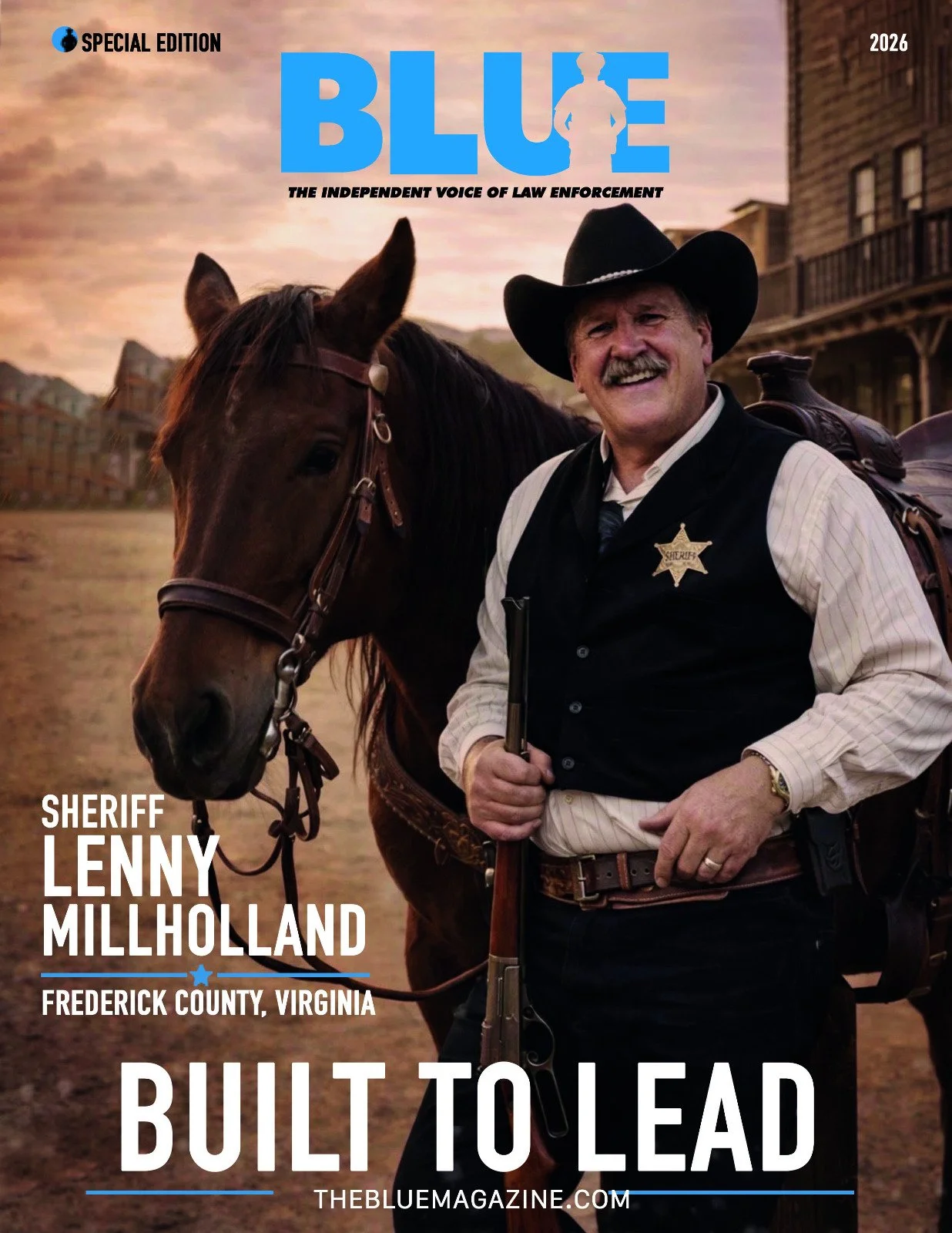
/After nearly five decades in law enforcement, Sheriff Lenny Millholland still measures leadership by a simple standard: take care of the community, demand accountability and take care of the people who wear your uniform.
By Shai Carr, Alyssa Del Valle and The BLUE Magazine Editorial Team
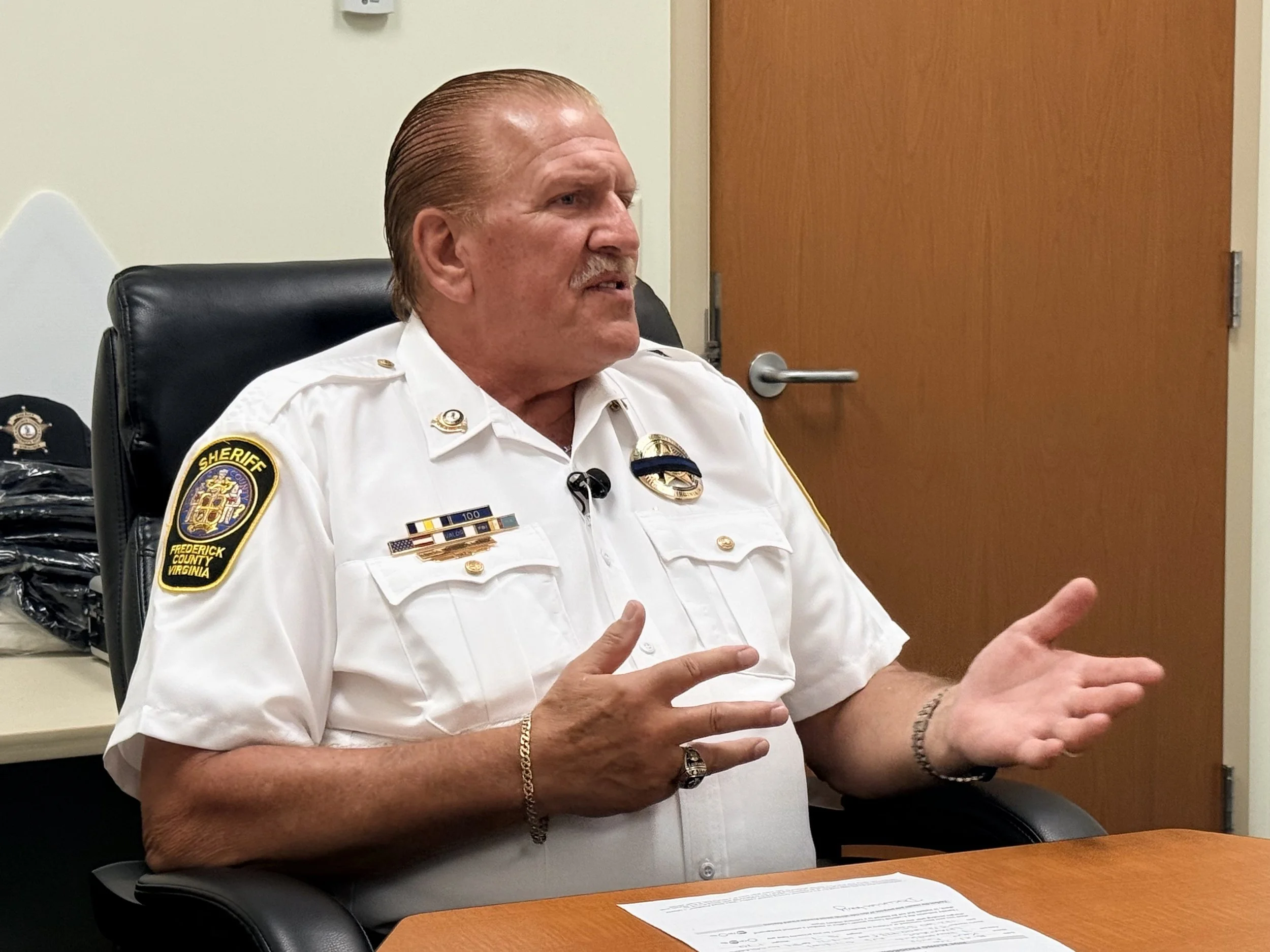
SHERIFF LENNY MILLHOLLAND, FREDERICK COUNTY, VIRGINIA
In Frederick County, Virginia, Sheriff Lenny Millholland doesn’t need much time to explain how he feels about law enforcement. “I love it,” he said. “And I love the people that I do it for.”
BLUE sat down with Millholland at the Frederick County Sheriff’s Office to talk about a career that began in 1977. In person, he is direct, professional and down to earth. There is little ceremony about a man who has spent nearly five decades carrying a badge. His expectations are high, but his view of leadership is uncomplicated: if you ask something of the people who work for you, they should be able to expect something from you in return.
Millholland’s path into law enforcement was not obvious. Raised by a single mother, he admits he found his share of trouble as a kid. “I was in trouble all the time,” he recalled. “They knew me because they used to come to my house and knock on the door trying to figure out where I was.”
While working for a veterinarian, he met troopers and deputies who brought police dogs in for care. One deputy took him under his wing. Millholland still calls him “Poppy.” A ride-along followed, and eventually so did the badge.
Millholland began his law-enforcement career in 1977 and joined the Winchester Police Department two years later. Over the decades, he served as a deputy, police officer, K9 handler, investigator, police chief and sheriff. He spent 22 years handling police dogs. He has been shot at and stabbed. One of his dogs was stabbed. He has investigated murders, rapes and robberies.
His explanation for surviving it all comes with a smile. “For some reason, the good Lord doesn’t want me or the devil can’t handle me,” he said. “But I’m still here.”
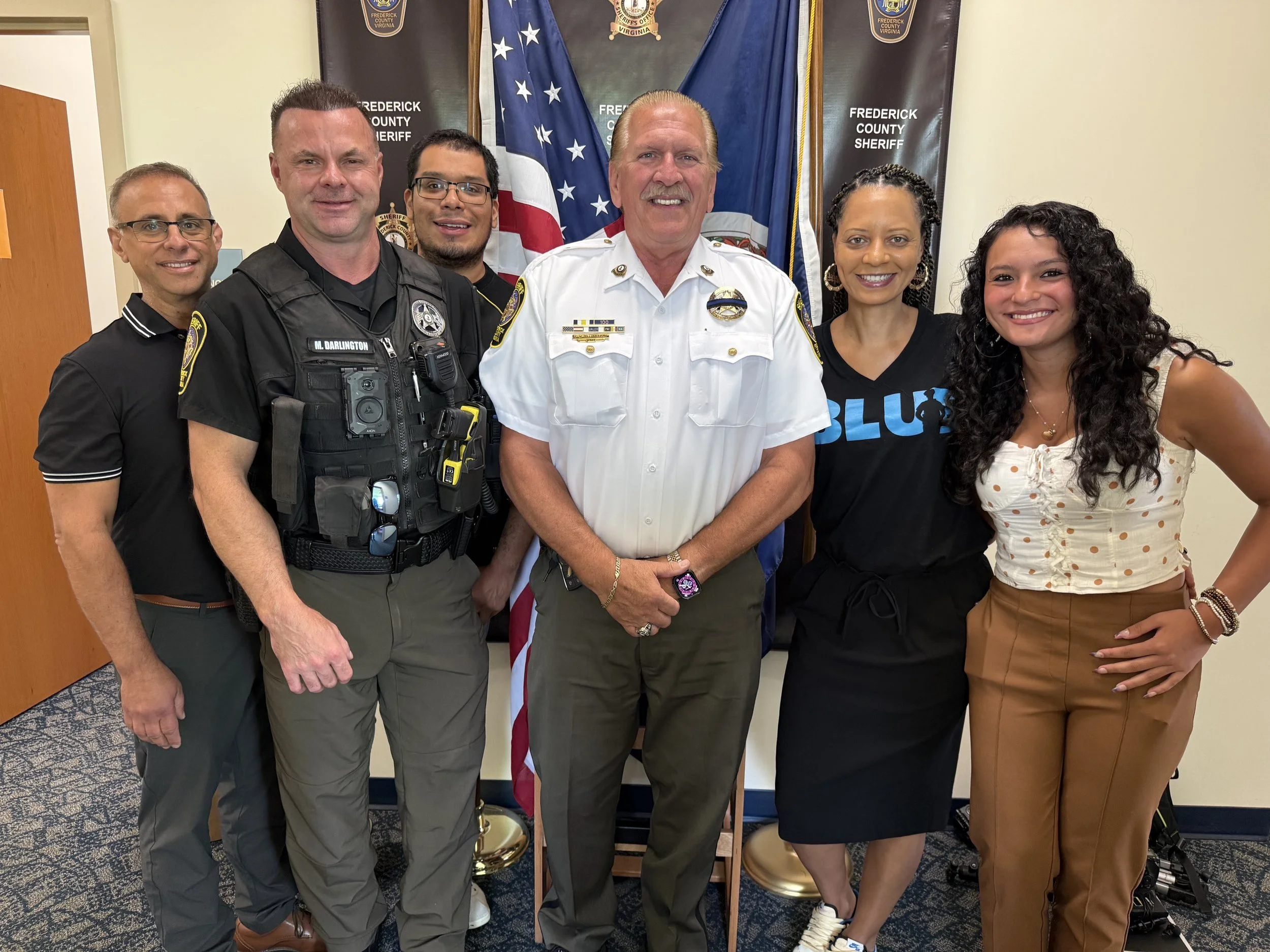
Today, Millholland leads a full-service sheriff’s office serving roughly 100,000 residents across 415 square miles. His message to the approximately 160 sworn personnel under his command is direct: “You’re a direct reflection of me, and don’t make me look bad.”
It is a stern line. But Millholland believes responsibility travels both ways.
Deputy Chris Darlington is one example. Darlington is a Frederick County sheriff’s deputy, school resource officer and country singer. Millholland has known him for years and remembers watching him play piano and sing at school events as students cheered. Today, Darlington continues to wear the uniform while recording and performing country music, including “Hold That Line,” a song written in support of law enforcement.
Millholland has encouraged him.
“I have to support my people,” he said.
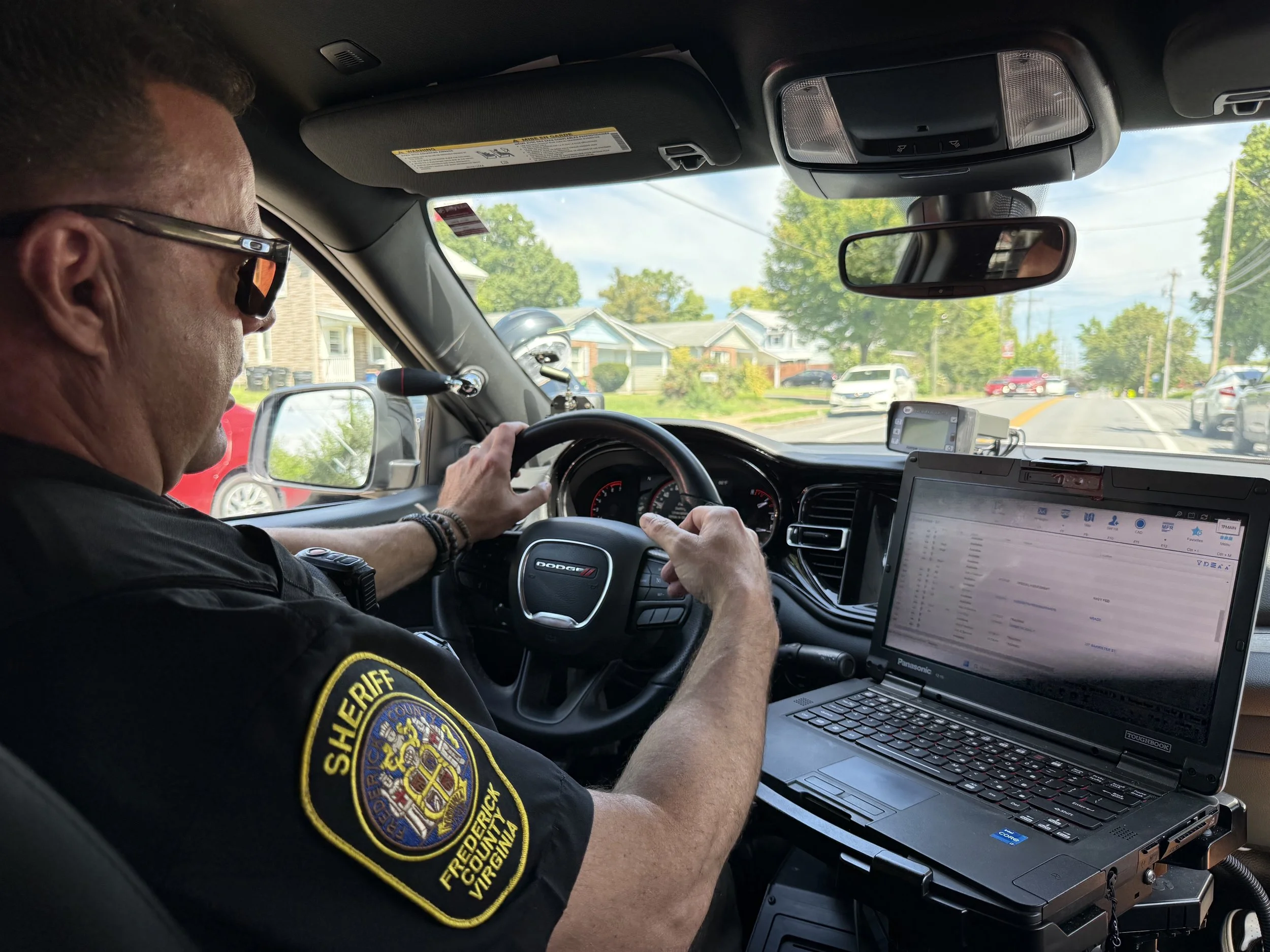
deputy Chris darlington FREderick county, virginia
Darlington has his own cover and story in this special edition. Here, his presence reveals something about the man leading his department. Millholland has a deputy succeeding in two demanding worlds, and rather than treating that ambition as a distraction from the badge, he has supported it.
That responsibility becomes far more serious when an officer is struggling. Millholland said the agency has a confidential resource for personnel dealing with emotional or mental-health problems. He spoke openly about officer suicide and the importance of making sure someone in crisis knows there is somewhere to turn.
“We’ll do whatever we can to try to help people,” he said. “If they have positive reinforcement from their leadership, hopefully they’ll know that they can talk to somebody within that agency.”
Accountability matters too. Millholland moved early in his tenure to equip deputies with body cameras and Tasers. Some personnel initially resisted the cameras, but he believed they could protect both the public and the deputies themselves. He says recordings have proved particularly valuable when complaints against officers do not match what actually occurred.
His approach to policing, however, was formed long before body cameras or command positions. Millholland remembers being the kid on the other side of the badge, and that experience sometimes influenced the discretion he exercised as an officer. He understood that not every young person making a bad decision needed to have a life changed by it. Sometimes a kid needed a break.
Years later, some remembered the officer who gave them one.
“You help people, they’ll help you,” he said.
One of Millholland’s proudest memories has nothing to do with an arrest. As a bloodhound handler, he was called to West Virginia to search for two missing boys. It was pouring rain, and hours into the search he found boot prints that appeared far too large to belong to children. Others questioned whether his dog was following the right trail.
Millholland kept going.
He and his bloodhound eventually found the boys sitting on a stump in the rain, crying. The oversized footprints suddenly made sense: both children were wearing their grandfather’s size 10 galoshes.
Faith has remained another constant in Millholland’s life. His mother and grandmother raised him in church, and his mother taught him that if he could make one person smile during the day, he had done what the Lord wanted him to do.
“You never know how bad today is for somebody,” he said. “If you can be that bright light that changes the way they look at life, you’ve done your job.”
When Millholland talks about eventually leaving office, he doesn’t talk first about elections or titles. He talks about whether his personnel were taken care of. He worries when a deputy is in a pursuit or when shots are fired. With roughly 160 people under his command, he knows a telephone call can change everything.
“The last thing I want is for my people to ever get hurt,” he said.
After nearly five decades, Millholland has seen the profession from almost every level. Yet when he was asked what makes someone a good leader, his answer did not require a résumé or a discussion of rank.
“Understanding people,” he said. “And living what you’re trying to tell them.”