
CHRIS DARLINGTON he wears a badge. Country radio is listening.
/By Shai Carr, Alyssa Del Valle and The BLUE Magazine Editorial Team
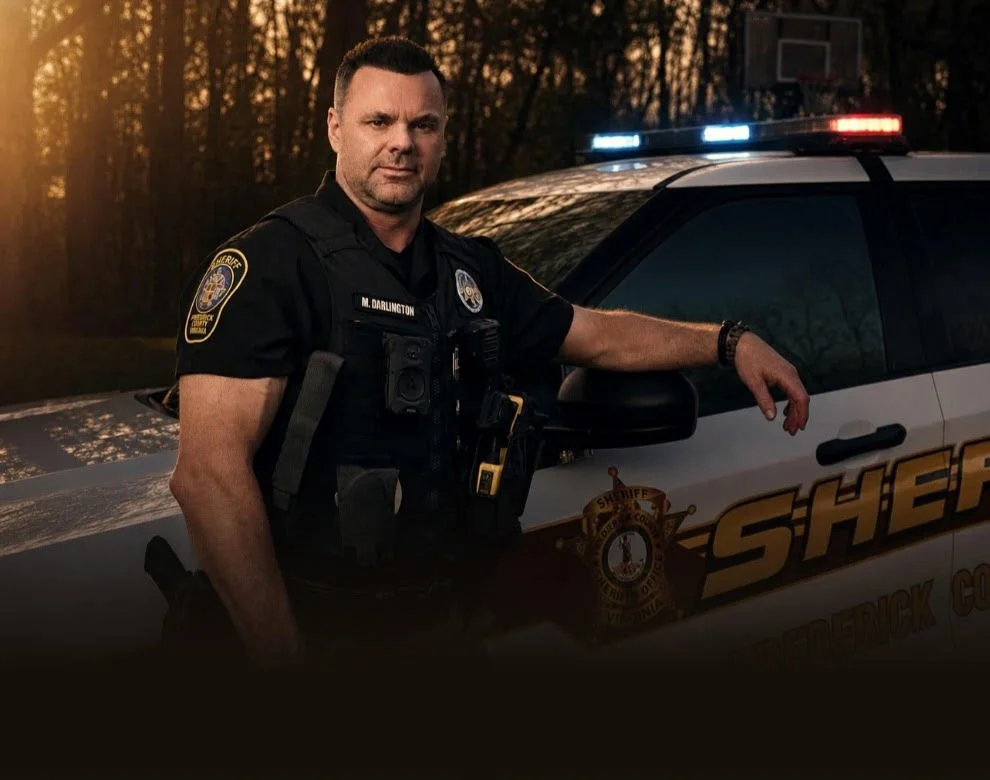
frederick county sheriff’s office deputy chris darlington has spent yeras balancing a career in law enforcement with an increasingly serious pursuit of country music.
BLUE Magazine and Moment of Silence traveled to Frederick County, Virginia, because we had heard Chris Darlington before we met him. We knew he was a deputy sheriff. We knew about “Hold That Line,” the song he wrote from the perspective of someone who actually wears the badge. We knew he was recording in Nashville, performing regularly and trying to move his music beyond the local circuit. What we wanted to understand was whether the music stood on its own.
We spent much of the afternoon with Darlington in and around Frederick County and Winchester. BLUE journalists Shai Carr and Alyssa Del Valle interviewed him during a ride through the community, talking about music, law enforcement, family, songwriting and faith. Darlington showed us the area, including the Winchester home where Patsy Cline once lived. Throughout the day, people recognized him and mentioned that they planned to see him perform that evening. It gave us an unusually complete way to report the story: spend the day with the deputy, then watch the country singer go to work that night.
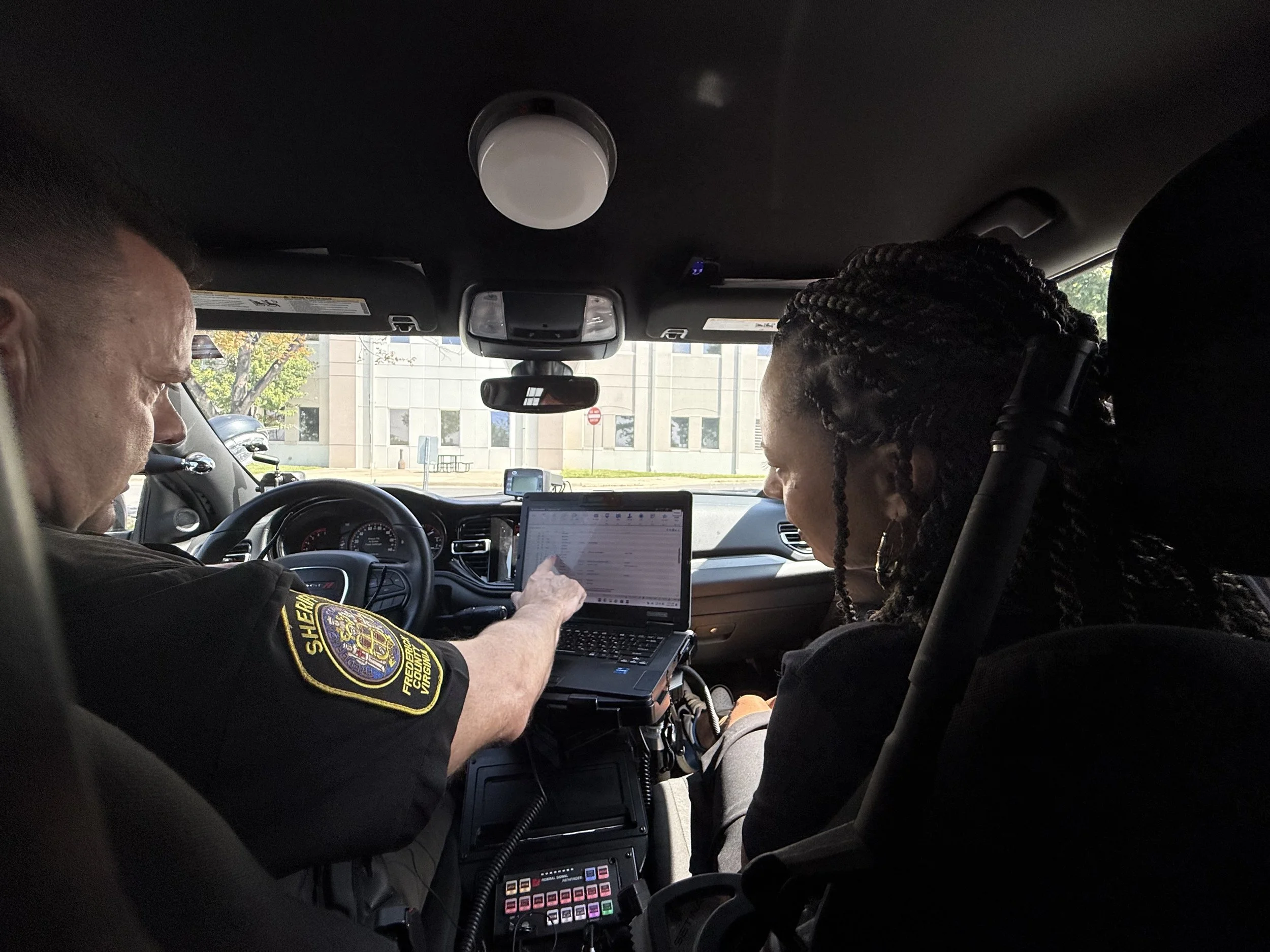
BLUE Magazine journalist shai carr rides with darlington through frederick county and winchester during the magazine’s reporting trip to virginia.
Music came first. Darlington’s father played guitar and sang, recorded a 45 in Nashville and, according to Darlington, played with Patsy Cline. Chris grew up around music. When he was about 13, his father bought him an inexpensive keyboard from Walmart. Darlington learned to play by ear and soon began accompanying his father at small shows.
Law enforcement was another interest from an early age. Darlington remembers watching Cops and, as a teenager, riding around with his best friend in the friend’s grandmother’s Oldsmobile, a car they thought resembled a police vehicle. They would occasionally flash the high beams behind passing motorists and pretend they were officers.
“Probably shouldn’t be telling you that,” Darlington said, laughing. “But that’s how much interest I had in law enforcement. I wanted to be a cop that bad.”
Eventually, the two interests forced a decision. Darlington was considering moving to Nashville while also pursuing an opportunity in law enforcement. Musicians he knew understood how uncertain the business could be and encouraged him to take the police job.
He chose the badge, but the music never disappeared. Darlington continued playing, singing and eventually writing his own material. He built a catalog of more than two dozen songs, made trips to Nashville to record and began approaching music less as something he did around the rest of his life and more as something he wanted to test seriously.
According to his official biography, Darlington has shared stages with artists including Terri Clark, Frank Ray, Collin Raye, Drew Baldridge and Sammy Kershaw. But one of his most important songs came not from trying to fit country radio. It came from the profession he already knew.
HOLD THAT LINE
“Hold That Line” grew out of Darlington’s experience in law enforcement and his frustration with the national conversation surrounding police. He remembered working a 2 p.m. to midnight shift and noticing changes in the way people reacted when he entered places such as convenience stores in uniform. In his view, individual incidents were increasingly being used to judge an entire profession.
“I know a lot of cops, and most of us are good people,” Darlington told us. “Nobody’s perfect. We all make mistakes. That’s human nature. That’s every profession.”
He sat down with a guitar and wrote about a routine he knew: putting on the boots and vest, leaving home and going to work. The response reached beyond his own department. The National Sheriffs’ Association reported after the song’s release that “Hold That Line” surpassed 50,000 streams within three weeks. Officers contacted Darlington through social media. So did law-enforcement families, including people who had lost someone in the profession. Younger officers told him they listened to the song before work.
“That makes me feel like that song served its purpose,” Darlington said. “If they can listen to it and they feel something from it and they can relate to it, I’m happy with it.”
For Darlington, music also offers something the uniform sometimes cannot.
“I feel like I get to represent law enforcement in a different light,” he said, “humanize that badge in a different way.”
WHAT DO YOU WANT
But Darlington does not want his music career defined by a single law-enforcement song. His goal is country music, and the record at the center of that effort now is “What Do You Want.”
The path to the song began taking shape after Darlington opened for Drew Baldridge at the Apple Blossom Festival in Winchester in May 2025. Baldridge’s success as an independent country artist made an impression on Darlington and on Ken Nuss, a central member of Darlington’s team. They began looking more seriously at what it takes for an independent artist to compete for country-radio airplay.
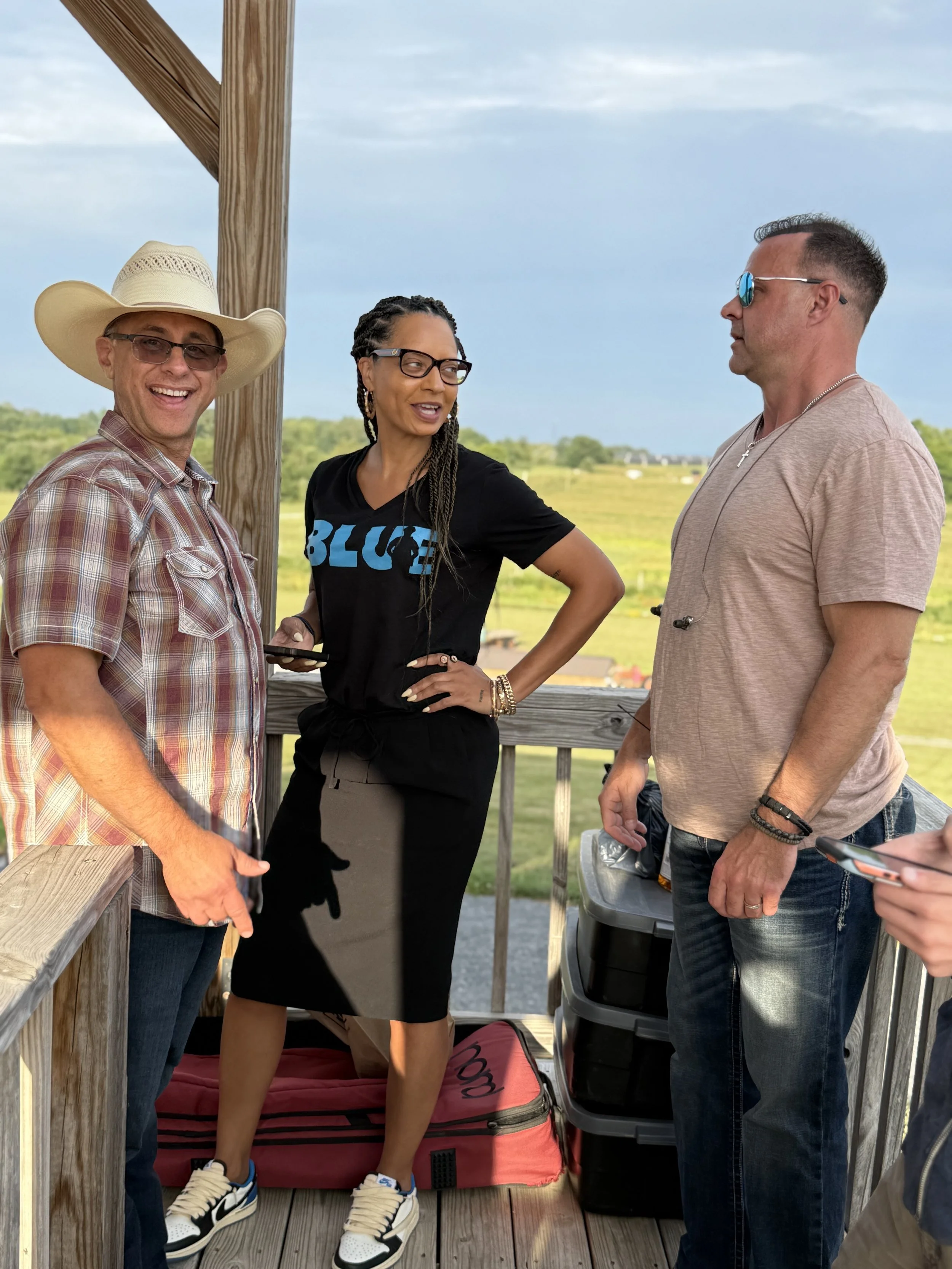
Darlington spaks with BLUE magazine journalist shai carr and ken nuss, a key member of the team helping guide darlington’s growing music career.
That effort eventually connected them with veteran country-radio promoter Louis “Uncle Louie” Newman, who was named the 2026 CRS/Country Aircheck Independent Promotion Executive of the Year.
Newman liked Darlington’s story and began guiding the team, but he was less easily convinced by the songs they were considering for radio. Darlington kept writing. According to the account provided to BLUE, eight or nine songs were sent to Newman. His answer remained essentially the same: not yet. The song needed a stronger hook. He would tell them when they had the right one.
Then Darlington was standing in his kitchen telling his wife that none of the songs seemed to be what Newman wanted.
“Well, what does he want?” she asked.
Darlington heard something in the question, and “What Do You Want” began taking shape.
Ken sent the finished song to Newman on a Friday night. Around midnight that Sunday, Newman called.
“This is the one.”
Three weeks later, Darlington was in Nashville recording it.
The song is now part of a national radio-promotion campaign and has reached No. 91 on the Mediabase country chart, according to information provided by Darlington’s team. For an independent artist competing for space alongside releases backed by major labels, the achievement marks another significant step in Darlington’s growing music career.
During our interview, he spoke comfortably about radio promoters, station adds, production quality and chart positions. A good story may get a program director’s attention. It does not guarantee that a record gets played.
“My journey is to take it as far as I can take it,” he said.
LET HIM IN
There is another song, however, that explains something about Darlington that radio numbers cannot.
“Let Him In” began while Darlington was sitting at his piano trying to write what he expected would be another country song. The words came quickly. He remembered lines forming in his mind about looking for Superman when you need him, a parachute when you’re falling and stars when you’re wishing.
As he continued writing, he realized he wasn’t writing the song he had expected. He believed he was writing about Jesus.
Darlington began crying. He told BLUE the reaction lasted roughly 20 minutes and was unlike anything he had experienced before. He described it as an encounter with the Holy Spirit and reached for a comparison from police work.
“I’ve been hit with a 50,000-volt Taser before,” he said. “And the Holy Spirit was nothing like being hit with a Taser. It’s a lot more powerful.”
Darlington decided “Let Him In” would be the next song he recorded in Nashville.
“It was my song about Jesus,” he said.
His faith came up repeatedly during our conversation. Darlington believes that if his audience grows, so does his ability to use that audience for something beyond promoting himself.
“God is telling me to use my music as a tool to help people,” he said. “If God can move mountains and He wants me to do this, He’s gonna put me there.”
During our drive through Winchester, Darlington took us past the former home of Patsy Cline, connecting naturally to the stories he had told us about his father and the country music he heard growing up.
Then, inside the patrol vehicle, we asked him to sing.
Darlington sang part of “What Do You Want” a cappella. There was no band, stage or studio production around him. Hours before we would watch him perform for a large crowd, we could hear the voice by itself.
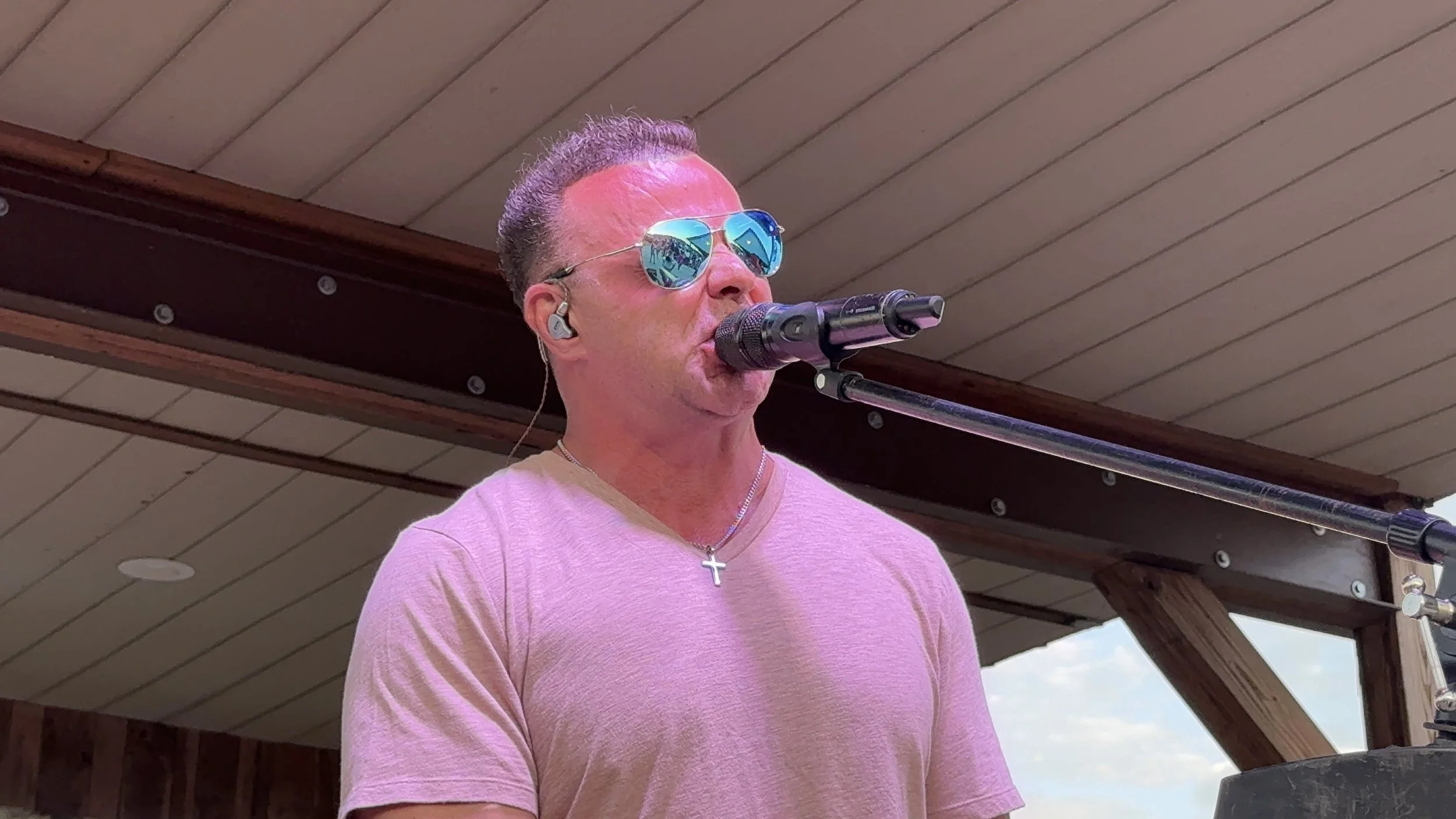
hours after spending the afternoon with blue magazine, darlington took the stage at west oaks farm market before a large hometown crowd.
WEST OAKS
That evening, the Chris Darlington Band was scheduled to perform at West Oaks Farm Market in Winchester. We arrived early enough to watch Darlington and the band preparing the stage themselves. Drums, guitars, sound equipment and banners went into place as the property gradually began filling with people.
The band includes Kyle Farrior on lead guitar, Brad King on bass, Aron Darlington on rhythm guitar and Peter Bock on drums, according to Darlington’s official biography. By BLUE’s observation, more than 1,000 people attended over the course of the evening.
The performance removed the novelty factor. Darlington was not compelling simply because a deputy sheriff was standing behind a microphone. He could perform, his band was strong, and the audience responded to them as musicians.
People danced and sang along. One older gentleman in cowboy boots seemed to spend much of the evening dancing. When a BLUE journalist asked why he continued attending Darlington’s performances, he told us he considered Darlington both a good man and a good singer and tried to make as many shows as possible.
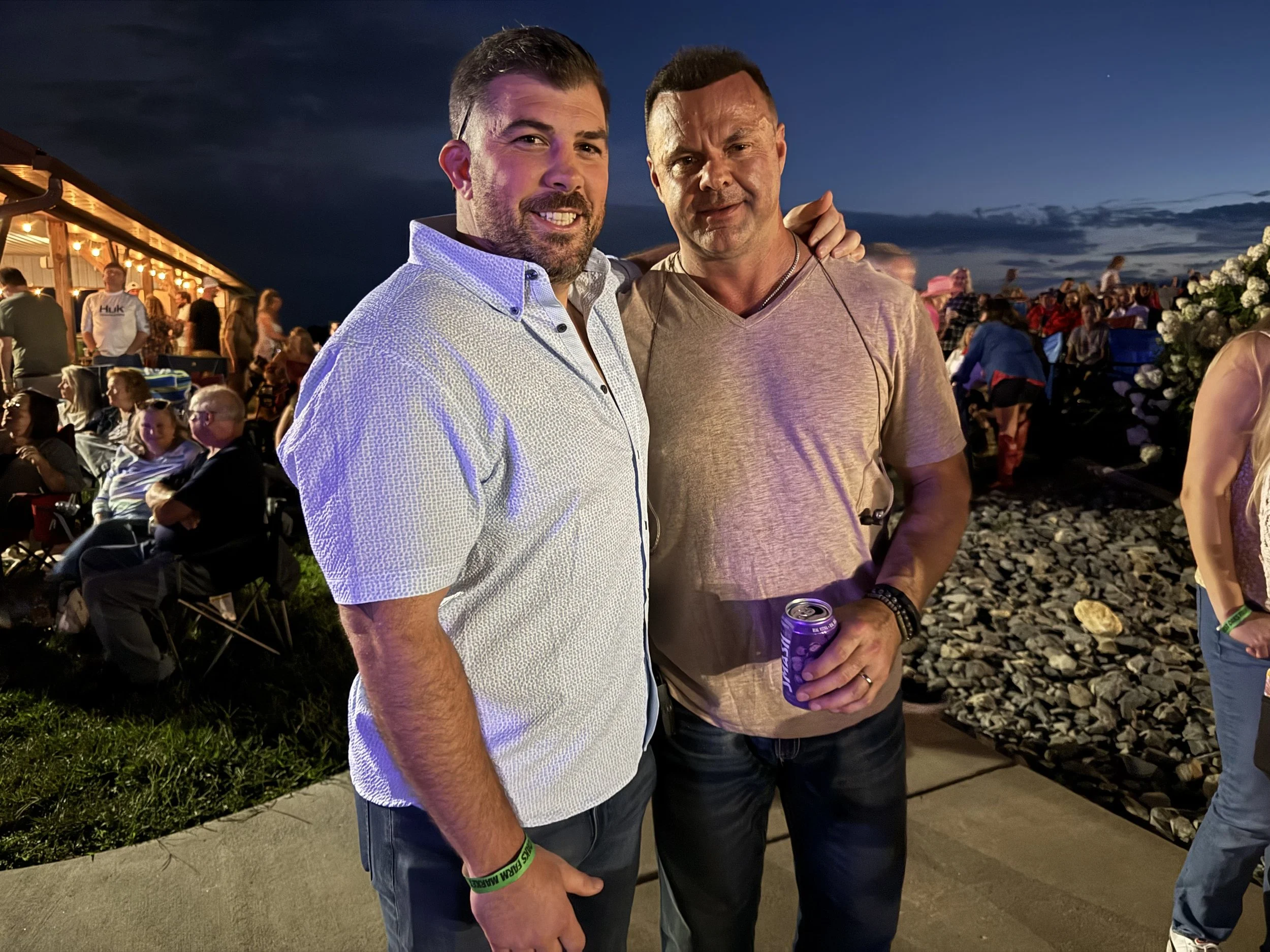
Darlington greets a supporter during his performance at west oaks farm market. throughout blue’s visit, community members repeatedly spoke about both his music and his character.
We heard something similar from Anthony, a local restaurant owner who had welcomed our crew earlier in the day and whom we encountered again at the concert. Asked on camera why he supported Darlington, Anthony spoke about the music but also about the man he knew from the community. Neither conversation had been arranged for the article. They were people we encountered while reporting.
Perhaps the clearest measure of Darlington’s character that evening had little to do with his own performance. A young aspiring singer named Dakota Watkins had been brought to his attention. Someone asked whether Darlington might speak with her because she wanted to sing. Darlington did more than offer advice. He invited her to perform with him.
With her family present, Dakota walked onto the stage and sang before the crowd. Darlington introduced her and encouraged people to support her.
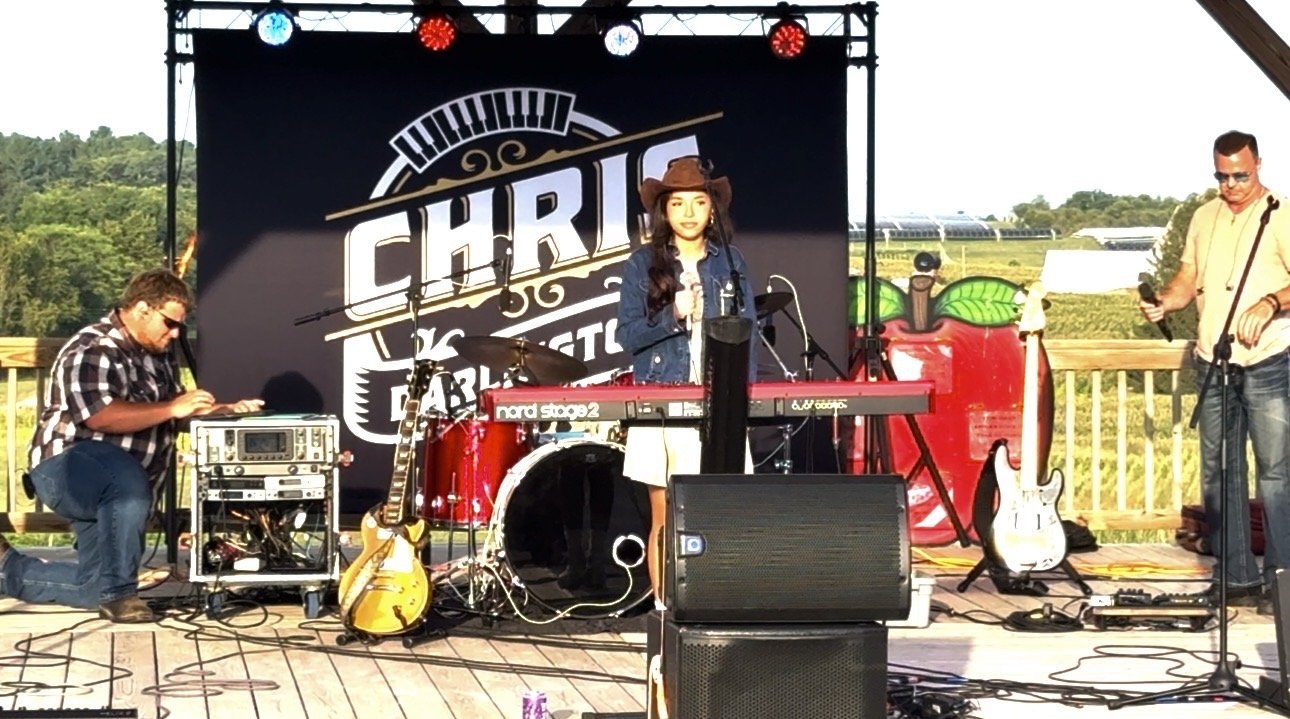
aspiring singer dakota watkins performs before the west oaks crowd after chris darlington invited her to take the stage.
Something similar happened with our own Alyssa Del Valle. Alyssa traveled to Virginia as part of the BLUE reporting team and participated in the interview with Darlington. She is also a singer who has released music. When Darlington learned that, he invited her to perform with him that evening.
Alyssa arrived expecting to interview Darlington. She ended the day singing beside him.
For BLUE, there was a personal dimension to the moment. During one of the magazine’s major reporting trips in its 17-year history, its publisher was in the audience watching his daughter, who had traveled as part of the reporting team, unexpectedly perform with the subject of the cover story.
More relevant to the profile was what the two invitations revealed about Darlington. He is trying to earn opportunities in a business where opportunities are difficult to get, yet when two aspiring singers were standing in front of him, he was willing to share his.
Earlier in the day, Darlington had offered advice that fit what we later watched him do.
“Don’t let anybody ever tell you you can’t do it,” he said. “Believe in yourself.”
Darlington continues to serve with the Frederick County Sheriff’s Office while writing, recording, traveling to Nashville and performing. Ken is a key part of the operation around the music and one of Darlington’s strongest supporters. Darlington also credits his family, his band, Sheriff Lenny Millholland and the Frederick County Sheriff’s Office for supporting what he is building.
The relationship between law enforcement and music remains important to Darlington even as he tries to reach audiences far beyond the profession. He does not appear interested in leaving the badge behind if the music grows. It is part of his identity and part of the experience from which he writes.
At the same time, reducing him to “the singing deputy” increasingly misses the point.
Country music is an unforgiving business for independent artists. Radio playlists are limited, major labels have established promotional operations and talent alone guarantees nothing. A Top 100 chart position does not guarantee a breakthrough, and an enthusiastic hometown crowd does not automatically translate into a national audience.
What BLUE can report is what we witnessed in Virginia: an artist writing original material, recording in Nashville, working with an experienced radio promoter, pursuing a national radio campaign, performing with a strong band and drawing an engaged audience. We saw the work before the show as well as the performance itself.
This is not a story about someone announcing that he would like to become a country singer someday. Darlington is already doing the work. The unanswered question is scale.
For Moment of Silence, his story carries another relevance to the first-responder community. Conversations about law-enforcement wellness understandably focus on crisis, trauma and suicide prevention. There is another part of wellness that receives less attention: maintaining faith, family, interests and ambitions that exist beyond the uniform. Darlington does not offer a formula for that; his experience is simply one example of what it can look like.
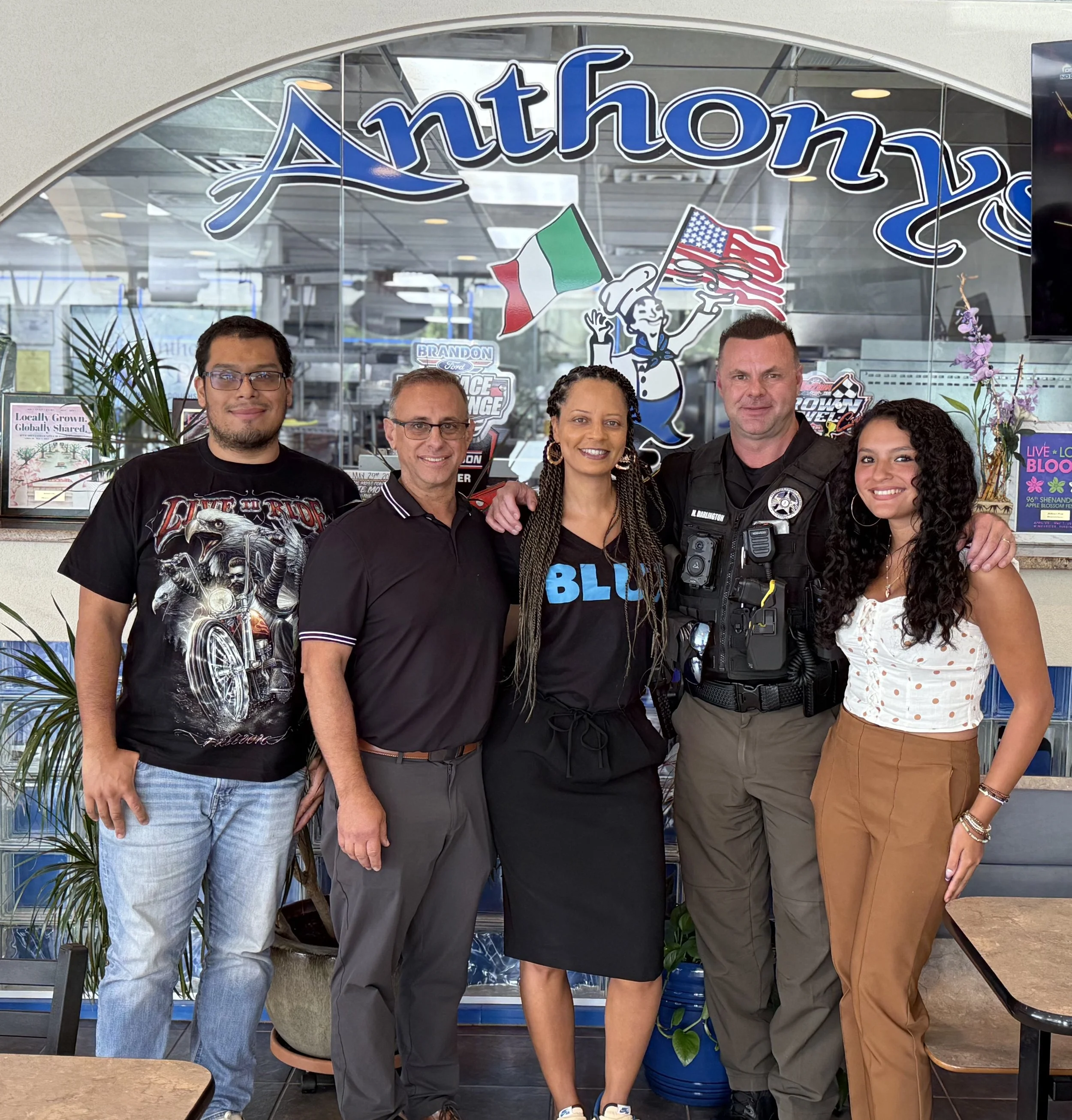
CHRIS DARLINGTON WITH MEMBERS OF THE BLUE MAGAZINE TEAM DURING THE MAGAZINE’S VISIT TO FREDERICK COUNTY AND WINCHESTER, VIRGINIA.
We went to Virginia knowing Chris Darlington was a deputy sheriff who sang country music. That description remains accurate, but it no longer tells the whole story. “Hold That Line” connected his music to the profession he knows. “Let Him In” revealed the role faith plays in his writing. And “What Do You Want” has become his most deliberate attempt yet to find out whether his music can travel considerably farther than Virginia.
Darlington knows where he would like that attempt to lead.
“I wanna see y’all back in a year,” he told us, “where you can say, ‘Hey, man, what’s it feel like to have a number one?’”
For now, the answer is still being written.
The next verse is his.
A NOTE FROM BLUE & MOMENT OF SILENCE
The BLUE Magazine and Moment of Silence thank Sheriff Lenny Millholland and the Frederick County Sheriff’s Office for their hospitality and for allowing our team to spend the day documenting Darlington’s story. We also thank Chris Darlington, Ken Nuss, the members of the Chris Darlington Band and the people throughout Frederick County and Winchester who welcomed our team during the visit.
Moment of Silence plans to use footage captured during the trip for a future behind-the-scenes inspirational feature about Darlington’s story, including the ride-along, interviews, community visits, preparation for the concert and the performance at West Oaks.
For BLUE, the assignment was an opportunity to document a different side of a profession we have covered for 17 years. The uniform may be part of who you are, but it does not have to be all that you are. Continue to pursue the things that give your life purpose.